


 Claim Ownership
Asia in Focus
Subscribed: 3Played: 25
Subscribe

© Copyright 2020 All rights reserved.
Description
Subscribe for updates from Control Risks experts in Asia Pacific.
Learn more about Control Risks at www.controlrisks.com
Learn more about Control Risks at www.controlrisks.com
61 Episodes
Reverse

In the past few weeks, we have seen a tectonic shift in Bangladesh’s political landscape. Former Prime Minister Sheikh Hasina – who ruled for the last 15 years with what some describe as an Iron Fist, particularly against the opposition – resigned and fled the country in early August following weeks of unrest, which began as student-led demonstrations against job quotas and grew into a nationwide movement that resulted in significant violence.
Now, Nobel laureate Mohammed Yunus is stepping in to lead a caretaker government amid a volatile economic climate, following last year's IMF bailout.
Angela Mancini, Partner, and Aryaman Bhatnagar, Senior Analyst, delve into the implications for Bangladesh's political future and and its business environment.

In the past few weeks, Thailand has undergone a dramatic political transition with the appointment of Paetongtarn Shinawatra as the new prime minister. This development comes on the heels of a period of uncertainty and political turmoil following the dissolution of the Move Forward Party, the main opposition. Paetongtarn is the fourth member of the Shinawatra family to assume the role of prime minister and is under intense scrutiny. Many wonder whether she can navigate the political landscape without meeting the same fate as her predecessors, who were ousted by either the courts or the military.
In this episode, Angela Mancini, Partner, sits down with Harrison Cheng, Director and lead Southeast Asia analyst, to unpack what Paetongtarn’s rise to power means for Thailand's future. They discuss the critical next steps, including the formation of a new cabinet and strategies she might use to avoid the pitfalls that have historically plagued her family. They also discuss the potential impact of Paetongtarn’s leadership on foreign investment and economic policy, with particular attention to how Thailand’s business environment might evolve under her administration.

Investors in Asia are still processing the news of the sudden passing of Vietnam’s long-serving leader, Communist Party Secretary General Secretary Nguyen Phu Trong in mid-July.
Trong was one of the country’s most powerful leaders in decades and had overseen the explosive growth of the Vietnamese economy – during which GDP more than doubled, Vietnam signed several significant foreign trade agreements (FTAs) and became a primary destination for investors’ China +1 strategies. He is also behind Vietnam’s aggressive anti-corruption campaign, known as the “blazing furnace”, which has taken down several very senior leaders and more recently had been a cause of real concern for foreign investors.
His passing marks the end of an era in Vietnamese politics and has many watching closely to see how Vietnam’s leadership will be structured. Angela Mancini, Partner, sits down with Steve Wilford, Partner, to discuss what the passing of Trong means for Vietnam and its business environment.
Visit www.controlrisks.com/vietnam to contact our experts for an in-depth briefing. If you are looking for more analysis across South East Asia, please visit our South East Asia hub.

The Third Plenary Session of the 20th Central Committee of the Communist Party of China (CPC) wrapped up on 18 July in Beijing. It comes at a critical juncture for an economy beset by profound challenges.
Angela Mancini, Partner, has a discussion with Andrew Gilholm, our Principal and Director of analysis for Greater China and North Asia, on the key takeaways from the Third Plenum, the future direction of China’s economy, and the country’s reactions to the recent geopolitical developments globally.
If you are looking for more analysis across the Asia-Pacific region, please subscribe to our Asia In Focus podcast.

Indian Prime Minister Narendra Modi secured a third term, but his Bharatiya Janata Party (BJP) unexpectedly lost its parliamentary majority after significant losses in key states to opposition parties, particularly the Indian National Congress (INC). For the first time, Modi must rely on his coalition partners to advance his political agenda.
Angela Mancini, Partner, speaks with Khalid Shah, Analyst, to discuss what this shift mean for India’s growth trajectory, internal inequalities, and the nation’s evolving role on the global stage.
Read our article on the outlook for a weakened Modi, or subscribe to our India updates to get them straight to your inbox.

Vietnam’s anti-corruption drive, dubbed the “burning furnace,” started in 2016 but has intensified since 2021.
Many senior officials in the country have come under investigation. They’ve been asked to leave their positions or have been forced to step down. Most recently, Vietnamese property tycoon Truong My Lan was sentenced to death for her role in a USD 12.5 billion financial fraud scheme. Investors and government officials are growing increasingly nervous and are holding off on making any decisions that might spark a corruption investigation. But that’s not the whole story.
Angela Mancini, Partner, sits down with Steve Wilford, Partner, to discuss Vietnam’s current business and political environment and how, despite the challenges, there is still a lot of opportunity.
If you are looking for more analysis across South East Asia, please visit our South East Asia hub here.

This April has seen a surge in bilateral contacts between the US and China, from the Xi-Biden phone call to Janet Yellen and Antony Blinken’s visits to Beijing. Relations between the two countries seem to be entering a holding pattern, as we mentioned in the RiskMap 2024 Top Risks.
President Joe Biden and former President Donald Trump are competing to raise the stakes against the world's second largest economy as the election approaches. Are we seeing the advent of a durable stabilisation in bilateral relations for the rest of the year, or just a lull before the storm?
Meanwhile, China is stepping up its diplomatic reach with other countries. How will China's growing role and influence on the international stage contribute to reshaping the world order?
Angela Mancini, Partner, talks with Andrew Gilholm, our Principal and Director of analysis for Greater China and North Asia, about the prospects of US-China relations during this election year, how the two candidates differ in their approach to policy around China, the key triggers for escalation to watch, and how companies should prepare for the changing global landscape.
Listen to our recent episode, US election 2024: the possible outcomes and global implications, to hear more of our insights on the US election. If you are looking for more analysis across the Asia-Pacific region, please subscribe to our Asia In Focus podcast.

In a busy election year, the most high-profile race in 2024 is undoubtedly the rematch between President Joe Biden and former President Donald Trump as the two candidates once again vie for the Oval Office.
With six months until election day, how the rematch could unfold, and its global implications, are top-of-mind for many businesses. Organisations need to prepare for a range of compounding risks associated with the possible outcomes.
Angela Mancini, Partner, sits down with Daniel Rechtschaffen, our Washington DC-based political and regulatory risk Senior Analyst for North America, to discuss the forecast for 2024 US election, the policy priorities of the two candidates and the impact for Asia and broader markets.
Read the article, The business implications of a Biden-Trump rematch, for more of our thoughts on the US election.

Indonesia will announce the official results of its presidential elections on March 20. Pro-business defence minister Prabowo Subianto looks set to win the presidency outright, avoiding a run-off in June.
Longtime followers of Indonesia will know Prabowo as a controversial general and the son-in-law of authoritarian President Suharto, who in the late 1990s was banned from the US and dismissed from the Indonesian army for allegations of human rights abuse. How did Prabowo get elected and what should businesses expect from him?
Angela Mancini, Partner, speaks with Achmad Sukarsono, Associate Director and Indonesia Lead Analyst, about what a Prabowo presidency would look like and how the business risk landscape in Indonesia is expected to change.
Find more of our analysis on South East Asia here.
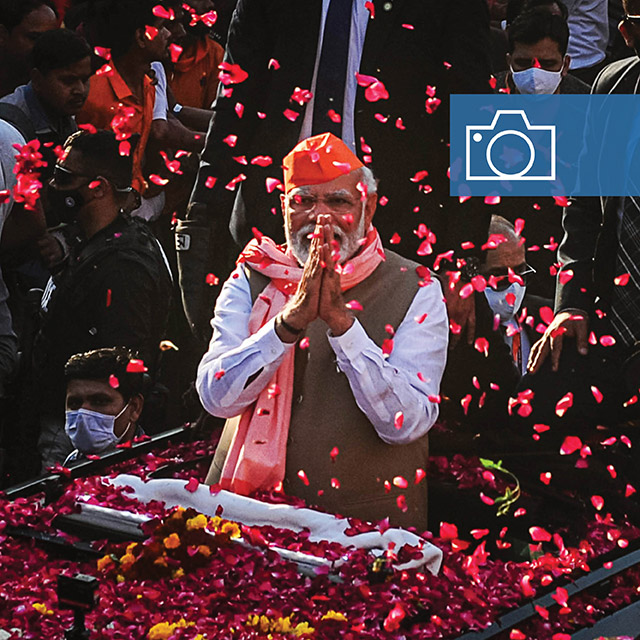
In this episode of Asia In Focus, Angela Mancini, Partner, speaks with Khalid Shah, Analyst, about how businesses operating in India can prepare for the future.
India is often regarded as sitting in a geopolitical sweet spot. The country is seen as a rising power on the global stage as well as an ally to several Western states. All eyes will be on the country in April and May 2024 as India heads to the polls in its upcoming general election, which will see 900 million people cast their votes. While no surprises are expected, the outcome will set the tone and direction for businesses operating in India for the next 5 years.
But the general election will likely not derail India’s growth agenda. India’s Vision 2047 document, expected to be formally unveiled this year, will lay out a path to elevate India’s economy from a gross domestic product of USD 3.4 trillion to USD 30 trillion by 2047. Alongside incentives to drive investment and the opportunities that come with a large, aspirational consumer market, businesses should also expect inefficiencies and obstacles to doing business; myriad climate challenges; a massive digital infrastructure vulnerable to threat actors; and all the complexity of centre / state, regional, and social challenges.
Visit our India Business page to find our latest analysis on India, or read our analysis on the top risks and opportunities for India in 2024.
If you are looking for more analysis across the Asia-Pacific region, please subscribe to our Asia In Focus podcast.

Indonesia just closed its presidential candidate registration on 25 October 2023. After much anticipation, voters finally have confirmation that there will be 3 presidential pairings set for the Valentine’s day vote next year, which is unlikely to produce a winner with a majority of the 200 million votes up for grabs.
As current president Joko “Jokowi” Widodo is unable to run for a third term, businesses and investors can expect to see policies accelerating his legacy projects from now until the inauguration of the new president in October 2024.
Angela Mancini, Partner, speaks with Achmad Sukarsono, Associate Director and Indonesia Lead Analyst based in our Singapore office on what businesses can expect between now till October 2024, and how they can be prepared for the new presidency.
Visit our Indonesia Elections page to find our latest analysis on the presidential race, or subscribe to our South East Asia updates to get them straight to your inbox.
If you are looking for more analysis across the Asia-Pacific region, please subscribe to our Asia In Focus podcast.

After the US Department of Justice (DOJ) updated its guidelines for compliance in 2020 to include the use of data analytics, many companies have been contemplating how to integrate analytics into their compliance and audit programs. While Asian regulators are currently less stringent in their guidance, it is highly likely that others will follow suit, and companies both inside and outside Asia need to be prepared.
In this episode, Angela Mancini, Partner talks to Allanna Rigby, Partner and regional head for Control Risks’ data analytics in EMEA and Asia Pacific on how compliance officers, audit teams and risk teams can embrace the use of data and analytics to adhere to regulations, even when they think that that have “bad data”.
Interested in our analysis? Visit Our Thinking to learn more.
For more insights across the Asia-Pacific region, please subscribe to our Asia In Focus podcast.

Multiple data leaks in recent years have prompted governments across the region to scrutinise the processing and flow of information within and beyond their societies. As technology adoption surges, regulators are increasingly concerned about the implications for national security – and are building national frameworks on how information is being processed. While China is often emphasised in the headlines, digital sovereignty actually is a broader concern across Asia.
In this episode, Angela Mancini, Partner talks to Jim Fitzsimmons, head of our APAC Digital Risk team about how companies are affected by this move, and how they can adapt their business models to navigate the ever-changing regulatory landscape across the region.
Visit our cyber content hub for more analysis on the digital risks companies face.
For more insights across the Asia-Pacific region, please subscribe to our Asia In Focus podcast.

Talk of India’s economic rise has been around for the last decade. Its skilled workforce, coupled with low labour and production costs, makes it an attractive market for investors. India's strategic position also enhances resilience in regional supply chains for neighbouring countries navigating geopolitical tensions. However, there are challenges inherent in this complex market, and businesses often find themselves navigating what feels like many separate nations.
In this podcast, Angela Mancini, Partner, speaks with Aryaman Bhatnagar and Shikha Kher, Senior Analysts based in our Delhi office to understand how foreign businesses can navigate India’s ever-evolving landscape to be equipped for the promise the country holds.
Interested in our India analysis? Read our article, India's Modi Operandi: Why the economic gains might trump the social pains to make this India’s decade or contact our India experts for tailored advice.
For more analysis across the Asia-Pacific region, please subscribe to our Asia In Focus podcast.

Thailand held its general elections recently on 14 May, where the opposition beat the incumbent pro-military coalition. Surprisingly, it was the progressive Move Forward Party that emerged as the largest party, not pre-election favourite Pheu Thai. However, forming the government will be a tricky prospect as the incumbent coalition and the Senate could spoil the party for the opposition.
The people of Thailand have signalled a desire for change – which is by no means a guaranteed outcome – but investors should already be preparing for the impacts and opportunities to come.
Angela Mancini, Partner, speaks with Harrison Cheng, Director and South East Asia Lead Analyst to find out how businesses should prepare themselves in the short and medium term.
For more analysis on Thailand, or visit our South East Asia hub to explore the issues of doing business in one of the world's fastest-growing markets.
If you are looking for more analysis across the Asia-Pacific region, please subscribe to our Asia In Focus podcast.

Thailand will be holding its general elections less than a week, on 14 May. This upcoming election is shaping up to be the most competitive one since 2011. In the past, elections have almost always favoured the current opposition party Pheu Thai led by former premier Thaksin Shinawatra. Now, Thaksin – more specifically his daughter – is now back in the spotlight as Pheu Thai tries to repeat its electoral feats of the past.
Will this election produce political stability, and free up the government from military rule to focus on economic transformation, or will there be a return of large-scale demonstrations in Bangkok like in 2013-14?
Angela Mancini, Partner, speaks with Harrison Cheng, Director and South East Asia Lead Analyst to find out what all these mean for foreign investors.
Read our article Geopolitical sanctuary: Thailand’s upcoming election and investment opportunities for more analysis on Thailand, or visit our to explore the issues of doing business in one of the world's fastest-growing markets.
If you are looking for more analysis across the Asia-Pacific region, please subscribe to our Asia In Focus podcast.

The Communist Party of Vietnam has been on an aggressive anti-corruption drive. Earlier this year, in a move unprecedented in recent Vietnamese political history, three key national leaders including the ex-president were forced to step down on charges of corruption.
The campaign, commonly described as the ‘burning furnace’, has mainly affected the real estate, healthcare and banking sectors, but there are concerns that other sectors will come under heat.
Angela Mancini, Partner, speaks with Linh Nguyen, Associate Director and Lead Vietnam Analyst on what anti-corruption drive means for businesses with exposure in Vietnam. They also discuss whether the Vietnamese economy will be affected by external factors such as the re-opening of China, the banking crisis in the West, and if there is a silver lining for investors in all of this turbulence.
Watch the on-demand recording of our webinar, Power, Politics, Potential: The new realities of doing business in Vietnam or listen to our podcast episode, Vietnam: Immense opportunities in a complex market for more in-depth analysis.
If you are looking for more analysis across the Asia-Pacific region, please subscribe to our Asia In Focus podcast.

China’s reopening after three years of zero-COVID policy has been one of the most discussed topics for international companies recently. The policy shift spurred hopes of a broad economic revival. With pent-up demand being released, China saw a strong rebound in consumption in January, directed at sectors like tourism and retail. Business activity is also picking up, something that can be seen in the surge of global CEOs traveling to China. Despite signs of improvement, China's prospects for future growth are far from certain. Long-standing and emerging issues continue to pose risks to business operations.
Join Angela Mancini, Partner, as she talks with Kent D. Kedl, Partner and Head of Greater China and North Asia, and Yifei Zhang, General Manager of East China. They discuss the most recent developments in China after an about-turn in its zero-COVID policy, the outlook for the country in 2023, the key issues at the top of the agenda for many of our clients right now, and how businesses should correctly calibrate their risk vs. opportunity lens to derive the maximum value from China’s opening up.
Read our article on the good, the bad and the uncertain on China’s growth outlook, or visit our China Business page to explore the issues of doing business in one of the world's most dynamic market.
If you are looking for more analysis across the Asia-Pacific region, please subscribe to our Asia In Focus podcast.

Few National Congresses of the Communist Party of China (CPC) in history seem to have generated as much global media attention and market response as this year’s, underscoring how business is increasingly driven by politics. Companies are concerned about how China's political trajectory and business environment will evolve over the next five years or more. Have the fundamentals of China's long-term growth changed?
Join the discussion between Angela Mancini, Partner, and Andrew Gilholm, Director of Analysis for China and North Asia. They discuss the outcomes of the CPC National Congress, the short-term market reaction, the outlook for China, and key takeaways for businesses.
Read our article on the CPC National Congress for more insights about this significant political event, or subscribe to our Asia In Focus podcast series to keep track of dynamics in the Asia market.
If you are looking for more analysis on other issues from our experts all over the world, please visit the Our Thinking section on Control Risks’ website.
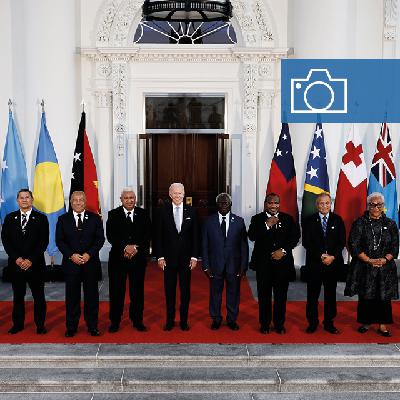
The Pacific Islands are gaining attention amid the great power rivalry. All sides are stepping up their engagement with the region to expand influence. But the Pacific islands are not just pawns in the geopolitical contest – they are taking it as a chance to promote their own agenda, which may lead to new interest from businesses.
Angela Mancini, Partner, has a talk with Daniel Rechtschaffen, Analyst, and Harrison Cheng, Director. They discuss the growth of big powers’ presence in the region in the past years, the view from Pacific Island nations and the key priorities and areas they would like to address, and the opportunities and challenges that lie ahead for companies.
For more discussions on the Asia market, please subscribe to our Asia In Focus podcast series.
If you are looking for more analysis on other issues from our experts all over the world, please visit Control Risks’ Our Thinking section.

Comments

Download from Google Play

Download from App Store
 United States