


 Claim Ownership
Moneda Moves
Subscribed: 7Played: 90
Subscribe

© Lyanne Alfaro
Description
Telling stories about Latinos leading in business, our relationship with money and contributions to the American economy. ✊🏼✊🏽✊🏾✊🏿
74 Episodes
Reverse

This season on Moneda Moves, we have been expanding how we talk about capital, because it’s not just about money. It’s also about power and access, across sectors. In our last episode of the season, we speak with Patricia Mota – an innovative trailblazer, start-up entrepreneur, author, and more. Today, she’s President and CEO of Hispanic Alliance of Career Enhancement (HACE), on a mission to boost the national workforce by cultivating the pipeline of Latine and underrepresented talent by providing the insight, access, and support to their careers. Since Patricia stepped in as CEO in 2015, the budget has quadrupled, membership has tripled to over 150,000, HACE has built over 250 corporate partnerships, and extended the organization’s reach across the U.S. and 50 countries. Under her leadership, the nonprofit now offers enhanced programming for youth, senior leaders, entrepreneurs, and diverse audiences worldwide. In 2020, her leadership took a front seat to increasing activity around a newly virtual workforce, where she acted with urgency, communicated with transparency, sought diverse opinions from her team and board, and led with empathy, ultimately leading a thriving organization during such a tumultuous time. In 2021, Patricia added Co-Founder to her list of accolades, collaborating to build SHENIX™, a Fintech startup that is leading the development of a financial tool to help close the wealth gap. (Her cofounder, Olga Camargo, has also been on Moneda Moves in years prior and has been a part of our Forbes coverage.) Patricia chairs digitalundivided, helping women founders gain access to capital, and serves on the boards of the Chicago Foundation for Women, Associated Colleges of Illinois, Chicago Theological Seminary Board of Trustees, and the Northeastern Illinois Foundation Board.Patricia is a proud Mexican-American, Latina, daughter of immigrants, and first-generation college graduate. She is a fitness enthusiast and health and lifestyle aficionado. She grew up in East Chicago, Indiana, and currently resides in Chicago.In this week’s season finale episode, Patricia shared what she and her team at HACE are doing to close the wealth gaps in the Latino community. While striving for higher titled positions in your career does bring in more income, it doesn’t allow people to access the generational wealth that would help close the current wealth gaps. HACE works to bridge the gap in industries where there is historically limited representation with a focus on ownership. This looks like making sure Latinos negotiate for wealth levers like equity, stock options, profit sharing, and restricted stock units. Patricia also shared how she and HACE partnered with #WeAllGrow to keep the Amigahood community alive in its new chapter. Tune in to hear how you can build more generational wealth and what’s next for Patricia and her team.Follow Patricia on Instagram at @PMota7 and @HACEOnline. Follow Moneda Moves on Instagram: @MonedaMovesFollow your host Lyanne Alfaro on Instagram: @LyanneAlfaroMain podcast theme song from Premium Beat. Our music is from Epidemic Sound.Podcast production for this episode was provided by CCST, an Afro-Latina-owned boutique podcast production and copywriting studio.
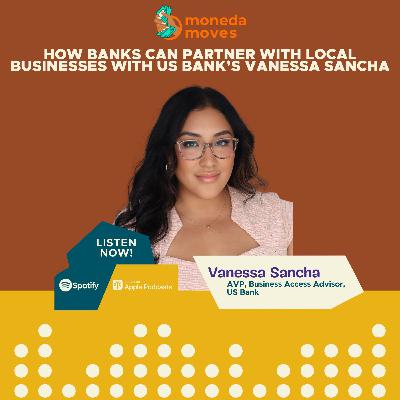
This season on Moneda Moves, we have been expanding how we talk about capital, because it’s not just about money. It’s also about power and access, across sectors. Today, we’re talking about what it takes to gain access to one of the most traditional forms of capital: loans.According to the Latino Business Action Network, the odds of loan approval from national banks are 60% lower for Latino-owned businesses than for comparable white-owned businesses in 2024. And for Latina-owned businesses, the gap is even wider — with just 39% average approval rates from both national and local banks.That’s why voices like Vanessa Sancha matter. She is an Assistant Vice President and Bilingual Business Access Advisor for the Chicago/Milwaukee region of U.S. Bank, providing support in both Spanish and English. In her role, Vanessa helps bridge critical gaps in information, connections, and capital, which otherwise can limit growth and opportunity for small business owners.A seasoned financial professional and community leader, Vanessa is driven by a mission to empower diverse business owners through access to capital and resources. Her financial services career spans over 16 years, including a notable tenure at PNC Bank, where she advanced through leadership roles in business banking and branch management.Vanessa also served as a Relationship Manager at local CDFI, Milwaukee Economic Development Corporation (MEDC), managing and underwriting a commercial portfolio. Her expertise lies in building strong client relationships and offering tailored guidance to help businesses thrive across diverse industries.Beyond her professional accomplishments, Vanessa is deeply committed to giving back. She serves on the board of the Wisconsin Veteran Business Alliance and the WWBIC loan committee. She has developed and led financial education programs for youth and adults through organizations like Journey House, WRTP, Milwaukee Christian Center and Running Rebels, inspiring participants to achieve their goals and contributing to more equitable economic outcomes in her community.She is committed to advancing opportunities for underserved communities and helping build a more inclusive economy where every entrepreneur can succeed. When she’s not connecting with business leaders or volunteering, Vanessa enjoys spending time with her daughter, cheering her on at basketball and volleyball games.In this week’s episode, we’re talking about how banks can partner with local businesses and open the door to opportunities that have historically been closed to them. Financial capital, like loans, offers local businesses the chance to grow and create more financial stability for the community. With these programs, big banks are reaching out to entrepreneurs to offer guidance, help them navigate the financial challenges they’re facing, and help them increase their chances of getting loans. Tune in to hear more about these programs and how local entrepreneurs can grow their businesses through financial capital. Follow Vanessa on Instagram @_v.s.anabel_ and on her LinkedIn. Check out the US Bank’s Access Commitment here! Follow Moneda Moves on Instagram: @MonedaMovesFollow your host Lyanne Alfaro on Instagram: @LyanneAlfaroMain podcast theme song from Premium Beat. Our music is from Epidemic Sound.Podcast production for this episode was provided by CCST, an Afro-Latina-owned boutique podcast production and copywriting studio.
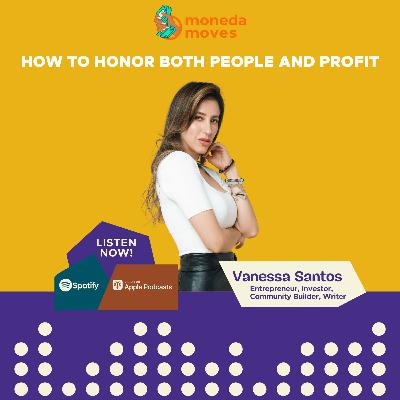
Many people say business isn’t personal, but for Vanessa Santos, nothing could be further from the truth. To her, everything is a transaction, whether it’s a personal connection or a business deal. When she became CEO and Partner of #WeAllGrow Latina, Vanessa made it a point to live by that philosophy by engaging in meaningful exchanges of spirit, profit, and energy.Today, we’re exploring how she intentionally balances purpose and profit and how she and her business partner, founder Ana Flores, led through the company’s sale earlier this year. (Special thanks to our peer, Giovanna González, for recommending the Locatora Radio interview that inspired this conversation.)Vanessa Santos is a conscious business architect, keynote speaker, investor, and trusted advisor who has scaled and exited 8-figure businesses. As the former CEO & Partner of #WeAllGrow Latina (acquired in 2025), she helped propel the platform into the most recognized community for Latinas in the U.S., and over its 14-year history, channeled more than $20 million into the Latina economy while creating 30,000+ professional pathways for Latina changemakers and entrepreneurs.With two decades of experience leading global expansions, architecting award-winning campaigns, and driving cultural impact, Vanessa is known for her candid perspective on what it really takes to succeed as a woman of color in business. Her work interweaves well-being and leadership, guiding founders and executives to scale without losing themselves in the process.Today, she writes Letters from the In-Between while building her next venture from a place of consciousness and clarity. She continues to advise and speak to global audiences about conscious leadership, sustainable scaling, and the future of women founders in business.In this week’s episode, Vanessa Santos shares why she views money as energy and how she made the best decision she could with her partner when selling #WeAllGrow Latina. Vanessa’s view of money and community is not based on anything performative. Instead, she views it as an intelligent long-term strategy, a strategy that has benefited her both in the corporate world and as a partner in a new company. Her mission to be effective and alchemize money into opportunities has led her to invest in successful, conscious companies. Tune in to hear how Vanessa honors both people and profit in her business practices and how she’s managing her era of being in between.Follow Vanessa on Instagram @vanessasantosfein and on her LinkedIn. Follow #WeAllGrow Latina on Instagram @weallgrowlatina and inside their membership. Follow Moneda Moves on Instagram: @MonedaMovesFollow your host Lyanne Alfaro on Instagram: @LyanneAlfaroMain podcast theme song from Premium Beat. Our music is from Epidemic Sound.Podcast production for this episode was provided by CCST, an Afro-Latina-owned boutique podcast production and copywriting studio.
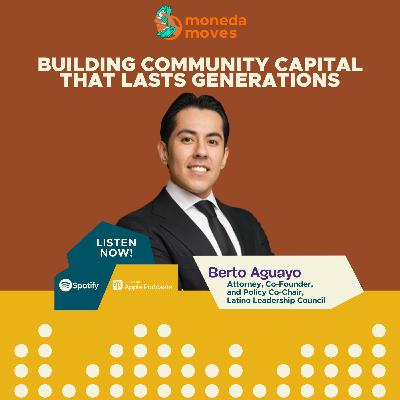
Welcome to a brand new era of the Moneda Moves podcast.In 2025, Latinos in the U.S. face palpable changes. From a Supreme Court ruling that enables federal agents to stop suspects based solely on their race, language, or job to immigration policies that create ripple effects on crime, public health, and the education of children from mixed-status families, the ground beneath us is shifting. That’s why Moneda Moves is evolving, to meet the moment.We’re extending the definition of what capital looks like. On Moneda Moves, we’re not just talking about assets and cash anymore; we’re talking about capital in all its forms: financial, social, political, and cultural. One of the topics I wanted to explore is how we use our organizing and politics to nurture, protect, and expand the collective power our communities have built. That’s why this week I sat down with nonprofit founder and organizer Berto Aguayo.Berto Aguayo is an attorney at K&L Gates and the founder of Increase the Peace Chicago, a nonprofit that empowers youth with the tools and mentorship to become community leaders. From his transformation as a former gang member to an advocate, Berto has helped over 700 young people access employment and civic leadership training, fostering safer and more inclusive environments. He also cofounded the Annual Black and Brown Unity Car Parade, a public celebration of racial healing and pluralism uniting Black and Latino groups.By speaking to Berto, I heard firsthand how Increase the Peace is using social and financial capital to strengthen the Latino community in Chicago. And it doesn’t stop there. He’s working alongside Black leaders to create a space where we can actually listen to each other and move in alignment.In this week’s episode, we break down how Berto and his team are building power that lasts generations. Berto is determined to use his capital to protect Latinos in Chicago because he wants to be the person he needed when he joined a gang at thirteen. Now, he’s working on solutions to intercommunity violence and supporting people impacted by ICE raids and deportations. There’s so much to learn in this week’s episode and so many ways you can take action. Tune in to hear how Berto is using his social and financial capital.Follow Berto on Instagram @berto_aguayo and on his LinkedIn. Follow Increase The Peace Chicago on Instagram @itp_chicago and on their website. Follow Moneda Moves on Instagram: @MonedaMovesFollow your host Lyanne Alfaro on Instagram: @LyanneAlfaroMain podcast theme song from Premium Beat. Our music is from Epidemic Sound.Podcast production for this episode was provided by CCST, an Afro-Latina-owned boutique podcast production and copywriting studio.
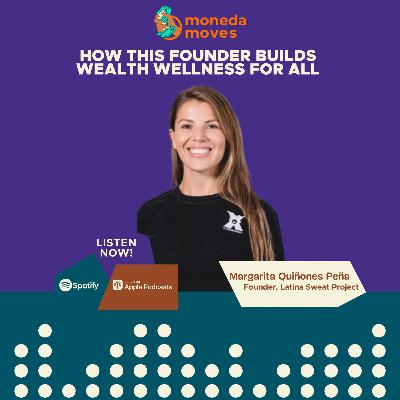
Welcome to an evolved era of the Moneda Moves podcast. As the environment changes around us and our communities face palpable threats to livelihoods and built wealth, we too are realigning, and you’ll notice that our episodes are going to sound a little different moving forward. We are extending the definition of what capital looks like for our community. Now on the Moneda Moves podcast, we're not just talking about assets and cash, we're talking about capital in all of its forms: financial, social, political, and cultural. We are an incredibly powerful and resilient community. There’s no better time to pull all our levers of power to not just survive but continue to thrive in any economy and administration. From entrepreneurs to innovators, we are rewriting what growth looks like. One of the topics we plan to explore on Moneda Moves is how we can support our community with our capital. We as a community have access to capital in our everyday lives. Via supporting value-aligned and good businesses, grants, community funding, and more, businesses can balance accessibility and sustainability. By tapping into these resources, we can support the most vulnerable people in our community. Today, we are highlighting the Latina Sweat Project, a Chicago-based wellness nonprofit dedicated to making yoga and holistic health accessible to underserved communities. I am also highlighting LSP as I also now sit as board co-chair, as I fully believe in their mission and how health becomes a fundamental pillar to building complete wealth. Margarita Quiñones Peña is the Founder and Executive Director of the Chicago-based nonprofit.. A first-generation Mexican immigrant, Margarita’s journey crossing the U.S.-Mexico border as a child shaped her lifelong commitment to equity, healing, and representation. She is also the author of Homecoming: El Viaje a Mi Hogar, a children’s book that uplifts the voices of migrant youth. Through Latina Sweat, she creates community-centered yoga classes, yoga teacher trainings, and wellness programs that empower women and families to reclaim their health, culture, and leadership.In this week’s episode, Margarita and I discuss how founding the Latina Sweat Project is building holistic wellness for entire communities. By making her classes financially accessible, the most vulnerable people in Chicago neighborhoods can participate in classes ranging from yoga to strength training. The Latina Sweat Project has grown from having to operate pop-up style to finally having its own studio, which launched earlier this fall. They plan to continue providing access to wellness for underserved communities while also growing as a thriving Latina-owned business. Follow Margarita on Instagram @mquino4. Follow The Latina Sweat Project on Instagram @latinasweatproject and on their website. Follow Moneda Moves on Instagram: @MonedaMovesFollow your host Lyanne Alfaro on Instagram: @LyanneAlfaroMain podcast theme song from Premium Beat. Our music is from Epidemic Sound.Podcast production for this episode was provided by CCST, an Afro-Latina-owned boutique podcast production and copywriting studio.

Mi gente! Welcome back to a very special episode of Moneda Moves. It’s no secret that this year has been a challenging one for Latino-centered companies and business owners. From shifting economic tides to political uncertainty, the landscape is testing us—but also pushing us to innovate and build smarter.As some of you may know, I had the honor of moderating a panel at SXSW all about the state of Latino startup hubs across the U.S.—and today, I’m thrilled to bring you that conversation as a live podcast episode!This panel was packed with real talk and insight from powerhouse women in business and investing. We explored what it really looks like to build in this moment: the challenges, the strategies, and the money moves Latinos are making as we continue to chase generational wealth.Yes, things feel uncertain right now. But uncertainty is also a call to strategize, not just survive. As a community, we can plan, pivot, and uplift one another.Here’s one thing we do know: Latinos now hold the fifth-largest GDP in the U.S.—and Latinas are leading the charge in new business creation. The women on this panel are proof of what’s possible, and I can’t wait for you to hear their wisdom.Here’s who joined us down in Austin in our LIVE podcast with our friends (who we did angel investing training with just last year!) at Inicio, impact-focused organization that supports and invests in early-stage Latino-led startups, working to close the capital gap and grow Latino entrepreneurship across the U.S:🎤 Eneida Roman is the President & CEO of Amplify LatinX, a business organization advancing the American economy by championing leadership representation, economic mobility, and public policy solutions that consider the immense contributions of Latino Americans. 🎤 Jessica Salinas serves as Co-President of New Rising Ventures and New Media Ventures, impact investment funds supporting entrepreneurs who are innovating for social and political power, respectively. 🎤 Maria Jose Palacio is a fifth-generation Colombian coffee farmer with an unwavering passion for empowering her community. Born and raised in a celebrated coffee region of Colombia, Maria spent several years working in design in New York City before her heart led her back to her roots in 2016. Witnessing the struggles of her loved ones in Colombia to make a living through coffee farming, Maria knew she had to take action by co-founding Progeny Coffee. With a fierce commitment to uplifting others, Maria overcame numerous small business obstacles to co-create a thriving distribution platform that empowers coffee farmers and helps lift them out of poverty. In this week’s episode, we’re tapping into the power and responsibility of Latino startup hubs.Late last year, our friends at Inicio Ventures launched a landmark startup hub report spotlighting 18 Latino startup hubs across the U.S.—regions that are home to over 35 million Latinos and brimming with entrepreneurial potential.These hubs are more than just business clusters—they’re centers of innovation, job creation, and economic momentum, led by Latino founders, funders, and ecosystem builders working to uplift their communities. And while the persistent capital gap is real—with Latino founders and funders each receiving less than 2% of startup funding—this report is less about what’s missing and more about what’s possible when we come together.Follow Eneida on Instagram @amplifylatinx and her website.Follow Jessica on Instagram @jsalinas011 and her website.Follow Maria on Instagram @mjpalacio1 and her website.Follow Moneda Moves on Instagram: @MonedaMovesFollow your host Lyanne Alfaro on Instagram: @LyanneAlfaroMain podcast theme song from Premium Beat. Our music is from Epidemic Sound.Podcast production for this episode was provided by Sarah Tulloch and her podcast production company, CCST.
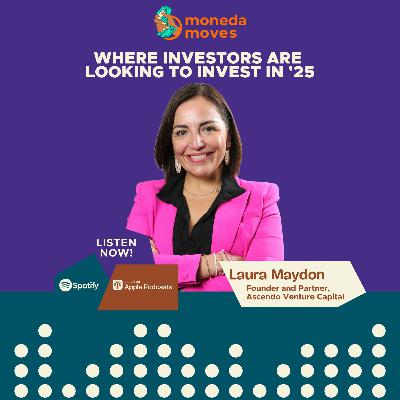
Finding investment opportunities is a huge part of scaling small businesses into multimillion-dollar companies and Latino founders are more likely to seek external funding to scale their companies. In order to secure funding and scale their business, they need to know how to pitch themselves to investors that will take their businesses to the next level. That’s exactly why this week’s guest is an investing powerhouse with decades of experience growing small businesses and generating millions of dollars in revenue. Laura Maydon is the founder ofAscendo, a venture capital firm unlocking trillions of dollars of untapped opportunities nationwide that are currently overlooked. Ascendo invests in early-stage companies led by groundbreaking underrepresented founders who are using disruptive technologies that address the needs of growing demographic segments and that empower women, with a preference for Fintech, Edtech, Future of Work, Healthtech, and Enterprise Software. Before founding Ascendo, Laura founded Endeavor Miami in 2013, the first US affiliate of the global entrepreneurial organization, pioneering Miami’s hub. During that time, Laura built a portfolio of more than 20 companies generating over $250 million in revenues, several with substantial exits. Prior to Endeavor, she held leadership positions at Visa and Panamco. Laura has strong Fintech, M&A, and PE backgrounds.Laura brings some pretty incredible statistics that remind us just how powerful our cohort truly is. She says that the US Latino economy is leading in growth and that itrepresents 3.6 trillion GDP. Which would be equivalent to the 5th largest global economy if it were its own country. There is so much economic power in the Latino community - that includes both their spending power and their entrepreneurial growth. And this week, Laura is teaching us how to harness that power. In this week’s episode, we’re learning all that we can from Laura’s experience as a founder and investor who helped companies generate hundreds of millions of dollars in revenue. We’ll be diving into the entrepreneurial side of things including the specific challenges and opportunities that founders face in 2025, as well as emerging trends across sectors, and the rise of cross-border Latino businesses. Latino-owned businesses are seeing a remarkable amount of growth in the last few years and so we’ll dive into how that will impact the global economy and what our audience can do to capitalize on that growth.Follow Laura on Instagram@Lmaydon and herwebsite.Follow Moneda Moves on Instagram:@MonedaMovesFollow your host Lyanne Alfaro on Instagram:@LyanneAlfaroMain podcast theme song from Premium Beat. Our music is from Epidemic Sound.Podcast production for this episode was provided by Sarah Tulloch and her podcast production company, CCST.
Pulse check, mi gente: How are we?
January was a very, very long month and came with multiple challenges for our community. And while these threats against ours and diverse communities across the board are flooding our newsfeeds, we must also seek and distribute resources that are available in these trying times. You can find information on immigrant rights here and updates on how the ACLU is responding here.
This is a marathon, not a sprint. We must believe we will get through this together. If you feel moved to, this is a great time to get involved in your local and extended communities also being directly impacted by executive orders. Feel free to tag @monedamoves in any helpful posts or link resources in our Substack comments.
We know that there is power in a community, especially at an economic level. Research shows that Latinos are the fastest-growing group of new business owners, we create new jobs with these businesses, and we have extremely strong purchasing power ($3.4 trillion to be exact). The broader Latino community and our smaller, more local communities have immense economic power that we can use to strengthen our communities.
But in order to access that economic power, we have to work together and we have to strategize. By working together, we can be the beneficiaries of our own economic strength. We can do that by focusing on our communities and putting money into our own communities. Small businesses have gone viral via online platforms, and not only gained social popularity, but have had economic success through their customers’ support and by catering to the needs of their audience Latino-owned businesses offer real, tangible value to their consumers, but it can’t do that if no one knows they exist and economic support.
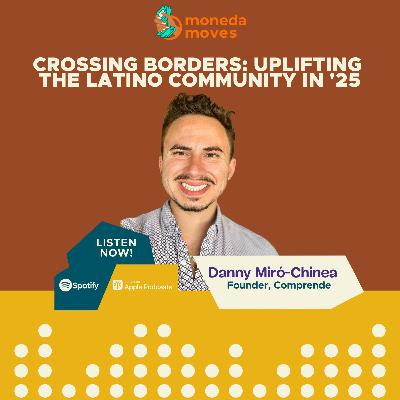
This week’s guest is ensuring the world knows about incredible Latino-owned businesses. Danny Miró-Chinea is a fellow advocate for the U.S. Latino community, dedicated to creating opportunities for our communities and celebrating Latino excellence through entrepreneurship, storytelling, and community building. As the founder of Comprende, Danny’s platform is designed to uplift the U.S. Latino community by supporting Latino founders, amplifying their businesses, and sharing inspiring stories of impact. Comprende operates as a weekly newsletter and creative agency focused on the U.S. Latino demographic and is working on building a marketplace to connect consumers and companies with Latino-owned businesses.
Through Comprende's creative agency, Danny has collaborated with startups like Suma Wealth, equipping Latinos with financial tools and resources as well as influential organizations like the Latino Donor Collaborative, shaping the narrative around Latino contributions.
In this week’s episode, I sit down with Danny to talk about the role of community building and mentorship in entrepreneurial spaces, the impact of AI on budding Latino-owned businesses, and how building a business can be used as a vehicle to affect positive social change. Latinos have an impressive economic power, and today, Danny’s going to teach us how to leverage that power as both a business owner and a consumer.
Follow Danny on Instagram @comprendelatino and his website.
Follow Moneda Moves on Instagram: @MonedaMoves
Follow your host Lyanne Alfaro on Instagram: @LyanneAlfaro
Main podcast theme song from Premium Beat. Our music is from Epidemic Sound.
Podcast production for this episode was provided by Sarah Tulloch and her podcast production company, CCST.
A warm welcome back to our Moneda visionaries. In the first week of the Trump administration, several actions have deeply impacted our community, particularly with heightened immigration enforcement and the removal of Spanish-language resources from the White House website. These moves, coupled with the threat of large-scale deportations, DEI order, and the dismantling of environmental justice programs disproportionately affect Latinos.
At Moneda Moves, we understand the power of stories, and we are committed to reporting responsibly at the intersection of money and cultura, especially as it applies to our leading entrepreneurial population. The numbers don’t lie: Latinos accounted for 36% of all new businesses in 2023, nearly double their 19% representation in the U.S. population. Immigrant Latinos are more than twice as likely to start a net new business compared to the U.S.-born population.
The stories we tell matter, and more than ever, they will continue to shape our reality. That’s why we started this platform—to ensure that the builders in our communities are seen and heard, especially when our contributions to the American economy and society for a long time went unrecognized in national headlines. Fundamentally, Moneda Moves believes in the inherent value of our community, as humans, but also in critical mass, and in our culture. This commitment remains steadfast.
In conversations with ecosystem builders who are working with underrepresented communities, it has been refreshing to know that we are not alone in this journey. A recent discussion reaffirmed the importance of staying informed, knowing our numbers which undeniably show the impact that we have together and how storytelling has the ability to create change. I highly recommend reading the 2023 State of Latino Entrepreneurship report by the Latino Business Action Network (LBAN) and Stanford Graduate School of Business.
The future is ours to shape, and we will continue to ensure that our stories are told with integrity and respect.
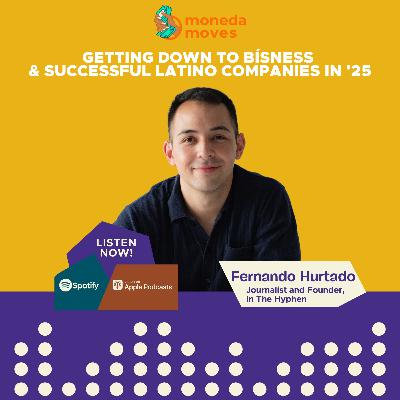
This is why we are also joined today by Fernando Hurtado, a former manager of digital video for NBCUniversal Local and the host/producer of Bísness School. Bísness School is a podcast that highlights the stories of Latino-owned businesses and the fact that Latinos are the fastest-growing group of entrepreneurs in the United States. That series won a silver Signal Award in 2024. Fernando has recently launched The Hyphen, a YouTube channel that covers one of the fastest-growing demographics, U.S. Latinos, with deeply researched, visually rich stories.
Beyond podcasting at major networks, Fernando was the lead producer on NBC’s My New Favorite Olympian podcast, which was named best sports podcast at the Cynopsis Sports Media Awards.
He’s expanded his coverage in this arena to the Paris, Tokyo, and Beijing Olympics for NBCUniversal Local. Hurtado was named to Broadcasting + Cable's 40 Under 40 in 2023. Prior to NBC, Fernando was at ATTN: and Sinclair Broadcast Group as a producer and editor. He is a graduate of the University of Southern California and lives in Los Angeles. He is currently an adjunct instructor of visual journalism and multiplatform Olympic and Paralympic storytelling there.
This journalist’s mission is to highlight Latino-owned businesses in English in order to reach younger bilingual audiences who are looking for positive representation in entrepreneurial spaces. In his effort to do so, he has produced over 20 episodes with successful Latino entrepreneurs, including Annie Leal, the owner of the $4M business, I Love Chamoy. It is no surprise that while living in Los Angeles, Fernando, like myself hails from Chicago, which is heavily influenced by Latino-run businesses, in neighborhoods from La Villita to Pilsen and Humboldt Park.
In addition to raising awareness about these businesses, he’s also sharing what’s working for them and what challenges they are facing in the entrepreneurial space so that other Latino entrepreneurs can learn from their stories. This week, Fernando shares how Latino entrepreneurs are using their stories to better market their products, why Latino businesses are seen as too niche or exclusive to other communities, and what trends he’s seeing in 2025.
Follow Fernando on Instagram @byfernandoh and his website.
Follow the The Hyphen podcast on YouTube, and wherever you listen to podcasts.
Follow the Bísness School podcast on Apple Podcasts, Spotify, and wherever you listen to podcasts.
Follow Moneda Moves on Instagram: @MonedaMoves
Follow your host Lyanne Alfaro on Instagram: @LyanneAlfaro
Main podcast theme song from Premium Beat. Our music is from Epidemic Sound.
Podcast production for this episode was provided by Sarah Tulloch and her podcast production company, CCST.
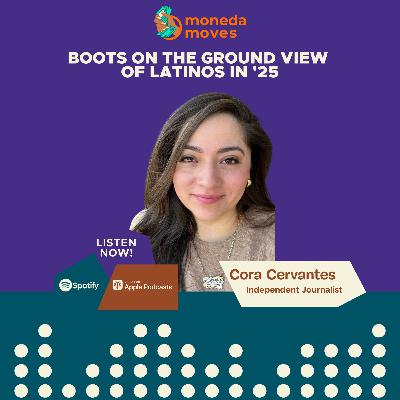
Welcome back, Moneda Moves community. Following an eventful start to this week in news, we have another amazing journalist on the podcast, Cora Cervantes, who spoke with Latinos all last year leading up to the election which landed Trump in office. She’s here to share what she heard on the ground from Latinos, many of who are business owners, and their biggest concerns they want to see addressed – inclusive of economic issues.
And before we dive in, we would be remiss to not acknowledge the way our Latino communities (plural) will be disproportionately targeted ahead of mass deportations set to start this week. As a platform that stands behind first builders, rewriting our narratives that exemplify our collective force, and tools for empowerment – we acknowledge how damaging the combination of rhetoric and actions on behalf of the new administration can and will be. During this time, we will be leaning into our personal community on the ground. We’ve also found Eliza Orlins, New York City public defender, and her explainers particularly helpful as of late.
As you know, this season we’re focusing on 2025 economic trends, how they affect our entrepreneurial community, and how our community will move the American economy. We have a memorable lineup for you and can’t wait to share the information and resources we’re producing this season.
As many of us know, 2024 was a tough year for small businesses. Average revenue was up, but so were expenses, according to Biz2Credit. Breaking down the numbers and net-net, profits were down: average monthly earnings for small businesses in the first 11 months of 2024 was about $86,000 - more than $60,000 lower than in 2023. Some entrepreneurs found themselves in the red in some cases, as this week’s guest independent journalist Cora reported. When interviewing working-class Latinos about their businesses in 2024, she found that people were struggling to keep up with the current economic climate, let alone improve their economic standing. It can also explain why Latinos voted with the economy among their top concerns.
This week’s guest, Cora, is an independent journalist based in Los Angeles. She covers politics, immigration, climate change, and race and culture with an equity lens. She has a network television and cable news production background at NBC News and MSNBC. She has produced digital stories for multimedia outlets, including NBC News, Al-Jazeera, Latino USA, palabra, High Country News, and Narratively. Cora is a graduate of Columbia University and holds a Master’s degree from New York University’s Arthur L. Carter Journalism Institute. She currently serves as a board member of NAHJ’s Los Angeles Chapter.
Cora spent much of 2024 speaking with working-class Latinos about their businesses and how they perceive the economic environment in the United States. Small business owners are holding out hope that the economy will improve. But with the rising cost of goods eating away at their profits, they’re eager for change. As a result, in the 2024 election, several sources she spoke with voted with the hope that the new president would improve the economy and protect their businesses.
In this week’s episode, we sit down with Cora to talk about what she learned while covering Latino business owners and their votes, as well as the coverage we can expect to see more of within the Latino community in 2025. We're discussing everything from why some Latinos voted the way they did to how stricter immigration policies could affect our day-to-day lives. The Latino community is incredibly diverse, and our reasons for what we do and who we vote for are layered. By having boots on the ground via journalists who speak with working-class business owners, we gain a better understanding of what they’re experiencing and why.
No te lo quieres perder.
Follow Cora on Instagram: @cora_cervantes
Follow Moneda Moves on Instagram: @MonedaMoves
Follow your host Lyanne Alfaro on Instagram: @LyanneAlfaro
Main podcast theme song from Premium Beat. Our music is from Epidemic Sound.
Podcast production for this episode was provided by Sarah Tulloch and her podcast production company, CCST.
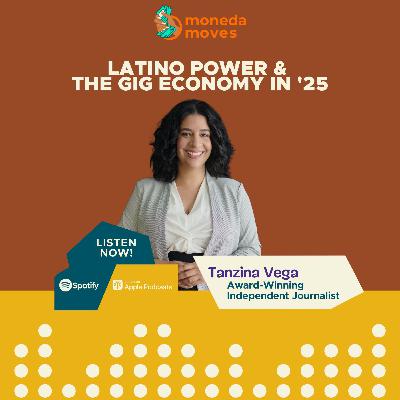
Mi gente, the first season of Moneda Moves is ready for launch! Thank you for joining us in the new year and our 180th installment of our Moneda Moves notitas. This season, we’re focusing on 2025 economic trends, how they affect our entrepreneurial community, and our community will move the American economy. You can expect to hear from some incredible experts this season, including investors and national journalists—starting with this week’s guest.
It is more important than ever to pay mind to how Latinos are contributing to the economy—especially Latinos in the growing gig economy. Did you know that two in five Americans are part of the gig economy? For Latinos, an impressive 50 percent identify as independent workers, as shared by the Independent Women’s Forum. In kind, this week, we’re exploring how we tap into all that joint economic power we yield as well as the ins and outs of the growing gig economy.
Our guest is the award-winning journalist, educator, and host Tanzina Vega. Tanzina has led coverage of inequality at some of the world’s most influential organizations, including The Boston Globe, The New York Times, CNN, and New York Public Radio. In my eyes, Tanzina’s news coverage is the blueprint for reporting on money and race in the United States, as well as on money and inequality overall.
The gig economy is growing, and Latinos are increasingly participating in it, whether it’s on its own or in addition to a 9-to-5 job..s. Freelancing has its perks—you can work from home, set your own hours, and be your own boss. But it’s not the kind of work we were traditionally encouraged to pursue or the same rules that apply. In our conversation with Tanzina, we discover that the shift toward the gig economy may have been born out of necessity. We also discuss how critical it is for Latinos to know their contracts, what to watch out for, and how to advocate for their terms and worth.
This week, we’ll discuss how Latinos can tap into collective potential and how to navigate the gig economy. While freelancing can create new economic opportunities, it’s important to learn from established professionals like Tanzina, who have covered and experienced the gig economy firsthand. When new freelancers lack the knowledge to navigate contracts and negotiations, they could end up with predatory terms and unreasonable conditions. But with the right resources and advocating for their worth we can leverage the gig economy to continue to wealth build.
No te lo quieres perder.
Follow Tanzina on Instagram: @tanzinavega
Follow Moneda Moves on Instagram: @MonedaMoves
Follow your host Lyanne Alfaro on Instagram: @LyanneAlfaro
Main podcast theme song from Premium Beat. Our music is from Epidemic Sound.
Podcast production for this episode was provided by Sarah Tulloch and her podcast production company, CCST.
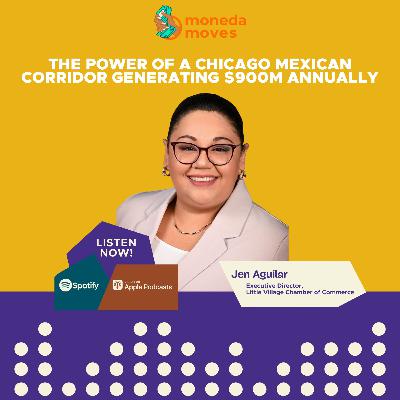
Can you believe it? We have arrived at the last installment of 2024 with Moneda Moves, and thank you for joining us this year! Throughout this season, we continued to cover top Latino entrepreneurs and leaders in the space looking to close capital gaps in our ecosystem, starting with my hometown, Chicago, the wider Midwest, and beyond.
This week, we’re coming back to our roots and talking about how Latino culture is influencing purchasing power. Little Village, a neighborhood in the southwest side of Chicago, is named the "Mexico of the Midwest" and generates over $900 million annually through its Latino-owned businesses. People come from all over the U.S. to experience the very specific type of nostalgia they can usually only find in Mexico. My immigrant parents sure did as I was growing up. It was here where we could find the botanica with medicinal herbs we were looking for or specific ingredients for a dinner with a taste of the motherland on Sunday afternoons.
Customers come for the food, the street vendors, and the experience of feeling at home in a familiar place. This kind of success has the potential to be a blueprint for Latino communities all over the U.S., and this week’s guest is sharing how we can both protect this wealth and strengthen it.
Jennifer Aguilar is the Executive Director of the Little Village Chamber of Commerce, where she leads the mission to foster the growth and prosperity of businesses in Little Village while harnessing the community's rich cultural heritage to create fresh opportunities. In her role, Jennifer orchestrates the comprehensive planning, coordination, and execution of all facets of the Little Village Chamber of Commerce and Little Village Special Service Area #25. This includes staff management, operations, programs, projects, and services. With over a decade of experience, Jennifer has excelled in safeguarding corporate brand image and reputation through adept management of public and private stakeholder relationships.
Authenticity is at the heart of Little Village’s success. With traditional street vendors, quinceañeras, and over 100 restaurants, the corridor's success comes from knowing what its customers want. That includes products that are not only culturally comforting but also good for them. During her time at Nostro Queso, Jennifer found that customers prefer to buy organic, preservative-free products and are willing to pay higher prices for products in places like Little Village than they would in chain grocery stores. She says that customers who come to shop at Little Village would rather pay for traditionally made products than anything else. But when towns like Little Village become popular, large corporations often move in, which can negatively affect the community when not done responsibly.
In this week’s episode, Jen talks about what’s going well in Little Village’s economy and what we can do to protect it. $900 million is just the beginning. There is so much more that the people of Little Village can accomplish if given the opportunity. To make sure they do get that opportunity, Jen is working with the community to ensure they have the chance to own their spaces, limit the negative side effects of gentrification, and thrive in this generation and the next.
No te lo quieres perder.
Follow Jen on Instagram: @jenmydear @littlevillagechamber
Follow Moneda Moves on Instagram: @MonedaMoves
Follow your host Lyanne Alfaro on Instagram: @LyanneAlfaro
Main podcast theme song from Premium Beat. Our music is from Epidemic Sound.
Podcast production for this episode was provided by Sarah Tulloch and her podcast production company, CCST.
What’s up, Moneda Moves community?
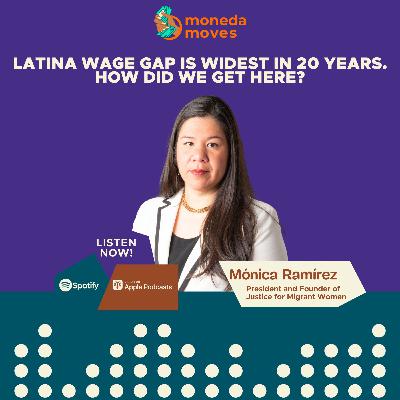
No one should be left behind in our mission to achieve equal pay, even for Latinas. Yet, in 2024, the Latina pay gap widened for the first time in 20 years. That's impacting Latinas across the board and in most disparate ways our caregivers, mothers, farmworkers, and people working in hospitality.
My time reporting out of NYC reminds me of a time when I covered farmworkers and activists marching 200 miles to Albany to demand basic workers' rights, including collective bargaining, workers’ compensation, and unemployment benefits. This was finally granted in 2019 via the Farm Laborers Fair Labor Practices Act.
This week’s guest is Mónica Ramírez, an attorney, author, and activist. She is the founder of Justice for Migrant Women and co-founder of Alianza Nacional de Campesinas, The Latinx House, and Poderistas. Mónica has received numerous awards, including Harvard Kennedy School’s first Gender Equity Changemaker Award, Feminist Majority’s Global Women’s Rights Award, and the Smithsonian’s 2018 Ingenuity Award. She was named to Forbes Mexico’s 100 Most Powerful Women’s 2018 list, TIME Magazine’s TIME100 Next list in 2021, and the Association of Latino Professionals for America’s (ALPFA) Most Powerful Latinas list for 2024.
Now more than ever, it’s so important to be aware of the inequities our communities face at all levels and to call them out. If we are ever going to see the equal pay we deserve, we need to bring marginalized workers on this journey with us. That includes the farmworkers, janitors, and caretakers. At Moneda Moves, we applaud how our community is building generational wealth through entrepreneurship, leading companies, and career progression. But in our interview with Mónica, we discuss how the best way to move forward as a community and to close the wage gap is to respect individuals across industries that power our society in search of equity. There is no room for disparaging the same jobs that gave the next generation a leg up in the first place.
In this week’s episode, Mónica highlights why the pay gap is widening and what we can do to fix it. The fight for equal pay is a long road ahead, but we can start within our own communities. Latinas are making on average 51 cents on the dollar compared to our white, non-Hispanic colleagues. This pay gap is affecting Latinas in white-collar jobs and blue-collar alike. We have a lot of work to do to fix this, and Mónica is here to teach us how.
No te lo quieres perder.
Follow Mónica on Instagram: @activistmonicaramirez
Follow Moneda Moves on Instagram: @MonedaMoves
Follow your host Lyanne Alfaro on Instagram: @LyanneAlfaro
Main podcast theme song from Premium Beat. Our music is from Epidemic Sound.
Podcast production for this episode was provided by Sarah Tulloch and her podcast production company, CCST.
Que tal, Moneda Moves community?
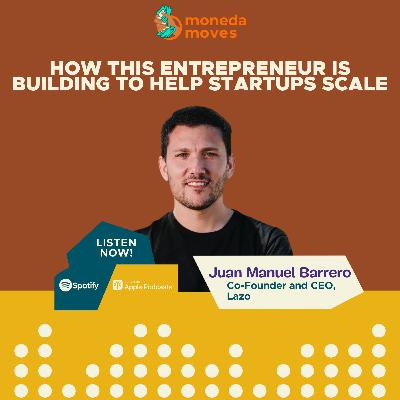
As both an employee and an entrepreneur in the financial industry, Juan knows just about everything there is to know about a business’s finances. He knew exactly what founders would need from a financial program like Lazo in order to grow their businesses, so he built it! Juan created a company that empowers Latino business owners through their finances and ensures they can scale their businesses.
Juan Manuel Barrero, a three-time entrepreneur, hails from Trenque Lauquen, a small town in Argentina, where he grew up in an accounting family business. Now based in Miami, he is building Lazo, a venture enabling him to make a significant social impact and transform his lifelong industry. His efforts benefit countless entrepreneurs while revolutionizing the sector.
Driven by the desire to create a substantial social impact, Juan aims to innovate and disrupt the CFO and legal tech SaaS industry. He recognizes the potential of AI, automation, and standardization in building scalable products. As the CEO of Lazo, he founded and leads the top gateway for Latin American startups in the U.S. Through partnerships with early-stage startups, Juan helps structure their data and provides a comprehensive VC-ready SaaS solution to address their finance, tax, legal, and investor relations needs.
Finances have always been a huge part of Juan’s life. His father was a CPA in a small town in Argentina, and he has been helping his father with the family business since he was a kid. As an adult, he also became a CPA and worked for major corporations for five years before becoming an entrepreneur and creating his own business, just like his father. His dad even became his first partner! It’s because of his experience in leadership positions and his community of Latinos in the financial industry that he created a program to give back to his community.
It hasn’t always been easy! From discovering his company was not sustainable to receiving hundreds of “no’s” from investors, he has experienced all the highs and lows of being a founder. He’s had to let go of businesses he wasn’t truly aligned with and find his true purpose before creating Lazo. Now, after years of recalibrating and redefining his purpose, Lazo is the number one pick for Latin American startups.
No te lo quieres perder.
Follow Juan on Instagram: @joinLazo
Follow Moneda Moves on Instagram: @MonedaMoves
Follow your host Lyanne Alfaro on Instagram: @LyanneAlfaro
Main podcast theme song from Premium Beat. Our music is from Epidemic Sound.
Podcast production for this episode was provided by Sarah Tulloch and her podcast production company, CCST.

Welcome back to another installment of Moneda Moves mi gente!
Diana Hernandez Wayne wants you to live your life intentionally; otherwise, what’s the point? I first met her at L’Attitude, the annual conference hosted by the $100 million fund (LAT VC) investing in Latino businesses.
Diana is an absolute force, and I am so excited to have her on the show. She is a wealth of knowledge and feels like she’s lived a thousand lives! Diana learned early in her career that she would rather live an intentional life than a stagnant one. To do that, she had to learn how to let go of her scarcity mindset.
Diana Hernandez is an executive coach and consultant who advises corporate clients, venture funds, and founders on scaling their businesses. Diana has experience moderating and leading career advancement workshops and uses neuroscience-based practices to drive change.
Before executive coaching, she spent her career in consumer brands, working for Fortune 500 companies, including Clorox, Brita, and Method Products. She has experience in P&L management and cross-functional roles in finance, sales, marketing, and e-commerce, with expertise in launching and growing multimillion-dollar brands with major national retailers.
Living intentionally comes at a cost. To live the life we want, we have to let go of our fears.
So many of us stay exactly where we are because we are afraid of failure. The fear of failure almost kept Diana in a financial reporting job she wasn’t aligned with. Once she overcame that fear and requested to switch departments, more opportunities opened up for her.
In this week’s episode, Diana shares the most important lessons she has learned from her years of personal and professional experience. Climbing the corporate ladder has never been easy, especially when she’s usually the only Latina in the room. She was frustrated with her career path but was afraid that pivoting meant quitting. Once she faced the grief of losing two sisters in one year, Diana knew she had to live her life intentionally. She needed to take control of her life and make her decisions from an empowered place and not from limiting beliefs.
It wasn’t until she left the finance department for the sales department, and then the marketing department, that she began to align with her true purpose. Diana learned that she had to let go of her scarcity mindset and embrace her power. After years of honing her skills, Diana is teaching corporate leaders how to embrace their power, build their brands, and live intentionally.
No te lo quieres perder.
Follow Diana on TikTok and Instagram: @dianalives
Follow Moneda Moves on Instagram: @MonedaMoves
Follow your host Lyanne Alfaro on Instagram: @LyanneAlfaro
Main podcast theme song from Premium Beat. Our music is from Epidemic Sound.
Podcast production for this episode was provided by Sarah Tulloch and her podcast production company, CCST.

This week, we’re highlighting a cross-border trailblazer who is dedicated to bringing financial news in context for Spanish speakers in the United States. Our guest, Enrique Castro, is dedicated to bridging the financial education gap he’s noticed in Latino populations by sharing the knowledge he’s learned firsthand and creating a connection to current affairs. Each week, Enrique empowers his audience by sharing the latest financial news that impacts their families’ economies. He also shares inspiring stories of Hispanics in the United States who are transforming and strengthening the community. By advocating for his community on a local level and an international level, he is bringing financial literacy to those who need it most.
Enrique Castro is an economist, podcaster, and Director of Membership and Corporate Relations for the Greater Austin Hispanic Chamber of Commerce. As a Director, a role he accepted earlier this year (congratulations Enrique!) he uses his position to support Latino businesses in the Greater Austin area. His experience as a multi-hyphenate business owner has helped him understand the challenges of the needs of other small businesses. As host of the Economics and Finance podcast Taco Financiero, he is focused on documenting the Latino community here in the United States and speaking to how current affairs impact this community.
Before moving to the US, Enrique was born and raised in South Mexico where he studied economics at ITAM (Instituto Tecnológico Autónomo de México) and developed economic development policy experience while serving at the Mexican government.
Many external factors affect our personal finances - including upcoming elections, the cost of living, and the rate of inflation. But not everyone knows how to make sense of these external factors in the context of their everyday finances. This is why Enrique has made it his mission to educate the Latino community and let us know exactly what we should expect.
In this week’s episode, we'll talk about his experience working as an economist and an entrepreneur, his story of how he immigrated to the U.S., the macro trends that he's watching this year, and how the election may impact entrepreneurs.
No te lo quieres perder.
Follow Taco Financiero on TikTok and Instagram: @tacofinanciero
Follow Moneda Moves on Instagram: @MonedaMoves
Follow your host Lyanne Alfaro on Instagram: @LyanneAlfaro
Main podcast theme song from Premium Beat. Our music is from Epidemic Sound.
Podcast production for this episode was provided by Sarah Tulloch and her podcast production company, CCST.
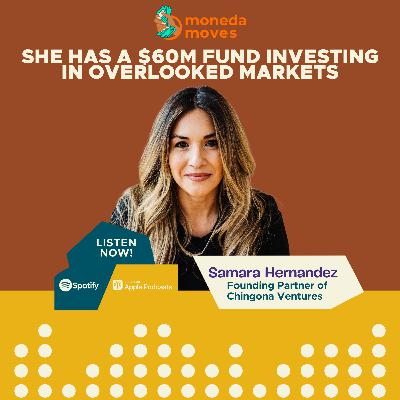
Today we are honoring the Midwest by shining a light on Samara Hernandez, the Founding Partner of Chingona Ventures. Samara and her team are the perfect examples of the incredible talent living in our hometown of Chicago.
Chingona Ventures is an institutionally backed pre-seed stage fund focusing on investing in tech and tech-enabled companies across the U.S. The fund has $60MM in AUM and has made more than 40 investments across technology sectors in Financial, Food, Future of Work and Learning, and Health/Wellness.
Samara is on the advisory boards for Coolwater, an organization to support the emerging manager community; Angeles Investors, an organization investing in early-stage startups led by Latinx founders; and Venture Forward, a non-profit working to get more diversity in the venture
capital ecosystem.
She started her career at Goldman Sachs where she continually ranked in the top five for selling financial products, providing market insights, advising on portfolio construction, and consulting business practices. From there, she became an investor at Math Venture Partners across two funds where she led investment review, diligence, and execution.
While the Midwest can be overlooked by investors, we have a lot of hustle over here and with Samara’s help, business owners with marginalized backgrounds are starting to get the funding they need to do great things. This is especially important as founders with minority backgrounds find it hard to get funding.
In this week’s episode, Samara shares how her path to investing was a reaction to her environment. As a result, Chingona Ventures focuses on industries that are massively changing and founders whose backgrounds uniquely position them to create businesses in growth markets that are often overlooked. She and her team focus on areas in financial technology, the future of work, the future of learning, food technology, and health/wellness. Chingona Ventures invests in founders with a racial or ethnic minority with both cold and warm intros. She and her team have reviewed over 7,000 cold and warm inbound submissions, averaging five to six deals reviewed per day, at the time, invested in more than 40 different companies. That is such a high volume for such a lean team!
No te lo quires perder.
Follow Chingona Ventures on TikTok and Instagram: @chingonaventures
Follow Moneda Moves on Instagram: @MonedaMoves
Follow your host Lyanne Alfaro on Instagram: @LyanneAlfaro
Main podcast theme song from Premium Beat. Our music is from Epidemic Sound.
Podcast production for this episode was provided by Sarah Tulloch and her podcast production company, CCST.

What do Black and Latino entrepreneurs look like, uninterrupted?
That’s the question, Felecia Hatcher, CEO of Pharrell William’s Black Ambition Opportunity Fund, has for the entrepreneurship ecosystem.
Hatcher is a White House Award-Winning Entrepreneur, Motivational Speaker and Author. The Fund, which she leads, invests in diverse entrepreneurs with capital, mentorship and uninterrupted access to resources and opportunities. There is nothing she can’t do.
In the last three years, the Fund has invested in more than 100 Black and Latino-led companies, all which have gone to raise more than $95 million.
Today we are speaking with Felecia about the capital gaps for Black and Latino entrepreneurs, the big opportunity that comes with investing in POC communities and her own journey as business owners from owning a gourmet popsicle company with her partner to becoming CEO of Black Ambition.
No te lo quires perder.
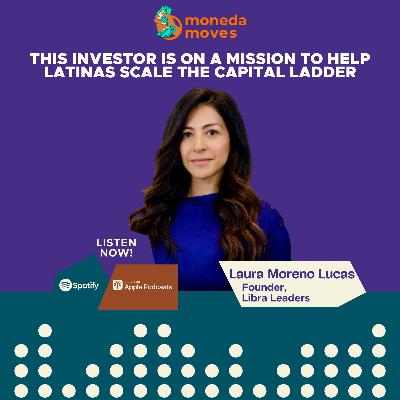
You were just hearing from Laura Moreno Lucas, a Latina entrepreneur, about the purpose behind her latest initiative Libra Leaders (https://libraleaders.com/). It’s a new platform with a collective $1.2B in investment capital setting out to help founders “scale the capital ladder,” by providing access to a network of influential women at every level of the capital markets, growth opportunities, and the big unlock for the Latino cohort: capital. Her founding team including Carolina Bradili and Anastasia Martinez sets out to build a wholistic ecosystem to uplift the next generation of unicorns. But prior to Libra Leaders, Laura had a history of working in the space from being an entrepreneur at an exiting company, to board member at bath and body brand Nopalera to being a general partner in venture. Before then, we had a pleasure of working together at Nasdaq, the stock exchange, where she was managing director for new listings and capital market.
Today, we speak about the new endeavor to uplift women entrepreneurs, and learnings in her career as one of the few Latinas to rise through the ranks in capital markets. No te lo quires perder.
Notes: This podcast was recorded during Women’s History Month in the lead up to Libra Leaders’ launch which was reported separately via Forbes. Find it here: https://www.forbes.com/sites/lyannealfaro/2024/03/08/this-platform-with-a-12b-investment-capital-helps-close-the-latina-founder-investing-gap/?sh=10d90ac55abe
Our podcast host cited that fewer than 12 POC-owned companies had listed on NYSE. Our research suggests that the stat may be even slightly more striking. A recent Marketplace interview in fact cites that “There have only been about 12 ever in all stock exchanges that are minority-owned and controlled companies to reach a stock exchange.”
Find the interview with Dream Exchange here: https://www.marketplace.org/2023/06/27/first-minority-owned-public-stock-exchange-looks-to-make-its-debut/
Follow Moneda Moves on Instagram: @MonedaMoves
Follow your host Lyanne Alfaro on Instagram: @LyanneAlfaro
Main podcast theme song from Premium Beat. Our music is from Epidemic Sound.
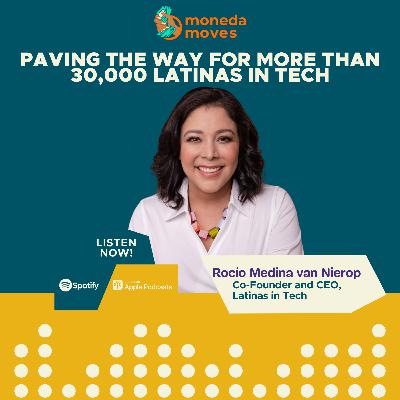
Welcome to the 2024 season of Moneda Moves mi gente. This year, we are speaking with leaders in the Latino entrepreneurship ecosystem who are paving the way.
And among them is Rocio van Nierop is Co-Founder and Executive Director of Latinas in Tech. For more than 15 years, she has been working in the tech industry and is and advocating for Latinx diversity and inclusion.
Today, Latinas in Tech consists of almost 30,000 women working at more than 100 of the top technology companies worldwide. As We All Grow cites, she now works with lawmakers at the city, state, and federal levels to help change the system from outside the tech ecosystem.
So I saw it fitting to ask her about her take on DEI in this year, a year where diversity equity and inclusion is being challenged by the right. No te lo quieres perder.
Follow Moneda Moves on Instagram: @MonedaMoves
Follow your host Lyanne Alfaro on Instagram: @LyanneAlfaro
Main podcast theme song from Premium Beat. Our music is from Epidemic Sound.

Comments

Download from Google Play

Download from App Store
 United States