


 Claim Ownership
Nerd Journey: Career Advice for the Technology Professional
Subscribed: 20Played: 991
Subscribe

Description
Are you a technology professional unsatisfied with your current role? Looking for a resource to help understand changing job functions, changing organizations, or gaining recognition and progression? The Nerd Journey podcast helps explore alternative roles, increase job satisfaction, and accelerate career progression. Each week, we uncover patterns of technical career progression by dissecting careers of guests and discussing different job roles they’ve held, or discussing relevant career topics. We’ve interviewed people in IT operations, sales engineering, technical marketing, product management, people management, network engineering, cybersecurity, software development, entrepreneurs, and more. We also discuss improving job satisfaction and accelerating career growth. We are John White and Nick Korte, two technologists with experience in IT operations and sales engineering who started this podcast in 2018. We release on Tuesdays, and can be found at https://nerd-journey.com.
369 Episodes
Reverse
Has organizational change redefined your job role? If it hasn’t yet, it will at some point. Whether acknowledged or ignored, every organizational change at a company impacts you. This is broader than just layoffs and more employees under a single manager. What are the organizational changes we might see, and what can we do to stand out and stay the course?
This week in episode 355 we’re joined by guest Ryan Conley. Listen closely as we uncover different patterns of organizational change and provide practical tips to take action when those changes happen. Ryan helps us understand the corporate lifecycle and how to reframe this concept to understand where we are in the career lifecycle. You’ll hear from Ryan’s personal experience why the most resilient (and successful) technologists can identify and fill the gaps left after an organizational change whether that means working for a new boss, joining a different team, or changing job roles.
Original Recording Date: 11-13-2025
Topics – Framing Our Focus on Organizational Change, Observations and Patterns, Defining the Career Lifecycle, When Colleagues Leave the Company, Layoff Resources, Working for a New Boss, Becoming Part of a Different Team, Shifting Job Roles or Job Level Changes, Parting Thoughts
2:58 – Framing Our Focus on Organizational Change
Ryan Conley is a global field principal with 11p years of technical pre-sales experience. Before this, Ryan accumulated 13 years of systems administration in industries like education, finance, and consulting.
In a recent episode of our show, guest Milin Desai compared organizations to living, breathing organisms that change.
Nick posits that we don’t always think changes at our company will or can affect us as employees, but they do.
Ryan references Aswath Damodaran’s writings about organizational change through the frame of a corporate lifecycle.
We can relate by considering where our company might be in that lifecycle.
As we experience the impacts of organizational change, Ryan encourages us to consider where we are in our career lifecycle.
4:19 – Observations and Patterns
We see organizational change in different ways. What are some of the things Ryan has seen that he would classify as organizational changes?
Let’s take a step back, past the current headlines, and look at the wider industry.
Companies are growing inorganically (through mergers and acquisitions) or organically through investments in R&D (research and development), for example.
Ryan has worked with companies that grew by acquiring 2 new companies each year to give an example. When you’re on the IT side of the acquiring company, there is a lot involved in the process like integrating e-mail systems, networks, and CRM systems.
This process also involves getting 2 teams to work together. If one team needs to move from Office 365 to Gmail, it can be a big adjustment to employees’ daily workflow.
The acquiring and acquired companies may have the same or very different cultures. In some cases, a company will want to acquire others with similar cultures, while some may not be concerned about the culture and choose to focus on the intellectual property (products or services, knowledge of how to build or manufacture something, etc.) of the company to be acquired.
Nick says the experience for people on the side of the acquiring company and that of the company getting acquired can be quite different. Nick worked in IT for a manufacturing company for about 9 years, and over the course of his time there saw the company acquire several other companies.
Nick usually had to go assess technology systems of companies that were going to be acquired and figure out how to integrate the systems in a way that would best service the user base.
From what Nick has seen, some employees from the acquired company were integrated into the acquiring company, while others were eventually no longer with the company. Anxiety levels about an acquisition may be different depending on whether you work for the acquiring company or the acquired company.
“The people are just as much of the intellectual property of the company as, in many cases, the actual assets themselves. And in some cases, that culture just isn’t a fit.” – Ryan Conley
Ryan shares the example of someone he knew who left after another company acquired their employer because the culture was not a fit. Losing a key leader or a key subject matter expert after an acquisition could create a retention problem because others may want to follow them or start looking elsewhere.
"So how do you protect the culture internally? How do you integrate a different culture in? But also, how do you kind of protect the long-term viability of the team as individuals, first and foremost, but then also the organization long-term?
Depending on the intellectual property the acquiring company is after, we don’t usually know the level of due diligence completed to understand the key resources or subject matter experts who must be retained for longer-term success.
Ryan encourages to imagine being the CTO or VP of Research and Development at a specific company that is suddenly acquired.
People in these roles drive the direction of the technology investment for their company today as well as years to come. After being acquired, these people might be asked to work in lower levels of leadership with different titles, which could result in “title shock” and require some humility to accept.
This scenario is a leadership change that happens as a result of an acquisition, but we might see leadership changes outside of acquisitions. Some leadership positions get created because of a specific need, others are eliminated for specific reasons, and some get shifted down or changed. Each of these changes has a downstream impact on individual contributors.
Ryan talks about the positive impacts of leadership changes and gives the example of when a former manager was promoted to senior manager and allowed that person to hire a manager underneath him. There isn’t always internal mobility, but leadership changes could create these opportunities for individuals.
Nick talks about the potential impact of a change in our direct boss / manager. If a boss who was difficult to work for leaves the company, getting a different boss could make a huge positive impact on our daily work lives. Similarly, we might have a great boss leave the company or take a different role, requiring that we learn to work for someone else who may operate very differently.
Ryan tells us he has worked for some amazing leaders and says a leader is not the same as a manager. Ryan cites an example of getting promoted into a role that allowed him to have more strategic conversations about the focus of a team with his boss. We can choose to mentor members of our team so that when opportunities arise from structural change, they are equipped to seize those opportunities. Change can be viewed as an opportunity.
A company’s overall priorities may have changed.
Shifting priorities may require a company to operate very differently than it has in the past, which can cause changes to people, processes, and technology.
Nick references a conversation with Milin Desai on constrained planning from Episode 351. Milin encourages regularly asking the question “is this still how we want to operate?” The way a company or team operated in the past may not be the best way to do it in the future. Changes to operations may or may not create opportunities for our career. Ryan loves this mindset of reassessing, which could apply to the company, a team, a business unit, the technology decision, etc.
“I love the mindset of ‘what was best, why did we do it, and why was it best then?’ And then the follow up question is ‘is that still best today?’ And it’s ok if the answer is no because that leads to the next question – ‘how should we be doing it today…and why?’” – Ryan Conley, commenting on Milin Desai’s concept of constrained planning
Ryan talks about companies reassessing their core focus. We’ve seen some companies divest out of a particular space, for example.
Nick says this reassessment could result in a decision to pursue an emerging market which could lead to the creation of a new business unit and new jobs / opportunities for people. It could also go in the other direction where the company decides to shut down an entire business unit.
15:30 – Defining the Career Lifecycle
Going back to the analogy Ryan shared about corporate lifecycle, we can reframe this and look at the career lifecycle.
“Where are you at in your individual career journey? Where are you at in that lifecycle?” – Ryan Conley
People close to retirement may be laser focused on doing well in their current role and hesitant to make a change. Others earlier in the career may want to do more, go deeper, or be more open to making a change. Ryan recounts speaking to a peer who is working on a master’s degree in AI.
“With challenge comes opportunity, so do you want to try something new? And it’s ok if the answer’s no. But if there is an opportunity to try something new and you’re willing to invest in yourself and in your company, I think that’s worth considering.” – Ryan Conley
We’ve talked to a number of former guests who got in on a technology wave at just the right time, which led to new opportunities and an entirely new career trajectory. Becoming aware of and developing expertise in emerging technologies can lead to new opportunities within your company (i.e. being able to influence the use of that technology within your company).
“I think as technologists, whether you’re a business leader over technology, whether you’re day in / day out in technology as an individual contributor…emerging technology brings new challenges, just with a learning curve…. There’s hard skills that have to be learned. You get beyond the education it’s then also sharing with the peers around you…. So, what was best yesterday? Is it still best today? And
Imagine your work day starting off like any other only to find you’ve been laid off. What would you do next?
Dave Stevens lived this reality a couple of years ago and joins us this week in episode 354 to share the lessons from that experience. We’ll take you through how Dave processed the news of being laid off, the warning signs he missed, when he knew it was time to begin searching for a new role, how he thought about what to do next, and the critical importance of his personal and professional network throughout this process.
Regardless of your age or the size of your professional network, Dave shares actionable suggestions for building professional connections that we all may be overlooking.
Original Recording Date: 10-28-2025
Topics – Background and the Impact of a Layoff Event, Initial Forward Progress and Reliance on a Professional Network, Skills Gaps and Unexpected Positives, Elements of the Personal and Professional Network, Reaching Closure and Reflecting Back on the Lessons
2:27 – Background and the Impact of a Layoff Event
Dave Stevens is a Field Solutions Architect at Pure Storage. In this role, Dave is a technical overlay for pre-sales technical personnel at Pure across North America. This is the role Dave took after he was impacted by a layoff.
What was Dave’s role before he was impacted by a layoff event?
For context, the layoff event we discuss in this episode took place around 2.5 years before this recording.
Dave was classified as a systems engineer or pre-sales technical resource at his employer supporting multiple account reps. It was more of a solutions architect type of role, and Dave highlights his entry into this organization and role was via acquisition.
Was there an element of technical marketing to the role? Nick mentions that Dave often had to attend trade shows in this role.
Dave had a virtualization background and went to a lot of events to discuss how his company’s products integrated with those different technology ecosystems.
The day Dave was laid off started as a normal day at his home office. His boss was based in Europe, so most 1-1 calls were usually late in the day his boss’s time (early afternoon for Dave).
A meeting popped up that was earlier than usual, but Dave didn’t think anything of it.
Right after Dave joined the remote session for the meeting, someone from HR joined followed by Dave’s boss.
Dave wasn’t quite sure what to expect and didn’t know what was happening. He didn’t know if it was a layoff coming or some other kind of situation happening at his company.
When Dave was laid off, they told him it was not for performance reasons, but there weren’t really any other details provided on why he was being laid off.
“So, at that point it was just like, ‘what do I do?’” – Dave Stevens, on receiving layoff news
After receiving the news, Dave’s access to company systems like e-mail was quickly cut off. He went downstairs and spent the rest of his day relaxing. Dave did not want to talk about what happened any further that first day.
Did Dave struggle with separating his identity from his employer or the job he held at all when this happened?
Dave says he did, at least a little bit.
Dave wanted to be successful in whatever role he found himself, and the reason he was in the systems engineering role at the time of the layoff event is a result of his drive to be successful in the years leading up to that role.
“I also wanted to make sure that…the people that I worked with that I enjoyed working with. If I didn’t enjoy working with them, then there was no reason to continue staying there. So that’s part of my identity on how I interact with work.” – Dave Stevens
In the early days of Twitter (now X), Dave defined an identity there. He also created a personal blog. Dave says his identity was often tied to where he worked.
“Once this all happened, I just kind of cut that off. And I needed some time to really digest what I just went through that day.” – Dave Stevens
Is there something Dave wishes people had done for him when this first happened?
Dave says he wishes he would have listened to his wife. Before experiencing the layoff event, a number of colleagues who had entered the company through acquisition like Dave were either leaving or had been laid off (including his boss being laid off). At the time, Dave didn’t think much about these events.
Dave’s wife had encouraged him to look for other jobs before the layoff happened, and he feels he should have listened.
“It’s much easier finding a job when you have a job. There’s not as much pressure on you. You can take your time and really find the job that you want. That’s the one thing that kind of took me by surprise….” – Dave Stevens
Did Dave’s wife also point him in a direction or provide feedback on the type of work he should pursue?
We’ve spoken to previous guests who had spouses that provided insight into the type of work that made them happy.
Dave feels like there has been an element of this in place since he and his wife got married.
When Dave got a job opportunity to relocate to the New Hampshire area, his wife had some interesting feedback.
“It’s great that you’re going to make more than you’re making at the job you are currently, but I don’t want you to take a job just because of money. I want you to take a job because it’s something you’re interested in doing and you’re going to be happy at. So, I’ve always kept that in the back of my mind every time I go and look for a job….” – Dave Stevens, quoting his wife’s advice
Dave considered this same advice when pursuing his current role at Pure. Because he enjoyed meeting and speaking with people during the interview process, the decision to accept the role was easy. Liking the people he would be working with was more important than a pay increase.
10:53 – Initial Forward Progress and Reliance on a Professional Network
How long did Dave need to process before taking the first actions toward a new role?
For the first 3 weeks or so, Dave relaxed a little bit. There were a number of projects at home that he needed to do and some that he wanted to do. Working on the projects helped take his mind off what had happened.
Dave mentions he was given a severance for about 3 months and wanted to find a new role within that time period if possible. But if he could not find something in that time period, it would not be the end of the world.
Dave tells us it was easier to find work when he was laid off than it is currently. Close to the time of this recording, AWS announced job cuts for up to 30,000 people.
He made the conscious decision after those first few weeks to spend the first part of the day searching for new jobs and then continued working on different projects in the afternoons.
How did Dave know who to reach out to first? Nick argues that most of us likely don’t have a list of who we would call if something like this happened.
When Dave came to the New England area, he started working for Dell in tech marketing. Through his work, Dave built a tight bond with many of his co-workers.
Dave remembers sending a text message to many of his former co-workers (none of which were still at Dell) asking if they knew of any open opportunities. Dave wanted to understand what former colleagues were working on now and what the culture of their company was like. He started by seeking out people he already enjoyed working with and analyzed whether it made sense to go and work with them again.
Was Dave open to different types of roles in his job search, or did that not matter?
It had to be interesting work and involve people he wanted to work with or enjoyed working with. Dave says as long as it was something in the tech field, it didn’t matter too much.
Dave began his career in systems administration and tech support and had experience in the storage industry, with backups, and with Active Directory to name a few areas. He had also done technical marketing and was open to returning to it. Dave also looked at pre-sales systems engineering or solution architect roles.
What about taking roles that moved him deeper into a business unit like product management?
Dave says product management is interesting work, but depending on the company, the work may not always have the technical aspects he likes.
Many of the product managers at Pure are quite technical, but most of the product management roles he observed at other companies were not as technical as he would like.
“It just didn’t interest me. It wasn’t technical enough in nature for me.” – Dave Stevens, on moving into product management
It sounds like Dave had done a good job of keeping in touch with people in his professional network over time.
“I have always made sure to have a small group of folks that I can just reach out to at any time and…chat about anything…. I’ve always made sure to have that…. I didn’t talk to them all the time, but we all interacted in some way, shape, or form whether it was an e-mail or text messaging…even some stuff on LinkedIn. We all kind of kept in touch…. I had people that I could fall back on and reach out to and get advice from if I needed to. This is the time where I really needed some advice on where to go to next.” – Dave Stevens
Dave says he was lucky enough to find a new job before the end of his 3 months of severance pay.
Dave’s wife commented that she wasn’t too worried about him. She knew he had a strong professional network.
Did anyone in Dave’s professional network ask him what he wanted to do next, or did they just start making recommendations based on what they knew about him?
Dave says it was a little bit of both.
Some people pointed Dave to specific open roles in the same group where they worked (still in tech, of course), while others directed him to the company job site and offered to act as a referral for him.
Dave tells us he’s very willing to give others a referral.
“I want to make sure that people that I know and I like to work with come to work w
How can we help recruiters advocate for us in a tough job market?
According to people industry veteran Christy Honeycutt, our guest in episode 353, it starts with being kind and translating your experience into something a recruiter can understand. And even more importantly, it takes practice.
In part 2 of our discussion with Christy, she translates deep experience in talent acquisition and recruitment that gives us insight into the current job market. You’ll hear more details about the nuances of RPOs (recruitment process outsourcers), the difference between job hugging and job abandonment, and the importance of personal branding and differentiation. Stay until the end when Christy shares her reasons for turning down C-suite positions and how clarity on her long-term goals is carrying her forward into what’s next.
Now that you’ve heard someone model it for you, how will you translate your own experience?
If you missed part 1 of our discussion with Christy, check out Episode 352 – People First: Systematizing Go-to-Market for Your Role with Christy Honeycutt (1/2).
Original Recording Date: 09-30-2025
Topics – A Deeper Look at Recruitment Process Outsourcing (RPO), Translating Your Experience with 3 Wins, Bad Actors and Leadership in the People Industry, Today’s Job Market and Life Outside the C-Suite
2:56 – A Deeper Look at Recruitment Process Outsourcing (RPO)
When it comes to RPO (recruitment process outsourcing), is this a one-size-fits-all approach, or does it show up differently depending on what a company needs?
In Christy’s experience, most RPO organizations offer services like executive search, but they may offer full RPO, which usually involves hiring more than 500 people per year.
Normally an RPO brings a mix of skills to the table. A client may want the RPO to take only talent acquisition or may want to control offer management, but they may want the RPO to take everything (attracting new talent, offer management, coordinating with HR for new employee onboarding).
“If a company wants it a certain way, they can stop it at a certain point…. But most RPOs, full RPOs, is attraction to offer accepted and then it tees over to the HR team.” – Christy Honeycutt
John has worked for companies where the recruitment or talent acquisition personnel were marked as contractors in the internal global address book but had company e-mail addresses. Would this mean the personnel are contracting directly with a company or working through an RPO?
Christy says it could be either scenario. When she managed an RPO earlier in her career, they were most successful when the client encouraged the RPO to brand as the company.
Someone might indicate they do recruitment for a specific company on LinkedIn but be an employee of an RPO.
Christy tells us how important it is for the RPO to understand an organization’s mission, vision, benefits, and culture because the RPO is often attracting talent and selling people on why they should apply and interview.
“When you think about recruitment and talent acquisition, regardless, it’s a lot of marketing because you’ve got a really cool position and you’ve got to find the perfect fit.” – Christy Honeycutt
5:55 – Translating Your Experience with 3 Wins
Right now, recruiters and talent acquisition professionals have a distinct challenge. Many resumes look the same because candidates are using AI tools.
“What people think is helping set them apart is actually making them look more similar. So now you’ve got recruiters and talent acquisition; they don’t know if these are fake resumes. They don’t know if they’re real. And they’re getting on the call with these people and finding out they are fake; they don’t have any of this requirement.” – Christy Honeycutt
Christy shares a little secret about learning recruitment. She gives the example of a recruiter needing to recruit for an executive level role in technology.
Recruiters are encouraged to seek out and find the C-players to practice asking them questions, understand nuance, and grasp the terminology. This is a training exercise.
Following this process, a recruiter would then have more credibility once they speak to the A-players they actually want to hire.
“What I would encourage is if you are a C-player, you’re not going to know it. Just be kind and know that the person you’re talking to has never held a technical role (probably, most likely)…and might not understand half the stuff that you guys do. The acronyms aren’t going to be the same. Just be gracious with them because the more you can help them translate your experience, the better you’re going to be positioned to get you over the line…. They don’t want to talk to 10 people to get 1 hire. They want to talk to 3 people to get a hire…. And remember that the TA, HR, recruiters, whatever you want to call them…there’s a pretty good chance that they want to help you and that they’re doing the job because they like people. And I think they get a bad rap.” – Christy Honeycutt
Christy tells us about something called a slate (a group of 3-5 individuals who apply for a job that a recruiter will go and interview). Recruiters are using AI to help filter through applications.
“The biggest thing I can tell you is be your own person. Be your own, authentic person. Have your stories of how you’ve shown up and shown out…. I tell everybody for every job that you’ve worked at, you need to have 3 wins…. Figure out…your top things that you accomplished at each role and have that and be ready to speak to it. And then…ask questions. Interview them too…. Make sure it’s a culture fit for you.” – Christy Honeycutt
Christy says things like the great resignation and quiet quitting are just behaviors that get repeated over time. Right now, there is a fearful state of job hugging.
“We’re job hugging. No one is hugging a job. People are trying to stay employed in the market. That’s all it is.” – Christy Honeycutt
Christy says if you are staying somewhere because you have a job and are not happy, figure out how to make yourself happy by determining it is not a fit, understanding your passions, and beginning your exit plan.
“Companies are not our families. They are going to let us go. It’s going to come down to the business.” – Christy Honeycutt
It’s important to keep the human element in mind if we are seeking a new role (the human element on both sides).
Christy tells the story of a senior recruiter who called her about a conversation with a job candidate, and Christy knew the person was burned out, bored, and curious.
“High performers are always open minded and curious, but if you fall in that category, figure it out sooner than later so you’re not burning yourself out because then you’re in a very dangerous situation. That job hugging is going to be job abandonment. You’re going to get to boot. It’s not going to be the other way around. It’s just kind of level setting with your psyche.” – Christy Honeycutt
11:28 – Bad Actors and Leadership in the People Industry
Going back to recruiters getting practice and experience from interviewing candidates, Nick looks at this from the lens that everyone needs at bats to gain experience. Though it may be batting practice for a recruiter, it is also practice for the candidate. We don’t practice interviewing very often.
Christy agrees it is practice on both sides and emphasizes that kindness is key.
She’s had multiple conversations with recruiters who didn’t understand why a hiring manager did not want a specific candidate. We might never know all the effort a recruiter put into promoting us with a hiring manager.
Some recruiters, however, should not be in their roles. Christy tells us about a time in her career when she was referred to as “The Kraken.”
Christy managed a tight team of talent acquisition professionals who respected and loved her as a boss. They knew she had high expectations of her team. Christy’s team members would have to launch programs for global clients within 30-60 days sometimes, for example.
“So, my team had to be kind of like special ops because we managed the globe, and it was high pressure.” – Christy Honeycutt
As she progressed in her career, Christy would be given individuals who were not performing on other teams. Before managing someone out of the business, Christy always gave people a chance to redeem themselves because until she met the person and they worked for her, she was only hearing one side of the story.
Christy recounts being asked to join an RPO to clean it up.
She met with each recruiter to understand the key metrics and performance indicators.
Christy tells us that for any job opening (or job requisition) a recruiter was carrying at this time, they should be submitting 3-5 candidates for each job, and a manager would expect this within 2 weeks of the job opening. There was a specific recruiter who only submitted 2 candidates per week across 15 job openings, and Christy recounts the performance conversation with this person.
“There are some people that are in roles that they shouldn’t be that take advantage and kind of sit back….” – Christy Honeycutt
As people gain seniority in talent acquisition and recruitment, sometimes you deal with people’s egos. This is the exception and not the rule.
John mentions it would probably be difficult to coast based on one’s reputation in talent acquisition. Based on the metrics for success and open job requisitions, it should be obvious who is doing well and who isn’t.
Christy says this goes back to leadership. Maybe these individuals never had a boss who would hold them accountable.
“If we go back to managers and leaders, most of them aren’t trained, and a lot of them want to be liked.” – Christy Honeycutt
Christy is the daughter of a Marine. This means the mission gets accomplished no matter what with the fewest amount of casualties. It’s her job as the leader of a team to keep them focused on the mission and accomplishing it. Removing someone from the team may b
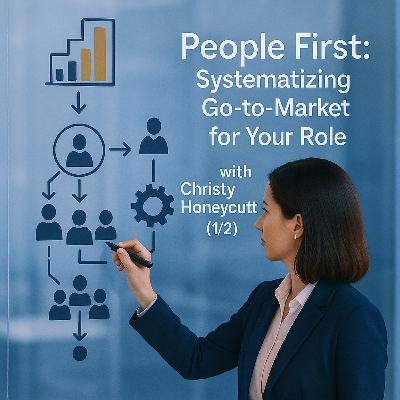
Go-to-market strategy is something we often associate with a company or its products / services, but what if we could apply go-to-market to our job role?
Christy Honeycutt, a talent acquisition veteran and our guest this week in episode 352, has used this mindset as a personal differentiator starting with her first job in the banking industry. We’ll follow Christy as she describes early experience as a people manager, learn why she developed a people first mentality, and recount the events that kickstarted her career in recruitment.
This story helps us understand what is required to systematize the work we do and how difficult it can be for things that seem easy. Christy will also educate you on the importance of developing AI competence and the impact of recruitment process outsourcing on job candidate experience.
Original Recording Date: 09-30-2025
Topics – Meet Christy Honeycutt, A Go-to-Market Perspective, Beginnings in the Banking Industry, Learning to Systematize and Duplicate Yourself, A People First Approach, Getting into Recruitment
2:10 – Meet Christy Honeycutt
Christy Honeycutt has 20 years of talent acquisition experience, go-to-market experience, and some marketing experience sprinkled throughout.
Christy is also the host of two different podcasts:
On Inside the C-Suite, Christy interviews executive leaders to gain insight from life in these roles.
StrategicShift is focused on the future of work, innovation, and AI.
3:17 – A Go-to-Market Perspective
How would Christy define talent acquisition and recruitment and the differences between them?
Recruitment should be thought about as more active. There is a job open with specific requirements which need to be filled based on time constraints.
Talent acquisition is more strategic according to Christy. This would include understanding why a role is vacant, the succession plans, cultural initiatives, and workforce planning. Christy refers to this as “engaging passive pipelines for long-term goals.”
Personnel in talent acquisition and recruitment are usually in those roles because they want to help people, but these roles may look slightly different across companies of various sizes and in different industries.
How would Christy define go-to-market? We hear this term quite often but are not confident that everyone truly understands what this means.
For context, Christy talks about looking at this with a lens across many different departments / internal organizations – marketing, recruitment, and even sales.
“Go-to-market is understanding what is the product and who is the end user…. Am I filling a job? Then I’m going to market for that candidate that fits that job. Am I working for a tech company (which I most recently did)? Then, yes, I need to understand what is our product, who is the end user, who is the buyer…and how can I get this to market for them…to see, to use to buy, and to be delighted in? The go-to-market is really kind of a Frankenstein effect in my opinion. It’s really understanding the value and how it translates and then how you can connect the dots…. Go-to-market for me has just kind of been at my core since I was a kid.” – Christy Honeycutt
For recruitment, the go-to-market is usually set based on an organization’s vision, mission, values, and culture.
Christy uses the example of negotiating with her father (a former Marine) to get what she wanted when she was younger to illustrate that go-to-market can mean understanding how to sell.
7:01 – Beginnings in the Banking Industry
Christy was a cheerleader in high school and got a fully paid scholarship to college, but at age 17, she was diagnosed with cancer.
As a result of the diagnosis, she was not able to attend college. Christy always wanted to be a mom and did not want to ruin her chance to have children.
Christy married her college sweetheart and became a stay-at-home mom of 2 children.
She is now heathy, happy, and thankful she was able to have children.
Christy’s father owned a nonprofit, and even while she was a stay-at-home mom, Christy was involved in marketing for nonprofits as a result.
Christy also was part of the boards of her children’s schools, did volunteer work, and even taught pre-school.
After moving to a new state, Christy needed to get a job to support her children. After applying at a bank, she landed a manager job.
Within 6 months, the bank branch where she worked was the highest producing in the state of Texas.
Christy came up with marketing initiatives to get customers to visit the bank. She gives the example of a yearly Halloween contest.
At one point, the bank was robbed, and Christy learned to lead in stressful situations through this experience. She also learned that she has a photographic memory.
Christy tells us her career really began in banking and then transitioned into marketing. Listen to the story about one of her clients who was a mortgage broker.
Christy had 2 boys in various sports and was wearing herself out between work at the bank and home life.
This mortgage broker sent an e-mail to help Christy get interviews for a role at a different bank.
Christy tells the story of interviewing in the mortgage division of another bank (Prime Lending) close to Halloween. She was dressed as Lucille Ball for an event at her employer and ended up going to the interview in costume. The people who interviewed Christy loved it, and she was offered the job on the spot.
11:40 – Learning to Systematize and Duplicate Yourself
“But the really interesting thing that happened is they said, ‘we want you to hire 3 of you…. What you’re doing is working, so what we’d like you to do is go have a think about how you can multiply that into other branches….’ Can you imagine sitting down and going, ‘what is it that I did today and how did I do it?’ …And, just really creating a job description, a profile, how they’re going to be successful…and then find the people and train the people? So that was my very first…experience with recruitment.” – Christy Honeycutt
After removing the shock of being told to multiply herself, Christy began a process that she would repeat over and over in her career – thinking outside the box to create something special that she could automate or systematize.
At that first bank, Christy managed people but had no prior training as a manager. How did she figure out how to manage people, and then how did that translate to the role in which she was asked to create job descriptions and multiply herself?
We’ve heard from some guests that most first-time managers do not get training. Christy echoes this sentiment.
Large banks will train you on laws and procedures, but Christy tells us she had to train herself on the people side. Mainly, she needed to learn how to manage the people, their schedules, and learn how to encourage them. Despite being the boss, Christy was still friends with the people who worked there.
In being asked to multiply herself, Christy had to systematize the job she was already doing. She tells us it was a daunting task.
“When you’re really good at things, what I’ve found is they seem natural to you, and they are not that hard.” – Christy Honeycutt
When asked to duplicate herself, Christy downplayed her contributions a little bit. She advises all of us to step back and really think about the work we have done because we might not immediately recognize it and may downplay it in a similar way.
As humans, we might at first feel like it is bragging to share the factual things we have done.
Christy had to think about what she did, simplify it, and figure out how to translate that to the people she needed to hire.
Christy was working for the mortgage division at a bank, and they needed to get more loans. She first sought to understand the sentiment of the bank’s customer base and if they had any needs. Step 1 was hosting a customer appreciation event.
The customer appreciation event generated direct feedback on the bank’s processes and product offerings.
Next, Christy sought to understand the bank’s target market, which was real estate agents. She thought about how to get real estate agents to use this specific mortgage broker. New real estate agents need help with marketing, so Christy got certified and began teaching marketing classes to real estate agents. All of the agents would eventually begin using the bank.
“It’s just kind of understanding what’s in it for someone else…. I just…went step by step by step and built the framework….” – Christy Honeycutt
The framework Christy mentions above outlined where the opportunities were for the bank (i.e. who might need their services), allowed for dividing up the work across divisions, and provided insight into the key performance indicators (KPIs) for measuring success.
In many ways, Christy acted as a liaison between the bank, the real estate agents, and end customers.
When seeking to hire people to do the work, Christy looked for empathetic people who were interested in helping others.
Another avenue for the bank to increase the number of loans was working with first-time home buyers who might have poor credit. This would help real estate agents who needed home buyers. The bank started doing credit repair seminars to generate new leads.
“I was bringing in buyers, delighting previous buyers, and then also going after the vendors that would help participate. Honestly, that model…has kind of been my two step my whole career.” – Christy Honeycutt
Nick thinks Christy’s process is actually a three-step with the third being supplementing the above with the type of education which will both Christy and the audience she seeks to serve. Nick thinks this pattern will probably be repeated somewhere in her story as well.
Christy says it actually does repeat. She recounts getting an AI-focused certification when this technology wave started catching on.
“In the next 12-18 months, over 80% of all organizations globally will have adopted AI if they haven’t already. So, if
Original Recording Date: 11/2/2025
Expect a Change Moving Forward – The Schedule
Hi everyone – thank you for being a listener. This is a brief reminder that episodes from this point forward will be releasing every 2 weeks for the time being. Life circumstances have demanded we make this change to keep producing the show.
Don’t expect any changes to our content. We remain committed to serving the technology professional and helping them accelerate career progression, increase job satisfaction, and be more effective in their existing role.
Thanks for coming along with us on the journey, and it will continue. Expect to hear from us every 2 weeks from this point. See you next week for another action-packed episode!
If you have ideas for a topic we should explore or a guest we need to have on the show, feel free to contact us via any of the channels below.
Contact the Hosts
The hosts of Nerd Journey are John White and Nick Korte.
E-mail: nerdjourneypodcast@gmail.com
DM us on Twitter/X @NerdJourney
Connect with John on LinkedIn or DM him on Twitter/X @vJourneyman
Connect with Nick on LinkedIn or DM him on Twitter/X @NetworkNerd_
Leave a Comment on Your Favorite Episode on YouTube
If you’ve been impacted by a layoff or need advice, check out our Layoff Resources Page.
If uncertainty is getting to you, check out or Career Uncertainty Action Guide with a checklist of actions to take control during uncertain periods and AI prompts to help you think through topics like navigating a recent layoff, financial planning, or managing your mindset and being overwhelmed.
What does it mean to become AI native? It’s not about using every AI tool on the market. For Milin Desai, the CEO of Sentry, it’s about becoming familiar with the tools and opting in to use the capabilities that deliver practical value. This mindset was born while Milin was the general manager of a business unit at a software company. In this role, he had to manage a profit and loss statement, learning the art of constrained resource planning and organizational adaptability.
In episode 351, our final installment of the conversation, listen as Milin describes both the gravity and different intensity of the CEO’s role compared to past roles. You’ll get insight into the strategy behind enabling an entire organization to shift and become AI native, how this translates into value for customers and employees, and how the individual contributor can be a better contextual communicator when speaking to busy leaders.
Stick with us until the end to understand how a set of first principles can guide our career progression if we choose to actively participate in it.
Original Recording Date: 09-29-2025
Milin Desai is currently the CEO of Sentry. If you missed parts 1 and 2 of our discussion with Milin, check out Episode 349 – Expand Your Curiosity: Build, Own, and Maintain Relevance with Milin Desai (1/3) and Episode 350 – Scope and Upside: The Importance of Contextual Communication with Milin Desai (2/3).
Topics – Contrasting the Role of General Manager with CEO, Embrace Practicality with New Technology, Junior Personnel and a Return to First Principles, Shifting Organizational Focus to Becoming AI Native, Contextual Communication to Leaders and Parting Thoughts
2:41 – Contrasting the Role of General Manager with CEO
General managers usually own a profit and loss statement (or PNL statement). How was this different than the things Milin had previously gone through?
Milin says you do have to prepare yourself for it, and his experience as part of product teams was very helpful to gain familiarity with many of the elements of the general manager role (i.e. revenue protections, investing resources in specific efforts, etc.).
Things get very interesting when you are managing PNL in a constrained environment. Milin gives some insight into annual planning and the behaviors he has observed during these times.
“Very rarely do people come back and say, ‘I’ve got the same org. I’m going to reshape the org, move things around, and I’m going to do these new things with the same number of people.’ I think most leaders are not very good with that philosophy.” – Milin Desai
In this role Milin tells us he learned how to do planning with specific constraints in mind (i.e. stress testing as if no resources / extra people could be added), and this idea of keeping teams lean taught him about the adaptability of an organization.
“I really think every organization should do that, and then, you always have the ability to go add more people…. Structurally say, ‘is this how we still want to operate?’ And we rarely do that…. I knew the numbers, the resources, and everything else. We did a lot of planning. But what I learned I needed to get better at is this constrained planning…” – Milin Desai
Milin loved working as a general manager and thinking through how to optimize even if the organization didn’t get everything it wanted.
“What is the hardest thing to do? To say no. What is the hardest thing for a product manager to do? Shut down a feature. What is the hardest thing for a VP of engineering to do? To shut down a product…. I’m lucky enough to have a leadership team that…thinks along those lines. We are unconstrained, but we kind of try to make sure…let’s put some artificial constraints and see what we would do different.” – Milin Desai
Nick mentions this is analogous to the employee who is no longer a fit and having to say no to that person moving on with the company.
What is the contrast between being a general manager of a business unit and being the CEO of an entire organization?
Milin remembers some of the conversations when he was considering becoming a CEO.
“Milin, are you sure you want to do this? And it was not a capability question. It was, ‘do you understand what you are signing up for?’ …It is very different. You are responsible for everything. There is no other person. There is no other excuse. There is no other system I can blame. Something goes wrong at Sentry…I am it. And I have to go to sleep every day thinking about it. I wake up every day thinking about it.” – Milin Desai, quoting a question from former boss John Martin and speaking to the contrast of being CEO compared to general manager
You have to know you want to be CEO. Many people think they want to do it until they are doing it and realize how difficult it is.
Milin admits being CEO has been difficult, but having a great team has been very helpful.
Before taking the role, Milin spoke to his wife about it. He describes the role as “a very different intensity.”
Three months into Milin being CEO of Sentry, COVID showed up. That is a challenge he never would have expected.
“It’s very different to be a GM versus being a CEO. You’re using your same skills, but it’s a completely different magnitude of responsibility and impact.” – Milin Desai
As a general manager of a business unit, Milin could change the trajectory of his business unit. As CEO, mistakes are much more costly. But you cannot do it in fear. In fact, for Milin, the larger impact of his role is exciting.
The right partners and team around you as CEO are very important as are taking and applying lessons you previously learned. Milin continues to push himself to improve over time even after reaching the CEO level.
9:22 – Embrace Practicality with New Technology
John cites technology waves like virtualization, cloud, mobile, and generative AI. With generative AI, many of us get value from it. But many people are unconvinced of the value and are even fearful it will turn into something like Skynet (a reference from the movie Terminator 2). How does Milin approach people with this mindset?
Milin is practical with his approach to technology.
“The unconstrained view of what AI could do…we have seen it in movies already. So, I think the unconstrained aspect of this is what we can imagine or maybe even worse…. You can almost think about that and worry and not participate and be on the other side if that happens…. Or, just practically, on a day-to-day basis, figure out what aspects you want to opt in. So, I’m more in that camp…. On the AI front, just think about how it could practically help you on a day-to-day basis versus trying to worry too much about all the aspects, some of which you absolutely don’t even control…. I think it will bring productivity in ways that we don’t even know.” – Milin Desai
For example, Milin doesn’t have a voice assistant, didn’t find them useful, and did not opt in.
If you’re worried about supporting a bigger cause, Milin tells us that bigger cause is going to happen irrespective of us supporting it. Instead, we should think about how to practically use AI tools and become an active voice in it.
Milin tells us his wife just started using ChatGPT and loves it. He asked her the value question on whether it was worth paying for it vs. staying on the free tier after she talked about how much it helped. She agreed that it was worth the money.
Milin cites the potential for productivity gains we don’t even know or understand yet. For example, imagine a robot doing laundry for you so you can do something else.
Milin thinks there will be some significant value points with robotics and AI. He’s excited at the potential for optimizing daily tasks that this could bring.
“Just be practical in how you’re using it and how it will bring value to your life, and the ones that you don’t find valuable, don’t do it. I don’t try every AI tool…. But the things I care about, I lean in.” – Milin Desai
We don’t control the unconstrained and should not worry about it according to Milin, but we can be a positive participant in this (AI) by participating in communities that serve the greater good in this area.
Milin says the idea of an AI bubble bursting will be determined over time, but transformation is happening.
There are business use cases in vertical industries for AI (i.e. for medical transcribing). It’s not just people doing personal research at home, for example.
The intersection of AI and robots will be an exceptional thing.
We have to figure out our place in all of this, which is a harder question.
“I fundamentally believe you will still need engineers. You will still need certain things. But certain functions are getting automated…. You’re going to have to figure out where is the new value being created and how…you participate in the new value system.” – Milin Desai
This comes back to curiosity, asking good questions, listening, watching for where things are moving, etc. We can apply those same principles to the field of AI.
Milin tells us almost every company out there is willing to let you explore and learn when it comes to AI (which means. At Sentry, people are encouraged to use the tools they want to become “AI native.”
“Leverage that. Lean into it. Don’t shy away from it.” – Milin Desai, on utilizing your job role and resources to learn AI tooling and the value it can provide
15:07 – Junior Personnel and a Return to First Principles
Nick wonders how junior technology personnel can develop the expertise of someone who is more senior when the senior folks developed their expertise before AI existed? Can giving a junior employee AI tooling help them gain that same level of expertise?
Milin says this is about getting more “at bats.” Someone could read all about running a company or working with top leaders, but until they have done it, they cannot really understand what it is like.
For senior personnel, using AI tools will remove some of the tedious tasks and be more of an accel

When we use a generative AI tool, providing more context can often lead to better output. What if we could apply this to our communication with other humans? Milin Desai, the CEO of Sentry, says contextualizing communication will change the way you operate.
This week in episode 350, we’ll follow Milin’s story of changing companies and pursuing different levels of leadership. Listen closely to learn about the importance and impact of active listening, how practice with written communication can help us develop a clearer narrative, the skills needed in higher levels of leadership, and how we can evaluate new opportunities through the lens of scope and upside.
Original Recording Date: 09-29-2025
Milin Desai is currently the CEO of Sentry. If you missed part 1 of our discussion with Milin, check out Episode 349 – Expand Your Curiosity: Build, Own, and Maintain Relevance with Milin Desai (1/3).
Topics – Customer Discovery and Active Listening, Contextual Communication and Iterating on a Narrative, Scope and Upside, Necessary Skills at Different Leadership Levels, Enabling Active Participation
2:49 – Customer Discovery and Active Listening
What Milin said without stating it explicitly was that we need to do a better job of asking people more questions to understand where they are coming from and what they care about. This is what Nick refers to as doing discovery, and it applies to the person working a ticket in IT just as much as the product leader or sales engineer working with a customer.
“AI is best when given the best context, so contextualize every conversation. And if you contextualize every conversation, it will change how you operate.” – Milin Desai
Milin gives the example of a support technician doing the work to close a ticket for someone but then taking a proactive step to let the submitter know there are other related issues you could help resolve. He classifies this as the “extra step” that some people just do without being asked.
Very few people are self-aware and like to rate themselves as the best at different things.
“That self-assessment is super important…. That extra juice that people are looking for is that contextualization, that personalization, that dot connecting…that is what will change you. And that comes with being curious, asking the questions, listening…active listening.” – Milin Desai
Milin says active listening is difficult for him, but it’s something he has become better at over time.
John says sometimes the question a person asks is not the question that person wants the answer to. It’s not up to us to just answer the question that was asked. It’s up to us to go the extra mile and ask questions to get more of the context.
Milin shares an anecdote for people in customer-facing roles. Validation that a product pitch is resonating with a customer comes from active listening and questions. But there’s even more.
“But you forgot to ask a simple question…in the next six months, if you had a dollar to spend, would you spend it on this? We forget to ask the most important question. If I’m going to build it, will you use it? Will you buy it?” – Milin Desai
Without asking the above questions, product teams may relay that feedback from a customer was nothing but positive and not understand why product activation numbers are low.
We need to figure out why a customer would use a product or feature rather than assuming they will use it when it is pitched / suggested to them. Be intentional about understanding the customer’s priority as well.
“The same principles apply to development and everything else in our lives too. If you only had an hour a day, what would you do with it? Start thinking that way, and it makes things very, very simple.” – Milin Desai
Nick says we could also ask about priority when pitching an internal project idea to management. Would someone approve the project in the next six months? John suggests asking how far out in someone’s priority list a project would be.
What if your project idea or the product you are pitching is not on someone’s priority list? Should you just stop there?
At this point with time left in a meeting you have options. Asking to tell someone what you are building is a mistake, and so is just ending the meeting.
“What if you spend the next 5 minutes asking, ‘what is the most important things you’re thinking through?’ Because yes, it may not be the current thing you are doing, but again, coming back to knowing what other people in the company are doing, it could be connected to another initiative, another project, another product that the team is building. So, coming back to the same curiosity we talked about, and knowing what’s happening around you, you may find something. Or you may just learn…. But you came ahead as a high IQ individual who is saving them time, who cares about them more than they care about selling a product.” – Milin Desai
It’s important that we learn to pause in this way to gain understanding. Asking someone what they feel is important or what their priorities are after they’ve said something is not a priority is an acknowledgement that what you brought them isn’t relevant.
Learning more about the priorities of your audience may bring about an opportunity for a different group / team if you’re plugged into what is happening in other parts of your organization.
One option is nothing comes of it, and you learn something.
Nick says once we learn what someone thinks is important, we might get a much better idea than what we originally came to the meeting with.
9:00 – Contextual Communication and Iterating on a Narrative
John says this goes back to empathizing with the customer and living in their shoes. Part of this job is to collect customer priorities and report it back to your organization. This information might indicate a product a company is building does not solve the right customer problems or doesn’t align with customer priority.
From a career perspective, people might think they need to do all of this alone – get on the customer calls, understand what customers want, and synthesize it to relay to other teams.
When Milin was a product manager, he started pulling in other team members to be on customer calls with him. This began when Milin was at Riverbed, but Milin tells us he leveraged it much more during his time at VMware.
“The interpretation of that conversation can be very different…. After that call is finished, you ask for their interpretation. Did they have happy ears? Did you have happy ears? But more importantly you as a team get on the same page about the opportunity.” – Milin Desai
Milin is speaking about promoting collaboration between product managers and engineering teams by ensuring the engineering team members have access to the same set of information. Getting them to hear information straight from a customer helps promote alignment better than receiving feedback only via the product manager who spoke to the customer. Being part of the live conversation is also better than only having access to the recording.
Letting other members of your team that you work closely with participate along with you is extremely important according to Milin. You don’t need to do it alone.
“So, I think that participation is really important, and the second most important thing in any career progression, anything from non-tech or tech, is communication…contextual communication…. Talking to a VP versus an EVP versus a CRO…everyone is different. We as humans don’t spend enough time on contextual communication in our personal or professional lives. And I would say the single biggest thing I see people make a mistake on is not invest in communication, written form communication….” – Milin Desai
If communicating to an engineering team, have them feel they were in that conversation. Give them a synthesis of the problems you talked about and what happened as a result.
Storytelling and communication are important to provide your perspective on what happened to others.
We can write our thoughts down and then iterate on them. When the thoughts are fully formed, we can share them with a group. Spend time writing down your thoughts, and contextualize them for the audience with which you are sharing them.
When we write down our thoughts in draft form, Milin says it should feel natural and not take a lot of time. The story arc can be cleaned up as a next pass / next iteration.
John mentions there is a difference between a transient idea and something you take the time to articulate through writing. The latter is something you can understand and have a conversation with others about. John talks about writing as something that enables fully formed thoughts and the evolution of those thoughts.
Milin had the opportunity to work for Marin Casado (founder Nicira), and Martin encouraged people to write things down because “you don’t think in PowerPoints.”
Milin has developed a habit of writing over time. When he gets an idea, even if it is sitting on a train, he might write it down and save it in his e-mail drafts folder to get it out of his head. Milin will then come back to it later (a day, a week, etc.) to refine it and then share with a larger audience.
Martin Casado also encouraged people to think like a story.
“The art of storytelling allows you to bring a point of view to the world.” – Milin Desai
Nick says this idea of writing, letting it sit for a time, and coming back to refine what you wrote sounds like a great way to prepare for scenario-based interviews.
Milin shares some of the feedback he gives people who have completed an internship at Sentry.
“Make sure you have a narrative around this. If you choose not to come back to Sentry for a full-time job, when somebody asks you what you did, you have a compelling narrative around what happened and what you learned…. You’re absolutely right. You need to own the narrative and drive it. But you need to find that balance between too much, too little, too boast

How curious do you think you are at work? Take a second to rate yourself. After today’s conversation with guest Milin Desai, you’re going to want to dial that curiosity up a notch.
Milin is currently the CEO of Sentry, and one of the keys to his success from the very beginning was allowing the scope of his curiosity to expand over time…beyond specific projects and even beyond his job role. Perhaps without realizing it, Milin was doing the work to build and maintain professional relevance.
Listen closely in episode 349 as we follow Milin from his early days as a computer science student through roles as a QA tester and software developer all the way into technical marketing. You’ll hear advice for expanding your own curiosity inside your current company, ways you can provide value to a mentor, and an empathetic approach to customer conversations that can help you build relevance and develop a strong reputation.
Original Recording Date: 09-29-2025
Topics – Meet Milin Desai, A Unique Trait, Internships and Job Interviews, Curiosity and the Importance of Control, Mentorship as a Stream of Active Conversations, Beyond the Scope, Becoming Relevant in Something Different
2:40 – Meet Milin Desai
Milin Desai is currently the CEO of Sentry.
Sentry helps teams find where code is broken in production and helps them fix it fast, and with AI, fixing it faster is greatly accelerated.
3:15 – A Unique Trait
Around 7th or 8th grade Milin recognized how much he enjoyed math and science in school. Milin had an affinity for STEM (Science, Technology, Engineering, and Mathematics).
Milin cites his dad, a mechanical and electrical engineer, as a big influence. Going into 10th grade, Milin thought he would pursue mechanical engineering.
Milin’s cousin Rajiv (who had worked for NASA) would come visit and began showing Milin some of the work he was doing. This is the point at which “everything changed” for Milin, and he decided to pursue computer engineering / computer science.
Milin also tells us he built hundreds of websites in India during the time of dial up modems.
Milin pursued an undergraduate degree at a school in Mumbai, but his family knew he wanted to come to the United States.
Milin came to the United States in 1999 and attended USC (University of Southern California) to purse a master’s degree.
The potential for opportunity and the vastness of the United States captivated Milin.
Did Milin ever ask Rajiv what he should study, or did he naturally gravitate toward those areas?
Rajiv would have conversations with Milina and show him the work he was doing.
Milin started working for Rajiv while pursuing his undergraduate degree. He was building websites for companies in India.
The building of the websites was interesting to Milin, but he was also doing the selling part. Milin had to make a pitch to companies explaining what a website could do for them, share the price, and collect the check if they said yes.
“Not only did he influence me in kind of figuring out…this is where the opportunity is and inspire me…but he also went on to tell me that I have a unique trait where I can talk business tech selling, and I know the technology part. And I can bridge the two worlds. He was one of the early people to recommend that in the long run I may want to think about the business side or…the entrepreneurship side of things when it comes to tech, not just the programming or the systems side of things. And he in fact felt my combo made me more relevant…in that lane versus just staying a programmer.” – Milin Desai
Rajiv gave Milin these cues early on in addition to inspiring him to do the work.
As people who work in sales engineering today, John and Nick agree that the combination of technology and business value is very valuable.
7:49 – Internships and Job Interviews
Milin began working for Veritas after he finished his master’s program as an entry-level software engineer.
Pursuing an advanced degree can give you the chance to pursue internships, and Milin had a family friend working at Veritas who introduced him to the hiring manager for a quality assurance (or QA) internship.
After successfully getting the internship at Veritas, Milin was doing QA for software-defined storage volume management.
Milin’s work during the internship led to a full-time offer from Veritas upon his graduation.
“The first break is always hard, by the way, to get. I see it even to this day with folks coming out of school. Not everyone…lands in the perfect opportunity right away, and the dots need to be connected. I’ve been fortunate enough to have people open doors and open opportunities…. But I remember being rejected a lot.” – Milin Desai
Milin tells us he struggled in job interviews as a new graduate. Many of his friends from school had multiple job offers from these conversations, and compared to them, Milin had much less success getting offers outside of the one from Veritas.
From a timing perspective, this was around the time of the market crash following the events of September 11, 2001.
“Even timing-wise, the difference between graduating with your master’s degree a year and a half versus 2 years. That six months made all the difference. A little luck, a little timing, and a lot of support.” – Milin Desai
Did the degree program Milin pursued prepare students for job interviews at all?
Milin tells us that a school doesn’t really prepare you for the conversation you have in an interview. While you do learn deep systems concepts in school, for example, the interview questions are often situational.
“You definitely use those concepts, but you’re never in that setup until you go through that process. And I think interviewing is a little bit of an art form. Some folks are really good at it, and some folks even study it. There is some element of that. But I think the school prepares you with fundamentals. It doesn’t necessarily prepare you for that interview per se, and you have to kind of connect the dots…. You can prepare for it. Some people are just naturally good at it, and some people like me just suck at it.” – Milin Desai
Milin feels interviewing is sort of an art form. You can work to prepare yourself
Did Milin think of interviews as somewhat similar to pitching a company on a website?
The selling part is easy according to Milin. In this motion you are telling a story, bringing a problem statement, and delivering value. It’s less about solving some kind of algorithm but rather trying to figure out if what you have to offer will address someone’s pain point.
Milin emphasizes the storytelling element of the sales process and the collaborative problem solving you’re doing with someone. It’s more of a conversation.
Selling is not about getting into an extreme level of detail like a technical interview can be. Someone could easily make a mistake in a technical interview when describing a specific step in the process and get off track. People can feel a great deal of pressure when in a job interview.
Milin feels job interviews are much more difficult than a business conversation. The latter is about human connection and building rapport with the other person.
Milin tells us his interview style is more about building human connections than testing the limits of a person’s technical depth.
John mentions the difficulty in choosing a technical interview style that is well suited for effectively evaluating multiple job candidates. Does having a portfolio of code that is applicable to the role help with this?
John also brings up LeetCode style interviews if you’d like to read more about them.
Milin says quickly assessing a fit can be a challenge. It can be a combination of skills and experiences with other things layered on top.
Milin says the first interview might be more focused on solving some basic elements. But it’s helpful if a candidate can talk about and contextualize other work they have done (like working on an open-source project, for example).
"But to get in, there has to be a common baseline, a language, a form…. " – Milin Desai, on early round interviews
If interviews are challenging for you as they have been for Milin, you have to work through them over time.
“In the later stages what I would tell you is what is most attractive is people who have been from what I call 0 to 1 project where they start something are through the end. The end is not shipping actually. Shipping is just an intermediate point. End is adoption and the scaling and all of those elements. And to be through that journey 1, 2, 3 times is interesting to almost every organization out there…because through that you learn a sense of people, ownership, outcomes.” – Milin Desai
Early on the baseline is some kind of entry test. When looking for people with more experience, interviewers will ask about projects people have written about on their resume or elsewhere and how they solved problems within those projects. At this point, the portfolio becomes more interesting and can help you get an opportunity.
We emphasize the importance of a portfolio of projects and not just a portfolio of code.
16:16 – Curiosity and the Importance of Control
How did the role Milin had at Veritas shape the rest of his career?
Milin says this was his first job and was an amazing experience that has filled him with fond memories of that time.
Milin emphasizes the importance of help from others during the course of his career.
The Veritas experience gave Milin the chance to work with great people, but he also found mentors within his area at the time (software volume management).
Milin mentions a mentor named Mark who remains a dear friend to this day.
“He kind of took me under his wing and explained stuff and was just there. And he didn’t need to do that…. Please, when somebody…experienced takes the time to go that extra mile you make sure you better jump on and do what’s needed. That was a friendship and mentorship I would say on a regular basis that really helped sh
As managers inherit larger teams inside flatter organizations, we might immediately point out the challenges. But what about opportunities? Despite the trend, those who seek to lead (in a management capacity or otherwise) have the chance to intentionally build a better culture.
We pulled in former guests Shailvi Wakhlu, Neil Thompson, and Abby Clobridge in a roundtable format to get actionable strategies.
In episode 348, we present actionable strategies for managers and individual contributors to thrive in this new environment. Listen closely to understand the importance of improving one’s communication skills, the unique opportunity and impact of the player coach / team lead, the critical elements of a manager’s role, and advice for job seekers in a tough market.
Original Recording Date: 09-27-2025
Topics – Framing Part 2 of Our Discussion, Opportunity for the Player Coach, Modeling the Benefits of Improved Communication Skills, Management Support of Strong Communicators, Individual Contributors and Communication, Succeeding as a Manager of a Large Team, The Culture of Large Teams, Advice for Job Seekers in a Tough Market, In Closing
1:01 – Framing Part 2 of Our Discussion
Last week in Episode 347 – Organizational Flattening: Understanding the Trend, Career Challenges, and Opportunities (1/2), we introduced a slightly different format that we’re continuing this week based on an industry trend.
The trend of organizational flattening in our industry has been top of mind for us. We’re seeing the continued layoffs in tech often times result in fewer management layers and an increase in the number of people reporting to a single manager.
This topic is too big and has too many angles for a single conversation. We wanted to bring together multiple expert perspectives on this issue in a single episode. We’ve reached out to a handful of former guests and sent them specific questions on this topic. Those guests were kind enough to record their answers and send them back to us.
Consider this a Nerd Journey roundtable or collection of hot takes from trusted voices. Our goal is to amplify their advice and provide a diverse set of strategies for navigating this landscape.
In the first episode (last week), we explored the trend of flatter organizations and the consequences for your career path and team culture. This week in part 2 we will focus on actionable insights for thriving in this environment.
Here’s the full set of episode links we will share throughout the conversation if you would like to hear more from one of the former guests who participated:
Shailvi Wakhlu
Episode 210 – A Collection of Ambiguous Experiments with Shailvi Wakhlu (1/2)
Episode 211 – Structure the Levels of Contribution with Shailvi Wakhlu (2/2)
Self-Advocacy: Your Guide to Getting What You Deserve at Work by Shailvi Wakhlu
A special 15% off link for Nerd Journey listeners to Shailvi’s self-advocacy course can be found here.
Neil Thompson
Episode 193 – Communication for Specialists with Neil Thompson (1/2)
Episode 194 – Question Askers and Problem Solvers with Neil Thompson (2/2)
Teach the Geek YouTube Channel
Abby Clobridge
Episode 292 – Library Science: Information Architecture and the Synthesis of Details with Abby Clobridge (1/2)
Episode 293 – Enterprise Knowledge Management: A Consultative Approach to Solving the Right Problems with Abby Clobridge (2/2)
1:42 – Opportunity for the Player Coach
We’ll start by discussing the opportunity of being a player coach (another way we often reference the team lead or tech lead role).
Shailvi Wakhlu is a leadership speaker and data consultant with experience building and leading large organizations, including structuring of job levels for career paths. We spoke to her in episodes 210 and 211 She’s also the author of Self-Advocacy: Your Guide to Getting What You Deserve at Work.
Our question for Shailvi:
As organizations flatten and there are less manager roles, does this create an opportunity for people to become a technical lead or team lead to help the manager scale? We would love to hear any perspective you have on how the team lead / tech lead (i.e. player coach type role) changes as a result of the org changes.
Even without the trend of flattening or decreasing the number of managers, there has consistently been an opportunity for people to demonstrate the mindset of group leadership. Someone could be a project lead, a team lead, or a technical lead.
The technical lead focuses more on technical standards to which a team needs to adhere.
“I think anything that you do that helps your manager manage the team, scale the team, grow the output, or just have better focus…has always been a good way to get your foot in the door for those type of roles in the future.” – Shailvi Wakhlu
Shailvi remembers working at companies where several people wanted to someday get into a management role. Even in times of heavy hiring, there is no way to accommodate everyone who wants to eventually do this.
People stepping into those lead roles would have a leg up on other candidates for future management roles.
“If I see somebody is doing a fantastic job of managing a project, I know that there is a subset of manager responsibilities that they’re able to handle. If I see them doing team events…if I see them stepping up on technical leadership, defining standards…all of these things kind of point to that same larger skillset. And I always encourage that even if there is no formal capacity in which you can do this, even if you create your own opportunity and showcase that…this is a space where I see our team could improve…even without the manager title I think you have plenty of options to contribute at that stage…and definitely in this type of a market where there are less manager roles.” – Shailvi Wakhlu
Shailvi believes the job market will bounce back, and when it does, there will not be enough people who have been managers and have done things like performance management, skill assessment, and hiring. People who can showcase they have some of this experience and the right mindset have a good start toward landing a management role.
Before Shailvi was a manager, she was the hiring lead on her team of 2 people. Shailvi defined the standards (measurements, rubrics, etc.) for the interview process. She tells us doing this made it far easier to transition into a full-time manager role.
5:25 – Modeling the Benefits of Improved Communication Skills
We wanted a perspective on communication in this current climate and reached out to a former guest with expertise in this area.
Neil Thompson is the founder of Teach the Geek, an organization that helps technical professionals in STEM (science, technology, engineering, and mathematics) improve their public speaking and presentation skills. He’s also the host of the Teach the Geek Podcast. We originally spoke to Neil in episodes 193 and 194.
Here’s what we asked Neil:
How do you think team leads or technical leads (sort of that player coach role) play into the development of strong communicators? Where do they help people where managers cannot?
Players (or individual contributors on a team) don’t see themselves as managers and would not be modeling themselves after managers. A player coach is way closer to each member of the team’s current role than a manager.
Player coaches who are adept at communicating well can model these skills for other members of technical staff and educate them on the benefits (and potential opportunities) of improving their communication skills.
Neil points out it could very well be a player coach was moved into that role because of their communication skills. Technical staff members are far more likely to want to invest in improving their communication skills once they see and understand the benefits of doing so (thanks to the modeling of player coaches).
7:09 – Management Support of Strong Communicators
Another question we had for Neil:
"What challenges will managers face trying to develop good communicators when their team is huge, and what can they do to be more effective when this happens?
With a large team, one challenge will be getting buy-in from all team members on the idea of improving their speaking skills.
Assuming this is the case within your organization…Neil encourages leaders to let their direct reports know that improving speaking skills increases visibility within the organization, and opportunities tend to come to those with greater visibility.
Technical people will not want to be passed over for opportunities based on something they can control, especially if they recognize the reasons others have been given new opportunities was due to improved communication skills. And they would certainly be motivated to improve communication with decision makers who can give them opportunity.
As part of his work at Teach the Geek, Neil encourages companies to develop speaker training programs for developing technical staff members.
One challenge to this approach is getting technical staff to agree on the priorities of this kind of training program. Neil suggests sending out a survey to technical staff members to make sure this is well understood. Technical staff may want to understand how to better engage an audience, get ideas for balancing technical depth and clarity, ways to minimize the use of jargon, etc.
If you do take a survey of technical staff, incorporate at least the top 3 priorities as indicated by survey results into a speaker training program.
9:07 – Individual Contributors and Communication
We also wanted to know from Neil:
How can the individual contributor develop those strong communication skills to build rapport and communicate the value of their work to a busy leader?
If technical staff members have gone through a speaker training program like was mentioned earlier, they will want to look for opportunities to practice continued development of those skills.
Neil highlights the importance o
What happens when layoffs lead to organizational flattening, fewer managers, and larger teams? It’s a trend we’re seeing in the tech industry at large right now impacting team dynamics and career paths. To understand what’s really happening and the overall impact, we pulled in former guests Abby Clobridge, Shailvi Wakhlu, and Leanne Elliott in a roundtable format.
In episode 347, we explore the trend and the unique challenges it presents to consulting firms, managers, and individual contributors working with and inside flatter organizations. Listen closely for the impact to job levels, what this means for top-tier individual contributors, how companies are thinking about knowledge management, employee loneliness and wellbeing, and where some unexpected opportunities lie for those willing to step up.
Original Recording Date: 09-27-2025
Topics – Framing Our Discussion and a Slightly Different Format, Defining the Trend, Impact on Career Structure and Ambiguity, The Challenge of Reaching Top Tier Positions, Internal Risk and Potential Loss of Knowledge, Strains on Execution, Impact to Team Dynamics, From Problem to Opportunity
1:01 – Framing Our Discussion and a Slightly Different Format
For today and in next week’s episode, rather than introducing a guest to share their career story and lessons learned, we’re trying something a little different.
Recently we sent a follow up question to a former guest whose response sparked an idea for this format.
The trend of organizational flattening in our industry has been top of mind for us. We’re seeing the continued layoffs in tech often times result in fewer management layers and an increase in the number of people reporting to a single manager.
This topic is too big and has too many angles for a single conversation. We wanted to bring together multiple expert perspectives on this issue in a single episode. We’ve reached out to a handful of former guests and sent them specific questions on this topic. Those guests were kind enough to record their answers and send them back to us.
Consider this a Nerd Journey roundtable or collection of hot takes from trusted voices. Our goal is to amplify their advice and provide a diverse set of strategies for navigating this landscape.
In the first episode (this week), we explore the trend of flatter organizations and the consequences for your career path and team culture. Next week in part 2 we will focus on actionable insights for thriving in this environment.
Here’s the full set of episode links we will share throughout the conversation if you would like to hear more from one of the former guests who participated:
Abby Clobridge
Episode 292 – Library Science: Information Architecture and the Synthesis of Details with Abby Clobridge (1/2)
Episode 293 – Enterprise Knowledge Management: A Consultative Approach to Solving the Right Problems with Abby Clobridge (2/2)
Shailvi Wakhlu
Episode 210 – A Collection of Ambiguous Experiments with Shailvi Wakhlu (1/2)
Episode 211 – Structure the Levels of Contribution with Shailvi Wakhlu (2/2)
Self-Advocacy: Your Guide to Getting What You Deserve at Work by Shailvi Wakhlu
A special 15% off link for Nerd Journey listeners to Shailvi’s self-advocacy course can be found here.
Leanne Elliott
Episode 237 – The Psychological Transition of Layoffs with Leanne Elliott (1/2)
Episode 238 – Managers as Culture Keepers with Leanne Elliott (2/2)
Episode 340 – Task Cohesion: Managing a Larger Team in a Flatter Organization amidst a Climate of Uncertainty with Al and Leanne Elliott (1/2)
Episode 341 – Champion Your People: Role Clarity for the IC in the Chaotic World of Work with Al and Leanne Elliott (2/2)
Subscribe to the Truth, Lies and Work Podcast
2:48 – Defining the Trend
Abby Clobridge is the founder and principal consultant at FireOak Strategies and has deep expertise in the realm of knowledge management. Abby was a guest in episodes 292 and 293. We wanted to get an outside perspective from someone who works with many different organizations on various projects.
Our question for Abby:
Within your customer base and set of prospects, do you see companies currently doing organizational flattening of management layers with an increased number of direct reports for managers? And if you have seen it, what do you think is the reason for this? We’ve heard of 20 or more people under a single people manager.
Several of Abby’s clients are going through huge changes, sometimes resulting in entire teams and departments (like IT) being eliminated. In some cases, IT work is being shifted to MSPs (managed service providers), which has pros and cons.
According to Abby, the economic climate and the rise of AI adoption has made this year tumultuous for everyone.
Abby is seeing companies put more and more people under a single people manager.
She tells us that managers with extremely large teams have no way to build real relationships. The large team often results in employees not being able to rely on their manager for much from day to day.
“That kind of dynamic is a recipe for cultural toxicity really quickly too.” – Abby Clobridge
4:25 – Impact on Career Structure and Ambiguity
Shailvi Wakhlu is a leadership speaker and data consultant with experience building and leading large organizations, including structuring of job levels for career paths. We spoke to her in episodes 210 and 211 She’s also the author of Self-Advocacy: Your Guide to Getting What You Deserve at Work.
Our question for Shailvi:
In our previous conversation we talked a lot about job levels. Do you think flatter organizations make it more difficult to clearly define those job levels, or are big companies that are cutting head count to flatten even thinking about this? What do you wish these companies would consider?
“The stated reason that companies move towards flatter organizations, I think, is because they want to get rid of hierarchy. They want to say…we don’t want the lack of a higher title to restrict you from having a greater impact on the company. And I think that’s a fair goal…. However, I think in reality how it actually ends up playing out is, one, when you have a very flat organization…people don’t know what will be rewarded. And two, there is a lot of ambiguity about what everyone’s job is…. If everyone is responsible for something, typically no one is responsible for something.” – Shailvi Wakhlu
It makes sense that a company would want people at all levels to feel empowered to contribute.
Accountability comes through making distinctions in roles. Shailvi gives the example of senior engineers being expected to be more on top of certain things, and the same expectation would then not apply to junior engineers.
People are thinking about the kind of contributions that would be rewarded within an organization as well as how to grow their career. Typically, titles are used to acknowledge the level of contributions an employee has made. Moving from one well-defined job level to another gives a person a sense of progress and something to aim for.
“So, if there is not that definition of what is expected at each level, some people…may not have the tools to figure out what they should aim for…. Instead, I think the reason people started defining job levels was so that you could anchor on outcomes and impact.” – Shailvi Wakhlu
Years ago, companies would anchor on years of experience and hand out titles based on that metric, but the flaw in this approach was that it did not reward impact.
A specific job level shares the expectation of an employee’s impact on technical progress for the company, business results, communication skills, etc.
“If you want people to anchor on that, if you want people to strive for that higher skill set, you have to actually define them. If you keep them super ambiguous, if you keep it super hidden, then…I think that’s also a reason why companies end up with things that look like favoritism.” – Shailvi Wakhlu, on job levels
Without clearly defined job levels, a person doesn’t know what they need to do to showcase the kind of impact a company would like them to have.
8:41 – The Challenge of Reaching Top Tier Positions
Another question for Shailvi:
We’ve spoken a lot on the show about the individual contributor’s career path or what we call the technical career path and getting up to the role of principal engineer inside an organization. Would the flatter organization mean it becomes infinitely harder to rise to the level of principal engineer, that highest tier of individual contributors?
Flatter organizations are not necessarily handing out titles that can help you when applying for a different job.
“Even if within your own company people know you contribute at a very high level, that external signaling may not be very obvious to another employer. When you have…principal engineer, staff engineer, those type of titles…it is easier for a new company to understand just in context that you were in the highest tier of individual contributors.” – Shailvi Wakhlu
Shailvi might split this into 2 pieces – rising up inside your existing organization and transitioning to a new job or different organization which may have a harder time measuring your impact.
Shailvi does not think a flatter organization stops you from reaching top-tier individual contributor. It may, in fact, open up new opportunities to work on highly impactful projects. Access to these projects is usually based on past performance on projects, how you advocate for your work, etc.
“If you keep showcasing that you are capable of handling more and more complexity, eventually you will get the highest value projects that have that very high C-suite level visibility…. Just the fact that it’s a flatter org should not stop you from having impact at the highest levels of what affects the business, what has the most visibility, and what is most critical to the company’s stated goals.” – Shailvi Wakhlu
The problem will come when you are tryi
Episode 346 is dedicated to the memory of Todd Cochrane. Todd was the founder of Blubrry Podcasting, a Navy veteran and electronics technician, a geek and lover of technology at heart, a content creator, a podcasting pioneer, and a consistent friend to the greater podcast community. This week we’re airing our full interview with Todd as a single episode (previously released in episodes 250 and 251).
As we begin this week, Nick and John frame what you’re about to hear with a story from Podcast Movement 2025 where Nick got to meet Todd in person. Listen closely for the shifts Todd made to his company as market conditions changed, and think about the applicability of this strategy for your career.
Original Recording Date of the Interview with Todd: 10-06-2023
Topics – Meet Todd Cochrane, Naval Service and Technical Knowledge, Program Management, An Injury and a Different Role, Getting into Podcasting and Monetization, A Tech Wave and a Shift, Diversification of Focus and Expertise, Corporate and Individual Roadmaps, Leadership and Employee Engagement, Developing a Useful AI Strategy
5:49 – Meet Todd Cochrane
Todd Cochrane is the founder and CEO of Blubrry Podcasting. Blubrry is a full service podcast hosting platform.
At the time of this recording they are working with around 100,000 shows / podcasts at a variety of levels (some shows using Blubrry for hosting, some for analytics, some using the PowerPress plugin for WordPress).
The team at Blubrry is about 17 people, and they have been in business since 2005.
Nerd Journey proudly uses Blubrry statistics and the PowerPress plugin!
6:51 – Naval Service and Technical Knowledge
In vocational tech school Todd took 2 years of electronics and then joined the Navy in 1983. His official title at that time was aviation electronics technician.
Todd also served as a back end operator in specialized P3 aircraft used more as platforms for intelligence collection. Todd tells us he was involved in this kind of work for 25 years.
During his tenure in the Navy, Todd got exposed to something called special projects.
People would bring a box for a specific function in the plane (a “box de jour”), and Todd would do the mechanical and electrical designs for these to get them in the planes quickly.
Todd’s true Navy background was in synthetic aperture radar and involved work with Sandia National Labs.
To pair with his deep technical knowledge of electronics, Todd started to tinker with other things like bulletin boards and downloading shareware while stationed in Guam.
This was back in the days of dial up modems.
“I really was kind of a geek in all aspects of job and life….When the bulletin board era died, I basically became a blogger.” – Todd Cochrane, reflecting on his time in the Navy.
Todd calls himself a failed blogger, feeling he was not great at it. This was around 2002.
In 2004 Todd got into podcasting but continued to work another job. After retiring from the Navy in 2007, Todd spent 12 years as a tech rep (basically the same job he had been doing but as a civilian).
Todd continued to work with and for Naval personnel until 2019 while running his own company on the side.
“Needless to say those were some exciting years because there was not a lot of free time.” – Todd Cochrane, on working a full time job and running his own company on the side
Todd has only been out of aviation for about 4 years now but has been running his business (Blubrry) the entire time along the way since it began as a side project.
Todd retired from the Navy as a senior chief (an E8). He did have the opportunity to go warrant officer but was happy being a chief, “punching out” just before hitting the 26 year mark for Navy service.
This was largely because they offered him a civilian job, and he took the opportunity to make the change.
Todd tells us he was exposed to a great deal of high end technology during his work (much of it will remain classified for many years).
Looking back, Todd says it’s pretty amazing to see the advances in technology from 1983 when he joined to when he retired and up to the time of this recording because of the technology changing so fast.
11:08 – Program Management
Was designing the boxes for airplanes like being a product designer or a product maanger?
Todd’s degree from Emory Riddle is in professional aeronautics with a minor in program management, and he was able to put the program management skills to good work.
For systems that the Navy personnel designed, built, and owned they had input into the capabilities desired as well as features they wanted.
“It was a full scheme. Some of the systems were born from an idea – built, designed, UX, UI, the whole nine yards…that I was able to have a hand touch in.” – Todd Cochrane, on working with a team to design and build systems for Naval aviation
In the last 15 years of his work, Todd says someone would show up with a box that he and others would have to wire up / connect. These ranged from computers that needed installing to electronics that need to hook into multiple systems in an aircraft.
From day to day, Todd didn’t really know what might come his way. This made the job quite unique.
They might get a call from a well known company who wanted them to test something, for example.
“So our job was really to kind of test and evaluate, and more importantly, in a real world situation, not necessarily on some range….It was fun.” – Todd Cochrane
In the case of 787 or 777 commercial aircraft, they are built exactly the same (with exception of some of the electronics in the cockpit). Often times the supply chain is setup so you could walk over to the airplane next to you and “rob it” for the parts you needed.
In Todd’s situation, everything was unique, and each airplane was different in some sense. It was important to have configuration control across multiple aircraft.
Sometimes they would need to upgrade multiple airplanes at a time.
14:06 – An Injury and a Different Role
In 2004 Todd was hurt badly in a swimming accident in Bahrain, which grounded him from flying.
Todd was in Waco, Texas doing contract enforcement – making sure taxpayer money was spent wisely and monitoring aircraft builds.
Todd says he saw a lot of the government / civilian interaction during this time, and it was a very interesting job to do for a few years.
Todd had insight into the process of building aircraft from beginning to delivery of and testing of aircraft.
The team was multi-faceted and in multiple locations (i.e. teams with some specialties in the northern US, others elsewhere, etc.).
Specific systems might require their own reviews and discussions and planning.
Budget and what could be done within the time frame were also factors. It was a team effort.
Todd tells us there were also subject matter experts (or SMEs) for various systems.
Todd has publicly shared that his background was in electronic warfare, synthetic aperture radar, etc. while on active duty for the Navy. He would have been considered a SME for these kinds of systems during his service.
Todd would work with and support the team putting in systems for which he was SME as well as the sailor who was deployed and had run into issues (i.e. provide troubleshooting / fly out somewhere to resolve the issue, etc.).
The role was part design and implementation as well as ongoing platform support.
Nick feels like this SME role is extremely analogous to life as an IT generalist.
Todd says it would have been very bad for someone to infiltrate the software they used software. As such a number of security measures were put into place to help prevent this.
The IT group gave people like Todd the hardest time because they might lock something down so tight it causes something else to break. And Todd calls this “par for the course.”
Todd says having this experience set him up well for success later when he pursued working for his company full-time.
“For me the transition from military to civilian was pretty smooth because I had worked with civilians a lot….So I didn’t have this mindset of someone that maybe just came out of the military that had never had a lot of civilian interaction.” – Todd Cochrane, on transitioning out of the Navy and how it might be different than others leaving military service
Todd had been running his company as his part-time job for a number of years until he transitioned to working there full time.
While still working in the Navy, Todd had to be very careful about keeping his business and Navy work completely separate.
The separation was an important part of security clearance reviews, and Todd even had to ask permission to have his own business.
Todd would leave his phone in the car during his normal workday and take business calls either during lunch or after work to help keep the separation.
“But when I transitioned, it really made me realize I should have probably done it about 10 years earlier.” – Todd Cochrane, reflecting on his transition to running his business full time
For the last 4 years, Todd’s job as CEO of Blubrry has been coordinating with the software development teams, production, and marketing.
Todd says they use Scrum at Blubrry and that he is essentially the Scrum Master in many ways despite being the owner. His project management skills have come in handy.
19:29 – Getting into Podcasting and Monetization
When Todd speaks to being in Waco, TX he was in a full body clam shell after smashing his L1 vertebrae in a swimming pool accident.
Todd tells us he was lucky to be alive and be able to walk after the huge spinal cord displacement from the accident.
Todd worked in an unairconditioned shop after being able to walk again (still in Waco) and was exhausted at the end of most days.
He would spend evenings on his laptop surfing the internet and stumbled upon Adam Curry’s Daily Source Code, one of the early podcasts.
At this time (October 2004) Todd was a tech blogger who didn’t have many people
Pursuing a role in leadership is one thing, but what happens when you try to return to life as an individual contributor? Our guest, Paul Nadeau, equates this experience to having “resume damage.”
Join us for episode 345 as we dive into the differences between pursuing a technical career path as an individual contributor and a career path in people management from a guest who has experienced both. Paul reveals a strategy for gaining expertise by sharing examples of his willingness to find and clean up a mess.
Through turbulent times in the tech industry, how can we give to our network with no agenda? Listen to Paul describe his approach to meeting new people, supporting them through layoffs, or just providing advice…all through merely having a conversation.
Original Recording Date: 08-28-2025
Topics – Technical Career Paths vs. Management Career Paths, Returning to Individual Contributor, Specialty Decisions, Nurturing Your Network and a Focus on Helping Others
3:15 – Technical Career Paths vs. Management Career Paths
John mentions we have spoken on the show about the technical / individual contributor path to progression as well as the management career path.
There is usually a path to stay an individual contributor in medium to large size organizations (i.e. the ability to progress to senior engineer, staff engineer, principal engineer, distinguished engineer, etc.).
“If you want to progress in your career and you don’t have that path, management is not the natural thing to look at…unless you actually want to stop what you are doing and become a manager…. Becoming a manager does not make you…tech lead. It makes you manager. It’s a hard piece of advice to give somebody if they’re in an organization that does not have a next title, a next promotion for that person where they stay an individual contributor…. You shouldn’t try to become a manager. You should try to move organizations. That’s hard advice to give. I’ve had to do that a couple times.” – John White
Paul recalls a conversation with his manager not long after the manager had been promoted into the position.
“There’s no comparison between the management going up a chain of command and the engineer going up a chain of command. It’s a completely different skillset altogether….” – Paul Nadeau
Paul tells us that as leaders progress to higher levels in an organization they take on more responsibility but also begin to manage a profit and loss center (or PNL). Rather than individual expense reports you’re looking at what the team is spending and what they are spending it on.
The next level up is leading an entire division and considering how to distribute funds within your budget for salary raises, bonuses, or other types of compensation.
Paul tells us that many leaders love to hand out promotions, but no one likes to fire people.
When evaluating a technical career, Paul likes to think about the following:
Am I having fun?
Am I a benefit to the company?
Where will I be a bigger benefit to the company…in my current role or in a management role?
If applicable, are customers happy with me in my role (tech support, professional services, etc.)?
“I think one of the big reasons why people leave companies is…whenever they say there’s no room for promotion; it doesn’t have anything to do with promotion into management. A lot of times they think that’s what it is. But it has to do with promotion of their brand, their career path. What are they doing, and how are they getting there? That’s what it has to do with.” – Paul Nadeau
Management is a lot like herding cats, and according to Paul, not everyone is going to have fun doing that job.
Paul has fun whiteboarding and providing technical solutions for his customers. This makes him happy.
We have to define what success is for ourselves and not rely on how other people define success. Some people in technology define success as the level of management they have achieved.
“Quite honestly, whenever somebody comes and says, ‘are you interested in management?’ Not really…because I can make a bigger impact here where I am now and I can go to club and make a lot of money getting there as a systems engineer…. In management…when you equate it all out, is it really as much fun? I don’t know. When you walk in and you go to dinner, nobody wants to sit with you because you’re the boss. Nobody comes to your table. Why not just be the fun individual contributor that’s the natural leader guy where everybody comes over to the table and you just kind of have fun doing what you do?” – Paul Nadeau
Nick says Paul’s comments seem to hint at the importance of working for the right leader if you take on a role as a first-time people manager.
Paul tells us it’s more than that. Managers have a ton of resources at their disposal, but their number 1 job is to protect the company above all else.
“A lot of people say…I’m here to protect the people. No, you’re here to protect the company number 1. That’s why the company promoted you. The second thing is to protect your people. If you’re protecting the company you’re naturally protecting the people. Because now you don’t have a toxic work environment. You don’t have any kind of discord. You don’t have any kind of rule breakers. All that’s taken care of because you’re protecting the company first.” – Paul Nadeau
One of a manager’s greatest resources is HR (Human Resources).
“They are there as an advocate to help you as a manager to work through problems and issues. That should be your best friend in the whole world.” – Paul Nadeau, on HR
Many leaders miss the opportunity to leverage HR as an advocate and helpful resource. One of the first things Paul did after becoming a leader was go make friends with his HR. He also highlights how communication with HR about more than just immediate problems can help (i.e., employees who are performing well that you want to retain).
If you’re giving pointers to someone who wants to go into management or continue down that path, Paul tells us it’s not just about taking a class. You need an increased level of involvement with other people.
Instead, do things to get involved in different user groups.
Take on different roles that you can have fun doing.
An increased overall level of involvement fosters strong relationships with different people. This is how to begin and continue building a professional network.
As layoffs happen in the industry and people reign to move to different companies, the relationships can be retained.
“These are still people. Humans first, right? That’s what it all boils down to…it’s still people dealing with people at the end of the day.” – Paul Nadeau
11:37 – Returning to Individual Contributor
At some point after working in leadership, Paul chose to return to being an individual contributor. What went into that decision?
“Actually, it’s harder to go backwards than it is to go forward. It’s harder to go from a management role into an individual contributor role.” – Paul Nadeau
From the time Paul was promoted to director of worldwide services to his return to individual contributor was a span of about 8 years.
Paul remembers a specific trip to Asia to spend time with a director under him and to attend to different organizational changes. It was 2 AM, and he received an unexpected phone call from a friend. Someone wanted Paul fired and wanted to take his job.
Paul reminds us that at this time things were running smoothly. The services organization was making money ($48 million in the black). Employee morale was in great standing, and attrition was low.
When he took over the services organization at this company after a massive restructuring years earlier, it was $18 million in the red, and the company was considering removing it completely.
“The politics side of it…I’ve never done well with. I’ve never really done well with that. It is inherent. It is something that happens…. Human beings…we just naturally get political about things…. We have opinions…sometimes a little jaded opinions on somethings…or a little strong opinions…. And when the politics started to come out, I was like, ‘you know what? I’m not even cut out for this.’ And the worse it got, the less tolerance I had for it….” – Paul Nadeau
Paul told his boss he wanted to move back to individual contributor again. Paul was ok with just being an individual contributor inside an organization he had built. He missed being in front of customers.
“It is fun. It is rewarding to help people with their career and help them develop leadership skills that they didn’t know that they had, to see things in people that they don’t even know that they had and kind of help them evolve. However, there’s also the other side of it, which is, I can’t take this being up 17 hours a day, getting 3 or 4 hours of sleep a night, and being on airplanes all the time. It’s just taking a toll…. Everything considered, I want to go back to an individual contributor role.” – Paul Nadeau
After talking through it together, Paul’s boss at the time was supportive of the move back to individual contributor.
Paul also spoke to a really good friend who had progressed from individual contributor to being a peer of his in management about making the change back to being an individual contributor. At first that friend thought it wasn’t a good idea. It would remove some elements of compensation that were present at the leadership level.
But, when the friend could see Paul was determined, he mentioned to Paul that there was an opening for a systems engineer. Paul made the move and took the role.
After moving into the individual contributor role, Paul said one thing he did not expect was to have to still sit at a dinner table by himself.
“It was so isolating. It was absolutely unbelievable. So, whenever they say it’s lonely at the top, it is. But it’s also lonely when you get back into the ranks…moving back in from management back into an individual contributor role. If I were to move into a differen
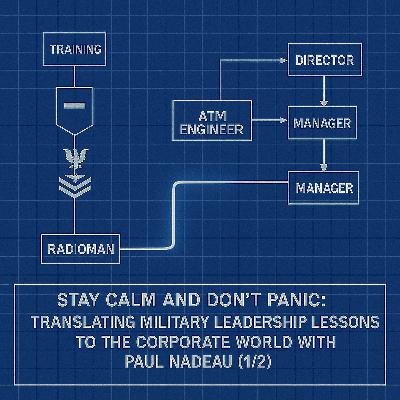
Imagine transitioning from individual contributor at a company to managing an organization of 155 people. That’s quite the promotion. How would you approach that kind of change?
Before you get too anxious about what’s coming, Paul Nadeau, our guest this week in episode 344, has two pieces of advice: stay calm, and don’t panic.
Paul’s career began as a Radioman in the Navy where he focused on telecommunications, but he later pursued law enforcement. You’ll hear firsthand about the experiences that cemented this mantra of remaining calm in Paul’s mind and follow him through leadership training in the Navy. Listen in to hear how a specific mix of classroom instruction and practical experience forged a leadership philosophy that is widely applicable both in the military and in the corporate world.
Whether you are an individual contributor or a people leader today, you’ll learn how to identify the traits of natural leaders and understand some of the real challenges of stepping into a management role.
Original Recording Date: 08-28-2025
Topics – Meet Paul Nadeau, Birth of a Specialty, The Importance of Staying Calm, Leadership Training and Gaining Experience, Assessing Leadership Talent
2:28 – Meet Paul Nadeau
Paul Nadeau is a Solutions Consultant at Palo Alto Networks.
Paul’s early career began with joining the Navy, but his decision to join starts even earlier.
Paul grew up in the Texas Hill Country (areas around Fredericksburg and Kerrville) and attended a private school for most of his young life.
Though the academics were great at private school, Paul talked his father into letting him attend public school for his junior year of high school.
At the public high school, Paul started to get into trouble. At one point his father had a very frank conversation with him.
“You need to do something with your life.” – advice from Paul Nadeau’s father
Paul’s father was a Marine who served in World War II and was awarded a Purple Heart for his service. He suggested Paul consider joining the military. Paul’s father wanted him to have some type of trade to fall back on after military service.
While the Air Force did seem appealing, Paul ended up joining the Navy in 1988. After boot camp, Paul was sent to all kinds of schools before serving on the USS America in Norfolk, Virginia in 1989.
Paul was serving when Desert Storm broke out in 1990.
After serving in the Navy, Paul decided to go into law enforcement (something he had always wanted to do). Though his work in the Navy focused on telecommunications / satellite communications, Paul didn’t want to keep doing it after serving in the Navy. He chose to attend the police academy instead.
Though Paul enjoyed being a police officer, the pay did not support starting a family.
Paul re-enlisted in the Navy in 1995 to once again focus on telecommunications, trading some of the re-enlistment bonus money to use for school.
Paul says he did Cisco training, Novell training, Unix administration, and even Windows administration training. He and co-workers were pioneering running these systems across satellite links (from ship to shore).
When Paul went into the Navy, they were looking for people who had clean backgrounds. He was able to obtain a security clearance after joining.
7:07 – Birth of a Specialty
How did Paul end up in telecommunications after joining the Navy?
At age 17 when he first enlisted in the Navy, Paul wanted to do something in the medical field. He was told no.
Paul’s second choice for occupation was to be a cop. At the time, you had to have at least 4 years of service to do this.
The there was an opening for a job (or ratings as they are called) called Radioman focused on telecommunications. Though the nuclear program was an option at the time, Paul wanted nothing to do with it.
“Whenever we say option, it was pretty much like, ‘this is what you’re going to do. We’re going to send you over here, and you’re going to learn this….’ That’s what got me into telecommunications as a whole and into networking. Yeah, it was a good step.” – Paul Nadeau
The job placements were generally based on ASVAB scores, and it was Paul’s high scores that presented the opportunities for different fields.
Maybe we should have a military recruiter on the show at some point to better understand how this process works?
What drew Paul to law enforcement after getting exposure to telecommunications in the Navy?
When Paul was a kid (even as young as kindergarten), his dad (a disabled veteran) would walk him to school each day. Every day he would ask Paul what he wanted to do when he grew up. Paul always said he wanted to be a cop.
Paul isn’t 100% sure why he wanted to be a cop from such a young age, but there was a state trooper who lived in the same neighborhood. Paul loved his car and thought he was one of the nicest guys in the world.
Six-year-old Paul wanted a career in law enforcement.
John asks about access to schools in the military. The training seems relevant to a field even for the person who has not yet worked in that field.
Paul says his training for Cisco and Novell, for example, was delivered by a civilian instructor who visited the Naval base. It was civilian training paid for and sponsored by the Navy.
After Desert Storm while still stationed in Norfolk, Paul wanted to attend Old Dominion University.
He remembers having to attend in uniform, but the cost of attending was covered by the Navy. Paul wanted to take advantage of the opportunity to get more education.
There was also a Radioman “A” school Paul attended and some “Sea” schools. He learned satellite communication and cryptology, for example. The training courses for Cisco and Novell were mixed into the same curriculum as these Naval schools.
The schools you were eligible to attend were based on your job. Paul tells us the Radioman rating from years ago has changed to IT (according to Naval classification / rating).
He remembers studying morse code and HF (high frequency) communications (ship-to-ship, ship-to-shore, communication over satellite, etc.).
Radio was considered a secure space, and the personnel focused in these areas got exposed to all of the new technologies. Paul liked being able to tinker with it.
In addition to attending school, working on a ship 7 days per week is on-the-job training. Paul worked 7 days per week for 7 months during Desert Storm.
14:34 – The Importance of Staying Calm
How did military training translate to intense / hostile situations in law enforcement?
Paul was assigned to an AMCC (American Mobile Communications Center) unit for Desert Storm, and as a result he went through a lot of training (hand-to-hand combat, logistics training, and other things one might use when forward deployed).
“The number one thing that you actually learn, believe it or not, is the key to success – stay calm. Don’t panic…. Panic is the number one thing that will get you in trouble every time…. It’s kind of been the guiding light in life…that one little bit of information.” – Paul Nadeau
Paul is a private pilot and understands the importance of staying calm while he is in the cockpit of a plane. This translates to so many areas of life (interactions with kids, situations at work, etc.).
Did Paul do anything specific to help himself stay calm? What would he tell people who are not good at this?
Listen to Paul’s story of being a field training officer during his time in law enforcement.
The instinct to stay calm sort of came naturally to him.
When situations begin to escalate, take a second to think about them rationally. It won’t do us any good to let our mind run away with a situation and have it take control of us.
Many people consistently fight anxiety. Paul has been fortunate enough not to struggle with it.
Was what Paul describes (staying calm even in difficult situations) a result of basic training and becoming a little bit desensitized?
Paul tells the story of basic training and getting exposed to tear gas.
“You can panic and pass out because you will. You will stop breathing and just hit the ground. Or you can stay calm and regulate your breathing and kind of center yourself. And when you do, you can…overcome the problem or issue. That was my initial wow. This is a really good thing for life in general…. Whenever you make it out, yeah, you’re coughing. You’re hacking. Your eyes are burning…. But you were still able to actually perform. You were actually able to breathe. You were actually able to say a sentence…. They want you to have that levity to do that….” – Paul Nadeau, on staying calm in basic training
Paul describes a similar type of training for firefighters. You’re in a giant room of 2-3-foot deep water, and someone dumps gasoline on the water to start a fire with it. Then it’s the firefighter’s job to put out the fire.
Despite instructors demonstrating how to put out the fire, people will panic when put in the situation.
Some of this may go back to the training Paul received on how to perform under pressure and stress.
Maybe we can practice responding calmly to high stress situations?
Paul shares the story of being a newly trained police officer. After 2 weeks of training, he was sent out on patrol by the sheriff. The first thing he had to respond to was the scene of a vehicle accident (a head on collision).
Paul remembers how quiet the accident scene was. He could hear the cracking of metal and steam from car engines.
“All of a sudden you hit that moment of levity. Don’t panic. You can’t panic with this. You got called here to do a job. You’re going to be the only person here that can actually do that job…. You have to kind of be that leader so to speak, that calm amongst the storm, and just do your job. And it’s difficult….” – Paul Nadeau, on being the first to the scene of an accident
Even if you are calm during difficult situations like the one above, Paul tells us you have to take time to decompress afterward and work through the situation mentally.
Remember all the times someone took a moment to help you in your career? This act of support is what Jason Gass calls a “lost art” in the tech industry.
Jason returns this week in episode 343 to share the conclusion of his layoff story. Listen closely to understand why he’s so committed to helping other people in the industry as a result of going through this process and eventually finding closure.
You’ll hear suggestions and practical examples for how to keep in touch with colleagues after a layoff, and we emphasize the importance of staying on top of the job marketplace in terms of trends and skill sets. Jason will also share how managing finances carefully can provide peace of mind when it comes to unexpected job loss.
Even if you haven’t been impacted by a layoff, stay tuned for practical ways of supporting people who have, and learn why keeping a pulse on the job marketplace can boost your career at your current company.
Original Recording Date: 08-07-2025
If you missed part 1 of our discussion with Jason, check out Episode 342 – Planting Seeds: Networking and Maneuvering Unexpected Job Loss with Jason Gass (1/2)
Topics – The Lost Art of Supporting Others, Marketplace Analysis and Skills Gaps, Things That Brought Peace of Mind, Reaching Closure and Openness to New Opportunities, Parting Thoughts and Final Lessons Learned
Jason Gass joined us as a guest host for a series of episodes reviewing the book Finish by Jon Acuff and is back this week as a guest.
The book series on Finish was published in episodes 272 – 275, and you can listen back to them using the link above.
3:16 – The Lost Art of Supporting Others
What other types of support does Jason wish he had been given by others that he did not receive, and how can listeners better support others in a layoff situation?
Jason says when people announce being laid off on LinkedIn, for example, there are a lot of responses from people. Many times, people say something like “I’m so sorry. Let me know how I can help. I’ll keep an ear out for you.”
“They mean well. They absolutely do, but then shortly afterwards, they forget. They have their own lives. They are working their own jobs. They forget that you are on the market looking.” – Jason Gass
Jason tells us there were a handful of friends and colleagues who were on the lookout for opportunities on his behalf.
At the same tech event where Jason met a hiring manager that we discussed in part 1, Jason reconnected with personnel from a partner he had worked with in the past. By the next week, Jason had lunch with a hiring manager from that partner. Though there were no openings at the time, Jason highlights the unique role of partners that work with multiple vendors and customers.
As a result of being in this position, personnel at a partner may know about open roles across many companies. In fact, Jason got a call about a possible job opportunity that originated from a partner contact while he was on vacation.
Jason tells us there is a lost art in our industry. All of us started at a junior level and worked our way up to more senior roles, but it took help from others to get there.
“I can map it out and pinpoint each and every person that helped me along the way in the career…. They saw something in me. They helped me. They mentored me…just taking a moment and helping out. I try to do the same thing now… We all are in the same boat. We’re all going in the same direction. Things change. Things happen. People are going to go through this, and it’s a tough situation. My thought is that…I had help getting where I’m at, especially though this transition. I should give it back to the next person that’s going through it.” – Jason Gass
Jason has been known to reach out to people about job openings in a specific area if he knows about something and feels the person is a strong candidate.
Is there a way to stay in touch with colleagues who stayed without it being weird and awkward?
Some people think co-workers are not friends, but Jason disagrees with this. He’s found there will be a handful of work colleagues with which we stay in contact after leaving a company, but it depends on the relationship we had with that person while we were at a company.
Would certain co-workers be people you would want to hang out with outside of work? This is a good screen for those you would want to keep in touch with long-term.
Jason credits a former manager who created a team atmosphere where co-workers became friends.
Now and then, Jason will text colleagues who remain at his former employers to see how they are doing. Those people always want to know how Jason is doing as well.
“The market will shift. People will end up at different companies. You might start collaborating with each other.” – Jason Gass
Jason shares a story of reaching out to a former colleague to discuss an opportunity for them to collaborate even though they work at different companies.
Someone leaving a company doesn’t end the friendships made while at that company.
John says there is probably a limit to the number of people we can effectively keep in touch with, and we are also at the mercy on platforms like LinkedIn of the algorithm.
“You don’t get to see every first-person contact and their job updates. You just don’t. Somebody else is making that decision for you. So, you have to curate your feed and maybe be a little bit more active, too.” – John White
Jason shares a story of leaving a company to pursue a role in sales engineering. He kept in touch with a core group of colleagues and even had them over for dinner recently.
“A lot of them have moved on to other companies in the area. Once again, we built that synergy up when we were there. We have an ongoing group text message, and every 6 months, we try to get together….” – Jason Gass, on keeping in touch with former colleagues
Jason says we might not be able to stay in touch with 10,000 people at a company, but we can stay in touch with 5. We’re looking for quality over quantity.
Jason was on a webinar recently and noticed a familiar name. It looked like the name of a good friend from a former job. After exchanging some text messages, Jason found out it was the friend he thought, and they went to lunch not long after that to catch up on how each was doing.
When we lose contact with a colleague for a while, it’s not something that happens maliciously. It just happens. Factors like having a family, relocating, and working at another company have an impact.
Nick reiterates the impetus is on us to make the time to do things like this. We often allow the tasks of the day or week to prevent us from it.
10:14 – Marketplace Analysis and Skills Gaps
As Jason looked for a new role, what kinds of skills gaps did he notice, and did he try to fill any of those during his job search process?
Jason says he did spot some gaps. We tend to get comfortable working with a specific focus in a specific space and lose sight of what is happening in the marketplace.
Some of the most desired skills from employers according to Jason were AI and containers / Kubernetes.
“This is a whole other discussion, but what I’ve seen is that AI is going to help companies adopt containers.” – Jason Gass
When cloud became popular years ago, you saw use of the term everywhere, and we wondered if it would stick. Jason says AI is in that same category today.
After going through a number of job descriptions during his search, Jason started to notice specific skill sets being repeated. He ended up making a list of those on his whiteboard to either begin pursuing immediately or once he landed a new role.
“Two things happened. One, it might apply to my current role. It might help me move into the next role or product set or a promotion. Two, it helps me stay relevant in the marketplace for the future.” – Jason Gass, sharing a perspective on skill sets repeated in job applications
Was Jason open to pursuing other types of roles as part of his search, or did he focus only on sales engineering since that’s what he had been doing?
Jason talked to some people about becoming a sales rep and even took some interviews for this type of role. It’s something he has thought about for a while, and it could be a future career avenue.
“It was something totally different. It also meant that I was going to be looking for some mentorship…. There’s going to be some aspects that I haven’t done yet.” – Jason Gass, on considering roles as a sales rep / salesperson
Jason also considered roles outside of the tech industry. With Jason’s love for cooking and barbeque, he thought about doing sales in the barbeque industry.
Jason did reach out to some contacts about pursuing this route, but he would have been forced to relocate to take this kind of role (which was not an option).
As part of this exercise, Jason found out about some expansion projects happening in his area related to this industry and asked to get connected with the local folks. This allows time to build network connections with local representatives well before Jason would want to make a move.
“Can you introduce me to the local folk, the local people, so I can start building up those relationships? So…when I’m ready to maybe transition out of tech, I’ve already made, once again, really good networking connections.” – Jason Gass
13:44 – Things That Brought Peace of Mind
In addition to building strong network connections, what were some of the other things Jason did in advance of the layoff that gave him peace of mind?
Jason and his wife have consistently reduced their debt as much as possible since getting married.
“The hardest part, I think, when someone gets laid off is…how am I going to pay the bills?” – Jason Gass
Jason and his wife had a 6-month emergency fund.
For most people, the largest bill is a mortgage or rent followed by car payments and other expenses like utilities, food, etc.
Jason has been working toward paying off his house.
Many people are totally agains
“Unfortunately, your role at this company has been eliminated.” These are the words none of us want to hear, but it’s a reality many in tech are facing. What would you do if that unexpected call came tomorrow? This week’s episode is one we all need to hear.
Jason Gass returns (this time as a guest) in episode 342 to share his story of navigating a layoff. You’ll hear about Jason’s initial reaction to the news and what he did next to take action.
Listen closely to hear how Jason treated the job opportunities he was targeting like a sales pipeline to remain focused, where he looked for emotional support, the tools that helped sharpen his resume, and how nurturing and leaning on his professional network made all the difference along the way.
Original Recording Date: 08-07-2025
Topics – Jason Gass Returns, When a Phone Call Changes Everything, Sources of Support and Maintaining Connections, Emotional Balance and Job Opportunities as a Sales Pipeline, Helpful Tools in the Job Search Process, The Network Effect
2:20 – Jason Gass Returns
Jason Gass joined us as a guest host for a series of episodes reviewing the book Finish by Jon Acuff and is back this week as a guest.
The book series on Finish was published in episodes 272 – 275, and you can listen back to them using the link above.
The book series idea came from Jason, and so did the idea for the discussion today.
We wanted to take this opportunity to tell Jason’s story through the lens of layoffs across the technology industry.
Many of our friends and colleagues in the industry have been met with unexpected job loss over the last couple of years. Jason says it’s been a journey going through this same process, and he’s here to share what worked and what didn’t work.
3:32 – When a Phone Call Changes Everything
What type of role was Jason in before the layoff happened, and what did he like most about it?
For about the last 5 years, Jason has worked in a sales engineering / technical pre-sales role for different technology vendors.
As part of the role, Jason has greatly enjoyed working with both customers and partners to solve problems and improve the day-to-day lives of technology professionals. The work is dynamic, and each customer has a different problem.
What was the day of the layoff like, and what was Jason’s immediate reaction?
Jason was working at a company that had been previously acquired. There were changes happening, and Jason and his teammates knew they might be impacted by these changes but had no idea of when.
Jason remembers getting a call to let him know his position was being eliminated. It was a very quick call and very formal.
Once Jason’s phone rang that day, he knew exactly what was going to happen.
“I was prepared as much as I could. It’s still a gut punch. Man, I can’t believe I didn’t make the cut. What’s wrong with me? Why was it me vs. somebody else?” – Jason Gass, on what goes through your mind in a layoff situation
There was still negative self-talk despite expecting that layoffs were going to happen.
Jason tells us he was laid off a couple of times during the 2008 financial crisis.
“Looking back, that’s probably a good experience because I’ve gone through it once before. The one thing…I learned from that experience is these things happen, and a lot of good things happen afterwards. But it’s hard to have that lens when it first happens…. Everything emotionally hits you. All of those thoughts start going through your head….” – Jason Gass
People who get laid off are worried about paying the bills, supporting their family, and how long it will take to get their next job.
It’s easier to see the positives that came from a situation like this when you’re looking back on it later. Maybe someone took a different role, got to work for a different company that excited them, or even made more money.
Jason says we can get complacent and lose sight of our value in the marketplace. A layoff situation can force people out of their comfort zone.
John reminds us that we’re not living in the age of having a job for life. Companies can be pretty ruthless when eliminating roles, and this is a fact.
Jason says back in 2008 he started thinking of himself as a line item on a spreadsheet. Though it can be hard for us to think this way, it’s business and the way the world works.
“It reminded me…I’m still a player in this game, and I still have control. It’s what I do with that control.” – Jason Gass
This line of thinking reminded Jason to understand his value in the marketplace and to keep his skill set current to provide options if a layoff happened or if he just wanted to make a change.
Nick thinks we might not be mindful of the control we have or might not exercise it because we’re so focused on our daily work.
This is partially due to craving the structure of routines.
John says if we acknowledge a layoff as a possibility, it means we have to react to it before it happens (even if it doesn’t happen). But a lot of times we don’t want to have to think about it and choose the path of avoidance.
If you get laid off, Jason says it’s ok to take time for yourself (a few days, maybe even a week to let the news sink in). In fact, you should. He did not do this and started making calls within 5-10 minutes of receiving the news.
“It caught up with me about 4 days later. That emotional drain finally came down on me, and it mentally drained me.” – Jason Gass
In giving advice to people who have been in this situation (unexpected job loss), Jason tells people it’s ok to take time to process. But after that, the job is to find a new job. This means keeping a normal, structured routine. If you get up and go to the gym every day, keep doing it.
At work we would be completing a specific task / set of role-specific tasks. The tasks you need to complete after being laid off include things like revising your resume, updating your LinkedIn profile, contacting people in our network, and finding in-person meetup groups to attend.
Jason emphasizes the importance of meeting people in person for professional networking and support. It’s a bit of a lost art after COVID. Listen closely to Jason’s description of one specific local meetup group supporting people looking for employment.
10:34 – Sources of Support and Maintaining Connections
Sometimes when people lose a job at a specific company, they struggle with their identity. Was this a challenge for Jason?
Jason has held jobs he loved, but they were not his only identity. Many people consider their work or their job the entirety of their identity.
“There’s things outside the workplace that I have so much more passion for.” – Jason Gass
Knowing a layoff might happen helped Jason prepare and prevent too much tying of identity to the job. But he also stayed educated on the opportunities available in the job market.
Being in Dallas / Fort Worth, Jason has read about many companies moving their headquarters to this area. But with many others in the market for jobs right now, there is a lot of competition.
Was there a specific process Jason went through to combat the emotional drain of the layoff event we discussed earlier?
Jason says there were good days and bad days.
Some days were filled with many interviews. Others were filled with rejection and news that a specific interview process would not continue.
Some of the things that really helped Jason through this process were…
Talking to his wife
Keeping in touch with colleagues who had been laid off as well as those who remained at the company
One of Jason’s colleagues created a chat group with displaced people across the country who were going through the same thing, and it was great to be connected with others who were going through the same thing.
An account rep Jason worked with had been laid off a number of months prior to Jason but had gotten back on his feet. The account rep told Jason to call him any time, even if it was to vent and let out some of his emotions and frustrations.
“I didn’t realize how important that was when I gave it to him until I needed that same platform.” – Jason Gass, on getting support from a co-worker he had previously supported after a layoff event
John highlights the importance of having different people who can support us through these difficult situations. It’s not just family or a specific peer. It’s many others who can support us.
Jason highlights the group chat as something that worked extremely well.
If Jason saw a job listing that might help a member of the group, he would share it. This included roles that were not suited for him as well as roles that listed openings in multiple locations. Jason would even offer to introduce members of the group to people he met as part of the interview process where applicable.
“One of the nice things is I met a lot of great people. I didn’t get chosen. I might not have been the final candidate through the process, but I made a lot of great connections through the whole process. So even if I didn’t get chosen, I still made connections where I could say, ‘hey, I know someone over here. Do you mind talking to them?’” – Jason Gass
Did Jason ask people he met through interviews to stay in touch as a way to maintain connections over time?
Many of the people Jason interviewed with would connect with him on LinkedIn. In cases where he was not selected for a role, people encouraged Jason to reach out to them in the future.
Jason made a point of letting people know he appreciated them taking the time to interview him and would often send LinkedIn messages of thanks.
Jason tells us that solution engineering / sales engineering is a big field, but there aren’t a lot of players.
“I relate it to people like trading baseball cards. You start seeing the same people. They just rotate from one company to another…. It didn’t work out this time around. That’s understandable. We don’t know where we’re going to be three, four, five years down the road.” – Jason Gass
John tells us hiring man
What can you do to stand out as an individual contributor on a large team? The first step is seeking absolute clarity on your role, and it begins with an honest conversation between you and your manager.
Al and Leanne Elliott are back with us this week in episode 341 to continue the discussion about life in flatter organizations with larger teams. Come learn why managers need a support network to be more effective with their team, how to gain role clarity while making your manager look good, and what it means for a leader to champion their people. Pay special attention to the list of introspective questions that can help us take control in our work environment during uncertain times. You’ll also get to hear how Truth, Lies and Work has evolved its content focus over time to serve an even wider audience and what Al and Leanne have learned as content creators.
If you’ve never had a reason to watch Ted Lasso, this episode may contain a compelling reason to start. And if you’re looking for a role model for being a stand out on your team, we will introduce you to Bob during this episode.
Original Recording Date: 07-12-2025
If you missed part 1 of our discussion with Al and Leanne last week, check out Episode 340 – Task Cohesion: Managing a Larger Team in a Flatter Organization amidst a Climate of Uncertainty with Al and Leanne Elliott (1/2)
Topics – Go Ahead and Pull the Cord, Hiding the Wires, Gaining Role Clarity and Gracious Managers, Introspection Gives Us Control, Creating Content for the Chaotic World of Work
Both Leanne Elliott and Al Elliott are back to join us for part 2 of a special discussion today. They are the hosts of Truth, Lies & Work and have each been guests on the show in the past (but never at the same time).
To listen to the episodes featuring Al as a guest, check out:
Episode 235 – The Best Bad Option with Al Elliott (1/2)
Episode 236 – Having the Vision, Charting the Path, Removing the Blockers with Al Elliott (2/2)
To listen to the episodes featuring Leanne as a guest, check out:
Episode 237 – The Psychological Transition of Layoffs with Leanne Elliott (1/2)
Episode 238 – Managers as Culture Keepers with Leanne Elliott (2/2)
3:05 – Go Ahead and Pull the Cord
Nick says this sounds like the recent solo episode John recorded (Episode 334 – First Time Manager – Your Old Job Description Has Been Deleted) and fighting the urge to answer the question.
John says that was directly from a coaching course he took as part of first-time manager training.
It seems less efficient timewise when someone comes to you with a problem you could solve quickly. It’s more efficient in the long run to guide someone through learning how to solve the problem themselves even if it takes longer in the short term.
Leanne says you’re building a person’s capabilities, confidence, and thinking process. This also creates a safe space for the person to ask any question. This genuine human interaction breeds trust, connection, and psychological safety.
“You’re not only gaining that 30 seconds back for every problem in the future. You’re gaining enormous amounts of trust and connection, which are two vital things that you need as a manager, and generally, in organizational life we really need right now.” – Leanne Elliott
Al references a recent podcast episode he and Leanne did with Andrew Palmer (the host of Boss Class) in which Andrew recounted his trip to a Toyota production facility in the UK.
In the Toyota facility there was a specific cord anyone could pull to completely stop the production line. Someone may stop it to ask a question or if something doesn’t look quite right, for example. The cord is also pulled to celebrate something or to share good news.
How many times do you think the cord gets pulled per day for a facility with 2000 employees?
That cord gets pulled (and the production line is stopped) on average 14,000 times per day (an average of 7 pulls per employee). Al says this is a great testament to psychological safety for employees.
John agrees and says it’s a testament to the organization’s culture.
Al says he and Leanne asked Andrew about new employees. New employees are encouraged to pull it to get that out of the way.
Leanne says good managers can give their employees the opportunity to pull the cord by asking for their feedback in different situations and giving them a voice.
"You’re showing that openness and vulnerability to go, “have your say. Your voice is important here too.’ And that’s probably the first baby step…you’re literally asking them to pull the cord.” – Leanne Elliott
8:03 – Hiding the Wires
In Episode 238 – Managers as Culture Keepers with Leanne Elliott (2/2) we talked about the concept of managers hiding the wires. If an organization is flatter and managers have more employees, is it more difficult for a manager to hide the wires, or is it the same?
“Hide the wires” means you’re making sure as a manager that the emotional blowback or frustration from a situation doesn’t impact one of your employees.
Leanne says it may not be harder or easier based on the size of a manager’s team. It’s more important that a manager has a support network with which they can share some of the emotional load or stressful situations. This could be a senior manager, a peer, a coach, a mentor, or even a therapist.
“It’s finding something beyond your immediate team context and the support you need to offload that…. It’s what psychologists call emotional regulation. It’s understanding, having that self-awareness…. ‘I’m feeling angry, but expressing that anger in this context right now isn’t going to serve me or my team….’ Being mindful and having that self-awareness of how you operate emotionally in terms of your behaviors is going to have a direct impact on the mood and motivation of your team. So, if that’s not going to be positive, then hide the wires.” – Leanne Elliott, on hiding the wires as a manager
Leanne says the anger or frustration mentioned above still needs to be expressed, but it can be done via a manager’s support network.
John tells us it can be very difficult when you’re asked to relay something you do not agree with or have emotional friction with to prevent passing along your reaction. But doing this can cue people in a way you don’t want. Part of a manager’s job is to be an intermediary and get feedback from the people they manage, aggregate it, and send it to upper-level leaders.
Don’t assume your team will have the same reaction to something that you had. Your reaction may be the result of just having a bad morning, for example. The idea may not be that bad. Try to avoid setting a cognitive bias for your team.
“Either way you don’t want to put them in a position where they have to do the work to change your mind before you can explore the idea or the possibility. You want to go to neutral space to understand exactly what their thoughts are. Chances are, they’re probably going to be the same as yours. On the off chance that they’re not, then yeah, it’s worth having some patience in that moment.” – Leanne Elliott
John reminds us that the person who passed an idea to a manager to relay to team members may not have been the originator of the idea either.
12:14 – Gaining Role Clarity and Gracious Managers
What if someone is an individual contributor on a large team of 15-20 people? It might be difficult to stand out as a high performer or to get time and attention even just for help. What ideas and guidance would Al and Leanne offer?
Al tells us it will depend on what the manager of the team is like. The manager could be overwhelmed or feel they are short on time to accomplish anything. Suppose we assume it’s a good manager who is on the lookout for high performing team members.
Sales environments, for example, are very target driven. To stand out in this environment, you have to be good at sales, close decent deals, and be a decent human being.
If you’re a back-end developer, the target may be number of commits or reducing the number of product bugs.
It’s difficult for Al to find something universal that will make your manager appreciate or notice you. Is there something?
Leanne says the example of sales is great because there is role clarity about what the job is and what the measures of success are.
“There’s so much clarity in sales because as an employee you know exactly what it is that you have to do at a transactional level to deliver the outcomes of your role.” – Leanne Elliott, on role clarity in sales
Leanne suggests trying to gain role clarity through an honest conversation with your manager. Many people do not have this. What if we asked our managers what their expectations are of us, the objectives we need to hit, what good looks like in our role, what the manager wants to deliver, and how to make them look great?
“I think ultimately as long as you know exactly what you have to deliver and you’re doing what you can to deliver it…and where you can, above and beyond…and where you can, make your manager look good or make their life easier or the life of your colleagues easier…that’s what exceptional performance looks like to me in a non-sales role. It’s somebody who is very clear on what they need to deliver, very willing to support their colleagues in helping them deliver…for the team, and very much there as a supportive member of staff to the manager….” – Leanne Elliott
This isn’t necessarily easy in practice. For you to get the role clarity we’re talking about, your manager must first have clarity about your role. But this is a great starting point according to Leanne.
Should we seek role clarity from our manager on a regular basis, especially if there has been a change in team or greater organization structure, for example?
Leanne says this is an opportunity to be curious, especially during times of change, and to have an open conversation with your manager. You can ask about the expectations of the team and the organization for example.
This goes
How can managers be effective when they are expected to manage larger teams? To strengthen relationships with team members and support team cohesion, start with task cohesion.
Al and Leanne Elliott, former guests and the hosts of Truth, Lies and Work join us to explain how uncertainties in the world have impacted business owners, entrepreneurs, and people managers. In episode 340, we explore the reasons behind industry trends of layoffs, flatter organizations, and larger teams. If you’re a manager in need of help or someone seeking to lead a team, Al and Leanne Elliott have practical tips to manage well in a challenging environment.
Original Recording Date: 07-12-2025
Topics – Welcome Back Al and Leanne Elliott, Uncertainty’s Impact on Current Trends, Keeping the Entrepreneurial Spirit, Organizational Flattening, Challenges to Effective Management of Larger Teams, Management and Coaching
2:35 – Welcome Back Al and Leanne Elliott
Both Leanne Elliott and Al Elliott are back to join us for a special discussion today. They are the hosts of Truth, Lies & Work and have each been guests on the show in the past (but never at the same time).
To listen to the episodes featuring Al as a guest, check out:
Episode 235 – The Best Bad Option with Al Elliott (1/2)
Episode 236 – Having the Vision, Charting the Path, Removing the Blockers with Al Elliott (2/2)
To listen to the episodes featuring Leanne as a guest, check out:
Episode 237 – The Psychological Transition of Layoffs with Leanne Elliott (1/2)
Episode 238 – Managers as Culture Keepers with Leanne Elliott (2/2)
3:13 – Uncertainty’s Impact on Current Trends
Our discussion with Al and Leanne is to revisit themes of job uncertainty and economic uncertainty and to look at some trends we’re seeing.
A few years ago, the job market was booming. Right now, we’re advising people in times of uncertainty. We knew Al and Leanne would have a unique perspective on this topic.
We tend to have a US-centric view of things and may not have a global picture of economic uncertainty and job uncertainties. What perspective can Al and Leanne share in this regard?
Leanne says in the UK uncertainty is a great way to categorize the situation. Some companies are doing layoffs, but many are taking a pause. This pause could mean lack of growth, lack investment, or a slowing of revenue. People are definitely fearful.
Business owners in the UK are pursuing what’s called a lifestyle business – a business which provides a blend of the specific lifestyle and purpose that owners want.
“Rapid hypergrowth is no longer the number 1 priority.” – Leanne Elliott
Al says in the UK, upwards of 90% of people are employed by small businesses. Many people believe the labor government in the UK is not really doing the things necessary to stabilize commerce.
“There are big businesses who are frightened as in ‘I might lose my job when a new CEO comes in,’ but the smaller businesses with say 50, 60 employees are frightened going, ‘if I don’t get this right, I’m going to lose everything and everyone’s going to lose their jobs.’” – Al Elliott
Is the lifestyle business Leanne mentioned focused more on the business owner, or does it also include the lifestyle of company employees?
Business owners Leanne has talked to or heard of through colleagues are mindful of their employees, deciding not to take unnecessary risks like pursuing growth during times of uncertainty. Business owners are focusing on quality, efficiency, and automation right now.
In the UK specifically, there have been a number of employment laws made under the labor government which sound great but bring risk for businesses in their execution. Leanne shares some examples like rights to flexible working on day 1 and National Living Wage.
While the laws mentioned above do help employees, business owners hesitate when they are unclear on how to embed those laws in their business operations (i.e., lack of guidance, etc.). They might choose to employ more contractors instead of hiring new employees under these laws, for example.
Leanne thinks business owner decisions at present are being driven by uncertainty, ambiguity, and fear.
7:41 – Keeping the Entrepreneurial Spirit
Does the fear Leanne mentioned crush the entrepreneurial spirit? Entrepreneurs may be leading some of these small businesses that they’ve founded.
This calls back to Al’s story in the episodes shared above.
“I think true entrepreneurs…they live for challenges. And when things are going well, that’s when they normally mess it up.” – Al Elliott
Al thinks entrepreneurs react well to challenges in the first 3-4 years of starting a business but may struggle to be effective beyond that. He feels the current climate is just another challenge to the entrepreneur.
Al highlights the UK’s IR35 and its rules for hiring contractors. As a result of legislation like this, entrepreneurs and business owners might find it simpler and less risky to hire contractors over full-time employees.
There was a trend of focusing on hiring full-time employees in the last 10 years, but that may be halted or turned in the other direction because of the current climate and additional governmental rules placed on hiring full-time employees.
Al highlights for us that in certain European countries, firing a full-time employee requires a business to pay the employee 6 months of salary.
In Al’s opinion, entrepreneurs are more optimistic people by nature, but the decision about how quickly to scale a business by hiring more people requires careful consideration due to the current climate we’ve discussed.
“I think it’s remembering that…globally and in the UK as well, it has been relentless for business owners since 2016…. There’s been so much disruption and so much change that I honestly think entrepreneurs, business leaders are exhausted. They’re burning out…. An entrepreneur wants to keep fighting. They want to keep going, but it’s how they invest their energy…. So, during this period where the business may be fairly stable, they’re finding other ways to fill that entrepreneurial need and that meaningful work they are currently lacking in a business that isn’t in a growth stage, which is hard for an entrepreneur.” – Leanne Elliott
Leanne mentions change of government in the UK, the pandemic, and other changes in the context of the impact to business leaders and entrepreneurs.
Business owners in the UK who have chosen the lifestyle business approach are spending more time on side hustles and diversifying what they are doing with their business. This is more about the individual business owner / entrepreneur than the organization as a whole.
John asks Leanne and Al if the laws apply only to businesses of certain sizes? In the US, for example, certain laws might only apply once a business reaches a certain number of employees.
Leanne’s understanding is the size of the business does not matter, so the laws would apply as soon as the first employee is hired. It is a drastic shift and a high risk for small businesses, and they are choosing not to focus on growth right now.
John thinks in the US there is additional risk in growing a business past a certain size. Some owners may want to take lessons learned and start multiple businesses below that threshold to diversify instead of running just a single company. Differences in laws across countries and even states might create microclimates of opportunity for businesses (i.e. venue shopping).
Al says there are conditions that allow businesses to employ and fire people easily without having to pay a large severance upon separation from the company (i.e. contract employment). This can make entrepreneurs feel more at ease about recruiting people because it lowers risk.
Leanne thinks it is a fine balance. In the UK there used to be probationary periods for employees that would provide full benefits and rights at the end of that period, but now employees have the same rights on day 1 as employees with a long tenure at the company. There’s been this weird shift of power and rights between employers and employees over time (before, during, and after the pandemic).
Leanne highlights a conversation with psychologist Rose Soffel from Truth, Lies and Work about the trust crisis.
“We’ve had so much push and pull and power swings over the last year years… I think with the changes in laws, geopolitics…there’s so much conflict in every sense of the word… in society and in our workplaces. People are just lacking trust – trust in their businesses, lacking trust in their leaders, lacking trust in their colleagues. We’re seeing massive increases in what we call workplace incivility at the minute, which isn’t bullying or harassment. It’s a level down from that but equally problematic…. It’s infighting. It’s gossiping. It’s withholding information from a colleague. That’s on the rise because there’s this issue with trust. So, I think having these laws come in are great on paper…. While it’s great on paper and comes from the right place…how does this same law apply to a business that has 10 employees…expected to meet and work to the same expectations and laws and legalities as a business with ten thousand employees? …The idea is in the right place. The execution…they haven’t quite got right.” – Leanne Elliott
16:16 – Organizational Flattening
The trust crisis and scale and workplace incivility at scale falls in line with the layoffs we continue to see in the tech industry (and in others). Why are so many organizations choosing to flatten their management layers and increase the manager to individual contributor ratios? This is a byproduct of a lot of these layoffs.
Leanne mentioned these things are cyclical, and we’re swinging back toward having less hierarchy as a trend. This is perceived as more startup-like and better for innovation and collaboration by some.
In the last 18 months, the lack of sufficient training for people managers has been highly publicized. Ma

Imagine getting 45 minutes to describe and defend the quantifiable impact of your body of work as an individual contributor accumulated over multiple years. It’s your job to convince a panel that you have what it takes to help solve the company’s biggest problems. Could you do it?
Our guest Daniel Paluszek has done it successfully at 2 different technology companies to become a Global Field Principal. Much of his success in these roles is attributed to a “culmination of exposure” over the course of his career and the support of both family and managers. This week in episode 339, we begin with the story of Daniel’s move to a hypergrowth startup and learn what it was like to run his own business as the company grew and changed. When an unexpected opportunity to join VMware arose, Daniel transferred his learnings to focus on business growth for service provider partners.
We also talk about the reasons Daniel pursued the role of Global Field Principal, the responsibilities of that role, and why he continues to find it interesting. After listening to this episode, we might all think differently about the importance of building a body of work. Have you been building yours? It’s not too late to begin or keep going.
Original Recording Date: 06-11-2025
Daniel Paluszek is a Principal Partner Technology Strategist at ServiceNow. If you missed parts 1 or 2 of our discussion with Daniel, check out Episode 337 – Finding Drive: The Parallels of Mentoring and Technology Partnerships with Daniel Paluszek (1/3) and Episode 338 – Steady Build: Broadening Exposure and the Priceless Perspective of People Management with Daniel Paluszek (2/3)
Topics – Leaping into Hypergrowth, A Culmination of Exposure, Pursuit of Principal and the Responsibility of Execution
3:06 – Leaping into Hypergrowth
What did the next job transition over to SimpliVity look like? It seemed like this was a conscious move toward an up-and-coming startup and a new technology wave at the same time.
Daniel says it was a conscious choice to move to Simplivity.
While Cisco was somewhere that felt like home, Daniel was given the opportunity to join Simplivity when it was a startup.
The industry was moving from 3-tier architectures with virtualization to hyperconvergence (a convergence of storage, compute, and networking in a single form factor that scaled out linearly). It was an exciting time for the industry as a whole, especially for virtualization.
Daniel knew some of the people who had joined Simplivity.
“I’ve never done a startup before, a hypergrowth company…. There were about 100-150 people when I joined. In that first year, I think we tripled the company in size…. It was something that was just an incredible experience.” – Daniel Paluszek
Daniel was a pre-sales Solution Architect at SimpliVity working with both customers and partners in the southeast United States (Floride and Alabama).
At Simplivity Daniel learned the skill of building your own business.
He and his sales rep (also a great mentor to him) worked as one logical unit partnered together to build business. They were aligned on the priorities and focus areas.
“Sometimes you have to take that leap of faith and try something that’s completely unknown. I was leaving a tried-and-true company…Cisco Systems is an incredible company…going to a startup that I had no idea where this was going to go…. Why wouldn’t I do this? There’s nothing but upside to try this and get the experience of a startup. And so, that’s what I did.” – Daniel Paluszek
Daniel calls his time at Simplivity some of the most impactful years of his career. It felt like Daniel was able to fit the same amount of learning from Cisco (5 years) into 2 years at Simplivity.
Daniel had to learn many functions we might think of as being outside the role of pre-sales like marketing (running campaigns, planning customer events, etc.). There wasn’t a lot of field awareness of what hyperconvergence was, so part of the job was taking time to educate customers and partners.
“So, every day was about how do we not only simplify the messaging but focus on the business problems, the challenges, and how we’re directly solving those for all industries and customers. And we had to wear all these different hats.” – Daniel Paluszek
“If there was any nugget of wisdom…everybody should do an up and coming fast growth company and just understand all the different roles needed and working together on building something…building a company.” – Daniel Paluszek
Daniel worked on a small team and built incredible, lasting relationships with others along the path of building something extraordinary and special. He really enjoyed the period of time before SimpliVity was acquired by HPE – a great time with great people and great technology.
While a role we take may change over time as a company changes, hypergrowth startups can change quickly. For example, a role may not look the same in 3-6 months. What are some of the other ways Daniel’s role changed as the startup grew that he did not expect?
Daniel says you had to learn adaptability very quickly.
When the company is in hypergrowth mode, you do what it takes to get things accomplished even if it seems outside of your specific role (support, product management, etc.). This requires people who will collaborate well to execute on the overall goal. As a company grows, its internal organizations grow too, and you begin to have dedicated people to perform specific roles / job functions.
“The one thing that wasn’t evident to me coming from a large manufacturer / vendor was you had to do everything under the sun, and you had to wear 27 different hats. I was willing to do that…. In the early stages, my sales rep and I were doing all of that, and as the company grew, we had pre-defined people. We had a marketing person, and we had a sales development representative….” – Daniel Paluszek, describing life inside a hypergrowth startup
Running your own business in this case meant hosting marketing events. That involved getting funding, coordinating with a restaurant / venue to build a menu, track event registrations, coordinating speakers for the event, and tracking follow up conversations with event attendees based on interest in the topic and products.
“Sometimes you’ve just gotta do things that you may not like that are just part of getting the job done right and getting it done successfully in the interest of your company and your end customer. And sometimes you just have to get it done. I think there’s a delicate balance. In large organizations, we have clearly defined roles and responsibilities. Sometimes you’ve just gotta break that glass and figure it out after the fact, but if you’re doing in the best interest of your customers and your organization, I’ve never seen anything negative come out of that because you’re serving and bringing value to your stake holders at the end of the day.” – Daniel Paluszek
From what Nick sees, Daniel has a pattern of trying new things to gain experience and learn when he feels it is something that will make him better, even if he’s not sure how it will make him better at the time. Then that post-processing Daniel has inside him will kick in so he can use the experience later.
12:17 – A Culmination of Exposure
Did Daniel decide to move on from startup life because he was tired of it, or was it because of a new opportunity?
Daniel’s career had been shaped by VMware from a young age to this point in time, and he was given the opportunity to work there. But this was not something he planned.
When HPE (HP Enterprise) announced their intent to acquire SimpliVity, Daniel had intended to stay and see what happened. A friend from Cisco mentioned to Daniel that the VMware partner group was looking for technical pre-sales engineers, and this friend thought Daniel would be a good fit.
“Two weeks later I accepted an offer from VMware in the partner group…. I went with my gut, and I said, ‘I’m going to take this offer…and see where it goes.’” – Daniel Paluszek, after being open to an unexpected opportunity
Daniel was leaving right around the time the HPE acquisition of SimpliVity was closing. Choosing to take the role at VMware was a very difficult decision. The hiring manager at VMware encouraged Daniel to do what was best for him and his family.
To this point, Daniel had accumulated a wide range of experience:
Working with VMware technology as a customer
His professional services background
The focus at Cisco on the datacenter and building cloud architectures
Being a part of SimpliVity and focusing on hyperconvergence
“I just had this culmination of exposure and depth of experience that I was able to utilize in a role core to what I had built in the past.” – Daniel Paluszek
Daniel tells us he worked for VMware for about 5-6 years focusing on service provider partners and eventually became a field principal architect.
Daniel and his team members supported global cloud providers that were providing infrastructure or platform as service to their customers based on VMware architectures.
Daniel worked to make these cloud providers successful with architectures that supported either a shared multi-tenant cloud or dedicated private cloud environment.
During this time Daniel found an appetite for blogging. The VMware technical community was very active in this area, and it was interesting to Daniel.
Once Daniel began writing blogs, he realized it could be used as a medium to answer some of the questions multiple cloud providers were asking. Through blogging, Daniel could break down new complex topics into digestible material.
Daniel was writing for his own personal blog and also for the VMware corporate blog and accumulated 100-150 blog articles across both sites by the time he left VMware.
Daniel eventually took down his blog site because the content was so outdated.
Daniel also recorded lightboard video presentations to explain different concepts cloud providers were seeking
Could a greater understanding of what people managers do make you a better individual contributor? And would it also cause you to treat your manager differently?
For Daniel Paluszek, our guest this week in episode 338, it definitely did. And though this was a short stint in Daniel’s career, he refers to that experience as priceless. This week in part 2 of the story you’ll hear about Daniel’s experience working in professional services both in pre-sales and post-sales and how he built expertise to help increasingly larger customers over time. Daniel will reflect on the lessons learned from his time as a people leader, and pay special attention to the moment when Daniel turns the microphone on John during our discussion!
We also explore the reasons why Daniel eventually chose to move back to the individual contributor side of the house. How do you think your mindset would be different when making a move like this? Listen to the full story from Daniel’s perspective.
Original Recording Date: 06-11-2025
Daniel Paluszek is a Principal Partner Technology Strategist at ServiceNow. If you missed part 1 of our discussion with Daniel, check out Episode 337 – Finding Drive: The Parallels of Mentoring and Technology Partnerships with Daniel Paluszek (1/3)
Topics – The Nuances of Professional Services, Getting to Know Service Providers, Becoming a Practice Manager, Difficult Conversations, Returning to Individual Contributor
2:46 – The Nuances of Professional Services
It seems like Daniel would have been able to bring some of the government work he had done into conversations to help build credibility and relationships.
Doing federal defense contracting is certainly different but provides a level of expertise that cascades to any government organization.
When Daniel joined the partner, most of the conversations were about getting into virtualization, and the projects focused on consolidating infrastructure. Daniel had direct exposure and expertise in designing and orchestrating these kinds of projects from start to finish (design, build, migration, providing a day 2 runbook).
Daniel had the technical expertise he needed but did not at first have the sales and consultative skills he needed. Daniel had help from mentors (his sales rep, his leadership chain, other colleagues on the professional services team) to improve in this area.
Daniel would later join Cisco Systems doing professional services. This was around the time they launched the UCS computing platform. He had worked in in professional services for DynTek for a couple of years previous to making the move.
Working in professional services granted opportunities to work with many customers across multiple industries. Daniel calls gaining this experience getting “at bats.”
Working within a large professional services organization can also be challenging.
Usually, the person who creates the scope of work for a services engagement is not the same person who will execute the statement of work.
Something could have been scoped incorrectly or improper expectations set, for example. Daniel tells us part of the role was about overcoming these types of challenges and mitigating risks.
“You had to work through these situations and challenges on an ongoing basis…. Not only make your customer happy (do what’s right) but also make your organization healthy from a profit and loss perspective because…companies and PS organizations, their largest cost factor is people….” – Daniel Paluszek, on life working in professional services
Daniel tells us that a professional services organization has to balance executing well for customers with remaining profitable.
Before Daniel joined Cisco, was he 100% pre-sales or doing a mix of pre-sales and post-sales?
Daniel says it was a mix of both and refers to it as a hybrid role. He was brought in at DynTek as a professional services engineer but began getting exposed to the pre-sales side of things. In fact, Daniel wanted to learn more about pre-sales.
Over time, Daniel began scoping professional services engagements and presenting to customers followed by later delivering the work (i.e., "wearing both hats).
Nick stresses the importance of determining whether roles are post-sales, pre-sales, or both to ensure you fully understand. Ask these questions in interviews so everything is clear! Maybe doing both can help one decide which area is more interesting.
“I also think that doing both and then doing professional services delivery for many years also shaped me into the individual I am today because I had to live and go through delivery of projects…. When I scoped it…I knew that this is something to watch out for from a field-level direct exposure perspective. So, I knew the nuances to my area of expertise, my domain, and I was able to scope it in a way that ensured success and mitigated that risk just because I had that direct experience.” – Daniel Paluszek
Processes like the one described above will not scale for large organizations. Sometimes a large organization will give people the chance to move from delivery to pre-sales to round out their experience. Daniel was fortunate to have the chance to do both and gain exposure to different areas.
John mentioned there is usually another level of separation and complexity in these scenarios. He highlights 3 distinct roles – someone selling a solution that includes professional services, someone who scopes the professional services, and someone who executes the professional services. John has seen this divided even further and mentions sometimes there is a special professional services workshop that helps provide the inputs to the person writing the statement of work.
“Again, if we’re talking about roles and educating people about roles, the number of different types of roles that are out there just continues to amaze me. Going to school, I have no idea how you would know any of these roles existed.” – John White
Daniel says for multi-pillar transformations within large enterprises, it can require subject matter experts (SMEs), architects, and engagement managers to make a professional services project successful.
When Daniel began working in consulting / professional services, he started working with smaller companies. It was the move to working for Cisco that helped him gain experience working with large enterprises and service providers.
Daniel speaks to the complexities of delivering engagements for these organizations. He might have to design an engagement that required dozens or hundreds of people over a multi-year period.
Starting off small helped Daniel focus on understanding the fundamentals, and he was able to build upon that through varying experiences with larger customers across different industries over time.
11:20 – Getting to Know Service Providers
What is a service provider? Let’s define that term.
We’re talking about a company that provides a service like a cable provider, for example. They might be considered a traditional service provider.
Cable providers offer telecommunications services to end users / consumers.
But a cable provider can deliver services to a business too.
If we’re talking about the business-to-business market, a service provider (could also be called a managed service provider) is providing a discrete service injected into a customer’s business. That service is a function of a customer’s overall organization.
Daniel gives some examples
Business Process Outsourcing (or BPO). This could include processing accounts payable or accounts receivable transactions.
An MSP (Managed Service Provider) providing service desk operations for an end customer
A service provider can help a customer scale their business. Daniel gives the example of a retail customer.
Retail companies exist to sell products and goods. This is their core business – driving incremental sales of products. Anything else required to operate that business, according to Daniel, is context.
In the retail example, management of back-end IT systems, management of the service desk, or management of finances and supply chain would be considered context. In some cases, companies like this will partner with a service provider (or GSI / Global Systems Integrator) to assist in these areas.
“It ultimately comes down to…what is your core business, and what’s your context? And…is this something we want to staff and skill in-house, or do we want to partner with somebody that’s going to provide this as a service to us?” – Daniel Paluszek
Nick mentions there is usually someone in-house tasked with working closely with service providers to ensure business operations run smoothly.
Daniel says there is always an interface on the customer side, and in very large companies, it’s usually a small team which will manage the line of business in question and work closely with the partner / service provider executing much of this function. The team on the customer side would work closely with business leaders to ensure everything aligns with the business strategy.
Nick liked Daniel’s description of his progression of experience from small customers up to large companies like service providers. There is an increased need for availability and resiliency as we get into talking about service providers who may have systems accessed by end customers and not just internal employees of the service provider.
During Daniel’s tenure at Cisco, service providers spanned telecommunications, media, and technology partners.
Daniel worked with many telecommunications providers and says it was incredible to learn about all the systems required to deliver a cell phone, for example, and the network functions that were part of it.
When Daniel was working with telecommunications providers, Network Function Virtualization or NFV was the next emerging technology which extended the benefits of virtualization to help service providers in the telecommunications space provide better services to their customers.
16:12 – Bec
How does one company form an effective technology partnership with another company? Our guest this week might tell you it’s not so different than a successful mentoring relationship. It requires alignment on the outcomes both parties want to achieve.
Daniel Paluszek is a Principal Partner Technology Strategist at ServiceNow, and in episode 337 he helps us set some context on technology partnerships and go-to-market strategies before we discuss his personal journey to working in technology. We’ll follow Daniel through early experience working at a university help desk, learn about how he grew in scope and responsibility working for a defense contractor, understand why he later chose to move into a consulting role, and wrap the entire discussion with advice on mentoring and the importance of effective communication.
Original Recording Date: 06-11-2025
Topics – Meet Daniel Paluszek, What Makes a Technology Partner Best of Breed, Tech Origin Story, Mentorship and Lessons in Developing Others, Communication through Presentations, A Step Toward Consulting
2:12 – Meet Daniel Paluszek
Daniel Paluszek is a Principal Partner Technology Strategist at ServiceNow.
He is part of a solution consulting team supporting ServiceNow’s global strategic partners. Daniel and his peers work to optimize the way in which ServiceNow and its global partners go to market together to solve customer business problems and build solutions that drive business transformation.
On a daily basis, Daniel looks at the following:
Where is the industry moving?
What technology is ServiceNow developing that can apply to industry challenges?
What are the customer pain points, and how can a joint strategy be developed to solve these?
Daniel consistently thinks about how to solve problems, and it may not be something technical that solves a problem.
ServiceNow has evolved from an IT ticketing platform to a work platform, and many of the things Daniel works on span beyond IT.
4:21 – What Makes a Technology Partner Best of Breed
What does it mean to be a partner to a technology company like ServiceNow? Many listeners may not understand this.
Daniel believes a partner can look at a customer from an agnostic point of view to help solve specific business or technical challenges.
Partners usually work with and have a joint strategy with several equipment manufacturers (OEMs) or ISVs (independent software vendors). These can be leveraged to provide a best of breed solution that meets a customer’s requirements.
Regardless of a partner’s experience, they should focus on solving the customer’s unique problem(s), and this means ignoring / removing the technology landscape to make sure they understand what problem needs to be solved.
Once the problem(s) are well understood, a plan and solution can be jointly developed. Solution partners can aid companies like ServiceNow in answering customer requirements.
John likes this explanation of the partner ecosystem and expected Daniel to use the word reseller, but he did not mention it.
“Resell for me is a motion, a sales motion. It is not the end all or be all. There’s some great resell partners, but in my mind, in my vision, the strongest partners are the ones that encompass the entire lifecycle…. The partners that are achieving and acquiring the new business look at it from a holistic approach…not just selling a product.” – Daniel Paluszek
Executive leaders like Bill McDermott talk about empowering businesses to increase revenue and productivity while reducing operational expense, and Daniel tells us this effort has to focus on the core problems.
A partner may also have professionals
Nick mentions being a partner may also mean the partner can do professional services for a specific technology stack tied to a hardware or software vendor.
John thinks even consulting services are in service of the greater outcomes a partner is trying to drive for an end customer. The goal would not be to sell services or specific pieces / parts but to “partner” with the customer and vendors to present a best of breed solution.
Daniel agrees and says it is about the outcomes we’re trying to produce with the solution. The best partners can understand what needs to be achieved, set expectations, and develop a plan of execution to get there.
John says we ask people what they do because one of the goals of the podcast is to expose listeners working in technology today (perhaps in IT Operations) to different types of roles in our industry across customers, tech vendors, partners, or even system integrators. In Daniel’s case, we’re talking about a role at a large technology vendor focused on a large partner and the go-to-market partnership. Can we define go-to-market?
Daniel says go-to-market is an execution path based on a channel.
Daniel’s role working with partners is how the partner positions their offerings and solutions to end customers. As part of the ServiceNow team, he would work with the partner to position the overall solution to an end customer.
Many technology vendors have 2 major routes to market, but some may only have 1 of these.
Selling products / services directly to an end customer (called selling “direct”)
Selling products / services through a partner
The DNA or type of solution we’re talking about and the industry to which the solution will be sold (i.e., retail, government, etc.) will dictate what the route to market (or go-to-market) is for a company.
Over the course of his career, Daniel has worked with large enterprises as well as state and local governments.
The direct route to market usually means the company has field selling teams that work with end customers. This can coincide with partners who work hand in hand with these field teams.
John says there are likely different go-to-market plans within a technology vendor for different types of partners but that these plans will need to be customized to a specific partner based on factors like industry expertise, the way they build relationships with customers, etc.
Daniel says when it comes to global systems integrators as an example, there are normally dedicated teams to serve an industry who know the industry well (its nuances, the common themes and solutions, etc.). Daniel gives an example of the retail industry and some of the nuances around point of sale, visibility, onboarding employees and making them productive despite attrition, etc.
Partners with industry expertise can share how they have solved problems within that industry and how they address the common themes and challenges within that industry.
Nick says there is probably a specific way in which company leaders at technology vendors would identify only those partners it makes sense for them to work with based on specific solutions or industry expertise. Partners have to be qualified and identified before a joint go-to-market can be developed.
Companies like ServiceNow have online tools to help end customers find partners with specific experience (i.e. capabilities, outcomes delivered, certifications, industries of focus, regional presence or focus). Check out the ServiceNow Partner Finder as an example. Daniel looks for partner success stories in which a partner accelerated or de-risked an outcome.
Due diligence is required when building a solution for our customer (i.e. the right solution for the right people at the right time), and part of this is ensuring the right partner with the right expertise is involved.
15:59 – Tech Origin Story
Daniel says he grew up in technology. His father was a programmer at Bell Labs and worked at also Sun Microsystems.
Daniel remembers his first exposure to Linux being on a computer running Solaris.
“I was just fascinated and enamored by technology. I started off as just a kid tinkering.” – Daniel Paluszek
Daniel wanted a computer because he loved video games and obsessed over getting optimal performance. He tinkered with overclocking, for example, with a group of friends.
Daniel’s first job was in high school, and he was doing computer repairs.
Even though he might not know how to solve a problem, Daniel was determined to go figure it out, trying to eliminate variables along the path to a solution.
After determining that he wanted to work in the technology field, Daniel signed up for the computer science program and the University of Central Florida (UCF) but would find that programming did not interest him as much as solving hardware and software issues.
Daniel switched to studying Information Technology (IT) after a year in the computer science program and started working in the IT help desk for the university.
While working at the help desk at UCF, Daniel remembers posting his resume for an internship program which was open to all computer science and IT students. He tells the story of getting a call about a defense contractor (Ensco) that needed an intern. They wanted someone who was interested in systems engineering and systems administration, but Daniel would have to start in the help desk.
Daniel initially said he was not interested because of the focus on help desk. The person he spoke to said since this was a defense contractor, they could get him on some projects working with the US government, and that piqued his interest.
After interviewing, Daniel received an offer that he accepted. This began as an internship that morphed into a part-time job while he finished his IT degree.
Daniel remembers working on a defense contract for the Air Force after 1-2 years, and it was focused on Solaris administration.
The experience from Daniel’s childhood on Solaris paid off here.
Daniel also began working with VMware technology during this time (early 2000s) for server virtualization.
The Solaris administration Daniel did was in a SCIF environment.
Daniel feels like saying yes to this opportunity accelerated his exposure to a different type of technology environment and different landscape that helped him progress to where he is no

Comments

Download from Google Play

Download from App Store
 United States