



 Claim Ownership
The Lab Report
Subscribed: 151Played: 4,801
Subscribe

© 2026 Genova Diagnostics, Inc
Description
The world of medicine can be challenging. Clinicians and patients are always looking for more options, more effective treatments… and in the end, more answers. What if there was a way to practice medicine that digs deeper and offers a new perspective? Functional medicine focuses on addressing root causes of disease. At Genova Diagnostics we’ve watched this field evolve and grow for over 35 years….
We’ve not only adapted, we’ve led. Join us as we talk about functional medicine, laboratory testing, and optimizing health. Welcome to the Lab Report.
We’ve not only adapted, we’ve led. Join us as we talk about functional medicine, laboratory testing, and optimizing health. Welcome to the Lab Report.
343 Episodes
Reverse

Dr. Nasha Winters is a naturopathic physician with a deeply powerful story. Diagnosed with stage IV cancer at age 19 and given just a few months to live, she embarked on a relentless journey to self-education and integrative healing that ultimately saved her life. Now a leading expert in metabolic oncology, Dr. Nasha is passionate in her mission to transform healthcare by addressing underlying metabolic dysfunction that fuels not only cancer, but virtually all chronic diseases. Dr. Nasha Winters has a message of empowerment for cancer patients: by understanding and correcting the terrain of the body rather than merely attacking the tumor, we can shift from a disease-centered model to one rooted in true healing and prevention for everyone. This message will resonate not only in cancer, but also for anyone wanting to treat or prevent chronic disease. Today on The Lab Report: 3:45 Meet Dr. Nasha Winters and hear what a metabolic approach to cancer looks like 7:10 Nasha’s inspiring story 15:55 Fasting, ketosis, various diets in cancer 18:55 Ketosis and ketone bodies 24:10 Working with traditional oncology 29:10 Cachexia, sarcopenia, and fasting 34:00 Specialty testing in cancer patients 36:30 Facing mortality, past trauma, and taking control 41:10 Practical steps on where to start – diagnosis/prevention 45:30 Tend the terrain, connecting farming and medicine 48:30 Nasha’s current state 51:00 The Fireball Additional Resources: drnasha.com Tend the Terrain Substack The Metabolic Approach to Cancer Mistletoe and the Emerging Future of Integrative Oncology Subscribe, Rate, & Review The Lab Report Thanks for tuning in to this week’s episode of The Lab Report, presented by Genova Diagnostics, with your hosts Michael Chapman and Patti Devers. If you enjoyed this episode, please hit the subscribe button and give us a rating or leave a review. Don’t forget to visit our website, like us on Facebook, follow us on Twitter, Instagram, and LinkedIn. Email Patti and Michael with your most interesting and pressing questions on functional medicine: podcast@gdx.net. And, be sure to share your favorite Lab Report episodes with your friends and colleagues on social media to help others learn more about Genova and all things related to functional medicine and specialty lab testing. To find a qualified healthcare provider to connect you with Genova testing, or to access select products directly yourself, visit Genova Connect. Disclaimer: The content and information shared in The Lab Report is for educational purposes only and should not be taken as medical advice. The views and opinions expressed in The Lab Report represent the opinions and views of Michael Chapman and Patti Devers and their guests.See omnystudio.com/listener for privacy information.
Maggie Awad, NP is the founder of Elevate Performance Medicine and a leading functional sports medicine nurse practitioner. Drawing on her work with elite professional athletes, Maggie breaks down how an optimized microbiome and personalized nutrition can fuel energy production, decrease inflammation, and support recovery. This holistic approach allows athletes to train harder, bounce back faster, and sustain peak performance without burnout or injury. Whether you're a competitive athlete, weekend warrior, or high-performer chasing longevity in your sport or career, Maggie Awad shifts the paradigm from symptom management to true root-cause optimization. Today on The Lab Report: 5:15 Meet Maggie Awad and learn what “Functional Sport Medicine” means 8:10 Why did Maggie choose this specialty 10:45 Common health issues among all athletes 12:30 Gut health and stool testing 17:20 Overtraining and the importance of sleep and recovery 18:50 Nutritional deficiencies in athletes – glycine tangent 20:50 Hormone optimization and supplementation 23:00 Maggie’s patient population and practice 25 :40 The Fireball Additional Resources: Elevate Performance Medicine Subscribe, Rate, & Review The Lab Report Thanks for tuning in to this week’s episode of The Lab Report, presented by Genova Diagnostics, with your hosts Michael Chapman and Patti Devers. If you enjoyed this episode, please hit the subscribe button and give us a rating or leave a review. Don’t forget to visit our website, like us on Facebook, follow us on Twitter, Instagram, and LinkedIn. Email Patti and Michael with your most interesting and pressing questions on functional medicine: podcast@gdx.net. And, be sure to share your favorite Lab Report episodes with your friends and colleagues on social media to help others learn more about Genova and all things related to functional medicine and specialty lab testing. To find a qualified healthcare provider to connect you with Genova testing, or to access select products directly yourself, visit Genova Connect.See omnystudio.com/listener for privacy information.

Celebrate the magic of the season with our special Christmas episode as we unwrap the 5 Love Languages and explore why love truly is the greatest gift of all. Whether it’s words that warm the heart, thoughtful acts of kindness, actual Christmas gifts, quality time with family and friends, or a comforting touch, we’ll help you discover how to give – and receive- love in ways that matter most. Cozy up, tune in, and get ready to spread a little more love this season. Subscribe, Rate, & Review The Lab Report Thanks for tuning in to this week’s episode of The Lab Report, presented by Genova Diagnostics, with your hosts Michael Chapman and Patti Devers. If you enjoyed this episode, please hit the subscribe button and give us a rating or leave a review. Don’t forget to visit our website, like us on Facebook, follow us on Twitter, Instagram, and LinkedIn. Email Patti and Michael with your most interesting and pressing questions on functional medicine: podcast@gdx.net. And, be sure to share your favorite Lab Report episodes with your friends and colleagues on social media to help others learn more about Genova and all things related to functional medicine and specialty lab testing. To find a qualified healthcare provider to connect you with Genova testing, or to access select products directly yourself, visit Genova Connect. Disclaimer: The content and information shared in The Lab Report is for educational purposes only and should not be taken as medical advice. The views and opinions expressed in The Lab Report represent the opinions and views of Michael Chapman and Patti Devers and their guests.See omnystudio.com/listener for privacy information.

The gut microbiome is more than just bacteria. It encompasses all organisms and genetic material including yeast, viruses, and archaea. It is a common belief that yeast in the GI tract needs to be eradicated. But not so fast. In this episode, we focus on the mycobiome. We examine the dual roles of commensal and pathogenic yeast species within the GI tract, exploring how they influence immune signaling, metabolic function, and mucosal integrity. We also discuss emerging evidence linking fungal dysbiosis to conditions such as Inflammatory Bowel Disease, cancer, and systemic inflammation. If you’re interested in the clinical science behind how yeast can support health – or contribute to disease - this episode explores a topic often overlooked in longevity medicine. Today on The Lab Report: 4:00 The Gut Mycobiome – needs a new name 6:40 Yeast vs. Bacteria 9:00 Development of the commensal mycobiome 11:00 The important role of yeast & their metabolites 15:25 Candida and Malassezia 18:45 Saccharomyces 21:05 Dietary influences and fermented foods 23:30 Question of the Day If yeast grows out in culture on the GI Effects, what next? Additional Resources: GI Effects Stool Profile Microbiomix Subscribe, Rate, & Review The Lab Report Thanks for tuning in to this week’s episode of The Lab Report, presented by Genova Diagnostics, with your hosts Michael Chapman and Patti Devers. If you enjoyed this episode, please hit the subscribe button and give us a rating or leave a review. Don’t forget to visit our website, like us on Facebook, follow us on Twitter, Instagram, and LinkedIn. Email Patti and Michael with your most interesting and pressing questions on functional medicine: podcast@gdx.net. And, be sure to share your favorite Lab Report episodes with your friends and colleagues on social media to help others learn more about Genova and all things related to functional medicine and specialty lab testing. To find a qualified healthcare provider to connect you with Genova testing, or to access select products directly yourself, visit Genova Connect. Disclaimer: The content and information shared in The Lab Report is for educational purposes only and should not be taken as medical advice. The views and opinions expressed in The Lab Report represent the opinions and views of Michael Chapman and Patti Devers and their guests.See omnystudio.com/listener for privacy information.
![Attitude of Gratitude [Rebroadcast]](https://s3.castbox.fm/73/38/43/ef8fa6ab41f34cb282d97b1af83b4a7668_scaled_v1_400.jpg "Attitude of Gratitude [Rebroadcast]")
The Thanksgiving holiday is more than just family, friends, food, and football. It is an opportunity to be reminded of the importance of gratitude. Although being thankful seems like just a nice moral platitude, gratitude interventions are shown to have surprisingly important clinical implications for our health. On today’s episode, we talk Thanksgiving ‘fun facts,’ gratitude interventions, and strategies to combat holiday season stress and weight gain. Today on The Lab Report: 3:10 Fun facts about Thanksgiving 7:35 Gratitude interventions and health 11:15 Strategies to prevent holiday weight gain 14:30 Keto, Vegan, Carnivore, Omnivore holiday dinner menus 16:45 Kitchen Cook-cophany! Subscribe, Rate, & Review The Lab Report Thanks for tuning in to this week’s episode of The Lab Report, presented by Genova Diagnostics, with your hosts Michael Chapman and Patti Devers. If you enjoyed this episode, please hit the subscribe button and give us a rating or leave a review. Don’t forget to visit our website, like us on Facebook, follow us on Twitter, Instagram, and LinkedIn. Email Patti and Michael with your most interesting and pressing questions on functional medicine: podcast@gdx.net. And, be sure to share your favorite Lab Report episodes with your friends and colleagues on social media to help others learn more about Genova and all things related to functional medicine and specialty lab testing. To find a qualified healthcare provider to connect you with Genova testing, or to access select products directly yourself, visit Genova Connect. Disclaimer: The content and information shared in The Lab Report is for educational purposes only and should not be taken as medical advice. The views and opinions expressed in The Lab Report represent the opinions and views of Michael Chapman and Patti Devers and their guests. See omnystudio.com/listener for privacy information.

Gut motility may be the most important and least discussed aspect of health. One vital part of gut motility is the Migrating Motor Complex. The Migrating Motor Complex (MMC) is the gut’s “street sweeper,” clearing food and bacteria to maintain intestinal homeostasis between meals. In this episode, we review its physiology, regulatory mechanisms, and clinical relevance – from SIBO to functional GI disorders – highlighting why this cyclical motility pattern matters for patient care. Today you’ll meet the migrating motor complex: your gut’s built-in street sweeper that clocks in when you’re not eating. This behind-the-scenes cleaning cycle is essential to GI health! Today on The Lab Report: 3:20 Gut motility – peristalsis and segmentation 5:45 Migrating Motor Complex (MMC) 8:40 Motilin, serotonin, and the vagus nerve 11:15 Acidification of the small intestine and Motilin 13:25 Signaling the vagus nerve 16:20 MMC’s role in SIBO/IMO 17:50 Prokinetics and meal spacing 22:00 Question of the Day What is the relationship between PPI’s and MMC? Additional Resources: SIBO Breath Test GI Effects Stool Profile Subscribe, Rate, & Review The Lab Report Thanks for tuning in to this week’s episode of The Lab Report, presented by Genova Diagnostics, with your hosts Michael Chapman and Patti Devers. If you enjoyed this episode, please hit the subscribe button and give us a rating or leave a review. Don’t forget to visit our website, like us on Facebook, follow us on Twitter, Instagram, and LinkedIn. Email Patti and Michael with your most interesting and pressing questions on functional medicine: podcast@gdx.net. And, be sure to share your favorite Lab Report episodes with your friends and colleagues on social media to help others learn more about Genova and all things related to functional medicine and specialty lab testing. To find a qualified healthcare provider to connect you with Genova testing, or to access select products directly yourself, visit Genova Connect. Disclaimer: The content and information shared in The Lab Report is for educational purposes only and should not be taken as medical advice. The views and opinions expressed in The Lab Report represent the opinions and views of Michael Chapman and Patti Devers and their guests.See omnystudio.com/listener for privacy information.

The microbiome continues to be viewed as a cornerstone of health, whether we are discussing the gastrointestinal tract, cardiovascular risk, immune dysfunction, and even cognitive health. One major contributions of the microbiome to our global health is in the production of short-chain fatty acids. Primary among these products is a compound known as n-butyrate. N-butyrate has profound roles, not only in our gut, but throughout our entire body. What are all the impacts of n-butyrate, and how do we foster an adequate supply of it? These are but some of the questions we discuss on today’s Lab Report. In this episode, we continue our spree on the importance of gut health. We cover food sources that are important for microbiome health, particularly for fermentation of short-chain fatty acids. We also cover how butyrate impacts the gut, the immune system, and much more. With all the profound roles of n-butyrate, it begs the question: is it the greatest of all the things made by our microbiome? Today on The Lab Report: 5:30 Gut microbiome production of SCFA’s (short-chain fatty acids) 6:30 Food sources of n-butyrate 8:00 Let’s Google It: The entomology of ‘butyrate’ 9:00 Butyrogenic species: What bacteria produce butyrate? 10:45 How butyrate is used throughout the body 13:00 Logical Speculation: n-butyrate, autoimmunity, and fiber 15:45 The gut-brain axis and appetite are influenced by butyrate 20:30 Skeletal muscle also responds to butyrate 23:30 Foods to eat to promote butyrate 26:00 N-Butyrate supplementation: mixed studies? Additional Resources: GI Effects Stool Profile Microbiomix Subscribe, Rate, & Review The Lab Report Thanks for tuning in to this week’s episode of The Lab Report, presented by Genova Diagnostics, with your hosts Michael Chapman and Patti Devers. If you enjoyed this episode, please hit the subscribe button and give us a rating or leave a review. Don’t forget to visit our website, like us on Facebook, follow us on Twitter, Instagram, and LinkedIn. Email Patti and Michael with your most interesting and pressing questions on functional medicine: podcast@gdx.net. And, be sure to share your favorite Lab Report episodes with your friends and colleagues on social media to help others learn more about Genova and all things related to functional medicine and specialty lab testing. To find a qualified healthcare provider to connect you with Genova testing, or to access select products directly yourself, visit Genova Connect. Disclaimer: The content and information shared in The Lab Report is for educational purposes only and should not be taken as medical advice. The views and opinions expressed in The Lab Report represent the opinions and views of Michael Chapman and Patti Devers and their guests.See omnystudio.com/listener for privacy information.
Based on recent research, the term ‘dysbiosis’ is no longer a simple black-and-white diagnosis of a gut imbalance. The scientific understanding of a healthy microbiome is evolving. It’s no longer just about the laundry list of organisms present, but rather about their functionality for health and disease. In today’s episode, we unpack the term ‘dysbiosis.’ Join us to rethink what it means to have a healthy microbiome, the utility of novel algorithmic scoring, and how a deeper understanding of this complex ecosystem is opening doors to more targeted diagnostics and therapeutics. Today on The Lab Report: 4:30 Healthy microbiome vs. Dysbiosis 8:00 Defining terms 10:10 Dysbiosis scoring algorithms 15:40 Functional approach to dysbiosis 16:30 Rethinking pathogens 19:25 The microbiome is reactionary – root cause is important! 23:15 Should we even be using the word “dysbiosis”? 24:25 Whole genome sequencing and gut functionality 28:00 Adaptability of the microbiome Additional Resources: GI Effects Stool Profile Microbiomix Subscribe, Rate, & Review The Lab Report Thanks for tuning in to this week’s episode of The Lab Report, presented by Genova Diagnostics, with your hosts Michael Chapman and Patti Devers. If you enjoyed this episode, please hit the subscribe button and give us a rating or leave a review. Don’t forget to visit our website, like us on Facebook, follow us on Twitter, Instagram, and LinkedIn. Email Patti and Michael with your most interesting and pressing questions on functional medicine: podcast@gdx.net. And, be sure to share your favorite Lab Report episodes with your friends and colleagues on social media to help others learn more about Genova and all things related to functional medicine and specialty lab testing. To find a qualified healthcare provider to connect you with Genova testing, or to access select products directly yourself, visit Genova Connect. Disclaimer: The content and information shared in The Lab Report is for educational purposes only and should not be taken as medical advice. The views and opinions expressed in The Lab Report represent the opinions and views of Michael Chapman and Patti Devers and their guests.See omnystudio.com/listener for privacy information.
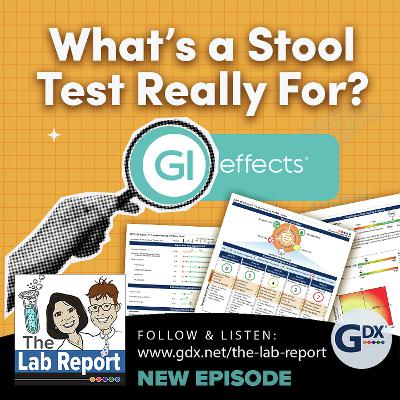
Like Hippocrates said, “All Disease Begins in the Gut.” Here in functional/personalized medicine, stool testing is an important tool to help get to the root cause of chronic conditions or to optimize health. Given its vital role in clinical practice, choosing the right stool test becomes paramount and being mindful of the information you are seeking is key. In today’s episode, we're taking the conversation deeper, refocusing on why studying the microbiome is so critical. This episode redefines the clinical utility of Genova's stool tests, giving you the insights you need to make informed decisions and get better results for your patients. Today on The Lab Report: 4:55 Stool testing - High-level why’s 8:00 Clinical guide to basic gut function 11:00 Inflammation biomarker overload 13:30 Measuring maldigestion/malabsorption 16:15 Gut metabolites – direct vs. Next-Gen Sequencing 20:10 Infection – bacterial culture 24:45 Finding parasites Additional Resources: GI Effects Stool Profile Microbiomix Subscribe, Rate, & Review The Lab Report Thanks for tuning in to this week’s episode of The Lab Report, presented by Genova Diagnostics, with your hosts Michael Chapman and Patti Devers. If you enjoyed this episode, please hit the subscribe button and give us a rating or leave a review. Don’t forget to visit our website, like us on Facebook, follow us on Twitter, Instagram, and LinkedIn. Email Patti and Michael with your most interesting and pressing questions on functional medicine: podcast@gdx.net. And, be sure to share your favorite Lab Report episodes with your friends and colleagues on social media to help others learn more about Genova and all things related to functional medicine and specialty lab testing. To find a qualified healthcare provider to connect you with Genova testing, or to access select products directly yourself, visit Genova Connect. Disclaimer: The content and information shared in The Lab Report is for educational purposes only and should not be taken as medical advice. The views and opinions expressed in The Lab Report represent the opinions and views of Michael Chapman and Patti Devers and their guests.See omnystudio.com/listener for privacy information.
Heat Shock Proteins (HSPs) are often called molecular chaperones. These crucial proteins spring into action when cells are under threat from environmental stressors, toxins, inflammation, and oxidative stress. Join us as we uncover how heat shock proteins function as the cell’s microscopic repair crew. Discover how this fundamental biological mechanism not only protects our cells from daily stresses but also holds promising clues to treating age-related illnesses like cancer and neurodegenerative diseases. Today on The Lab Report: 3:50 Heat shock proteins and cellular health 8:05 Types of cellular stress 9:30 Specific functions of HSPs 11:00 Metaphors are fun 13:05 How were these discovered? 14:00 Different than cold shock proteins 16:00 Clinical associations in disease 19:15 Naturally increasing your HSPs 21:25 Drug development and implications Subscribe, Rate, & Review The Lab Report Thanks for tuning in to this week’s episode of The Lab Report, presented by Genova Diagnostics, with your hosts Michael Chapman and Patti Devers. If you enjoyed this episode, please hit the subscribe button and give us a rating or leave a review. Don’t forget to visit our website, like us on Facebook, follow us on Twitter, Instagram, and LinkedIn. Email Patti and Michael with your most interesting and pressing questions on functional medicine: podcast@gdx.net. And, be sure to share your favorite Lab Report episodes with your friends and colleagues on social media to help others learn more about Genova and all things related to functional medicine and specialty lab testing. To find a qualified healthcare provider to connect you with Genova testing, or to access select products directly yourself, visit Genova Connect. Disclaimer: The content and information shared in The Lab Report is for educational purposes only and should not be taken as medical advice. The views and opinions expressed in The Lab Report represent the opinions and views of Michael Chapman and Patti Devers and their guests.See omnystudio.com/listener for privacy information.
Licorice root is a time-honored herbal remedy with a sweet side. Beyond its role in teas and tonics, licorice root has been used for centuries to support digestion, ease respiratory illnesses, and calm everyday inflammation. It is well- known for its synergistic effects with other herbal therapies. Join us as we talk about how licorice root can fit into your wellness routine, the traditions behind its medicinal use, and simple ways you can explore these benefits safely. Today on The Lab Report: 4:00 Licorice root – the plant, not the candy 7:15 Powerhouse synergizer herb 9:45 Bioactive constituents – pharmacologic overview 13:45 Clinical uses – starting with the respiratory tract 16:40 Google it – Dental caries 19:15 In vitro cancer studies 21:30 Estrogenic activities 23:22 Cortisol, fluid retention, electrolytes, blood pressure 25:45 “What’s in a Name?” Subscribe, Rate, & Review The Lab Report Thanks for tuning in to this week’s episode of The Lab Report, presented by Genova Diagnostics, with your hosts Michael Chapman and Patti Devers. If you enjoyed this episode, please hit the subscribe button and give us a rating or leave a review. Don’t forget to visit our website, like us on Facebook, follow us on Twitter, Instagram, and LinkedIn. Email Patti and Michael with your most interesting and pressing questions on functional medicine: podcast@gdx.net. And, be sure to share your favorite Lab Report episodes with your friends and colleagues on social media to help others learn more about Genova and all things related to functional medicine and specialty lab testing. To find a qualified healthcare provider to connect you with Genova testing, or to access select products directly yourself, visit Genova Connect. Disclaimer: The content and information shared in The Lab Report is for educational purposes only and should not be taken as medical advice. The views and opinions expressed in The Lab Report represent the opinions and views of Michael Chapman and Patti Devers and their guests.See omnystudio.com/listener for privacy information.
Mitochondrial dysfunction may be one of the most important topics in the area of personalized and preventative medicine to date. Thousands of articles have been published on the nature of how mitochondria become damaged and what that means for health, longevity, and aging. On today’s podcast, we take a deep dive into the triggers for mitochondrial dysfunction and what clinical conditions are related to damaged mitochondria. We also discuss how to arm your arsenal with everyday items to help stability, protect, and maintain our mitochondria. We also discuss how other systems within and outside the cell are impacted by these “power plants” within. Today on The Lab Report: 3:45 Break it down: the parts of the cell 8:40 The mitochondria are power plants 9:00 What’s normal? 10:00 Factors that trigger mitochondrial dysfunction 13:20 The mitochondria as our cell’s cohabitant 16:10 Progression of mitochondrial dysfunction 20:10 Clinical conditions associated with mitochondrial dysfunction 21:00 What can we do about it? Subscribe, Rate, & Review The Lab Report Thanks for tuning in to this week’s episode of The Lab Report, presented by Genova Diagnostics, with your hosts Michael Chapman and Patti Devers. If you enjoyed this episode, please hit the subscribe button and give us a rating or leave a review. Don’t forget to visit our website, like us on Facebook, follow us on Twitter, Instagram, and LinkedIn. Email Patti and Michael with your most interesting and pressing questions on functional medicine: podcast@gdx.net. And, be sure to share your favorite Lab Report episodes with your friends and colleagues on social media to help others learn more about Genova and all things related to functional medicine and specialty lab testing. To find a qualified healthcare provider to connect you with Genova testing, or to access select products directly yourself, visit Genova Connect. Disclaimer: The content and information shared in The Lab Report is for educational purposes only and should not be taken as medical advice. The views and opinions expressed in The Lab Report represent the opinions and views of Michael Chapman and Patti Devers and their guests. See omnystudio.com/listener for privacy information.
Eggs are one of the most widely-consumed, and underappreciated, foods in the human diet. Long regarded as a nutritional powerhouse, eggs are rich in high-quality protein and essential nutrients that are key for health. In fact, eggs are considered the best complete protein – meaning they contain all 9 essential amino acids. But for decades, eggs were caught in the crossfire of the cholesterol debate. In today’s episode, we’ll explore what current research says about the relationship between eggs and heart health, and whether concerns about dietary cholesterol still hold up. We’ll also discuss the role of eggs in weight management, muscle maintenance, eye health, and brain function. Whether you’re someone who eats eggs daily or has questions about whether you should, this episode offers a thoughtful, evidence-based discussion on why eggs have earned their place at the table. Today on The Lab Report: 4:00 Why can't we agree about eggs? 6:00 Eggs are low calorie and a complete protein 8:30 Which is better the whites or the yolks? 10:00 Eggs, choline, and brain health 11:45 Eggs and eyes 17:00 The egg and cholesterol controversy 19:45 We find a way to bring "methylation" into the discussion 23:00 Eggs, satiety, and weight management 24:50 Little known constituents inside eggs 26:30 Other types of eggs and their nutritional value 29:00 Fun facts about eggs: color and bloom 30:20 Which came first, the chicken or the egg? We also referenced The Methylation Episode which can be listened to here. Subscribe, Rate, & Review The Lab Report Thanks for tuning in to this week’s episode of The Lab Report, presented by Genova Diagnostics, with your hosts Michael Chapman and Patti Devers. If you enjoyed this episode, please hit the subscribe button and give us a rating or leave a review. Don’t forget to visit our website, like us on Facebook, follow us on Twitter, Instagram, and LinkedIn. Email Patti and Michael with your most interesting and pressing questions on functional medicine: podcast@gdx.net. And, be sure to share your favorite Lab Report episodes with your friends and colleagues on social media to help others learn more about Genova and all things related to functional medicine and specialty lab testing. To find a qualified healthcare provider to connect you with Genova testing, or to access select products directly yourself, visit Genova Connect. Disclaimer: The content and information shared in The Lab Report is for educational purposes only and should not be taken as medical advice. The views and opinions expressed in The Lab Report represent the opinions and views of Michael Chapman and Patti Devers and their guests.See omnystudio.com/listener for privacy information.

Stool testing technology has advanced rapidly in recent years, with newer methods like PCR and whole-genome sequencing offering faster and more precise insights into the gut microbiome. These innovations have transformed how clinicians approach gut health, allowing for more targeted interventions. However, older technologies—such as microscopy, culture, and enzyme-based assays—still play a valuable role. These methods provide functional insights that molecular tools may miss, such as direct observation of parasites or assessment of digestive markers. The most comprehensive labs recognize that no single method gives the full picture. Instead, combining the strengths of both modern and traditional techniques ensures more accurate, clinically meaningful results. In this episode, we dive into the pros and cons of different laboratory methodologies used in stool testing—from culture and microscopy to PCR and advanced sequencing. We break down how these choices impact accuracy, sensitivity, and clinical usefulness. You'll also learn why Genova Diagnostics stands out for its integrative, evidence-based approach, combining multiple testing methods to deliver the most comprehensive and clinically actionable results available. Today on The Lab Report: 4:00 Technology grows quickly, and the microbiome is complex 7:30 Microbiology culture 12:40 PCR – very precise if done correctly! 17:00 Interpreting the laundry list 20:10 Remember the microscope? 23:30 Whole-genome (shotgun) sequencing pros/cons 27:15 Genova does it all – and well Additional Resources: GI Effects Stool Profile Microbiomix Subscribe, Rate, & Review The Lab Report Thanks for tuning in to this week’s episode of The Lab Report, presented by Genova Diagnostics, with your hosts Michael Chapman and Patti Devers. If you enjoyed this episode, please hit the subscribe button and give us a rating or leave a review. Don’t forget to visit our website, like us on Facebook, follow us on Twitter, Instagram, and LinkedIn. Email Patti and Michael with your most interesting and pressing questions on functional medicine: podcast@gdx.net. And, be sure to share your favorite Lab Report episodes with your friends and colleagues on social media to help others learn more about Genova and all things related to functional medicine and specialty lab testing. To find a qualified healthcare provider to connect you with Genova testing, or to access select products directly yourself, visit Genova Connect. Disclaimer: The content and information shared in The Lab Report is for educational purposes only and should not be taken as medical advice. The views and opinions expressed in The Lab Report represent the opinions and views of Michael Chapman and Patti Devers and their guests.See omnystudio.com/listener for privacy information.
![NAC...Drug or Super Supplement? [Rebroadcast]](https://s3.castbox.fm/07/c3/8e/c974969104cff7d0ef7180febee5223312_scaled_v1_400.jpg "NAC...Drug or Super Supplement? [Rebroadcast]")
N-acetylcysteine, or NAC, plays an important role in the body when it comes to combating oxidative stress. As a precursor to make glutathione, NAC has been used for decades both as an acute medication and as an over-the-counter supplement. Recently, the line between medication and supplement has been blurred and is now being debated. Today we talk all about N-acetylcysteine - the ways NAC is used and its importance in health and disease. Today on The Lab Report: 2:45 NAC as a drug in acute care settings 4:00 Mechanisms of action in the lung and kidney 7:15 NAC as a daily supplement 10:00 Hmmm…so is it a medication or a supplement? 11:15 Generic drug or herbal constituent? 15:00 Research on NAC in psychiatric disorders 16:16 NAC in polycystic ovary syndrome and fertility 17:40 Safety and side effects 18:50 Question of the Day: What are the other precursors to glutathione and how do we measure them? Subscribe, Rate, & Review The Lab Report Thanks for tuning in to this week’s episode of The Lab Report, presented by Genova Diagnostics, with your hosts Michael Chapman and Patti Devers. If you enjoyed this episode, please hit the subscribe button and give us a rating or leave a review. Don’t forget to visit our website, like us on Facebook, follow us on Twitter, Instagram, and LinkedIn. Email Patti and Michael with your most interesting and pressing questions on functional medicine: podcast@gdx.net. And, be sure to share your favorite Lab Report episodes with your friends and colleagues on social media to help others learn more about Genova and all things related to functional medicine and specialty lab testing. Disclaimer: The content and information shared in The Lab Report is for educational purposes only and should not be taken as medical advice. The views and opinions expressed in The Lab Report represent the opinions and views of Michael Chapman and Patti Devers and their guests. See omnystudio.com/listener for privacy information.
Turmeric is a spice with ancient origins. You’ve seen it in smoothies, teas, curry, and supplements. Known for its bright yellow color, it has been used for centuries to support whole-body wellness. From inflammation and joint pain to brain and heart health, in this episode we break down what the science says about turmeric and its main constituent curcumin. Join us as we explore turmeric’s long-standing role in health and wellness and zoom in on curcumin. We break down what the science says about curcumin’s therapeutic potential, how it’s absorbed, and whether supplementation is worth the hype. Whether you’re a culinary enthusiast or a health-conscious listener, this discussion of turmeric promises to spice up your knowledge! Today on The Lab Report: 4:30 The history of turmeric 7:30 Inflammation, whole root vs. curcumin 10:45 Oxidative stress, polyphenols, tumors, brain health 12:50 How much turmeric/curcumin per day 15:15 Poor absorption and bioavailability 18:20 Side effects – be aware 19:30 It stains stuff 21:50 Reputable sourcing and MC’s home recipe? Subscribe, Rate, & Review The Lab Report Thanks for tuning in to this week’s episode of The Lab Report, presented by Genova Diagnostics, with your hosts Michael Chapman and Patti Devers. If you enjoyed this episode, please hit the subscribe button and give us a rating or leave a review. Don’t forget to visit our website, like us on Facebook, follow us on Twitter, Instagram, and LinkedIn. Email Patti and Michael with your most interesting and pressing questions on functional medicine: podcast@gdx.net. And, be sure to share your favorite Lab Report episodes with your friends and colleagues on social media to help others learn more about Genova and all things related to functional medicine and specialty lab testing. To find a qualified healthcare provider to connect you with Genova testing, or to access select products directly yourself, visit Genova Connect. Disclaimer: The content and information shared in The Lab Report is for educational purposes only and should not be taken as medical advice. The views and opinions expressed in The Lab Report represent the opinions and views of Michael Chapman and Patti Devers and their guests.See omnystudio.com/listener for privacy information.
There’s a lot of buzz around the topic of longevity. One might argue that every aspect of functional and integrative medicine promotes longevity – which is true. We’re not merely looking to lengthen lifespan we want to promote a HEALTH span. With that in mind, data is compelling. There’s one metric that is often overlooked which happens to be the greatest predictor of longevity: VO2 max. Join us as we dive deep into how VO2 max impacts health, longevity, and overall well-being. We’ll discuss the science, how to measure it, and how to improve this crucial fitness metric. Today on The Lab Report: 4:15 What is VO2 max and how do we use oxygen? 6:00 Mitochondrial biogenesis, VO2 max, and the research 9:00 What’s normal? 10:45 How do you measure VO2 max? 14:10 Improving your VO2 max 17:10 Question of the Day How does Genova assess longevity? Additional Resources: Longevity Landing Page NutrEval Metabolomix+ Methylation Panel Subscribe, Rate, & Review The Lab Report Thanks for tuning in to this week’s episode of The Lab Report, presented by Genova Diagnostics, with your hosts Michael Chapman and Patti Devers. If you enjoyed this episode, please hit the subscribe button and give us a rating or leave a review. Don’t forget to visit our website, like us on Facebook, follow us on Twitter, Instagram, and LinkedIn. Email Patti and Michael with your most interesting and pressing questions on functional medicine: podcast@gdx.net. And, be sure to share your favorite Lab Report episodes with your friends and colleagues on social media to help others learn more about Genova and all things related to functional medicine and specialty lab testing. To find a qualified healthcare provider to connect you with Genova testing, or to access select products directly yourself, visit Genova Connect. Disclaimer: The content and information shared in The Lab Report is for educational purposes only and should not be taken as medical advice. The views and opinions expressed in The Lab Report represent the opinions and views of Michael Chapman and Patti Devers and their guests.See omnystudio.com/listener for privacy information.

As we enter the summer season, many of us will spend countless hours outdoors. We often discuss tick awareness and tick-borne illness, but one tick in particular is getting a lot of press these days. In case you needed another reason to be mindful of ticks, today we discuss Alpha-gal Syndrome. In today’s episode we explore the science behind alpha-gal syndrome – a rare and serious allergy to red meat and other mammal products triggered by a bite from the Lone Star Tick. Tune in to learn how to recognize symptoms and why this syndrome is spreading across many regions and many countries. Today on The Lab Report: 3:30 What is Alpha-gal Syndrome? 6:30 Delayed anaphylaxis? What! 9:50 Epidemiology and prevalence 11:50 Not only red meat – other products 14:55 Diagnosing alpha-gal syndrome 16:20 Tick avoidance and sensitization 18:40 What foods can these patients eat? 20: 15 Question of the Day? Are there herbs that can help? Additional Resources: Alpha-gal Information Subscribe, Rate, & Review The Lab Report Thanks for tuning in to this week’s episode of The Lab Report, presented by Genova Diagnostics, with your hosts Michael Chapman and Patti Devers. If you enjoyed this episode, please hit the subscribe button and give us a rating or leave a review. Don’t forget to visit our website, like us on Facebook, follow us on Twitter, Instagram, and LinkedIn. Email Patti and Michael with your most interesting and pressing questions on functional medicine: podcast@gdx.net. And, be sure to share your favorite Lab Report episodes with your friends and colleagues on social media to help others learn more about Genova and all things related to functional medicine and specialty lab testing. To find a qualified healthcare provider to connect you with Genova testing, or to access select products directly yourself, visit Genova Connect. Disclaimer: The content and information shared in The Lab Report is for educational purposes only and should not be taken as medical advice. The views and opinions expressed in The Lab Report represent the opinions and views of Michael Chapman and Patti Devers and their guests.See omnystudio.com/listener for privacy information.
Tinnitus—the phantom ringing, buzzing, or hissing that affects millions. For those patients who suffer with this debilitating condition, it is frustrating to find any relief. For those clinicians trying to treat it, the causes are so multi-faceted, and the treatments seem to be lacking. Today we break down the physiology of hearing, what can go wrong in the auditory system, and the many potential causes of tinnitus, from noise exposure to neurological conditions. We also examine current treatment options, emerging therapies, and what the latest research says about finding relief. Whether you're a sufferer or just curious, this episode tunes into the facts behind the noise. Today on The Lab Report: 5:00 Tinnitus – what is it? 7:00 Physiology of hearing sound 10:30 Basic causes of tinnitus 13:45 Pathophysiology & mechanisms 17:45 Loud noise causing tinnitus 22:35 Presbycusis, ototoxicity, hearing loss 25:05 Root causes and treatment of tinnitus 28:00 Functional approach for clinicians Subscribe, Rate, & Review The Lab Report Thanks for tuning in to this week’s episode of The Lab Report, presented by Genova Diagnostics, with your hosts Michael Chapman and Patti Devers. If you enjoyed this episode, please hit the subscribe button and give us a rating or leave a review. Don’t forget to visit our website, like us on Facebook, follow us on Twitter, Instagram, and LinkedIn. Email Patti and Michael with your most interesting and pressing questions on functional medicine: podcast@gdx.net. And, be sure to share your favorite Lab Report episodes with your friends and colleagues on social media to help others learn more about Genova and all things related to functional medicine and specialty lab testing. To find a qualified healthcare provider to connect you with Genova testing, or to access select products directly yourself, visit Genova Connect. Disclaimer: The content and information shared in The Lab Report is for educational purposes only and should not be taken as medical advice. The views and opinions expressed in The Lab Report represent the opinions and views of Michael Chapman and Patti Devers and their guests. See omnystudio.com/listener for privacy information.
Dr. Laura James is a board-certified naturopathic oncologist who has been working with cancer patients for over 20 years. She helps patients who are recently diagnosed with cancer get through the intense steps of conventional treatment – surgery, chemotherapy, and radiation – using natural means like nutrition, herbs, gentle movement, and stress management. In today’s episode, we hear Dr. Laura James discuss her balanced viewpoint on the use of natural therapies in combination with conventional treatment to support cancer patients. Through supplement streamlining, nutritional and botanical recommendations, and lifestyle counseling, her expertise can help you feel better through treatment and beyond. Today on The Lab Report: 4:00 Meet Dr. Laura James and hear how she defines integrative cancer care 9:25 Diet and nutrition – keto, fasting, low carb, protein 14:00 Working alongside conventional oncologists 19:20 Building a care team 24:00 Supporting the chemotherapy journey 27:50 Antioxidants, probiotics, and chemo 32:45 Resilience and the mental emotional rollercoaster 37:40 “Battle language” and vulnerability in cancer 43:50 Preventative care 51:30 Where to find Dr. Laura James? 53:55 The Fireball Additional Resources: LauraJamesND.com Best for Breast Supplements Subscribe, Rate, & Review The Lab Report Thanks for tuning in to this week’s episode of The Lab Report, presented by Genova Diagnostics, with your hosts Michael Chapman and Patti Devers. If you enjoyed this episode, please hit the subscribe button and give us a rating or leave a review. Don’t forget to visit our website, like us on Facebook, follow us on Twitter, Instagram, and LinkedIn. Email Patti and Michael with your most interesting and pressing questions on functional medicine: podcast@gdx.net. And, be sure to share your favorite Lab Report episodes with your friends and colleagues on social media to help others learn more about Genova and all things related to functional medicine and specialty lab testing. To find a qualified healthcare provider to connect you with Genova testing, or to access select products directly yourself, visit Genova Connect. Disclaimer: The content and information shared in The Lab Report is for educational purposes only and should not be taken as medical advice. The views and opinions expressed in The Lab Report represent the opinions and views of Michael Chapman and Patti Devers and their guests.See omnystudio.com/listener for privacy information.

Comments

Download from Google Play

Download from App Store
 United States