


 Claim Ownership
EYCN Podcast - Chemistry To Your Ears
Subscribed: 5Played: 39
Subscribe

© European Young Chemists' Network
Description
Learn more about interesting chemistry related topics from interviews with young professionals and professors. Also hear something about the latest news in science in general.
18 Episodes
Reverse
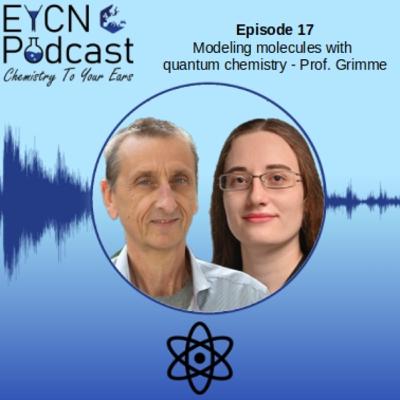
Welcome to our new Podcast episode, with an all-new host! In this episode, Konstantina Armadorou interviews Chemistry Europe laureate and accomplished computational chemist Professor Stefan Grimme. A captivating conversation about current trends in the field of chemistry and unlikely collaborations awaits you. Enjoy!Host: Konstantina ArmadorouIntro and Outro: Carl SchneiderWriting: Carl Schneider and Konstantina ArmadorouEditing: Miguel Steiner
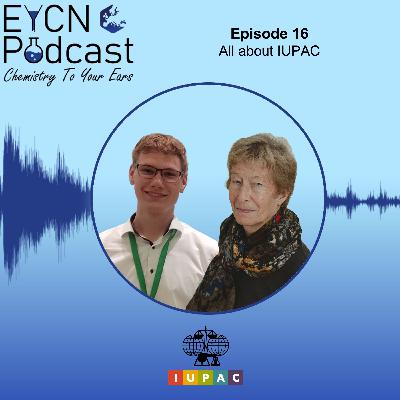
In this episode our host Carl Schneider interviews IUPAC’s
president-elect Mary Garson about all things IUPAC.
Mary Garson is an emeritus Professor at the University of
Queensland, current vice-president of IUPAC and president-elect for the upcoming legislative period. She has been a long-standing figure in IUPAC and has shaped the way we know IUPAC today. In this episode, Carl and Mary talk about how IUPAC as a global organization ensures its impact on the local level, how it fosters the next generation of researchers and so much more.
Read more about IUPAC’s “Global Women’s Breakfast”, one of Mary’s closest to heart projects, here!
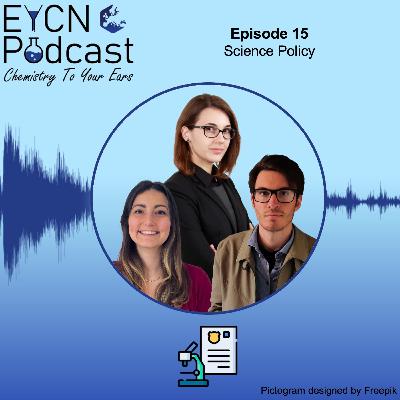
In this episode, we delve into the intricate world of science policy and explore avenues for greater collaboration between scientists and policymakers.
To address this complex topic, Marie Perrin sits down with two distinguished experts to unravel the complexities and synergies between science and policy. From the science side, Prof. Jovana Milić, assistant professor at the university of Fribourg (Switzerland) and member of the Swiss Young Academy and Global Young Academy, and from the policy side Marton Kottmayer, science communication and policy officer at the European Chemical Society (EuChemS).
Whether you’re a passionate scientist, a policy enthusiast, or simply curious about the forces shaping our world, this episode promises to ignite your intellect and inspire action.
During this conversation we cover:
1:55 What is science policy
3:55 How is EuChemS involved in advising policy makers?
7:06 What are the motivations and challenges for scientists to be actively involved in science policy
10:42 Understanding the complexity of policy making: scientists are only one of many stakeholders.
15:48 Opportunities for early carrier scientists to be part of the conversation.
24:50 Why it matters, or how policies affect science at every level.
33:31 Where to start; how can I be involved?
If you want to go further, you can read about « The Role of Early-Career Chemists in European Policy-Making » and « Engaging Early-Career Scientists in Global Policy-Making » and check out the EuChemS magazine to get the latest science policy news from Brussels. Moreover, the EuChemS workshops targeting the selected elements carbon, lithium, nitrogen and phosphorus can be watched online! And for a more active involvement you can always find the public consultations from the European Commission online.
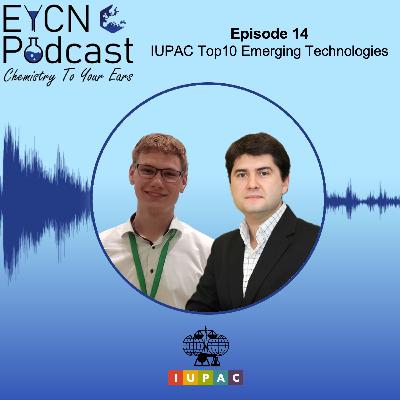
In this episode Carl Schneider interviews IUPAC’s past-president Prof. Dr. Javier García Martinez about the 2023 “IUPAC Top Ten”. Javier and Carl talk about the origin of this tradition, what concerns the chemists of the world, and how IUPAC as a global organization encourages local acting.
For a further look at last year’s finalists you can read up on them here.
Until the 31st of March you can also submit your candidates here to be considered for the 2024 edition of the Top Ten.
You always wanted to know something else about IUPAC? Now, is your chance! We are planning a follow-up episode to talk with Javier about IUPAC in general and we invite you to submit your questions to us beforehand.
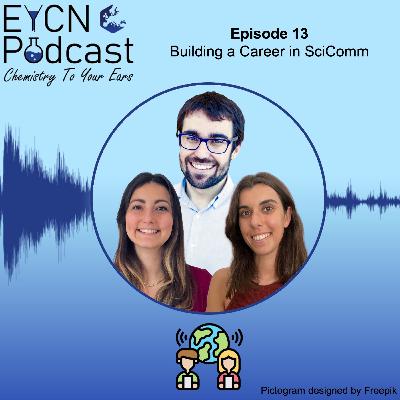
In this episode, we dive into an under-explored yet thrilling career path for chemists: becoming a full-time science communicator. To discuss this topic, Marie Perrin interviews not one but two successful science communicators, Rute Pereira, founder of amazingchemist and social media editor for the ESA and Fernando Gomollón Bel, founder of the science communication startup Agata.
During this conversation we cover:
2:18 What does a typical day in the life of a science communicator look like?
6:08 How can one become a full time science communicator ? 9:47 How can one learn about the tools commonly used in science communication?
17:51 What are the most effective media to reach out to the public about science?
24:24 What are the rewards and challenges of being in science communication?
37:03 How can mentoring help you in defining your dream career path and how can a network like the EYCN enable that?
47:20 Take home message from our guests.
If you want to seize the opportunity of building strong mentoring connections and friendships, don’t forget to sign up for the ECC9 in Dublin! Application for abstracts are open until the 8th of December.

Comments

Download from Google Play

Download from App Store
 United States