


KPFA - Pushing Limits
Subscribed: 14Played: 183
Subscribe

© 2026KPFA 312700
Description
A half-hour radio show providing critical coverage of disability issues and bringing insight into the grassroots disability movement to the general public.
695 Episodes
Reverse

What happens when disabled artists, activists, and scholars finally have a space of their own?
Pushing Limits radio presents its first program featuring the San Francisco Disability Cultural Center. This new venue will host a wide range of activities—from art exhibits and “café crip check-ins” to a collective quilt and a space for disabled and disgruntled academics to air it all out.
Plus, the renowned Superfest Disabled Film Festival is now under the auspices of the San Francisco Disability Cultural Center, marking a major new chapter for disability culture in the Bay Area. Tune in so you don’t miss any details!
This program is hosted and produced by Eddie Ytuarte.
Program Transcription:
Eddie Ytuarte: And that’s our Pushing Limits theme, which we feature every time we come on the air. I’m Eddie Ytuarte, and this is Pushing Limits radio program, perhaps the only radio program in the Bay Area that talks exclusively about disability. We’re on every week now at this time, Friday, 2:30 p.m. And we’re emanating from KPFA in Berkeley, California.
San Francisco in the last year has, I believe, the first disability cultural center in the city. And it opened up around July mid-year. And today we’re going to have one of the co-directors, Emily Beitiks, who will be talking to us about that whole new center because we haven’t really talked about it yet.
So, Emily, welcome to Pushing Limits again.
Emily Beitiks: Hi, Eddie. Thank you so much for having me on.
Eddie Ytuarte: So where is this? By the way, what’s the official name of the cultural center?
Emily Beitiks: We are the San Francisco Disability Cultural Center. And we’re not just the first in the city, we’re the first public disability cultural center in the country. There are other cultural centers, but they’re all inside of universities. San Francisco was the first one to think about having support for one that’s open to anybody.
Eddie Ytuarte: And thank you for that, because I understood that UC Berkeley has a disability cultural center, but I guess it’s located on the campus.
Emily Beitiks: Yes, we love working with them. We work with a lot of other universities to cross promote programs and brainstorm. But yeah, this is the first municipal one.
Eddie Ytuarte: Great. And where are you located in San Francisco?
Emily Beitiks: We are at 165 Grove Street, and we look out on the south side of City Hall. So, we just could not have a more exciting central location that meets all of our access needs for where we would be, which included being really close to public transportation. So, we’re close to BART, close to Muni.
Eddie Ytuarte: Wow, I didn’t know you were that close to the center of stuff.
Yeah, that’s great.
Now, is this part of a, it’s not freestanding, it’s part of a bigger building or what?
Eddie Ytuarte: Is it on the ground floor?
We are on the ground floor, street side, and we have our own entrance, but we’re part of a building that is the Kelsey Civic Center.
Eddie Ytuarte: Oh, okay.
Emily Beitiks: And the Kelsey is an amazing organization that is also disability focused. They fight for housing access for disabled people.
And so, the building that we are a part of, everything else in the building is a residency that is every unit in 112 units was built to be accessible for disabled people. And 25 percent of the units were reserved for disabled people. They couldn’t reserve more than that because it’s considered reverse discrimination. But it’s a very disability centered community.
They have a lot of nice events, and the residents are regulars at our programs. But our programs are open to anybody that we’re not just for the building.
Eddie Ytuarte: Okay. And what’s the capacity of the number of people that could be there for an activity?
That’s a funny thing.
You know, we are kind of a small space.
When the city knew that they wanted to have a disability cultural center and didn’t know where, and then the Kelsey approached them about the space. And it was just such a perfect fit to be right across from City Hall. such a great thing to be part of this wider building that has this disability focus, but the actual center is tiny. So events, we’ve managed to have about 65 people, but it’s pretty intimate. But that being said, it’s a brand new space that was built to meet our access needs and our biggest access dreams. So everything is built to be hybrid.
And we also are partially indoor and partially outdoor. So we have one entire wall of the Disability Cultural Center slides open or folds open these glass folding doors. And then we have patio seating. And that is one of the things that we’re just most excited about to have people who are immunocompromised, who really just won’t ever be comfortable at an indoor event, have been able to join us at the Cultural Center for our programs sit in the patio. And because that wall folds open, the audio goes outside as well. It really allows everybody to feel like they’re together as one central event. So that ups our capacity a little bit, being able to have people on the patio.
Eddie Ytuarte: And I’ve been hearing about a disability cultural center, the prospect of it for several years now. And it’s a reality beginning, I guess, in July when there was the opening. And can you give us a little bit of background as to how you folks came into existence?
Emily Beitiks: Yes, it was a long journey. In 2017, the city of San Francisco started thinking up the idea of a because they had this pocket of money that was pushed forward by San Francisco taxpayers or voters, I should say, to have a pool called the Dignity Fund.
And it was to have seniors and disabled people be better equipped and supported with staying in San Francisco when they knew some of the access challenges of being a senior or disabled meant staying in San Francisco was hard for a lot of people.
And so, the city then had to do a needs assessment to see like, OK, well, are we actually reaching the people we say we’re trying to reach. And they found that they were reaching seniors quite well through the wide network of senior centers that we have in the city. And they were not doing the same, having the same success with reaching disabled folks, because the current, you know, belief was like, well, they can go into the senior centers. And that’s great if you’re a disabled senior. But if you’re not, you know, you don’t necessarily want to go to a senior center to get access to services. You want a place where you feel is meant for you.
So, the city then came up with the idea of the Cultural Center, really thanks to Nicole Bond, who is at the mayor’s office, the head of the mayor’s office on disability at the time. And then in 2018, they did a strategic plan, and they hired the Longmore Institute on Disability, where I was working at the time, to really capture the city’s disabled populations, like hopes and dreams for what a space could be. They didn’t know where it was going to be yet. They didn’t know what it was going to look like. And they did a citywide survey. They held focus groups and met with disability leaders to come up with a more concrete vision.
And then things slowed down. You know, 2019, they were kind of like working to figure it out. And then 2020 happened and everything stopped. So, it wasn’t until the Kelsey came to the city and said, well, we’re opening this building, we have this ground floor space. In other Kelsey buildings, that ground floor space would be like a store or restaurant. And they said, well, why do that when the city also wants a cultural center? This seems like a perfect opportunity.
So, then they put out a request for proposals for who would run the new Disability Cultural Center. And the organization I’m with, Haven of Hope, the LC and Lily Cox Haven of Hope decided to apply and collaborated with the Longmore Institute in the early years to help get it going.
So, we had a virtual launch first, and we offered a year of virtual programming. And that was really just because people had been waiting since 2018, and the city was waiting for this building to open, but they didn’t want to wait any longer to be able to start offering services. So, we offered a year of virtual programming.
And then this July of 2025, we had our big grand opening in the space. And so we’ve been open for the last six months offering hybrid programming from the space and continuing our virtual access as well, which has been really exciting. Starting with virtual both meant that folks who are physically isolated and really can’t get out and about. Like we got to start with those folks. And so often that community comes second. It was really great to sort of build our core with that community, but it also brought people from all over the country, but beyond the country. We’ve had people in South America joining. We’ve had a lot of people from Canada and Europe and basically people who are isolated and saying like that it’s sort of unthinkable for their local geographic region to have a disability cultural center, but because everything is hybrid, they can participate in San Francisco.
So it’s been it’s been wonderful.
Eddie Ytuarte: Now, do you agree with me that it’s really important for our disabled cultural workers to be able to do their work, explain, and have their vision explored by the non-disabled world, especially these days because of what’s happening with the federal government, for instance, tearing up the Department of Education, SNAP, cutbacks on SNAP and other things that are affecting people with disabilities.
But we also have a lot of kinds of discrimination and a lot of things about, that you might see on, through internet or through the movies or through radio or television. Still a lot of negative things are about our disability communities that we have to counter. And I think one of the ways we can do it is through the cultural work of people with disabilities.
And how do you
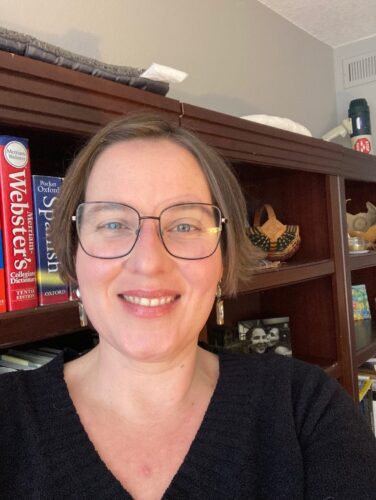
Andrea Jones Klein
What happens when the fight for justice isn’t accessible to everyone — even the people doing the organizing? And how often do we overlook disabilities we can’t see, but that profoundly shape who gets to show up?
Join Pushing Limits this Friday as we talk with social justice organizer Andrea Jones Klein. For more than five years, Andrea has worked at the intersections of climate justice, political liberation, and health equity — all while living with chemical intolerance.
In this conversation, Andrea discusses the ableism she encounters in organizing spaces, explains what chemical intolerance is, and shares simple, practical steps people can take to make public spaces more accessible for those with her disability.
To get in contact with Andrea, you can e-mail her at andreajonesklein@gmail.com
This program was produced by Jacob Lesner-Buxton. It was hosted and edited by Dominick Trevethan.
The post Social Justice and Ableism – Pushing Limits – January 2, 2026 appeared first on KPFA.
What really happened behind the scenes at Pushing Limits in 2025?
In our end-of-the-year special, host Denny Daughters turns the questions on the Pushing Limits crew themselves. What did they love about this year? What did they learn? And what are they hoping for in the year to come?
But that’s not all! Don’t miss the montage of all the guests from last year. Plus, hidden in this special is a secret about how the year end montage was made—something we’ve never shared before.
Laugh, reflect, and uncover what you weren’t supposed to know. We’ll see you real soon!
This program was hosted and produced (all year long) by Denny Daughters.
The post 2025 in Review – Pushing Limits – December 26, 2025 appeared first on KPFA.
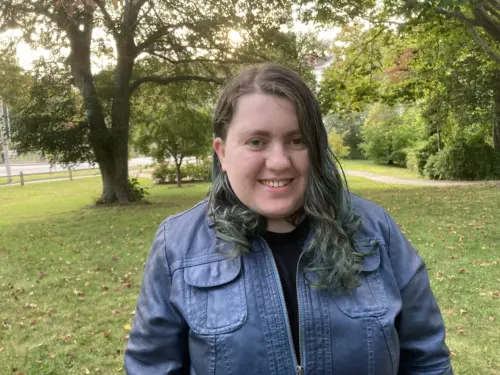
How do we build a city where seniors and disabled people don’t just survive, but actually thrive? And what does it take for an organization to stay ahead of the curve when so many in our community are struggling for housing, transportation, and basic dignity?
Shaya French
Join Pushing Limits as we sit down with Shaya French, Director of Organizing for Senior and Disability Action — a long-standing, progressive San Francisco organization often a step ahead of others serving the disability community.
We’ll explore SDA’s work on housing, transportation, health care, and its innovative anti-ICE organizing efforts.
And honestly… you’ve got to appreciate an organization whose goals include “to be creative and have fun.” Tune in for a lively and informative conversation.
If you’d like more info about Shaya and SDA, check out their website here
This program is hosted and produced by Eddie Ytuarte.
The post Organizing for Access – Senior and Disability Action – Pushing Limits – December 5, 2025 appeared first on KPFA.
How accessible is your daily commute, really? And when public transportation falls short, who’s out there fighting to fix it?
Join us on this week’s Pushing Limits as Denny Daughters interviews Warren Cushman, a systems change advocate with Community Resources for Independent Living (CRIL) in Hayward. Warren shares the work he’s doing with the Metropolitan Transportation Commission, as well as his advocacy with AC Transit and BART. We also dive into his efforts around housing justice and mental health support—two issues deeply intertwined with disability rights.
This show was hosted and edited by Denny Daughters.
For more information, contact CRIL at (510) 881-5743 or visit crilhayward.org.
You can reach Warren directly at warren.cushman@crilhayward.org
The post Disability Advocacy at the Local Level – Pushing Limits – November 28, 2025 appeared first on KPFA.
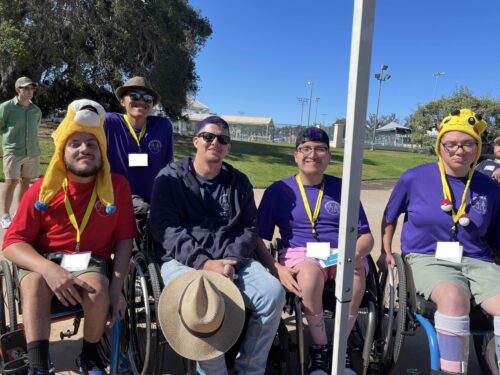
For most people, “the happiest place on earth” means Disneyland. But for the kids who attend Cottage Rehabilitation Hospital’s annual Junior Wheelchair Sports Camp, true magic happens somewhere else entirely—on the courts, fields, and pool deck of UC Santa Barbara’s Recreation Center.
Cynthia Muñoz
This week on Pushing Limits, we’re joined by counselors Cynthia Muñoz, who lives with cerebral palsy spastic diplegia, and Brian Rathfelder, who lives with a spinal cord injury. They share what it’s like to mentor kids navigating the same challenges they once faced, the behind-the-scenes hustle of creating a fully adaptive, sport-oriented day camp, and the unforgettable moments that make this community feel like a second family.
Tune in to discover why this one-week camp leaves a lifelong impact on everyone who rolls through its doors.
This program is hosted, edited, and produced by Dominick Trevethan.
Brian & Campers
The post Behind The Magic: Junior Wheelchair Sports Camp – Pushing Limits – November 21, 2025 appeared first on KPFA.
For many veterans, the hardest fight begins when they come home—navigating disability, trauma, and a system that too often turns its back on them.
For more than half a century, Swords to Plowshares has been serving and uplifting military veterans across the Bay Area. What began as a small grassroots effort to support Vietnam veterans—many of them living with disabilities and facing rejection from traditional institutions like the Veterans Administration—has grown into one of the nation’s leading veteran service organizations.
Elena Kim
This week on Pushing Limits, we spotlight Swords to Plowshares, a vital force for veteran rights and disability justice. Tune in as we explore their powerful history, ongoing advocacy, and how they continue to help veterans rebuild their lives with dignity and purpose with the help of Elena Kim, Chief Operating Officer.
As the former City of San Francisco’s Director of Veterans Services, human intelligence collector from 2005-2010 during Operation Iraqi Freedom, and Master Degree holder in Legislative Affairs, Elena oversees Swords to Plowshares‘ operations and programs.
This program is hosted and produced by Eddie Ytuarte.
The below image is from: https://www.flickr.com/people/37922399@N05
California Disabled Vets. December 2010 from Virginia State Parks staff
The post 50 Years Strong: Swords to Plowshares – Pushing Limits – November 14, 2025 appeared first on KPFA.
Seniors and people with disabilities both advocate for home care, housing, and transportation but, for decades, only lonely voices urged the two groups to collaborate. . . until now!
Our guests this Friday, Christina Mills and Cynde Soto, talk about the factors that contributed to the historical division between senior and disability advocates as well as current efforts to build solidarity between both groups.
Christina is the director of the California Association of Area Agencies on Aging (C4A). Her organization works to educate government leaders on aging and disability-related policy and to advocate for a stronger social safety net. Cynde is a board member of the Long Beach chapter of the Gray Panthers. Since 1974, the chapter has advocated for social and economic justice for those with disabilities and older adults.
Also, we will feature information about a free online drum circle for those with disabilities and allies. It will be on Friday, December 5th, at 1 PST on Zoom. To sign up, email jlesner@accesscentralcoast.org
This episode of Pushing Limits is hosted and edited by Denny Daughters. It was written and produced by Jacob Lesner-Buxton.
Relevant Resources
Long Beach Gray Panthers
California Association of Area Agencies on Aging (C4A)
The post Partnership Between Senior and Disability Advocates – Pushing Limits – November 7, 2025 appeared first on KPFA.
There’s been a haunting of political developments this month that directly impact the disability community—many deeply concerning. On this week’s Pushing Limits, co-producers Adrienne Lauby and Eddie Ytuarte break down the latest news and what it means for people living with disabilities nationwide. From more troubling moves by Trump to the silence of major disability organizations on the humanitarian crisis in Gaza, we dig into what’s being said—and what isn’t (insert Michael Jackson ”Thriller” laugh)!
This program is hosted and produced by Adrienne Lauby and Eddie Ytuarte.
The post Political Wrap-Up – Pushing Limits – October 31, 2025 appeared first on KPFA.
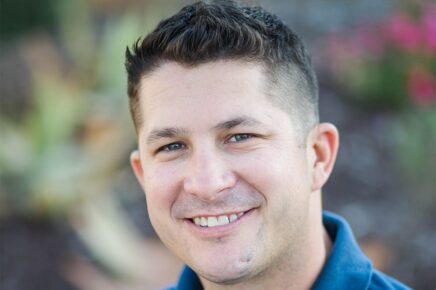
According to the World Health Organization (WHO), more than 15 million people worldwide are living with a spinal cord injury (SCI). These injuries are often sudden and life-changing—leaving many newly injured individuals overwhelmed and searching for support.
Andrew Skinner
On this week’s episode of Pushing Limits, we speak with Andrew Skinner, a man who decided to make that transition—from able-bodied to living with a spinal cord injury—a little easier for others traveling the same path. After his own injury in 2004, Andrew recognized a huge need for accessible equipment and resources for those newly injured.
What began as a small effort grew into the Triumph Foundation, now the largest disability-support nonprofit in Southern California. Since its founding in 2008, Triumph has impacted the lives of over 10,000 individuals with disabilities and provided more than $2 million in assistance to people facing financial hardship or gaps in medical coverage.
Tune in to hear Andrew’s story, the origins of Triumph Foundation, and how his work continues to empower the disability community today.
This program is hosted and produced by Bonnie Elliott. It was edited by Denny Daughters and Jacob Stanton. Additionally, recording assistance was provided by Jacob Lesner-Buxton.
The post ”Triumph“ for Spinal Cord Injured – Pushing Limits – October 24, 2025 appeared first on KPFA.
Did you know that between 150 and 300 people died weekly from COVID during the summer of 2025 in the U.S.? If you were watching the mainstream media or getting news from the White House, this data may surprise you. According to them, COVID is old news and in the rearview mirror of history.
However, today’s guest and disability advocate Polly Garcia is committed to educating their community about the virus. In the interview, she will address how the disability community has been impacted by COVID and the steps organizations can take to begin to address the community trauma that came with the pandemic. Polly has worked at the Centers for Disease Control and with various communities throughout the United States on issues related to public health. She is also an artist and mindfulness practitioner, who is getting her master’s in Negotiation, Conflict Resolution, & Peacebuilding.
Plus, stick around to the end to hear published poetry from M. S. Marquart.
This episode of Pushing Limits is produced by Jacob Lesner-Buxton and hosted and edited by Dominick Trevethan.
Links to information about today’s guests, information about COVID, and other public health issues created by Polly:
https://new.express.adobe.com/webpage/i8rSk4bmpsY6E
Polly’s company – Cosmovisión LLC
https://www.pollygarcia.com/
Poems by M. S. Marquart
https://sites.google.com/view/msmarquart
If you’d like to join Jacob’s monthly zoom meeting, Nothing Without Us, please reach out to him at jakeoaktown@gmail.com
The post Telling the Truth about COVID = Act of Resistance – Pushing Limits – October 17, 2025 appeared first on KPFA.
Executive actions, budget cuts, layoffs, and legislation—all within the first six months of the Trump administration—have severely curtailed disability rights and services, including access to Medicaid and the right to a free, appropriate public education.
That’s the finding of a recent report by the Center for American Progress, authored by Casey Doherty and Mia Ives-Rublee—who will be our live guests on Pushing Limits this week.
Co-producer and host Eddie Ytuarte comments: “The Trump regime is as intent on going after the disability community as it is on targeting non-White communities, universities, immigrants, and politically progressive people and organizations.” Don’t miss the rest of this important report reveal and discussion.
This program is produced and hosted by Eddie Ytuarte.
The post First Six Months – Lasting Damage – Pushing Limits – September 19, 2025 appeared first on KPFA.
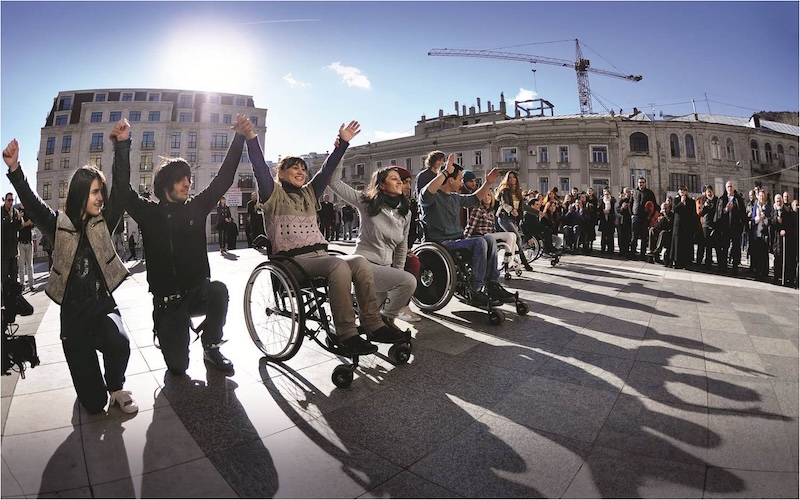
This Friday on Pushing Limits – Join hosts Adrienne Lauby and Eddie Ytuarte as they dig into the latest in disability political news. Adrienne and Eddie bring their sharp analysis and on-the-ground knowledge to the stories that matter most to the disability community.
Don’t miss this timely and important conversation.
Photos with attributions and some context for each:
All from Flickr
1 Traveling Together
Disability Awareness Week, University of Illinois, Springfield Illinois
licensed as CC BY-NC-ND 2.0.
Traveling Together
Finger Pointing
https://www.californialaborsolutions.com/understanding-disability-discrimination/
Finger Pointing
“Together and Strong” USAID/Georgia’s Disability Advocacy Project
Participants in USAID/Georgia’s Disability Advocacy Project, implemented by the Coalition for Independent Living. Photo Credit: Lasha Kuprashvili, Coalition For Independent Living.
This photo was a winner in the Democracy, Human Rights and Governance photo contest.
Together and strong
The post Disability Politics From The Frontlines – Pushing Limits – September 12, 2025 appeared first on KPFA.
What if the only thing standing between you and a life-saving treatment was a price tag? For many living with Spinal Muscular Atrophy, that’s the reality—Spinraza, one of three FDA approved treatments for SMA costs about $425,000 per injection. Beyond the medical challenges, families face crushing financial barriers and questions of accessibility that differ drastically from country to country.
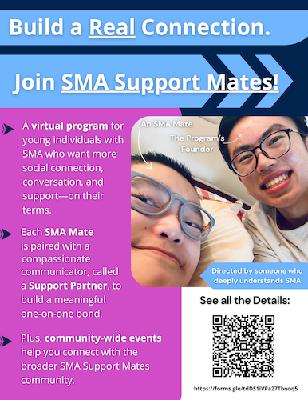
This week, we hear from brothers Derek and Justin. Justin lives with SMA type 1, and Derek—his brother and caregiver—has transformed their experience into a mission. He founded SOAR, a nonprofit dedicated to supporting the SMA community by providing community outreach and support. Under SOAR, Derek created the SMA Support Mates Program, which connects kids and young adults with older mentors who know exactly what it’s like to live with SMA.
Together, we talk about the urgent fight for affordable treatments, the stark contrast in accessibility between the U.S. and Vietnam, and how community can light the path forward.
This interview has been edited from an episode of The Disability Myth. If you would like to hear the longer program, check out the podcast episode on YouTube, Spotify, Apple Podcasts, and Amazon Music.
This program is hosted and produced by Dominick Trevethan.
Useful links:
SOAR’s official website: https://www.sma-awareness.com/
SMA Support Mate Program: https://forms.gle/tdDS1iVPa27tbooq5
SOAR Instagram: https://www.instagram.com/soar.sma_awareness?igsh=MWt4dTBmeW5uYzByYw==
SMA Support Mates Program
The post SOAR: Advocating for SMA – Pushing Limits – September 5, 2025 appeared first on KPFA.
What does it take to turn one of the nation’s largest disability communities into a
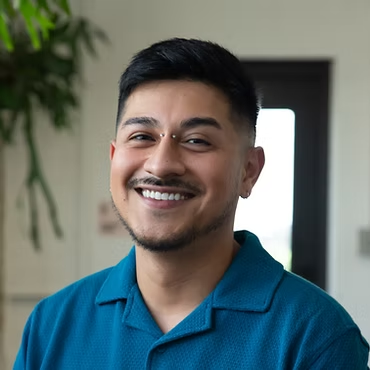
Ramiro Alvarez
political force? In Detroit, where more than 30% of residents live with a disability, grassroots organizing has led to a groundbreaking victory: $8.4 million in the city’s 2025 budget is now dedicated to disability services.
Join Pushing Limits this Friday as we continue our 2-part series on role model disability organizations. We talk with grassroots disability movement leader, Ramiro Alvarez, Communications Director at Detroit Disability Power. Listen in as we discuss how the organization built collective strength over eight years and won real change for the community.
This episode is hosted by Adrienne Lauby and produced by Jacob Lesner-Buxton with editing assistance by Dominick Trevethan and Denny Daughters.
The post Disability Advocacy in the Motor City – Pushing Limits – August 29, 2025 appeared first on KPFA.
Will our national system of Independent Living Centers be sabotaged or even destroyed during the Trump Administration? The Trump people have already made extreme cuts to community services, and most of our 403 local centers are heavily funded by the Federal Government. Will we end up funding our service centers with bake sales and lemonade stands?
Ami Hyten and Reyma McCoy Hyten, the co-directors of the Lois Curtis Center in Topeka, Kansas, have a better idea! Their organization is a physical and virtual hub for services, supports, and guidance that centers individuals with disabilities who experience marginalization within the disability community. They particularly include people of color, people who are homeless, and people who are system-involved. And, they don’t take any government funding. The Lois Curtis Center doesn’t have restrictions on who they can serve or the type of advocacy they engage in. Listen in as we talk to these two dynamic women about the benefits and downsides of working without Federal funding.
Speaking of providing information without government influence, we will also feature poets Jennifer Chassman-Brown and Marsha Cutting, who will speak honestly about living with a disability in 2025.
This episode is hosted by Dominick Trevethan. It was scripted and produced by Jacob Lesner-Buxton with editing assistance by Denny Daughters and Dominick Trevethan.
Also, here’s an excellent article about Federal cuts already in process!
The post Service Without The Feds – Pushing Limits – August 22, 2025 appeared first on KPFA.
A second investigation by Disability Rights California (DRC) has once again revealed inhumane conditions at a southern California ICE detention center imprisoning immigrants. The facility is called Adelanto Detention Center and is owned and operated by a private company: The GEO Group.
DRC investigators found the following conditions:
Inadequate Access to Medical and Mental Health Care and Disability Accommodations
Inadequate Access to Food, Water, and Clothes
Limited Connections with Family and Natural Supports
This investigation comes at a time when ICE faces mounting accusations of mismanaging detention facilities, contracting with private operators that cut corners, and wrongfully detaining many immigrants — including some U.S. citizens.
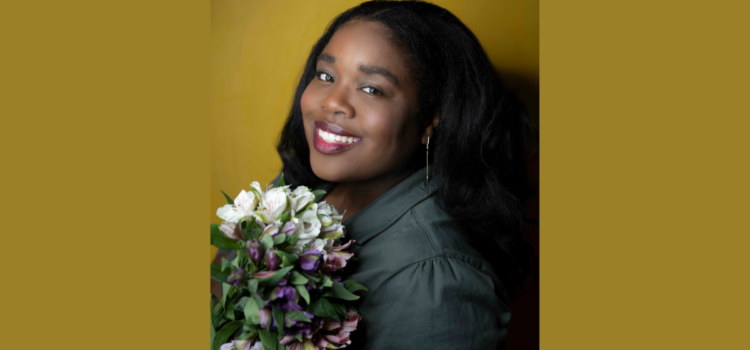
Joining us to shed light on the investigation is DRC attorney Adeyinka Glover, formerly a Clients’ Rights Advocate for people with intellectual and developmental disabilities. Adeyinka has also fought for housing rights, protection from domestic violence, guardianships, and environmental justice in the Central Valley. Her career is fueled by the belief that high-quality legal advocacy can help underserved populations including individuals, families, and communities not just survive, but thrive.
Adeyinka holds a J.D. from Thomas Jefferson School of Law and a B.A. in Political Science with a minor in Africana Studies from San Diego State University. When she’s not in the fight for justice, she enjoys traveling and exploring art in all its forms.
This program is produced and hosted by Eddie Ytuarte.
Adeyinka Glover
The post Disabled In ICE Detention Center – Pushing Limits – August 15, 2025 appeared first on KPFA.
Well, it’s that time of year again, folks. Time to boogie to your favorite artists with disabilities, but with a twist!
This week on Pushing Limits, it’s all about musicians with all types of disabilities, and the best part is that the songs you’ll hear aren’t available on any streaming services. Among the disabilities represented in our lineup are blindness, multiple sclerosis, drug addiction, and Meniere’s disease. Make sure to turn up the volume: we’ve got a live track sent only to radio stations, a hard-to-find remix, and a hit missing its trademark saxophone solo!
This show was hosted, edited, and produced by Denny Daughters.
The post Disabled Musicians—Unfiltered Tracks – Pushing Limits – August 8, 2025 appeared first on KPFA.

The Most Magical Place on Earth… for everyone? Or are recent changes turning Disney into a place of exclusion for disabled guests?
Charisma
On this week’s episode of Pushing Limits, Talia Thompson Mariano sits down with Natasha Caudill and Charisma Mangahas to explore the fallout from Disney’s controversial overhaul of its Disability Access Service (DAS). Are these new policies protecting the system—or punishing those who truly need it?
How do these updates impact guests with physical disabilities, and what might they mean for the future of accessible theme park experiences?
Tune in for a revealing conversation that goes beyond the magic.
This program was hosted by Talia Thompson Mariano, with recording by Jacob Lesner-Buxton. Sound editing by Talia Thompson Mariano and Denny Daughters.
The post When Magic Meets Barriers — Access Denied at Disney Parks – Pushing Limits – August 1, 2025 appeared first on KPFA.
The Sapir Wharf Hypothesis is a lens through which communication scholars often observe and predict cultures‘ language and worldviews. It states that language determines a native speaker’s perception and categorization of experience. But what does this mean when it’s applied to people living with disabilities, the language we choose to communicate with, and the language others choose to describe us?
Jacob Farzanmehr
Jazmin Romero
Joining our communication-conversation this week are two young adults: Jacob Farzanmehr and Jazmin Romero. Jacob lives with Cerebral Palsy and currently attends Alan Hancock Community College. Similarly, Jazmin currently attends Mesa Community College and lives with Spinal Muscular Atrophy. As we explore their experiences as people with disabilities, we’ll compare and contr
ast how they see themselves through the lens of language—and how others see them. How do words like cripple, disabled, and handicapped differ in their minds from terms like differently-abled?
Tune in to find out! And stick around until the end to hear which terms the Pushing Limits crew are not so fond of.
This program was hosted and produced by Dominick Trevethan with editing assistance from Denny Daughters. Additional commentary provided by Eddie Ytuarte, Bonnie Elliott, Denny Daughters, Adrienne Lauby, and Jacob Lesner-Buxton.
The post The Lens of Language – Pushing Limits – July 18, 2025 appeared first on KPFA.

Comments

Download from Google Play

Download from App Store
 United States