


Dementia Researcher Blogs
Subscribed: 14Played: 284
Subscribe

© Copyright 2023 All rights reserved.
Description
The Dementia Researcher Blogs Podcasts - through this show, you can hear our bloggers read their blogs. So if you prefer to read, you can head or our website or you can listen on the move. These shows are about academic / research careers, research, science and life as an early career dementia researchers. Brought to you by https://www.dementiaresearcher.nihr.ac.uk - everything you need, all in one place.
Remember to subscribe to our main ‘Dementia Researcher‘ Podcast, here and where ever you get your podcasts.
Remember to subscribe to our main ‘Dementia Researcher‘ Podcast, here and where ever you get your podcasts.
668 Episodes
Reverse
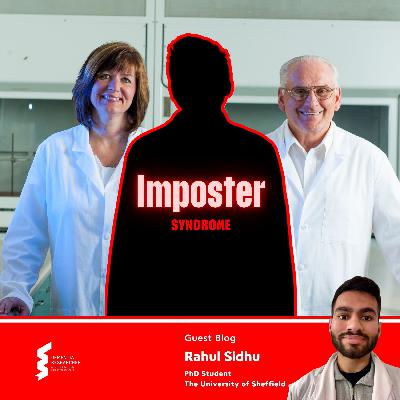
Rahul Sidhu, narrating a new blog he wrote for the Dementia Researcher website.
In this blog, Rahul reflects on his experience of imposter syndrome throughout his research career, from early lab work to PhD study. He describes the anxiety of feeling less capable than those around you, the pressure of comparisons within research groups, and the fear of asking questions or making mistakes. Rahul explains that these feelings are common in scientific careers and shares strategies that have helped him manage them, including focusing on growth rather than perfection, comparing progress only with your past self, asking for support from colleagues, taking action even when confidence is low, and practising self compassion. The blog offers reassurance that doubt does not mean you do not belong in science.
Find the original text, and narration here on our website.
https://www.dementiaresearcher.nihr.ac.uk/blog-imposter-syndrome/
--
Rahul Sidhu is a PhD student at The University of Sheffield, focusing on the effects of heart disease on dementia in preclinical models of Alzheimer's disease. His research aims to uncover how cardiovascular health influences neurodegenerative conditions, potentially leading to novel therapeutic strategies. Find Rahul on LinkedIn
--
Enjoy listening? We're always looking for new bloggers, drop us a line. http://www.dementiaresearcher.nihr.ac.uk
This podcast is brought to you in association with Alzheimer's Association, Alzheimer's Research UK, Alzheimer's Society and Race Against Dementia, who we thank for their ongoing support.
--
Follow us on Social Media:
https://www.instagram.com/dementia_researcher/
https://www.facebook.com/Dementia.Researcher/
https://twitter.com/demrescommunity
https://www.linkedin.com/company/dementia-researcher
https://bsky.app/profile/dementiaresearcher.bsky.social
Join our community:
https://onelink.to/dementiaresearcher
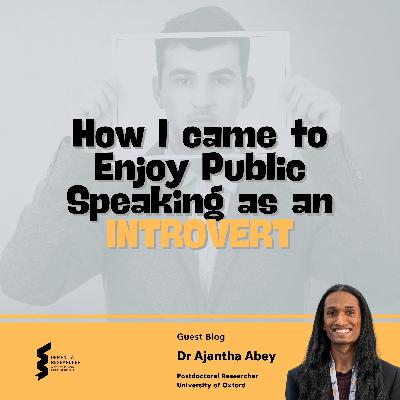
Dr Ajantha Abey narrates his blog written for Dementia Researcher.
In this blog, Ajantha shares how they went from being deeply uncomfortable speaking in front of others to actively enjoying giving talks about their research. Starting with childhood stage fright and a stutter, the story traces a gradual shift through unexpected leadership in university sport, repeated practice presenting research, and years of teaching neuroscience. Along the way, Ajantha explains how confidence grew not only from technical speaking skills but from developing expertise, finding supportive communities, and learning to communicate science clearly. The post offers encouragement for researchers who feel uneasy about public speaking, showing that improvement comes through practice, reflection, and experience over time.
Find the original text, and narration here on our website.
https://www.dementiaresearcher.nihr.ac.uk/blog-how-i-came-to-enjoy-public-speaking-as-an-introvert/
--
Dr Ajantha Abey is a Postdoctoral Researcher in the Kavli Institute at University of Oxford. He is interested in the cellular mechanisms of Alzheimer's, Parkinson's, and other diseases of the ageing brain. Previously, having previoulsy explored neuropathology in dogs with dementia and potential stem cell replacement therapies. He now uses induced pluripotent stem cell derived neurons to try and model selective neuronal vulnerability: the phenomenon where some cells die but others remain resilient to neurodegenerative diseases.
--
Enjoy listening and reading our blogs? We're always on the look out for new contributors, drop us a line and share your own research and careers advice dementiaresearcher@ucl.ac.uk
This podcast is brought to you in association with Alzheimer's Association, Alzheimer's Research UK, Alzheimer's Society and Race Against Dementia, who we thank for their ongoing support.
--
Follow us on Social Media:
https://www.instagram.com/dementia_researcher/
https://www.facebook.com/Dementia.Researcher/
https://twitter.com/demrescommunity
https://www.linkedin.com/company/dementia-researcher
https://bsky.app/profile/dementiaresearcher.bsky.social
Join our community:
https://onelink.to/dementiaresearcher
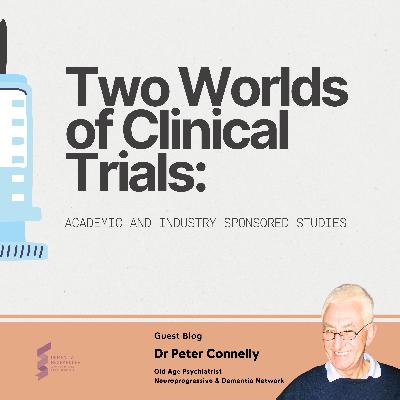
Dr Peter Connelly narrates his blog written for Dementia Researcher.
In this blog, Peter compares academically led and commercially sponsored clinical trials, outlining how they differ in goals, recruitment expectations, intensity, monitoring and funding. Drawing on personal experience, he highlights unrealistic recruitment projections, contrasts study cultures, and reflects on the professional rewards and pressures associated with each model. The blog offers practical insight for clinicians considering participation in dementia research.
Find the original text, and narration here on our website.
https://www.dementiaresearcher.nihr.ac.uk/blog-two-worlds-of-clinical-trials/
--
Dr Peter Connelly is a retired Old Age Psychiatrist who spent much of his career in Tayside, helping to establish clinical trials for dementia and neuroprogressive disorders in Scotland. Now working with the Scottish Neuroprogressive and Dementia Network, he combines professional insight with personal experience as a former carer. In retirement, he enjoys music, golf, and time with his grandchildren.
--
Enjoy listening? We're always looking for new bloggers, drop us a line. http://www.dementiaresearcher.nihr.ac.uk
This podcast is brought to you in association with Alzheimer's Association, Alzheimer's Research UK, Alzheimer's Society and Race Against Dementia, who we thank for their ongoing support.
--
Follow us on Social Media:
https://www.instagram.com/dementia_researcher/
https://www.facebook.com/Dementia.Researcher/
https://twitter.com/demrescommunity
https://www.linkedin.com/company/dementia-researcher
https://bsky.app/profile/dementiaresearcher.bsky.social
Join our community:
https://onelink.to/dementiaresearcher
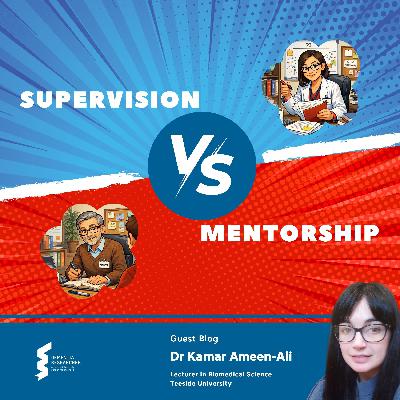
Dr Kamar Ameen-Ali narrates her blog written for Dementia Researcher.
In this blog, Kam revisits a theme she first explored three years ago: the difference between supervision and mentorship in academia. Drawing on her journey to becoming a primary PhD supervisor, she explores structural barriers facing early career researchers, the funding realities that delay independence, and the risk of blurring mentoring with supervision. She argues that these are distinct roles requiring different skills and boundaries, and that separating them can better protect students and support openness, development, and academic progression.
Find the original text, and narration here on our website.
https://www.dementiaresearcher.nihr.ac.uk/blog-supervision-vs-mentorship/
--
Dr Kamar Ameen-Ali is a Lecturer in Biomedical Science at Teesside University & Affiliate Researcher at Glasgow University. In addition to teaching, Kamar is exploring how neuroinflammation following traumatic brain injury contributes to the progression of neurodegenerative diseases that lead to dementia. Having first pursued a career as an NHS Psychologist, Kamar went back to University in Durham to look at rodent behavioural tasks to completed her PhD, and then worked as a regional Programme Manager for NC3Rs.
--
Enjoy listening? We're always looking for new bloggers, drop us a line. http://www.dementiaresearcher.nihr.ac.uk
This podcast is brought to you in association with Alzheimer's Association, Alzheimer's Research UK, Alzheimer's Society and Race Against Dementia, who we thank for their ongoing support.
--
Follow us on Social Media:
https://www.instagram.com/dementia_researcher/
https://www.facebook.com/Dementia.Researcher/
https://x.com/demrescommunity
https://bsky.app/profile/dementiaresearcher.bsky.social
https://www.linkedin.com/company/dementia-researcher
Join our community:
https://onelink.to/dementiaresearcher
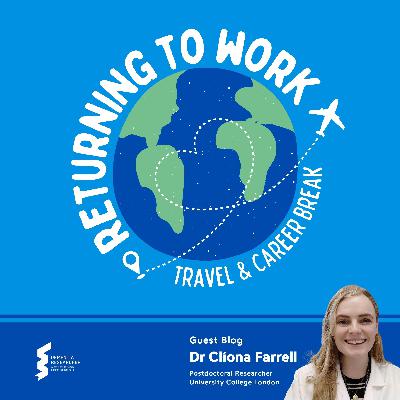
Dr Clíona Farrell, narrating her blog written for the Dementia Researcher website.
After finishing her PhD and a short postdoc extension, Clíona took a five month career break to travel across Asia before starting a new postdoctoral role at UCL. In this blog, she reflects on the emotional and practical challenges of stepping away from academia, the privilege and uncertainty of taking time out, and what it feels like to return refreshed to a new lab, new techniques, and a genuine fresh start.
Find the original text, and narration here on our website.
https://www.dementiaresearcher.nihr.ac.uk/blog-returning-to-work-after-a-travel-filled-career-break/
--
Dr Clíona Farrell is a Postdoctoral Researcher in the UK Dementia Research Institute at University College London. Her work focuses on understanding neuroinflammation in Down syndrome, both prior to, and in response to, Alzheimer’s disease pathology. Originally from Dublin, Ireland, Clíona completed her undergraduate degree in Neuroscience in Trinity College, and then worked as a research assistant in the Royal College of Surgeons studying ALS and Parkinson’s disease. She also knows the secret behind scopping the perfect 99 ice-cream cone. @ClionaFarrell_
--
Enjoy listening? We're always looking for new bloggers, drop us a line. http://www.dementiaresearcher.nihr.ac.uk
This podcast is brought to you in association with Alzheimer's Association, Alzheimer's Research UK, Alzheimer's Society and Race Against Dementia, who we thank for their ongoing support.
--
Follow us on Social Media:
https://www.instagram.com/dementia_researcher/
https://www.facebook.com/Dementia.Researcher/
https://twitter.com/demrescommunity
https://www.linkedin.com/company/dementia-researcher
https://bsky.app/profile/dementiaresearcher.bsky.social
Join our community:
https://onelink.to/dementiaresearcher
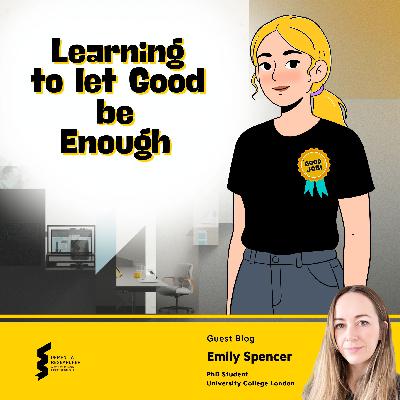
Emily Spencer, narrating her blog written for the Dementia Researcher website.
Emily reflects on a lifelong struggle with perfectionism and how it shapes her learning, work, and wellbeing. Through personal stories spanning school, sport, previous employment, and her PhD, she explores the tension between striving for high standards and recognising when doing less may actually be the wiser and healthier choice. As she approaches the final months of her doctorate, Emily considers how redefining success might allow her to protect her wellbeing while still producing meaningful, high quality research.
Find the original text, and narration here on our website.
https://www.dementiaresearcher.nihr.ac.uk/blog-learning-to-let-good-be-enough/
#DementiaResearch #AcademicMother #Academia
--
Emily Spencer is a PhD Student at University College London looking at improving how GPs communicate with people with dementia and their family carers about their future care. Emily previous had a 5 year career break to pursue a career as a musician, and has previously undertaken research on improving the care people with dementia receive from their GP practice, as well as end-of-life and palliative care provision in the community. Emily is also a new mum and will be writing about her experiences navigating motherhood and a research career.
--
Enjoy listening? We're always looking for new bloggers, drop us a line. http://www.dementiaresearcher.nihr.ac.uk
This podcast is brought to you in association with Alzheimer's Association, Alzheimer's Research UK, Alzheimer's Society and Race Against Dementia, who we thank for their ongoing support.
--
Follow us on Social Media:
https://www.instagram.com/dementia_researcher/
https://www.facebook.com/Dementia.Researcher/
https://x.com/demrescommunity
https://bsky.app/profile/dementiaresearcher.bsky.social
https://www.linkedin.com/company/dementia-researcher
Join our community:
https://onelink.to/dementiaresearcher
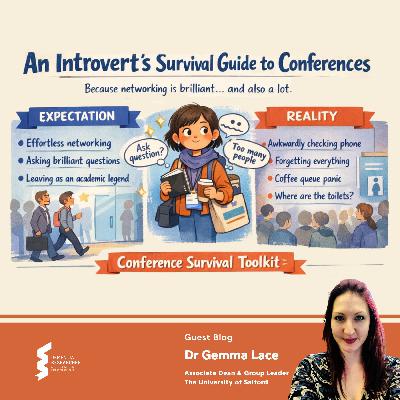
Dr Gemma Lace, narrates her blog written for the Dementia Researcher website.
In this blog, Gemma explores the reality of attending academic conferences as an introvert or neurodivergent researcher. She reflects on her own experiences with imposter syndrome, conference anxiety and social overwhelm, while offering practical strategies to help researchers build confidence and gain meaningful professional development from conference attendance. From setting personal goals to using simple networking conversation starters and prioritising wellbeing, the blog encourages readers to approach conferences in ways that feel manageable, authentic and rewarding.
Find the original text, and narration here on our website.
https://www.dementiaresearcher.nihr.ac.uk/blog-an-introverts-survival-guide-to-conferences/
--
Dr Gemma Lace is Associate Dean Academic for Student Experience and leads the Molecular Biology Dementia Group at the University of Salford, where she investigates abnormal protein accumulation and small extracellular vesicles in neurodegenerative disease. Funded by Alzheimer’s Research UK and the Alzheimer’s Society, she combines research with supporting future scientists, drawing on a career that spans a Neuroscience degree, a PhD in Genomic Medicine and work across major neurodegenerative conditions. Motivated by family experience, she is dedicated to improving understanding of dementia, and outside work she is a life coach, martial artist and mother of three.
--
Enjoy listening? We're always looking for new bloggers, drop us a line. http://www.dementiaresearcher.nihr.ac.uk
This podcast is brought to you in association with Alzheimer's Association, Alzheimer's Research UK, Alzheimer's Society and Race Against Dementia, who we thank for their ongoing support.
--
Follow us on Social Media:
https://www.instagram.com/dementia_researcher/
https://www.facebook.com/Dementia.Researcher/
https://twitter.com/demrescommunity
https://www.linkedin.com/company/dementia-researcher
https://bsky.app/profile/dementiaresearcher.bsky.social
Join our community:
https://onelink.to/dementiaresearcher

Professor Louise Serpell, narrates her blog written for the Dementia Researcher website.
In this opening post, Louise Serpell traces her journey through Alzheimer’s research, beginning as a shy PhD student and moving through decades of scientific discovery, mentorship, and persistence. She reflects on finding her scientific home in protein misfolding and amyloid structure, the beauty of X ray fibre diffraction, and the realities of building a research career shaped as much by people and failures as by results. The piece sets the tone for a new blog series that will explore amyloid biology, success in academia, and what comes next for Alzheimer’s research.
Find the original text, and narration here on our website.
https://www.dementiaresearcher.nihr.ac.uk/blog-a-career-in-alzheimers-research/
--
Professor Louise Serpell is an Emerita Professor of Biochemistry at the University of Sussex. Her research focuses on how proteins misfold and form amyloid structures linked to Alzheimer’s disease and other neurodegenerative conditions, using approaches from structural biology and molecular biophysics. Louise completed her DPhil at the University of Oxford and later established her own research group in the UK. Alongside her research career, she has been active in mentoring, public engagement, and supporting early career researchers. Find Louise on LinkedIn
--
Enjoy listening? We're always looking for new bloggers, drop us a line. http://www.dementiaresearcher.nihr.ac.uk
This podcast is brought to you in association with Alzheimer's Association, Alzheimer's Research UK, Alzheimer's Society and Race Against Dementia, who we thank for their ongoing support.
--
Follow us on Social Media:
https://www.instagram.com/dementia_researcher/
https://www.facebook.com/Dementia.Researcher/
https://twitter.com/demrescommunity
https://www.linkedin.com/company/dementia-researcher
https://bsky.app/profile/dementiaresearcher.bsky.social
Join our community:
https://onelink.to/dementiaresearcher

Dr Becky Carlyle, narrates her blog written for the Dementia Researcher website.
In this candid blog, Becky reflects on the reality of feeling overwhelmed during a demanding stage of an academic career. She describes the competing pressures of grant writing, teaching, leadership roles, family life and supporting research teams, while still finding joy in discovery and mentoring. Becky shares practical approaches that help her stay organised and protect wellbeing, including structured prioritisation, making space for personal life and recognising that difficult periods should have an end point. The blog offers reassurance that overwhelm is common, temporary and manageable with the right support and strategies.
Find the original text, and narration here on our website.
https://www.dementiaresearcher.nihr.ac.uk/blog-academic-overwhelm-youre-not-the-only-one/
--
Dr Becky Carlyle is an Alzheimer's Research UK Senior Research Fellow at University of Oxford, and has previously worked in the USA. Becky writes about her experiences of starting up a research lab and progressing into a more senior research role. Becky's research uses mass-spectrometry to quantify thousands of proteins in the brains and biofluids of people with dementia. Her lab is working on various projects, including work to compare brain tissue from people with dementia from Alzheimer’s Disease, to tissue from people who have similar levels of Alzheimer’s Disease pathology but no memory problems. Becky is also a mum, she runs, drinks herbal tea's and reads lots of books. Find Becky on LinkedIn
--
Enjoy listening? We're always looking for new bloggers, drop us a line. http://www.dementiaresearcher.nihr.ac.uk
This podcast is brought to you in association with Alzheimer's Association, Alzheimer's Research UK, Alzheimer's Society and Race Against Dementia, who we thank for their ongoing support.
--
Follow us on Social Media:
https://www.instagram.com/dementia_researcher/
https://www.facebook.com/Dementia.Researcher/
https://twitter.com/demrescommunity
https://www.linkedin.com/company/dementia-researcher
https://bsky.app/profile/dementiaresearcher.bsky.social
Join our community:
https://onelink.to/dementiaresearcher
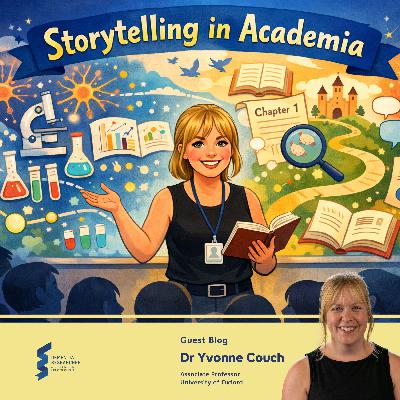
Dr Yvonne Couch, narrates her blog written for the Dementia Researcher website.
This blog explores how storytelling strengthens science communication across papers, presentations, and public engagement. Yvonne reflects on lessons from podcasts, conferences, and outreach work to show how understanding your audience can transform how research is shared. Drawing on personal experiences and examples from academia, the blog highlights how strong narrative flow helps researchers connect ideas, engage listeners, and improve interdisciplinary collaboration.
Find the original text, and narration here on our website.
https://www.dementiaresearcher.nihr.ac.uk/blog-storytelling-in-academia/
--
Dr Yvonne Couch is a Research Fellow and Associate Professor at the University of Oxford. Yvonne studies the role of extracellular vesicles and their role in changing the function of the vasculature after stroke, aiming to discover why the prevalence of dementia after stroke is three times higher than the average. It is her passion for problem solving and love of science that drives her, in advancing our knowledge of disease. Yvonne writes about her work, academic life, and careers as she takes a new road into independent research.
--
Enjoy listening? We're always looking for new bloggers, drop us a line. http://www.dementiaresearcher.nihr.ac.uk
This podcast is brought to you in association with Alzheimer's Association, Alzheimer's Research UK, Alzheimer's Society and Race Against Dementia, who we thank for their ongoing support.
--
Follow us on Social Media:
https://www.instagram.com/dementia_researcher/
https://www.facebook.com/Dementia.Researcher/
https://twitter.com/demrescommunity
https://www.linkedin.com/company/dementia-researcher
https://bsky.app/profile/dementiaresearcher.bsky.social
Join our community:
https://onelink.to/dementiaresearcher
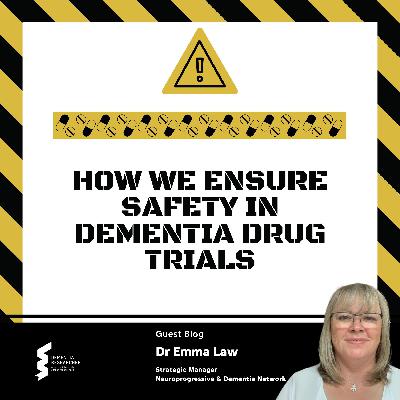
Dr Emma Law, narrating her blog written for the Dementia Researcher website.
Clinical trials in dementia rely on carefully designed safeguards to protect participants and ensure treatments are tested responsibly. Emma Law explains how safety is built into every stage of a trial, from ethical recruitment and consent to screening processes, monitoring, and staff training. In this blog Emma highlights how lessons from past trial failures shaped current best practice and emphasises the shared responsibility between researchers, participants, carers, and sponsors to ensure studies run safely while advancing new treatments.
Find the original text, and narration here on our website.
https://www.dementiaresearcher.nihr.ac.uk/blog-how-we-ensure-safety-in-dementia-drug-trials/
#DementiaResearch #ClinicalTrials #Research #TrialDelivery
--
Dr Emma Law is Strategic Manager for the The Neuroprogressive and Dementia Network in Scotland. Emma has 13 years experience as a Clinical Trails Network Manager and over 35 years experience as a Nurse, many of which were spent in the delivery of Clinical Research Trials. Emma completed her PhD and is passionate about giving people living with dementia and their carers access to participate in research.
--
Enjoy listening? We're always looking for new bloggers, drop us a line. http://www.dementiaresearcher.nihr.ac.uk
This podcast is brought to you in association with Alzheimer's Association, Alzheimer's Research UK, Alzheimer's Society and Race Against Dementia, who we thank for their ongoing support.
--
Follow us on Social Media:
https://www.instagram.com/dementia_researcher/
https://www.facebook.com/Dementia.Researcher/
https://twitter.com/demrescommunity
https://www.linkedin.com/company/dementia-researcher
https://bsky.app/profile/dementiaresearcher.bsky.social
Join our community:
https://onelink.to/dementiaresearcher
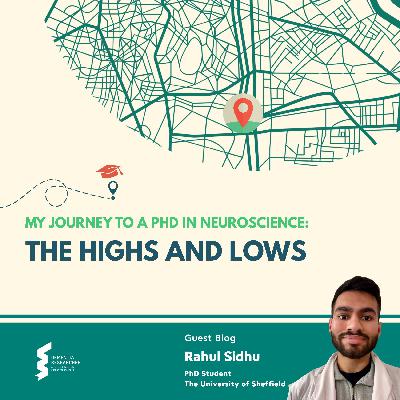
Rahul Sidhu, narrating a new blog he wrote for the Dementia Researcher website.
We're pleased to welcome Rahul as a new regular contributor to the Dementia Researcher blog. In this post Rahul reflects on his route into neuroscience, from early uncertainty and academic setbacks to finding purpose through dementia research. He shares how personal experience, persistence, and discovery in the lab shaped his path to a PhD, alongside honest reflections on confidence, balance, and what comes next.
Find the original text, and narration here on our website.
https://www.dementiaresearcher.nihr.ac.uk/blog-my-journey-to-a-phd-in-neuroscience-the-highs-lows/
--
Rahul Sidhu is a PhD student at The University of Sheffield, focusing on the effects of heart disease on dementia in preclinical models of Alzheimer's disease. His research aims to uncover how cardiovascular health influences neurodegenerative conditions, potentially leading to novel therapeutic strategies. Find Rahul on LinkedIn
--
Enjoy listening? We're always looking for new bloggers, drop us a line. http://www.dementiaresearcher.nihr.ac.uk
This podcast is brought to you in association with Alzheimer's Association, Alzheimer's Research UK, Alzheimer's Society and Race Against Dementia, who we thank for their ongoing support.
--
Follow us on Social Media:
https://www.instagram.com/dementia_researcher/
https://www.facebook.com/Dementia.Researcher/
https://twitter.com/demrescommunity
https://www.linkedin.com/company/dementia-researcher
https://bsky.app/profile/dementiaresearcher.bsky.social
Join our community:
https://onelink.to/dementiaresearcher
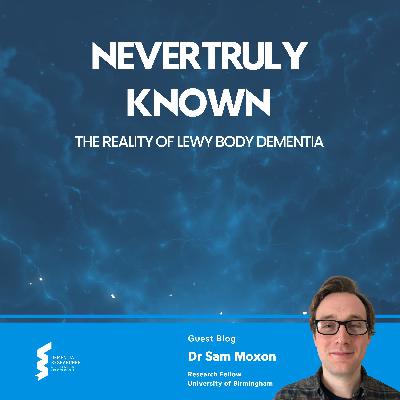
Dr Sam Moxon, narrates his blog written for Dementia Researcher.
In this blog, Sam reflects on the reality of Lewy body dementia through both his research background and his experience caring for his grandfather. He explores why LBD is so difficult to diagnose, how symptoms fluctuate, and how families are often left without clarity or closure. The piece speaks to the emotional weight of uncertainty and the importance of continuing to talk about LBD, not to find neat answers, but to help future families feel less alone.
Find the original text, and narration here on our website.
https://www.dementiaresearcher.nihr.ac.uk/blog-never-truly-known-the-reality-of-lewy-body-dementia/
--
Dr Sam Moxon is a biomaterials Research Fellow at University of Birmingham. His expertise falls on the interface between biology and engineering. His PhD focussed on regenerative medicine and he now works on trying to develop 3D bioprinting techniques with human stem cells, so that we better understand and treat degenerative diseases. Outside of the lab he hikes through the Lake District and is an expert on all things Disney.
--
Enjoy listening and reading our blogs? We're always on the look out for new contributors, drop us a line and share your own research and careers advice dementiaresearcher@ucl.ac.uk
This podcast is brought to you in association with the NIHR, Alzheimer's Association, Alzheimer's Research UK, Alzheimer's Society and Race Against Dementia, who we thank for their ongoing support.
--
Follow us on Social Media:
https://www.instagram.com/dementia_researcher/
https://www.facebook.com/Dementia.Researcher/
https://twitter.com/demrescommunity
https://www.linkedin.com/company/dementia-researcher
https://bsky.app/profile/dementiaresearcher.bsky.social
Join our community:
https://onelink.to/dementiaresearcher
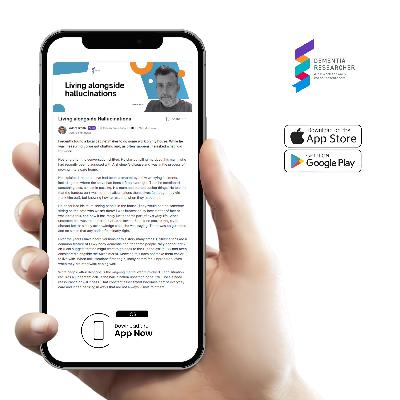
Adam Smith narrates his post from the Dementia Researcher Community.
In this post Adam reflects on conversations with carers who support people experiencing hallucinations, particularly in Lewy body dementia. Drawing on real encounters, he explores the uncertainty, emotional labour, and isolation that often sit beneath everyday care, and why awareness and shared understanding matter.
Find the original text, and narration here on our website.
https://communities.dementiaresearcher.nihr.ac.uk/c/research-chat/living-alongside-hallucinations-8379e5a8-9929-4b34-b5d5-033969892649
--
Adam Smith was born in the north, a long time ago. He wanted to write books, but ended up working in the NHS, and at the Department of Health. He is now Programme Director in the Office of the NIHR National Director for Dementia Research (which probably sounds more important than it is) at University College London. He has led a number of initiatives to improve dementia research (including this website, Join Dementia Research & ENRICH), as well as pursuing his own research interests. In his spare time, he grows vegetables, builds Lego & spends most of his time drinking too much coffee and squeezing technology into his house.
--
Enjoy listening? We're always looking for new bloggers, drop us a line. http://www.dementiaresearcher.nihr.ac.uk
This podcast is brought to you in association with Alzheimer's Association, Alzheimer's Research UK, Alzheimer's Society and Race Against Dementia, who we thank for their ongoing support.
--
Follow us on Social Media:
https://www.instagram.com/dementia_researcher/
https://www.facebook.com/Dementia.Researcher/
https://twitter.com/demrescommunity
https://www.linkedin.com/company/dementia-researcher
https://bsky.app/profile/dementiaresearcher.bsky.social
Join our community:
https://onelink.to/dementiaresearcher
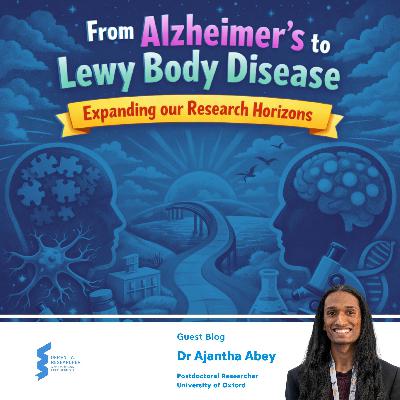
Ajantha Abey narrates his blog written for Dementia Researcher.
In this blog Ajantha reflects on why Lewy body disease deserves far greater attention within dementia research. Drawing on their journey from Alzheimer’s focused tau research into synuclein pathology, the blog explores co occurring disease, diagnostic challenges, biomarker advances, and why understanding overlap across conditions is essential for better science and better care.
Find the original text, and narration here on our website.
https://www.dementiaresearcher.nihr.ac.uk/blog-alzheimers-to-lewy-body-disease-expanding-our-research-horizons/
--
Dr Ajantha Abey is a Postdoctoral Researcher in the Kavli Institute at University of Oxford. He is interested in the cellular mechanisms of Alzheimer's, Parkinson's, and other diseases of the ageing brain. Previously, having previoulsy explored neuropathology in dogs with dementia and potential stem cell replacement therapies. He now uses induced pluripotent stem cell derived neurons to try and model selective neuronal vulnerability: the phenomenon where some cells die but others remain resilient to neurodegenerative diseases.
--
Enjoy listening and reading our blogs? We're always on the look out for new contributors, drop us a line and share your own research and careers advice dementiaresearcher@ucl.ac.uk
This podcast is brought to you in association with Alzheimer's Association, Alzheimer's Research UK, Alzheimer's Society and Race Against Dementia, who we thank for their ongoing support.
--
Follow us on Social Media:
https://www.instagram.com/dementia_researcher/
https://www.facebook.com/Dementia.Researcher/
https://twitter.com/demrescommunity
https://www.linkedin.com/company/dementia-researcher
https://bsky.app/profile/dementiaresearcher.bsky.social
Join our community:
https://onelink.to/dementiaresearcher
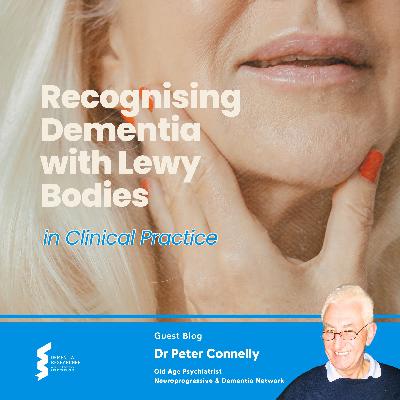
Dr Peter Connelly narrates his blog written for Dementia Researcher.
In this blog Peter explores how dementia with Lewy bodies can present very differently from other dementias, particularly in its early stages. Drawing on clinical experience, he outlines key features including sleep disturbance, hallucinations, movement changes, and fluctuating attention, and explains how careful observation during assessment can support earlier recognition. The piece also reflects on current treatment limitations and highlights opportunities for environmental and non drug interventions to inform future research and care practice.
Find the original text, and narration here on our website.
https://www.dementiaresearcher.nihr.ac.uk/blog-recognising-dementia-with-lewy-bodies-in-clinical-practice/
--
Dr Peter Connelly is a retired Old Age Psychiatrist who spent much of his career in Tayside, helping to establish clinical trials for dementia and neuroprogressive disorders in Scotland. Now working with the Scottish Neuroprogressive and Dementia Network, he combines professional insight with personal experience as a former carer. In retirement, he enjoys music, golf, and time with his grandchildren.
--
Enjoy listening? We're always looking for new bloggers, drop us a line. http://www.dementiaresearcher.nihr.ac.uk
This podcast is brought to you in association with Alzheimer's Association, Alzheimer's Research UK, Alzheimer's Society and Race Against Dementia, who we thank for their ongoing support.
--
Follow us on Social Media:
https://www.instagram.com/dementia_researcher/
https://www.facebook.com/Dementia.Researcher/
https://twitter.com/demrescommunity
https://www.linkedin.com/company/dementia-researcher
https://bsky.app/profile/dementiaresearcher.bsky.social
Join our community:
https://onelink.to/dementiaresearcher
Rebecca Williams, narrates her blog written for the Dementia Researcher website.
In this blog, Rebecca reflects on nearly three years of blogging during her PhD and how writing regularly changed her confidence, communication skills, and sense of voice as a researcher. She shares early doubts about not being a good writer, the gradual development of her writing process, and the unexpected impact her blogs had on others. As she steps into her postdoctoral career, Rebecca looks back on blogging as one of the most meaningful parts of her PhD and encourages early career researchers to start writing, even when they do not feel ready.
Find the original text, and narration here on our website.
https://www.dementiaresearcher.nihr.ac.uk/blog-why-you-should-start-writing-blogs/
--
Rebecca Williams is PhD student at the University of Cambridge. Though originally from ‘up North’ in a small town called Leigh, she did her undergraduate and masters at the University of Oxford before defecting to Cambridge for her doctorate researching Frontotemporal dementia and Apathy. She now spends her days collecting data from wonderful volunteers, and coding. Outside work, she plays board games, and is very crafty. @beccasue99
--
Enjoy listening? We're always looking for new bloggers, drop us a line. http://www.dementiaresearcher.nihr.ac.uk
This podcast is brought to you in association with Alzheimer's Association, Alzheimer's Research UK, Alzheimer's Society and Race Against Dementia, who we thank for their ongoing support.
--
Follow us on Social Media:
https://www.instagram.com/dementia_researcher/
https://www.facebook.com/Dementia.Researcher/
https://twitter.com/demrescommunity
https://www.linkedin.com/company/dementia-researcher
https://bsky.app/profile/dementiaresearcher.bsky.social
Join our community:
https://onelink.to/dementiaresearcher
Dr Lindsey Sinclair narrates her blog written for Dementia Researcher.
In this blog, Lindsey reflects on what stepping outside a long held academic home taught her about confidence, career identity, and progression. Drawing on her move from Bristol to Southampton after time in Brisbane, she explores the emotional, practical, and professional realities of changing institution, and how the shift helped her see her own expertise more clearly while still recognising that staying put must remain a valid and inclusive career path.
Find the original text, and narration here on our website.
https://www.dementiaresearcher.nihr.ac.uk/blog-what-changing-institution-taught-me/
--
Dr Lindsey Sinclair is an Associate Professor and Clinical Academic in Old Age Psychiatry at the University of Southampton. Her research explores the relationship between depression and dementia, combining lab work with epidemiology and genetics. Clinically, she works with older adults experiencing a wide range of mental health problems. Outside of work, she’s a keen baker and runner, and has a particular talent for creating ambitious birthday cakes.
Find Lindsey on LinkedIn
--
Enjoy listening? We're always looking for new bloggers, drop us a line. http://www.dementiaresearcher.nihr.ac.uk
This podcast is brought to you in association with Alzheimer's Association, Alzheimer's Research UK, Alzheimer's Society and Race Against Dementia, who we thank for their ongoing support.
--
Follow us on Social Media:
https://www.instagram.com/dementia_researcher/
https://www.facebook.com/Dementia.Researcher/
https://x.com/demrescommunity
https://bsky.app/profile/dementiaresearcher.bsky.social
https://www.linkedin.com/company/dementia-researcher
Join our community:
https://onelink.to/dementiaresearcher
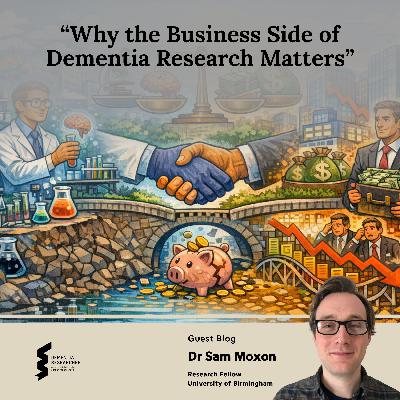
Dr Sam Moxon, narrates his blog written for Dementia Researcher.
In this blog Sam reflects on his move from academia into running a university spinout and what that shift has taught him about the role of business in dementia research. He explains why funding decisions, investor confidence, and commercial risk shape which ideas progress and which fall away. Using recent industry examples, he explores how failed trials affect not only companies but the wider research ecosystem, and why understanding these pressures matters for everyone working towards better treatments.
Find the original text, and narration here on our website.
https://www.dementiaresearcher.nihr.ac.uk/blog-why-the-business-side-of-dementia-research-matters/
--
Dr Sam Moxon is a biomaterials Research Fellow at University of Birmingham. His expertise falls on the interface between biology and engineering. His PhD focussed on regenerative medicine and he now works on trying to develop 3D bioprinting techniques with human stem cells, so that we better understand and treat degenerative diseases. Outside of the lab he hikes through the Lake District and is an expert on all things Disney.
--
Enjoy listening and reading our blogs? We're always on the look out for new contributors, drop us a line and share your own research and careers advice dementiaresearcher@ucl.ac.uk
This podcast is brought to you in association with the NIHR, Alzheimer's Association, Alzheimer's Research UK, Alzheimer's Society and Race Against Dementia, who we thank for their ongoing support.
--
Follow us on Social Media:
https://www.instagram.com/dementia_researcher/
https://www.facebook.com/Dementia.Researcher/
https://twitter.com/demrescommunity
https://www.linkedin.com/company/dementia-researcher
https://bsky.app/profile/dementiaresearcher.bsky.social
Join our community:
https://onelink.to/dementiaresearcher

Dr Kamar Ameen-Ali narrates her blog written for Dementia Researcher.
In this blog, Kam shares a personal account of discovering that content from one of her grant applications had been accessed and reused without permission. She explains the emotional and professional impact of the experience, the steps she took to establish what had happened, and the wider issues this raises about intellectual property, copyright, data protection, and trust in academic research. The blog offers practical reflections for researchers on understanding their rights and being more deliberate about how unpublished work is shared.
Find the original text, and narration here on our website.
https://www.dementiaresearcher.nihr.ac.uk/blog-protecting-your-intellectual-property/
--
Dr Kamar Ameen-Ali is a Lecturer in Biomedical Science at Teesside University & Affiliate Researcher at Glasgow University. In addition to teaching, Kamar is exploring how neuroinflammation following traumatic brain injury contributes to the progression of neurodegenerative diseases that lead to dementia. Having first pursued a career as an NHS Psychologist, Kamar went back to University in Durham to look at rodent behavioural tasks to completed her PhD, and then worked as a regional Programme Manager for NC3Rs.
--
Enjoy listening? We're always looking for new bloggers, drop us a line. http://www.dementiaresearcher.nihr.ac.uk
This podcast is brought to you in association with Alzheimer's Association, Alzheimer's Research UK, Alzheimer's Society and Race Against Dementia, who we thank for their ongoing support.
--
Follow us on Social Media:
https://www.instagram.com/dementia_researcher/
https://www.facebook.com/Dementia.Researcher/
https://x.com/demrescommunity
https://bsky.app/profile/dementiaresearcher.bsky.social
https://www.linkedin.com/company/dementia-researcher
Join our community:
https://onelink.to/dementiaresearcher


Download from Google Play

Download from App Store
 United States
Thanks for these useful information related to the words. I am here to share about netwyman blogst. Visit us now and embark on a journey of knowledge and empowerment with Netwyman Blogs at https://trekinspire.com/netwyman-blogs/.