


The Road to Autonomy
Subscribed: 36Played: 1,601
Subscribe


© 2026 AUTNMY AI, Inc. | All Rights Reserved
Description
How would you feel if the transport truck beside you on the highway had no driver? Or the car passing beside you had no driver? Would it make a difference if the widespread deployment of autonomous trucks could ease supply chain problems almost overnight and that autonomous vehicles do not get distracted or speed? And would you feel better if you knew autonomous trucks and vehicles could reduce carbon emissions by 30 percent or more. Learn more from world's leading mobility experts on The Road to Autonomy®, an ahead-of-the-curve podcast hosted by Grayson Brulte.
379 Episodes
Reverse

Matthew Carey, Co-Founder & CEO, Teradar, joined Grayson Brulte on The Road to Autonomy podcast to discuss the company's emergence from stealth with $150 million in funding and the creation of a brand-new category of terahertz (THz) sensors.The operational backbone of Teradar’s strategy is a Terahertz Detection and Ranging (Rad-AR) approach that fills the gap between LiDAR and radar on the electromagnetic spectrum. By utilizing a modular architecture of Lego-like transmitter and receiver chips, the system provides the high-resolution point cloud typically associated with lidar while maintaining the all-weather robustness and velocity-sensing Doppler capabilities of radar. This solid-state design allows the sensor to be hidden behind vehicle bumpers or polymers, eliminating the need for bulky roof-mounted hardware.In the field, Teradar is rigorously applying its technology to solve the weather casino problem, proving the system's robustness in the heavy rain, snow, and dense fog of Boston. Unlike traditional vision or LiDAR systems that struggle with atmospheric particulates, Teradar's longer wavelengths can bend around rain and dust, ensuring consistent performance in environments where humans or other sensors might fail.Teradar’s Physical AI ecosystem also includes a defense-grade application that provides situational awareness in combat environments without being easily detected. The atmosphere effectively blocks the sensor’s signal beyond its intended range, allowing it to operate in dense traffic or military zones without jamming other sensors or revealing a vehicle's position to hostile actors.Looking ahead, Matt envisions a future where high-performance sensing reaches a mass-market inflection point by becoming affordable enough for every vehicle, from a Mercedes S-Class to a Ford Focus. By partnering with Tier 1 suppliers rather than vertically integrating, Teradar aims to scale to millions of units, fundamentally transforming the industry by delivering a sensor stack that costs hundreds, not thousands of dollars.Episode Chapters00:00 Teradar Emerges from Stealth03:01 Limitations of Existing Sensor Technologies05:54 Introducing Terahertz Sensing08:00 Defense and Battlefield Applications11:11 Modular Sensor Architecture17:00 Early Development and Startup Challenges26:54 Why Teradar Chose Boston36:11 Autonomous Vehicles and Weather46:06 Scaling Teradar--------About The Road to AutonomyThe Road to Autonomy is the definitive media brand covering the Autonomy Economy™. Through our podcasts, newsletter, and proprietary market intelligence, we set the narrative for institutional investors, industry executives, and policymakers navigating the convergence of automation, autonomy, and economic growth.Join institutional investors and industry leaders who read This Week in The Autonomy Economy every Sunday. Each edition delivers exclusive insight and commentary on the autonomy economy, helping you stay ahead of what's next. Subscribe today for free: https://www.roadtoautonomy.com/ae/See Privacy Policy at https://art19.com/privacy and California Privacy Notice at https://art19.com/privacy#do-not-sell-my-info.
This week on Autonomy Markets, Grayson Brulte and Walt Piecyk discuss Grayson’s recent field work in Silicon Valley and Walt’s observations in London.Together they examine Waymo’s technical milestones, specifically Grayson’s first-hand experience on the highway and at SFO. During Grayson’s ride from SFO to Mountain View, he noted the vehicle’s smooth performance across three lanes, its strict adherence to speed limits, and a rare instance of Waymo using its horn when it was cut off.This leads to a broader discussion on Waymo’s rapid Miami expansion and their choice of fleet management partners. The conversation then shifts towards the competitive landscape and Grayson’s attempt to use the Tesla’s robotaxi app in the Valley, which was hampered by wait times exceeding 25 minutes.Over in London, Walt reported on the skepticism of London’s black taxi drivers regarding Waymo’s efforts in the UK. Closing out the conversation they discussed Glydways expansion in Atlanta and Newark.Episode Chapters00:00 Silicon Valley and London Field Work18:40 Google Gemini20:59 Waymo in London25:27 Waymo's Miami Beach Expansion29:16 Waymo's Fleet Management Strategy 31:55 Autonomous Vehicles in Virginia, Not This Year34:56 Waabi's Robotaxi Messaging 39:06 Glydways Expansion 42:47 Foreign Autonomy Desk43:26 Next WeekRecorded on Friday, March 6, 2026--------About The Road to AutonomyThe Road to Autonomy is the definitive media brand covering the Autonomy Economy™. Through our podcasts, newsletter, and proprietary market intelligence, we set the narrative for institutional investors, industry executives, and policymakers navigating the convergence of automation, autonomy, and economic growth.Sign up for This Week in The Autonomy Economy newsletter: https://www.roadtoautonomy.com/ae/See Privacy Policy at https://art19.com/privacy and California Privacy Notice at https://art19.com/privacy#do-not-sell-my-info.

Igal Raichelgauz, Founder & CEO, Autobrains joined Grayson Brulte on The Road to Autonomy podcast to discuss the company's strategic partnership with VinFast and the development of an affordable, scalable robo-car.The operational backbone of Autobrains’ strategy is a Thinking AI approach that utilizes an agentic architecture rather than traditional monolithic models. By using a library of specific skills that can be added incrementally, the system scales from basic safety features to full autonomy without requiring massive data retraining or excessive computational power.In the field, Autobrains is rigorously applying its technology to the VinFast VF 8 and VF 9 models, proving the system's robustness in some of the world's most complex driving environments, such as the congested streets of Hanoi, Vietnam. Autobrains utilizes a vision-only approach that mimics human perception to navigate urban traffic, heavy rain, and high-speed highways.Autobrains’ Physical AI ecosystem also includes an air to road localization system, which uses compressed satellite imagery signatures to provide 10-centimeter positioning accuracy. Allowing the vehicle to localize itself globally and understand lane boundaries or construction sites without relying on expensive, high-maintenance HD maps.Looking ahead, Igal envisions a future where autonomous driving reaches a mass-market inflection point within the next five years. This evolution aims to fundamentally transform the industry by delivering a fully autonomous robo-car at a $30,000 price point, enabling every vehicle to become a revenue-generating asset that increases safety and gives time back to the consumer.Episode Chapters00:00 How the VinFast Deal Came Together03:16 Skills-Based Agentic AI Architecture 07:16 Six Cameras, 360° Coverage, Low Compute 09:37 Air-to-Road: Satellite Imagery Replaces HD Maps12:40 Robo-car Vision 15:10 The $30K Fully Autonomous Car 20:20 The Thinking Layer24:22 20 Teraflops, Sub-20ms Latency, Edge Computing 27:58 No Lidar: The Vision-Only Thesis 28:59 The Future of Autobrains--------About The Road to AutonomyThe Road to Autonomy is the definitive media brand covering the Autonomy Economy™. Through our podcasts, newsletter, and proprietary market intelligence, we set the narrative for institutional investors, industry executives, and policymakers navigating the convergence of automation, autonomy, and economic growth.Join institutional investors and industry leaders who read This Week in The Autonomy Economy every Sunday. Each edition delivers exclusive insight and commentary on the autonomy economy, helping you stay ahead of what's next. Subscribe today for free: https://www.roadtoautonomy.com/ae/See Privacy Policy at https://art19.com/privacy and California Privacy Notice at https://art19.com/privacy#do-not-sell-my-info.
This week on Autonomy Markets, Grayson Brulte and Walter Piecyk discuss Uber’s new Autonomous Vehicle Solutions initiative, Waymo’s growing markets, and the growth of Physical AI powered by NVIDIA.As Uber’s stock languishes in the low seventies due to investor overhang about the future of autonomy, the company announced Uber Autonomous Solutions, a new initiative to support the growth of autonomous vehicles on the Uber platform.Grayson and Walt break down the initiative point by point, examining Uber’s strategy of providing training data, enriched mapping, venue management, and autonomous vehicle insurance. While Grayson views much of the in-car experience pitch as buzzword Alley, Walt argues that AV mission control and fleet management are the true meat of Uber’s strategy, aiming to provide the critical API for a fragmented market. This sparks a spirited debate on whether Uber is maintaining its asset-light identity or quietly creeping into asset-heavy operations by owning and operating robotaxi assets.The conversation then shifts to the geopolitical risks of Uber’s international partnerships, as the company recently hosted analysts in Abu Dhabi to meet with Chinese autonomous partners WeRide and Baidu. Grayson warns of the tremendous blowback and political risk this carries back home, especially given the current US administration’s active stance on social media regarding foreign technology.Walt and Grayson also discuss a recent broker report, shared by Uber CFO Balaji Krishnamurthy on X, that analyzed just 34 trips in Austin and claimed there is no cost advantage to autonomy. They call the sample size too small and the conclusions baffling given the obvious long-term benefits of removing human drivers.Contrasting Uber’s narrative tour, Waymo is aggressively scaling and growing revenue. This week, Waymo announced they have crossed 1 million fully autonomous freeway miles, expanded into Chicago and Charlotte, and opened up Dallas, Houston, San Antonio, and Orlando to early riders.Notably, Uber was absent from these new market announcements, leading Grayson to point out the potentially waning relationship between the two companies. Furthermore, he put on his inspector hat to uncover signs of Waymo’s grand ambitions in the EU, citing meetings with the European Commission and job postings for EU regulatory counsel.As Waymo scales, the capital markets are flowing for autonomy investments, highlighted by Wayve securing a $1.2 billion check at an $8.6 billion valuation. The round includes investments from SoftBank, NVIDIA, Stellantis, and Nissan, with Uber committing to own and operate the Wayve fleet in 10 upcoming markets, starting with London.Then there is the growth of physical AI, which NVIDIA announced contributed $6 billion in earnings last quarter, with CFO Colette Kress signaling that robotaxis and humanoids are poised to be major growth markets over the next decade.Episode Chapters00:00 Uber's Identity Crisis 1:33 Breaking Down Uber Autonomous Solutions20:43 Uber's Abu Dhabi Analyst Day & Chinese Tech Risks 35:37 Waymo Announces Chicago & Charlotte as New Markets 40:55 Uber and Waymo's Waning Relationship 42:03 Waymo Surpasses 1 Million Fully Autonomous Freeway Miles43:56 Waymo Eyes the EU Expansion 46:32 Wayve's $1.2B Funding Round50:39 NVIDIA, Physical AI, & Humanoids 53:04 Next WeekRecorded on Friday, February 27, 2026--------About The Road to AutonomyThe Road to Autonomy is the definitive media brand covering the Autonomy Economy™. Through our podcasts, newsletter, and proprietary market intelligence, we set the narrative for institutional investors, industry executives, and policymakers navigating the convergence of automation, autonomy, and economic growth.Sign up for This Week in The Autonomy Economy newsletter: https://www.roadtoautonomy.com/ae/See Privacy Policy at https://art19.com/privacy and California Privacy Notice at https://art19.com/privacy#do-not-sell-my-info.

Jay Iyengar, EVP, Chief Technology and Strategic Sourcing Officer, Oshkosh joined Grayson Brulte on The Road to Autonomy podcast to discuss Oshkosh’s approach to autonomy and the development of physical AI across their diverse industrial technology portfolio.The operational backbone of Oshkosh’s strategy is a hybrid approach targeted towards moments of autonomy where autonomy adds the most immediate value. By addressing repetitive, hazardous tasks and mitigating driver fatigue, Oshkosh is building purpose-built solutions to increase safety and productivity for the everyday heroes who build, serve, and protect communities.In the field, Oshkosh is rigorously applying Physical AI across a diverse array of use cases, from automating airport jet bridges that align precisely with aircraft doors to developing automated cargo loaders for complex tarmac operations.Oshkosh’s Physical AI ecosystem also includes the HARR-E robot for on-demand refuse collection in planned communities, as well as advancing autonomous capabilities for military leader-follower programs and next-generation delivery vehicles.Looking ahead, Jay envisions a future where Physical AI has its own transformative ChatGPT moment, becoming a ubiquitous and intuitive part of the industrial landscape. This evolution aims to fundamentally transform markets, ensuring that autonomous technology operates so seamlessly that operators can focus entirely on their work, ultimately saving lives, increasing productivity, and unlocking new economic activity.Episode Chapters00:00 Moments of Autonomy Philosophy 04:45 The Jet Bridge Bottleneck 07:20 Deploying Physical AI at the Gate 10:45 Navigating Tarmac Chaos and Regulations 14:15 Blueprint for the Airport of the Future 16:05 The Data Moat & Oshkosh's AI Stack 19:30 Weighing Trash with AI Side-Loaders 21:30 Meet HARR-E: The On-Demand Trash Robot 26:30 Revolutionizing the Postal Delivery Fleet 28:15 Why You Shouldn't Over-Engineer Sensors 30:30 The Hidden Power of Strategic Sourcing 32:20 Level 5 Military Learnings 35:10 Waiting for Physical AI’s ChatGPT Moment36:30 The Next 100 Years of Oshkosh --------About The Road to AutonomyThe Road to Autonomy is the definitive media brand covering the Autonomy Economy™. Through our podcasts, newsletter, and proprietary market intelligence, we set the narrative for institutional investors, industry executives, and policymakers navigating the convergence of automation, autonomy, and economic growth.Join institutional investors and industry leaders who read This Week in The Autonomy Economy every Sunday. Each edition delivers exclusive insight and commentary on the autonomy economy, helping you stay ahead of what's next. Subscribe today for free: https://www.roadtoautonomy.com/ae/See Privacy Policy at https://art19.com/privacy and California Privacy Notice at https://art19.com/privacy#do-not-sell-my-info.
This week on Autonomy Markets, Grayson Brulte and Walter Piecyk unpack a wave of developments reshaping the autonomous vehicle landscape. Data surfacing from a follow-up to a recent Senate hearing reveals that Waymo currently operates 3,000 autonomous vehicles supported by only 70 remote assistance agents worldwide.Grayson calls the ratio definitive proof of Waymo's technology lead, while Walt raises a pointed concern that roughly half of those remote roles are outsourced to the Philippines, creating a political vulnerability that could draw scrutiny as the industry scales.From there, the conversation turns to infrastructure. Uber is reportedly investing $100 million to build autonomous vehicle fast-charging stations across San Francisco, Los Angeles, and Dallas. The move sparks a spirited debate about Uber. Is the company that built its brand on being asset-light now quietly pivoting to an asset-heavy model to stay competitive in the autonomy era?On the regulatory front, Governor Kathy Hochul shelved a proposal that would have permitted robotaxis outside New York City, reportedly bowing to special interest pressure, a setback Grayson and Walt call deeply disappointing.Meanwhile, Iowa lawmakers are advancing bills requiring a human driver behind the wheel, creating a strange-bedfellows alliance between pro-autonomy hybrid network advocates and traditional opponents of autonomous driving technology.Shifting to hardware, Tesla's Cybercab secured an FCC order authorizing ultra-wideband radio technology for wireless charging. Grayson cautions, however, that FCC approval is only one piece of the puzzle, as Tesla still needs NHTSA exemptions to operate vehicles without steering wheels or pedals before any real-world scaling can begin.Closing out the episode, Aurora opened a new autonomous trucking lane stretching over 1,000 miles from Texas to Arizona, pushing the boundaries of long-haul autonomy. And in a notable signal from the OEM side, Paccar highlighted its partnership with Kodiak in its latest earnings release, underscoring how seriously legacy manufacturers are now starting to take the autonomous freight opportunity.Episode Chapters00:00 Waymo: 70 Remote Agents for 3,000 Cars04:00 The "Unforced Error" of Outsourcing Remote Assistance to the Philippines08:00 SFO Rideshare Volume and Waymo's Impact on Traditional TNCs15:00 New York Governor Hochul Pulls Robotaxi Proposal20:00 Iowa Lawmakers Push a Driver-In Bill23:00 Will the Real Uber Please Stand Up? The $100M Charging Pivot29:00 "Take or Pay" Contracts: Is Uber Blocking Competitors?32:00 Tesla Cybercab Gets FCC Wireless Charging Approval36:00 Tesla NHTSA Exemption38:00 Aurora Opens 1,000-Mile Autonomous Trucking LaneRecorded on Thursday, February 19, 2026--------About The Road to AutonomyThe Road to Autonomy is the definitive media brand covering the Autonomy Economy™. Through our podcasts, newsletter, and proprietary market intelligence, we set the narrative for institutional investors, industry executives, and policymakers navigating the convergence of automation, autonomy, and economic growth.Sign up for This Week in The Autonomy Economy newsletter: https://www.roadtoautonomy.com/ae/See Privacy Policy at https://art19.com/privacy and California Privacy Notice at https://art19.com/privacy#do-not-sell-my-info.
Grayson Brulte went on location to Miami to inspect Waymo's infrastructure buildout across the city, uncovering two depots that reveal the company's ambitious plans to scale to thousands of vehicles in South Florida.The first depot, located adjacent to Miami International Airport, has not yet broken ground but sits on a large parcel with significant room for expansion. A service road connects the site directly to the airport, without the need to use the highway, positioning Waymo for a seamless airport-to-destination corridor that could be operational within 12 to 18 months.The second depot, already operational in the Wynwood area near the Design District, is running what we estimate to be 20-plus vehicles with roughly 30-plus chargers situated next to a Florida Power & Light substation. The facility currently operates out of PODS with no covered garage, but vacant parcels on both sides and an adjacent warehouse present a clear path to scale. While we were there on the ground, FPL was on-site micro trenching, a potential signal that additional electrical capacity is being routed to the depot.Looking ahead, Waymo's ability to service a thousand vehicles between these two depots appears well within reach. The next frontier is the beaches, Surfside, North Beach, South Beach, where a third depot will likely be necessary to navigate Miami's notoriously heavy traffic. With Hard Rock Stadium hosting Dolphins games, F1, and the Super Bowl returning to Miami, the demand signal for robotaxis in this market is unmistakable.Episode Chapters0:00 Waymo's "Rat Pack" Ambitions in Miami1:00 The Airport Depot: Bypassing the Highway2:00 The Wynwood Depot: 35 Chargers & A Substation3:00 Miami Depots Compared to the Santa Monica Depot4:00 From PODS to Warehouses: The Expansion Plan5:00 The FPL Signal: Micro-Trenching 6:00 Expanding Depots to Surfside & South Beach7:00 The Super Bowl & Hard Rock Stadium Demand8:00 The Future Is Bright. The Future Is Autonomous. Watch the video version of this podcast on YouTube: https://youtu.be/VB2kFhkSDkE--------About The Road to AutonomyThe Road to Autonomy provides market intelligence and strategic advisory services to institutional investors and companies, delivering insights needed to stay ahead of emerging trends in the autonomy economy™. To learn more, say hello (at) roadtoautonomy.com.Sign up for This Week in The Autonomy Economy newsletter: https://www.roadtoautonomy.com/ae/See Privacy Policy at https://art19.com/privacy and California Privacy Notice at https://art19.com/privacy#do-not-sell-my-info.
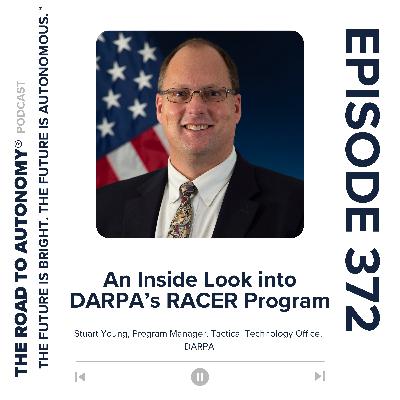
Stuart Young, Program Manager, Tactical Technology Office, DARPA joined Grayson Brulte on The Road to Autonomy podcast to discuss DARPA’s RACER (Robotic Autonomy in Complex Environments with Resiliency) Program and the development of high-speed autonomous vehicles capable of navigating unstructured off-road terrain without maps or GPS.The operational backbone of this program is a departure from the breadcrumb approach of the Grand Challenge, challenging robots to navigate complex, unstructured environments at speeds faster than manned formations. By removing the dependency on pre-existing maps and GPS, DARPA is forcing the autonomous systems to generalize across environments.In the field, RACER has rigorously tested platforms ranging from modified Polaris RZRs to Textron M5 tracked vehicles across diverse landscapes, including the Mojave Desert, Camp Roberts, and Fort Hood. This ecosystem has not only spurred the creation of companies such as Overland AI and Field AI but also demonstrated tactical relevance, as seen when the 11th Armored Cavalry Regiment utilized RACER technology as an opposition force at the National Training Center.Looking ahead, Stuart envisions a future where autonomy shifts from simple movement to strategic maneuver, enabling a single operator to command platoons of vehicles. This evolution aims to fundamentally change the risk calculus for soldiers while opening new opportunities for dual-use applications in mining, agriculture and search and rescue.Episode Chapters0:00 The History of Autonomy at DARPA: From the Grand Challenge to Today6:54 How RACER Differs from The Grand Challenge11:59 Operating Without Maps or GPS14:00 Managing Heat, Acoustic, and Visual Signatures in Autonomy19:43 Testing in the Mojave, Central California, and Texas25:11 Building the RACER Brain and Spawning New Companies (Overland AI, Field AI)27:12 The Rules of RACER: Speed Metrics and “No Maps” Constraints33:36 The Hardware: Modifying Polaris RZRs and Textron M5 Tanks37:37 Requirements vs. Possibilities40:01 Field Testing with the 11th Armored Cavalry Regiment at the National Training Center44:43 Deploying RACER in the Field46:12 The Legacy of RACER: Dual-Use Applications and Saving Lives--------About The Road to AutonomyThe Road to Autonomy provides market intelligence and strategic advisory services to institutional investors and companies, delivering insights needed to stay ahead of emerging trends in the autonomy economy™. To learn more, say hello (at) roadtoautonomy.com.Sign up for This Week in The Autonomy Economy newsletter: https://www.roadtoautonomy.com/ae/See Privacy Policy at https://art19.com/privacy and California Privacy Notice at https://art19.com/privacy#do-not-sell-my-info.
This week on Autonomy Markets, Grayson Brulte and Walter Piecyk discuss whether Waymo has finally solved the supply constraint question following reports of a deal for 50,000 Hyundai vehicles by 2028. They break down the economics, theorizing a $50,000 per-vehicle cost that likely includes line-fit sensors, a price point that Grayson argues destroys the bear case that autonomous vehicles cannot cost-effectively scale.The conversation then shifts to hardware as Walt puts on his inspector hat, spotting a hidden Class 8 truck graphic in Waymo’s latest blog post. This revelation sparks a debate on if Waymo is planning a return to trucking in 2027 to coincide with the new Daimler Truck’s new Freightliner Cascadia redundant chassis platform. They also analyze Waymo’s 6th Generation Driver, noting the emphasis on custom silicon and aggressive camera cleaning systems seems to mimic Tesla’s approach.On the Foreign Autonomy Desk, they discuss Lyft’s plan to launch Baidu RT6 robotaxis in London and Uber’s deployment of Chinese robotaxis in Dubai. While Uber touts its partners, Grayson provides ground truth on the Chinese market, arguing that strict geofences and residency restrictions mean the technology is not as far ahead as Western media portrays.Looking at the broader ecosystem, Grayson and Walt analyze Aurora’s pivot to upfitting International trucks, a strategy shift that mirrors competitor Kodiak, along with Kodiak’s new defense partnership with the United States Marine Corps.Closing out the show, they discuss the current regulatory environment for autonomous vehicles and NHTSA’s Automated Vehicle Safety Public Meeting upcoming in March and Waymo calling for D.C. residents to advocate for autonomous vehicles.Episode Chapters0:00 Waymo’s Reported 50,000 Robotaxi Hyundai Deal03:26 The $50,000 Robotaxi Economics06:20 Zeekr & Waymo/Magna Mesa Upfitting Plant10:11 Scaling to 750,000 Autonomous Vehicles17:09 Waymo Gen 6: Custom Silicon & Improved Cameras23:21 Uber’s Narrative vs. Waymo’s Reality28:09 Lyft’s Flexdrive Advantage31:52 Inspector Walt: Waymo’s Autonomous Truck Tease33:41 Aurora’s Pivot & Kodiak’s Marine Corps Deal41:39 Foreign Autonomy Desk: Lyft in London & Uber in Dubai45:09 The Regulatory Tide Turns48:38 Hyundai: The Arms Dealer of AutonomyRecorded on Friday, February 13, 2026--------About The Road to AutonomyThe Road to Autonomy is the definitive media brand covering the Autonomy Economy™. Through our podcasts, newsletter, and proprietary market intelligence, we set the narrative for institutional investors, industry executives, and policymakers navigating the convergence of automation, autonomy, and economic growth. To learn more, say hello (at) roadtoautonomy.com.Sign up for This Week in The Autonomy Economy newsletter: https://www.roadtoautonomy.com/ae/See Privacy Policy at https://art19.com/privacy and California Privacy Notice at https://art19.com/privacy#do-not-sell-my-info.
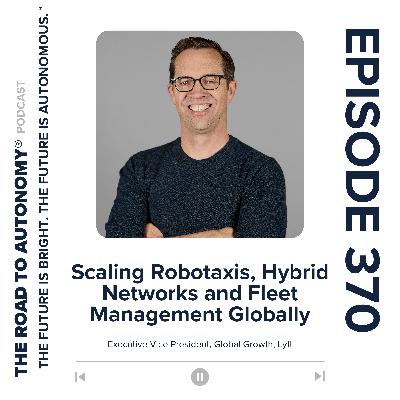
Jeremy Bird, Executive Vice President, Global Growth at Lyft joined Grayson Brulte on The Road to Autonomy podcast to discuss the company’s strategic partnership with Waymo in Nashville and the deployment of a hybrid network that integrates human drivers with autonomous vehicles. The operational backbone of this strategy is FlexDrive. A best-in-class operation that manages depots, charging, and maintenance for robotaxis. FlexDrive gives Lyft the operational rigor needed to scale robotaxis globally. In Nashville, FlexDrive is supporting the Waymo partnership, while in Europe, Lyft is utilizing FlexDrive to power expansion, including a key partnership with Baidu in the UK and Europe.Looking ahead, Jeremy envisions a marketplace defined by customer obsession where luxury experiences and robotaxis coexist, utilizing operational excellence to fuel future growth.Episode Chapters0:00 Lyft's Partnership with Waymo in Nashville4:44 Robotaxi Fleets & Depots8:50 Freenow11:15 Deploying Robotaxis in the UK and Europe14:41 Autonomous Vehicle Policy in Europe17:35 Expanding Robotaxi Deployments in Europe19:05 Baidu Partnership23:09 Global Robotaxi Partnerships & Lyft's Marketplace 26:04 Luxury Market27:53 Future of LyftRecorded on Wednesday, January 28, 2026--------About The Road to AutonomyThe Road to Autonomy provides market intelligence and strategic advisory services to institutional investors and companies, delivering insights needed to stay ahead of emerging trends in the autonomy economy™. To learn more, say hello (at) roadtoautonomy.com.Sign up for This Week in The Autonomy Economy newsletter: https://www.roadtoautonomy.com/ae/See Privacy Policy at https://art19.com/privacy and California Privacy Notice at https://art19.com/privacy#do-not-sell-my-info.
This week on Autonomy Markets, Grayson Brulte and Walter Piecyk discuss Waymo’s repricing of the robotaxi market with a $16 billion raise at a $126 billion valuation, Uber’s defensive Myths and Realities earnings supplement, and the launch of a new segment, The Pit Stop.The conversation heats up as Walt and Grayson debate Uber’s claim that autonomous vehicle growth is not a zero-sum game, with Grayson arguing that personal ownership and dedicated autonomous vehicle networks will eat into Uber’s market share while, Walt defends the narrative of total market expansion.While Uber attempts to debunk autonomous vehicle myths, Grayson puts on his inspector hat for the inaugural Pit Stop segment, revealing exclusive details about Waymo’s Miami depot infrastructure, including a depot under construction near the airport and the strategic placement of fleet operations near the Design District.Looking at the broader regulatory landscape, Grayson and Walt analyze recent Senate testimony where Waymo disclosed their use of remote assistance based in the Philippines, a move Walt classifies as an unforced error during a push for a National Autonomous Vehicle Framework.On the Foreign Autonomy Desk, they highlight the Middle East becoming a beachhead for scale with Baidu going driver-out in Dubai and WeRide partnering with Uber, noting the region is likely the only place where US and Chinese robotaxis will coexist for the time being.Episode Chapters0:00 Waymo Raises $16 Billion at a $126bn Valuation2:35 Waymo World Powered by DeepMind6:43 Uber's Myths and Realities29:03 The Pit Stop: The Inspector Goes to Miami39:02 The Pit Stop: Tesla's San Francisco Robotaxi Depot Gets Blocked41:38 AVs Need Clear Rules of the Road U.S. Senate Hearing48:01 Bedrock Robotics Raises $270 million50:28 Foreign Autonomy Desk55:04 Next WeekRecorded on Friday, February 6, 2026--------About The Road to AutonomyThe Road to Autonomy provides market intelligence and strategic advisory services to institutional investors and companies, delivering insights needed to stay ahead of emerging trends in the autonomy economy™. To learn more, say hello (at) roadtoautonomy.com.Sign up for This Week in The Autonomy Economy newsletter: https://www.roadtoautonomy.com/ae/See Privacy Policy at https://art19.com/privacy and California Privacy Notice at https://art19.com/privacy#do-not-sell-my-info.
This week on Autonomy Markets, Grayson Brulte and Walter Piecyk are joined by their first-ever guest, David Moss, to discuss his 12,961-mile zero-intervention drive across the country on Tesla FSD, the reality of the Unsupervised Robotaxi rollout in Austin, and the commercial viability of LiDAR sensors in consumer vehicles.The conversation heats up as Walt questions David, a LiDAR LiDAR Salesman on whether the massive data processing requirements of LiDAR could introduce latency, potentially citing a recent Waymo incident involving a child as a case study. David argues that while LiDAR offers theoretical range advantages, the compute wall and cost constraints make it a one-trick pony compared to the scalability of a vision-only stack.While the group debates sensor suites, David shares his on-the-ground experience in Austin, revealing it took 58 attempts to finally secure a ride in a Unsupervised Tesla Robotaxi, and confirmed the fleet is being retrofitted with new cleaning jets for the camera sensors to handle weather occlusion.Looking at the broader robotaxi market, the trio analyzes their Zoox experiences at CES, with David noting the vehicle’s braking was significantly harsher than Waymo or Tesla FSD, while Walt highlights the motion sickness challenges inherent in the vehicle’s carriage-style seating configuration.In Prediction Corner, the group debates the timeline for Tesla removing the safety driver on highways, with David offering a bullish forecast for Memorial Day, while Walt and Grayson take a more conservative stance, predicting a rollout closer to late 2026.Episode Chapters0:00 Coast to Coast Fully Autonomous in a Tesla Model 310:49 The Next Record12:16 FSD Unsupervised in Austin16:16 Waymo Experience on Uber in Austin17:17 Robotaxi Safety Attendants19:44 Unsupervised Robotaxi Service Area21:43 Sensor Cleaning26:05 Robotaxi, No Highways in Austin, Yet32:11 Zoox Las Vegas Experiences37:13 LiDAR48:07 Why AutonomyRecorded on Tuesday, February 3, 2026 --------About The Road to AutonomyThe Road to Autonomy provides market intelligence and strategic advisory services to institutional investors and companies, delivering insights needed to stay ahead of emerging trends in the autonomy economy™. To learn more, say hello (at) roadtoautonomy.com.Sign up for This Week in The Autonomy Economy newsletter: https://www.roadtoautonomy.com/ae/See Privacy Policy at https://art19.com/privacy and California Privacy Notice at https://art19.com/privacy#do-not-sell-my-info.
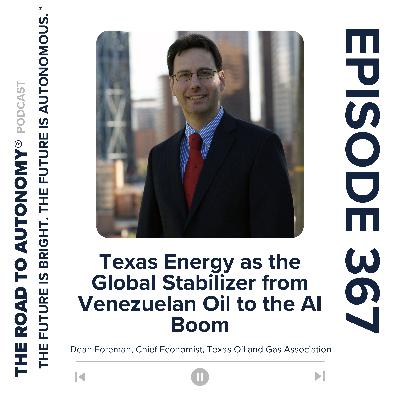
Dean Foreman, Chief Economist at the Texas Oil and Gas Association joined Grayson Brulte on The Road to Autonomy podcast to discuss the evolving landscape of global oil markets and the critical intersection of natural gas and artificial intelligence.With sanctions lifted on Venezuela, the conversation analyzes the flow of heavy crude to the US Gulf Coast, noting the potential need for over $200 billion in investment to restore Venezuela’s production capacity. Dean explains how US refiners are capitalizing on this heavy feedstock while simultaneously navigating a global market where the US has surpassed Russia and Saudi Arabia as a leading energy producer.Looking toward the future of energy demand, the discussion identifies natural gas as a stabilizing force for the power grid, essential for supporting the exponential growth of data centers and generative AI. By co-locating power generation with data infrastructure in West Texas, the industry is leveraging record efficiencies to fuel The Road to Autonomy and ensure long-term economic resilience.Episode Chapters0:00 Venezuela7:25 Increasing Global Demand for Oil9:08 Petroleum Byproducts11:39 Oil and Natural Gas Exports13:40 Permian Basin16:11 Infrastructure Buildout22:11 Oil and Natural Gas Impact on Texas’ Economy25:01 Automation & AI27:52 U.S. Consumer34:00 Next QuarterRecorded on Tuesday, January 20, 2026--------About The Road to AutonomyThe Road to Autonomy provides market intelligence and strategic advisory services to institutional investors and companies, delivering insights needed to stay ahead of emerging trends in the autonomy economy™. To learn more, say hello (at) roadtoautonomy.com.Sign up for This Week in The Autonomy Economy newsletter: https://www.roadtoautonomy.com/ae/See Privacy Policy at https://art19.com/privacy and California Privacy Notice at https://art19.com/privacy#do-not-sell-my-info.
This week on Autonomy Markets, Grayson Brulte and Walter Piecyk discuss Waymo’s LiDAR controversy following an incident in a Santa Monica school zone, the potential of a mega merger between Tesla, SpaceX, and xAI, and Waabi’s $750 million capital raise to pivot into robotaxis.The conversation heats up as Walt and Grayson debate the efficacy of LiDAR versus camera-only approaches, questioning if sensor fusion latency contributed to the Waymo incident where a child ran out from behind a vehicle.While Waymo handles the incident in Santa Monica, Tesla is further accelerating their shift to an autonomy/robotics company by shutting down Model S and Model X lines for Optimus Gen 3 humanoids.Looking at the broader market, Grayson and Walt analyze Waabi’s strategic expansion from trucking into robotaxis, with Walt drawing parallels to early industry pivots and Grayson questioning the viability of managing two distinct autonomy programs.On the Foreign Autonomy Desk, they highlight Waymo’s recent launch party in London, noting the imported vehicles still feature American driving configurations, and discuss Pony.ai’s partnership to deploy 3,000 robotaxis in mainland China.Episode Chapters0:00 Waymo Opens SFO Airport Access5:45 Waymo’s Santa Monica Incident16:27 Tesla Earnings and New Robotaxi Markets22:04 David Moss’ Austin Robotaxi Adventures24:12 Robotaxi’s Enhanced Camera Cleaning System26:38 Inspector Uncovers, Walt Warns27:43 The Potential Great Elon Merger30:35 Waabi Raises $750m, Pivots to Robotaxis39:27 Does Uber Reboot ATG?42:55 Plus AI Analyst Day50:01 Foreign Autonomy Desk53:18 Next WeekRecorded on Friday, January 30, 2026--------About The Road to AutonomyThe Road to Autonomy provides market intelligence and strategic advisory services to institutional investors and companies, delivering insights needed to stay ahead of emerging trends in the autonomy economy™. To learn more, say hello (at) roadtoautonomy.com.Sign up for This Week in The Autonomy Economy newsletter: https://www.roadtoautonomy.com/ae/See Privacy Policy at https://art19.com/privacy and California Privacy Notice at https://art19.com/privacy#do-not-sell-my-info.
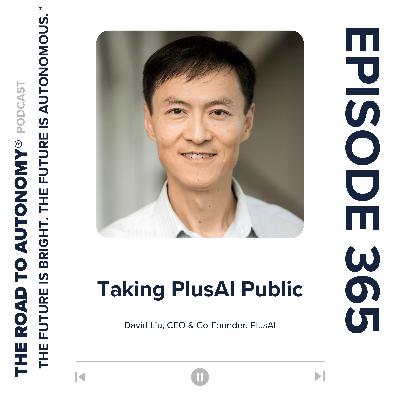
David Liu, CEO of PlusAI joined Grayson Brulte on The Road to Autonomy podcast to discus taking the company public and their strategic roadmap for commercializing autonomous trucking.As Plus AI prepares to complete their merger with Churchill Capital Corp IX in early February, the conversation explores the shift from fleet trials to an asset-light software model that empowers Traton to build factory-integrated autonomous trucks powered by the Plus virtual driver. By training a single AI driver on a vast, globally diverse dataset, encompassing conditions from snowy Sweden to the Texas Triangle, Plus AI is developing a scalable technology stack designed to safely automate the global freight industry, as the company targets a 2027 commercial launch. Episode Chapters0:00 Going Public1:33 Fleet Trials6:01 Driver-Out Decision7:56 Traton Partnership11:27 Redundant Chassis14:01 Public Milestones16:43 Asset Ownership18:14 Expanding in Spain and Japan23:00 Real-world Driving Data26:16 Simulation27:43 Alpha Data29:02 Traton R&D Investment33:01 What to Watch For as PlusAI Goes PublicRecorded on Friday, January 23, 2026--------About The Road to AutonomyThe Road to Autonomy provides market intelligence and strategic advisory services to institutional investors and companies, delivering insights needed to stay ahead of emerging trends in the autonomy economy™. To learn more, say hello (at) roadtoautonomy.com.Sign up for This Week in The Autonomy Economy newsletter: https://www.roadtoautonomy.com/ae/See Privacy Policy at https://art19.com/privacy and California Privacy Notice at https://art19.com/privacy#do-not-sell-my-info.
This week on Autonomy Markets, Grayson Brulte and Walter Piecyk discuss Tesla officially removing safety attendants from Robotaxis in Austin, Waymo’s commercial launch in Miami, and Serve Robotics’ strategic acquisition of Diligent Robotics.It finally happened. Tesla has removed safety attendants from a select group of vehicles in Austin. While this initial fleet is limited and operating in a specific geofence and utilizing chase cars, Grayson and Walt view this as a critical validation of the technology. Looking ahead, Grayson predicts the operational domain will expand significantly in Austin over the next 60 days, with the Phoenix metro region slated as the next target market for deployment. As Tesla went safety attendant-out, Waymoopened the Miami market for limited commercial service within a 60-square-mile area, with one major caveat, no Miami Beach. On the Foreign Autonomy Desk, Grayson and Walt discuss Geely’s plan to deploy 100,000 methanol-powered robotaxis in China and the South Korean government’s selection of Gwangju as the nation’s first dedicated autonomous vehicle testing zone.Episode Chapters0:00 Tesla Removes Safety Attendant in Austin 9:19 Operational Efficiency 10:33 Alex Roy Goes Coast-to-Coast with Zero FSD Interventions 14:15 Drive on FSD, Get a Discount 18:25 FSD is Expanding as Prices are Increasing 23:31 New Robotaxi Markets 24:53 Waymo Launches Miami Markets28:33 Vandalizing Waymo's32:20 Serve Robotics Acquires Diligent Robotics36:41 Foreign Autonomy Desk 39:21 Next WeekRecorded on Friday, January 23, 2026 --------About The Road to AutonomyThe Road to Autonomy provides market intelligence and strategic advisory services to institutional investors and companies, delivering insights needed to stay ahead of emerging trends in the autonomy economy™. To learn more, say hello (at) roadtoautonomy.com.Sign up for This Week in The Autonomy Economy newsletter: https://www.roadtoautonomy.com/ae/See Privacy Policy at https://art19.com/privacy and California Privacy Notice at https://art19.com/privacy#do-not-sell-my-info.
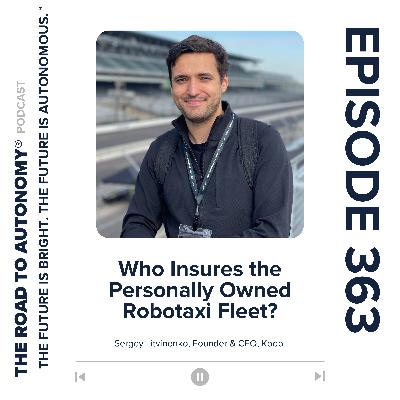
Sergey Litvinenko, Co-Founder & CEO of Koop, joined Grayson Brulte on The Road to Autonomy podcast to discuss the financial and operational structures required to insure fleets of personally owned autonomous vehicles.As Tesla prepares to scale the Cybercab in 2026, the conversation explores the shift from personal ownership to personally owned fleets, where individuals form companies to own and operate commercial robotaxi businesses.During the episode, Sergey explains how the insurance P&L for a fleet owner is transformed by real-world behavior data, which serves as a more accurate risk predictor than traditional human-centric metrics. By leveraging high-fidelity data and specialized subrogation models, Koop is developing a framework that manages liability between the fleet owner and the vehicle manufacturer, clearing the path for the Autonomy Economy to scale through third-party ownership.Episode Chapters0:00 The Emergence of the Tesla Network 3:07 Insuring Cybercab and Personally-Owned Teslas8:59 Insuring and Deploying Personally-Owned Autonomous Vehicle Fleets22:50 Insurance Underwriting Capacity 25:22 Insurance Products 27:50 Changing Driving Habits31:14 Reinsurance32:30 Liability with No Pedals and Steering Wheel 38:38 Fleet Management 41:55 Future of Insuring Autonomous Vehicle Fleet OperationsRecorded on Friday, January 16, 2026--------About The Road to AutonomyThe Road to Autonomy provides market intelligence and strategic advisory services to institutional investors and companies, delivering insights needed to stay ahead of emerging trends in the autonomy economy™. To learn more, say hello (at) roadtoautonomy.com.Sign up for This Week in The Autonomy Economy newsletter: https://www.roadtoautonomy.com/ae/See Privacy Policy at https://art19.com/privacy and California Privacy Notice at https://art19.com/privacy#do-not-sell-my-info.
This week on Autonomy Markets, Grayson Brulte and Walter Piecyk discuss New York Governor Hochul’s bill to legalize autonomous vehicles in New York, with New York City notably carved out, Uber’s changing Waymopartnership language and Waymo’s upcoming expansion to Sydney. In New York, autonomous vehicles could be coming to state roads, but not New York City, as Mayor Mamdani is prioritizing taxi drivers over robotaxi deployment. Down in Texas, where autonomous vehicles can operate anywhere, Waymo has expanded their service area in Austin as Uber has changed their promotional language from “exclusively available on Uber” to simply “available on Uber” when promoting Waymo rides.On the international front, Waymo is actively planning to expand to Sydney following meetings with Australian Transport Minister Catherine King. In China, WeRide robotaxis are now available in the WeChat super app, enabling riders in Beijing to order autonomous rides directly through the platform.Episode Chapters0:00 Verizon Outage 1:45 New York’s Unkind Welcome to Autonomous Vehicles 9:19 Robotaxi and Waymo Face-off in Austin12:47 Autonomy Markets Merch14:15 FSD Goes Subscription Only on Valentine’s Day 17:18 Waymo Eyes Australian Expansion 21:03 Tensor Auto24:06 Stack AV26:14 Plus AI Expands to Japan28:33 Foreign Autonomy Desk 30:33 Next WeekRecorded on Thursday, January 15, 2026--------About The Road to AutonomyThe Road to Autonomy provides market intelligence and strategic advisory services to institutional investors and companies, delivering insights needed to stay ahead of emerging trends in the autonomy economy™. To learn more, say hello (at) roadtoautonomy.com.Sign up for This Week in The Autonomy Economy newsletter: https://www.roadtoautonomy.com/ae/See Privacy Policy at https://art19.com/privacy and California Privacy Notice at https://art19.com/privacy#do-not-sell-my-info.
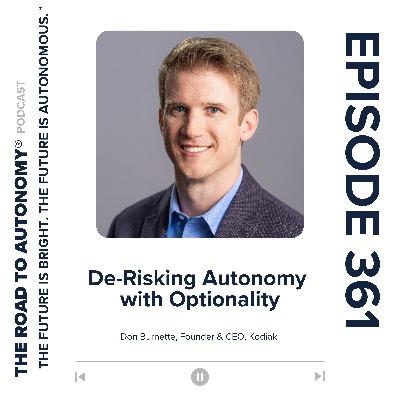
Don Burnette, Founder & CEO, Kodiak joined Grayson Brulte on The Road to Autonomy podcast to discuss taking Kodiak public and why the company's strategy has always been about de-risking autonomy with optionality. As part of their de-risking strategy, Kodiak has deployed an asset-light business model where partners including Atlas Energy Solutions own and operate the trucks, allowing Kodiak to focus on the AI software.During the episode, Grayson and Don discuss the strategic importance of Kodiak’s partnership with Bosch to develop a redundant, OEM-agnostic platform that unlocks scale across multiple OEMs. With their partnerships and business model intact, Kodiak is preparing to launch driver-out commercial over-the-road operations in the second half of the year, setting the stage for a broader expansion into physical AI.Episode Chapters0:00 Taking Kodiak Public3:36 Asset-Light Autonomous Trucking Business 12:10 Unstructured Driving 14:31 Kodiak's Platform Agnostic Strategy 21:45 Bosch Partnership 27:47 Preparing for Driver-Out Over-The-Road Operations 34:10 Over-The-Road Business Model25:38 Future of KodiakRecorded on Monday, January 12, 2026--------About The Road to AutonomyThe Road to Autonomy provides market intelligence and strategic advisory services to institutional investors and companies, delivering insights needed to stay ahead of emerging trends in the autonomy economy™. To learn more, say hello (at) roadtoautonomy.com.Sign up for This Week in The Autonomy Economy newsletter: https://www.roadtoautonomy.com/ae/See Privacy Policy at https://art19.com/privacy and California Privacy Notice at https://art19.com/privacy#do-not-sell-my-info.
This week on Autonomy Markets, Grayson Brulte and Walter Piecyk discuss CES 2026, Zoox’s performance on the Las Vegas Strip and Uber’s potential long-term autonomy plans. Zoox’s performance was one of those hopefully “only in Las Vegas” moments, as the vehicle was seen stopping in the middle of traffic and blocking entrances on a regular basis. Which raises the question; what is Amazon going to do with Zoox? Do they overhaul management, make an acquisition, or simply shut it down and move on? While Zoox struggled, NVIDIA introduced their open-source Alpamayo AI models under an Apache 2.0 license to accelerate the development of autonomous vehicles and sell more GPUs. Closing out the show, the discussion shifts to hardware and global expansion, contrasting Waymo’s bulky new Ojai vehicle with the well-designed Lucid-Nuro robotaxi.Episode Chapters0:00 CES 20262:13 Zoox CES Experience 8:41 NVIDIA’s CES Announcements 12:45 SAE Level 216:59 Waymo Ojai19:31 Lucid / Nuro Robotaxi21:29 Does Uber Need to Vertically Integrate Autonomy in the Future?25:05 Waymo / Uber Relationship27:37 Tensor Auto 32:49 Foreign Autonomy Desk34:35 Disgrace of The Week38:24 Next WeekRecorded on Friday, January 9, 2026--------About The Road to AutonomyThe Road to Autonomy provides market intelligence and strategic advisory services to institutional investors and companies, delivering insights needed to stay ahead of emerging trends in the autonomy economy™. To learn more, say hello (at) roadtoautonomy.com.Sign up for This Week in The Autonomy Economy newsletter: https://www.roadtoautonomy.com/ae/See Privacy Policy at https://art19.com/privacy and California Privacy Notice at https://art19.com/privacy#do-not-sell-my-info.

Comments

Download from Google Play

Download from App Store
 United States