


 Claim Ownership
Environmental History of India
Subscribed: 2Played: 6
Subscribe

© Vipul Singh
Description
Understanding the environmental history of early modern societies through rivers, oceans, forests, disease, plants and animals.
24 Episodes
Reverse
What the three linked historical processes that we find in the Premakhyans or Love Stories?
In this talk Vipul Singh tells you how historians in the past have erred by reducing the vernacular text’s historicity to facticity, which is not correct.
Why should we call big dams as ‘creative destruction’? In the present talk we will see how the Twentieth century witnessed big Dam constructions all around the globe and why they were considered the symbols of economic development. How through such creation, humans tried to dominate nature. We will see that the problem lies in the philosophy of managing the resources such as water for society, and how dam construction has taken away the rights of people over water as the common property resource.
The episode tells you the story of Mao’s mobilisation of people to kill pests and birds in China in late 1950s and early 60s, and how it had negatively affected country’s economy and health.
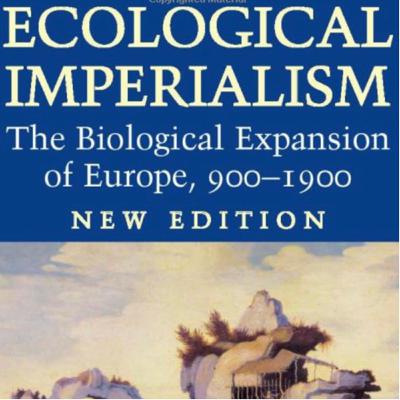
The episode discusses the introduction of eucalyptus in India and brings into the analysis Alfred Crosby’s hypothesis of Ecological Imperialism. In the later part of the episode the case of Andaman Island showcases the unique qualities of ecological imperialism.
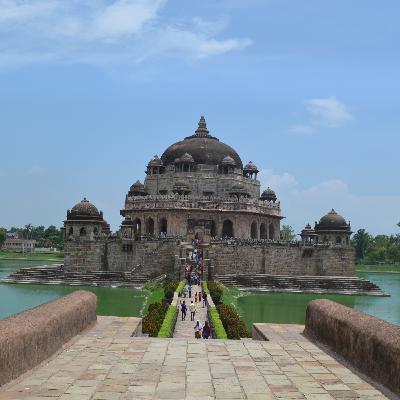
Vipul Singh explains how the much celebrated Akbar’s Rajput Policy was already experimented by Shershah in the mid-Ganga basin. In that sense Shershah’s Relationship with the Purabia Rajputs was precursor to Mughal-Rajput relations.
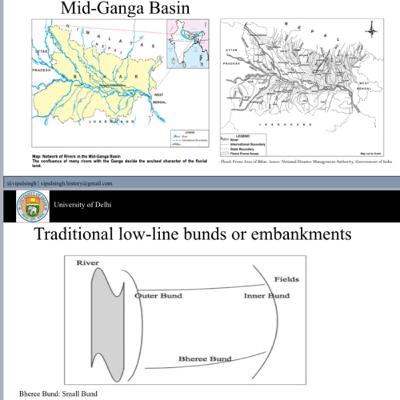
In this talk Dr Vipul Singh traces the history of flood control and advocates the benefits of traditional embankments in a riverine flood plain of mid-Ganga basin.
लिबेरमन की एक्सपोज्ड ज़ोन की आलोचनात्मक व्याख्या
The lecture tells you about the protected and exposed zones hypothesis given by Victor Lieberman in his book Strange Parallels.
पूर्वी भारत के इतिहास को पढ़ने के लिए कौन से श्रोत उपयोगी हो सकते हैं
What are the new ways of studying history? Where does environmental history fit in?
भारत के मध्यकालीन इतिहास में क्षेत्रीय राज्यों के इतिहास की खामोशी के पीछे क्या कारण हैं ?
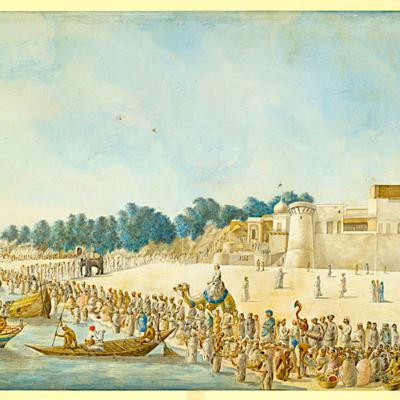
This is the first episode of Eastern India in Transition Series. In this Vipul Singh talks about the significance of regional histories and reasons behind its long neglect in Indian mainstream historiography.
Climate Change in India
In this talk I explain how the eastward shift of the Ganga and consequential silt deposition in Bengal over the centuries have led to new land formation and settlements.
The discussion brings into focus the works of Dirk Kolff and Jos Gommans.
एक शक्तिशाली अहोम साम्राज्य की स्थापना कैसे हुई और इसके उदय एवं पतन दोनों में मिलिशिया प्रणाली की भूमिका क्या रही इस वार्ता का मुख्य बिंदु है .
प्रारम्भिक आधुनिक काल के क्षेत्रीय इतिहास लेखन में देशज साहित्य कैसे उपयोगी हैं और इसको कब से इतिहासकारों ने ऐतिहासिक श्रोत के रूप में देखना शुरू किया .
The lecture talks about their success story right from their migration in to Assam to introduction of militia system and wet rice cultivation.
This lecture is about the 16 the century Vernacular Literature Madhumalti. I tell you the significance of the text as a historical source.

Comments

Download from Google Play

Download from App Store
 United States