


Future Learning Design Podcast
Subscribed: 75Played: 2,847
Subscribe

© Tim Logan
Description
We are stuck in an old paradigm, with institutional structures that were built for a world that no longer exists. Within education, passionate entrepreneurs & committed citizens are no longer waiting for these broken formal institutions to be reformed. All over the world, they're designing & building their own local responses with relationships at their core. These are the education ecosystems that our young people need and out of which new institutions will emerge. This podcast is an inquiry into these fundamental changes and an invitation to join the movement to help nurture positive change.
227 Episodes
Reverse
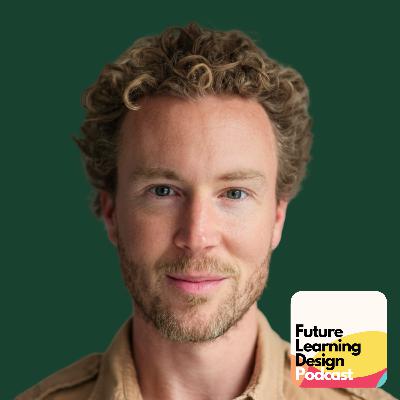
One of the best things about this job is that I get to find out about and share some of the most exciting new developments in education all over the world, sometimes in the most unexpected places. My guest this week, the writer, human rights activist, turned educational entrepreneur Ben Rawlence and his amazing team are building just that in a small market town called Talgarth in mid-Wales. Black Mountains College is an incredible institution working with young people locally in mid-Wales and from across the UK, set up as an alive and direct response to the climate and ecological emergency to help create a future in which nature and human societies thrive. As you’ll hear Ben describe, the college is part of a tradition of land-based alternative education organisations such as Dartington College in the UK (https://en.wikipedia.org/wiki/Dartington_College_of_Arts) and Rabindrath Tagore's Visva-Bharati University in India (https://en.wikipedia.org/wiki/Visva-Bharati_University) and is continuing and updating this tradition to become one of the most inspiring examples globally of what is possible and needed in these times. Ben is an award-winning writer, activist, and former speech writer to Sir Menzies Campbell and Charles Kennedy. He was a researcher for Human Rights Watch’s Africa division, worked for the Social Science Research Council in the USA, the Liberal Democrats in the UK and the Civic United Front in Tanzania. His books include The Treeline: The Last Forest and the Future of Life on Earth and his forthcoming book Think Like a Forest: Letters to my Children from a Changing Planet.BMC website: https://blackmountainscollege.uk/Beth Nawr Festival: https://blackmountainscollege.uk/events/beth-nawr-festival-2026/Ben's Wikipedia entry: https://en.wikipedia.org/wiki/Ben_RawlenceBen's previous books: https://uk.bookshop.org/beta-search?keywords=Ben+Rawlence
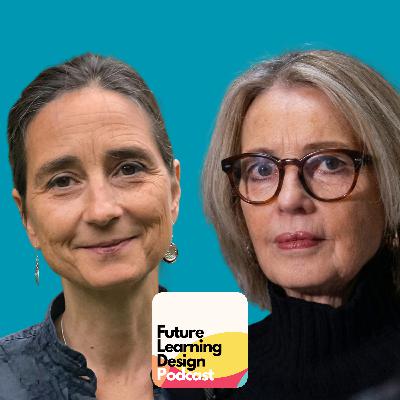
There aren't many things that prompt widespread agreement from people on all sides of the various educational debates. But whatever your educational stripes, young people becoming better critical thinkers usually gets unanimous support. And, arguably, it's being recognised as increasingly important in a world full of AI-generated content and chatbots pretending to be your friend! So I was completely fascinated when I discovered the work of my guests this week, who, as professors of Philosophy, are exploring the often overlooked embodied process of what it feels like to engage in critical thinking and how that process gets shaped by our experiences and inspirations. The fact that thinking comes from somewhere, is very often forgotten in the encouragement of our students to develop their "analytical", "rational" and "logical" skills in pursuit of objectivity. This applies as much in sciences and maths as it does in other humanities subjects like philosophy. And it has major implications for how we teach critical thinking in sophisticated ways aligned with the latest cognitive science, rather than perpetuating the narrow idea that it is simply a dispassionate logical set of computations (which we're clearly seeing the LLMs are much better at than us squishy humans who care about stuff!).Donata Schoeller - https://www.donataschoeller.com/ - is Research Professor, Philosophy, at the University of Iceland, Iceland and Associate Professor at the University of Koblenz. She is a Principal Investigator, and Conceptual Director of “Freedom to make sense: Embodied, experiential Inquiry and Research,” and the Academic Director of the European Erasmus programmes Training Embodied Critical Thinking and Understanding. She has researched and published extensively on embodied thinking, while developing international and interdisciplinary research and training cooperations on the topic. Recent publications: “Thinking at the edge in the context of embodied critical thinking: Finding words for the felt dimension of thinking within research,” Phenomenology and the Cognitive Sciences, 2022, Close Talking: Erleben zu Sprache bringen, 2019, Saying What We Mean, with Ed Casey, 2017, Thinking Thinking, with Vera Saller, 2016.Sigríður (Sigga) Þorgeirsdóttir - https://english.hi.is/staff/sigrthor - is a professor of philosophy at the University of Iceland. She is Principal Investigator of the “Freedom to make sense: Embodied, experiential Inquiry and Research” project, and one of the leaders of the “Training Embodied Critical Thinking and Understanding” training programme. She specialises in the philosophy of the body, the philosophy of the environment, the philosophy of Nietzsche, feminist philosophy, and women in the history of philosophy. She is Chair of the Committee on gender issues of International Federation of Philosophical Societies (FISP) that sponsors the World Congress of Philosophy.Useful Links:Training Embodied Critical Thinking and Understanding (TECTU) 2024-2026: https://www.trainingect.com/Freedom to Make Sense - Center of embodied, experiential and mindful research and education: https://makesense.hi.is/Practicing Embodied Thinking in Research and LearningEdited By Donata Schoeller, Sigridur Thorgeirsdottir, Greg Walkerden: https://www.taylorfrancis.com/books/oa-edit/10.4324/9781003397939/practicing-embodied-thinking-research-learning-donata-schoeller-sigridur-thorgeirsdottir-greg-walkerden
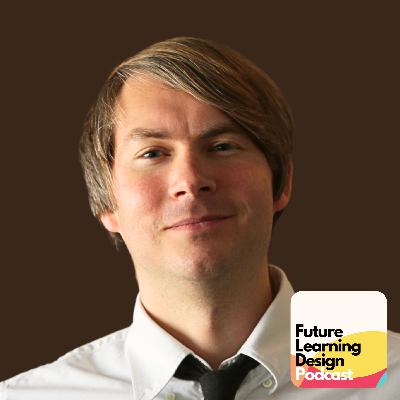
The following conversation is definitely a wild ride*! It's not an argument often made, but I believe that one of the effects of our industrialised education systems is to create the illusion that the world is full of somewhat fixed and ordered things, that don't move or change much. Of course, we teach our children about orbiting planets, the water cycle or change in historical periods. But, for example, in episode 208, Vanessa Andreotti gave a great example of how we name objects in the world, such as trees, in order to teach about them. In doing so, we draw a boundary around a tree that separates it from all non-trees. This sounds kind of philosophical and abstract, but I think the effects of it are very real. Most young people then learn to read the world as a collection of more or less fixed objects, rather than as patterns of relations. My guest this week has been exploring the depths of these questions for a long time through the lens of movement. As you will hear, Professor Thomas Nail started this line of inquiry researching human migration, and went on to develop an entirely new discipline of the philosophy of movement by pulling at the threads of how far our collective obsession with order and stasis goes! And it definitely goes back at least a couple of thousand years!Thomas Nail is a Distinguished Scholar and Professor of Philosophy at the University of Denver and author of numerous books, including The Figure of the Migrant, Theory of the Border, Marx in Motion, Theory of the Image, Theory of the Object, Theory of the Earth, Lucretius I, II, III, Returning to Revolution, and Being and Motion.Some useful links:https://liberalarts.du.edu/about/people/thomas-andrew-nailhttps://en.wikipedia.org/wiki/Thomas_Nail The Philosophy of Movement website: https://philosophy-of-movement.com/'The Birth of Chaos Before Physis': https://youtu.be/c3S4w7C2dGg?si=H-1RlmaK7p3x7C4a The Philosophy of Movement: https://www.youtube.com/live/YQUtX64uqNc?si=EeP3mP4Z-6_4-DK1What is New Materialism paper: https://www.researchgate.net/publication/337351875_WHAT_IS_NEW_MATERIALISM'The Random Walk of the Brain' (article in Salon): https://www.salon.com/2021/08/28/walking-and-spontaneous-fluctuations-brain/ *In the conversation, Thomas uses the word 'cosmogony' which in hindsight I wished I had asked him to define. Simply put it is a theory about how the cosmos or universe originated.
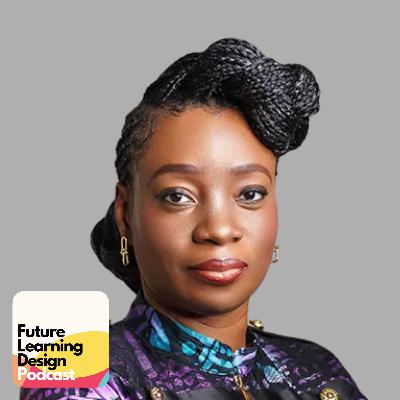
It's pretty clear from the statistics that there is a huge youth demographic bulge on the continent of Africa. 40% of its population is aged 15 or younger (as of 2021). The population of young people aged 15-24 in Africa is projected to reach 500 million in 2080. But as Prof. Kingsley Moghalu from the African School of Governance said at Harvard University’s African Development Conference in April last year, there is no guarantee that this will lead to positive outcomes for individual young people, countries or the continent as a whole. In order to enable all these amazing possibilities education is going to be a key factor in these emerging possibilities and scenarios. There are few researchers, communicators or advocates of education across Africa more brilliant or well-placed than my guest this week to speak to these questions. Dr. Modupe (Mo) Olateju is a fellow with the Center for Universal Education in the Global Economy and Development program at Brookings Institution. She is an international development specialist with expertise in public-private partnership in education with additional research interests in education innovation and foundational learning. She established The Education Partnership (TEP) Centre and led the organization’s pioneering work in applied education research in Nigeria and across Africa for 10 years. She is also Board Chair at the Malala Fund and member of the Executive Board at Fab AI. Links to Mo's work: https://moolateju.com/ https://www.linkedin.com/in/mo-adefeso-olateju/https://www.brookings.edu/people/modupe-mo-olateju/https://tepcentre.com/Ref. Africa By 2040: The Future of Africa’s Youth. Keynote Address by Professor Kingsley Moghalu President, African School of Governance. Harvard University’s African Development Conference 2025, 12 April 2025. https://asg.ac/africa-by-2040-the-future-of-africas-youth/
In the current context of ubiquitous digital tech and runaway generative AI, you'd think that a book calling out our collective delusions about digital tools in relation to learning wouldn't make much of a splash! But Jared Cooney Horvath's latest book 'The Digital Delusion: How Classroom Technology Harms Our Kids’ Learning -- And How To Help Them Thrive Again' (https://www.barnesandnoble.com/w/the-digital-delusion-jared-horvath/1148995809?ean=9798218880378) is currently #1 on the Amazon bestseller list in Educational Psychology and has been receiving a lot of love, including from actor and educational activist, Hugh Grant, and author of The Anxious Generation, Jonathan Haidt! Jared is an old friend of the podcast, so I was really happy to invite him back on for a conversation about our shared concerns about the impacts that digital tech is having on our young people, the dubious motivations of Big Tech and the strange and growing alliance that is developing between people of all educational persuasions!Jared Cooney Horvath (PhD, MEd) is a neuroscientist, educator, and best-selling author who specializes in human learning and brain development. He is the creator of The Learning Blueprint, an international award-winning program helping educators and students understand how learning actually works.Jared has conducted research and taught at Harvard University, Harvard Medical School, and the University of Melbourne, and has worked with more than 1,000 schools around the world. He is the author of six books, has published over fifty research articles, and his work has appeared in The New Yorker, The Atlantic, The Economist, Harvard Business Review, and ABC’s Catalyst.Jared currently serves as Director of LME Global, an organization dedicated to bringing cutting-edge brain and behavioral science to educators, students, and communities.Jared's website: lmeglobal.comJared's previous books: https://www.goodreads.com/author/list/8069909.Jared_Cooney_Horvath LinkedIn: https://www.linkedin.com/in/jared-cooney-horvath/Previous episode with Jared on the podcast: https://www.goodimpactlabs.com/podcast/dr-jared-cooney-horvath
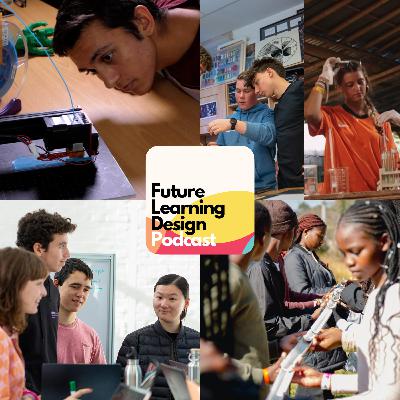
In this final episode of 2025, you'll hear about some of the most exciting things happening around the world for pathways through the upper end of high school from the voices of the young people involved in them. The final years of high school is often the 'business-end' of formal schooling, where we often demand that young people just knuckle down and suffer the "rigours" of high stakes standardised exams and college entrance tests. But these conversations really show you that alternatives to this are not only possible, but happening! Too often, we can talk a great game of hyperbole and hubris about our apparently "paradigm-shifting" designs, but the young people actually experiencing them are telling a different story. What better way to get at the truth than by hearing from the young people themselves! So in this mini-series (5 episodes), you'll hear from 19 young people about their experiences of the kinds of competencies they feel they are learning and need to learn, what they find energising and enabling, and how they feel about the adults who are very often giving so much heart and hard work into this work, to support and guide them.You'll hear about five empowering high school pathways and curriculum innovations: the International Big Picture Learning Credential in Australia;the Greenstones at Green School Bali in Indonesia; the African Leadership Academy programme in South Africa;the IB Systems Transformation Pathway pilot programme at UWC South East Asia in Singapore and UWC Atlantic College in Wales;and the Global Impact Diploma, being run at a number of schools around the world including American International Schools in Lima, Peru, Budapest, Hungary and Bucharest, Romania.If you know of other innovations that you'd like to see featured on future mini-series, then please do share them with us at goodimpactlabs.com/contact.
In this first episode in this Innovative Student Pathways mini-series, I had the huge pleasure of chatting with Monty, Eliza and Lydia, three amazing graduates of the International Big Picture Learning Credential. There are few, if any, other new pathways and credentials that have been as successful in obtaining university recognition for such radical alternatives to the standardised exam factory system and credential capital monopolies! The phenomenon that is Viv White, the founder of Big Picture Learning Australia has joined me previously on the podcast so you can find out more about what they're up to across Australia in that episode. Previous episode with Viv White AM - https://www.goodimpactlabs.com/podcast/big-picture-learning-australia-a-conversation-with-viv-whiteLinkedIn: @viv-white - https://www.linkedin.com/in/viv-white-am-297642142/Instagram: @bigpicture.edu.au - https://www.instagram.com/bigpicture.edu.au/@bigpiclearning - https://www.instagram.com/bigpiclearning/ (US)Website: https://www.bigpicture.org.au/
In Episode 2 of this Innovative Student Pathways mini-series, I chatted with Olivia, Farrah and Chrissa, current students at Green School Bali about their learning through their Greenstone projects. Greenstone are a capstone project that is a key part of the ‘living’ curriculum at Green School Bali that is educates young people for sustainability through community-integrated, entrepreneurial learning, The And the projects reflect young people's passion for important causes and desire to make a difference in the world. Greenstone enables students to have authentic, real-world learning experiences, taking ownership of their own learning journeys, and lights in them a fire for being continuous, life-long learners. You can also find a link to the Regen26 Youth conference that Olivia mentions in the shownotes here: https://docs.google.com/forms/d/e/1FAIpQLScl5iKb64QBmcgS-igtzYHYuj4DJWImL58KCq9HIY3tsJiOpw/viewformhttps://bali.greenschool.org/regeneration26/Greenstone presentations from 2025: https://youtube.com/playlist?list=PLLo3UtBdmnunAvG5Yb5cXtQgAk4TcWK3w&si=mWkYAraCkssRkYbh Website: https://bali.greenschool.org/high-school/ https://www.linkedin.com/posts/greenschoolbali_what-is-greenstone-activity-6876068533479055360-tQ61?utm_source=share&utm_medium=member_desktop&rcm=ACoAACJvZTMBEdMREU-F2oP3G7TXlcHKmR1KvnkContact: Benjamin Freud - https://www.linkedin.com/in/benjaminfreud/
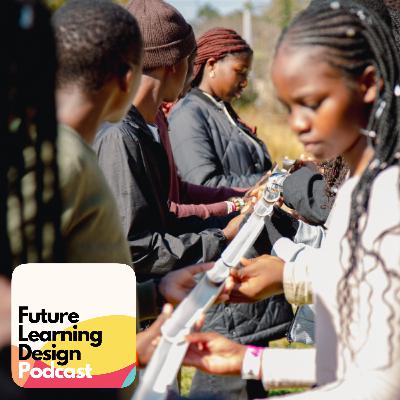
In Episode 3 of this Innovative Student Pathways mini-series, you'll find a fantastic overview of all of the amazing work happening at African Leadership Academy in Johannesburg, South Africa to build the next generation of young African leaders, innovators, laureates and artists. I had the pleasure of meeting with Ayira, Katleho, Mohamed, Fatima and Maimouna Régina to hear all about the core programme and the broader approach to nurturing passionate Africanist auto-didacts!Website: https://www.africanleadershipacademy.org/ Previous episode with ALA's CEO, Hatim Eltayeb - https://www.goodimpactlabs.com/podcast/hatim-eltayeb
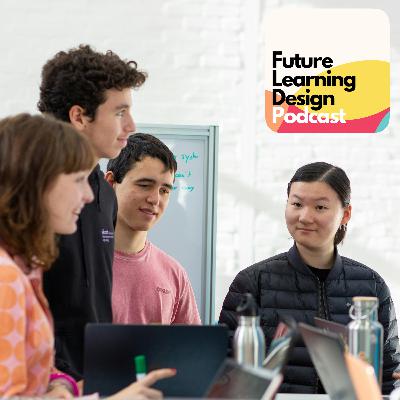
In this fourth episode on exciting global innovations in student pathways, I chatted to Sara, Anisa and Entong from UWC South East Asia and Gabi and Satya, alumni of UWC Atlantic College about their experiences on the new IB Systems Transformation Pathway (STP). This is a really exciting pilot of the IB's 16+ review, pioneered with United World Colleges to enable transformative change, systems leadership and making the world a fairer place for the future. Young people undertake project-based interdisciplinary engagements and systems interventions and are assessed through innovative and collaborative approaches.IB STP website: https://www.ibo.org/programmes/collaborative-review-of-the-dp-and-cp/alternative-assessment-pathway/UWC Atlantic College STP site: https://www.uwcatlantic.org/learning/academic/systems-transformation-pathwayUWCSEA STP site: https://www.uwcsea.edu.sg/ib-systems-transformationContacts: IB - Jenny Gillett (https://www.linkedin.com/in/jennifer-gillett-87a19b22/); UWCAC - Marija Uzunova Dang (https://www.linkedin.com/in/marijauzunovadang/); Eivind Lodemel (https://www.linkedin.com/in/eivindlodemel/)
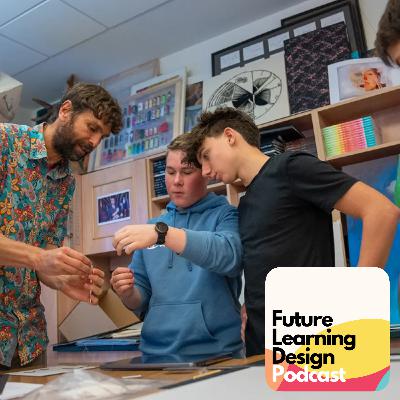
In the last of these 5 mini-series episodes on innovative and emerging student pathways, I chatted with Malna, Nikk and Belen from American International School of Budapest, American International School of Bucharest and American School of Lima respectively. These are 3 of the more than 100 international schools who were represented in the cohort of passionate educators and leaders who co-create the Global Impact Diploma, which is a two-year sequence of courses designed to prepare students to change the world.GID Overview: https://docs.google.com/presentation/d/1vKbk0F8zLPhNdT7Dx7zY2dOyTA7MUjZY63NEJkepQbg/edit?slide=id.g3009304bdc5_0_5#slide=id.g3009304bdc5_0_5Pathways Summit: https://youtu.be/-75VaXq5rBo?si=mU9ryiqdhATssjrY Contact: Corey Topf - https://www.linkedin.com/in/corey-topf-0a062464/
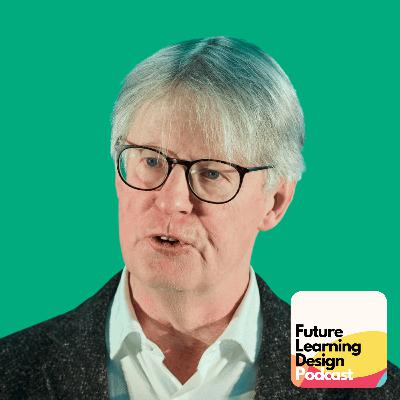
On 7th November, the OECD published a very significant statement of intent on Education for Human Flourishing (available here: https://www.oecd.org/en/publications/education-for-human-flourishing_73d7cb96-en.html). It is a conceptual framework that they say is helping to shape the international conversation about the future of education, national education policymaking, as well as the development of OECD’s Programme for International Student Assessment (PISA), and is the product of a significant collaboration among countries in the High Performing Systems for Tomorrow initiative (https://www.oecd.org/en/about/projects/pisa-high-performing-systems-for-tomorrow-hpst.html) I was very keen to explore this in more detail with the lead author and convenor of this work, Michael Stevenson. So I’m really happy to be able to bring you this episode where Michael and I talk though the development and structure of the framework itself, and explore some of its possibilities and pushbacks. Prior to founding and leading this important OECD initiative, Michael has led education at large global organisations such as the BBC and Cisco Systems, as well as directing major research projects, for example on learning ecosystems in Latin America, Africa and India, with Learning Planet Institute in Paris. He is also leading the creation of a Talent and Innovation Ecosystem in his hometown Doncaster, in the UK.https://www.leadershipforflourishing.com/michael-stevenson https://www.leadershipforflourishing.com/ LinkedIn: https://www.linkedin.com/in/michael-stevenson-044499181/
As we think about systems change, it's all too easy to get caught up the technical design of new institutions and 'system architecture'. But if we are being asked to consider a qualitatively different way governing, convening, educating, distributing resources - all of the fundamentals of society -then perhaps we can start by asking: What has LOVE got to do with any of it? As I share at the start of this episode, it's been clear to me that it's difficult to bring the concept of love into such discussions. So I really wanted to explore this a few courageous and amazing individuals, who I knew would be up for it! In this episode you'll hear from four amazing people working in quite different sectors - from existential risk, climate resilience to cognitive science to leadership and communications to teacher training and education. But all united by the willingness to talk about love as central to their work. Dr. Laura Penn is an expert in leadership communication and the speaking arts. As the Founder of The Leadership Speaking School (https://www.theleadershipspeakingschool.com/), she transforms leaders and teams from the world’s most well-known companies, business schools and organizations into authentic communicators of the digital age. Her clients include the World Economic Forum, International Olympic Committee, United Nations, World Wildlife Fund for Nature (WWF), IMD Business School, Ebay, Roche, Louis Vuitton Moët Hennessy (LVMH), Nespresso, Salesforce, Logitech, the Union of European Football Associations (UEFA), EHL Hospitality Business School and many more.With her first career as a conservation biologist, Laura is also a distinguished voice in the sustainability sector, empowering her audiences to communicate sustainability with gravitas.https://www.laurapennspeaker.com/linkedin.com/in/laurapennphdJamie Bristow is a writer linking inner and outer transformation, and a policy advisor on the application of inner development and contemplative practices in public life. His work includes influential reports such as Reconnection: Meeting the Climate Crisis Inside Out and The System Within: Addressing the inner dimension of sustainability and systems transformation. Jamie is currently developing his work in a new direction, supported by a two-year fellowship, and is initiating a yet-to-be-announced project with Professor Rebecca Henderson at Harvard University (https://rebeccahenderson.com/). He is a co-founder of the Life Itself Sensemaking Studio; honorary associate of Bangor University; special advisor to the Inner Development Goals; from 2015 to 2023, Jamie played an instrumental role in the UK's All-Party Parliamentary Group on Mindfulness.https://www.linkedin.com/in/jamiebristow/ https://www.jamiebristow.com/Khadija Shahper Bakhtiar is CEO and Founder of Teach For Pakistan - MPP, University of California, Berkeley; BSc Hons., LUMS; Rozan, Islamabad; UN Women, NYC; Fulbright Alum.https://iteachforpakistan.org/ https://www.linkedin.com/in/khadija-shahper-bakhtiar-045b60122/And Andrea Hiott, who you have heard on the podcast previously in episode 209 (https://www.goodimpactlabs.com/podcast/andrea-hiott) is Andrea is a philosopher, cognitive scientist and writer and host of the Love and Philosophy community and channel: https://lovephilosophy.substack.com/
As many regular listeners to the podcast know, on this channel we have been exploring the new kinds of educational institutions that are emerging in response to the challenges that our legacy institutions are facing. For the last 250 years we've gotten used to compulsory standardised schooling being provided at scale by either the state, as public government schools, or by the market, as private fee-paying schools. I'm fascinated by the question of what alternatives there might be to this binary choice. Home-schooling networks, religious and intentional communities are certainly examples, but often still very much at the margins. My guest this week, David Bollier, is a global expert in the the way that communities work together to steward shared resources often known as the Commons, rather than relying on the market or the state. So I was very keen to ask him about the implications of reframing education itself as a commons, what would this do to the ways that we provide, fund, and govern education.David is an author, activist, blogger and independent scholar with a primary focus on the commons as a new paradigm of economics, politics and culture. He is the Reinventing the Commons Program Director at the The Schumacher Center for a New Economics https://centerforneweconomics.org/, and co-founder of the Commons Strategies Group, an advocacy/consulting project that assists the international commons movement. David’s work on the commons especially focuses on Internet culture; law and policy; ecological governance; and inter-commoning. David has written and edited many books on the commons, including the revised second edition of Think Like a Commoner: A Short Introduction to the Life of the Commons that was published this year. His other books include: Free, Fair and Alive: The Insurgent Power of the Commons and The Commoner’s Catalog for Changemaking; Think Like a Commoner: A Short Introduction to the Life of the Commons (2014); Green Governance: Ecological Survival, Human Rights and the Commons (2013), co-authored with Burns Weston; and Viral Spiral: How the Commoners Built a Digital Republic of Their Own (2010). With Silke Helfrich, he co-edited two anthologies of original essays, Patterns of Commoning (2015) and The Wealth of the Commons: A World Beyond Market and State (2012).David spent many years in various policy advocacy jobs in Washington, D.C. in the 1970s and 1980s – with a Member of Congress, the auto safety regulatory agency, and public-interest organizations. From 1985 to 2010, David collaborated with television producer, writer and activist Norman Lear on a wide variety of non-television public affairs and political projects. In 2001, David co-founded Public Knowledge, a Washington advocacy organization for the public’s stake in the Internet, telecom and copyright policy. David's website and blog: https://www.bollier.org/David's podcast, 'Frontiers of Commoning', with The Schumacher Center for a New Economics: https://podcasts.apple.com/us/podcast/frontiers-of-commoning-with-david-bollier/id1501085005David on LinkedIn: https://www.linkedin.com/in/david-bollier-254129/

There are a lot of people searching right now, including me, including this podcast, searching for different ways in and through many of the global challenges that we are facing. And as many people will conclude, education and learning are central to these questions of how we find our way! How do we learn together, across generations, in communities in ways that will enable the capacities of our youngest humans to thrive long into their futures? It is my huge privilege this week to be able to share this exclusive interview with IB Director General, Olli-Pekka Heinonen, about his new book 'Learning as If Life Depended on It' which is released on November 4th. Alongside many other authors like Paul Kingsnorth, Vanessa Andreotti and Iain McGilchrist, Olli-Pekka's new book powerfully describes the legacies of the modern world that have led us to see the world and each other in very particular, and not always helpful, ways. He describes ten illusions that we have been enculturated into by modernity, such as the illusion of simplicity, control, and competition, then outlines how we might learn our way to seeing passed and beyond these illusions. As he says: "as we view the world differently, the world we view also changes." For me, for this podcast and, of course for Olli-Pekka himself as the Director General of one of the largest education ecosystems in the world, the question that then follows is, what is the role that schools, universities, educators and communities can play enabling this new learning. And it is a learning that is a much broader exploration of what it means to be human and live in relationality and in service of life, rather than the formal school-based experience that we often associate only with the concept of learning. You can find more information about Olli-Pekka and his forthcoming book, 'Learning as If Life Depended on It: Why We Must See the World Anew, and Figure Out What Follows' published by Perspectiva Press, here:https://www.opheinonen.com/Previous podcast episode with Olli-Pekka, 'On Leading a Learning System' (March 2021): https://www.goodimpactlabs.com/podcast/olli-pekka-heinonenLinkedIn: https://www.linkedin.com/in/olli-pekka-heinonen-4748581/
One of our main roles as educators is to support and help our young people figure out who they are and how they want to contribute to the world. Given our current context of rapid technological change with social, technological and ecological challenges, questions about decisions for university, training and future options for young people is becoming increasingly challenging. Similarly, for educators and career and college guidance counsellors too, to be able to continuously navigate this rapidly changing terrain.Back in May, 2023, I had a conversation on the podcast with some young people who were expressing exactly these concerns about decisions and choices they were making in their lives about what courses to choose, and what careers to pursue. Since then I've been really wanting to bring together a group of global experts around this question. So it's a huge pleasure this week to be able to bring them together: Rosa Moreno-Zutautas: Rosa is Global Director - Program Strategy & Partnerships at IC3 Institute. With a background in Clinical Psychology and a graduate degree in Mental Health Psychology, Rosa is dedicated to helping young individuals uncover their potential and purpose in life. Originally from Venezuela, raised in the United States, and currently residing in Canada, Rosa is passionate about IC3's vision of providing career guidance in every school. (https://www.linkedin.com/in/rosa-moreno-zutautas-278767147/)The 2025 Student Quest Report (that Rosa refers to in the conversation) will be released shortly and available here: https://ic3institute.org/research-and-publications/ Anisa Shaikh: Anisa is an experienced senior career & admissions consultant, customer success program & project manager with 12+ years of experience in ed-tech, SaaS, app marketing & media production. She is skilled in leading diverse teams, building partnerships & scaling operations to enhance customer experience & drive revenue growth in dynamic environments (https://www.linkedin.com/in/anisashaikh/).Kathleen deLaski: Kathleen is an education and workforce designer, as well as an author. She founded the Education Design Lab in 2013 to help colleges begin the journey to reimagine higher education toward the future of work. Kathleen now serves as board chair at EDL and on the board of Credential Engine. She spends time as a senior advisor to the Project on Workforce at Harvard University and teaches human-centered design and higher ed reform as an adjunct professor in the Honors College at George Mason University. Kathleen is the author of ‘Who Needs College Anymore: Imagining a Future Where Degrees Won't Matter’ (https://www.whoneedscollegeanymore.org/). https://www.linkedin.com/in/kathleen-delaski-1089012b/; Anthony Mann: Anthony is a youth career development researcher and policymaker at Critical Transitions, and until recently was Senior Policy Analyst at OECD. Anthony is the author of The State of Global Teenage Career Preparation, OECD, published in May 2025 (https://www.oecd.org/en/publications/the-state-of-global-teenage-career-preparation_d5f8e3f2-en.html). https://www.linkedin.com/in/anthony-mann-81aaba17/ Shira Woolf Cohen: Shira is a founding partner at Innovageous, an education consulting group focused on ensuring continuity of learning and inclusive opportunities for all children. Prior to founding Innovageous, Shira served as the principal of New Foundations Charter School (2014-2020) and is the recipient of the G. Bernard Gill Award for Urban Service-Learning Leadership. Shira is also the author of ‘Leading Future-Focused Schools: Engaging and Preparing Students for Career Success’ (https://www.amazon.com/Leading-Future-Focused-Schools-Engaging-Preparing/dp/B0F9VWS8Z7)
In 1981, the UN established the International Day of Peace to commemorate and strengthen the ideals of peace. In a time when both the influence of multilateral institutions like the UN is being questioned, and the peace we need is in rapidly shortening supply as violence becomes the norm, my guest this week is doing amazing work with communities to find more peaceful paths through questions of conflict resolution by taking a systemic and complexity-informed approach. How we engage our young people in responding peacefully to the inevitable conflict they experience in their own lives feels like a critical part of what we do as educators, but so is being open to question the way in which violence and harm can also be normalised by the systems in which we live and work. Dr Luke Roberts is the founder and Chief Executive Officer at Resolve Consultants (https://resolveconsultants.com/ ) and the author of ‘Leading Schools and Sustaining Innovation: How to Think Big and Differently in Complex Systems’ (https://www.routledge.com/Leading-Schools-and-Sustaining-Innovation-How-to-Think-Big-and-Differently/Roberts/p/book/9781032015620?utm_source=link&utm_medium=society_association&utm_campaign=B052718_pb1_5ll_6rm_t012_1al_9781032015620). Throughout his career, he has focused on conflict resolution, systems change and sustaining innovation. He completed his PhD at Cambridge in 2020. The focus of his research was the sustainability of innovation in organisations when viewed as socially Complex Adaptive Systems. He is an applied social scientist who uses System Thinking and Complexity Theory to address messy and ambiguous challenges which organisations and society face.He works across the private, and public sector helping leaders to understand their ecosystem and apply creative solutions to ill-defined and systemic issues in policy and practice. His work often involves understanding the creativity within organisations and communities which allows them to thrive. Conversations often focus on points of conflict in the system and what are the ways in this hinders opportunity and benefits.Luke has worked in the policy space with APPGs, Parliamentarians and Ministers, he has also advised policy leaders on multi-departmental working to address system issues. He is presently developming a leadership model which aligns with complex systems.
I've been so looking forward to sharing this conversation as it is an area that I am particularly passionate about. I feel very strongly that the way we think and talk about learning, teaching and education is so rooted in Behaviorism and Cognitivism and the dominant language of training and metaphors of the brain as a computer. And there is a still a widespread lack of awareness of the emerging insights of cognitive science - often called 4E cognitive science, referring to embodied, embedded, extended and enactive cognition. This is the idea that our understanding, thinking and learning in the world happen in our relationships with each other, our environments, the tools we use, and our bodies, not just as abstract representations in our brains.And there is no-one better to be talking about this with than Andrea Hiott who among other fantastic work, is the host of the Love and Philosophy channel and substack.All of her life, Andrea says, she has been motivated towards the same goal: "Finding ways for us to move beyond either/or mindsets, and to explore our multiplicity."Andrea is a philosopher, cognitive scientist and writer and is currently a researcher at numerous universities, she is also the author of various books, including Thinking Small and her latest book ‘Holding Paradox: the navigational approach to mind and consciousness’ is out in 2026.Andrea's website: https://www.andreahiott.net/Andrea's Love and Philosophy channel: https://lovephilosophy.substack.com/Andrea's community philosophy Substack called Waymaking: https://communityphilosophy.substack.com/Just released: Andrea's latest paper on 'Radical Embodied Relation at any Scale, from Remembering to Navigating' - https://link.springer.com/article/10.1007/s11245-025-10256-7Useful paper on 'What is 4E Cognitive Science?' by Cameron Alexander: https://link.springer.com/article/10.1007/s11097-025-10055-w

The idea of rewilding is now a common topic of conversation in response to the depletion of biodiversity and natural habitats for local wildlife and widespread industrialisation and globalisation of food production. What about if we asked the same question in relation to the industrialised and standardised education system? What would it take to rewild education, as my guest this week asks? Professor Hilary Cremin has a vision for rewilded healthy education communities and societies that nurture both human and ecological thriving. She is concerned with big questions about the future of education and peace building, and is author of the recently published 'Rewilding Education: Rethinking the Place of Schools Now and in the Future' (Routledge, 2025) - https://www.routledge.com/Rewilding-Education-Rethinking-the-Place-of-Schools-Now-and-in-the-Future/Cremin/p/book/9781041043157.Hilary is the Head of the Faculty of Education at Cambridge University and researches, writes and teaches about peace education and conflict transformation in schools and communities. Hilary is also the co-founder of and senior advisor to the Cambridge Peace Education Research Group. CPERG (https://www.cperg.org/) offers seminars in Cambridge and online, as well as providing resources on their website for those interested in peace education research and practice. Hilary was former Director of the Social Inclusion and Education for Citizenship Academic Research Group at the School of Education, University of Leicester, UK. She has an interest in arts-based methodologies in educational research including photo-voice, poetry and autoethnography.Hilary continues to be involved in the promotion and delivery of conflict transformation and peace-building work in schools and communities, and has a particular interest in Restorative Approaches. LinkedIn: https://www.linkedin.com/in/hilary-cremin-77513724/
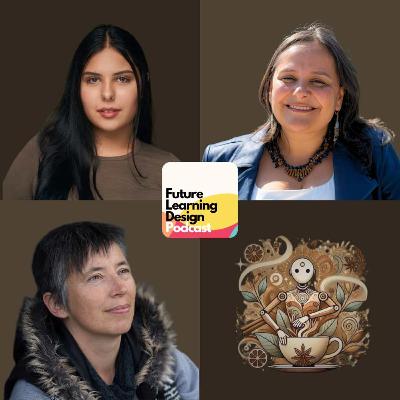
To mark the moment and celebrate the release of Vanessa Machado de Oliveira Andreotti's new book 'Outgrowing Modernity: Navigating Complexity, Complicity, and Collapse with Accountability and Compassion', we are so happy to be able to bring you this fantastic episode!It is the sequel to Vanessa's 'Hospicing Modernity', which was published in 2021 and in 4 short years has become one of the most important books of the century. This new book is arguably even better, and Krista Tippett, the award-winning journalist, author, and public intellectual has called it "a moral, intellectual, and spiritual masterpiece." But one of the best things about it is that it is a workbook, full of guidance for the strength, endurance and flexibility training that we need to be doing ourselves and in our communities and organisations to meet the moment we are deeply in. It is not a work that can simply be ingested for its truth-telling, as you will very much hear from Vanessa in the conversation. The book was released, yesterday Tuesday 12 August, so be sure to order your copy soon!In collaboration with Manda Scott and her wonderful Accidental Gods channel, we are so happy to be able to share this fantastic conversation between Vanessa, her daughter Giovanna de Oliveira Andreotti, myself and Manda.Vanessa de Oliveira Andreotti is the Dean of the Faculty of Education at the University of Victoria. She is a former Canada Research Chair in Race, Inequalities and Global Change and a former David Lam Chair in Critical Multicultural Education. Vanessa has worked extensively across sectors internationally in areas of education related to global justice, global citizenship, critical literacies, Indigenous knowledge systems and the climate and nature emergency. Vanessa is the author of Hospicing Modernity: Facing humanity’s wrongs and the implications for social activism, one of the founders of the Gesturing Towards Decolonial Futures Arts/Research Collective and one of the designers of the course Facing Human Wrongs: Climate Complexity and Relational Accountability, available at UVic through Continuing Studies. Giovanna de Oliveira Andreotti is a Dancer/dance teacher, GTDF member, certified Warm Data Lab host, R4Rs founder, and online course facilitator/co-ordinator. Giovanna has been involuntarily steeped in depth-education from birth (courtesy of her mother, Vanessa Andreotti). Giovanna holds a Bachelor's in Psychology from UBC, postgraduate certifications in Climate Psychology and Embodied Social Justice, and currently coordinates an inquiry that maps pedagogical practices addressing complexity, complicity, collapse, and accountability.If you have more questions about Aiden Cinnamon Tea and the meta-relational approach to AI that we discuss, check out these FAQs: https://burnoutfromhumans.net/anticipated-questionsAnd the Speculative Inquiry into Meta-Relational AI can be found here: https://drive.google.com/file/d/1KFJIVY9slGTcpWBwoMYQwbeKLfV3rNHo/view?usp=sharingAnd further inquiries can be found here: https://metarelational.ai/projects-and-prototypesLinks:https://www.penguinrandomhouse.com/books/783178/outgrowing-modernity-by-vanessa-machado-de-oliveira/https://www.penguinrandomhouse.com/books/675703/hospicing-modernity-by-vanessa-machado-de-oliveira/https://decolonialfutures.net/https://burnoutfromhumans.net/https://r4rs.org/

Comments

Download from Google Play

Download from App Store
 United States