


 Claim Ownership
pharmaphorum Podcast
Subscribed: 48Played: 1,065
Subscribe

© 2022 Pharmaphorum
Description
pharmaphorum is one of the leading global channels for insight into the pharma and healthcare industry – and is essentially a group of passionate people who like asking excellent questions. Our podcasts offer a chance to pose some of these questions to the keenest minds in our industry to look at the big issues and opportunities facing pharma, biotech and healthcare today. With interviews and contributions from a host of industry experts and insiders, the pharmaphorum podcast is a must-listen for those who want insight into the future of health and medicine.
332 Episodes
Reverse
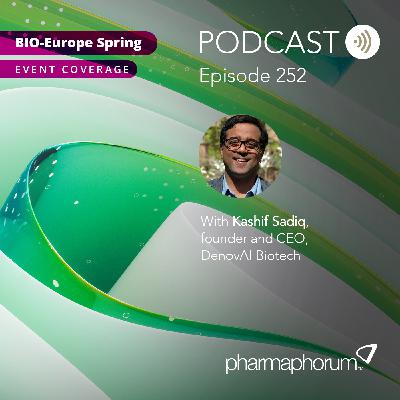
In a new episode of the pharmaphorum podcast, recorded at BIO-Europe Spring in Lisbon, Portugal, web editor Nicole Raleigh spoke with Kashif Sadiq, founder and CEO of DenovAI Biotech, a company that believes humanity is on the cusp of a protein design revolution that stands to transform both human health and the world around us.
Sadiq discusses the company's springboard from AION Labs - with a first-of-its-kind alliance of AstraZeneca, Merck, Pfizer, Teva, the Israel Biotech Fund, Amiti Ventures, and Amazon Web Services, powered by BioMed X with the support of the Israeli Government.
He also explores harnessing the power of artificial intelligence and computational molecular biophysics, developing foundational technology platforms that can design proteins de novo, and describes the trends and insights from the conference itself this year.
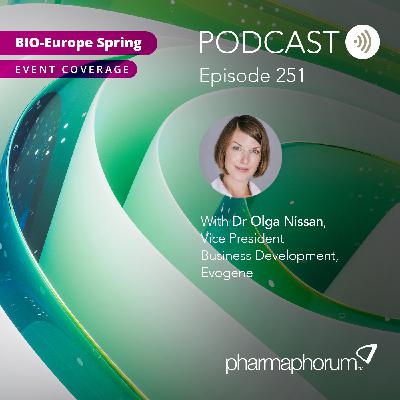
At BIO-Europe Spring 2026 in Lisbon, Portugal, web editor Nicole Raleigh spoke with Dr Olga Nissan, vice president of business development at Evogene, a computational chemistry company, specialising in the generative design of small molecules for the pharmaceutical and agricultural industries.
Nissan discusses recent developments at Evogene, including its extended collaboration with Google Cloud to develop and integrate AI agents into Evogene’s ChemPass AI platform, as well as its collaboration with Queensland University of Technology in the non-small cell lung cancer (NSCLC) space. She also speaks to where industry is at in its integration of cutting-edge AI into scientific research.
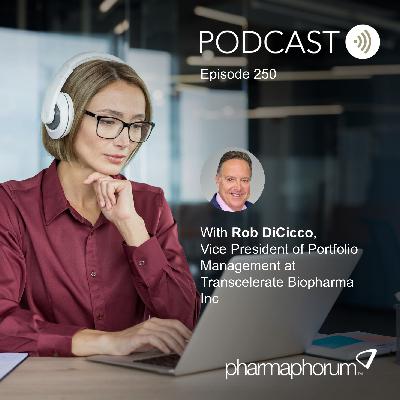
In a new pharmaphorum podcast, web editor Nicole Raleigh was joined by Rob DiCicco, vice president of portfolio management at Transcelerate Biopharma Inc, for a conversation on the barriers and the breakthroughs in making AI work in drug development and clinical trials.
DiCicco discusses why AI adoption in clinical trials is so different from preclinical research and development, as well as how synthetic control arms and in silico modelling reshape trial design, and he touches upon the need for making AI solutions meet not just regulatory and scientific standards, but ethical standards, also.
You can listen to episode 250 of the pharmaphorum podcast in the player below, download the episode to your computer, or find it - and subscribe to the rest of the series – on Apple Podcasts, Spotify, Overcast, Pocket Casts, Podbean, and pretty much wherever else you download your other podcasts from.
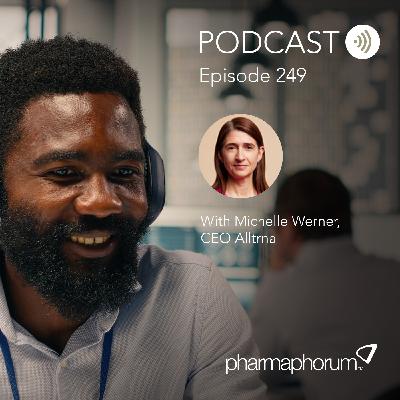
Genetic diseases are notoriously challenging to treat, especially when each condition requires a tailored approach. With over 10,000 known genetic disorders, developing individual therapies for each one has been an immense hurdle, particularly for rare diseases affecting small patient populations. But what if there was a way to address multiple conditions simultaneously, using a single, universal approach?
In today’s episode of the pharmaphorum podcast, Michelle Werner, CEO of Alltrna, discusses her company’s approach of leveraging transfer RNA (tRNA) to shift the paradigm in genetic medicine. This approach has the potential to offer hope to millions of patients with rare and ultra-rare diseases, bypassing traditional one-disease-at-a-time models.
Werner discusses how engineered tRNA works, how this technology slots into existing regulatory frameworks, and why this could be a game changer for pharmaceutical development.
You can listen to episode 249 of the pharmaphorum podcast in the player below, download the episode to your computer, or find it - and subscribe to the rest of the series – on Apple Podcasts, Spotify, Overcast, Pocket Casts, Podbean, and pretty much wherever else you download your other podcasts from.
In a new episode of the pharmaphorum podcast, web editor Nicole Raleigh speaks with Andrew Mackinnon, senior vice president and executive general manager at Medable, about leveraging AI to transform clinical development and accelerate lifesaving therapies to patients.
Mackinnon discusses ‘white space’ in R&D, about integrating generative and agentic AI with human-in-the-loop oversight while prioritising patient safety and regulatory, and how all this advances health equity for underserved communities.
You can listen to episode 248 of the pharmaphorum podcast in the player below, download the episode to your computer, or find it - and subscribe to the rest of the series – on Apple Podcasts, Spotify, Overcast, Pocket Casts, Podbean, and pretty much wherever else you download your other podcasts from.
For 30 years, the AOP Health Group has been dedicated to developing innovative solutions to address unmet medical needs, particularly in the fields of rare diseases and intensive care medicine, and notably in cardiology and pulmonology, as well as haemato-oncology and advanced therapies.
As Rare Disease Day approaches, in a special episode of the pharmaphorum podcast, sponsored by AOP Health, we spoke with Melissa Fellner, VP of Global Therapeutic Areas, Commercial Operations, at AOP Health, to discuss AOP Health’s work in the rare disease space.
Fellner describes the unique challenges faced in R&D in the rare disease space, as well as how advanced therapies are changing the treatment landscape, and what the future could hold, in terms of technological innovation and personalisation.
What becomes clear is the key role that collaboration plays, from the very early stages of clinical trial design and beyond.
You can listen to episode 246 of the pharmaphorum podcast in the player below, download the episode to your computer, or find it - and subscribe to the rest of the series – on Apple Podcasts, Spotify, Overcast, Pocket Casts, Podbean, and pretty much wherever else you download your other podcasts from.
About the interviewee
Melissa Fellner is Vice President of Global Therapeutic Areas at AOP Health. She holds a Master's in Biology, as well as an MBA from The Rady School of Management at University of California, San Diego. Fellner brings more than 25 years of experience across research, clinical development, commercialisation, and global marketing within the pharmaceutical industry. She began her career in 2000 as a research scientist and moved into clinical trial research in the United States and Canada in 2004 with a global contract research organisation.
In 2009, Fellner transitioned into commercialisation consulting, partnering with large pharmaceutical companies on market access and launch strategy. She joined MedImmune, part of AstraZeneca, in 2012 as manager of access services operations, marking her move into the biopharmaceutical industry. In 2017, Fellner advanced into AstraZeneca’s commercial organisation, serving as associate director of consumer marketing for respiratory biologics and later as global marketing director for the same franchise. In 2022, she relocated to Vienna and assumed the role of business unit director for respiratory, immunology, and vaccines, with responsibility for strategy, performance, and commercial leadership.
Fellner joined AOP Health in 2025, where she oversees the company’s global therapeutic areas. In this role, she leads lifecycle strategy development and drives international brand integration across functions and markets to accelerate sustainable portfolio growth.
About AOP Health
AOP Health is a global enterprise group with roots in Austria, where the headquarters of AOP Orphan Pharmaceuticals GmbH ("AOP Health") is located. Since 1996, the AOP Health Group has been dedicated to developing innovative solutions to address unmet medical needs, particularly in the fields of rare diseases and intensive care medicine. The group has established itself internationally as a pioneer in integrated therapy solutions and operates worldwide through subsidiaries, representations, and a strong network of partners. With the claim "Needs. Science. Trust." the AOP Health Group emphasizes its commitment to research and development, as well as the importance of building relationships with physicians and patient advocacy groups to ensure that the needs of these stakeholders are reflected in all aspects of the company’s actions.
Slowly but surely – and just in time for the State of the Union – the full picture of the Trump Administration’s Most-Favoured Nations drug pricing policy is coming into focus. At the end of last year, CMS published the draft guidance for its GLOBE and GUARD pricing models, which establish MFN pricing in Medicare Part B and Part D, respectively. And earlier this month TrumpRx – the government’s promised patient-facing discount portal – finally went live.
On today’s podcast, Jonah Comstock is joined by Alice Valder Curran, a partner at Hogan Lovells and a healthcare policy expert, to break down what we know and what we still don’t know about each of these developments.
Among other things, Valder Curran breaks down how the two CMS pilot programmes will work, what statutory authority CMS is leaning on (and whether that authority is likely to be challenged), and how the industry is responding. Comstock and Valder Curran also discuss TrumpRx and how impactful it’s shaping up to be, at least based on what’s been revealed so far. And how do those negotiated MFN deals fit in to all this?
We can’t give you the answers to all your questions about MFN – too much is still up in the air. But this podcast will at least give you an idea of what those open questions are and how they’re likely to play out.
You can listen to episode 246 of the pharmaphorum podcast in the player below, download the episode to your computer, or find it - and subscribe to the rest of the series – on Apple Podcasts, Spotify, Overcast, Pocket Casts, Podbean, and pretty much wherever else you download your other podcasts from.
Following his return from San Francisco and the JP Morgan Healthcare conference last month, editor-in-chief Jonah Comstock sat down with pharmaphorum web editor Nicole Raleigh to discuss what he heard and learned on the ground in California.
2026 marked the 44th year of the annual meeting: Comstock shares his top insights, goes into the details from the panel he moderated at the Informa Biotech Showcase, and suggests his key takeaway from this year’s conference.
You can listen to episode 245 of the pharmaphorum podcast in the player below, download the episode to your computer, or find it - and subscribe to the rest of the series – on Apple Podcasts, Spotify, Overcast, Pocket Casts, Podbean, and pretty much wherever else you download your other podcasts from.
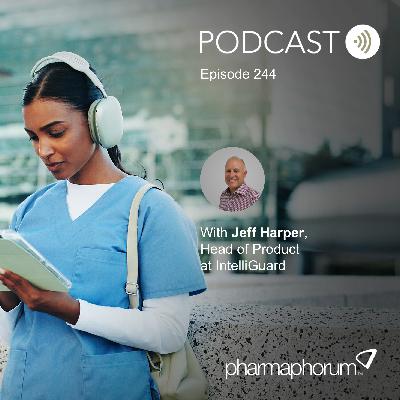
The rising cost of drugs in 2025 was driven by several factors, including inflation, supply chain issues, and the demand for specialty drugs – straining already overburdened health systems.
In a new pharmaphorum podcast, web editor Nicole Raleigh speaks with Jeff Harper, head of product at IntelliGuard, about these pressing issues and what hospitals can expect as we progress further into 2026.
The conversation also explores the role digital health technologies like RFID and predictive analytics could play in addressing drug waste and ensuring access, as well as why hospital CFOs and pharmacy leaders are reframing medication management as a strategic priority, not just an operational one
You can listen to episode 244 of the pharmaphorum podcast in the player below, download the episode to your computer, or find it - and subscribe to the rest of the series – on Apple Podcasts, Spotify, Overcast, Pocket Casts, Podbean, and pretty much wherever else you download your other podcasts from.
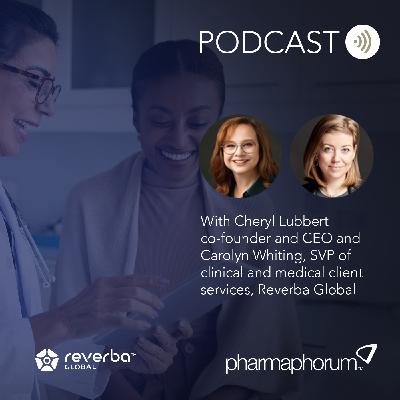
The term "omnichannel engagement" has become embedded in today’s healthcare conversations. Yet the biopharmaceutical industry often approaches it superficially – treating it as a trendy buzzword instead of a meaningful strategy for connecting with the sector's two most vital audiences: patients and healthcare providers (HCPs).
In this episode of the pharmaphorum podcast, developed in partnership with Reverba Global, editor-in-chief Jonah Comstock sits down with Cheryl Lubbert, co-founder and CEO of Reverba Global, and Carolyn Whiting, SVP of clinical and medical client services, to discuss how a thoughtfully executed omnichannel strategy can empower scientific experts to become effective communicators.
Today's patients actively seek scientifically robust, yet accessible, information about their health conditions, and a well-integrated medical affairs strategy can help deliver that knowledge through the HCPs they trust most.
However, bringing this vision to life requires forward-thinking strategies that build authentic connections, challenge conventional approaches, and dismantle the communication silos that frequently exist in healthcare organisations.
Throughout the episode, Lubbert and Whiting share Reverba Global's methodology for authentic omnichannel engagement with patients and physicians, offering real-world examples and practical perspectives on navigating obstacles and establishing this evolved model.
You can listen to this episode of the pharmaphorum podcast using the player below, download the episode to your computer, or find it - and subscribe to the rest of the series – on Apple Podcasts, Spotify, Overcast, Pocket Casts, Podbean, and pretty much wherever else you download your other podcasts from.
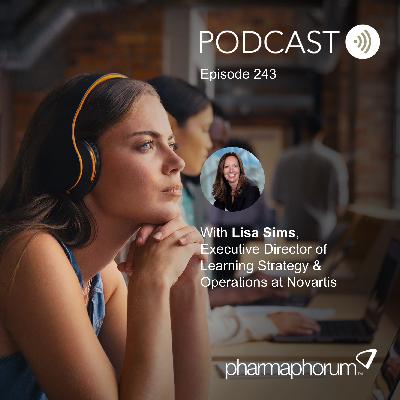
Outdated training and behaviours impact patient outcomes and can lead to patient risk.
In a new pharmaphorum podcast, web editor Nicole Raleigh speaks with Lisa Sims, executive director of learning strategy & operations at Novartis, for a conversation on modern training for pharma and how AI and data – quality data – can help personalise learning at scale.
You can listen to episode 243 of the pharmaphorum podcast in the player below, download the episode to your computer, or find it - and subscribe to the rest of the series – on Apple Podcasts, Spotify, Overcast, Pocket Casts, Podbean, and pretty much wherever else you download your other podcasts from.
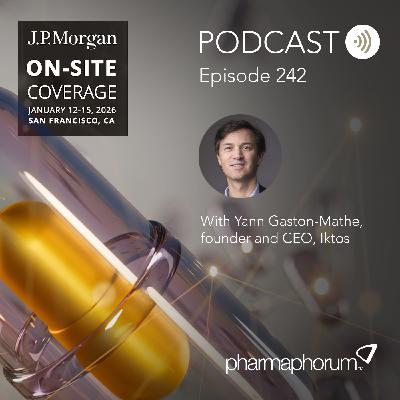
At the JP Morgan Healthcare conference this year, a lot of the discourse around AI drug discovery focused on making the leap from purely in silico drug discovery operations to real-world operations that are able to incorporate wet lab data in an iterative way.
This is easily said, but to do it requires innovating new processes and infrastructures. On the sidelines of the show, pharmaphorum’s Jonah Comstock caught up with Yann Gaston-Mathe, founder and CEO of Iktos, an AI drug discovery company that just signed a billion euro deal with Servier to put this technology into action.
In this quick dispatch from JPM (and we apologise for the shaky audio), Gaston-Mathe describes this shift in AI drug discovery, why it needs to happen, and what it takes, as well as giving some insights on why Servier and Iktos are a good fit as partners.
“You need to think about how effective you are in the transition between the in vitro world and the in silico world,” Gaston-Mathe says. “Building on the data which is available is not enough.”
You can listen to episode 242 of the pharmaphorum podcast in the player below, download the episode to your computer, or find it - and subscribe to the rest of the series – on Apple Podcasts, Spotify, Overcast, Pocket Casts, Podbean, and pretty much wherever else you download your other podcasts from.
The global impact of digital transformation in the last few decades cannot be understated. And now, of course, artificial intelligence (or AI) is making headlines for its potential to transform lives.
In a new pharmaphorum podcast, Deep Dive editor Eloise McLennan speaks with Mohit Manrao, SVP, head of US oncology at AstraZeneca, and president of the AstraZeneca Foundation.
The conversation explores the application of AI in cancer care, some of the most promising potential applications of AI in the life sciences setting generally, as well as AZ’s multi-year partnership with Pangaea Data, focused on advancing precision healthcare with multimodal AI.
Additionally, Manrao discusses how equity gaps in oncology can be minimized, but also the importance of maintaining the human touch when it comes to applying AI in the cancer setting.
You can listen to episode 241 of the pharmaphorum podcast in the player below, download the episode to your computer, or find it - and subscribe to the rest of the series – on Apple Podcasts, Spotify, Overcast, Pocket Casts, Podbean, and pretty much wherever else you download your other podcasts from.
On-site on the sidelines of JP Morgan Healthcare conference in San Francisco this year, pharmaphorum editor-in-chief Jonah Comstock sat down with Andrew Beck, co-founder and CEO at PathAI.
The conversation covers what PathAI has been up to lately in AI within diagnostics in pathology, explores what’s been discussed on the ground at the conference, and also touches upon equality and access to precision diagnostics. Additionally, Beck notes the company’s work in prospective clinical trials in life sciences, as well as co-partnering with pharma.
Having seen an over 10 x growth of adoption of their technology in 2025, Beck also discusses advances in the MASH field.
Listen to this and other conversations from JPM2026 here.
You can listen to episode 240 of the pharmaphorum podcast in the player below, download the episode to your computer, or find it - and subscribe to the rest of the series – on Apple Podcasts, Spotify, Overcast, Pocket Casts, Podbean, and pretty much wherever else you download your other podcasts from.
An increasing prevalence of immunodeficiency and autoimmune disorders has led to increasing demand for plasma-derived immunoglobulin therapies and a need for scalable and sustainable treatment solutions.
In a new pharmaphorum podcast, web editor Nicole Raleigh speaks with Dr Jörg Schüttrumpf, MD, PhD, Chief Scientific Innovation Officer of Grifols and Chief Executive Officer at Biotest, a Grifols company. The conversation explores advancing immunoglobulin (or IG) treatment for immune disorders, looking broadly at the field and current innovation that is working towards redefining how these therapies are delivered, accessed, and optimised for a growing and diverse patient population.
Dr Schüttrumpf also discusses emerging platforms such as recombinant polyclonal therapeutics, as well as the integration of Real World Evidence (RWE) and artificial intelligence (AI) in shaping the future of immunodeficiency care.
You can listen to episode 239 of the pharmaphorum podcast in the player below, download the episode to your computer, or find it - and subscribe to the rest of the series – on Apple Podcasts, Spotify, Overcast, Pocket Casts, Podbean, and pretty much wherever else you download your other podcasts from.
A liquid biopsy is a blood test that detects signs of cancerous tumors, including tumour cells and cancer cell DNA.
In a new pharmaphorum podcast, web editor Nicole Raleigh speaks with Andrew Newland, CEO of ANGLE, about why live cell liquid biopsies should become standard in oncology.
Newland explains how current US FDA-approved tests can detect some types of advanced cancers, predict prognosis, and help healthcare providers make treatment decisions. And importantly, Newland describes how live cell liquid biopsies are a UK-developed technology that aligns with national efforts to modernise cancer diagnostics, as well as potentially reduce healthcare costs by minimising ineffective treatments.
You can listen to episode 238 of the pharmaphorum podcast in the player below, download the episode to your computer, or find it - and subscribe to the rest of the series – on Apple Podcasts, Spotify, Overcast, Pocket Casts, Podbean, and pretty much wherever else you download your other podcasts from.
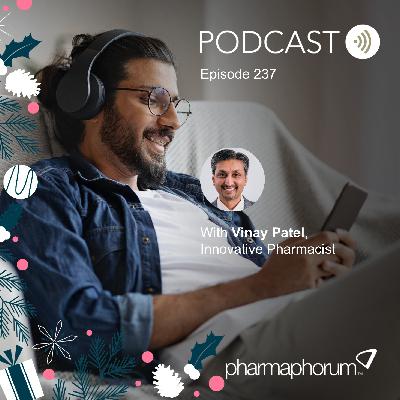
It goes without saying that drug pricing and accessibility in the United States are complex indeed.
In a new pharmaphorum podcast, web editor Nicole Raleigh speaks with Vinay Patel, an innovative pharmacist who's set out to transform the healthcare industry, about these intricacies.
Patel discusses some intriguing stories about crafting innovative solutions for employers, revitalising struggling independent pharmacies, and implementing hybrid care models that can make healthcare more attainable for everyone. The conversation touches upon how biosimilars driving pharmaceutical innovation and reducing health costs, the role of telemedicine, also.
You can listen to episode 237 of the pharmaphorum podcast in the player below, download the episode to your computer, or find it - and subscribe to the rest of the series – on Apple Podcasts, Spotify, Overcast, Pocket Casts, Podbean, and pretty much wherever else you download your other podcasts from.
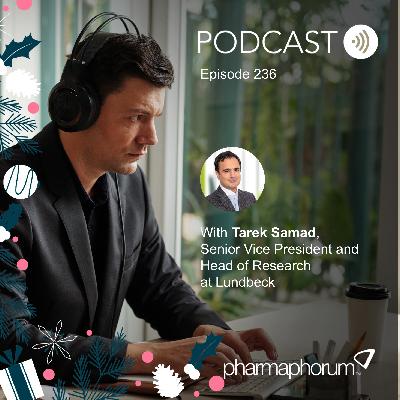
Gefion is Denmark’s first AI supercomputer, named after a goddess in Danish mythology. It is operated by the Danish Centre for AI Innovation (DCAI), a company established with funding from the Novo Nordisk Foundation, the world’s wealthiest charitable foundation, as well as the Export and Investment Fund of Denmark.
In a new pharmaphorum podcast, web editor Nicole Raleigh speaks with Tarek Samad, Lundbeck’s senior vice president and head of research, for a conversation on AI – specifically, Lundbeck’s agreement with the DCAI to run and operate Gefion – and accelerating drug discovery and development within the neurological and psychiatric field.
You can listen to episode 236 of the pharmaphorum podcast in the player below, download the episode to your computer, or find it - and subscribe to the rest of the series – on Apple Podcasts, Spotify, Overcast, Pocket Casts, Podbean, and pretty much wherever else you download your other podcasts from.
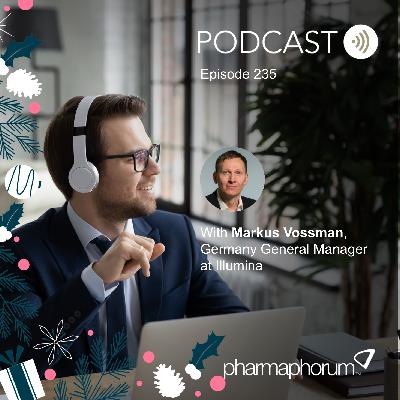
Illumina innovative sequencing and array technologies are fuelling groundbreaking advancements in life sciences research, translational and consumer genomics, and molecular diagnostics.
In a new pharmaphorum podcast, web editor Nicole Raleigh speaks with Markus Vossman, Germany general manager at Illumina, about innovative genomic applications and projects in the region.
Vossman discusses the genomics landscape, as well as next-generation sequencing (or NGS), and the Model Project, a large-scale national pilot project aiming to evaluate the utility of genomic sequencing for patients with advanced cancer and rare diseases.
You can listen to episode 235 of the pharmaphorum podcast in the player below, download the episode to your computer, or find it - and subscribe to the rest of the series – on Apple Podcasts, Spotify, Overcast, Pocket Casts, Podbean, and pretty much wherever else you download your other podcasts from.

The FDA recently announced that it will begin offering faster drug reviews to certain medicines, reducing the drug review process from approximately ten months to one or two months. This news follows a series of rapid changes from the FDA since the Trump administration took office.
In a new pharmaphorum podcast, web editor Nicole Raleigh speaks with Dr Amy Bucher, chief behavioural officer at Lirio, a healthcare personalization platform helping insurers, health systems, and pharmacies deliver precision nudges to move patients into action.
Bucher discusses the risks of the declining trust in healthcare institutions from a behavioural science perspective, as well as how regulatory changes, such as fast-tracking drug approvals as seen with the FDA lately, can impact patient perception.
You can listen to episode 234 of the pharmaphorum podcast in the player below, download the episode to your computer, or find it - and subscribe to the rest of the series – on Apple Podcasts, Spotify, Overcast, Pocket Casts, Podbean, and pretty much wherever else you download your other podcasts from.

Comments

Download from Google Play

Download from App Store
 United States