


 Claim Ownership
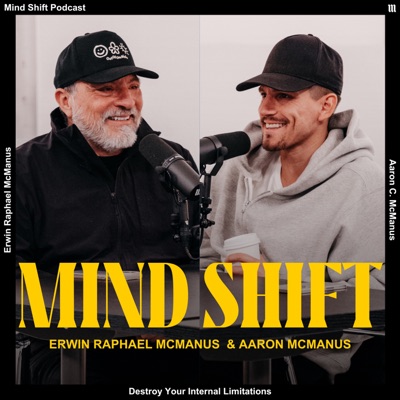
MCMANUS (Formerly Mind Shift) with Erwin & Aaron McManus
Subscribed: 1,268Played: 23,391
Subscribe

© Erwin McManus + Aaron McManus
Description
McManus: On Being Human
Formerly known as Mind Shift and The Battle Ready Podcast.
Formerly known as Mind Shift and The Battle Ready Podcast.
323 Episodes
Reverse

Take The 7 Frequencies Assessment For FREE!https://shop.thesevenfrequencies.com/products/primary-frequency-the-7f-assessment-copy?utm_source=audio&utm_medium=podcast&utm_campaign=mcmanus_pod&utm_content=audio—Aaron and Erwin McManus explore one of the most difficult questions people face in faith communities: when is it time to leave a church or ministry? They discuss the complexity of church hurt, leadership expectations, and the tension between remaining faithful to a community and recognizing when it may be time to move on. Erwin reflects on how relationships can change when someone transitions from attending a church to serving on staff, where expectations around pastoral care, friendship, responsibility, and contribution may no longer align. Together, they examine the difference between genuinely harmful leadership and the disappointment that can emerge from mismatched expectations.In this episode, Aaron and Erwin discuss conflict, accountability, forgiveness, and the importance of communicating concerns directly rather than allowing frustration to turn into resentment. They acknowledge that abusive leadership and unhealthy church cultures exist, while also challenging the assumption that every painful experience reflects organizational failure. Erwin emphasizes that forgiveness does not automatically restore trust, and that healthy communities should create shared responsibility for care rather than placing every emotional and spiritual need on a single pastor. They also explore the challenges leaders face in balancing individual relationships with the responsibility of guiding an entire organization.The conversation ultimately turns toward discernment, personal responsibility, and the possibility of leaving a community with integrity. Aaron and Erwin encourage listeners to examine what has changed, whether their expectations are realistic, and whether opportunities for honest conversation, reconciliation, or growth still exist. They reflect on why leaving a church does not always require someone to be at fault, and why one person's negative experience does not necessarily define a community for everyone else. At its heart, the discussion is about navigating disappointment with maturity, building healthier relationships, and recognizing when staying or leaving can become an act of wisdom, honesty, and faith.—Join the Mind Shift community here: http://erwinmcmanus.com/mindshiftpodFollow On Socialhttps://www.youtube.com/@ErwinRaphaelMcManushttps://instagram.com/mindshiftpodhttps://instagram.com/erwinmcmanushttps://instagram.com/aaroncmcmanusJoin The Newsletter!https://erwinmcmanus.com/newsletter
Take The 7 Frequencies Assessment For FREE!https://shop.thesevenfrequencies.com/products/primary-frequency-the-7f-assessment-copy?utm_source=audio&utm_medium=podcast&utm_campaign=mcmanus_pod&utm_content=audio—Aaron McManus and Erwin Raphael McManus explore the tension between faith, politics, culture, and the expectations placed on pastors who engage in public conversations. Responding to criticism that Erwin’s discussions have shifted away from Jesus and toward political issues, they examine the difference between a pastor’s responsibility to teach Scripture and the freedom to explore broader interests and perspectives. Erwin explains why his Sunday teaching remains centered on helping people encounter Jesus, while the podcast provides a space for honest conversations about culture, politics, identity, and the world around us.In this episode, Aaron and Erwin discuss the dangers of using Scripture to justify political ideologies, the challenges of expressing personal opinions without having them mistaken for biblical mandates, and the pressure on faith leaders to remain within narrowly defined expectations. They explore how political differences can create unnecessary barriers to faith, why disagreement should not automatically lead to division, and the importance of allowing people to engage with ideas beyond the limitations of short social media clips. Erwin also reflects on his early years as a preacher and the evolution of his voice, convictions, and calling.The conversation moves into identity, authenticity, and the difference between genuine cultural adaptation and changing oneself to gain acceptance or approval. Aaron and Erwin examine how people are often pressured to conform to cultural, political, or institutional expectations in order to belong, and why authenticity requires the freedom to think and speak independently. Ultimately, they consider how pastors can engage meaningfully with the world without compromising their faith, creating space for honest disagreement, intellectual curiosity, and a shared pursuit of truth while keeping Jesus at the center.—Join the Mind Shift community here: http://erwinmcmanus.com/mindshiftpodFollow On Socialhttps://www.youtube.com/@ErwinRaphaelMcManushttps://instagram.com/mindshiftpodhttps://instagram.com/erwinmcmanushttps://instagram.com/aaroncmcmanusJoin The Newsletter!https://erwinmcmanus.com/newsletter
Take The 7 Frequencies Assessment For FREE!https://shop.thesevenfrequencies.com/products/primary-frequency-the-7f-assessment-copy?utm_source=audio&utm_medium=podcast&utm_campaign=mcmanus_pod&utm_content=audio—Aaron McManus and Erwin Raphael McManus explore the growing tensions between political ideology, cultural identity, economic inequality, and individual freedom. Beginning with reports of protests in France, they discuss how demonstrations over education and living conditions can become flashpoints for broader political conflict. Erwin questions whether radical movements have redirected the protests toward violence and destruction, while acknowledging the uncertainty surrounding their causes. Together, Aaron and Erwin examine how empathy, ideology, and competing narratives shape the way people interpret social unrest and the societies they hope to build.The conversation expands into a debate about democracy, socialism, capitalism, and the future of Western institutions. Erwin argues for improving imperfect systems rather than abandoning the freedoms they provide, while examining the tension between equality of opportunity and equality of outcome. Aaron and Erwin discuss wealth concentration, employee ownership, government responsibility, and the challenge of creating economic systems that reward innovation without leaving people behind. They also explore the relationship between parental authority and state power, questioning how societies can protect vulnerable people without unnecessarily limiting individual freedom.Aaron and Erwin also tackle immigration, cultural integration, population pressures, and the difficult balance between generosity and sustainable public policy. They consider how nations can remain welcoming while protecting the institutions and freedoms that make opportunity possible. Alongside these discussions, they reflect on the evolving McManus Podcast, the growth of Mosaic New York City, and the possibility of creating deeper conversations around faith, Scripture, and leadership. Ultimately, the episode asks how societies can confront injustice, navigate ideological differences, and build a better future without sacrificing freedom, compassion, or human dignity.—Join the Mind Shift community here: http://erwinmcmanus.com/mindshiftpodFollow On Socialhttps://www.youtube.com/@ErwinRaphaelMcManushttps://instagram.com/mindshiftpodhttps://instagram.com/erwinmcmanushttps://instagram.com/aaroncmcmanusJoin The Newsletter!https://erwinmcmanus.com/newsletter
Take The 7 Frequencies Assessment For FREE!https://shop.thesevenfrequencies.com/products/primary-frequency-the-7f-assessment-copy?utm_source=audio&utm_medium=podcast&utm_campaign=mcmanus_pod&utm_content=audio—Aaron and Erwin McManus explore a wide-ranging conversation on faith, extraterrestrial life, human conflict, creativity, and the future. Beginning with questions around disclosure, whistleblowers, classified information, and the possibility of alien life, they ask whether discovering more advanced beings would create a crisis of faith or simply expose how small and human-centered our assumptions have become. Erwin argues that belief in God does not depend on humanity being the only intelligent life in the universe, and that mystery should expand faith rather than threaten it.The conversation moves from extraterrestrial life to the nature of human power, conflict, and unity. Aaron and Erwin discuss how humans often seek peace when they are weaker and control when they become stronger, using humanity’s treatment of other people as a way to imagine how we might treat less powerful species. They reflect on the need for mutual respect across cultures, not forced uniformity, and consider how humanity’s greatest threat may not be alien life, but its own inability to live with humility, restraint, and shared purpose.They also discuss education, creativity, artificial intelligence, China’s manufacturing strength, and what it will take for people to thrive in the future. Erwin challenges the idea that education should merely produce employees, arguing instead that it should cultivate imagination, adaptability, creators, and entrepreneurs. From films and storytelling to AI and authentic human experience, Aaron and Erwin conclude that while many questions about the future remain outside our control, we still have responsibility for who we become, how we create, and how we treat others.—Join the Mind Shift community here: http://erwinmcmanus.com/mindshiftpodFollow On Socialhttps://www.youtube.com/@ErwinRaphaelMcManushttps://instagram.com/mindshiftpodhttps://instagram.com/erwinmcmanushttps://instagram.com/aaroncmcmanusJoin The Newsletter!https://erwinmcmanus.com/newsletter
Take The 7 Frequencies Assessment For FREE!https://shop.thesevenfrequencies.com/products/primary-frequency-the-7f-assessment-copy?utm_source=audio&utm_medium=podcast&utm_campaign=mcmanus_pod&utm_content=audio—Aaron and Erwin McManus return to the podcast after a season of travel, transition, and changing living arrangements, opening up a deeper conversation about anger and what it reveals about the human soul. Erwin argues that anger is not always wrong — it can become constructive when directed toward injustice, violence, poverty, corruption, and anything that diminishes human dignity. But when anger becomes persistent, reactive, or personal, it often exposes fear, powerlessness, arrogance, or a desire to regain control.In this episode, Aaron reflects on how a stalking situation created fear, isolation, protectiveness, and anger that sometimes affected his judgment and relationships. Together, Aaron and Erwin explore the difference between legitimate self-protection and destructive reaction, asking how people can stay clear-minded when they feel threatened, misunderstood, or publicly criticized. They also discuss how media, marketers, and political actors can exploit fear and powerlessness to provoke anger and create a false sense of strength.The conversation moves into humility, criticism, faith, and the challenge of responding with clarity instead of retaliation. Erwin shares how criticism can become an opportunity to communicate more clearly rather than diminish the person criticizing you, while also reflecting on Scripture, theology, and the complexity of interpreting spiritual realities. Ultimately, Aaron and Erwin examine how anger can either reveal what we truly care about or distort how we see others — and why calmness, courage, and humility are essential for turning anger into meaningful action.—Join the Mind Shift community here: http://erwinmcmanus.com/mindshiftpodFollow On Socialhttps://www.youtube.com/@ErwinRaphaelMcManushttps://instagram.com/mindshiftpodhttps://instagram.com/erwinmcmanushttps://instagram.com/aaroncmcmanusJoin The Newsletter!https://erwinmcmanus.com/newsletter

Comments

Download from Google Play

Download from App Store
 United States