


 Claim Ownership
The Sikh Renaissance
Subscribed: 32Played: 508
Subscribe

© The Sikh Renaissance
Description
Sikh Supremacy, Sikh First, Sikh Only
153 Episodes
Reverse
As we somberly observe the 20th anniversary of the horrific 9/11 attacks (2001), we also reflect on the countless Sikhs who were targeted by xenophobes worldwide owing to their turbaned appearance. With the current Laissez-faire attitude adopted towards Sikh doctrines, it has become commonplace to criticize and even vilify those Sikhs who differentiate between themselves and fundamentalists given the turbaned appearance of both. Such disparity and self-apathy is becoming commonplace among western Sikhs owing to the promotion of self-hate academia in western educational institutes. We explore the eventual outcomes of this intellectual regression and how best to defend against it.

The Gaza conflict annually polarizes the Sikh community on social media into pro-Israel vs. pro-Palestine. Our stance is that while Sikhs should decry the human cost of the conflict, they should not be swift to take sides as the issue is more nuanced than they would care to admit.
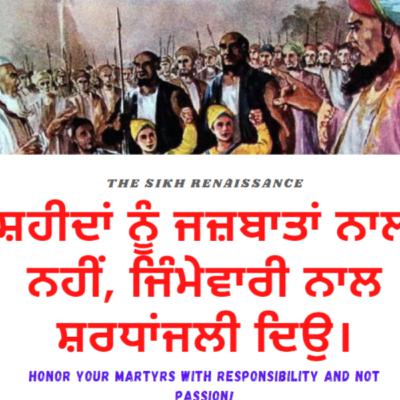
Sikh history has continually been misappropriated by elements opposed to Sikh progression with the aim of commandeering the Sikhs as some anti-Islamic military force. Sikhs, themselves, have unwittingly allowed this nefarious design to succeed given their excessive passion for their past. In this segment we discuss the malignant affects of this misappropriation, its various forms and how best to defeat it and defend Sikhi and Sikh history.

In this episode, we examine the 1873 clash at Takht Sri Hazur Sahib between the Nihang and the Nirmala.The confrontation arose over the observance of the Five Ks and competing claims about religious authority at the shrine. The Nihangs and Hazuri Akalis challenged the Nirmalas’ assertion that their tradition was ancient and integral to Sikh practice, arguing instead that Khalsa discipline must remain central.As tensions escalated, the dispute turned into a physical clash, reflecting broader struggles over Sikh identity, Khalsa tradition, and control of Sikh institutions in the nineteenth century. This episode explores the background, the conflict itself, and what it reveals about debates within the Sikh Panth during this period.
In this Punjabi episode, we break down the infamous "Four Stages of Ideological Subversion" as described by KGB defector Yuri Bezmenov and analyze how this exact playbook was used against the Sikh community. From the 1970s onward, foreign intelligence agencies and hostile actors didn't need weapons. They used information warfare to weaken the community from within.We explore each of the four stages, including Demoralization, Destabilization, Crisis, and Normalization. We connect them to real events in Sikh history, the distortion of the Punjabi language, the targeting of youth, and the propaganda spread through media and education. This episode explains how psychological operations and disinformation were used to divide Sikhs, create internal conflict, and ultimately turn the community against itself.Tune in to understand how the battle for the Sikh narrative was fought not on the battlefield, but through the minds of the people. A must listen for anyone interested in Sikh history, media manipulation, and the truth behind the chaos.
In this episode, we critically examine and debunk key claims made by Ex-Khalistani Sangha, Giani Buta Singh, Harnek Singh Neki, and other commentators shaping public narratives around Khalistan and Sikh history. Drawing on Gurmat, primary historical sources, and documented evidence, we address what we argue are factual inaccuracies, omissions, and misinterpretations. This is a focused, source-driven discussion aimed at restoring historical clarity.
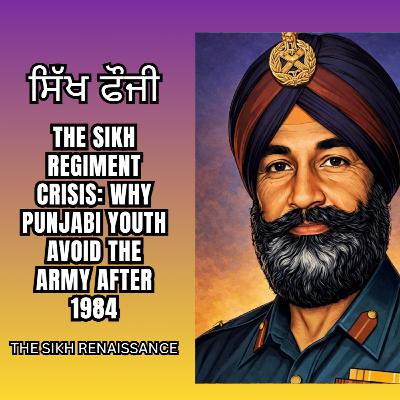
This episode argues that the decline of Sikh participation in the Indian Army after 1984 was not accidental but the result of state discrimination, betrayal, and institutional mistrust both pre-and-post-84. Following the 1984 Sikh genocide and Operation Blue Star, Sikh soldiers and officers faced surveillance, sidelining, and humiliation despite generations of unmatched military service. The episode examines how even highly decorated Sikh commanders such as Brigadier Pritam Singh, Lt. Gen. Harbaksh Singh, Lt. Gen. Bikram Singh, Maj. Gen. Shabeg Singh, and Major Baldev Singh Ghuman were mistreated, marginalised, or erased once they no longer fit the state narrative. Through historical evidence and lived reality, this episode explains why many Punjabi Sikh youth consciously withdrew from military service and why the rupture between Sikh faujis and the Indian state remains unresolved.
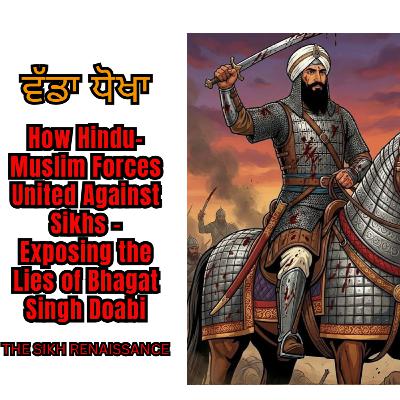
In this episode, we examine the Wadda Ghalughara (1762) using primary historical accounts to uncover a reality often omitted from mainstream narratives. During one of the most devastating genocidal episodes in Sikh history, Hindu and Muslim power structures, mercenary forces, and local collaborators aligned against the Sikhs, enabling Ahmad Shah Abdali’s campaign of mass violence.This episode directly addresses the modern political claim that Sikhs should align with Hindutva, responding to the assertions of Bhagat Singh Doabi. Through historical evidence drawn from Persian chronicles, Sikh sources, and regional records, the discussion demonstrates how religious proximity did not shield Sikhs from persecution and how survival depended on resistance rather than ideological assimilation.Key topics explored include:How Hindu and Muslim forces coordinated against Sikhs during the Wadda GhalugharaThe role of local elites, informants, and auxiliary troopsWhy Sikh persecution cannot be reduced to a Muslim-only conflictHow history is selectively reframed to advance contemporary political agendasWhy Sikh sovereignty, not political alignment, ensured community survivalThis episode is essential listening for those interested in Sikh history, Wadda Ghalughara, Ahmad Shah Abdali, Hindutva debates, Mughal-era violence, and the politicization of historical memory.History does not change to suit ideology. It records what happened.
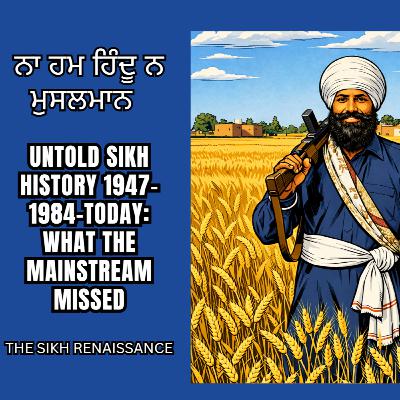
A critical examination of Sikh history from 1947 to 1984 and beyond, exploring how Hindu, Muslim, and Christian political interests have often been prioritised over Sikh rights. This episode analyses Partition, state power, resistance, and the principle that Sikh political survival has historically depended on Sikhs themselves. It also examines the contested legacy of Amarjit Singh Daheru, his training under the elder generation of the Nirban Khalsa Jatha, and historical claims surrounding the early ideological and military formation of Babbar Khalsa within broader struggles over Punjab’s political future between India and Pakistan.
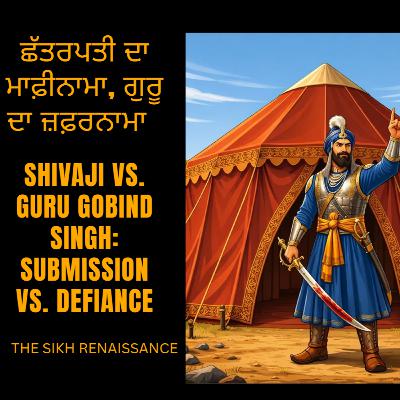
Hindus have long whitewashed Shivaji as a paragon of ethics while demeaning the tenth Guru. The reality is very different. Today, as Sikhs push back against Hindu imposition, the Guru is insulted and disparaged both academically and on social media. Yet their own hero Shivaji was once the fiercest nemesis of their people, a vassal of Muslim states who even begged Aurangzeb for the same privilege. Guru Gobind Singh Ji stood higher than any patriot, teaching the oppressed to stand up for themselves without ever compromising on their dignity. This episode exposes the truths Hindus tries to hide.
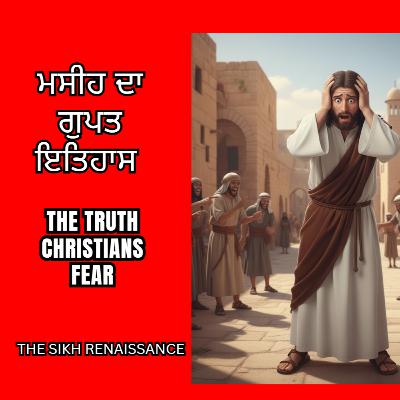
In this episode, we examine the controversial historical claim surrounding the parentage of Jesus, focusing on the theory that he was the son of Pantera. Drawing on the academic research of Professor James Tabor, a leading biblical scholar, the discussion explores early Jewish, Roman, and historical sources that challenge traditional Christian narratives.We analyze why this alternative historical framework provokes strong reactions, how theological authority is constructed, and why certain interpretations of Jesus’ origins remain deeply unsettling for mainstream Christianity. This episode separates faith from historical inquiry and asks why questioning sacred narratives continues to generate fear, resistance, and censorship.This episode is designed to expose Christian missionaries who seek to convert Sikhs to their false beliefs.
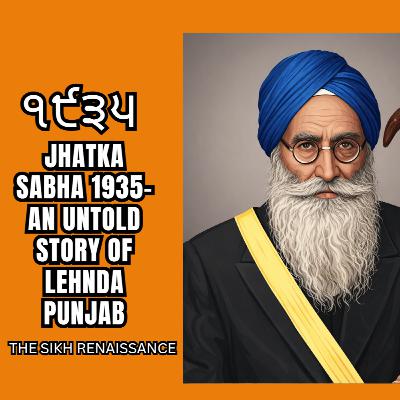
This episode explores the 1935 Jhatka Conference, a pivotal yet often overlooked moment in Sikh history that shaped Sikh perspectives on food ethics, rehat maryada, and ritual practices.Through historical records, ethical reasoning, and Gurbani-based philosophy, the discussion explains why Sikh tradition rejects ritualistic slaughter practices and upholds Jhatka as aligned with Sikh values of responsibility, courage, and spiritual clarity.The episode also examines Sikh perspectives on ritualism, animal consciousness, and scientific considerations around slaughter methods, grounding the discussion in Sikh thought rather than interfaith conflict.Ideal for listeners interested in Sikh history, Panthic discourse, Gurbani interpretation, and Punjabi intellectual conversations.
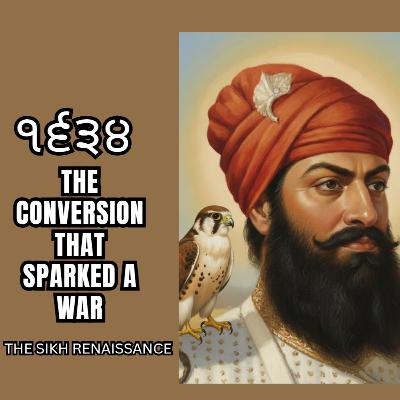
In this episode, we explore the second Sikh-Mughal conflict of 1634, centered on Bibi Kaulan, a woman who boldly embraced Sikhi. Discover how Guru Hargobind and the Sikhs fought not just battles, but for the right of an individual to follow their conscience. Hear the daring, nonchalant, and rebellious spirit of the Guru as he challenged oppressive authority. This story highlights courage, faith, and the fight for spiritual freedom in Sikh history.
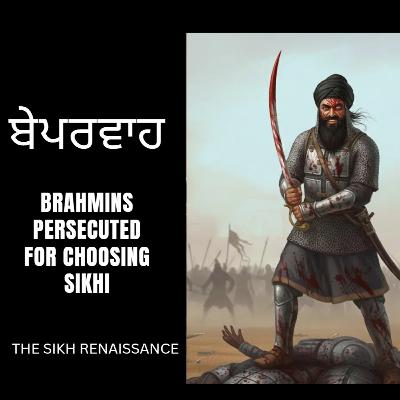
This episode uncovers a largely ignored story in Sikh history and contemporary experience: Brahmins who embraced Sikhi and faced betrayal, ostracism, and persecution from their own communities. From Guru Nanak to Guru Gobind Singh, high-caste individuals chose spiritual truth over social safety, paying a steep price for conscience and conviction. A revealing exploration of power, caste, and courage.
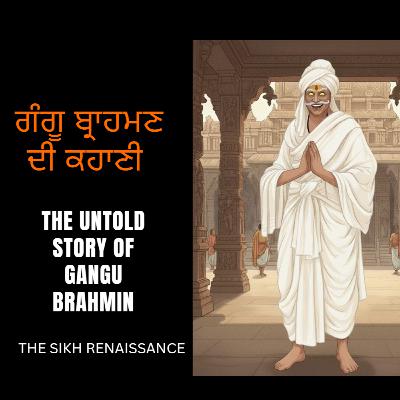
In this episode, we uncover the story of Gangu Brahmin, who initially adopted Sikhi not out of faith but to exploit Sikhs for personal gain. When Guru Gobind Singh Ji saw through his deceit, Gangu regressed back into the Hindu faith, enraged by his exposure. Humiliated, he later struck back in an act of vengeance against the Guru’s family, driven by greed and immoral desires. This episode challenges attempts to deny his existence and reveals the full scope of his betrayal.
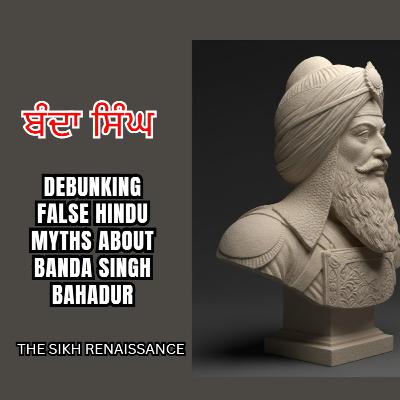
Banda Singh Bahadur is one of the most misunderstood figures in Sikh history. This redux episode brings together all the valid insights from our previous Punjabi discussions and presents them in a clear, accessible English format. We cut through the confusion and examine the historical evidence that proves he was not Hindu, despite the modern myths built around his early life. From his meeting with Guru Gobind Singh to his transformation into a revolutionary Sikh leader, we explore how politics, misread narratives, and cultural agendas shaped public perception. This is a grounded, source-driven look at Banda Singh’s true identity and legacy.

Did Guru Tegh Bahadur really die “for Hindus”?In this explosive episode, we challenge one of the most repeated modern claims about Guru Tegh Bahadur’s Shaheedi. Drawing from Sikh texts, history, and Panthic tradition, we explore who he actually defended, what he stood for, and why reducing his martyrdom to a single community oversimplifies a far deeper spiritual and political legacy.This episode cuts through popular narratives, colonial rewrites, and modern identity politics to reveal a more complex—and far more powerful—truth about the Ninth Guru’s stand against tyranny.
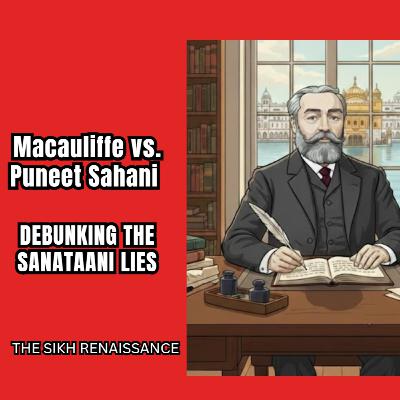
In this episode, we set the record straight on Max Arthur Macauliffe — one of the most important Western scholars of Sikh history — and address the misinformation spread by Puneet Sahani and his circle.We explore who Macauliffe really was, his deep respect for the Sikh Gurus, and why his translations and historical works remain foundational for Sikh scholarship today. Through factual analysis and direct evidence, we debunk the misleading claims, expose manipulation of sources, and clarify Macauliffe’s authentic relationship with the Sikh community.Whether you're interested in Sikh history, colonial-era scholarship, or the truth behind recent online controversies, this episode provides clear insights and a grounded, research-driven perspective.Topics Covered:Who was Max Arthur Macauliffe?His contribution to Sikh scriptures and historyCommon myths and false claims explainedAnalysis of Puneet Sahani’s narrativesWhy Macauliffe’s legacy still matters today

This episode explores the remarkable life of Jathedar Kanwaljit Singh Vaheguru of the Khalistan Liberation Organization. The story traces his unusual journey from growing up within a cult environment to his eventual conversion to Sikhi, a transformation that profoundly shaped his identity and purpose.The episode examines the questions and struggles he faced throughout his life as he sought meaning and direction after leaving the restrictive environment of his upbringing. It chronicles his path to becoming a Jathedar (leader) within the Khalistan Liberation Organization, exploring how his unique background and spiritual conversion influenced his activism and leadership.The podcast also reflects on his death and the legacy he left behind, both within the Sikh community and the Khalistan movement, considering how his personal journey of transformation continued to resonate beyond his lifetime.
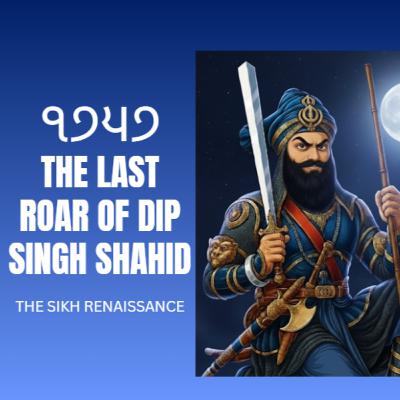
In this episode, we explore the extraordinary life of Sikh supremacist Baba Dip Singh Shahid (1682-1757), one of Sikhi's most revered warrior-saints. Born during a period of intense persecution, Baba Dip Singh was among the first Sikhs initiated into the Khalsa by Guru Gobind Singh in 1698.A devoted member of the Khalsa, he dedicated years to hand-copying the Guru Granth Sahib while also becoming a formidable military leader of Misl Shahid. His legacy is defined by his ultimate sacrifice: at age 75, he led a force to liberate the Golden Temple from Afghan invaders. Mortally wounded in battle, Sikh tradition holds that he continued fighting with his severed head until his last breath.His story remains a powerful symbol of unwavering faith, courage, and the willingness to sacrifice everything for one's beliefs and community.

Comments

Download from Google Play

Download from App Store
 United States