Discover
Bioneers: Revolution From the Heart of Nature
Author: Bioneers
Subscribed: 962Played: 24,184Subscribe
Share
© Copyright 2022 Bioneers
Description
The Bioneers: Revolution from the Heart of Nature is an award-winning series featuring breakthrough solutions for people and planet. The greatest social and scientific innovators of our time celebrate the genius of nature and human ingenuity. The kaleidoscopic scope covers biomimicry, ecological design, social and racial justice, women’s leadership, ecological medicine, indigenous knowledge, spirituality and psychology. It’s leading-edge, hopeful, charismatic, provocative, timely and timeless – like nothing you’ve heard before.
587 Episodes
Reverse
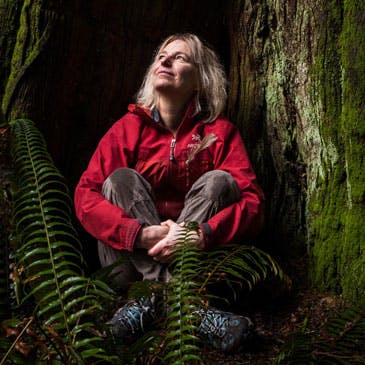
Forests have long occupied a fertile landscape in the human imagination. Places of mystery and magic – of wildness and wisdom – of vision and dreaming. Yet beyond mythic realms of imagination, we’ve largely treated forests as inert physical resources to satisfy human needs and desires. The main operative science behind this commodification has been market science – how to extract maximum resources and profits.
Suzanne Simard is a revolutionary researcher who is transforming the science of forest ecology and coming full circle to the wisdom held by First Peoples and traditional land-based cultures from time immemorial. The story Simard is uncovering can change our story for how we live on Earth and with each other – for the long haul.
Featuring
Suzanne Simard, Professor of Forestry at the University of British Columbia, is an expert in the synergies and complexities of forests and the development of sustainable forest stewardship practices. Her groundbreaking research centers on the relationships between plants, microbes, soils, carbon, nutrients and water that underlie the adaptability of ecosystems, especially the below-ground fungal networks that connect trees and facilitate interplant communication. Learn more about Suzanne Simard and her work at her website.
Explore More
Dispatches From the Mother Trees, Suzanne Simard’s keynote address to the 2021 Bioneers Conference, in which she discusses the dire global consequences of logging old-growth rainforests, and nature-based solutions that combine Western science and Indigenous knowledge for preserving and caring for these invaluable forest ecosystems for future generations.
Lessons from the Underground, a panel discussion from the 2021 Bioneers Conference featuring Suzanne Simard as well as Anne Biklé and David R. Montgomery, a wife and husband team of scientific researchers whose groundbreaking work on the microbial life of soil has revealed its crucial importance to human wellbeing and survival. Moderated by Bioneers’ Restorative Food Systems Director Arty Mangan.
Intelligence in Nature, a deep-dive resource featuring leading experts in this burgeoning field.
What We Owe Our Trees, an article by Jill Lepore in the New Yorker.
This is an episode of the Bioneers: Revolution from the Heart of Nature series. Visit the radio and podcast homepage to learn more.
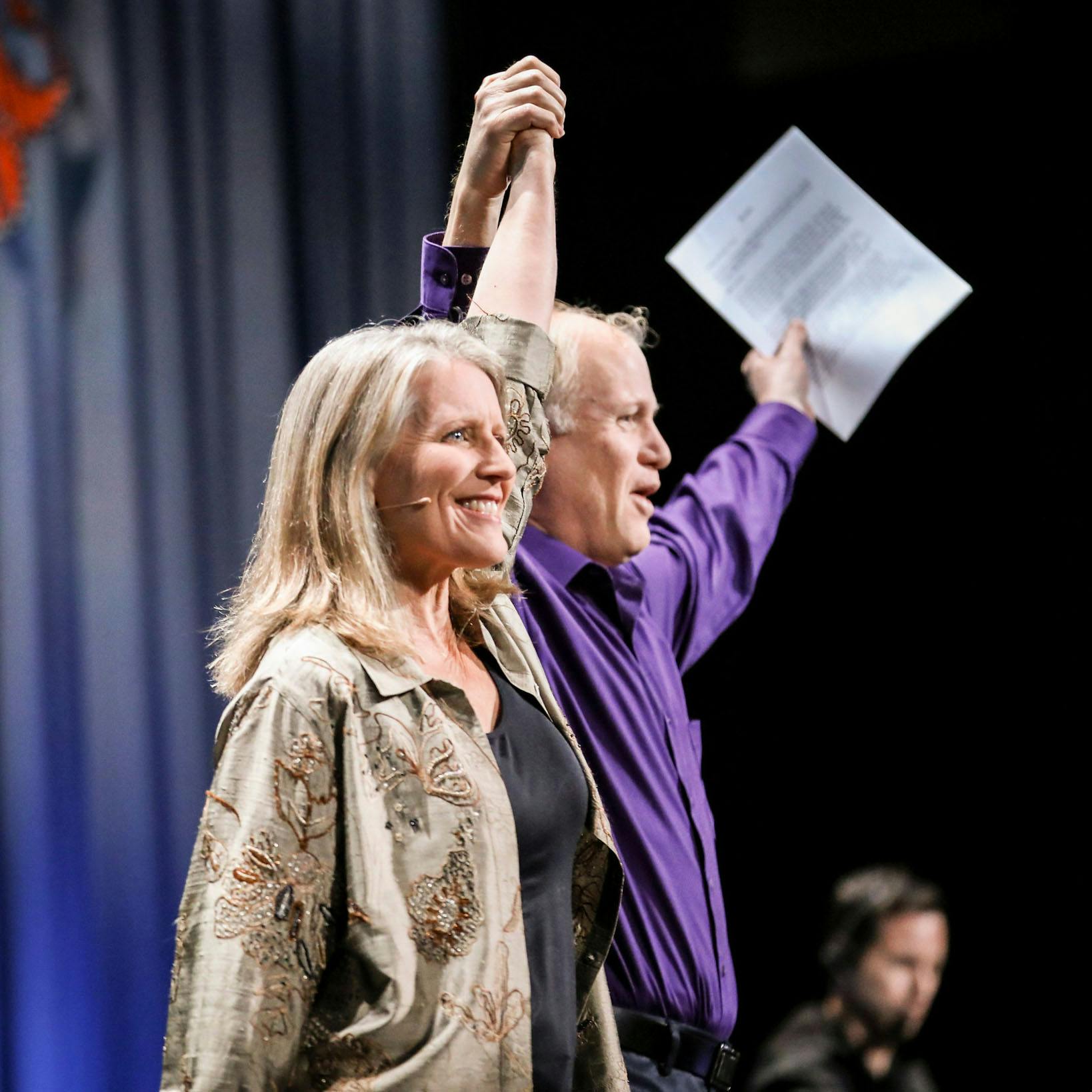
What will it take to begin to heal the deep wounds between women and men? What is the role of men in this transformation? Cynthia Brix and Will Keepin from Gender Reconciliation International say that only by bringing these wounds into the light can we heal them. Patriarchy destroys men’s souls, too, so a revolution in gender relations can liberate women and men.
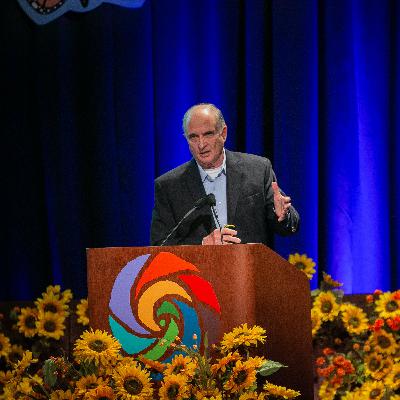
Climate is the trip wire for every other foundational ecological and biological system – as well as the basis for human civilization. As we face the long climate emergency, fortunately, skillful pathfinders are banding together to transform our ways of living and bring resilience from the ground up into widespread practice. With Berkeley’s Chief Resilience Officer, Timothy Burroughs, Professor David W. Orr, and financial adviser Tom Van Dyck.
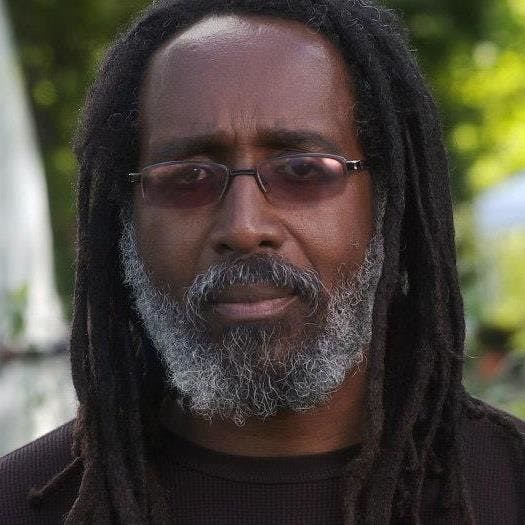
Communities around the country are working to create a new food future founded in health, justice and ecological wellbeing. Community activists Malik Kenyatta Yakini and Oran Hesterman are transforming Detroit through urban agriculture and helping low-income and working families access healthy food. Cathryn Couch works with young people to cook and deliver healthy meals to people who are ill and struggling to put food on the table with a model program using food as medicine.
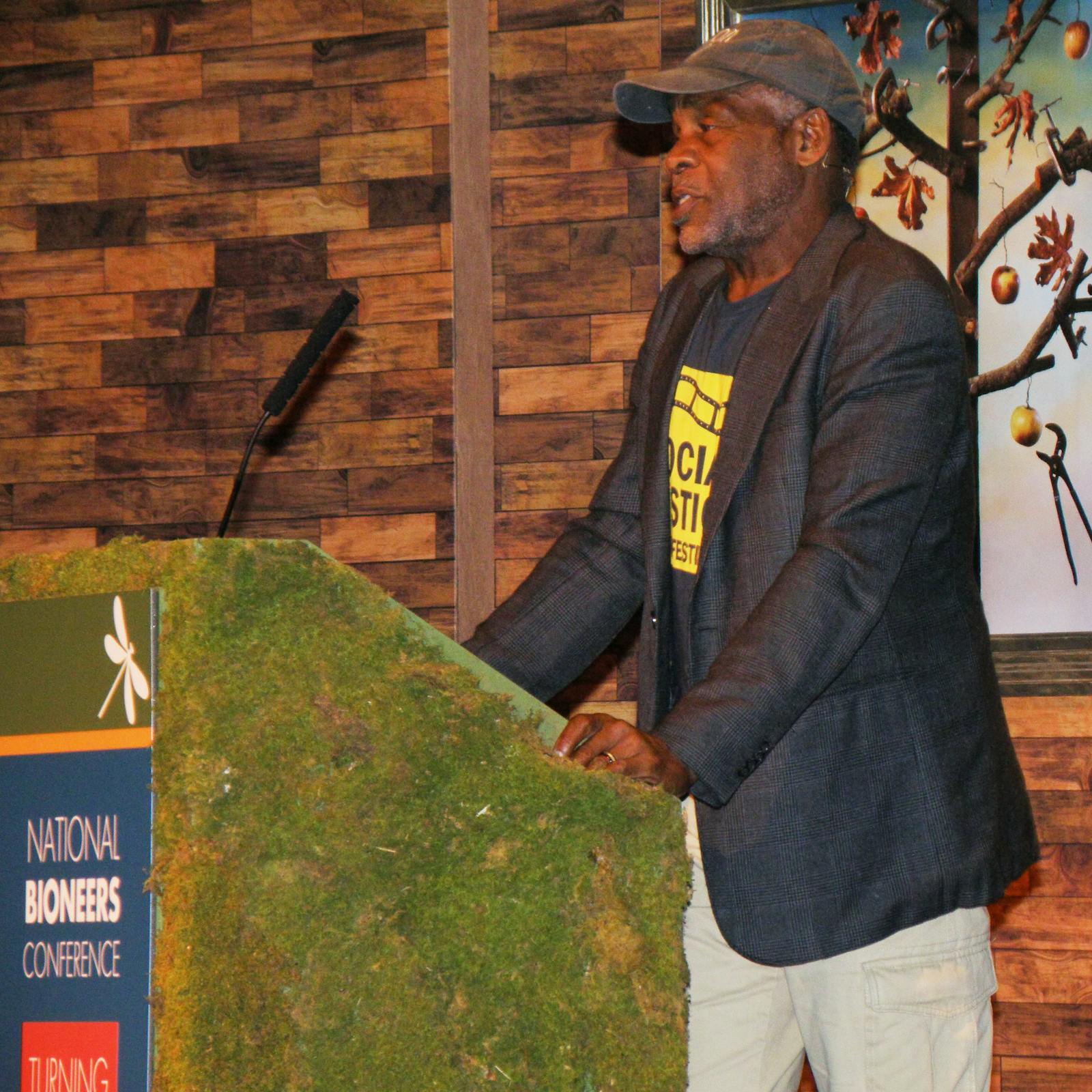
How can we manifest the world we want, and who we want to be? Actor-activist Danny Glover and Phaedra Ellis-Lamkins, former CEO of Green For All, show how one sure path to resilience is to build community and social movements. That requires learning how to reach out across our differences – and it gets really personal.
Writer, naturalist and activist Terry Tempest Williams asks “Can we love ourselves, each other and the Earth enough to change?” She invokes our deepest humanity to honor and protect the wilderness that’s the cauldron of evolution – and of our own imagination. “Our power lies in the love of our homelands,” she tells us in this eloquent, heartfelt tour-de-force, and protecting the wild requires bringing democracy home.
Featuring
Terry Tempest Williams, one of the greatest living authors from the American West, is also a longtime award-winning conservationist and activist, who has taken on, among other issues, nuclear testing, the Iraq War, the neglect of women’s health, and the destruction of nature, especially in her beloved “Red Rock” region of her native Utah and in Alaska.
Find out more about Terry Tempest Williams and how you can engage with her campaigns and efforts by visiting her website.
This is an episode of the Bioneers: Revolution from the Heart of Nature series. Visit the radio and podcast homepage to learn more.
What’s it like to be in someone else’s skin? What if the color of the skin is different – say, black and white? What might happen when the descendants of a white slave trader and of black people who were enslaved meet? That is the brave and wrenching journey embraced by Thomas DeWolf, whose white ancestors were once the nation’s biggest slave traders, and Belvie Rooks and Dedan Gills, descendants of African people who were enslaved. Together they depict their remarkable journey to discover what healing looks like.
This is an episode of the Bioneers: Revolution from the Heart of Nature series. Visit the radio and podcast homepage to learn more.
How do we create peace? What can we learn from indigenous societies who have addressed this profound question over thousands of years? From North America to the Kalahari, Jeannette Armstrong, Marlowe Sam, Evan Pritchard, Kxao=Oma and Megan Biesele share powerful stories of how indigenous social technologies have succeeded in resolving conflict, and still are.
Plants make up over 80% of life on earth. No animal would exist without plants’ ultimate magic trick of turning sunlight into food. Today, scientists are unearthing a wild, weird world of vegetal genius. But how can we truly understand beings so radically different from ourselves? We consider the emerging science of plants from the vantage points of philosophy and ethics, with Harvard scholar Rachael Petersen.
The influences of Africans and Black Americans on food and agriculture is rooted in ancestral African knowledge and traditions of shared labor, worker co-ops and botanical polycultures.
In this episode, we hear from Karen Washington and Bryant Terry on how Black Food culture is weaving the threads of a rich African agricultural heritage with the liberation of economics from an extractive corporate food oligarchy. The results can be health, conviviality, community wealth, and the power of self-determination.
Featuring
Karen Washington, co-owner/farmer of Rise & Root Farm, has been a legendary activist in the community gardening movement since 1985. Renowned for turning empty Bronx lots into verdant spaces, Karen is: a former President of the NYC Community Garden Coalition; a board member of: the NY Botanical Gardens, Why Hunger, and NYC Farm School; a co-founder of Black Urban Growers (BUGS); and a pioneering force in establishing urban farmers’ markets.
Bryant Terry is the Chef-in-Residence of MOAD, the Museum of the African Diaspora in San Francisco, and an award-winning author of a number of books that reimagine soul food and African cuisine within a vegan context. His latest book is Black Food: Stories, Art and Recipes from Across the African Diaspora.
Credits
Executive Producer: Kenny Ausubel
Written by: Kenny Ausubel and Arty Mangan
Senior Producer and Station Relations: Stephanie Welch
Program Engineer and Music Supervisor: Emily Harris
Producer: Teo Grossman
Host and Consulting Producer: Neil Harvey
Production Assistance: Monica Lopez
Additional music: Ketsa
Resources
The Farmer and the Chef: A Conversation Between Two Black Food Justice Activists
Karen Washington – 911 Our Food System Is Not Working
Working Against Racism in the Food System
Black Food: An Interview with Chef Bryant Terry
The Food Web Newsletter
This is an episode of the Bioneers: Revolution from the Heart of Nature series. Visit the radio and podcast homepage to learn more.
We are told that our personal health is our individual responsibility based on our own choices. Yet, the biological truth is that human health is dependent upon the health of nature’s ecosystems and our social structures. Decisions that negatively affect these larger systems and eventually affect us are made without our consent as citizens and, often, without our knowledge. Dr. Rupa Marya, former Associate Professor of Medicine at UC San Francisco, and co-founder of the Do No Harm Coalition, says “social medicine” means dismantling harmful social structures that directly lead to poor health outcomes, and building new structures that promote health and healing.
This is an episode of the Bioneers: Revolution from the Heart of Nature series. Visit the radio and podcast homepage to learn more.
With climate-driven disasters becoming the new normal, building resilience is the grail. Communities around the world are developing models created out of practical necessity. We hear on-the-ground stories from two different communities building resilience in the wake of serial disasters. Estrella Santiago Perez and her innovative community rights organization ENLACE have helped organize a collection of marginalized neighborhoods in San Juan, Puerto Rico to overcome the twin catastrophes of Hurricane Maria and a failed government. And far away in the fire-ravaged communities near California’s relatively well-off wine country, Trathen Heckman helped lead the nonprofit grassroots group Daily Acts to build a resilience network from the ground up with engaged citizens action, civil society groups and Sonoma County government agencies.
This is an episode of the Bioneers: Revolution from the Heart of Nature series. Visit the radio and podcast homepage to learn more.
After World War II, the U.S. government worked with industry to create a single-use, disposable consumer culture as a way to ensure ongoing market prosperity. Who benefited? Consumer product companies like Coca-Cola, and the fossil fuel industry, whose petrochemicals are at the source. The result? Plastic pollution is now found in virtually every living organism – including humans – and is one of the worst threats to ocean ecosystems. Now, a global resistance movement is rising to abolish petrochemical plastics and to shift to a zero-waste, circular economy.
Anna Cummins, Deputy Director and Co-Founder of the Five Gyres Institute. With more than 20 years experience in environmental non-profit work—including marine conservation, coastal watershed management, community relations, and bilingual and sustainability education—Anna is an expert in the field.
Credits
Executive Producer: Kenny Ausubel
Written by: Monica Lopez and Kenny Ausubel
Senior Producer and Station Relations: Stephanie Welch
Host and Consulting Producer: Neil Harvey
Producer: Teo Grossman
Program Engineer and Music Supervisor: Emily Harris
Production Assistance: Claire Reynolds
This is an episode of the Bioneers: Revolution from the Heart of Nature series. Visit the radio and podcast homepage to learn more.
Erosion and evolution. Shadow and light. Death and rebirth. These are some of the strands that the acclaimed author, naturalist and activist Terry Tempest Williams weaves together in the face of today’s broken world. Standing in the lineage of the greatest nature writers, she links her deepest inner experiences with the state of the web of life. In this program, Williams asks: How do we find the strength to not look away at all that is breaking our hearts? Hands on the earth, we remember where the source of our authentic power comes from. We have to go deeper. She also explores histories of privilege, religion, and identity in Utah, and how reconciling her experiences with these cultural strands have helped unleash and shape her voice as a storyteller who translates the voice of nature and speaks for justice.
Featuring
Terry Tempest Williams, one of the greatest living authors from the American West, is also a longtime award-winning conservationist and activist, who has taken on, among other issues, nuclear testing, the Iraq War, the neglect of women’s health, and the destruction of nature, especially in her beloved “Red Rock” region of her native Utah and in Alaska.
Credits:
Executive Producer: Kenny Ausubel
Written by: Monica Lopez and Kenny Ausubel
Senior Producer and Station Relations: Stephanie Welch
Host and Consulting Producer: Neil Harvey
Producer: Teo Grossman
Program Engineer and Music Supervisor: Emily Harris
Production Assistance: Claire Reynolds
Music was made available by:
Jami Sieber at JamiSieber.com
Gigi Masin at MusicFromMemory.com
APM
This is an episode of the Bioneers: Revolution from the Heart of Nature series. Visit the radio and podcast homepage to learn more.
Over 7,000 languages are spoken around the world. Each one reflects a rich ecosystem of ideas - seeds that grow into a multitude of worldviews. Today, many of these immeasurably precious knowledge systems are endangered - often spoken by just a handful of people. We hear from two Indigenous language champions, Jeannette Armstrong and Rowen White. They reflect on the words, stories, songs and ideas that influence our very conception of nature, and our place within it.
This is an episode of Nature’s Genius, a Bioneers podcast series exploring how the sentient symphony of life holds the solutions we need to balance human civilization with living systems. Visit the series page to learn more.
Featuring
Jeannette Armstrong, Ph.D., (Okanagan) is an Indigenous author, teacher, ecologist, and a culture bearer for her Native language. She is also Co-founder of the En'owkin Centre.
Rowen White (Mohawk) is a seed keeper and farmer, and part of the Indigenous Seed Keepers Network. She operates a living seed bank called Sierra Seeds.
Resources
En’owkin Centre
Indigenous Seed Keepers Network
Sierra Seeds
Language Keepers: The Struggle for Indigenous Language Survival in California
Hand Talk, Native American Sign Language
Native Seed Rematriation
Credits
Executive Producer: Kenny Ausubel
Written by: Cathy Edwards and Kenny Ausubel
Produced by: Cathy Edwards
Senior Producer and Station Relations: Stephanie Welch
Associate Producer: Emily Harris
Host and Consulting Producer: Neil Harvey
Program Engineers: Kaleb Wentzel Fisher and Emily Harris
Producer: Teo Grossman
Graphic Designer: Megan Howe
After accomplished stints as a journalist, author and diplomat, and studying theology at Yale Divinity School, Krista Tippett was struck by a significant gap in the media landscape—a lack of deep, intelligent conversations to explore the spiritual, ethical and moral aspects of human life. What began as a national public radio show in 2003 evolved into the multiple award-winning podcast “On Being” (“wisdom to replenish and orient in a tender, tumultuous time to be alive.”) Gifted with insatiable curiosity, profound relational intelligence, a poetic sensibility, and an ability to unearth revelatory ideas to live by, Krista creates spaces where wisdom can emerge. With her interdisciplinary and cross-sectoral whole systems overview, she’s hosted luminaries as disparate as Mary Oliver, Thich Nhat Hahn, Isabel Wilkerson and Desmond Tutu, among many more. Listen to this rare intimate, live interview with her friend, insightful strategist, philanthropist and activist Azita Ardakani.
This is an episode of the Bioneers: Revolution from the Heart of Nature series. Visit the radio and podcast homepage to learn more.
Dr. Rae Wynn-Grant shares her personal odyssey as a wildlife ecologist, conservation biologist and co-host of the famed TV nature show “Wild Kingdom.” As a scientist dedicated to protecting and conserving the diversity of the web of life, she reminds us that, as human beings, we are part of nature. It’s all connected, and it’s high time to bring about peaceful coexistence, not only with nature, but with one another.
Rae Wynn-Grant, Ph.D., is a wildlife ecologist and conservation biologist, creator of the award-winning podcast “Going Wild with Dr. Rae Wynn-Grant,” co-host of Mutual of Omaha’s “Wild Kingdom,” and author of “Wild Life: Finding My Purpose in an Untamed World.”
Resources
Rae Wynn-Grant – Wild Life: How Personal Journeys are Essential to Sustainable Leadership in Environmental Science | Bioneers 2024 Keynote
Rae Wynn-Grant – Becoming a Wildlife Ecologist in a Rugged World | Excerpt from “Wild Life: Finding My Purpose in an Untamed World”
Credits
Executive Producer: Kenny Ausubel
Written by: Leo Hornak and Kenny Ausubel
Senior Producer and Station Relations: Stephanie Welch
Program Engineer and Music Supervisor: Emily Harris
Producer: Teo Grossman
Host and Consulting Producer: Neil Harvey
Production Assistance: Leo Hornak and Monica Lopez
This is an episode of the Bioneers: Revolution from the Heart of Nature series. Visit the radio and podcast homepage to learn more.
The late world-renowned primatologist Professor Frans de Waal (1948-2024) explores the nature of sex and gender among our cousins the apes, and how gender diversity is a common and pervasive potential on nature’s masculine-feminine continuum. In the quest to overcome human gender inequality, he suggests that our focus needs to be on the inequality.
Featuring
The late Frans B. M. de Waal, Ph.D., was a Dutch/American biologist and primatologist widely renowned for his work on the behavior and social intelligence of primates. C. H. Candler Professor Emeritus at Emory University, de Waal was elected to the U.S. National Academy of Sciences and was declared one of The Worlds’ 100 Most Influential People Today by Time magazine in 2007. The author of numerous highly influential books including Chimpanzee Politics, Our Inner Ape, and Different: Gender Through the Eyes of a Primatologist.
Executive Producer: Kenny Ausubel
Written by: Kenny Ausubel
Senior Producer and Station Relations: Stephanie Welch
Program Engineer and Music Supervisor: Emily Harris
Producer: Teo Grossman
Host and Consulting Producer: Neil Harvey
Production Assistance: Anna Rubanova
Resources
Read an excerpt from Different: Gender Through the Eyes of a Primatologist
Living Links Center for the Advanced Study of Ape and Human Evolution
This is an episode of the Bioneers: Revolution from the Heart of Nature series. Visit the radio and podcast homepage to learn more.
In a world that’s unraveling from climate disruption and gaping inequality, another climate crisis confronts us: the climate of hate and othering. Award-winning scholar and educator Valarie Kaur says to overcome racism and nationalism, we must not succumb to rage and grief. As someone who has spent much of her life challenging horrific injustices and intolerance, Kaur learned the lesson that historical nonviolent change-makers understood: social movements must be grounded in an ethic of love. She founded the Revolutionary Love Project, and has emerged as one of the most important voices of the American Sikh community, and a highly influential faith leader on the national stage.
Featuring
Valarie Kaur, born into a family of Sikh farmers who settled in California in 1913, is a seasoned civil rights activist, award-winning filmmaker, lawyer, faith leader, and founder of the Revolutionary Love Project, which seeks to champion love as a public ethic and wellspring for social action.
Executive Producer: Kenny Ausubel
Written by: Monica Lopez and Kenny Ausubel
Senior Producer and Station Relations: Stephanie Welch
Host and Consulting Producer: Neil Harvey
Producer: Teo Grossman
Program Engineer and Music Supervisor: Emily Harris
Production Assistance: Claire Reynolds
Music includes pieces by:
Edamame, EdamameBeats.com
This is an episode of the Bioneers: Revolution from the Heart of Nature series. Visit the radio and podcast homepage to learn more.
They say love means never having to say you’re sorry. But what if that popular aphorism from the 1960’s is wrong and that love precisely means having to say you’re sorry? Can an apology release the trauma, grief, rage and disfigurement arising from past abuse? But what if the perpetrator does not apologize? Can you still resolve or reconcile the trauma and hurt? How?
These are some of the agonizing questions that the artist, playwright, performer and activist Eve Ensler, now known as V chose to face to resolve her own relationship with her abusive late father. She did it by writing a book, The Apology.
In writing it, she tried to imagine being her father. Who was he? What allowed him to do such terrible harms? Could she free herself from this prison of the past? Could she free both of them?
Featuring
V (formerly Eve Ensler), Tony Award-winning playwright, performer, and one of the world’s most important activists on behalf of women’s rights, is the author of many plays, including, most famously the extraordinarily influential and impactful The Vagina Monologues, which has been performed all over the globe in 50 or so languages.
Credits
Executive Producer: Kenny Ausubel
Written by: Kenny Ausubel
Senior Producer and Station Relations: Stephanie Welch
Host and Consulting Producer: Neil Harvey
Producer: Teo Grossman
Program Engineer and Music Supervisor: Emily Harris
Additional music was made available by:
Ketsa at FreeMusicArchive.org
Gigi Masin at MusicFromMemory.com
This is an episode of the Bioneers: Revolution from the Heart of Nature series. Visit the radio and podcast homepage to learn more.


h