


 Claim Ownership
The County Seat's Podcast
Subscribed: 1Played: 20
Subscribe

© Copyright 2021 Brian Schuster
Description
The County Seat is a weekly television program that studies the role of County Government and explores the difficult issues facing county leadership in a frank and straightforward conversation. The County Seat was launched six years ago as a solution to counties not being able to reach and engage their constituents through normal media channels. They were equally concerned with their needs getting overlooked by legislators, as well as state and federal agencies. As the issues counties grapple with have become more complicated, information has become simplified and sensationalized; which has turned out to be a poor process for discussing public policy. The County Seat focuses on the important local issues in a longer format rather than the 90-second news story, aimed at beginning a dialogue. This allows viewers to jump in and learn about County Government without running for office. The County Seat is broadcast Saturday Evenings at 11:00 & Sunday Mornings at 8:30 on the ABC affiliate out of Salt Lake City, UTAH (KTVX) and re-aired on local cable channels across the state.
Social
View TheCountySeatTV’s profile on FacebookView seattv’s profile on TwitterView thecountyseat’s profile on InstagramView UCutDmZVNNXEFm4J9ipI4LTg’s profile on YouTube
146 Episodes
Reverse

On this week’s episode, we discuss film incentives in Utah. Think it’s not big business here? Think again. But could it be bigger? A record six television series filmed in-state in fiscal year 2020, including the third season of the highly acclaimed television series Yellowstone starring Kevin Costner. This series spent more than $100 million in Utah over the past three years and created hundreds of jobs each year. In addition, $23.8 million was spent in rural Utah by productions that received state film incentives. And 54% of film incentives were issued to rural Utah counties. On tourism, 49% of visitors were aware of films or TV series made in Utah. Of those, 71% said it influenced their decision to visit. Special Guests this Week: - Cody Stewart, Government Relations for Paramount and ViacomCBS - Ron Winterton, Utah State Senate District 26 - Virginia Pearce, Director of the Utah Film Commission

This full episode of the County Seat discusses Rotational Grazing - a new technique performed by ranchers in Utah to help improve the range, keep plants healthier and sustain water and land quality. This episode, we break down and explain what Rotational grazing is, how it is implemented in Utah and we take you to the range and show you rotational grazing being used in real life.

"Usually we find NEPA to be the thorn in our side. And it's historically been really bogged down in bureaucratic red tape and lengthy processes. You know, we have stories in Utah, of NEPA, taking up to 13 years to get done." - Darin Bushman, Piute County Commissioner We discuss the frustration caused by the requirements of NEPA when a county is trying to carry out a project on public lands but it isn't necessarily the fault of any particular agency or even the law. There are also some steps local governments can take to help the NEPA process along. Highlights: 01:18 An overview of NEPA and the different tracks a project might take (Categorical Exclusion, EA, or an EIS)? 09:42 What do delays mean for important projects that impact a community? 17:31 How can independent consulting firms help the agencies and these projects move forward?

We are going to talk about the bogeyman in the room property tax something nobody likes but it differs in Utah because of a law called truth in taxation and that's what are discussion is about today.
This week we are looking at a pilot project taking place on the Tavaputs Plateau that offers another tool for managing fuels on the forest and cutting fire lanes. A private land owner has been treating his own ranch with a technique dubbed roller felling for a decade. The results have been aspen regeneration, more forage for wildlife and a landscape that is less prone to fire. 2020 is on track to set another record for the worst wildfire season with 8 million acres burned as of mid-October. There is an abundance of fuel on the forest thanks to 100 years of fire suppression and prevention. An abundance of fuel paired with drought has created conditions that ultimately lead to catastrophic fire. We have discussed the need to proactively work on mitigating fuels on the forest in the past.This private ranch has caught the attention of the Utah legislature and a recent bill that appropriated monies to the state forester to study new methods of fire mitigation. Our program will highlight the process of roller felling as it was adapted from a technique used to clear a forest for a reservoir. You can read about it here from Popular Mechanics, August 1950 :https://books.google.com/books?id=0dgDAAAAMBAJ&printsec=frontcover#v=onepage&q&f=falseThis week's guests discussing the 106 Reforestation Pilot: • Mike Siaperas: Founder 106 Reforestationhttps://106reforest.com/ • Brian Cottam: Utah State Forester & Director of the Utah Division of Forestry, Fire & State Lands • Darren McAvoy: Extension Assistant Professor of Forestry at Utah State Universityhttps://forestry.usu.edu/contact-us/darren-j-mcavoy • Mike Fowlks: Director, Utah Division of Wildlife Resourceshttps://naturalresources.utah.gov/dnr-leadership-2 • Tyler Thompson: Watershed Program Dir. Utah Department of Natural Resourceshttps://naturalresources.utah.gov/dnr-leadership-2
Finding the resources to fill the infinite demands within a community is the problem. Being creative, creating partnerships and having a solid plan is the solution. This week on the County seat we look at a website that aggregates available funding resources for local governments and how a community funds infrastructure projects. As we take a look at the Funding Finder Website that Jones and DeMille Engineering has put together to help communities find programs that best fit their needs. https://funding.jonesanddemille.com/Guests this Week: Brian Barton, President of Jones and DeMille Engineering Bronson Smart, State Conservation Engineer, NRCS Bruce Adam, San Juan County Commissioner Keith Heaton, Director of Community Development - State of UtahHighlights: A search engine for grants and loans that's way better than Google https://youtu.be/FP5xa-9FM0w?t=44 Counties can't wade through all the available programs alone https://youtu.be/FP5xa-9FM0w?t=674 No need to reinvent the wheel https://youtu.be/FP5xa-9FM0w?t=978 Money is available to get projects done https://youtu.be/FP5xa-9FM0w?t=1193
There are more visitors enjoying the archaeological sites in Utah. Unfortunately some of those resources have been vandalized leaving land managers with an important message to get out. Enjoy the sites but leave no trace.This weekend on the program we will visit a site in Moab, to highlight the issue and talk about the irreparable harm done when someone touches a rock art panel. We will sit down with Redge Johnson, Executive Director of Utah's Public Lands Office and Nate Thomas, the State Archaeologist for the BLM to talk about what State and Federal Agencies are doing to combat the issue.
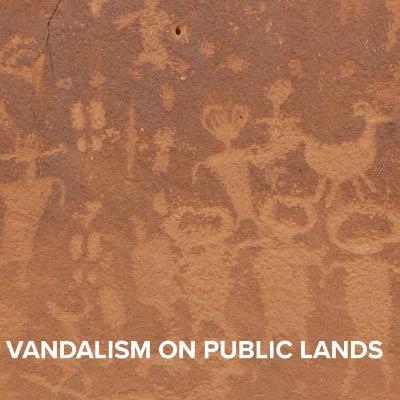
There are more visitors enjoying the archaeological sites in Utah. Unfortunately some of those resources have been vandalized leaving land managers with an important message to get out. Enjoy the sites but leave no trace.This weekend on the program we will visit a site in Moab, to highlight the issue and talk about the irreparable harm done when someone touches a rock art panel. We will sit down with Redge Johnson, Executive Director of Utah's Public Lands Office and Nate Thomas, the State Archaeologist for the BLM to talk about what State and Federal Agencies are doing to combat the issue.
There is a check for every power in the U.S. Federal Government but are those same checks in place in state government. Chad Booth discusses the history of state senators in Utah, what changed in the 80's and the unintended consequences we face today with our guest Jon Stearmer, Uintah County Attorney.Highlights:00:20 Historical Background U.S. Supreme Court Reynolds vs. Sims 196406:38 Checks on power / state senators based on population rather than regionally17:22 What happens next with this conversation?
The Utah Legislature recently created the Colorado River Authority to help the state coordinate with other Colorado River Basin States to navigate the resource for its best use in the thirsty west.Gene Shawcroft, Utah's Colorado River Commissioner, joins the program to discuss the new commission and what it means for water in Utah.Highlights:00:45 Intro, Water in the west and the Colorado River Compact 192205:53 Colorado River Authority12:40 Colorado River and the Wasatch Front15:25 Lake Powell Pipeline17:29 Drought declarations and what do we do?

"Energy is useless power is valuable and the way we transmit power comes through mining." Thom Carter - Energy Advisor to the Governor, Executive Director Governor's Office of Energy Development.How often do you flip the switch to turn something on and it doesn't turn on? It's something we take for granted in our busy lives. We sit down with Thom Carter, the energy advisor to Governor Cox, to talk about Utah's all of the above energy policy. When there are no limitations to what we consider all the options are available. We will go through the list of energy sources available across Utah and talk about the goal of creating durable, reliable, and affordable power for the state.
Who does the mayor report to the County Executive?Are cities a subdivision of a county? How do executive and legislative roles differ in a county vs a municipality?We asked three county officials who have also been involved in city government. The roles are different and we will discuss why that is important to maintaining a checks and balance of power at the local level.
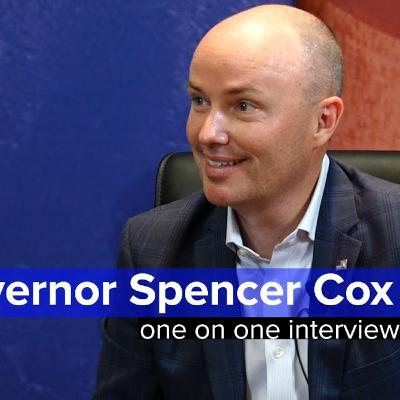
What are the state's priorities on important national issues that ultimately impact the county. Monuments are one of those big issues that will have an impact on counties in Utah. Governor Cox is realistic in his expectations but hopeful that a solution can be found through congress. We spent the half hour talking through some of these issues and how the Cox Administration plans to handle public lands, infrastructure and energy.Highlights:00:00 First 100 days and COVID Vaccinations04:06 Growth and Infrastructure08:09 Timber infrastructure and catastrophic fire10:55 Monuments in Utah and the Governor's meeting with Secretary Haaland on Bear's Ears14:55 Colorado River Water Renegotiation21:15 What has surprised you
* SUBSCRIBE to The County Seat: https://www.youtube.com/thecountyseattv?subconfirmation=1* Watch the latest from The County Seat: https://www.youtube.com/user/thecountyseattvFOLLOW THE COUNTY SEAT:Facebook: https://www.facebook.com/TheCountySeatTVYouTube Channel: https://www.youtube.com/user/thecountyseattvTwitter: https://twitter.com/seattvVISIT OUR SITE: http://thecountyseat.tvProduced by Derek DowsettHost Chad BoothTechnical Director: Brian Schuster
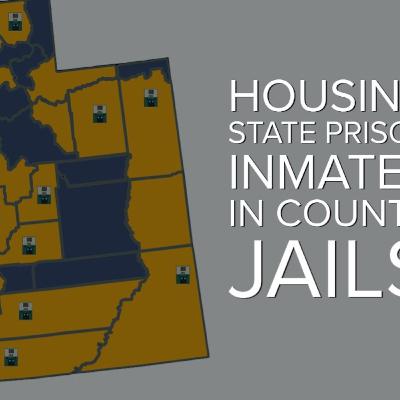
The state department of corrections in Utah has established a unique relationship with county jails to house state inmates in their facilities. This is commonly referred to as contracting. Contracting with counties allows the state to control the prison inmate population by housing some inmates in county facilities. This helps the state save money because they reimburse the counties for those beds at 70% the daily rate of incarceration in the prison. Counties benefit because they are able to build larger facilities and create jobs in the community.The issue for the past decade and beyond has been that the legislature made the agreement with the counties to reimburse at a rate of 70% of the daily incarceration rate with the caveat, subject to appropriations. As a result counties have not been reimbursed at the agreed upon 70% but something else. This has created a fight year after year between the state and counties to try to get the appropriate funding so counties aren't subsidizing state inmates. There were some promising developments during the 2021 legislative session that may lead to a solution. Watch to find out the background, challenges, and latest developments in funding for jail contracting.Guests:Leland Pollock - Garfield County CommissionerTracy Glover- Kane County SheriffDerrin Owens- Utah State Senate District 24Highlights:00:00 Introduction to Contracting and Condition of Probation04:58 Programming in county jails06:35 What happened with Jail Contracting during the 2021 legislature14:54 County jails as a "shock absorber" for Utah's prison system
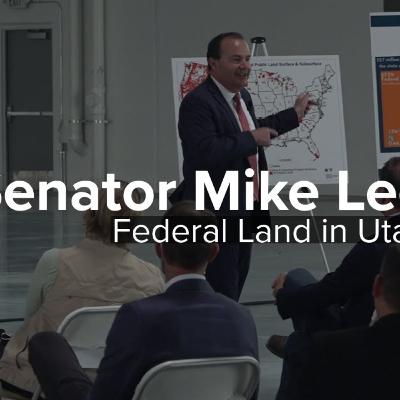
The impact of federal lands on counties wouldn't stand out as one of the major issues facing counties. However, federal lands in the west have a disproportionate impact when compared to counties east of Colorado. These topics aren't fully understood by US Senators or Representatives who don't come from a "public lands" state.We visited with Senator Mike Lee US Senator for Utah to discuss legislation, administrative changes, and some of the history behind public lands in Utah.00:00 More PILT ACT Legislation that would instruct the Department of Interior to assess the value of federal land to see if the payments in lieu of taxes truly make up for the loss of property on county tax roles.06:44 Administrative changes to Department of Interior07:36 30 by 30 - A plan to protect 30% of US Lands and Oceans13:18 Moratorium on oil and gas leasing on federal lands17:25 History of public lands in Utah
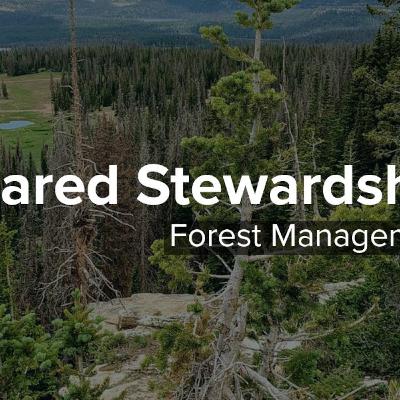
Wildfires in Utah and the West have been top of mind for years with 2020 being a record year for human caused fires. The problem being there is a lot of fuel in the forests. Mitigation seems to be the best practice to avoiding catastrophic wildfire. We will discuss how tackling larger projects among multiple agencies has become a more efficient use of resources as the scope of projects is expanded.Guests: Scott Dalton, Piute County Commissioner Mary Farnsworth, Regional Forester, Intermountain Region USFS Brian Cottam, Director, Utah Division of Forestry, Fire & State Lands | Utah State Forester

There is a lot to learn about running for public office. We discuss the challenges that women may face when running for office and the resources available to help them run a successful campaign. Guests: Malia Stringham, This week's guest host Tammy Pearson, Beaver County Commissioner Gina Worthen, Cache County Council Chair Shelley Brennan, Duchesne County Commissioner Nicole Carpenter, Women's Leadership InstituteCommunities don't operate in a vacuum. There are all sorts of people in the community and it is really up to all of those people to make the community strong. Those roles range from the people who run for office to the people who vote for them being engaged. Strong leaders and engaged communities should be the goal.Get involved:https://wliut.com/political-development-for-women/
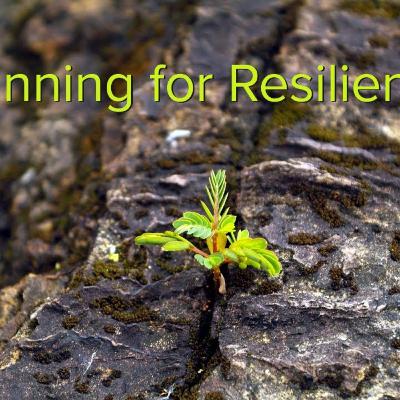
Everyone needs a place to be from and a place to come home to. We discuss how communities can and should plan for resiliency and how that really is a different discussion for every community. There are immediate threats to a community from natural disasters and how to plan for those. As well as more gradual changes that can impact a local economy and societal changes.Guests:Norm Beagley, Santaquin City | Assistant City ManagerKari Malkovich, City of Woodland Hills | CouncilmemberTed Mickelsen, Jones and DeMille Engineering | Regional Director
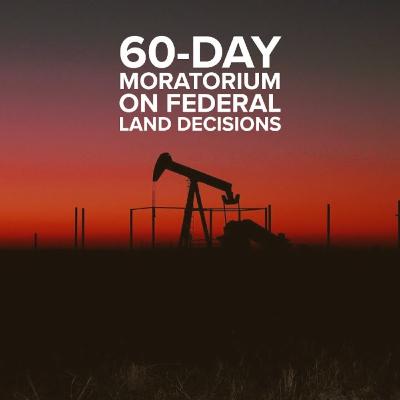
We look at the 60-day moratorium on local decision making on federal lands and discuss how the order impacts oil, gas and mining in the state.Our panel discussion brings local leaders to the table to elaborate on how these policies could cause negative impacts to local economies that rely on natural resources on federal lands.Guests: • Bart Haslem | Uintah County Commissioner • Brian Somers | President Utah Mining Association • Kent Connelly | Coalition of Local Governments - S.W. Wyoming • Rikki Hrenko-Browning | President, Utah Petroleum Association • Tammy Pearson | Beaver County Commissioner

Comments

Download from Google Play

Download from App Store
 United States