


 Claim Ownership
Poetry For All
Subscribed: 186Played: 2,144
Subscribe

© 2026 Poetry For All
Description
This podcast is for those who already love poetry and for those who know very little about it. In this podcast, we read a poem, discuss it, see what makes it tick, learn how it works, grow from it, and then read it one more time.
Introducing our brand new Poetry For All website: https://poetryforallpod.com! Please visit the new website to learn more about our guests, search for thematic episodes (ranging from Black History Month to the season of autumn), and subscribe to our newsletter.
Introducing our brand new Poetry For All website: https://poetryforallpod.com! Please visit the new website to learn more about our guests, search for thematic episodes (ranging from Black History Month to the season of autumn), and subscribe to our newsletter.
110 Episodes
Reverse

This episode begins a three-part series on the "aubade," a poem to greet the morning (often by wishing the morning away). We discuss Donne's many wonderful techniques and even recite a little Romeo and Juliet.
Here is the poem:
The Sun Rising
By John Donne
Busy old fool, unruly sun,
Why dost thou thus,
Through windows, and through curtains call on us?
Must to thy motions lovers' seasons run?
Saucy pedantic wretch, go chide
Late school boys and sour prentices,
Go tell court huntsmen that the king will ride,
Call country ants to harvest offices,
Love, all alike, no season knows nor clime,
Nor hours, days, months, which are the rags of time.
Thy beams, so reverend and strong
Why shouldst thou think?
I could eclipse and cloud them with a wink,
But that I would not lose her sight so long;
If her eyes have not blinded thine,
Look, and tomorrow late, tell me,
Whether both th' Indias of spice and mine
Be where thou leftst them, or lie here with me.
Ask for those kings whom thou saw'st yesterday,
And thou shalt hear, All here in one bed lay.
She's all states, and all princes, I,
Nothing else is.
Princes do but play us; compared to this,
All honor's mimic, all wealth alchemy.
Thou, sun, art half as happy as we,
In that the world's contracted thus.
Thine age asks ease, and since thy duties be
To warm the world, that's done in warming us.
Shine here to us, and thou art everywhere;
This bed thy center is, these walls, thy sphere.
https://www.poetryfoundation.org/poems/44129/the-sun-rising
For more on Donne:
https://www.poetryfoundation.org/poets/john-donne
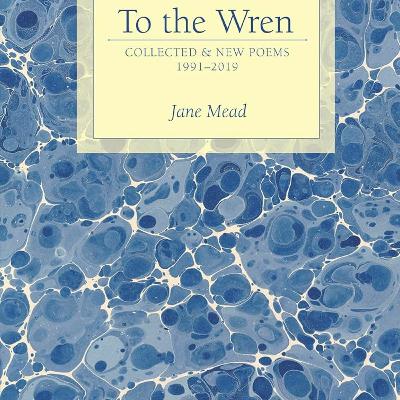
This poem offers a humble love of the world and a leave-taking of it. It was found in the papers of Jane Mead (1958-2019), which were left to her great friend Kathleen Finneran (1957-2026), and it was published in the New Yorker in 2021 through Kathleen's efforts. The poem was read at the memorial for Mead in 2021 and then again at the funeral for Finneran in 2026.
Here is the poem:
I Wonder If I Will Miss the Moss
—Jane Mead (1958-2019)
I wonder if I will miss the moss
after I fly off as much as I miss it now
just thinking about leaving.
There were stones of many colors.
There were sticks holding both
lichen and moss.
There were red gates with old
hand-forged hardware.
There were fields of dry grass
smelling of first rain
then of new mud. There was mud,
and there was the walking,
all the beautiful walking,
and it alone filled me—
the smells, the scratchy grass heads.
All the sleeping under bushes,
once waking to vultures above, peering down
with their bent heads the way they do,
caricatures of interest and curiosity.
Once too a lizard.
Once too a kangaroo rat.
Once too a rat.
They did not say I belonged to them,
but I did.
Whenever the experiment on and of
my life begins to draw to a close
I’ll go back to the place that held me
and be held. It’s O.K. I think
I did what I could. I think
I sang some, I think I held my hand out.
For The New Yorker, see here.
For a reflection on the poem by the poet Devin Kelly, see Kelly's Substack Ordinary Plots.
For more on Jane Mead, see The Poetry Foundation.
For the memorial service and the tribute by Kathleen Finneran, see Mead's personal webpage.
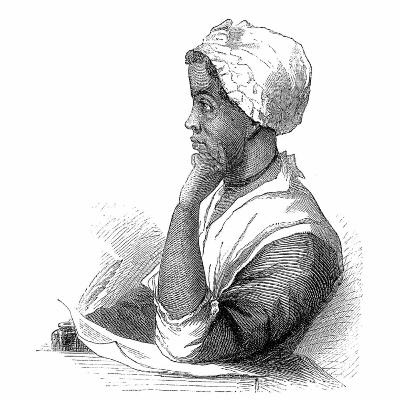
Today, joined by Professor Kirsten Lee, we read a poem about freedom written on the eve of the American Revolution by Phillis Wheatley, the first African American to publish a book of poetry. In praise to the new British Secretary of State, she guides him how to rule while tying an American love of Freedom to her own personal experience of enslavement.
To the Right Honorable William, Earl of Dartmouth
By Phillis Wheatley
Hail, happy day, when, smiling like the morn,
Fair Freedom rose New-England to adorn:
The northern clime beneath her genial ray,
Dartmouth, congratulates thy blissful sway:
Elate with hope her race no longer mourns,
Each soul expands, each grateful bosom burns,
While in thine hand with pleasure we behold
The silken reins, and Freedom's charms unfold.
Long lost to realms beneath the northern skies
She shines supreme, while hated faction dies:
Soon as appear'd the Goddess long desir'd,
Sick at the view, she languish'd and expir'd;
Thus from the splendors of the morning light
The owl in sadness seeks the caves of night.
No more, America, in mournful strain
Of wrongs, and grievance unredress'd complain,
No longer shalt thou dread the iron chain,
Which wanton Tyranny with lawless hand
Had made, and with it meant t' enslave the land.
Should you, my lord, while you peruse my song,
Wonder from whence my love of Freedom sprung,
Whence flow these wishes for the common good,
By feeling hearts alone best understood,
I, young in life, by seeming cruel fate
Was snatch'd from Afric's fancy'd happy seat:
What pangs excruciating must molest,
What sorrows labour in my parent's breast?
Steel'd was that soul and by no misery mov'd
That from a father seiz'd his babe belov'd:
Such, such my case. And can I then but pray
Others may never feel tyrannic sway?
For favours past, great Sir, our thanks are due,
And thee we ask thy favours to renew,
Since in thy pow'r, as in thy will before,
To sooth the griefs, which thou did'st once deplore.
May heav'nly grace the sacred sanction give
To all thy works, and thou for ever live
Not only on the wings of fleeting Fame,
Though praise immortal crowns the patriot's name,
But to conduct to heav'ns refulgent fane,
May fiery coursers sweep th' ethereal plain,
And bear thee upwards to that blest abode,
Where, like the prophet, thou shalt find thy God.
For more on Wheatley, see https://www.poetryfoundation.org/poets/phillis-wheatley
For more on Professor Kirsten Lee, see her website: https://cla.auburn.edu/directory/kirsten-lee/

This episode brings together a collage of images to explore the meaning of time, the emergence of events from one to another, and the wonder of the unknown.
For the full text of the poem, see here:
https://mail.readwildness.com/25/zwart-rusting
For more on the poet Jane Zwart, see her personal website:
https://www.janezwart.com/
To see her new book and purchase a copy, see "Oddest & Oldest & Saddest & Best" at Orison Books:
https://www.orisonbooks.com/product-page/oddest-oldest-saddest-best-poems-by-jane-zwart
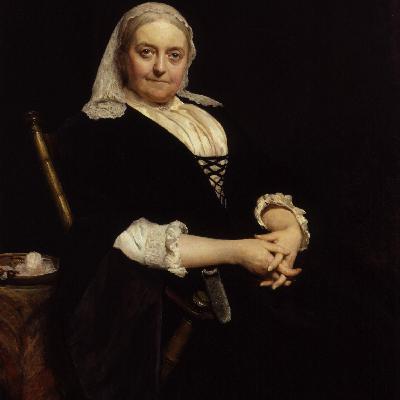
In a short, simple, well-loved poem, Dinah Maria Craik names one aspect of friendship that many have found true. A great way to start the new year and launch the season. Find a friend and listen in.
Friendship
Oh, the comfort—
the inexpressible comfort of feeling safe with a person—
having neither to weigh thoughts nor measure words,
but pouring them all right out,
just as they are,
chaff and grain together;
certain that a faithful hand will take and sift them,
keep what is worth keeping,
and then with the breath of kindness blow the rest away.
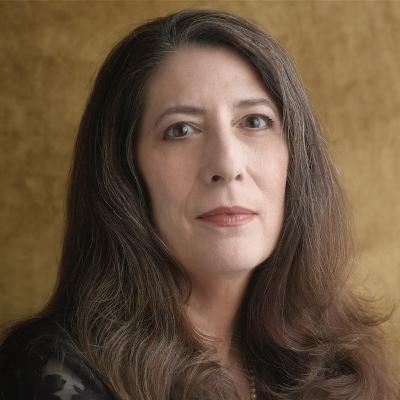
In this episode, Phillis Levin reads "An Anthology of Rain," the title poem of her newest poetry collection. She guides us through the philosophical underpinnings of her poem, how it informs the book as a whole, and how the surfaces of things can tell us so much about their substance.
Phillis Levin is the author of six poetry collections, including An Anthology of Rain. She is also the editor of The Penguin Book of the Sonnet: 500 Years of a Classic Tradition in English. Levin’s honors include a Fulbright Scholar Award to Slovenia, an Ingram Merrill Grant, the Richard Hugo Prize from Poetry Northwest, and fellowships from the Guggenheim Foundation, the National Endowment for the Arts, and the Trust of Amy Lowell.
To learn more about Phillis and her work, please visit her website. https://phillislevin.com
Photo credit: Sigrid Estrada

This episode opens "Someday I'll Love" poems through the vivid imagery of a young poet's connection with their grandmother, remembering in love as memory begins to slip.
Emerald ᏃᏈᏏ GoingSnake is an Indigenous poet from the United Keetoowah Band of Cherokee Indians and the Muscogee (Creek) Nation in Oklahoma. Winner of the 2024 Maureen Egen Writers Exchange Award for poetry and the recipient of the 2023 Indigenous Nations Poets fellowship, they live in St. Louis.
Portrait by Erin Lewis Photography
The poem was featured on Poem-a-Day and can be found at the Academy of American Poets.
See here for the poem online.
Someday I’ll Love—
Emerald ᏃᏈᏏ GoingSnake
—after Frank O’Hara
like I dreamt of the lamb—slaughtered,
forgotten,
lying on porcelain tile, on crimson-filled grout—
and woke up thinking of my grandmother,
of her Betty Boop hands that held
marbled stone, held dough-balled flour,
held the first strands of my hair floating atop the river—
like winter apples, the ones that hang outside
my living room window and survive first snowfall
to feed the neighborhood crows,
how they fall
beneath my boots, staining my rubber
soles with epigraphs of rot, epigraphs
of fors, of dears, of holding on till frost’s end.
Someday I will see long-forgotten fingerprints
on the inside of my eyelids as I go to sleep,
as I close my eyes for silence on a Wednesday,
mourning—seeking—creases and smile lines,
porch lights and swing sets,
summer nights of lightning bugs and Johnny Cash.
I think it will be a Tuesday, or maybe someday
is yesterday, is two months from now, is going
to be a day when I forget what I’m supposed
to be remembering.
For now, I will paint my nails cradle, adorn
my skin in cloth that doesn’t choke,
tell my bones that they are each
a lamb
remembered.
Copyright © 2024 by Emerald ᏃᏈᏏ GoingSnake. Originally published in Poem-a-Day on November 7, 2024, by the Academy of American Poets. Used by permission.
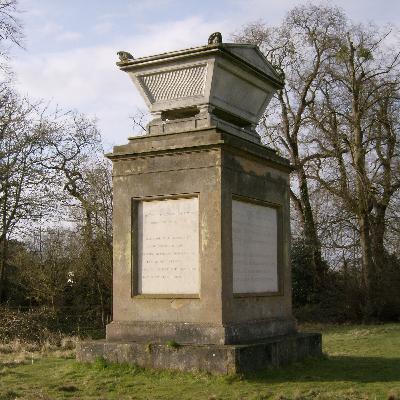
This episode takes us to a graveyard for Halloween and explores one of the most canonical poems in the English language, poised between two huge eras of poetry as it meditates on how "the paths of glory lead but to the grave."
The whole poem can be found below.
The image is of Thomas Gray's monument in Stoke Poges, inscribed with his elegy. Photo by UKgeofan at English Wikipedia, CC BY-SA 3.0, https://commons.wikimedia.org/w/index.php?curid=10552507
For more on Thomas Gray, see The Poetry Foundation.
Elegy Written in a Country Churchyard
By Thomas Gray
The curfew tolls the knell of parting day,
The lowing herd wind slowly o'er the lea,
The plowman homeward plods his weary way,
And leaves the world to darkness and to me.
Now fades the glimm'ring landscape on the sight,
And all the air a solemn stillness holds,
Save where the beetle wheels his droning flight,
And drowsy tinklings lull the distant folds;
Save that from yonder ivy-mantled tow'r
The moping owl does to the moon complain
Of such, as wand'ring near her secret bow'r,
Molest her ancient solitary reign.
Beneath those rugged elms, that yew-tree's shade,
Where heaves the turf in many a mould'ring heap,
Each in his narrow cell for ever laid,
The rude forefathers of the hamlet sleep.
The breezy call of incense-breathing Morn,
The swallow twitt'ring from the straw-built shed,
The cock's shrill clarion, or the echoing horn,
No more shall rouse them from their lowly bed.
For them no more the blazing hearth shall burn,
Or busy housewife ply her evening care:
No children run to lisp their sire's return,
Or climb his knees the envied kiss to share.
Oft did the harvest to their sickle yield,
Their furrow oft the stubborn glebe has broke;
How jocund did they drive their team afield!
How bow'd the woods beneath their sturdy stroke!
Let not Ambition mock their useful toil,
Their homely joys, and destiny obscure;
Nor Grandeur hear with a disdainful smile
The short and simple annals of the poor.
The boast of heraldry, the pomp of pow'r,
And all that beauty, all that wealth e'er gave,
Awaits alike th' inevitable hour.
The paths of glory lead but to the grave.
Nor you, ye proud, impute to these the fault,
If Mem'ry o'er their tomb no trophies raise,
Where thro' the long-drawn aisle and fretted vault
The pealing anthem swells the note of praise.
Can storied urn or animated bust
Back to its mansion call the fleeting breath?
Can Honour's voice provoke the silent dust,
Or Flatt'ry soothe the dull cold ear of Death?
Perhaps in this neglected spot is laid
Some heart once pregnant with celestial fire;
Hands, that the rod of empire might have sway'd,
Or wak'd to ecstasy the living lyre.
But Knowledge to their eyes her ample page
Rich with the spoils of time did ne'er unroll;
Chill Penury repress'd their noble rage,
And froze the genial current of the soul.
Full many a gem of purest ray serene,
The dark unfathom'd caves of ocean bear:
Full many a flow'r is born to blush unseen,
And waste its sweetness on the desert air.
Some village-Hampden, that with dauntless breast
The little tyrant of his fields withstood;
Some mute inglorious Milton here may rest,
Some Cromwell guiltless of his country's blood.
Th' applause of list'ning senates to command,
The threats of pain and ruin to despise,
To scatter plenty o'er a smiling land,
And read their hist'ry in a nation's eyes,
Their lot forbade: nor circumscrib'd alone
Their growing virtues, but their crimes confin'd;
Forbade to wade through slaughter to a throne,
And shut the gates of mercy on mankind,
The struggling pangs of conscious truth to hide,
To quench the blushes of ingenuous shame,
Or heap the shrine of Luxury and Pride
With incense kindled at the Muse's flame.
Far from the madding crowd's ignoble strife,
Their sober wishes never learn'd to stray;
Along the cool sequester'd vale of life
They kept the noiseless tenor of their way.
Yet ev'n these bones from insult to protect,
Some frail memorial still erected nigh,
With uncouth rhymes and shapeless sculpture deck'd,
Implores the passing tribute of a sigh.
Their name, their years, spelt by th' unletter'd muse,
The place of fame and elegy supply:
And many a holy text around she strews,
That teach the rustic moralist to die.
For who to dumb Forgetfulness a prey,
This pleasing anxious being e'er resign'd,
Left the warm precincts of the cheerful day,
Nor cast one longing, ling'ring look behind?
On some fond breast the parting soul relies,
Some pious drops the closing eye requires;
Ev'n from the tomb the voice of Nature cries,
Ev'n in our ashes live their wonted fires.
For thee, who mindful of th' unhonour'd Dead
Dost in these lines their artless tale relate;
If chance, by lonely contemplation led,
Some kindred spirit shall inquire thy fate,
Haply some hoary-headed swain may say,
"Oft have we seen him at the peep of dawn
Brushing with hasty steps the dews away
To meet the sun upon the upland lawn.
"There at the foot of yonder nodding beech
That wreathes its old fantastic roots so high,
His listless length at noontide would he stretch,
And pore upon the brook that babbles by.
"Hard by yon wood, now smiling as in scorn,
Mutt'ring his wayward fancies he would rove,
Now drooping, woeful wan, like one forlorn,
Or craz'd with care, or cross'd in hopeless love.
"One morn I miss'd him on the custom'd hill,
Along the heath and near his fav'rite tree;
Another came; nor yet beside the rill,
Nor up the lawn, nor at the wood was he;
"The next with dirges due in sad array
Slow thro' the church-way path we saw him borne.
Approach and read (for thou canst read) the lay,
Grav'd on the stone beneath yon aged thorn."
THE EPITAPH
Here rests his head upon the lap of Earth
A youth to Fortune and to Fame unknown.
Fair Science frown'd not on his humble birth,
And Melancholy mark'd him for her own.
Large was his bounty, and his soul sincere,
Heav'n did a recompense as largely send:
He gave to Mis'ry all he had, a tear,
He gain'd from Heav'n ('twas all he wish'd) a friend.
No farther seek his merits to disclose,
Or draw his frailties from their dread abode,
(There they alike in trembling hope repose)
The bosom of his Father and his God.

In this third episode in our series on the pantoum, we read and discuss Oliver de la Paz's "Pantoum Beginning and Ending with Thorns," a poem that draws its inspiration from a visual art object as well as the story of migration that shapes the poetic speaker's lived experience.
To learn more about Oliver de la Paz, visit his website.
If you love this poem as much as we do, please purchase a copy of The Diaspora Sonnets (Liveright Publishing Corporation, 2023), which was long-listed for the 2023 National Book Award in Poetry and a finalist for the 2024 Paterson Poetry Prize. Thanks to Liveright and W. W. Norton for granting us permission to read this poem.

In this episode, we continue our three-part series on the pantoum, this time focusing on Arthur Sze's "Papyrus Pantoum." We consider the poem's collage-like qualities, Sze's ability to juxtapose abundance and scarcity, and the way he attends to both beauty and danger in the natural world.
Arthur Sze is the 25th Poet Laureate of the United States. To learn more about Arthur Sze and his amazing work, click here.
Thanks to Copper Canyon Press for granting us permission to read this poem. You can find "Papyrus Pantoum" in Into the Hush (Copper Canyon Press, 2025).

This episode begins a three-part series on the pantoum and looks at how the repetitions work especially well for a poem that dwells incessantly in memories of the past, trying to recover, trying to move forward.
For the text of the poem, see The Poetry Foundation:
https://www.poetryfoundation.org/poems/58080/pantoum-of-the-great-depression
For more on Donald Justice, see The Poetry Foundation:
https://www.poetryfoundation.org/poets/donald-justice
Copyright Credit: Donald Justice, "Pantoum of the Great Depression" from Collected Poems. Copyright © 2004 by Donald Justice. Read on our podcast by permission of Alfred A. Knopf, Inc.

Today we look at a sonnet by Gerard Manley Hopkins that dwells equally in the grandeur of God and the wreck made of earth. Hopkins wonders how these two aspects of our world could possibly relate, and he holds out hope for the dearest freshness deep down things.
God's Grandeur
By Gerard Manley Hopkins
The world is charged with the grandeur of God.
It will flame out, like shining from shook foil;
It gathers to a greatness, like the ooze of oil
Crushed. Why do men then now not reck his rod?
Generations have trod, have trod, have trod;
And all is seared with trade; bleared, smeared with toil;
And wears man's smudge and shares man's smell: the soil
Is bare now, nor can foot feel, being shod.
And for all this, nature is never spent;
There lives the dearest freshness deep down things;
And though the last lights off the black West went
Oh, morning, at the brown brink eastward, springs —
Because the Holy Ghost over the bent
World broods with warm breast and with ah! bright wings.
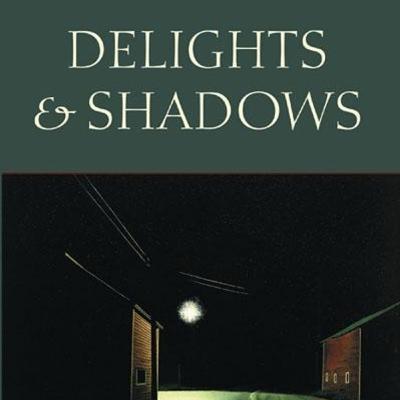
It's back to school time, and we're back at Poetry For All, heavy with hope for another season. Today we look at a poem unified by an extended metaphor describing a student who makes his heroic way to the library. Short and simple--and so much to love.
This poem comes from Ted Kooser's Pulitzer-Prize winning book, Delights and Shadows, published by Copper Canyon Press in 2004. Thank you to Copper Canyon Press for permission to read the poem for this episode.
For the text of the poem, see here: https://www.versedaily.org/student.shtml
For Ted Kooser's personal webpage, see here: https://www.tedkooser.net/
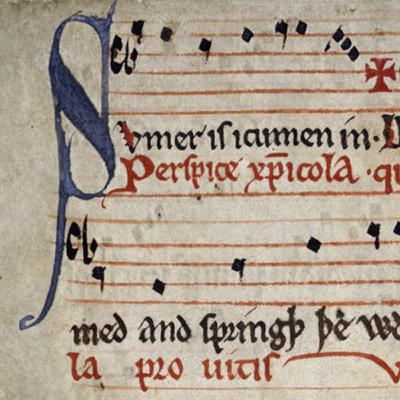
In this episode, we offer a close reading of "Sumer is icumen in," a Middle English song that anticipates the abundant joys of summer.
Thanks to the Pias Group for granting us permission to share the Hilliard Ensemble's rendition of this song. You can find the manuscript that includes the lyrics and music at the British Library.
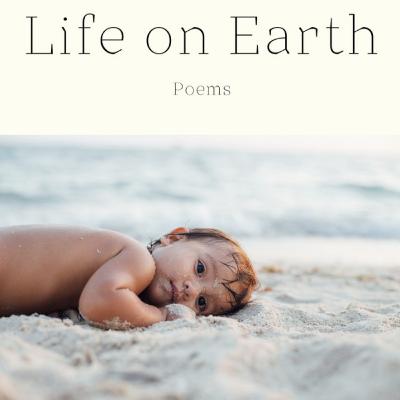
In this episode, we read and discuss "Singer," a narrative poem that celebrates the poetic speaker's mother in all of her complexity.
Dorianne Laux is the author of numerous books of poetry, including Life on Earth, which was a finalist for the National Book Award, and Only As the Day is Long: New and Selected Poems which was a finalist for the Pulitzer Prize. She is also the author of a new craft book titled Finger Exercises for Poets.
“Singer” appears in LIFE ON EARTH by Dorianne Laux. Copyright © 2024 by Dorianne Laux. Used by permission of W. W. Norton & Company, Inc.
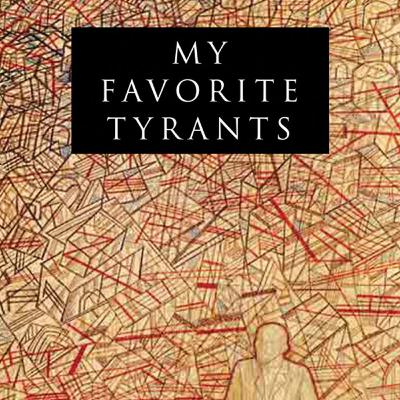
In this episode, Katy Didden and Abram Van Engen discuss the extraordinary leaps, narrative disjunctions, and temporal frames that fill Diaz's extraordinary ekphrastic poem, a reflection on Bruegel's painting, "Landscape with the Fall of Icarus" written in conversation with W.H. Auden's poem "Musée des Beaux Arts."
"Two Emergencies," appears in My Favorite Tyrants (University of Wisconsin Press 2014), winner of the 2014 Brittingham Prize in Poetry.
For more poetry of Joanne Diaz, see also The Lessons (Silverfish Review Press 2011), winner of the Gerald Cable Book Award.
For W.H. Auden's "Musee des Beaux Artes" see The Poetry Foundation
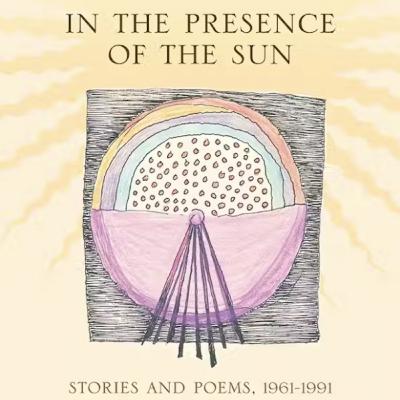
This episode explores the incantation and mystic union of Momaday's famous delight poem, ending with a recorded recitation in his own rich voice. We explain anaphora and explore its power, and we trace the links and connections from one thought to the next throughout the poem.
Special thanks to Universty of California Television (UCTV) for permission to share the audio of Momaday's reading. For the interview with Momaday from which this reading has been pulled, see "A Conversation with N. Scott Momaday -- Writer's Symposium by the Sea 2023" on Youtube. "The Delight Song of Tsoai-talee" appears in In the Presence of the Sun by N. Scott Momaday. Copyright © 2009 University of New Mexico Press, 2009.
For the text of the poem, see The Poetry Foundation here.
For more on Momaday, see his biography at the Poetry Foundation.
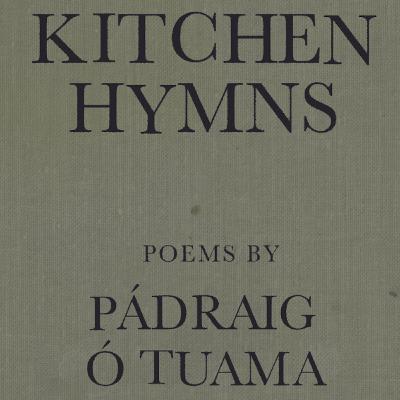
This episode was recorded on March 2, 2025 at the Phillis Wheatley Heritage Center in St. Louis., Missouri. In this conversation, Pádraig Ó Tuama reads several poems from Kitchen Hymns (Copper Canyon Press, 2024), his newest collection. We discuss subversive speech, belief and doubt, lyrical poetry, the psychology of poetic forms, and the power of ancient myths.
Pádraig Ó Tuama is a poet with interests in conflict, language and religion. He presents Poetry Unbound from On Being Studios, and has published two anthologies (2022, 2025, both with WW Norton) from that podcast. A freelance artist, one of Ó Tuama’s projects is poet in residence with the Cooperation and Conflict Resolution Center at Columbia University. He splits his time between Belfast and New York City.
To learn more about Ó Tuama, you can visit his website.

Oksana Maksymchuk joins us for a reading and discussion of "Tempo," a poem that explores the how war causes us to "whirl with / planets and stars that coil / around our fragile core."
Oksana Maksymchuk is a bilingual Ukrainian-American poet, scholar, and literary translator. Her debut English-language poetry collection Still City is the 2024 Pitt Poetry Series selection, published by University of Pittsburgh Press (US) and Carcanet Press (UK). And while Still City is Oksana’s first poem in English, she is an accomplished poet in the Ukrainian as well. She is also the co-editor of Words for War: New Poems from Ukraine, an anthology of contemporary poetry.
 1
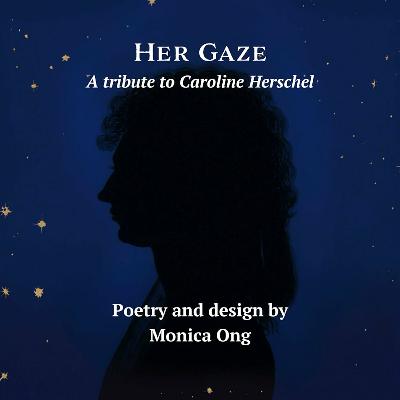
1In this episode, Monica Ong joins us to discuss "Her Gaze," a visual poem that celebrates the achievements of astronomer Caroline Herschel. "Her Gaze" appears in Planetaria, Ong's new collection that merges archival materials with striking lyric poems.
Monica Ong is the author of two books: Silent Anatomies, which was the winner of the Kore Press First Book Award in 2015; and Planetaria, which will be released in May 2025. Last year, Ong was named a United States Artists Fellow. Ong’s visual poetry has been published in many literary magazines and exhibited in galleries and museums all over the world.
To learn more about Ong's work, please visit her website.
To purchase a copy of Planetaria, visit the Proxima Vera website.

Comments

Download from Google Play

Download from App Store
 United States