


 Claim Ownership
Pennsylvania Oddities
Subscribed: 103Played: 3,956
Subscribe

© Marlin Bressi
Description
Author and "historian of the macabre" Marlin Bressi explores true crime, unsolved mysteries, haunted places, and strange history from around the Keystone State. Based on the Pennsylvania Oddities blog and book series by Sunbury Press. New episodes on the 1st and 15th of every month (Note: There will be no new episodes in August; new episodes will return September 1).
Be sure to visit the Pennsylvania Oddities blog for hundreds of astonishing true stories from every corner of the spookiest state in America!
Be sure to visit the Pennsylvania Oddities blog for hundreds of astonishing true stories from every corner of the spookiest state in America!
124 Episodes
Reverse
Emanuel Schaffner was a farmer who owned a small tract of land about ten miles from Harrisburg. Middle aged and short of stature, Schaffner was neither particularly bright in intellect, nor particularly handsome in appearance. In fact, some said he was a downright repulsive and repugnant little man-- and that was before Emanuel Schaffner, who was sent to prison in 1872, earned his reputation as one of the most despicable villains Dauphin County has ever seen.
Over one thousand criminals have paid for their crimes in Pennsylvania with their lives. But one man, Lorenzo Savage, holds the distinction of being the only voodoo doctor executed by the Commonwealth.
The story seems like a tale ripped from the pages of a dime-store novel: A lovelorn nurse is brutally slain, her body found outside an abandoned mansion. In her hand detectives find an arrangement of playing cards, which they soon learn is the black magic "hand of death". But the tragic tale of Elsie Barthel is not a work of fiction. It really happened in Pittsburgh in the fall of 1923.
Every Halloween, children's thoughts turn to black cats, goblins and ghouls. For most, it is a joyful occasion, a chance to indulge in all things delightfully wicked. From magic potions to witches on broomsticks, the imagery is often lighthearted and playful because Halloween monsters are just make-believe. But tragically, in October of 1954, one little girl discovered that some monsters are real.
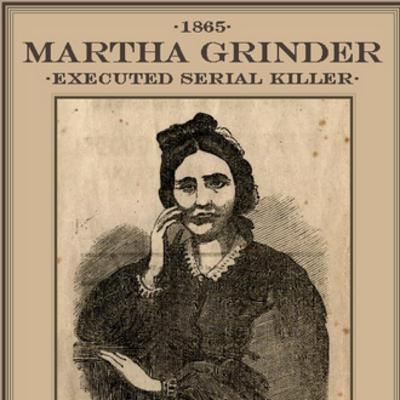
One of America's most successful serial killers was Martha Grinder, an Allegheny County woman who rose to notoriety in the years following the Civil War as "The Poisoner of Gray's Alley". What made Martha Grinder so successful in playing her deadly game, aside from the fact that she killed indiscriminately for years before getting caught, was that she appeared beyond reproach-- for Martha was adored by her neighbors and was regarded as one of the kindest-hearted women in the Pittsburgh area.
The historical record shows that 1,043 criminals are known to have been executed in Pennsylvania, beginning with the hanging of Derek Jonson in Bucks County in 1693 and ending with the lethal injection of Philadelphia serial killer Gary Michael Heidnik in 1999. Of these 1,043 persons who paid the ultimate price for their crimes, only one was a clergyman-- Cyriacus Spangenberg.
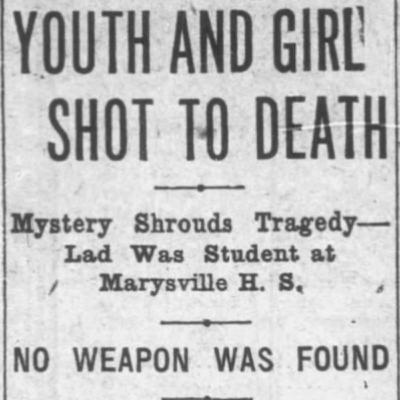
Two young lovers, killed by a single sniper's bullet. For 99 years, the Lamb's Gap Murders have perplexed law enforcement. Who killed Harry Ganster and Leah Ellenberger in May of 1924? Moonshiners? A jealous ex-lover? Or was it a murder-suicide? At various times, all of these explanations seemed to fit. The problem, however, is that none of these explanations fit perfectly.
With Guest Host Ashley Bemis. In April of 1875, the most sensational murder trial in the history of Fulton County took place. Charged with one of the most shocking crimes imaginable were Mary Mellott and her husband Daniel, a Civil War veteran who was known throughout Buck Valley as "Wolf Dan" on account of his disfigured face.
The McKean County township of Wetmore once boasted an architectural gem of a mansion with a dark and mysterious past. Rumored to the inhabited by maleficent spirits, the "Haunted House of Wetmore", as it was known to folks in Kane and surrounding towns, was erected in the early 20th century by a businessman who had something of a fire problem-- that is to say that every building he owned was destroyed by a bizarre series of fires over a period of several decades for which there was no discernible cause.
Stranger still, several family members of the man for whom the mansion was built died under strange circumstances, leading many to believe that the family of Thomas Keelor had been cursed by someone-- or something.
In the backwoods of Cumberland County live some of the kindest, gentlest souls you could imagine; decent, God-fearing folks who'd gladly give you the shirt off their own back or drive you into town if you should happen to run out of gas on a lonesome country road. But the backwoods of Cumberland County have also been the home to some of the most depraved and reprehensible folks who ever trod God's green earth. One example is John Gampher, who, in the late 19th century, pulled off one of the most diabolical stunts in the annals of
Pennsylvania crime.
In 1911, witchcraft hysteria spread across central Pennsylvania, with dozens of superstitious citizens swearing out complaints against men and women accused of being hex or "pow-wow" doctors, but one bizarre story of Schuylkill County made newspaper headlines across the commonwealth. Alleging that her father, Howell Thomas of Tumbling Run, died as the result of a hex placed upon him, Mary Isabelle Thomas went to the press with a long list of peculiar incidents which she believed would prove that her father succumbed to the effects of black magic. Mary claimed these mishaps began immediately after a black cat showed up on the Thomas farm-- a cat that assumed monstrous proportions, growing to four feet in height before magically returning to its previous form.
 1
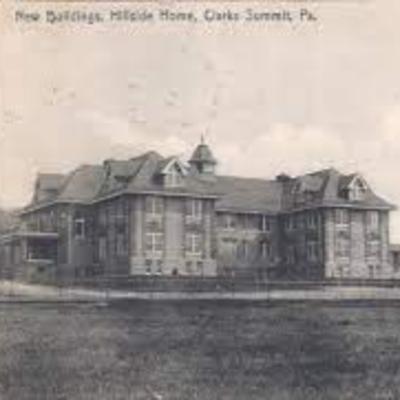
1In 1862, the residents of Providence Township in Lackawanna County decided to establish a poor farm for those who were impoverished,
handicapped, elderly, and otherwise unable to work and care for themselves. This facility, which was then known as the Hillside Home, also provided housing and treatment for the mentally ill. In 1943, the name was changed to the Clarks Summit State Hospital, which continues to operate to this day.
As with any asylum with such a long history, the Hillside Home has seen some dark moments, including several violent inmate deaths at the hands of staff members, but none so tragic as the brutal murder of two female inmates in the summer of 1906 by a deranged mute named Ignatz Krewzyk.
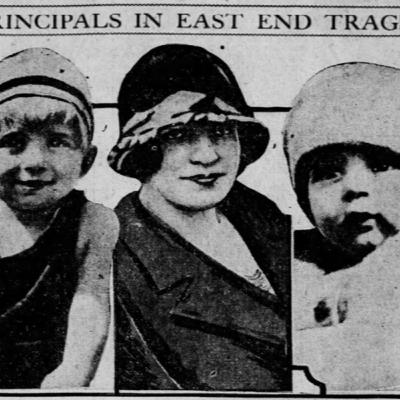
In March of 1928, William Ward and his young wife, Catherine Ward, occupied the second floor of a Pittsburgh duplex with their two children, three-year-old Billy and eight-month-old Dorothy Mae. Once, the Wards had a been a happy family with all-American dreams of white picket fences and a garage to park their car. But everything changed one cold, dreary Thursday morning in March.
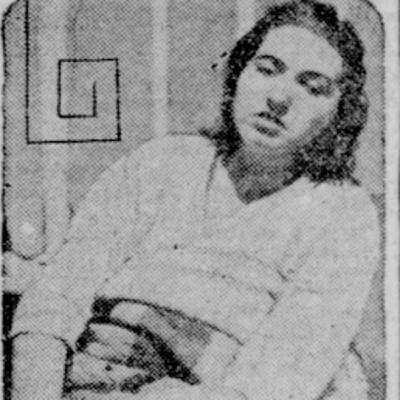
On February 14, 1928, seven-year-old Lawrence McCall went to school at the No. 5 Mine schoolhouse in Springfield Township, near the
Mercer-Lawrence county line. It was Valentine's Day and the teacher, Miss Ebba Widing, had planned a special presentation and all the parents were invited. Sadly, for the twenty pupils in attendance, this Valentine's Day would forever be remembered with horror, because on this particular day they looked on helplessly as Mrs. McCall slashed her own son's throat in full view of everyone.
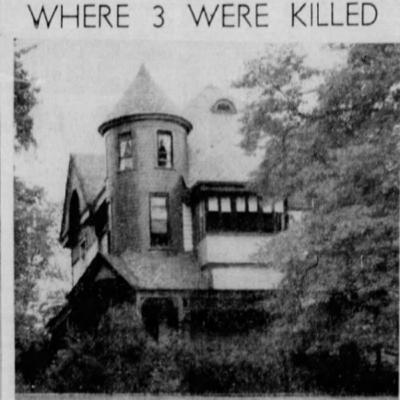
Guest hosted by Ashley Bemis. In 1936, a perplexing triple murder occurred on South Braddock Avenue in Pittsburgh. Described as the "ideal family", five-year-old Bobby, three-year-old Janice, and their mother Eleanor were found brutally slain inside their luxurious apartment on June 18 while the husband was away from home. But who would want to slaughter Eleanor Feely and her two young children? To this day, no one is quite sure who carried out this gruesome act.
Connellsville dates back to the early 19th century, but it did not become a city until 1909, when the borough of Connellsville and its neighbor across the Youghiogeny River, the borough of New Haven, were joined together. While Connellsville is famous for being the center of the coke industry in western Pennsylvania during the late 1800s, New Haven was at the center of a spectacular quadruple murder in 1893.
Near Falls Creek in Jefferson County is a region known as Beechwoods, a locality which includes some of the finest farmland in Washington Township. The area was settled in 1824 by Henry Keys, Alexander Osborn, John McIntosh, John McGhee and Thomas Moore. These early settlers, mostly of Scotch and Irish origin, named the community after the large number of beech trees they found there. It is one of these founders, Thomas Moore, who played a role in one of the most colorful chapters in the history of Jefferson County. It is a story that seems ripped right out of the pages of a novel, and features murder, suicide, a haunted farm and a buried treasure of silver and gold.
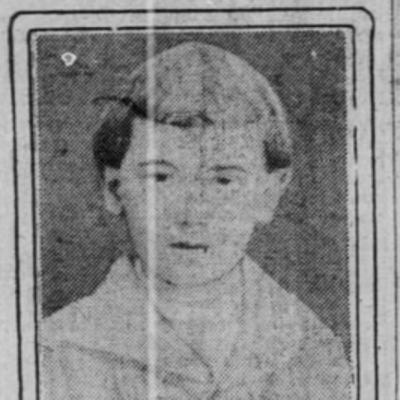
The mysterious 1914 kidnapping of seven-year-old Warren McCarrick created a media sensation and culminated in the finding of a boy's body in the Delaware River. While the boy's abductor has never been caught, it's possible that Warren might have been one of numerous child victims tortured and killed by a monstrous degenerate.
A baseball executive, a sex-crazed playboy, and a wealthy doctor all suffer strange fates courtesy of the "evil eye".
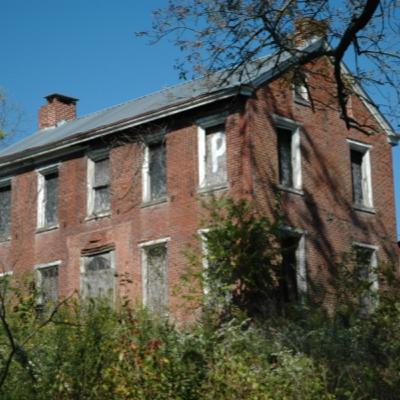
Ask any resident of Exeter Township, and they'll tell you the most famous haunted house in the area is the Lizzie Lincoln house-- an abandoned 19th century structure that beckons spook-seekers from behind a rusting fence festooned with "No Trespassing" signs. The legend of Lizzie Lincoln is so famous around Berks County that it has found a home in numerous books about Pennsylvania ghost stories. However, it turns out that the entire legend may be nothing more than a hoax perpetrated by a lawless landfill owner... with a penchant for toxic waste.
When a small child was found hungry and crying inside an abandoned automobile parked along a rural stretch of Lycoming County in the summer of 1922, the first chapter of a perplexing mystery was written. When the bodies of a man and woman, their throats slashed as if by a razor, were found a few feet away in the waters of Lycoming Creek, the mystery deepened, and to this day no one knows if Henry Shearer and his wife were victims of a double murder or a murder suicide.

Comments

Download from Google Play

Download from App Store
 United States