


 Claim Ownership
Vedge Your Best, Vegan Ideas for Everyone At Any Age
Subscribed: 5Played: 404
Subscribe

© Michele Olender
Description
There has never been a more important time to be Vegan. Vedge Your Best is the only podcast aimed at teaching midlife women how to limit and eliminate the consumption of animal products without feeling deprived, overwhelmed or unsupported, even if no one you know is Vegan. Life Coach Michele Olender will show you how living Vegan is the superpower that will unlock your possibilities and give you the confidence to take on your next impossible goal, by doing it YOUR way. Vedge YOUR Best and there’s nothing you can’t do.
290 Episodes
Reverse
What is plant-based in “real life?"This week Nancy Albertson—Michele’s long-time Virtual Assistant and behind-the-scenes right hand since the beginning—talks about her vegan practice, the health changes, and why she believes “plant-based people are hiding in their homes.” You’ll hear about everyday choices, the social hurdles, and the kind of community support that helps people stick with it.IN THIS EPISODE, WE TALK ABOUT How Nancy started in 2019 after watching Forks Over Knives (twice) and feeling “a switch” flipThe health changes that surprised her (including reduced inflammation and joint pain relief)The hardest part of plant-based living: the social side- What helped with family gatherings: bringing a vegan dish and staying steady over timeWhy Nancy thinks plant-based people exist everywhere… but often stay quiet- How community makes it easier to keep going (and feel less “weird”)Nancy’s Food Revolution Network Plant-Based Coaching Certificate experience and what it gave herTeaching plant-based cooking through local adult education classes (including Buddha bowls and baking)Common questions she hears (especially protein) and how she answers themEasy “starter steps” that don’t require perfection (beans, tofu, veggie burgers, reading labels)Her Rockport Public Library talk and what she hopes people walk away withConnect with Nancy Albertson at http://Proadminme.comRESOURCES MENTIONED Forks Over Kniveshttps://www.forksoverknives.com/Food Revolution Network Plant-Based Coaching Certificatehttps://certificate.foodrevolution.org/join/PCRM – Building Healthy Communitieshttps://www.pcrm.org/buildinghealthycommunitiesRockport Public Library event listing (Nancy’s Plant-Based Curious talk)https://www.rockportlibrary.net/event/curious-about-a-plant-based-diet/Subscribe & Review:If you enjoyed this episode, please subscribe and leave a review on your favorite podcast platform. Your feedback helps us grow and share the message of plant-based living with more listeners.For more information, to submit a question or topic, or to book a free 30 minute Coaching session visit veganatanyage.com or email info@micheleolendercoaching.com Music, Production, and Editing by Charlie Weinshank. For inquiries email: charliewe97@gmail.com Virtual Support Services: https://proadminme.com/
Does saying “I’m vegan” feel uncomfortable? Does “plant based” feel empty?This episode breaks down why that reaction is so common—and how a few behavioral science concepts can help you stay regulated in social situations, and keep moving forward without needing to be “audit-ready.”In this episode, you’ll learn:Why “vegan” can feel like an identity label with social consequences (not just a food preference)The Spotlight Effect: why your brain overestimates how much other people notice youDo-gooder derogation: why ethically motivated choices can trigger defensiveness in others (even when you’re being calm and low-key)Why “plant-based” can feel easier to say—and what you gain/lose with each termThe 3 conditions that help change actually stick (from Self-Determination Theory):Autonomy: it feels like your choiceCompetence: you feel capableRelatedness: you feel connected, not isolatedSimple “in-the-wild” scripts to use when the V word gets caught in your throatWhy consistency beats purity, especially in the early awkward phaseListener practice for the week:Try one “label-light” sentence one time, in the wild:“I don’t eat animal products.”“I’m vegan—no stress, I’ll find something.”“I’m trying to eat vegan.”“I’m keeping it plant-based today.”You’re not doing this for other people’s comfort. You’re doing it to keep yourself regulated while you learn, experiment, and build a practice that lasts.Key takeaway:That awkward, self-conscious feeling isn’t proof you’re doing it wrong. It’s a normal human response to belonging and identity—and it gets easier with practice.Subscribe & Review:If you enjoyed this episode, please subscribe and leave a review on your favorite podcast platform. Your feedback helps us grow and share the message of plant-based living with more listeners.For more information, to submit a question or topic, or to book a free 30 minute Coaching session visit veganatanyage.com or email info@micheleolendercoaching.com Music, Production, and Editing by Charlie Weinshank. For inquiries email: charliewe97@gmail.com Virtual Support Services: https://proadminme.com/
Vegan fitness coach Karina Inkster (aka Coach K) joins Michele to talk about strength training for healthy aging, vegan protein needs, and how to build a fitness routine that stays consistent in real life—especially in midlife and beyond.Karina shares her practical Health Hierarchy Pyramid for health and body composition, why so many of us get stuck in overwhelm, what “effective” strength training actually looks like, and how to stop relying on motivation or willpower to stay on track.Key Topics (Vegan Fitness + Healthy Aging)Strength training for older adults: why it becomes more important with age (muscle, bone density, long-term function)Vegan protein without hype: realistic targets, common misconceptions, and why one-size-fits-all advice failsProtein density vs calorie density: why “spinach has protein” can be technically true but not useful in practiceHow to build a workable strength training routine (including short sessions, full-body training, compound movements)Consistency when life gets busy: travel, caregiving, work demands, and keeping momentum without perfectionKarina’s background in gerontology (health and aging) and how it shaped her approach to coachingPersonal obstacles: food allergies, exercise scheduling, and training safely over timeCommunication vegan messages to non-vegan audiences: lessons from writing and refining a TEDx talkKarina’s website gets you to all her info, resources and podcast:karinainkster.comSubscribe & Review:If you enjoyed this episode, please subscribe and leave a review on your favorite podcast platform. Your feedback helps us grow and share the message of plant-based living with more listeners.For more information, to submit a question or topic, or to book a free 30 minute Coaching session visit veganatanyage.com or email info@micheleolendercoaching.com Music, Production, and Editing by Charlie Weinshank. For inquiries email: charliewe97@gmail.com Virtual Support Services: https://proadminme.com/
How you go vegan is how you do EVERYTHING.This week we talk multi-tasking vs. single-tasking—and why trying to “do it all” seems so positive, but it’s one of the sneakiest ways your plant-based momentum gets stalled. You’ll learn how to close the mental tabs, choose the next right thing, and build a practice that fits inside a real life.Because you don’t need more discipline.IN THIS EPISODE, WE COVERThe real multitasking that derails change: identity multitaskingWhy “doing vegan perfectly” creates too many open tabsWhich parts of vegan life you can multitask (and which you can’t)How single-tasking reduces decision fatigue and builds self-trustThe “Charlie effect”: why a coach (or support person) helps you cut through clutterParkinson’s Law—and how your LIFE fills up until you decideA simple 7-day single-tasking challenge to make this easier immediatelyYOUR 7-DAY LISTENER CHALLENGEPick ONE thing to single-task for the next 7 days:Single-task breakfastChoose one plant-based breakfast and repeat it all week.Single-task your restaurant sentencePick one simple line and practice it until it’s automatic.Single-task your 4pm danger zoneChoose a reliable “bridge snack” so you don’t spiral hungry.Single-task one hard contextFamily dinners, travel, work lunches—build ONE simple plan.Single-task a free consult call with a vegan coach Ask yourself:What would make this 10% easier?What open loop can I close?Subscribe & Review:If you enjoyed this episode, please subscribe and leave a review on your favorite podcast platform. Your feedback helps us grow and share the message of plant-based living with more listeners.For more information, to submit a question or topic, or to book a free 30 minute Coaching session visit veganatanyage.com or email info@micheleolendercoaching.com Music, Production, and Editing by Charlie Weinshank. For inquiries email: charliewe97@gmail.com Virtual Support Services: https://proadminme.com/
Ever hear yourself think, “Who cares?” or “What difference does it make?”—especially when the world feels heavy and the news feels relentless? In this solo episode, Michele takes on the two-word excuse that can quietly sabotage your vegan (or plant-based) intentions—and honestly, your intentions in every other part of life too.“Who cares?” Answer for yourself. This episode also makes space for “not knowing” in your plant-based journey: you don’t need perfect certainty or a lifelong declaration to make your next aligned choice.In This EpisodeWhy “Who cares?” shows up across every goal (not just food)The “Pointlessness” excuse category—and what it’s really communicatingWhy you don’t have to know your forever plan to be successfulA simple moment map to identify what’s driving the excuseFive practical tools to respond in real timeReal-life examples (restaurants, cravings, overwhelm, and the news)Key Takeaway You don’t need perfect certainty. You need the next aligned choice.Subscribe & Review:If you enjoyed this episode, please subscribe and leave a review on your favorite podcast platform. Your feedback helps us grow and share the message of plant-based living with more listeners.For more information, to submit a question or topic, or to book a free 30 minute Coaching session visit veganatanyage.com or email info@micheleolendercoaching.com Music, Production, and Editing by Charlie Weinshank. For inquiries email: charliewe97@gmail.com Virtual Support Services: https://proadminme.com/
Guest: Athena Kugblenu — comedian, author, commentator, and former Papercuts podcast regularAthena Kugblenu is a UK-based comedian and writer known for her sharp cultural commentary and her ability to use humor to explore power, media narratives, and social change. In this episode, Athena joins me for a serious AND funny conversation about how veganism is being covered in the news — and what gets lost when complex ideas are flattened into headlines.We talk about:Why declaring “veganism is over” is a lazy media story, Why the real barriers to eating more plants are poverty, time, kitchens, and access, Why the alternative to meat isn’t fake meat — it’s a completely different way of thinking about food.Along the way, Athena explains why comedy can work when arguments fail, how laughter creates shared reference points, and why humor can help people listen to ideas they might otherwise reject.In this episode, we cover:How veganism became a media narrative instead of a lived practiceWhy the press loves false binaries (“the future” vs. “over”)Veganism, capitalism, and the problem with fake meat“Ingredients households” and why cooking from scratch mattersPoverty and access as the biggest barriers to eating wellComedy as a tool for social changeWhy making people laugh helps them hear uncomfortable truthsWhy this conversation matters right nowAt a time when the news cycle thrives on outrage and oversimplification, this episode offers a steadier lens — one that rejects either/or thinking and makes space for nuance, compassion, and clarity.Notice where headlines try to “bait” you into a binary — about food, politics, identity or anything else.Listener challengeAsk yourself: What’s missing from this story? Or Who?Learn more about Athena Kugblenu at https://athenakugblenu.co.uk/Subscribe & Review:If you enjoyed this episode, please subscribe and leave a review on your favorite podcast platform. Your feedback helps us grow and share the message of plant-based living with more listeners.For more information, to submit a question or topic, or to book a free 30 minute Coaching session visit veganatanyage.com or email info@micheleolendercoaching.com Music, Production, and Editing by Charlie Weinshank. For inquiries email: charliewe97@gmail.com Virtual Support Services: https://proadminme.com/
Hey kids — it’s Michele.This episode starts with a tiny restaurant moment (lemon… table… shade) that turned into a big coaching insight. If you pride yourself on being “easy” and low-maintenance, you might also be practicing a lifelong habit of not asking for what you need.And here’s the twist: plant-based consistency in the real world isn’t mostly about food. It’s about asking. Asking questions, requesting swaps, clarifying ingredients, and tolerating a few seconds of social awkwardness without abandoning yourself.If you’ve ever eaten something “just to keep things simple”… this one’s for you.In This EpisodeThe difference between being “easy” and self-silencingWhy asking can feel like “making a scene,” even when it’s totally reasonableThe nervous-system reason you choose discomfort over disapprovalHow this shows up at restaurants, with family, at events, and while travelingA simple progression to build the “asking muscle” (without apology spirals)The Lemon Challenge: one small ask per day for 7 daysKey TakeawaysAsking isn’t being difficult. It’s self-advocacy.Not asking means saying, “No,” to yourself.If your identity is “I don’t ask for things,” veganism can feel harder than it needs to.The win isn’t a perfect meal. The win is: “I didn’t sacrifice myself.”Try This: The Lemon Challenge (7 Days)For the next week, make one small request per day—at a restaurant, with a friend, at work or home, anywhere.Rules:Keep it simple.Skip the apology spiral.The goal is making the ask, not getting a yes.If you do it, I want to hear what you asked for and what you noticed.MentionedCafé Sapori (West Palm Beach, FL) — a vegan-friendly restaurant shout-outHow you go vegan is how you do everything.See you next week.Subscribe & Review:If you enjoyed this episode, please subscribe and leave a review on your favorite podcast platform. Your feedback helps us grow and share the message of plant-based living with more listeners.For more information, to submit a question or topic, or to book a free 30 minute Coaching session visit veganatanyage.com or email info@micheleolendercoaching.com Music, Production, and Editing by Charlie Weinshank. For inquiries email: charliewe97@gmail.com Virtual Support Services: https://proadminme.com/
In this episode, Michele explores a powerful but often overlooked distinction that can make or break any meaningful change: strategy vs. tactics.Inspired by a coaching conversation with a client struggling through Veganuary, this episode unpacks why caring deeply—and even making a strong values-based decision—is often not enough to create consistent follow-through.Whether your goal is moving in a vegan or plant-based direction, improving your health, writing a book, changing your drinking, or following through on any important intention, this episode will help you identify what might be missing—and how to make change feel lighter instead of heavier.In this episode, you’ll learn:The difference between strategy (the “why” and identity-level decision) and tactics (the real-life actions that create movement)Why many smart, motivated people feel like they keep “restarting”—and why it’s not a motivation problemHow having strategy without tactics leads to exhaustion and self-blameWhy tactics without strategy often feel brittle, artificial, or short-livedHow writer Steven Pressfield’s work on “Resistance” offers a powerful parallel for vegan and lifestyle changeWhy support and accountability are tactics, not strategies—and how to tell if support is actually helpingWhat “good accountability” sounds like (and what it doesn’t)How routines, defaults, and reflection can help you stay engaged when life gets loudMentioned in this episode:The War of Art by Steven PressfieldThe concept of “Resistance” and the idea of “turning pro”Veganuary and values-based changeStrategy and tactics as transferable skills for any life transitionListener reflection:Ask yourself:Do I have a strategy without tactics?Or tactics without strategy?Where might support or reflection make this change lighter instead of heavier?Subscribe & Review:If you enjoyed this episode, please subscribe and leave a review on your favorite podcast platform. Your feedback helps us grow and share the message of plant-based living with more listeners.For more information, to submit a question or topic, or to book a free 30 minute Coaching session visit veganatanyage.com or email info@micheleolendercoaching.com Music, Production, and Editing by Charlie Weinshank. For inquiries email: charliewe97@gmail.com Virtual Support Services: https://proadminme.com/
What happens when you get sick—and you don’t eat animals?In this uncharacteristically candid solo episode, Michele shares a personal rant sparked by a winter virus, a year full of medical appointments, and the familiar (and frustrating) question many plant-based and vegan people hear when something goes wrong:“Are you sure veganism is working for you?”Drawing from her own experience all while receiving consistently excellent bloodwork and zero nutritional concern from her medical team—Michele unpacks why these comments feel so patronizing, why they persist, and why they’re often not actually about health at all.This episode is not about denying medical advice. It’s about rejecting the myth that being vegan requires asceticism, self-neglect, or irrational dogma—and offering reassurance to anyone who has felt judged, scrutinized, or quietly undermined for their choices.In this episode, we explore:Why illness or injury often becomes a “conversation starter” about protein, supplements, or animal foodsThe difference between medical advice and cultural projectionWhy none of Michele’s doctors or registered dietitians expressed concern about her nutritionWhat the phrase “as far as possible and practicable” really means in a vegan contextHow “concern” can sometimes function as a defense against self-examinationWhy being plant-based or vegan does not mean being extreme, irrational, or self-destructiveMichele also reflects on how deeply embedded cultural assumptions—what psychologist Melanie Joy calls “normal, natural, and necessary”—shape the way vegan choices are perceived, especially when health enters the conversation.A reminder worth repeating:Veganism is not a purity test.It is not martyrdom.And it is not incompatible with caring for your health.As Michele puts it: how you go vegan is how you do everything—with realism, compassion, and respect for the external realities of your life.Listener Reflection / InvitationEver had someone question your health or judgment because you’re vegan or plant-based?Not a troll. Not a stranger. Someone close.Michele would love to hear from you.And if your version of “Vedge-ing Your Best” right now isn’t perfect, ideal, or 100%—let that be okay. Subscribe & Review:If you enjoyed this episode, please subscribe and leave a review on your favorite podcast platform. Your feedback helps us grow and share the message of plant-based living with more listeners.For more information, to submit a question or topic, or to book a free 30 minute Coaching session visit veganatanyage.com or email info@micheleolendercoaching.com Music, Production, and Editing by Charlie Weinshank. For inquiries email: charliewe97@gmail.com Virtual Support Services: https://proadminme.com/
It’s January. We’re past Quitter’s Day.And if you’ve ever quietly stopped believing that change is possible—for your health, your habits, or your vegan practice—this episode is for you.In this re-introduction to Vedge Your Best, Michele shares why most New Year’s resolutions fall apart not because people are lazy or unmotivated, but because they’re using the wrong mindset for change.This episode explores the powerful shift from outcome-based thinking (“I’ll feel proud when I get there”) to a process-based mindset—and why that shift changes everything, not just when it comes to veganism, but in every area of life.Drawing on lived experience, behavioral psychology, and a very human understanding of how change actually works, Michele explains why treating veganism as a practice—rather than a pass/fail identity—creates consistency, confidence, and momentum over time.In this episode, we cover:What “Quitter’s Day” reveals about how most people approach goalsWhy big moments rarely create lasting changeThe difference between an Outcome Mindset and a Process MindsetHow perfectionism and all-or-nothing thinking sabotage progressWhy focusing on systems, habits, and practice calms your nervous systemWhat’s happening in your brain when you stop chasing resultsWhy veganism works better as a practice, not a performanceSimple ways to shift your thinking today, without overhauling your lifeIf you’ve ever:Started over… againFelt like you “should” be further alongGiven up on goals because they felt exhausting or fragileWanted to move in a more plant-based or vegan direction but felt stuckYou’re in the right place.This episode is an invitation to stop chasing perfect outcomes—and start building a process that actually supports the life you want to live.Because how you go vegan is how you do everything.Subscribe & Review:If you enjoyed this episode, please subscribe and leave a review on your favorite podcast platform. Your feedback helps us grow and share the message of plant-based living with more listeners.For more information, to submit a question or topic, or to book a free 30 minute Coaching session visit veganatanyage.com or email info@micheleolendercoaching.com Music, Production, and Editing by Charlie Weinshank. For inquiries email: charliewe97@gmail.com Virtual Support Services: https://proadminme.com/
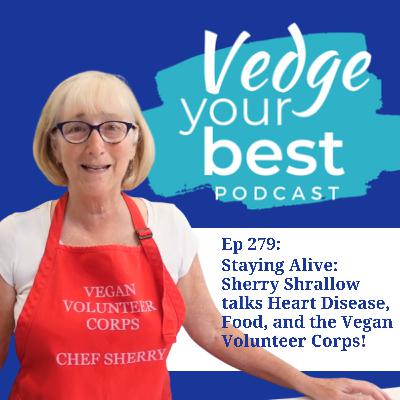
What if a life-threatening health crisis wasn’t just a tragedy — but an opportunity?In this episode of Vedge Your Best, Michele talks with Sherry Shrallow, author of Staying ALive, plant-based educator, and longtime advocate for using food as a tool for prevention, healing, and service.At 56, Sherry was an active, fit woman eating what she believed was a heart-healthy diet when she suffered a sudden heart attack while at work. What followed included emergency surgery, a complicated recovery, and a profound reckoning with what she had not been told about heart disease, lifestyle, and prevention.Sherry shares how discovering whole-food, plant-based nutrition — including the early work of Dr. Caldwell Esselstyn — changed the course of her health and her life. She also reflects honestly on depression after surgery, rebuilding strength and routine, navigating imperfection, and learning how to get back on track without shame.This conversation goes beyond food. Sherry talks about meditation, yoga, purpose, and why helping others — including through the Vegan Volunteer Corps, where she helps provide plant-based meals to people experiencing homelessness — has become a central part of her healing and happiness.If you’ve ever wondered whether change is still possible, whether it’s “too late,” or how to move forward without perfection, this episode offers clarity, realism, and hope.In this episode, we discuss:Sherry’s heart attack at age 56 and the long recovery that followedWhy heart disease often develops quietly — even in people who think they’re healthyWhat she learned (and wasn’t told) about food, lifestyle, and preventionDiscovering whole-food, plant-based eating as a powerful interventionDepression after major illness and the importance of routine and purposeWhy this wasn’t a tragedy, but an opportunityTeaching cooking classes and making plant-based food accessibleThe Vegan Volunteer Corps and using food to serve othersLetting go of perfection and learning how to get back on trackWhy it’s never too late to improve the quality of your life Sherry’s YouTube Channel — Chef Sherry’s Plant-Based KitchenSubscribe & Review:If you enjoyed this episode, please subscribe and leave a review on your favorite podcast platform. Your feedback helps us grow and share the message of plant-based living with more listeners.For more information, to submit a question or topic, or to book a free 30 minute Coaching session visit veganatanyage.com or email info@micheleolendercoaching.com Music, Production, and Editing by Charlie Weinshank. For inquiries email: charliewe97@gmail.com Virtual Support Services: https://proadminme.com/
As 2025 comes to a close, Michele reflects on the patterns, lessons, and insights that showed up again and again this year—in her own life, on the Vedge Your Best podcast, and in her work with clients.This episode isn’t about resolutions or reinvention. It’s about continuation.Drawing on behavioral science, psychology, and lived experience, Michele shares seven themes that shaped 2025 and offers a grounded, compassionate framework for carrying those lessons into 2026—especially for anyone moving in a plant-based or vegan direction and wondering why change can feel so hard even when it matters deeply.If you’ve felt discouraged, stuck, or “behind,” this episode is a reminder that you’re not starting from scratch—you’re starting from experience.In This Episode, We Explore:Why deciding once is never enough—and why remembering is the real work of changeHow information is rarely the problem, and why friction points matter more than factsWhy discomfort is not failure, but often the cost of caringThe difference between performance and practice, and why practice is what sustains long-term changeHow waiting keeps us stuck, and why engagement creates clarityWhy restarting is not starting over, and how experience becomes an assetHow the deepest changes are often subtle, invisible at first, but foundationalKey Takeaways:You don’t think your way into lasting change—you act your way into clearer thinkingAll-or-something beats all-or-nothing every timeIdentity shifts often happen before outcomes stabilizeNot changing is uncomfortable too—it’s just quieterYou’re not behind, broken, or failingYou’re starting from experienceSubscribe & Review:If you enjoyed this episode, please subscribe and leave a review on your favorite podcast platform. Your feedback helps us grow and share the message of plant-based living with more listeners.For more information, to submit a question or topic, or to book a free 30 minute Coaching session visit veganatanyage.com or email info@micheleolendercoaching.com Music, Production, and Editing by Charlie Weinshank. For inquiries email: charliewe97@gmail.com Virtual Support Services: https://proadminme.com/
Ever wake up with the best intentions — to eat plant-based, stay consistent, finish what matters — only to feel everything unravel by late afternoon?You’re not broken. You’re human.In this episode, Michele breaks down why so many good intentions collapse by the end of the day, especially when you’re trying to move in a vegan or plant-based direction. Using simple brain science, behavioral economics, and a whole lot of compassion, she explains what’s really happening when motivation fades — and why relying on willpower alone almost guarantees frustration.You’ll learn why mornings feel easy, why evenings feel impossible, and how your brain quietly shifts from long-term values to short-term relief as stress and decision fatigue build. Most importantly, you’ll hear why self-blame and shame actually make follow-through harder — not easier.This episode isn’t about trying harder. It’s about working with your brain instead of against it.In this episode, we cover:Why morning intentions come from a different part of the brain than evening decisionsHow decision fatigue drains self-regulation as the day goes onThe role of the limbic system in comfort-seeking and familiar habitsWhy knowing better doesn’t mean you’ll automatically do betterHow shame shuts down problem-solving and keeps people stuckWhy motivation is unreliable — and what works better insteadThe power of “implementation intentions” (If X happens, I’ll do Y)If you’ve ever said, “I’ll be good tomorrow,” this episode will help you understand why — and what to do differently next time.Your intentions are not weak. Your values are not unclear. You just need a plan that supports the way your brain actually works.Subscribe & Review:If you enjoyed this episode, please subscribe and leave a review on your favorite podcast platform. Your feedback helps us grow and share the message of plant-based living with more listeners.For more information, to submit a question or topic, or to book a free 30 minute Coaching session visit veganatanyage.com or email info@micheleolendercoaching.com Music, Production, and Editing by Charlie Weinshank. For inquiries email: charliewe97@gmail.com Virtual Support Services: https://proadminme.com/
If you’ve ever wondered why you don’t follow through on things you truly want — going vegan, strengthening your body, decluttering your home, writing your book, or simply showing up as the version of yourself you keep imagining — today’s episode is for you..Michele breaks down one of the most overlooked truths about personal growth:The hardest part of change isn’t doing the thing. The hardest part of change is remembering — TODAY — to DO the thing.Michele reveals why intention and action so often drift apart. Where she saw it in her own life, and why it’s not a character flaw.Inside this episode:Why your brain quietly renegotiates your plansHabit loops: why your new routines don’t feel automaticThe Doorway Effect: how walking from one room to another resets your memoryProspective memory failure: why we forget to remember, even with the best intentionsSpaced repetition: how learning — and change — need timeYou’ll learn how to work with your brain instead of against it, how to create simple cues that support the person you’re becoming, and how to release the shame around forgetting. Because forgetting isn’t failure.This week’s challenge: Choose one thing you meant to do today and create one cue you’ll see tomorrow — a note by the coffee maker, a reminder on your phone, a visible tool or ingredient — something that makes remembering easier and forgetting harder.Small cues + gentle repetition = meaningful change.Want support building the life you imagine? Coaching offers the structure, reminders, and accountability that help your brain learn new patterns. Because how you go vegan is how you do everything.Thanks for listening, and as always… Vedge Your Best.Subscribe & Review:If you enjoyed this episode, please subscribe and leave a review on your favorite podcast platform. Your feedback helps us grow and share the message of plant-based living with more listeners.For more information, to submit a question or topic, or to book a free 30 minute Coaching session visit veganatanyage.com or email info@micheleolendercoaching.com Music, Production, and Editing by Charlie Weinshank. For inquiries email: charliewe97@gmail.com Virtual Support Services: https://proadminme.com/
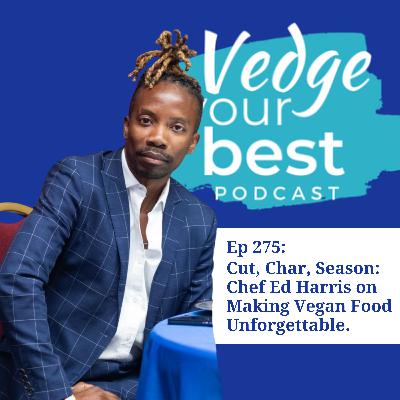
Plant‑Powered Flavor Architect — Elevating Restaurants, Kitchens & Your Next Bite Aaward-winning plant-based chef Ed Harris joins Michele to share his journey from omni-chef to global plant-based innovator. Chef Ed breaks down the art of building flavor, why cutting and charring vegetables changes everything, and how simple techniques can transform everyday vegan cooking into unforgettable meals.Chef Ed Harris’s story begins in the Caribbean and travels through kitchens in New York and around the globe. But the real turning point came at home—during a family documentary night watching What the Health. That single moment led his entire family to shift toward a vegan lifestyle, changing the trajectory of his cooking and his career.With warmth, clarity, and contagious enthusiasm, Chef Ed shares:How to Build Real Flavor in Vegan FoodWhy vegetables aren’t bland—our techniques areHow charring transforms broccoli, cauliflower, beans, and moreWhy the way you cut vegetables affects the tasteHow to layer flavor using herbs, smoke, bay leaves, and spicesThe biggest mistakes home cooks make (and how to fix them)Behind the Scenes of Chopped, Beat Bobby Flay & Iron ChefWhat a 1-hour episode actually takes to filmThe mental focus needed to cook under extreme pressureHow those experiences shaped his confidence and craftShifting to a Plant-Based LifeHow a documentary changed everything for his familyHis emotional reaction to learning about animal agricultureWhy chefs need to question the traditions they inheritedHelping Restaurants Modernize Plant-Forward MenusWhy many kitchens misunderstand vegan dinersHow he consults with hotels and restaurants to develop flavor-forward dishesThe falafel lesson every chef needs to knowWhy hospitality must improve for plant-based guestsChef Ed and his wife have created a vibrant online community where members learn plant-based cooking, explore global flavors, and share their stories. As he says, a “rich life” is about family, culture, and connection—not money.Connect with Chef Ed and Jane Harris at The Rich Life. Or on Instagram @ChefedharrisSubscribe & Review:If you enjoyed this episode, please subscribe and leave a review on your favorite podcast platform. Your feedback helps us grow and share the message of plant-based living with more listeners.For more information, to submit a question or topic, or to book a free 30 minute Coaching session visit veganatanyage.com or email info@micheleolendercoaching.com Music, Production, and Editing by Charlie Weinshank. For inquiries email: charliewe97@gmail.com Virtual Support Services: https://proadminme.com/
Your plant-based practice isn’t limited by your motivation, your recipes, or your compassion — it’s limited by its weakest link. In this episode, Michele explores the Theory of Constraints and how a single bottleneck can shape your vegan practice, your daily choices, and even your confidence.Using a classic car-factory example, Michele breaks down how systems stall when one step is overloaded — and how the same thing happens in our own lives. Whether you’re starting, restarting, or re-energizing your vegan journey, identifying the real constraint (the one you may be avoiding) can unlock ease, momentum, and clarity.Michele also shares one of her own constraints around visibility and asking listeners to share the show — modeling how naming a bottleneck creates a path forward.If you’ve been overthinking your vegan practice, trying to “fix” everything except the thing that truly needs attention, this episode will help you locate the actual sticking point and begin addressing it gently and effectively.What You’ll Learn in This EpisodeWhy your vegan practice is only as strong as its weakest linkWhat the Theory of Constraints (TOC) is, and how it applies to everyday lifeA simple, memorable manufacturing example that explains TOC in actionThe difference between optimizing what’s already working vs. addressing the real bottleneckHow micro-constraints like breakfast indecision, social discomfort, or evening exhaustion quietly limit your progressWhy perfectionism is often the real constraintHow to identify your personal bottleneck without overwhelmMichele’s own visibility constraint — and how naming it opens a path to growthWhy “how you go vegan is how you do everything” applies directly to constraint-breakingEpisode Highlights“A system is only as strong as its slowest step — and your vegan practice is no different.”“Fifty cookbooks won’t help if the real constraint is evening exhaustion.”“Knowledge isn’t the bottleneck if what you truly need is social courage.”“Perfectionism isn’t a strategy — it’s a constraint.”“You don’t need to fix everything. You only need to fix the part that’s actually stuck.”“How you go vegan is how you do everything.”Try This This WeekIdentify one bottleneck in your plant-based practice:What moment of the day creates friction?Where do you feel the most self-conscious or unsupported?Which small step are you avoiding?What emotion leads you to choose convenience over intention?Choose one constraint and gently place your attention there — not on all the other things that feel imperfect.Subscribe & Review:If you enjoyed this episode, please subscribe and leave a review on your favorite podcast platform. Your feedback helps us grow and share the message of plant-based living with more listeners.For more information, to submit a question or topic, or to book a free 30 minute Coaching session visit veganatanyage.com or email info@micheleolendercoaching.com Music, Production, and Editing by Charlie Weinshank. For inquiries email: charliewe97@gmail.com Virtual Support Services: https://proadminme.com/
It’s Thanksgiving week in the U.S.—maybe you’re driving to a family gathering, getting in a pre-pie walk, or just bracing yourself for the conversations ahead. Wherever you are, Michele invites you to pause and notice: are you a vegan voyeur? Someone who loves the idea of plant-based living, follows all the vegan doctors, and streams every documentary—but hasn’t quite stepped fully into the practice?In This EpisodeMichele unpacks the idea of the “vegan voyeur”—and why it’s not a failure but a natural stage in any behavior-change journey. Drawing on research from behavioral psychology, neuroscience, and habit science, she explains how our brains give us a little dopamine hit just for learning about change, even before we act. We all do it: reading about fitness instead of moving, watching decluttering videos instead of cleaning, or binge-listening to inspirational podcasts instead of starting that project. It’s called vicarious learning, part of the contemplation stage described by psychologist James Prochaska’s Transtheoretical Model of Change. Behavioral economists call the internal tug-of-war cognitive dissonance—the tension between comfort and growth. And as BJ Fogg reminds us, we often “celebrate the idea instead of the action.” The good news? Readiness doesn’t come before action—it’s built through it.Takeaway / ChallengeThis week—especially amid Thanksgiving travel, traditions, and turkey talk—notice where you might be a vegan voyeur, a researcher, or an eavesdropper. Then take one real-world step: make that saved recipe, order the vegan option, try a new non-leather belt, or plan a visit to an animal sanctuary. Action creates evidence, evidence builds identity, and identity sustains the habit.Learning about veganism can change your life. Living it changes the world.Subscribe & Review:If you enjoyed this episode, please subscribe and leave a review on your favorite podcast platform. Your feedback helps us grow and share the message of plant-based living with more listeners.For more information, to submit a question or topic, or to book a free 30 minute Coaching session visit veganatanyage.com or email info@micheleolendercoaching.com Music, Production, and Editing by Charlie Weinshank. For inquiries email: charliewe97@gmail.com Virtual Support Services: https://proadminme.com/
If facts were enough, everyone would already be vegan, right?We think the facts are on OUR side — but no one’s listening — what then?This week, Michele explores why information alone so often fails to change hearts or habits, and what behavioral science says to do instead. Drawing on the research of cognitive neuroscientist Gleb Tsipursky, whose EGRIP framework (Emotions, Goals, Rapport, Information, Positive Reinforcement) explains how minds actually shift, Michele shares practical tools for calmer, more compassionate conversations — especially around vegan and plant-based choices.Whether you’re navigating holiday dinners, family debates, or the classic “I could never give up steak” moment, you’ll learn the single “magic question” proven to open minds and lower defenses — and discover why curiosity always beats convincing.In this episode:Why facts backfire when they threaten identity or belongingGleb Tsipursky’s science-based EGRIP sequence for persuasionHow to use one powerful question to spark opennessWhat to say (and not say) when loved ones dismiss your choicesWhy humility and patience are your most persuasive toolsListen if you want to: …have kinder, calmer, more effective conversations about veganism, climate, or any polarizing topic — and stay connected to the people you care about most.KEY TAKEAWAYSFacts can backfire when they threaten identity, belonging, or self-image.Belonging > Being Right. People defend group identity before rational truth.Gleb Tsipursky’s EGRIP framework offers a step-by-step approach:Emotions – acknowledge feelings.Goals – find shared aims (health, family, planet).Rapport – connect before you correct.Information – share facts only once curiosity is open.Positive Reinforcement – thank and encourage openness.The magic question: “I was interested in what you’re saying. Can you tell me more about what YOU think?”Curiosity lowers threat; correction raises it.Effectiveness > Righteousness. Presenting information patiently models the values you want to share.Model the long game. Facts didn’t make most of US vegan overnight either.Subscribe & Review:If you enjoyed this episode, please subscribe and leave a review on your favorite podcast platform. Your feedback helps us grow and share the message of plant-based living with more listeners.For more information, to submit a question or topic, or to book a free 30 minute Coaching session visit veganatanyage.com or email info@micheleolendercoaching.com Music, Production, and Editing by Charlie Weinshank. For inquiries email: charliewe97@gmail.com Virtual Support Services: https://proadminme.com/
Are you waiting to “start fresh” after Halloween? After Thanksgiving? After the holidays?So many of us tell ourselves we’ll get back on track when things calm down — but what if waiting is just another diet culture trick keeping us from living the life we want right now?In this episode, Michele explores how the mindset of “I’ll start when…” has its roots in commercial diet culture — and how that logic keeps us spinning in cycles of perfectionism, guilt, and delay. Whether it’s your vegan journey, your creative work, or your personal growth, Michele shares how to break the waiting habit and start from peace, not punishment.In This Episode:Why “waiting for the right time” is often just leftover diet culture conditioningHow perfectionism disguises itself as patienceWhy change feels unmoored — and why that’s actually a good signThe difference between starting from punishment and starting from compassionSmall, practical steps you can take today to move toward your vegan or plant-based goalsListener ChallengeDon’t wait for the candy to be gone or the holidays to end.Choose one small, compassionate action today — swap a meal, read a vegan book, donate to a sanctuary, or simply decide that your imperfect start counts.Subscribe & Review:If you enjoyed this episode, please subscribe and leave a review on your favorite podcast platform. Your feedback helps us grow and share the message of plant-based living with more listeners.For more information, to submit a question or topic, or to book a free 30 minute Coaching session visit veganatanyage.com or email info@micheleolendercoaching.com Music, Production, and Editing by Charlie Weinshank. For inquiries email: charliewe97@gmail.com Virtual Support Services: https://proadminme.com/
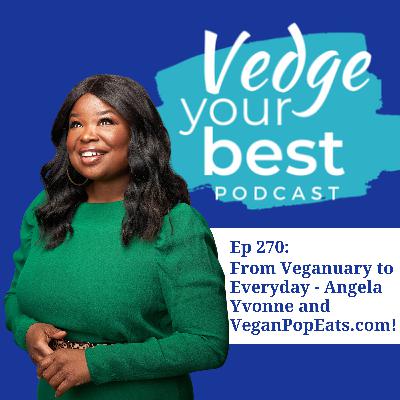
Guest: Angela Yvonne — journalist and creator of Vegan Pop EatsTheme: Turning plant-forward living into culture, not homeworkWhat you’ll hear:Angela shares how she moved from Veganuary to everyday vegan living and why she thinks veganism needs a new PR person. We unpack her simple “3 M’s” (Meatless Monday, Meatless Meals, Meatless Month), budget-savvy eating, and how your neighborhood’s “food architecture” nudges your choices. We also talk language shifts that reduce resistance (“I’m not prioritizing that right now”) and small-step leadership you can start today.HighlightsThe “3 M’s”: choose the entry point you’ll actually stick withFrom Veganuary to everyday: making a 30-day trial durableBudget wins: beans, grains, frozen veg, flavor boostersYour block vs your plate: mapping a 10-minute “greenside circuit”Language that helps: from “I can’t” to “I’m not prioritizing that right now”Why culture, conversation, and great food change perceptions faster than preaching48-Hour Listener ChallengePick one M — Meatless Monday, two Meatless Meals, or start a Meatless Month.Map your greenside circuit (within a 10-minute radius):one affordable produce stopone reliable protein staple (beans/lentils/tofu/grains)one decent veg entrée for tired nightsUse the phrase “I’m not prioritizing that right now” when old habits pop up, then choose one small swap you will prioritize.About Angela Yvonne / Vegan Pop EatsWebsite: https://veganpopeats.comYouTube: Vegan Pop Eats (subscribe and support her daily YouTube challenge)Instagram: @veganpopeats2If this conversation helped you, follow the show, leave a quick review, and forward Episode 270 to a plant-curious friend.Subscribe & Review:If you enjoyed this episode, please subscribe and leave a review on your favorite podcast platform. Your feedback helps us grow and share the message of plant-based living with more listeners.For more information, to submit a question or topic, or to book a free 30 minute Coaching session visit veganatanyage.com or email info@micheleolendercoaching.com Music, Production, and Editing by Charlie Weinshank. For inquiries email: charliewe97@gmail.com Virtual Support Services: https://proadminme.com/

Comments

Download from Google Play

Download from App Store
 United States