


 Claim Ownership
The Future City
Subscribed: 13Played: 177
Subscribe

Description
On the Future City Podcast, we learn about how our cities are changing from the people you normally wouldn't hear from. From cocktail artists to urban planners, green thumbs to financial analysts, we will share stories about how these creative thinkers and doers are shaping the city you live in.
Come learn with us about this new normal.
Come learn with us about this new normal.
51 Episodes
Reverse
Economist Donnie Maclurcan says there are ways city dwellers can be encouraged to share more readily. In this episode of The Future City Podcast we speak with Executive Director of the Post-Growth Institute Donnie Maclurcan. Donnie has spent over 15 years investigating how to re-teach people in cities to feel safe enough to share their offers and needs. Donnie says capitalism has traumatized us but that there are powerful ways many people are rebuilding a more just economic system from the ground up. Donnie speaks with us about how we are conditioned to feel like consumers rather than producers and why getting people to give to their neighbors offers an opportunity to work through some of the trauma capitalism embeds in our lived experience. Donnie Maclurcan is a facilitator, author and social entrepreneur, passionate about all things not-for-profit. He is Executive Director of the Post Growth Institute and as a consultant, has worked globally helping more than 500 not-for-profit projects start, scale and sustain their work. An Affiliate Professor of Economics, Donnie holds a Ph.D. in social science and is a Fellow of the Royal Society of the Arts. He is working on his fourth book: How on Earth: Our future is not for profit.
The Untold City with Dr. Dominique Somda Slave trade researcher Dr. Dominique Somda says monuments which honor colonisers should not be removed from our cities. They should be spectacularly subverted. In this episode of The Future City Podcast we speak with anthropologist and author Dr. Dominique Somda about why keeping slave histories a secret suppresses the evolution of our cities and their inhabitants. Somda outlines how people in cities interact based on what they know and ignore about each other and secrecy and hidden memories make city dwellers uncomfortable to engage in their shared history. Somda says digital humanity and subversion of monuments which are partially removed or marked with new interpretations can transform the glory of the coloniser to one which is more grotesque and shameful. This is how we initiate a new dialogue in the public space about our secret past. Without this, she claims, secrecy is the enemy of liberation.
What if doctors and educators prescribed nature? On today's episode of The Future City Podcast, Eyal and Louka speak with Dr Melissa Lem and not-for-profit educator and leader Jennie McCaffrey about how nature can be prescribed for health and education. Dr Melissa Lem is a Vancouver family physician. A board member of the Canadian Association of Physicians for the Environment and strategic advisor to the BC Parks Foundation, she is a passionate advocate for the health benefits of time spent in nature. She is currently a clinical faculty member at the University of British Columbia. Jennie McCaffrey is an experienced educator, facilitator, and project manager who leads environmental protection initiatives at the intersection of schools, non-profits, industry groups, and regional and federal governments. Jennie works with the British Columbia Parks Foundation's Healthy By Nature initiative, the Habitat Conservation Trust Foundation Education, and the Invasive Species Council of British Columbia.
 1
1How does our space influence us? On this episode of The Future City Podcast, we speak with property development innovator Michael McCormack. Michael is a registered building practitioner with education in law, architecture, and construction. With over ten years of experience working at several firms, including a premier property consultancy and a national luxury developer and building company, Michael now runs the B-Corporation Milieu, one of Australia's most-awarded and boundary bending firms focussed on how we can use design and architecture to influence behaviour in our buildings, spaces, and cities. Michael speaks with us about how design and architecture infused with purpose can inspire communities to form; and how firms building our cities must think about their long-term impacts.
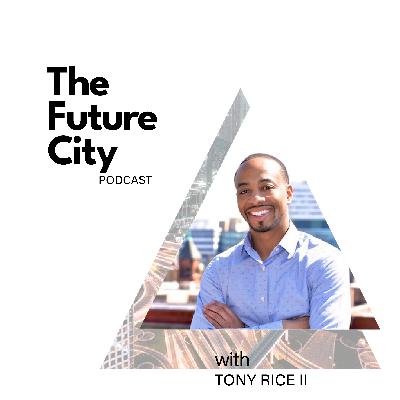
Why is police accountability critical for our cities? On this episode of The Future City Podcast we speak with entrepreneur, management consultant and public sector innovator Tony Rice II. Tony is a top tier management consultant specialising in public sector innovation. He is the founder of Unarmed, a platform where compliments and complaints about law enforcement are managed. Tony shares why now is the leadership moment for police chiefs, the impact of deeply entrenched policing methods, and the role of citizens in holding our law enforcement to account.
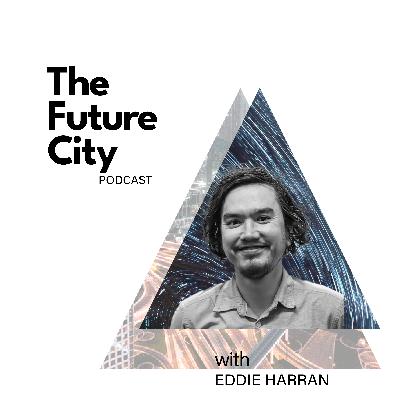
What if we looked at our cities through the lens of time? What ideas might emerge? On this episode of The Future City Podcast, we speak with futurist, entrepreneur and researcher Eddie Harran. Eddie is the Founder of Temporal Labs, a futurist at Huddle Design and was explorer in residence at the Centre for the edge at Deloitte. Eddie challenges us to think about the timescape of our city, the 'speed' of a city, and how focussing on 'time spent' in our cities can unlock solutions to deeply entrenched problems our city executives face.
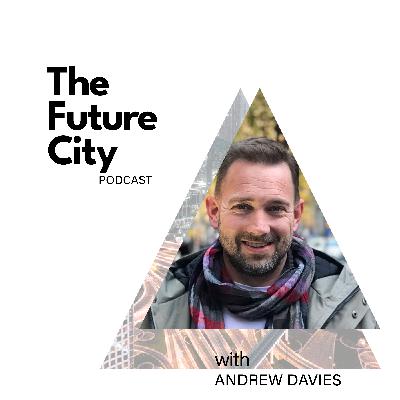
Is the economic model of your city regenerative and inclusive? On this episode of The Future City Podcast, we speak with executive, entrepreneur and CEO of BLab Australia and New Zealand, Andrew Davies. Andrew speaks with us about redefining the foundations for good businesses and how solving urban challenges sits at the intersection of public and private partnerships. BLab is a movement of people using business as a force for good.
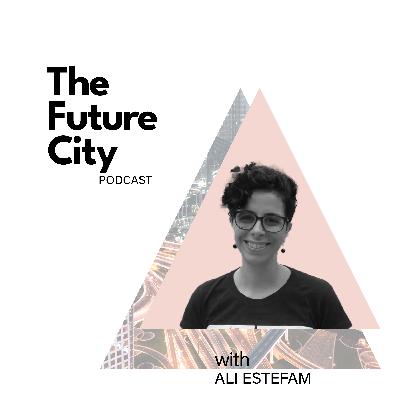
The Inclusive City What does it mean to design a culturally inclusive city? On this episode of The Future City Podcast, we speak with linguist, urban planner and designer Ali Estefam. Ali is a multilingual community outreach specialist at Melissa Johnson Associates. She has worked on people-centred approaches to design and urban planning at New York City Department of Design and Construction, New York City's Economic Development Corporation, the International Development Bank, and the World Monuments Fund. Ali speaks with us about engagement beyond language, tactical urbanism and the behavioural science and psychology of engagement.
What turns a space into a place you want to be a part of? On this episode of The Future City Podcast, we speak with property director and entrepreneur Beth Hampson. Beth is Commercial Director at The Argyll Club, which manages 38 premium flexible workspaces at the heart of London's office market. Beth shares with us the importance of urban hubs and what the future of coworking looks like as we emerge from this global pandemic.
What if you got paid to learn for the rest of your life? On this episode of the Future City Podcast we speak with storyteller, learner, and technology architect Jacksón Smith. Jacksón is Co-Founder and the CTO of the Learning Economy Foundation, a U.S. based non-profit organization with a global mission to prepare citizens to be future-skilled, address inequity with student and employee centric models and put innovation at the centre of our communities. Jacksón speaks with us about having a vested interest in the place that educated you, carrying a learner "wallet" and envisioning what a learning economy might look like beyond the university years.
What is the magic solution to revive human vitality? On this episode of the Future City Podcast, we speak with global behaviour change expert Dr. Ting Jiang. Dr. Jiang was a Principal at the Duke University Center for Advanced Hindsight, founded by best-selling Professor Dan Ariely. Ting coined the term "Behavioral Tech" and claims it will become the next innovation breakthrough after AI and IOT. Dr. Jiang guides us through a meditative conversation about why science-driven lifestyle change is the key to human vitality in our cities. Take a slow breath and enjoy.
What can your city teach you? On this episode of The Future City Podcast we speak with executive, curator and researcher Sébastien Turbot. Sébastien is the CEO of eko6, a creative learning consultancy and a Research Fellow at Qatar Foundation's World Innovation Summit for Education, leading a global hub on Learning Ecosystems. Sébastien speaks with us about the value of learning to learn, how urban space shapes our learning journey and how becoming a global "hub" means investing in student and citizens' 21st century skills
Is your university alma mater a city? On this episode of The Future City Podcast, we speak with Jay Deshmukh, an award-winning architect and Associate Manager in Architecture at IBI Group; a global technology-driven design firm focused on the future of cities. She is also a member of the Board of Trustees at the Textile Museum of Canada. Jay speaks with us about the social nature of learning, how university campuses have become intrinsic to places and the value of integrated campus life.
How might international relations and diplomacy affect the future of our cities? On this episode of The Future City Podcast we speak with professor, political scientist and diplomat Juan Battaleme. Professor Battaleme is the Secretary of CARI, the Argentine Council on International Relations (CARI) as well as the Director of the Government and International Relations at Universidad Argentina de la Empresa (UADE) based in Buenos Aires. Battaleme speaks with us about why connectography trumps geography, how foreign government soft power can be developed through infrastructure investments and how biometrics may be the key to crime prevention.
What would it mean for our cities if equity and resilience were the metrics of success? On this episode of The Future City Podcast we speak with Harvard and MIT-trained Associate Vice President of Economic Development for the New York City Economic Development Corporation Jonathan Lane. Jonathan speaks with us about the power of targeting new industry to tackle equity issues in a city, the need to challenge the status quo and why resilience is the key to urban economics.
What are the likely futures for our cities? On this episode of The Future City Podcast we speak with futurist, urban planner and architect Jonelle Simunich. Jonelle is the Senior Strategist at Arup's Foresight Research and Innovation team. She specialises in sustainability, regenerative urban systems and advanced technologies that will shape the future of the build environment in our cities. Jonelle speaks with us about regeneration, the role of technology and the 2050 scenarios for our society and planetary health.
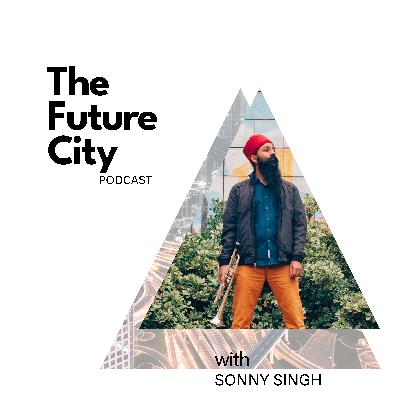
What would it mean if every citizen was a revolutionary optimist? On this episode of The Future City Podcast, we speak with singer, songwriter, activist and racial justice educator Sonny Singh. Sonny is the original member of the Brooklyn Bhangra outfit Red Baraat and also co-founded the political rock band Outernational and recorded an album produced by Tom Morello from Rage Against the Machine. Sonny speaks with us about institutional racism, the power of digital spaces for activists and why he is a revolutionary optimist through and through.
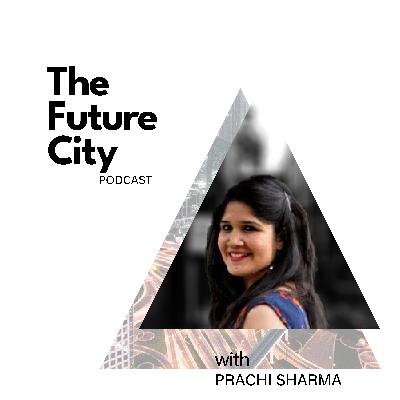
How might we discover stillness in the spaces we design? On this episode of The Future City Podcast we speak with architecture professor and Mumbai-based design thought leader Prachi Sharma. Prachi is an Assistant Professor at the Lokmanya Tilak Institute of Architecture & Design Studies. She speaks with us about breaking the silos of architecture, the value of in-between spaces and why you should design so people can discover stillness in a city.
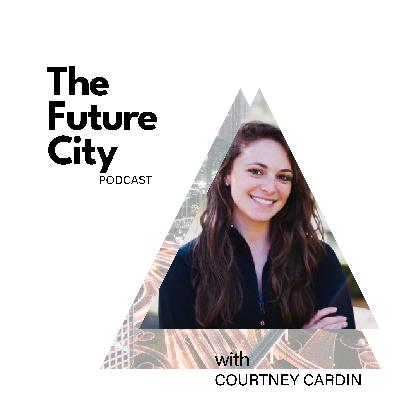
What's an opportunity zone and how do you create one? On this episode of The Future City Podcast we speak with campaigner, lawyer and investment analyst Courtney Cardin about how civic leaders create economic and social opportunities in our neighborhoods. Courtney was Senior Counsel on the US Senate Homeland Security and Governmental Affairs Committee and has gone on to advise and analyze companies working to improve our cities. Courtney shares stories about Tulsa, Oklahoma, how public private partnerships can work and that playing to our urban quirks, not bland corporate and government expectations, is our strategic urban advantage. Courtney is the Managing Partner of BC Global Partners which works with start-ups, impact investors and venture capital funds to develop targeted impact investing and growth strategies. Prior to this, Courtney was the Director of Entrepreneurship and Independent Business at the American Economic Liberties Project and Director of Partnerships at Power the Polls. Courtney has served as Senior Counsel to the U.S. Senate Committee on Homeland Security and Governmental Affairs where she spearheaded a series of drug pricing and healthcare investigations, promoted bipartisan legislation to address the opioid crisis, and oversaw matters relating to the U.S. Census.

What would it mean if a city was conscious? On this episode of The Future City Podcast we speak with architect, researcher and founder of the Conscious Cities movement Itai Palti. Itai is Director of Hume, a science-informed architecture and urban design practice and Director of the Centre for Conscious Design, a think tank focused on using design to address urban challenges facing society today and in the future. Itai shares how cities can be healed, how metrics shape what we design and how space can be intentionally designed to include or exclude people in our cities.

Comments

Download from Google Play

Download from App Store
 United States