


 Claim Ownership
Sandy Creek Stirrings
Subscribed: 5Played: 113
Subscribe

© Joshua Gimenez
Description
Practical, truthful, applicable, personable, humorous, helpful - that's Sandy Creek Stirrings! The goal of Sandy Creek Stirrings is to “stir up” Christians to do something great for the cause of Christ! Steeped in a heavy dose of Biblical, factual, and logical truth, you can expect practical content, personable listening, and compelling topics that lead to applicable living. You can count on every episode to give you something that you can immediately put into practice within your daily life. Welcome and thank-you for listening! To find out more, visit: www.sandycreekstirrings.com
365 Episodes
Reverse
In today's episode, I provide some tips for Preacher Boys - young men who have surrendered to the call to preach. These tips are not super deep or extravagant, but you will find them to be very practical and, hopefully, extremely helpful. These are not "my" tips - they are based on Biblical truth and things that your own pastor might tell you, as you prepare to serve the Lord in the avenue of preaching!

There has never been a time in history when people had more information — and trusted it less. Secret plots. Hidden agendas. Powerful people pulling the strings behind the curtain. Information that has been withheld...The internet is full of theories claiming to expose what the world doesn’t want you to know. But what about Christians?Should believers involve themselves in conspiracy theories at all? Is it wrong to research them? And if a Christian does explore them, what guardrails should be in place?In this episode, we examine conspiracy theories through a biblical lens and discuss the dangers, the distractions, and the wisdom Christians need in a world increasingly fascinated with hidden secrets.
What if one of the greatest threat to a youth ministry isn’t culture… What if it's you?Absalom didn’t start with open rebellion. He started with handshakes. Conversations. Sympathy. He built loyalty quietly — and by the time anyone realized what was happening, hearts had already shifted. He wasn't loud. He wasn't dramatic. He was subtle.If you have influence over young people, the Absalom mentality is something you cannot afford to ignore. This episode is a warning to anyone who leads, teaches, or influences young people. Because sometimes the most dangerous rebellion doesn’t look like rebellion at all.

Revelation 19 says something unusual:“His wife hath made herself ready.”That’s an interesting phrase. How does the Bride make herself ready? What part does she actually play? And what does that say about Christ?This episode isn’t about timelines or prophecy charts. It’s about a single phrase — and what happens when you stop and actually think about it. Join me, as we slow down and look carefully at a statement most of us read past. The answer may not be what you expect.

You love the King James Bible.A friend asks you why.You know the arguments. You’ve read the material. You’ve heard the debates. You’re ready. But somehow… the conversation doesn’t end the way you hoped.Maybe it gets tense. Maybe it turns circular. Maybe you walk away thinking, “That didn’t land like it should have.”So what can you change?In this episode, we’re not re-arguing the entire manuscript debate. We’re talking about how we talk about it. Tone. Logic. Maturity. Avoiding weak arguments. Learning how to actually persuade instead of just repeat slogans.If we believe the KJV is worth defending, then it’s worth defending well.If you haven't yet, make sure you check out our booklet - "Making the Bible Version Debate SIMPLE" - for a concise, simple overview of why we defend the KJV as God's Word! You can find it on our Resources page and read/download it for free TODAY!https://sandycreekstirrings.com/resources/
There is a quiet failure that rarely makes headlines, rarely gets confronted, and yet quietly shapes the direction of homes, churches, and generations.In this episode, we examine a habit that feels small in the moment but carries enormous weight over time. What happens when correction is common but encouragement is rare? What happens when condemnations are clear but affirmation is scarce? And what kind of adults are formed in that environment?Join me as we walk through an examination of praise in our daily lives. Along the way, we will visit Darrington Prison (now known as Memorial Unit) and then make a pit stop at Mr. Rogers Neighborhood to hear a song from Mr. Rogers himself! You won't want to miss the Biblical, life changing truths found in today's episode.
Some values are dismissed today with a wave of the hand: “That’s old-fashioned.” “That’s outdated.” “We’ve moved past that.”But have we?In this episode, we stir the pot a little as we take a fresh look at ten practical convictions that many assume belong to another era. Join me as I ask a simple question: Did culture move on… or did we drift away from something biblical?From the structure of the home to the way we show honor… from relationships and purity to authority and identity… these aren’t nostalgia pieces. They’re convictions rooted in Scripture.This isn’t about turning the clock back. It’s about asking whether the Bible ever changed in the first place.Some of these may challenge you. Some may affirm what you’ve quietly believed all along. But every one of them forces us to examine a deeper issue:If it’s still in the Bible… why are we so uncomfortable with it?

Here is another “Things I Think” episode! This episode is a completely different format than what we usually record on Sandy Creek Stirrings. In this episode, I share with you a few random thoughts that have been on my mind – some musings, some “ponderings”, some things that I have been meditating on. Like:- Why I believe the "copyright issue" is a, relatively, non-issue in the Bible version debate. - A call to young men to have practical wisdom in their daily conversation and how unlocking classic literature can help with that. - My personal recommendation to those looking to purchase a new Bible. Bibles mentioned in this episode: - Rock of Ages Study Bible: https://roapm.org/store/#!/Bibles/c/8846043- Cambridge Bibles: https://www.thekjvstore.com/kjv-bibles/?_bc_fsnf=1&brand=94- Schuyler Bibles: https://evangelicalbible.com/schuyler-kjv-bibles/- KJV Store Reader's Bible: https://www.thekjvstore.com/kjv-store-reader-s-edition-bible-with-sacred-syntax/- Church Bible Publisher's: https://churchbiblepublishers.com/- The KJV Store: https://www.thekjvstore.com/
If the Christian home died, it can be revived.In this capstone episode of our "What Failed America?" series, we move from identifying what failed America to addressing what restores it. We examine key reasons children remain faithful into adulthood and the practical, biblical decisions that shape lasting faith. This is a straightforward conversation about parenting, priorities, and rebuilding the home where faith is meant to live.

If the church did not fail America, then what did? In this episode, we move past easy accusations and familiar talking points and ask a harder, more uncomfortable question. History shows the church was active, vocal, and evangelistic during the very decades when America began to drift spiritually. So the explanation for where we are today must lie somewhere deeper—and closer to home. This conversation traces a series of quiet but powerful shifts that reshaped American family life over time. None of them happened overnight, and none of them were accidental. Together, they formed a pattern that slowly altered how faith was lived, prioritized, and passed on. Rather than pointing fingers at institutions or culture alone, this episode challenges listeners to examine where spiritual formation was meant to begin—and what happens when that foundation weakens.
Did the church fail America? It’s a question often asked with frustration, sarcasm, or blame—but rarely examined honestly. In this episode, we step back from easy accusations and take a careful look at history, Scripture, and the Christian witness of the last century. Using Paul Harvey’s famous “If I Were the Devil” as a jumping-off point, we explore whether America’s spiritual decline can truly be laid at the feet of a silent or disengaged church. The answer may surprise you. We examine the decades when many of today’s cultural battles first erupted—the removal of prayer and Bible reading from public schools, the rise of secular humanism, the legalization of abortion, and growing hostility toward biblical morality. These were not quiet years for Christianity. Churches were full, revival meetings were massive, soul-winning conferences were common, and Christian voices were loud in the public square. By outward appearances, the church was active, organized, and deeply engaged. So how do we explain where we are now? If the church was preaching, evangelizing, and fighting cultural battles, why did the spiritual trajectory of the nation still shift so dramatically? In this episode, we challenge some easy assumptions, confront uncomfortable questions, and lay the groundwork for a deeper conversation—one that moves beyond headlines and history and presses us to examine where faith is truly formed, preserved, and passed on.
At a recent conference, someone asked me: "Why the name 'Sandy Creek Stirrings'?"In this episode, I answer that question. To begin, we travel back to 1755 and meet a largely forgotten Baptist preacher whose obedience shook an entire continent. From a quiet conversion under George Whitefield to a blazing church-planting movement that spread from a tiny North Carolina settlement across the American South, you’ll hear how God used Shubal Stearns and a band of ordinary men to turn spiritual wilderness into harvest fields. Along the way we’ll walk through revival, persecution, imprisonment, and the birth of churches that still influences Baptist life today. Then we bring the story home—why a podcast in 2025 carries the name Sandy Creek Stirrings, and what that has to do with your life, your calling, and your fire for God. This isn’t just Baptist history; it’s a call for God to do again in our day what He did at Sandy Creek.At the end of the episode, we play a song for you from the CD “A Christ Centered Christmas” by Dr. Scott Caudill with permission from Dr. Caudill. You can purchase your own copy at the following link:https://www.drscottcaudill.com/online-store/
In this stirring revival message, we step into Leviticus and watch as God Himself sends fire from heaven to light the very first sacrifice on the altar. Then comes the surprising command: that God-kindled flame must never go out. From there, Dr. Bachman turns that ancient scene into a mirror for our own hearts, asking a hard question—has your fire gone out? With vivid stories, humor, and conviction, he shows how easy it is to slip from burning zeal into cold, mechanical duty. You’ll hear firsthand accounts that strip away our excuses and expose how quickly spiritual passion can fade if it’s not tended. Yet woven through the warning is a powerful hope: the God who starts the fire is ready to help you stoke it again. This episode will leave you longing not just to attend church, but to keep the fire of your work, your witness, and your walk with God burning hot every day.At the end of the episode, we play a song for you from the CD “O Holy Night” - piano solos by Caleb Galvan - with permission from North Valley Publications. You can purchase your own copy at the following link:https://nvpublications.org/products/o-holy-night?_pos=1&_sid=1ee303636&_ss=r
Illegal immigration.Few issues cut through America’s moral conscience like this one. What should a Christian think when compassion collides with justice, and mercy meets law? Illegal immigration isn’t just a political issue — it’s a moral one. It’s more than policy. It’s more than politics. It’s a test of conscience.In Part 2, we set aside political noise and open the Scriptures to ask a far deeper question: How should a Christian view illegal immigration?We examine what the Bible actually says about obeying civil law, balancing mercy with justice, and how God commanded nations to handle foreigners in their borders.You may be surprised at how clearly Scripture addresses borders, order, and compassion — and how these principles shape a believer’s response today.At the end of the episode, we play a song for you from the CD “A Christ Centered Christmas” by Dr. Scott Caudill with permission from Dr. Caudill. You can purchase your own copy at the following link:https://www.drscottcaudill.com/online-store/
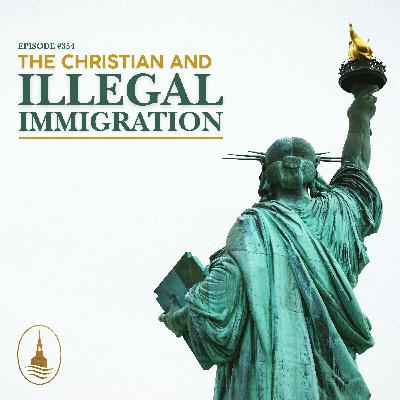
Illegal immigration. Few issues cut through America’s moral conscience like this one. What should a Christian think when compassion collides with justice, and mercy meets law? Illegal immigration isn’t just a political issue — it’s a moral one. It’s more than policy. It's more than politics. It’s a test of conscience. In this two-part episode, we explore the clash between compassion and conviction, and what it truly means to think biblically in a world that’s forgotten how. Together, we will dig deep beneath the headlines and politics to expose what lies at the heart of one of our nation’s most divisive questions.
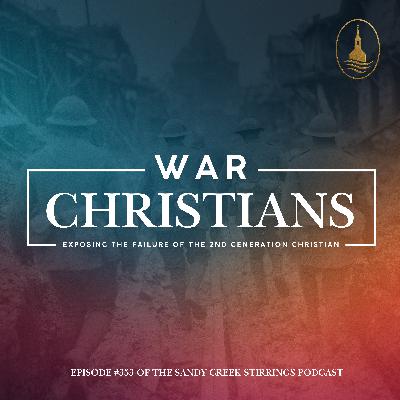
When a generation inherits victory it didn’t fight for, it forgets how to fight. Drawing from Joshua 24 and Judges 2–3, we trace how Israel’s second generation lost what their fathers won—and why today’s second, third, and fourth generations are repeating it. This episode exposes the quiet collapse of second-generation faith—and why a warless Christianity cannot last.This is a call for young men to embrace battle-tested faith - a summons to grit, obedience, and the kind of devotion that bleeds. It is a plea for a generation to pick up the sword, step onto the field, and do something great for God. Will you fight?
In this follow-up episode, we drive the final nails into the coffin of Replacement Theology. Many claim the church has replaced Israel and that God’s covenant promises are now only “spiritual,” but Scripture says otherwise. We’ll walk through the last proof-texts often used to support Replacement Theology and show why they collapse under the weight of God’s Word. Along the way, we’ll highlight the overwhelming biblical evidence that Israel and the church remain distinct in God’s plan, and that His covenants with Israel are everlasting and irrevocable. If God is faithful to Israel, He will be faithful to you. This episode isn’t just about prophecy—it’s about the character of God Himself.
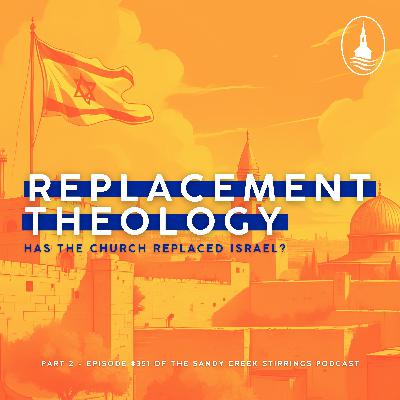
Replacement Theology. You may have heard the term—or maybe not. But what does it really mean, and why does it matter for Christians today? In this episode, we open the Scriptures and step into a centuries-old debate that still shapes pulpits, seminaries, and worldviews.We’ll examine the key passage in Galatians 6:16, and weigh whether it truly calls the Church “the Israel of God.” We’ll contrast Christian Zionism and Replacement Theology, exploring how each frames God’s promises. You’ll hear direct quotes from supersessionist voices, past and present, and then measure their claims against the Bible itself.We’ll also tackle the practical questions: What should a Christian’s position toward Israel be today? Should believers support the modern State of Israel? How do we distinguish between Israel as a people, as a nation, and as a government? These distinctions matter, and they shape how we pray, how we think about prophecy, and how we live faithfully in light of God’s Word.Whether you’re brand new to the topic or have wrestled with it for years, this episode will help you think clearly, biblically, and deeply about one of the most important theological conversations of our time.
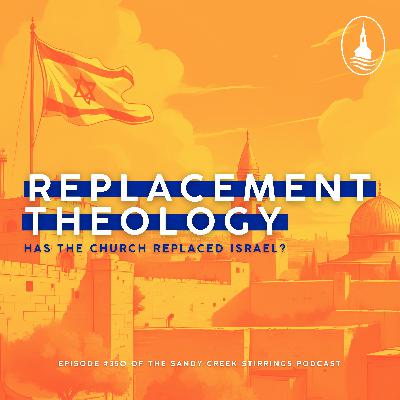
Replacement Theology. You may have heard the term—or maybe not. But what does it really mean, and why does it matter for Christians today? In this episode, we open the Scriptures and step into a centuries-old debate that still shapes pulpits, seminaries, and worldviews.We’ll examine the key passage in Galatians 6:16, and weigh whether it truly calls the Church “the Israel of God.” We’ll contrast Christian Zionism and Replacement Theology, exploring how each frames God’s promises. You’ll hear direct quotes from supersessionist voices, past and present, and then measure their claims against the Bible itself.We’ll also tackle the practical questions: What should a Christian’s position toward Israel be today? Should believers support the modern State of Israel? How do we distinguish between Israel as a people, as a nation, and as a government? These distinctions matter, and they shape how we pray, how we think about prophecy, and how we live faithfully in light of God’s Word.Whether you’re brand new to the topic or have wrestled with it for years, this episode will help you think clearly, biblically, and deeply about one of the most important theological conversations of our time.
Here is another “Things I Think” episode! This episode is a completely different format than what we usually record on Sandy Creek Stirrings. In this episode, I share with you a few random thoughts that have been on my mind – some musings, some “ponderings”, some things that I have been meditating on. Like:- The rapture prediction of "Pastor" Joshua Mhlakela,- Why Christians aren't living every day like Jesus is worth it. - Why unschooling ideologies are raising undisciplined children. - Has Charlie Kirk's death brought revival to America?- And more!

Comments

Download from Google Play

Download from App Store
 United States