


 Claim Ownership
Reflect Forward
Subscribed: 7Played: 83
Subscribe

© All rights reserved
Description
Reflect Forward isn’t your everyday leadership podcast. This show is about exceptional leadership. Game-changing leadership. Learn from peers, experts, authors, and more on how to be an uber successful leader…one that stands out from the rest. One that inspires others to do great things. One that others want to follow. How does Reflecting Forward fit into exceptional leadership? You can only become great at what you do by deliberately creating your future by reflecting on the past and present…what you did well, mistakes you’ve made, and lessons you’ve learned.
Kerry Siggins is the CEO of StoneAge, the global leader in the manufacturing and distribution of high pressure waterjetting tooling and automated equipment. Kerry is also a member of Young President's Organization (YPO) and sits on several boards. She is a sought-after speaker, thought leader, leadership blogger and podcast host.
Kerry Siggins is the CEO of StoneAge, the global leader in the manufacturing and distribution of high pressure waterjetting tooling and automated equipment. Kerry is also a member of Young President's Organization (YPO) and sits on several boards. She is a sought-after speaker, thought leader, leadership blogger and podcast host.
270 Episodes
Reverse
Are you climbing higher, or just climbing the wrong mountain?
For many leaders, success is supposed to feel like arrival. Instead, it becomes the beginning of a deeper question. What happens when you’ve achieved what you set out to do, but it no longer feels aligned?
In this episode of Reflect Forward, Kerry Siggins sits down with Nathalia Del Moral, co-founder of Next Mountain Life, to explore what it really means to step into your “next mountain.” This is the shift from externally driven success to a more intentional, purpose-driven way of living and leading.
They unpack why high performers often feel disoriented after success, the identity shifts that follow, and how ambition evolves from proving to contributing. Nathalia shares insights from her work with executives and entrepreneurs navigating major life and leadership transitions.
Kerry also reflects on her own journey, from rebuilding her life after an overdose in her twenties to the evolution she is stepping into now. A chapter defined by one clear decision. She is no longer willing to sacrifice her freedom for ambition, validation, or external expectations.
This conversation challenges the traditional narrative of success and offers a more grounded path forward. One where ambition is not eliminated, but refined. One where leaders build without self betrayal.
If you are questioning what comes next in your career, leadership, or life, this episode will give you language for what you are feeling and a framework for what to do with it.
Connect with Nathalia:
https://nextmountain.life/
https://www.linkedin.com/in/nathaliadmf/
Connect with Kerry
Visit Kerry’s website, kerrysiggins.com, to explore my book, The Ownership Mindset, and get more leadership resources. Let’s connect on LinkedIn, Instagram, or TikTok!
Find Reflect Forward on YouTube: https://www.youtube.com/@kerrysiggins-reflectforward
Find out more about Kerry’s book here: https://kerrysiggins.com/the-ownership-mindset/
Connect with Kerry on LinkedIn: https://www.linkedin.com/in/kerry-siggins/
Sometimes leaders just want people to do their jobs.
In this episode of Reflect Forward, Kerry Siggins shares a moment from a conversation with a group of CEOs that struck a nerve with everyone in the room. After dealing with workplace drama, she said something out loud that many leaders think but rarely say: sometimes we just need people to do their jobs.
The response was immediate. Not frustration. Recognition.
This episode explores what was really underneath that moment. Leading in uncertain times creates enormous pressure. Leaders are navigating volatility, economic shifts, and constant decisions while trying to maintain strong cultures. At the same time, employees are experiencing their own uncertainty and stress. When that tension rises, workplaces can easily drift into complaint, narratives, and drama.
Over the past decade, organizations have worked hard to create more human-centered cultures built on empathy, psychological safety, and awareness of people’s lived experiences. Those shifts have been important. But in some environments, the pendulum swings too far, and accountability becomes softened to avoid tension.
When that happens, organizations lose sight of the foundation that makes work actually work: contribution.
In this conversation, Kerry explores the contract that exists between employees and organizations, why contribution restores agency in uncertain times, and how both leaders and employees play a role in building strong, healthy cultures.
Key Takeaways
• Contribution is the foundation of the workplace contract. Employees create value through their work while organizations provide compensation, opportunity, and growth.
• Empathy and standards must rise together. Compassion for people’s experiences should never replace accountability.
• Contribution creates agency in uncertain environments by shifting focus toward what individuals can control.
• Discomfort is often part of growth. Feedback, challenge, and high expectations are not harmful. They are how people and organizations improve.
• Avoidance erodes culture faster than conflict. When accountability is delayed, resentment builds and trust weakens.
Mic Drop Moments
• “The situation is the situation, and how you decide to show up in it is going to be your experience of that situation.”
• “Contribution creates agency. Complaint amplifies helplessness.”
• “In difficult seasons, the question becomes simple. Do we default to narrative, or do we default to ownership?”
• “When uncertainty rises, the need for clarity and reliability rises with it.”
• “Doing your job well is not small. It is stabilizing.”
Connect with Kerry
Visit her website, kerrysiggins.com, to get more leadership resources or to book her for a speaking engagement
Find out more about her book here: https://kerrysiggins.com/the-ownership-mindset/
Connect with Kerry on LinkedIn: https://www.linkedin.com/in/kerry-siggins/
Most leaders assume chaos is simply the cost of growth. As companies scale, complexity increases, communication breaks down, and decisions slow. The instinct is usually to reach for a new tool, new software, or another piece of technology that promises to make everything work better.
But what if chaos is not actually a technology problem?
In this episode of Reflect Forward, Kerry Siggins sits down with Val Coin, co-founder and director of Via Technology, to explore why organizations struggle to scale without chaos, even when they know systems are necessary.
After leading more than 150 digital transformation projects across companies of all sizes, Val has seen a consistent pattern. Businesses believe they have a technology problem when in reality they have a systems problem. And very often that systems problem starts with leadership.
This conversation moves beyond software and operations to explore the deeper tension leaders experience as their companies grow. Systems require leaders to move from instinct to intentionality. They challenge the habits, control, and identity that may have helped founders succeed in the early stages of the business.
Val shares how effective organizations approach systems through three interconnected elements: people, process, and technology. While most companies focus on the technology layer, breakdowns usually begin in process and alignment. Leaders often design systems around how they wish people to behave rather than how they actually behave.
When systems account for real human behavior, organizations reduce friction and create processes that teams can consistently execute.
Kerry and Val also discuss why ownership is critical in any transformation effort. Even when organizations bring in consultants or advisors, leaders and teams must remain deeply involved in building the systems they will ultimately operate. Without that ownership, even well-designed solutions fail to stick.
If you are a founder, CEO, or executive leader trying to scale your business, improve processes, or navigate digital transformation, this episode offers a thoughtful perspective on how leadership, systems, and culture intersect.
In this episode, Kerry and Val discuss
• Why leaders often resist systems even when they know they need them
• The real reason businesses become chaotic as they scale
• Why technology rarely solves operational challenges on its own
• The relationship between people, process, and technology
• How leaders can design systems that work with human behavior
• Why ownership is essential for successful transformation
• The importance of cadence and reflection when scaling a business
Connect with Val Coin
LinkedIn: https://www.linkedin.com/in/valentina-coin/
Company: https://viatechnology.com.au
Connect with Kerry Siggins
Website: www.kerrysiggins.com
LinkedIn: https://www.linkedin.com/in/kerry-siggins/
\
What happens when a leader’s greatest strength becomes their identity?
In this episode of Reflect Forward, CEO Kerry Siggins explores how high-performing leaders can unknowingly tie their self-worth to how they are perceived and why feedback can suddenly feel threatening when it challenges that identity.
The catalyst was a boardroom moment. After presenting a three year strategic plan, Kerry received clear feedback: it was too complicated and lacked focus. The board was right. The strategic reset was necessary. But the real leadership lesson emerged not in revising the plan, but in confronting the subtle instinct to protect her image when explaining the change to her team.
Kerry examines how “armor” shows up in leadership through over-explanation, narrative control, and the desire to look sharp even while correcting course. Drawing on Theodore Roosevelt’s “Man in the Arena,” she challenges leaders to consider whether they are performing in the arena or allowing the arena to change them.
In this conversation, listeners will learn:
• Why high performers often struggle with feedback
• How identity fusion makes perception feel threatening
• The difference between controlled performance and messy courage
• Practical ways to detach worth from perception
• How visible ownership strengthens team alignment and trust
This episode is for CEOs, executives, founders, and emerging leaders who want to build stronger teams, grow their leadership capacity, and operate with greater self-awareness.
Because the next level of leadership may not require a sharper strategy.
It may require less armor.
In this episode of Reflect Forward, Kerry Siggins sits down with Yvonne Trost, Subconscious Performance Coach and former Fortune 500 strategist, to explore how subconscious programming shapes leadership, ambition, and results.
Most leaders believe change requires more discipline and stronger habits. But what if the real constraint is not strategy or effort, but the invisible patterns driving your behavior?
Kerry and Yvonne examine:
• How subconscious conditioning forms your leadership default
• Why insight alone does not create lasting behavior change
• The difference between cognitive ownership and embodied ownership
• How neuroplasticity and memory reconsolidation can rewire limiting beliefs
• Why overworking, perfectionism, and control are often protection strategies
If most behavior is automated by adulthood, what does true ownership require?
This conversation challenges traditional leadership development and invites you to reflect forward, not from the past, but from who you are becoming.
Connect with Yvonne
www.unlocklimitlessyou.com/free-session
Connect with Kerry
Visit her website, kerrysiggins.com, to explore my book, The Ownership Mindset, and get more leadership resources. Let’s connect on LinkedIn, Instagram, or TikTok!
Find Reflect Forward on YouTube: https://www.youtube.com/@kerrysiggins-reflectforward
Find out more about her book here: https://kerrysiggins.com/the-ownership-mindset/
Connect with Kerry on LinkedIn: https://www.linkedin.com/in/kerry-siggins/
Most leadership breakdowns are not strategic. They are emotional.
In this episode of Reflect Forward, Kerry Siggins explores why emotional skill is the true foundation of modern leadership. As AI accelerates and complexity increases, leaders who cannot regulate their nervous systems, understand their emotional impact, and create psychological safety will quietly erode trust.
Emotional skill is not softness. It is leadership capacity.
Kerry breaks down the seven pillars of emotional skill, inspired by Zoe Kors's Radical Intimacy, and explains how they directly influence executive presence, emotional intelligence, team performance, trust, and long-term organizational success.
You’ll learn:
• Why leadership failures are often emotional, not strategic
• What intimacy really means in a leadership context
• How self-awareness and discernment reduce conflict
• Why emotional regulation is nervous system leadership
• How responsibility for impact builds trust
• Why boundaries make empathy sustainable
If you want to strengthen your emotional intelligence, build high-trust teams, and lead with depth, maturity, and influence, this conversation will challenge and broaden your thinking about leadership.
The future of leadership belongs to those who develop emotional skill.
Connect with Kerry
Visit her website, kerrysiggins.com, to explore my book, The Ownership Mindset, and get more leadership resources. Let’s connect on LinkedIn, Instagram, or TikTok!
Find Reflect Forward on YouTube: https://www.youtube.com/@kerrysiggins-reflectforward
Find out more about her book here: https://kerrysiggins.com/the-ownership-mindset/
Connect with Kerry on LinkedIn: https://www.linkedin.com/in/kerry-siggins/
Executive presence is not about polish, performance, or personality. It is about trust. And trust is built long before you say the right thing.
In this episode of Reflect Forward, Kerry Siggins is joined by executive coach Nataly Huff to unpack what executive presence really is, why so many leaders misunderstand it, and how your nervous system is shaping how others experience you in real time.
This conversation goes beyond surface-level advice and into the mechanics of leadership under pressure. How you regulate stress. How you handle silence. How your body communicates confidence or instability before you speak. And how the stories you tell yourself about feedback quietly shape your identity as a leader.
Nataly shares neuroscience-backed insights on why dysregulated leaders lose access to their best thinking, how embodiment plays a critical role in leadership presence, and why authenticity, not imitation, is the foundation of trust.
You will also hear a powerful discussion on feedback and identity, including why leaders are often unreliable narrators of their own story and how to use feedback as data rather than self-judgment.
This episode is for leaders who want to be trusted, not just impressive. For executives who want to show up calm, clear, and grounded when the stakes are high. And for anyone ready to stop performing leadership and start embodying it.
Key topics covered include:
• What executive presence actually means and why it is contextual
• Nervous system regulation and leadership under stress
• Embodiment and how your body shapes perception
• Feedback, identity, and the stories leaders tell themselves
• Practical ways to build trust through presence, not performance
You can find Nataly Huff here:
Website: https://www.inspire-forward.com
LinkedIn: https://www.linkedin.com/in/natalyhuff
Instagram: @inspirefwdcoaching
Tik Tok: @https://www.tiktok.com/@inspirefwdcoaching
Book a Free Call: https://www.inspire-forward.com/book-a-free-call
Rewiring Your Leadership Brain https://www.inspire-forward.com/rewiring-your-leadership-brain
Connect with Kerry
Visit her website, kerrysiggins.com, to explore my book, The Ownership Mindset, and get more leadership resources. Let’s connect on LinkedIn, Instagram, or TikTok!
Find Reflect Forward on YouTube: https://www.youtube.com/@kerrysiggins-reflectforward
Find out more about her book here: https://kerrysiggins.com/the-ownership-mindset/
Connect with Kerry on LinkedIn: https://www.linkedin.com/in/kerry-siggins/
Hustle culture teaches leaders that exhaustion equals commitment and rest must be earned. But what if the constant push is not discipline at all, but fear in disguise?
In this episode of Reflect Forward, Kerry Siggins breaks down the difference between working hard and hustling, why success often increases pressure instead of freedom, and how constant self-enforcement quietly undermines leadership, health, and clarity. She shares a personal story and offers three practical shifts to exit hustle culture without losing ambition or edge.
Podcast on setting up systems to architect your life: https://kerrysiggins.com/blog/architect-your-2026/
Connect with Kerry
Visit her website, kerrysiggins.com, to explore my book, The Ownership Mindset, and get more leadership resources. Let’s connect on LinkedIn, Instagram, or TikTok!
Find Reflect Forward on YouTube: https://www.youtube.com/@kerrysiggins-reflectforward
Find out more about her book here: https://kerrysiggins.com/the-ownership-mindset/
Connect with Kerry on LinkedIn: https://www.linkedin.com/in/kerry-siggins/
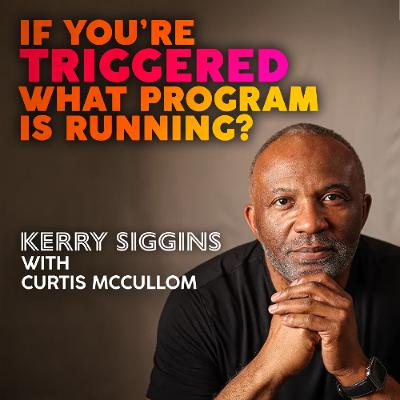
There is a specific kind of exhaustion that does not come from workload. It comes from living under an internal verdict. Not good enough. Not worthy. Not capable. Leaders can deliver results while quietly chasing approval from a story they accepted long before they had the awareness to question it. Because it often looks like ambition and high standards, we reward it. We call it leadership.
In this episode of Reflect Forward, I sit down with Curtis McCullom, CEO of Bespoke Human Potential Coaching and a clinical hypnotherapist, to explore what actually drives behavior beneath performance. Curtis introduces his Legit Mindset framework, learning, growing, expanding, and transforming. The sequence matters. Learning reveals what is running you. Growing releases emotional charge at the root. Expanding clarifies who you are becoming. Transforming requires daily reconditioning. Transformation is not a moment. It is a practice.
Key Takeaways
• Most performance issues are rooted in subconscious programming, not lack of effort.
• Behavior is a pattern, not an identity.
• Regulating the nervous system is a leadership skill.
• Responsibility restores power, not shame.
• Lasting transformation requires daily repetition, not a single breakthrough.
We challenge one of the most common leadership myths. Most leaders are not stuck because they lack discipline or strategy. They are stuck because an old program is still running. Behavior is not identity. You are not broken. You are running a pattern. When that distinction lands, shame falls away and responsibility returns.
We also explore triggers and nervous system regulation. A trigger feels external, but it is internal information. Owning it does not excuse others. It restores agency. Responsibility is not blame. Responsibility is power. And when the body is activated, the mind is not choosing. It is executing a script. Calm the body first, then the thinking can change.
Language becomes another doorway to ownership. Shifting from “I am not enough” to “I am feeling not enough” separates identity from experience and opens better questions. Not why am I like this, but what is driving this right now and how do I want to respond.
This conversation is a reminder that goals alone do not create change. Goals planted in bad soil only grow more weeds. Without addressing the emotional root, leaders simply repeat patterns at a higher level. Real change comes from releasing what is running you and reinforcing what you choose daily.
Mic Drop Moments
• Responsibility is not blame. Responsibility is power.
• If you are activated, you are not choosing. You are executing a script.
• Behavior is not identity. You are not broken. You are running a pattern.
• Goals planted in bad soil only grow more weeds.
• Transformation is not a breakthrough moment. It is a daily practice.
This episode is an invitation to stop executing old scripts and start choosing who you are becoming.
Connect with Curtis
YouTube: https://youtube.com/@curtismccullom
Website: http://www.bespokehumanpotentialcoaching.com/
LinkedIn: https://www.linkedin.com/in/curtis-mccullom/
Facebook Page: https://www.facebook.com/BespokeHumanPotential
Facebook: https://www.facebook.com/curtis.mccullom.BHPC/
Instagram: https://www.instagram.com/curtis.mccullom/
Twitter: https://twitter.com/curtisBmccullom
TikTok: https://tiktok.com/@curtismccullom
Connect with Kerry
Visit my website, kerrysiggins.com, to explore my book, The Ownership Mindset, and get more leadership resources. Let’s connect on LinkedIn, Instagram, or TikTok!
Find Reflect Forward on YouTube: https://www.youtube.com/@kerrysiggins-reflectforward
Find out more about my book here: https://kerrysiggins.com/the-ownership-mindset/
Connect with me on LinkedIn: https://www.linkedin.com/in/kerry-siggins/
Most leadership frustration begins with expectations we carry silently. Expectations that people will call us back, take initiative, own things the way we would, or move at our pace. When those expectations are not met, we often experience irritation or disappointment without stopping to examine their origins or whether they were ever articulated.
In this episode of Reflect Forward, I unpack why psychology describes unspoken expectations as premeditated resentments and how confusing expectations with standards creates unnecessary strain in leadership. I explore the difference between clear, negotiated expectations that create accountability and internal assumptions that quietly turn into control.
I share a simple yet powerful exercise that helped me separate reality from the stories I was telling myself about others. Writing down everything I expected from someone and then crossing out what they actually did forced me to confront how much of my frustration was directed at a version of the person that only existed in my head.
This episode also draws from my own leadership missteps. I discuss the desire for growth in people who did not want it for themselves, and how that dynamic failed every time. I reflect on the impact of expecting others to move at my pace and how dropping that expectation fundamentally changed our culture, improved retention, and allowed me to lead with greater clarity and intention.
Throughout the episode, I return to a core distinction in leadership. Unspoken expectations create resentment. Clear expectations create accountability. Reality creates choice. Letting go of unexamined expectations is not about lowering standards or tolerating misalignment. It is about reclaiming agency, seeing people as they are, and making grounded decisions without bitterness.
If you find yourself frustrated with individuals who are not meeting your expectations, this episode offers an alternative perspective. Not to excuse performance, but to clarify responsibility and help you lead from reality rather than resentment.
Key Takeaways
• Most leadership frustration comes from expectations that were never articulated, not from people intentionally falling short.
• Unspoken expectations are a hidden form of control, not accountability.
• You cannot want growth, ambition, or pace for someone more than they want it themselves.
• Clear expectations create accountability. Reality creates choice.
• Seeing people as they are, not as you wish they would be, restores agency and reduces resentment.
Mic-Drop Moments from the Episode
• “Unspoken expectations are premeditated resentments.”
• “Expecting someone to live by your internal rules is not accountability. It is fantasy.”
• “If someone gives you less than you need, it is not betrayal. It is information.”
• “You cannot want it for someone more than they want it for themselves.”
• “When you stop managing invisible contracts, leadership gets lighter.”
Connect with Kerry
Visit my website, kerrysiggins.com, to explore my book, The Ownership Mindset, and get more leadership resources. Let’s connect on LinkedIn, Instagram, or TikTok!
Find Reflect Forward on YouTube: https://www.youtube.com/@kerrysiggins-reflectforward
Find out more about my book here: https://kerrysiggins.com/the-ownership-mindset/
Connect with me on LinkedIn: https://www.linkedin.com/in/kerry-siggins/
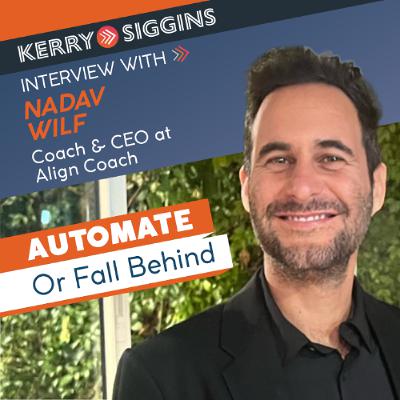
"Automate or Fall Behind" sounds dramatic, but it points to a quieter question leaders are facing in 2026: are our systems designed for how we want to lead? In this episode of Reflect Forward, I sit down with Nadav Wilf, founder and CEO of Align Coach, to explore how AI and automation can either amplify leadership clarity or reveal where teams still rely on outdated structures. This is not a conversation about chasing the latest tools. It is about building a strategic AI vision, addressing resistance to change, and creating the training cadence required for new ways of working to actually stick.
Most leaders are already experimenting with AI in some form. They have a ChatGPT subscription. They use AI to draft emails or summarize notes. Nadav draws a critical distinction between manual AI and automated AI. Manual AI creates speed in isolated moments. Automated AI creates leverage across the organization. Without that shift, companies remain stuck in fragmented experimentation rather than building scalable systems.
A central theme of this conversation is that AI adoption fails more often due to leadership behavior than to technical complexity. Leaders underestimate the importance of vision, overestimate how quickly habits change, and stop training too soon. Nadav breaks down why consistency is the determining factor. When training stops, people revert to old workflows, and leaders walk away with false proof that AI does not work.
I grounded the conversation with a real-world example from StoneAge. Instead of purchasing expensive accounts payable automation software, we built a custom GPT layered on top of our existing ERP system. In a matter of weeks, we automated manual work, accelerated internal learning, improved job satisfaction, and avoided a six-figure software spend. The win was not just technical. It was cultural. The team experienced firsthand how AI could remove low-value work and free them to focus on higher-impact responsibilities.
The episode also explores the human dynamics that quietly shape change efforts. Nadav introduces the concept of elevators, resistors, and supporters. Elevators lean in and move change forward. Supporters follow the dominant energy. Resistors, often unintentionally, can stall progress by clinging to familiar systems. Leaders who fail to name these dynamics allow resistance to run the strategy by default.
Throughout the conversation, one message becomes clear. You do not need to understand every detail of AI to lead effectively in this era. You need to take responsibility for the direction, cadence, and mindset your organization brings to it. AI is not a side project. It is an operating decision.
Automate or Fall Behind is an invitation to reflect on what you have been carrying that technology can now handle, and to move forward with intention rather than urgency. Leaders who do this well will not just be more efficient. They will create calmer teams, better work, and organizations designed for how people actually want to lead and contribute in 2026.
Connect with Nadav
Leading AI Enhanced Teams: Download our step by step guide for leaders ready to embed AI into their core operations.
Complimentary AI Strategy Session: For those with a desire for efficiency through AI implementation book your 30-minute Align AI Strategy Session to assess ROI for becoming an AI Intelligent Company.
For AI and Automation latest news and implementation, connect with Nadav on LinkedIn
Connect with Kerry
Visit my website, kerrysiggins.com, to explore my book, The Ownership Mindset, and get more leadership resources. Let’s connect on LinkedIn, Instagram, or TikTok!
Find Reflect Forward on YouTube: https://www.youtube.com/@kerrysiggins-reflectforward
Find out more about my book here: https://kerrysiggins.com/the-ownership-mindset/
Connect with me on LinkedIn: https://www.linkedin.com/in/kerry-siggins/
Most leaders don’t fail because they lack clarity. They fail because their life is not built to support who they are trying to become.
In this final episode of the Design Yourself series, I focus on the piece most leaders overlook when trying to change their leadership or their life: structure. You can have deep self-awareness and a clear leadership identity, but if your calendar, systems, and environment are misaligned, old patterns will resurface under pressure.
2026 will not test your intentions. It will test your structure.
Why Willpower Breaks Down Under Pressure
Many leaders rely on discipline and motivation to create change. The problem is that leadership rarely happens under ideal conditions. Stress, uncertainty, emotional load, and constant disruption are part of the job.
Research from Stanford University shows that environmental and structural cues drive nearly 45 percent of daily behavior, far more than conscious intention. Under pressure, leaders don’t revert to goals. They revert to structure.
Your leadership is perfectly designed for the results you are currently getting.
The Invisible Leadership Load
Decision overload, emotional labor, unresolved tension, and constant context switching create an invisible leadership load that pushes leaders back into urgency and control.
The problem is not the leader. It is the load.
Architecting your 2026 means identifying what you are carrying that you were never meant to hold alone and redesigning your life so leadership does not require constant force.
The Three Areas That Matter Most
This episode focuses on three essential design domains.
Energy design
How your day drains or restores you matters more than productivity. Leaders must protect recovery, thinking time, and white space in order to lead effectively.
Decision design
Reducing decision fatigue requires clear ownership, strong filters tied to values and strategy, and pushing decisions down instead of pulling everything up.
Relationship design
Leadership is relational. Access boundaries, feedback flow, and proximity shape how you lead and how others experience you.
Your Calendar Tells the Truth
Your calendar is not a scheduling tool. It is a leadership tool.
If your calendar does not reflect your priorities, neither will your leadership. If it doesn’t change in 2026, neither will your results.
Key Takeaways
• Willpower fades, structure holds
• Stress reveals the quality of your design
• Energy, decisions, and relationships must be intentional
• One structural shift can change everything
Mic Drop Moments
• You don’t need more discipline. You need better design.
• Stress doesn’t test your intentions. It exposes your structure.
• Build the structure, and the behavior will follow.
This episode completes the Design Yourself series by showing how to build a life and leadership that actually support who you are becoming.
Listen or watch the full episode of Reflect Forward on your favorite podcast platform or on YouTube.
Connect with Kerry
Visit my website, kerrysiggins.com, to explore my book, The Ownership Mindset, and get more leadership resources. Let’s connect on LinkedIn, Instagram, or TikTok!
Find Reflect Forward on YouTube: https://www.youtube.com/@kerrysiggins-reflectforward
Find out more about my book here: https://kerrysiggins.com/the-ownership-mindset/
Connect with me on LinkedIn: https://www.linkedin.com/in/kerry-siggins/
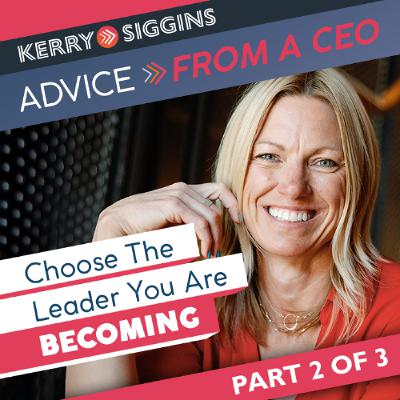
Choose the leader you are becoming, or default to the leader you have been. That is the real decision in front of you as you head into a new year.
Most leaders believe change starts with better goals. New priorities. New plans. But if you keep showing up with the same identity, the same emotional patterns, and the same nervous system responses, you will recreate the same year with different tasks.
This episode is about breaking that cycle.
Episode overview
This is Episode 2 of my three-part Design Yourself series on creating the life and leadership you want in 2026. In Episode 1, we focused on self-awareness and uncovering the default stories running your leadership. In this episode, we move from awareness to choice.
Because you cannot design a different year if you show up as the same version of yourself.
In this conversation, I break down why goals do not create lasting change and why identity does. We explore how identity is formed, how it drives behavior under pressure, and why many high-performing leaders stay stuck by clinging to versions of themselves that once worked but no longer fit.
I also share personal stories about releasing old identities and what shifted when I consciously chose who I wanted to become, not someday, but now.
Research highlight
According to research from the University of Scranton, ninety-two percent of people fail to achieve their goals. One major reason is that they focus on outcomes instead of the identity and systems required to sustain change.
Key takeaways
• You cannot design a different year if you show up as the same version of yourself.
• Identity is not fixed. It is practiced.
• Your identity drives your behavior, not the other way around.
• Leadership friction is often an identity problem, not a performance problem.
• You are designing the experience of you every day.
Mic drop moments
• Choose the leader you are becoming, or default to the leader you have been.
• Goals do not create change. Identity does.
• If you do not upgrade your identity, your life will keep bumping up against the same edges.
• You are not designing a to-do list for 2026. You are designing the experience of you.
If you haven’t listened to Episode 1 yet, start there. In Episode 3, we’ll talk about how to design a 2026 structure that supports the leader you are becoming, because you don’t need a better plan. You need a better practice.
If this episode resonated, share it with someone who’s ready to stop repeating the same year with different tasks, and subscribe to Reflect Forward wherever you listen.
Connect with Kerry
Visit my website, kerrysiggins.com, to explore my book, The Ownership Mindset, and get more leadership resources. Let’s connect on LinkedIn, Instagram, or TikTok!
Find Reflect Forward on YouTube: https://www.youtube.com/@kerrysiggins-reflectforward
Find out more about my book here: https://kerrysiggins.com/the-ownership-mindset/
Connect with me on LinkedIn: https://www.linkedin.com/in/kerry-siggins/

Most leaders are not intentionally designing their lives or their leadership. They are repeating patterns they have never questioned. It’s time to stop living by default.
As a new year approaches, it is easy to jump straight into goals, plans, and resolutions. But when those goals are created by the same unconscious patterns that shaped the year before, you do not get a new year. You get a repeat.
This episode is about interrupting that cycle.
Episode overview
This is Episode 1 of my three-part Design Yourself series on creating the life and leadership you want in 2026.
This episode focuses entirely on self-awareness. Not the kind that feels good, but the kind that is accurate. Because you cannot change what you cannot see.
We explore why self-awareness is one of the rarest leadership skills, why most leaders overestimate how self-aware they actually are, and how default stories quietly shape how we lead, decide, and show up under pressure.
I also share my own default story, the belief that I was not enough as I was and had to constantly prove myself, drive outcomes, and earn my seat at the table. That story fueled success, but it also created exhaustion, pressure, and a leadership style that no longer reflected who I truly am.
This episode will help you recognize the unconscious stories running your leadership, understand the cost of living and leading by default, and begin seeing yourself clearly enough to create real change.
Research highlight
Research published in Harvard Business Review shows that while ninety-five percent of people believe they are self-aware, only ten to fifteen percent actually are. That gap matters, especially for leaders.
Key takeaways
• Self-awareness is not insight. It is accuracy.
• You cannot change what you cannot see.
• Default stories often masquerade as strengths.
• Unexamined patterns quietly shape culture, trust, and performance.
• Self-awareness allows you to respond instead of react.
Mic drop moments
• Self-awareness is the ability to separate who you are from how you learned to survive and succeed.
• If you do not examine your patterns, you will repeat the same year with different tasks.
• What you do not see in yourself becomes the environment others have to work in.
• Self-awareness says, “That’s interesting,” instead of “That’s wrong.”
• Awareness is where ownership begins.
In Episode 2, we will move from awareness to identity and talk about how to consciously choose the leader you are becoming instead of defaulting to the one you have been rewarded for in the past.
If this episode resonated, share it with someone who is ready to stop living and leading by default, and subscribe to Reflect Forward wherever you listen.
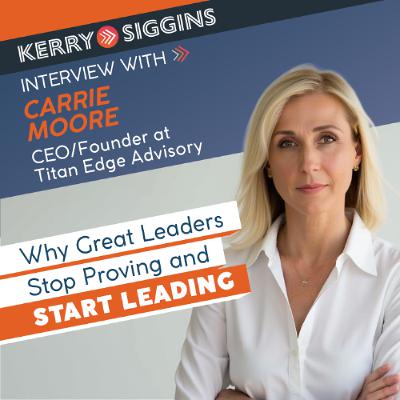
Why great leaders stop proving and start leading is the real conversation most leadership content avoids. Proving feels productive, but it quietly erodes trust, blocks collective intelligence, and keeps leaders trapped in fear-driven patterns. In this episode of Reflect Forward, I sit down with Carrie Moore, CEO and founder of Titan Edge Advisory, to explore what happens when leaders shift out of ego and into alignment, and why that shift changes how teams perform and cultures scale.
Carrie brings more than twenty years of experience across capital markets, corporate banking, and financial services. She is a Forbes Council recognized strategist and has spent the last nine years advising fast moving companies and founders navigating growth and complexity.
The Hidden Cost of Proving
At the heart of this conversation is a truth many leaders miss. When fear and unworthiness drive behavior, leaders slip into proving, defending, and explaining. This erodes psychological safety and limits collective intelligence, even when intentions are good.
Great leadership begins with self-awareness and accountability, not control.
When Challenges Become Leverage
Carrie shares how growing up dyslexic shaped her leadership, turning early fear into adaptability and resilience. I share why my own rock bottom became a turning point rather than a regret. The hardest experiences often become the source of our greatest leadership strength.
The Alignment Advantage
Alignment starts with the leader. The only relationship you can give to anyone else is the relationship you have with yourself. When identity, purpose, and behavior are aligned, clarity increases, trust deepens, and performance follows.
Leadership In the Age of AI
Rather than fearing AI, this episode reframes it as an extension of human capability. The future belongs to leaders who can simplify complexity, lead with purpose, and stay grounded in what makes us human.
Mic Drop Moments
1. Proving erodes trust faster than most leaders realize.
2. Fear does not need to disappear, but it should not lead.
3. Authenticity is a leadership advantage, not a vulnerability.
Key Takeaways
1. Notice when you are leading from fear rather than alignment.
2. Your past challenges are leadership training, not liabilities.
3. Alignment at the top shapes everything below it.
Listen and Reflect Forward
If this episode resonated, share it with a leader who could benefit from it. You can listen to Reflect Forward on your favorite podcast platform or watch it on YouTube.
Connect with Kerry
Visit my website, kerrysiggins.com, to explore my book, The Ownership Mindset, and get more leadership resources. Let’s connect on LinkedIn, Instagram, or TikTok!
Find Reflect Forward on YouTube: https://www.youtube.com/@kerrysiggins-reflectforward
Find out more about my book here: https://kerrysiggins.com/the-ownership-mindset/
Connect with me on LinkedIn: https://www.linkedin.com/in/kerry-siggins/
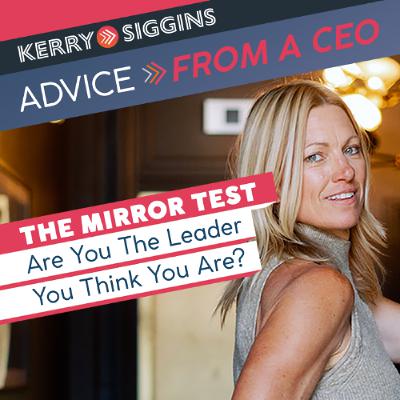
The mirror test is the hardest and most revealing challenge you will ever face as a leader. It forces you to confront the gap between who you believe you are and how others actually experience you. Most leaders avoid that truth. The best ones run toward it.
As leaders rise, fewer people are willing to give honest feedback. According to organizational psychologist Tasha Eurich, 95 percent of people believe they are self-aware, but only 10 to 15 percent actually are. That gap is where most leadership breakdowns begin.
I share two personal stories that shaped my understanding of the mirror test. The first came through 360 feedback, when I learned that my tone sometimes made people feel unsafe speaking up. I was shocked. There is a biological reason for this. Bone conduction softens the sound of your own voice inside your head, which means you hear yourself calmer and gentler than others do. My intent and impact were misaligned, and I had to recalibrate how I communicated.
The second story is about my evolution as a leader. I no longer need to win every argument. I care more about impact and alignment. But my team was still reacting to an older version of me. Internal change matters only if people can feel it or understand it. I needed to articulate what winning means for me now and how I want conversations and debates to feel going forward.
I also explore the four most common leadership blind spots—ego, defensiveness, inconsistency, and avoidance—and how these patterns quietly undermine trust, influence, and team performance when left unchecked.
From there, I walk through a simple four-step reflection framework that helps leaders realign their intention and impact.
The Four-Step Reflection Framework
1. Name the pattern
Identify exactly what you do when you are not at your best. No story. No justification. Just the behavior.
2. Look at the impact
Ask who experiences the fallout and how it affects trust, performance, and culture.
3. Ask for feedback
Accept that you cannot always see yourself clearly. Invite two or three people you work closely with to share how they experience your tone, energy, presence, listening, and consistency. Treat their input as data, not judgment.
4. Choose the correction
Define what your highest self would do instead. Pick one specific behavior to practice for the next ten days and share your commitment with someone who can help hold you accountable.
Mic Drop Moments
• Growth does not matter if no one can feel the change. Leadership is defined by how people experience you, not how you think you show up.
• If you refuse to look in the mirror, your team ends up carrying the weight of the truth you are unwilling to face.
• You are not judged by your intentions. You are judged by your impact. Leaders who forget that slowly lose the room.
• Self-awareness is not a trait. It is a choice. Every day you avoid the mirror, you choose stagnation over growth.
Key Takeaways
• You cannot outlead your own self-awareness.
• Most leaders dramatically overestimate their level of self-awareness.
• Ego, defensiveness, inconsistency, and avoidance are patterns—not flaws—and they can be changed once you see them clearly.
• The four-step reflection framework gives you a discipline to correct your behavior and improve your impact.
• True transformation begins when you choose to lead the person in the mirror first.
Connect with Kerry
Visit my website, kerrysiggins.com, to explore my book, The Ownership Mindset, and get more leadership resources. Let’s connect on LinkedIn, Instagram, or TikTok!
Find Reflect Forward on YouTube: https://www.youtube.com/@kerrysiggins-reflectforward
Find out more about my book here: https://kerrysiggins.com/the-ownership-mindset/
Connect with me on LinkedIn: https://www.linkedin.com/in/kerry-siggins/
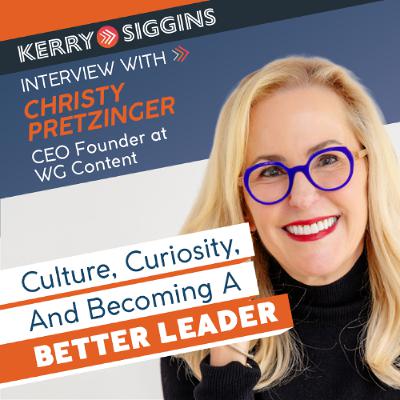
Becoming a better leader is rarely about learning something new. It is almost always about facing something true. The moment when the tactics stop working and the truth steps in. The truth that wisdom hurts before it helps. The truth that kindness is harder than control. The truth that curiosity asks you to open your heart, not just your mind.
In this conversation with Christy Pretzinger, we peel leadership back to its most human layers. The messy ones. The vulnerable ones. The ones that force you to ask, Am I showing up in a way that reflects who I want to be?
If you crave leadership that feels honest and brave and deeply connected to the person you are becoming, this episode will stay with you.
About My Guest
Christy Pretzinger is the founder and CEO of WG Content, a nationally recognized healthcare content consultancy serving major hospital systems across the country. Her proudest accomplishment is the culture she has built on four core values: empowered, curious, kind, and fun.
She is also the creator of The Better Leader Project, a cohort-based experience designed to help early-career professionals practice the power skills of leadership. Christy is the author of Your Cultural Balance Sheet, a thoughtful framework for turning cultural liabilities into assets.
What We Cover
• Building a business on kindness without sacrificing excellence
• Why authenticity requires responsibility and emotional maturity
• How simple, clear values shape decisions, behaviors, and daily interactions
• Using the Enneagram to understand pace, intensity, and interpersonal impact
• Curiosity as a leadership superpower that strengthens connection and innovation
• The challenges and strengths of Gen Z as they enter the workforce
• Why wisdom cannot be hacked, downloaded, or rushed
Key Takeaways
1. Kindness is a strategy. When values are lived and reinforced, they shape culture and performance.
2. Authenticity is not an excuse. Honesty without awareness can create harm. Responsible authenticity builds trust.
3. Self-knowledge changes everything. Tools like the Enneagram help leaders moderate reactivity and create space for others to thrive.
4. Curiosity builds connection. When you ask deeper questions, you create deeper relationships and uncover better solutions.
5. Better is always available. Leadership is a practice. We improve through reflection, repetition, and the courage to face ourselves honestly.
Mic Drop Moments
• “There is no app for wisdom. You have to earn it over time.”
• “Better, not perfect. Everyone has a better quotient they can access.”
• “Authenticity without responsibility is not leadership.”
• “Cultural liabilities can become assets when you pay attention and choose to change.”
• “We are hardwired for community. Leadership practice needs real people, real feedback, real reps.”
Connect with Christy
Why This Conversation Matters
Leadership is not about perfection. It is about awareness, courage, and evolution. This conversation with Christy offers a grounded and inspiring look at how to create cultures where people can thrive and how to become the kind of leader others trust, follow, and feel safe with.
Connect with Kerry
Visit my website, kerrysiggins.com, to explore my book, The Ownership Mindset, and get more leadership resources. Let’s connect on LinkedIn, Instagram, or TikTok!
Find Reflect Forward on YouTube: https://www.youtube.com/@kerrysiggins-reflectforward
Find out more about my book here: https://kerrysiggins.com/the-ownership-mindset/
Connect with me on LinkedIn: https://www.linkedin.com/in/kerry-siggins/
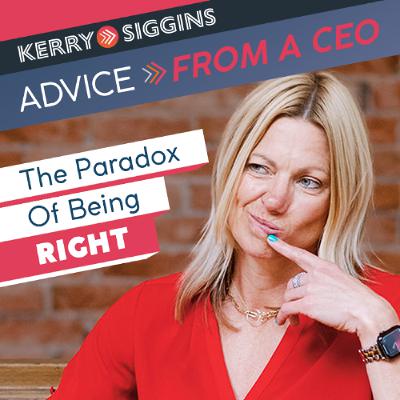
We humans love to be right. We defend our opinions. We double down on our beliefs. We dig our heels in, even when being right costs us our peace. As leaders, our attachment to rightness can quietly poison our relationships, decision-making, and emotional well-being.
In this episode, I explore the paradox of being right and why true freedom lives on the other side of letting go. I share a story about my dad, who embodies a mix of self-righteousness and self-loathing. Watching him cling to being right, even as it isolates him from the people he says he loves, has been a powerful mirror for me.
I connect this experience to leadership, to life, and to the personal transitions I am navigating right now. I share a costly patent infringement lawsuit where my desire to be right overruled my willingness to listen. I talk about my divorce and how I am intentionally choosing peace over correctness as I enter this next phase of my life and leadership.
I also dive into the concept of paradox. Two truths can be true at the same time. You can be confident and still be wrong. You can love someone and feel hurt. You can lead with strength and still change your mind. ” The ability to hold paradox is the cornerstone of emotional maturity.
Mic Drop Moments
• “The need to be right is a cage disguised as control.”
• “Freedom does not come from being right. Freedom comes from being open.”
• “When you are right, you lose nothing by listening. When you are wrong, you lose everything by refusing to listen.”
• “Two truths can be true at the same time. Emotionally mature leaders stop dying on the hill of being right.”
• “Ask yourself. Did being right today make my life better, or did it just give me a dopamine hit followed by disconnection?”
Key Takeaways
Paradox is where wisdom lives
Life is not black or white, and emotionally mature leaders understand this. Two truths can be true at the same time, and the more we can hold opposing ideas without needing certainty, the more grounded and effective we become.
Being right gives a dopamine hit, not lasting peace
Winning an argument feels good because our brains release dopamine, but the high is fleeting. Over time, clinging to rightness leads to defensiveness, disconnection, and a closed mind that keeps us stuck.
Leaders who need to be right shut down their teams
When leaders always have to be right, people stop speaking up. This shuts down ownership thinking, limits creativity, and prevents teams from challenging assumptions or offering better solutions.
The cost of being right is often hidden and high
You may win the argument but lose something far more critical, whether it is trust, money, time, or connection. When life becomes a competition instead of a relationship, the need to be right slowly erodes joy and collaboration.
Choose freedom over being right with daily practice
Freedom comes from intentional practice. Pause and get curious. Practice both/and thinking. Ask better questions. Prioritize connection over correctness. And reflect daily on whether being right actually made your life better.
A Reflection Invitation
I invite you to look at one area of your life or leadership where you might be trading your peace and freedom for the need to be right. Just one. Then experiment with letting go in that situation. Do not correct the email. Do not send the “last word” text. Do not push the point in the meeting. Let it go once and see what happens.
Visit my website, kerrysiggins.com, to explore my book, The Ownership Mindset, and get more leadership resources. Let’s connect on LinkedIn, Instagram, or TikTok!
Find Reflect Forward on YouTube: https://www.youtube.com/@kerrysiggins-reflectforward
Find out more about my book here: https://kerrysiggins.com/the-ownership-mindset/
Connect with me on LinkedIn: https://www.linkedin.com/in/kerry-siggins/
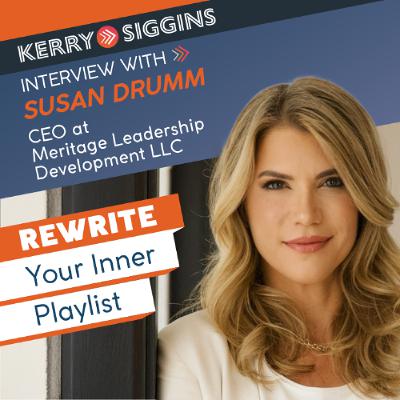
Rewrite Your Inner Playlist with Susan Drumm and discover how music and mindset can break old patterns and elevate your leadership.
Summary
If you are ready to rewrite your inner playlist, here is the truth: if you are running an inner track of “I am not enough,” life will keep handing you proof that you are not enough. Until you change the track, nothing changes.
In this episode of Reflect Forward, I sit down with Susan Drumm, CEO advisor, speaker, and author, to explore how our unconscious patterns drive our leadership and lives and how we can disrupt them using something as simple and profound as music.
Meet Susan Drumm
Susan is the bestselling author of The Leaders Playlist and founder of Meritage Leadership. She has spent more than twenty years helping leaders identify the emotional patterns holding them back and replacing them with more empowering ones. She combines neuroscience, the Enneagram, and music to help leaders create new neural pathways and transition into more conscious leadership.
Why Patterns Run the Show
Susan explains that our patterns are not just habits. They are deeply grooved neural highways formed over time, often beginning in childhood. These patterns once protected us, but now they can keep us stuck, repeating the same behaviors even when we know they no longer serve us.
The Enneagram becomes a powerful tool here because it focuses on why we do what we do. When leaders understand their underlying motivation, they stop reading everyone else through their own filter and start leading with clarity, empathy, and purpose.
I share openly about my Type Three pattern of wanting to keep everyone comfortable and how this showed up in my marriage, my divorce, and my leadership. Awareness truly is the first act of liberation.
Music as a Leadership Transformation Tool
Susan’s core method centers on the idea that music accelerates neuroplasticity, making it easier to break old emotional loops and build new ones.
The process is simple and powerful:
1. Name your old playlist (e.g., “I am unworthy”).
2. Choose a pattern interrupt song that captures that old story.
3. Create a new playlist based on an “I am” statement you want to embody.
4. Practice being in that emotional state through movement and repetition.
She shares a story of a high-achieving leader whose identity was completely tied to work. Through playlist work, he reclaimed his sense of freedom and took a six-week vacation for the first time. His company performed better without him micromanaging.
Why This Matters for Leaders
This conversation is for anyone who feels stuck in familiar loops, triggered by the same dynamics, or ready to take full ownership of their inner world.
When you change your internal playlist, you change your leadership. You change your relationships. You change your life.
Key Takeaways
• Your inner playlist shapes your external reality.
• Patterns are neural pathways—once protective, now restrictive.
• The Enneagram helps you understand motivation, not just behavior.
• Music accelerates real emotional and leadership transformation.
• Owning your triggers is an act of power, not blame.
Mic Drop Moments
1. “If you are running a playlist of ‘I am not enough,’ life will keep giving you evidence of that.”
2. “You built the cage—and you are holding the key.”
3. “You are not your title or success. You are your joy, impact, and freedom.
Connect with Kerry
Visit my website, kerrysiggins.com, to explore my book, The Ownership Mindset, and get more leadership resources. Let’s connect on LinkedIn, Instagram, or TikTok!
Find Reflect Forward on YouTube: https://www.youtube.com/@kerrysiggins-reflectforward
Find out more about my book here: https://kerrysiggins.com/the-ownership-mindset/
Connect with me on LinkedIn: https://www.linkedin.com/in/kerry-siggins/
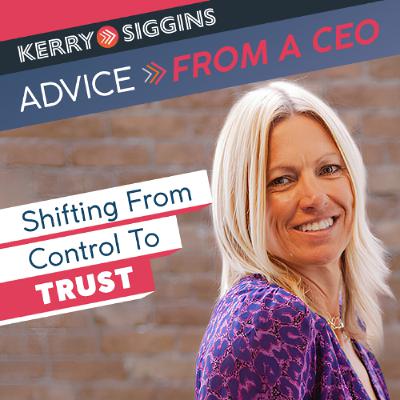
Control is rooted in fear. Trust is rooted in strength. And when you shift from control to trust, you become a better leader.
Control often stems from a fear of being judged, a fear of things going wrong, or a fear of losing influence. I used to believe that control equals competence. The more I managed outcomes, the more successful we would be. But what I eventually learned is that control does not create confidence; it kills it.
Trust, on the other hand, unlocks potential. It multiplies leadership. It builds teams who think critically, act boldly, and take ownership for results.
In this episode of Reflect Forward, I share how I transformed my leadership by moving from control to trust and why this shift changed everything for me, for StoneAge, and for my team.
The turning point
During the pandemic, everything changed. Suddenly, I was not in the office every day. People could not walk into my office for a quick answer or to bounce ideas off me. At first, it was disorienting. If I were not the glue holding everything together, what value did I bring?
But something surprising happened: my team flourished. They made smart decisions, collaborated effectively, and solved problems without me. That was the moment I realized I had been the roadblock. My need for control, disguised as involvement, had held them back.
It was humbling to realize that control does not build leaders. Trust does.
As Stephen M. R. Covey says, “Control leads to compliance. Trust leads to commitment.” That realization became one of the most important lessons of my leadership journey.
The three dimensions of trust
Over time, I developed a simple framework to guide me in leading with trust instead of control.
1. Competence – Believe in their capability.
Trust that your people can figure things out, even if they do it differently than you.
2. Character – Believe in their integrity.
Know that they will do what is right, even when you are not watching.
3. Connection – Show them they matter.
Why trust matters
According to research by Paul Zak published in Harvard Business Review, employees in high trust companies report 74 percent less stress, 106 percent more energy, and 50 percent higher productivity than those in low trust environments.
Trust is not soft; it is smart. It is the foundation of ownership, performance, and innovation.
As Sheryl Sandberg put it, “Leadership is about making others better as a result of your presence and making sure that impact lasts in your absence.” That is exactly what trust does.
Mic drop moments
• “Control does not build leaders. Trust does.”
• “Ownership and control cannot coexist.”
• “When I stopped trying to control everything, I found something I did not expect: freedom.”
• “Coaching is adding considerations without taking back the decision.”
Key takeaways
1. Control is rooted in fear. Trust is rooted in strength. Check your motives before you step in.
2. You cannot create ownership without giving up control. Ownership requires autonomy.
3. Trust is active, not passive. Equip people, ask better questions, and coach instead of direct.
4. Develop thinkers, not followers. Build people’s confidence in their own judgment.
5. Letting go multiplies your influence. When you lead with trust, leadership spreads.
Connect with Kerry
Visit my website, kerrysiggins.com, to explore my book, The Ownership Mindset, and get more leadership resources. Let’s connect on LinkedIn, Instagram, or TikTok!
Find Reflect Forward on YouTube: https://www.youtube.com/@kerrysiggins-reflectforward
Find out more about my book here: https://kerrysiggins.com/the-ownership-mindset/
Connect with me on LinkedIn: https://www.linkedin.com/in/kerry-siggins/

Comments

Download from Google Play

Download from App Store
 United States