


 Claim Ownership
Kitchen Table Finance
Subscribed: 3Played: 97
Subscribe

Description
Pull up a chair with David and Nick for warm, real conversations about money, purpose, and building the life you truly want. Focused on clarity and confidence, they help you move from uncertainty to a plan rooted in your values. Whether you’re a lifelong educator, public service professional, or someone preparing for a meaningful retirement, this podcast meets you where you are. But planning is never just about what is going on in the headlines or the markets—it’s about using your resources to live a life with meaning and intention. This show is about financial advice, but so much more than 403(b)’s, pensions, taxes, and retirement. Expect thoughtful conversations, practical strategies, and a welcoming space to reflect on your goals, values, and the kind of legacy you want to create. We want you to stay focused on what matters most: living well and protecting what you’ve built.
227 Episodes
Reverse
Life Planning, Retirement, and Why It Is “Never About the Money”
In this episode, Dave flips the script and interviews Nick about how life planning has become a core part of the SRB client process. Nick shares how training with George Kinder and the EVOKE model shaped the way SRB helps clients think through retirement, not just from a numbers standpoint, but from the perspective of values, priorities, and real life goals.
They walk through how the EVOKE structure fits into SRB’s retirement planning work, what actually happens in those conversations, and the kinds of insights clients discover when they finally slow down and think about what they want the next phase of life to look like. Nick also explains why most client “dreams” are less about big, flashy goals and more about time, family, and reducing worry.
You will hear:
How SRB discovered life planning through George Kinder’s work
A plain language overview of the EVOKE process and how SRB uses it with new retirement clients
Why the first three stages focus on widening the conversation beyond money
Real outcomes from clients who learned they were either not ready to retire or more than ready
Why many clients already have “enough” and what to do with that knowledge
How life planning shifts decisions about Roth conversions, gifting to kids, and travel
The link between clear life goals and better follow through on investment and tax strategies
How life planning helps advisors avoid assumptions about what clients value
Why the plan on paper will always change, and why that is expected
Nick’s experience being life planned himself, and why he keeps going back to the process
How SRB is expanding life planning capacity by training Cole as a Registered Life Planner
If you are approaching retirement, feel like you might have “enough” but are not sure what comes next, or want your financial plan to reflect your real life priorities, this conversation will give you a feel for how life planning works at SRB and why it might be the missing piece in your retirement planning.
Ready to talk about your own life plan?Start with a relaxed fit meeting to see if SRB is a good match for your needs.
Visit: srbadvisors.com
Contact: info@srbadvisors.com
Subscribe to Kitchen Table Finance for more conversations about retirement, investing, and planning for the future.
https://youtu.be/1xbJ_Uhvpfg
A lot of people plan for retirement financially. Fewer people plan for it physically. On this episode, Nick talks with Julie Wilde, a former global business leader who reinvented her career as a health coach. Julie works with busy professionals, couples, and retirees to help them build energy, reduce stress, and feel better in their daily lives as they transition toward retirement.
Watch on YouTube HERE
In this conversation, Nick and Julie dig into:
• Why your health is one of the most valuable assets you have in retirement• Why prevention and daily habits matter more than quick fixes• How small changes can lower risk for expensive health problems later• What it really means to build a strong foundation for healthy aging• Why health is emotional, just like money• Why it is so easy to set health goals and still not follow through• The mindset shift that helps people finally commit and get results
Julie also walks through a simple first step for anyone who is five years or less from retiring. She explains how to assess where you are, what is working, and where you may want to improve. She calls this gaining clarity. You can download her Health Clarity Review HERE.
Key ideas from this episode
Your health is an investment, not an afterthought.Julie makes the case that your health is something that compounds over time, just like retirement savings. Most of us would spend any amount of money to get our health back once we lose it. So it makes sense to protect it now instead of waiting.
Give your health a place at the front of the line.For many people in their 50s and 60s, work, kids, grandkids, and obligations tend to crowd out basic self care. Julie suggests one simple shift. Move health from the bottom of the list to the top. When you make that mental change, your habits begin to follow.
Build your foundation before you retire.Good sleep, steady movement, stress management, and food choices that actually fuel your body are not complicated ideas. The challenge is making them consistent. Julie explains why this foundation can help you stay active longer, delay or reduce medical costs, and enjoy what you saved for.
Track how you feel, not just a number on the scale.Nick and Julie talk about how easy it is to let a number define success. Body weight. Step count. Sleep score. Those tools can help, but they are not the whole story. Julie recommends paying attention to signals from your body and even keeping short notes about energy, sleep quality, and mood over time.
Why people struggle to follow through.Most people have good intentions. The problem is commitment. Julie explains why being fully in matters. When your goals and your daily habits are not aligned, you get stuck in repeat mode. When they line up, change finally happens.
Getting Started
Julie shares a simple exercise you can do in about five minutes:
Write down why your health matters to you in this stage of life.
Rate yourself in areas like sleep, energy, movement, stress, and eating habits.
Note one small action for each area. That becomes the start of your personal plan.
Resources mentioned in this episode
Health Clarity Review download
Connect with Julie WildeWebsiteLinkedIn
About Julie Wilde
Julie Wilde is the founder of Transformed With Wellness. She works with professionals, couples, and groups through a whole person approach she calls 10 Weeks to Transformation. Her focus is simple. Help people build energy, feel better, and stay capable in the years leading up to retirement and beyond.
About Kitchen Table Finance
Kitchen Table Finance is hosted by Nick Nauta and Dave Shotwell of Shotwell Rutter Baer. We help clients plan for retirement with clarity and confidence. If you would like to start the retirement planning conversation, visit srbadvisors.com to schedule a fit meeting.
info@srbadvisors.com
Subscribe to our YouTube Channel!
In this quarter-end chat, Dave Shotwell and Nick Nauta unpack what actually happened in Q3 2025 and why portfolios held up despite a steady stream of gloomy headlines. They cover broad market strength, the first Fed rate cut in September, what a government shutdown usually means for markets, and how to think about AI spending without trying to pick winners.
Our portfolio advisors at East Bay Investment Solutions provide the following summary, and as always, they try to take a balanced approach between reasons for optimism and pessimism. You can read their full report HERE or watch Mario’s video presentation HERE.
https://youtu.be/yoM8rETe5FI
Highlights
Broad gains: Most major stock and bond categories finished Q3 positive, while U.S. REITs lagged.
60/40 perspective: A diversified mix of global stocks and high-quality bonds continued to post solid results with less day-to-day swings than a pure stock approach.
Fed update: After a September cut, the policy rate sits in a middle range, giving room to adjust up or down as data changes.
AI reality check: Corporate spending tied to AI is robust, but future revenues remain uncertain. Diversification helps you own the eventual winners without betting the farm.
Shutdown noise: Historically, market returns during federal shutdowns have been mixed and often muted. Time in the market still matters more than headline timing.
Planning first: Your financial plan is built for many markets, not just the current one.
By the Numbers
Fed funds target range: 4% to 4.25%
Cumulative AI spend (through last year): about $211 billion
Average S&P 500 return during shutdowns: about 0.11%
Year-to-date result cited for a 60/40 portfolio: 12.6%
Resources and next steps
Learn more or schedule a fit meeting: srbadvisors.com
Email: info@srbadvisors.com
Don't forget to subscribe to our YouTube Channel for all the latest videos.
Guest: Kevin Skarritt (pronounced “scare it”)
Kevin shares a real-world look at retiring in stages, shifting identity after work, and building a life that feels meaningful day to day. From an early career on the trading desk to web development, branding, and agency ownership, Kevin eventually traded deadlines for woodworking, stained glass, music, and time on the water in Ludington, Michigan. He talks candidly about timing a move, budgeting with a spouse, the value of a trusted financial planner, and adapting when health surprises change the plan.
https://youtu.be/ilmQXiLMTT4
What We Cover
From markets to makerspace: Kevin’s path from Series 7 stockbroker to web and branding agency owner, then into retired life filled with creative projects.
The 2008 reset: How losing key clients forced hard choices and a cross-country move, with college costs on the horizon.
Planning the pivot: Talking through retirement years in advance, right-sizing lifestyle, and using a financial plan to set boundaries that still allow for joy.
Retire to something: Why it helps to list hobbies, volunteer ideas, and part-time interests before you leave work.
When plans change: Health events that limited some outdoor goals, and how Kevin built a deep bench of interests so he never feels stuck.
Home base by the lake: Why Ludington checked the boxes for nature, trails, and a strong arts community.
Money talk as a team: Budgeting styles in marriage, aligning on priorities, and the simple rule they use now: if it brings real joy and fits the plan, it’s worth it.
Time apart matters: Practical advice for couples who suddenly spend every hour together after retirement.
Kevin’s Practical Tips
Start retirement talks early and revisit them regularly.
Work with a financial advisor to set spending guardrails you can trust.
List at least three activities you can do if your first choice becomes tough.
Build structure in your week even without a traditional schedule.
Plan for healthy space as a couple.
Listener Takeaways
Retirement works best when you know what you are going to, not only what you are leaving.
A clear plan gives you confidence to spend on what matters.
Flexibility is a skill; practice it before you need it.
Timestamps
00:00 Intro and guest welcome
02:10 Kevin’s winding path through finance, science, and the web
10:45 Agency downturn, relocation, and college bills
17:40 Early retirement talks and the role of planning
23:20 “Retire to something” and building a bench of interests
28:30 Health surprises and staying adaptable
33:10 Why Ludington and the pull of the arts community
38:00 Budgeting together and spending for joy
43:10 Time apart for couples in retirement
46:30 Final thoughts and contact info
Connect With Us
Have questions about your own retirement timeline? Start with a Fit Meeting at srbadvisors.com or email info@srbadvisors.com.
The Fed has been everywhere in the headlines. In our latest Kitchen Table Finance episode, we explain what the Federal Reserve is, why its independence matters, and how a rate-cutting cycle may ripple through cash yields, bonds, and mortgages. If you’re 6–18 months from retirement, we also share level-headed steps to keep your plan on track.
https://youtu.be/thvg8Gti424
What we cover:
Fed 101: Why the Fed was created, how it’s structured, and its main goals: price stability and maximum employment.
Independence matters: How keeping the Fed insulated from short-term politics supports confidence in the dollar and long-term stability.
Goldilocks problem: Balancing a cooling labor market with inflation risks, tariffs, and growth.
Portfolio takeaways: Why “don’t fight the Fed” is a useful reminder, and why we don’t overhaul portfolios based on predictions.
Cash, CDs, and bonds: What a falling-rate environment can mean for yields, existing bonds, and locking CDs.
Mortgages & refi: Practical thresholds for when to explore refinancing and why you shouldn’t buy a home assuming a quick refi.
Pre-retiree checklist: How to think about cash buffers, bond exposure, and staying invested if retirement is 6–18 months away.
Practical tips:
Keep enough cash for near-term needs; avoid parking excess cash for long stretches if yields are sliding.
Bonds may benefit as rates fall; new issues price lower yields, supporting existing bond values.
CDs can help smooth falling yields, but remember reinvestment risk when they mature.
Refinancing: Start running numbers when rates are roughly 1 percentage point below your current mortgage rate.
Stay the course: Markets look ahead. Rate cuts often follow softness that has already been priced in.
Resources
Thinking about retiring soon or adjusting your plan? Schedule a relaxed “fit” conversation at SRBadvisors.com and let’s make a plan that fits your life.
Email us at SRBadvisors.com to connect with our team.
Learn about the Strategic Reliable Blueprint which is our process for building a financial plan that works for your future.
Subscribe to our YouTube channel for helpful conversations and practical retirement planning tips.
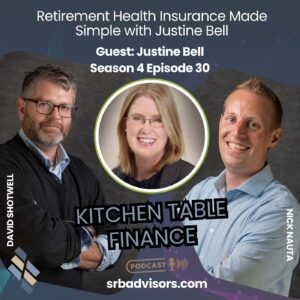
Health insurance in retirement does not have to be confusing. In this episode, Nick talks with Justine Bell of BeneGuides about marketplace coverage before 65, Medicare at 65, and how to compare real-world costs based on your doctors, prescriptions, and budget. We cover timing, penalties, and why an annual re-enrollment check can keep you from paying more than you need to.
https://youtu.be/z-SnGX-qR88
What we cover
Why working with a health insurance specialist costs you nothing and often saves time and trouble
The five questions BeneGuides asks for marketplace plans: county and ZIP, ages, who is on the tax return, doctors and prescriptions, and expected MAGI
How to think about “average year” costs vs “worst-case” out-of-pocket risk
When bronze plans make sense and when to step up for drug coverage
Medicare 101: Original Medicare, Medicare Advantage, and Medigap basics
How to time your Medicare enrollment, including the first-of-the-month birthday quirk
Why BeneGuides re-enrolls every client each year and stays on top of formularies and plan changes
What may change in 2026 and why this open enrollment deserves a careful review
Key open enrollment windows to mark on your calendar
Dates to know
Medicare plan review starts October 1
Medicare enrollment runs October 15 through December 7
Marketplace open enrollment runs November 1 through December 15
Contact BeneGuides
Email: health@beneguides.com
Phone: 517-939-1981
Team: Lauren and Kylie (Medicare), Liz and Andrea (Marketplace), Daniel (Group coverage)
Resources mentioned
Medicare 101 webinar from BeneGuides
Listen to the full episode for the complete conversation and practical next steps.
About Shotwell Rutter Baer
At Shotwell Rutter Baer, we believe retirement planning should feel simple and personal. As independent, fee-only financial advisors, our priority is you. We are not paid by commissions or product sales. Instead, our advice is focused on helping you make clear decisions about your money, your retirement, and your future.
We are proud to serve individuals and families who want practical guidance, a reliable strategy, and a trusted partner for every stage of life. Whether you are just beginning to think about retirement or you want to fine tune your income plan, we are here with straightforward advice and a plan that reflects your goals.
Resources
Email us at SRBadvisors.com to connect with our team.
Learn about the Strategic Reliable Blueprint which is our process for building a financial plan that works for your future.
Subscribe to our YouTube channel for helpful conversations and practical retirement planning tips.
Taxes aren’t usually described as “big and beautiful,” but the new tax bill brings plenty of changes worth understanding. In this episode of Kitchen Table Finance, Nick sits down with Matt Cooper, CPA and owner of Matthew Accounting in DeWitt, Michigan, to unpack what these updates mean for individuals and small business owners.
https://youtu.be/MTJXctr_nf8
Together, they cover what’s changing, what’s staying the same, and what opportunities you may have to better plan for your financial future.
Highlights from the Conversation:
Tax Brackets & Standard Deduction: Both remain permanent, with inflation adjustments built in.
Charitable Contributions: Above-the-line deductions return—up to $2,000 for joint filers—even if you don’t itemize.
State and Local Taxes (SALT): Deduction cap temporarily increases from $10,000 to $40,000.
Car Loan Interest: Interest on new vehicles assembled in the U.S. is now deductible up to $10,000.
Social Security Benefits: Still taxable, but seniors get an additional deduction ($6,000 single / $12,000 joint).
Tips & Overtime Pay: Both receive new, limited tax carve-outs.
EV & Clean Energy Credits: Phasing out by late 2025—home improvement credits end sooner.
Takeaway: Tax laws will continue to change, but now is the time to take advantage of the opportunities available. Proactive planning with your financial advisor and tax professional can make a real difference.
Resources:
Contact SRB Advisors: info@srbadvisors.com | srbadvisors.com
Connect with Matt Cooper: Matthew Accounting – DeWitt, MI
Website: matthew-accounting.com
Email: info@matthew-accounting.com
Phone: (517) 668-9000
Main Office: 124 E Washington St, Suite H, DeWitt, MI 48820 (Matthew Accounting, Matthew Accounting)
They also have a presence in Lansing, MI, with a contact number of (517) 258-1424. (Matthew Accounting)
If you're interested in their services, you can schedule a no-obligation consultation through their Contact Us page.
Don’t forget to subscribe to the Kitchen Table Finance podcast and YouTube channel so you never miss an update on your money and retirement planning.
Welcome back to Kitchen Table Finance, the podcast where we serve up bite-sized financial advice to simplify your money and your life. Pull up a chair with hosts Dave Shotwell and Nick Nauta as they dive into the latest retirement and financial planning headlines from June and July.
You can also check out this episode on our YouTube Channel.
This episode is packed with insights drawn from real articles, client questions, and timely topics that matter for anyone preparing for or living in retirement.
What We Cover in This Episode
Why family conversations matterLessons from a Wall Street Journal piece on talking about death, money, and estate planning before it’s too late.
Investment basics worth repeatingA New York Times interview with Charlie Ellis reminds us that time—not timing—is the most powerful factor in investment success.
Required Minimum Distributions (RMDs)Should you take them monthly or as a lump sum? We share the pros, cons, and common client approaches.
The housing conundrumWith today’s higher interest rates, is it wise to move, refinance, or rent in retirement?
Long-term care concernsHow facility bankruptcies and changes in ownership can affect your planning—and why evaluating stability is just as important as cost.
Turning savings into incomeExploring strategies beyond the “4% rule,” including how lifestyle, taxes, and inflation affect your drawdown plan.
Helping adult childrenWhat happens if you want—or feel you need—to provide financial help to your kids, and how to plan for it without derailing your own retirement.
Rethinking homeownership in retirementWhy renting is becoming more common among retirees, and how flexibility can be a hidden benefit.
What to ask a financial advisorFrom fiduciary status to technology, a fresh look at the questions you should ask before choosing an advisor.
Top retirement fearsHealthcare costs, inflation, market downturns, and recession worries—what surveys are showing and how planning can reduce stress.
The long-term care insurance puzzleChristine Benz of Morningstar shares when it might make sense, and how peace of mind often factors into the decision.
Key Takeaway
From family conversations to navigating market fears, the headlines this summer remind us of one truth: a thoughtful plan brings confidence. The best step you can take is to prepare ahead and make sure your strategy is tailored to your life and goals.
If you come across an article you’d like us to review, send it our way at info@srbadvisors.com.
Let’s TalkAt Shotwell Rutter Baer, trust is the foundation of what we do. Whether you’re planning for retirement, managing investments, or building a financial strategy for your future, we’d love to see if we’re the right fit for you. Visit srbadvisors.com to learn more.
Don’t forget to subscribe to our podcast on your favorite platform—and on YouTube—to keep up with every new conversation.
https://youtu.be/Ga6XssMhozY

When a grandchild arrives, it’s more than a joyful addition to the family — it can also bring new considerations for your retirement plan. In this episode of Kitchen Table Finance, Dave shares his own recent experience becoming a grandfather and how it’s shifted his financial focus.
Nick and Dave talk through Grandparents' Retirement Plans:
Why Dave moved from contributing to his adult children’s Roth IRAs to funding a 529 college savings plan for his granddaughter.
The pros and cons of grandparents owning the 529 versus letting parents manage it.
How to avoid “overfunding” a college plan when multiple family members are contributing.
Why the Michigan 529 plan ranks among the top in the country — and how residents get an extra tax perk.
How 529 plan rules have evolved, making funds more flexible for K–12, trade schools, and even Roth IRA rollovers.
Balancing helping family with making sure your own retirement savings are on track first.
Dave also shares some lessons learned from starting his own kids’ 529 plans back in 2001 — and how even small, consistent contributions can add up over time thanks to compounding.
Whether you’re a new grandparent or just starting to think about how you want to help the next generation, this episode will give you practical, real-world insights you can put into action.
Subscribe to Kitchen Table Finance
Don’t miss an episode — subscribe to our YouTube channel for more friendly, down-to-earth financial advice: YouTube.com/@KitchenTableFinance
https://youtu.be/KGnNPiD_gf0
Welcome back to Kitchen Table Finance with hosts Dave Shotwell and Nick Nonna! In this quarterly market update, Dave and Nick walk through the rollercoaster that was Q2 2025. From unexpected returns to ongoing uncertainty, this episode offers a grounded, no-nonsense take on what’s happening in the markets—and what it might mean for your financial plans.
Q2 Surprises: Despite a rocky start in April, markets closed the quarter on a strong note. A 60/40 portfolio returned an impressive 6.5% for the quarter.
https://youtu.be/Uf9SXXxUO0k
Glass Half Full:
Large-cap U.S. stocks bounced back, with big names driving growth
Bonds held strong, even as the U.S. debt was downgraded
Inflation declined to 2.4% by May, despite tariff pressures
Labor and macroeconomic data remained solid
Glass Half Empty:
Trade policy and tariffs continue to create uncertainty
The U.S. credit downgrade in May raises long-term concerns
Ongoing geopolitical conflicts in the Middle East and Ukraine
Unclear full impact of tariffs on prices and inflation
Special Insights:
The S&P 500 hit 9 all-time highs in the first half of 2025
A 9.5% single-day increase in April proves timing the market is nearly impossible
Real-world example: Dave shares how a small business passed along a 10% tariff on a product from Italy—and what that means for consumers and small businesses alike
Inflation uptick in June to 2.67% might signal future pressures
Key Takeaway
Even with market noise, surprises, and headlines, long-term planning remains the cornerstone of financial success. This episode reinforces why staying disciplined and focused on your plan is more important than reacting to short-term news.
Looking for guidance through the ups and downs of the market? It all starts with a Fit Meeting—a relaxed, no-pressure conversation to see if we’re the right financial partner for you.
Contact us at info@srbadvisors.com or visit srbadvisors.com
Don't forget to subscribe to our YouTube channel for more updates and episodes!
With Michigan State University announcing potential layoffs and buyouts, financial anxiety is growing—not just in East Lansing, but across many university communities. In this episode, Dave and Nick share practical, down-to-earth advice for those facing employment uncertainty.
This isn’t just for MSU employees—anyone experiencing a rocky job outlook can benefit from the financial strategies shared in today’s conversation.
https://youtu.be/CSGaoVsvG-4
What You’ll Learn in This Episode:
The #1 thing to have in place before a job loss: a well-funded emergency fund
How to cut discretionary spending and increase your financial “runway”
Why now is a good time to review your retirement readiness—even if you don’t plan to retire yet
Health insurance options if you lose employer coverage (COBRA, ACA Marketplace, Medicare)
Smart moves around debt, 403(b) loans, and accessing retirement accounts
How to avoid emotional decision-making in uncertain times
Strategic ideas like home equity lines of credit or Roth conversions in low-income years
Why a financial check-in helps—even if layoffs never happen
Resources Mentioned:
A helpful checklist so you can review and act on these tips in your own time. Download HERE
Need Help Planning?If you’re feeling uneasy about your financial future, we’re here to help. Contact SRB for a no-pressure conversation at info@srbadvisors.com or visit srbadvisors.com to schedule a chat.
Subscribe for More:Don’t miss an episode—subscribe to the Kitchen Table Finance YouTube channel and wherever you get your podcasts.
When the kids move out and the house gets quieter, life—and your finances—enter a whole new chapter. In this episode, Dave and Nick talk about the often-overlooked financial opportunities (and pitfalls) that come with becoming an empty nester. From downsizing and budgeting to increasing retirement contributions or finally testing the snowbird lifestyle, this is your chance to reimagine the next stage of life.
https://youtu.be/4nZfHhDv_kA
What You’ll Learn
How becoming an empty nester creates new financial flexibility
Tips for reevaluating your budget, savings goals, and mortgage
Why this is a prime time to ramp up your retirement planning
The emotional (and financial) difference between “empty nester” and “off the payroll”
Why having honest conversations with your adult kids is more important than ever
How grandkids and geography might play into your future plans
Real stories from Dave and Nick’s own families
Listener Takeaway
Whether you're already in the empty nest phase or you see it on the horizon, use this time intentionally. Make a plan. Talk to your spouse. Talk to your kids. And most of all—know how your choices today will shape your retirement tomorrow.
📞 Ready to Reassess?
At Shotwell Rutter Baer, it all starts with a no-pressure fit meeting. Visit srbadvisors.com or email us at info@srbadvisors.com to take the first step.
In this episode, Dave and Nick (back from vacation) tackle a wide mix of financial headlines so you don’t have to. From stock market shifts to Social Security panic, long-term care planning, and yes—even pet insurance—this episode covers the real-life stuff affecting your money and your future.
https://youtu.be/Pst2wmkjOC8
Here’s what we dig into:
Mistakes in Today’s Stock MarketWhat Jason Zweig says about growth vs. value stocks, and why diversification and rebalancing are more important than ever.
Social Security: Fear vs. FactsWe break down recent updates, insolvency projections, and why panic may not be the smartest plan.
Retirement Medical Costs You Might Not See ComingDrug coverage, isolation, concierge care—the hidden costs that can sneak up on retirees.
Wall Street Journal: The Underestimated Cost of Healthcare in Retirement
Annuities: Are They Right for You?Christine Benz offers a balanced view, and we chime in with when annuities can actually be a smart move.
Financial Advice: Who’s Selling You Candy?Not all free financial advice is created equal. We explain how to spot the difference between helpful insights and someone trying to sell you something.
Pet Insurance: Necessary or Nonsense?We unpack the rising cost of pet ownership and whether those monthly premiums really make sense.
The True Cost of Owning a Dog
Long-Term Care Planning in MichiganA recent study shows most older Michiganders aren’t prepared. We walk through five important steps everyone should consider.
Retire Now or Wait It Out?Is delaying retirement a smart move, or just headline-induced anxiety? We explain how to evaluate your real readiness.
Side Hustles, Late-Night Logins, and the Evolving WorkforceThe post-pandemic work world is shifting fast. We talk about how remote work, second jobs, and burnout are changing retirement planning—and what that means for you.
Americans are Sidehustling Like We Are In a Recession
Pull Up a ChairThis episode is full of down-to-earth discussion, financial clarity, and a few laughs along the way. As always, we’re here to make your retirement and financial planning a little less overwhelming.
Have an article you'd like us to cover? Email us at info@srbadvisors.comWant to see Nick’s vacation shirt in all its glory? Subscribe to our YouTube channel.
Ready to get serious about your finances?Schedule your fit meeting today at srbadvisors.com
Riding the Market Roller Coaster: Lessons from a Wild Spring
It’s been a bumpy ride in the markets this spring, and in this episode, Dave and Cole (filling in for Nick) sit down to talk through what happened, what it means for investors, and how to move forward with confidence.
https://youtu.be/OlXVM0GV66M
From steep drops to quick rebounds, the market has kept everyone on their toes. They break it all down in plain language and share their thoughts on:
What actually happened in March and April—and why it felt so extreme
The difference between risk tolerance and risk perception (and why you might feel differently now than you did a few months ago)
Why doing nothing might have been the smartest move
How diversification helped soften the blow for many investors
The importance of keeping short-term savings and goals top of mind
Whether you stayed calm, felt anxious, or made some changes to your portfolio, there are lessons to take from all of it. They offer practical advice for what to do next, how to think about your investments going forward, and why focusing on your long-term goals is still the best approach.
This is a great episode for anyone wondering: Did I handle that market swing the right way?
🎧 Listen now to hear why market timing is a trap, what to do if you bailed, and how financial advisors really invest their own money (hint: it’s simpler than you think).
🔗 Visit SRBAdvisors.com for more resources or to schedule a chat with one of our advisors.
📺 Subscribe to the Kitchen Table Finance podcast on YouTube and wherever you get your podcasts.

Welcome back to Kitchen Table Finance, where we serve up bite-sized financial wisdom with a side of common sense. In this episode, Dave and Nick tackle one of the biggest financial questions for retirees: Should you buy a house in retirement—or just stay put?
Here’s what’s on the table:
Why timing the housing market is just as tricky as timing the stock market
The emotional side of downsizing—yes, those red velvet ropes for the kids’ old rooms count!
Why small homes are in big demand—and what that means for prices
Mortgages in retirement: fact vs. fiction (Hint: You can get one)
The pros and cons of paying off your mortgage vs. keeping your investments liquid
Real-life scenarios showing the costs of “downsizing” and whether it actually saves you money
Alternatives like renting, reverse mortgages, and bridge loans
The surprising truth about homeownership and wealth-building
https://youtu.be/P5JAiS8dDuY
The big takeaway?
It’s not just about the numbers—it’s about your goals, lifestyle, and peace of mind. Whether you're dreaming of a maintenance-free condo or a cozy ranch to age in place, there are lots of options to make it work.
Need help sorting through the details of your own housing plan? Let’s chat. Start with a free, no-pressure Fit Meeting to see how we can help you build a retirement that fits you.
👉 Visit srbadvisors.com or email us at info@srbadvisors.com to get started.
🎧 Don’t forget to subscribe so you never miss an episode of Kitchen Table Finance!

Roth Conversions: Worth It or Not?
Welcome back to the Kitchen Table! In today’s episode, Dave and Nick take a deeper dive into the world of Roth conversions—what they are, how they work, and whether or not they make sense for your retirement plan.
This isn’t your average tax talk. We’re serving up a practical, no-pressure conversation about a tool that gets a lot of hype—and a lot of confusion. From “backdoor” and “mega backdoor” conversions to tax brackets, timing, and even state-by-state considerations, we break it down so you can decide if a Roth conversion fits into your financial picture.
https://youtu.be/1R9DGmRya_Q
In This Episode:
What is a Roth conversion and how does it work?
The pros, cons, and “it depends” of using this strategy
How tax brackets and future income impact your decision
Real-life scenarios: early retirement, variable income, and legacy planning
Roth conversions and their effect on RMDs (Required Minimum Distributions)
When it’s better to wait—and when it might pay to act now
Takeaway
Roth conversions can be a smart move, but they’re not for everyone. As always, your financial goals, current tax situation, and long-term plans matter most. Don’t follow the crowd—make a choice that fits YOU.
💬 Have questions or want to nerd out with us?Email us at info@srbadvisors.com or visit SRBAdvisors.com to schedule a friendly, no-pressure fit meeting.
🔔 Don’t forget to subscribe so you never miss an episode—and let’s keep simplifying your money and your life.
☕ Until next time, keep the coffee hot and your questions coming.

Hosts: Nick and guest advisor Cole WilliamsSpecial Guest Absence: Dave is off living his best life in Bozeman, Montana (hopefully catching trout and not taxes).
In this episode of Kitchen Table Finance, we take a deep dive into one of retirement’s least sexy—but most critical—topics: taxes. Whether you’ve just filed and are ready to forget about them until next year (don’t), or you're actively planning your golden years, this episode is packed with straight talk and strategies to help you keep more of what you’ve worked so hard for.
https://youtu.be/1XkZhAKdR-A
What You’ll Learn:
How taxes work in retirement – Spoiler: it's not like your working years.
Three ways to pay your taxes once the paycheck stops – Withholding, estimated payments, or via pensions/social security.
Which accounts to draw from and when – Taxable, pre-tax, or Roth? The order matters more than you think.
What RMDs (Required Minimum Distributions) mean for your tax bill – Plus, when they start depending on your birth year.
Tax traps to avoid – Including Medicare surcharges (IRMAA), net investment income tax, and surprise Social Security taxation.
When Roth conversions make sense – Hint: it's not one-size-fits-all.
Giving back smartly – How Qualified Charitable Distributions (QCDs) can keep your heart warm and your taxes low.
Special account strategies – HSA withdrawals, leftover 529 plans, and even employer stock gains through Net Unrealized Appreciation (NUA).
What if the tax laws change? – Because, well… they will.
Nick and Cole don’t just dump info—they break it down so you can understand how to apply it, avoid common missteps, and stay ahead of Uncle Sam without losing sleep.
Related: How to Adjust Your Retirement Income
Resources Mentioned:
Flowcharts and planning tools available upon request
Income Lab software insights for long-term planning
A healthy dose of common sense and humor (yes, about taxes)
Ready to get a grip on your retirement tax strategy?Start with a Fit Meeting—no pressure, just a chat. Visit srbadvisors.com or email us at info@srbadvisors.com.
Don’t forget to subscribe to our YouTube channel for more down-to-earth finance guidance.
Welcome back, friends!Today, Dave and Nick roll up their sleeves and dive into the wild and wonderful world of retirement headlines from March and April. Think of it as your financial cliff notes — so you can sound smarter than your neighbor without actually having to read all the boring articles yourself. Get the February Retirement Headlines HERE.
https://youtu.be/SfyJRISwYIw
Here's what we served up on the Kitchen Table
Private Equity in Your 401(k)?
Hold up — private equity is trying to sneak into your retirement plan! Dave and Nick explain why this might not be the fabulous idea it sounds like at first. Liquidity issues, risk, and fine print galore.
Learn more about Private Equity in Retirement Plans (WSJ)
Polarization and Your Economic Beliefs
How our brain tricks us into believing whatever fits our narrative — and how that's totally wrecking how we all read the news.
The Economics of Polarization (WSJ)
Retirement Happiness = Planning Your Time
Spoiler alert: you won't be happy just binge-watching "The Office" reruns for four hours a day. (Although, honestly, tempting.) Plan your time intentionally for a fulfilling retirement.
How You Spend Time in Retirement Matters (WSJ)
The Bucket Strategy for Retirement Income
Buckets: not just for cleaning or gardening! Divide your cash into short-term, mid-term, and long-term "buckets" so you're not freaking out every time the stock market sneezes.
Bucket Investing for Retirement (Morningstar)
Is 2025 a Bad Year to Retire?
Spoiler: If you've done your homework (hello, diversified cash reserves!), you're fine. If you haven't...well, maybe work a tiny bit longer.
Is This a Bad Year to Retire? (Kiplinger)
How to Avoid Outliving Your Retirement Savings
Sequence of return risk = fancy finance speak for "don't pull out money when your investments are down." Simple? Nope. Important? You betcha.
Avoiding Outliving Your Savings (Morningstar)
Tax Tips for Retirees (Because Taxes Never Sleep)
Medical home improvements: can you actually deduct that new Jacuzzi? Maybe, but tread lightly.
Required Minimum Distributions (RMDs): don't get caught by surprise.
Social Security is (sometimes) taxable — shocker, we know.
State taxes, Medicare premium cliffs, and more fun things no one told you about.
10 Tax Topics Every Retiree Should Know (Kiplinger)
Tax-Deductible Home Improvements (Kiplinger)
Connect With Us
Got questions? Need a second opinion on your retirement plan?📞 Call us at 517-321-4832📧 Email info@srbadvisors.com
👉 And don't forget to subscribe to our YouTube channel!
In this episode, Nick and Dave take a seat at the kitchen table to unpack the highs and lows of the first quarter of 2025. From global diversification wins to U.S. economic uncertainty, they break down what investors need to know—and what they don’t need to stress over.
https://youtu.be/iXrCvNCGtO0
Glass Half Full
Diversification Pays Off: International stocks outperformed U.S. markets in Q1, offering a little sunshine in an otherwise cloudy domestic market.
Strong Labor Market: Unemployment remains low, with a resilient workforce keeping things steady despite headline doom and gloom.
Inflation Easing: February inflation reading at 2.8% shows a softening trend, starting Q2 on a hopeful note.
Glass Half Empty
Tariff Uncertainty: Global trade tensions and tariff talks are creating ripple effects in consumer sentiment and investor confidence.
Fed Rate Cut Expectations Dwindle: Initial optimism about multiple rate cuts is fading fast amid inflationary pressures and policy wait-and-see approaches.
Consumer Confidence Dips: Despite spending holding strong, consumers are increasingly cautious about what’s ahead.
Long-Term Lens
Nick and Dave remind listeners that short-term dips and economic jitters are nothing new. They share a powerful chart (linked below!) showing that even with frequent downturns, the market trends upward over time. It's a comforting nudge to stay the course, breathe, and trust the process.
Tune in to hear
Why international markets are leading the pack in 2025
What tariffs might mean for your portfolio and your wallet
Why the Fed’s holding steady—and what that means for you
How to keep your cool amid market noise
Need help making sense of it all?
Schedule a chat with the team at Shotwell Rutter Baer—they're always happy to help you cut through the clutter and make smart financial decisions for your future.👉 Visit SRB’s website to schedule your appointment.
Don’t miss a moment at the kitchen table!Subscribe to our YouTube Channel for full episodes, quick tips, and more updates straight from Nick and Dave.
💬 As always, thanks for listening. Keep your heads up and your long-term goals in sight—because this too shall pass.
Welcome to Kitchen Table Finance!
Join hosts Nick and Dave as they dig into one of the most important aspects of financial planning for retirees: when and how to adjust your retirement income. Whether you're navigating market volatility, planning for worst-case scenarios, or wondering if you can spend more than you thought, this episode is packed with actionable insights for retirees and those planning their next chapter.
https://youtu.be/f8NIi_CfYw8
What You’ll Learn in This Episode:
Why planning ahead is key
Learn how defining your income rules early on helps reduce emotional decision-making later.
The two sides of retirement spending
Understand the differences between necessary expenses (like bills) and discretionary spending (like travel), and how these categories play into market ups and downs. Check out our episode on HOW to Adjust Your Retirement Income.
Adapting to market changes
Discover techniques for adjusting your spending in bear markets to keep your long-term plan on track, including tips on finding a sustainable withdrawal rate.
Opportunities for increased spending
Why many retirees may be underspending and how to recognize when it’s safe to increase your discretionary budget.
Using history as a guide
Dive into historical scenarios like the Great Financial Crisis and stagflation to see what they teach us about retirement income adjustments.
Tools to manage retirement income
From Monte Carlo simulations to strategies for creating fixed income sources, Nick and Dave break it down step-by-step.
Resources Mentioned:
Monte Carlo Simulations for retirement income planning
Tools for determining sustainable withdrawal rates
SRB Advisors YouTube Channel – Keep an eye out for a new video demonstrating how to visualize market scenarios using advanced software!
Why This Episode Matters
Market downturns happen, but you don’t need to panic. This episode will give you the confidence and tools to stick to your financial principles, make informed adjustments, and sustain your retirement income for the long run.
Contact Shotwell Rutter Baer
Got questions or want help with your retirement income plan?
Visit our website at srbadvisors.com
Email us at info@srbadvisors.com
Thank you for tuning in! Hit subscribe so you never miss an episode, and join us next time for more insights at the intersection of finances and retirement at Kitchen Table Finance!

Comments

Download from Google Play

Download from App Store
 United States