


 Claim Ownership
Echoes of War
Subscribed: 118Played: 3,764
Subscribe

© Copyright 2020 All rights reserved.
Description
The Echoes of War Podcast covers military history from antiquity to the modern age.
176 Episodes
Reverse
This war didn’t just reshape Europe—it remade the entire world. In this Echoes of War Podcast we discuss the entire Seven Years' War The Seven Years’ War (1756–1763) was one of the most important conflicts of the 18th century, reshaping empires across Europe, North America, Africa, and Asia. Often called the first truly “global” war, it pitted major powers against one another in a struggle over trade routes, colonial territory, and political influence. The war’s roots lay in long-running rivalry between Britain and France, alongside shifting alliances in Europe. In 1756, the conflict effectively exploded when Britain and Prussia faced off against France, Austria, and their partners—dramatically widening the scale of the fighting. In Europe, the conflict centered on Prussia and Austria, especially after Frederick the Great defended Prussia against overwhelming odds. Decisive victories at Rossbach (1757) and Leuthen (1757) helped secure Prussian survival and military reputation. In North America, the war is closely linked to the French and Indian War, where Britain fought to wrest control of French-held territories. Major campaigns included battles around the St. Lawrence and the eventual British success that culminated in the capture of Quebec in 1759. Meanwhile, fighting in India and elsewhere further confirmed the global stakes, as European companies and local allies dragged imperial competition into regional power struggles. By the end, exhaustion and mounting losses pushed the belligerents toward negotiations. The Treaty of Paris (1763) fundamentally changed the colonial balance: Britain gained Canada, while France ceded key territories, and Prussia kept Silesia, preserving its status as a major European power. With massive consequences for empires—and the conditions that would later fuel other revolutions—the Seven Years’ War remains essential history for understanding modern global politics.
The Dramatic end to the deadliest civil war in history, the Taiping Rebellion! In this Taiping Rebellion finale, we trace how one of the deadliest uprisings of the 19th century reached its breaking point as the Qing dynasty tightened its grip and the Taiping state began to collapse from within. After years of fierce fighting, the Taiping leadership faced a perfect storm in the final chapter. Disease swept through key strongholds, including a devastating cholera outbreak in Shanghai, while military pressure intensified around Nanjing—the rebellion’s political and symbolic center. As resources ran short and control weakened, Taiping forces struggled to hold territory, protect civilians, and maintain command unity. The siege conditions, combined with collapsing supply lines and mounting casualties, turned desperate resistance into a shrinking circle of survival. This episode explains the turning points that sealed the Taiping Rebellion’s fate: the fall of major positions, the breakdown of battlefield effectiveness, and the brutal aftermath that followed the end of organized Taiping resistance. You’ll see why the rebellion’s final months matter—not only for what happened on the ground, but for what it meant for the future of imperial China. If you’re learning about Hong Xiuquan’s movement, the rise of the Taiping state, and how the uprising ended in 1864–1865, this history documentary brings the finale into clear, chronological focus.
Don't forget I have a Youtube Membership: https://www.youtube.com/channel/UCbp8JMZizR4zak9wpM3Fvrw/join or my Patreon: https://www.patreon.com/pacificwarchannel where you can get exclusive content like "What if Japan invaded the USSR during WW2?"
With the Emperor dead, the Empress Dowager in charge, how will this effect the Taiping Rebellion? In this captivating podcast episode, hosts Craig and Gaurav explore the dramatic turning points in the Taiping Rebellion, one of history's deadliest civil wars (1850-1864), which ravaged China and claimed 20-30 million lives. They focus on the death of the Taiping leader, the self-proclaimed Heavenly King Hong Xiuquan—referred to here as Emperor Xianfeng—and its profound impact on the rebellion's momentum and the Qing dynasty's fragile stability. Xianfeng's demise in 1864, amid illness and the fall of Nanjing, created a power vacuum that accelerated the Taiping's collapse, with his young son briefly succeeding him before the movement's total defeat. The discussion delves into the rise of Empress Dowager Cixi a key Qing figure who seized control in 1861 through a palace coup, steering the dynasty toward reforms while suppressing rebellions. Craig and GauravHong Xiuquan analyze the military strategies employed by both sides: the Taiping's fanatical, religiously driven guerrilla tactics and mass mobilizations versus the Qing's reliance on modernized armies, foreign mercenaries like the Ever-Victorious Army led by Charles Gordon, and superior artillery. They highlight the evolving dynamics between Taiping and Qing forces, marked by brutal sieges, betrayals, and shifting alliances. Foreign relations play a central role, with Western powers like Britain and France intervening via the Opium Wars, providing aid to the Qing through treaties and arms, ultimately tipping the scales against the Taiping. The episode underscores the rebellion's themes of religious zeal, social upheaval, and anti-Manchu nationalism, offering insights into how it weakened the Qing and paved the way for modern China's emergence.
Don't forget I have a Youtube Membership: https://www.youtube.com/channel/UCbp8JMZizR4zak9wpM3Fvrw/join or my Patreon: https://www.patreon.com/pacificwarchannel where you can get exclusive content like "What if Japan invaded the USSR during WW2?"
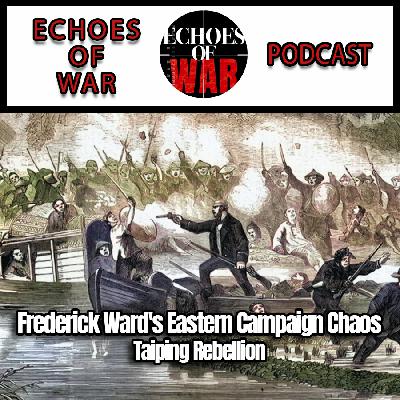
Craig and Gaurav dive into the Taiping Rebellion’s Eastern Campaign, where the war’s brutality collides with foreign opportunism and panic in the treaty-port world. As Taiping forces threaten key cities and supply lines, Shanghai becomes a focal point: a booming international enclave surrounded by instability, rumor, and competing interests. Western residents and Qing-aligned officials fear the collapse of trade and security, but their options are limited—regular imperial forces are unreliable, local militias are chaotic, and command structures are fractured. Into this volatile situation steps Frederick Townsend Ward, an American adventurer often described as a filibuster or mercenary organizer. Ward helps assemble and lead foreign-drilled troops meant to bolster local defenses and push back Taiping advances. The episode emphasizes that this wasn’t a clean “West vs. Taiping” story; it was a messy scramble of self-interest, improvisation, and shifting alliances, with money, prestige, and survival shaping decisions as much as ideology. The hosts recount disastrous assaults on Taiping-held positions—attacks driven by urgency and overconfidence, executed with poor intelligence and coordination. These failures reveal how hard it was to fight the Taiping on their ground and how quickly modern weapons and “professional” leadership could still be squandered by confusion and hubris. Ultimately, the discussion highlights the conflict’s complexity: foreign involvement deepened local power struggles, intensified the violence around Shanghai, and left civilians caught between armies, experiments in private warfare, and a rebellion reshaping China.
Don't forget I have a Youtube Membership: https://www.youtube.com/channel/UCbp8JMZizR4zak9wpM3Fvrw/join or my Patreon: https://www.patreon.com/pacificwarchannel where you can get exclusive content like "What if Japan invaded the USSR during WW2?"
What if a losing streak rewrote European power forever? The Seven Years’ War didn’t end with a single decisive battle; it ended with a reshaped continent. This video dives into the final acts: Frederick the Great’s brutal setbacks in the mid-war years, the seismic shift sparked by Peter III’s accession in Russia, and how Prussia’s stubborn resilience and shifting alliances carried the war to a historically transformative conclusion. We’ll trace key campaigns in Saxony and across the European theaters, examine how Russia’s stance flipped fortunes, and explore the dramatic diplomatic aftermath that sealed new borders and futures. You’ll see how Britain’s naval supremacy and Russia’s continental power redefined who dictated terms on the map, and how the Paris and Hubertusburg treaties reset balance of power for decades to come. Juxtaposed with portraits, maps, and battlefield sketches, the narrative highlights leadership decisions, logistics, and the long shadow this conflict cast on European diplomacy, military doctrine, and national prestige. If you’re curious about how a global war seeded the rise of Prussia as a European heavyweight and set the stage for future coalitions, this deep-dive is for you. Like, subscribe, and turn on notifications for more history that connects the dots between past clashes and today’s geopolitics.
Don't forget I have a Youtube Membership: https://www.youtube.com/channel/UCbp8JMZizR4zak9wpM3Fvrw/join or my Patreon: https://www.patreon.com/pacificwarchannel where you can get exclusive content like "What if Japan invaded the USSR during WW2?"
Unraveled in a whirlwind of faith, blood, and red banners, the Taiping Rebellion reshaped 19th-century China and challenged the Qing state from the margins of history to the center of world affairs.
This video traces how a millenarian movement, led by Hong Xiuquan, grew from Anhui villages into a vast civil war that destabilized one of Asia’s oldest empires. We examine the social discontent that fed the rebellion: famine, taxation, and regional strife, alongside promises of equality, land redistribution, and shared property. As Taiping forces advanced, they carved out a rival capital at Nanjing and installed their own governance, creating a stark alternative to Qing rule. Yet the rebellion’s size did not guarantee endurance; internal factionalism, military overreach, and logistical struggles drained resources, while disciplined Qing counteroffensives gradually reclaimed ground. The narrative also situates the conflict in a global context, showing how Western powers and the Second Opium War influenced contemporary strategies and diplomacy, sometimes offering support or shaping international responses. By the mid-1860s, oaths, edicts, and mountains of corpses underscored the human cost of civil war, and the Qing dynasty slowly recovered its authority at enormous price. The Taiping legacy persists in discussions of reform, regionalism, and rebellion’s limits as a catalyst for state modernization. Viewers will leave with a clearer sense of how ideology, leadership, geography, and external pressures converged to end one of history’s most devastating uprisings and to redefine China’s path forward. This exploration reveals why this rebellion remains a turning point in modern Chinese memory.
Don't forget I have a Youtube Membership: https://www.youtube.com/channel/UCbp8JMZizR4zak9wpM3Fvrw/join or my Patreon: https://www.patreon.com/pacificwarchannel where you can get exclusive content like "What if Japan invaded the USSR during WW2?"
Uncover the brutal underbelly of the Taiping Rebellion in this riveting episode from the Pacific War Channel! Hosts Craig and Gaurav delve into the campaigns, purges, and murders that shattered the Heavenly Kingdom of Great Peace. Led by the messianic Hong Xiuquan, who proclaimed himself Jesus Christ's brother, the Taiping forces captured Nanjing and launched ambitious Northern and Western Expeditions. But ambition bred betrayal: Yang Xiuqing's manipulative trances and power grabs sparked deadly rivalries, culminating in Wei Changhui's assassination of Yang and a horrific purge of thousands. Shi Dakai's eventual exodus marked the rebellion's fracturing, as internal civil war weakened their stand against Qing armies led by Zeng Guofan. This episode exposes how religious visions turned to violent paranoia, with kings murdering kings amid failed military pushes and sieges. From the bloody streets of Nanjing to the desperate expeditions against imperial forces, discover the human cost of this 19th-century Chinese civil war that claimed millions. Perfect for fans of dark historical tales, this analysis highlights leadership betrayals, strategic blunders, and the Qing's resilient countermeasures that doomed the Taiping dream.
Don't forget I have a Youtube Membership: https://www.youtube.com/channel/UCbp8JMZizR4zak9wpM3Fvrw/join or my Patreon: https://www.patreon.com/pacificwarchannel where you can get exclusive content like "What if Japan invaded the USSR during WW2?"
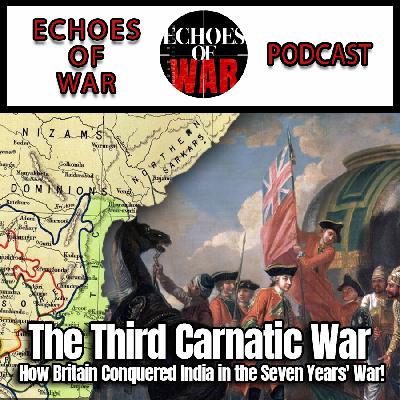
This echoes of war podcast, hosted by Craig Watson and Gaurav explores the Third Carnatic War (1756–1763) as the Indian theater of the Seven Years' War. It details the decline of the Mughal Empire after Aurangzeb's death in 1707, leading to fragmented provinces like Bengal and the rise of the Maratha Empire as a dominant power. European influences are highlighted: the British East India Company with bases in Bombay, Madras, and Calcutta, and the French with strongholds like Pondicherry. The narrative focuses on key events starting with the Black Hole of Calcutta in 1756, where Nawab Siraj ud-Daulah imprisoned British captives in horrific conditions, prompting retaliation. Robert Clive's victory at the Battle of Plassey in 1757, aided by betrayal from Mir Jafar, secured British control over wealthy Bengal (20-25% of India's GDP). The episode covers the Siege of Madras (1758–1759), where French forces under Comte de Lally failed due to supply issues and British reinforcements. The decisive Battle of Wandiwash in 1760 saw British General Eyre Coote defeat the French, leading to the Siege of Pondicherry (1760–1761), which ended French influence. Britain's naval superiority, alliances, and strategies established dominance, marking 1759 as the "Annus Mirabilis." The podcast emphasizes colonial expansion parallels with North America, using maps and portraits for a documentary feel. It concludes with the Treaty of Paris, where France regained possessions but without fortifications, ensuring British ascendancy in India.
Don't forget I have a Youtube Membership: https://www.youtube.com/channel/UCbp8JMZizR4zak9wpM3Fvrw/
join or my Patreon: https://www.patreon.com/pacificwarchannel
where you can get exclusive content like "What if Japan invaded the USSR during WW2?"
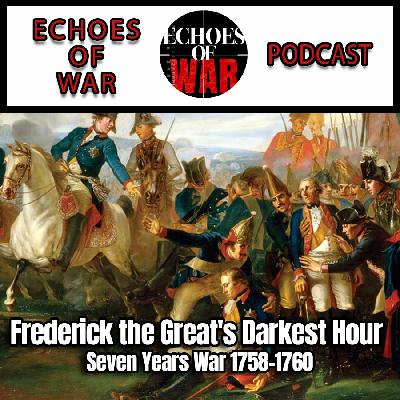
This episode from the Pacific War Channel podcast, hosted by Craig with co-host Gaurav and guest Simone, dives into the European theater of the Seven Years War (1758-1760), focusing on Frederick the Great's struggles against overwhelming Austrian, Russian, and French coalitions. It covers key battles and strategies, starting with the disastrous Prussian siege of Olmütz, thwarted by Austrian ambushes at Domstad, leading to heavy supply losses. The narrative shifts to the Hanoverian front, where Duke Ferdinand of Brunswick's allied forces repel French advances at Crefeld. The brutal Battle of Zorndorf sees Prussians clash with Russians in a bloody stalemate, highlighting Russian ferocity. Frederick suffers a major setback at Hochkirch due to Austrian surprise attacks under Field Marshal Daun, losing commanders like Keith. The episode escalates with Kunersdorf, a Pyrrhic Prussian victory against Russo-Austrian forces, costing Frederick dearly in men and morale. It also touches on failed French invasion plans against Britain, naval defeats at Lagos and Quiberon Bay, and smaller clashes like Liegnitz and Torgau, where Prussian resilience shines despite attrition. The discussion emphasizes Frederick's tactical genius amid resource strain, coalition disunity, and the war's grinding toll, with vivid maps and bios of figures like Daun and Seydlitz enhancing the storytelling. Overall, it portrays a war of attrition testing Prussia's limits.
Check out the Video format at: https://youtu.be/5Quhfgs90OY
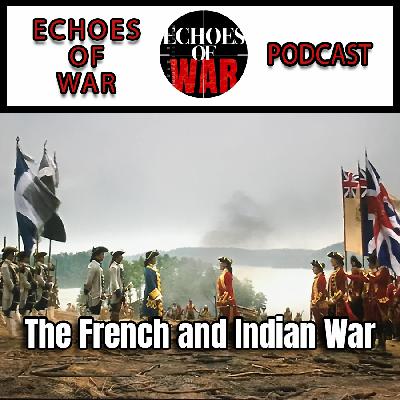
Explore the complex origins of the French and Indian War (1754-1763), the global conflict that reshaped North America. This concise deep dive explains how competition over the Ohio River Valley between Britain and France ignited a wider struggle, drawing in Native American tribes, colonial militias, and seasoned European generals. We’ll unpack the strategic minds behind the war: British commanders who favored coalition-building and aggressive offensives, alongside French leaders who emphasized fortifications and alliances with Indigenous nations. Along the way, you’ll meet pivotal moments: the contested fortifications of Fort Duquesne, early skirmishes along the frontier, and the turning points that led to the dramatic Battle of Quebec. We’ll analyze battlefield tactics, logistics, and how leadership decisions, including those of young George Washington, influenced the course of the war. The video also connects these events to the wider Seven Years’ War and explains why outcomes in North America led to the Treaty of Paris in 1763 and far-reaching consequences for France, Britain, and Indigenous peoples. Whether you’re new to the topic or brushing up for a history exam, this clear, tightly paced overview helps you remember key dates, players, and strategies. Don’t forget to like, subscribe, and ring the bell for more history explainers. Share your questions about colonial conflicts in the comments, and tell us which battle you’d like us to cover next. Time-stamped chapters jump to origins, battles, and legacies. Topics like the Treaty of Paris 1763, scope of the Seven Years' War, colonial mobilization, and Native diplomacy are explored.
Don't forget I have a Youtube Membership: https://www.youtube.com/channel/UCbp8JMZizR4zak9wpM3Fvrw/join
or my Patreon: https://www.patreon.com/pacificwarchannel
where you can get exclusive content like "What if Japan invaded the USSR during WW2?"

An overview of the French and Indian War in North America, its link to the Seven Years’ War, the Ohio River Valley, and Washington’s early campaigns. Discover the origins of the French and Indian War, the North American front of the broader Seven Years’ War, and how a river system, fortifications, and Native alliances shaped the conflict. This video traces the clash of British and French empires from competing Ohio Valley claims to the climactic engagements around Jumonville Glen and Fort Necessity. Learn how Washington's early reconnaissance and diplomacy set the stage for a continental war, and how Native American Confederacies such as the Iroquois and their rivals navigated shifting alliances to advance or resist, with beaver trade and imperial charters driving choices. The narrative covers riverine warfare, fort-building on inland frontiers, and the dynamics between European-style tactics and guerrilla warfare that defined mid-18th-century North America. By examining logistical networks, supply lines, and strategic actors, viewers gain a clearer picture of why the war expanded beyond North American borders and how it set the stage for later colonial and global conflict.
Don't forget I have a Youtube Membership: https://www.youtube.com/channel/UCbp8JMZizR4zak9wpM3Fvrw/join or my Patreon: https://www.patreon.com/pacificwarchannel where you can get exclusive content like "What if Japan invaded the USSR during WW2?"
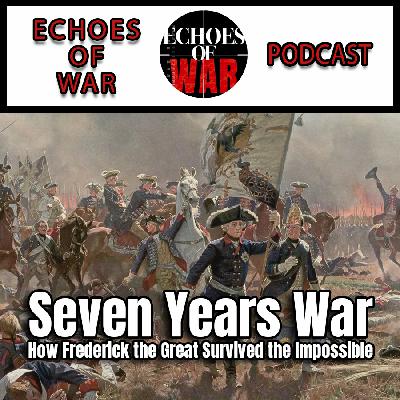
In this engaging podcast from the Pacific War Channel, hosts Craig and Gaurav, joined by guest Simon, dive into the European theater of the Seven Years War (1756-1763). They explore the diplomatic revolution that reshaped alliances: Prussia aligns with Britain against Austria, France, Russia, and Sweden. Frederick the Great's aggressive invasion of Saxony sparks the conflict, driven by his seizure of Silesia and fears of encirclement. The discussion covers the evolution of 18th-century warfare, from pike-and-musket formations to disciplined line infantry, flintlock muskets, and improved artillery, emphasizing mobility over sieges. Key battles are analyzed: Lobositz (1756), a tactical draw highlighting Austrian artillery; Prague (1757), a costly Prussian victory leading to a siege; Kolin (1757), a disastrous defeat for Frederick, shattering his aura of invincibility; Rossbach (1757), a brilliant rout of French-Imperial forces restoring Prussian morale; and Leuthen (1757), Frederick's masterpiece of maneuver, defeating a larger Austrian army through oblique order and flanking. The hosts highlight Frederick's resilience amid suicidal despair, his innovative tactics, and the war's attrition. Russian invasions of East Prussia and French advances on Hanover add pressure, but Prussian discipline prevails. The episode underscores the war's global scale, with morale swings and strategic blunders shaping outcomes, setting up colonial theaters in future parts.
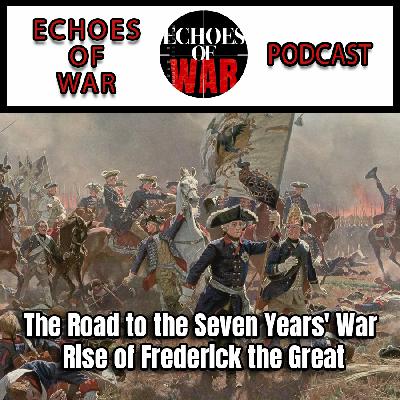
The Road to the Seven Years' War traces the intricate web of European rivalries in the mid-18th century, setting the stage for a global conflict often called the first "world war." It begins with the Treaty of Aix-la-Chapelle (1748), which ended the War of the Austrian Succession but left simmering tensions, particularly over Silesia, seized by Prussia from Austria. Key players include Prussia under the ambitious Frederick William I and his son Frederick the Great, who transformed Prussia into a military powerhouse through rigorous reforms, emphasizing discipline and innovation. The narrative explores the Diplomatic Revolution of 1756, where traditional alliances flipped: Austria allied with France and Russia to crush Prussia, while Britain backed Prussia to counter French colonial ambitions. France and Britain's colonial clashes in North America (e.g., the French and Indian War) and India escalated the conflict globally. Russia's Empress Elizabeth and Austria's Maria Theresa sought revenge against Frederick, viewing him as a threat. The discussion highlights Frederick's strategic genius, including his preemptive invasion of Saxony, which ignited the war. Economically, mercantilism fueled imperial rivalries, while Enlightenment ideas influenced military tactics. The war's prelude underscores how personal ambitions, territorial disputes, and shifting alliances created a powder keg, leading to devastating battles across Europe, America, Africa, and Asia. Ultimately, it reshaped global power, weakening France and elevating Britain and Prussia.
Don't forget I have a Youtube Membership: https://www.youtube.com/channel/UCbp8JMZizR4zak9wpM3Fvrw/join or my Patreon: https://www.patreon.com/pacificwarchannel where you can get exclusive content like "What if Japan invaded the USSR during WW2?"
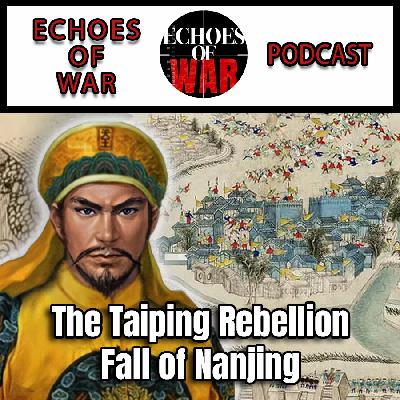
The video from the Pacific War Channel, hosted by Craig and Guarav, delves into the early phases of the Taiping Rebellion (1850-1864), one of history's bloodiest conflicts. It begins with a recap of Hong Xiuquan's rise as the leader of a Christian-inspired cult rebelling against the Qing Dynasty, fueled by ethnic tensions (Han vs. Manchu), class struggles, and religious fervor. The Taiping forces, starting at around 60,000, capture key cities like Yongan and Wuchang through strategic maneuvers, evading Qing encirclements. They employ lightly armed troops with spears, halberds, and limited matchlock rifles, contrasting the Qing's outdated artillery and muskets. Key figures include the Taiping's "kings" (North, South, East, West, Flank), with losses like Southern King Feng Yunshan and Western King Xiao Chaogui to Qing sharpshooters. The Qing military, comprising the Eight Banner Army (Manchu/Mongol elites) and Green Standard Army (mostly Han police forces), suffers from corruption, embezzlement, and inefficiency. Emperor Xianfeng mobilizes militias, leading to the formation of new armies like Zeng Guofan's Xiang Army, emphasizing disciplined, well-paid rural recruits. Battles highlight Taiping tactics: riverine campaigns, sieges with tunneling and mines, and propaganda to recruit peasants. The capture of Nanjing in 1853 marks a turning point, with massacres of Manchu residents. The rebellion's growth to potentially 750,000 followers underscores its threat, though strategic errors prevent a march on Beijing. The discussion touches on broader contexts like the Opium Wars and ethnic divides, blending military history with cultural insights.
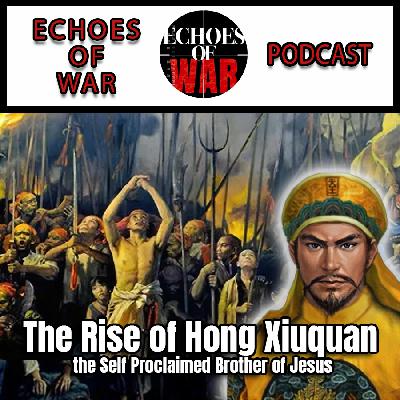
The Taiping Rebellion (1850–1864) stands as the bloodiest civil war in human history, claiming an estimated 20–30 million lives and reshaping 19th-century China. It was ignited by Hong Xiuquan, a failed civil service exam candidate from Guangdong, who experienced profound visions in 1837. Interpreting these as divine messages, Hong believed he was the younger brother of Jesus Christ, tasked with establishing a "Heavenly Kingdom" on Earth. Influenced by fragmented Christian teachings from Protestant missionaries, he converted and began preaching a unique blend of Christianity, Confucianism, and anti-Manchu sentiments. The rebellion's roots lay in widespread discontent against the Qing Dynasty, fueled by economic hardships, opium addiction from the Opium Wars, corruption, overpopulation, and ethnic tensions between Han Chinese and Manchu rulers. Hong's Taiping Heavenly Kingdom attracted millions of followers, including peasants, women, and ethnic minorities, promising land reform, gender equality, and the abolition of foot-binding and opium. Starting in Guangxi, the Taiping forces rapidly expanded, capturing Nanjing in 1853 as their capital. They implemented radical reforms but faced brutal opposition from Qing armies, aided by foreign powers like Britain and France, who intervened to protect trade interests despite initial neutrality. The conflict featured massive battles, sieges, and atrocities on both sides. The rebellion weakened the Qing Dynasty, paving the way for its eventual fall in 1911. Hong's death in 1864 and the recapture of Nanjing marked the end, but the Taiping legacy endures in discussions of millenarian movements, religious fervor, and social upheaval.
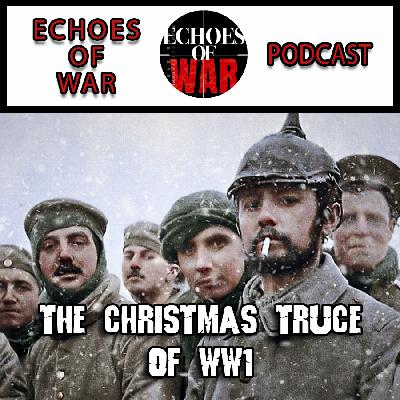
Dive into one of history's most heartwarming wartime stories! In this episode of "Echoes of War," we uncover the incredible Christmas Truce of 1914 during World War I. As Europe descended into chaos, sparked by the assassination of Archduke Franz Ferdinand, alliances pulled nations into a devastating conflict. From Austria-Hungary's invasion of Serbia to Germany's Schlieffen Plan and brutal battles like the Marne and Ypres, the Western Front became a nightmare of trenches and stalemate by late 1914. But on Christmas Eve, something miraculous happened. Amid the mud and misery near Ypres, British and German soldiers set aside their rifles. It started with carols echoing across no man's land—"Silent Night" sung in harmony. Soon, troops emerged, exchanging gifts like cigarettes, chocolate, and even helmets as souvenirs. They buried their fallen comrades together, shared meals, and famously played impromptu football matches in the frozen fields. Eyewitness accounts describe handshakes, laughter, and a profound sense of shared humanity, with around 100,000 soldiers participating in this unauthorized ceasefire. Though high commands disapproved and quickly ended it with bombardments and troop rotations, the truce symbolized the soldiers' longing for peace. It didn't repeat in later years as the war's horrors intensified with battles like Verdun and the Somme. Join us to explore this poignant reminder of hope amid horror—proof that even in war, humanity can shine through.
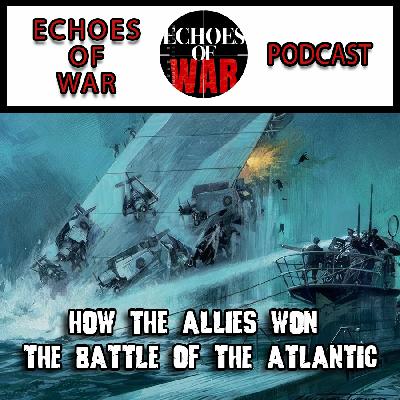
The Battle of the Atlantic, the longest campaign of World War II, spanned from 1939 to 1945, primarily in the North Atlantic but extending to Arctic convoys and the Mediterranean. This conclusion episode recaps Allied resilience against German U-boats and surface raiders. Britain implemented early rationing and the "Dig for Victory" campaign, increasing food production and reducing import reliance. Key turning points included capturing the Enigma machine from U-110 in 1941, sinking U-boat aces, and U.S. adoption of convoys post-1941. Despite setbacks like Operation Torch diverting escorts in late 1942, commanders like Admiral Max Horton and sub-hunters Donald McIntyre and Frederick "Johnny" Walker turned the tide with aggressive tactics. Technological advances sealed Germany's fate: Allied Hedgehog mortars (far more effective than depth charges), radar, and air cover from B-24 Liberators closed the mid-Atlantic gap by May 1943, forcing U-boat retreats. German innovations like snorkels, Type XXI U-boats, and acoustic torpedoes (e.g., T5 Zaunkönig) arrived too late, yielding high losses (e.g., 39 U-boats for minimal gains in late 1943). In the Arctic, the Scharnhorst's defeat at North Cape secured Soviet supply lines. The episode details D-Day's naval arm (Operation Neptune): Over 6,000 vessels from eight navies, led by Admiral Bertram Ramsay, bombarded Normandy beaches with battleships like HMS Warspite and USS Texas. Despite mines and minor German torpedo boat attacks, it succeeded, ferrying 132,000 troops on June 6, 1944, with Mulberry harbors enabling logistics. The "Hunt for Tirpitz," the Bismarck's sister ship, highlights Allied obsession: Multiple failed raids (e.g., Operation Tungsten) culminated in Operation Catechism (November 1944), where RAF Lancasters dropped 12,000-pound Tallboy "earthquake" bombs, capsizing the "Lonely Queen of the North" and killing up to 1,200 crew. Losses were staggering: Allies lost 3,500 merchant ships (21.6 million tons), 175 warships, and ~7,200 sailors; Germany lost 783 U-boats, 47 warships, and 30,000 men. Submarines sank two-thirds of Allied tonnage, but superior Allied strategy, resources, and innovation prevailed, ensuring victory in this critical supply war.
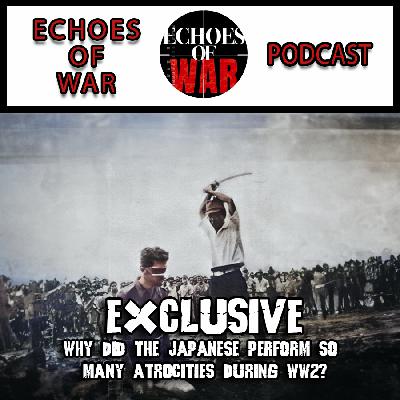
This Podcast explores why Imperial Japan committed numerous atrocities in the Pacific War, framing the discussion around five interlinked drivers. First, the erosion of international norms and treaty compliance shaped behavior: Japan signed the Hague Conventions but did not ratify the Geneva Convention, and Emperor Hirohito later issued directives that de-emphasized prisoner protection. This created a climate where POWs and civilians could be mistreated, with some memoranda explicitly prioritizing production over humane treatment. Second, war strategy and indoctrination fed a “spirit over steel” mentality. To compensate for resource gaps, Japanese leaders emphasized morale, total commitment, and a policy discouraging surrender, reinforced by the Senjinkun battlefield instructions that branded surrender as dishonorable. Third, ultra-nationalism and racism fueled brutality and dehumanization. The regime promoted the Yamato race myth, cast Western and Asian “enemies” as inferior or demonized, and used propaganda to rationalize harsh treatment of civilians and POWs, as well as widespread forced labor and sexual slavery. Fourth, surrender and the bastardization of Bushido amplified cruelty. The wartime code urged soldiers to die rather than surrender, legitimizing harsh treatment of captives and shaping behavior on the battlefield, including instances of deception and grenade attacks that exploited perceived enemy treachery. Finally, the overall brutality of the Japanese military, including the Kempetai and systemic abuse throughout ranks, created a culture in which violence, torture, and coercive labor were normalized as a means to pursue victory, often at the cost of civilians and prisoners. The presenter cites sources and recommends works like The Knights of Bushido and John Dower’s Race and Power in the Pacific War for deeper context.
Craig and Garv dive into some of history’s most infamous blunders, zeroing in on military missteps that reshaped outcomes. They spotlight reckless decision-making by Roman commanders who consistently underestimated terrain, logistics, and enemy capabilities, illustrating how overconfidence and lack of reconnaissance can derail campaigns even when Rome’s discipline and manpower were formidable. The discussion then shifts to the Russo-Japanese War, arguing that poor strategic planning, misread intel, and fragile supply lines plagued the Russian fleet from the outset. They trace the Pacific Fleet’s arduous, ill-fated voyage to the Far East, emphasizing how vast distances, faulty communications, and flawed doctrine culminated in catastrophic defeats at sea. A key throughline is the critical importance of logistics: supply chains, transport, and timely resupply often determine whether victory or defeat arrives first. The hosts also examine the role of terrain, weather, and political pressure in shaping battlefield decisions, showing how external factors can magnify tactical errors. Throughout, the conversation remains accessible, balancing humor with analysis to underscore why seemingly simple choices—such as adequate reconnaissance, realistic logistics planning, and cautious risk assessment—are often the difference between win and loss. By weaving these cases together, the episode reveals enduring lessons about leadership, preparation, and the cost of underestimating complex operational challenges in military history.
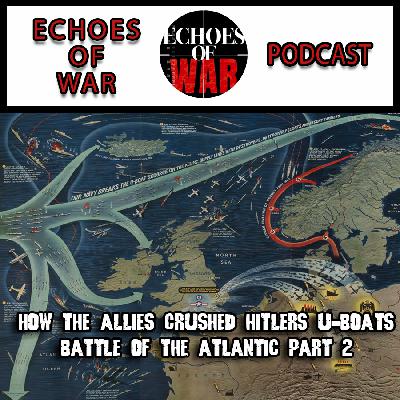
Craig and Garauv delve into the Battle of the Atlantic, unpacking how the Allies gradually gained the upper hand in a brutal, protracted maritime struggle. They begin by outlining the central objective: keeping transatlantic convoys moving to supply Britain with essential war materials while denying the Axis critical sea lanes. The hosts highlight the U-boat’s early dominance and the immense challenge of protecting merchant ships in the face of long-range German submarines, increased wolfpack tactics, and the perilous approach of even more capable U-boats. A core focus is on the convoy system and hunter-killer teams, which evolved from simple escort duties into integrated, multi-layered defenses. They discuss key Allied strategies: continuous convoy rounds, improved anti-submarine patrols, and better coordination with air power. The turning point comes with innovations in code-breaking (ultra/intelligence), improved sonar and radar technologies, and the deployment of long-range aircraft capable of patrolling vast ocean areas. These advances disrupted U-boat operations, forced more frequent evasion, and increased losses for the German submarine fleet. The episode also spotlights pivotal figures and tech milestones: escort carriers, escort destroyers, and depth-charge tactics, alongside the crucial role of airborne reconnaissance, convoy commodores, and undersea detection devices. As the Allies adapt, supply lines stabilize, and convoy losses decline, momentum shifts in favor of the Allies. The discussion concludes with a reflection on how organizational learning, technological innovation, and strategic coordination ultimately sealed the Atlantic’s fate in favor of the Allies.


Download from Google Play

Download from App Store
 United States
the meme are awesome 👌
Enjoying the show just started listening