


 Claim Ownership
 that's interesting
that's interestingSubscribed: 1Played: 17
Subscribe

© All rights reserved
Description
75 Episodes
Reverse
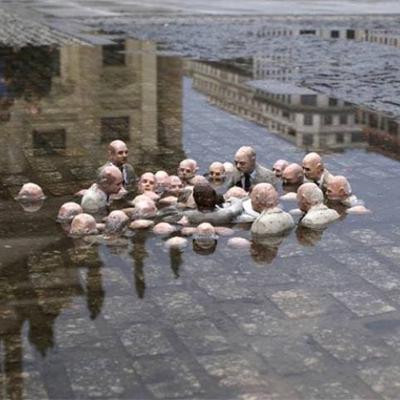
The dip in global population is something that's been gaining attention as of late, but mostly in the abstract.
Something concrete in that dip is about to come due this fall, a staggering drop in the number of available 18+ year olds for the traditional college path. The first bellwether in what my guest for this episode labeled in a piece that, America is about to go over the ‘demographic cliff’.
Journalist Jon Marcus, joins for this episode to explore the intersection of demographic shifts, higher education, and the implications for the workforce. The conversation highlights the decline in birth rates, the resulting impact on college enrollment, and the broader economic consequences of college closures.
We also get into the cultural perceptions of the value of a college degree and the challenges faced by institutions in adapting to these changes. Before ending on potential strategies for colleges to navigate the impending demographic cliff and its effects on education and the economy.
📖 Chapters 📖
(00:00) -The Future We Ignore: Human Behavior and Climate Change
(03:00) - Demographic Shifts: The Decline in Birth Rates
(06:02) -Higher Education in Crisis: The Impact of Enrollment Declines
(09:07) - The Workforce Pipeline: Implications of Fewer Graduates
(12:13) - Cultural Perceptions: The Value of a College Degree
(15:05) - Economic Impacts: The Closure of Colleges and Community Effects
(18:07) - Solutions and Strategies: What Can Colleges Do?
(27:22) - The Impact of the Pandemic on Higher Education
(30:14) - Exploring Alternative Markets for Universities
(32:50) - The Economic Burden of Student Debt
(34:48) - The Changing Landscape of College Admissions
(38:19) - The Future of Higher Education: Opportunities and Challenges
(41:12) - Reconceptualizing Higher Education for the Future
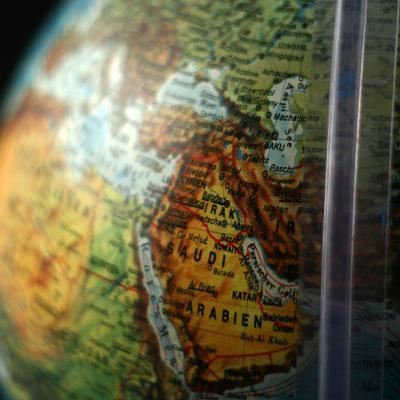
An update on what's happening with expert in the region from UCLA James Gelvin. He's joining us 5 years on from his last episode to give an update on what's occurred, and what's to come.
We delve into the complexities of global conflicts, particularly focusing on the Israel-Palestine situation, by exploring the historical context of U.S.-Israel relations, the implications of arms sales, and the humanitarian crisis in Gaza following the October 7th attack.
Professor Gelvin emphasizes the challenges and uncertainties facing the region, with a sobering outlook for the future.
📖 Chapters 📖
(00:00) - Global Conflicts and Their Complexity
(05:02) - Understanding the Israel-Palestine Conflict
(10:11) - U.S.-Israel Relations: A Historical Perspective
(15:00) - The Role of Arms Sales in Middle Eastern Politics
(19:52) - The October 7th Attack: A Turning Point
(25:10) - The Humanitarian Crisis in Gaza
(29:48) - The Future of Gaza and the Role of Hamas
(36:51) - Israel's Strategy in Gaza
(40:04) - Public Sentiment and Media Control in Israel
(43:38) - US Support and International Relations
(47:48) - The Situation in Syria
(55:24) - Kurdish Democratic Experiment
(59:09) - Food Security in the Middle East
(01:02:00) - US Policy Towards Israel
(01:04:47) - Future of the Middle East
(01:09:20) - Saudi Arabia's NEOM Project

With only raw materials, could you recreate a toaster? Now could you do it considering the source of your materials, the effect extracting them has on the world, along with the use and inevitable destruction of it.
This episode's guest did just that. Starting with the extraction of the materials, including learning 15th century techniques for smelting, created a toaster.
Reflecting upon that project in today's world, is the topic of this episode. Where we dive into the philosophy of design needing a refresh in todays world in order to live in better harmony with our reality.
Thomas Thwaites, Artist and Designer, joins me for this conversation. Check out his website for all of his projects, his TED talk and the project he's currently working on, a harmless car.
📖 Chapters 📖
(00:00) - The Essence of Design: Function Meets Aesthetics
(05:50) - Sustainability and the Complexity of Modern Design
(12:04) - The Toaster Project: A Journey into Design and Dependency
(24:00) - Fragility of Modern Society: Understanding Interdependence
(36:06) - Philosophical Reflections on Self-Reliance and Community
(41:05) - Designing for Sustainability: Challenges and Considerations
(46:22) - The Complexity of Consumer Power and Market Trends
(51:44) - Regulation vs. Art: The Role of Influence in Sustainability
(57:30) - The Harmless Car: A Thought Experiment in Design
(01:03:08) - Ethics in Design: Choosing Who to Harm

Here we unpack the legacies of Julius Caesar and Augustus, exploring the complexities of the two, the nature of historical narratives, and the challenges of leadership in ancient Rome.
My guest, Adrian Goldsworthy, emphasizes the importance of context in understanding these historical figures and reflects on the lessons that can be drawn from their lives and governance.
We also chat about the inevitability of Rome's transition from a republic to an empire, the cultural shock of experiencing ancient Rome, and the lasting impact of Roman civilization on modern society. Before chatting about the importance of personality in leadership, the efficiency of Roman administration, and the enduring legacy of Roman culture and language.
Check out Adrian's YouTube channel, or to find his books and what he's been up to.
📖Chapters📖
(00:00) - The Rise of Rome: From Republic to Empire
(05:03) - Julius Caesar: The Man Behind the Legend
(10:01) - Augustus: The Unsung Hero of Rome
(14:49) - The Legacy of Leadership: Caesar vs. Augustus
(19:53) - The Nature of Power: Context and Character
(24:52) - Lessons from History: What We Can Learn Today
(34:48) - The Art of Learning and Succession Planning
(40:47) - The Influence of Personalities in Leadership
(44:37) - The Inevitable Shift Towards Empire
(50:36) - The Administrative Genius of Augustus
(57:30) - Cultural Shock: Experiencing Ancient Rome
(01:01:40) - The Lasting Legacy of Ancient Rome
(01:02:23) - The Fascination with Ancient History
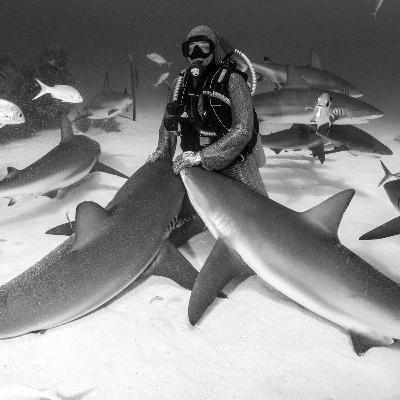
When you think of sharks, do you think Jaws? Or a creature with enough understanding to seek help from a person?
Would you be surprised to know, that someone has been working with sharks for years to the point, that they allow her to take out hooks lodged in their skin? Given our misconceptions of the creatures, I'd imagine you would be.
Cristina Zenato is that person, who's a master diver and expert on sharks. She's built an amazing relationship with the sharks around the Bahamas, creating a deep connection with them, to a degree I can only understand through bonds we build with more familiar animals.
In this interview Cristina gives us a deeper understanding of sharks, her ability to work with them, the virtue in knowing a single place deeply, the reality of the marine environment that's facing environmental destruction, and some wisdom from the sharks.
Credit to Kewin Lorenzen as videographer and Cristina Zenato for the image and videos accompanying this episode.
(00:00) - Understanding Fear and the Unknown
(03:14) - Building Trust with Sharks
(10:51) - Establishing Relationships with Marine Life
(18:06) - The Reality of Shark Encounters
(25:07) - The Role of Humans in Shark Behavior
(32:36) - Sharks in the Anthropocene
(34:11) - Sharks and Human Interaction
(37:22) - Shark Population Decline
(42:30) - Conservation Efforts and Education
(45:30) - Lessons from Sharks
(54:22) - Living in Symbiosis with Nature
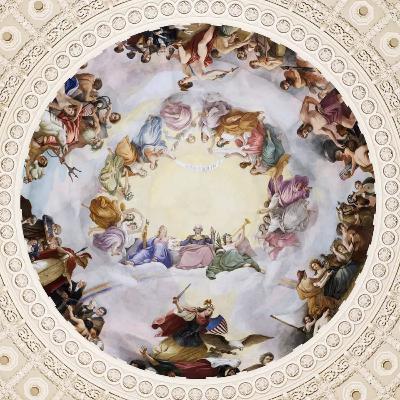
A reality of our contemporary time, is the American President is increasingly acting as an Emperor.
This interview explores the evolution of the imperial presidency, the implications of increased executive power, and a look behind the scenes of the West Wing in how it plays out in the day to day. We also get tangible examples of what can be done to improve the structural gaps existing in the constitution to stop an increased scope of the Executive.
Yale Law Professor & Author Harold Koh joins the podcast to give us the context from his book highlighting the state of the Executive, "The National Security Constitution in the Twenty-First Century"
With Harold we get into, the role of Congress and the courts, and the systemic dysfunction that has led to a concentration of power in the executive branch, ethical considerations of governance and the future of executive power in the United States. We also get into the evolution of executive power in the United States, examining how historical events have shaped the current political landscape.
(0:00) - America as an Empire: Historical Context
(3:24) - The Imperial Presidency: Evolution of Power
(6:26) - The Role of Congress and the Courts
(9:41) - Crisis and the Shift of Power
(12:28) - The Synergistic Dysfunction of Government
(16:57) - The Consequences of Centralized Power
(21:02) - The National Security Constitution: A Historical Perspective
(26:44) - The Future of Executive Power
(30:08) - The Ethics of Power and Governance
(36:19) - Shifting Standards in Politics
(38:23) - Historical Context of Executive Power
(41:14) - The Pendulum of Presidential Authority
(43:44) - The Guantanamo Dilemma
(45:12) - The Threat Landscape: Terrorism vs. Pandemics
(46:41) - Concerns Over Unilateral Executive Powers
(51:31) - The Need for Structural Reforms
(54:48) - Checks and Balances in the Executive Branch
(1:00:23) - Learning from Global Examples
(1:05:36) - The Role of Citizens in Democracy
(1:10:52) - Activism and Resilience Against Authoritarianism
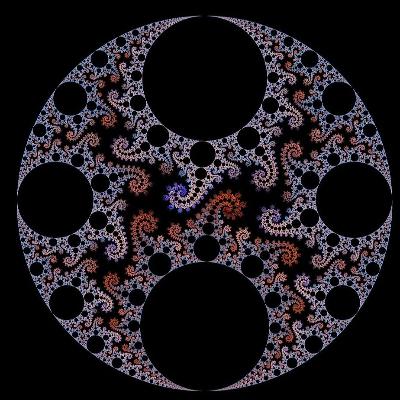
Giddy up for a fun episode that touches all the right topics to get your noddle going. How can we manage a fast-paced world that seems to increasingly change from what we’ve become used to?
What changes when someone has immense wealth, or when someone is homeless? Both living completely different lives outside of the norm of anyone listening to this.
We explore the ethical dilemmas in our current global world, and perhaps have a way of being considerate without being a luddite.
Humans have changed constantly, and this conversation is all about how two dudes think about changing with it. Complete with a moody rendition of Smash Mouth’s epic hit, “Hey now you’re an all star” at the end.
With me in this conversation is David Benjamin, otherwise known as Dudetunes. A Recording Artist - Songwriter - Performer, and co-owner of Black Sheep Makery, a bomb drink purveyor of all things coffee, tea and lemonades with infused flavorings. Find him everywhere @dudeisdead.
Check out David’s latest music video for a catchy track.
Chapters
(00:00) - How to think in the long ~ Intro Essay
(06:33) - The Power of Connection
(07:04) - Artistic Pursuits and Personal Joy
(09:43) - The Depth of Human Connection
(12:58) - The Impact of Homelessness on Society
(16:22) - Navigating Urban Challenges
(20:50) - The Complexity of Human Experience
(23:11) - Exploring Spirituality and Reality
(27:18) - The Role of Psychedelics in Understanding
(35:53) - The Resurgence of Psychedelics in Pop Culture
(39:34) - The Dual Nature of Psychedelic Experiences
(42:06) - Philosophical Reflections on Wealth and Control
(51:39) - The Role of Culture in Governance
(01:00:12) - Navigating Technology and Its Impact on Life
(01:12:24) - Frankenstein and the Absurdity of Existence
(01:15:21) - Personal Responsibility and Community
(01:18:12) - The Role of Technology in Human Connection
(01:23:36) - Navigating Individualism and Community
(01:32:03) - The Paradox of Individualism and Community
(01:39:27) - The Importance of Connection and Expression
![[re-release] 013_ Interview: 🏺Israel & Palestine, a brief history | context, consciousness, contingency 💭](https://i1.sndcdn.com/artworks-Qdrt4KQENcjweAlg-41Sjhg-t3000x3000.png "[re-release] 013_ Interview: 🏺Israel & Palestine, a brief history | context, consciousness, contingency 💭")
This is my interview with author and historian Dr. James Gelvin , professor of Middle Eastern history at UCLA.
[ This episode was originally released in December 2020. Professor Gelvin will be coming back for an episode next season to give an update on what's occurred in the past four years. ]
The episode is centered around the Israel and Palestine conundrum, but touches upon the rich and ancient culture of the region known as Palestine and the recent normalization of relations that the Trump administration announced with the state of Israel.
There's also a detour into the state of the Middle East as a whole, if the Arab spring has run dry, how the middle east is the most food insecure region in the world, which segued into how neo-liberal policies create much civil and economic unrest. Along with thought provoking ideas on revolutions and nationalism.
The Israel-Palestine Conflict: One Hundred Years of War
The New Middle East: What Everyone Needs to Know
(0:00) - Episode Introduction
(6:24) - Traveling
(10:14) - Framing the Israel-Palestine Conflict
(16:24) - Identity and Nationalism
(20:27) - The Legacy of the Ottoman Empire
(34:12) - The Creation of Nations
(38:39) - The Six Day War and it's Relevance
(46:03) - The Water Wars & The Arab Spring
(56:46) - Has the Arab Spring Run Dry? Tunisia as an Outlier
(59:27) - Understanding Neoliberalism and its Emergent Effects
(1:17:23) - Oslo Accords and Trump's Impact
(1:41:05) - Land for Peace Formula, Israel's Policy of Deterrence
(1:44:01) - Saudi Arabia's Diversification Efforts

Is math an invention or a discovery? Given how time works at the scale of a galaxy, can a civilization across the stars exist?
In this episode's conversation, I chat with Alex Cruikshank to come up with some interesting answers to those two questions. Along with the surprising role creativity plays in math's inventive nature, and how we may be able to have a civilization that spans light years, but we may need a new type of time shaman to do so.
Chapters
00:00 Exploring the Nature of Mathematics
10:36 The Debate: Discovery vs. Invention in Math
32:46 Creativity in Mathematics and Its Applications
34:46 Exploring String Theory and Its Challenges
36:16 Gravity and Interstellar Civilization
40:26 The Nature of Time and Its Perception
45:44 Curved Space-Time and Its Implications
49:08 The Philosophical Aspects of Time
52:35 Quantum Mechanics and Communication
59:28 The Feasibility of Interstellar Civilization

With the influx of AI running rapid across the internet, what is this going to do to it as a tool or cultural space?
In this essay, I explore the concept of the 'Dead Internet Theory,' which posits that a significant portion of online content is generated by bots rather than humans.
Is this valid? If so what are the implications on online interactions, trust in content, and the rise of AI-generated material, including deepfakes.
Because if this is the case, we have difficulty discerning real from fake information and the potential for a future where trusted sources become increasingly valuable in navigating the digital landscape.
Chapters
(00:00) - Exploring Dead Internet Theory
(03:28) - The Impact of Bots on Online Interaction
(06:51) - Trust Issues in Online Reviews and Content
(09:14) - The Rise of AI and Deepfakes
(10:42) - The Future of Trusted Information Sources
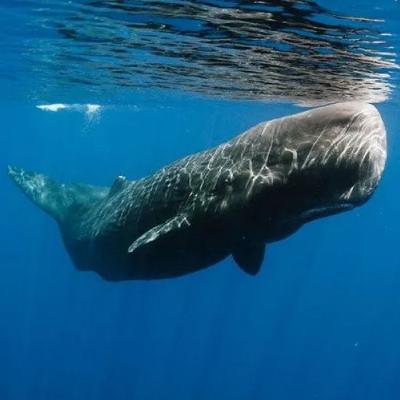
Did you know there’s a mammal that can dive a mile down the ocean to hunt giant and colossal squid? And that same mammal was hunted until the 1970’s to extract the oil in their head for car transmissions?
Well that creature is none other than the poorly named Sperm Whale, and the fascination with them goes much more than just that
Hal Whitehead, a researcher of sperm whales, discusses their habitat, hunting abilities, communication, and culture.
Sperm whales can be found in oceans worldwide, from the Arctic to the Antarctic. They are able to dive to great depths by closing down certain organs and conserving oxygen. The population of sperm whales has been affected by whaling, but there are concerns about their future due to factors like ocean warming.
Sperm whales communicate using clicks, and their communication patterns can be quantified and analyzed. Different groups of sperm whales have distinct cultural behaviors and strategies for hunting.
Also check out Hal’s amazing TED talk, where he goes into his work and provides more detail on Sperm Whale Culture.
Chapters
(00:00) - The Mysteries of the Ocean ~ Intro Essay
(02:54) - Sperm Whales: Anatomy and Habitat
(03:40) - What makes Hal happy?
(05:47) - Survival in the Depths
(09:08) - Communication and Social Structure
(12:06) - Cultural Differences Among Pods
(14:47) - The Future of Sperm Whales
(17:58) - The Ongoing Mystery of Sperm Whales
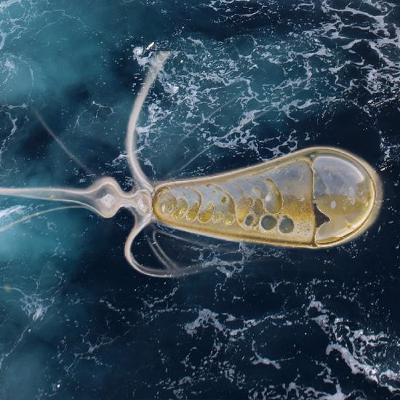
A new, ancient, creature was discovered! And even stranger than it having existed for so long without us knowing, is that it actually has another creature inside of it.
Nitroplasts, what this episode's cover art shows, are tiny little bacteria that within them have another creature that provides all the nitrogen it needs to thrive way out in the ocean. In this episode, Tyler Coale, one of the researchers on the discovery of Nitroplasts, joins us to unpack what they are, how they were found and the potential future of nitrogen fixation research.
Chapters
(00:00) - The Importance of Nitrogen in Ecosystems ~ Intro Essay
(04:16) - Understanding Endosymbiosis and Its Implications
(08:51) - Nitrogen Fixation: The Key to Ocean Life
(12:01) - The Discovery Journey of Nitroplasts
(14:59) - The Role of Nitroplasts in Marine Ecosystems
(17:54) - Implications of Nitroplast Research
(21:03) - The Future of Nitrogen Fixation Research
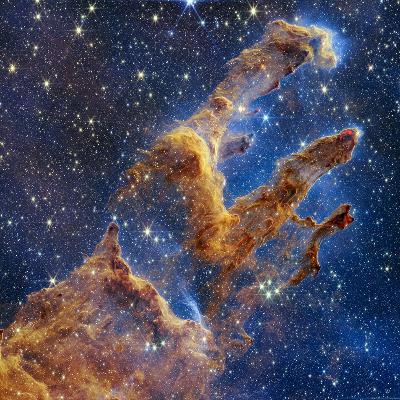
An exploration into the unnoticed complexities of life, the impact of technology on our perceptions, and the paradox of reductionism in understanding the world.
Observation and creation are two sides of the same coin, and what we need is a balance between the two to foster deeper understanding and wisdom.
Chapters
00:00 The Unnoticed Depths of Life
02:56 The Impact of Technology on Perception
06:07 The Balance of Observation and Creation
08:06 Wisdom Through Observation

In this one we dive into the complexities surrounding the concept of cartels, particularly in the context of the drug trade.
Do drug cartels in Latin America exist? In this interview we discuss how misconceptions about cartels have been shaped by narratives in media and government, leading to a distorted understanding of their economic realities and the implications of militarization in regions affected by drug violence.
With me to unpack this idea, is journalist, professor, and author of “Cartels Do Not Exist, Narcotrafficking in US and Mexican Culture,” Oswaldo Zavala.
Chapters
(00:00) - Understanding the Complexity of Ideas ~ Intro Essay
(05:40) - The Nature of Cartels: Definitions and Misconceptions
(10:03) - The Narrative Device of Cartels
(19:49) - The Economic Reality of Drug Organizations
(29:48) - The Interplay of Violence and Militarization
(40:15) - Challenging the Official Narrative on Drug Trafficking
(43:39) - The Role of Media in Shaping Perceptions
(46:52) - Violence, Assassinations, and the Drug Trade
(51:08) - Historical Context of Drug Organizations and Violence
(55:22) - The Impact of Militarization on Violence
(01:01:04) - Extractive Industries and the Drug War
(01:04:15) - Decriminalization and Its Implications
(01:09:21) - Rethinking National Security and Drug Policy

Deep dive discussing Marshall McLuhan's idea of, "The medium is the message" with Dr. Aiden Hirshfield, Media Psychologist, Researcher, Tech Consultant and host of Media Psyched.
𝙘𝙝𝙖𝙥𝙩𝙚𝙧𝙨 𝙝𝙚𝙡𝙥𝙚𝙙 𝙗𝙮 𝘼𝙪𝙙𝙞𝙤𝙏𝙪𝙣𝙚𝙧
Timestamps
(0:00) - 🎬
(5:00) - 💡 Technology: The Essential Yet Unseen Force in Our Lives 🌊
(10:00) - 🔥 Fire: The Genesis of Modern Technology 🔬
(18:40) - 📝 Writing: A Technology That Shapes Our Culture 🏛
(24:30) - 📚 The Medium is the Message: Marshall McLuhan's Predictions 🔮
(31:00) - 🌐 The Interplay of Digital and Physical Experiences 🕶
(26:26) - 📚 Understanding the complexity of McLuhan's work
(31:15) - 📝 The medium is the message: Defining key terms
(38:30) - 👓 A historical perspective on technology and the written word
(47:03) - 🧠 Narcissus-narcosis: The unconscious effects of new media
(51:14) - 📱 The impact of technology on innate abilities and the environment
(52:47) - 🎶 Music lyrics vs. audience interpretation 🧑🎤
(1:00:05) - 🤖 AI's impact on creativity & cognitive load ⚙️
(1:05:20) - 📊 Weapons of Math Destruction: Bias in AI data 📉
(1:11:18) - 💻 Technology usage: Awareness & self-regulation 🔧
(1:15:25) - 💰 Capitalism's role in social condition & consumption 💳
(1:16:59) - 💡 The Global Status Quo & Environmental Destruction 🌍
(1:17:54) - 🏭 Capitalism, Globalization, and Exploitation 📈
(1:23:01) - 💊 Glyphosate & Corporate Convergence 🌽
(1:29:56) - 📜 The Message, The Medium, and The Intended Audience 🎤
(1:35:21) - 🤔 The Medium's Influence & Our Curiosity 🔍

🍔 In this episode, we dive into the importance of understanding the source of things.
📊🔎🧠🌱
𝙘𝙝𝙖𝙥𝙩𝙚𝙧𝙨 & 𝙙𝙚𝙨𝙘𝙧𝙞𝙥𝙩𝙞𝙤𝙣 𝙝𝙚𝙡𝙥𝙚𝙙 𝙗𝙮 𝘼𝙪𝙙𝙞𝙤𝙏𝙪𝙣𝙚𝙧
Just like how whole, unprocessed foods are better for our health, understanding the chain that sprout an idea, or data directly from the source can lead to better decision-making.
With the rise of processed foods and data, it's easy to get caught up in the convenience and manipulation, but it's crucial to make an active effort to question and understand what's going into our bodies and minds.
Remember, by going to the root of where something comes from and understanding its complexity, we can make progress as individuals and as a collective.
Bon appétit and happy data hunting! 📊🔎🧠🌱
(0:00) - Introduction and Analogy of Whole Foods
(7:02) - Questioning Statistics and Data
(14:01) - Collective Progress and Understanding Reality

Korean farming techniques, why can't we remake the Midwest more like the land it was before, the amazing organisms trees eat with their roots, what defines regenerative agriculture, and a whole lot more get covered in this fun, fast-paced conversation.
Reid Swenson, owner and founder of Edaphon Farm , joins in this conversation to talk shop about the mushrooms he grows, multiple regenerative techniques, the amazing wonders that plants are, and the fascinating "food pantry to Chicago" that was the Grand Kankakee Marsh before it was drained.
Reid has an amazing outlook on how we can revive the Midwest using native plants, from bamboo, to paw paws, through building parks full of lush food.
If you're interested in plants, farming, or just looking for a fun listen, go no further.
(0:00) - Introduction and the impact of agriculture on the environment
(4:01) - Mushrooms, plants, and farming techniques
(8:23) - The connection between physical body and mind
(17:23) - The complexity of information and the limitations of scientific thinking
(26:25) - The concept of change and the constant evolution of life
(37:43) - Sketching out dry ice contraptions for creamer
(38:07) - Paths to living harmoniously with nature
(39:25) - The complexities of veganism and organic farming
(41:33) - The benefits of pasture-raised beef and personal health
(46:05) - The unsustainability of current systems and the need for local culture
(1:12:36) - Mycelium vs Fruiting Body
(1:13:44) - Fascination with Permaculture
(1:14:47) - Growing Mushrooms and Other Crops
(1:17:27) - Keeping Soil Healthy
(1:39:08) - The Need for Patience and Stewardship
(1:46:59) - Expanding possibilities and keeping an open mind
(1:47:26) - Working fast with mushrooms and the potential for adaptation
(1:48:05) - Challenging societal narratives and potential for change
(1:48:42) - Creating new possibilities in agriculture
(1:49:58) - Working towards a better future and the importance of parenting

🧠 What push and pull is there between the way we view AI, and the impact we perceive it has? 🧐
Surely at some point, if not now, "Artificial Intelligence" of some sort will bring about a massive change to the type of careers and the way we work every day.
In the meantime though, what are the aspects of the tools AI provides that we should leverage, what are the parts to be cautious of, aware of and fight against? And how much of this current AI blowup is hype?
All these parts and more get discussed on this episode featuring returning guests Dr. Yusef Smith, M.D., fitness coach and podcaster from Propane Fitness , along with Rowan Price, tech veteran and founder of Remap an A.I. enhancing unlimited copy, strategic messaging, and content editing company that's coming out soon.
Check out both of their past episodes, along with another discussion Yusef was on over web3, cutting through that hype. 😶🌫️
(0:00) - Introduction, Transported to a Different Age
(8:02) - Discussion starts
(18:26) - The Intersection of AI and Culture
(24:57) - The Future of AI and its Impact on Work
(28:00) - Automation and Job Opportunities
(34:11) - The Role of Humans in a World of AI
(38:06) - Defining AI
(40:09) - The Hype and Impact of AI
(46:07) - The Changing Paradigm of AI
(52:22) - Trustworthiness of Online Information
(59:23) - AI and the Abundance of Information
(1:12:29) - Hallucinations and the Pleasing Nature of Language Models
(1:16:22) - Efficiency vs. Creativity
(1:21:17) - The Dangers of Reliance on Language Models
(1:25:47) - The Role of Humans in Creativity
(1:29:21) - The Need for a New Philosophy
(1:38:08) - Safety Concerns with Personalized Language Models
(1:47:38) - Potential of AI in the Economy
(1:48:06) - Chapter 3: Quantum Computing and AI
(1:48:44) - Concerns with Medical AI Models
(1:49:40) - Anarchy and Choice in AI Models
(1:50:36) - AI in Medicine beyond Diagnosis
(1:56:29) - Transparency and Security in Open Source

David Foster Wallace gave this commencement speech to the graduating class of 2005 at Kenyon College, which completely breaks the commencement speech genre, while hitting everything he's supposed to do.
A moving, insightful and unblushingly spiritual in such a casual way as to not even realize until you're in the middle of it.
Don't forget we're all just swimming out there 🌊🐠🌊
(0:00) - Introduction: Sparking Curiosity
(1:38) - David Foster Wallace: The Prolific Writer
(4:16) - Appreciating the Obvious
(9:03) - The Importance of Awareness
(14:56) - Choosing What to Think About

Prepare to jam out to a new favorite. Musician Chalk Dinosaur joins this podcast to talk inspiration, creative process, and much more.
John O'Hallaran hails from Pittsburgh and is the main person behind Chalk Dinosaur, that interestingly enough will be played just as John in a solo act, with his brother Nick, or with a full piece band.
John talks about what it's like playing between all those different permutations, how he can put out so much music across such a wide set of genres, and how exactly he does it.
Check out this playlist I made with some of my favorite Chalk Dinosaur tracks. 🤘🦖🎸🎹💃
(0:00) - Introduction
(8:46) - Finding Inspiration
(13:39) - Creating the 'Fire on the Beach' Album
(20:29) - Setting Goals and Knowing When You're Done
(28:28) - Getting Started in Music
(33:07) - Playing Live and the Chalk Dinosaur Name
(37:04) - Difference Between Solo and Band Performances
(1:07:41) - The Impact of Social Media on Mental Health
(1:09:02) - The Influence of Different Guitars on Playing Style
(1:14:06) - Guitar and Music Setup
(1:24:44) - Practice Regimen and Musical Influences
(1:30:30) - Influences and Inspirations in Music
(1:37:51) - The Art of Creating Groove and Pocket in Music
(1:40:52) - Recording and Editing Process
(1:48:21) - Living in Pittsburgh and making music
(1:53:25) - Motivation in the music-making process
(2:03:46) - Upcoming shows and future plans
(2:15:31) - Overcoming self-doubt and shipping creative work
(2:16:13) - Rehashing and improving writing
(2:18:10) - Teaching people how to talk to each other
(2:20:58) - Marketing and selling an ebook
Image generated by MidJourney

Comments

Download from Google Play

Download from App Store
 United States