


 Claim Ownership
Creative Spark
Subscribed: 34,129Played: 148,489
Subscribe

© All rights reserved
Description
How do today’s masters create their art? American Masters: Creative Spark presents narrative interviews that go in-depth with an iconic artist about the creation of a single work. Each episode offers a unique window into the world of art and the creative process of artists and cultural icons across a wide range of disciplines, from music and comedy to poetry and film.
Explore more at www.pbs.org/creativespark
103 Episodes
Reverse

Matteo Lane is a stand-up comedian, painter, singer, and now a Broadway performer. In this interview, we talk about how all of these skills come together in his impassioned creative process. To Matteo, all art comes from “the base of a tree and then it grows out in different places.” You never know how one artistic pursuit is going to feed into another.
We discuss his performance as Billy Flynn in Broadway’s “Chicago,” how he develops a comedy special from bar shows to international tours, the history of gay representation in comedy, the creative spark that led him to pursue painting and illustration at School of the Art Institute of Chicago, his passion for Maria Callas, and why he believes in “working towards the masterpiece, not on the masterpiece.”

Taylor Rooks has built her career asking athletes the questions that reveal who they are beyond the game. As a journalist and the host of NBA on Prime, she’s become known for her curious approach to her work. For Taylor, “everyone is more than one story.”
In this episode, we talk about how Taylor prepares for interviews and builds connections with stars like Anthony Edwards. She describes the warmth and empathy she brings to her work, what it’s like to play metaphorical point guard as the host of NBA on Prime, the creative spark that led her down this path, and the universal power of sports.
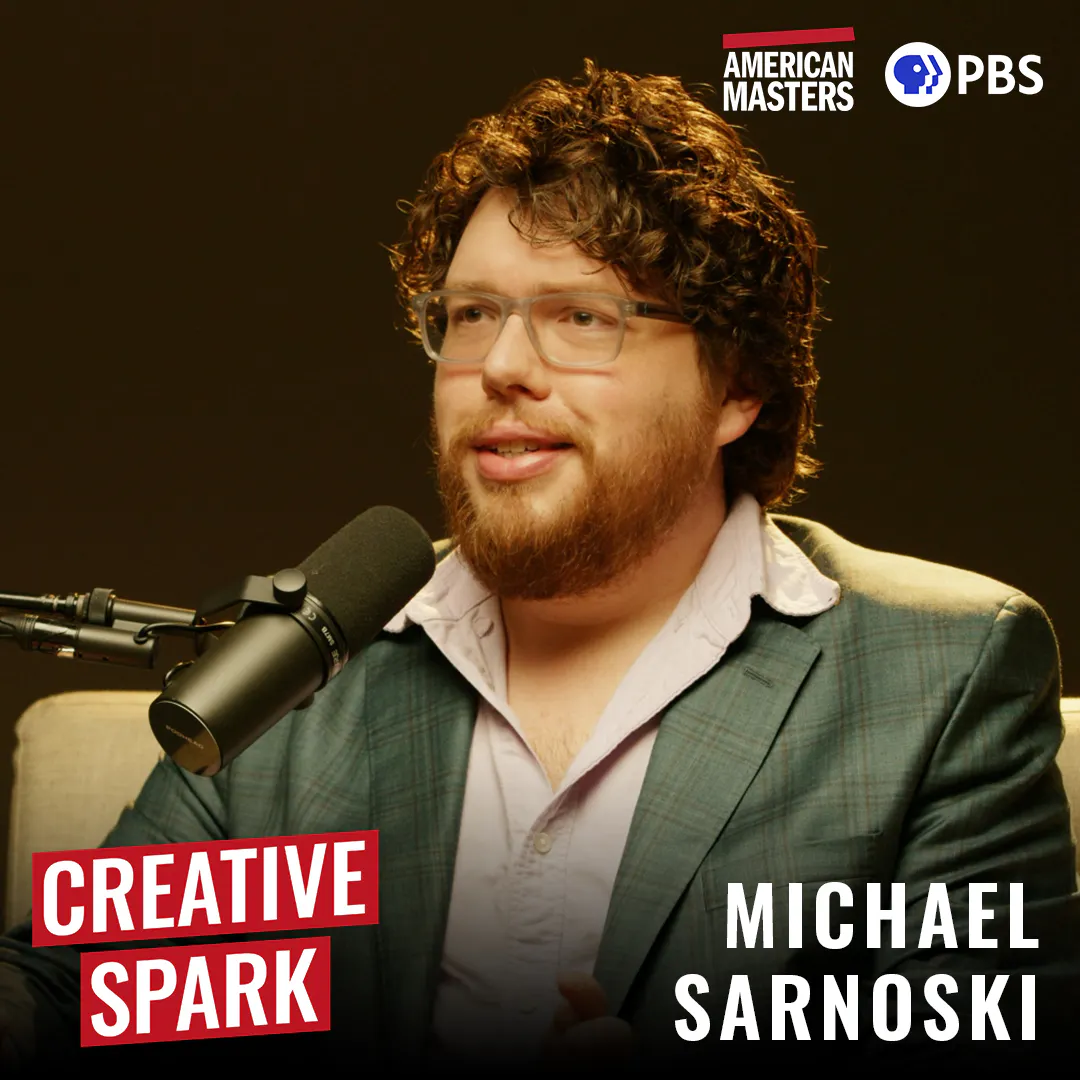
Filmmaker Michael Sarnoski (“Pig” and “A Quiet Place: Day One”) takes on a revisionist version of the Robin Hood story with his new film, “The Death of Robin Hood.” When you hear Robin Hood, you probably think of the man who steals from the rich and gives to the poor. But what if he was just an outlaw? A violent outlaw who has to reckon with his past.
In this episode, Sarnoski reflects on adapting one of history's greatest legends and how we can all relate to Robin Hood’s internal struggle with his sense of identity and self-mythology. We talk about the delicate balance of historical authenticity and emotional truth, why audiences are so interested in modern retellings of folklore right now, and the stories we tell about ourselves that come to define us. “Storytelling is how we understand ourselves. Storytelling is religion. Storytelling is how we place ourselves in the cosmos.”

In this episode, Tyler James Williams gives a masterclass on his own acting technique: studying people, building characters, and finding the humanity behind every performance. We talk about his love for New York, how “Men In Black” made him fall in love with art and entertainment, and the care he has poured into creating the character of Gregory Eddie on “Abbott Elementary.”
The Emmy-winning sitcom recently wrapped its fifth season, with Williams stepping into the director role again. After three decades in the industry, he’s looking beyond his own career, toward the next generation of young talent, drawing on his experience as a former child actor to help create a more empowering path for the artists who come next.

Atsuko Okatsuka returns to the show! The comedian joins us to talk about how she bridges cultures with her work, crafting jokes that land wherever she performs. Atsuko cites Lucille Ball as a major influence when she was a kid growing up in Japan, inspired by the universality of her physical comedy. Whether it’s here in the United States, Taiwan, Japan, or on her global tour, “The Big Bowl Tour,” Atsuko is always finding new ways to tell her story.
In this episode, we dig into the creative process behind her most recent special, called “Father,” we catch up on how the global pandemic convinced her to embrace authenticity, how she keeps autobiographical joke writing fresh, why her bowl cut is a tribute to her inner weirdness, and when community building can be a good thing (and not at all cult worship!).

Comments

Download from Google Play

Download from App Store
 United States