


Savage Minds
Subscribed: 119Played: 7,088
Subscribe

© Savage Minds
Description
Investigative reporting and social commentary on public culture, the arts, science, and politics.
savageminds.substack.com
savageminds.substack.com
221 Episodes
Reverse
Daniel Levy, a political commentator and president of the US Middle East Project, argues that Netanyahu did not stumble into this war—he engineered it. For decades, Levy notes, successive Israeli governments tried and failed to pull the United States into a military confrontation with Iran. He traces what finally made it possible under Trump not to any coherent American strategy but to its opposite: the systematic hollowing out of the interagency process, expertise sidelined, and a small ideological cohort elevated whose interests aligned perfectly with Israeli leadership. Tracing this logic to its conclusion, Levy contends the result is a war serving Israel's ambition for regional hegemony far more than any plausible American interest. Dismantling the claim that attacking Iran was about nuclear threat management, he points out that Israel itself is an undeclared nuclear state and that Iran's supreme leader had issued a fatwa against nuclear weapons. Looking beyond the conflict, Levy asserts that any durable solution requires a decolonisation 2.0—a reckoning with the inequities of the post-colonial order. With American empire visibly fraying and Marco Rubio offering imperialism 2.0 as the alternative, he sees the burden falling squarely on middle powers and non-Western states to chart a different course. Get full access to Savage Minds at savageminds.substack.com/subscribe
Daniela Danna, a sociologist and research fellow and lecturer at the University of Salento in Lecce, argues that gender identity legislation is not about protecting vulnerable people—it is about making biological sex legally invisible. Drawing on her analysis of the defeated Zan Bill in Italy and parallel legislation across the Anglophone world, Danna contends that the push to enshrine gender identity in law serves a dual purpose: it dismantles the legal foundations of women’s sex-based rights while opening a vast new market for pharmaceutical and medical industries that profit from lifelong hormonal dependency. She is particularly alarmed by the targeting of children, pointing to kindergartens in Germany already teaching gender fluidity and to Italy’s public gender clinics, which she argues are affirming rather than treating young people in distress. On surrogacy, Danna is equally unsparing: Meloni’s much-publicised ban, she suggests, is largely theatrical, with enforcement gaps so wide as to render it meaningless. Throughout, she traces a through-line between gender ideology, surrogacy, and capitalist logic—the reduction of bodies, and children, to commodities. Get full access to Savage Minds at savageminds.substack.com/subscribe
Richard D. Wolff, Professor of Economics Emeritus at the University of Massachusetts Amherst and co-founder of Democracy at Work, argues that the United States is living through the terminal phase of imperial overreach. Drawing on the history of empires from Persia and Rome to Britain, Wolff contends that no empire has ever escaped the arc of birth, expansion, and decline—and the US is no exception. Having emerged from World War II as the world’s undisputed economic hegemon, the US has spent decades in self-deluding arrogance, mistaking a historically anomalous post-war moment for permanent, God-given supremacy. The rot is now unmistakable: $35 trillion in debt, a proposed $1.5 trillion war budget, and a string of military defeats from Vietnam to Afghanistan. China, growing at two to three times the US rate for thirty consecutive years, has quietly displaced American economic dominance. The war on Iran—a civilisation far older than the Judaeo-Christian tradition attacking it—may prove the final overreach. With the Strait of Hormuz closed and NATO allies refusing to help, Wolff sees Trump as a latter-day Nero, fiddling while the empire burns. The solution, he insists, is redirecting military spending toward the American people. Get full access to Savage Minds at savageminds.substack.com/subscribe
Colonel Lawrence Wilkerson, 30-year Army veteran, former Chief of Staff to Secretary of State Colin Powell, and Senior Fellow at the Eisenhower Media Network, discusses the deep structural rot he believes is consuming American democracy and its military empire. Drawing on his experience from Vietnam through the Iraq WMD debacle, Wilkerson argues that the United States has become a force as much for evil as for good, and that the current war against Iran represents the most reckless and dangerous expression of that trajectory yet. He traces the unravelling of legitimate statecraft from the post-Cold War squandering of peace dividends, through 9/11 and the institutionalisation of torture under George W. Bush, to what he describes as the Caligula-like presidency of Donald Trump—whom he regards as history’s most brazen grifter and the architect of an illegal war of choice. Wilkerson raises urgent alarm about Pete Hegseth’s injection of Christian Zionist ideology into the Pentagon’s ranks, the militarisation of domestic law enforcement, the looming threat of cancelled midterm elections, and the very real spectre of a second American civil war. A searing, unflinching conversation with one of Washington’s most candid and consequential insiders. Get full access to Savage Minds at savageminds.substack.com/subscribe
Nolan Higdon, author and Disinfo Detox host, dismantles the "aberration" myth surrounding Jeffrey Epstein, exposing his deep ties to US/Israeli/Russian intelligence, insider trading, and elite blackmail networks spanning politics (Trump, Dershowitz), tech (Thiel, Palantir), academia (Chomsky, Summers), and media. Higdon reveals how partial Epstein file releases coincide suspiciously with Trump's Iran strikes—launched amid 30% approval and domestic scandals involving ICE—serving as potential distraction from scrutiny over unreleased files and foreign influence (Adelson/AIPAC). He contrasts US corporate media's sanitised narratives of regime changes (Venezuela's Maduro/Flores kidnapping echoing Panama 1989) with international reporting showing Iran's technological resilience and Israeli military setbacks. He critiques NATO's militarised "media literacy" weaponising education against disinformation while shielding Israel-led wars, Gaza genocide denial, and DARVO "self-defence" claims. Higdon warns of AI surveillance eroding youth cognition/social bonds, big tech's eugenics ideology (Yarvin/Thiel), economic fallout from oil spikes, Greenland piracy, and empire's dehumanising normalisation of child trafficking. Urging diverse sourcing beyond legacy media's Politburo-style control, he reveals 2026's fractures—war profiteering and unaccountable power elites. Get full access to Savage Minds at savageminds.substack.com/subscribe
Radhika Desai, professor of Political Studies and director of the Geopolitical Economy Research Group at the University of Manitoba, brings her historical materialist framework to bear on what she calls the “senile” or “moribund phase” of capitalism—marked by deindustrialisation, financialisation, speculative necromancy, ecological destruction, a precipitous decline in political leadership quality, and the imperial wars now ravaging Venezuela, Cuba and Iran. Desai traces the arc from Karl Marx’s monopoly phase thesis through the post-war golden age, the neoliberal turn and its miserly, punitive politics towards working people, to the present moment in which the US-Israeli war on Iran is accelerating the collapse of dollar hegemony and the everything bubble. She connects cultural neoliberalism—identity politics, DEI, pronoun politics—to a deliberate corporate strategy for generating a patina of progressivism while delivering nothing material to working people, with the professional managerial class administering this hypocritical regime. Desai addresses the BRICS question with characteristic nuance, distinguishing between countries that have genuinely rejected neoliberalism and those, like Modi’s India, whose multipolar rhetoric conceals a servile comprador relationship with Washington. Her analysis of the everything bubble, the Triffin dilemma and Iran-driven inflation carries a stark warning—when interest rates rise far enough to contain the oil shock, the dollar system will come down with them. Get full access to Savage Minds at savageminds.substack.com/subscribe
Olga Cherevko, spokesperson for the United Nations Office for the Coordination of Humanitarian Affairs in Gaza, draws on over twenty years of experience working in conflict zones across Liberia, Afghanistan, the Philippines, Somalia, Syria, Iraq, and Yemen to bear witness to what she describes as a level of destruction without parallel in her career. Beginning with the physical transformation of Gaza since her first deployment there in 2014, Cherevko traces the systematic obliteration of water, sanitation, and healthcare infrastructure, explaining how humanitarian teams are reduced to improvising repairs with the wrong materials because the right ones are blocked at the crossing. Cherevko challenges the public perception that humanitarian assistance is simply about food parcels, arguing that it is fundamentally about restoring dignity, and identifies the dual-use classification system and NGO registration restrictions as among the most consequential obstacles to scaling up the response. Addressing the psychological dimension of the crisis—the dimension she argues receives the least attention—Cherevko describes children who no longer flinch at explosions, parents shattered beyond recovery, and a population whose light of hope she watched dim month by month. She warns that a ceasefire does not end suffering, noting that the moment the world looks away is often the moment conditions deteriorate further, and closes with an appeal to keep Gaza on the global conscience long after the guns fall silent. Get full access to Savage Minds at savageminds.substack.com/subscribe
Katherine Sikkink, international relations scholar at the Harvard Kennedy School and leading constructivist theorist, argues that human rights are a social construction—not in the sense that violations are unreal, but that the legal frameworks protecting people from them were built through sustained struggle. Legally enforceable international human rights protections only came into existence with the covenants on civil, political, economic and social rights in 1976, and they continue to require active defence. On transitional justice, Sikkink draws on her landmark work The Justice Cascade (2011) and her ongoing research through the Transitional Justice Evaluation Team. Her comparative data across countries shows that nations which implement transitional justice—through prosecutions, truth commissions and reparations—experience fewer future human rights violations and a lower recurrence of war. Prosecutions that reach senior officials and heads of state produce the largest measurable impact. Sikkink traces the origins of transitional justice to Greece and Portugal after their dictatorships, followed by Argentina’s landmark 1985 junta trials. She highlights the creative legal strategies activists have used to overcome obstacles such as amnesty laws and statutes of limitations, including leveraging international treaty obligations that prohibit statutes of limitations for crimes against humanity. On the current era, Sikkink warns that the Trump administration’s reliance on what she calls “weaponised interdependence”—using hard economic and political power to coerce other states—may yield short-term compliance but it fundamentally erodes the trust and reputation that sustain long-term international relations. She also cautions that US democracy is under genuine threat, stressing that the upcoming midterm elections represent the single most important avenue for citizens to push back, urging American citizens abroad. Get full access to Savage Minds at savageminds.substack.com/subscribe
Kajsa Ekis Ekman, a Swedish author, literary critic, and journalist, addresses the "two-front war" against women, marked by the conservative right's abortion rights backlash and the progressive left's problematic views on prostitution and gender identity. She critiques neoliberal and far-left perspectives on sex work, advocating for the term "prostitution" to highlight the dangers and exploitation within the industry, especially on platforms like OnlyFans. Ekman also discusses the global exploitation of surrogacy and calls for its ban due to the suffering of women and commodification of babies. Furthermore, she criticises the exploitation of empathy for women to justify military interventions and the selective empathy displayed by some feminists towards certain victims while ignoring others. Ekman defends feminism as a relevant force against violence and inequality, emphasising the importance of feminists focusing on the dialectical conflict between men and women and advocating for ad hoc movements and alliances to address specific issues like prostitution and surrogacy. She touches on the gendered fear-mongering used to garner support for geopolitical conflicts, the instrumentalisation of women's rights for Western agendas, and the need for feminists to hold their line and avoid conflating issues. She also reflects on the state of contemporary society, criticising the pursuit of money and fame at the expense of values and equality, drawing parallels with the Epstein scandal and the P. Diddy documentary. Finally, Ekman emphasises the need for analytical tools that fit the task at hand, arguing that feminism is not a geopolitical tool and should not be used to justify military interventions or ignore the complexities of international relations. Get full access to Savage Minds at savageminds.substack.com/subscribe
Ricardo Gómez-Carrera, a research economist at the World Inequality Lab and co-editor of the 2026 World Inequality Report, discusses his research on the benefits of early schooling and how early human capital investment closes the “inequality gap” and the effects of such research within current Mexican educational policy. Focusing on the finding of this year’s World Inequality Report, Gómez-Carrera elaborates on the increasing wealth disparities on a global scale such that wealth is becoming even more concentrated, as demonstrated by the fact that the top 10% earn 53% of the global income, “the top 10% own three-quarters of global wealth, while the bottom half holds only 2%,” and, for the top .001%, the distribution of wealth growth is as high as 8% per year. Gómez-Carrera argues that if we don’t address inequality, only the privileged will have rights, opportunities, assets, and control over politics. Ultimately, even if 90% or 99% of the population are paying their taxes and contributing to society, the top 1% maintain a disproportionate influence over politics and access to opportunities, which in turn influences the decisions that ensure they maintain their privilege. While power, as Gómez-Carrera clarifies, is becoming more and more concentrated in fewer and fewer hands, the negative effects of such power, such as ecological damage, will be felt disproportionately by the poor, as they are more vulnerable to the impacts of global warming, despite their contributing less to this damage. Examining one of the more surprising aspects of the 2016 World Inequality Report, he notes how the top .001% increased in their charitable donations since 1960, a gesture which moves the wealthy beyond strictly economic realms of power. Noting how the economic patterns suggest a rising top-end inequality, Gómez-Carrera claims that this not only translates into ideological capture and unequal influence over philanthropy and politics, but it invariably translates into public policy, law, campaigning, and, invariably, political choices, or lack thereof. Get full access to Savage Minds at savageminds.substack.com/subscribe
Almut Rochowanski, a non-resident fellow at the Quincy Institute for Responsible Statecraft, critiques the “NGO-industrial complex,” particularly concerning the impact of foreign funding on civil society development within new democracies. Covering her testimony at the Tom Lantos Human Rights Commission in the US Congress, on the topic of “Laws Regulating Foreign NGOs: Human Rights Implications,” Rochowanski draws from her experience with NGOs in former Soviet states, including Russia and Ukraine, and discusses the structural realities of foreign-funded NGOs at the intersection of class, education, nepotism, and accountability failures. Rochowanski highlights the complex relationships between foreign donors, governments, and NGOs, stressing how the actual beneficiaries often become secondary to donor agendas. She argues that foreign funding cannot be neutral, as it embeds donor priorities into recipient countries, corrupting local policies and necessitating NGOs to align more with Western mandates than local needs. This tendency results in NGOs, widely deemed “foreign agents” by domestic authorities and citizens, undermining local governance and democratic sovereignty, ultimately harming the societies they aim to assist by displacing state roles in service provision and policy development, while these bodies often encroach on democratic sovereignty. Get full access to Savage Minds at savageminds.substack.com/subscribe
Volodymyr Ishchenko, currently at the Institute for East European Studies, Freie Universität Berlin, discusses his latest book, Towards the Abyss: Ukraine from Maidan to War (Verso, 2024) and forthcoming paper “Post-Soviet vicious circle: revolution as a reproduction of a crisis of hegemony” (co-authored with Oleg Zhuravlev). Historicising how post-Soviet revolutions in Ukraine have functioned, Ishchenko considers how the 2014 Euromaidan revolution produced a weaker state whose fate, instead of being decided by Moscow, has been directed by Washington or Brussels. Delineating how the 2022 war is, in part, the culmination of Ukraine’s history in relationship to Russia, where cross-national capital allied itself with the local professional middle classes and where anti-nationalist arguments clashed with the tendency to understand the war within the context of Ukraine’s perceived colonial struggle, Ishchenko observes how these primordial, ethno-nationalist readings lend themselves to a larger teleology. Detailing how the war in 2022 becomes the culmination of this story, a sort of parable of the struggling, emerging nation, Ishchenko explores how the narrative construction of Ukrainian nationhood mirrors the creation of the nation-state, like many countries from the 19th century onward. He also interrogates the various theories that proffer origins of the war as being rooted in the Russia-NATO conflict, as maintained by Jeffrey Sachs and John Mearsheimer. Instead, Ishchenko considers an alternative reading of this history, positing that the war in Ukraine has little to do with the inclusion of Ukraine within NATO, nor is it about NATO's inclusion of neighbouring countries. Instead, Ishchenko contends that the 2022 war is a culmination of Russia’s exclusion from the process and dialogues by and around NATO. Get full access to Savage Minds at savageminds.substack.com/subscribe
Fabio Vighi, Professor of Critical Theory and Italian at Cardiff University, discusses dominant themes from latest books, Emergency Capitalism: Financial Hubris, Economic Collapse, and Systemic Manipulation (2024) and Unworkable: Delusions of an Imploding Civilization (2022), that address the “age of crisis capitalism” and the post-productive hyper-financialised stage of capitalism that is driven by debt and the loss of work society. Relating how the acceleration of the emergency paradigm is maintained by a constant flux of “states of exception” that exclude people while also allowing for the creation of credit and debt which have become the prime motors of capitalism today, Vighi narrates how just before the pandemic in 2019, we were already approaching a gigantic financial crisis, observing, “The system needed what then Covid allowed the system to have, which means massive injections of credit.” Vighi historicises the acceleration of the emergency paradigm over the past decade, which is fundamentally connected to debt and the creation of credit “out of thin air” to balance a system that is both inherently inflationary and increasingly “imbalanced and out of control.” Noting how the release of emergencies has become the mechanism to balance the economy—first with the pandemic in 2020 and then immediately thereafter with the war in Ukraine—Vighi characterises what is happening today as an “apocalyptic, eschatological type of mood where war is always immanent…and therefore that justifies the rearmament of entire continents like Europe,” while underscoring how modern wars have always been mechanisms for creating credit while also the vehicles for connecting the arms and financial sectors. Criticising the perception management systems that are more focused on the personalisation of struggles rather than critiquing systemic structures, Vighi scrutinises how, as a result, we are incentivised into very simplistic polarisations and conflicts that are, in themselves, ideological forms of destruction, distracting us from examining the deeper causes of conflict. Get full access to Savage Minds at savageminds.substack.com/subscribe
Hala Shoman, a Palestinian PhD researcher in Sociology at Newcastle University, discusses her life in Gaza before 7 October 2023, the conditions under which Gazans have been living since, and the physical and political realities on the ground for Palestinians today. Shoman elaborates how Israel’s violence since 2023 has left Palestinian society shattered, since the aggressions are so vast and profound that, unlike previous decades of aggressions that did not wipe out entire neighbourhoods and communities, the current genocide has left few able-bodied bodies alive who are can help their communities after each attack. Observing the harsh reality for Gazans today under the daily threat of murder, Shoman appraises how not only does every Palestinian personally know hundreds of people murdered over the past two years, but Israel’s aggressions and control over every aspect of Palestinian life—their access to food, water and vaccines—have become so intensified that Palestinian infants are dying from the lack of drinking water necessary for baby formula. Confirming the direct links between Israel’s violence and the increase in domestic violence in Gaza, Shoman recounts how the structural violence of colonialism and genocide has been reproduced: from the Israeli theatre of occupation and murder to the intimate space of family life within Palestinian communities. Expounding upon Israel’s pathological desire to control Palestine, Shoman remarks that the very war criminals directing this genocide are the same individuals who are asked to lead Palestine in what is this latest farce of a “peace plan.” Shoman also elaborates her academic research that explores decolonial feminist frameworks and the concept of reprocide while also distinguishing between adapting to the horrors of this genocide and surviving it. Get full access to Savage Minds at savageminds.substack.com/subscribe
Rebecca Ruth Gould, Distinguished Professor of Comparative Poetics and Global Politics, School of Oriental and African Studies (SOAS) and author of Erasing Palestine: Free Speech and Palestinian Freedom (Verso, 2020), discusses the political reframing of “antisemitism” by the International Holocaust Remembrance Alliance (IHRA) which tailored a new definition designed specifically to silence criticism of both Zionism and the state of Israel. Recalling how she was caught within the radar of the IHRA’s definition of antisemitism in 2017 while an academic at the University of Bristol for a short article she had written years earlier, Gould analyses how the IHRA definition has very clear implications far beyond Israel and Palestine, even to the extent that it exists as a quasi-law that is treated as law while never having gone through any kind of democratic parliamentary vetting process. Moreover, Gould observes how the IHRA definition of antisemitism basically set out to define what we can and cannot say about Israel while also serving to foreshadow how free speech on Palestine would be persecuted for the following decade. Considering the language of mass starvation and famine within the media, Gould confirms how the famine of the Holodomor, in a 1933 New York Times piece, was narrated in an eerily similar way to how the famine in Gaza is currently represented. Articulating how “Never again” has never really been true, given the numerous genocides since the Holocaust, Gould describes how older generations have internalised the state-based nationalist “Holocaust memories” which have blinded them from seeing, much less understanding, that Israel is currently carrying out a genocide of Palestinians. Get full access to Savage Minds at savageminds.substack.com/subscribe
Dario Guarascio, Associate Professor of Economic Policy at the Department of Economics and Law at the Sapienza University of Rome, discusses two articles he co-authored with Andrea Coveri and Claudio Cozza, “Big Tech and the US Digital-Military-Industrial Complex” and “Monopoly Capital in the time of digital platforms: A radical approach to the Amazon case.” Coveri examines the power of digital platforms whose systemic size rivals that of nation-states, positioning them as counterparts to national authorities. Revisiting social sciences history, especially economic and imperialism theories, Guarascio highlights John Hobson’s contributions that illustrate the reliance of large capital and financial corporations on new markets as national markets become saturated. He details how the intertwining needs of states and monopolies drive a strategic internationalisation essential for competitiveness, a concept reflected in Vladimir Lenin’s work influenced by Hobson, which connects international competition with states’ imperialistic strategies aimed at expanding trade routes and eliminating competitors. Guarascio posits that amidst economic strains, military means have historically facilitated market penetration, forcing foreign governments to capitulate to external capital while obstructing competitors. He draws parallels between the intense competition for market dominance leading to the world wars and present dynamics characterised by monopoly capitalism and the dominance of multinational corporations that now dictate economic policies, thus transforming states into instruments of corporate interests. Furthermore, Guarascio argues that contemporary corporate imperialism promotes capital internationalisation and fosters economic dependencies, while militarisation becomes integral to these economic narratives. This relationship outlines a modern imperialism defined by collusion among the state, military, and multinational corporations, particularly between the US and China, alongside Big Tech’s growing influence and strategic military affiliations. Get full access to Savage Minds at savageminds.substack.com/subscribe
Penny Arcade—poet, actress, essayist, spoken word, video and theatre maker—discusses her trajectory from an immigrant family, originally from Basilicata, Italy, to her upbringing in a working-class Connecticut town to her entry into the art world of New York’s East Village. Looking back on her life as a homeless teen in the Village, her discovery by Jamie Andrews who introduced her to John Vaccaro’s Playhouse of The Ridiculous, becoming a Warhol Factory Superstar, and her departure to Amsterdam, Arcade narrates the story of how she set off for Formentera, in Spain’s Balearic Islands, where she started a school for children there, some of whom were children of drug smugglers. Recounting her return to New York City in 1981 and her split from Vaccaro, which marked the beginning of her independent work, Arcade recollects the state of the various art scenes in New York City during the Reagan era, the loss of friends to AIDS, and the censorship of the era. She vituperates the class divisions within the art world and the Manhattan Downtown art scene into which she never fit neatly, while underscoring her desire to “create theatre for people who had no theatre,” a fact which made her extremely unpopular within academia and among arts administrators because her work challenges these very elite systems. Pondering the values she espouses in her art and the fact that her audience has always been unique in maintaining a shared investment in her performances, Arcade considers how the catharsis in reaction to her art takes place well beyond the theatre hall. As an outsider to the art scene, noting how she hasn’t received institutional support and has operated without funding, legacy media coverage, or any form of academic sponsorship, Arcade criticises the state of art funding from even before the 1980s, when the Moral Majority took aim at the art world and at the NEA (National Endowment for the Arts) funding structures. Calling out the academic art world as a “pyramid scheme,” Arcade observes how the academic-produced genre of “emerging arts” has become a way for the elite class to ensure that their children would have a guaranteed “entry level position” post-graduation in the arts akin to the professional tracks for finance and law, proclaiming: “Art is not a profession—it’s a vocation.” She also delves into the problems of identity politics that have permeated into arts funding and the art world and culture at large, remarking how these institutions recycle not only the same personas and narratives, ultimately limiting the “professionalised” scope of art. Responding to the recent “queering” of Marsha P Johnson, Arcade argues that Johnson was not transgender but was a drag queen, contending that the only reason why Johnson was recategorised as “trans” is because “Marsha is dead and black.” Get full access to Savage Minds at savageminds.substack.com/subscribe
Haim Bresheeth, filmmaker and historian, discusses the growing trend in Britain and the West to curtail free speech concerning criticisms of Israel and Zionism as he details his arrest in London for protesting against the genocide in Gaza. Declaring that the freedom of expression, ostensibly guaranteed in Western democracies, no longer exists, Bresheeth observes how criticism of Gaza is being silenced through changes in the laws regarding the demonstrations and reporting on the current genocide perpetuated by Israel. He notes the irony in how today it is perfectly acceptable for Israel to commit genocide, killing tens of thousands of children, but it is not acceptable to criticise the crime of genocide as such criticism has been criminalised. Declaiming that there is “nothing Jewish” about genocide, settler colonialism, or killing children, he notes the paradox of how Israel has weaponised the Holocaust and Jewish identity to support its current genocide while besmirching anyone who disagrees with claims of “antisemitism.” Historicising Europe’s role in genocides and colonialism for centuries, Bresheeth compares this genocide to that of the Nazis and considers the role of the 300,000 Israeli citizens who have been drafted in order to carry out this genocide and the social psychosis that enables them to do so. Considering the role Islamophobia plays in the genocide of Palestinians, he discusses the historical importance of the convivencia, when Muslims and Jews co-existed in harmony in Andalusia. Bresheeth observes how Europeans would never have had their Renaissance without the rich cultural, artistic, and scientific heritage of Arabo-Muslim societies which preserved and translated Western literature and scientific texts due to the widespread burning of these texts by Western churches. Get full access to Savage Minds at savageminds.substack.com/subscribe
Boaventura de Sousa Santos, Emeritus Professor of Sociology at the University of Coimbra, discusses his professional training from law, to the philosophy of law and then to sociology, covering his time studying in Cold War Berlin, then Yale in the late 1960s and early 1970s, and his eventual involvement with the World Social Forum and his efforts to densify class struggle. Bouncing off his recent article on cancel culture, de Sousa Santos analyses the “narcissism of belongingness” and how identity politics is sabotaging the left, where the connection to the political economy is lost to the language of inclusion. Analysing the weaponisation of victimhood and lies that are used to create narratives that uniquely rely upon the perverse assumption of female innocence and male guilt, de Sousa Santos observes the current social discourse and protofascistic regimes of our times, where the Inquisition of the Dark Ages has returned. Noting the rise of social fascism, which he believes may potentially slide into political fascism, de Sousa Santos argues that the proliferation of victimhood narratives creates the subject as a type of inert res extensa, in Cartesian terms, that simultaneously negates the Spinozean notion of human potentia, something he believes will ultimately kill the feminist movement. Get full access to Savage Minds at savageminds.substack.com/subscribe
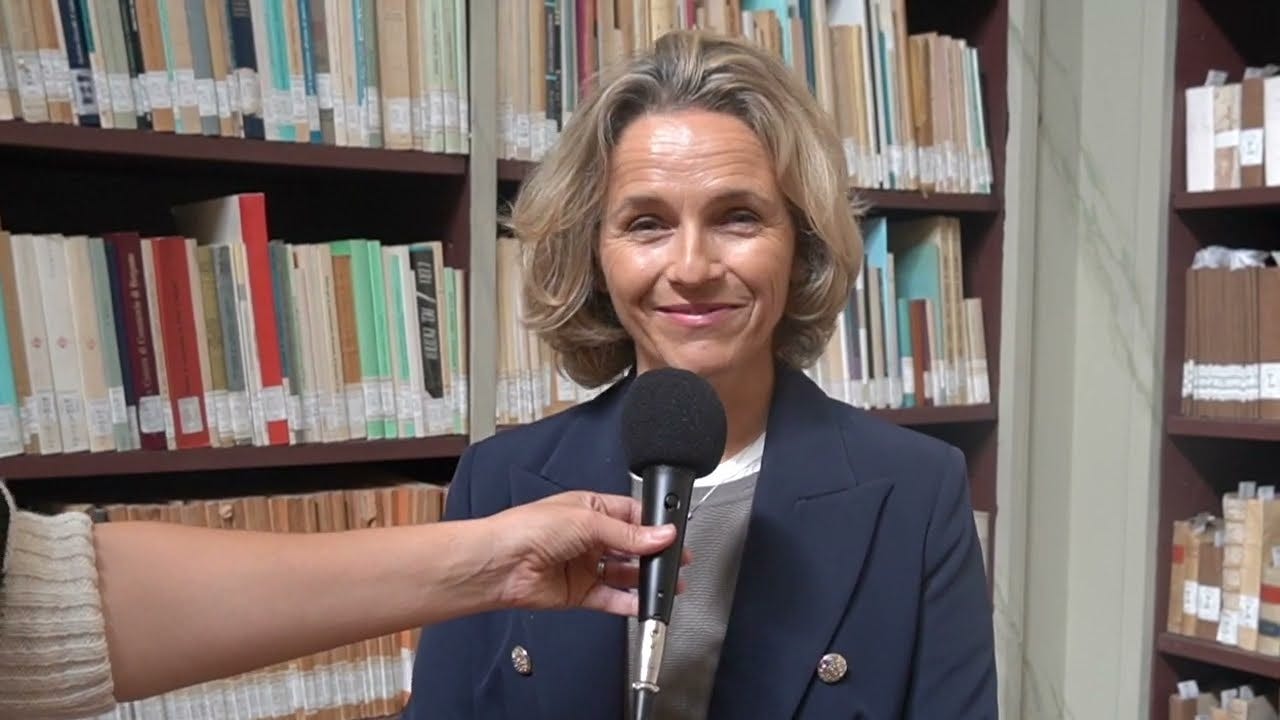
In questa puntata, Olivia Guaraldo, professoressa ordinaria di filosofia politica presso il Dipartimento di Scienze Umane all’Università di Verona, discute il libro scritto in collaborazione con Adriana Cavarero, Donna si nasce (2024), che offre uno sguardo al femminismo e ai concetti di “donna” e “gender” da Simone de Beauvoir ai giorni nostri. Guaraldo storicizza concetti come “patriarcato” e “differenza sessuale”, soffermandosi su come queste valenze siano state mutuate dall’antropologia culturale, assorbite dal femminismo e poi complicate con l’introduzione dell’“identità di gender” nei paesi prevalentemente anglofoni. Analizzando il discorso dei “diritti” in Occidente a partire dalla Rivoluzione francese, Guaraldo discute di come il pensiero moderno sia stato plasmato da un orizzonte simbolico in cui i soggetti maschili erano di fatto soggetti di “liberazione”, mentre le donne venivano invariabilmente eclissate. Approfondendo il paradosso secondo cui i diritti “universali” concessi nel corso del XVIII e XIX secolo erano specificamente rivolti agli uomini, mai all’altra metà della popolazione umana, dove gli uomini erano “la misura dell’umano”, Guaraldo evidenzia anche alcune delle differenze tra il femminismo italiano e francese e il femminismo anglo-americano, dove il primo presenta un femminismo della differenza e il secondo un femminismo dell’“uguaglianza”, e dove i diritti conquistati sono invariabilmente pagati con il prezzo dell’“assimilazione” postulata all’interno di un “modello neutro” in cui i diritti della persona vengono assunti sul corpo (ad esempio, diritti riproduttivi, accesso all’aborto, ecc.) e dove le conquiste sono sempre parziali. Guaraldo sottolinea anche l’attuale paradosso socio-politico in cui il linguaggio della differenza e del gender, così come inscritto dal poststrutturalismo francese nella seconda metà del XX secolo, ha portato a un nuovo dogmatismo e a una rigidità sociale tale per cui le giovani generazioni di donne si stanno opponendo al definirsi “donne” a causa della deliberata diluizione del significato del linguaggio. Get full access to Savage Minds at savageminds.substack.com/subscribe


Download from Google Play

Download from App Store
 United States
good interview! thank you!
hi, the file doesn't seem to be uploaded or something? looking forward to listening once it gets fixed!