


Savage Minds
Subscribed: 115Played: 6,453
Subscribe

© Savage Minds
Description
Investigative reporting and social commentary on public culture, the arts, science, and politics.
savageminds.substack.com
savageminds.substack.com
191 Episodes
Reverse
Fabio Vighi, Professor of Critical Theory and Italian at Cardiff University, discusses dominant themes from latest books, Emergency Capitalism: Financial Hubris, Economic Collapse, and Systemic Manipulation (2024) and Unworkable: Delusions of an Imploding Civilization (2022), that address the “age of crisis capitalism” and the post-productive hyper-financialised stage of capitalism that is driven by debt and the loss of work society. Relating how the acceleration of the emergency paradigm is maintained by a constant flux of “states of exception” that exclude people while also allowing for the creation of credit and debt which have become the prime motors of capitalism today, Vighi narrates how just before the pandemic in 2019, we were already approaching a gigantic financial crisis, observing, “The system needed what then Covid allowed the system to have, which means massive injections of credit.” Vighi historicises the acceleration of the emergency paradigm over the past decade, which is fundamentally connected to debt and the creation of credit “out of thin air” to balance a system that is both inherently inflationary and increasingly “imbalanced and out of control.” Noting how the release of emergencies has become the mechanism to balance the economy—first with the pandemic in 2020 and then immediately thereafter with the war in Ukraine—Vighi characterises what is happening today as an “apocalyptic, eschatological type of mood where war is always immanent…and therefore that justifies the rearmament of entire continents like Europe,” while underscoring how modern wars have always been mechanisms for creating credit while also the vehicles for connecting the arms and financial sectors. Criticising the perception management systems that are more focused on the personalisation of struggles rather than critiquing systemic structures, Vighi scrutinises how, as a result, we are incentivised into very simplistic polarisations and conflicts that are, in themselves, ideological forms of destruction, distracting us from examining the deeper causes of conflict. Get full access to Savage Minds at savageminds.substack.com/subscribe
Hala Shoman, a Palestinian PhD researcher in Sociology at Newcastle University, discusses her life in Gaza before 7 October 2023, the conditions under which Gazans have been living since, and the physical and political realities on the ground for Palestinians today. Shoman elaborates how Israel’s violence since 2023 has left Palestinian society shattered, since the aggressions are so vast and profound that, unlike previous decades of aggressions that did not wipe out entire neighbourhoods and communities, the current genocide has left few able-bodied bodies alive who are can help their communities after each attack. Observing the harsh reality for Gazans today under the daily threat of murder, Shoman appraises how not only does every Palestinian personally know hundreds of people murdered over the past two years, but Israel’s aggressions and control over every aspect of Palestinian life—their access to food, water and vaccines—have become so intensified that Palestinian infants are dying from the lack of drinking water necessary for baby formula. Confirming the direct links between Israel’s violence and the increase in domestic violence in Gaza, Shoman recounts how the structural violence of colonialism and genocide has been reproduced: from the Israeli theatre of occupation and murder to the intimate space of family life within Palestinian communities. Expounding upon Israel’s pathological desire to control Palestine, Shoman remarks that the very war criminals directing this genocide are the same individuals who are asked to lead Palestine in what is this latest farce of a “peace plan.” Shoman also elaborates her academic research that explores decolonial feminist frameworks and the concept of reprocide while also distinguishing between adapting to the horrors of this genocide and surviving it. Get full access to Savage Minds at savageminds.substack.com/subscribe
Rebecca Ruth Gould, Distinguished Professor of Comparative Poetics and Global Politics, School of Oriental and African Studies (SOAS) and author of Erasing Palestine: Free Speech and Palestinian Freedom (Verso, 2020), discusses the political reframing of “antisemitism” by the International Holocaust Remembrance Alliance (IHRA) which tailored a new definition designed specifically to silence criticism of both Zionism and the state of Israel. Recalling how she was caught within the radar of the IHRA’s definition of antisemitism in 2017 while an academic at the University of Bristol for a short article she had written years earlier, Gould analyses how the IHRA definition has very clear implications far beyond Israel and Palestine, even to the extent that it exists as a quasi-law that is treated as law while never having gone through any kind of democratic parliamentary vetting process. Moreover, Gould observes how the IHRA definition of antisemitism basically set out to define what we can and cannot say about Israel while also serving to foreshadow how free speech on Palestine would be persecuted for the following decade. Considering the language of mass starvation and famine within the media, Gould confirms how the famine of the Holodomor, in a 1933 New York Times piece, was narrated in an eerily similar way to how the famine in Gaza is currently represented. Articulating how “Never again” has never really been true, given the numerous genocides since the Holocaust, Gould describes how older generations have internalised the state-based nationalist “Holocaust memories” which have blinded them from seeing, much less understanding, that Israel is currently carrying out a genocide of Palestinians. Get full access to Savage Minds at savageminds.substack.com/subscribe
Dario Guarascio, Associate Professor of Economic Policy at the Department of Economics and Law at the Sapienza University of Rome, discusses two articles he co-authored with Andrea Coveri and Claudio Cozza, “Big Tech and the US Digital-Military-Industrial Complex” and “Monopoly Capital in the time of digital platforms: A radical approach to the Amazon case.” Coveri examines the power of digital platforms whose systemic size rivals that of nation-states, positioning them as counterparts to national authorities. Revisiting social sciences history, especially economic and imperialism theories, Guarascio highlights John Hobson’s contributions that illustrate the reliance of large capital and financial corporations on new markets as national markets become saturated. He details how the intertwining needs of states and monopolies drive a strategic internationalisation essential for competitiveness, a concept reflected in Vladimir Lenin’s work influenced by Hobson, which connects international competition with states’ imperialistic strategies aimed at expanding trade routes and eliminating competitors. Guarascio posits that amidst economic strains, military means have historically facilitated market penetration, forcing foreign governments to capitulate to external capital while obstructing competitors. He draws parallels between the intense competition for market dominance leading to the world wars and present dynamics characterised by monopoly capitalism and the dominance of multinational corporations that now dictate economic policies, thus transforming states into instruments of corporate interests. Furthermore, Guarascio argues that contemporary corporate imperialism promotes capital internationalisation and fosters economic dependencies, while militarisation becomes integral to these economic narratives. This relationship outlines a modern imperialism defined by collusion among the state, military, and multinational corporations, particularly between the US and China, alongside Big Tech’s growing influence and strategic military affiliations. Get full access to Savage Minds at savageminds.substack.com/subscribe
Penny Arcade—poet, actress, essayist, spoken word, video and theatre maker—discusses her trajectory from an immigrant family, originally from Basilicata, Italy, to her upbringing in a working-class Connecticut town to her entry into the art world of New York’s East Village. Looking back on her life as a homeless teen in the Village, her discovery by Jamie Andrews who introduced her to John Vaccaro’s Playhouse of The Ridiculous, becoming a Warhol Factory Superstar, and her departure to Amsterdam, Arcade narrates the story of how she set off for Formentera, in Spain’s Balearic Islands, where she started a school for children there, some of whom were children of drug smugglers. Recounting her return to New York City in 1981 and her split from Vaccaro, which marked the beginning of her independent work, Arcade recollects the state of the various art scenes in New York City during the Reagan era, the loss of friends to AIDS, and the censorship of the era. She vituperates the class divisions within the art world and the Manhattan Downtown art scene into which she never fit neatly, while underscoring her desire to “create theatre for people who had no theatre,” a fact which made her extremely unpopular within academia and among arts administrators because her work challenges these very elite systems. Pondering the values she espouses in her art and the fact that her audience has always been unique in maintaining a shared investment in her performances, Arcade considers how the catharsis in reaction to her art takes place well beyond the theatre hall. As an outsider to the art scene, noting how she hasn’t received institutional support and has operated without funding, legacy media coverage, or any form of academic sponsorship, Arcade criticises the state of art funding from even before the 1980s, when the Moral Majority took aim at the art world and at the NEA (National Endowment for the Arts) funding structures. Calling out the academic art world as a “pyramid scheme,” Arcade observes how the academic-produced genre of “emerging arts” has become a way for the elite class to ensure that their children would have a guaranteed “entry level position” post-graduation in the arts akin to the professional tracks for finance and law, proclaiming: “Art is not a profession—it’s a vocation.” She also delves into the problems of identity politics that have permeated into arts funding and the art world and culture at large, remarking how these institutions recycle not only the same personas and narratives, ultimately limiting the “professionalised” scope of art. Responding to the recent “queering” of Marsha P Johnson, Arcade argues that Johnson was not transgender but was a drag queen, contending that the only reason why Johnson was recategorised as “trans” is because “Marsha is dead and black.” Get full access to Savage Minds at savageminds.substack.com/subscribe
Haim Bresheeth, filmmaker and historian, discusses the growing trend in Britain and the West to curtail free speech concerning criticisms of Israel and Zionism as he details his arrest in London for protesting against the genocide in Gaza. Declaring that the freedom of expression, ostensibly guaranteed in Western democracies, no longer exists, Bresheeth observes how criticism of Gaza is being silenced through changes in the laws regarding the demonstrations and reporting on the current genocide perpetuated by Israel. He notes the irony in how today it is perfectly acceptable for Israel to commit genocide, killing tens of thousands of children, but it is not acceptable to criticise the crime of genocide as such criticism has been criminalised. Declaiming that there is “nothing Jewish” about genocide, settler colonialism, or killing children, he notes the paradox of how Israel has weaponised the Holocaust and Jewish identity to support its current genocide while besmirching anyone who disagrees with claims of “antisemitism.” Historicising Europe’s role in genocides and colonialism for centuries, Bresheeth compares this genocide to that of the Nazis and considers the role of the 300,000 Israeli citizens who have been drafted in order to carry out this genocide and the social psychosis that enables them to do so. Considering the role Islamophobia plays in the genocide of Palestinians, he discusses the historical importance of the convivencia, when Muslims and Jews co-existed in harmony in Andalusia. Bresheeth observes how Europeans would never have had their Renaissance without the rich cultural, artistic, and scientific heritage of Arabo-Muslim societies which preserved and translated Western literature and scientific texts due to the widespread burning of these texts by Western churches. Get full access to Savage Minds at savageminds.substack.com/subscribe
Boaventura de Sousa Santos, Emeritus Professor of Sociology at the University of Coimbra, discusses his professional training from law, to the philosophy of law and then to sociology, covering his time studying in Cold War Berlin, then Yale in the late 1960s and early 1970s, and his eventual involvement with the World Social Forum and his efforts to densify class struggle. Bouncing off his recent article on cancel culture, de Sousa Santos analyses the “narcissism of belongingness” and how identity politics is sabotaging the left, where the connection to the political economy is lost to the language of inclusion. Analysing the weaponisation of victimhood and lies that are used to create narratives that uniquely rely upon the perverse assumption of female innocence and male guilt, de Sousa Santos observes the current social discourse and protofascistic regimes of our times, where the Inquisition of the Dark Ages has returned. Noting the rise of social fascism, which he believes may potentially slide into political fascism, de Sousa Santos argues that the proliferation of victimhood narratives creates the subject as a type of inert res extensa, in Cartesian terms, that simultaneously negates the Spinozean notion of human potentia, something he believes will ultimately kill the feminist movement. Get full access to Savage Minds at savageminds.substack.com/subscribe
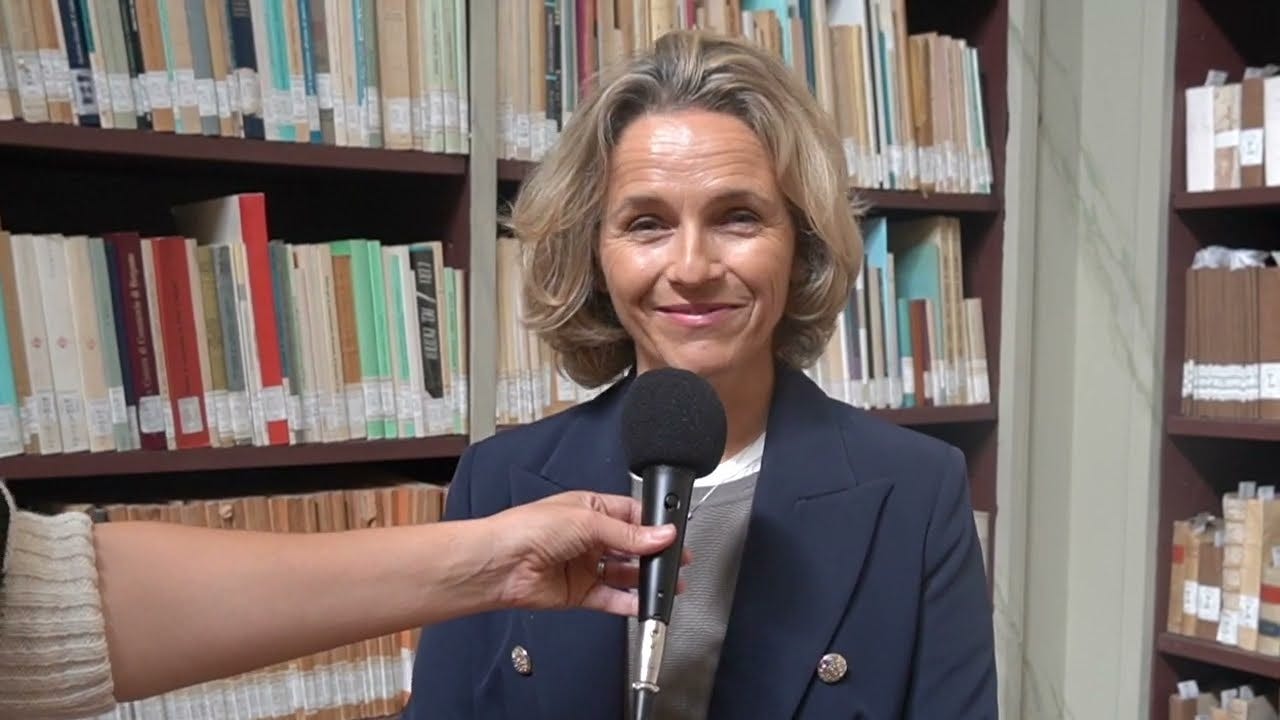
In questa puntata, Olivia Guaraldo, professoressa ordinaria di filosofia politica presso il Dipartimento di Scienze Umane all’Università di Verona, discute il libro scritto in collaborazione con Adriana Cavarero, Donna si nasce (2024), che offre uno sguardo al femminismo e ai concetti di “donna” e “gender” da Simone de Beauvoir ai giorni nostri. Guaraldo storicizza concetti come “patriarcato” e “differenza sessuale”, soffermandosi su come queste valenze siano state mutuate dall’antropologia culturale, assorbite dal femminismo e poi complicate con l’introduzione dell’“identità di gender” nei paesi prevalentemente anglofoni. Analizzando il discorso dei “diritti” in Occidente a partire dalla Rivoluzione francese, Guaraldo discute di come il pensiero moderno sia stato plasmato da un orizzonte simbolico in cui i soggetti maschili erano di fatto soggetti di “liberazione”, mentre le donne venivano invariabilmente eclissate. Approfondendo il paradosso secondo cui i diritti “universali” concessi nel corso del XVIII e XIX secolo erano specificamente rivolti agli uomini, mai all’altra metà della popolazione umana, dove gli uomini erano “la misura dell’umano”, Guaraldo evidenzia anche alcune delle differenze tra il femminismo italiano e francese e il femminismo anglo-americano, dove il primo presenta un femminismo della differenza e il secondo un femminismo dell’“uguaglianza”, e dove i diritti conquistati sono invariabilmente pagati con il prezzo dell’“assimilazione” postulata all’interno di un “modello neutro” in cui i diritti della persona vengono assunti sul corpo (ad esempio, diritti riproduttivi, accesso all’aborto, ecc.) e dove le conquiste sono sempre parziali. Guaraldo sottolinea anche l’attuale paradosso socio-politico in cui il linguaggio della differenza e del gender, così come inscritto dal poststrutturalismo francese nella seconda metà del XX secolo, ha portato a un nuovo dogmatismo e a una rigidità sociale tale per cui le giovani generazioni di donne si stanno opponendo al definirsi “donne” a causa della deliberata diluizione del significato del linguaggio. Get full access to Savage Minds at savageminds.substack.com/subscribe
Maung Zarni, UK-exiled Burmese dissident, scholar, rights activist, and Nobel Peace Prize nominee, discusses his role within the Jury in the Permanent Peoples Tribunal on Sri Lanka, observing the similarities between the use of starvation perpetrated in Sri Lanka against the Tamil minority and the exercise of starvation used against Palestinians in Gaza. Zarni also discusses his participation in two separate delegations to Gaza and the West Bank (August 2024 and January 2025) witnessing first-hand Israel’s ongoing genocide in Palestine, as he elaborates the freedom he and other members of the delegation had to roam and to discover—unscheduled and unchoregraphed visits—the reality of Palestinians living in the West Bank and Gaza and of Israelis living in Israel. Zarni describes the myriad human rights violations, starvation, and conditions of genocide in Gaza, in addition to attesting to the violent attacks by settlers and the threat of genocide already in vigour in the West Bank. Interrogating a vast system of colonial occupation and repression exercised by the state of Israel against Palestinians for the past 78 years, Zarni notes how this is a “collective genocide” whereby many countries and their politicians are “directly participating in Israel’s genocide” through political, military, and economic contributions. Zarni discusses how people need to be educated about genocide, especially “when it is done by our own country, in our own name,” as he connects his work in educating the Cambodians about the “Killing Fields” and their own history of genocide at the hands of the Khmer Rouge between 1975 and 1979. Maintaining that this genocide is “far worse than what was happening in Nazi Germany and Nazi-occupied Europe,” Zarni remarks how “the entire ecosystem of corporate and public legacy media is performing” what the Ministry for Public Enlightenment and Propaganda under Joseph Goebbels did to create the political ethos to destroy European Jewry. Get full access to Savage Minds at savageminds.substack.com/subscribe
Catherine Liu, Professor of Film and Media Studies at UC Irvine, discusses her forthcoming book, Traumatized: The New Politics of Suffering (Verso, 2026), wherein she elucidates the emergence of trauma culture, tracing it back to psychoanalysis and the reification of mental health in post-war America. Analysing the fetishisation and recognition of feelings, Liu historicises the explosion of psychoanalysis in the United States in the 1950s and the rise of New Left in the 1960s, which advanced “the personal is political,” an idea quickly adopted by second-wave feminists. Observing how the discourse of trauma has permeated all areas of society, such that feelings have been prioritised over knowledge and “centering feelings” has replaced scientific inquiry, Liu critiques how the professional managerial class thrives on rebranding, promoting credentials, and creating new identities, all in order to advance the collapse of the separation between work and leisure. Noting how workers have fought for years to maintain a separation of work from leisure time, Liu muses on the invasive, destructive force of the Silicon Valley New Left and professional middle-class feminists who have driven the insistence of a non-differentiated space where “we are always at work”, therefore our private lives are expected to be “on display through our performance virtue.” She examines the dynamics of how anti-normativity and transgression function within the writings of Michel Foucault, since they invariably strengthen normativity. Nonetheless, Liu vituperates the bastardisation of these valences under the scope of identity politics, which forces the merging of one’s personal life, politics, and intellectual practices. Get full access to Savage Minds at savageminds.substack.com/subscribe
Alex de Waal, executive director of the World Peace Foundation and Research Professor at the Fletcher School, Tufts University, historicises the way “famine” in the postcolonial era was an extremely emotional word for which, fifty years ago, there were no appropriate structures nor any objective scientific metric for understanding where or when famine was occurring. By 1984-1985, however, the neoliberal governments of Thatcher and Reagan became deeply embarrassed by the famine in Ethiopia, de Waal narrates. From this embarrassment, an industry of refining the metrics of understanding what counted as famine, and what did not, was born, and from this, the IPC, or Integrated Food Security Phase Classification, was developed as the standardised UN system used to classify the severity of food insecurity and malnutrition in a specific area. De Waal discusses how the international aid system has been shackled into into viewing famine in a very apolitical way, refusing to exam the structural causes driving famine largely because international NGOs steered away from criticising governments in order to maintain cooperation for their relief work and that Western publics give assistance to victims of natural disasters as part of the “white saviour” theatre which depends upon eliding the political causes. Declaiming the importance of photography in chronicling the history of famine—from the Warsaw Ghetto, to the famine in Ethiopia (1983-1985), and Gaza—de Waal observes the dual role of these photos: first, that the perpetrator of famine was not only absent from the frame, but was often the person taking the photo; and second, that because the perpetrator was rarely within the frame, the subjects of these photos were often blamed as the true perpetrators of famine, such that Jews attempting to preserve a “veneer of normality” in the Warsaw Ghetto or Palestinians in Gaza who are more portly, were ultimatley inculpated as the cause of the famine. Considering the merits of Famine Early Warning Systems Network (FEWSNET), he notes that it lacks the key element of examining the policies and intention of those doing the starvation. De Waal underscores that “to starve” does not just refer to the experience of people starving, but it also means the act of starving people, as he goes on to describe how the East India Company, through onerous taxation from 1769 to 1770, created a famine in Bihar and Bengal, ultimately killing one-third of the population. Get full access to Savage Minds at savageminds.substack.com/subscribe
Celine-Marie Pascale, professor emerita of sociology at American University, discusses her book Living on the Edge (2021), wherein she details her research into the struggling communities across the United States—from Appalachia to the Standing Rock and Wind River reservations to Oakland, California—who face the hardships of stagnant wages and rising costs of living. Analysing the experiences of people emanating from communities that deal with systemic, entrenched levels of poverty, Pascale uncovers the “social organisation of power relations that keep people submerged in poverty, that actually make poverty profitable,” calls out the “American dream” as much more of a myth than a reality, similar to the adjacent myth of “class mobility.” Considering how “capitalism depends upon a large, poorly paid workforce,” Pascale observes that in order to maintain the workforce without rebellion, these myths are turned against the workers and the poor, essentially telling workers that if they are struggling to put food on the table or take care of their families, that the fault lies with the worker and not with the system, not with capitalism. Historicising the lack of class consciousness in the United States, she notes how workers are cannibalised by capitalism while advanced capitalism, Pascale contends, “cannibalises itself.” Pascale critiques the federal measure of poverty, narrating how such standardisation for the cost of living is “untethered from reality” since it makes no distinction for food or rent costs in areas where food is imported (eg, Alaska and Hawaii) or where rent is extremely high (eg, San Francisco and New York). Covering her work on the violence against Native American women, Pascale assesses the high rates of violence and sex trafficking networks which fuel “man camps”—temporary housing facilities for a large workforce, typically in isolated areas where men are recruited to work on resource extraction or construction projects (eg, oil, gas or mining)—that have a documented correlation with increased rates of sexual assault, violence, and sex trafficking. Get full access to Savage Minds at savageminds.substack.com/subscribe
Heather Brunskell-Evans, philosopher of politics, author, and academic, speaks about her experience of having protested against the Israeli genocide of Palestinians in Gaza, whereby she held a placard upon which she wrote “I oppose genocide” and “I support Palestine Action.” After holding up her sign, within seconds, Brunskell-Evans was arrested under the Terrorism Act 2000 and was swiftly detained. Describing being held in solitary confinement overnight and detailing her treatment in detention, to include being enclosed in a caged area, Brunskell-Evans observes the juxtaposition of two types of police partisanship where, the Pride fluffy arm bands that adorned some of these officers symbolise the wider police support of gender ideology and its concommitant endangerment to women’s safety, on the one hand, and on the other, the police force’s disregard for civil liberties and the freedom of expression to protest a genocide. Criticising the gender-critical feminist movement which has remained tighly affixed to Zionism and Islamophobia, Bruskell-Evans vituperates the “intellectual paucity” and “lack of ethics” at the heart of western feminism that denies the many incidents of sexual violence recorded by international and national NGOs, documenting decades of rape and sexual assault perpetrated by the Israeli forces against Palestinian men and women. Get full access to Savage Minds at savageminds.substack.com/subscribe
David Abdulah, a Trinidad and Tobago trade unionist, economist and politician and the current leader of the Movement for Social Justice, speaks about the vigil for peace in Woodford Square, Port of Spain, which is one of many popular efforts by the citizens of his country to ask that the United States government stop its strikes on vessels from the region. Analysing how the Prime Minister of Trinidad and Tobago, Kamla Persad-Bissessar, has been supportive of the US actions over the past two months, where vessels have been destroyed and people killed (the death toll from these campaigns now rests at 70), Abdulah notes how the people of his country oppose military deployment, war, and regime change. Recalling the history of US interventionism in Latin America and the Caribbean, Abdulah underscores how this operation by the United States is simply a refashioned WMD, where, instead of alleged weapons of mass destruction, the US government has simply utilised the “drug war” narrative, while contending that the boats it has destroyed have allegedly been the vessels of drug trafficking operations. Noting how the US has absolutely no right to lecture anyone on the “drug trade,” Abdulah recalls how, during the Reagan administration in the 1980s, the US government authorised the transport and sale of cocaine from Latin America to support and finance its efforts to destabilise governments in El Salvador and Nicaragua. Even if these boats were those of drug traffickers, Abdulah insists upon the rejection of the Monroe Doctrine while underscoring the moral principles of peace, while also observing that due process is being completely obliterated and that the US is engaging in extrajudicial killings with zero regard for the law. Get full access to Savage Minds at savageminds.substack.com/subscribe
Omer Bartov, an Israeli-American scholar and Dean’s Professor of Holocaust and Genocide Studies at Brown University, reviews the definition of genocide as established within the Genocide Convention of 1948 as he analyses the trajectory of events in Gaza from 7 October 2023 to the Spring 2024 when the IDF moved into Rafah and proceeded systematically destroy Gaza with the goal of making it unhinhabitable for its population. Noting that the Knesset used 7 October as an opportunity to ethnically cleanse the Gaza Strip, he observes that Israel’s actions proved unsuccessful since there was no place to push the Palestinians. This is the moment, Bartov observes, when the situation devolved into genocide, resembling many other genocides throughout the 20th century, which began as ethnic cleansing but ended up as the mass killing of populations. Declaring that by July 2025, a consensus had been formed among the majority of genocide scholars and experts in international law, he expresses astonishment at the fact that legacy media have still not begun to employ the term “genocide” to describe what is now an agreed fact by international experts. Historicising how ethnic cleansing often turns into genocide, Bartov offers examples from the Germans’ ethnic cleansing turned genocide of the Herero in what is present-day Namibia, the Armenian genocide by Türkiye, where vast numbers of Armenians were pushed into the Syrian desert and perished, to the coextensive labour and extermination camps of the Nazis during World War II. Addressing the reality that many Israelis and Jews, when they hear the word “genocide,” they think of the Holocaust, Bartov criticises this mentality since the Holocaust has become a central theme within Israeli national identity since the 1980s. He contends that Israelis view the Holocaust as “not only something that happened in the past, it is something that can happen any moment. That we are always under existential threat…And that threat is represented by the Palestinians.” Bartov explains that this genocide is, in part, a reaction to fear within the core of Israeli identity that has resulted in Israel’s mass murder of Palestinians, largely because Israelis view Palestinians as their existential threat. Get full access to Savage Minds at savageminds.substack.com/subscribe
Reem Alsalem, the United Nations Special Rapporteur on Violence Against Women and Girls, joins Heather Brunskell-Evans and Julian Vigo to discuss her mission as United Nations Special Rapporteur and the consequences, changing dimensions, and the greater challenges of her role. Responding to the criticism she has received for her views on gender ideology, on the one hand, and criticisms by feminists who view women in hijab as less deserving of human rights protections, Alsalem relates how occupation and colonialism impacts this demographic quite differently as she notes how both the degradation of women in hijab and women who “identify as men” are similarly rendered invisible through the very ideologies that pretend to speak for them. Alsalem tackles the divisive issue of the alleged rapes claimed by the Israeli government and legacy media on 7 October 2023 and the incoherence of Western feminism that parrots the debunked reports while simultaneously egging on a genocide. Analysing the report by the Special Representative of the Secretary-General on Sexual Violence in Conflict (SRSG-SVC), Alsalem underscores how the mandate for this report was not investigative noting that a later investigation, undertaken by the Independent International Commission of Inquiry in June 2024, issued a report that clearly states that it “has not been able to independently verify such allegations, due to a lack of access to victims, witnesses and crime sites and the obstruction of its investigations by the Israeli authorities.” Alsalem details how the lie that Israel spun regarding the alleged rapes of Israeli women on 7 October has been completely debunked by an independent body, while noting that the widespread evidence documenting Israel’s pattern of sexual violence towards Palestinian men and women has been completely ignored by Western media and governments.We are reader-supported. Please consider becoming a paid subscriber. Get full access to Savage Minds at savageminds.substack.com/subscribe
Amit Singh, a postdoctoral researcher at the Centre for Social Studies (CES) at the University of Coimbra, discusses Hindutva, a political ideology encompassing the cultural justification of Hindu nationalism and the belief in establishing Hindu hegemony within India, as well as the dangers it poses to religious minorities today. Covering Narendra Modi’s trajectory from Gujarat’s Chief Minister from 2001 to 2014 to the Indian head of state, Singh explains how the RSS (Rashtriya Swayamsevak Sangh) and other far-right Hindutva groups have created conflicts between Hindus and Muslims in order to destabilise communal balance, Singh describes how India’s colonial past has been polarised by far-right Hindu nationalist groups who have aimed at Christian, Muslim and other Indian minority religious groups in order to create division within India on a social level, while Modi and other BJP (Bharatiya Janata Party) cohorts have enacted draconian legislation which is aimed at maintaining the Hindutva majority status with the political and bureaucratic plateaus while conterminously creating conflicts throughout the country. Covering the recent history of the state of Jammu and Kashmir, the only Indian territory with a Muslim majority, Singh contends that the application of Article 370 of the Indian Constitution, which divides Kashmir into regions while artificially populating the area with Hindus, is all part of a greater plan by the BJP to further sow sectarian divides politically which nourish the growing social divide between religious minorities and Hindus, while completely abandoning the forty-second Amendment of the Indian Constitution (1976) whereby the Preamble to the Constitution asserts that India is a secular nation. Get full access to Savage Minds at savageminds.substack.com/subscribe
Ori Goldberg, an independent analyst and specialist in Middle Eastern Studies, analyses the profound militarisation within his country, Israel, that involves the “desensitivisation as to the very existence of Palestinians as human beings” such that Israelis themselves know nothing about Palestinians, resulting in the only permissible history of Israel being that of the Jewish narrative. Covering the deeply ideological and historical “zero-sum game” whereby Israelis are uniquely allowed access to the narrative of victimisation, Goldberg explains the refusal of Israelis to see the humanity of Palestinians, remarking, “If they are acknowledged as full-fledged humans, then there is something wrong with us, there is something that undermines our right to live here.” Observing how the desensitisation of Israelis to Palestinians functions, Goldberg claims that Israelis do not possess the language to describe Palestinians “except as a threat” in the second order; however, Israeli’s first order of understanding the Palestinian is that of “nothingness” where Palestinian deaths “don’t even register.” Assessing the greatest weakness of Israel—that it does not register the reality of Palestinians—Goldberg describes how a member of Knesset stated that the only health risk facing Gazans is “obesity,” noting, “That is not how you want to talk about a people who actively, consciously want to vanquish—it’s how you talk about a people whose existence seems like a fantasy to you to begin with.” The fact that Israel attacks at will and kills indiscriminately, Goldberg asserts, is not significant in terms of its strategic power. To the contrary, Goldberg suggests that Israel’s main weakness, despite its aggression, is that it has alienated even its closest allies while also coming very close to being a failed state. Suggesting that Israel can only be saved through a “strategic implosion” that will ultimately shape its “response and its willingness to accept externally imposed positions,” Goldberg confirms that the light on the horizon is that vast majority of the world’s population no longer cares about Israelis’ feelings or their sense of victimhood, noting that Israel can blame itself for the position in which it has created for itself. Get full access to Savage Minds at savageminds.substack.com/subscribe
Isla MacGregor, a free speech and whistleblower advocate in Tasmania, Australia, relates the blowback she has experienced by gender-critical feminists for her criticism of the Israeli genocide in Gaza that is reminiscent of the very same type of behaviour enacted by the gender ideologues whom these feminists had heretofore criticised. Observing how the slurs and slogans that have been used by those feminists defending Israel’s genocide of Palestinians are remarkably similar in both form and spirit to the slurs used against women’s rights activists over the past two decades, MacGregor analyses these tactics as part of a wider war propaganda machinery. Summarising how many feminists whose “absolute ignorance of the history of Palestine and the Israeli conflict” functions in oppositional incoherence to these same feminists’ critique of gender ideology, MacGregor discusses how gender ideology’s complete absence of any hard evidence or rigorous peer-reviewed research is eerily similarly to Zionist and pro-genocidal beliefs: many people in these groups do not care about evidence or reality, nor do they care. MacGregor notes the irony in how many feminists who had long fought against the anti-reality, counterfactual discourse of gender ideology are now adopting an anti-factual posture when it comes to Israel as they shut down other women who recognise the reality of the current genocide in Gaza, asking, “What did we learn from the trans rights debate?” Get full access to Savage Minds at savageminds.substack.com/subscribe
Ramzy Baroud, journalist, author and the Editor of The Palestine Chronicle, discusses being born and raised in Gaza while also covering the greater history of Palestine: from British colonialism, the rise of Zionism and the decision that someone made to mythologise Palestine as “a land with no people,” a historical exchange to rewrite, rename, and reinvent the land of Palestine to belong to someone else, except the land indeed had people. Responding to the claims of those who deny the genocide or who have clung to the rape fictions that were created by the state of Israel in tandem with legacy media, which resorted to racist stereotypes of Arabs “as rapists” in order to seamlessly encourage the public acceptance of Israel’s genocide of Palestinians. Baroud notes how the Western focus on “the treatment of women in Palestine” has become a convenient derail to the larger issue of genocide, to which he recounts the story of his sister, a physician who was assassinated by Israel last year and whose life’s work has left a legacy for both Palestinian men and women. Baroud narrates how the legacy of Palestinian women, including his grandmother, have always been at the centre of their society, observing that Western feminists have simply embraced Orientalist language of old while completely forgetting that it is colonialism and military occupation that oppress women. Baroud also relates how many Palestinian women have given birth at checkpoints, as the IDF blocks their access to hospital care, and he asks: Where were these Western feminists who didn’t say a thing while these women were forced to give birth at checkpoints, during a most intimate moment in their lives and under the gaze of IDF soldiers watch? Where were these Western feminists’ voices when the 17.000 women were butchered and raped by the Israeli army? Baroud goes on to narrate Israel’s direct attacks on the storytellers of Palestine—the journalists, historians, and scholars—many of whom have come under legal attacks and various other forms of intimidation while also addressing the hasbara replete within western media representations of Palestine. Get full access to Savage Minds at savageminds.substack.com/subscribe


Download from Google Play

Download from App Store
 United States
good interview! thank you!
hi, the file doesn't seem to be uploaded or something? looking forward to listening once it gets fixed!