


 Claim Ownership
My Worst Investment Ever Podcast
Subscribed: 217Played: 11,397
Subscribe

© Copyright 2026 Andrew Stotz
Description
Welcome to My Worst Investment Ever podcast hosted by Your Worst Podcast Host, Andrew Stotz, where you will hear stories of loss to keep you winning. In our community, we know that to win in investing you must take the risk, but to win big, you’ve got to reduce it.
Your Worst Podcast Host, Andrew Stotz, Ph.D., CFA, is also the CEO of A. Stotz Investment Research and A. Stotz Academy, which helps people create, grow, measure, and protect their wealth.
To find more stories like this, previous episodes, and resources to help you reduce your risk, visit https://myworstinvestmentever.com/
Your Worst Podcast Host, Andrew Stotz, Ph.D., CFA, is also the CEO of A. Stotz Investment Research and A. Stotz Academy, which helps people create, grow, measure, and protect their wealth.
To find more stories like this, previous episodes, and resources to help you reduce your risk, visit https://myworstinvestmentever.com/
900 Episodes
Reverse
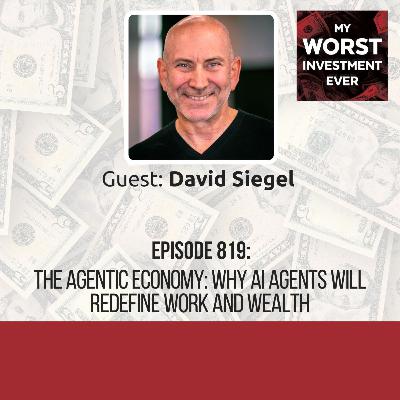
BIO: David Siegel is a Silicon Valley entrepreneur who has founded more than a dozen companies. He has written five books on technology and business, was once a candidate for the dean of Stanford Business School, and is now an AI thought leader leading an AI startup he hopes will pave the way for the agentic economy.STORY: Nine months after David's last appearance on the podcast, the conversation has shifted from "what are LLMs?" to agents that act. 60-65% of NYSE trades are already fully machine-to-machine—a preview of where all commerce is headed.LEARNING: You don't need to know exactly how AI works, but you need to get in the game. "The biggest investment mistake everyone is making right now is not appreciating the exponential nature of what we're in and what is coming. The next 12 months will be nothing like any 12 months that have ever happened in human history."David Siegel David Siegel is a Silicon Valley entrepreneur who has founded more than a dozen companies. He has written five books on technology and business, was once a candidate for the dean of Stanford Business School, and is now an AI thought leader leading an AI startup he hopes will pave the way for the agentic economy.David joins the podcast for the fourth time and discusses his latest progress in AI with Andrew.The health reset before we beginBefore diving into AI, David opened with an invitation that even Andrew found surprising: a free online water-fasting event starting on April 20, 2026, with a preliminary strategy session on April 12.What is a water fast? David explains that it's not a diet or a weight-loss tool; it's a physiological reset. For three to six days, your body enters ketosis and "cleans house," activating suppressed systems and energizing you. David does this three to four times per year, emphasizing it's not a monthly practice but a strategic reset aligned with your health journey.The coaching program makes fasting easier and more fun through group accountability, with no obligation, just information to help anyone at any point in their health journey. Learn about fasting, or just join a group of people doing the same thing at the same time. It's designed for people from the West Coast to Europe. Please register for the event and feel free to invite anyone: https://us02web.zoom.us/meeting/register/Tk-zp9ZERomWb0643Sypmw.The agentic economy: what's coming in 20 yearsDavid's core message centers on a profound shift: we're entering the agentic economy, where machine-to-machine communication replaces human-to-website interaction. He notes that in 20 years, you won't shop on Amazon. There won't be advertising or marketing for humans. All those "Cialdini mind tricks" of urgency, storytelling, and Russell Brunson funnels will vanish. Everything will be machine-to-machine, just like the stock market today, where 65% of NYSE trades open and close in less than one second.Even driving will be prohibited because human reaction times cannot match the frequency of machine communication. We're in an awkward transitional period where humans and machines must coexist. Nobody likes it, but it's taking us toward a future where drudge work is automated.What is an AI agent?David clarified a critical distinction that many miss: LLMs (Large Language Models) talk back, type responses, and generate images and videos—but don't do anything outside your interaction.AI Agent, on the other hand, is an LLM connected to APIs that can actually take action: send emails, order meals, book travel, make purchases, and run ads. Think of it as a virtual remote assistant working 24/7 while you sleep.OpenClaw: The framework powering the revolutionOpenClaw (CLAW = agents, inspired by lobsters from a forward-thinking fiction book) is an open-source framework created by Peter Steinberger on GitHub. It connects LLMs (the thinking entities) to APIs (the conduits for doing).This is revolutionary because it allows AI to take real-world actions. Previously, AI was confined to conversation. It can now execute tasks across systems. David strongly warns that OpenClaw is highly technical and requires API configuration. It's not designed for humans to use directly. It's for engineers building agent infrastructure.The security risks nobody is talking aboutDavid explains that agents introduce entirely new cybersecurity vulnerabilities that differ from traditional threats, such as social-engineering attacks against agents. For instance, impersonation via spoofed emails: "David wants a trip to Phoenix, book a flight," or multi-day, persistent attacks in which bots repeatedly try to extract secrets.David's approach with Claw Studio is to use APIs rather than scraping. Wherever possible, he attaches LLMs to official APIs with guardrails. This is safer and more sustainable than screen scraping, which violates Terms of Service and risks a shutdown.How to get started (without blowing yourself up)David's advice is clear: Don't do it yourself. That's suicide. With great power comes great responsibility. An agent can do almost anything, including deleting its own installation, wiping your disk clean, or draining your bank account. You want it to do almost nothing initially, then gradually widen the guardrails.The Redshift Labs/Claw Studio approach:Done-for-you setup like Red Hat for LinuxDedicated Chief of Staff agent with its own phone numberOnboarding period of 1-2 weeks, where you download your life into the agent:Birthday, family members' emails, and daily routinesIt can research you online to build context.Separate setups for personal and businessForever memory, unlike standard LLM context windows that forget:Every Zoom call transcript gets piped in word-for-word.Searchable memory: "Who was I talking to about Tahoe skiing in November?"Agent retrieves exact conversations and can follow up.Reverse prompting—the paradigm shift:Instead of you telling the agent what to do, it tells you.Morning briefing: what happened overnight, what's coming up, what's changedManages your calendar, project management, and prioritiesBreaks long-term goals into daily deliverablesYou're no longer the to-do list keeper.Security architecture:Virtual Private Server (VPS) hosting, not local machinesTwo-account system: one for operations, one for immutable backupsAll logs are piped to a one-way backup account."Go back six hours" restore button, in case things go wrong.Humans in the loop for critical actions (e.g., agent queues payments, human approves)The biggest investment mistake everyone is makingTo conclude, David talked about the biggest investment mistake everyone is making right now: not appreciating the exponential nature of what we're in and what is coming. He noted that the next 12 months will be unlike any 12 months in business history. He stated that we're entering a recursive self-improvement phase, in which software will write the next generation of itself. The singularity isn't theoretical; it's happening now.David's advice is to stop thinking six months ahead. The pace is too fast. Instead:Take baby steps to position yourself.Prepare to accelerate like never beforeInvest in agent infrastructure now, while it "doesn't suck too bad", it will...
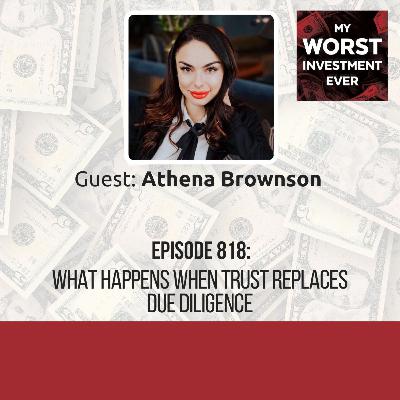
BIO: Athena Brownson is a Denver realtor, investor, developer, and former professional skier whose resilience through chronic illness fuels her refined, strategic, and client-focused approach to real estate.STORY: Athena lost $130,000 in her first development project when a builder she considered a friend vanished with the upfront funds. Her trust and incomplete due diligence led to a total loss, teaching her that personal relationships can create dangerous blind spots in business.LEARNING: Due diligence is non-negotiable. Trust is a liability. “A simple conversation with someone that we know, like, and trust is invaluable, because they can point out to us the blind spots that we may have missed in our excitement.”Athena Brownson Guest profileAthena Brownson is a Denver realtor, investor, developer, and former professional skier whose resilience through chronic illness fuels her refined, strategic, and client-focused approach to real estate.Worst investment everAthena Brownson entered her first development project with confidence and a seemingly dream team. With a 45-year veteran developer—her father—by her side, she felt prepared. She had saved diligently, owned the land, and chose a builder she’d known for three years, a dear friend’s business partner.After multiple interviews where her father asked all the right questions, they felt secure. They signed a contract and paid $130,000 upfront for site clearing, asbestos abatement, and foundation work.Initial excitement turned to unease as progress was glacial. A blue fence went up, and some abatement started, but then communication stopped. Phone lines went dead. Subcontractors began calling Athena directly, asking why they hadn’t been paid.The devastating truth emerged: the builder had vanished with the funds. Athena later discovered she was one of eight victims of the same scam. Despite her real estate expertise and her father’s decades of experience, they had been outmaneuvered by a trusted contact.Lessons learnedDue diligence is non-negotiable: Trust is not a replacement for verification. Athena’s key takeaway was the need for exhaustive due diligence: calling not just a few references, but a comprehensive list of past and current clients to hear the unfiltered story of their experiences.Friendship clouds judgment: A personal connection created a dangerous blind spot. It made her and her experienced team less likely to probe aggressively or assume the worst, a bias scammers often exploit.Assume the worst, hope for the best: The mindset must shift from “I trust you until you prove me wrong” to “Show me consistent, verifiable proof that you are trustworthy.” In business, healthy skepticism is a necessary form of self-defense.Measure twice, cut once: This adage applies to money and contracts. Double and triple-check every detail, every claim, and every line item before funds change hands.Andrew’s takeawaysMoney is life energy: Andrew referenced the classic book Your Money or Your Life, emphasizing that money represents hours of your life traded for it. Guarding it fiercely is an act of self-preservation.Trust is a liability: Stories like Athena’s and others show that misplaced trust is a common thread in catastrophic losses. Systems and verification must replace blind faith.Seek counsel, not confirmation: When making big decisions, actively seek advisors who will challenge you and point out blind spots, not just those who will validate your excitement.Actionable adviceAthena advises investors to do these three things when vetting any partner:Demand a list of 10 past and current clients/vendors and call them all. Don’t settle for 2-3 curated references. Ask specific questions about communication, budgeting, and problem-solving.Before major investments, formally run the deal by a small group of mentors or experienced peers whose explicit role is to find flaws and ask the tough questions you might be avoiding.Impose a mandatory 48-72 hour “cooling-off” period between agreeing to a deal and signing or funding. Use that time to conduct the extra due diligence that your initial excitement may have skipped.Athena’s recommendationsAthena’s number one recommendation is to invest in mentorship and continuous education. Whether through formal coaching, podcasts, masterclasses, or peer groups, constantly feed your knowledge.She advocates for finding a community that provides both accountability and the ability to see your own blind spots, which are invisible to you alone. For her, this approach, ingrained from her athletic career, is pivotal for professional growth and risk mitigation.No. 1 goal for the next 12 monthsAthena’s number one goal for the next 12 months is to deepen her impact by building a powerful, trusted referral network. She aims to serve more clients in building long-term wealth through strategic real estate and to expand her team. A core part of this mission is to pay forward the mentorship she received by guiding younger agents, helping them avoid the costly pitfalls she endured.Parting words “Don’t make rash decisions. Take your time and know that the right thing is going to come into place at the right time.”Athena Brownson [spp-transcript] Connect with Athena BrownsonLinkedInInstagramYouTubeAndrew’s booksHow to Start Building Your Wealth Investing in the Stock MarketMy Worst Investment Ever9 Valuation Mistakes and How to Avoid ThemTransform Your Business with Dr.Deming’s 14 PointsAndrew’s online programsValuation Master ClassThe Become a Better Investor CommunityHow to Start Building Your Wealth Investing in the Stock MarketFinance Made Ridiculously SimpleFVMR Investing: Quantamental Investing Across the WorldBecome a Great Presenter and Increase Your Influencea...
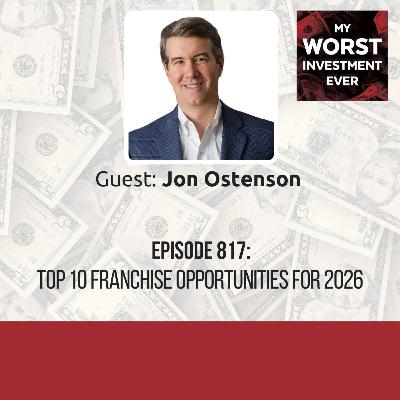
BIO: Jon is the Founder and CEO of FranBridge Consulting, a 2-time Inc. 5000 company, and a leading franchise consultant.STORY: Jon believes franchising remains one of the most effective ways to build durable income, especially when investors focus on operational discipline and unit economics. He shares his top franchise categories for 2026.LEARNING: Look for businesses with repeat customers, operational discipline, proven unit economics, and leadership teams that have already made their mistakes.Guest profileJon Ostenson is the Founder and CEO of FranBridge Consulting, a 2-time Inc. 5000 company, and he is a top 1% franchise consultant. Jon is also the author of the bestselling book, Non-Food Franchising. Jon draws on his experience as a former Inc. 500 Franchise President and Multi-Brand Franchisee in helping his clients select their franchise investments.For many aspiring business owners, the biggest financial losses don't come from bad intentions. They come from underestimating complexity, overestimating scalability, or betting everything on an unproven idea. Jon Ostenson knows this lesson intimately.As the founder and CEO of FranBridge Consulting and franchise consultant, Jon has spent years helping entrepreneurs shortcut costly mistakes by investing in proven, non-food franchise models.In Episode 815: I Built a Million-Dollar Business That Never Made a Profit, he openly shared how he once built a million-dollar business that never made a profit. That experience now informs how he evaluates opportunities with discipline, structure, and risk control.Looking ahead to 2026, Jon believes franchising remains one of the most effective ways to build a durable income stream, especially when investors focus on operational discipline and unit economics. Below are his top franchise categories for 2026, and more importantly, why they help investors avoid the common traps that sink new businesses.Why Franchising Can Help Investors Avoid Big MistakesOne of the most common investment errors is assuming passion alone will overcome operational complexity. Many entrepreneurs love an idea but underestimate the systems, staffing, pricing discipline, and capital required to make it profitable.Franchising addresses this risk by offering something rare: a business model with historical data. Instead of guessing whether pricing works or whether customers will pay, franchisees can examine real-world performance, talk to existing owners, and follow systems that have already survived market cycles, helping investors feel confident in demand-driven, structured opportunities.Jon emphasizes that franchising is not about eliminating risk. It's about trading unbounded risk for structured risk, supported by systems, training, and benchmarks.1. Cost Mitigation Consulting: Profits Without PayrollCost-mitigation franchises help small and medium-sized businesses reduce expenses by analyzing vendor contracts, utility bills, shipping costs, and other fees. Clients pay nothing up front and instead share a percentage of the savings.What makes this model compelling is its simplicity. There's no inventory, no employees required, and no large infrastructure investment. Franchisees focus on business-to-business sales while the franchisor provides analytical support and benchmarking tools.From an investment standpoint, this avoids two common mistakes: high fixed costs and overstaffing before revenue stabilizes.2. Freight Brokerage: Leveraging Collective Buying PowerShipping costs remain a pain point for businesses, and freight brokerage franchises sit neatly between companies and major carriers like UPS, FedEx, and DHL.Rather than competing on price alone, franchisees act as trusted advisors, simplifying logistics and negotiating better rates using collective buying power. Technology and systems are already in place, preventing the trial-and-error phase that sinks many startups.This model rewards consultative selling skills while insulating owners from volatile commodity pricing.3. Digital Billboard Advertising: Recurring Local RevenueDigital billboard franchises install advertising screens in high-traffic locations such as medical offices, oil change centers, and waiting rooms. The screens are free for host businesses, while advertisers pay for exposure.The appeal here lies in predictable recurring revenue and minimal staffing. Franchisees sell local advertising while the franchisor handles content delivery, technology, and procurement.It's a classic example of monetizing attention without carrying inventory or managing complex operations.4. Senior Fitness and Stretching Services: Demographics at WorkWith thousands of Americans turning 65 every day, senior-focused services remain one of the strongest secular growth trends. One franchise Jon highlights provides on-site stretching and fitness programs inside senior living communities.Revenue is recurring, demand is non-discretionary, and the business directly improves quality of life. For investors, this reduces reliance on consumer whims and economic cycles.5. Home Mobility Solutions: Aging in Place Is the FutureAnother senior-focused opportunity involves installing wheelchair ramps, stair lifts, and bathroom modifications to help seniors stay in their homes longer.Jon favors this franchise because the leadership team brings decades of industry experience, and market demand is structural rather than trendy. These services align closely with healthcare, reverse mortgages, and long-term aging trends.For investors, it's a reminder that boring, needs-based businesses often outperform exciting ideas.6. Pilates Studios: Premium Wellness With Predictable RevenuePilates franchises continue to stand out as one of the strongest performers in the wellness space heading into 2026. Unlike trend-driven fitness concepts, Pilates benefits from longevity, broad demographic appeal, and a reputation for low-impact, high-value results. Clients range from young professionals to older adults focused on mobility, posture, and injury prevention.What makes this model attractive from an investment perspective is its membership-based recurring revenue and disciplined unit economics. Franchise systems have refined pricing, instructor certification, class capacity, and studio layout to maximise margins while maintaining quality. Jon highlights that these brands succeed not because fitness is exciting, but because their business models are structured, repeatable, and proven across multiple markets.For investors looking to avoid the mistake of underestimating operating complexity, Pilates franchises offer a clear framework for scaling without reinventing the wheel.7. Recovery and Wellness Studios: Riding the Longevity EconomyRecovery-focused wellness franchises are another category Jon believes will accelerate into 2026. These studios offer services such as cold plunges, infrared saunas, cryotherapy, compression therapy, and contrast bathing, all designed to support recovery, performance, and long-term health.Unlike traditional spas, these franchises position themselves as ongoing wellness memberships rather than one-off luxury visits. Customers come weekly, sometimes multiple times per week, creating predictable cash flow and strong client retention. Demand is driven by athletes, busy professionals, and aging consumers who prioritise longevity and preventative health.From an investment standpoint, these franchises succeed when operators follow disciplined rollout plans, resist overbuilding too quickly, and rely on franchisor-tested marketing and pricing strategies. Jon notes that many independent wellness studios fail not because the demand isn't there, but because owners misjudge costs, staffing, or market readiness, mistakes that strong franchise systems are designed to prevent.8. Music Education Studios: Community-Based Recurring IncomeMusic lesson franchises create centralized spaces where instructors teach children and adults under a standardized curriculum. Parents are willing to invest in their children regardless of economic conditions, making this category resilient.The franchise advantage lies in marketing systems, scheduling technology, and curriculum design. Owners focus on community engagement rather than building everything from scratch.9. Teen Driving Schools: Regulation Meets OpportunityIn many US states, formal driver education is required for teens to obtain a driver's license. Yet the market remains fragmented and unsophisticated.Franchised teen driving schools offer standardized training, vetted instructors, and strong brand trust. For parents, safety matters. For investors, regulation-backed demand provides stability.10. Property Services: Flooring and Junk Hauling ReinventedJon closes his list with two property services franchises that stand out due to operational innovation. One refinishes hardwood floors in a single day without sanding. The other reimagines junk hauling by charging by...
BIO: David Siegel is a Silicon Valley entrepreneur who has founded more than a dozen companies. He has written five books on technology and business, was once a candidate for the dean of Stanford Business School, and is now an AI thought leader leading an AI startup he hopes will pave the way for the agentic economy.STORY: David invested heavily in launching a longevity coaching business, believing people would pay to extend their lives through lifestyle change. Despite strong science, personal results, and significant marketing spend, demand proved nearly nonexistent.LEARNING: A great idea without real demand is still a bad investment. “There will be many new problems, and whenever there are new problems, there’s a new economic opportunity for many people.”David Siegel Guest profileDavid Siegel is a Silicon Valley entrepreneur who has founded more than a dozen companies. He has written five books on technology and business, was once a candidate for the dean of Stanford Business School, and is now an AI thought leader leading an AI startup he hopes will pave the way for the agentic economy.Worst investment everAfter years of building companies and studying major technological shifts, David found himself pulled deeply into the longevity movement. This wasn’t casual curiosity. He read more than 20 books, radically transformed his lifestyle, and developed a deep understanding of insulin resistance, nutrition, exercise, and long-term health.The results were personal and visible. David was fit, disciplined, and energized. The idea that science could help people live 10 to 15 years longer, with a higher quality of life, felt not only possible but urgent. Helping others do the same seemed like a natural next chapter.Turning passion into a businessConfident in both the science and his own experience, David decided to turn longevity coaching into a scalable business. His target audience was people in their 50s and 60s, individuals who were pre-diabetic or heading toward serious health issues and stood to benefit the most from early intervention.He approached the venture like a seasoned entrepreneur. He built funnels, ran Facebook ads, spoke at retirement communities, and spent months on discovery calls explaining how lifestyle changes could dramatically reduce the risk of cancer, Alzheimer’s, and diabetes.This wasn’t guesswork; it was disciplined execution.The painful reality checkThen reality set in.Despite spending over $100,000 on advertising and investing countless hours in conversations, demand was almost nonexistent. People listened. They nodded. They agreed the logic made sense. Then they walked away.Many believed the healthcare system would save them. Others hoped for a pill instead of discipline. Even those clearly facing insulin resistance weren’t willing to make sustained lifestyle changes.The most sobering realization wasn’t about marketing or pricing. It was this: most people don’t actually want to live longer if it requires consistent effort.Accepting the lossIn the end, only about one percent of the people David spoke to were already doing the work and didn’t need coaching. Everyone else opted out, fully aware of the consequences.The investment failed not because the science was wrong, but because the market wasn’t there. David ultimately gave the information away for free and walked away from the business, having learned an expensive but clarifying lesson about belief versus demand.Lessons learnedEven the most compelling solution will fail if it requires behavior that people are unwilling to change.Logic, evidence, and outcomes don’t matter if the market emotionally resists effort.A great idea without real demand is still a bad investment.Andrew’s takeawaysAndrew highlights that people consistently search for shortcuts rather than long-term solutions. Whether in health or investing, most people prefer convenience over discipline, even when the stakes are life-altering.Actionable adviceBefore scaling any idea, test for real demand, not polite interest. Ask whether people are willing to pay, change their habits, and put in effort. If behavior change is central to your offering, validate that reality early or risk learning the hard way.David’s recommendationsDavid encourages understanding your own health data, particularly insulin resistance, through proper testing, such as an oral glucose tolerance test. While the business failed, the knowledge remains powerful and freely available for those willing to act.Parting words “Keep looking for new problems that didn’t exist six months ago and jump in after them.”David Siegel [spp-transcript] Connect with David SiegelLinkedInXYouTubeWebsiteAndrew’s booksHow to Start Building Your Wealth Investing in the Stock MarketMy Worst Investment Ever9 Valuation Mistakes and How to Avoid ThemTransform Your Business with Dr.Deming’s 14 PointsAndrew’s online programsValuation Master ClassThe Become a Better Investor CommunityHow to Start Building Your Wealth Investing in the Stock MarketFinance Made Ridiculously SimpleFVMR Investing: Quantamental Investing Across the WorldBecome a Great Presenter and Increase Your InfluenceTransform Your Business with Dr. Deming’s 14 PointsAchieve Your GoalsConnect with Andrew Stotz:astotz.comLinkedInFacebookli...
BIO: Jon is the Founder and CEO of FranBridge Consulting, a 2-time Inc. 5000 company, and he is a top 1% franchise consultant.STORY: Jon co-founded a marketing and call-center business that appeared successful on the surface, growing to millions in revenue and dozens of employees. However, excessive customization and an inability to charge prices that matched rising costs meant the business never became sustainably profitable.LEARNING: Profitability is oxygen. Knowing when to admit you’re wrong matters just as much as knowing how to start. “Humble yourself and admit when you’re wrong, course correct, and pivot.”Jon Ostenson Guest profileJon Ostenson is the Founder and CEO of FranBridge Consulting, a 2-time Inc. 5000 company, and he is a top 1% franchise consultant. Jon is also the author of the bestselling book, Non-Food Franchising. Jon draws on his experience as a former Inc. 500 Franchise President and Multi-Brand Franchisee in helping his clients select their franchise investments.Worst investment everLeaving the corporate world felt like freedom. After years of structure, predictability, and steady paychecks, you finally get to build something of your own. That was precisely where Jon found himself: grateful for his corporate experience, energized by the idea of business ownership, and eager to prove he could create something meaningful on his own terms.A promising partnership and a compelling business visionShortly after leaving corporate life, Jon partnered with a colleague to launch a marketing and sales company. He owned 60 percent of the business and ran day-to-day operations, while his partner held the remaining 40 percent.The vision was compelling. The company would help franchise businesses grow by handling their marketing, answering inbound calls through an in-house call center, and booking appointments directly for clients. The promise was simple: make the phones ring and convert those calls into revenue.Early momentum and the illusion of successAt first, it worked. The business grew quickly, attracting a strong leadership team and building a culture Jon was proud of. With around 35 employees and annual revenues of $3 million to $4 million, the company appeared successful from the outside. The team was energized, clients were signing on, and the pace was exciting.When growth didn’t translate into profitBut beneath the surface, there was a quiet, persistent problem.The business wasn’t profitable.Despite all the effort, the long hours, and the constant tweaking, the company hovered around breakeven. Some months it lost money. Others it barely scraped by. Payroll was always looming, and profitability felt just out of reach. Jon tried adjusting pricing, shifting emphasis between marketing and call center services, and introducing new technology to increase value.But every fix only delayed the inevitable question he didn’t want to answer: What if the model itself was broken?The hidden cost of customization and complexityThe core issue turned out to be customization. The business was designed to scale by serving franchise systems with repeatable processes. Instead, each franchisee insisted their market was different, their staff was unique, and their customers required special handling. Wanting to please early clients and drive revenue, Jon said yes. Again and again.Over time, the company became highly customized, operationally complex, and increasingly expensive to run. Pricing no longer matched costs. The more the business grew, the harder it became to make money. What looked like top-line success was masking a model that couldn’t sustain itself.The hard decision to walk away with integrityEventually, Jon made the difficult decision to wind down the business. There was no dramatic exit or acquisition, but there was integrity. The team helped place employees in new roles and transitioned clients responsibly. Still, it was a painful experience.The failure wasn’t just financial; it was an ego hit. This was Jon’s first true experience of business ownership, and letting it go meant admitting that the original idea wasn’t as strong as he believed.Lessons learnedThe biggest lesson came from contrast. After running his own startup without a proven product-market fit, Jon developed a deep appreciation for franchising. Unlike a startup built on assumptions, franchises offer historical data, real performance benchmarks, and access to owners who have already walked the path. You can see results before you ever invest.There were personal lessons, too. Knowing when to admit you’re wrong matters just as much as knowing how to start. Humility, course correction, and the willingness to pivot are not weaknesses in entrepreneurship; they’re survival skills.Profitability, Jon learned, is oxygen. A business that can’t consistently operate in the black eventually suffocates, no matter how exciting the vision or how talented the team.Andrew’s takeawaysOne of the most important disciplines for any business owner is accurately closing the books each month. That means reviewing not just the profit and loss statement, but also the balance sheet. If your accountant can’t do that, it’s time for a new one. Monthly financial clarity allows you to identify problems early, before they become fatal.Another insight comes from scale. Based on analysis of tens of thousands of companies globally, Andrew points to $7.5 million in annual revenue as a critical threshold. Below that level, it’s tough to afford the management talent and infrastructure required to run a scalable business. If you can’t get there efficiently, it may be time to rethink the model.Finally, complexity is the silent killer. Businesses naturally drift toward offering more products, more services, and more custom solutions. Every added layer increases costs and erodes margins. Only disciplined leadership can stop complexity from overwhelming profitability.Actionable adviceIf you’re building a business, be honest about whether you’re chasing revenue or building something scalable. Early customization can help you survive, but staying there too long can trap you in a low-margin cycle that’s hard to escape.Focus on creating profitable top-line growth, not just growth for its own sake. Learn to say no, even when opportunities feel exciting. And remember: there is no perfect time to start a business. The best way to learn is to get in the game early, without betting everything, and build experience that you can compound over time.Jon’s recommendationsJon recommends starting with education and proven frameworks. He offers a free downloadable copy of his book, Non-Food Franchising, in a concise 90-page guide. The book has received strong feedback and provides practical insights for anyone considering business ownership.Listeners can download the PDF or audio version by visiting FranBridgeConsulting.com and sharing their email address. Those who prefer a physical copy can purchase it on Amazon, with all proceeds supporting Hope International.No.1 goal for the next 12 monthsJon’s goal for the next 12 months is to grow passive income across multiple asset classes, including franchising. His goal is to build sustainable revenue streams that create freedom across all areas of life: faith, family, fitness, finances, and future ventures.Passive income, for Jon, isn’t just about money. It’s about capacity—the ability to choose how you spend your time and energy.Parting words “There’s never a good time to start a business. Get off the couch, dip your toe in the water, read our book, get in the game, and start thinking about it.”Jon Ostenson [spp-transcript] Connect with Jon OstensonLinkedInTwitterFacebooka...
BIO: Edwin Endlich is the Chief Marketing Officer of Wysh and President of the National Alliance for Financial Literacy and Inclusion.STORY: Edwin’s worst investment was buying Tilray stock at $143 during the early hype of legal cannabis investing. Swept up in the excitement of a “new frontier,” he held on as the price crashed—eventually selling at around 30 cents and losing over 99% of his investment.LEARNING: The fundamentals always apply, even in new or exciting industries. Don’t let hype replace due diligence. “We’re in this AI conversation, let’s not forget the fundamentals of the market. Learn from what has happened in this space before. And don’t get too cocky.”Edwin Endlich Guest profileEdwin Endlich is the Chief Marketing Officer of Wysh and President of the National Alliance for Financial Literacy and Inclusion. Edwin has spent his career at the intersection of marketing, fintech, and AI, helping financial institutions tell more human stories in an increasingly digital world. He’s passionate about making financial protection simple, accessible, and even a little more fun — proving you don’t need buzzwords or hype to make banking and technology relevant.Worst investment everThere’s nothing quite like the rush of feeling early—early to a trend, early to a movement, early to a once-in-a-lifetime opportunity. That’s precisely what Edwin felt in 2015–2016, when investing in legal cannabis became possible in parts of the United States.For the first time, regular people could invest in a newly legalized industry. It felt like history happening in real time, a frontier market ready to explode. Edwin and his friends didn’t want to miss out, especially when companies were going public, and their share prices seemed destined to skyrocket.One of those stocks was Tilray. At $143 a share, Edwin was convinced he was buying the future. He imagined stock splits, booming demand, and a cannabis empire rising from the ground floor. Instead, he watched that $143 tumble month after month, until he finally sold it for around 30 cents. The emotional rollercoaster of hope, disappointment, and finally acceptance was a journey Edwin will never forget.A 99.3% loss.He now calls it his worst investment—not just because of the financial hit, but because of how powerfully excitement and hype clouded his judgment.Lessons learnedEvery investor thinks their situation is unique. But in reality, the same patterns repeat again and again.Markets take time to mature.Regulation can shift overnight.Early doesn’t always mean right.Excitement is not a strategy.Andrew’s takeawaysA portfolio isn’t just about diversification by industry or geography; it’s also about diversifying across stages of maturity.Stable, well-regulated companies like Coca-Cola or Pepsi behave very differently from early-stage, hype-driven industries, such as the cannabis sector.Even large companies, with teams of top analysts, often get it wrong.Actionable adviceIf Edwin could offer one piece of advice to anyone starry-eyed over the next big thing, it would be this:Do your due diligence. Seriously.Before you invest in anything—especially something exciting, futuristic, or rapidly trending—slow down and ask:Has this been done before?What can I learn from past bubbles?What does history say about similar innovations?Am I investing in fundamentals—or feelings?Whether it’s cannabis in 2016 or AI in 2024, the pattern is the same. Booms become bubbles. Investors overestimate how fast an industry will mature. And emotion often wins over discipline. But with the right mindset and discipline, you can avoid these pitfalls.Edwin’s recommendationsEdwin encourages people to empower themselves with real financial knowledge. That’s why he co-founded the National Alliance for Financial Literacy and Inclusion (NAFLI)—a nonprofit dedicated to helping individuals understand money, investing, and financial products.Whether you’re new to investing or leading a financial institution, NAFLI offers education, tools, and resources to help individuals make more informed financial decisions.No.1 goal for the next 12 monthsEdwin’s goal for the next 12 months is to have a full, uninterrupted conversation with his daughter, one that lasts longer than 10 minutes and isn’t broken by phones, notifications, or distractions. Edwin wants to rebuild community and presence—starting at home.Parting words “Stay focused and look to the past.”Edwin Endlich [spp-transcript] Connect with Edwin EndlichLinkedInWebsiteAndrew’s booksHow to Start Building Your Wealth Investing in the Stock MarketMy Worst Investment Ever9 Valuation Mistakes and How to Avoid ThemTransform Your Business with Dr.Deming’s 14 PointsAndrew’s online programsValuation Master ClassThe Become a Better Investor CommunityHow to Start Building Your Wealth Investing in the Stock MarketFinance Made Ridiculously SimpleFVMR Investing: Quantamental Investing Across the WorldBecome a Great Presenter and Increase Your InfluenceTransform Your Business with Dr. Deming’s 14 PointsAchieve Your GoalsConnect with Andrew Stotz:astotz.comLinkedInFacebookInstagramThreadsXYouTubeMy Worst Investment Ever Podcast
BIO: Scott Alldridge is CEO of IP Services and President of the IT Process Institute, a bestselling author of the VisibleOps series, and a Certified Chief Information Security Officer.STORY: Scott’s worst investment was a stake in a startup promising to deliver hot coffee by drone. Excited by the futuristic idea, he invested before the concept was proven—but the project quickly crashed when the FAA banned drone deliveries and a prototype failed spectacularly.LEARNING: Being first doesn’t always mean being right. Due diligence is non-negotiable. “You don’t have to jump in. Being the first with the most doesn’t matter if it’s a bad idea—you’ll lose money anyway.”Scott Alldridge Guest profileScott Alldridge is CEO of IP Services and President of the IT Process Institute, a bestselling author of the VisibleOps series, and a Certified Chief Information Security Officer. He holds an MBA in cybersecurity and has over 30 years of experience in IT and cybersecurity leadership. Scott empowers organizations to achieve resilience through process excellence, Zero Trust, and AI-driven security.Worst investment everIf you live in the Pacific Northwest, coffee isn’t just a drink; it’s a way of life. Seattle is home to Starbucks, and in Oregon, coffee culture runs deep. So when Scott was pitched an idea that combined coffee and technology—delivering hot coffee via drone—he couldn’t resist.The concept sounded revolutionary: push a button on your phone, and a drone drops off your piping-hot Americano right at your doorstep. It felt like the future—part Amazon innovation, part TED Talk dream.Excited, Scott invested for a 3% stake in the startup. The founders promised a caffeinated empire built on convenience and cutting-edge tech.But just three months later, the buzz wore off. The FAA issued a cease-and-desist order on all drone delivery experiments, particularly those involving liquids.And then came the final straw: the company’s prototype drone spilled an entire cup of hot coffee mid-flight, grounding both the drone and Scott’s hopes. The “coffee drone revolution” turned into a $10,000 lesson in wishful thinking. Delivering hot coffee by drone was never going to fly—literally.Lessons learnedBeing first doesn’t always mean being right.It’s tempting to jump into the next big idea, especially when it sounds exciting and visionary. However, early-stage innovation carries significant risk, especially when the concept hasn’t been tested or proven.Enthusiasm can cloud judgment. Instead of investing based on a slick pitch deck or futuristic concept, it’s smarter to wait until an idea is validated, tested, and compliant with regulations.Andrew’s takeawaysEvery idea looks brilliant until reality—and regulation—show up.Even in large corporations, where top analysts and executives lead multi-million-dollar mergers, success isn’t guaranteed. Only about 20% of them added value within three to five years.Business is hard, and due diligence is non-negotiable.Actionable adviceAlways do your due diligence. Before investing in any idea—no matter how exciting—slow down and dig deep:Validate the concept. Is there a working prototype, or just a fancy pitch?Check the regulations, especially if the business operates in a grey area (like drones or cannabis).Assess the risk. What happens if laws, markets, or consumer behaviour change?Stay patient. If it’s truly a good idea, it will still be good when it’s proven.Scott’s recommendationsScott recommends his Amazon bestseller, Visible Ops Cybersecurity: Practical Ways to Enhance Your Cybersecurity Posture, which breaks down complex IT security concepts into real-world strategies that leaders can actually apply.For executives who don’t speak “tech,” he’s also written The Visible Ops Executive Companion Guide, a concise 105-page edition with zero “geek speak”—just actionable guidance.And coming soon: Visible Ops AI: Artificial Intelligence Governance with Practical Guidance, where Scott explores how businesses can safely and responsibly integrate AI while protecting data integrity.No.1 goal for the next 12 monthsScott’s goal for the next 12 months is to double down on two things: growth and impact.On the business side, his goal is to expand the top-line revenue of his IT services firm and bring in new client partnerships. But there’s also a bigger mission driving him—making the world a safer place through smarter, more disciplined cybersecurity practices.Parting words “Thank you for having me today. Let’s keep the world a cyber-safe place.”Scott Alldridge [spp-transcript] Connect with Scott AlldridgeLinkedInInstagramFacebookWebsiteBookAndrew’s booksHow to Start Building Your Wealth Investing in the Stock MarketMy Worst Investment Ever9 Valuation Mistakes and How to Avoid ThemTransform Your Business with Dr.Deming’s 14 PointsAndrew’s online programsValuation Master ClassThe Become a Better Investor CommunityHow to Start Building Your Wealth Investing in the Stock MarketFinance Made Ridiculously SimpleFVMR Investing: Quantamental Investing Across the WorldBecome a Great Presenter and Increase Your InfluenceTransform Your Business with Dr. Deming’s 14 PointsAchieve Your GoalsConnect with Andrew Stotz:astotz.comLinkedInFacebookInstagramThreadsXYouTubeMy Worst Investment Ever Podcast
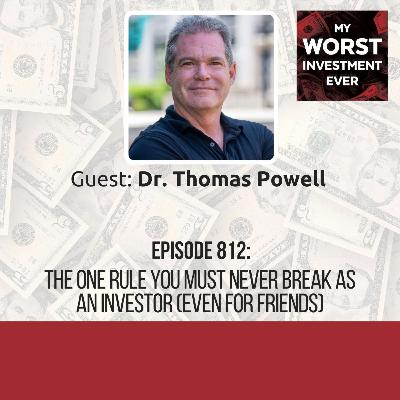
BIO: Thomas J. Powell, founder of The Powell Perspective™, is a seasoned entrepreneur, investor, and advocate for founders, bringing clarity, strategy, and resilience to leaders building at scale.STORY: Thomas invested $3.6M in a friend’s cannabis company, where he ignored his own due diligence framework. Because he skipped key governance protections and didn’t document alignment or exit terms, the investment became frustrating, hard to control, and nearly impossible to fix—proving that breaking your own rules is the most expensive mistake.LEARNING: Never mix friendship and business. Make sure both you and the founder are solving the same problem. “They say good fences make good neighbors, good documents keep good friendships.”Thomas Powell Guest profileImagine navigating the high-stakes world of capital, strategy, and legacy with a guide who has raised billions and structured ventures worldwide. Thomas J. Powell, founder of The Powell Perspective™, is a seasoned entrepreneur, investor, and advocate for founders, bringing clarity, strategy, and resilience to leaders building at scale.Worst investment everYou’ve probably heard the saying, “Never mix friendship and business.” Thomas learned that lesson the hard way.His story starts with good intentions. When his kids’ grandmother battled breast cancer, cannabis was the only thing that eased her treatment side effects. So when medical marijuana became legal in a few US states, investing in the cannabis industry felt like the right thing to do.But here’s where things went wrong.A close friend brought him the deal, and because of that personal connection, Thomas skipped many of the due diligence steps he usually followed through his family office. No detailed governance clauses. No proper reporting framework. No accountability structure.It wasn’t a small investment either—about $3.6 million. As time went on, the cracks began to show. The company missed financial reports, accounting systems were weak, and when COVID hit, things only got messier. To make matters worse, taking over the business wasn’t even an option since he didn’t have a cannabis license. The emotional toll of this situation was significant, as Thomas had to face the reality of his investment failing due to trusting a friend blindly.The worst part? Having to look a friend in the eye, knowing he’d broken his own investment rules.Lessons learnedVerify alignment: Make sure both you and the founder are solving the same problem, and that you share the same exit goals. Ask questions like, “If someone offered to buy this company for $25 million today, would you sell?” If your answers don’t match, you’re not aligned.Watch the hubris: Just because you’re smart or successful doesn’t mean you can see around every corner. Understand the legal and regulatory landscape before investing, especially in industries like cannabis, where compliance is complex.Enforce accountability: Set clear reporting expectations from day one and include consequences for missed deadlines. Thomas admits that if his deal had stricter enforcement clauses, it would’ve saved him time, money, and frustration later on.Andrew’s takeawaysMany startups underpay themselves. It might sound noble, but it actually distorts valuation and creates problems later.Make sure founders are paying themselves a market-rate salary. That way, when the business is valued or acquired, there are no nasty surprises about hidden costs.Define roles clearly. Being a founder is different from being an employee. A salary compensates for your work; ownership rewards your risk. Mixing the two confuses things.Actionable adviceAlign the capital and exit terms from day one—and write them down, even on a napkin. You don’t need a 30-page legal contract to start. Even a handwritten summary that defines the key terms, goals, and triggers for selling or exiting can prevent misunderstandings later. Because once the ink dries, or worse, once the money’s wired, it’s too late to wish you’d had that conversation.Thomas’s recommendationsThomas recommends these books, principles, and resources for smarter investing.Read The Richest Man in Babylon – A timeless classic that teaches simple, lasting lessons about money management and investing in what you understand.Invest in problems you understand. Don’t chase hype. If you know how an industry works, you’ll see both the risks and opportunities clearly.Take advice from people with a “bigger pile.” In other words, learn from those who’ve already achieved more than you in that field. Theory is cheap—experience is priceless.Use structured tools. Thomas’s Founders Office provides frameworks that evaluate pitch decks for both founders and investors, helping you spot weaknesses and strengths before committing capital.No.1 goal for the next 12 monthsThomas’s goal for the next 12 months is to expand his Founders Office cohort program, connecting entrepreneurs and investors to create better capital alignment. He’s passionate about free enterprise and founder advocacy, believing that capitalism—done right—can lift people out of poverty and fuel innovation worldwide. Whether in the US, Europe, or Sub-Saharan Africa, his mission is the same: empower founders and investors to build lasting, ethical wealth together.Parting words “Learn from other people’s experiences. When you see someone make a mistake, don’t repeat it because we don’t learn from the wins, we learn from the failures.”Thomas Powell [spp-transcript] Connect with Dr. Thomas PowellLinkedInInstagramWebsiteMaster ClassAndrew’s booksHow to Start Building Your Wealth Investing in the Stock MarketMy Worst Investment Ever9 Valuation Mistakes and How to Avoid ThemTransform Your Business with Dr.Deming’s 14 PointsAndrew’s online programsValuation Master ClassThe Become a Better Investor CommunityHow to Start Building Your Wealth Investing in the Stock MarketFinance Made Ridiculously SimpleFVMR Investing: Quantamental Investing Across the WorldBecome a Great Presenter and Increase Your InfluenceTransform Your Business with Dr. Deming’s 14 PointsAchieve Your GoalsConnect with Andrew Stotz:astotz.comLinkedInFacebookInstagramThreads
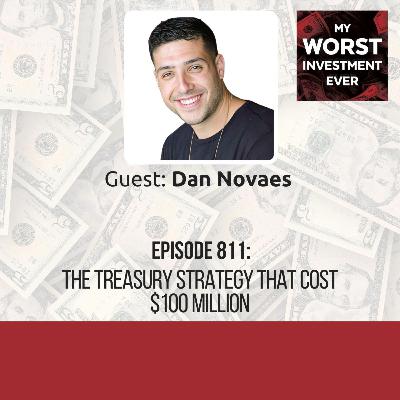
BIO: As Co-Founder & CEO of Mode Mobile, Dan Novaes is leading the transformation of how people interact with technology. His “Earn As You Go” software empowers millions of consumers to turn daily habits into passive income.STORY: Dan decided to take the bold move of turning his treasury into a long-term crypto strategy. What started as $2 million in Bitcoin and Ethereum ballooned to $30 million, but the 2022 crash and business pressures forced him to liquidate at low prices—missing out on what could have been a $100 million windfall.LEARNING: Don’t chase aggressive expansion without a clear path to profitability. Stick to your core business. Separate your business from speculative bets. “Everyone has a plan until they get punched in the face. Take a moment of deep thinking every week when things are going well, think about everything that could go wrong, and then reassess your position.”Dan Novaes Guest profileAs Co-Founder & CEO of Mode Mobile, Dan Novaes is leading the transformation of how people interact with technology. His “Earn As You Go” software empowers millions of consumers to turn daily habits into passive income. Under his leadership, Mode achieved 32,481% revenue growth from 2019 to 2022 and ranked #1 in Software on Deloitte’s Technology Fast 500 in North America.Worst investment everIn today’s rapidly evolving and highly interconnected business world, companies are increasingly relying on external partnerships to drive growth and innovation.Dan’s story begins in the early days of crypto. His company had raised funds through Bitcoin and Ethereum when Bitcoin was valued at just a few thousand dollars and Ethereum at only a few hundred. This early success in the crypto market was a testament to the potential for significant growth that these investments could bring.Once the business had a comfortable runway, Dan made a bold move—he turned their treasury, which is the accumulated profits and cash reserves, into a long-term crypto strategy, much like what companies like MicroStrategy would later become known for.Riding the waveAt first, the decision looked genius. That $1–2 million ballooned into $30 million. Dan was on CNBC, celebrating as Bitcoin crossed $10,000, and his company seemed unstoppable. They never had to fundraise again—until the 2022 crash.The crashIn 2022, Bitcoin’s price fell from $63,000 to $18,000, and pressure mounted. Compounding the pain, many of Dan’s advertising partners went bankrupt, leaving unpaid bills. This was a significant blow to the company’s financial stability. To survive, Dan’s company had to liquidate almost the entire treasury at depressed prices.Had Dan managed his growth and financials more cautiously, that crypto position could have grown to $100 million or more. Instead, he walked away with far less—and a bitter lesson.Lessons learnedGrowth at all costs is dangerous. Chasing aggressive expansion without a clear path to profitability can leave your company vulnerable when market conditions shift.Profit-taking matters. Riding the wave without ever securing gains turned paper wealth into a forced liquidation.Stick to your core business.Discipline is everything. Not letting market euphoria dictate strategy is critical to long-term survival.Andrew’s takeawaysSeparate your business from speculative bets. Don’t gamble with your excess cash on foreign exchange trades. Instead, hedge your risks because trading currencies isn’t your core business.Have cash discipline for survival through decades of ups and downs.Guard your cash, respect your core business, and don’t confuse speculative opportunities with sustainable operations.Actionable adviceTake time every week for deep thinking. When things are going well, take a moment to ask: What could go wrong? By slowing down and imagining worst-case scenarios, you can prepare contingency plans before you get “punched in the face” by reality. This proactive approach to risk management will keep you prepared for any eventuality.Dan’s recommendationsDan recommends building the habit of scheduled deep thinking. Carve out one or two hours weekly—whether it’s through running or quiet reflection. The practice isn’t just for investing; it sharpens decision-making across life and business.No.1 goal for the next 12 monthsDan’s goal for the next 12 months is to double revenue and triple EBITDA through acquiring and growing new businesses. It’s a bold target, but one grounded in the hard lessons of the past. This time, growth will come with more balance, more discipline, and a stronger focus on sustainability.Parting words “Thank you for having me. Feel free to reach out.”Dan Novaes [spp-transcript] Connect with Dan NovaesLinkedInWebsiteAndrew’s booksHow to Start Building Your Wealth Investing in the Stock MarketMy Worst Investment Ever9 Valuation Mistakes and How to Avoid ThemTransform Your Business with Dr.Deming’s 14 PointsAndrew’s online programsValuation Master ClassThe Become a Better Investor CommunityHow to Start Building Your Wealth Investing in the Stock MarketFinance Made Ridiculously SimpleFVMR Investing: Quantamental Investing Across the WorldBecome a Great Presenter and Increase Your InfluenceTransform Your Business with Dr. Deming’s 14 PointsAchieve Your GoalsConnect with Andrew Stotz:astotz.comLinkedInFacebookInstagramThreadsXYouTubeMy Worst Investment Ever Podcast
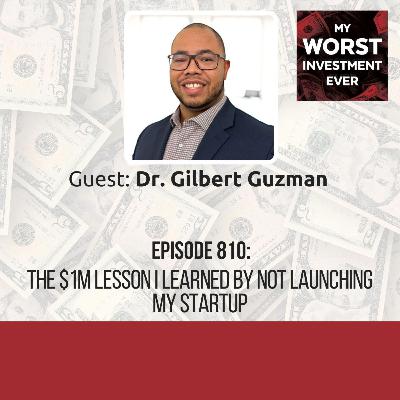
BIO: Dr. Gilbert A. Guzmán is a business strategist and systems thinker. He is the founder of IntraQ AI, a SaaS solution designed to eliminate knowledge gaps within the workplace, and the author of Atomic Impact: Systems for Transformative Productivity.STORY: In 2012, Gilbert envisioned a portable charger vending system for airports, universities, and theaters—a “Redbox for power.” He over-engineered, over-researched, and waited for “perfect”—while another company launched the same concept. By the time he moved, they dominated airports with a first-mover advantage.LEARNING: Jump in and get things going. Don’t be afraid to fail. Iterate, and get your product to market. “Don’t be afraid to iterate. Maintain the course, and you’ll see your product through.”Dr. Gilbert A. Guzmán Guest profileDr. Gilbert A. Guzmán is a business strategist and systems thinker. He is the founder of IntraQ AI, a SaaS solution designed to eliminate knowledge gaps within the workplace, and the author of Atomic Impact: Systems for Transformative Productivity, which you can get for free using the code: Stotz.With a doctorate in business and experience leading large teams, he helps organizations boost productivity through practical systems built for real-world constraints. His work bridges people, data, and technology for lasting operational success.Worst investment everIn 2012, Gilbert envisioned a portable charger vending system for airports, universities, and theaters—a “Redbox for power.” Users would rent charged batteries and return them to kiosks for reuse.Ironically, Gilbert is a very impatient man, but when it comes to business ideas, he takes his sweet time, sometimes too long. This is exactly what happened with the portable charger idea.Gilbert over-engineered, over-researched, and waited for “perfect”—while Fuel Rod launched the same concept. By the time he moved, they dominated airports with a first-mover advantage. He invented the wheel but didn’t roll it.Lessons learnedJump in, do what you need to do, stay up late, work hard, do the research, and get things going. Ultimately, everything will come to fruition.Manage your risks.You can earn back cash, but you can’t earn back lost time.In startups, a bad launch always beats no launch. Waiting for no flaws means 100% flaw: no product.You can’t be a risk-averse leader.Andrew’s takeawaysMVPs beat masterpieces because if you’re not embarrassed by the first version of your product, you launched too late.The market doesn’t care who invented a product—it cares who shipped it.Actionable adviceDon’t be afraid to fail. Iterate, get your product to market, and find out if it makes sense and is relevant.Don’t get scared of the big names, the Googles of the world, and think that they will crush you.You don’t have to be horizontal. You can go vertical. You can find a niche and dedicate your time to it.Gilbert’s recommendationsGilbert recommends his e-book Atomic Impact: Systems for Transformative Productivity (remember to use code Stotz for a free copy).He also recommends visiting his website for additional resources. Additionally, reading Edwards Deming’s Out of the Crisis can help you apply systems thinking to your personal and work life, ultimately changing the way you view life, society, and work, and becoming a little more solution-oriented.No.1 goal for the next 12 monthsGilbert’s goal for the next 12 months is to further enhance the success of Atomic Impact and IntraQ AI by creating speaking engagements and workshops that will reinvigorate the concepts he has developed and transform the way people work.Parting words “I appreciate you having me on, Andrew. It’s been a pleasure. I look forward to the future. Go split some atoms.”Gilbert [spp-transcript] Connect with Dr. Gilbert GuzmanLinkedInPodcastYouTubeBlog WebsiteBooksAndrew’s booksHow to Start Building Your Wealth Investing in the Stock MarketMy Worst Investment Ever9 Valuation Mistakes and How to Avoid ThemTransform Your Business with Dr.Deming’s 14 PointsAndrew’s online programsValuation Master ClassThe Become a Better Investor CommunityHow to Start Building Your Wealth Investing in the Stock MarketFinance Made Ridiculously SimpleFVMR Investing: Quantamental Investing Across the WorldBecome a Great Presenter and Increase Your InfluenceTransform Your Business with Dr. Deming’s 14 PointsAchieve Your GoalsConnect with Andrew Stotz:astotz.comLinkedInFacebookInstagramThreadsXYouTubeMy Worst Investment Ever Podcast
 1
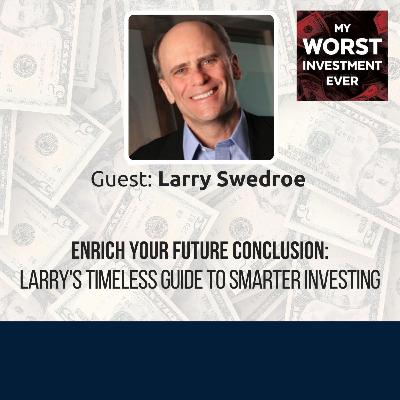
1In this episode of Enrich Your Future, Andrew and Larry Swedroe discuss Larry’s new book, Enrich Your Future: The Keys to Successful Investing. In this series, they conclude the lessons from the book.LEARNING: Investing isn’t about chasing the next hot stock—it’s about building a resilient, well-diversified portfolio you can live with in good times and bad. “Once you have enough, stop playing the game as if you don’t. Reduce risk, enjoy life, and make your money serve you—not the other way around.”Larry Swedroe In this episode of Enrich Your Future, Andrew and Larry Swedroe discuss Larry’s new book, Enrich Your Future: The Keys to Successful Investing. The book is a collection of stories that Larry has developed over 30 years as the head of financial and economic research at Buckingham Wealth Partners to help investors. You can learn more about Larry’s Worst Investment Ever story on Ep645: Beware of Idiosyncratic Risks.Larry deeply understands the world of academic research and investing, especially risk. In this series, they conclude on the lessons from the book.Enrich Your Future: Larry’s Timeless Guide to Smarter InvestingIf you’ve ever wondered how to cut through the noise of investment hype and build a portfolio that actually works for you, Larry’s Enrich Your Future is the blueprint you’ve been looking for. Here’s a distilled look at the wisdom from his book.Start with core principlesLarry insists there are only a handful of fundamental truths in investing—and if you master them, you’ll avoid most costly mistakes:Markets are highly efficient – While not perfect, markets price assets so effectively that consistently beating them on a risk-adjusted basis is near impossible. So don’t engage in individual security selection or market timing.All risk assets offer similar risk-adjusted returns – Whether it’s US stocks, Thai stocks, or corporate bonds, the relationship between risk and return holds steady over time. Invest in assets based upon your ability, willingness, and need to take risks. If you’re willing to take more risk and have the ability and maybe the need to, then you can load up on more risky, higher expected-returning assets. It doesn’t mean they’re better assets; rather, they have higher expected returns at the cost of higher risk.Diversification is non-negotiable – Since all risk assets have similar risk-adjusted returns, it makes no sense to concentrate all of your risk in one basket. Concentrating your risk in a single asset class or geography is a recipe for trouble.Build a portfolio that fits YOUForget cookie-cutter solutions—Larry believes the “right” portfolio depends on three factors:Ability to take risk – Your financial capacity to weather market downturns is influenced by factors like investment horizon and job stability.Willingness to take risk – Your psychological comfort level with market volatility.Need to take risk – Whether you require high returns to meet your financial goals.Larry’s rule? Let the lowest of these three determine your equity exposure. If you don’t need to take big risks, don’t.Think global, but stay rationalA total global market portfolio is an ideal starting point—currently about 65% US, 27% developed international, and 8% emerging markets. Adjust only slightly if you have a reasoned view, but avoid drastic tilts that imply you “know better” than the market.Beyond stocks and bondsLarry is a big believer in alternative investments—if you can access them at reasonable costs. These include:Private credit – Lending directly to companies, often with double-digit returns and lower volatility than equities.Reinsurance – Returns tied to natural disaster risks, uncorrelated with stock markets.Infrastructure funds – Assets like toll roads, dams, and utilities with stable cash flows.His own portfolio now includes a significant allocation to alternatives, reducing reliance on traditional stocks and bonds.Focus on risk sources, not just labelsInstead of obsessing over “asset classes,” Larry advises analysing the risks each investment brings—economic cycle risk, credit risk, inflation risk—and blending assets with low correlations to one another.Integrate factors, don’t isolate themWhile factor investing (such as value, small-cap, quality, and momentum) is powerful, buying single-factor funds separately can create costly and contradictory trades. Larry favours integrated factor funds that combine multiple factors into one systematic strategy, reducing costs and improving efficiency.Master your behaviourEven the best portfolio fails if you can’t stick with it. Larry warns that there is no one right portfolio. The right portfolio for you is the one you are most likely to stick with.That means:Avoid assets you can’t hold for at least 10–15 years.Expect long stretches of underperformance from every risk asset.Continue to buy during downturns to maintain your target allocation.Don’t DIY unless you’re truly qualifiedLess than 1% of investors have the skill, time, and emotional discipline to manage their investments entirely on their own. Larry recommends working with a true fiduciary adviser—one who:Is paid only by you (no commissions).Invests in the same funds they recommend.Backs every decision with empirical evidence.Education beats ignorance every timeYou don’t need to read all 18 of Larry’s books, but three or four will give you the foundational knowledge to make better decisions. Investing ignorance, he warns, is far costlier than the price of a good book.The takeawayEnrich Your Future: The Keys to Successful Investing isn’t about chasing the next hot stock—it’s about building a resilient, well-diversified portfolio you can live with in good times and bad. Follow Larry’s principles, and you’ll not only protect your wealth but also position yourself for long-term financial peace of mind.As Larry himself says:“Once you have enough, stop playing the game as if you don’t. Reduce risk, enjoy life, and make your money serve you—not the other way around.”Did you miss out on the previous chapters? Check them out:Part I: How Markets Work: How Security Prices are Determined and Why It’s So Difficult to OutperformEnrich Your Future 01: The Determinants of the Risk and Return of Stocks and BondsEnrich Your Future 02: How Markets Set PricesEnrich Your Future 03: Persistence of Performance: Athletes Versus Investment ManagersEnrich Your Future 04: Why Is Persistent Outperformance So Hard to Find?Enrich Your Future 05: Great Companies Do Not Make High-Return InvestmentsEnrich Your Future 06: Market Efficiency and the Case of Pete RoseEnrich Your Future 07: The Value of Security AnalysisEnrich Your Future 08: High Economic Growth Doesn’t Always Mean High Stock Market ReturnEnrich Your Future 09: The Fed Model and the Money IllusionPart II: Strategic Portfolio Decisions
In this episode of Enrich Your Future, Andrew and Larry Swedroe discuss Larry’s new book, Enrich Your Future: The Keys to Successful Investing. In this series, they discuss Chapter 41: A Tale of Two Strategies and Chapter 42: How to Identify an Advisor You Can Trust.LEARNING: Passive investing is still the winner. If something is worth doing, it’s worth paying someone to do it for you. “A good wealth advisor helps you build a plan and choose the best investment vehicles that’ll give you the best chance of achieving your life and financial goals.”Larry Swedroe In this episode of Enrich Your Future, Andrew and Larry Swedroe discuss Larry’s new book, Enrich Your Future: The Keys to Successful Investing. The book is a collection of stories that Larry has developed over 30 years as the head of financial and economic research at Buckingham Wealth Partners to help investors. You can learn more about Larry’s Worst Investment Ever story on Ep645: Beware of Idiosyncratic Risks.Larry deeply understands the world of academic research and investing, especially risk. Today, Andrew and Larry discuss Chapter 41: A Tale of Two Strategies and Chapter 42: How to Identify an Advisor You Can Trust.Chapter 41: A Tale of Two StrategiesIn Chapter 41, Larry explains why investors who have implemented the types of passive strategies recommended in his book have experienced “the best of times.” On the other hand, for those who continue to play the game of active investing, it has generally been the “worst of times.”“It was the best of times, it was the worst of times.” Charles Dickens may have been writing about the French Revolution, but Larry observes that that line rings true for today’s investors, too. Depending on how you approach the market, your experience can feel like either a triumph or a disaster.If you’re betting on active management, it’s the worst of timesAccording to Larry, people who still believe in the promise of active fund managers as the winning strategy are likely to find themselves in the “season of Darkness.” Over the years, the ability of active managers to consistently outperform has dwindled significantly.You may be surprised to learn that in 1998, when Charles Ellis wrote his famous book “Winning the Loser’s Game”, about 20% of actively managed funds produced statistically significant returns after adjusting for risk. That figure was already discouraging.A later study in 2014 (Conviction in Equity Investing) found that the percentage of managers producing any net alpha had dropped from 20% in 1993 to just 1.6%.Larry reminds investors who are holding on to the hope that active management will deliver the goods that they are swimming against a strong current. The odds aren’t in their favour—and neither are the expenses.It’s the best of times for passive investorsIf you’ve embraced passive investing, it’s the best of times. The resounding success of this strategy, backed by a wealth of data and real-world results, should instill a strong sense of confidence in your investment decisions.For investors who believe that markets are efficient and that passive investing is the winning strategy, it has been the best of times. The availability of passively managed funds—index funds, exchange-traded funds (ETFs), and passive asset class funds-has dramatically increased. These funds cover a broader range of asset classes and factors, giving you more effective tools to diversify your portfolio.Passive funds are not only inherently more tax-efficient because of their low turnover, but some are also specifically managed with tax efficiency in mind. And if you’re using ETF versions, they become even more efficient.Then there’s the cost. Famous fund companies like BlackRock, Vanguard, and Fidelity are in fierce competition for your investment dollars. That competition has driven expense ratios down dramatically.Chapter 42: How to Identify an Advisor You Can TrustIn Chapter 42, Larry provides guidance to those investors who believe they are best served by working with a financial advisor. He shares a roadmap to help them identify one they can trust.In Larry’s opinion, investing is like home repairs.There are two types of people: the do-it-yourselfers and those who hire professionals. You might fall into the DIY camp because you believe you can save money or because you enjoy the process.But, Larry adds, some people who try to do it themselves simply shouldn’t. If you don’t have the right skills, the cost of fixing mistakes can be much greater than hiring a professional in the first place.The Swedroe PrincipleHere’s where Larry’s encouragement to use the Swedroe Principle comes in: If something is worth doing, it’s worth paying someone to do it for you. The Swedroe Principle advocates for the use of professional financial advisors for tasks that are complex or require specialized knowledge. This advice can empower you to make confident investment decisions.You may value your free time. Maybe you just don’t enjoy managing investments. Or maybe, like many, you’ve come to realize that if something can be messed up, you’ll find a way to do it. Whatever the reason, Larry says it’s okay to admit that managing your finances on your own may not be the best route.Studies show that few individuals possess both the knowledge and the discipline needed to be successful investors. If investing were compared to home repair skills, DIY investors would likely fare worse than DIY handypersons. And the financial consequences of poor investment decisions can be far greater than the cost of fixing a leaky faucet.On the other hand, if you do recognize your limitations, you can still come out ahead—if you choose the right financial advisor.How to identify a financial advisor you can trustChoosing a financial advisor, Larry emphasizes, is one of the most important decisions you’ll ever make. Surveys show that, in addition to financial expertise, trust is at the top of the list of what people want in an advisor.Trust is intangible and hard to measure, but it’s crucial. That’s why it’s important to ask the right questions and insist on the right commitments when choosing an advisor.Larry shares a checklist to guide your decision. He says when interviewing an advisor, ask them to commit to the following:Client-first philosophy: The advisor should demonstrate that their core principle is to act in your best interest.Fiduciary duty: They must follow a fiduciary standard, the highest legal duty of care, which is very different from the “suitability standard” used by many brokers.Fee-only compensation: They should earn no commissions—just fees paid directly by you. This avoids the temptation to recommend products that benefit them more than you.Full disclosure: Any potential conflicts of interest must be clearly disclosed.Evidence-based advice: Their investment philosophy should be grounded in rigorous academic research—not guesswork or opinions.Client-centric service: Their only goal in offering solutions should be to serve your best interest.Personal attention: They should build a strong personal relationship with you and provide access to a team of professionals.Skin in the game: They should invest their own money based on the same principles they recommend to you.Integrated planning: They should help you develop a plan that includes investments, estate planning, taxes, and risk management tailored to your unique needs.Goal-oriented decisions: Every recommendation should be made with your long-term success in mind.Qualified professionals: The people advising you should hold respected credentials like CFP, PFS, or similar.Further readingEugene Fama and Kenneth French, “Luck versus Skill in the Cross-Section of Mutual Fund Returns,” The Journal of Finance (October 2010).Mike Sebastian and Sudhakar Attaluri, “Conviction in Equity Investing,” The Journal of Portfolio Management (Summer 2014).Did you miss out on the previous chapters? Check them out:Part I: How Markets Work: How Security Prices are Determined and Why It’s So Difficult to OutperformEnrich Your Future 01: The Determinants of the Risk and Return of Stocks and...
BIO: Pieter Slegers is the founder of Compounding Quality Newsletter. Pieter worked for three years as a Belgian asset manager before focusing full-time on his investment newsletter, Compounding Quality, in July 2022. Compounding Quality has over 1 million followers across social media and nearly 500,000 email subscribers. The goal of the newsletter is to help other investors by focusing on Quality Investing.STORY: At the age of 13, Peter convinced his parents to open a brokerage account. He picked the broker’s newest “hottest pick” stock—an oil/gas transport company. He invested everything, thinking the people running the company knew what they were doing. Weeks later, the 2008 financial crisis hit. Peter sold his stock after a year, taking a 60% loss.LEARNING: Small losses are better than catastrophic ones. Knowledge is your only edge. “People who invest in individual stocks will make mistakes. There’s no doubt about that, but it’s way better to make a mistake with a few hundred dollars compared to $100,000.”Pieter Slegers Guest profilePieter Slegers is the founder of Compounding Quality Newsletter. Pieter studied Financial Management at the KULeuven and graduated summa cum laude. He worked for three years as a Belgian asset manager before focusing full-time on his investment newsletter, Compounding Quality, in July 2022. Compounding Quality has over 1 million followers across social media and nearly 500,000 email subscribers. The goal of the newsletter is to help other investors by focusing on Quality Investing.Worst investment everAt the age of 13, Peter earned his first paycheck by stocking shelves at a supermarket. Eager to grow his savings, he persuaded his parents to open a brokerage account (a feat for minors in Belgium).Despite his lack of investing knowledge, he diligently explored his broker’s platform for ideas. A new stock caught his eye on the broker’s “hot picks” list—an oil/gas transport company. He invested all his earnings, believing in the company’s potential.Peter didn’t conduct any research, despite his limited knowledge of oil and gas and his complete lack of investing experience. He simply trusted the “hot pick”.The crashWeeks later, the 2008 financial crisis hit. Peter sold his stock after a year, taking a 60% loss. His family was not impressed by his poor investment skills and told him that investing was akin to gambling, and he should consider working for the government instead.Pieter felt like such a failure. However, that $300 loss was his best investment. It hurt, but it taught him never to follow others blindly.Lessons learnedSmall losses are better than catastrophic ones. Losing $300 at the age of 13 beats losing $300,000 when you’re 40. Early pain builds immunity to big mistakes.Knowledge is your only edge: If you don’t understand how a company makes money, you’re gambling, not investing.Failure fuels obsession. That loss made Pieter devour investing books, 10-Ks, and financial news. Pain became his mentor.Andrew’s takeawaysAllow young investors to make mistakes with small sums (e.g., companies they understand, such as Netflix or Coca-Cola).Humility beats hubris. 90% of professional investors at Goldman Sachs underperform. What makes you different? It’s your checklists, not confidence.Read biographies, study market history, and connect patterns. Wisdom compounds like interest.Actionable adviceFor parents guiding young investors, start with brands that they are familiar with and use in their daily lives, such as Coca-Cola, Netflix, and McDonald’s. When they drink a Coke, say: “You own a piece of this.”Cap play money at 5% and limit high-risk bets to cash they can afford to lose. Encourage young investors to do their homework. If they can’t explain the business model in two sentences, they shouldn’t own it.Pieter’s recommendationsPieter recommends reading What I Learned About Investing From Darwin by Pulak Prasad if you want to perfect your investment skills. He also offers numerous free resources on CompoundingQuality.net.Learning from others’ experiences, whether through books, online resources, or personal advice, is a valuable way to improve your own investing skills.No.1 goal for the next 12 monthsPieter’s goal for the next 12 months is to continue his learning journey by reading books, listening to podcasts, and engaging in other educational activities. He understands that continuous learning is the key to successful investing.Parting words “It’s amazing what Andrew is doing. I had a lovely time. Please give him a hand, send him an email, or support him in any way you can. If people have questions for me, I’m always happy to help via combining quality.”Pieter Slegers [spp-transcript] Connect with Pieter SlegersLinkedIn WebsiteAndrew’s booksHow to Start Building Your Wealth Investing in the Stock MarketMy Worst Investment Ever9 Valuation Mistakes and How to Avoid ThemTransform Your Business with Dr.Deming’s 14 PointsAndrew’s online programsValuation Master ClassThe Become a Better Investor CommunityHow to Start Building Your Wealth Investing in the Stock MarketFinance Made Ridiculously SimpleFVMR Investing: Quantamental Investing Across the WorldBecome a Great Presenter and Increase Your InfluenceTransform Your Business with Dr. Deming’s 14 PointsAchieve Your GoalsConnect with Andrew Stotz:astotz.comLinkedInFacebookInstagramThreadsXYouTubeMy Worst Investment Ever Podcast
In this episode of Enrich Your Future, Andrew and Larry Swedroe discuss Larry’s new book, Enrich Your Future: The Keys to Successful Investing. In this series, they discuss Chapter 40: The Big Rocks.LEARNING: Passive investing will give you the freedom you need. “Indexing and passive investing have the ‘disadvantage’ of being boring. I admit it. However, if anyone needs to get their excitement in life from investing, I’d suggest they might want to consider getting another life.”Larry Swedroe In this episode of Enrich Your Future, Andrew and Larry Swedroe discuss Larry’s new book, Enrich Your Future: The Keys to Successful Investing. The book is a collection of stories that Larry has developed over 30 years as the head of financial and economic research at Buckingham Wealth Partners to help investors. You can learn more about Larry’s Worst Investment Ever story on Ep645: Beware of Idiosyncratic Risks.Larry deeply understands the world of academic research and investing, especially risk. Today, Andrew and Larry discuss Chapter 40: The Big Rocks.Chapter 40: The Big RocksIn Chapter 40, Larry explains why passive (systematic) investing is the winning strategy in life as well as investing.Like all the other chapters in the book, this one begins with a story used as an analogy to help understand a financial issue. In this one, a time-management expert fills a mason jar with large rocks. “Full?” she asks. The class agrees. She adds gravel, sand, and water – each filling the spaces between. When a student suggests the lesson is about fitting more into busy schedules, she corrects them:“If you don’t put the big rocks in first, they’ll never fit at all.”The investor’s jarLarry explains the metaphor’s profound implication for wealth:Big rocks = Family, health, growth, legacyGravel = Stock charts, earnings analysisSand = Financial news, market commentaryWater = Trading forums, portfolio tinkeringLarry explains that active investors start with gravel and sand, leaving insufficient time for the big rocks. They spend much of their precious leisure time watching the latest business news, studying the latest charts, scanning and posting on Internet investment discussion boards, reading financial trade publications and newsletters, and so on. Their jars fill with noise, leaving no room for life’s essentials.Passive investors, on the other hand, ignore the ”noise” (the sand, the gravel, and the water) and place big rocks first. Their strategy operates quietly, driven by low-cost index funds and disciplined rebalancing. The result? Their jars hold what truly enriches life, giving them a sense of freedom and independence.Two stories, one lesson1. The physician’s regretDuring the 1990s bull market, a doctor would spend nights analyzing stocks after 12-hour shifts. He turned $10,000 into $100,000 – but his marriage was on the verge of collapse. His wife no longer had a husband; his child lost a parent to the glow of stock charts. When the tech bubble burst, the money vanished.The wake-up call was brutal: He had traded first steps and bedtime stories for digits on a screen. After reading Larry’s book, he switched to passive investing, which helped him salvage both his finances and his family. Now, he was playing the winners’ game in life and investing.2. The executive’s discoveryA Wharton MBA and corporate treasurer spent decades analyzing stocks after work. Upon adopting passive investing, he calculated a shocking truth: He wasted 6.5 weeks per year on futile research.Worse, this “gravel” wasn’t neutral – trading fees, taxes, and behavioral errors eroded returns. By eliminating the noise, he reclaimed 500+ annual hours for family and passions.Why boring is the bravest choiceLarry notes that indexing and passive investing have the ‘disadvantage’ of being boring. However, he continues, investing was never meant to be exciting despite what Wall Street and the financial media want you to believe. Investing is supposed to be about achieving your financial goals with the least amount of risk.Making the ‘boring’ choice in investing can actually be empowering, as it puts you in control and builds confidence in your financial future. Larry further explains that indexing, and passive investing in general, not only allows you to earn market returns in a low-cost and tax-efficient manner but also frees you from spending any time at all watching CNBC and reading financial publications that are essentially no more than what Jane Bryant Quinn called “investment porn.”Play a winner’s gameIf you find that you need excitement from your investments, consider setting up a separate “entertainment” account. The assets inside that account should not exceed more than a few percent of your total portfolio. Invest the rest of your assets in what I believe to be the winner’s game.Further readingPaul Samuelson, Quoted in Jonathan Burton, Investment Titans (McGraw-Hill, 2001).Did you miss out on the previous chapters? Check them out:Part I: How Markets Work: How Security Prices are Determined and Why It’s So Difficult to OutperformEnrich Your Future 01: The Determinants of the Risk and Return of Stocks and BondsEnrich Your Future 02: How Markets Set PricesEnrich Your Future 03: Persistence of Performance: Athletes Versus Investment ManagersEnrich Your Future 04: Why Is Persistent Outperformance So Hard to Find?Enrich Your Future 05: Great Companies Do Not Make High-Return InvestmentsEnrich Your Future 06: Market Efficiency and the Case of Pete RoseEnrich Your Future 07: The Value of Security AnalysisEnrich Your Future 08: High Economic Growth Doesn’t Always Mean High Stock Market ReturnEnrich Your Future 09: The Fed Model and the Money IllusionPart II: Strategic Portfolio DecisionsEnrich Your Future 10: You Won’t Beat the Market Even the Best Funds Don’tEnrich Your Future 11: Long-Term Outperformance Is Not Always Evidence of SkillEnrich Your Future 12: When Confronted With a Loser’s Game Do Not PlayEnrich Your Future 13: Past Performance Is Not a Predictor of Future PerformanceEnrich Your Future 14: Stocks Are Risky No Matter How Long the HorizonEnrich Your Future 15: Individual Stocks Are Riskier Than You BelieveEnrich...
In this episode of Enrich Your Future, Andrew and Larry Swedroe discuss Larry’s new book, Enrich Your Future: The Keys to Successful Investing. In this series, they discuss Chapter 39: Enough.LEARNING: More wealth does not give you more happiness. “Prudent investors don’t take more risk than they have the ability, willingness, or need to take. If you’ve already won the game, why are you still playing?”Larry Swedroe In this episode of Enrich Your Future, Andrew and Larry Swedroe discuss Larry’s new book, Enrich Your Future: The Keys to Successful Investing. The book is a collection of stories that Larry has developed over 30 years as the head of financial and economic research at Buckingham Wealth Partners to help investors. You can learn more about Larry’s Worst Investment Ever story on Ep645: Beware of Idiosyncratic Risks.Larry deeply understands the world of academic research and investing, especially risk. Today, Andrew and Larry discuss Chapter 39: Enough.Chapter 39: EnoughIn Chapter 39, Larry discusses the importance of knowing that you have “enough,” a concept that, once understood, can enlighten and guide your financial decisions.In 2009, Larry conducted an investment seminar for the Tiger 21 Group, America’s most exclusive wealth management group. One of the issues the group asked him to address was: How do the wealthy think about risk, and how should they approach it? Larry’s answer exposed a terrifying paradox.More wealth will not make you happierAccording to Larry, self-made wealth follows a predictable script. Fortunes are built through extreme risk-taking: betting everything on one business, ignoring diversification, and trusting instinct over analysis. This breeds a dangerous confidence—the kind that whispers, “If I did it once, I can do it again.”He explains that the utility of the wealth curve resembles an elephant from the side. It goes up quickly because when you have nothing, even a little extra money can significantly improve your life. If you’re homeless and someone gives you $25 to take a shower, get a meal, and stuff, that will make you much better off. But once you get to some level of net worth, like $2 million or $3 million, or whatever the number is for you, the extra wealth is better than less.However, as you gain more wealth, your incremental level of happiness—just like the elephant’s back— flattens out. There’s virtually little or no improvement in your state of well-being and happiness.The entrepreneur’s invisible trapLarry stresses that wealth building and wealth preservation demand opposite mindsets. Those with the greatest ability to take risks (resources to absorb losses) and willingness (confidence from past wins) often overlook the third critical factor: need. And therein lies the trap.The wealthiest individuals have a near-zero need for further risk. Yet, they continually strive for more and take on significant risks that may not ultimately lead to an enhanced level of happiness. In reality, they do not need to take such a substantial risk. They can dial down the risk in their portfolio and be much happier, sleep better, not worry about markets, and enjoy their life.When $13 million evaporatesLarry recounts meeting a couple in 2003. Three years earlier, their portfolio stood at $13 million, with a heavy concentration in tech stocks. By 2003? $3 million. An 80% collapse.“Would doubling to $26 million have changed your lives?” Larry asked.“No,” they admitted.“Then why risk everything for gains that wouldn’t matter?”Their fatal error? Never defining their “enough.” When desires—a larger yacht, a vineyard, or “legacy” projects—morph into perceived needs, they artificially inflate risk tolerance. This ignites a destructive cycle: greater “needs” demand riskier bets, which invite catastrophic losses.The science of “enough”Larry points to research that reshapes wealth psychology: Beyond $75,000 per year (adjusted for inflation), happiness plateaus. After $10 million, diminishing returns accelerate violently. The billionaire’s third home brings no more joy than a latte at the bookstore.This isn’t a theory. Psychologists confirm that true contentment comes from non-tradable assets. These are the experiences and relationships that money can’t buy. A walk in the park with your partner. Reading to grandchildren. The freedom to control your time. These cost little yet yield everything. A $100 bottle of wine? It can’t compete with a $10 one shared with friends.Breaking the cycleLarry prescribes four antidotes for Tiger 21’s members:First, ask: “If I lost 80% tomorrow, would my core lifestyle survive? Would my relationships?” If the answer chills you, you’re over-risked.Second, map your marginal utility of wealth. Draw a curve tracking wealth against life satisfaction. Where does the line flatten? That’s your “enough.” For most, it’s far lower than imagined.Third, build a “fortress portfolio.” Replace concentrated bets with global diversification. Swap illiquid moonshots for Treasury bonds and index funds. Protect capital like a museum guards its masterpieces.Fourth, demote desires. Luxury items must never masquerade as needs. That vineyard? A want—funded only if cash flows cover it without gambling capital.The unbreakable wealth paradoxLarry concludes by emphasizing that building wealth requires courage. Preserving it requires the courage to say: “No more.” The difference between the rich and the ruined isn’t intelligence—it’s knowing when you have enough.Did you miss out on the previous chapters? Check them out:Part I: How Markets Work: How Security Prices are Determined and Why It’s So Difficult to OutperformEnrich Your Future 01: The Determinants of the Risk and Return of Stocks and BondsEnrich Your Future 02: How Markets Set PricesEnrich Your Future 03: Persistence of Performance: Athletes Versus Investment ManagersEnrich Your Future 04: Why Is Persistent Outperformance So Hard to Find?Enrich Your Future 05: Great Companies Do Not Make High-Return InvestmentsEnrich Your Future 06: Market Efficiency and the Case of Pete RoseEnrich Your Future 07: The Value of Security AnalysisEnrich Your Future 08: High Economic Growth Doesn’t Always Mean High Stock Market ReturnEnrich Your Future 09: The Fed Model and the Money IllusionPart II: Strategic Portfolio DecisionsEnrich Your Future 10: You Won’t Beat the Market Even the Best Funds Don’tEnrich Your Future 11: Long-Term Outperformance Is Not Always Evidence of SkillEnrich Your Future 12: When Confronted With a Loser’s Game Do Not PlayEnrich Your Future 13: Past Performance Is Not a Predictor of Future PerformanceEnrich Your Future 14: Stocks Are Risky No Matter How Long the...
BIO: Blair LaCorte is a dynamic executive with experience across entertainment, aviation, AI, aerospace, consulting, and more.STORY: Blair shares three catastrophic investment failures and the life-altering lessons that rewired his approach to wealth.LEARNING: Chase knowledge, not hype, and don’t let greed hijack logic. Invest with friends only if you’re willing to lose both. “The worst investment that you can make is to put your time into something that you don’t enjoy or that you know is not going to work out.”Blair LaCorte Guest profileBlair LaCorte is a dynamic executive with experience across entertainment, aviation, AI, aerospace, consulting, and more. He has held CEO roles at companies such as PRG, XOJET, and Autodesk, and led startups to successful IPOs. Currently, he’s training as an astronaut for Virgin Galactic and is Vice Chairman at the Buck Institute.Worst investment everFresh out of college at 22, Blair met a smooth-talking investor who flaunted his “lifetime monthly checks” from an oil well. Blinded by dollar signs and zero industry knowledge, he poured his savings into a single well.Blair ignored basic due diligence, diversification, and warnings about low-quality reserves. It was all about greed. He had seen someone make money where they got paid every month for the rest of their life, as long as the well lasted.The greed kept him in and kept him investing in the well. At the end of the day, the oil was of below-average quality and was not as much as they thought it would be. Blair’s ignorance caused him a 100% loss. The well underperformed, and his greed trapped him in a sinking ship. Blair even commissioned a plaque to memorialize his shame—a daily reminder that “easy money” is a predator in disguise.Burning $200k and a friendshipAfter Blair’s first IPO success in 1999, his roommate pitched him on Coffee.com—a visionary play on single-origin beans (decades before it became trendy). Blair invested early, then panicked as losses mounted. When the roommate begged for more capital, he refused because he did not think it would succeed, but guilt kept him from cutting ties.After a while, the startup imploded. Worse? Blair’s friend never spoke to him again. He learned the hard truth from this unwise investment: mixing money with friendship is financial suicide.The $59.50 ego taxAt the peak of the dot-com boom, Blair had just scored a top-tier IPO. His broker urgently called and advised him to sell immediately at $59.50 as he believed the boom would not last. But pride convinced him that the broker was just chasing commissions.Blair held stubbornly as the stock bled out to $2. He lost $570,000 in vaporized gains. Blair’s ego had bet against reality, and reality won.Lessons learnedChase knowledge, not hype, and don’t let greed hijack logic. If you don’t understand how the money is made, you’re the exit strategy for someone else.Friends + money = atomic risk. Invest with friends only if you’re willing to lose both on the same day.Pride is the silent portfolio killer. The market doesn’t care about your ego, and exit signals don’t negotiate.Your time is your ultimate currency. Grinding your years into a dying venture to ‘prove a point’ is the costliest investment of all.Andrew’s takeawaysMacro trumps micro. Brilliant ideas fail if they’re too early or too late. Always ask: “Is the world ready for this?”Preserve capital like your life depends on it. A young you can risk time; an older you must protect capital.Passive high-risk bets (like an oil well) are gambling. Invest where you can influence outcomes.Actionable adviceWhen temptation knocks:Demand the “Why You?” clause. If a “sure thing” lands in your lap, ask: Why me? Why now? What do they know that I don’t?Map the macro weather by using tools like Google Trends, industry reports, and Fed data to pressure-test timing.Cap the bleeding by allocating a max of 5% of net worth to high-risk plays. Set automatic exit triggers (e.g., “Sell if -25%”).Sign contracts, define failure clauses, and never mix personal loans with equity, especially if investing with pals.Blair’s recommendationsBlair recommends checking out PPE Mastermind Talks (available for free at PPEmastermind.com) to learn business tactics from battle-tested CEOs. He also recommends reading biographies, examining companies’ histories, and watching documentaries or listening to speakers that prompt you to think differently about things, to accelerate your ability to learn.No.1 goal for the next 12 monthsBlair’s goal for the next 12 months is radical self-care. Blair wants to do things for himself without feeling guilty.Parting words “Go out there and have fun, it’s a privilege. Approximately 50% of the world’s population lives on a subsistence level. Another 25% don’t get to make the decisions. If you have the financial or mental capability to try new things, you’re blessed. So go out there and have some fun.”Blair LaCorte [spp-transcript] Connect with Blair LaCorteLinkedInFacebookWebsiteAndrew’s booksHow to Start Building Your Wealth Investing in the Stock MarketMy Worst Investment Ever9 Valuation Mistakes and How to Avoid ThemTransform Your Business with Dr.Deming’s 14 PointsAndrew’s online programsValuation Master ClassThe Become a Better Investor CommunityHow to Start Building Your Wealth Investing in the Stock MarketFinance Made Ridiculously SimpleFVMR Investing: Quantamental Investing Across the WorldBecome a Great Presenter and Increase Your InfluenceTransform Your Business with Dr. Deming’s 14 PointsAchieve Your GoalsConnect with Andrew Stotz:astotz.comLinkedInFacebookInstagramThreadsXYouTubeMy Worst Investment Ever Podcast
In this episode of Enrich Your Future, Andrew and Larry Swedroe discuss Larry’s new book, Enrich Your Future: The Keys to Successful Investing. In this series, they discuss Chapter 37: Sell in May and Go Away: Financial Astrology and Chapter 38: Chasing Spectacular Fund Performance.LEARNING: Calendars don’t drive returns. Winners ignore hot funds. “For you to believe in a strategy, there should be some economically logical reason for it to persist, so you can be confident it isn’t just some random outcome.”Larry Swedroe In this episode of Enrich Your Future, Andrew and Larry Swedroe discuss Larry’s new book, Enrich Your Future: The Keys to Successful Investing. The book is a collection of stories that Larry has developed over 30 years as the head of financial and economic research at Buckingham Wealth Partners to help investors. You can learn more about Larry’s Worst Investment Ever story on Ep645: Beware of Idiosyncratic Risks.Larry deeply understands the world of academic research and investing, especially risk. Today, Andrew and Larry discuss Chapter 37: Sell in May and Go Away: Financial Astrology and Chapter 38: Chasing Spectacular Fund Performance.Chapter 37: Sell in May and Go Away: Financial AstrologyIn chapter 37, Larry explains why the idea of selling stocks in May and switching to cash, then buying back in November, is not a sound strategy.What financial advisers insist on repeating, in Larry’s view, is: “Sell in May, go to cash, and reinvest in November.” It makes sense and is even logical. And, as the adage has it, numbers don’t lie. Figures, backed by reliable data, show that stocks gain more from November through April (a 5.7% average premium) than from May through October (a 2.6% average premium). So why not time the market?Busting the mythLarry dismantles this advice, revealing that the ‘Sell in May’ strategy, despite its apparent logic, is a myth. He points out that stocks still outperform cash even during the May to October period, with stocks beating T-bills by 2.6% annually.Selling stocks prematurely leads to missed gains, and the strategy of switching investments underperforms a simple buy-and-hold approach. In fact, a ‘Sell in May’ strategy yielded an average annual return of 8.3% from 1926 to 2023, while simply holding the S&P 500 returned 10.2%—a significant 1.9% yearly gap.Larry adds that Taxes and fees make the strategy worse. Trading converts long-term gains (lower tax) into short-term gains (higher tax). Transaction costs always pile up.Additionally, this strategy is rarely effective. Before 2022, the last “win” was 2011. A single outlier (2022’s bear market) does not make a strategy worthwhile.The fatal flawAccording to Larry, one of the fundamental rules of finance is that expected return and risk are positively correlated. So if stocks actually do worse than cash between May and October, they’d need to be less risky for these six months, which is absurd because volatility doesn’t take summer vacations.Why do people believe in this flawed strategy?Larry notes four reasons why people still believe in this flawed investment strategy:Recency bias: Media hypes the strategy after rare wins (like 2022).Pattern-seeking: Humans confuse coincidence with cause.“Free lunch” fantasy: Active investors crave simple shortcuts.The proper investment to followLarry’s advice is to:Ignore the noise. Calendars don’t drive returns.Stay invested. Missing just 10 best days in 30 years slashes returns by 50%.Focus on what matters: Diversification, low costs, and tax efficiency.Bottom line: The “Sell in May” strategy is a form of financial astrology. It confuses seasonal patterns with strategy. The market’s not a magic 8-ball. Stop gambling on folklore—and start compounding.Chapter 38: Chasing Spectacular Fund PerformanceIn chapter 38, Larry explains why chasing spectacular performance is not a prudent investment strategy.He starts the article by highlighting that 2020 was a phenomenal year for hot funds. During that year, 18 US stock funds posted gains of over 100%, attracting $19 billion in investor dollars in pursuit of recent performance. Their prior records seemed unstoppable—17 of 18 had reigned supreme over markets for three straight years.The brutal realityA landmark Morningstar study by Jeffrey Ptak looked into equity funds that gained more than 100% in a calendar year. He found that of the 123 stock funds that gained at least 100% between 1990 and 2016, just 24 made money in the three years following their phenomenal return.More adversely, the average fund subsequently lost around 17% each year. Ptak also found that funds that failed in the years before their big gain were far more likely to earn more money during the years after that big year, compared to money that had been profitable during the period preceding their big gain.Why do hot funds implode?There are a few reasons why hot funds could implode. One is overvalued bets. For instance, the 2020 superstars held stocks trading at 3x the valuation of the Nasdaq 100. Another reason is the reversion to the mean. Extreme returns are statistical outliers, not a result of skill. Lastly, the crowd effect. Inflows surge after gains, forcing managers to buy at high prices.The index fund quietly winsLarry observes that while speculators chased fireworks, Fidelity’s Total Market Index (FSKAX) returned 20.8% in 2020, beating 80% of active funds in its category. It did this with a 0.01% fee, 1/100th the cost of typical active funds.In conclusion, Larry reminds investors that the race to spectacular returns is a marathon, not a sprint. Winners ignore the fireworks.Further readingJeffrey Ptak, “What Happens After Fund Managers Crush It?” The Evidence Based Investor, January 18, 2001.Did you miss out on the previous chapters? Check them out:Part I: How Markets Work: How Security Prices are Determined and Why It’s So Difficult to OutperformEnrich Your Future 01: The Determinants of the Risk and Return of Stocks and BondsEnrich Your Future 02: How Markets Set PricesEnrich Your Future 03: Persistence of Performance: Athletes Versus Investment ManagersEnrich Your Future 04: Why Is Persistent Outperformance So Hard to Find?Enrich Your Future 05: Great Companies Do Not Make High-Return InvestmentsEnrich Your Future 06: Market Efficiency and the Case of Pete RoseEnrich Your Future 07: The Value of Security AnalysisEnrich Your Future 08: High Economic Growth Doesn’t Always Mean High Stock Market ReturnEnrich Your Future 09: The Fed Model and the Money IllusionPart II: Strategic Portfolio DecisionsEnrich Your Future 10: You Won’t Beat the Market Even the Best Funds Don’tEnrich Your Future 11: Long-Term Outperformance Is Not Always Evidence of...

In this episode of Enrich Your Future, Andrew and Larry Swedroe discuss Larry’s new book, Enrich Your Future: The Keys to Successful Investing. In this series, they discuss Chapter 36: Fashions and Investment Folly.LEARNING: Do not be swayed by herd mentality. “Markets can remain irrational longer than you can remain solvent. So do not bet against bubbles, because they can get bigger and bigger, totally irrational eventually, like a rubber band that gets stretched too far, it snaps back, and all those fake gains that weren’t fundamentally based get erased and investors get wiped out.”Larry Swedroe In this episode of Enrich Your Future, Andrew and Larry Swedroe discuss Larry’s new book, Enrich Your Future: The Keys to Successful Investing. The book is a collection of stories that Larry has developed over 30 years as the head of financial and economic research at Buckingham Wealth Partners to help investors. You can learn more about Larry’s Worst Investment Ever story on Ep645: Beware of Idiosyncratic Risks.Larry deeply understands the world of academic research and investing, especially risk. Today, Andrew and Larry discuss Chapter 36: Fashions and Investment Folly.Chapter 36: Fashions and Investment FollyIn this chapter, Larry explains why investors allow themselves to be influenced by the herd mentality or the madness of crowds.Perfectly rational people can be influenced by a herd mentalityWhen it comes to investing, otherwise perfectly rational people can be influenced by a herd mentality. The potential for significant financial rewards plays on the human emotions of greed and envy. In investing, as in fashion, fluctuations in attitudes often spread widely without any apparent logic.Larry notes that one of the most remarkable statistics about the world of investing is that there are many more mutual funds than stocks, and there are also more hedge fund managers than stocks. There are also thousands of separate account managers. The question is: Why are there so many managers and so many funds?Effects of recency biasAccording to Larry, there are several explanations for the high number of managers and funds. The first is the all-too-human tendency to fall subject to “recency.” This is the tendency to give too much weight to recent experience while ignoring the lessons of long-term historical evidence. Larry says that investors subject to recency bias make the mistake of extrapolating the most recent past into the future, almost as if it is preordained that the recent trend will continue.The result is that whenever a hot sector emerges, investors rush to jump on the bandwagon, and money flows into that sector. Inevitably, the fad (fashion) passes and ends badly. The bubble inevitably bursts.Investment ads create demand where there is noneAnother reason, Larry notes, is that the advertising machines of Wall Street’s investment firms are great at developing products to meet demand. The record indicates they are even great at creating demand where none should exist.The internet became the greatest craze of all, and internet funds were designed to exploit the demand. Investors lost more fortunes in the craze. The latest fashions include cloud computing, electric vehicles, and artificial intelligence.However, this trend, at least for mutual funds, has changed, and there are now fewer funds than there were at the height of the internet frenzy. This is a result of many poor performers being either merged out of existence (to erase their track record) or closed due to a lack of sufficient funds to keep them operational.Inconsistent performance by active managersAnother reason for the proliferation of funds is that Wall Street machines recognize active managers’ track records as inconsistent (and often poor) performance. Thus, a family of funds may create several funds in the same category, hoping that at least one will be randomly hot at any given time.How to beat herd mentalityTo overcome herd mentality, Larry advises investors to craft a comprehensive investment plan that factors in their risk tolerance. By building a globally diversified portfolio and sticking to this plan, investors can navigate the market’s noise and emotional triggers, such as greed and envy during bull markets and fear and panic during bear markets.He also adds that investors will benefit more from using passively managed funds to implement the plan; this is the only way to ensure they do not underperform the market. Minimizing this risk gives them the best chance to achieve their goals. If investors adopt the winner’s game of passive investing, they will no longer have to spend time searching for that hot fund. They can spend time on far more critical issues.Further readingCharles MacKay, Extraordinary Popular Delusions and the MadnessQuoted in Edward Chancellor, Devil Take the Hindmost, (Farrar, Straus and Giroux, 1999).Did you miss out on the previous chapters? Check them out:Part I: How Markets Work: How Security Prices are Determined and Why It’s So Difficult to OutperformEnrich Your Future 01: The Determinants of the Risk and Return of Stocks and BondsEnrich Your Future 02: How Markets Set PricesEnrich Your Future 03: Persistence of Performance: Athletes Versus Investment ManagersEnrich Your Future 04: Why Is Persistent Outperformance So Hard to Find?Enrich Your Future 05: Great Companies Do Not Make High-Return InvestmentsEnrich Your Future 06: Market Efficiency and the Case of Pete RoseEnrich Your Future 07: The Value of Security AnalysisEnrich Your Future 08: High Economic Growth Doesn’t Always Mean High Stock Market ReturnEnrich Your Future 09: The Fed Model and the Money IllusionPart II: Strategic Portfolio DecisionsEnrich Your Future 10: You Won’t Beat the Market Even the Best Funds Don’tEnrich Your Future 11: Long-Term Outperformance Is Not Always Evidence of SkillEnrich Your Future 12: When Confronted With a Loser’s Game Do Not PlayEnrich Your Future 13: Past Performance Is Not a Predictor of Future PerformanceEnrich Your Future 14: Stocks Are Risky No Matter How Long the HorizonEnrich Your Future 15: Individual Stocks Are Riskier Than You Believea...
In this episode of Enrich Your Future, Andrew and Larry Swedroe discuss Larry’s new book, Enrich Your Future: The Keys to Successful Investing. In this series, they discuss Chapter 35: Mad Money.LEARNING: Investors are naive, and Cramer is an entertainer, not a financial advisor who adds value. “Do not confuse information with value-added information. If you know something because it was in the newspaper, everyone else knows it as well. So it has no value.”Larry Swedroe In this episode of Enrich Your Future, Andrew and Larry Swedroe discuss Larry’s new book, Enrich Your Future: The Keys to Successful Investing. The book is a collection of stories that Larry has developed over 30 years as the head of financial and economic research at Buckingham Wealth Partners to help investors. You can learn more about Larry’s Worst Investment Ever story on Ep645: Beware of Idiosyncratic Risks.Larry deeply understands the world of academic research and investing, especially risk. Today, Andrew and Larry discuss Chapter 35: Mad Money.Chapter 35: Mad MoneyIn this chapter, Larry explains why investment advice from so-called market experts is often worthless.The infamous Jim CramerJim Cramer, a former hedge fund manager, has become one of the most recognizable faces in the investment world. He dispenses rapid-fire investment advice on the show “Mad Money.” Since it premiered in March 2005, it has been one of CNBC’s most-watched shows. But has his advice been as successful for the investors who follow it? Larry shares a couple of research studies that answer this question.It pays more to invest in an S&P than in Cramer’s fundCramer manages a portfolio that invests in many of the stock recommendations he makes on TV. Established in August 2001 with approximately $3 million, the Action Alerts PLUS (AAP) portfolio has been the centerpiece of Cramer’s media company, TheStreet, which sells his financial advice, giving subscribers in the millions access to each trade the portfolio makes ahead of time. Jonathan Hartley and Matthew Olson, authors of the 2018 study “Jim Cramer’s Mad Money Charitable Trust Performance and Factor Attribution,” examined the AAP portfolio’s historical performance. Their study covered the period from August 1, 2001, the AAP portfolio’s inception, through December 31, 2017. The study found that the fund returned a total of 97%. During that same period, an investment in the S&P would have returned 204%.No real stock-picking skill, just entertainmentIn another study, “How Mad Is Mad Money?”, Paul Bolster, Emery Trahan, and Anand Venkateswaran examined Cramer’s buy and sell recommendations for the period from July 28, 2005, through December 31, 2008. They also constructed a portfolio of his recommendations and compared it to a market index. The researchers came to three key conclusions:Investors were paying attention, as the stocks he recommended had abnormal returns of almost 2% on the day following his recommendations.The returns for the recommended stocks were both positive and significant for the day of the show and the 30 days preceding the show. So, it seems he was recommending stocks with short-term momentum.The returns were negative and significant, at -0.33% and -2.1%, for days 2 through 5 and days 2 through 30 following the recommendation. After 30 days, the results are insignificant.There is no evidence of any stock-picking skill—Cramer’s picks are neither good nor bad. In the end, it’s just entertainment.A third study, “Is the Market Mad? Evidence from Mad Money,” conducted in 2005, found the same result as the second study: prices rise overnight, and they are quickly corrected. This means that Cramer added negative value for the people who tried to implement his advice because they drove the price up in their buying frenzy. Then the smart money comes in, and the price reverts to basically where it was before he made the recommendation.Do stock market experts reliably provide stock market timing guidance?In a fourth study, CXO Advisory Group set out to determine if stock market experts, whether self-proclaimed or endorsed by others (such as in the financial media), reliably provide stock market timing guidance.To find the answer, from 2005 through 2012, they collected and investigated 6,584 forecasts for the US stock market offered publicly by 68 experts (including Cramer), employing technical, fundamental, and sentiment indicators. Their collection included forecasts, all of which were publicly available on the internet, dating back to the end of 1998. They selected experts, both bulls and bears, based on web searches for public archives that contained enough forecasts spanning various market conditions to gauge their accuracy. Basically, they found there are no real experts.The distribution of their accuracy looks virtually identical to a bell curve but slightly to the left, meaning, on average, they do worse. The average accuracy was 47%, which happened to be the same score as Cramer’s. So, of all the non-expert experts, Cramer was average at being non-expert.The market is highly efficient for any guruAccording to Larry, all these studies indicate that investors are naive, Cramer is an entertainer, not a financial advisor, who adds value, and that the market is highly efficient, making it very hard to beat it.They also show that being highly intelligent (and entertaining, in Cramer’s case) is not a sufficient condition to outperform the market. The reason is simple. There are many other highly intelligent money managers whose price discovery actions work to keep the market highly efficient (meaning market prices are the best estimate we have of the right price). That makes it unlikely any active money manager will outperform on a risk-adjusted basis.The research shows that gurus’ only value is to make weathermen look good, whether it involves predicting economic growth, interest rates, currencies, or the stock market, or even picking individual stocks.Ignore the prognosticatorsLarry concludes that while Cramer might provide entertainment, those following his recommendations are like lambs being led to slaughter by more sophisticated institutional investors. He urges investors to keep this in mind the next time they find themselves paying attention to some guru’s latest forecast. You’re best served by ignoring it, he says.The prudent strategy, Larry adds, is to develop a well-thought-out plan and to have the discipline to adhere to it, ignoring the market noise, whether it comes from Jim Cramer or any other prognosticator.Further readingMichael Learmonth, “Ratings Flood for Fox, CNN,” Variety, September 27, 2005.Jonathan Hartley and Matthew Olson, “Jim Cramer’s Mad Money Charitable Trust Performance and Factor Attribution,” The Journal of Retirement (Summer 2018).Paul Bolster, Emery Trahan and Anand Venkateswaran, “How Mad Is Mad Money?”The Journal of Investing (Summer 2012).Joseph Engelberg, Caroline Sasseville and Jared Williams, “Is the Market Mad? Evidence from Mad Money,” March 22, 2006.Bill Alpert, “Shorting Cramer,” Barron’s (August 20, 2007).Jim Cramer, “Cramer vs. Cramer,” New York, May 25, 2007.CXO Advisory Group, “Guru Grades,” www.cxoadvisory.com/gurus.Did you miss out on the previous chapters? Check them out:Part I: How Markets Work: How Security Prices are Determined and Why It’s So Difficult to OutperformEnrich Your Future 01: The Determinants of the Risk and Return of Stocks and BondsEnrich Your Future 02: How Markets Set PricesEnrich Your Future 03: Persistence of Performance: Athletes Versus Investment
BIO: Mike Koenigs is a serial entrepreneur with five successful exits, a 19-time bestselling author, and a top strategist for founders post-exit.STORY: Mike invested big in a SaaS startup set up for success, but infighting brought it to its knees.LEARNING: Character is bigger than charisma. “If you’re a shareholder, your best exit is for a big company to come and buy what they believe is money at a discount.”Mike Koenigs Guest profileMike Koenigs is a serial entrepreneur with five successful exits, a 19-time bestselling author, and a top strategist for founders post-exit. He helps build powerful personal brands in just one week and pioneers Generative AI for executives, speaking at elite events like Abundance 360, MIT, and Tony Robbins’ gatherings.Worst investment everMike learned about a SaaS startup from a client with whom he had spent time and had gotten to know, like, and trust him. So, when the client introduced Mike to this deal, he got interested.The startup looked great, so he invested a substantial amount of money and then doubled down because it got even better.Off to a promising startThe basic premise was that it was a pool. The founders would find SaaS companies with customers, momentum, technology, and a bit of a moat. They had much experience and success, such as a 10x dividend to investors in three years.Infighting paralyzes everythingUnfortunately, the two founders started fighting. One of them locked the other one out of everything. They had the majority and equal shareholding, making infighting even worse. The remaining partner started emptying the coffers.Someone doing the books became a whistleblower and revealed the shenanigans going on. The partner was siphoning off money, building a house, going on big trips, using private jets everywhere, etc. It got uglier and uglier, causing the shareholders to file lawsuits, and the FTC got involved. Years have gone by, and things are still shut down.Lessons learnedTime kills deals.Character is bigger than charisma. Crooked founders will gut you faster than any market downturn.Put all that money into index funds and let it compound.Andrew’s takeawaysThe only way to invest as an angel investor is to invest in 10 startups. Don’t do it if you are not prepared with the money and time to do that.Actionable adviceUnless you’re a full-time VC with deal flow, customer channels, or an exit mapped out, keep your money in things you can control. If you’re a shareholder, your best exit is for a big company to come and buy what they believe is money at a discount.Mike’s recommendationsMike recommends learning to build a brand that will elevate everything you touch for the rest of your life. He suggests reading his book, Your Next Act: The Six Growth Accelerators for Creating a Business You’ll Love for the Rest of Your Life, to help you build your brand. He also recommends immersing yourself in AI and learning how to use it effectively.No.1 goal for the next 12 monthsMike’s number one goal for the next 12 months is to become an international citizen. He wants to continue living his beautiful life in multiple locations and working with more entrepreneurs worldwide.Parting words “Go out and build your brand. You will get access to better deals faster at a discounted price.”Mike Koenigs [spp-transcript] Connect with Mike KoenigsLinkedInFacebookInstagramPodcastWebsiteBooksAndrew’s booksHow to Start Building Your Wealth Investing in the Stock MarketMy Worst Investment Ever9 Valuation Mistakes and How to Avoid ThemTransform Your Business with Dr.Deming’s 14 PointsAndrew’s online programsValuation Master ClassThe Become a Better Investor CommunityHow to Start Building Your Wealth Investing in the Stock MarketFinance Made Ridiculously SimpleFVMR Investing: Quantamental Investing Across the WorldBecome a Great Presenter and Increase Your InfluenceTransform Your Business with Dr. Deming’s 14 PointsAchieve Your GoalsConnect with Andrew Stotz:astotz.comLinkedInFacebookInstagramThreadsXYouTubeMy Worst Investment Ever Podcast

Comments

Download from Google Play

Download from App Store
 United States