


Talkin‘ Politics & Religion Without Killin‘ Each Other
Subscribed: 20,226Played: 181,170
Subscribe

© Copyright 2020 All rights reserved. 255335
Description
Politics and Religion. We’re not supposed to talk about that, right? Wrong! We only say that nowadays because the loudest, most extreme voices have taken over the whole conversation. Well, we‘re taking some of that space back! If you’re dying for some dialogue instead of all the yelling; if you know it’s okay to have differences without having to hate each other; if you believe politics and religion are too important to let ”the screamers” drown out the rest of us and would love some engaging, provocative and fun conversations about this stuff, then ”Talkin‘ Politics & Religion Without Killin‘ Each Other” is for you!
401 Episodes
Reverse
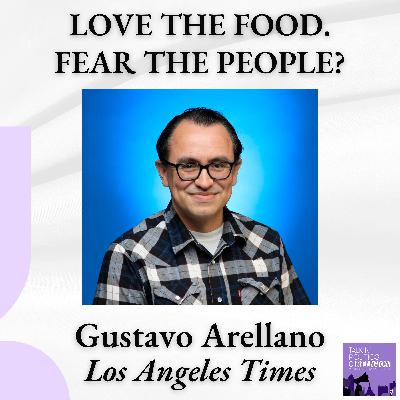
What does it look like to spend 25 years covering a story you wish you could stop covering — and still refuse to despair?
Gustavo Arellano is an LA Times columnist, Pulitzer Prize finalist, and the son of two Mexican immigrants. In this conversation he covers the Trump deportation machine, Rancho Libertarianism, why Americans hate Mexicans but love Mexican food, and what it actually looks like to stay in relationship across political difference.
Calls to Action
✅ If this conversation resonates, consider sharing it with someone who believes connection across difference still matters.
✅ Subscribe to Corey’s Substack: coreysnathan.substack.com
✅ Leave a review on Apple Podcasts, Spotify, or wherever you listen: ratethispodcast.com/goodfaithpolitics
✅ Subscribe to Talkin’ Politics & Religion Without Killin’ Each Other on your favorite podcast platform.
✅ Watch the full conversation and subscribe on YouTube: youtube.com/@politicsandreligion
Key Takeaways
The Deportation Leviathan: This isn’t about policy logic or net fiscal impact. It’s demonization as strategy, funded for decades, borrowed from California’s Prop 187 playbook.
Agents of Their Own Lives: Undocumented people are not a pitiful mass. They are individuals who make this country better. Framing them as victims does them a disservice.
Rancho Libertarianism: The political identity Gustavo coined for Mexican hill-country values: bootstrap mentality, community pride, distrust of government, refusal to be used by either party. It explains a lot about 2024.
Latinos Are Not a Monolith: Every community on his 3,000-mile pre-election road trip had its own story. None of it reducible to a single bloc.
You Eat Their Food, You Start to See Them: Mexican food as cultural bridge. The problem with Chipotle is that it’s a burrito gentrifier, displacing local traditions it doesn’t care about.
Stay in the Friendships: A Trump-supporting friend promised to take up guns for Gustavo if ICE came for him. Gustavo told him to start carrying his passport, “because you’re darker than me.” The friend responded with a thumbs up. That, Gustavo says, was a victory.
These Are Also the Best of Times: During Operation Wetback in the 1950s, the only people fighting back were communists. Today the resistance is broader than anything this country has seen on this issue.
About Our Guest
Gustavo Arellano is a columnist for the Los Angeles Times and the author of Taco USA: How Mexican Food Conquered America. He was a finalist for the 2025 Pulitzer Prize in commentary and part of the team that won the 2023 Pulitzer Prize in breaking news. The son of two Mexican immigrants, he has covered immigration, Latino politics, and the American Southwest for 25 years.
Links and Resources
Gustavo Arellano
Newsletter (free, weekly): gustavoarellano.org
LA Times: latimes.com/people/gustavo-arellano
“Deportee (Plane Wreck at Los Gatos)” (referenced at 00:26:00)
Woody Guthrie’s song about the 1948 crash that killed 28 Mexican farmworkers. ICE’s January 2025 post calling the victims “illegal Mexican aliens” is what sent Gustavo to write about it.
Bowling Alone by Robert Putnam (referenced at 00:57:00)
On declining social capital. Gustavo’s prescription: join things, meet people, touch grass.
Born in East LA (1987, referenced at 00:15:00)
Cheech Marin’s satirical classic. Gustavo’s conversation about it with David Chang is what put it on Corey’s radar.
Connect on Social Media
Corey is @coreysnathan on all the socials…
Substack
LinkedIn
Facebook
Instagram
Twitter
Threads
Bluesky
TikTok
Thanks to our Sponsors and Partners
Thanks to Pew Research Center for making today’s conversation possible.
Links and additional resources:
Pew Research Center: pewresearch.org
The Village Square: villagesquare.us
Meza Wealth Management: mezawealth.com
Proud members of The Democracy Group
Clarity, charity, and conviction can live in the same room.
What does it cost a person to go unseen? And what does it ask of us to truly see one another?
In this solo reflection, Corey Nathan explores the moral weight of being seen and the deliberate cruelty of being made invisible. From Marilynne Robinson's Lila to Muhammad Ali's thundering "What's my name?" to Mother Teresa's gaze upon the discarded, this episode traces a thread that runs through literature, history, jazz, and the headlines of this particular moment.
When Attorney General Pam Bondi turned her back on Jeffrey Epstein's survivors, when federal agents hide behind masks while the faces of those they detain are photographed and published, when a president plasters his name above John F. Kennedy's, these are not isolated incidents. They are a pattern. And naming that pattern is where the work begins.
What would it mean to choose differently? To look at one another the way John Ames looked at Lila? To call each other by our own names?
Calls to Action
✅ If this conversation resonates, consider sharing it with someone who believes connection across difference still matters.
✅ Subscribe to Corey’s Substack: coreysnathan.substack.com
✅ Leave a review on Apple Podcasts, Spotify, or wherever you listen: ratethispodcast.com/goodfaithpolitics
✅ Subscribe to Talkin’ Politics & Religion Without Killin’ Each Other on your favorite podcast platform.
✅ Watch the full conversation and subscribe on YouTube: youtube.com/@politicsandreligion
What This Episode Explores
The Need to Be Seen
To be seen — truly seen, not used or categorized or erased — is both what we most need and what can make us most exposed. Marilynne Robinson's Lila captures this with devastating precision: the way genuine recognition can feel terrifying to someone who has only ever been seen as a body to be used.
When Power Weaponizes Invisibility
Pam Bondi sat before Congress with her back to Jeffrey Epstein's survivors. Federal agents conceal their identities behind masks while those they detain are pictured and named. Those killed in lethal operations are reduced to labels. The pattern Colonel David Lapan identified is not accidental: those with power choose who remains invisible and who is exposed.
What's My Name
Muhammad Ali didn't just fight Ernie Terrell in 1967. He demanded to be known on his own terms, not by a name others had assigned him. The jazz musicians of the 1940s did the same thing, quietly and subversively, by calling each other "man" in a culture that called Black men "boy." To name someone is to acknowledge their humanity.
The Counterexamples
From Mother Teresa to David Brooks to Vaclav Havel, this episode draws on voices who understood what it means to see and be seen, as well as why that capacity is never merely symbolic. It is the foundation of moral culture.
The Challenge to the Church
As a Christian, Corey wrestles honestly with a hard number: more than two-thirds of white evangelicals continue to support an administration whose record on human dignity, as described in this episode, is difficult to square with the gospel.
What We Can Choose
None of us can single-handedly reshape national politics. But we can choose how we see each other. We can turn around and see those this administration will not.
Why This Matters Now
The daily acts of seeing, naming, and beholding are not symbolic gestures. They are the building blocks of moral culture. And when those in authority systematically exploit the need to be seen or weaponize anonymity to strip others of their humanity, the response can't only be political. It has to be personal.
As Jesse Jackson shared with a group of children on Sesame Street: I am... somebody.
Connect on Social Media
Corey is @coreysnathan on all the socials...
Substack
LinkedIn
Facebook
Instagram
Twitter
Threads
Bluesky
TikTok
Thanks to our Sponsors and Partners
Thanks to Pew Research Center for making today’s conversation possible.
Links and additional resources:
Pew Research Center: pewresearch.org
Meza Wealth Management: mezawealth.com
Proud members of The Democracy Group
Final Thought
The world will not always look at you the way you deserve to be seen.
But you can choose to look that way at others.
Now go talk some politics and religion. And step forward. With gentleness and respect.
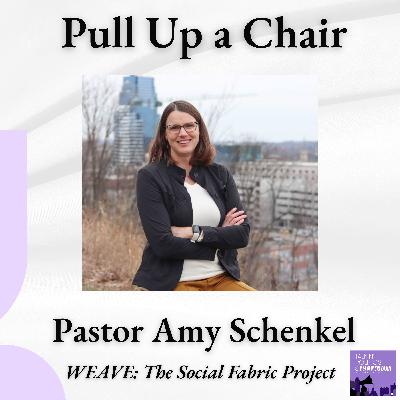
How do we rebuild the social fabric of our neighborhoods and congregations in an age of disconnection and division?
In this episode, Pastor Amy Schenkel joins Corey to talk about what it means to be a "weaver" in your own community. From a front-yard picnic table that became a neighborhood gathering place to decades of church planting in downtown Grand Rapids, Amy brings a grounded, practical theology of neighboring that cuts across political and religious lines. Along the way, she and Corey explore the difference between curiosity and contentiousness, how congregations survive painful splits, and why "mission" might be the one thing that unites people who agree on very little else.
Amy is a pastor and ministries coordinator at Neland Avenue Church in Grand Rapids, Michigan, and a regional mission leader who has also served as North American and U.S. Director of Resonate Global Mission. She's a trained missiologist, a church planting veteran, and a certified speaker with the Weave Speakers Bureau.
Calls to Action
✅ If this conversation resonates, consider sharing it with someone who believes connection across difference still matters.
✅ Subscribe to Corey’s Substack: coreysnathan.substack.com
✅ Leave a review on Apple Podcasts, Spotify, or wherever you listen: ratethispodcast.com/goodfaithpolitics
✅ Subscribe to Talkin’ Politics & Religion Without Killin’ Each Other on your favorite podcast platform.
✅ Watch the full conversation and subscribe on YouTube: youtube.com/@politicsandreligion
Key Takeaways
Neighboring as a Practice: Neighboring doesn't happen by accident. It takes intentionality, imagination, and a willingness to show up consistently for the people around you.
The Front-Yard Principle: A picnic table in the front yard rather than the backyard signals openness. Shared space that's accessible but not invasive invites connection without pressure.
Missional Imagination: There's no curriculum for how your church or community should engage its neighborhood. It requires listening, creativity, and the willingness to try things and sometimes fail.
Asset-Based Community Development (ABCD): Instead of cataloguing what's broken in a neighborhood, start by identifying what's already there: the gifts, talents, and resources people bring. Let the community lead its own renewal.
Mission as Common Ground: Churches and communities can disagree deeply about politics and theology while still uniting around a shared calling to love their neighbors. Mission can hold together what ideology pulls apart.
Curiosity Over Contentiousness: Everyone is an expert in something you know nothing about. Approaching others with genuine curiosity rather than a prepared rebuttal changes the entire nature of a conversation.
The Non-Anxious Presence: When a community faces painful decisions, the most valuable thing a leader can bring is a calm, non-anxious presence. It lowers the temperature and makes honest dialogue possible.
Broken Open: Weave identifies people who have been "broken open" by loss or hardship as some of the most effective community weavers. Suffering, when it doesn't harden us, can deepen our compassion for those on the margins.
Dispositional Preparation: The preparation that matters most before a hard conversation isn't rehearsing your rebuttals. It's working on your own disposition, arriving curious, open, and genuinely willing to hear.
The Image of God Principle: Even when a relationship feels impossibly strained, there's a way through. Lisa Sharon Harper's prayer, "The image of God in me loves the image of God in you," offers a floor to stand on when everything else feels unstable.
About Our Guest
Pastor Amy Schenkel is a pastor and ministries coordinator at Neland Avenue Church in Grand Rapids, Michigan, where she works to help one congregation connect more deeply with its neighborhood. A graduate of Calvin University and Calvin Theological Seminary, Amy was among the first women ordained in her classis within her denomination.
Amy served for years with Resonate Global Mission, including as U.S. and North American Director, overseeing church planting and local mission engagement across the continent. Her work has always centered on a question at the heart of reformed missiology: how do ordinary people, in ordinary vocations, become agents of renewal in their communities?
She and her husband Henry church-planted together in downtown Grand Rapids starting around 2000, learning early that a faith community rooted in a neighborhood has to think beyond Sunday mornings. Today she brings that same missional imagination to her work with individual congregations and with Weave: The Social Fabric Project, where she is a certified speaker available to address both secular and faith-based audiences.
Links and Resources
Weave: The Social Fabric Project
weavers.org
The Colossian Forum (recommended by Amy for congregations navigating conflict)
colossianforum.org
Lisa Sharon Harper (referenced in conversation)
The Very Good Gospel and Fortune — both highly recommended by Amy
lisasharonharper.com
Amy Schenkel
LinkedIn: Pastor Amy Schenkel
Available through the Weave Speakers Bureau: weavers.org/speakers
Connect on Social Media
Corey is @coreysnathan on all the socials...
Substack
LinkedIn
Facebook
Instagram
Twitter
Threads
Bluesky
TikTok
Thanks to our Sponsors and Partners
Thanks to Pew Research Center for making today’s conversation possible.
Gratitude as well to Village Square for coming alongside us in this work and helping foster better civic dialogue.
Links and additional resources:
Pew Research Center: pewresearch.org
The Village Square: villagesquare.us
Meza Wealth Management: mezawealth.com
Proud members of The Democracy Group
Clarity, charity, and conviction can live in the same room.

A Note for TP&R Listeners
From time to time, it helps to talk about something other than politics in order to understand politics.
Sports is one of the last shared civic spaces where identity, loyalty, disagreement, trash talk, and even tribalism can play out without destroying relationships. In other words, many of the same human instincts we explore on Talkin’ Politics & Religion Without Killin’ Each Other show up in a baseball season just as clearly as they do in an election season.
So today’s episode comes from another show in the SCAN Media family, East Meets West Sports, co-hosted with veteran broadcaster Rick Garcia. Same curiosity about why people care so deeply about what they care about. Just with box scores instead of polling numbers.
If it’s your thing, great. If not, regular TP&R programming resumes next episode.
Talkin’ Politics & Religion Without Killin’ Each Other is proud to be part of The Democracy Group, a network of podcasts examining what is broken in our democracy and how we can work together to fix it.
And thank you to Pew Research Center (pewresearch.org) for helping make conversations like this possible.
East Meets West Sports with Rick Garcia and Corey Nathan
Rick Garcia and Corey Nathan kick off baseball season with a deep dive into the offseason moves that have everyone talking and at least one list that has Corey fuming about West Coast bias.
They break down the Dodgers' superteam additions of Edwin Diaz and Kyle Tucker, the Mets' stacked roster and farm system, and why teams like Pittsburgh can scout great talent but can't hold onto it. They also get into the salary cap debate, Steve Cohen's "no captain" declaration, and whether meddling owners ever really help their teams.
And in Pop That Culture, they tackle the biggest controversy heading into the Winter Olympics: Norway's ski jumping suits, a crotch-area aerodynamics scandal that has to be heard to be believed.
Find Us On
Apple Podcasts | Spotify | YouTube
Follow Rick Garcia: @RickGarciaNews on X (Twitter)
Follow Corey Nathan: @coreysnathan on Substack, Threads, Instagram, X & more
Key Takeaways
1. The Dodgers Just Keep Getting Better
Yahoo Sports graded the Dodgers' offseason an A+, and it's hard to argue. Adding Edwin Diaz from the Mets and Kyle Tucker as a free agent gives them arguably the deepest roster in the game (even if Tucker now ranks as maybe the seventh-best player on his own team).
2. Corey Is Very Excited About the Mets (No Surprise There)
Two surefire Hall of Famers in Francisco Lindor and Juan Soto, a legit ace in Freddie Peralta, a deep rotation, improved defense up the middle, and a top-five farm system, even after trading prospects. Rookie of the Year candidate Nolan McLean headlines a wave of young talent coming up. Corey believes. Rick is... skeptical.
3. The "Most Improved" List Has a West Coast Bias Problem
A MLB.com ranking of teams that improved most this offseason had the Giants and Rockies ahead of the Mets. The Rockies! Corey had thoughts. Many thoughts. The list is based on "projected WAR," which only raises more questions.
4. Small-Market Teams Are Wasting Their Advantages
Pittsburgh has one of the best farm systems in baseball, including the top overall prospect, but keeps developing players for wealthier teams to sign away. Rick and Corey agree the game needs a salary floor, not just a luxury tax, to force lower-payroll owners to actually invest in their teams.
5. Steve Cohen Says No Captains, Ever
The Mets owner drew headlines by declaring there will never be a team captain while he owns the club. Rick's take: that's exactly the kind of call owners shouldn't be making. Corey's take: Cohen is actually a good owner who trusts his front office. And Lindor leads whether he has a C on his jersey or not.
6. CrotchGate Comes to the Winter Olympics
Norway's ski jumping team has been caught altering the crotch area of its suits to gain an aerodynamic edge. The physics actually make sense. A roomier suit creates lift during the V-position jump. Some athletes allegedly went further than just tailoring. Rick and Corey debate whether this is innovative gamesmanship or just cheating. There is only one correct answer. Or maybe two.
The season starts. The arguments never do.
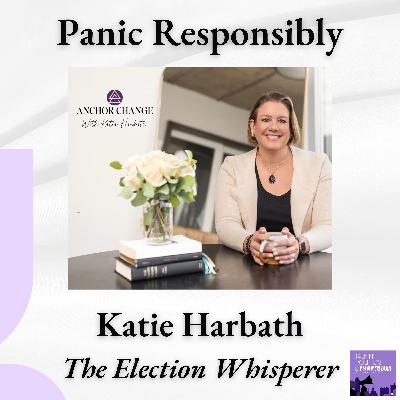
How do we balance free speech, platform accountability, and democratic integrity when technology moves faster than policy?
In this episode, Katie Harbath, the "election whisperer to the tech industry," joins Corey Nathan to discuss the impossible trade-offs facing social media platforms, the evolving landscape of AI and misinformation, and what it means to "panic responsibly" in an era of rapid technological change.
Katie spent a decade at Facebook as a policy director managing elections globally, navigating crises from Cambridge Analytica to the 2020 election. Now as CEO of Anchor Change and Chief Global Affairs Officer at Duco, she helps organizations understand how the internet shapes democracy.
The conversation explores how to use AI ethically in creative work, the challenges of content moderation at scale, why community notes might be better than fact-checking, and how individuals can reclaim agency over their information diets. Katie also shares her personal evolution on free speech, the difference between distribution and moderation, and why the next four years will require all of us to find new ways to ground ourselves.
Calls to Action
✅ If this conversation resonates, consider sharing it with someone who believes connection across difference still matters.
✅ Subscribe to Corey’s Substack: coreysnathan.substack.com
✅ Leave a review on Apple Podcasts, Spotify, or wherever you listen: ratethispodcast.com/goodfaithpolitics
✅ Subscribe to Talkin’ Politics & Religion Without Killin’ Each Other on your favorite podcast platform.
✅ Watch the full conversation and subscribe on YouTube: youtube.com/@politicsandreligion
Key Takeaways
Panic Responsibly: Don't be paralyzed by fear of AI or technological change. Take agency over how you use these tools while considering ethical guardrails
Impossible Trade-offs: Platform decisions involve choices between imperfect options with unknowable long-term consequences (see: Cambridge Analytica stemming from 2010's Open Graph)
AI Ethics in Practice: Katie uses AI to organize thoughts, identify themes, spot repetitive phrases, and show line edits; but keeps human input and output central to the creative process
Free Speech Evolution: Even tech policy experts are evolving their views. Katie has moved toward greater support for free speech while recognizing the importance of context and consequences
Distribution vs. Moderation: The key question isn't just what stays on platforms, but what gets amplified by algorithms. Distribution decisions matter as much as content decisions
Community Notes > Fact-Checking: Collaborative, crowdsourced context may be more effective and less politically fraught than centralized fact-checking operations
You Have Agency: Individuals control which platforms they use, what content they engage with, and what news sources they consume. These choices train algorithms and shape experiences
Election Infrastructure Improved: Despite continued challenges, election officials have made significant strides since 2020 in security, preparedness, and collaboration with tech platforms
Social Media: Mixed Bag: Platforms have given voice to candidates and causes that would otherwise struggle for attention, but have also created new challenges for democracy
Information Audit: Katie recommends doing an annual "news audit" to ensure your media consumption aligns with your values and includes diverse perspectives across the political spectrum
About Our Guest
Katie Harbath is an award-winning global leader at the intersection of technology, policy, and elections. She spent a decade at Facebook as a Public Policy Director, where she built and led the teams that managed elections globally, navigating some of the platform's most challenging moments.
Today, Katie is the CEO of Anchor Change, a technology consulting firm, and Chief Global Affairs Officer at Duco. Described as the "election whisperer to the tech industry," she helps organizations navigate the complex intersections of technology, democracy, and policy.
Katie is writing a book about her experiences in tech policy and is a sought-after voice on issues of platform governance, content moderation, AI ethics, and the future of democracy in the digital age. She is known for her pragmatic approach to impossible trade-offs and her catchphrase "panic responsibly" when it comes to emerging technologies.
Links and Resources
Katie Harbath's Work:
Substack: anchorchange.substack.com
Anchor Change: anchorchange.com
Duco Experts: ducoexperts.com
Katie's AI Ethics and Disclosure Statement: anchorchange.substack.com/p/ethics-and-transparency-statement
Connect on Social Media
Corey is @coreysnathan on all the socials...
Substack
LinkedIn
Facebook
Instagram
Twitter
Threads
Bluesky
TikTok
Thanks to our Sponsors and Partners
Thanks to Pew Research Center for making today’s conversation possible.
Gratitude as well to Village Square for coming alongside us in this work and helping foster better civic dialogue.
Links and additional resources:
Pew Research Center: pewresearch.org
The Village Square: villagesquare.us
Meza Wealth Management: mezawealth.com
Proud members of The Democracy Group
Clarity, charity, and conviction can live in the same room.
In Davos last month, Canadian Prime Minister Mark Carney lamented what he called “the end of a pleasant fiction.” That notion has is hard to fathom yet impossible to ignore.
For decades, the United States did not merely wield power. It framed power in moral terms. Legitimacy. Integrity. Rules. Whether we always lived up to those words is one question. Whether we still speak them with credibility is another.
In this solo reflection, Corey Nathan explores what it means when America is no longer the country that lends moral language to the world order, but the country other nations feel compelled to hedge against. From Tocqueville’s warning about democratic withdrawal to Jonathan Rauch’s analysis of patrimonialism, from Lincoln’s humility to the theological posture of the National Prayer Breakfast, this episode wrestles with a turning point.
If the pleasant fiction is over, what replaces it?
Calls to Action
✅ If this conversation resonates, consider sharing it with someone who believes connection across difference still matters.
✅ Subscribe to Corey’s Substack: coreysnathan.substack.com
✅ Leave a review on Apple Podcasts, Spotify, or wherever you listen: ratethispodcast.com/goodfaithpolitics
✅ Subscribe to Talkin’ Politics & Religion Without Killin’ Each Other on your favorite podcast platform.
✅ Watch the full conversation and subscribe on YouTube: youtube.com/@politicsandreligion
What This Episode Explores
The End of a Moral Vocabulary
For generations, American power was framed in moral language. Integrity and legitimacy were not just strategic tools but aspirations. Today, that language lands differently, not as calling card but as indictment.
From Moral Order to Patrimonialism
Drawing on the work of Jonathan Rauch, this episode examines what happens when public power begins to resemble personal property. Loyalty replaces rules. Access depends on fealty. Markets and institutions begin to read the room rather than uphold neutral principles.
The National Prayer Breakfast and Theological Posture
A prayer breakfast is meant to orient upward in humility. When reverence bends inward, the shift is not merely stylistic. It is theological.
Tocqueville’s Warning
Democracy’s danger may not arrive as sudden tyranny but as gradual withdrawal. Citizens retreat into private grievance. Moral discipline erodes. Individualism curdles into narcissism.
The Comforting Assumption About Ourselves
Nearly every white pastor today believes they would have stood with Martin Luther King Jr. The question is not whether that belief is sincere. The question is whether it would have been true.
The Choice Before Citizens
The world is already adjusting. Allies hedge. Middle powers collaborate. The question now belongs to citizens, not prime ministers. Withdrawal is understandable. It is not inevitable.
Why This Matters Now
The loss at stake is not only status but trust.
If the pleasant fiction required tending, then its collapse requires responsibility. Renewal, if it comes, will not arrive through taunts or spectacle. It will be decided by habits, by courage, by whether citizens retreat or step forward.
Connect on Social Media
Corey is @coreysnathan on all the socials...
Substack
LinkedIn
Facebook
Instagram
Twitter
Threads
Bluesky
TikTok
Thanks to our Sponsors and Partners
Thanks to Pew Research Center for making today’s conversation possible.
Gratitude as well to Village Square for coming alongside us in this work and helping foster better civic dialogue.
Links and additional resources:
Pew Research Center: pewresearch.org
The Village Square: villagesquare.us
Meza Wealth Management: mezawealth.com
Proud members of The Democracy Group
Final Thought
The question is not who we would like to identify with in the story.
The question is where our words, positions, and actions actually place us.
Go talk some politics and religion.
Step forward.
With gentleness and respect.
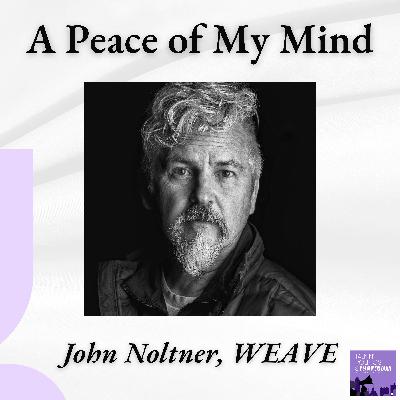
How do we learn to see one another as human again in a moment shaped by fear, fragmentation, and outrage?
In this episode, photographer, author, and storyteller John Noltner joins Corey Nathan as part of TP&R’s ongoing Weavers series in partnership with Weave: The Social Fabric Project. John’s work spans five continents and centers on a simple but demanding conviction: storytelling and art can help restore trust, dignity, and connection in a divided world.
From Minneapolis in the midst of national attention to the U.S. southern border, Northern Ireland, and beyond, John reflects on what it means to bear witness without exploiting pain, to listen without trying to win, and to practice proximity rather than abstraction. The conversation explores how curiosity can disarm contempt, why relationship must precede disagreement, and what it takes to stay open to human connection without becoming numb to suffering.
Calls to Action
✅ If this conversation resonates, consider sharing it with someone who believes connection across difference still matters.
✅ Subscribe to Corey’s Substack: coreysnathan.substack.com
✅ Leave a review on Apple Podcasts, Spotify, or wherever you listen: ratethispodcast.com/goodfaithpolitics
✅ Subscribe to Talkin’ Politics & Religion Without Killin’ Each Other on your favorite podcast platform.
✅ Watch the full conversation and subscribe on YouTube: youtube.com/@politicsandreligion
Key Takeaways
• Storytelling and art can open space for understanding when facts and arguments fail
• It is possible to encounter deep disagreement without abandoning moral clarity
• Curiosity is a practice, not a personality trait, and it can be cultivated
• Human connection requires patience before tackling the most contentious issues
• Being seen is different from being observed, and the difference matters
• Proximity to people is often more illuminating than distance from ideas
• The social fabric is frayed in partisan politics but surprisingly strong in local acts of care
• Vulnerability deepens connection but carries real emotional cost
About the Guest
John Noltner is an award winning author, photographer, and founder of A Peace of My Mind. His work focuses on peacebuilding, conflict transformation, and human dignity through storytelling. John has produced projects for national publications, Fortune 500 companies, and nonprofit organizations, and his books and exhibitions have been used by communities across the world to foster dialogue and civic trust.
Links and Resources
WEAVE: The Social Fabric Project: weavers.org
A Peace of My Mind: apeaceofmymind.org
Audio Reflection Course: 40 Days Toward Deeper Listening
Podcast: A Peace of My Mind
Instagram: @apommstories
Connect on Social Media
Corey is @coreysnathan on all the socials...
Substack
LinkedIn
Facebook
Instagram
Twitter
Threads
Bluesky
TikTok
Thanks to our Sponsors and Partners
Thanks to Pew Research Center for making today’s conversation possible.
Gratitude as well to Village Square for coming alongside this work and helping foster better civic dialogue.
Links and additional resources:
Pew Research Center: pewresearch.org
The Village Square: villagesquare.us
Meza Wealth Management: mezawealth.com
Proud members of The Democracy Group
Clarity, charity, and conviction can live in the same room.
Most people imagine themselves as the ones who would have resisted. The ones who would have spoken up. The ones who would have refused to go along. History tends to tell a different story.
In this episode, Corey Nathan explores how anonymity subtly yet significantly reshapes moral responsibility. Not all at once, and not dramatically, but steadily. What begins as distance or abstraction often ends as permission. Permission to flatten, dismiss, or dehumanize without fully reckoning with the human cost.
This episode serves as a spoken companion to the essay Anonymity and the Collapse of the Thou, tracing how moral imagination thins when people stop encountering one another as full human beings.
Calls to Action
✅ If this episode resonates, consider sharing it with someone who might need a reminder that disagreement doesn’t have to mean dehumanization.
✅ Check out our Substack: coreysnathan.substack.com
✅ Leave a review on Apple Podcasts, Spotify, or wherever you listen: ratethispodcast.com/goodfaithpolitics
✅ Subscribe to Talkin' Politics & Religion Without Killin' Each Other on your favorite podcast platform.
✅ Watch the full conversation and subscribe on YouTube: youtube.com/@politicsandreligion
What This Episode Explores
Anonymity as a continuum
Anonymity is not simply named versus nameless. At one end lies healthy privacy and necessary protection. Move far enough along that continuum, however, and something shifts. Neighbors become avatars. Persons become categories. Moral responsibility begins to erode.
From I-Thou to I-It
Drawing on the work of Martin Buber, the episode contrasts I-Thou relationships, which recognize the other as a person, with I-It relationships, which reduce the other to a function, role, or obstacle. Anonymity subtly nudges human interaction away from encounter and toward objectification.
How dehumanization actually happens
Rarely does anyone set out to be cruel. Language flattens. Tone sharpens. Context disappears. Once people become abstractions, harm starts to feel like enforcement, righteousness, or necessity rather than cruelty.
The story we tell ourselves about history
History is rarely judged by who people imagined themselves to be. It is judged by who benefited from their choices, who was cast as the threat, and who paid the price. The episode challenges the comforting assumption that moral clarity would have come easily.
Moral distance and accountability
Anonymity creates moral distance, and moral distance makes unbearable actions easier to justify. This insight reaches beyond platforms and politics into Scripture, civic life, and the foundations of constitutional self government, all of which presume identifiable responsibility.
Why this matters now
Cultures trained to dehumanize do not become lethal overnight. Words loosen first. Norms erode next. By the time violence appears, it often feels inevitable to those involved. Democracy survives not on procedures alone, but on people repeatedly choosing to see one another as human.
Episode Sponsors and Partners
Thanks to Pew Research Center for making today’s conversation possible.
Gratitude as well to Village Square for coming alongside this work and helping foster better civic dialogue.
Links and additional resources:
Pew Research Center: pewresearch.org
The Village Square: villagesquare.us
Meza Wealth Management: mezawealth.com
Proud members of The Democracy Group
Connect on Social Media
Corey is @coreysnathan on all the socials...
Substack
LinkedIn
Facebook
Instagram
Twitter
Threads
Bluesky
TikTok
Final Thought
The question is not who we would like to identify with in the story.
The question is where our words, positions, and actions actually place us.
Go talk some politics and religion with gentleness and respect.
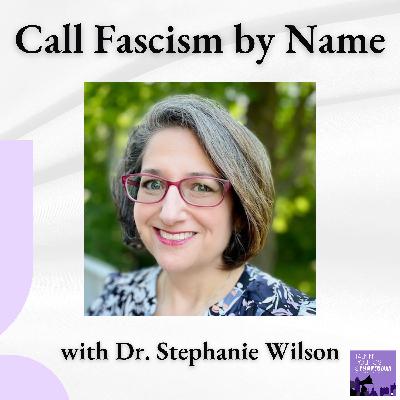
How do societies decide which stories to tell about themselves and which truths to soften or ignore?
In this episode, historian, communications strategist, and Freedom Over Fascism host Dr. Stephanie Wilson joins Corey Nathan to discuss collective memory, historical narrative, and the language shaping American civic life right now.
Drawing on her academic work on Jerusalem, her experience in political communications, and her current focus on democracy and messaging, Stephanie explores how myths take hold, why people instinctively place themselves on the “right side” of history, and what happens when cruelty and dehumanization become normalized tools of power. Along the way, the conversation wrestles with Israel and Palestine, fascism and language, media failure, activism, and what it actually takes to engage across deep disagreement without abandoning moral clarity.
Calls to Action
✅ If this episode resonates, consider sharing it with someone who might need a reminder that disagreement doesn’t have to mean dehumanization.
✅ Check out our Substack: coreysnathan.substack.com
✅ Leave a review on Apple Podcasts, Spotify, or wherever you listen: ratethispodcast.com/goodfaithpolitics
✅ Subscribe to Talkin' Politics & Religion Without Killin' Each Other on your favorite podcast platform.
✅ Watch the full conversation and subscribe on YouTube: youtube.com/@politicsandreligion
Key Takeaways
• Collective memory often says more about who is telling the story than about the past itself
• People naturally imagine themselves as heroes or resisters rather than beneficiaries or bystanders
• Museums, monuments, and national myths are political acts, whether acknowledged or not
• Fascism is better understood through concrete behaviors than abstract labels
• Language shapes what people are willing to see, justify, or ignore
• Values based framing opens more space for dialogue than policy arguments alone
• Curiosity and empathy are necessary skills for sustaining democracy, even when lines must be drawn
• Engagement across difference does not require moral surrender or tolerance of cruelty
About the Guest
Dr. Stephanie Wilson is a historian, activist, and communications expert. She is the creator and host of Freedom Over Fascism, where she examines democracy, messaging, media ecosystems, and civic engagement through conversations with journalists, scholars, and organizers. Her academic work focuses on historical memory, museums, and narrative power, with particular attention to Jerusalem and contested histories.
Links and Resources
• Freedom Over Fascism on Substack: www.freedomoverfascism.us
• Freedom Over Fascism on YouTube: www.youtube.com/@FreedomOverFascismPod
Connect on Social Media
Corey is @coreysnathan on all the socials...
Substack
LinkedIn
Facebook
Instagram
Twitter
Threads
Bluesky
TikTok
Thanks to Our Sponsors
Pew Research Center: pewresearch.org
The Village Square: villagesquare.us
Meza Wealth Management: mezawealth.com
Proud members of The Democracy Group
Clarity, charity, and conviction can live in the same room.
Where do we actually place ourselves in the stories we tell about courage, faith, and power?
In this solo episode, Corey reflects on how individuals and communities locate themselves within history, scripture, and national memory. The temptation, especially among those shaped by religious or moral traditions, is to imagine oneself as prophetic rather than complicit, as a resister rather than an enabler. History, however, is rarely judged by intention or self identification. It is judged by outcomes, by who benefited, who was harmed, and who paid the price.
Drawing on personal encounters, Christian history, and contemporary political examples, the episode examines how moral cosplay replaces moral courage, how grievance masquerades as righteousness, and how constitutional principles become conditional when filtered through tribal identity. The reflection closes with a sober question. Not who we admire in the story, but who we actually resemble when power, fear, and consequence converge.
Calls to Action:
✅ If this episode resonates, consider sharing it with someone who might need a reminder that disagreement doesn’t have to mean dehumanization.
✅ Check out our Substack: coreysnathan.substack.com
✅ Leave a review on Apple Podcasts, Spotify, or wherever you listen: ratethispodcast.com/goodfaithpolitics
✅ Subscribe to Talkin' Politics & Religion Without Killin' Each Other on your favorite podcast platform.
✅ Watch the full conversation and subscribe on YouTube: youtube.com/@politicsandreligion
Key Takeaways:
• History judges alignment, not intention
• Moral identity is often shaped by selective memory
• Grievance can become a substitute for courage
• Constitutional rights lose meaning when applied selectively
• Every generation inherits responsibility, not just stories
Connect on Social Media:
Corey is @coreysnathan on all the socials...
Substack
LinkedIn
Facebook
Instagram
Twitter
Threads
Bluesky
TikTok
Thanks to Our Sponsors:
Pew Research Center: pewresearch.org
The Village Square: villagesquare.us
Meza Wealth Management: mezawealth.com
Proud members of The Democracy Group
History does not ask who we admired. It asks who we resembled.

What does it mean to live in an age where disorder is no longer a temporary crisis but a permanent condition?
Corey is joined by Jason Pack, a geopolitical analyst and founder of Libya Analysis, to discuss global instability, institutional decay, and what Jason calls the Enduring Disorder. Drawing on experiences spanning post-9/11 Middle East policy, Libya’s fragile political landscape, and years of work with NATO affiliated institutions, Jason argues that the world has moved beyond the post Cold War order into something far more volatile and fragmented.
The conversation weaves together geopolitics, psychology, religion, and even gambling theory. Jason explains how games like backgammon and poker illuminate leadership, risk, empathy, and decision making under uncertainty, offering metaphors for diplomacy and democratic governance alike. From Russia’s strategy of chaos to the erosion of institutional trust at home, the episode explores how disorder benefits those seeking power without responsibility and what it will take to rebuild shared standards of truth, accountability, and civic trust.
Calls to Action
✅ If this episode resonates, consider sharing it with someone who might need a reminder that disagreement doesn’t have to mean dehumanization.
✅ Check out our Substack: coreysnathan.substack.com
✅ Leave a review on Apple Podcasts, Spotify, or wherever you listen: ratethispodcast.com/goodfaithpolitics
✅ Subscribe to Talkin' Politics & Religion Without Killin' Each Other on your favorite podcast platform.
✅ Watch the full conversation and subscribe on YouTube: youtube.com/@politicsandreligion
Key Takeaways
• The world has entered an era of enduring disorder rather than cyclical instability
• Many modern power players seek chaos rather than a coherent alternative order
• Geopolitics requires empathy, psychological insight, and strategic risk taking
• Institutional decay mirrors the “enshittification” seen in digital platforms
• Democratic renewal depends on honesty, expertise, and resisting simplistic solutions
About the Guest
Jason Pack is a geopolitical analyst, writer, and consultant focused on global disorder, conflict, and institutional resilience. He is the founder of Libya Analysis, host of the Disorder podcast, and the creator of the Enduring Disorder framework. Jason has served as an associate fellow at the Royal United Services Institute and as Senior Analyst for Emerging Challenges at the NATO Defense College Foundation in Rome. His work spans Libya, the Middle East, Russia, Ukraine, and the future of democratic governance.
www.jasonpack.org
Connect on Social Media
Corey is @coreysnathan on all the socials...
Substack
LinkedIn
Facebook
Instagram
Twitter
Threads
Bluesky
TikTok
Thanks to Our Sponsors
Pew Research Center: pewresearch.org
The Village Square: villagesquare.us
Meza Wealth Management: mezawealth.com
Proud members of The Democracy Group
Can democracy survive in a world where disorder is rewarded and institutions are no longer trusted to tell the truth?
Why a ballgame can become a ritual and how shared attention carries meaning across generations.
In this solo episode, Corey reflects on a conversation with his oldest child that began with skepticism about sports and opened into something deeper.
Calls to Action:
✅ If this episode resonates, consider sharing it with someone who might need a reminder that disagreement doesn’t have to mean dehumanization.
✅ Check out our Substack: coreysnathan.substack.com
✅ Leave a review on Apple Podcasts, Spotify, or wherever you listen: ratethispodcast.com/goodfaithpolitics
✅ Subscribe to Talkin' Politics & Religion Without Killin' Each Other on your favorite podcast platform.
✅ Watch the full conversation and subscribe on YouTube: youtube.com/@politicsandreligion
From the civility of organized competition to the ways human beings channel conflict, from watching games with his brother to feeling the presence of his grandfather and uncle long after they are gone, this is a meditation on why sports can matter without needing to justify themselves.
Being a fan of the New York Mets becomes a case study in disciplined hope, inherited memory, and the quiet work of staying present with one another. Not because anyone is convinced. But because something is shared.
This episode also offers a window into why Corey co-hosts East Meets West Sports with Rick Garcia and why sports, at their best, are not an escape from the world but another way of understanding it.
Connect on Social Media:
Corey is @coreysnathan on all the socials...
Substack
LinkedIn
Facebook
Instagram
Twitter
Threads
Bluesky
TikTok
Thanks to Our Sponsors:
Pew Research Center: pewresearch.org
The Village Square: villagesquare.us
Meza Wealth Management: mezawealth.com
Proud members of The Democracy Group
This is Talkin’ Politics & Religion Without Killin’ Each Other as lived practice. Staying in the room. Sharing attention. Letting ritual carry some of the weight when words are not enough.
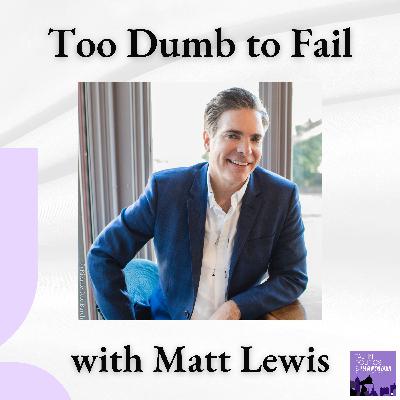
What happens when political labels lose their meaning and institutions begin to forfeit public trust?
Corey is joined by Matt Lewis to reflect on how American politics arrived at its current moment and why many of the warnings raised a decade ago now feel unavoidable. The conversation coincides with the ten year anniversary of Matt’s book Too Dumb to Fail, which examined the rise of populism, intellectual decay, and the erosion of conservative principles long before Trump reshaped the political landscape.
Corey and Matt discuss how conservatism has been reduced less to a philosophy than a posture, why grievance has replaced governing vision, and how former ideological opponents increasingly find themselves aligned around the defense of democratic norms. They explore the shift from the early blogosphere to today’s media environment, where platforms like Substack and YouTube have reopened space for longer form thinking and sustained dialogue.
The episode also examines institutional credibility in an age of selective outrage. From Christianity to law enforcement, Matt argues that Trump’s politics do not merely divide but actively corrode public trust, reshaping how Americans interpret power, legitimacy, and state authority. The conversation closes with reflections on elections, incentives, and the unglamorous discipline required to write and think clearly in public.
Calls to Action:
✅ If this episode resonates, consider sharing it with someone who might need a reminder that disagreement doesn’t have to mean dehumanization.
✅ Check out our Substack: coreysnathan.substack.com
✅ Leave a review on Apple Podcasts, Spotify, or wherever you listen: ratethispodcast.com/goodfaithpolitics
✅ Subscribe to Talkin' Politics & Religion Without Killin' Each Other on your favorite podcast platform.
✅ Watch the full conversation and subscribe on YouTube: youtube.com/@politicsandreligion
About the Guest:
Matt Lewis is a columnist, author, and political commentator. He is the author of Too Dumb to Fail and Filthy Rich Politicians, co host of The DMZ with Bill Scher, and host of Matt Lewis Can’t Lose. He writes regularly on Substack at mattklewis.substack.com and contributes opinion pieces to The Hill.
Matt writes regular at mattklewis.substack.com and for The Hill. You can also find his podcast on all the major apps as well as on YouTube - www.youtube.com/@mattlewis.
Connect on Social Media:
Corey is @coreysnathan on all the socials...
Substack
LinkedIn
Facebook
Instagram
Twitter
Threads
Bluesky
TikTok
Thanks to Our Sponsors:
Pew Research Center: pewresearch.org
The Village Square: villagesquare.us
Meza Wealth Management: mezawealth.com
Proud members of The Democracy Group
What remains when political identity becomes tribal? Can democracy survive without shared standards of truth, restraint, and responsibility?

Today’s episode is a little different.
From time to time on Talkin’ Politics & Religion Without Killin’ Each Other, it feels right to widen the lens and explore the cultural spaces where identity, community, leadership, and rivalry show up in everyday life. Sports is one of those spaces.
In this crossover episode, Corey shares a conversation from his new weekly show, East Meets West Sports, co-hosted with longtime broadcast journalist Rick Garcia. The discussion blends NFL playoff analysis, college football insight, and cultural reflection, featuring veteran sportscaster and former Indiana Hoosier Fred Kalil.
If you enjoy this episode, be sure to check out and subscribe to East Meets West Sports on YouTube and wherever you get your podcasts.
From NFL playoff pressure and coaching dominoes to Indiana’s unlikely championship run, Rick Garcia and Corey Nathan are joined by longtime sportscaster and former Hoosier Fred Kalil for sharp analysis, great stories, and old-school perspective.
The fellas break down a wild opening round of the NFL playoffs, preview the divisional matchups, and sort through the ever-spinning coaching carousel before turning to college football’s biggest stage. With Kalil’s firsthand insight as a former Indiana football player, they explore locker-room culture, leadership, and what makes this Hoosiers run so improbable—and so compelling.
They close by popping the culture, asking what it says about wealth, status, and excess when luxury car brands start building skyscrapers designed for people and their cars.
Episode Highlights
NFL Wild Card Weekend — What We Learned
Bears stun the Packers with another late comeback
49ers survive the Eagles despite mounting injuries
Rams edge Carolina in a tight matchup-driven battle
Patriots expose Chargers’ roster flaws
Bills escape Jacksonville—and raise bigger questions
Divisional Round Picks
49ers vs. Seahawks — turnover battle decides it
Rams vs. Bears — weather, Stafford, and discipline
Bills vs. Broncos — elite defense vs. playoff nerves
Texans vs. Patriots — defense wins the day
Coaching Carousel Chaos
Why quarterbacks dictate coaching success—fair or not
John Harbaugh as the league’s top domino
Why the Giants may be the most attractive opening
Evaluating Kubiak, LaFleur, and other rising candidates
College Football Championship Preview
Indiana vs. Miami: toughness, depth, and discipline
Why Indiana’s rushing attack may decide it
Extended playoffs and the toll on programs
Special Guest: Fred Kalil
Former Indiana walk-on on the Hoosiers’ title run
Old-school coaching vs. modern player culture
Walk-ons, locker-room hierarchy, and earning reps
SEC dominance, NIL money, and recruiting myths
Bobby Knight stories, broadcast war stories, and sharp elbows
Pop That Culture
Luxury car brands building residential skyscrapers
Parking your supercar in your living room—progress or excess?
Big Picture Takeaways
Playoff football still rewards defense and discipline
Coaches rise and fall with their quarterbacks
Culture matters—from locker rooms to ownership suites
College football’s success may be breaking its own structure
Some traditions (and personalities) never go out of style
Find Us On
Apple Podcasts | Spotify | YouTube
Follow Rick Garcia: @RickGarciaNews on X (Twitter)
Follow Corey Nathan: @coreysnathan on Substack, Threads, Instagram, X & more
Thanks to Our Sponsors:
Pew Research Center: pewresearch.org
The Village Square: villagesquare.us
Meza Wealth Management: mezawealth.com
Proud members of The Democracy Group
Talking across differences doesn’t require agreement.
It requires courage, curiosity, and the willingness to stay human.
What happens when a nation debates whether it has a moral obligation to intervene in the suffering of others — and who gets to decide?
Corey is joined by Pulitzer Prize–finalist historian and bestselling author H.W. Brands, Jack S. Blanton Sr. Chair in History at the University of Texas at Austin, to explore the moral, political, and human tensions behind one of the most consequential debates in American history.
The conversation centers on Professor Brands’ latest book, America First: Roosevelt vs. Lindbergh in the Shadow of War, which examines the clash between Franklin D. Roosevelt and Charles Lindbergh as the United States wrestled with whether to enter World War II — and what role America should play in the world.
Professor Brands unpacks how personal biography shapes public history, introducing his framework of “big history” and “little history” — the intersection between sweeping geopolitical forces and the intimate human decisions that quietly steer them. From Lindbergh’s unlikely rise as a celebrity political figure to Roosevelt’s strategic ambiguity and political maneuvering, the discussion reveals how persuasion, fear, power, and moral reasoning collide in moments of national consequence.
Corey and Dr. Brands explore the ethical tension at the heart of American leadership: When does power create responsibility? Is it moral for leaders to deceive in pursuit of what they believe is the greater good? How should a nation weigh human suffering abroad against the risks borne by its own citizens? The conversation also examines Lindbergh’s controversial views on race, antisemitism, and isolationism — resisting caricature while reckoning honestly with their implications.
Along the way, Brands reflects on his craft as a historian — how he uses diaries, speeches, correspondence, and press transcripts to reconstruct interior lives while remaining faithful to documented sources — and why narrative storytelling remains essential to understanding political power and human choice.
The episode closes by turning forward: What questions should we be asking now that future historians will use to understand our moment? How should Americans grapple with a changing global balance of power, rising geopolitical instability, and the enduring tension between national interest and moral responsibility?
Calls to Action:
✅ If this episode resonates, consider sharing it with someone who might need a reminder that disagreement doesn’t have to mean dehumanization.
✅ Check out our Substack: coreysnathan.substack.com
✅ Leave a review on Apple Podcasts, Spotify, or wherever you listen: ratethispodcast.com/goodfaithpolitics
✅ Subscribe to Talkin' Politics & Religion Without Killin' Each Other on your favorite podcast platform.
✅ Watch the full conversation and subscribe on YouTube: youtube.com/@politicsandreligion
About the Guest:
H.W. Brands holds the Jack S. Blanton Sr. Chair in History at the University of Texas at Austin and is the author of numerous acclaimed histories and biographies, including Founding Partisans, The First American, Traitor to His Class, and America First: Roosevelt vs. Lindbergh in the Shadow of War. Two of his biographies were finalists for the Pulitzer Prize.
Brands writes regularly on Substack at hwbrands.substack.com, where he publishes A User’s Guide to History. His forthcoming biography of George Washington, American Patriarch, will be released this spring.
Connect on Social Media:
Corey is @coreysnathan on all the socials...
Substack
LinkedIn
Facebook
Instagram
Twitter
Threads
Bluesky
TikTok
Thanks to Our Sponsors:
Pew Research Center: pewresearch.org
The Village Square: villagesquare.us
Meza Wealth Management: mezawealth.com
Proud members of The Democracy Group
Talking across differences doesn’t require agreement.
It requires courage, curiosity, and the willingness to stay human.

What happens when global power politics collide with lived human suffering — and who gets centered in the story?
This conversation was recorded in the immediate aftermath of dramatic U.S. military action in Venezuela and amid rising concerns about immigration enforcement and political violence in the United States.
If you’re joining us via Pocket Casts, welcome — this show brings journalists, scholars, and public thinkers together for conversations across disagreement without turning each other into caricatures or shouting past one another.
Corey is joined once again by leadership consultant, writer, and podcast host Lori Adams-Brown, who grew up in Venezuela and maintains deep personal ties to the country. Together, they explore what it means to witness global events not as abstractions, but as realities carried “in the bones.”
Lori shares what Venezuela was like before decades of authoritarian rule reshaped everyday life — the culture, beauty, resilience, humor, and communal spirit that defined her childhood. She reflects on how collective trauma reshapes societies, how hyper-vigilance becomes normalized, and why resilience often comes with hidden costs.
The conversation examines the recent removal of Nicolás Maduro, the geopolitical motivations behind U.S. involvement, and the danger of centering American political narratives over Venezuelan voices. Lori challenges listeners to resist ideological shortcuts and instead listen directly to those most affected — recognizing that Venezuelans are not a monolith, and that their responses blend relief, fear, grief, hope, and exhaustion all at once.
Corey and Lori also explore how trauma — whether national, communal, or personal — can drive dogmatism, flatten nuance, and harden political identities. Drawing from Lori’s background in trauma-informed leadership and cross-cultural work, they discuss how curiosity, humility, and self-regulation are essential if we’re going to talk about politics and religion without dehumanizing one another.
This is not a tidy conversation.
It’s not meant to be.
It’s an invitation to slow down, listen more carefully, and remember the human cost behind every headline.
Calls to Action:
✅ If this episode resonates, consider sharing it with someone who might need a reminder that disagreement doesn’t have to mean dehumanization.
✅ Check out our Substack: coreysnathan.substack.com
✅ Leave a review on Apple Podcasts, Spotify, or wherever you listen: ratethispodcast.com/goodfaithpolitics
✅ Subscribe to Talkin' Politics & Religion Without Killin' Each Other on your favorite podcast platform.
✅ Watch the full conversation and subscribe on YouTube: youtube.com/@politicsandreligion
✅ Support Venezuelan-owned businesses in your community and seek out Venezuelan voices and journalists when following this story.
About the Guest:
Lori Adams-Brown is a leadership consultant who helps global leaders build innovative and inclusive organizations. She is the host of the podcast A World of Difference, where she interviews leaders across cultures and industries, and the author of a thoughtful Substack exploring leadership, difference, trauma, and human connection. Lori grew up in Venezuela and brings a deeply personal perspective to conversations about democracy, power, and collective resilience.
🌍 Podcast: A World of Difference — aworldofdifferencepodcast.com
✍️ Substack & Writing: loriadamsbrown.com
Recommended Voices:
📌 Mariana Atencio (marianaatencio.substack.com) — Venezuelan journalist and storyteller covering Venezuelan affairs in both English and Spanish.
Connect on Social Media:
Corey is @coreysnathan on all the socials...
Substack
LinkedIn
Facebook
Instagram
Twitter
Threads
Bluesky
TikTok
Thanks to Our Sponsors:
Pew Research Center: pewresearch.org
The Village Square: villagesquare.us
Meza Wealth Management: mezawealth.com
Proud members of The Democracy Group
Talking across differences doesn’t require agreement.
It requires courage, curiosity, and the willingness to stay human.
This conversation was recorded in December, in the aftermath of a deadly antisemitic attack at a Hanukkah celebration in Australia and before subsequent escalations by the Trump administration, including actions involving Venezuela.
If you’re joining us via Pocket Casts, welcome—this show brings journalists, scholars, and public figures together for conversations across disagreement without turning each other into caricatures and shouting past one another.
Former Congressman Joe Walsh returns to Talkin’ Politics & Religion Without Killin’ Each Other for a wide-ranging, unflinching conversation about democracy, moral responsibility, and what it means to resist authoritarianism without losing our humanity.
Joe and Corey reflect on rising antisemitism, political violence, and the dangerous normalization of cruelty in American public life. From Trump’s character — and why it does matter — to the failures of both political parties, to the fear gripping immigrant communities across the country, this episode asks a hard but necessary question:
What do we owe each other now?
Joe speaks candidly about his journey from Tea Party firebrand to Democrat; the moral breaking points that forced him to leave MAGA; and why he believes understanding matters more than “finding common ground.” He also shares hard-earned lessons from years of engaging people across divides — including why the most important conversations almost always happen off-camera and one-on-one.
The conversation also explores Joe’s newest project, PAXIS, an initiative designed to provide real-time tools, information, and protection for immigrant communities targeted by ICE. Rather than merely reacting to injustice, Joe argues, we must build infrastructure for resistance that ordinary people can actually use.
✅ Learn more about or support PAXIS: paxis.app
This is not a tidy conversation.
It’s not meant to be.
It’s a human one.
Calls to Action:
✅ If this episode resonates, consider sharing it with someone who might need a reminder that disagreement doesn’t have to mean dehumanization.
✅ Check out our Substack: coreysnathan.substack.com
✅ Leave a review on Apple Podcasts, Spotify, or wherever you listen: ratethispodcast.com/goodfaithpolitics
✅ Subscribe to Talkin' Politics & Religion Without Killin' Each Other on your favorite podcast platform.
✅ Watch the full conversation and subscribe on YouTube: youtube.com/@politicsandreligion
✅ Learn more about or support PAXIS: paxis.app
About the Guest:
Joe Walsh is a former U.S. Congressman, former Republican presidential candidate, and former nationally syndicated conservative radio host who has become one of the most outspoken critics of MAGA authoritarianism. He is the host of The Social Contract podcast and a leading voice calling for moral clarity, democratic accountability, and citizen engagement across political divides.
Connect on Social Media:
Corey is @coreysnathan on all the socials...
Substack
LinkedIn
Facebook
Instagram
Twitter
Threads
Bluesky
TikTok
Thanks to Our Sponsors:
Pew Research Center: pewresearch.org
The Village Square: villagesquare.us
Meza Wealth Management: mezawealth.com
Proud members of The Democracy Group
Talking across differences doesn’t require agreement.
It requires courage, honesty, and the willingness to stay human.
Bishop Mary Glasspool models what it looks like to live one’s convictions with courage, humility, and grace — this “Best Of” episode reminds us that pluralism is not an abstraction, but a practice.
Best Of TP&R
As we close out the year, we’re resurfacing a small handful of conversations from the Talkin’ Politics & Religion Without Killin’ Each Other archive that best reflect what this show exists to do: create space for thoughtful disagreement, moral seriousness, and the hard work of living together in a pluralistic democracy.
In this Best of 2025 spotlight, we revisit a deeply human and spiritually rich conversation with Bishop Mary D. Glasspool, a pioneering leader in the Episcopal Church whose life and ministry embody the possibility of faith without fear, conviction without coercion, and leadership without domination.
From her early years growing up in the church, to wrestling with vocation, identity, and resistance from within her own denomination, Bishop Glasspool reflects on what it means to remain rooted in one’s faith while staying genuinely open to others — across theology, politics, and lived experience.
This is not a conversation about winning arguments. It’s about becoming the kind of people who can stay in relationship even when the conversations are hard.
Calls to Action:
✅ If this episode resonates, consider sharing it with someone who might need a reminder that disagreement doesn’t have to mean dehumanization.
✅ Check out our Substack: coreysnathan.substack.com
✅ Leave a review on Apple Podcasts, Spotify, or wherever you listen: ratethispodcast.com/goodfaithpolitics
✅ Subscribe to Talkin' Politics & Religion Without Killin' Each Other on your favorite podcast platform.
✅ Watch the full conversation and subscribe on YouTube: youtube.com/@politicsandreligion
What We Explore
Growing up in the Episcopal Church and discovering a call to ministry
Wrestling with faith, sexuality, and belonging during moments of deep personal and institutional resistance
The historic ordination of women and the legacy of the Philadelphia 11
Why being deeply rooted in one’s own faith can make genuine interfaith dialogue possible
Navigating polarization, fear, and exhaustion within religious communities
The difference between hope and expectation — and why hope must remain central
How listening, silence, and collaboration can heal what competition and certainty have fractured
Highlights & Timestamps
[00:00:00] Why this conversation still matters — and why we’re resurfacing it now
[00:03:00] Growing up Episcopalian and the formative power of place, family, and church
[00:13:00] Faith as identity vs. faith as choice — and learning to remain rooted without fear
[00:19:00] Women’s ordination, the Philadelphia 11, and a church at a crossroads
[00:31:00] Reconciling vocation, sexuality, and faith when the institution says “no”
[00:40:00] Creating space for people who disagree — without surrendering conviction
[00:48:00] Clergy exhaustion, political division, and the call to preach the basics
[00:53:00] Hope vs. expectation — and why hope leaves the future in God’s hands
[00:59:00] Why diversity is a strength — and what it takes to live that truth
[01:06:00] Three closing reflections: beyond binaries, the discipline of listening, and collaboration over competition
Memorable Quotes
🗣️ “If you are deeply rooted in your own faith, you are not threatened by people of other faiths.” — Bishop Mary Glasspool
🗣️ “Hope is not the same as expectation. Hope leaves the future in God’s hands.” — Bishop Mary Glasspool
🗣️ “Diversity is not a problem to be solved — it’s a strength to be lived into.” — Bishop Mary Glasspool
❤️ “The risk of staying in relationship is real — but it’s where hope lives.” — Corey Nathan
Resources Mentioned:
The Philadelphia Eleven Documentary: https://www.philadelphiaelevenfilm.com
The Episcopal Church: https://www.episcopalchurch.org
Connect on Social Media:
Corey is @coreysnathan on all the socials...
Substack
LinkedIn
Facebook
Instagram
Twitter
Threads
Bluesky
TikTok
Thanks to Our Sponsors:
Pew Research Center: pewresearch.org
The Village Square: villagesquare.us
Meza Wealth Management: mezawealth.com
Proud members of The Democracy Group
It’s not about erasing difference. It’s about making room for one another — with courage, humility, and care.
E.J. Dionne brings moral clarity and humility to the hardest questions in public life — this “Best Of” episode reminds us what real dialogue can be.
Best Of TP&R
As we close out the year, we’re resurfacing a small handful of conversations from the Talkin’ Politics & Religion Without Killin’ Each Other archive that best reflect what this show exists to do: create space for thoughtful disagreement, moral seriousness, and the hard work of living together in a pluralistic democracy.
In this Best of 2025 spotlight, we revisit one of the year’s most profound and inspiring conversations — a powerful episode featuring journalist, scholar, and public intellectual E.J. Dionne Jr.
From discussing the soul of democracy to the essential role of faith and hope in civic life, E.J. offers wisdom forged over decades of public service, writing, and dialogue.
Calls to Action:
✅ If this episode resonates, consider sharing it with someone who might need a reminder that disagreement doesn’t have to mean dehumanization.
✅ Subscribe to Talkin' Politics & Religion Without Killin' Each Other on your favorite podcast platform.
✅ Leave a review on Apple Podcasts, Spotify, or wherever you listen: ratethispodcast.com/goodfaithpolitics
✅ Check out our Substack: coreysnathan.substack.com
✅ Watch the full conversation and subscribe on YouTube: youtube.com/@politicsandreligion
What We Explore:
How E.J.’s upbringing shaped his approach to political argument.
The moral imperative of engaging with ideas we disagree with.
The difference between optimism and hope — and why the latter is vital.
How faith and pluralism can bridge deep divides.
Highlights & Timestamps:
[00:03:00] E.J. on his father’s influence in encouraging thoughtful disagreement.
[00:06:00] Delving into DEI and the “woke” discourse — beyond caricatures.
[00:10:00] Unexpected ways the Trump era united pro-democracy coalitions.
[00:15:00] Economic pain and populist anger in Fall River, Massachusetts.
[00:24:00] The virtue of hope in sustaining public life and discourse.
[00:36:00] E.J.'s personal faith journey and the humility of belief.
[00:48:00] Reflections on Pope Francis and the Catholic Church’s evolution.
[01:05:00] What keeps E.J. up at night — and what gives him hope.
Memorable Quotes:
"In real argument, you enter imaginatively into the ideas your opponent holds." — E.J. Dionne
"Hope is the virtue on which faith and love depend." — E.J. Dionne
"You can really disagree with people you love, and you can love people you disagree with." — E.J. Dionne
"We find sanctity even in mundane conversations." — Corey Nathan
Resources & Mentions:
E.J. Dionne, Brookings Institution: www.brookings.edu/people/e-j-dionne
Column, New York Times: www.nytimes.com/by/e-j-dionne-jr
Connect on Social Media:
Corey is @coreysnathan on all the socials...
Substack
LinkedIn
Facebook
Instagram
Twitter
Threads
Bluesky
TikTok
Thanks to Our Sponsors:
Pew Research Center: pewresearch.org
The Village Square: villagesquare.us
Meza Wealth Management: mezawealth.com
Proud members of The Democracy Group
It’s not about agreeing on everything. It’s about disagreeing with integrity, and listening with love.

Best Of TP&R
As we close out the year, we’re resurfacing a small handful of conversations from the Talkin’ Politics & Religion Without Killin’ Each Other archive that best reflect what this show exists to do: create space for thoughtful disagreement, moral seriousness, and the hard work of living together in a pluralistic democracy.
This conversation with Jonathan Rauch and Liz Joyner stands out as a true highlight — not just because of the ideas discussed, but because of the spirit in which they’re explored: curiosity, generosity, and an insistence that liberal democracy is something we must actively practice.
Whether this is your first time hearing it or you’re returning to it, I’m really glad you’re here.
Why defending viewpoint diversity might be the most radical—and necessary—act in higher education today.
What a treat to welcome two leading voices in the fight for viewpoint diversity and constructive civic dialogue: Jonathan Rauch, senior fellow at Brookings and author of The Constitution of Knowledge, and Liz Joyner, founder of The Village Square.
Recorded at a moment of rising polarization — and resurfaced now because its insights have only grown more urgent — Jon and Liz unpack the mission of Heterodox Academy (HxA). As board members, Jon and Liz unpack the organization’s mission to restore open inquiry and truth-seeking within higher education—and how these values are essential to preserving our democracy at large. With personal stories, sharp analysis, and even a few laughs, they explore what we each can do to counter the ecosystem of illiberalism and strengthen the social fabric.
Calls to Action:
✅ If this episode resonates, consider sharing it with someone who might need a reminder that disagreement doesn’t have to mean dehumanization.
✅ Subscribe to Talkin' Politics & Religion Without Killin' Each Other on your favorite podcast platform.
✅ Leave a review on Apple Podcasts, Spotify, or wherever you listen: ratethispodcast.com/goodfaithpolitics
✅ Check out our Substack: coreysnathan.substack.com
✅ Watch the full conversation and subscribe on YouTube: youtube.com/@politicsandreligion
Timestamps & Topics
[00:00:00] Intro: What’s broken in our democracy and how we fix it
[00:01:00] Meet the guests: Jonathan Rauch and Liz Joyner
[00:03:00] What is Heterodox Academy and how did it begin?
[00:06:00] Rauch on early signs of "wokeness" and Kindly Inquisitors
[00:08:00] Joyner’s grassroots experience with ideological diversity at Village Square
[00:10:00] The "ecosystem of illiberalism" and why liberal principles matter
[00:15:00] Can HxA help defend against external political coercion?
[00:20:00] Are we headed toward institutional collapse or renewal?
[00:25:00] Speech vs. coercion: The cultural and legal frontlines
[00:33:00] Personal costs of speaking out: Corey’s Chappelle story
[00:36:00] What should institutions do to defend free speech?
[00:39:00] On the Trump administration’s authoritarian tactics
[00:45:00] Fears for 2026 and 2028 elections
[00:48:00] Signs of progress: Academic reform, FIRE, and HxA programs
[00:54:00] How to break the cycle of intolerance
[00:56:00] How do we actually talk to people who disagree?
[01:01:00] "Love people back into communion with liberalism"
[01:08:00] The local vs. national divide—learning from LA’s fires & ICE raids
[01:14:00] Final reflections: Reclaiming truth, curiosity, and compassion
Key Takeaways
Liberalism needs defenders: Jon reminds us that truth-seeking demands criticism—and that “criticism hurts, but it’s necessary.”
Civic spaces matter: Liz underscores the importance of local, respectful dialogue and building trust before crisis hits.
The ecosystem is the problem: Illiberalism isn't coming from just one side; it’s a reactive spiral we must all help disrupt.
Institutions must hold firm: It's not disagreement that's dangerous—it's coercion by powerful entities that silence dissent.
Each of us has a role: From book clubs to coffee shops, we can all “love people back into communion with liberalism.”
Notable Quotes
“We are better together. A diverse people can self-govern—if we protect the institutions that help us do so.” – Liz Joyner
“If I’m talking, I’m not learning. If I’m listening, I probably am.” – Jonathan Rauch
“What I’d like you to talk about today is how we can love people back into communion with liberalism.” – Quoting Jonathan V. Last (via Liz Joyner)
Resources & Mentions
Heterodox Academy - heterodoxacademy.org
The Constitution of Knowledge - www.brookings.edu/books/the-constitution-of-knowledge
Kindly Inquisitors - press.uchicago.edu/ucp/books/book/chicago/K/bo18140749.html
A University the World Has Never Seen- heterodoxacademy.substack.com/p/a-university-the-world-has-never
Jonathan Rauch- jonathanrauch.typepad.com
Connect on Social Media:
Corey is @coreysnathan on all the socials...
Substack
LinkedIn
Facebook
Instagram
Twitter
Threads
Bluesky
TikTok
Our Sponsors
Pew Research Center: pewresearch.org
The Village Square: villagesquare.us
Meza Wealth Management: mezawealth.com
Proud members of The Democracy Group
May your next conversation make room for disagreement — and still leave space for curiosity, courage, and care.


Download from Google Play

Download from App Store
 United States
place in front of your own eyes the definitions hereafter- Democratic Society Republic Society which do you prefer
FYI. here are the rules of our platforms: Nonsense will be muted. Incivility will be blocked. Spreading of proven falsehoods and threats will be reported.
very very insightful!