



 Claim Ownership
Game Changer - the game theory podcast
Subscribed: 69Played: 1,620
Subscribe

Description
In Game Changer, the podcast by TWS Partners, we want to share our enthusiasm and passion for game theory and its applications.
We invite guests from business and academia to discuss how they use the power of game theory in their profession to make a difference – and to learn some fun anecdotes, useful facts and valuable insights along the way. Join us on this journey, and find out that game theory is much more than a topic for ivory tower discussions.
We invite guests from business and academia to discuss how they use the power of game theory in their profession to make a difference – and to learn some fun anecdotes, useful facts and valuable insights along the way. Join us on this journey, and find out that game theory is much more than a topic for ivory tower discussions.
123 Episodes
Reverse

Can we trust lab experiments to predict real-world behaviour? In this episode, we explore the question of external validity together with Jan Stoop. From classic dictator games in the lab to misdelivered envelopes with real cash in private homes, we discuss whether people act differently when they are being observed - and what happens when established lab findings meet reality. We also talk about rich versus poor behaviour, financial stress, and why small "hassle costs" can create large inequalities in outcomes. Jan Stoop is Associate Professor at Tilburg University and Erasmus University Rotterdam. His research focuses on behavioural and experimental economics, with a particular emphasis on pro-social and unethical behaviour, financial stress, and inequality. He is known for creative field experiments that rigorously test whether laboratory results hold in real-world settings.

What happens when an AI system faithfully follows a flawed goal? In this episode, we explore how even well-designed algorithms can produce dangerous outcomes — from amplifying hate speech to mismanaging infrastructure — simply by optimising a reward function which, like all reward functions, fails to encode all that matters. We discuss the hidden risks of reinforcement learning, why over-optimisation can backfire, and how game theory helps us rethink what it means for AI to act "rationally" in complex, real-world environments. Jobst Heitzig is a mathematician at the Potsdam Institute for Climate Impact Research and an expert in AI safety and decision design.

In this episode, we discuss how game theory sheds light on modern electoral competition. Our guest, Adam Meirowitz, introduces the classical model of candidate convergence and explains why real elections often depart from this prediction. We then explore the role of echo chambers and selective exposure, and why these surprisingly do not necessarily lead to greater polarisation. We also touch on how bounded rationality among voters can further impact these dynamics. Adam Meirowitz is the Damon Wells Professor of Political Science with a courtesy appointment in Economics at Yale University. His referenced research paper on echo chambers "Selective Exposure and Electoral Competition" is published in the Journal of Politics (2025) and is joint work with Avidit Acharya, Peter Buisseret, and Floyd Zhang. You can find it here.
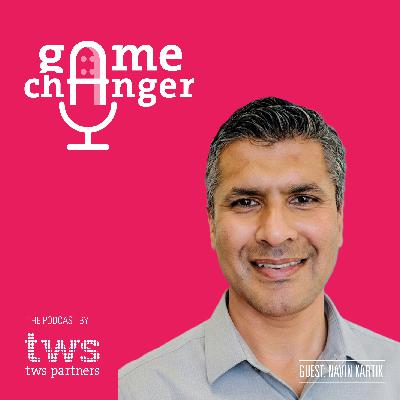
Talk is cheap – literally. But if words cost nothing, why do we ever trust them? In this episode, Yale Professor Navin Kartik breaks down the game theory of communication. We kick things off with the basics: what is the academic definition of "cheap talk", and why does cheap talk sometimes work but other times break down? From there, we transition to Navin's own research, which explores deeper facets of communication. We learn about lying costs and "inflated language": why does a reference letter need to say "excellent" to just mean "competent"? Finally, we dive into topics like pandering (why experts lie to agree with you) and muddled information (why test scores tell you more about gaming skills than natural ability).
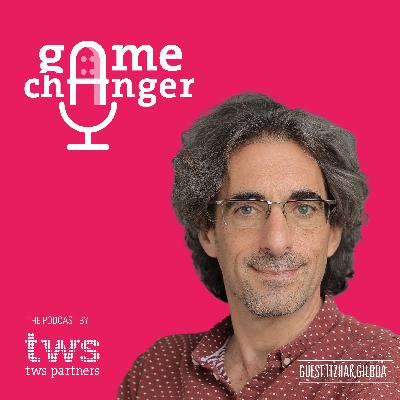
In this episode, we explore the foundations and evolution of decision theory. Our guest, Itzhak Gilboa, begins with a brief historical overview of how the field has developed over time. We naturally discuss maximising expected utility, Bayesian decision theory, and Savage's representation theorem. Itzhak then delves into critiques of the Bayesian approach, especially concerning its interpretation of what constitutes a "rational decision maker." He presents a range of alternative decision frameworks, including approaches that do not require individuals to specify a full subjective probability distribution. Itzhak Gilboa is Professor of Economics and Decision Sciences at HEC Paris.

In this episode, we explore how game theory and network effects intersect to inform optimal incentive structures in organizations. Pau Milán walks us through his recent research, co-authored with Nicolás Oviedo-Davila and Marc Claveria, which uses a novel game-theoretic model to show how the productivity of one employee can amplify the output of others in their network—and how firms can leverage this to design smarter compensation schemes. Drawing on real-world examples and his theoretical work, Pau offers practical insights for employers and economists alike. Pau Milán is an Associate Professor of Economics at Universitat Autònoma de Barcelona (UAB) and an Affiliated Professor at the Barcelona School of Economics (BSE). His research interests include Social and Economic Networks, Information Economics, Development Economics, Organisations, and Applied Game Theory. You can find the working paper "Incentive Contracts and Peer Effects in the Workplace" here.
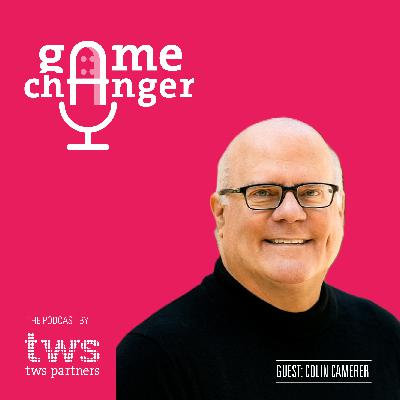
In this episode we explore the most classical topic from Game Theory – equilibrium analysis. Our guest Colin Camerer shares insights on the game LUPI ('lowest unique positive integer'). We first discuss the actual mathematical equilibrium analysis and then dive into real life: results from a Swedish game show in which the game was played in a lottery format. Colin also compares the results from the game show with a study of the same game in a controlled lab environment. We finish the episode by deep-diving into level-k reasoning and Colin shares an example based on the role of published movie reviews. Colin Camerer is the Robert Kirby Professor of Behavioral Economics at Caltech. His research interests include decisions, games, and markets.
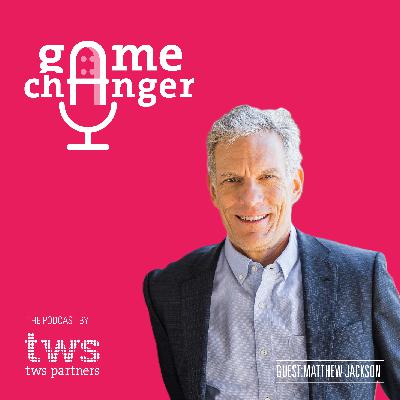
In this episode we explore the economic and strategic foundations of networks – from personal connections in the labor market to complex webs of international trade and conflict together with our guest Matthew Jackson. He unpacks how networks shape opportunities, inequalities, and global dynamics, and how game theory helps us understand the power and fragility of these structures. Along the way, we discuss surprising applications, including the role of tariffs in supply chains and how network insights can explain patterns of cooperation and rivalry. Matthew Jackson is the William D. Eberle Professor of Economics at Stanford University. His research interests include game theory, microeconomic theory, and the study of social and economic networks.

In this episode we are talking about corporate scandals, selfishness, and how game theory can help us understand when people give in to temptation. Carlos Alós-Ferrer explains how his "Big Robber" experiment shows that while people often act pro-socially in classical economic games, things change when individuals are given the chance to earn large sums of money at the expense of harming many others. We also discuss how insights from psychology and neuroscience enrich economics by highlighting the importance of process data such as response times. Carlos Alós-Ferrer is Chair Professor of Economics at Lancaster University (UK). His research spans economics, psychology, and neuroscience, with a focus on decision-making processes and the interdisciplinary field of psycho-economics. He is Editor-in-Chief of the Journal of Economic Psychology and also writes the blog Decisions and the Brain on Psychology Today.

In this episode, we dive into the world of experimental research on unstructured bargaining, exploring how real-world negotiations unfold when stripped of rigid rules and scripts. Our guest Emin explains how opening offers shape the conversation, the unspoken dance of reputation, and the ticking clock of deadlines – showing that even in seemingly messy contexts, strategic patterns emerge. Emin Karagözoğlu is Associate Professor of Economics at Bilkent University. His work spans behavioural and experimental economics, game theory, and neuroeconomics, with a strong research focus on bargaining, fairness, morality, and dynamic negotiation processes.

In this episode we explore what motivates people to give, using insights from a Dutch TV game show where a live audience decides how to split €10,000 among three contestants. We discuss how real-world data from natural experiments can help answer questions about fairness, impact, and generosity - and what this means for fundraisers and policymakers. Dennie van Dolder is Senior Lecturer (Associate Professor) at the University of Essex. His research focuses on behavioural economics and empirical game theory, often drawing on data from game shows to study real-life decision-making.

In this episode we dive deep into the economics of digital markets with Dirk Bergemann. We discuss how search platforms like Google created entirely new marketplaces around user attention and private information, what makes digital markets so unique, and how auction design evolved to match the scale and complexity of internet advertising. Dirk also shares insights from his own research on how platforms collect and use user information and gives an economist's perspective on how emerging technologies - like large language models - might reshape the future of search and advertising. Dirk Bergemann is Douglass and Marion Campbell Professor of Economics at Yale University and an expert in game theory, contract theory, and market design. Among others, his research is focused on economics of digital markets - especially those shaped by search engines and advertising auctions.
In this episode, we talk to David Pinsof about the surprising ways people form their beliefs and build alliances. Drawing on his survey with Cards Against Humanity, he shares how people often hold contradictory views and what this reveals about group coordination. We also dive into his game-theoretic model of coalition-building, explore how humor functions as a coordination tool, and discuss the deeper logic behind seemingly irrational behavior. David Pinsof is a behavioral scientist whose work combines evolutionary psychology and game theory, to understand belief formation and social dynamics. He is also one of the co-creators of "Cards against Humanity", the author of the blog Everything Is Bullshit and recently launched the podcast - Evolutionary Psychology (The Podcast) - in which he explores cutting-edge work in the evolutionary behavioral sciences. You can find the paper „Strange Bedfellows" David mentioned in the episode here.

In this episode we are talking to Vitali Gretschko about how generative AI can be used to simulate strategic behaviour in auctions. We explore where AI tools can support auction design, where they fall short, and how practitioners should interpret simulation results. Vitali also explains why AI is best seen as a co-intelligence that needs expert guidance. Vitali Gretschko is Professor for sustainable Market Design at the University of Münster. His research focuses on auction theory, market design, and applying game theory to practical strategic problems.

In this episode, our guest Rory Smead shares insights on spite and what game theory can teach us about this puzzling behaviour. He explains why people sometimes punish others even at a cost to themselves, and whether this can be understood through more than just fairness. Using the ultimatum game as a central example, he discusses how spite can influence decision-making and what this reveals about both human and animal behaviour. Rory Smead is Professor of Philosophy and the Ronald L. and Linda A. Rossetti Professor for the Humanities at Northeastern University. His research focuses on philosophy of science, philosophy of biology, logic, and game theory, with a particular interest in understanding social behaviour through formal models.
In this episode we are talking to Timo Vogelsang about why incentives aimed at reducing absenteeism can sometimes have the opposite effect. Based on a Field Experiment in a German supermarket chain, he explains why offering bonuses for attendance backfired. We also explore how incentives can unintentionally shape beliefs and undermine motivation. Timo Vogelsang is Associate Professor of Managerial Accounting at the Frankfurt School of Finance & Management. His research focuses on behavioural economics and public policy, with a particular interest in how incentives shape motivation and behaviour in real-world settings. You can find the paper Timo talks about in the episode here.

In this episode, we sit down with Philipp Strack to explore the hidden consequences of overconfidence. From distorted learning to discrimination and systemic bias, Philipp explains to us how overestimating ourselves can quietly shape our decisions, relationships, and even society — and why it's not always a bad thing. Philipp Strack is a professor of Economics at Yale University with a secondary appointment as Professor of Computer Science. His research focus lies in decision-making and behavioral economics in dynamic contexts as well as in concepts like information cost and privacy, among others.
In this episode we explore how historical kinship structures, shaped in part by decisions of the Catholic Church, may have fundamentally changed the way humans are able to cooperate on a large scale. Using game theoretic concepts like reciprocity and network structure, we uncover how bans on cousin marriages and even modern Facebook data can help explain patterns of trust and cooperation today. Jonathan Schulz is Assistant Professor in the Department of Economics at George Mason University and Co-Principal Investigator of the interdisciplinary Historical Psychology Project. His research focuses on the historical and psychological roots of economic development, with a particular interest in how social networks and kinship structures influence cooperation.

In this episode together with our guest Klaus M. Schmidt, we explore the economic challenges behind global climate agreements. We discuss why past agreements like the Kyoto Protocol and the Paris Agreement struggled to deliver the desired results and examine how a new negotiation design centered on a uniform CO₂ price could lead to better outcomes. Klaus also shares insights from experimental studies testing this approach in practice. Klaus M. Schmidt is an economics professor at Ludwig Maximilian University of Munich, and an expert in social preferences and contract theory, among others.

In this episode, we explore how globalization has shaped trade and innovation—and why rising protectionism is challenging its benefits. What happens when countries impose tariffs and trade restrictions? And how can policymakers navigate the balance between open markets and domestic interests? Claudia Steinwender is a Professor of Economics at Ludwig Maximilian University of Munich. Her research focuses on international trade, innovation, and economic history, with a particular emphasis on how globalization shapes firm behavior and trade dynamics.

Comments

Download from Google Play

Download from App Store
 United States