


 Claim Ownership
The Healthtech Marketing Show
Subscribed: 7Played: 85
Subscribe

© Adam Turinas
Description
Marketing to healthcare is hard. We can all use a little help. Join us for The Healthtech Marketing Show to learn from the experts.
Each episode features an experienced healthcare technology marketing leader who shares tips, insights, and how-to’s on a specific topic. Episodes include ABM, brand strategy, digital and content marketing, and more. The series is presented by Adam Turinas, a marketing veteran and health tech entrepreneur.
The show is presented by Health Launchpad in partnership with HIMSS and Healthcare NOW Radio.
Each episode features an experienced healthcare technology marketing leader who shares tips, insights, and how-to’s on a specific topic. Episodes include ABM, brand strategy, digital and content marketing, and more. The series is presented by Adam Turinas, a marketing veteran and health tech entrepreneur.
The show is presented by Health Launchpad in partnership with HIMSS and Healthcare NOW Radio.
122 Episodes
Reverse
In this episode, I am revisiting one of our most popular and enduring discussions on pipeline optimization. Last year, guest host Mark Erwich led a deep dive into pipeline optimization and deal acceleration, featuring expert insights from healthcare tech marketing leaders Amy Swanson and Michael Passanante.The conversation that Mark, Amy, and Michael had about pipeline goals, buying committees, BDR alignment, and brand versus demand has not dated one bit. If anything, with sales cycles getting longer and budgets staying tight, it feels more relevant than ever. I listened back to it recently and found myself nodding along the whole way through.At the end of the episode, I come back in to share four key takeaways from the conversation and layer on an AI lens, because a lot has changed since we first recorded this. Tools like agentic opportunity scoring, signal intelligence platforms, and AI-powered content workflows are now making it genuinely possible to execute on the strategies Amy and Michael described in ways that simply were not accessible before.You should listen to this episode if you want to understand how to shift from simply creating more pipeline to building a smarter, more efficient one.Key Topics Covered"(00:00:00)" - Introduction"(00:01:00)" - Why this archived episode remains critical"(00:03:10)" - Defining pipeline"(00:04:20)" - How to reverse engineer pipeline goals"(00:05:50)" - Measuring marketing influence and engagement"(00:07:15)" - Building a collaborative scorecard"(00:09:40)" - Establishing a reporting cadence"(00:11:40)" - Understanding the buying committee"(00:14:00)" - The "Ron Weasley syndrome""(00:18:20)" - Calibrating KPIs for long-tail, complex healthcare sales cycles"(00:19:40)" - Translating marketing jargon into potential pipeline value"(00:21:20)" - Using digital deal rooms and technology to differentiate the buyer experience"(00:23:00)" - Balancing marketing resources"(00:28:15)" - Why brand building is essential"(00:31:30)" - Four key takeaways and the application of agentic AIIf you are interested in discussing this or any other topic, let's have a chat. Reach out to me directly to schedule a no-obligation discussion. This isn't a sales call, but rather an opportunity to talk through your questions and challenges.Follow me on LinkedIn.Subscribe to The Healthtech Marketing Show on Spotify or watch us on YouTube for more insights into marketing, AI, ABM, buyer journeys, and beyond!Thank you to our presenting sponsor, HealthcareNOW, 24/7 expert shows, interviews, and podcasts, powering healthcare leaders with innovation, policy, and strategy insights.
In this episode, I am joined by Chris Marin, Associate VP of Digital Marketing at Inovalon, for a deep dive into how AI is moving from an experimental science project to a core piece of operational infrastructure. Chris brings a technologist's perspective to marketing and shares practical ways his team is using integrated AI systems to change how they get work done.We explore the critical distinction between automation and acceleration, focusing on how to compress the time between a market signal and an intelligent response without hitting a wall. Chris explains how they have encoded expert best practices into agentic workflows for paid search and content diagnostics to ensure that as speed increases, quality actually goes up instead of down. We also discuss their Agentic Opportunity Scoring system, a fascinating example of tying AI and signal intelligence directly to revenue outcomes and learning loops. This conversation is a must-listen for anyone looking to build a hybrid human AI operating model that prioritizes judgment and eliminates the "drudgery" of the boring stuff.Key Topics Covered"(00:00)" Introduction"(04:00)" Defining execution versus acceleration in the healthcare sales cycle"(05:00)" Moving AI from a science project to core operational infrastructure"(06:00)" The difference between simple automation and intelligent acceleration"(07:00)" Deep dive into agentic workflows for paid search and competitive intel"(11:00)" Using AI diagnostics to evaluate content "punchiness" and persona alignment"(14:00)" Standardizing brand voice with a "knowledge block library""(15:00)" The Agentic Opportunity Scoring system and tying AI to revenue"(18:00)" Establishing guardrails and governance in AI systems"(19:00)" The three strands of orchestration: Humans, AI, and Deterministic Code"(20:00)" Lessons learned from testing AI SDRs for outbound and inbound"(23:00)" The concept of AI as a brilliant but supervised "entry level team member""(25:00)" The future of the hybrid human AI operating model"(27:00)" Final takeawaysAll episodes in our AI Pipeline Growth Series:The AI Pipeline Growth GapAI and Signal IntelligenceOrchestration - The Decision Layer of AI GrowthAI-Enabled Growth - Execution and AccelerationIf you are interested in discussing this or any other topic, let's have a chat. Reach out to me directly to schedule a no-obligation discussion. This isn't a sales call, but rather an opportunity to talk through your questions and challenges.Follow me on LinkedIn.Subscribe to The Healthtech Marketing Show on Spotify or watch us on YouTube for more insights into marketing, AI, ABM, buyer journeys, and beyond!Thank you to our presenting sponsor, HealthcareNOW, 24/7 expert shows, interviews, and podcasts, powering healthcare leaders with innovation, policy, and strategy insights.
In this episode of The HealthTech Marketing Show, I am joined by two of my colleagues from Health Launchpad, Design Lead Pepper Fee and Account Director Amy Hamilton. Both Amy and Pepper bring decades of experience in healthcare IT marketing and design to the table, having managed everything from massive trade show booths for global corporations to high-impact activations for startups.We discuss why the traditional obsession with lead volume often misses the mark, and how to reframe events as tools for building and growing human relationships in an increasingly digital world. Whether you are struggling to decide if a booth theme is powerful or just a gimmick, or you want to know how to prevent your sales team from hiding behind furniture, this conversation is packed with practical advice. We also share real-world stories of what works, from live screen printing to "margarita bicycles," and discuss the critical behavior rules every booth staffer should follow.Key Topics Covered"(00:00:00)" Guest Introductions"(00:02:13)" Reframing the Goal"(00:03:02)" Defining Experiential Marketing"(00:05:46)" Logistics vs. Design"(00:06:47)" The Power and Pitfalls of Themes"(00:10:19)" The Customer Journey"(00:12:49)" Case Study: AI in Healthcare"(00:15:38)" Creative Booth Activations"(00:18:38)" Attracting and Engaging Visitors"(00:21:37)" The Swag Debate"(00:27:31)" Learning from the Giants"(00:34:38)" Common Mistakes"(00:38:24)" Booth Behavior and Coordination"(00:41:43)" What to Stop DoingIf you are interested in discussing this or any other topic, let's have a chat. Reach out to me directly to schedule a no-obligation discussion. This isn't a sales call, but rather an opportunity to talk through your questions and challenges.Follow me on LinkedIn.Subscribe to The Healthtech Marketing Show on Spotify or watch us on YouTube for more insights into marketing, AI, ABM, buyer journeys, and beyond!Thank you to our presenting sponsor, HealthcareNOW, 24/7 expert shows, interviews, and podcasts, powering healthcare leaders with innovation, policy, and strategy insights.
If you've been following our series on using AI to grow your pipeline, you know we've already covered how to spot early buyer signals. But here is the reality: even the most sophisticated signal detection won't build your pipeline on its own. Pipeline is built through decisions.In this episode, I'm diving into the "decision layer" of AI: Orchestration. This is where AI moves beyond just observing behavior and starts shaping how your go-to-market pipeline actually responds. I'll walk through a realistic healthtech scenario involving a complex sale to a hospital system to show you how orchestration works in the real world. We'll discuss how AI helps you prioritize accounts based on patterns rather than intuition, routes leads with actual conditional logic, and designs responses that coordinate multiple personas without creating chaos. This episode is about shifting your mindset from buying tools to designing an AI-assisted decision system.Key Topics Covered"(00:00:00)" Introduction"(00:01:01)" Review of the AI Pipeline series "(00:02:00)" Defining Orchestration"(00:03:00)" A Real-World Scenario"(00:04:00)" Layering Tools"(00:05:00)" The First Layer"(00:07:01)" The Second Layer"(00:08:48)" Budget-Friendly Orchestration"(00:09:58)" The Third Layer"(00:11:01)" Aligning Messaging"(00:11:51)" Why Orchestration Fails"(00:12:30)" Advice for CMOs"(00:13:00)" Preview of the next episodeAll episodes in our AI Pipeline Growth Series:The AI Pipeline Growth GapAI and Signal IntelligenceOrchestration - The Decision Layer of AI GrowthAI-Enabled Growth - Execution and AccelerationIf you are interested in discussing this or any other topic, let's have a chat. Reach out to me directly to schedule a no-obligation discussion. This isn't a sales call, but rather an opportunity to talk through your questions and challenges.Follow me on LinkedIn.Subscribe to The Healthtech Marketing Show on Spotify or watch us on YouTube for more insights into marketing, AI, ABM, buyer journeys, and beyond!Thank you to our presenting sponsor, HealthcareNOW, 24/7 expert shows, interviews, and podcasts, powering healthcare leaders with innovation, policy, and strategy insights.
Healthcare marketers are having to navigate massive shifts across the industry, including shrinking ROI timelines and increasingly complex buyer committees. In this episode, I'm joined by my two colleagues and fellow Health Launchpad principals, Mark Erwich and Matthew Piette, for a conversation about what it means to be a marketing leader in healthcare right now. We explore how the industry is moving from the traditional triple aim toward what we call the quintuple squeeze, where providers face intense pressure from regulatory changes, margin constraints, and severe staffing shortages.We provide a deep dive into how both health tech and biotech firms can adapt their strategies to remain defensible in front of CFOs. We also share our perspectives on the practical use of AI as an efficiency tool and why focusing on risk reduction may be more important than selling growth in the coming year.Key Topics Covered"(00:00:00) Introduction""(00:09:00) Big Drivers in Healthcare Technology""(00:13:00) The Quintuple Squeeze""(00:15:00) Challenges in Biotech and Life Sciences""(00:16:00) Pressure on Marketing Leaders""(00:17:00) Shortened Planning Horizons""(00:19:00) Biotech Marketing Constraints""(00:21:00) AI: Friend or Foe?""(00:26:00) Impact on Marketing Budgets""(00:30:00) Justifying Your Marketing Budget""(00:34:00) Stop Doing This to Survive""(00:37:00) Five Key Takeaways"If you are interested in discussing this or any other topic, let's have a chat. Reach out to me directly to schedule a no-obligation discussion. This isn't a sales call, but rather an opportunity to talk through your questions and challenges.Follow me on LinkedIn.Subscribe to The Healthtech Marketing Show on Spotify or watch us on YouTube for more insights into marketing, AI, ABM, buyer journeys, and beyond!Thank you to our presenting sponsor, HealthcareNOW, 24/7 expert shows, interviews, and podcasts, powering healthcare leaders with innovation, policy, and strategy insights.
While most of us are already using AI for research and content creation, very few healthcare marketing teams have figured out how to use it to drive measurable top-line revenue. In this episode, I dive into the critical first pillar of using AI to grow your pipeline: signal intelligence. I explain why interpreting patterns of behavior across entire accounts is far more valuable than simple lead scoring or tracking individual clicks.This episode will help you understand how to detect meaningful buyer behavior earlier in the process. This is especially vital in the healthcare industry, where sales cycles often stretch to 13 or even 24 months and involve dozens of stakeholders. I also share practical ways to use AI for pattern recognition and weak signal interpretation, even if you do not have a massive budget for enterprise platforms.Key Topics:"(00:00)" - Introduction"(01:00)" - The challenge"(02:47)" - Defining signal intelligence"(03:45) - The three layers of signal intelligence"(05:39) - Why early detection is critical"(09:44) - Four primary use cases for AI"(12:44) - Exploring Tiga AI and social engagement signals"(15:15) - How established platforms detect intent at scale"(18:18) - Using AI tools for strategy"(20:45)" - Identifying longitudinal patternsAll episodes in our AI Pipeline Growth Series:The AI Pipeline Growth GapAI and Signal IntelligenceOrchestration - The Decision Layer of AI GrowthAI-Enabled Growth - Execution and AccelerationIf you are interested in discussing this or any other topic, let's have a chat. Reach out to me directly to schedule a no-obligation discussion. This isn't a sales call, but rather an opportunity to talk through your questions and challenges.Follow me on LinkedIn.Subscribe to The Healthtech Marketing Show on Spotify or watch us on YouTube for more insights into marketing, AI, ABM, buyer journeys, and beyond!Thank you to our presenting sponsor, HealthcareNOW, 24/7 expert shows, interviews, and podcasts, powering healthcare leaders with innovation, policy, and strategy insights.Companies & Platforms Mentioned (with URLs)Media / NetworksHealthcare Now Radio https://www.healthcarenowradio.comIntent, Signal Intelligence & ABM PlatformsDemandbase https://www.demandbase.com6sense https://6sense.comBombora https://bombora.comZoomInfo https://www.zoominfo.comFactors AI https://www.factors.aiWebsite Visitor Identification / TrackingVector https://www.vector.coRB2B https://www.rb2b.comGet Squidhttps://getsquid.ai/ Virtual Visitorhttps://www.visualvisitor.com/ Social & Signal Detection ToolsTiga AI https://www.tiga.aiLinkedIn https://www.linkedin.comMarketing Automation & CRMHubSpot https://www.hubspot.comHubSpot Breeze (HubSpot’s AI / intelligence layer)https://www.hubspot.com/products/artificial-intelligence AI / GenAI PlatformsChatGPT (OpenAI): https://chat.openai.comGoogle Gemini: https://gemini.google.com/ Claude (Anthropic): https://www.anthropic.com/claudeMicrosoft Copilot: https://www.microsoft.com/copilotHealthcare / Industry Orgs & CompaniesHIMSS: https://www.himss.orgInovalon: https://www.inovalon.comCaregility: https://caregility.com/ Productivity / AI UtilitiesWhisper Flow https://www.whisperflow.aiPrevious EpisodesNick Panayihttps://open.spotify.com/episode/0rxPdzByXBjNsIKvNBhnck?si=TsQ68QEGT1WSEZjjzoGkmA Kelly McDermott – ABM Storyhttps://open.spotify.com/episode/2QTrvyWVA6W6vJcCmDdvQd?si=ORU62SX7TPiU_Ke5vUE5HQ
Does ABM have to be complicated and expensive? Brianna Miller doesn’t think so, and she will tell you why.In this episode, I sit down with Brianna Miller, the Director of Demand Generation at Cohere Health, to tackle one of my favorite subjects, Account-Based Marketing (ABM). We discuss why ABM does not have to be a massive investment in time and dollars.Brianna shares her "right-sized" approach to ABM, explaining how to use one-to-few strategies instead of just one-to-one and how to build resource hubs that keep buyers engaged. We also dive into the critical importance of sales alignment and how AI tools like Jasper and HubSpot Breeze fit into the mix. If you are looking for practical ways to implement ABM without over-engineering it, you will want to listen to this conversation.Key Topics Covered"(00:00)" Introduction"(05:30)" Common misconceptions about ABM"(08:20)" How to avoid over-engineering ABM"(14:22)" Defining "Right-sized ABM" and finding the right tools"(16:20)" The necessity of sales and marketing alignment"(19:00)" How to report engagement data"(26:00)" Viewing ABM as an orchestrator of multichannel tactics"(28:00)" Tracking buyer journey stages"(30:10)" The role of AI in ABM"(33:00)" Don’t forget the basicsIf you are interested in discussing this or any other topic, let's have a chat. Reach out to me directly to schedule a no-obligation discussion. This isn't a sales call, but rather an opportunity to talk through your questions and challenges.Follow me on LinkedIn.Subscribe to The Healthtech Marketing Show on Spotify or watch us on YouTube for more insights into marketing, AI, ABM, buyer journeys, and beyond!Thank you to our presenting sponsor, HealthcareNOW, 24/7 expert shows, interviews, and podcasts, powering healthcare leaders with innovation, policy, and strategy insights.
In this episode, I am kicking off a new series with a simple warning: mind the gap. Specifically, I am addressing the AI Pipeline Growth Gap, which is the massive disconnect between using AI for tactical content creation and using it to actually generate revenue. While recent surveys show that over 93% of healthtech marketers are using AI, less than 10% have a strategic roadmap for how it will impact their pipeline. In this episode, I introduce a four-pillar framework designed to help you bridge that gap. We move past the tactical efficiency use cases to explore how Signal Intelligence, Orchestration, Execution, and Governance can transform your marketing from a cost center into a revenue engine. If you are feeling pressure from leadership to show real ROI from your AI tools, this series will give you the actionable roadmap you need.Key Topics:"(00:00:00)" Introduction"(00:01:30)" AI adoption for content versus pipeline impact"(00:02:52)" Key statistics"(00:04:20)" What the C-Suite actually expects"(00:08:00)" The Four Pillars Framework for AI pipeline growth"(00:12:30)" Pillar 1: Signal Intelligence and detecting intent decay"(00:15:28)" Pillar 2: Orchestration and dynamic routing"(00:17:30)" Pillar 3: Execution and Acceleration"(00:19:54)" Pillar 4: Governance and Learning to scale "(00:22:00)" Overview of the upcoming seven-part series roadmapAll episodes in our AI Pipeline Growth Series:The AI Pipeline Growth GapAI and Signal IntelligenceOrchestration - The Decision Layer of AI GrowthAI-Enabled Growth - Execution and AccelerationIf you are interested in discussing this or any other topic, let's have a chat. Reach out to me directly to schedule a no-obligation discussion. This isn't a sales call, but rather an opportunity to talk through your questions and challenges.Follow me on LinkedIn.Subscribe to The Healthtech Marketing Show on Spotify or watch us on YouTube for more insights into marketing, AI, ABM, buyer journeys, and beyond!Thank you to our presenting sponsor, HealthcareNOW, 24/7 expert shows, interviews, and podcasts, powering healthcare leaders with innovation, policy, and strategy insights.
I am thrilled to welcome John Lynn, Founder and Chief Editor of Healthcare IT Today, back to the show to discuss the significant evolution of sponsored content in our industry. In this episode, we explore how the market has shifted away from simple display advertising toward educational storytelling that builds genuine trust with buyers. John offers a behind the scenes look at why sponsored content often outperforms editorial pieces in terms of engagement and explains that vendors are ultimately paying for priority, collaboration, and distribution rather than just a sales pitch. If you are looking to understand how to leverage paid media to educate your audience and build lasting relationships, especially as we head into a year focused on trust, you will find immense value in John's insights.Key Topics Covered:"(00:00:00)" – Introduction"(00:01:53)" – The evolution from banner ads to educational sponsored content"(00:04:33)" – What you are actually paying for: Priority, collaboration, and distribution"(00:07:09)" – Why sponsored content often sees higher consumption metrics than editorial content"(00:09:22)" – How publishers collaborate with brands to reduce sales pitches and increase value"(00:11:09)" – Emerging models for sponsored assets and lead generation"(00:16:44)" – Popular formats for sponsorship including video, articles, and dinners"(00:26:50)" – The rising importance of trust and in person connection in the age of AI"(00:30:57)" – Strategic advice for 2026: Using this time to educate and build relationshipsIf you are interested in discussing this or any other topic, let's have a chat. Reach out to me directly to schedule a no-obligation discussion. This isn't a sales call, but rather an opportunity to talk through your questions and challenges.Follow me on LinkedIn.Subscribe to The Healthtech Marketing Show on Spotify or watch us on YouTube for more insights into marketing, AI, ABM, buyer journeys, and beyond!Thank you to our presenting sponsor, HealthcareNOW, 24/7 expert shows, interviews, and podcasts, powering healthcare leaders with innovation, policy, and strategy insights.
In this first episode of 2026, I want to address a frustration that has been bugging me and likely you as well. We have all seen how impressive tools like ChatGPT, Claude, and Gemini can be, yet when we use them for specific content creation or strategy, the results often feel shallow or generic. The problem is not that the AI is unintelligent. The problem is that it lacks context.In this episode, I dive into the Model Context Protocol (MCP). While it sounds technical, understanding MCP is actually a critical business strategy. It acts as the rules of engagement that allow your AI to access the right data, tools, and brand guidelines safely and effectively. I explain why context architecture is going to matter much more than which specific AI model you use and how getting this right is essential for risk management and accuracy in the healthcare industry. If you want to move beyond generic AI outputs to creating a true competitive advantage, this episode breaks down exactly how to do it.Key Topics:"(00:00:00)" – Introduction"(00:01:00)" – Why AI often produces superficial work "(00:02:00)" – Introduction to the Model Context Protocol (MCP)"(00:03:00)" – The "locked room" analogy"(00:05:00)" – Defining MCP"(00:06:00)" – Using the Google Drive analogy"(00:08:00)" – A real-world example of AI hallucination"(00:11:00)" – The importance of better context management"(00:12:00)" – How we use the HLP Brain to build expert personas"(00:13:00)" – The leadership perspective"(00:15:00)" – Future trends"(00:16:00)" – Three key takeawaysIf you are interested in discussing this or any other topic, let's have a chat. Reach out to me directly to schedule a no-obligation discussion. This isn't a sales call, but rather an opportunity to talk through your questions and challenges.Follow me on LinkedIn.Subscribe to The Healthtech Marketing Show on Spotify or watch us on YouTube for more insights into marketing, AI, ABM, buyer journeys, and beyond!Thank you to our presenting sponsors, HIMSS, a leader in advancing health equity, digital innovation, and data-driven care through technology, policy, and community collaboration. And also HealthcareNOW, 24/7 expert shows, interviews, and podcasts, powering healthcare leaders with innovation, policy, and strategy insights.
We’re closing out the year by looking forward. In this episode, you’ll hear a range of voices from across healthtech marketing, growth, PR, podcasting, and the Health Launchpad team as they share what’s already starting to shift beneath the surface—and what that means for the year ahead. Some of the predictions may feel inevitable. Others might make you a little uncomfortable. That’s usually a good sign.A few patterns start to emerge as the conversation unfolds: How technology is quietly becoming less “innovative” and more… expected; how buying decisions are evolving in ways most marketing teams aren’t fully prepared for; and how the line between human judgment and machine influence keeps getting blurrier—sometimes in helpful ways, sometimes not.We wrap with a final perspective on what’s likely to separate the companies that gain momentum from the ones that get stuck explaining themselves. It’s less about chasing the next shiny thing—and more about clarity, credibility, and proving impact where it actually counts.If you’re heading into the new year wondering what really deserves your attention (and what can safely be ignored), this episode should give you plenty to think about—without handing you a checklist.Topics Covered:[00:00:00] A rapid-fire glimpse of what’s ahead[00:00:09] Setting the stage for the year to come[00:02:00] Why these perspectives matter right now[00:03:00] The evolving role of virtual care inside health systems[00:04:00] How intelligence, data, and care environments are starting to converge[00:04:00] What’s changing behind the scenes in enterprise buying decisions[00:05:00] The future of outreach, attention, and relevance[00:06:00] Why physical presence is showing up in digital-first strategies[00:07:00] Trust, risk, and proof in a more skeptical market[00:09:00] How discovery and decision-making are being quietly rewritten[00:10:00] New expectations for helping buyers move forward[00:11:00] The changing role of video in serious B2B conversations[00:12:00] Personalization at a scale most teams aren’t ready for[00:13:00] Rethinking volume, focus, and what actually moves the needle[00:15:00] Where automation helps—and where it starts to hurt[00:16:00] Designing for speed, consistency, and long-term flexibility[00:17:00] Creating work that machines can use as easily as humans[00:18:00] What AI adoption looks like once it grows up[00:19:00] The hidden costs of intelligence—and why they’re entering the conversation [00:20:00] What will separate leaders from laggards in the next phase[00:21:00] When experimentation turns into infrastructure[00:23:00] How care delivery, creativity, and growth are settling into a new normal[00:25:00] Final thoughts on what 2026 may demand of all of usIf you are interested in discussing this or any other topic, let's have a chat. Reach out to me directly to schedule a no-obligation discussion. This isn't a sales call, but rather an opportunity to talk through your questions and challenges.Follow me on LinkedIn.Subscribe to The Healthtech Marketing Show on Spotify or watch us on YouTube for more insights into marketing, AI, ABM, buyer journeys, and beyond!Thank you to our presenting sponsors, HIMSS, a leader in advancing health equity, digital innovation, and data-driven care through technology, policy, and community collaboration. And also HealthcareNOW, 24/7 expert shows, interviews, and podcasts, powering healthcare leaders with innovation, policy, and strategy insights.
There has been a lot of buzz about Gemini 3, Google’s LLM. In this episode, I dig into Google’s big announcement and try to get past the hype to what it really means for healthtech marketers. Google is positioning Gemini 3 as a highly multimodal, context-aware AI system that can handle text, images, data, and reasoning in one place. I will do my best to explain what that means in English and why you should care about that. I will also share how I benchmarked Gemini 3 vs the other guys to see if it lives up to the promise.I also cover what this all means for search. This is kind of a big deal - potentially. This may presage the likely evolution of search from text-only answers to rich, AI-generated “micro-sites” with visuals, maybe even video, built on the fly. I will wrap up with five key takeaways on when to use which tool (Gemini, ChatGPT, Claude, Perplexity), where Gemini really shines, and why Google’s evolving ad model should be on every healthtech marketer’s radar right now.Topics Covered:"(00:00)" – Introduction & setup"(01:10)" – What Gemini 3 actually is"(03:40)" – Nano Banana Pro for visuals"(05:30)" – Multimodal workflows & creative speed"(07:30)" – Deep integration with Google apps"(09:30)" – AI Overviews & the future of search"(12:30)" – Visual, interactive AI results & declining SEO value"(15:10)" – Rethinking Google Ads in an AI-first world"(17:00)" – Introducing the HLP BrAIn & benchmarking approach"(18:30)" – Benchmark results: BrAIn vs ChatGPT vs Gemini"(21:00)" – Script-writing test across four LLMs"(24:00)" – Strengths and weaknesses of each LLM"(26:00)" – Five key takeaways & closingIf you are interested in discussing this or any other topic, let's have a chat. Reach out to me directly to schedule a no-obligation discussion. This isn't a sales call, but rather an opportunity to talk through your questions and challenges.Follow me on LinkedIn.Subscribe to The Healthtech Marketing Show on Spotify or watch us on YouTube for more insights into marketing, AI, ABM, buyer journeys, and beyond!Thank you to our presenting sponsors, HIMSS, a leader in advancing health equity, digital innovation, and data-driven care through technology, policy, and community collaboration. And also HealthcareNOW, 24/7 expert shows, interviews, and podcasts, powering healthcare leaders with innovation, policy, and strategy insights.
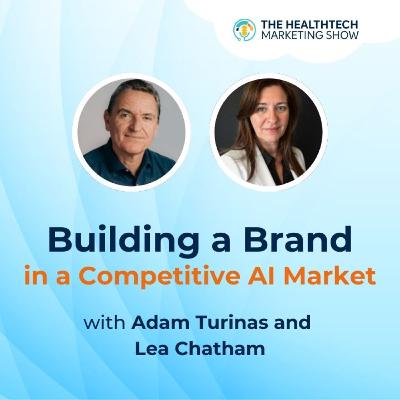
Brand has become the B-word in our industry. It’s almost viewed as a dirty word in certain C-Suites and marketing leaders bring it up at their peril.But let's face it, without a strong brand, your sales are going nowhere. And this is especially the case in healthcare technology, where buyers have favorites and start a 13+ month buyer journey with a shortlist in mind.In this episode, I sit down again with my friend and healthtech marketing leader, Lea Chatham, to unpack what it takes to create and build a strong brand.We discuss what it really takes to build a brand in the white-hot ambient AI/clinical scribe space. We start with the reality that large buying groups are overwhelmed with noise, and increasingly turn to a few trusted sources to quietly shortlist the top two or three vendors before they ever talk to sales. If you’re not consistently showing up with credibility in those channels, you may never even make the long list, let alone the shortlist. Lea and I then dive into the specific brand challenges she’s taken on at Heidi Health. Heidi began as a bottom-up, product-led, physician-led company with a very “sign up free and try it” feel. Lea walks through how they’ve repositioned Heidi to a broader “AI care partner” that can sit beside any clinician across organizations of all sizes, while still staying obsessed with physician experience and adoption. We also explore the broader competitive landscape in ambient AI. Lea describes two main camps: solutions tightly embedded in the EHR, and “untethered” scribes where integration is the last step rather than the first. From there we zoom out into brand strategy and execution. We talk about the constant push to create “branded demand,” where every brand investment also drives pipeline, and every demand gen motion reinforces the brand. Lea explains that you can’t build a serious brand in this market purely organically. You have to spend selectively, like picking a few big bets (like going big with CHIME, co-authoring an award submission with marquee enterprise customers, or key analyst relationships) that can create outsized visibility and credibility quickly while your broader organic engine spins up. Key Topics Covered:"(00:00)" Setting the Stage: Ambient AI “Land Grab” & Buying Groups"(03:10)" Heidi as the “New Kid” & the Enterprise Brand Barrier"(06:20)" Measuring Brand Without a Six-Figure Budget"(10:20)" Mapping the Ambient AI Landscape & Heidi’s Positioning"(16:20)" Global Brand, Local Markets: From Scribe to “AI Care Partner”"(19:30)" Tailoring Messaging for Personas, ICPs & Regions"(25:10)" Brand Consistency, Naming, and Product Architecture"(30:10)" Building the Heidi Brand in the US: Tactics & “Branded Demand”"(35:40)" Adapting SEO for the AI & Prompt Era"(38:00)" Final Advice: Strategic Spend & Big Bets (CHIME Case Study)If you are interested in discussing this or any other topic, let's have a chat. Reach out to me directly to schedule a no-obligation discussion. This isn't a sales call, but rather an opportunity to talk through your questions and challenges.Follow me on LinkedIn.Subscribe to The Healthtech Marketing Show on Spotify or watch us on YouTube for more insights into marketing, AI, ABM, buyer journeys, and beyond!Thank you to our presenting sponsors, HIMSS, a leader in advancing health equity, digital innovation, and data-driven care through technology, policy, and community collaboration. And also HealthcareNOW, 24/7 expert shows, interviews, and podcasts, powering healthcare leaders with innovation, policy, and strategy insights.
Is Answer Engine Optimization (AEO) really just SEO with a fresh coat of paint, or are we looking at something fundamentally different? This question has been nagging at me for weeks, and in this AI Quick Take I try to answer it.This started with a lunch conversation at the Marketing AI Conference in Cleveland, where an SEO expert told me AEO was merely a 10% incremental change from traditional SEO. Then I saw a post from Drew Neisser featuring a CMO who called AEO and GEO "a load of crap," suggesting that following SEO best practices would be sufficient. But after analyzing our own data at Health Launchpad and hearing similar stories from clients, I'm not convinced they're right.Our website traffic grew 10% month-over-month for four years straight, with 65-80% driven by SEO. Now SEO accounts for less than 40% of our traffic, but the decline has been offset by increases in referral and direct traffic from answer engines like ChatGPT, Claude, and Perplexity. We're moving into what many call a zero-click world where users get answers, not links. The new gatekeepers aren't search engines anymore - they're answer engines that read, interpret, and decide what's worth repeating. In this episode, I will unpack why I think AEO truly is a big deal and requires thinking differently about how we approach digital marketing.Key Topics Covered:"(00:00:00)" Introduction"(00:01:30)" The Question: Is AEO Just SEO Rebranded?"(00:05:00)" Is This SEO 2.0 or Something Different?"(00:05:30)" The Reality of Traditional SEO"(00:06:30)" Health Launchpad's Traffic Data"(00:08:00)" The Zero-Click World"(00:09:00)" Answers Not Links"(00:10:00)" The Skeptics' Point of View"(00:11:00)" Overlapping Tactics vs Overlapping Strategy"(00:12:00)" SEO vs AEO: Ranked vs Retrieved"(00:14:00)" Pre-Qualified Buyers from AI Engines"(00:15:00)" Zyppy's Research: 86% Citations from Owned Content"(00:17:30)" The Measurement Challenge"(00:19:00)" New Metrics: Retrieval Frequency and Answer Share"(00:22:00)" Four Key Takeaways"(00:24:30)" Future-Proofing Your Brand"(00:25:30)" Closing AdviceIf you are interested in discussing this or any other topic, let's have a chat. Reach out to me directly to schedule a no-obligation discussion. This isn't a sales call, but rather an opportunity to talk through your questions and challenges.Follow me on LinkedIn.Subscribe to The Healthtech Marketing Show on Spotify or watch us on YouTube for more insights into marketing, AI, ABM, buyer journeys, and beyond!Thank you to our presenting sponsors, HIMSS, a leader in advancing health equity, digital innovation, and data-driven care through technology, policy, and community collaboration. And also HealthcareNOW, 24/7 expert shows, interviews, and podcasts, powering healthcare leaders with innovation, policy, and strategy insights.
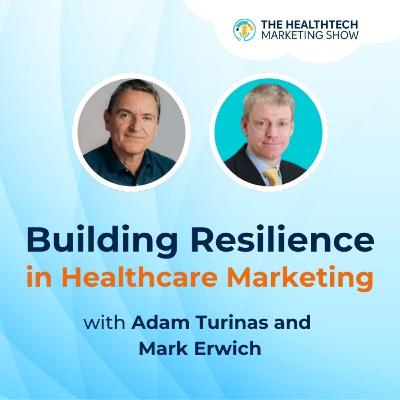
Healthcare is facing a “perfect storm”. And it’s a perfectly bad one!In this episode, I sit down with Mark Erwich, Health Launchpad Chief Strategy Officer. Mark is a healthcare technology marketing veteran with over 20 years in the industry. Mark and I discuss "the perfect storm" facing healthcare providers, and why traditional growth-focused messaging is no longer resonating with buyers.Mark unpacks the mounting pressures on hospitals and IDNs, from shrinking margins and labor shortages to an onslaught of regulatory changes, including OPBBA, Medicaid work requirements, and ACA cuts. The healthcare system is managing multiple compounding crises simultaneously, making traditional vendor pitches about "disruptive innovation" and feature-focused solutions feel tone-deaf.We explore how vendors need to shift from a growth mindset to a resilience framework. This means moving away from generic ROI calculators toward detailed value calculators that CFOs can actually trust, and replacing growth messaging with language focused on stability, sustainability, and operational excellence. As procurement departments look to consolidate their vendor relationships, the companies that will survive and thrive are those that can prove they understand their customers' challenges and deliver measurable margin improvements, not just promised cost savings.Key Topics Covered"(00:01:00)" Mark's Background in Healthcare Technology Marketing"(00:02:30)" The Perfect Storm: Current Challenges Facing Healthcare Providers"(00:03:00)" Financial Pressures and Margin Challenges"(00:03:30)" Clinician Shortages and Workforce Issues"(00:04:00)" Regulatory Dynamics and Federal Policy Changes"(00:05:00)" The Importance of Resilience Over Growth Mindset"(00:06:00)" How CFOs Are Planning for Uncertainty"(00:07:00)" Preparedness for Constant Change"(00:08:00)" How CFO Decision-Making Cascades Throughout Organizations"(00:08:30)" What Messaging No Longer Works"(00:09:00)" Margin Improvement vs. Cost Savings"(00:10:00)" ROI Calculators vs. Value Calculators"(00:11:00)" Building Trustworthy Financial Cases"(00:12:00)" Demonstrating Granular Impact on Hospital Operations"(00:13:00)" Shifting from Growth to Resilience Messaging"(00:14:00)" Messaging That Resonates: Stability, Sustainability, Operational ExcellenceIf you are interested in discussing this or any other topic, let's have a chat. Reach out to me directly to schedule a no-obligation discussion. This isn't a sales call, but rather an opportunity to talk through your questions and challenges.Follow me on LinkedIn.Subscribe to The Healthtech Marketing Show on Spotify or watch us on YouTube for more insights into marketing, AI, ABM, buyer journeys, and beyond!Thank you to our presenting sponsors, HIMSS, a leader in advancing health equity, digital innovation, and data-driven care through technology, policy, and community collaboration. And also HealthcareNOW, 24/7 expert shows, interviews, and podcasts, powering healthcare leaders with innovation, policy, and strategy insights.
One of the biggest challenges is that buyers control the buying process, and they don’t want to talk to vendors until they are good and ready. They do their research, talk to peers and analysts, do more research, and eventually, after several months, they will speak to a handful of vendors. And by then their mind is mainly made up.Here’s the really bad news.AI is going to give them even greater control, and the introduction of AI browsers is potentially a big step towards that.OpenAI recently launched ChatGPT Atlas, joining Perplexity's Comet and Google's increasing AI integration into search. These browsers represent a total reimagining of how we interact with the internet, and they could be as significant for B2B healthcare marketing as Google's original launch.In this AI Quick Take episode, I explore how AI browsers could fundamentally transform the way healthcare buyers research and purchase technology solutions. And at the end of the episode, I walk you through a practical 90-day plan to take action. Key Topics Covered"(00:00:00)" - Introduction and Episode Overview"(00:01:00)" - The Launch of AI Browsers (ChatGPT Atlas, Perplexity Comet)"(00:03:00)" - What Makes AI Browsers Different from Traditional Browsers"(00:04:00)" - Agent Mode and Autonomous Research Capabilities"(00:06:00)" - How AI Browsers Change the Healthcare Buying Process"(00:08:00)" - The Compressed Buyer Journey"(00:09:00)" - Content Strategy Implications"(00:10:00)" - Trust and Credibility Factors"(00:11:00)" - The Transformation of SEO"(00:13:00)" - Rethinking the Buyer Journey"(00:14:00)" - Practical 90-Day Action Plan"(00:16:00)" - Long-Term Strategy Considerations"(00:18:00)" - Closing Thoughts and Call to ActionIf you are interested in discussing this or any other topic, let's have a chat. Reach out to me directly to schedule a no-obligation discussion. This isn't a sales call, but rather an opportunity to talk through your questions and challenges.Follow me on LinkedIn.Subscribe to The HealthTech Marketing Show on Spotify or watch us on YouTube for more insights into marketing, AI, ABM, buyer journeys, and beyond!Thank you to our presenting sponsors, HIMSS, a leader in advancing health equity, digital innovation, and data-driven care through technology, policy, and community collaboration. And also HealthcareNOW, 24/7 expert shows, interviews, and podcasts, powering healthcare leaders with innovation, policy, and strategy insights.
In this milestone 100th episode of The HealthTech Marketing Show, I reflect on the journey to reach this point and share something we've never done before—opening up about what we've been building at Health Launchpad with AI. The first episode launched almost four years ago with my friend Ben Person, and while there have been challenging moments where I considered stopping, the encouragement from listeners has made it all worthwhile. I'm grateful to HIMSS for their early support and to Healthcare Now for recently joining their syndication network, which has significantly boosted our reach.Today's episode is special because I'm pulling back the curtain on Health Launchpad's AI transformation. Drawing from our Healthech Marketing Network survey, we discovered that while 98% of healthtech marketing teams use AI, only 7% have a strategic roadmap for it. About six months ago, we realized we were in the same boat, using AI tactically without a clear strategy. Since then, we've developed a comprehensive approach, which I dive into in this episode.I also share what I learned at MAICON. This annual AI conference for marketers was mind-blowing. It was both the most exciting event I have been to and the most terrifying.We are on a mission to use AI to help our clients grow their business. I'm incredibly proud of how our team has embraced this transformation, and I want to extend an offer to anyone wrestling with their AI strategy. Book a call with me to discuss your journey. No sales pitch, just a conversation to share ideas and perhaps provide some guidance as you navigate this exciting but challenging landscape.Key Topics Covered"(00:00:00)" Introduction to Episode 100"(00:01:00)" The Healthech Marketing Show Origin Story"(00:04:00)" Health Launchpad's AI Announcement"(00:05:00)" Healthtech Marketing Network AI Survey Results"(00:07:00)" AI as Career Opportunity and Threat"(00:09:00)" The Disruption Wave and Changing Buyer Behavior"(00:10:00)" Our Three-Part AI Strategy Framework"(00:12:00)" Andrew Robertson on AI and Creativity"(00:13:00)" Making Work Easier with AI"(00:14:00)" Making Output Better - Beyond Average Information"(00:16:00)" Introducing the HLP BrAIn"(00:18:00)" Benchmarking AI-Enhanced Expertise"(00:20:00)" Custom GPTs and AI Agents"(00:22:00)" New AI Service Offerings"(00:23:00)" Team Transformation and Looking AheadReferences:Total Customer Growth BookAdweek’s article on why AI will unleash creative talentPodcast on AI-First Marketing at ScaleAI Generated Commercial by PJ AceIf you are interested in discussing this or any other topic, let's have a chat. Reach out to me directly to schedule a no-obligation discussion. This isn't a sales call, but rather an opportunity to talk through your questions and challenges.Follow me on LinkedIn.Subscribe to The HealthTech Marketing Show on Spotify or watch us on YouTube for more insights into marketing, AI, ABM, buyer journeys, and beyond!Thank you to our presenting sponsors, HIMSS, a leader in advancing health equity, digital innovation, and data-driven care through technology, policy, and community collaboration. And also HealthcareNOW, 24/7 expert shows, interviews, and podcasts, powering healthcare leaders with innovation, policy, and strategy insights.
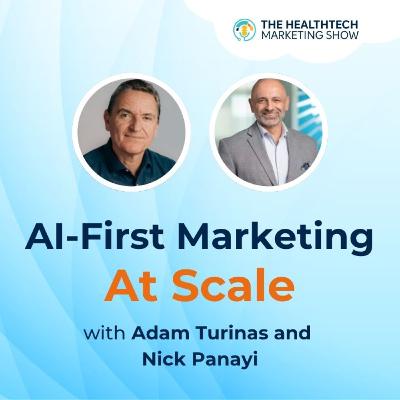
This may be my favorite ever episode. And it’s a doozy! I sat down with Nick Panayi, CMO of Inovalon, to explore one of the most comprehensive AI adoption stories I've encountered in healthcare technology marketing. Nick leads a 95-person marketing team at this 2,000-employee data and solutions company, and what they've accomplished in just two years is remarkable. According to our recent survey of the HealthTech Marketing community, only about 7% of companies have an AI strategy roadmap, let alone reach this level of AI integration. This makes Nick's insights particularly valuable for the rest of us on this journey.What impressed me most was how they've made AI accessible across their entire marketing organization. They've created a unified platform called Amaru AI that serves as a no-code environment where marketers can build workflows without technical expertise. By integrating AI tools directly into their existing Monday.com workflow system, they've met their team where they already work rather than forcing adoption of new platforms. Nick also shared fascinating use cases, including AI-powered voiceovers with Eleven Labs, conversational AI prospecting with Synthflow that makes outbound calls, and using Google's Notebook LLM to transform dense white papers into engaging podcast content. Key Topics Covered:"(00:00:00)" Introduction and Nick's Background"(00:03:00)" Building an AI-First Marketing Team"(00:07:00)" Overcoming Barriers - Legal and Team Concerns"(00:10:00)" The AI Roadmap and Tiger Team Approach"(00:12:00)" Scaling AI Adoption Across the Organization"(00:14:00)" Content Creation with AI Scoring"(00:18:00)" Automated Website Tagging and Personalization"(00:22:00)" Agentic AI for Paid Search Advertising"(00:30:00)" Amaru AI Platform Architecture"(00:35:00)" AI Integration in Monday.com Workflows"(00:36:00)" Image Generation and Remix Tools"(00:37:00)" Tega AI for Prospecting and Lead Generation"(00:40:00)" Synthflow - Conversational AI Calling"(00:45:00)" ROI and Measurement Approaches"(00:49:00)" AI Voiceovers and Video Production"(00:51:00)" AI Podcasting with Google Notebook LLM"(00:53:00)" Advice for Agencies and ConsultantsIn this post, I lay out a strategic roadmap that emulates what Nick and team have achieved at Inovalon.If you are interested in discussing this or any other topic, let's have a chat. Reach out to me directly to schedule a no-obligation discussion. This isn't a sales call, but rather an opportunity to talk through your questions and challenges.Follow me on LinkedIn.Subscribe to The HealthTech Marketing Show on Spotify or watch us on YouTube for more insights into marketing, AI, ABM, buyer journeys, and beyond!Thank you to our presenting sponsors, HIMSS, a leader in advancing health equity, digital innovation, and data-driven care through technology, policy, and community collaboration. And also HealthcareNOW, 24/7 expert shows, interviews, and podcasts, powering healthcare leaders with innovation, policy, and strategy insights.
In this episode, I speak with Susan Roth, Senior Director of Marketing at Netrality Data Centers, about her remarkable journey from marketing leader to AI agent builder. Susan shared how she went from being uncertain about AI's role in marketing to becoming a pioneer in building sophisticated AI workflows and agents, while managing a small marketing team and investing significant personal time and resources into her education.What makes Susan's story particularly compelling for healthcare technology marketers is her practical approach to implementation. She's not just theorizing, she's actively using it to transform how a small marketing team operates. From editing video in minutes instead of hours to creating automated research workflows that cost just $1.50 per execution, Susan demonstrates how AI agents can enable small teams to compete at scale. She also offers a pragmatic yet optimistic view of AI's impact on the workforce, emphasizing that organizations will need people to manage and maintain these systems, and that the key is learning to work alongside AI rather than being replaced by it.For marketing leaders feeling overwhelmed by AI's rapid evolution, Susan's advice is straightforward: start small with low-risk use cases, embrace discomfort as part of the learning process, and remember that AI literacy is an ongoing journey rather than a destination. Her most important message is to "do it scared"—because waiting on the sidelines is no longer an option for marketers who want to remain competitive.Key Topics Covered[00:00:00] - Introduction[00:02:00] - Discovering AI as a Human Evolution Story[00:06:00] - Learning Resources: Marketing Profs B2B Forum[00:09:00] - Shifting Behavior: From Search Engine to Strategic Partner[00:10:00] - Introduction to Agentic Workflows[00:12:00] - The AI Build Lab: Four-Week Foundations Course[00:16:00] - The Builder Mindset for Marketers[00:18:00] - Key Tools: Notion, Typing Mind, and Cassidy[00:20:00] - Daily AI Applications in Marketing Work[00:21:00] - Use Cases: Research, Content Creation, and Video Production[00:25:00] - Building 50 Agents: From Research to Email[00:28:00] - The Cipher Agent: Automated Sales Research Workflow[00:31:00] - AI Adoption: Strategic Use vs. Individual Tools[00:33:00] - The Future of Marketing Teams: Humans and Agents Working Together[00:35:00] - The "Do More with Less" Question and Workforce Implications[00:37:00] - The Importance of Hiring and Training Young People[00:39:00] - Advice for Getting Started: Pick One Small Use Case[00:40:00] - Learning to Prompt and Using AI to Teach AI[00:41:00] - The Ongoing Journey: Being Comfortable with Being UncomfortableIf you are interested in discussing this or any other topic, let's have a chat. Reach out to me directly to schedule a no-obligation discussion. This isn't a sales call, but rather an opportunity to talk through your questions and challenges.Follow me on LinkedIn.Subscribe to The HealthTech Marketing Show on Spotify or watch us on YouTube for more insights into marketing, AI, ABM, buyer journeys, and beyond!Thank you to our presenting sponsors, HIMSS, a leader in advancing health equity, digital innovation, and data-driven care through technology, policy, and community collaboration. And also HealthcareNOW, 24/7 expert shows, interviews, and podcasts, powering healthcare leaders with innovation, policy, and strategy insights.
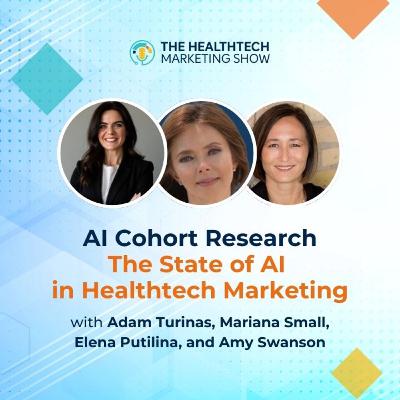
In this episode, I'm joined by three exceptional members of our Healthtech Marketing Network - Mariana Small, Elena Putilina, and Amy Swanson - who spearheaded our first-ever AI Cohort project. Together, they surveyed over 100 healthtech marketing leaders to understand how our community is actually using AI in their day-to-day work, moving beyond the hype to examine practical applications and real challenges.The research revealed some fascinating insights about where we stand as an industry. While 93% of respondents are using AI in some capacity, very few organizations have successfully integrated AI into their core workflows or developed strategic roadmaps for implementation. Perhaps most telling, almost no one is measuring AI's impact beyond basic productivity metrics, creating a significant gap between leadership's enthusiasm and actual business value demonstration.While leadership teams are generally supportive and see potential value, they're looking for AI to drive demand generation and performance improvements - not just cost savings. However, marketers are struggling with workflow integration, tool selection overwhelm, and demonstrating clear ROI. The community has identified four key areas where they need help: AI-based search optimization, future skills development, creating repeatable workflows, and establishing governance frameworks.This research confirms we're still in the early stages of AI adoption in healthtech marketing, but it also provides a clear roadmap for moving from experimentation to strategic implementation. The findings show that while the enthusiasm is there, we need to focus on building proper foundations.Key Topics Covered"(00:00:00) Introduction""(00:01:00) Meet the AI Cohort Team""(00:05:00) State of AI Usage in Healthtech Marketing""(00:07:00) Most Popular AI Tools and Applications""(00:09:00) The Measurement Challenge""(00:12:00) Management Expectations vs. Reality""(00:16:00) Organizational Bottlenecks and Barriers""(00:18:00) The Need for AI Champions""(00:19:00) What the Community Wants Next""(00:22:00) Governance and Ethics Considerations""(00:23:00) Personas, Sales Enablement, and Search""(00:26:00) Strategic vs. Tactical AI Implementation""(00:30:00) Closing Advice from the Research Team""(00:33:00) Key Takeaways and Webinar Announcement"Join us for an in depth webinar covering the AI Cohort Research on October 8th at 1 pm ET.If you are interested in discussing this or any other topic, let's have a chat. Reach out to me directly to schedule a no-obligation discussion. This isn't a sales call, but rather an opportunity to talk through your questions and challenges.Follow me on LinkedIn.Subscribe to The HealthTech Marketing Show on Spotify or watch us on YouTube for more insights into marketing, AI, ABM, buyer journeys, and beyond!Thank you to our presenting sponsors, HIMSS, a leader in advancing health equity, digital innovation, and data-driven care through technology, policy, and community collaboration. And also HealthcareNOW, 24/7 expert shows, interviews, and podcasts, powering healthcare leaders with innovation, policy, and strategy insights.

Comments

Download from Google Play

Download from App Store
 United States