


 Claim Ownership
Preach: The Catholic Homilies Podcast
Subscribed: 338Played: 10,573
Subscribe

Copyright © 2026 America Magazine. All rights reserved.
Description
Every Sunday, millions hear homilies. But what separates the forgettable from the inspiring? Preach, from America Media, goes behind the pulpit to reveal the art and craft of great Catholic preaching. Host Ricardo da Silva, S.J.—Jesuit priest and associate editor at America Media in NYC—features weekly homilies from outstanding preachers, followed by intimate conversations. From Scripture interpretation to delivery, discover what makes today’s most compelling Catholic voices so transformative.
Read featured homilies and daily Scripture reflections at americamagazine.org/subscribe
Preach is supported by a generous grant from Lilly Endowment Inc., as part of its Compelling Preaching Initiative.
436 Episodes
Reverse

What is fasting for? What biblical precedent do we have for the practices of fasting and abstinence? And how can preachers steer between the two extremes of self-punishment and loophole hunting? “Preach” concludes its Lent 2026 series on the three classical pillars of the season with a conversation on fasting. Host Ricardo da Silva, S.J. is joined by James Keane — senior editor at America and a writer who has spent some time reflecting and writing on what fasting is and what it’s for.
Timecodes:
0:00 What’s fasting for?
2:00 The Brazilian loophole to abstinence during Lent: capibara
3:55 What does the church teach on fasting and abstinence?
6:53 Fasting is meant to bring you closer to God
8:35 Biblical citations of fasting
11:05 Fasting evolved alongside seasons of food scarcity and abundance
14:10 St. Ignatius’ fervour for fasting
16:10 Avoiding the two extremes of self-punishment vs. loophole hunting
18:58 Pope Leo XIV’s message this Lent
James Keane’s articles on fasting:
On fasting: The difference between our preaching and our practice
7 things you never knew about fasting
---
Support this podcast by becoming a subscriber. Visit americamagazine.org/subscribe
Learn more about your ad choices. Visit megaphone.fm/adchoices

 1
1What is almsgiving — and why does the Church teach that it is more about justice and right relationship than simply personal charity or philanthropy? As “Preach” continues its Lent 2026 series on the three classical pillars of the season—prayer, fasting and almsgiving—we turn to almsgiving, perhaps the most confronting of the three. In this conversation, Ricardo da Silva, S.J. is joined by Kerry Robinson, President and CEO of Catholic Charities USA., and author of Imagining Abundance: Fundraising, Philanthropy, and a Spiritual Call to Service, a book that reflects on generosity as a spiritual practice rooted in faith.
Timecodes:
0:00 Generosity is at the heart of almsgiving
2:30 Our cognitive dissonance with money and faith
5:43 How Kerry became a steward of her family’s 80-year-old foundation
8:20 About Catholic Charities U.S.A.
11:50 Biblical teachings on giving alms
16:36 Mother Teresa: “never take away the right of another to be generous”
21:30 We need both charity and justice
26:24 New insights from Pope Leo and ‘Dilexi Te’
28:08 Preach almsgiving with thanksgiving
---
Support this podcast by becoming a subscriber. Visit americamagazine.org/subscribe
Learn more about your ad choices. Visit megaphone.fm/adchoices
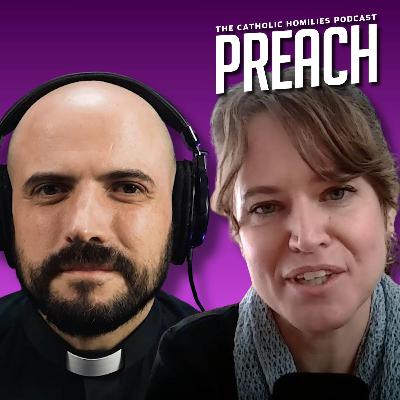
What is prayer? And maybe more importantly for preachers—what are we inviting people into when we stand in the pulpit and speak about it? As “Preach” continues its Lent 2026 series, we turn to the three classical pillars that shape the season: prayer, fasting and almsgiving. In this first conversation, focused on prayer, Ricardo da Silva, S.J. is joined by Amy Ekeh, Director of Mission Advancement for the Apostles of the Sacred Heart of Jesus, retreat leader, author and adjunct instructor in the Department of Theology and Religious Studies at Sacred Heart University. Amy is the author of several books, including:
Stretch Out Your Hand: Reflections on the Healing Ministry of Jesus
Come to Me, All of You: Stations of the Cross in the Voice of Christ
Lent: Season of Transformation
Timecodes:
0:00 We can’t be afraid to ask for God’s help
1:25 Who is Amy Ekeh?
2:50 Prayer is relational
7:57 Prayer is nurtured in community
14:30 Good preaching requires you to know your congregation
16:53 Ask for healing! The people in the Gospels did.
21:38 Jesus’ Gethsemane prayer
26:16 Carving out space for silence
---
Support this podcast by becoming a subscriber. Visit americamagazine.org/subscribe
Learn more about your ad choices. Visit megaphone.fm/adchoices

As “Preach” begins its Lent 2026 series, Ricardo da Silva, S.J. sits down with liturgical theologian Anne McGowan to ask a foundational question: what is Lent for — and how do these practices reshape our faith, not just our habits for six weeks? Together, they trace its history from a two-day fast in the early Church to the 40-day season we know today, and explore its theological arc in the Sunday lectionary—from temptation and transfiguration to water, light and life, and finally the passion that leads into Easter, where new Christians are baptised and the faithful renew their baptismal promises.
0:00 Introducing the Lent 2026 series
2:30 Meet Anne McGowan: why she loves the liturgical year
6:20 You can’t understand Lent without Easter
8:10 The history of Lent: from two days to 40 days before Easter
10:40 Lent: a season of challenge and joy
15:05 Compunction and joy: do we have to choose?
20:55 The Sundays of Lent explained: from temptation to the passion
31:13 Preaching the whole journey of Lent
34:49 Preaching more than just the Sunday readings this Lent
36:22 How to come alive this Lent
A Preacher’s Guide to Holy Week: These are long liturgies. Be brief!
---
Support this podcast by becoming a subscriber.
Visit americamagazine.org/subscribe
Learn more about your ad choices. Visit megaphone.fm/adchoices
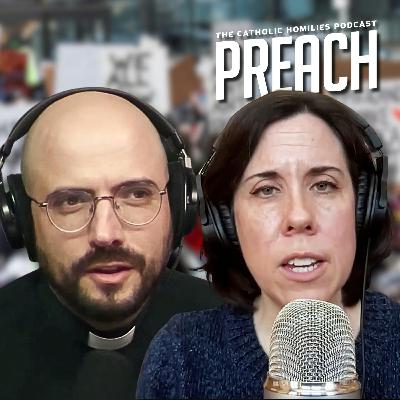
“Things are happening [in Minnesota] that my friends and family elsewhere are really having trouble understanding,” Laura Kelly Fanucci says, “because the media is saying one thing, and all these partisan politicians are saying another thing.”
“But sometimes I think what Jesus [is saying in the gospel], is that when you are close to the center, sometimes you will know things about the mystery of God that are going to be difficult for other people to understand.”
Award-winning author, Laura Kelly Fanucci, joins host Ricardo da Silva, S.J., to share what she has been preaching on her Instagram account @thismessygrace since U.S. federal immigration agents fatal shooting of Renee Good, and later, Alex Pretti. After attending Mass the Sunday following the killing of Renée Good and hearing no mention of it from the pulpit at her parish, Laura began offering three-minute homilies on Instagram.
In this conversation with Ricardo da Silva, S.J., Laura offers practical advice for preaching in this historical moment marked by violence, terror and community upheaval. In her daily Scripture reflections on Instagram Laura models how to thread the needle of preaching the gospel and responding to surrounding events, without slipping into partisan rhetoric.
https://www.americamagazine.org/subscribe
Learn more about your ad choices. Visit megaphone.fm/adchoices
Every year we take out the nativity. We arrange it carefully. Mary. Joseph. A baby in a manger. It feels sacred—one of the last spaces in our world left untouched.
But contemporary retellings challenge that calm. This year in Dedham, the Holy Family was removed and kept in the sanctuary for protection from ICE. In Evanston, the baby Jesus wrapped in emergency thermal blankets, his hands bound with zip ties. A few years ago in Bethlehem, a Lutheran pastor placed the Christ child on bomb rubble. We demand these displays be removed.
But what if the real danger isn’t the frame we construct—traditional crib or contemporary protest? What if it’s that we’re so busy fixing on one perfect pageant or one protest image that we miss the actual context of Jesus’ birth? We assume Mary and Joseph were turned away. Luke doesn’t say that. The Holy Family is welcomed into a warm home, pressed shoulder to shoulder with people doing all they can to make space. The house owner says: this is all we have. And it’s accepted. God is born there.
Ricardo tells us in this surprise Christmas Eve homily: God does not wait for us to clear space. He enters even when lives are full, when schedules are packed. Still, room is found. That’s the nativity we are living and called to live.
This is Ricardo’s final episode before moving to Rome in January to join the Jesuits’ international communications team. He’ll continue hosting Preach from there. We’re taking a brief break and will return just before Ash Wednesday with a new Lenten series. Please fill out our listener survey—your feedback helps shape what comes next. Merry Christmas!
Learn more about your ad choices. Visit megaphone.fm/adchoices
“I really appreciate it when the truth is spoken very plainly,” says Tsh Oxenreider. Homilies that cut to the chase—and call us to conversion now. Host Ricardo da Silva, S.J., speaks with writer and podcaster Tsh Oxenreider about what active waiting means during Advent; sitting with discomfort, resisting the rush to Christmas. They explore the traditional meanings of the liturgical weeks—joy in week three, love in week four—what penance looks like in this season, and the O Antiphons. Tsh speaks directly about what she needs from preaching: homilies that tell the truth plainly and call us, here and now, to confess our sins and get right with God.
Support Preach—subscribe at americamagazine.org
Learn more about your ad choices. Visit megaphone.fm/adchoices
This week on Preach, we’re offering an Advent treat. Host Ricardo da Silva, S.J., sits down with fellow producer Maggi Van Dorn for a rare on-mic conversation about the spiritual power of Christmas carols. Drawing on their work as producers of another America podcast, “Hark! The Stories Behind Our Favorite Christmas Carols,” they reflect on what these songs can teach preachers:
that the liturgy is more than the homily.
that beauty itself does theological work: it’s not just what is said, but how it’s delivered. The structure, rhythm, and form—whether in music or a homily—carry meaning and touch the heart.
that good preaching must reach the heart before the mind.
After their conversation, we bring you the second episode of “Hark!” Season 5: “Angels We Have Heard on High.”
Support Preach—subscribe at americamagazine.org
Learn more about your ad choices. Visit megaphone.fm/adchoices

“I’m thinking about the end of time in another way,” says Ann Garrido. “Because end can mean the conclusion, the finish, but it can also mean the purpose.” For 25 years, Ann has taught homiletics, pastoral theology and catechetics at Aquinas Institute of Theology, written 10 books and spoken at more than 350 gatherings.
A longtime catechist in the Catechesis of the Good Shepherd movement, Ann offers her reflection for a planned Advent reconciliation service at St. Thomas More Parish in Decatur, Ga. She begins with a conversation from the parish atrium about the end of time—children offering answers like “God will be all in all” and “there will be peace,” before one boy insists his paradise is “hamburgers.” From there, she moves into Isaiah’s peaceable kingdom and the real work of reconciliation: making peace with those closest to us—whoever our ‘X’ is, the sibling we fight with, the friend we’ve fallen out with, the neighbor who drives us crazy.
Part of the “Preaching for the Sacraments” series, host Ricardo da Silva, S.J., speaks with Ann about what distinguishes Advent reconciliation from Lent. Ann looks to the ancient roots of confession, where the early “confessors” proclaimed faith rather than only naming sin: “What we’re really confessing is our belief in a God who can heal and work out things that we ourselves are not gonna be able to fix.” Ricardo echoes this reframing: “Perhaps it's helpful not to think of it only as a confession of sin, but really also a confession of faith that we go there to proclaim our faith in a God who heals the impossible.”
Ann also reflects on a recent glioblastoma diagnosis and how it has sharpened her sense of call and taught her to preach from vulnerability—without making herself the hero of the story.
Support Preach—subscribe at americamagazine.org
Learn more about your ad choices. Visit megaphone.fm/adchoices
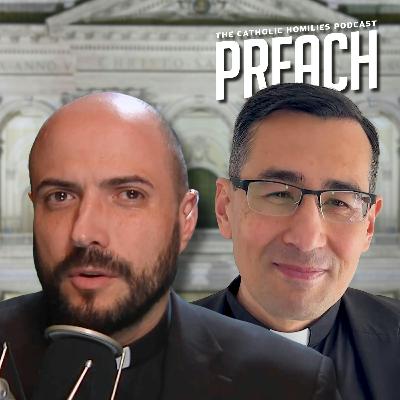
The Feast of the Dedication of the Lateran Basilica in Rome—a feast about a building—can intimidate preachers. The temptation? Mention it briefly and move on to the readings. But Sylvester Tan, S.J. says this feast is worth the work of preaching well.
In this episode of “Preach,” Sylvester, a Jesuit theologian and local superior in Dallas shares his homily for one of the few feasts that actually replaces the regular Sunday liturgy when it falls on a Sunday. Then he joins host Ricardo da Silva, S.J. to reflect on three challenges: How can preachers use history without boring people? “Our faith is a historical faith,” he says, “and history is always messy. God doesn’t reject history; he works through history.”
They also discuss why we shouldn’t skip difficult feasts—“Where we get uncomfortable, there’s always an invitation to go deeper”—and how to preach about divine anger without losing sight of divine love.
Support Preach—subscribe at americamagazine.org
Learn more about your ad choices. Visit megaphone.fm/adchoices
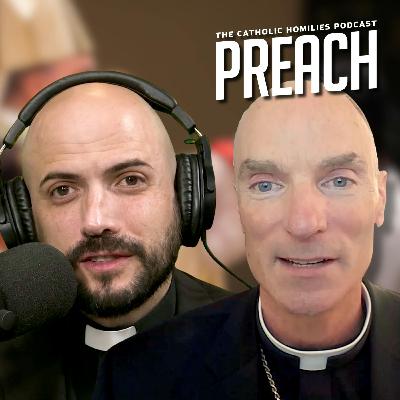
Auxiliary Bishop Adam Parker of Baltimore has confirmed more than 10,000 young people—and he wants his brother bishops to know what a gift the sacrament can be. In this episode of “Preach,” he shares his confirmation homily built around Jesus’ question to Peter: “Who do you say that I am?” Then host Ricardo da Silva, S.J., asks him for a fervorino: If he were standing before his brother bishops, what brief, heartfelt exhortation would he offer about preaching for confirmation?
His answer: Remember that confirmation is a unique opportunity. Many in the pews aren’t regularly connected to the church—so preach the invitation to relationship with Jesus Christ. Make the gifts of the Holy Spirit practical and real, drawing from your own life. And “make our own humanity as bishops visible to the candidates.” Let them see you’re not just presiding ceremonially, but walking with them as their shepherd.
Support Preach—subscribe at americamagazine.org
Learn more about your ad choices. Visit megaphone.fm/adchoices
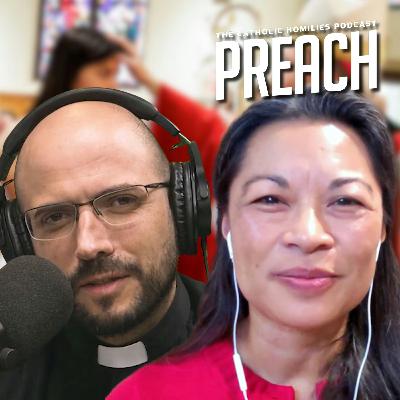
“You are loved, warts and all.” Bishop Emeritus Patrick J. McGrath of San Jose said it at every confirmation—and liturgist Diana Macalintal never tired of hearing it. In this episode of “Preach,” she recalls a bishop’s confirmation homily that “quickly devolved into an exploration of sin and evil,” complete with exorcisms and damnation. Like composing music, this preacher “did not emphasize the right notes—the right message,” she says. “Confirmation is all about strengthening the goodness that is in there, giving us the grace to do the hard things, to do the beautiful things in the world.”
But don’t avoid reality either. “For those who are being confirmed, these are oftentimes teenagers where real life is life and death. Whether it is or not, it is drama all the time.” Name those struggles, she urges, “in the context of this gift of the Spirit and how they can do their part in the mission of Christ.”
Diana also challenges a common assumption: there's no obligation to choose a saint's name at confirmation. Church teaching honors our given names as "icons of a person." At St. Columba in Oakland, Calif., her historically Black parish, "for so many, their ancestors' names were taken away" during enslavement. "Honor the names that are given," she says, "because somebody loved that child enough to give them that gift."
___
Support Preach—subscribe at americamagazine.org
Learn more about your ad choices. Visit megaphone.fm/adchoices
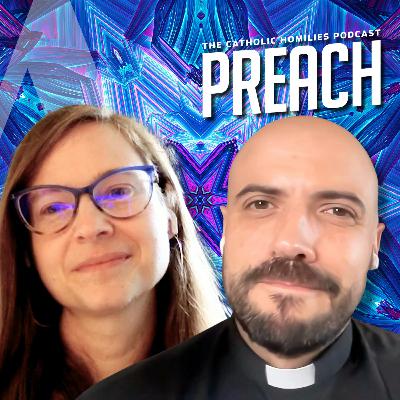
The parable of the persistent widow. Again. Scholar, poet, and preacher Cameron Bellm has heard it a hundred times—so she turned to Russian literature for help. Drawing on Viktor Shklovsky’s ostranenie, the art of making the familiar strange, she reveals how to jolt ancient parables back to life. “It is the goal of art to make the stone stony again,” she says. She also urges preachers to learn from Russian Masters Tolstoy—”a master of the narration of human consciousness”—and Dostoevsky, who “takes us into the deepest, darkest, grittiest underbelly of humanity and lights a single match.”
In her homily for the 29th Sunday in Ordinary Time, Year C, she layers voices across generations—her Presbyterian grandfather’s 1964 sermons, Oscar Romero, Etty Hillesum—creating “a double-exposed photograph.” Her provocation: “We identify as the persistent widow, but like it or not, we are also the judge.”
___
Support Preach—subscribe at americamagazine.org
Learn more about your ad choices. Visit megaphone.fm/adchoices
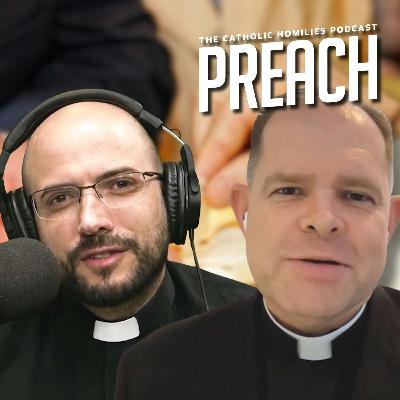
“What does it mean to receive Jesus in Holy Communion? It’s like Jesus is giving us a big hug, saying, ‘I love you so much. I want you to be close to me always,’” says Russell Pollitt, S.J., pastor of Holy Trinity Catholic Church in Johannesburg and chaplain to Catholic elementary and middle schools, to the children preparing for their First Communion.
Russell uses vivid, everyday examples—birthdays, friends, hugs and gifts—to help children grasp God’s particular love for them. His First Communion homily avoids the often abstract sacramental and Eucharistic theology, inviting all in the parish community—children, parents, guardians and catechists—to “imagine Jesus giving you a big hug today” and encounter God’s love in the Eucharist.
Part of the Preaching for the Sacraments series, in this episode “Preach” host Ricardo da Silva, S.J., talks with Russell about how this accessible approach helps the entire community experience Jesus as a friend. By engaging the congregation as a whole in deepening their faith alongside the children, “we can together form future disciples whose hearts are on fire with the love of Jesus.”
00:00 Why First Communion is Really About God’s Love
01:30 Meet Father Russell Pollitt, Jesuit Priest in Johannesburg
03:39 Helping Kids Understand God’s Love for Them
07:12 Sacraments Are About Community, Not Checking Boxes
08:37 Preaching: Sacrament, Scripture, or Feast?
11:11 A First Communion Homily That Connects with Kids and Adults
19:53 Talking Directly to Kids: Why It Matters
25:21 Do We Celebrate Sacraments or Receive Them? Why It Matters
31:54 Preaching Sacraments in Schools vs. Parishes
35:00 A Message for Life: “You Are Special, God Loves You”
Support Preach—subscribe at americamagazine.org
Learn more about your ad choices. Visit megaphone.fm/adchoices
“This isn’t just about the baby, this isn’t just about the parents and godparents. This is about all of us and it is about our faith.” This is the realization that came to Con O’Mahony, Vicar for Education in the Diocese of Hamilton, Ontario, and pastor at St. Margaret Mary Parish, while attending a Baptism at the Cathedral of Our Lady of the Angels in Los Angeles. Standing in a filled cathedral before John Nava’s magnificent tapestries depicting the communion of saints, he suddenly understood: “We are not doing this alone. We’re not doing this in isolation. We are doing this with the whole church—there’s something bigger than ourselves.”
Con explains that preaching doesn’t start at the ambo—it begins in personal encounters, especially when preparing for sacraments as personal as baptism. He connects with families before any paperwork is done, even if only for a few minutes before the ceremony, asking about the child’s name and listening to their stories. Often, his best homily material comes from these everyday conversations—like a second grader’s humorous definition of Baptism: “When the priest gives you a bath in church so that God will like you better.” Con sees truth in this—baptism is God washing us—but with one crucial correction: not to like us better, but to prove God’s unconditional love was there for us all along.
Con and host Ricardo da Silva, S.J., connect this love to not only the person being baptized but to the whole community and to the faith. The conversation moves from the practical—how Con prepares, what makes a good baptismal homily—to a deeper shift in how we approach these moments. As Ricardo reflects, too often “we tend to preach for people that we don’t think we’ll ever see again.” What if instead we “preach as though you want to see them again and you are going to see them again? This is not a once and for all—this is a once and then.”
Learn more about your ad choices. Visit megaphone.fm/adchoices
That question, quietly planted at the start of the rite, can be the seed the homily helps take root and flourish in the hearts of the faithful. In this episode of "Preach," Christina Mines and Ricardo da Silva, S.J., explore how preaching at baptisms offers a unique opportunity—and challenge—to engage millennial parents, practice radical hospitality, and invite families into the full life of the parish and an experience of God's love that is inclusive and without judgment.
0:00 - “What Do You Ask?”: A Profound Baptismal Moment
2:30 - Embracing the Beloved Child: A Mother’s Perspective
8:01 - Connecting with Millennial Parents: A Search for Love
13:56 - New Approaches to Baptismal Formation and Encounter
19:37 - The Community’s Role in Radical Baptismal Hospitality
27:39 - Healing and Hope: Stories of Baptismal Welcome
35:28 - Practical Tips for a Welcoming Baptism Homily
41:48 - Proclaiming Hope and Humanity in Baptismal Preaching
48:19 - Fostering Ongoing Conversion After Baptism
Learn more about your ad choices. Visit megaphone.fm/adchoices
This week on Preach, we launch a new series: Preaching for the Sacraments—how homilists can bring depth and imagination to their preaching during some of the Catholic Church’s most meaningful rites.
To set the stage, host Ricardo da Silva, S.J., speaks with Anthony Ruff, O.S.B., Benedictine monk and professor of liturgy at Saint John’s School of Theology and Seminary in Minnesota. Together they unpack what sacraments truly are—and how to preach them with both depth and imagination.
“A sacrament is not a vending machine where we put the thing in our action and then the thing comes out automatically,” Anthony explains. “God acts through symbols such as water and oil and laying on hands and exchanging the peace with one another and singing together.” Grace is not dispensed mechanically, but unfolds through real human experience: “If I’m becoming more human and growing in community, I’m being divinized.”
Preaching at sacramental celebrations must therefore begin with the lives of those gathered, not abstract theology. “I really try to say, what’s the word that will be Christ for them, that will resonate with their experience?” Anthony reflects. “We really have to think about the whole life of this community—and then our homily is a part of that.”
In this episode:
00:00 – ‘A sacrament is not a vending machine’
01:10 – Introduction
02:40 – Meet Anthony Ruff: monk and teacher
04:00 – About the Compelling Preaching Grant
08:10 – What is a sacrament? Encounter, not simply ritual
08:48 – What is the core purpose of the sacrament?
13:20 – A sacrament as a sign of peace
15:50 – Mystery, not magic
17:38 – Becoming aware of the God's presence in your life
19:48 – Sacraments vs. sacramentals: what’s the difference?
21:40 – Sacraments for community and the individual
24:05 – A final word on sacraments
27:05 – What preaching is for?
28:45 – Homilies at sacramental Masses: rite or readings?
33:10 – Symbols as stage directions
36:40 – Challenges and pitfalls of preaching the sacraments
38:50 – How long does it take to prepare for a sacrament
40:50 – Keeping the mystery of the sacraments alive
Learn more about your ad choices. Visit megaphone.fm/adchoices

The third season of “Preach” begins with a fundamental reminder: What is preaching, and what is it for? To explore that question, host Ricardo da Silva, S.J., invites the Rev. Lynn Barger Elliott—a preacher who has inspired him to think about this question in recent months. As a fourth-generation Presbyterian pastor and consultant for the Compelling Preaching Initiative—the Lilly Endowment project that supports this podcast—Lynn brings the wisdom of that legacy to remind us that preaching takes root in lived experience.
“I personally needed a story to help interpret [Scripture] so that I could make [it] meaningful in my own life,” Lynn says, explaining her approach to good preaching. In this episode Lynn recalls how witnessing her mom undergo back surgery gave her new insight into a passage from Hebrews, where the word of God is likened to a two-edged sword, “piercing until it divides soul from spirit, joints from marrow” (Hebrews 4:12). “It gave me a new way to interpret words of Scripture,” Lynn says, “that are double-edged and sharp in every direction.”
“Preach” is made possible through the generous support of the Compelling Preaching Initiative, a project of Lilly Endowment Inc. Get daily Scripture reflections and support “Preach” by becoming a digital subscriber to America Magazine
Learn more about your ad choices. Visit megaphone.fm/adchoices
Season two of “Preach” has wrapped. Before we pause until fall, please share what moved you this season, what you’d like more or less of, and any ideas for future episodes to shape next season's lineup.
In this bonus episode, Ricardo and Maggi Van Dorn – his co-producer on “Preach” and producer of America Media’s newest podcast – introduce “The Spiritual Life with Father James Martin, S.J.” They discuss what preachers can gain from the show and share the first episode featuring Cardinal Timothy Radcliffe.
Cardinal Timothy Radcliffe is a Dominican friar, former Master of the Dominican Order, and a widely respected author. Pope Francis chose him as retreat leader for the Synod on Synodality. In this episode, he shares insights on Dominican spirituality, friendship with God, and living with cancer.
“The Spiritual Life” is hosted by Father James Martin, S.J., a Jesuit priest, bestselling author, editor-at-large at America Media, and founder of Outreach. The show explores how people pray and find God in daily life. Each episode features listener questions answered by Father Martin and his guests in a relatable “Dear Abby of the soul” style. Guests include Stephen Colbert, Whoopi Goldberg, Pete Buttigieg, and Cardinal Timothy Radcliffe.
🎧 Take the “Preach” listener survey and follow “The Spiritual Life with Father James Martin, S.J.” every Tuesday wherever you get your podcasts.
“Preach” is made possible through the generous support of the Compelling Preaching Initiative, a project of Lilly Endowment Inc. Get daily Scripture reflections and support “Preach” by becoming a digital subscriber to America Magazine
Learn more about your ad choices. Visit megaphone.fm/adchoices
“We become like the things we contemplate,” the Rev. Hank Hilton says. In this homily for Corpus Christi, Year C, Hank draws on ancient philosophy, childhood boat rides on the Jersey Shore, and his mother’s wisdom to reflect on the transforming power of Christ’s kindness—to friends, enemies and strangers.
In this episode of “Preach,” Hank shares the three-step preaching method he’s used for decades: concept, exegesis, application. He explains why he usually starts with a story instead of a quote, and how conversations at the church door shape his message. He also introduces Holy Chow, his parish’s food-truck ministry serving not only meals but the peace of Christ.
Guest: Hank Hilton is pastor of St. Joseph Parish in Hillsborough, N.J. A former Jesuit, he holds advanced degrees in theology, philosophy, psychology and economics, including a Ph.D. in land resources.
“Preach” is made possible through the generous support of the Compelling Preaching Initiative, a project of Lilly Endowment Inc. Get daily Scripture reflections and support “Preach” by becoming a digital subscriber to America Magazine
Learn more about your ad choices. Visit megaphone.fm/adchoices

Comments

Download from Google Play

Download from App Store
 United States