


 Claim Ownership
Harvest USA Report
Subscribed: 2Played: 7
Subscribe

© Copyright 2026 All rights reserved.
Description
Up-to-date HARVEST NEWS : The Harvest USA Report has been a favorite since 1985 and is produced by Brian Hale. The program airs twice daily M-F on great radio stations across the true midwest.
1442 Episodes
Reverse

March is National Nutrition Month and it's the perfect time to evaluate your eating habits and consider adding more nutritious foods to your daily meals. Fun fact, many of the ingredients that contribute to a balanced and healthy diet wouldn't be possible without honey bees, including foods like fruits, vegetables, nuts, and crop seeds. Join us this month in celebrating the humble honey bee and all they do to keep our food world buzzing.
Do you know about the Resilient Food Systems Infrastructure? The RSFI is a USDA-led initiative designed to strengthen local and regional food systems by building critical links between farm production and consumer access, including processing, aggregation, storage, transportation, and distribution. The Nebraska Department of Agriculture has funded 7 infrastructure grants and 8 equipment-only grants through this initiative. You can view a list of programs funded at the grants at the Nebraska Department of Agriculture website at nda.nebraska.gov. You can also find a link to that right on our Harvest USA Report Facebook page.
Don't forget about the BRAD scholarship. That's from Hale Harvesting LLC. The application deadline is April 4th. No further applications will be accepted. Bradley-Heil Memorial Advancing Agriculture Scholarship is open to all students interested in pursuing an agriculture education or career or AG adjacent education or career. Find this information on our Facebook page at HarvestUSA report.

Off-season, there's no off-season according to Van Driesten Harvesting. They recently posted that some people relax in their spare time. We talk about the harvest, think about the harvest, and dream about the harvest. They're not sitting around doing nothing in the off-season.
March is a nutty month according to the Texas Farm Bureau, and that's not just because of the unpredictable weather, but because it's National Peanut Month. Did you know that peanuts grow underground and that one acre of peanuts will make about 30,000 peanut butter sandwiches? Did you know Texas is the only state to grow all four varieties of peanuts and organic peanuts? Peanut butter is the leading use of peanuts. Every American eats enough peanut butter to coat the floor of the Grand Canyon. Brothers Brandon and Matthew Bourner are two Texas farmers who grow peanuts in pilot point. See those photos by Shelby Shank on our Facebook page at Harvest USA Report from the Texas Farm Bureau.
Well, the American Beekeeping Foundation has a SA contest. That's right, it's the 2026 4-H Honey Bee SA contest. For this SA 4-H student should answer these questions, how is pollen important to bees? Has pollen been changing in plants and in our landscapes? And if so, are those changes affecting bees? When do you observe the most and least pollen in your colonies and how does that impact their temperament and productivity? All rules can be found on the website listed on our Facebook page at Harvest USA Report. All essays must be submitted by May 1st. That's from the American Beekeeping Foundation.

I'm sure everyone is heard by now of the devastating fires in Texas and Oklahoma and even Kansas. Well here's a message from Texas on mission. After devastating Panhandle fires swept through Beaver City, Oklahoma, rancher and fire chief Levi Smith lost his 12,000 acre family ranch. The fire destroyed his parents home and killed about a hundred cattle, roughly a tenth of us heard, but no lives were lost. Two of Levi's firefighters were helping him as he tried to save the ranch. When one firefighter was overtaken by flames, Levi prayed and refused to give up. Both firefighters survived alongside Levi and his family.
Praise God.
Texans on mission donated 34 rolls of hay to Levi's ranch with the help of independent hay broker Heath Ritchie, adding to the support already pouring in. Even after losing so much, Levi is using his burned land to store donated hay and distribute it to other ranchers in need. In the midst of loss, Levi remains grateful. He reflects on Exodus 10 21 through 28 as he led his family through the disaster that changed so much. Please pray for Levi's family and for every family and every firefighter impacted by the Panhandle fires as they work to recover.
Robert F. Kennedy Jr. announced what he describes as a new farmer incentive program specifically structured to help producers move away from chemical heavy farming systems that have dominated modern agriculture for decades. The emphasis is not on punishment or abrupt bans, but on incentives, financial, logistical and policy-based support that allows farmers to gradually transition away from synthetic chemical reliance while maintaining crop viability and economic stability. Learn more about RFK Jr.'s new proposed move on our Facebook page at Harvest USA Report.
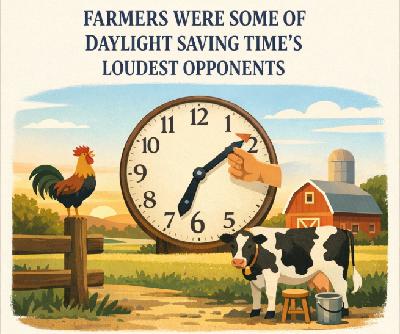
Well we all experienced a time zone change there this weekend unless you're in Arizona. And did you know that farmers were some of daylight savings times loudest opponents? When the US adopted daylight savings time in 1918, many farmers objected. Livestock and crops follow sunlight, not the clock. The shift meant darker mornings and disrupted market schedules. The time change farmers get blamed for was one they fought. Share this with someone who still blames farmers for daylight savings time. From the farmers Almanac, the newly defunct organization after being around since 1818.
The alarm has been sounding for farmers and it's getting louder. American farmers have been squeezed by artificially inflated fertilizer costs for too long. Now according to Bloomberg, the DOJ is reportedly investigating whether some of the nation's largest fertilizer companies colluded to raise prices. TCPA President Hagen Hunt said we're grateful to see this step forward. Farmers across this country have been dealing with artificially inflated input costs for far too long and an investigation will send a clear signal that those days may be numbered. Our farm families deserve a fair and competitive marketplace and we are encouraged by the reports that the DOJ is working to deliver one.
Harvest 2026 is right around the corner and Sanders Harvesting and Trucking will be looking for tractor and card operators and Class A CDL drivers. They do not participate in the H2A program so please respond if you are a US citizen. Contact Sanders Harvesting and Trucking on Facebook. You can find them right through our Facebook page at Harvest USA Report.
We're talking to Hawkan Cornia and you're from Randolph, Utah?
The outmost of the land in Woodruff, Utah, which is about 10 minutes south of Randolph.
And that Bear River that goes down on through Cache Valley and on out this great salt lake, right?
That's another fight over water because it starts in Wyoming and it's Wyoming's water and then they built the reservoir right on the border from the reservoir. It runs into Utah, which is where we irrigate out of. And then from Utah it goes back into Wyoming, then into Idaho, and then it loops around and comes and dumps into the Salt Lake. So it's kind of a big fight there because the people in Salt Lake are wanting to fill the lake up because they're getting dust on their cars. And meanwhile we're fighting to keep all the water we can here so we can grow crops and make a living and feed all the people we need to. That's another blessing too. You know this bare river running through our place is good because like I say we always have a place to water. There's some guys who if they don't own right on the Bear River and they're off, you know they only have water so many months of the year so they've either got a whole water to those places or dig a well. But like I say we're pretty fortunate to where we don't really have to worry about stalk water because the bare river runs right through that. They do say that Woodruff is a well-drillers dream because they find water more often than they don't. If you go down 300 feet pretty much anywhere you can get water. The problem is is how much and how good you know if you're trying to drill a well for a pivot and you're needing a couple second feet that's kind of hard to do but if you're just wanting to house well or like I say 30 gallons a minute to put cows on that's pretty easy to find here especially in the low bottoms most of the wells on my dad's place are only 30 or 40 feet deep.

Community Garden Management: The conversation revolves around Andy Puskas and his role in the community garden in Taber, Alberta, which is associated with the Taber Food Bank. Andy functions as a manager and liaison, organizing activities such as preparing soil and planning for the planting season. The garden utilizes compost from GFL and has volunteer and community involvement with personalized plots for individuals. The initiative aims to engage families and educate children about gardening.
Challenges and History: The garden, developed on virgin prairie land, has faced challenges like hail damage in the past but has seen improved yield each season due to enhanced soil treatment techniques. The site, previously an unused open pit mine, has been transformed into productive agricultural land.
Cowboy Poetry Gathering: Andy is also involved with the Taber Area Cowboy Heritage Society, organizing cowboy poetry gatherings as a cultural event. These gatherings offer a platform for cowboy poets and musicians to perform their original works in a welcoming environment. The society aims to revive and celebrate the history of cowboy poetry and its cultural significance through these events, promoting community involvement and education for younger generations.
Community and Cultural Significance: The efforts in both the community garden and the cowboy poetry gatherings reflect Taber's commitment to fostering community spirit, preserving cultural heritage, and providing educational opportunities, all supported by local businesses and generous donors.
First of all, a quick report on that farm rescue effort; equipment, and two incredible volunteers rolled out of Boone, Iowa, yesterday morning with a load of hay, headed south to support families impacted by the Ranger Road Wildfire in northwest Oklahoma and southwest Kansas. They are delivering hope, relief, and a reminder that no farm family stands alone in times of crisis.
The National Wheat Foundation welcomes Boyd Heilig of Moore, Montana to their Board of Directors, a former president of the Montana Grain Growers Association and MSU Ag Business grad, Boyd brings strong leadership to the foundation. They also thank Gary Broyles for his years of dedicated service to the wheat industry.
From the Nebraska Department of Agriculture, Happy National Weights and Measures Week, celebrated annually March 1-7 commemorating of the signing of the first U.S. Weights and Measures legislation into law March 2, 1799. Program inspectors check 41,000 weighing and measuring devices throughout the state, like those founded fuel stations, grocery stores, feed lots, and ethanol plants.
The American Beekeeping Federation is buzzing with excitement. They're looking for enthusiastic worker bees to join their fabulous committee.
Meet new people from different states, share ideas, and collaborate, support the beekeeping community, and have fun while making a difference. Contact the American Beekeeping Federation, and you can find that link directly on our Harvest USA report Facebook page.
Finally, don't forget the deadline in that South Dakota Department of Agriculture Natural Resources application for forestry grants that deadline is March 31st.
And remember, there are lots of crews getting ready to hire for the 2026 season.
Let's take a look at what's going on in the harvest world starting with the Nebraska Wheat Board. Leah Kristin, a Nebraska State FFA officer, shares more about what the State FFA Officer Team has been working hard on and the impact of businesses supporting FFA during the upcoming State FFA Convention in March. You can hear her on the Nebraska Wheat Report podcast. Visit that link on our Facebook page at Harvest USA Report.
It is National Ag Month in March here in the United States. Did you know that the U.S. Grains and Bio Products Council offers a holistic view of feed grain sold to overseas customers in both unprocessed and value-added forms? This calculation includes corn equivalent exports of U.S. corn, sorghum, barley, distillers dried grains with soluables, ethanol, corn gluten meal, meat, and poultry. Take a look at that chart from the USDA Outlook for Agricultural Trade on our Facebook page at Harvest USA Report.
The National Association of Wheat Growers had a great week at the Commodity Classic in San Antonio they reported, NAWG and NWF connected with farmers, USDA leaders, and industry partners to talk rising costs and push for solutions that keep wheat growers profitable. The Classic continues to be a highlight of our year, they wrote, and an important event for farmers to attend to make their voices heard. That was from the National Association of Wheat Growers.
It's almost harvest season again, and there are several companies that are hiring. If you're looking to join a Harvest Crew this year, contact either the U.S. Custom Harvesters or the Canadian Custom Harvesters today. You can find a link to both of those organizations in our search engine at agsearch.us.
National Ag Month
National Pork Day
Happy Birthday Nebraska
Our co-host David Woodruff and Bancroft, Idaho producer Kip Campbell discuss the option of canola as forage. Let's listen in...
More from our co-host, David Woodruff, with Kip Campbell...
The discussion highlighted the use of equipment like John Deere 8870 and chisel plows for farming and replanting crops such as alfalfa hay, oats, wheat, and barley.
The challenges of dealing with soil salinity, foxtail overgrowth in alfalfa fields, and effective farming techniques, including the transition to speed discs, were extensively discussed. The conversation also touched upon equipment like Vibra-shanks, traditional discs, and 24-foot chisel plows specific to dry land farming in the area.
The discussion underscored a blend of traditional animal husbandry and contemporary farming practices in maintaining sustainable farm operations.
The interview with Kansas Custom Harvester Shorty Kuhlanek discusses the unusually warm winter weather in Kansas and Texas, impacting agricultural conditions. The wheat in these areas has received some moisture, promoting growth, although there is concern about potential late freezes affecting crops. The early greening up of wheat is observed positively in Kansas, but there are worries about it becoming too big in the south, where a freeze could harm it. Despite recent cold spells causing some damage, the crops are recovering, though there is a noted need for more moisture due to insufficient rain or snow retention.
Fire hazards remain a persistent issue, notably in southern Kansas, Oklahoma, and Texas, due to typical dry and windy spells. The fires burn significant pastureland needed for livestock, posing a risk to cattle, and are often sparked by carelessness or electrical issues. While high winds exacerbate fire spread, occasional shifts to more humid winds can help dampen the fires’ intensity, providing some relief.
The conversation concludes with reflections on the unpredictable nature of agricultural work, where positive developments are rare but appreciated, and underscores the importance of continuous vigilance against environmental misfortunes such as fire and adverse weather conditions.
David Woodruff of Hale Broadcasting conducted an interview with Kip Campbell, a resident of Bancroft, Idaho, focusing on agricultural practices in the region. The discussion highlighted the use of equipment like John Deere 8870 and chisel plows for farming and replanting crops such as alfalfa hay, oats, wheat, and barley. The challenges of dealing with soil salinity, foxtail overgrowth in alfalfa fields, and effective farming techniques, including the transition to speed discs, were extensively discussed. The conversation also touched upon equipment like Vibra-shanks, traditional discs, and 24-foot chisel plows specific to dry land farming in the area.
We apologize for calling Kip by his older brother's name earlier. This interview was with Kip.
Farm Operations and Crop Types: Jensen Farms, located in Finn Castle, covers approximately 5,000 acres and cultivates a variety of crops including potatoes, sugar beets, canola, silage corn, grain corn, and wheat. Previously involved in sweet corn production, the farm discontinued it due to labor intensity and logistical challenges associated with direct sales and distribution.
Crop Performance and Management: The farm has observed favorable yields this year across its various crops. Silage corn yields were reported to be around 25 tons per acre, contributing positively to local feedlots despite logistic complexities. Roundup-resistant corn has helped manage weed control efficiently. Grain corn yields surpassed regional averages, performing at approximately 180 bushels per acre. Canola yields were good, with a preference for swathing to aid uniform drying. The management strategy also involves selecting varieties for shell resistance due to local wind conditions.
Sugar Beets and Wheat Production: Sugar beets yielded around 38 tons per acre this year, above the average yield of 30 tons. Sugar content was lower than the factory average, illustrating a trade-off between yield and sugar concentration. Wheat yields were slightly above average with different varieties cultivated, such as hard red spring and durum wheat. Straight cutting is preferred for wheat harvesting as it offers faster operations, utilizing a 45-foot header combine.
Potato Cultivation and Soil Management: Potato yields were considered satisfactory, typically ranging from 16 to 20 tons per acre. Early potatoes yield less than those harvested later, emphasizing the importance of timing in harvest operations for better yields. Efforts to prevent wind erosion include post-harvest cover crops like oats. Land characteristics vary from sandy to heavier soils, with measures in place to handle soil differences, such as speed discing with oats for ground leveling.
Interview Background: The interviewee highlighted their background from Montana, indicating familiarity with diverse soil types similar to those they manage at Jensen Farms. The conversation reflects a well-rounded approach to crop management, adapting to local environmental conditions and market demands.
The interview demonstrates an in-depth understanding of farm operations, challenges faced, and strategic choices made to enhance productivity and manage resources effectively at Jensen Farms.
The discussion with Mike Bashutski, based in Saskatchewan, revolves around the current state of agriculture affected by dry weather and ongoing wildfires, especially in the panhandle area of Oklahoma. This situation has resulted in significant losses, with wildfires consuming around 250,000 acres, impacting wheat and pasture lands, and affecting cattle grazing areas. Although there were reports of injuries to firefighters, no loss of human life has been reported.
Recent weather events, including snowstorms in Alberta extending to parts of Saskatchewan, are discussed. The snow provides temporary moisture, but its effectiveness is limited as snow in the region may not settle long enough to benefit the soil due to warm spells that cause it to melt or evaporate. The warm weather conditions interspersed with snow have created temporary wet conditions in some areas, indicating a possibility for moisture retention in the soil.

From the Oklahoma Department of Agriculture, Food and Forestry, if you are a livestock producer impacted by the wildfires in Beaver, Texas, or Woodward counties, please ensure that you're in contact with your county FSA office. Before a wildfire, maintain detailed records, use clear and distinguishable IAD methods, take land use precautions to discourage fire spread, and consider corralling animals to help with off-farm movement if necessary. During a wildfire, ensure the safety of yourself and your family, allow for animal movement if safe to do so.
Communicate with first responders and neighbors to help out livestock on your property, and use emergency identification methods, like spray paint, etc.
After a wildfire, document livestock losses, practice humane euthanasia methods, and dispose of carcasses if needed, accept emotional and mental health assistance, and apply for federal assistance.
Those are some tips from the Oklahoma Department of Agriculture, Food and Forestry, in this devastating time of wildfire in Oklahoma. Follow more on that story on our HarvestUSA Facebook page, or on our website by the same name.
And if you are an FFA supporter, the time is here again. The Tractor Supply Ccompany Paper Emblem Sale is back. Stop by your local store and grab a paper emblem at checkout from February 19th to March 2nd. Every emblem you purchase directly supports FFA, a small gesture that makes a big impact.

From Kansas Wheat
Fertilizer isn’t just another line item - it’s a globally traded commodity shaped by geopolitics, energy markets and overseas demand.
In a recent episode of Wheat’s On Your Mind, Aaron Harries talks with Corey Rosenbusch, president and CEO of The Fertilizer Institute, about why fertilizer markets feel like “three-dimensional chess” for wheat producers working on tight margins.
They break down nitrogen production, potash imports, global trade disruptions and what farmers can actually control - including the 4R framework and precision strategies that stretch every dollar further.
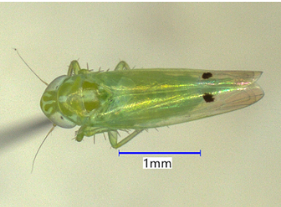
(AUSTIN, Texas) — The Texas Department of Agriculture issued an emergency quarantine Feb. 5 to protect against the two-spotted cotton leafhopper. The quarantine inspections help monitor pests that could be introduced into Texas from out-of-state agricultural shipments.
Texas Agriculture Commissioner Sid Miller said the quarantine would help safeguard the cotton, nursery and ornamental sectors.
“This pest is a ticking bomb for Texas agriculture,” Miller said. “Cotton fuels our rural economy —we can’t let it ravage yields. We’ve contained it so far, but this quarantine buys time to outsmart and crush it, protecting farmers, ranchers, and growers.”
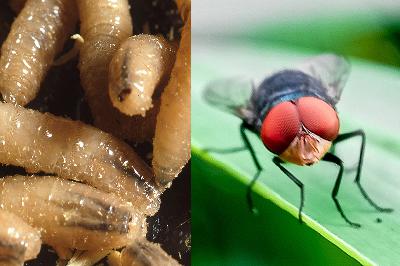
Screwworm photo from Texas Farm Bureau

Harvest Brigade and Industry History
The origins of modern-day custom harvesting in the U.S. are traced back to World War II's Harvest Brigade. Initiated by an individual from Massey Harris, this movement involved 500 combines harvesting a million acres to address labor shortages during wartime. This historical endeavor is credited with starting the Harvest Run, a seasonal practice where harvesting begins in the south and progresses northward as the seasons change. This tradition continues to attract international interest and offers a unique harvest experience in the U.S.

Comments

Download from Google Play

Download from App Store
 United States