DiscoverTravelers In The Night
Travelers In The Night
Claim Ownership

Travelers In The Night

Author: Albert D. Grauer

Subscribed: 150Played: 9,390
Share

Description

A real "Science Snack" for anyone who is interested in the extraterrestrial.
Dr. Al Grauer is a member of the Catalina Sky Survey which has led the world in near Earth asteroid discoveries for 17 of the past 19 years.
The music is "Eternity" by John Lyell.
Astronomy  Asteroids Space NASA  Comets  Earth Impact Aliens
1252 Episodes
Reverse
372E-406-Close Ones

372E-406-Close Ones

2026-01-2002:01

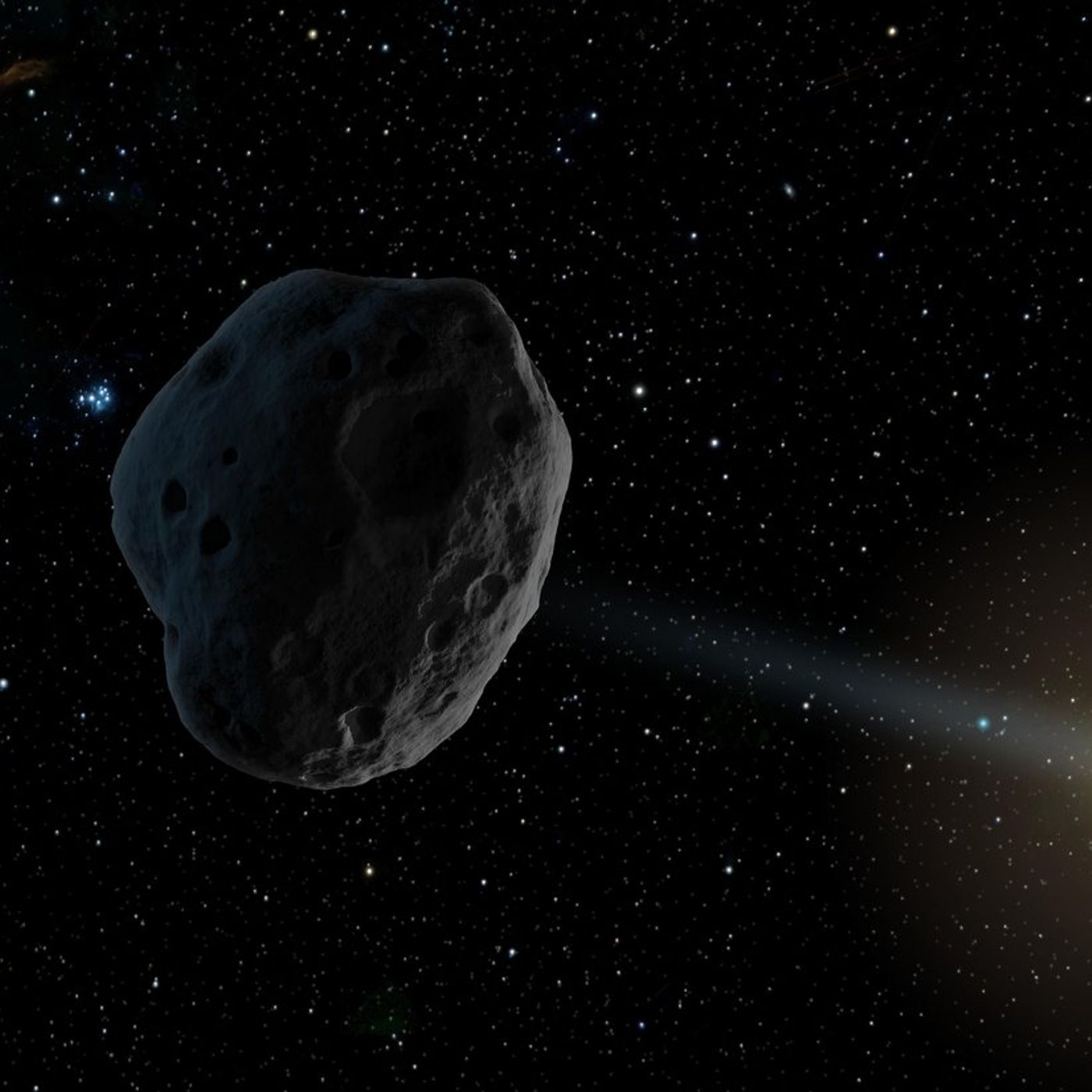
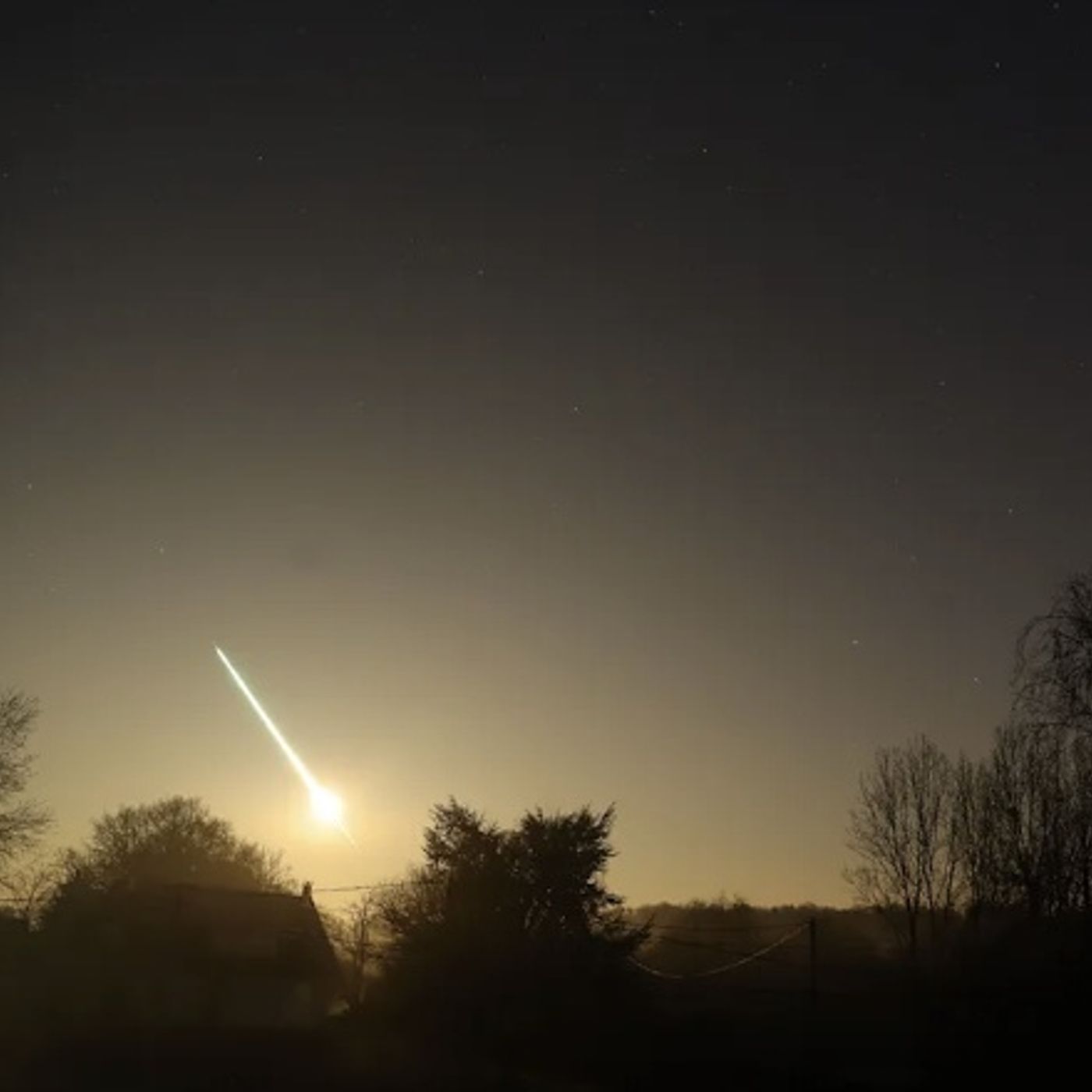
In less than 24 hours, while observing with the Catalina Sky Survey's 60 inch telescope on Mt. Lemmon, Arizona , I discovered two 25 foot diameter space rocks that theoretically can pass less than a quarter of the Moon's distance from us. After I posted my discovery observations on the Minor Planet Center's Near Earth Object Confirmation page one of them received immediate attention, as an incoming object, and was tracked by observers at 14 different observatories around the world. Scientists at the Minor Planet Center used these data to calculate it's 926 day orbital path around the Sun, estimate it's size, and give it the name 2017 TH5. 36 hours after I first spotted 2017 TH5 streaking through the night sky it came to less than 60,000 miles from the surface of our planet traveling at 7.6 miles per second. 8 hours and 49 minutes later it passed less than half a lunar distance from the surface of our moon. If 2017 TH5 would have been on an impact trajectory with Earth humans would have had time to prepare for a spectacular light show. Approximately once every 5 years a tiny asteroid like 2017 TH5 enters our atmosphere exploding at an altitude about 3 times higher than airliners fly releasing the energy of about 5,000 tons of TNT. Asteroid hunters are well on our way towards being able to issue a warning to stay away from doors and windows should a small space rock be discovered to be on an impact trajectory with planet Earth.
My Catalina Sky Survey teammate David Rankin was asteroid hunting in the evening twilight with our 60 inch telescope on Mt. Lemmon Arizona when he spotted an unknown object in the constellation of Lyra. The largest telescopes on Earth will likely track David's discovery until it becomes too faint to observe in 2027 and catch it again when it again becomes bright enough to track in 2050. Fortunately it is extremely unlikely that it will strike Earth when it again comes close to our home planet in 2052.
371E-405-Kiwi Nights

371E-405-Kiwi Nights

2026-01-1302:01

New Zealand's 4.5 million people are concentrated in three major population centers which to various degrees suffer from the modern plague of light pollution. However, most of New Zealand's large rural areas and land reserves, covering an area as large as the UK, have unpolluted natural night skies. A completely unique place to experience New Zealand's natural night sky is the Aotea [ Ah - yoh - tee - ah]-Great Barrier Island International Dark Sky Sanctuary. It encompasses New Zealand's, 110 square mile, sixth largest island, which is located about 62 miles from central Auckland. It is easily accessible by boat or a short airline flight. The island's 1000 residents are employed by agriculture and tourism. They value the natural night sky and function without externally generated electricity or street lights and fully support the preservation of their prestine night sky. In the daytime Great Barrier Island offers wonderful beaches and hikes. When the sun sets the night sky becomes alive with its own natural lights. Night sky measurements by Auckland Astronomer Nalayini [ Na - laa - i - ni] Davies and her collaborators have proved that the Great Barrier Island's natural night skies are second to none on planet Earth. Using the unaided eye, a set of binoculars, or a small telescope an observer on the Great Barrier Island is treated to spectacular views of the center of the Milky Way, the clouds of Magellan the nearest galaxies to us, the nearest stars, as well as numerous star clusters, meteors, comets, and other wonders of the natural night sky. Perhaps this unique spot deserves a place on your bucket list.
881-Dangerous Comets

881-Dangerous Comets

2026-01-0902:01

It is possible the object creating the Tunguska event in Russia 1908 which knocked down 80 million trees over an area about twice the size of New York City was a fragment of a comet or asteroid. The International Asteroid Warning Network 2025 campaign to track Comet 3L/Atlas prepares the worlds observatories for the eventual time when a comet fragment has our number on it.
370E-403-Double Comet

370E-403-Double Comet

2026-01-0602:01

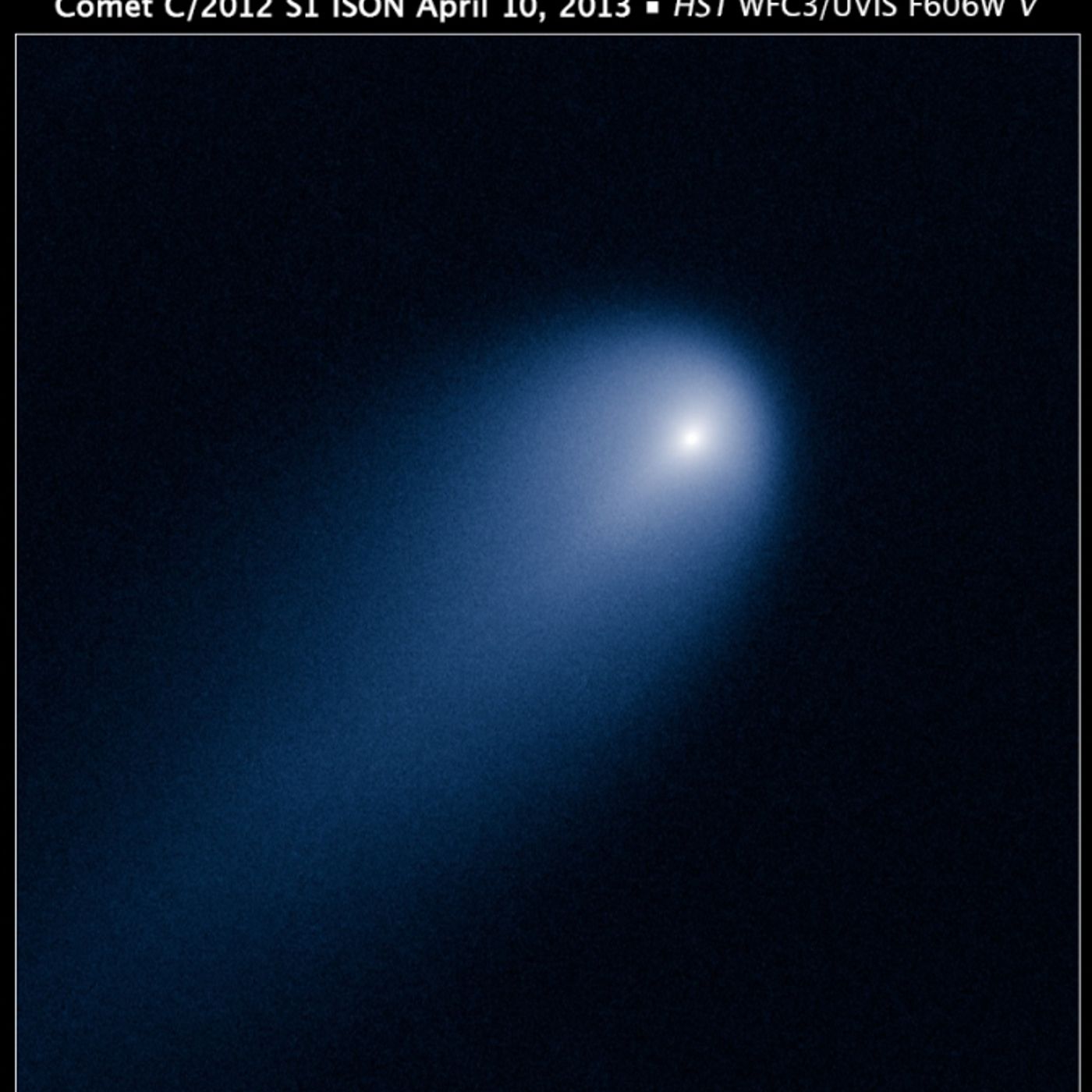
In November of 2006, University of Arizona's Spacewatch astronomers on Kitt Peak discovered a faint moving point of light in the night sky which appeared to be a garden variety main belt asteroid orbiting the Sun between Mars and Jupiter. The Minor Planet Center calculated it's orbit and gave it the name 2006 VW139. Five years later when it again moved closest to the Sun the Pan-STARRS group in Hawaii discovered that 2006 VW139 is surrounded by a gas cloud like a comet and it was given a comet designation, 288P. My Catalina Sky Survey teammate Steve Larson is a member of the team of astronomers who use the Hubble Space Telescope to observe asteroids which have comet like burps. Observations by the Hubble Space Telescope between August 2016 and January 2017 clearly show 288P to be two similar, mile diameter, asteroids orbiting each other about 60 miles apart, surrounded by a gas cloud, as they move about the Sun. The Hubble team estimates that about 5,000 years ago this strange object was formed when a rapidly rotating comet nucleus came apart into two large pieces. It's gas cloud is likely to come from volatile ices like carbon dioxide and water vapor which were liberated by solar heating. Objects like this one are very interesting since they may have had a role in bringing water to a bone dry Earth in the early days of our solar system.
My Catalina Sky Survey teammate David Rankin was asteroid hunting in the evening twilight with our 60 inch telescope on Mt. Lemmon Arizona when he spotted an unknown object in the constellation of Lyra. The largest telescopes on Earth will likely track David's discovery until it becomes too faint to observe in 2027 and catch it again when it again becomes bright enough to track in 2050. Fortunately it is extremely unlikely that it will strike Earth when it again comes close to our home planet in 2052.
369E-401-Night Vision

369E-401-Night Vision

2025-12-3002:01

Many people in our modern world rarely if ever experience night vision. To achieve this interesting state of sensory awareness you cannot look at your cell phone or any other source of bright light for 30 to 45 minutes. Your night vision comes about over time because the rod sensors in the retina of your eye undergo a chemical change when they are placed in total darkness. The process starts immediately but takes 20 to 30 minutes to get 80% of maximum sensitivity. The night vision process can be reversed in seconds by exposure to a bright light. In it's most sensitive state your eye can function with a billion times less light than is present in strong sunlight enabling you to see a candle flame from 1.6 miles away.
881-Dangerous Comets

881-Dangerous Comets

2025-12-2602:01

It is possible the object creating the Tunguska event in Russia 1908 which knocked down 80 million trees over an area about twice the size of New York City was a fragment of a comet or asteroid. The International Asteroid Warning Network 2025 campaign to track Comet 3L/Atlas prepares the worlds observatories for the eventual time when a comet fragment has our number on it.
368E-400-Roving Venus

368E-400-Roving Venus

2025-12-2302:01

Venus and Earth are similar in size, composition, density, and mass. Unfortunately, our sister planet Venus is an example of a place where green house gases have created an extreme situation. Venus's thick carbon dioxide atmosphere has a surface pressure 90 times that of Earth. It would crush a submarine. Additionally, the thick atmospheric blanket holds in the heat causing Venus's surface temperature to be 864 F, hot enough to melt lead.
Just before noon on September 1st of 1859 Richard Carrington and Richard Hodgson were making sketches of clusters of sunspots when they were nearly blinded by an intense solar flare. 17.6 hours later a geomagnetic storm thought to be caused by a solar coronal mass ejection traveling at some 1,500 miles per second slammed into the magnetic field surrounding our home planet. We missed being hit with a such large coronal mass ejection by only 9 days in July of 2012. Next time we might not be that lucky.
Dr Lance Benner of NASA's Jet Propulsion Laboratory headed up a team of scientists who used the 70 meter antenna at NASA's Goldstone Deep Space Communications Complex to bounce RADAR beams off of the asteroid Florence as it made a close approach to Earth in September of 2017. The RADAR images these researchers obtained reveal that Florence consists of a 2.8 mile diameter primary asteroid which is orbited by two small moons. Florence's two satellites appear to be between three hundred and a thousand feet in diameter and orbit the main asteroid in about 8 and 24 hours respectively. Florence is rare since there are only two other triple asteroid systems among the 16,000 Earth approaching asteroids which asteroid hunters have discovered. We would know more about Florence if Hurricane Irma had not prevented astronomers from using the giant Arecibo RADAR Dish in Puerto Rico to study it. Our curiosity will have to wait since Florence will not come very close again until September 2, 2057.
879-Lurking Asteroid

879-Lurking Asteroid

2025-12-1202:01

The Dark Energy Camera on the National Science Foundation’s Blanco 4-meter telescope on Cerro Tololo in Chile is taking near Sun twilight images to search for asteroids, hidden in the glare of our Sun, sneaking up on home planet.
366E-398-Mars Rocks

366E-398-Mars Rocks

2025-12-0902:01

At about 2AM on July 18, 2011 several people in near Tata, Morocco saw a bright fireball which was described by one of them to be initially yellow, then turned green, and finally exploded into several pieces producing two sonic booms. In October of 2011 desert wandering nomads began finding very fresh looking dark fusion-crusted stones which were radioactively dated by Dr. John Duke of the University of Alberta to be less than 5 years old. In total 15-24 lbs of meteorites consistent with a very recent fall were found in a strewn field, were whisk away to receive high prices from collectors, and named after the town of Tissint [tee.seent] about 30 miles from their discovery location.
878-Comet Fragment

878-Comet Fragment

2025-12-0502:01

My Catalina Sky Survey teammate Vivian Carvajal was asteroid hunting in the constellation of Eridanus with the 90 inch, University of Arizona’s Bok telescope on Kitt Peak when she was treated to an amazing sight. Comet COMET 240P/NEAT with a small version of itself cruising along beside it.It is virtually impossible to predict if Vivian’s fragment 240P-B will survive to make another approach to the Sun in 2033 or so.
Meteors, shooting stars, or falling stars are different names for the streaks of light in the night sky which are in reality the dying embers of tiny asteroids. These small interplanetary travelers were speeding along at between 7 and 44 miles per second when they entered the Earth's atmosphere. In space, they are called meteoroids and typically ranged in size from that of a grain of sand to perhaps ones as big as of a piece of driveway gravel. Large space pebbles can produce fireballs which are brighter than the planet Venus. Most meteors burn up 50-70 miles above you, however, a very few of them produce fragments which fall to the Earth's surface. In rare occasions meteor observers are able to walk up to such a fallen space rock which is called a fall. The best time to view meteors is generally after midnight on a clear, moonless night. You will see many more meteors in a rural area than under city lights. On nights not during a meteor shower, you may expect to view sporadic meteors at the rate of between 2 and 16 per hour. Some meteor showers produce more than 100 events per hour. Rarely you will have a chance to view a meteor storm which will give you the feeling that you are seeing the Earth move through space. In 1966 one of these storms produced a WOW inspiring 40 meteors per second. During the year, there are a dozen major meteor showers. Check out the International Meteor Organization Calendar for a complete listing of the dates of meteor showers as well as how bright the moon will be on those dates. Happy viewing.
877-Close Grazer

877-Close Grazer

2025-11-2802:01

On a busy night of asteroid hunting with the 90 inch, University of Arizona’s Steward Observatory Bok telescope on Kitt Peak in Arizona, my Catalina Sky Survey teammate Vivian Carvajal discovered 13 new Earth approaching objects. One of them now known as 2025 TF immediately got her attention as it streaked through the constellation of Pegasus. Another space rock 2020 VT4 came about 30 miles closer to the surface of our home planet giving 2025 TF second place as a grazing non impactor.
364E-396-Jupiter

364E-396-Jupiter

2025-11-2502:01

Jupiter has been observed throughout human history and is so bright that you can even spot it under the artificial light dome of one of our cities. Even so it is less than 40 years ago that we were first able to view Jupiter in detail as the Voyagers streaked by it. Jupiter contains more than twice the mass of all of the other planets, dwarf planets, asteroids, and comets in our solar system combined. Eons ago, our solar systems very own giant planet, Jupiter, appears to have cleared out the inner solar system leaving enough rocky debris to form Mercury, Venus, Earth, and Mars. Without Jupiter's action our solar system is likely to have turned out like the more than half of the planetary systems which we have found which consist of non-inhabitable super Earth sized planets orbiting closely about their host stars. In terms of the defense of planet Earth from impacting objects, Jupiter is a mixed blessing. It apparently deflects some of the long period comets out of Earth impacting orbits while sending other asteroids and comets our way. In 1770 a small comet came in from the outer solar system and passed near Jupiter. This encounter sent it straight towards Earth. Fortunately this celestial visitor missed humanity by about a million miles. After two orbits of the Sun this small comet once again passed near Jupiter and was ejected from the solar system. Look up where to find Jupiter on the internet and observe it. Jupiter is an awesome sight in binoculars or a small telescope. As you view this gas giant think about the fact that it is likely the reason you have a place to stand and air to breathe.
In a recent 60 day period asteroid hunters tracked 24 space rocks which came closer than our Moon. My team the University of Arizona’s Catalina Sky Survey operates 5 telescopes in the mountains around Tucson, Arizona. Our goal is to find objects like 2025 RM1 which are on an impact trajectory with our home planet in advance so that people in the effected area can be warned to stay away from doors and windows.
Throughout history small close approaching space rocks have been a part of our environment. Now, thanks to improved telescopes and cameras, asteroid hunters are routinely discovering these small asteroids as they pass closer than the Moon is to us. Since these tiny asteroids are only bright enough to detect for a few days out of their long, many month duration paths about the Sun, astronomers have had difficulty in determining how many of these small space rocks may exist in near Earth space. This effort received more emphasis when a house sized space rock exploded over Chelyabinsk, Russia in 2013 releasing about 10 times the energy of the Hiroshima atomic bomb. Although this asteroid was tiny compared to the one that ended the dinosaurs rule of the planet, the air blast the Chelyabinsk bolide produced caused nearly 1,500 human injuries and damaged more than 7,000 buildings. In a 2017 paper in the Astronomical Journal, Dr. David Trilling of Northern Arizona University and his group of researchers present data from the Blanco 4 meter telescope at the Cerro Tololo Inter-American Observatory in Chile which they use to estimate that there are approximately 3.2 million Earth approaching asteroids similar in size to the Chelyabinsk impactor. My team the Catalina Sky Survey uses 4 telescopes, 24 nights per month, in the mountains north of Tucson, Arizona with the goal to provide warnings for people to stay away from doors and windows should a Chelyabinsk sized space rock be on an impact trajectory with planet Earth.
Dr Uisdean Nicholson from Heriot-Watt University and his team of 9 co-authors analyze 3D seismic imaging and drill cuttings from a 1980s oil well to make a convincing case that the Silverpit crater was produced by a the impact of a 1.5 football field diameter asteroid approximately 45 million years ago.
loading
Comments 
loading