


 Claim Ownership
Insight is Capital™ Podcast
Subscribed: 24Played: 1,292
Subscribe

© 2016-2024 AdvisorAnalyst.com | All rights reserved.
Description
The official podcast of AdvisorAnalyst.com, publisher of actionable market and investment insight, commentary, analysis and practice management for investment professionals and investors.
238 Episodes
Reverse
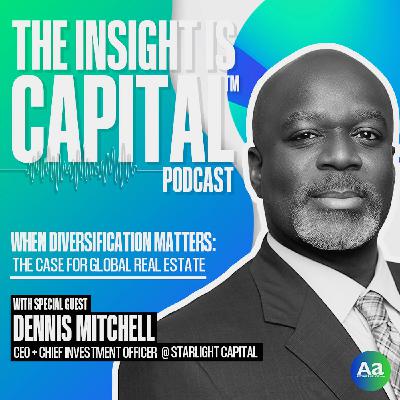
When equity markets grow concentrated and expensive, the real risk isn’t volatility — it’s failing to diversify before the cycle turns.
For years, global real estate has sat in what Pierre Daillie calls “the penalty box” — weighed down by rising rates, skepticism, and falling valuations. Yet beneath the headlines, fundamentals never broke.
In this episode of Insight Is Capital, Pierre sits down with Dennis Mitchell, CEO and CIO of Starlight Capital, to unpack why global real estate may be one of the most misunderstood — and potentially asymmetric — opportunities in today’s market.
Mitchell argues that the most important change in global real estate “has nothing to do with global real estate.” Instead, it’s about opportunity cost. With the S&P 500 trading north of 24x earnings and the “Mag 7” representing more than 30% of the index, investors face rising concentration risk — amplified by passive flows.
Meanwhile, publicly traded REITs in North America have traded at discounts of up to 30% to net asset value, even as supply-demand fundamentals strengthen across key sectors like seniors housing, data centers, industrial, and cell towers.
Mitchell breaks down real estate returns into three drivers — yield, growth, and multiple expansion — and explains why today’s combination of 4–6% yields, 3–7% internal growth, and potential mean reversion creates a compelling setup.
From demographic tailwinds in seniors housing to AI-driven infrastructure demand for data centers and towers, this conversation reframes real estate not as a rate-sensitive trade — but as a disciplined, supply-demand story hiding in plain sight.
🎯 3 Key Takeaways1️⃣ The Real Estate Story Isn’t About Rates — It’s About Opportunity CostWith equity multiples elevated and passive concentration at historic highs, the opportunity cost of not diversifying into real estate has increased materially.Concentration + passive flows + stretched multiples = asymmetric portfolio risk.2️⃣ Fundamentals Are Strong Where Supply Is ConstrainedAcross sectors like seniors housing, industrial, data centers, and towers, resilient demand meets limited supply.In Canada alone, for example, vis-à-vis seniors housing:The 70+ population is set to double by 2035~200,000 additional seniors housing units will be neededNo decade has delivered more than 73,000 unitsThat gap matters.3️⃣ Real Estate Offers a Three-Engine Return Profile
Mitchell outlines three sources of return:
Add it together, and real estate may offer predictable double-digit total return potential — with diversification benefits.⏱️ Timestamped Chapters02:30 – Volatility, geopolitics, and the reality of today’s markets
03:38 – S&P 500 concentration risk & passive investing concerns
07:58 – Interest rates vs. supply and demand fundamentals
10:05 – Why seniors housing may have the strongest fundamentals globally
13:17 – Public vs. private markets: pricing inefficiencies and diligence
14:55 – REIT privatizations & valuation gaps
18:34 – The three drivers of real estate returns: yield, growth, multiples
20:52 – AI “picks and shovels”: data centers & cell towers
22:40 – What Dennis is watching in 2026: fund flows & M&A
If markets have rewarded concentration for the past decade, this episode asks the harder question:What happens when the cycle shifts — and diversification starts to matter again? #GlobalRealEstate#REITInvesting#Diversification#IncomeInvesting#PortfolioStrategy#PassiveInvestingRisk#SeniorsHousing#DataCenterREIT#AITechnologyInfrastructure#MarketConcentration#StarlightCapital#InvestmentPodcast

If energy is destiny and stockpiles signal intent, then this episode may completely change how you see oil, gold, China, Canada—and your portfolio.
In this high-conviction macro deep dive, hosts Pierre Daillie and Mike Philbrick sit down with returning guest Doomberg to dismantle the comfortable narratives investors use to understand energy, geopolitics, and portfolio construction.
Doomberg reframes the global order through a resource-first lens: energy is destiny, stockpiles signal intent, and technology is rewriting the rules of commodities. From Venezuela and Guyana to China’s war rations, from shale’s molecular revolution to Saskatchewan’s overlooked strategic wealth, this episode challenges the assumptions underpinning the traditional 60/40 portfolio.
If the last 50 years were defined by efficiency, globalization, and financialization, the next regime may be defined by resilience, reshoring, and resource leverage.
This is not just a discussion about oil. It’s about power.
🔑 3 Key Takeaways1. Energy Is No Longer “Just Oil”
Shale has fundamentally changed hydrocarbon markets. Crude oil, natural gas, and natural gas liquids are co-produced — meaning price signals can no longer be analyzed in isolation.
• What CNBC calls “oil” is no longer just crude. Natural gas arbitrage, LNG flows, and AI-driven electricity demand are quietly reshaping global pricing dynamics.2. The World Is Quietly Re-IndustrializingDoomberg argues we are witnessing a regime shift:• Deflationary outsourcing → inflationary reshoring
• Strong dollar orthodoxy → weaker dollar tolerance
• Efficiency → resilienceTrump’s trade posture, sovereign capital repositioning, gold’s breakout, and private infrastructure flows all point toward one theme: industrial renaissance is attempting to replace financial engineering.
Implication: The classic 60/40 portfolio may be structurally underexposed to energy, infrastructure, and real assets.
3. China Is Acting Like a Wartime EconomyChina is stockpiling oil, metals, grains, and gold at unprecedented levels. That behavior can be interpreted two ways:• Defensive hardening
• Pre-offensive preparation
Either way, the signal is clear: global trade assumptions are shifting toward fragmentation and strategic leverage.
Implication: Resource-rich jurisdictions (e.g., Saskatchewan) become strategically relevant in a “might-is-right” world.🕒 Timestamped Chapters00:00 – Introduction: Energy Is Destiny
01:56 – Venezuela, Guyana & Resource-First Thinking
05:08 – Why Markets Misprice Geopolitical Risk
08:07 – Europe’s Deindustrialization Problem
12:06 – Weak Dollar, Gold & the Industrial Pivot
14:30 – Political Constraints & Capital Cycles
20:24 – How to Separate Signal from Propaganda
26:10 – The Molecular Shift in Oil Markets
33:18 – Natural Gas vs Crude: The Arbitrage Story
37:52 – Propane, Engine Switching & Energy Substitution
40:17 – Energy Exposure & the 60/40 Portfolio
46:01 – Why Producers Are Price Takers
48:25 – China’s “War Rations” Strategy
53:29 – Entering a “Might Is Right” Regime
56:03 – Inverting the 50-Year Investment Playbook
01:05:00 – Saskatchewan: Strategic Resource Wealth
01:13:21 – Canada, Culture & Capital Formation
Where to find Doomberg - https://doomberg.com
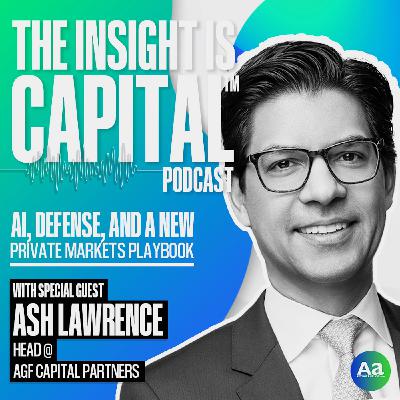
Private markets are quietly being rewritten in real time—and in this conversation, Ash Lawrence explains why AI, private credit, and defence could define who wins and who gets left behind in 2026.
In this episode of Insight is Capital, host Pierre Daillie sits down with Ash Lawrence, Head of AGF Capital Partners, to unpack AGF Capital Partners’ 2026 - The Annual - Private Markets Outlook.
Against a backdrop of geopolitical volatility, AI acceleration, shifting credit dynamics, and renewed defence spending, Lawrence lays out five structural themes reshaping private equity, private credit, and alternative investments. The conversation explores how allocators can separate signal from noise, manage emerging concentration risks, navigate liquidity mismatches in retail private markets, and position portfolios for a world where traditional assumptions no longer apply.
From AI infrastructure and mid-market private credit to defence, security, and the evolving role of private capital in public objectives, this episode offers a clear-eyed, practitioner’s view of where private markets are headed—and what investors need to understand to participate intelligently.
🔑 Three Key Takeaways• AI Is Everywhere—and That’s the Risk AI is no longer a standalone theme; it touches venture, infrastructure, real estate, and operating businesses alike. Investors must assess total portfolio AI exposure and balance direct bets with infrastructure-level participation to avoid unintended concentration risk.• Private Credit’s Sweet Spot Is Moving Down-Market As large-cap sponsor-backed lending becomes crowded and commoditized, opportunity is shifting toward mid- and lower-mid-market private credit, where proprietary deal flow, stronger covenants, and greater repayment optionality can improve risk-adjusted returns.• Defence and Security Are No Longer Niche Rising geopolitical tensions, technology-driven procurement changes, and massive funding needs are opening defence, cybersecurity, and sovereign infrastructure to private capital. The opportunity is real—but manager expertise and risk controls are critical.⏱️ Timestamped Chapters00:00 – Introduction - Private markets, alternatives, and AGF Capital Partners’ 2026 outlook
01:10 – Separating Signal From Noise - Why geopolitical “bogeys” can’t be forecast—and shouldn’t dominate portfolio decisions
04:10 – AI in Private Markets - Thematic concentration risk, infrastructure plays, and portfolio-level exposure
10:33 – Private Credit’s Structural Shift - Why capital is moving toward mid- and lower-mid-market lending
16:11 – The Private Equity Deal-Flow Logjam Rates, valuation gaps, and what it will take to restart transactions
26:32 – Defense & National Security Investing Technology, geopolitics, and the expanding definition of defense
34:51 – Retail Investors & Liquidity Mismatch - Why structure matters—and what the recent redemption suspensions are teaching the market
40:47 – Closing Thoughts - Why 2026 could mark a reset year for private markets
#PrivateMarkets#PrivateEquity#PrivateCredit#AlternativeInvestments#AIInvesting#DefenseInvesting#PortfolioConstruction#CapitalAllocation#InstitutionalInvesting#InsightIsCapital
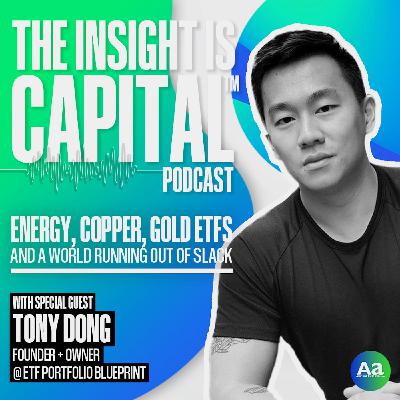
When commodities stop behaving like trades and start behaving like truth detectors, portfolios—and advisors—need to rethink everything.🎙️ Episode SummaryIn this wide-ranging deep-dive, host Pierre Daillie welcomes back Tony Dong, Founder of ETF Portfolio Blueprint, to pressure-test the most common misconceptions about commodities investing.Rather than treating commodities as volatile, short-term trading instruments, Tony reframes them as strategic portfolio diversifiers—assets whose value lies in low correlation, structural supply constraints, and long-term geopolitical realities.Together, Pierre and Tony walk through energy, copper, gold, and silver—unpacking how ETFs actually deliver exposure, where investors get tripped up by outdated narratives, and why narrow, intentional allocations make sense. The discussion ultimately widens into geopolitics, multipolar power dynamics, and why ignoring politics is no longer a luxury for investors. 🔑 3 Key TakeawaysVolatility isn’t the enemy—correlation is the real story
Commodities can be volatile on their own, but when they move differently from stocks and bonds, they can reduce portfolio risk and create a rebalancing premium when sized and managed properly.Not all commodities are created equal—structure matters
Energy equities are increasingly driven by balance sheets and capital discipline, copper faces unavoidable supply bottlenecks tied to electrification, and gold remains uniquely supported by central-bank demand. Treating them as interchangeable “inflation hedges” misses the point.Narrow beats broad for most investors
Tony argues that focused commodity exposure—gold, copper, or energy you actually understand—is easier to hold through volatility than broad commodity ETFs with mixed drivers, roll-yield drag, and tax complications.⏱️ Timestamped Chapters00:00 – Why commodities are misunderstood02:20 – Volatility vs. correlation: the portfolio math advisors miss03:45 – Futures, contango, and why old commodity ETFs disappointed04:45 – Energy ETFs: geopolitics vs. fundamentals08:30 – Capital discipline, buybacks, and M&A in Canadian energy10:10 – Copper’s biggest misconception: demand vs. supply reality13:00 – Copper exposure: physical metal vs. mining equities16:00 – Is a copper supercycle real—or reflexive?18:30 – Multipolar geopolitics and why resources matter more now25:10 – Gold vs. silver: false equivalency explained29:45 – Broad commodity ETFs vs. targeted allocations31:00 – Final thoughts: why portfolios don’t exist in a vacuum#Commodities#CommodityETFs#PortfolioDiversification#GoldInvesting#CopperInvesting#EnergyETFs#RealAssets#ETFInvesting#WealthManagement#CanadianInvestors#MacroInvesting#GeopoliticsAndMarkets#AdvisorEducation
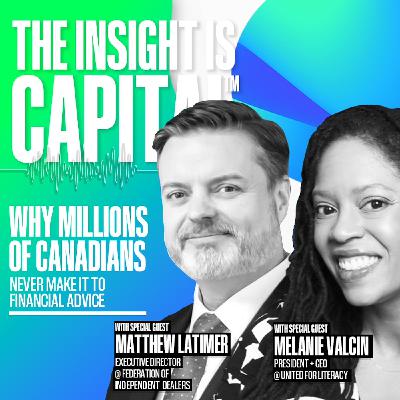
In this episode of Insight Is Capital, host Pierre Daillie sits down with Mélanie Valcin, President and CEO of United for Literacy, and Matthew Latimer, Executive Director of the Federation of Independent Dealers, for a powerful conversation at the intersection of literacy, financial advice, and economic inclusion.Together, they unpack a sobering reality: one in five working-age Canadians struggles with basic literacy, a barrier that quietly cascades into poor financial outcomes, limited access to advice, workforce stagnation, and rising social costs. Valcin shares on-the-ground stories from communities across Canada—food banks, mining towns, and correctional facilities—illustrating how targeted, trust-based literacy programs can rapidly transform lives. Latimer brings the financial lens, explaining how low financial literacy leaves Canadians vulnerable to costly mistakes, scams, and long-term retirement risk, while also constraining the reach and effectiveness of professional financial advice.The conversation makes a compelling case that literacy—reading, digital, and financial—is not a “soft” social issue, but core economic infrastructure, and argues for a coordinated national strategy that brings together government, educators, industry, and financial advisors themselves.3 Key Takeaways• Literacy Is Economic Infrastructure Improving literacy by just 1% could add $60–$90 billion to Canada’s GDP, while simultaneously reducing pressure on social services and the justice system.• Financial Literacy Gaps Lock People Out of Advice Fewer than two-thirds of Canadians can answer basic questions about interest, inflation, or diversification—leaving millions unable to engage confidently with advisors, savings tools, or retirement planning.• Local, Human-Centered Solutions Work Literacy programs succeed when they meet people where they are—community centers, workplaces, food banks—and when advisors and professionals use clear language instead of jargon.Chapters00:00 – Why Literacy Is Canada’s Hidden Economic Crisis Pierre sets the stage: literacy as a foundation for financial and social participation.02:20 – Meet the Guests: Literacy and Financial Advice Collide Introductions to Mélanie Valcin and Matthew Latimer.05:20 – One in Five Canadians Can’t Read at a Functional Level The scale of the problem—and why it’s getting worse.12:40 – How Community-Based Literacy Programs Change Lives Real-world examples from food banks and workplaces.15:10 – A Mining Town Story: Literacy as Career Mobility How six weeks of digital literacy unlocked advancement.21:00 – Literacy, Incarceration, and Systemic Inequality Why access—not effort—is often the missing link.29:50 – Financial Literacy: The Cost of Not Understanding Money RRSPs, TFSAs, and the silent damage of confusion.33:30 – Scams, AI, and the Rising Risk to Retirement Security Why low literacy magnifies modern financial threats.40:30 – Clear Language and the Role of Advisors How advisors can bridge the gap through education and outreach.45:15 – A Call to Action: National Strategy & Community Involvement Why Canada needs a coordinated literacy push—now.#FinancialLiteracy #LiteracyMatters #AccessToAdvice #CanadianEconomy #InvestorEducation #FinancialInclusion #RetirementPlanning #ClearLanguage #EconomicOpportunity #InsightIsCapital
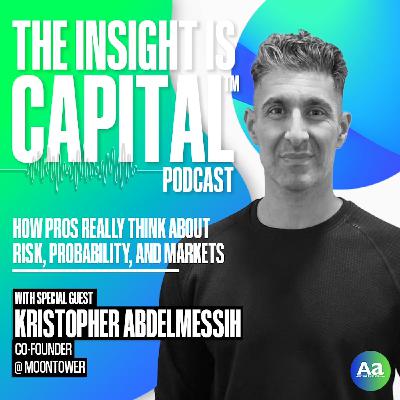
In this wide-ranging and intellectually rich conversation, host Pierre Daillie sits down with veteran options trader, market maker, and probabilistic thinker Kris Abdelmessih for a deep exploration of how markets really work beneath the surface—and how investors can think more clearly in a world dominated by uncertainty, noise, and emotion.
Drawing on more than two decades of experience spanning Susquehanna International Group, proprietary commodity trading, and portfolio management at Parallax, Abdelmessih explains why options markets reveal truths that stock prices alone cannot, how poker shaped his understanding of risk and decision-making, and why probabilistic thinking—not prediction—separates professionals from amateurs.
The discussion moves seamlessly from trading pits and market structure to behavioral bias, prediction markets, volatility, and education, culminating in a thoughtful explanation of Moontower, Abdelmessih’s platform designed to help investors understand whether options are cheap, expensive, or inappropriate for a given thesis.
This episode is less about “what to buy” and more about how to think—about risk, information, and the difference between being right and making money.
🔑 Three Key Takeaways1️⃣ Options Markets Are the True Information MarketStock prices are two-dimensional snapshots. Options markets, by contrast, embed the market’s full probability distribution—revealing not just where investors think prices may go, but how violently and under what conditions. This makes options markets a powerful lens for understanding hidden risks and asymmetric outcomes.
2️⃣ Good Decisions Can Still Lose—And That’s the PointDrawing parallels between poker and trading, Abdelmessih emphasizes that outcomes are noisy, even when decisions are sound. Professionals focus on expected value, risk sizing, and repeatability, not short-term wins or losses. This mindset is critical for surviving low-signal environments like financial markets.
3️⃣ Prediction Markets and Volatility Thinking Will Matter MoreMarkets aggregate information better than opinions. From CEO resignations to geopolitical outcomes, prices often reveal consensus faster—and more accurately—than pundits. Understanding volatility, probability, and conditional outcomes will become increasingly important as prediction markets and derivatives continue to evolve.
⏱️ Timestamped Chapters01:15 – Kris Abdelmessih’s career path: SIG, commodities, Parallax05:10 – From Cornell to trading floors: curiosity as a career catalyst24:30 – Poker, probability, and Bayesian thinking at Susquehanna29:20 – Why being “right” doesn’t matter in markets37:00 – Market making vs. portfolio management: different risk shapes43:00 – Trading oil, gas, and the chaos of pit trading48:00 – Why specialization is both powerful and dangerous58:30 – What Moontower is—and why most investors misuse options1:02:00 – How options reveal hidden distributions in stock prices1:08:00 – Prediction markets, truth, and market-based consensusMore on Kris AbdelmessihKris Abdelmessih on Linkedin - https://www.linkedin.com/in/kristopher-abdelmessih-63b1b1/Moontower.ai - https://www.moontower.ai/Moontower Substack - https://moontower.substack.com/ #OptionsTrading#MarketStructure#ProbabilisticThinking#Volatility#RiskManagement#BehavioralFinance#PredictionMarkets#InvestingMindset#FinancialEducation#InsightIsCapital
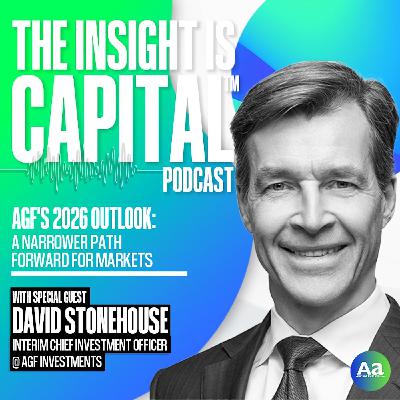
In this episode of Insight Is Capital, host Pierre Daillie sits down with David Stonehouse, Interim CIO and Head of North American Specialty Investments at AGF Investments, for a wide-ranging but grounded discussion on what lies ahead for investors as the cycle matures.Stonehouse frames 2026 as a constructive but narrower environment—one supported by global monetary easing, rising fiscal stimulus, and resilient earnings growth, yet constrained by elevated valuations, softer labor markets, and geopolitical uncertainty. The conversation carefully unpacks how tariffs have shifted from an economic “earthquake” to a lingering aftershock, why inflation fears may be overstated near-term, and how investors can think about regional diversification beyond a heavily concentrated U.S. market.Rather than offering bold predictions, the discussion emphasizes flexibility, balance, and readiness—highlighting why equal-weight equity exposure, selective credit, emerging markets, and a strategic cash buffer may matter more than ever as uncertainty rises but opportunity persists.🔑 3 Key Takeaways2026 looks constructive—but with less room for error. Global easing cycles, fiscal stimulus, deregulation, and healthy earnings support risk assets, but elevated valuations and optimistic sentiment increase vulnerability to shocks.Tariffs are no longer a shock, but still a drag. The biggest tariff surprise is behind us; clarity—not resolution—matters most now, allowing businesses and consumers to adapt even as trade frictions persist.Diversification and optionality matter more than conviction. With U.S. equities richly valued after a long run, Stonehouse sees relative opportunity in emerging markets, Japan, and potentially Canada—while cash provides flexibility if volatility returns.⏱️ Timestamped Chapters• 00:00 – Markets heading into 2026: momentum with less margin for error• 02:00 – David Stonehouse’s career path and investment philosophy• 03:00 – The six macro tailwinds shaping 2026• 08:00 – Tariffs: from economic earthquake to manageable aftershocks• 12:00 – Labor markets, immigration, AI, and the “no-hire, no-fire” economy• 17:00 – Fiscal stimulus, affordability pressures, and the K-shaped economy• 22:00 – Central banks, bond markets, and the myth of ‘new QE’• 31:00 – Inflation, disinflation, and long-term yield risks• 38:00 – Why equities can still rise—but valuations matter• 43:00 – Regional opportunities: U.S., Canada, emerging markets, Japan• 52:00 – Portfolio positioning: equities, fixed income, credit, and cash• 55:00 – Final thoughts on risk, resilience, and flexibility #InsightIsCapital #MarketOutlook2026 #MacroInvesting #PortfolioStrategy #AGFInvestments #DavidStonehouse #CentralBanks #TariffsAndTrade #EquityMarkets #FixedIncome #EmergingMarkets #AdvisorInsightsCopyright © AdvisorAnalyst
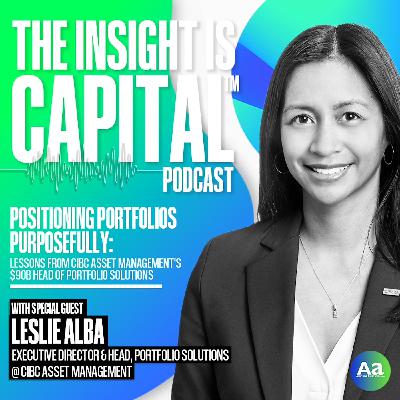
Explore the evolving world of portfolio construction with Leslie Alba, CFA, CIBC Asset Management's $90-billion Head of Portfolio Solutions. Discover how to move beyond traditional diversification and embrace a total portfolio approach, balancing risk exposures for uncertain markets. Learn actionable insights for managing expectations and navigating market volatility.
In This Episode:00:00 Introduction to Leslie Alba
02:16 Leslie’s Career Journey and Philosophy
06:00 Promising and Challenging Market Dynamics
08:16 Bonds: Diversification and 60/40 Limitations
11:48 Total Portfolio Approach and Regime Shifts
16:42 Evolving Capital Market Assumptions
23:29 Purpose-Driven Portfolio Construction
30:18 Overcoming Dogmatism and Risk Tolerance
35:02 Private Markets and Investment Selection
39:30 Total Investment Solutions for Advisors
44:22 Behavioral Finance and Staying Invested
50:21 CIBC’s Client-Centric Value Proposition
Key Takeaways:Rethink Diversification: Understand that traditional 60/40 portfolios may not offer sufficient defensive positioning due to overlapping risk factors.Adopt a Total Portfolio Approach: Manage portfolios holistically, focusing on achieving client objectives and balancing risk exposures rather than isolated asset classes.Embrace Alternatives: Consider diversifying into alternatives to reduce correlation and economic risk, as they react differently in various market conditions.Prioritize Purpose: Anchor portfolio design around client objectives and the unique purpose each asset class or strategy serves to achieve those goals.Manage Behavioral Biases: Equip clients with insights and plans to stay invested and calm during market volatility, mitigating emotional decision-making.Resources Mentioned:Connect With Leslie Alba:
LinkedIn
Subscribe to Insight is Capital: Hit the Subscribe button
Apple Podcasts: https://podcasts.apple.com/ca/podcast/insight-is-capital-podcast/id1270978994
Spotify: https://open.spotify.com/show/3EXEqj0Vv12rp8bLPPTk6X
#investmentstrategy #portfoliomanagementservices #assetallocation #financialplanning #portfoliomanagement
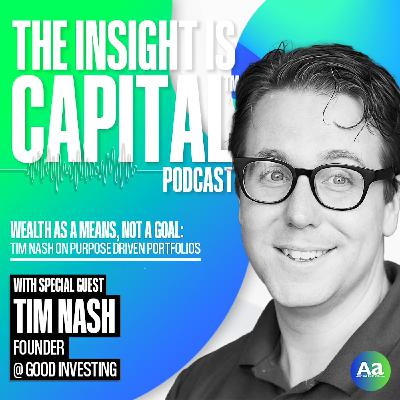
In this wide-ranging and human conversation, host Pierre Daillie sits down with Tim Nash, Founder & CEO of Good Investing, to explore what it really means to invest with intention in an era of political polarization, ESG backlash, and growing client skepticism toward traditional finance.
Drawing on more than 15 years of experience in sustainable investing, Tim reframes the debate around ESG, impact investing, and responsible capital allocation. Rather than positioning sustainability as a trade-off against returns, he argues that money is best understood as a means—a tool to support security, freedom, stability, and well-being—rather than an end in itself.
The discussion moves well beyond product labels. Tim clearly maps the spectrum of sustainable investing approaches, from divestment and ESG integration to shareholder stewardship, thematic investing, and deep impact investments such as community bonds. Along the way, Pierre and Tim unpack why many advisors struggle with these conversations, how values alignment drives trust and client retention, and why listening—not judgment—is the most critical advisory skill in today’s environment.
This episode is essential listening for advisors navigating generational wealth transfer, evolving client values, and the widening gap between what investors want and what the industry often delivers.
🔑 Key Takeaways
1️⃣ ESG Isn’t Dead—The “Tourists” Are
Tim explains that the recent backlash against ESG has actually strengthened sustainable investing by flushing out greenwashing. What remains is a more serious, informed, and values-driven core of investors and practitioners committed for the right reasons.
2️⃣ Money Is a Tool, Not an Identity
A central theme of the conversation is the idea that net worth is not self-worth. Tim reframes investing as a means to support life goals like freedom, security, leisure, and purpose—an insight that reshapes how advisors should approach planning conversations.
3️⃣ Advisors Win by Listening, Not Convincing
From hydrogen stocks to community bonds, clients don’t need advisors to agree with them—they need to feel heard. Dismissing values-based ideas is one of the fastest ways to lose trust, especially with younger investors and inheritors.
⏱️ Timestamped Chapters
00:00 – Introduction: Tim Nash’s journey and the philosophy behind Good Investing
02:30 – ESG backlash, politics, and why “ESG tourists” have left the building
06:15 – The real debate: growth at all costs vs. money as a means to well-being
10:00 – Breaking down sustainable investing: divestment, ESG, stewardship, impact
15:30 – Impact investing explained: community bonds, blended returns, and “recyclable philanthropy”
22:30 – Why purpose matters more than performance for impact allocations
27:00 – The advisor’s challenge: trust, compliance, and values-driven clients
33:00 – The massive gap between client demand and advisor action
38:30 – Wearing different hats: empathy, diversification, and client-led decisions
46:20 – Greenwashing, proxy voting, and what “real” ESG looks like
52:20 – The industry skills gap: EQ vs. IQ in modern advising
57:00 – The most powerful onboarding question: “What’s important about money to you?”
01:03:00 – The future of responsible and impact investing
01:06:40 – Where to find Tim Nash and Good Investing
#SustainableInvesting #ImpactInvesting #ESG #ValuesBasedInvesting #FinancialAdvisors #WealthWithPurpose #EthicalInvesting #AdvisorInsights #GoodInvesting #MoneyAndMeaning
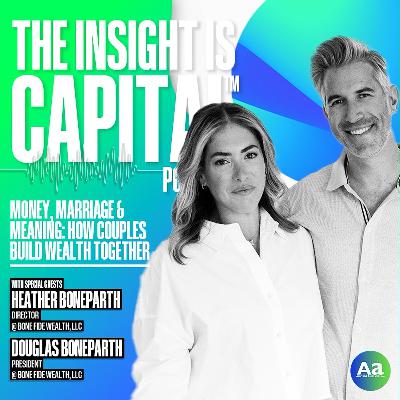
Featuring Heather & Douglas Boneparth, authors of Money Together
What really happens when love, money, ambition—and sometimes resentment—share the same address?
In this deeply honest and refreshingly candid episode of Insight Is Capital, host Pierre Daillie sits down with Heather and Douglas Boneparth, the powerhouse couple behind Bone Fide Wealth and co-authors of the bestselling book Money Together.
Heather’s journey from corporate attorney to financial storyteller and Doug’s rise as one of today’s most recognizable financial planners form the backdrop for a conversation that goes far beyond spreadsheets. They open up about the real dynamics inside modern relationships: shifting power, unseen labor, income imbalances, ambition, fairness, and the emotional landmines that determine whether couples thrive—or quietly fracture.
Key TakeawaysHeather and Doug reveal how unspoken expectations, shifting power dynamics, and invisible workloads slowly erode trust when couples aren’t talking honestly about what’s changing in their lives.True fairness means “making room” for each other—emotionally, professionally, and financially—as needs, seasons, and capacities evolve.Quarterly money dates, honesty about risk tolerance, and a willingness to stretch outside comfort zones create the compounding effect that strengthens relationships over decades.This episode is a must-watch for couples, advisors, and anyone seeking a healthier, more intentional relationship with money—and with each other.
👉 Order the book:https://domoneytogether.com
👉 Subscribe to their newsletter, The Joint Account:https://readthejointaccount.com⏱️ CHAPTERS
00:00 – Welcome
00:56 – Meet Heather & Doug
02:20 – From law to financial storytelling
03:09 – Doug on building Bone Fide Wealth
04:29 – Balancing work, family & online presence
05:48 – Chaos, organization & compromise
07:00 – Discomfort as a sign of growth
08:21 – Risk tolerance inside a marriage
09:12 – The pandemic inflection point
11:48 – Identity, resentment & invisible labor
12:43 – The ultimatum that changed everything
14:30 – How the book Money Together was born
16:26 – What couples aren’t saying about money
18:16 – Vulnerability & honesty in relationships
21:52 – Why clients don’t reveal everything at first
23:09 – How advisors can foster honest conversations
25:45 – Slow, gentle financial dialogue
29:18 – Fairness vs. equality
33:49 – Workloads, seasons & avoiding scorekeeping
36:51 – How resentment communicates without words
38:25 – Collective ambition & shared power
39:55 – Trust, money dates & compounding
44:24 – What couples should remember—20 years later
46:37 – Where to find the book & newsletter
47:10 – Closing reflections
⭐ KEY THEMESMoney & relationshipsPower dynamics inside couplesCommunication breakdownsShared ambition & fairnessEmotional dimensions of financial planningWhy advisors must go beyond numbersBuilding a resilient financial partnershipTrust, teamwork & long-term growth📣 FOLLOW & SUBSCRIBE
If you enjoyed this conversation, hit LIKE, SUBSCRIBE, and turn on notifications for more deep, human, and practical conversations with leaders in wealth, finance, psychology, and behavioral insights.
#MoneyTogether #DougBoneparth #HeatherBoneparth #FinancialCouples #RelationshipFinance #MoneyAndMarriage #JointFinances #MillennialMoney #FinancialWellness #PersonalFinanceTips
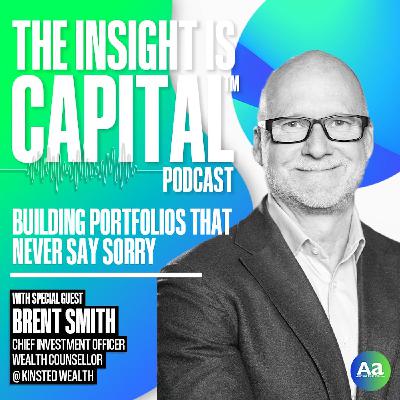
In this illuminating episode of Insight is Capital, host Pierre Daillie sits down with Brent Smith, CIO of Kinsted Wealth, for a deep dive into how private investors can now build truly institutional-style portfolios. Smith—who spent decades leading Franklin Templeton’s Multi-Asset Strategies group before co-founding Kinsted—shares a masterclass on the evolution from the 60/40 portfolio to a comprehensively diversified portfolio structure that mirrors the strategies of pension funds and endowments.This is a conversation about rethinking diversification, embracing patient capital, and building the kind of portfolio resilience engendered by institutional and private wealth management. Smith unpacks how Kinsted’s approach to portfolio design, liquidity, and alpha generation is quietly transforming how advisors and their clients think about wealth, access, and opportunity.💡 3 Key TakeawaysFrom 60/40 to Institutional Thinking
“If you really want a true institutional-style diversified portfolio, you have to embrace the private markets.” Smith explains how Kinsted rebuilt its platform around public, private, and alternative assets to reflect how pensions like CPP and endowments like Yale invest.The Power of Patient Capital
Smith calls it “the patience dividend.” Investing in drawdown funds like Brookfield’s Global Transition Fund requires long-term commitment—but it’s how institutions extract real value. “You require a lot of patience when you’re investing in private assets,” he says. “Ultimately, it’s going to come.”Portable Alpha for Private Wealth
Through a bespoke partnership with Morgan Stanley, Kinsted built a multi-strategy hedge fund platform inside its global equity pool—targeting MSCI World +4–6% returns with near-zero beta. “Everyone’s doing this in the institutional space,” Smith notes, “just not in the high-net-worth space.”📍 Timestamped Chapters00:00 – Introduction: From democratization to institutionalization of investing
02:30 – Brent Smith’s career journey: From Franklin Templeton to Kinsted Wealth
05:00 – The behavior gap in diversification and the problem with FOMO
08:00 – Re-engineering 60/40: The 50/30/20 evolution
11:00 – Why private markets are the next frontier
15:00 – How Kinsted built access to institutional-grade assets
20:00 – The patience of private investing: Brookfield and beyond
25:00 – Private market myths and education gaps
33:00 – Data centers, energy transition, and thematic private investing
40:00 – The liquidity illusion: Long-term capital vs short-term fear
47:00 – The relationship premium: Access through trust and time
55:00 – Portable alpha and structural alpha explained
1:07:00 – Partnering with advisors: Building the next-gen private platform
1:11:00 – The future of advice: Proactive vs reactive
1:13:00 – Inflation, valuations, and the end of the Fed Put
1:17:00 – Closing thoughts: Patient capital and the pension mindset #InsightIsCapital#BrentSmith#KinstedWealth#PrivateMarkets#InstitutionalInvesting#PortfolioDiversification#Alternatives#PortableAlpha#PatientCapital#InvestmentStrategy#WealthManagement#AdvisorEducation#PensionStyleInvesting#PierreDaillie#FinancialAdvisors#GlobalMarkets#EndowmentModel#PrivateEquity#PrivateCredit#HNWInvesting
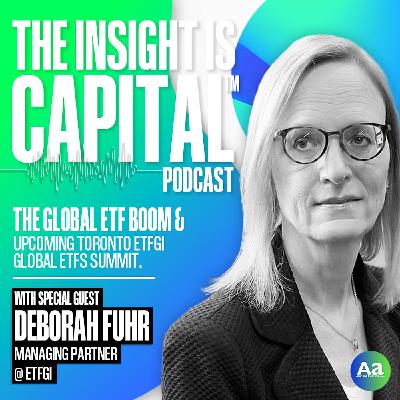
In this episode of Insight is Capital, host Pierre Daillie welcomes Deborah Fuhr, one of the world’s foremost authorities on ETFs and the Founder and Managing Partner of ETFGI. Together, they explore the explosive growth of the global ETF industry—now surpassing $18.8 trillion in assets—and what this means for advisors, investors, and the evolving landscape of financial innovation.Deborah shares her unique perspective ahead of the 7th Annual ETFGI Global ETF Insights Summit in Toronto, offering deep insight into the democratization of investing, the rise of active and structured ETFs, the role of women and wealth transfer, and the next wave of transformation—from tokenization to digital assets.🗝️ 3 Key Takeaways• ETFs as the Great Equalizer: ETFs have become the most democratic investment vehicle ever created—used by sovereign funds, hedge funds, institutions, advisors, and retail investors alike—all accessing identical exposures and costs.• The New Growth Drivers: The next leg of ETF expansion will be fueled by retail investors, women, and retirees. As trillions in wealth transfer to women, education and accessibility will define the future of advisory relationships.• Innovation and the Future of Wrappers: The ETF universe is expanding into active, structured, and tokenized forms. Expect continued growth from mutual fund conversions, crypto integration, and AI-driven portfolio design—with global ETF assets potentially reaching $52 trillion by 2030. ⏱️ Chapters00:00 – Introduction: Meet Deborah Fuhr and the ETFGI story.01:40 – Global ETF Landscape: $18.8T milestone and what it means.03:00 – Democratization of Investing: From sovereign funds to retail.06:00 – The Canadian ETF Advantage: Why local listings matter.08:30 – Women, Wealth Transfer & Retirement: The coming tidal shift.11:30 – The ETFGI Summit Preview: Key themes and regulatory updates.14:30 – The Rise of Active & Systematic ETFs: Myths and opportunities.18:00 – Women in ETFs: How mentorship and diversity drive performance.21:00 – Record ETF Inflows & Market Dynamics: What’s fueling the boom.25:00 – The Next Frontier: Tokenization, AI, and global ETF expansion.33:00 – Rethinking Diversification: How ETFs reshape portfolio design.36:00 – How to Attend the Toronto Summit: Free registration & CE credits.Join us for this insightful conversation ahead of the ETFGI Global ETF Insights Summit Toronto 2025—where advisors, regulators, and innovators will redefine what’s next in the ETF ecosystem. Don’t miss your chance to learn, network, and earn CE credits.Register now to attend our 7th annual ETFGI Global ETFs Insights summit – Canada</strong> on December 9th at Borden Ladner Gervais LLP (BLG)’s office!#ETFGI #DeborahFuhr #ETFInsights #ETFSummitToronto #GlobalETFGrowth #AdvisorAnalyst #InsightIsCapital #ETFs #ActiveETFs #Tokenization #WomenInFinance #WealthTransfer #FinancialAdvisors #ETFInnovation #PortfolioConstruction
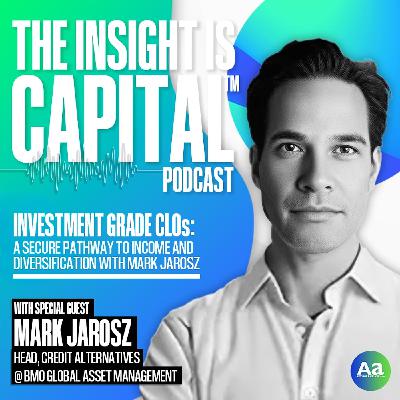
In this episode of Insight is Capital, Mark Jarosz, Head of Credit Alternatives at BMO Global Asset Management, joins us to demystify the world of Collateralized Loan Obligations (CLOs) — a sophisticated yet increasingly accessible asset class, now reshaping how investors think about income, risk, and portfolio diversification.Jarosz explains how CLOs are structured, how they differ from the infamous CDOs of 2008, and why they’ve quietly become a go-to for institutional investors seeking floating-rate income with resilience across market cycles. With the launch of BMO’s CLO ETFs (tickers: ZAAA and ZBBZ), everyday investors now have access to institutional-quality fixed income exposure for the first time in Canada.From the mechanics of tranche hierarchies and over-collateralization to the yield opportunities in BBB-rated tranches, we cut through the jargon to reveal why CLOs are becoming an essential building block for diversified income portfolios.3 Key TakeawaysCLOs Are Not CDOs: Jarosz clarifies that CLOs are built on pools of investment grade corporate loans, and are actively managed, transparent, and rigorously rated — with zero defaults at the AAA level over 30 years of history.Floating-Rate Advantage: In a “higher-for-longer” rate environment, CLOs’ floating-rate structure protects investors from duration risk while providing yield enhancement and resilience during both rising and falling rate cycles.Democratization of Access: Through BMO’s ZAAA (AAA CLO ETF) and ZBBZ (BBB CLO ETF), Canadian investors can now access institutional-grade credit in a liquid, transparent ETF format — a first in the Canadian market.Timestamps & Chapters[00:00] Introduction to Fixed Income Challenges[01:01] Guest Introduction: Mark Jarosz[02:30] Mark Jarosz's Career Journey[04:19] The Impact of the Financial Crisis on Career Development[05:21] Defining CLOs: Structure and Function[07:32] The Role of Rating Agencies in CLOs[08:43] CLOs vs. CDOs: Key Differences[10:54] Current Market Conditions for CLOs[11:55] Evaluating CLO Managers[13:22] Yield Opportunities in CLO Investments[16:02] Over-Collateralization Explained[17:50] Exploring BBB Rated CLOs[19:56] The Role of AAA CLOs in Investment Strategies[22:50] Institutional Investor Behavior in Volatile Markets[24:52] Benefits of CLOs in Portfolio Diversification[26:32] Floating Rate Structure of CLOs[30:44] Understanding Risks Associated with CLOs[35:12] Introduction of CLO ETFs for Retail Investors[38:25] Investor Preferences for Investment Grade Products[39:58] Monthly Distribution and Yield Pickup[41:05] Utilizing ETFs for Access to Asset Managers[42:01] ConclusionCopyright © AdvisorAnalyst#CLOInvesting #FixedIncome #AlternativeInvestments #BMOGAM #CreditMarkets #YieldStrategy #FloatingRate #StructuredCredit #InvestmentGrade #ZAAA #ZBBZ #AdvisorEducation #PortfolioDiversification #IncomeInvesting #InsightIsCapital #PierreDaillie #MarkJarosz #CanadianInvestors #CLOETF #WealthManagement
What if the biggest obstacle between you and financial freedom isn’t your income — but your mindset?In this powerful and eye-opening episode of Insight is Capital, host Pierre Daillie sits down with Dr. Brad Klontz, financial psychologist, bestselling author, and professor, to explore the hidden forces shaping our relationship with money. From childhood money scripts to the myths we inherit about wealth, Klontz reveals how emotional conditioning, fear, and tribal thinking keep so many of us stuck — and how to break free.Drawing from his latest book, Start Thinking Rich: 21 Harsh Truths to Take You from Broke to Financial Freedom, Dr. Klontz delivers a no-nonsense roadmap for replacing self-sabotage with empowerment. He explains why being broke is temporary, but being poor is a mindset — and why cultivating an internal locus of control can change everything.Through deeply personal stories, sharp insights, and behavioral research, Klontz challenges conventional beliefs about capitalism, wealth, and happiness. He unpacks why people self-sabotage after windfalls (like lottery winners), how tribal instincts influence spending (“Sprinter Van Syndrome”), and why automation is the most powerful tool for lasting wealth.💡 What You’ll Learn:• How your money mindset determines your financial destiny.• Why tough love is more transformative than positive affirmations.• The three most common paths to becoming a millionaire — and why most of them don’t require luck.• How visualization and automation can hack your psychology and make saving effortless.• Why surrounding yourself with the right people is the most underrated wealth strategy of all.⏱️ Chapters:00:00.16 Introduction to Financial Mindset01:17.35 Defining Moments in Money Mindset04:49.73 The Psychology of Wealth07:01.41 Broke vs. Poor: Understanding Mindsets09:44.13 The Impact of Social Circles on Wealth13:36.98 Navigating Systemic Barriers to Success18:18.73 The Impact of Money Scripts20:07.73 Understanding Family Financial History23:39.79 The Role of Tough Love in Financial Growth29:12.63 Paths to Wealth: Employee vs. Entrepreneur33:40.69 Understanding Financial Success35:05.62 The Psychology of Spending36:28.99 Wealth vs. Income Skills37:34.37 The Influence of Social Comparison42:30.72 The Role of Relationships in Financial Decisions44:04.14 Transforming Money into Freedom46:30.83 Visualizing Financial Goals47:56.49 The Power of Automation in Saving49:46.40 The Psychology of Automatic Saving51:18.82 Closing Thoughts and Acknowledgments🎯 Key Quote: “If they can do it, I can do it. That mindset changes everything.” — Dr. Brad Klontz📚 About the Guest: Dr. Brad Klontz is a financial psychologist, Certified Financial Planner®, and author of multiple bestselling books on the psychology of money. His work has been featured in The Wall Street Journal, The New York Times, and Forbes. His mission: to help people understand their deep-seated money beliefs and build sustainable wealth through mindset transformation.🔥 Don’t Miss This Episode If You Want To:• Understand the emotional side of money and wealth• Break through limiting beliefs and generational money trauma• Learn practical, science-backed habits to grow wealth over time #BradKlontz #MoneyMindset #FinancialPsychology #StartThinkingRich #WealthBuilding #BehavioralFinance #FinancialFreedom #AdvisorAnalyst #InsightIsCapital #MindsetMatters #MoneyScripts #InvestInYourself #PersonalFinance #FinancialWisdom</p>

In a world where ego often overshadows insight, First Avenue’s Kash Pashootan and Michael Newton reveal why humility, curiosity, and true team depth are redefining the future of wealth management.
In this Insight is Capital episode, host Pierre Daillie sits down with Kash Pashootan, CEO, and Michael Newton, Head of Wealth Management at First Avenue Investment Counsel, for a powerful, introspective discussion about the evolution of wealth management, the essence of humility in leadership, and the future of multi-generational wealth stewardship.
Kash and Michael share their personal philosophies and the firm’s mission to bring pension-style investing and true family office depth to Canadian families. They emphasize the importance of curiosity, humility, and hands-on investing, while contrasting the depth of their integrated model with the “by-appointment” approach common in traditional advisory structures. Together, they explore how advisors can evolve from solo operators to multi-disciplinary teams that can truly serve the complex needs of high- and ultra-high-net-worth families.
Pierre draws out reflections on how ego, conviction, and the hunger for relevance must evolve toward humility, curiosity, and collaboration. The result is a deeply human, highly practical conversation that challenges advisors and investors alike to rethink what stewardship means in today’s markets.
⏱️ Timestamps & Chapters03:00 – Passion for the Wealth Business Kash and Michael share how curiosity and lifelong learning keep them inspired in an ever-changing industry.08:00 – A Day in the Life Michael reveals his structured approach to time management and delegation, while Kash discusses balancing hands-on investing with family office oversight.13:00 – Evolution and Humility in Wealth Management The duo reflects on transitioning from individual expertise to team leadership—embracing humility, curiosity, and diverse perspectives as cornerstones of progress.24:00 – The Pension-Style Approach Explained Kash details how First Avenue’s investment philosophy mirrors Canada’s leading pension funds, with intelligent exposure beyond stocks and bonds—into private equity, real estate, and strategic income.32:00 – Building True Family Office Infrastructure Michael contrasts “by-appointment” advisory models with First Avenue’s integrated, permanent team of experts, emphasizing genuine collaboration across tax, legal, and estate disciplines.43:00 – Planning for Generational Wealth Kash explains why high-net-worth clients value multifaceted planning and proactive, structured processes that anticipate family complexities before they arise.49:00 – Advisor Evolution and Scaling Pierre and Kash discuss how advisors must adapt, deepen their infrastructure, and build true teams to attract larger clients and deliver holistic value.50:00 – Client Concerns in Today’s Market Michael and Kash share insights on clients’ current worries—geopolitics, concentration risk, and interest rates—and how preparation creates calm amid uncertainty.55:00 – The Future of Investing and Advisor Mindset They stress separating emotion from investing, focusing on deep understanding of assets, and maintaining disciplined diversification to reduce volatility.1:02:00 – Final Thoughts A reflection on humility, discipline, and teamwork as the defining traits of modern wealth stewardship.💡 Key TakeawaysHumility Drives Progress: True leadership in wealth management means trading ego for humility—creating space for curiosity, learning, and collaboration. “Curiosity combined with humility is really the ingredient for continued progress,” says Kash.The Pension-Style Approach Works: First Avenue’s model of blending public equities, private equity, real estate, and strategic income mirrors Canada’s top pension funds, aiming to deliver consistent returns with lower volatility.The Future Belongs to Integrated Teams: As Michael explains, “Advisors need to ask—who stands behind you?” A cohesive, multidisciplinary team—not a “by-appointment” model—is what truly differentiates a firm serving multi-generational families.Copyright © AdvisorAnalyst#WealthManagement #FamilyOffice #InvestmentPodcast #AlternativeInvesting #PensionStyleInvesting #FinancialAdvisors #PrivateWealth #CanadianInvesting #PortfolioManagement #CuriosityAndHumility #AdvisorInsights #FirstAvenueInvestmentCounsel #InsightIsCapital #PierreDaillie #KashPashootan #MichaelNewton
In this powerful episode of Insight is Capital, host Pierre Daillie sits down with Shana Sissel, CEO and Founder of Banríon Capital Management, widely known as the “Queen of Alternatives.” From breaking barriers in the world of alternative investments to surviving and thriving through profound personal adversity, Shana’s story is one of resilience, purpose, and innovation.
She reveals how Banríon was built by advisors, for advisors — an open-architecture platform designed to help wealth managers make sense of alternatives and scale their use effectively. Shana and Pierre dig deep into what makes advisors successful, why emotional intelligence (EQ) matters more than ever, and how Banríon is redefining the bridge between asset managers and advisors.
The conversation takes a personal and moving turn as Shana recounts launching her firm while battling stage-four cancer and the unexpected loss of her fiancé. Her perspective on perseverance, purpose, and leadership transforms this episode into an unforgettable masterclass in both business and humanity.
3 Key TakeawaysRedefining “Alternative” Investing: Alternatives aren’t a niche — they’re a mindset. Shana explains how advisors can unlock new opportunities by thinking beyond the 60/40 portfolio and embracing a structure-agnostic, relationship-driven approach to investment solutions. Resilience and Purpose in Leadership: From personal loss to life-threatening illness, Shana’s story exemplifies how grit, purpose, and optimism can fuel innovation and success. Her journey underscores that true leadership is built in the face of adversity. The Advisor’s EQ Advantage: Success in wealth management isn’t about IQ — it’s about empathy. Advisors who master emotional intelligence and authentic relationship-building are the ones who stand apart in an increasingly automated industry.Timestamped Chapters00:00 Pierre’s intro: Meet Shana Sissel — The Queen of Alternatives02:00 How Shana accidentally discovered finance (from sports to Morgan Stanley)06:00 Why EQ matters more than IQ in financial advising09:30 What makes Banríon Capital’s platform different — built by advisors, for advisors13:00 The truth about product design, relationships, and client trust17:00 Why most alt platforms miss the mark — and how Banríon bridges the gap21:00 Helping smaller managers and advisors connect efficiently33:00 Shortening the sales cycle: How Banríon streamlines due diligence36:00 The origin story — how Banríon evolved from concept to platform44:00 Facing tragedy: Shana’s journey through grief and cancer diagnosis49:00 How resilience and attitude became her greatest business assets56:00 The new investing era — why alternatives are essential today1:06:00 Building resilient portfolios: Private credit, sports, and managed futures1:13:00 The rise of return stacking and the future of portfolio construction1:18:00 Closing reflections — living with purpose and building legacyWhere to find Banrion Capital ManagementBanrion Capital Management - https://www.banrioncapital.com/Shana Sissel on Linkedin - https://www.linkedin.com/in/shsissel/
What if the U.S. economy is already sprinting off a cliff—and just hasn’t looked down yet? In this riveting conversation, BCA Research’s Peter Berezin joins Pierre Daillie to unpack whether markets are living through their Wile E. Coyote moment: running on optimism while gravity—the reality of stagflation, slowing growth, and political interference—waits below.
🎙️ Episode Summary
In this episode of Insight Is Capital, BCA Research’s Chief Global Strategist Peter Berezin offers a sobering yet strategic take on today’s markets. From stagflation and tariffs to AI hype and fiscal fragility, Berezin breaks down why the next 12–18 months could reshape everything investors think they know about “soft landings.” He discusses:
Why stagflation risk is rising as inflation edges higher and employment weakens.How political meddling and trillion-dollar deficits could push the Fed into impossible choices.Why the housing market, not GDP, is the clearest gauge of monetary pain.Where investors can still find safety—in gold, yen, defense, and healthcare—and why “waiting to see the whites of the recession’s eyes” might be the smartest move right now.Plus: the AI paradox—huge promise, uncertain profits, and eerie echoes of the 2000 tech crash.⏱️ Timestamped Chapters
00:00 – Introduction: Meet Peter Berezin, Chief Global Strategist at BCA Research
01:40 – Recession or stagflation? Reading the early signals
04:00 – The Fed’s bind: inflation vs. employment
06:00 – Housing market pain and weak consumption growth
08:30 – Rate cuts, long yields, and the risk of a policy trap
11:00 – Stagflation now, inflation later: Berezin’s 2-phase macro outlook
13:00 – Tariffs, reshoring, and corporate paralysis amid policy fog
16:00 – Trade disruption and the tariff mess
17:30 – Markets mispricing rate cuts: déjà vu from 2001 & 2008
19:00 – Global allocation: dollar weakness, gold strength, and fiscal cliffs
22:00 – Defensive positioning: “wait for the whites of the recession’s eyes”
25:00 – Currency debasement and why inflation is a political problem
28:00 – Strategic diversifiers: defense, healthcare, and copper
31:00 – Fixed-income strategy: “cash is king,” for now
36:00 – AI and productivity: hype, lag, and parallels to the dot-com era
44:00 – Free cash flow as the real warning sign for tech investors
47:00 – Final thoughts: the Wile E. Coyote moment for markets
#InsightIsCapital #BCAResearch #PeterBerezin #MarketOutlook #Stagflation #Recession #FedPolicy #MacroStrategy #Gold #AI #InvestmentInsights #GlobalMarkets #PierreDaillie #WealthManagement #Economy2025
Private markets aren’t just the playground of institutions and the ultra-wealthy anymore. In this episode, we dig into how access to private credit, equity, and real assets is opening up—and why that shift is changing the way Canadian advisors build portfolios.Raphaëlle Gauthier-Grenier, Senior Director, Investment Solutions – Private Investments at National Bank Investments, and Ross Neilson, Principal at Apollo Global Management, join us for a candid look at the surge of private investing in Canada. Together, we unpack what’s driving the momentum, how new fund structures are breaking down barriers, and where private markets really belong in a modern portfolio. From the rise of evergreen fund structures to the behavioral edge of illiquidity, we unpack: Why private markets are gaining momentum with advisors and investors. How fund design and distribution partnerships are breaking down barriers. The role of private credit, equity, and real assets in building resilient, diversified portfolios. Canadian-specific trends in advisor adoption and product scrutiny.If you’re an advisor or investor wondering how to balance opportunity with liquidity in a modern portfolio, this episode delivers the insights you need.⏱️ Timestamps & Chapters00:00 – Introduction & guest bios03:00 – The surge in private markets: why now?06:30 – Post-GFC shifts and new demand for capital08:00 – Entrepreneurs and natural fit with private investing10:00 – Democratization of private markets explained13:00 – Technology, fund platforms, and scalable access14:00 – Evergreen vs. closed-end funds: structural innovations18:00 – Liquidity sleeves and investor expectations22:00 – The rise of the secondary market & manager dispersion25:00 – Portfolio construction: private credit, equity & real assets28:00 – The case for minimum allocations & proportional exposure30:00 – Inflation protection, diversification & role clarity33:00 – 90% of $100M+ revenue companies are private—what that means36:00 – Illiquidity premium, behavioral advantages & patience capital37:30 – Canadian market nuances: real estate, private credit, and compliance42:00 – Why private credit is Canada’s first step into alternatives46:00 – National Bank Investments’ open architecture & Apollo partnership49:00 – Closing thoughts & opportunities ahead#PrivateMarkets #AlternativeInvestments #WealthManagement #PrivateCredit #PrivateEquity #EvergreenFunds #InvestmentAdvisors #PortfolioConstruction #FinancialAdvisors #NationalBankInvestments #ApolloGlobalManagement #InsightIsCapital
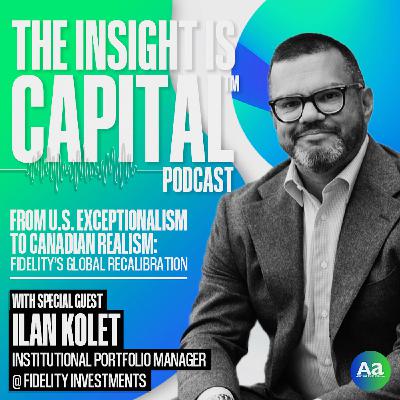
“Things are priced for perfection—but the world isn’t perfect.” — Ilan KoletWhat does it take to navigate a world where the U.S. is no longer the default safe haven? In this powerful episode, Pierre Daillie is joined by Ilan Kolet, Institutional Portfolio Manager on Fidelity Investments Canada’s Global Asset Allocation Team, to break down Fidelity’s latest asset allocation moves—and the four-pillar process guiding them.From trimming U.S. equities to boosting exposure to Europe and gold, to reassessing the Canadian market after a decade-long underweight, Kolet reveals how Fidelity is tactically rebalancing amid macro volatility, political headwinds, and shifting global capital flows.📉 We unpack weakening U.S. labor data, 🇨🇦 Canada’s slow productivity renaissance, the potential loss of USD tailwind status, and why gold has emerged as a strategic diversifier in a fractured geopolitical landscape.Whether you're an advisor, institutional allocator, or just looking to sharpen your portfolio perspective, this conversation is packed with insights you won’t want to miss.⏱️ CHAPTERS00:00 – Welcome + The big shift: From U.S. exceptionalism to global pragmatism02:30 – One year later: What’s changed in Fidelity’s outlook05:45 – AI tailwinds vs. valuation headwinds08:25 – What “neutral” really means for U.S. and Canadian equities10:10 – Canada’s lost decade… and signs of turnaround14:10 – The slow return of Canadian capital investment17:00 – Productivity as the key to prosperity19:40 – Asset allocation as audio mastering: “The equalizer analogy”22:00 – Gold, Europe, and the art of being selectively offensive25:45 – The weakening U.S. labor market and the Fed’s dilemma29:00 – Canada’s rising unemployment: Recession or reset?32:00 – Political interference and the erosion of central bank independence36:00 – The U.S. Dollar: Still a hedge, or just a habit?40:00 – Why Fidelity slashed its CAD underweight and closed its USD long44:00 – Europe’s defense renaissance and the rise of Rheinmetall46:30 – Gold as a geopolitical hedge: Inflation, war, and volatility48:00 – The power of active management: +40% outperformance over passive50:30 – Wrapping up: From big dials to basis points📌 KEY INSIGHTS 📉 Underweight U.S.: Valuations are too high, concentration is risky, and macro instability is rising. 🇨🇦 Neutral Canada: After 10+ years underweight, Canadian equities are finally earning back their spot. 🌍 Overweight Europe: A geopolitical awakening in defense spending may unlock long-suppressed value. 🪙 Gold Allocation: A 2.5% out-of-benchmark position to hedge inflation volatility and geopolitical tail risk. 💱 Currency Realignment: From a 20% CAD underweight to just -3%, now diversified beyond USD.🔗 CONNECT WITH US🌐 Visit us at: https://www.advisoranalyst.com🎙️ Listen on Apple Podcasts, Spotify & everywhere podcasts are available📩 Subscribe to our newsletter for more advisor-focused insights#FidelityInvestments #GlobalAssetAllocation #IlanKolet #PierreDaillie #InvestmentStrategy #AssetAllocation #CanadianEquities #USEquities #GoldInvesting #MacroOutlook2025 #PortfolioConstruction #Inflation #InterestRates #USDollar #FinancialAdvisors #ActiveManagement #AdvisorAnalyst #InsightIsCapital
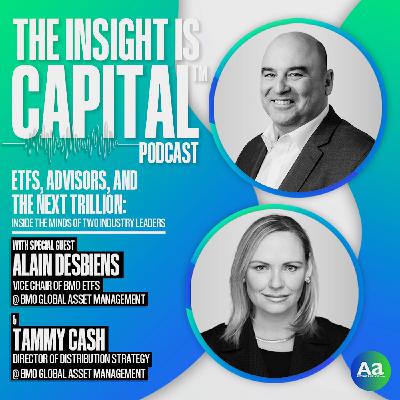
Canada invented ETFs — but how did they grow into a trillion-dollar force, and where are they headed next? Pierre Daillie sits down with BMO ETF leaders Alain Desbiens and Tammy Cash to reveal the untold stories, the lessons learned, and what the future holds for advisors and investors.Episode SummaryIn this in-depth conversation, Pierre Daillie is joined by Alain Desbiens, Vice Chair at BMO ETFs, and Tammy Cash, Director of Distribution Strategy at BMO ETFs and Global Co-President of Women in ETFs. Together, they trace the remarkable journey of exchange-traded funds in Canada—from their early days as a disruptive upstart, to their current role as an essential building block in portfolio construction.Alain shares candid reflections on being one of BMO’s first ETF wholesalers and the skepticism he faced when ETFs were dismissed as a “trend.” Tammy recalls her path into the industry, her passion for democratization of investing, and her leadership in Women in ETFs, a global movement empowering women across financial services.The discussion covers the resilience it took to build the industry, the role of education and advisor partnerships, and how tools and technology are reshaping the advisor-client experience. Both leaders also look ahead to 2030, envisioning an ETF marketplace that is larger, more competitive, and increasingly shaped by innovation in active strategies, alternatives, and digital distribution.This is more than a story about the ETF industry — it’s about people, purpose, and the power of advice.🔑 Key Takeaways• ETFs as Disruption Turned Foundation – Alain reflects: “At the beginning I saw that the ETF could be disruptive and it could create waves and I loved it. I knew we were into something.”• Advisor Education Remains Central – Tammy emphasizes: “It really is about that education and the intersection of education and partnership today… making sure that we provide clarity, congruency and real education to advisors and investors.”• Competitive Landscape & DIY Risks – Alain warns: “There’s a lot of people [DIY investors] that buy products and they don’t really understand what they’re buying. That’s probably the worst money you’re buying.”• Women in ETFs & the Future of Advice – Tammy highlights the opportunity: “Today, sadly, we still sit at 17% representation of women as financial advisors in Canada… and the opportunity that that presents is significant.”📌 Timestamped Chapters00:00 - Introduction to Insight is Capital01:32 - Exploring Early Days in the ETF Industry03:03 - Building an Industry: Lessons from the Early Days05:37 - The Evolution of ETFs and Market Dynamics09:43 - Adapting to Change: Insights on Resilience16:39 - Women in ETFs: Empowering Female Leaders21:52 - Celebrating Women's Careers in Finance23:06 - Legacy and Product Impact on Investing24:32 - Challenges in the Advisory Business27:13 - The Evolution of Client Experience in Finance28:56 - The Return of Key Industry Figures30:47 - Investor Education and Transparency31:59 - Opportunities in ETF Specialization34:37 - The Challenge of Meeting Investor Expectations37:19 - The State of Canadian Investable Assets38:23 - Diversification Strategies for Advisors39:43 - Innovations in ETF Solutions41:08 - Navigating Complexity and Competition in ETFs42:30 - The Demand for Financial Advice43:58 - Personal Reflections on Industry Impact45:31 - The Human Element in Finance47:07 - Legacy and Leadership in Finance#BMOETFs #ETFInvesting #CanadianETFs #WomenInETFs #AdvisorEducation #InvestingInsights #PortfolioConstruction #WealthManagement #FinancialAdvisors #FutureOfInvesting

Comments

Download from Google Play

Download from App Store
 United States