


Micron
Subscribed: 0Played: 5
Subscribe

© Ron Stauffer
Description
Travel, exploration, surviving self-employment, raising five children, and living with autism as an adult.
micron.fm
micron.fm
27 Episodes
Reverse

Think fast: when I say “Canada,” what immediately comes to mind?If you’re like many people who are only familiar with some of the most basic, obvious stereotypes of North America’s coldest country, you might immediately start imagining giant evergreen trees, massive mountains, loads of snow, and rodents of unusual size (beavers, that is).Above and beyond its rugged, natural landscape, though, you might also think of some of its more symbolic elements: the Maple Leaf flag, these weird things called “Provinces,” coins with Queen Elizabeth on them, hockey, of course, and, if you’re aware of the weird foods they eat above the 49th parallel, deep fried pickles, poutine (french fries covered in cheese curds, and brown gravy), and ketchup chips.But if you’re like me, and probably a few hundred million other Americans, when you think of Canada, well… nothing comes to mind. Because you don’t think of Canada basically ever.I hate to offend the good people from the Great White North, but pretty much all day, every day, I don’t even remember that Canada exists. It’s like that meme I see on the internet from time to time, taken from the TV show Mad Men, where two men are in an elevator. The younger man says: “I feel sorry for you.” The older man says: “I don’t think about you at all.”That’s what Canada is like for me. Sometimes, I’ll be clicking around on the internet, reading a breaking news story about a tragedy unfolding in America in real time, perhaps something involving guns or private health insurance, or guns AND private health insurance.Random people with Canadian flag emojis in their profiles will start commenting about how infinitely superior their country is to mine. And that’s when it will hit me…“Oh yeah! Canada exists! Canada is a thing! I completely forgot about Canada! I’ll be darned.”Now, I will give our frozen friends a point here: they are indeed the superior country… in precisely one manner: they are literally above us. But only literally.Canada is superior to America in the same sense that Lake Superior is superior to the other Great Lakes. That is to say, it is above Lake Michigan, Huron, Erie, and Ontario.But that’s it.As far as the nation of Canada being superior to the nation of the United States of America? Don’t make me laugh. The USA has an economy that is almost 13 times larger than Canada’s, and three of our states have a larger GDP than their entire country (that’s California, Texas, and New York, in case you wondered).And although we have almost the exact same amount of raw land as each other, just the state of California matches Canada’s entire population, still leaving us with 49 states to spare.So… where was I? Oh yeah, Canada exists, and I forget that sometimes. That’s right.Now, to be clear, I have nothing against Canadians personally, and every Canadian I’ve ever met has been delightful. But it’s such a weird phenomenon: I almost never find out their true nationality until after I’ve known them for a while.Over the years, it’s happened to me a few times where I have a friend, or perhaps a coworker, and he or she (let’s say he, in this case) is just an all-around great guy, and we get along just fine. Then weeks, or perhaps months later, the truth about this guy’s identity eventually surfaces, and it’s always jarring when it does.Finding out that someone I know is Canadian is kind of like finding out someone I know has spent time in prison. It’s not necessarily something they should be embarrassed of, but it’s still such a shock when I find out about it. You know?Many times, I’ve had conversations that go something like this:* Me: “Wow, he’s Canadian?”* Someone else: “Yep. Crazy, huh?”* Me: “Yeah, but he seemed so… normal.”* Someone else: “I know. You wouldn’t be able to tell just by looking at him.”* Me: “Why didn’t he tell me himself? I feel weird now that I know the truth.”* Someone else: “Yeah, I wouldn’t mention it if I were you. Might be awkward.”Okay, I’m kidding… but only halfway.First of all, I am kidding about being surprised because Canadians are actually easy to spot from a distance. Not because of how they look but because of how they talk.Every man or woman I’ve met who came from the Land of Loons fails two basic American shibboleths:* They say “Eh?” a lot. (And don’t ever let them gaslight you and tell you they don’t, because they absolutely do. This is not just a stereotype—it’s the truth.)* They pronounce their “Oh” sounds really funny. They say: “aboat” instead of “about,” “prow-cess” instead of “process,” and so on.If I were an American soldier in an old black-and-white war film, and it was up to me to determine who the good guys and bad guys were without having the benefit of spies or special technology, and if we were somehow assuming that the Americans and Canadians were at war (with each other — I know this is a really big stretch, but just go with it), I’d make every soldier line up and give them a test.“Okay everybody, one at a time, repeat after me: ‘Oh, I’ve got a round about process for brewing beer.’”Down the line, I’d go, listening to each man repeat my test phrase until, eventually, one man would say:“Oh, I’ve got a roaned aboat prohcess for brewing beer, eh?”Knowing I’d got my man, I’d ask one more question to be sure: “Is that right? You do?” and he’d do himself in:“Oh, yeah, you betcha.”Boom! Canadian: bad guy! It would be so easy. They can’t hide.Second of all, I’m not kidding about being surprised because aside from those verbal tics that give them away, Canadians pretty much look and act like us in America. And almost all of the Canadians I’ve ever met—I met here.They’re here because they left Canada to come to America. Which, of course, makes me wonder, “If Canada’s so great, why did you come down here?”But when I do meet folks like this, I don’t even think of asking such normal-looking-and-acting people: “Hey, are you actually from here?” I just assume they are, like everybody else. And they pretty much are like everybody else: they fit in just fine.What does all this have to do with Christmas? Hold your mooses; I’m getting to that.Canada is… an interesting place. It’s been in the news quite a lot recently. Right now, as I write this, there’s a huge buzz online about the USA potentially taking steps to annex Canada and make it the 51st American state.There’s so much talk and cross-talk about it that I can’t even tell fact from fiction anymore. I don’t know who first suggested it, but it sounds like some people in America think this is a hilarious joke, while others think it’s a serious suggestion.It also sounds like a small minority of people in Canada welcome this idea, as far-fetched as it may be, while many more think that it’s a very bad idea and insist that it’s not even funny to joke about something this serious at all.Which, to be honest, makes it even more hilarious. The more they keep saying it isn’t funny, the funnier it gets. (And on a side note, when did Canadians, the people who have given us some of the funniest comedians in the world, lose their sense of humor?)So, to recap: my point here is that Canadians are a funny people who talk funny, and who used to be funny in the past but right now really aren’t all that funny, at least when we say funny things back to them.THE DRAMA!O, Canada! America’s hat… where the people drink milk from plastic bags and live in their hoases doan by the moantains… perhaps someday our 51st state… a country so easy to make fun of.All right, all right… so maybe I’m too harsh on Canada.Maybe I am sometimes guilty of directing an unfair amount of ridicule to the country that is home to Dudley Do-Right and his fellow Mounties, those wacky policemen who ride on horses and wear muskrat fur stetson hats and scarlet tunics.Maybe I am too fond of teasing the people who still somehow claim allegiance to the monarchy of the United Kingdom in one of the strangest, most antiquated acts of useless nostalgia an American could possibly imagine.Maybe I am biased against a nation where every single government document and official communication in the entire country must be spoken and printed in both English and French, despite only 3% of the population outside Quebec speaking French as a first language.But c’mon, Canada, you make yourself too easy a target!Bringing up Quebec is a perfect example: while America is currently joking about taking Canada in as another state, Quebec is still very seriously just waiting for its chance to finally declare independence from Canada once and for all.You hear that? Not even Canada wants to be part of Canada!Quebec has been trying to leave Canada for 45 years and just barely missed achieving total independence in 1995, with a vote that lost by one-half percent!(Note: If Quebec were granted independence today, Canada would immediately lose 23% of its population. That is the exact same percentage the USA would have lost if all the Confederate States had won the Civil War and successfully seceded from the Union. Can you imagine?)Okay, enough ragging on Canada. Let’s say Canada is actually a wonderful place and is home to some really great things—things to be proud of. Things that I can point to today and say: “I have to give Canada credit for that.”To that end, I tried an experiment to find out what those things would be. I asked an AI chatbot what things in my life it could pinpoint that I have personally benefitted from, have, hold, use, or eat, etc., that are clearly, conclusively, and uniquely from Canada or Canadians.The results were… interesting. At first, it gave me a list of 10 things that were mostly irrelevant. Things like:* Hockey: Obviously, it’s Canadian, but I don’t play it.* William Shatner: Wow, really? The actor? I had no idea. Are you sure he’s actually Canadian and he’s not just a prisoner?* The Canadarm: The big giant grabby arm thingy used in the NASA space shuttle.Okay, these were true, but this was getting ridiculous. None of these things had anything specifically
For almost all of my childhood, growing up as a homeschooler was extremely lonely. My family knew very few families that homeschooled as we did, and I lost contact with the few we did know in California when we moved to Colorado when I was around 14.After we relocated from the west coast to our new home on the other side of the Rockies, just about everybody I knew that was my age either went to public school or private school, so I was almost always the odd man out.This was exceptionally frustrating and depressing: feeling like an outsider everywhere I went—always—really bothered me, especially because I knew that A) it wasn’t my fault and B) there was nothing I could do about it.Being a teenager in a conservative, homeschooled family with precisely one social circle (a church youth group) where we had almost nothing in common with everybody else in the group made things feel even worse.When we left California and moved to Colorado, our parents decided we would start going to a Baptist church, probably because they simply couldn’t find any Mennonite churches in the nearby area, and they figured that was as close as we’d be able to get.But it really wasn’t close at all: the kids at the Baptist church were nothing like us. They had never even heard of Mennonites before. When I told my new peers about the church I grew up in, they were completely clueless.“Huh? You’re Mormons?” more than one person asked.“No, Mennonite,” I’d insist.“Dude, are you saying your family is like Amish or something? Do you drive around in a horse and buggy carriage?”It was extremely embarrassing.So, we were already in the minority purely from a denominational perspective, and now, adding on the additional embarrassment of being homeschooled was just icing on the cake.The low-intelligence insults abounded:* Hurr, hurr… so you’re saying your mom’s your school teacher? Who’s your principal?* Will you take your sister to the school dance? Will you be the homecoming king and queen?* What happens if you get sent to the office? Do you have to go to your bedroom?* Are you the valedictorian of your house? Har har…But it wasn’t just that our lifestyles were different: our family’s values were extremely different as well. Everybody we knew was far more liberal than we were. I still don’t know why my parents chose to keep going to that church, but it was what it was.At least for the first year or two, my siblings and I were the only homeschoolers we knew in our entire group of friends, but I participated in everything the youth group had to offer despite the stupid jabs from the jerks I met because I was so desperate for friendship and connection of any kind.Some of the kids I met in Colorado were kind, but almost all of them were public schoolers who had lots of friends and who lived what seemed like fabulous lives that revolved entirely around themselves.They mostly came from very small families, often with just one or two kids, lived in big houses, participated in expensive sports and music programs, and spent every waking moment of their lives obsessing over shallow, vapid things like dating, wearing fancy clothes, watching tons of TV, and gossiping about everyone else they knew.When I compared my life to theirs, the thing that stung most of all was that almost every kid I knew, upon reaching driving age, was given a car as a present by their parents.There was just so much about their lives I couldn’t possibly understand. They went to dances at school, held hands, kissed each other, called each other “boyfriend” and “girlfriend,” watched movies I wasn’t allowed to watch, listened to music I wasn’t allowed to listen to, and were utterly, completely infatuated with “fitting in” and “being cool.”They were extremely concerned about fashion trends, knowing the top radio hits, reading the right magazines, and going to movie theaters as soon as the hottest new movies came out.I never understood this or cared about any of it, and it always bothered me that I felt like I didn’t belong in or around the one group of kids that I was supposed to spend time with.I wouldn’t say I hated these kids my age, but I was certainly unimpressed and often disappointed in them. I couldn’t understand how people could be so completely shallow, so easily amused, and yet be so impressed with themselves for doing so very little. It often seemed like everybody I knew who was my age just fantasized about growing up to be a cast character on the TV show “Friends.”When I completed the eighth grade and was now high school aged, I remember looking around at all the kids I knew and asking myself: “Do I really think I’ll still be friends with anybody here when high school is over?”The answer to that was, clearly and sadly, “no.” I was completely different in almost every way from all the kids I was surrounded with. I couldn’t imagine what their lives were like as carefree, “normal” public schooled kids, and none of them had a clue about what my life was like as a homeschooler.Until one day, when out of the blue, a stranger showed up at our church: a young man I’d never met before who finally seemed to have a few things in common with me… who gave me some hope.One random Sunday, I met Shane, a relative of one of the boys I already knew in the youth group. His family, for some reason, decided to start coming to our church.Shane was about a year older than me, about my height, had my same build, and even combed his hair to the side just like I did. He had a baby face that was COVERED in freckles, and he was socially awkward, but there was one thing about him that changed everything for me: he was a homeschooler.A HOMESCHOOLER.Just knowing that I was no longer the only homeschooled kid in the youth group (aside from my siblings) made him immediately noticeable and interesting.Whether he and I had much in common personally or not, I was absolutely going to get to know this guy. We were now the only two homeschooled boys in the youth group, and that alone meant I already had more in common with him than anyone else.Finally, I could talk to someone else who did his schoolwork at the kitchen table. Finally, I’d have a kindred spirit who knew what it was like to be done with school by the early afternoon, reveling in freedom long before everyone who went to public school was even released.Finally, I knew at least one other person who could also make fun of all the weird jargon public schoolers used. Strange words like: intramurals, mock trial, forensics, magna cum laude, hall passes, pep rallies, study halls, enrichment, advanced placement, international baccalaureate diploma programs, and all manner of bizarre concepts that all seemed like foreign language gibberish to me.I immediately struck up a friendship with Shane. And it seemed promising… at first.Like most other people I knew at that time, Shane came from a relatively small family: just four kids, which was just under half the size of my family, which had nine kids. That wasn’t that big a deal, but I noticed that he did seem odd in a way I could never quite put my finger on, and he had a weird sense of humor, but I was just finally relieved to meet someone else close to my age who lived in Colorado and who knew what it was like not having taken ACTs or SATs or not even knowing what those were.After we got to know each other over the course of a few months, he invited me to his house for a sleepover, and it seemed like my life was forever changed.His family lived in an enormous, beautiful home on acreage in the Colorado mountains. They had all kinds of toys: a jacuzzi, ATVs, BMX bikes, and lots of other things that made their lives seem incredibly exciting compared to mine.I could barely believe my good fortune in finding a new friend like this. He and I weren’t a perfect fit when it came to our friendship, but it seemed like we had enough similarities that it still made sense to be friends.Or that’s what I told myself. I think if I were being honest, I was actually feeling like a woman who’d been asked out on a date by a man who wasn’t especially handsome but who drove a Corvette.If I had said it out loud, I would have been embarrassed to admit it, but it was simply the truth that I was determined to develop a friendship with this guy, if only for his stuff. I wanted access to this kind of life.Whenever Shane and I spent time together, I always tried to make sure I went over to his house rather than having him come over to mine. Even comparing our houses felt embarrassing. He lived in what seemed like a luxurious mansion on a sprawling grassy property in the mountains that had a collection of incredible gadgets. My family lived in a decent-sized house, but it was also filled with people and was on a cramped lot in the city. And we had nothing like ATVs to play with.His house in the hills had a natural pond out front, complete with a wooden bench next to a giant evergreen tree, and stocked with Asian Grass Carp. In my mind, it looked like it could have been a set for a romantic movie.My house in the city had a figure-eight-shaped “koi pond” in the basement made of concrete and painted brick that was built in the 1970s and had been completely dry and abandoned for decades. It looked like it could have been a set from a wacky Woody Allen film or a documentary about people with hoarding disorders.I wanted so badly to leave our house and live in a house like his. Everything about it was exciting and fun, and I couldn’t imagine how much better his life was than mine.That first summer after I met Shane, I spent as much time as I possibly could at his house. They had an enormous fish aquarium in their massive living room, a huge back porch with an amazing mountain view, and a hot tub for soaking in late at night and looking up at the stars.They had a video game console (which my family had never owned), and they even had a DVD player, which was something I’d never seen before. Shane showed me just how sharp and clear the picture quality a
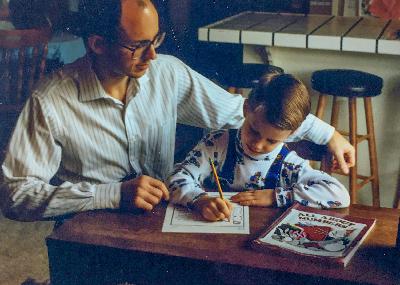
In the late 1980s and early 1990s, like many Christian families in California, my family became fairly politically active.People in our small social circle of conservative homeschool families often lamented just how “awful” California was becoming. Our politicians weren’t representing us well and were turning our state into a cesspool of oppressive government, high taxes, punitive regulation, and ever-increasing crime.So, my dad, who had never held elected office before, decided to get involved in politics for the first time. He started small: in 1990, he founded a group called Citizens for Responsible Education, which vetted a few candidates to run for the local school board, backed them financially, and helped manage their campaigns.I was just five years old at the time, but I still have vivid memories of that whole season of life that started back then. In addition to learning all about local elections with school boards (which was kind of ironic, if you think about it—we were homeschoolers, after all), my dad also supported a few races in the California State Assembly, U.S. Congress, and U.S. Senate.I learned a lot about the political process as I sometimes spent evenings and weekends helping my dad volunteer for various campaigns. We screen-printed signs, posted those signs on the side of the road, stuffed envelopes and mailers, and walked door-to-door, handing out flyers for candidates.As far as I recall, I was never really asked if I wanted to be a part of all this; I think it was just assumed that I would help. It was a family affair. I don’t know that I would have said “no” if I’d been asked, but I didn’t understand what it all meant and why we were doing it in the first place.So many of the things people discussed and the words they used were totally foreign to me. What was a “cannadate,” anyway? Why did people who were in charge of schools call themselves a “school board?” And weren’t “principals” in charge of schools?My very literal brain pictured a big sheet of plywood—a board—that said “school” on it; when I found out that school board members weren’t even teachers themselves, that made even less sense to me.There were so many words thrown out by people who thought apparently it was all so completely normal, but I was often confounded upon hearing terms like: elections, budgets, deficits, primaries, taxation, districts, surveys, polls, precincts, voter registration, and even legislation.What did it all mean? What were educational vouchers, the Clean Air Act, the Endangered Species Act, and the Three Strikes Law? Why were we talking about baseball in politics? And why were people so passionate about things like this, to the point where they’d argue and even get angry about them?The only thing that was clear to me was that some people were “for” certain things, while others were “against” them. I didn’t always have time to figure out what that meant, but I asked my dad to explain this whenever I could.“Dad, what are ‘Mello Roos?’ Are they good or bad?” I’d ask.If my dad supported an issue, it made sense that I’d support it, too—it would surely be the “right” position. After all, my dad was a “good guy.” He was a Republican. That meant Republicans were good, so I was probably a Republican, too.The inverse seemed just as logical. If the other guys were against an issue we supported, they were taking the “wrong” position. If they were against my dad, they were “bad guys.” Those people were usually Democrats, so that meant Democrats were bad guys.Micron is a reader-supported publication. To receive new posts and support my work, consider becoming a free or paid subscriber.But I found out my dad didn’t exactly see it that way. He would correct me and say: “They’re not ‘bad guys.’ They’re our ‘opponents.’” This made little sense to me, and I wondered why we’d be opposing other politicians if they weren’t bad guys. Despite all the baseball metaphors, this wasn’t just a game after all; this was a moral battle of right and wrong.Isn’t politics all about good guys fighting bad guys? I had assumed so, and I still thought so, even though my dad said it didn’t quite work that way.Of all the things we did to help support our candidates, going door-knocking was, by far, my least favorite activity. Usually, I’d go out with one or two adults, and we’d hit the road with giant stacks of flyers and door hangars.Walking for blocks at a time, we had big lists of registered voters that someone else on our team had previously highlighted, with each address color-colored. We knew who was and wasn’t registered to vote, which houses had Democrats, which had Republicans, and which had unaffiliated voters.Based on our list, we’d hand out different types of literature. If we knew the residents of one address were Republicans, we’d give them a large, glossy door hanger with one particular message on it that had nice, full-color photography. These cost us a lot of money to produce, so we had to give them out very carefully.If we knew they weren’t Republicans, we’d leave behind a smaller door hanger with a different, shorter message. These were printed on much uglier “highlighter green” paper with black smudgy ink that was much cheaper to print.I didn’t mind simply placing a door hanger on the knob and walking away, but we weren’t allowed to do that: we had to actually knock on the door. Every time I knocked on a door, I winced, hoping nobody was home.We had a rule that went something like: “If you knock three separate times, and nobody answers, you can just leave a hangar on the door.” I always wished nobody was home so I could just knock, place my flyer on the door, and run away.(Sometimes, I admit, I would cheat, inflating my numbers by pretending to have knocked three times when I’d only knocked once or twice. I’m sorry, Dad.)More often than not, though, someone was actually home. I always hated it when people came to the door. Usually, they were nice, and they’d open the door but leave their screen door closed and ask us what we wanted in a very defensive manner.I would tell them I was passing out flyers for Richard Pombo or Dan Lungren (US Congress), Larry Bowler (California Assembly), Tom McClintock (US Senate), or Mel Panizza (Stockton City Council).Depending on their political views, they might then open the screen door and step outside to talk to us. They’d tell us about who they voted for in the past or what their concerns were about the current election.On occasion, people were nasty. They’d open their door just a crack and angrily shout: “What do you want? Are you selling something? Go away!” and slam the door.One thing I learned very quickly going door to door was how I could immediately find out which houses had dogs. If a family had a dog in the house, the dog would start barking either when it detected me walking toward the house or the second I knocked on the door or rang the doorbell.Side note: if I hadn’t already hated dogs by this point, this experience certainly cemented my disdain for them. Walking up to a stranger’s house to talk to people I didn’t know, who didn’t want to talk to me, about topics I didn’t fully understand was already hard enough… but it was made worse by vicious-sounding dogs that I thought wanted to bite me or kill me.The ONLY thing that made going door-to-door worthwhile was how, after a long stretch of walking and knocking, there was a prize at the end: we would get a soda at the local gas station. Give me a 32 ounce icy root beer, and I was as good as new.At the end of the election cycle, some of our candidates won their elections, and some didn’t. In my mind, this was hard to comprehend: we had worked equally hard for all of them, and they all seemed to support the same issues, so there didn’t seem to be any rhyme or reason as to why one person would win, while another would lose.This was my first introduction to just how fickle voters are during elections and how, in truth, there is zero “science” in “political science.” Elections are ultimately decided by all kinds of things, I have found, but logic and common sense are not among them.After two years of my dad’s initial involvement in politics, he decided to jump in with both feet by running for the California State Senate.This was a shock because, aside from his recent efforts backing other candidates, he had no personal political experience to speak of. The only time he had been elected to anything in the past was being elected as an elder at church.(Once again, I heard the term “elder board” and pictured a bunch of old men sitting around a table made out of a giant board of wood… or something like that).So, when he made the announcement that he would be running for office himself, that really surprised me. Looking back now, if I were an adult who wasn’t related to him, I would have advised him not to run at all. I’d have told him he would make a bad politician for one simple reason: he’s far too honest.My dad is bold and direct; he’s willing to say things people don’t like to hear. In real life, that tendency helps make a man a good husband, father, and friend. But as a politician seeking elected office, it can often be career suicide. As I learned from an early age, despite all claims to the contrary, voters actually like politicians who lie to them.Oh sure, they’ll say they don’t like lying politicians—they will rant, rave, and scream angrily about how much they don’t like those g*ddamned, no-good, lying scumbag politicians… but you want to know the honest truth? Most people actually require politicians to lie to them in order to earn their votes.If you ask a candidate for the California State Senate, “Will you reduce crime in our city?” a politician giving you an honest answer would tell you the truth like this:“Actually, no, I can’t lower crime in our city. I can’t promise you anything like that at all. In fact, there’s very little I can do to affect crime in Stockton while serving in the State Senate.”Who would vote for som

Earlier this summer, I got a completely unexpected phone call from my grandpa. He told me that he and my grandmother (“Grammy”) had decided to sell their house in the Colorado mountains and move into an assisted living community in a larger city nearby.I was completely surprised by getting a call from Grandpa out of the blue, but what he said wasn’t so surprising in and of itself. My grandparents are getting up there in age: Grandpa is now 90, and Grammy is, well… actually, she’s the one who taught me never to ask about a woman’s age, so I’ll pretend I don’t know (even though I can do the math).It makes sense, of course: living by themselves in a small mountain town on the top of a hill, where it’s a significant drive to or from anywhere, is not a permanent solution for aging folks.At some point, mobility becomes a serious issue, as does safety. Just getting up the stairs is hard enough, but danger lurks as well: those TV commercials that show the elderly woman saying, “I’ve fallen, and I can’t get up” were hilarious to laugh at as a kid, but the prospect of being a frail and aging woman literally falling on the ground, unable to help yourself back up isn’t funny at all.So it wasn’t a big shock to find out that as my grandparents get closer to a full century of living, they can’t do things like they used to anymore and needed to make a change. Especially since they’ve been living in a single-family, two-story home in the forest, where their closest relatives live over 30 miles away.Also, the road up to their house from the highway is one of the steepest streets I’ve ever driven on, and I can’t imagine being 90 years old and trying to drive up a hill like that with inches of snow on the ground when it’s three degrees outside. That could be life-threatening.But after I got off the phone with Grandpa, I was actually shocked by two things.The first is the fact that they decided to sell the house at all. To be completely honest, I never saw that coming. Why would they sell their house? I always figured it was their forever home. They had it custom-built when they moved from California to Colorado back in 1990. (Wow. Just thinking about that blows my mind: that was almost 35 years ago!)The second is how it made me sad. I mean, really sad. A few days after I heard the news, out of curiosity, I decided to check out the house on a real estate website. That may have been a mistake. Seeing pictures of their house for sale was really weird.I’ve seen a lot of houses for sale over the years, and I’ve never once had an emotional response to seeing one before. But this was different, somehow. It wasn’t even my house, but as I clicked through the photo gallery and saw image after image of blank, empty rooms, I nearly cried.Gone was all the art on the walls: the family portraits, the posters of the marathons Grammy had run in years ago, the old-fashioned wooden clocks, and Cousin Bucky’s watercolor painting. All of the dozens of incredible, detailed needlework pictures Grammy had carefully hand-stitched over the decades were missing, too.The wall by the staircase going up to the bedrooms was always so covered in beautiful embroidered pictures of Hummel figurines, birds, butterflies, and angels that I almost didn’t even realize there was paint behind them until now.Looking at these pictures of a now-empty house, I can see the ugly, boring paint on the walls and ceiling, plain as day. It’s mostly just… white everywhere. The dining room hutch with the fine china is gone. The decorative plate on the wall with an Irish blessing is gone. The foyer cabinet in the front entry is gone as is the door mat that says: “A golfer and a normal person live here.”There used to be pictures of me in that house. Now, even they’re all gone. Everything is gone.There is nothing left.The house in the photos is totally empty, devoid of all human touch; it’s basically an abandoned house on a mountaintop. Looking at the sales data, I can tell that it took over three months to sell.That means for about 100 days, the most important place in the Stauffer family—where many of the most memorable moments of my life happened—was a vacant house with a “for sale” sign out front. How could this happen? How could we let this happen?Like a dead body rotting in the sun, all the life had gone out of this structure. It was now just a corpse on a cul-de-sac.Looking at the listing, with one depressing click after another, I saw how the epicenter of my childhood for the past three decades has now become nothing more than an empty shell for sale to the highest bidder.It feels almost grotesque.Honestly, it’s hard for me to even comprehend: I feel like a rug has been pulled out from under me, and now I’ve fallen and can’t get up. But I don’t have a “Life Call” button for someone to come help me in my moment of need.Thinking about this actually started to make me angry.Why would my grandparents sell the house? Isn’t it a “family” house? Why wouldn’t one of my five uncles inherit it? Whatever happened to keeping things in the family and passing down property from one generation to the next?I’ll admit that growing up, I always secretly wondered if I, as the first-born son of the first-born son of my grandparents, would inherit this house… or something kinda sorta like that. If Dad didn’t, I’d be next on the list. Right?When you’re a kid, life is very simple and black and white that that. Why wouldn’t we do everything we can to keep our family property and our legacy?Just think of farmers: why on earth would one generation sell the family farm before the next generation can take it over? And who could possibly imagine that parents would sell their farmhouse to an outsider rather than give it to their kids? At a bare minimum, why wouldn’t they at least give the kids the first right of refusal to buy it from them?My grandparents’ house in Woodland Park is the closest thing we’ve ever had to having a “family farm,” at least in my lifetime. So, to watch it slip away from our fingers is just… unimaginable. It’s a sadness of historic proportions for me.I learned a bit about a family’s legacy (or lack thereof) and what that means when I took a trip across the country a few years ago as a class project during college.In 2019, I went to Pennsylvania to find my family’s first-generation immigrant ancestors. Both sides of my family (Irish and German) came to America by way of Pennsylvania, but I was mostly there to see the Irish side.As I drove all over Northeastern Pennsylvania, I tried finding all the locations that had meaning to my family members. Armed with a list of historical addresses of the houses they lived in, I tried to methodically visit each one and check them off the list.By doing so, though, I found out a few things that made me very, very sad.First, most of the homes were dilapidated and in serious disrepair. It was clear that they had never been nice to begin with or hadn’t been in good shape for a very long time.I shook my head in disbelief as I saw a rotting shotgun shack in an extremely dirty and dangerous neighborhood listed as Grammy’s childhood home in downtown Philly.Litter was strewn everywhere, garbage was blowing all over the streets, and the roofs and gutters of some of the rowhouses nearby were falling off!Second, some of the houses my family members were born in, lived in, and even died in didn’t even exist anymore. Some were literally missing: they had been torn down.In some cases, newer, nicer homes stood in their place, sometimes with totally different street addresses. Sometimes, though, there was nothing in their place: just an empty lot covered in dead grass or concrete. It was just gone.Third, not a single address for any house I could find was still in my family’s name. My kin had long since moved on. If I had knocked on any of the front doors of these houses, I might have been cursed at or threatened.“But I have records showing my great-grandfather was born in this home!” didn’t feel like a very good defense for showing up to a stranger’s home uninvited in a state I’d never been to before.In the end, I was glad I made this trip, but as I processed what I was seeing, an incredibly depressing reality set in: the only remaining traces of my family on the East Coast are the gravestones on the ground where my ancestors are buried.But even this wasn’t entirely true.I spent about an hour trying to find my Irish great-grandmother’s burial plot in Yeadon, just outside Philadelphia, only to discover that she didn’t even have a gravestone.She was in an unmarked grave.Where she had been laid to rest, there was nothing but bare grass, dirt, and what looked like deer droppings. I kicked away the droppings with my feet quietly but angrily.When I got back home, I pondered all of this. The more I thought about it, the angrier I got: she died in 2000, which meant that for 19 years, nothing about the tiny plot where her urn of ashes was buried gave any indication that anyone had ever been there.What was I to make of all this? What was the universe trying to tell me? That our family isn’t even worthy of being recognized by name after death? My great-grandmother literally hadn’t even “left a mark upon this earth!”What a strange, horrible thought.I suppose, since our Irish family members were mostly blue-collar day laborers, who lived and worked in coal mining towns (and had very short lifespans), it might not be that surprising.From what I can tell, the McElwees, Gradys, and Gallaghers were all poor, just barely trying to survive. Some were orphans, and there were alcoholics in the family.With all that, plus their lifestyle and Irish culture in general, it’s not a shock that I didn’t find any “family farms” on that side of the family. And while I didn’t spend much time looking for any family property on the Stauffer side of the family (the German side), what little time I did spend researching them didn’t bring up anything major either.This, actually, was very surprising

Today, I unlocked a brand-new transportation method for getting around as I trek across the globe. While exploring the world by air, land, and sea, I can now add “motorcycle” to my list of options.There are a lot of ways I’ve explored new territory over the years: car, truck, canoe, kayak, hang glider, hot air balloon, small diving boat, enormous cruise ship, giant airplane, small bush plane, train, electric scooter… in addition to the obvious ones like bicycles, roller skates, skateboards, and snowboards.But I’ve never really cared about motorcycles at all until very recently. I was never enamored with them in the past, mainly because it seemed like riding them was so much work, and they seemed so incredibly dangerous.So, that’s why I signed up to take a safety course when I decided to give motorcycles a try, even though that’s not required in my state (Arizona). I wanted to start out on this new journey with as much safety and training as possible.What’s funny, though, is how, when I signed up for the course and took the test, my wife was completely mystified and almost angry.“You signed up for WHAT? A motorcycle class? I’ve known you for two decades, and you have never—even once—mentioned wanting to ride a motorcycle… ever!”I actually find this line of thinking to be quite funny. I have all kinds of interests that I don’t talk about with anyone… but that doesn’t mean I don’t have them.I’ve never understood people who tell others what their plans are or those who make all their thoughts and interests known to everybody. I’m a thinker, a researcher, a “finder-outer” who just slowly, carefully feels his way through life, quietly wondering about possibilities and asking: “What if?”I almost never announce anything to anyone about anything I do until it’s done.If I’m going to do something, I’ll keep it to myself unless and until I decide it’s the right thing to do, and then I’ll go do it. Only then will it be time to tell others about it—after the fact.This way of going through life has saved me from a lot of embarrassment over the years.I’ve known so many people who make these big, grand announcements to everyone they know about all the things they’re going to do… but they end up not doing them, either because they had no business making such a claim in the first place, or because circumstances outside their control made it impossible.So why create embarrassment for yourself by telling everybody something you don’t know is going to happen for sure? I guess I’m naturally like Michael Corleone in The Godfather III, where he says: “Never let anyone know what you’re thinking.”There’s really only one exception here, and that’s with my immediate family: my wife and kids. If something big and important affects them, I’ll tell them.In this case, I did feel it could affect them if I started riding a motorcycle, so I told my wife… after I signed up for the course.She was so completely astonished; she couldn’t even believe it. I think she thought I was kidding. But no. I don’t kid.If I were to take my wife’s question seriously (and while I am being lighthearted here, I did take her seriously and I did give her a solid answer), I still don’t know exactly why I want to start riding motorcycles.I think it comes down to two specific reasons:First, it’s mostly because I am, unapologetically, having a mid-life crisis. I yearn for new and interesting things to do and new ways to experience life while it’s not too late.Second, it’s also because buying a convertible Mustang last year really opened my eyes to being out on the open road. I mean, really, out on the open road.There’s a world of difference between sitting in the air-conditioned cab of a family sedan with soundproofing and nice, gentle music playing in the background as you politely leave one location and arrive at your destination.But my attitude these days is mostly: FORGET THAT!Gimme the top down, man! I want the wind blowing through my hair (or what’s left of it) and sunburn on my skin. I want to feel the rumble of my rickety suspension on the potholes, hear the loud road noise, and smell the dirt on the hills as I pass by them.I like driving my Mustang with the top down (I prefer “topless,” as I like to say to my wife), where I can hear my own engine purring. It’s a totally different experience that way when you’re connected to the world around you rather than isolated in a nice, sterile chamber on wheels.Driving with the open sky above me, I can smell the scent of wet pavement when it rains and the diesel fuel of trucks as they drive past me. I can also feel the fluctuation in the air temperature when I hit thermals and cool spots, and the hairs on my forearm respond as I sail down the road with my arm out the window.I want more of that.I want an unobstructed view of the world I’m exploring. Once I actually got a taste of what was going on above, under, and around my four-wheeled pony, it only gave me an appetite for taking in more of it.Do you know what your car sounds like? I know the metallic rattle my engine makes when I hit exactly 50 MPH on that one specific bend in the road when I’m in fourth gear as I drive home. I also know that when I rev it up a bit, that annoying rattle goes away once I hit exactly 54 MPH.How could I ever know this in a Honda Civic with my little piano music playing on my iPod and the air conditioner chugging away, trying to keep me cool?I can’t. It just doesn’t work that way. I like being attuned to those little environmental factors that are always there whether we realize them or not.And for whatever reason, the closer I get to turning 40, the more I crave those raw, visceral sounds and feelings of life. I don’t mind my face turning red because I forgot to put on sunscreen while driving up and down the s-curves of Mount Lemmon. Who cares?I got to feel the air change and become drastically cooler as I climbed from 2,000 to 7,000 feet in elevation while hearing the birds sing, smelling the oil spills on the road, and feeling the tingle of those UV rays pounding down on my neck as I raced away from the sun while it set!That makes me feel alive… and I am really in the mood to feel alive right now.I think that’s why I want to ride the simplest, purest mode of mechanized transportation out there. I want to take it all in. Bring on the two-wheeled cruisers!So, as of today, I’m all done with my safety course, and my license is good until I’m 65. The overall experience of learning to ride a motorcycle was very interesting… and I have to say, it was harder than I expected.I don’t mean that in the way most people mean it when they say, “It was harder than I expected.” I’m constantly surprised when people say that because it tells me they’re really bad at understanding or predicting how hard things are.A few of my kids are like this: God love ‘em, but they’re regularly shocked when they try new things and it turns out to be difficult. One of my sons was nearly histrionic due to his inability to ride a bicycle. Apparently, he thought he’d just hop on it for the very first time and ride off into the sunset. I was sad for him, but I also thought it was kind of hilarious: why would he think that balancing on two wheels while moving forward—something he’d never done before in his life—would be so simple?In the case of learning to ride a motorcycle, I was a bit surprised by what, exactly, turned out to be so challenging.Riding a motorcycle on a road filled with cars presents you with tremendous threats that are constantly changing, for example. You are always in danger, if not due to your own mistakes in speed and maneuvering, then due to the actions of others on the road.I won’t even bore you here with listing the unbelievable number of things you need to be observing, anticipating, thinking about, and preparing for while riding down the road on a bike… but I will share a few things I learned in this course that were very interesting.It was way harder than I expected.Okay, that’s not actually true. Like I said, I expected it to be hard. But the riding part was more challenging than I was prepared for in a few ways.I was totally prepared to do a very bad job and forget lots of things or do them the wrong way, over and over until I eventually got them right. And that is exactly what happened, but some of the things I thought would be hard weren’t. Some of the things that turned out to be hard were things I didn’t even know about at all before I started.Shifting was really tricky.In general, I’m not afraid of shifting. I’ve driven a car with a manual transmission for most of my life: I have always preferred a manual gearbox, in fact.In a car, though, you have a stick shift in your center console with numbers on it, and you can literally just look down at it and immediately know what gear you’re in. But as I learned today, shifting on a manual motorcycle is totally different. At least on the bike I used (a Suzuki TU250X), I had to stomp down on a peg on the left side of the bike to shift down and pull the peg up with my toe to shift up. How do you know which gear you’re in? You don’t! It doesn’t tell you.You simply have to remember the whole time what gear you’re in, and if you forget, you have to start over by putting it in neutral and trying to match the speed with the gear you want. That’s not necessarily a disaster waiting to happen, but it is a heck of a lot harder than a simple car shifter.The bike was really finicky.Putting my bike into neutral was nearly impossible: you have to just barely pull up slightly with your left toe until a green light comes on.But if you go too far, it upshifts. That was maddening. Many, many times, I tried to put it into neutral and accidentally put it into second or third gear.If I had more time to learn this bike, I might get used to it eventually, but during my rider course, I never did.I stalled a few times, which was embarrassing.Trying to figure out just how much play there was in the “friction zone” of the clut
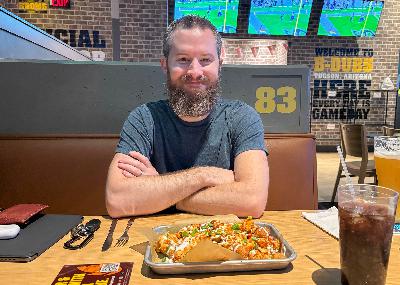
Today is my 19th anniversary! Hooray! To celebrate, let’s play a quick round of trivia.What do you call your 25th wedding anniversary?The correct answer is your “silver anniversary!” (“Silver jubilee” would also be an acceptable answer.) Everybody guessed that one, right? It’s pretty simple. Okay, how about an even easier one?What do you call your 50th wedding anniversary?Your “golden anniversary.” Everybody knew that, too, right? All right, let’s try a harder question.What do you call your 20th wedding anniversary?Uhh, believe it or not, it’s supposedly called a “China anniversary.” Strange, huh? Okay, now, for the final round—and this one is really going to stretch the boundaries of your knowledge—here we go:What do you call your 19th wedding anniversary?The answer is: nothing. Not a thing.Last week, as I was preparing to celebrate our big day coming up on October 1st, I was surprised to discover that my being married to, caring for, and living with the same woman for nineteen years means absolutely nothing… and it isn’t even worth celebrating.Okay, of course, I don’t literally mean that it means nothing and that it’s not worth celebrating.But I am saying that, according to folklore on the internet, when I did extensive searching online last week to find out what magical milestone my 19th anniversary would have, I came up totally blank.In fact, believe it or not, those special kinds of dates stopped being counted at the 15-year mark—four years ago.That’s right: today, this special day after nineteen years of marriage, has no traditional name, theme, or gift.You may be shocked (as I was) to find out that during our first decade of marriage, without even knowing it, my wife and I breezed right past a bizarre list of special anniversaries we didn’t even know about: paper, cotton, leather, fruit, wood, sugar, copper, bronze, willow, and tin.Yep, those are, in order, the special anniversaries of your first ten years together. After those, we also weren’t aware that we passed our steel, silk, lace, ivory, and crystal anniversaries.Somehow, in the midst of our first decade and a half of living and loving, flirting, and fighting, we passed our fifteen-year mark right when… our culture stopped caring.Apparently, society has deemed the first fifteen years of marriage worthy of being called out separately and giving each year, individually, its own name, with specific gifts already pre-planned to make it that much easier for everybody to bless you with. But then, I guess, they get just bored and give up altogether.As far as I can recall, nobody has ever given my wife and me a gift of paper (that’s kind of cheap), leather (that’s creepy), sugar (that’s weird), or willow (what?) for an anniversary gift, and I’m okay with admitting that this doesn’t bother me at all.But how strange it is that just when we were getting to the really hard part of living together, deep in the trenches of parenting, when our lives were peaking in their level of unimaginable difficulty, right at the moment our marriage became old enough to get its driver’s license, people stop counting and it isn’t special anymore.That’s weird.Surely, I thought, there must be some kind of nickname or gift or theme for a 19th anniversary. Why wouldn’t there be? But no, after searching high and low, it’s a big fat zero.I felt like I was at Willy Wonka’s Chocolate Factory, asking for something I apparently don’t deserve, and now Mr. Wonka is shouting at me.“You get nothing! You lose! Good day, sir!”Wondering how this could be, I went to Grok, my favorite AI tool, and asked for a suggestion in the absence of an “official” version. Do you know what Grok suggested?Tinfoil.Huh? This is my tinfoil anniversary?Grok’s response:“For the 19th anniversary, which doesn't have a widely recognized traditional or modern gift, let's invent something that captures the awkwardness and in-between-ness of being one year shy of two decades: a custom-made sculpture or art piece crafted from tinfoil.Why tinfoil? It's cheap, shiny, and somewhat awkward to work with, much like being 19 – you're not quite there yet, but you're trying to shine.”That’s weird.The more I thought about it, the more I realized how weird this whole thing really is. Not just suggesting foil as the element that best personifies nearly two decades of togetherness, but how the very essence of celebrating nearly two decades of togetherness is in and of itself kind of strange.For starters, 19 is such a weird number to begin with.In a way, I think it’s impressive to be able to say that I’ve been married for 19 years. When I was able to say, “I’ve been married for a decade,” that seemed like forever. And 19 years is almost double that. But, as Grok mentions, it’s not quite double.19 as a number is more notable for what it’s not than for what it is. It’s like the Apollo 13 mission getting almost all the way to the moon, but not quite. What happened with Apollo 12 and 14? You probably can’t even remember, but you’ll never forget Apollo 13.Or, perhaps it’s like the Apostle Paul describing to the Corinthians how he had received “forty lashes minus one” five times in the first century. Turns out, the ancients decided that forty lashes of the whip were enough to kill a man, so if they only wanted to punish (or torture) him, they figured: “Let’s get as close as we possibly can to killing him, but stop one lash short so he doesn’t actually die.”Okay, I’m being overly dramatic. But still…My wife and I both agree that the 19th anniversary is a strange one. The number is so awkward: when we hit eighteen years, that seemed like passing a huge milestone. It’s like your 18th birthday when you “become an adult.” Everybody claps and cheers for that. Later, turning twenty seems like a big deal because it’s a full two decades.But 19? That just feels and sounds funny, plus it’s an odd number and a prime number.Our anniversary this year also feels funny because we live in Arizona. On our wedding day, in Colorado, the weather was quite pleasant, and there was an autumnal chill in the air.In fact, when we returned from our honeymoon one week later, there was snow on the ground. I had to scrape ice off our car’s windshield in the airport parking lot, and since I didn’t have a scraper, I had to use a credit card.But that was in the Rocky Mountains. Here, in the Sonoran Desert, even as I write this, it’s still hovering in the triple digits. Just this past weekend, I was sweating buckets when it reached 105ºF on Saturday.…and that was a full week after the official start of autumn.That’s weird.Fun fact: nineteen is the age my wife was when we were married nineteen years ago. She was almost twenty, but not quite (just like our marriage now). Barely older than her myself, I was twenty on our wedding day.At some point earlier this year, we did the math and realized that we’ve finally surpassed the calendar date where we now have known each other longer than we have not known each other.We still have yet to pass the mark of living more days as married people than as single people, but that is coming very soon.So, now I’ve known Rachel longer than I have not known her, and the same goes in reverse.That’s weird.Perhaps the strangest thing of all of this is thinking about how next year is going to be the most monumental year of our lives thus far. Lord willing, if we all survive until then and if my wife and I can keep the flame of passion burning, in 2025, we will celebrate:* Our 20th anniversary* My 40th birthday* Her 40th birthday* Our two oldest children graduating from high school* Our youngest child turning 13That’s a lot of milestones. It also means all five of our kids will be teenagers, and we’re inching ever closer to being empty-nesters at the spry age of 48.That’s weird.The icing on this cake of weirdness—and what seemed to be a very bad omen—came on Friday night: I lost my wedding ring. That’s never happened to me before.For nineteen years, as far as I can recall, I’ve worn my wedding ring every single day. Oh, sure, there’s been a time or two when I forgot about it after taking a shower and left the house without it… but later, I’d put it back on when I returned home. So, I don’t recall ever really “losing” it.I’m super obsessive about that, and there’s a reason why.Right after we were married, maybe in the first month or two, I was fidgeting with my new ring at the office where I worked. It was so new it still felt awkward on my skin, and I constantly fiddled with it, wiggling it up and down my finger.My dad (who worked with me) gave me a mild scolding: “You should never take your ring off.”“Oh, it’s no big deal. I do it all the time,” I replied. He had some thoughts about that.“Well, you’re just doing that now because you’re young. Wait until you’re older, and you’ll eventually leave it on forever. I never take mine off. Ever. I sleep with it on, swim with it on, shower with it on… it never leaves my finger. It will be the same for you, you’ll see. You’ll get used to it, and you’ll never take it off again.”This made me upset because he was making fun of me for being young and inexperienced (which is not my fault, and I hate it when older adults are condescending like that). But I was also annoyed because he was telling me that I would change my habits to be more like him in the future and that this was inevitable.Well, guess what? I take my ring off all the time. I take it off every single night. I set it on the nightstand next to our bed before falling asleep. I literally can’t sleep with it on. It bothers me too much. When I wake up, I put it back on.I always have. I still do. I never stopped.Unlike my dad, I take my ring off when I go to the gym, when I swim, and when I shower. I’m constantly taking it off and putting it back on multiple times a day, and that’s never been a problem.And I was doing fine until I reached the nineteen-year mark, when, for the first time ever, I finally lost track of it. That’s right: just a few days be
In this episode, I met a man from another country who changed my life, and, in the process, discovered coon skin caps and and one other special clothing item.This is a public episode. If you would like to discuss this with other subscribers or get access to bonus episodes, visit https://micron.fm/podcast. Get full access to Micron at micron.fm/subscribe
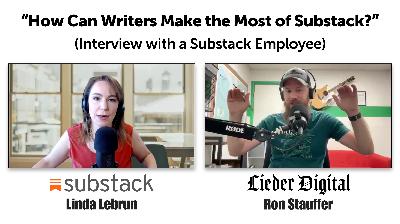
What is Substack all about… and who cares? Last month, I interviewed Linda @ Substack about how it works, why people (including myself) may want to use it, and how to get the most out of it. Visit micron.fm to learn more. Get full access to Micron at micron.fm/subscribe

Once upon a time, I was interested in becoming an FSO (Foreign Service Officer) with the US Department of State. I passed the FSOT (Foreign Service Officer Test) but that was, apparently, not good enough. This is a public episode. If you would like to discuss this with other subscribers or get access to bonus episodes, visit micronfm.substack.com Get full access to Micron at micron.fm/subscribe

I auditioned for The Met Opera and failed, twice in a row. Going for the big one and failing was embarrassing. But by reaching for something far out of my grasp, I learned some lessons, had a great experience, and also had some small wins. Visit https://micron.fm/audition-film to view the documentary film mentioned in this episode. This is a public episode. If you would like to discuss this with other subscribers or get access to bonus episodes, visit micronfm.substack.com Get full access to Micron at micron.fm/subscribe

A true story of the time I went to a police station to take a polygraph (lie detector test). It was an unbelievable experience. (To view photographs, read episode transcripts, or find resources mentioned in the show, visit https://micronpodcast.com.) This is a public episode. If you would like to discuss this with other subscribers or get access to bonus episodes, visit micronfm.substack.com Get full access to Micron at micron.fm/subscribe

After spending two years trying (and failing) to discover the original birthplaces and hometowns of my family's European ancestors, I decided to take the plunge and sign up for AncestryDNA. I ordered the kit, spat in a test tube, and mailed it to Ancestry to see what they could find. The results were... not exactly what I expected. This is a public episode. If you would like to discuss this with other subscribers or get access to bonus episodes, visit micronfm.substack.com Get full access to Micron at micron.fm/subscribe

Content Warning: this is an episode about emergency medicine and, as such, contains descriptions of medical scenarios that some listeners might not appreciate. Discretion is advised.Gather round and listen to one of the strangest chapters of my life: how I went to EMS school and became a certified EMT-B, for no reason at all. In an almost completely pointless endeavor, I took the courses, put in the time, aced the tests, became a bona fide medical professional, and then... nothing happened. This is a public episode. If you would like to discuss this with other subscribers or get access to bonus episodes, visit micronfm.substack.com Get full access to Micron at micron.fm/subscribe

This is episode 3 of 3 in a series about Richard Wagner's collection of German Operas, "Der Ring des Nibelungen" (the "Ring Cycle" in English). In this episode, I share about the overall experience—what it was like spending six days in San Francisco watching a massive, luxurious, expensive show split up into four parts and spread over six days. It was an amazing show worth going to, without a doubt. Note: here are some resources for free Ring Cycle performances you can watch online: https://www.operanorth.co.uk/the-ring-cycle/ (Opera North), and https://www.metopera.org/season/on-demand/ (Met Opera On Demand - 7 Day Free Trial available).2021 Ring Festival: the San Francisco Opera has decided to host an online "Ring Festival" streaming this production that I attended. Visit https://sfopera.com/opera-is-on/ringfestival/ to watch the ring cycle in its entirety, starting on March 6-7, 2021. This is a public episode. If you would like to discuss this with other subscribers or get access to bonus episodes, visit micronfm.substack.com Get full access to Micron at micron.fm/subscribe

This is episode 2 of 3 in a series about Richard Wagner's collection of German Operas, "Der Ring des Nibelungen" (the "Ring Cycle" in English). In this episode, I share about just how the Ring Cycle is superlative in every way: monstrously expensive, notoriously difficult to stage, ridiculously hard to sing. Why? How? And who was the secret patron that made it all possible, when it would have otherwise failed due to the composer's inability to focus and handle his debts? Come learn about how the Ring Cycle is—arguably—the greatest story ever told, at least on stage. (Photo credit: Cory Weaver / San Francisco Opera). This is a public episode. If you would like to discuss this with other subscribers or get access to bonus episodes, visit micronfm.substack.com Get full access to Micron at micron.fm/subscribe

This is episode 1 of 3 in a series about Richard Wagner's collection of German Operas, "Der Ring des Nibelungen" (the "Ring Cycle" in English). Discussed are Looney Tunes, Indiana Jones, Star Wars, "it ain't over 'till the fat lady sings!" and more. Learn about just how impactful the Ring Cycle has been on western culture, music, and more. This is a public episode. If you would like to discuss this with other subscribers or get access to bonus episodes, visit micronfm.substack.com Get full access to Micron at micron.fm/subscribe

This is episode 3 of 3 in a series about my time working in the food service industry. In this episode, I'll share about the time I spent working as a bus boy at an Italian restaurant. In my final attempt at making a career in food service, I spent my days cutting bread, filling water glasses, and turning tables, until I had an existential dilemma, realizing that I was stuck in a dead-end job in an industry that had no apparent future for me. This is a public episode. If you would like to discuss this with other subscribers or get access to bonus episodes, visit micronfm.substack.com Get full access to Micron at micron.fm/subscribe

This is episode 2 of 3 in a series about my time working in the foodservice industry. In this episode, I'll share about the time I spent working as a banquet server at a hotel and conference center. It was a pretty great gig, where I met a lot of nice people and learned quite a bit of Spanish. I stayed for a few years until one day; it all came to a shocking end, and I never went back. Come with me as I lift the tablecloth and show some of the good, bad, and ugly of food service. Do you listen to and enjoy this podcast? Give it a review on Apple Podcasts! It's the most powerful thing you can do to help this little one-man show. Leave a review or rating here: https://micron.fm/review — thanks in advance! This is a public episode. If you would like to discuss this with other subscribers or get access to bonus episodes, visit micronfm.substack.com Get full access to Micron at micron.fm/subscribe

This is episode 1 of 3 in a series about my time working in the foodservice industry. In this episode, I'll share about the time I spent waiting tables at a 1950s-themed American diner. Here, I gained valuable life experience, made a little bit of money, learned a lot about food, customer service and the human condition, and met some fascinating people along the way. Come with me as I lift the tablecloth and show some of the good, bad, and ugly of food service.Do you listen to and enjoy this podcast? Give it a review on Apple Podcasts! It's the most powerful thing you can do to help this little one-man show. Leave a review or rating here: https://micron.fm/review — thanks in advance! This is a public episode. If you would like to discuss this with other subscribers or get access to bonus episodes, visit micronfm.substack.com Get full access to Micron at micron.fm/subscribe

Are you stupid for not buying a home? Are you throwing away your money every month if you pay rent? Are your rent payments just making someone else rich? No, no, and no. Ron Stauffer debunks all these ridiculous myths of homeownership and shows how owning a home is not the ultimate aim of the American dream. This is a public episode. If you would like to discuss this with other subscribers or get access to bonus episodes, visit micronfm.substack.com Get full access to Micron at micron.fm/subscribe

Comments

Download from Google Play

Download from App Store
 United States