


 Claim Ownership
Beyond the X's & O's Podcast
Subscribed: 12Played: 203
Subscribe

Description
The Beyond the X's & O's Podcast is hosted by Dr. Cassidy Preston, a Mental Performance Coach & founder of CEP Mindset, & Chris De Piero, a High-Performance Coach that has spent the past 30+ years in the game of hockey within the NHL, Hockey Canada, OHL, and European pro hockey. Cassidy is one of Chris' former players where they won OPJHL Championship together in 2006. This podcast was born from their shared passion for helping coaches and leaders to go Beyond the X's & O's and develop the 'human' skills of leadership. Outside of the podcast they work together at CEP Mindset where they coach elite athletes, coaches, teams, and high-performing executives to achieve Consistent Elite Performance.
43 Episodes
Reverse
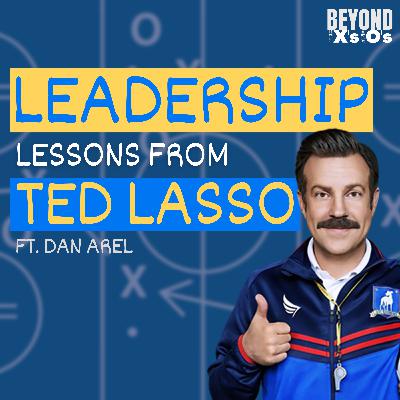
The hit Apple TV series Ted Lasso is a masterclass in going Beyond the X's and O's. So we invited Dan Arel to join us and breakdown our biggest lessons and takeaways from the show. Dan Arel has been coaching youth hockey for nearly a decade and is the Director of Coach & Player Development for the San Diego Oilers. In 2020, he was named The San Diego Gulls Foundation Coach of the Year. Arel is also a regular contributing writer to The Coaches Site, focusing on player development through small area games and good habits. Dan was a great guest for this episode given our mutual affinity for Ted Lasso as well as his passion to develop players, teams, and leaders. From our conversation with Dan, it was evident he embodies many Ted Lasso leadership qualities - such as humility and vulnerability. Additional topics we dive into included: Mental health in sport and coaching Creating and leaning on a support team Working with the mindset of parents in youth sport Finding your authentic coaching/leadership style as a key to success Make sure you check out Ted Lasso on Apple TV and enjoy the episode as we continue to go Beyond the X' and O's.
 1
1This assertion may be a little over the top - but Chris De Piero and I (Dr. Cassidy Preston) strongly feel it is warranted to say that the leaders of sport are failing. This episode of BXO's is a follow-up to the 'Is Hockey Broken?' episode we recently did - which doesn't just apply to hockey. Although the episode received a lot of support, it was also criticized by many - which drove us to double down and create this episode. People can and will disagree with us - we welcome those that oppose to share their take, but from our perspective it is clear that much of sport is not in a good place: As a former elite athlete - I experienced emotional and physical abuse. As a researcher - I examined the problems in sport through the critical lens of academia. As a mental performance coach - I see the problems firsthand day-in and day-out. The purpose of the last episode was to call on leaders to make more bold decisions and take action to improve hockey and all sports. We are not saying that all leaders are failing, but we are saying that too many leaders are not doing enough to help make the sports we love a better experience for all - and especially for our youth. I'm sure this won't be too popular of an opinion with those in leadership positions. Heck, I'm sure there will be some 'powerful' leaders and people at Hockey Canada that won't like what we have to say. But I'm not doing this to make friends or please people. I'm doing this because I think it is what needs to be done.

Performance anxiety is one of the leading reasons athletes struggle to perform when it matters most. In this podcast, we want to show you how to break through the limiting beliefs and cultural norms that perpetuate performance anxiety. This is a follow up to the How to Perform Under Pressure video recently posted. Here are the main concepts we unpacked to help athletes overcome performance anxiety: Building Up the Context Athletes, coaches, parents, and fans alike often attach too much meaning to the event or game. Athletes then build up the context in their mind and get too hyped up for a particular opponent, 'pressure' situation, or a 'must win' game. As a result, the context becomes overwhelming and the athlete mentally falls apart, they panic or hesitate on the field of play, and choke under the pressure. In last year's Stanley Cup final, Tampa Bay Lightning all-world defenceman Victor Hedman was asked about how he and his teammates are able to maintain a high level of play in their third straight Cup finals. His response was "easy, we never let the moment be bigger than any one particular play". This was a brilliant response. The ability to detach from the context and be dialed into the task at hand is the key to being totally present. This mindset allows them to have trust and faith, not only in their own abilities, but those of their teammates as well. It's no surprise they have been the Gold Standard for culture and excellence for the better part of a decade.
It is a hard yes - hockey is broken. This has a lot more to do with the structure than the people. Most people in hockey have good intentions but it is the structure of the game that does not foster an optimal environment. As a result, destructive behaviours and practices are normalized and repeated at all levels. Can it be fixed? It is less about 'fixing it' per-say but rather about getting better. But in order to improve something there needs to be clear measures of what to improve upon. We don't pretend to have all the answers but our opinions on measures that should be prioritized, tracked, and regularly shared by governing bodies include: Retention Rates - the number of kids coming back year over year Net Promoter Score - comes from the business world and is about how satisfied a client (athlete) is with their service, product or experience Abuse Claims - clearly there is a need to decrease all forms of abuse Does this mean we shouldn't care about Gold Medals? No - those are great and in fact, improving the structure and experience for players will lead to better development and even higher probabilities of Gold Medals. The concern is not that Hockey Canada prides itself on winning Gold Medals, but that it does not seem to pride itself enough about increasing retention rates, creating positive experiences, and ensuring a safe sporting environment. We don't know everything going on with every league and behind all the closed doors, but from our perspective we stand by this proclamation that Hockey Is Broken. The question to ask is what are we going to do about it? The answer is better leadership at all levels is needed to fix this structure. The bottom-up approach calls on coaches and organizations to go Beyond the X's and O's, do things differently, and raise their standards for the betterment of the athletes. There are coaches and organizations stepping up and we are hopeful that this number continues to grow. However, at what point will we see a top-down approach where Hockey Canada, provincial governing bodies, and the leagues make some bold and necessary decisions to change the structure, challenge normalized practices, and enforce a higher-standard for the game of hockey. Reach out, comment or share your opinions as we continue to go Beyond the X's and O's.
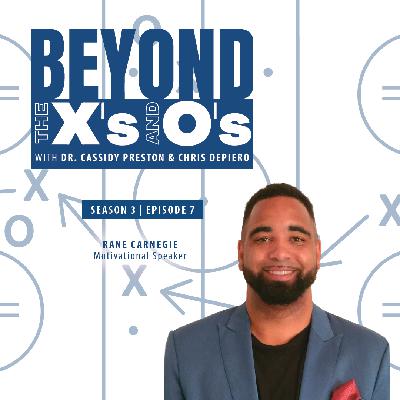
Rane Carnegie is a Motivational Speaker, minor hockey coach and the youngest grandchild of the late Hockey Hall of Famer Dr. Herb Carnegie. Rane was a former 1st round draft pick in the 2001 OHL draft. He went on to play semi pro in the AHL, ECHL, CHL and finished his career overseas in Sweden, Finland and France respectively. He has helped keep his grandfather's legacy alive through the Carnegie Initiative and continuing the Futures Aces Hockey School. Dr. Herb Carnegie broke barriers and made hockey history by being part of the only "All Black Line" in the semi-pro leagues in the 1940s. Following his hockey career, he established the first registered hockey school in Canada in 1955. His greatest contribution to society began by including a character development component along with hockey skills training. Rane is an avid sports fan, passionate storyteller, and a family man. Specifically in this episode we dove into: The experience of getting Dr. Herb Carnegie inducted into the Hall of Fame Minor hockey in the GTHL - Toronto, Ontario Coaches, parents, and players losing sight of their why His perspective on the changes in the game The cultural problems and unfair treatment — but also the beacons of hope & support Find out more about the Carnegie Initiative. Enjoy the episode as we continue to go Beyond the X's and O's.
Mike Snee is the Executive Director of College Hockey, Inc.'s. In this role he guides College Hockey Inc.'s marketing efforts to promote Division I men's college hockey and its work to help grow the number of institutions offering the sport. Snee is also a member of the Board of Directors of both USA Hockey and U.S. Hockey Hall of Fame. Prior to joining College Hockey Inc. Snee was the Executive Director for Minnesota Hockey. Before joining Minnesota Hockey, Snee spent nine years with Minnesota Sports & Entertainment, the parent company of the NHL's Minnesota Wild. Snee, a 1991 graduate of the University of St. Thomas in St. Paul, MN, started his sports business career as an intern with the Minnesota North Stars, and also worked for the NBA's Minnesota Timberwolves and the Minnesota Moose of the now-defunct International Hockey League. Mike helped us take a critical lens to the culture of hockey and questioned many of the long-standing and accepted norms in hockey. Specifically we covered: Concerns with the structure and system versus the people The importance of government control with rinks The Minnesota High School Model vs the Academies & current minor hockey models in Toronto, Detroit, Chicago, Boston etc. Why do we send so many kids away from home at 14 - 17? It was an insightful discussion that really went Beyond the X's and O's.
In this episode we decided to dive into accountability - a crucial component to any team or organization. We believe the standards of what is acceptable behaviour within the sport culture are changing, but without the proper structures of accountability real change will be slow. The shortcomings of Hockey Canada and other national sport organizations are prime examples of the importance of accountability - click here for a recent article that we make mention of in this episode. Accountability often gets this 'bad wrap' and gets interpreted as being overly critically, hard on people, and negative. But the reality is people want structure and clear expectations. This does not need to be a point of contention, but rather an opportunity for collaboration and clarity. The fact is when a culture of accountability is created, it helps both the team and individual people thrive. Thinking of accountability as a proactive rather than reactive process is essential. It pays off to invest the time and energy upfront creating clear expectations and agreed upon commitments. Trying to create a culture of accountability when you are in the middle of a fire and trying to clean up the mess is a lot more challenging. The concepts and strategies we cover in this episode apply to leadership at all levels. Reach out with any questions or comments. Enjoy this episode as we continue to go Beyond the X's and O's.
Lee Elias is a two-time award winning author and has coached at the international, professional, collegiate, and youth levels. He is also the founder of Hockey Wraparound and Game Seven Group. In addition, Lee's professional experience includes having helped organizations such as the NHL, NBC, Hearst Media, A&E, Madison Square Garden, and several sports organizations. Lee is an acclaimed keynote speaker in both virtual and in person events, and is the co-host of Our Kids Play Hockey, a top podcast in the hockey market. Lee is passionate about his mission to make the world believe in trust and teamwork through his coaching, speaking and consulting work. Lee is all about bringing people together. His enthusiasm is contagious and will leave you inspired to be a better leader. Furthermore, he provided numerous practical strategies any coach and leader can use to help bring people together. Specifically we covered: How his work with military veterans integration into society applies to teams and the importance of transitions and identity work The process of communication The accountability chart Trust being a foundational piece to any relationship The coaching staff is a team within the team Enjoy this episode as we go Beyond the X's and O's.
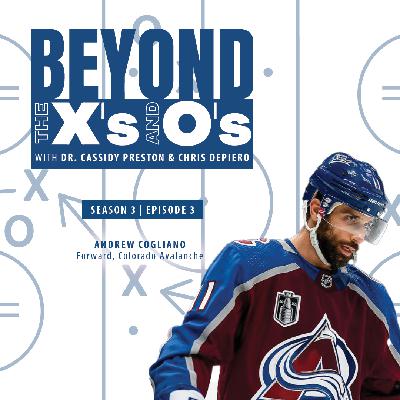
Andrew Cogliano has spent the past 15 seasons in the NHL amassing 1,140 games, of which he had a consecutive streak of 830 games. He recently won the Stanley Cup with the Colorado Avalanche. He previously played for the San Jose Sharks, Dallas Stars, Anaheim Ducks, and Edmonton Oilers (the team who picked him in the 1st Round of the 2005 NHL Entry Draft). Championships seem to follow Cogliano, as he has also won internationally representing Canada at the World Junior tournament, winning two gold medals, as well as being on the U-18 Canadian team that won gold, and representing Team Ontario, winning the gold medal at the U-17 World Hockey Challenge. He also led the St. Michael's Buzzers Jr. A team to an Ontario Championship. He truly has a team-first mentality and is dedicated to helping his teams win. In this episode Cogliano shares: How he has grown as leader throughout his career Insights into the recent Stanley Cup championship culture His speech to the team between game 5 and 6 in the finals The importance of mindset at the highest level of the game The bottom line is you will get to see a unique perspective into Cogliano's mindset and how he is clearly someone who goes Beyond the X's and O's.
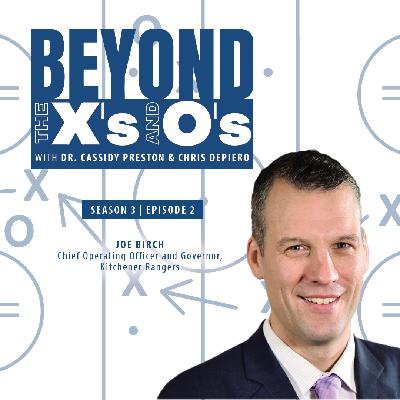
Joe Birch is the current Chief Operating Officer and Governor for the storied Kitchener Rangers of the Ontario Hockey League. Joe played in the OHL with the Rangers and the London Knights before finishing his playing career at Western University. He then embarked on a coaching career where he was an Assistant Coach with the St. Thomas Stars and had the chance to work with San Jose Sharks captain Logan Couture. His next stop was working at the OHL Head Office for 12 years. There he created and developed the position of Director of Player Recruitment and Education Services, which then led to a Senior Director of Hockey Development and Special Events position and, lastly, he was Vice President of Hockey Development with the OHL. Joe's diverse background in hockey provided us with some great insights to applying the principles of leadership to non-coaching positions. Specifically, we covered: His hockey journey and how he has been at the forefront of newly created positions within the OHL and the impact that they have had How he has drawn on his playing, coaching and operational roles within the game to develop the 'human' skills of leadership He highlighted the Kitchener Rangers initiatives surround Diversity, Equity and Inclusion and how that has been such a rewarding experience for all who are involved How he has conceptualized his org chart to optimize communication and keep the organization as whole at the heart We hope you enjoy this episode of the Beyond the X's and O's Podcast.
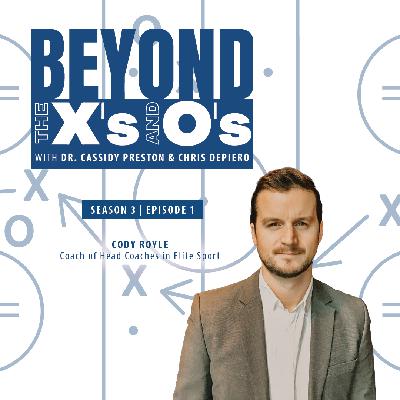
Cody Royle is the Head Coach of AFL Team Canada, the men's national team for Australian Rules Football. He was born and raised in Australia, but has lived in Canada for over a decade now. Cody has spent the last number of years researching, interviewing, and writing about leadership, culture, and performance. As a result he is the author of two books on these subjects, Where Others Won't and The Tough Stuff. In addition he has his own podcast titled, Where Others Won't, where he has interviewed the likes of Joe Dumars, Adam Grant, Patti McCord, Michael Gervais, James Kerr, Rasmus Ankersen, Tony Granato and Peter DeBoer. Our discussion with Cody validated a lot of what our experiences and assumptions have been about coaching. Cody provided both anecdotal as well as empirical evidence to support the concept that coaches need to be high performers themselves, which in turn allows for their athletes to achieve peak performance. This self-care included nutrition, sleep, fitness, and most importantly in having someone to work with, a listening partner, who is outside of the inner circle who has no judgement, and is totally impartial. Cody's discussion is a great kick off to season 3 of the Beyond the X's and O's Podcast. Listeners are sure to take away numerous insights on how to be an effective coach and leader with today's athlete. Enjoy the discussion. Find out more about Cody at: https://www.codyroyle.com/
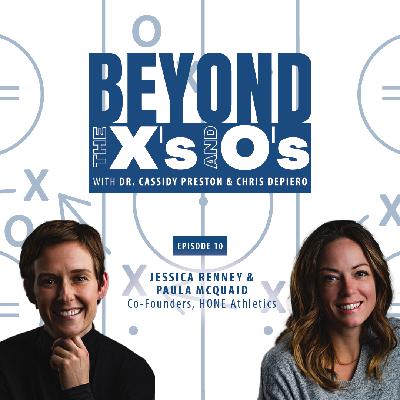
Jessica Renney and Paula McQuaid are the co-founds HONE Athletics, are both practicing Psychotherapists, and are Professional Members of the Canadian Counselling and Psychotherapy Association. Growing up, Jessica was an avid athlete and her dad coached 13+ years in the NHL. Paula was also an avid athlete and has had the opportunity to work with Hockey Canada as a Mental Performance Consultant with the Women's U-18 National Team, winning a bronze medal (2018), gold medal (2019) and silver medal (2020) at IIHF World Championships. They combined their athletic and professional experiences to create Hone Athletics. In our final episode of our declaration of war against the old school coaching mentality, Jessica and Paula really spoke to the importance of mental health and the needed shift in sport. Here are some key takeaways: The culture for sport is one of the biggest indicators for an athlete's mental health Athletes want to talk about their mental health and have that support That athletes need sport specific mental health strategies How mental health has been neglected, underserved and untapped in sport The importance for coaches to take care of their own mental health It is the coaches responsibility to a make a difference in the culture, but a lot don't know how to do it Mental health and mental performance are not about 'fixing people' Coaches have an enormous opportunity to shift the culture and have impact on their athletes outside of sport This honest and insightful discussion around mental health in sport is exactly why we dedicated this season to fight against the 'Old-School' ways of thinking. We get what we tolerate and coaches need to take responsibility. Please share this episode with your fellow coaches, players and parents.

Brock McGillis is the first openly gay men's professional hockey player, public speaker and a leading activist in the LGBTQ2S+ space. McGillis studied communications and sports community at Laurentian University and is certified in EDI from Cornell University. His rare combination of education and lived experience have allowed him to become an influential LGBTQ+ advocate, both in the world of sports and beyond. McGillis is an international speaker and brings his unique experiences to corporations, events, sports teams, and schools. His continuous work to shift the conversation around sports and pride has been highlighted in media formats across North America and earned him recognition as one of The Hockey News' 100 most influential people in hockey for 2022. McGillis shared honest and raw experiences that humanize his story. As a result, we believe his inspiring perspective is a crucial piece in our fight against the 'Old-School' ways of thinking. The key takeaways include: The conformity to cultural norms and the need to challenge the status quo Gatekeepers need to evolve and are key to shifting the cultural norms Fortunately he had support from his family, but not everyone in sport was supportive - what would the impact be for those who don't have support in either? How hockey players can be influencers and positive shift makers in our society The need to shift from superficial 'Bro' discussions to deeper meaningful connections in the sporting culture Performative acts of inclusion that have little to no impact Luke Prokop's story McGillis' story can have a significant impact on our culture - so join us in the fight against the 'Old-School' ways of thinking and share this episode with your fellow coaches, players and parents.
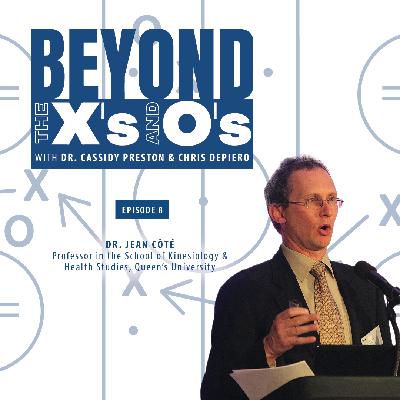
Dr. Jean Côté is a professor in the School of Kinesiology and Health Studies at Queen's University, where he served as the Director of the School from 2006-2019. He has published more than 160 refereed papers on a variety of sport psychology and youth sport topics and 50 book chapters. He is currently researching the examination of parents as "consumers" in the youth sport system and the impact of Transformational Coaching on athletes' development. He has presented his work to both sport governing organizations and academic conferences throughout the world and has delivered many keynote addresses at major national and international conferences. Dr. Côté shared key insights for coaches to integrate transformational leadership principles: How the soft skills are the "power" skills Coaching the person before the player - get to know your athletes as people Sport can be a tool for personal development Dispelling the notion that coaches need to keep control - understanding the progression of autonomy Small everyday behaviours make a big difference The role of sociocultural factors and the environment - coaches need to be aware that one size does not fit all in player development The research has made it clear that transformational coaching works, but the challenge is to make it the new norm. See the resources below for a summary of Dr. Côté's work on Transformational Coaching. Join us in this fight against the 'old school' coaching mentality by sharing with your fellow coaches!
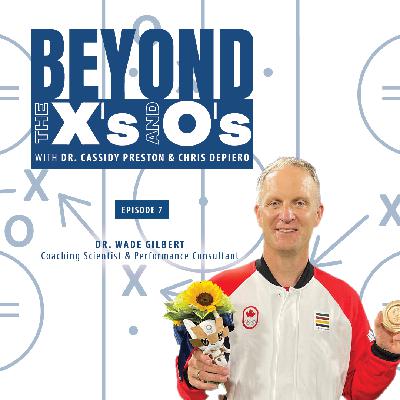
Dr. Wade Gilbert is an internationally renowned performance consultant and award-winning professor in the Department of Kinesiology at California State University, Fresno. He is author of the highly acclaimed book Coaching Better Every Season. Gilbert is a long-time advisor to the United States Olympic and Paralympic Committee Coach Education Department and primary coach education consultant for USA Football. Specific to hockey, he has served as an advisor to leading hockey organizations and coaching staffs around the world, including USA Hockey, Hockey Canada, IIHF, NHL/NHLPA, WHL, and USHL. Most recently, Gilbert served as the mental performance coach for the 2020 Tokyo Olympics medal-winning Canadian women's softball team. Wade has literally written the book on Coaching Better Every Season - here are some of the key takeaways from the episode: There is no excuses for coaches not to be learning (don't let your insecurities, pride, or ego get in the way) Awaken to the people side of coaching (people first, sport second) The essence of coaching is navigating the moments Best practices versus best principles (personalize the principles to your situation) Each season is a journey and your job is to build a sturdy ship - there will be storms, but with a sturdy ship you will be okay The bottom line is that as a coach you might not be able to fully control winning, but you can control the experience your team has. Safe to say, Wade is an advocate in the fight against the 'old school' coaching mentality and you too can join us by sharing with your fellow coaches!
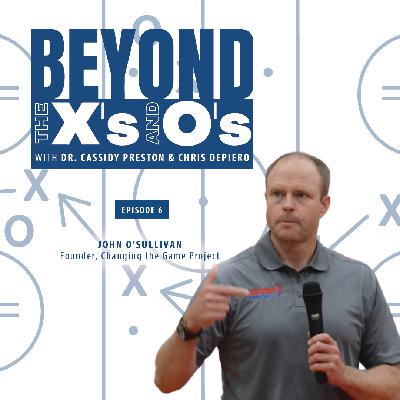
John O'Sullivan is an internationally known TEDx Speaker and the founder of the Changing the Game Project. John is the author of two #1 bestselling books: Changing the Game and Every Moment Matters; he is also the host of the Way of Champions Podcast, one of the top-rated podcasts for coaches. John is a former collegiate and professional soccer player, and has coached for over 20 years on the youth, high school and college level. He has consulted with the US Olympic Committee, US Soccer, USA Football, US Lacrosse, USA Swimming, Ireland Rugby, Aussie Rules Football and many more. John shared some keen insights in this episode: Positive shift and movement in coaches, but parents still need education How there is an imaginary fear of asking volunteers to do more The importance of focusing on creating an environment and culture for your team Self-reflection practices he has used and encourages other coaches to do so The #1 cause for coach burnout is losing sight of their why How sport is neutral and it's the adults that make it a positive or negative experience When the eyes are shining you nailed it John is without a doubt a huge advocate in our war against the 'old-school' coaching mentality. You can join us by sharing with your fellow coaches!
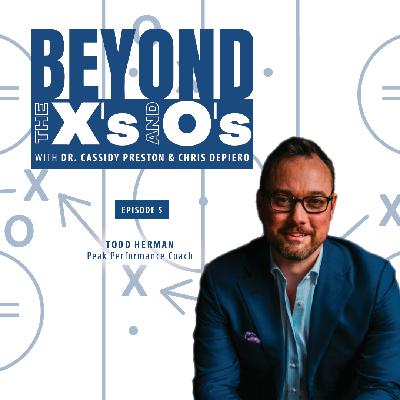
Todd Herman is a Peak Performance Coach, International Speaker, and WSJ Bestselling Author Of The Alter Ego Effect: The Power Of Secret Identities To Transform Your Life. Todd has been entrenched in the world of elite performers for over two decades working with the highest achievers in Sports and Business to help them achieve their most ambitious goals. Simply put, Todd Herman helps ambitious people do hard things. Todd provides a lot of great insights in this episode: How he got started, sharing his early experiences with Harvey Dorfman, Roger Clemens, and Ryan Smith Why we need to stop 'old school' practices like the MLB "Is his wife hot?" How Scandinavian countries are ahead of the curve on performance coaching How performance coaching can be a proactive and enhancing pursuit instead of a reactive That we should reframe coaching (leadership) as being a verb not a noun - and that it is not an additive process but more a subtractive process of the ego Why helping athletes enjoy the process of growth is a key definition of a successful coach What needs to change so that athletes can get the true benefits of sport The bottom line is that Todd has built his career on helping athletes and leaders create the optimal identities to achieve elite performance. Safe to say, Todd is an advocate in the fight against the 'old school' coaching mentality and you too can join us by sharing with your fellow coaches!
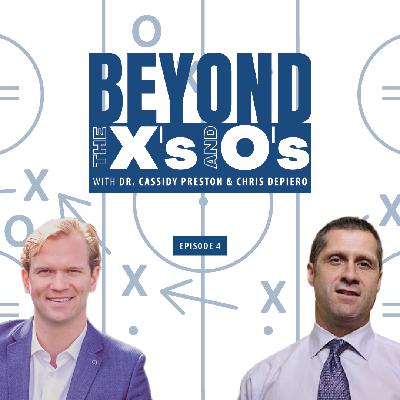
In this episode we double down on our season 2 Declaration of War by contrasting the 'old school' coaching mentality with the New Era of Coaching. This episode was not originally in the line-up, but we added it because of numerous messages we received in support of this season, some of which asked for more practical advice for how to overcome 'old school' ways of thinking. Plus there was an interesting message against this season and so we wanted to affirm that the 'old school' mentality is still lingering - we see it daily from many of the athletes we work with. We want to ensure that people are understanding the 'command and control' coaching of the past is not acceptable and that coaches need to challenge themselves to grow in their understanding of what effective coaching is. Specifically, in this episode, we provide practical suggestions from four different perspectives within the game: Head Coaches - The importance of evolving as a coach and shifting away from common 'old school' behaviours. Assistant Coaches - What to do if you find yourself working with an 'old school' mentality head coach. Players - How NOT to let the coaches be an excuse for their mindset and performance. Parents - This is a huge one for youth sports in helping shift the cultural norms and setting higher standards. Continue to join us in the fight against the 'old school' coaching mentality by sharing with your fellow coaches!
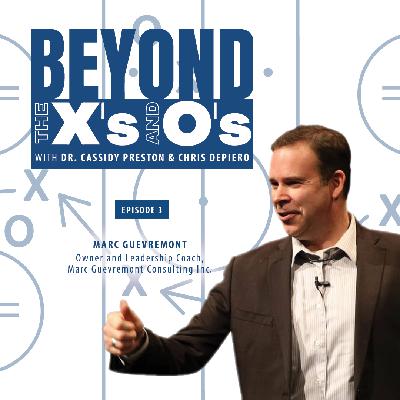
So many people talk about the importance of leadership, but Marc Guevremont actually has built a 20+ year career working with teams and coaches from major junior and NCAA levels, all the way to the NHL, to maximize their leadership and create cultures of excellence. In this episode, Guevremont drops a ton of knowledge and throws in some great examples to help coaches invest in developing their 'soft' skills of leadership and moving away from the 'old school' mentality. Specifically he breaks down the following: The relationship between leadership, trust, culture, and results Connection (thermometer) vs correction (thermostat) Value based principles: value self, value other's perspective, and add value to others Safe to say, Guevremont is an advocate in the fight against the 'old school' coaching mentality and you too can join us by sharing with your fellow coaches!
We have enjoyed watching the All or Nothing: Toronto Maple Leafs series on Amazon Prime. But we wanted to take a critical lens to this series to break down what effective leadership is and highlight why coaches should NOT take an all or nothing approach to results. We challenge coaches to be selective in what they take from these types of series (especially the Toronto Maple Leafs documentary) and not just imitate what is seen on the limited insider footage. One key assumption we challenge is about Process vs Results. Specifically, we break down some important nuances that are often overlooked for building high standards and a championship culture within a team or organization. Thanks for joining us in the fight against the 'old school' coaching mentality. You can help the cause by sharing with your fellow coaches!

Comments

Download from Google Play

Download from App Store
 United States