


 Claim Ownership
Back to the Bible Canada with Dr. John Neufeld
Subscribed: 1,132Played: 96,125
Subscribe

©2025 The Good News Broadcasting Association of Canada
Description
Join Dr. John Neufeld from Back to the Bible Canada in daily expositional bible teaching.
2263 Episodes
Reverse
Life rarely goes according to plan — and Paul's journey to Rome was no exception. In this message, Dr. John follows Paul as he embarks on his voyage to Rome, tracing how God's providence weaves through every detail, from the kindness of a centurion to the dangers of a worsening sea. A grounding reminder that Christ, not circumstances, directs the lives of those who belong to him.Jesus Goes Global: A Prisoner of Christ: When we read the book of Acts, we tend to give primary attention to the formation and growth of the Church in the early chapters. We then highlight the three mission trips of Paul. But some of the most profound lessons lie in the final chapters of Acts 25-28. Dr. John will show God extending His Kingdom through the personal struggle and imprisonment of Paul. The world’s worst cannot impede God’s best.
Who is the real Jesus — and how do we know? In this message, Dr. John examines Paul's bold proclamation before King Agrippa and Governor Festus, showing that the Jesus Paul preached was never disconnected from Scripture, but was always its fulfilment. A timely and convicting call to know and believe in the authentic Jesus — the one revealed in the Word.Jesus Goes Global: A Prisoner of Christ: When we read the book of Acts, we tend to give primary attention to the formation and growth of the Church in the early chapters. We then highlight the three mission trips of Paul. But some of the most profound lessons lie in the final chapters of Acts 25-28. Dr. John will show God extending His Kingdom through the personal struggle and imprisonment of Paul. The world’s worst cannot impede God’s best.
What makes a testimony truly powerful? In this message, Dr. John explores Paul's defense before King Agrippa as a masterclass in sharing your faith — walking through who Paul once was, his encounter with the risen Jesus on the road to Damascus, and the life of obedience that followed. A compelling look at how a well-told testimony gives all glory to Christ and can stop a room in its tracks.Jesus Goes Global: A Prisoner of Christ: When we read the book of Acts, we tend to give primary attention to the formation and growth of the Church in the early chapters. We then highlight the three mission trips of Paul. But some of the most profound lessons lie in the final chapters of Acts 25-28. Dr. John will show God extending His Kingdom through the personal struggle and imprisonment of Paul. The world’s worst cannot impede God’s best.
Paul has been given the floor — and he knows exactly what to do with it. Standing before King Agrippa, military tribunes, and the leading men of Caesarea, he doesn't just defend his actions. He defends his faith. Dr. John walks us through the opening of Paul's remarkable speech and lands on the question at the heart of it all: why is it so hard to believe that God raises the dead?Jesus Goes Global: A Prisoner of Christ: When we read the book of Acts, we tend to give primary attention to the formation and growth of the Church in the early chapters. We then highlight the three mission trips of Paul. But some of the most profound lessons lie in the final chapters of Acts 25-28. Dr. John will show God extending His Kingdom through the personal struggle and imprisonment of Paul. The world’s worst cannot impede God’s best.
Jesus told his disciples it would happen — that they would be dragged before governors and kings for his sake. In Acts 25, Paul finds himself in an ornate hall surrounded by military tribunes, city officials, and a king, with no idea what's about to unfold. Dr. John traces the thread of legal trouble that runs through the entire book of Acts and lands on a surprising truth: the trials that feel like threats are often opportunities in disguise.Jesus Goes Global: A Prisoner of Christ: When we read the book of Acts, we tend to give primary attention to the formation and growth of the Church in the early chapters. We then highlight the three mission trips of Paul. But some of the most profound lessons lie in the final chapters of Acts 25-28. Dr. John will show God extending His Kingdom through the personal struggle and imprisonment of Paul. The world’s worst cannot impede God’s best.
Paul is in prison, and somewhere across town, a conversation is happening that will decide his future — and he has no idea. Governor Festus and King Agrippa are weighing his case without him. Dr. John walks us through this private exchange and draws out a truth we all need in those moments when we have no control: when our lives are in the hands of others, they are never out of the hands of God.Jesus Goes Global: A Prisoner of Christ: When we read the book of Acts, we tend to give primary attention to the formation and growth of the Church in the early chapters. We then highlight the three mission trips of Paul. But some of the most profound lessons lie in the final chapters of Acts 25-28. Dr. John will show God extending His Kingdom through the personal struggle and imprisonment of Paul. The world’s worst cannot impede God’s best.
We make decisions every day with incomplete information — and sometimes we find out later things could have gone differently. In Acts 25, Paul appeals to Caesar to escape a rigged system, only to learn he may have just missed his shot at freedom. Dr. John uses this moment to explore one of life's most relatable struggles: how do we stop second-guessing ourselves and trust that God was in our corner even when things don't go the way we planned?Jesus Goes Global: A Prisoner of Christ: When we read the book of Acts, we tend to give primary attention to the formation and growth of the Church in the early chapters. We then highlight the three mission trips of Paul. But some of the most profound lessons lie in the final chapters of Acts 25-28. Dr. John will show God extending His Kingdom through the personal struggle and imprisonment of Paul. The world’s worst cannot impede God’s best.
Paul is in prison — but who really put him there? In this introduction to the final four chapters of Acts, Dr. John explores how God's providence works through injustice, inconvenience, and interrupted plans. From Paul's unjust imprisonment in Caesarea to Luther translating the Bible in a castle basement, discover how our greatest setbacks can become our greatest assignments — and what it means to call yourself a prisoner of Christ Jesus.Jesus Goes Global: A Prisoner of Christ: When we read the book of Acts, we tend to give primary attention to the formation and growth of the Church in the early chapters. We then highlight the three mission trips of Paul. But some of the most profound lessons lie in the final chapters of Acts 25-28. Dr. John will show God extending His Kingdom through the personal struggle and imprisonment of Paul. The world’s worst cannot impede God’s best.
Is the good life measured by wealth and comfort, or by something deeper? In this second part of Psalm 37, Dr. John Neufeld examines David's description of the wicked versus the righteous, revealing that true prosperity consists of generosity, wisdom, justice, and inner peace. God promises the righteous: He will grant the desires of their hearts, bring their righteousness to light, give them an eternal inheritance, and never abandon them.God's Provision: The sheep don't know what they need, but the shepherd does—and he arranges everything for their care. This is why David declared, "The LORD is my shepherd"—because God provides all we truly want and need. In this five-message series, Dr. John Neufeld explores Psalms 23 and 37, unpacking what it means to trust the Good Shepherd who guides, protects, and provides for our deepest needs.
What do you do when evil people seem to prosper while you struggle? In this episode, Dr. John Neufeld explores Psalm 37, where an elderly David offers timeless counsel for navigating difficult seasons. David gives three key commands: don't become emotionally distraught, keep your heart centered on God, and remain obedient regardless of circumstances—whether facing persecution, illness, or betrayal.God's Provision: The sheep don't know what they need, but the shepherd does—and he arranges everything for their care. This is why David declared, "The LORD is my shepherd"—because God provides all we truly want and need. In this five-message series, Dr. John Neufeld explores Psalms 23 and 37, unpacking what it means to trust the Good Shepherd who guides, protects, and provides for our deepest needs.
David confronts our three greatest fears: death, enemies, and the future. Dr. John Neufeld explores Psalm 23:4-6, showing how the Good Shepherd protects us through the "valley of the shadow of death"—because it's only a shadow, not death itself. God prepares a banquet for us in full view of our enemies, demonstrating His care while they watch. And His goodness and mercy will follow us forever—not just for our earthly days, but for eternity. Our best days are ahead of us.God's Provision: The sheep don't know what they need, but the shepherd does—and he arranges everything for their care. This is why David declared, "The LORD is my shepherd"—because God provides all we truly want and need. In this five-message series, Dr. John Neufeld explores Psalms 23 and 37, unpacking what it means to trust the Good Shepherd who guides, protects, and provides for our deepest needs.
How can David confidently say "I shall not want" when we live with so many unfulfilled desires? Dr. John Neufeld explores Psalm 23:2-3, unpacking four ways the Good Shepherd provides for our daily needs: sufficient food ("green pastures"), peace for anxious minds ("still waters"), forgiveness and spiritual renewal ("restores my soul"), and wise guidance ("paths of righteousness"). Like sheep who lie down only when fully satisfied, we can rest in the Shepherd's care.God's Provision: The sheep don't know what they need, but the shepherd does—and he arranges everything for their care. This is why David declared, "The LORD is my shepherd"—because God provides all we truly want and need. In this five-message series, Dr. John Neufeld explores Psalms 23 and 37, unpacking what it means to trust the Good Shepherd who guides, protects, and provides for our deepest needs.
 1
1Our culture creates endless wants—bigger houses, newer cars, more stuff. But what does it mean when David declares, "The LORD is my shepherd; I shall not want"? Dr. John Neufeld explores Psalm 23:1, clarifying that this doesn't mean we stop wanting things, but that we shall lack nothing we truly need. Like a good shepherd who knows exactly what his sheep need, God has arranged everything for our care.God's Provision: The sheep don't know what they need, but the shepherd does—and he arranges everything for their care. This is why David declared, "The LORD is my shepherd"—because God provides all we truly want and need. In this five-message series, Dr. John Neufeld explores Psalms 23 and 37, unpacking what it means to trust the Good Shepherd who guides, protects, and provides for our deepest needs.
The New Apostolic Reformation movement claims to have contemporary apostles who receive new revelation equal to Scripture, effectively ending sola scriptura. Dr. John Neufeld explains how this movement argues the Bible is insufficient for today's church and that modern "apostles" give new words adding to biblical truth. Dr. John demonstrates that unless we have a closed canon—66 books and no more—we're saying Jesus didn't complete God's plan.The Case for Sola Scriptura: Is the Bible alone our ultimate authority? In this 5-part series, Dr. John Neufeld defends sola scriptura—that Scripture alone is our final authority for faith and practice. He addresses challenges from Roman Catholicism, Protestant liberalism, and the New Apostolic Reformation. Dr. John demonstrates that the 66 books of Scripture form a closed canon—God's complete and final word.
While Jesus affirmed the complete authority and accuracy of Scripture, modern Protestant liberalism has abandoned sola scriptura by claiming the Bible contains errors or is merely humanity's search for God. Dr. John Neufeld traces how German scholars began questioning Moses' authorship and denying Jesus' miracles, replacing biblical Christianity with cultural affirmation and self-actualization. Wherever the preaching of Scripture is absent, sola scriptura is disregarded, and the church is hollowed out.The Case for Sola Scriptura: Is the Bible alone our ultimate authority? In this 5-part series, Dr. John Neufeld defends sola scriptura—that Scripture alone is our final authority for faith and practice. He addresses challenges from Roman Catholicism, Protestant liberalism, and the New Apostolic Reformation. Dr. John demonstrates that the 66 books of Scripture form a closed canon—God's complete and final word.
Can tradition hold equal authority with Scripture? Dr. John Neufeld examines what Jesus taught about tradition in Mark 7:1-13, where the Pharisees criticized His disciples for not following ceremonial hand washing traditions. Jesus responded by quoting Isaiah: "They teach as doctrines the commandments of men." When tradition conflicts with Scripture—as when the Pharisees used "Corban" to avoid honouring their parents—tradition always loses. Jesus Himself practiced sola scriptura.The Case for Sola Scriptura: Is the Bible alone our ultimate authority? In this 5-part series, Dr. John Neufeld defends sola scriptura—that Scripture alone is our final authority for faith and practice. He addresses challenges from Roman Catholicism, Protestant liberalism, and the New Apostolic Reformation. Dr. John demonstrates that the 66 books of Scripture form a closed canon—God's complete and final word.
Roman Catholics argue that sola scriptura has splintered Protestantism into countless interpretations. Dr. John Neufeld responds by distinguishing between sola scriptura (Scripture as final authority) and solo scriptura (Scripture alone, rejecting all church history). Historic Protestants affirm Scripture's ultimate authority while valuing church fathers and the ecumenical creeds.The Case for Sola Scriptura: Is the Bible alone our ultimate authority? In this 5-part series, Dr. John Neufeld defends sola scriptura—that Scripture alone is our final authority for faith and practice. He addresses challenges from Roman Catholicism, Protestant liberalism, and the New Apostolic Reformation. Dr. John demonstrates that the 66 books of Scripture form a closed canon—God's complete and final word.
Can the Bible alone be our ultimate authority, or do we need something more? Dr. John Neufeld begins a defense of sola scriptura—the principle that Scripture alone is our final authority for faith and practice. Addressing objections from Roman Catholics and others, Dr. John demonstrates that Jesus Himself chose the apostles and promised the Holy Spirit would guide them into all truth. The church didn't decide which books belong in the Bible—it simply recognized what God had already established.The Case for Sola Scriptura: Is the Bible alone our ultimate authority? In this 5-part series, Dr. John Neufeld defends sola scriptura—that Scripture alone is our final authority for faith and practice. He addresses challenges from Roman Catholicism, Protestant liberalism, and the New Apostolic Reformation. Dr. John demonstrates that the 66 books of Scripture form a closed canon—God's complete and final word.
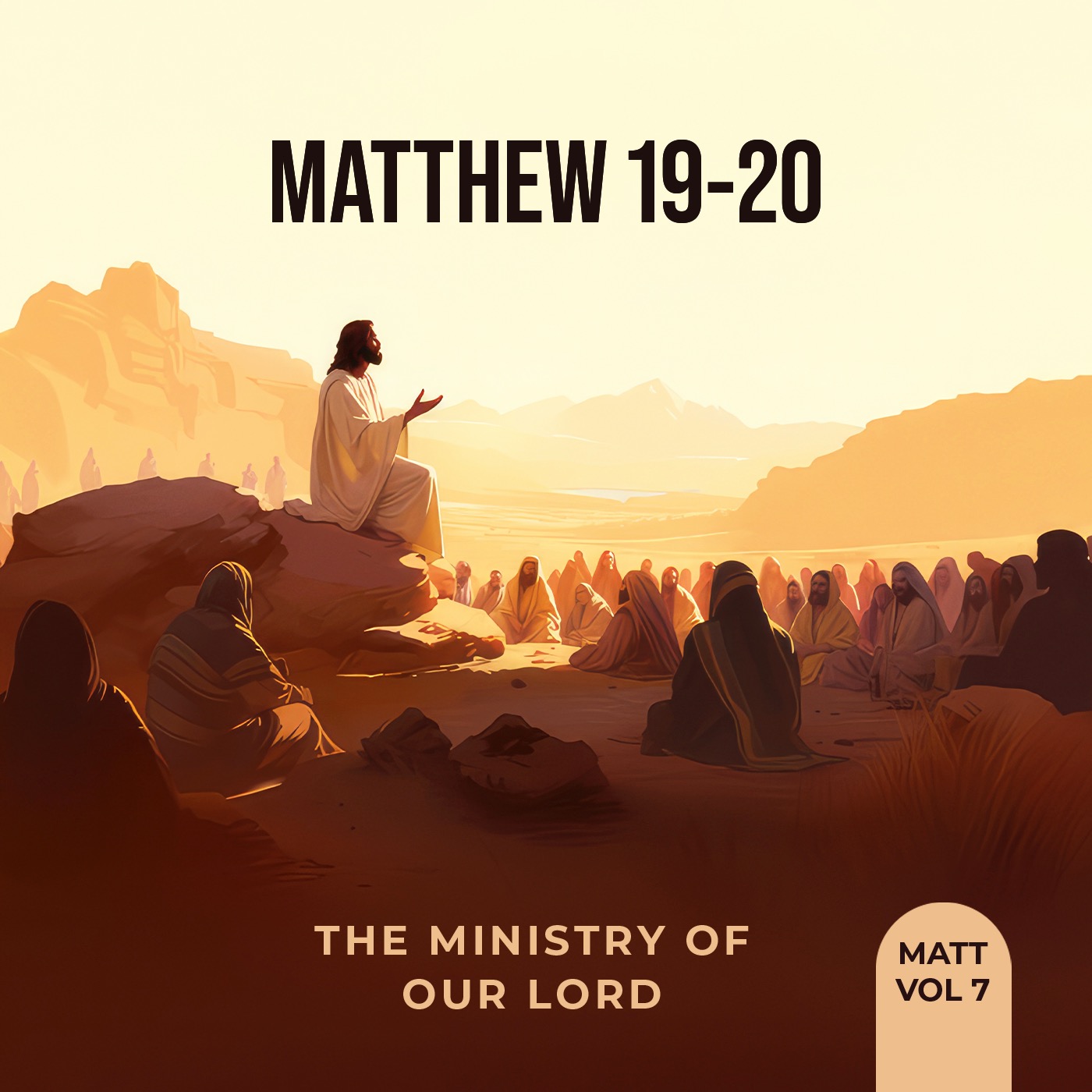
Throughout history, people have reinterpreted Jesus—as a social reformer, a prophet, even just a good teacher. Dr. John explores Matthew 20:29-34, where two blind men publicly declare Jesus as "Son of David"—the Messiah. For years, Jesus kept His identity secret, but now, on the road from Jericho to Jerusalem, He allows the declaration to stand and heals the blind men in front of the crowd. This moment marks the end of the messianic secret and sets the stage for His crucifixion for claiming to be the Son of God.The Ministry of Our Lord: Join Dr. John Neufeld for a journey through Matthew 19-20, where Jesus makes His final trip to Jerusalem. The crowds are growing, expecting triumph and glory. But what Jesus teaches is startling: humility over greatness, sacrifice over power. This Messiah will not rule from a throne—He will reign from a cross. Discover what it means to follow a suffering King.
We all want to be great—to achieve something memorable, to be recognized and honored. Dr. John explores Matthew 20:20-28, where James and John ask Jesus for the seats of highest honor in His kingdom. Their request reveals the human hunger for status and recognition that we all share. But Jesus turns greatness upside down: "Whoever would be great among you must be your servant." True greatness isn't found in ruling over others but in laying down your life to serve them, just as Jesus gave His life as a ransom for many.The Ministry of Our Lord: Join Dr. John Neufeld for a journey through Matthew 19-20, where Jesus makes His final trip to Jerusalem. The crowds are growing, expecting triumph and glory. But what Jesus teaches is startling: humility over greatness, sacrifice over power. This Messiah will not rule from a throne—He will reign from a cross. Discover what it means to follow a suffering King.


Download from Google Play

Download from App Store
 United States
so grateful for this wonderful solid teaching in a world of ear tickling teachers
salvation
Having issues playing some of these
having issues paying some of these messages
a great message about the beautiful partnership in marriage 💑
Sound advice for the resolution of disputes in a church setting.
Excellent teaching today! 👍
More excellent teaching today! 👍
Excellent teaching! 👍
Thanks, John! Keeping my eyes on the prize "to which I'm called heavenward" (Philippians 3 v 12-14) is something that I strive to do every day.
Just the kind of teaching I need to hear today. 👍
Great teaching, as always! 👌✝️
Good teaching ☺️
I needed this teaching today. 🙏🏻
Awesome teaching today, John! It's always helpful to have a healthy reminder to be constantly vigilant no matter the circumstances we are in today.
Thank you for your teaching today, John. Very helpful to gain a greater understanding of how churches can and do turn people away from the Bible.
Such a wonderful series to have fed from. Thank you team, for your tireless efforts on this podcast.
Such good teaching. 👌
I'm glad I know who I have believed in now for twenty three years now. My future is secure.
I am looking forward to it already! 👍