


 Claim Ownership
Poverty Research & Policy
Subscribed: 565Played: 4,677
Subscribe

Description
The Poverty Research & Policy Podcast is produced by the University of Wisconsin-Madison's Institute for Research on Poverty (IRP) and features interviews with researchers about poverty, inequality, and policy in the United States.
101 Episodes
Reverse

Points-based attendance policies are punitive employer systems that track employee reliability by assigning points for unplanned absences or lateness. Accumulation of points can lead to disciplinary action or termination, which often has greater impact on people with health issues or caregiving responsibilities. In this podcast episode, Dr. Kess Ballentine and Dr. Meredith Slopen join us to discuss their recently published papers that examine how points-based policies affect workers. They discuss two papers: Points-Based Attendance Systems Associated With Presenteeism Despite Paid Sick Leave Protections and The Prevalence and Consequences of Punitive Time and Attendance Policies in the Food and Retail Industries. Kess Ballentine is an Assistant Professor in the School of Social Work at Wayne State University. Meredith Slopen is an Assistant Professor in the School of Social Welfare at Stony Brook University.
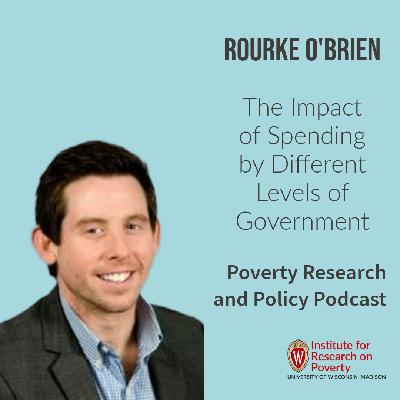
There has been a lot of research on the impact of levels of public expenditures on a variety of social outcomes, including health and economic mobility. But beyond the dollars spent, some researchers say that we should also be considering what level of government oversees that spending. For this episode, Dr. Rourke O'Brien joins us to discuss his recent work on measuring fiscal centralization, and its tangible effects on people's lives. Rourke O'Brien is Associate Professor of Sociology & and of Public Health & Health Policy at Yale University and previously served as a Senior Policy Advisor at the U.S. Department of the Treasury. He is also an IRP Affiliate.
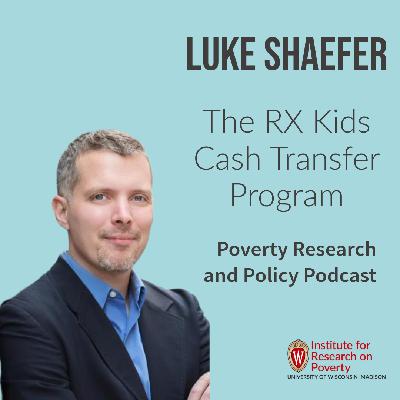
Unconditional cash transfers programs are being piloted across the country. For this episode, Dr. Luke Shaefer shares his work with RX Kids—the nation's first-ever, community-wide, prenatal and infant cash prescription program, which is taking place in Michigan. This innovative model uses a mix of TANF funds in combination with philanthropic dollars to offer support to all expecting and new moms in several low-income Michigan communities. Luke Shaefer is the Hermann and Amalie Kohn Professor of Social Justice and Social Policy at the Gerald R. Ford School of Public Policy at the University of Michigan. He is also a Professor of Social Work, and the Director of Poverty Solutions, also at the University of Michigan. In addition, he is the co-director of RX Kids and is also an IRP Affiliate.
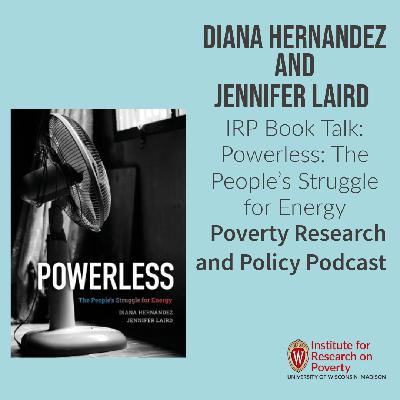
Millions of households in the United States struggle to maintain access to the energy necessary to heat and cool their home, to have power to cook and have hot water, and to literally keep the lights on. And a disconnection—or even the threat of having your power turned off—can be devastating. For this episode, Dr. Diana Hernandez and Dr. Jennifer Laird join us to discuss their new book, "Powerless: The People's Struggle for Energy." They share their research on the impact of energy insecurity and provide detailed policy and practice recommendations to address it. Diana Hernandez is an associate professor of sociomedical sciences at in the Mailman School of Public Health at Columbia University, as well as co-Director of the Energy Opportunity Lab at the Columbia Center for Global Energy Policy. Jennifer Laird is an assistant professor in the department of sociology at Lehman College.

Comments

Download from Google Play

Download from App Store
 United States