


 Claim Ownership
Foreign Languages Press - Audiobooks
Subscribed: 86Played: 1,640
Subscribe

© Foreign Languages Press - Audiobooks
Description
The Official Audiobook Page for Foreign Languages Press, a Marxist-Leninist-Maoist Publishing House
buymeacoffee.com/flpaudio
buymeacoffee.com/flpaudio
55 Episodes
Reverse

Written in 1975 by a collective led by James Boggs, A New Outlook on Health describes how healthcare developed in the US under capitalism and its consequence of alienating people from their own bodies. The original pamphlet was a call to action, to engage people, to organize and educate themselves to be active in their own health. An introduction and footnotes by the Redspark Collective provide an update and analysis of how capital’s further penetration into the healthcare sector set the stage for the US’ massive failure to respond to the COVID-I9 pandemic.Note From The Publisher: 00:04Introduction: 01:13Preface: 52:45Chapter 1 The Fatal Illness Of Medicine In America: 57:23Chapter 2 The Medical-Industrial Complex: 01:23:25Chapter 3 Only We Can Change The Way It Is: 01:49:11
 1
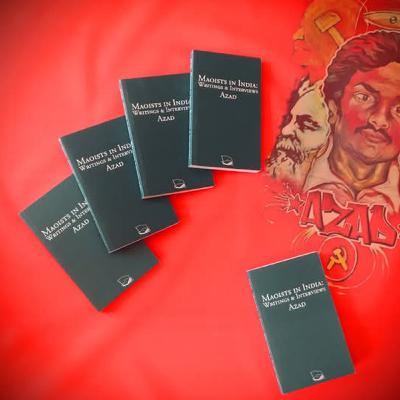
1Cherukuri Rajkumar (1954-2010), popularly known as Azad, spokesperson of the Communist Party of India (Maoist), served the cause of Indian revolution for over thirty five years till he was murdered by state forces. This is a collection of his writings and interviews about the position of Indian Maoists on various political, economic and social issues.Foreword - 00:08A Brief Biography - 04:261. Maoists in India - 08:432. On the "Comprehensive Peace Agreement" in Nepal - 48:063. Interview on the Developments in Nepal - 56:104. On V. Prabhakaran - 1:34:545. On Patel Sudhakar Reddy & Venkataiah - 1:40:586. On the Election Boycott Tactic of the Maoists - 1:45:327. Interview on the Government Military Offensive - 2:16:438. Maoists on Talks - 3:41:439. Red Salutes to Balagopal - 3:47:1810. On Telangana - 3:51:2011. On Sakhamuri Appa Rao & Kondal Reddy - 3:58:1712. On Dantewada Guerrilla Attack - 4:05:2113. Interview to The Hindu - 4:14:0714. Letter to Swami Agnivesh - 5:28:2615. On the Jnaneswari Express Tragedy - 5:37:1216. On Bhopal Verdict - 5:43:2617. A Last Note to a Neo-Colonialist - 5:51:19
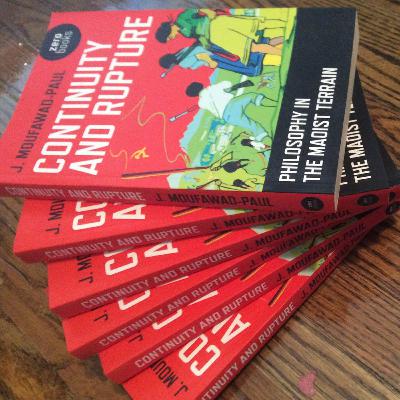
A philosophical examination of the theoretical terrain of contemporary Maoism premised on the counter-intuitive assumption that Maoism did not emerge as a coherent theory until the end of the 1980's.Prologue: Maoism and Philosophy: 00:00:00Chapter 1: The Terrain of Maoism-qua-Maoism: 00:33:56Chapter 2: Science’s Dogmatic Shadow: 2:13:24Chapter 3: The General Limits of Marxism-Leninism: 3:30:57Chapter 4: Maoist Openings: 5:13:07Chapter 5: A New Anti-Revisionism: 6:08:11Chapter 6: Organization and Strategy: 6:58:28Epilogue: 8:05:54

Material Is A Marxist-Leninist-Maoist Journal For Contending Schools Of Revolutionary Thought
Articles Included In Part 3:
00:00 Advance And Retreat: Sinn Fein And The "Compradorification" Of The Revolutionary Party - Owain Rhys Phillips
41:15 From The Archives: Excerpts From The Second Congress
1:22:44 Lenin And The War : Part 2 - T. Derbent
materialjournal.net

Material Is A Marxist-Leninist-Maoist Journal For Contending Schools Of Revolutionary Thought
Articles Included In Part 2:
00:00 "An Incurable Disease Called Hope": An Interview With Abdaljawad Omar - Part 2
56:14 The Working Of The Neo-Colonial Mind & Evading The Neo-Colonial Trap - K. Murali (Ajith)
1:41:28 The Universe As Vast As Our Longings - Benjanun Sriduangkaew
materialjournal.net

Material Is A Marxist-Leninist-Maoist Journal For Contending Schools Of Revolutionary Thought
Articles included in Part 1:
00:00 Editor's Note
04:53 The Immanent Garrison: Settlerism As Institutionalized Ideology - Joshua Moufawad-Paul
1:23:20 Position Of Innocence: Initial Thoughts On Settler Ideology And Victimhood In Canada - Alexandra Lepine
1:57:03 Kizilirmak - Hasan Huseyin Korkmazgil
1:58:47 "An Incurable Disease Called Hope": An Interview With Abdaljawad Omar - Part 1
materialjournal.net

Material is a Marxist-Leninist-Maoist journal for contending schools of revolutionary thought 00:00 Editor’s Note09:47 Against Dogmatism, Against Historical Fetishism - Omar Dekhili1:01:14 Fed Up - W. Muncer1:02:17 The Marxist Framework and Attitude on Social Investigation and Class Analysis - Dani Manibat1:59:22 A Dialectical Approach to Inner-Party Unity - Mao Zedong2:05:32 Notes for a Critique of Dimitrov, the Orthodox Line on Fascism, and the Popular Front Strategy - D.Z. Shaw3:02:37 For the Trees - Jamesie Fournier 3:03:43 Lenin and the War: Part 1 - T. Derbent3:48:37 Naxalbari Children - Gaddar
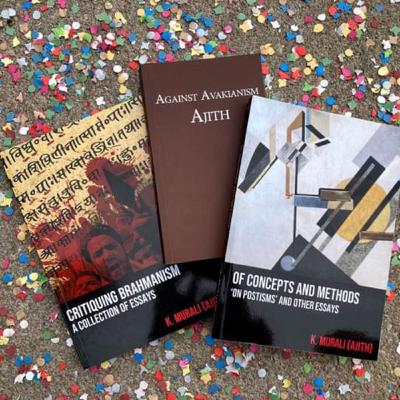
This text analyzes the claims of Bob Avakian’s “New Synthesis,” the line of the RCP-USA party and its cultish degeneration. Against Avakianism is a powerful and systematic debunking of the idea promoted by Avakian that Marxism-Leninism-Maoism is outdated.
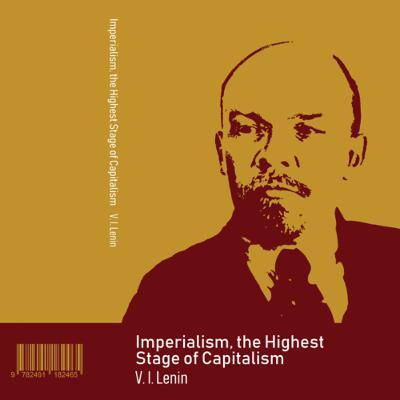
“Imperialism, the Highest Stage of Capitalism", by Lenin, describes the function of financial capital in generating profits from imperial colonialism, as the final stage of capitalist development to ensure greater profits. The essay is a synthesis of Lenin's modifications and developments of economic theories that Karl Marx formulated in "Das Kapital"
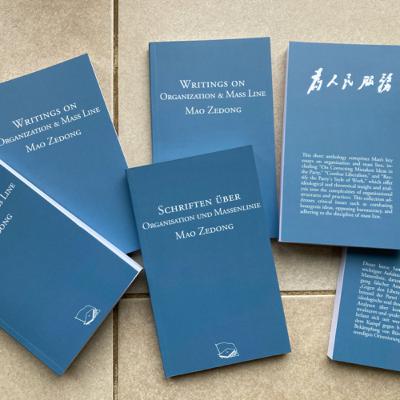
This short anthology comprises Mao’s key essays on organization and mass line, including “On Correcting Mistaken Ideas in the Party”, “Combat Liberalism”, and “Rectify the Party’s Style of Work”, which offer ideological and theoretical insight and analysis into the complexities of organizational structures and practices. This collection addresses critical issues such as combatting bourgeois ideas, opposing bureaucracy, and adhering to the discipline of mass line.
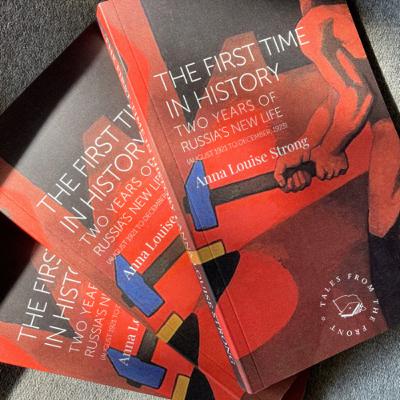
The First Time in History offers a firsthand account of life in Soviet Russia during a critical period of its history, from 1921 to 1923. Anna Louise Strong, a journalist who was politicized by the political upheavals in her time such as the Everett Massacre and the Seattle General strike, was invited to the USSR to document the work of building the world’s first socialist State. Her work of political journalism in to this end offers keen observations and insights that provide a vivid and nuanced portrayal of the social, economic, and political changes that took place during this pivotal time. Her reflections on the meaning of revolution, the nature of power, and the struggle for liberation remain as relevant today as they were nearly a century ago.

“On Contradiction” is Mao Zedong’s seminal text on dialectical materialism. Perhaps his most well-known work, it’s been read and studied by millions all over the world and is required reading for all those who seek to objectively analyze the world and struggle to solve the contradictions in it. The Redspark Collective prepared this study companion to assist readers by providing historical and modern day context and examples.
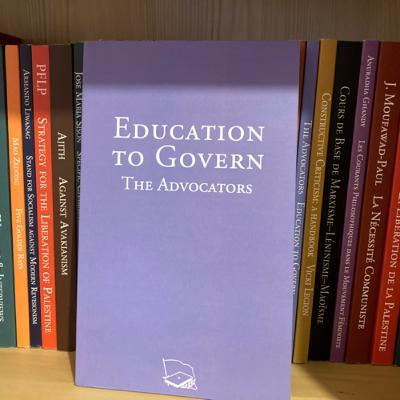
In imperialist countries like the US, many oppose capitalism and are engaged in the struggle against its countless injustices. Far fewer are engaged with the intention and determination not only to win the protracted struggle, but to prepare ourselves in a systematic way for what we will need to construct in its place. Released as a pamphlet in the early 1970’s, Education To Govern is the result of James Boggs and the Advocators and the All-African People Union to attempt to map out a plan in education to develop our capacity to govern ourselves - not for the bourgeoisie, but for the people.
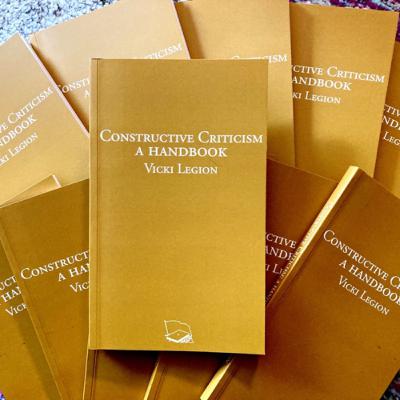
Written in the 1970s by San Francisco Bay Area activist Vicki Legion, “Constructive Criticism” is an accessible resource for people who want to understand and implement the practice of criticism and self-criticism. The handbook is written with exercises and concrete examples, taking the reader through the process to internalize this critical practice in a step-by-step fashion. As Legion says, “A new generation of activists is discovering the joys and challenges of working with other people to build a movement; this classic little book can help.”
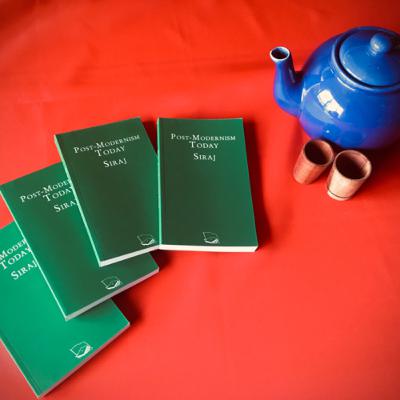
“Marxism is a scientific theory that grasps the laws of the development of society and bases itself on practice for making history. Post-modernist thoughts stand against this, and any rational thinking.
Revisionism, seen (posing) as Marxism, is a vulgarisation of the original, depriving it of its scientific essence, and making it, therefore, unattractive to those who desire change.”
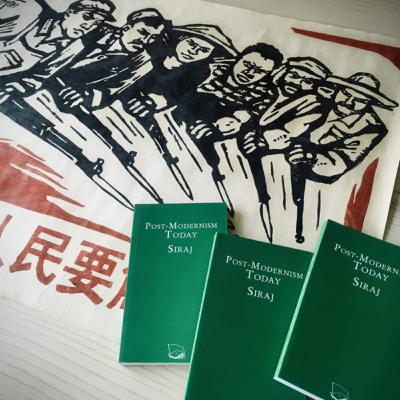
“Marxism is a scientific theory that grasps the laws of the development of society and bases itself on practice for making history. Post-modernist thoughts stand against this, and any rational thinking.
“Revisionism, seen (posing) as Marxism, is a vulgarisation of the original, depriving it of its scientific essence, and making it, therefore, unattractive to those who desire change.”
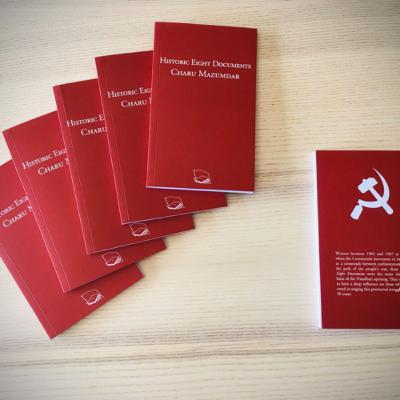
Written between 1965 and 1967 at a time when the Communist movement in India was at a crossroads between parliamentarism and the path of the people’s war, these Historic Eight Documents were the main ideological basis of the Naxalbari uprising. They continue to have a deep influence on those who persevered in waging this protracted struggle of over 50 years.
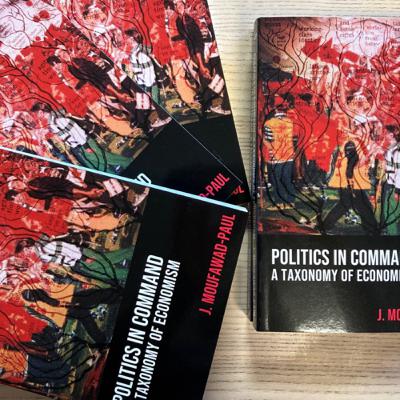
Since the economic crisis of 2008, the concept of social class emerged again as central in critical theory. Temporarily eclipsed in the metropoles by the focus on other sites of oppression, the possible return of class and class struggle to the centre of academic and activist discourse brings with it the same economism that other radical conceptions of politics seemed to displace. Politics in Command seeks to understand what economism is, how it is deployed through socialist analyses, and the ways in which various categories (economy, politics, class, practice, revolution, etc.) are mobilized and classified according to its imaginary.
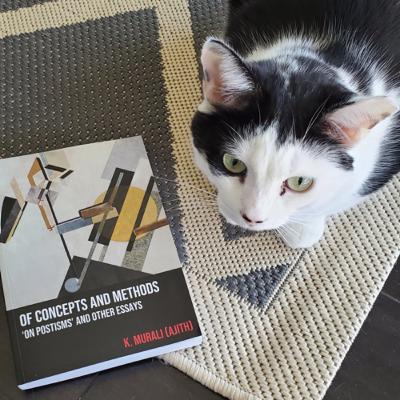
Essays in part 2 include: The Maoist Party, The Working of the Neo-Colonial Mind, Politics of Liberation, among others.
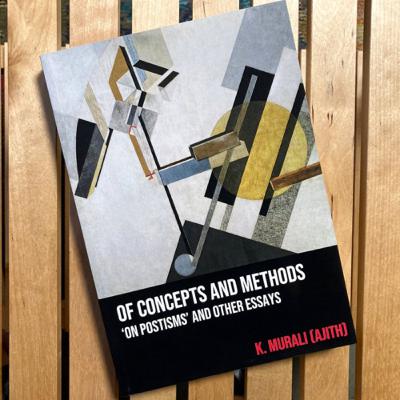
Of Concepts and Methods is K. Murali’s new collection of essays, which covers a wide range of topics that are tied together by the author’s ongoing endeavor of “deepening the critique of mechanical thinking.”
Written mostly in prison, these texts grapple with different trends of post modernism which have had a stranglehold on “new” thought for that last several decades, Chavismo and “21st Century Socialism,” and the particularities of the manifestation of fascism in India. The essays not only delve into critique and analysis of contradictions in the world today, but also investigate questions about the basis for a materialist ethics, the politics of liberation, and the essential qualities of a vanguard party in current times.

Comments

Download from Google Play

Download from App Store
 United States