


 Claim Ownership
Marathi stories by Sudheer Mahajani
Subscribed: 9Played: 89
Subscribe

© Abhiram Mahajani
Description
My father, Sudheer Balkrishna Mahajani, is an avid reader of Marathi and Sanskrit literature and a keen student of Hindu mythology and philosophy. Known among family and friends for his natural gift of storytelling, he brings timeless stories to life with warmth and insight. This podcast is a collection of stories many of us grew up listening to and continue to cherish. A pure passion project, the recordings are left largely unedited, preserving natural pauses and background sounds—just like stories shared at home.
148 Episodes
Reverse
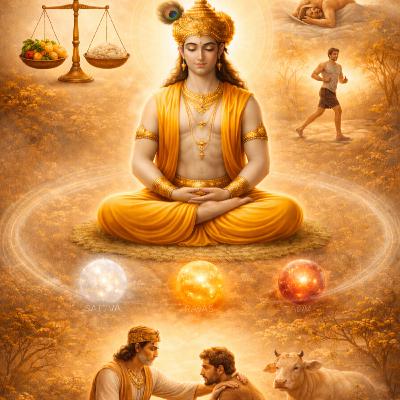
Namaskar.In this episode, Lord Krishna continues with Dhyāna Yoga, explaining the ideal way to practice meditation—covering the right environment, posture, and the art of focusing the mind. He emphasizes the importance of moderation in all aspects of life—whether in food, sleep, or physical activity—highlighting that true discipline lies not in extremes, but in balanced living.Krishna explains that a person’s diet should be aligned with three key factors: one’s age, the body’s current condition, and the nature of one’s work. The same principle applies to exercise and rest. Sudheer illustrates these ideas with practical and relatable examples.Krishna then addresses a common challenge in meditation—the mind’s tendency to wander and feel bored when asked to concentrate. He explains that true progress comes from mastering the stability and focus of the mind through consistent practice.The episode also introduces the three gunas—Sattva, Rajas, and Tamas—with most individuals naturally inclined toward Rajas. Krishna further highlights the importance of empathy, reminding us that what causes pain or joy to us is likely to affect others in the same way.This leads to a deeper understanding of why, in Indian tradition, divinity is seen in all forms of life. The episode concludes by setting the stage for Arjun’s profound questions about the nature of the mind, which will be explored further in the next episode.
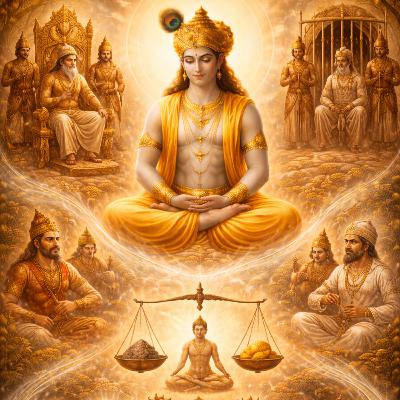
Namaskar.In this episode, Lord Krishna begins by explaining the practice of meditation, emphasizing that the intellect must remain in control of the senses, and not the other way around. True discipline, Krishna explains, comes from inner mastery rather than external restraint.We then enter Adhyay 6 – Dhyāna Yoga. Krishna clarifies that merely giving up action does not lead to liberation. The true distinction lies between Karma and Karma Yoga—while both involve action, Karma Yoga is performed without attachment to results. One who seeks to attain Yoga-siddhi must act without desire for reward, and one who has attained it must remain calm and steadfast in sustaining that state.Krishna also introduces an important nuance: even if one is detached from outcomes, being over-attached to a particular role or identity—believing only certain tasks are worthy, or that only one person can perform a job—is also a form of bondage. This Karma-āsakti, or attachment to action itself, must be overcome.The episode then touches upon one of the most relevant teachings of the Bhagavad Gita—the idea that one must uplift oneself through one’s own efforts. You are your own sculptor. To do this, Krishna emphasizes the need for complete honesty with oneself—a deep awareness of one’s strengths, weaknesses, limitations, and tendencies. Only through such self-knowledge can one truly realize their potential.Krishna then describes the ideal balanced individual—one who remains equanimous in all situations, treating soil, stone, and gold alike. This teaching is beautifully echoed through references from the lives of Sant Tukaram and Chhatrapati Shivaji Maharaj.The episode concludes with Krishna explaining the importance of an unbiased vision—toward friends and enemies, the virtuous and the sinner, the indifferent and the devoted. Though their behavior toward us may differ, one who perceives the same Bhrama in all beings attains true steadiness and inner freedom.
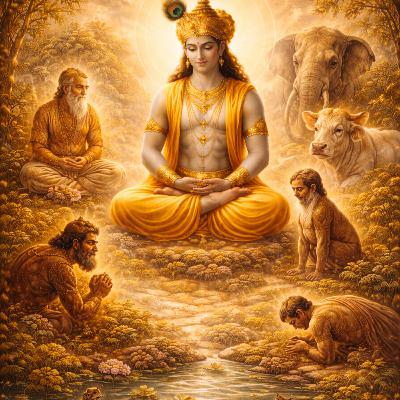
Namaskar.In this episode, we continue with Adhyay 5. Lord Krishna explains that Karma is not performed merely for bodily sustenance, but for the purification of the soul (Ātmaśuddhi). It is one’s nature and character that drive action. When a person binds themselves to the fruits of action—whether good or bad—they remain trapped in repeated cycles of birth. Freedom comes from complete detachment from results.Krishna then explains that the truly wise do not differentiate between beings. Using the example of a Brahmin, a cow, an elephant, a dog, and even a sinner, he shows that while they appear different, they share common realities—each has a body, experiences hunger, and is subject to nature. One who perceives the same Brahman equally in all beings attains true liberation.Krishna further explains that happiness derived from the senses—sound (śabda), touch (sparśa), taste (rasa), form (rūpa), and smell (gandha)—is temporary, having both a beginning and an end. The wise, knowing this, do not fall into their trap. Keeping Kāma (desire) and Krodha (anger) under control is essential to remain on the right path.The episode concludes with Krishna describing the one who attains Moksha—a person free from the burden of sin, free of doubt and skepticism, firm in faith, disciplined in the senses, and one who finds joy in the well-being of all beings alike.
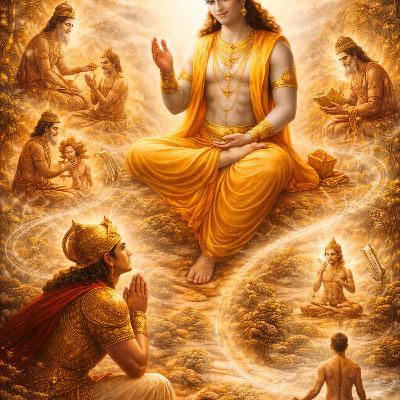
Namaskar.In this episode, Lord Krishna continues to explain the various forms of Yajña, emphasizing the supreme importance of right and complete knowledge. He tells Arjuna that once true knowledge is attained, confusion and inner conflict dissolve—knowledge is the ultimate authority.Krishna explains that a person who has control over the senses, a sincere desire to gain knowledge, humility toward those who possess it, and faith in that knowledge, becomes free from the binding nature of action that leads to rebirth. In contrast, one who constantly doubts and indulges in baseless skepticism is likely to falter on the path.The discussion then moves into the Fifth Adhyaya – Sanyāsa Yoga. Arjun once again finds himself in a dilemma—should he follow the path of Karma Yoga and perform his duties, or renounce action altogether through Sanyāsa? Krishna clarifies that while both paths lead to liberation, the path of diligently performing one’s duty is superior and more practical.Krishna further explains that the idea of “not doing any Karma” is an illusion—the body continues to function, breathe, and act, driven by nature. Action is inevitable. What truly matters is recognizing that we are not the ultimate doers; nature plays its role, and the Almighty works through us. One must continue to act, while remaining humble, detached, and aware that all action is ultimately guided by the Divine.
Namaskar.In this episode, Lord Krishna begins by explaining the true basis of Brahmin, Kshatriya, Vaishya, and Shudra—not as rigid or imposed classes, but as natural roles that align with one’s Karma and actions. These are not hierarchies or distinctions of worth; what matters is performing one’s rightful duty with sincerity and dedication.Krishna then clarifies the subtle yet important differences between Karma, Vikarma, and Akarma. He describes the ideal individual as one who acts according to the situation—guided by age, responsibility, environment, and circumstance—working diligently without attachment to results, free from pride or arrogance, and remaining inwardly content.He goes on to describe the qualities of such an elevated being, and introduces the concepts of Brahmaroop and Yajñaroop, expanding the understanding of action as a sacred offering. Krishna explains that mastery over the senses can be attained through multiple paths, all of which are forms of Yajña.The episode also explores Prāṇāyāma in detail, explaining the roles of Prāṇa, Vyāna, Apāna, Samāna, and Udāna vāyu. Discipline in breath, diet, and conduct are presented as different forms of Yajña—powerful means to purify oneself and neutralize past actions. Through this, Krishna reveals the many paths through which one can progress toward inner refinement and spiritual elevation.
Namaskar.In this episode, Lord Krishna responds to Arjun’s question about what compels a person to sin and deviate from the path of salvation. Krishna explains that the root cause is either Kāma—desire or lust for anything—or Krodha—anger. Of the two, Kāma is the primary culprit, as unfulfilled desire inevitably gives rise to anger, which clouds judgment and destroys discernment.Krishna describes how these forces overpower the senses, the mind, and the intellect, and advises Arjun that true mastery begins with control over the senses.Krishna then reveals that this wisdom was first narrated to Surya, the Sun God. When Arjun questions how this is possible—since Surya predates Krishna—Krishna unveils the true nature of his being, transcending space and time, having manifested across all Yugas through various Avatars. This is where the iconic verse “Yadā Yadā Hi Dharmasya” is explained—whenever Dharma declines, the Divine takes form to restore it.The episode concludes with Krishna introducing the path of complete surrender, explaining that the fruit one receives aligns with the intent one approaches him with. Sudheer then clarifies the subtle yet important distinction between Ishvara Prapti and Siddhi Prapti, bringing this profound discussion to a thoughtful close.
Namaskar.In this episode, we continue exploring the great Yajña of nature, where the Panchamahābhūta are constantly at play. Lord Krishna explains how each individual must discover their rightful place within the vast ecosystem of the universe.He strongly emphasizes the importance of prioritizing one’s duty over distractions and alternatives, introducing the concept of Lokasaṅgraha—the idea that one’s actions should serve the greater good. Through the example of King Janaka, Krishna explains that true work is that which sets an example, guiding others toward the right path of Karma.Krishna also reminds us that there is no such thing as a self-made individual—consciously or unconsciously, we are always supported by an ecosystem around us. He explains how to break free from the cycle of chasing what we like and avoiding what we dislike, and instead act according to duty, regardless of personal preference.The episode concludes with Arjun’s profound question: what causes a person to choose the wrong path? This question sets the stage for what unfolds in the next chapter.
Namaskar.In this episode, we continue our exploration of Sthitaprajñata—the truly steady individual. Lord Krishna describes its essence through multiple characteristics and metaphors, helping reveal what inner balance and self-mastery truly mean.Having absorbed this, Arjun finds himself in a new dilemma. Should he pursue Buddhi Yoga and strive to become a Sthitaprajñata, or should he follow the path of Karma Yoga? Seeking clarity, he asks Krishna which path is the right one.Krishna acknowledges that there are two paths, and carefully explains the nuances of both—making it clear that there is no avoidance of action. In this episode, Sudheer also introduces us to the true meaning of Yajña, adding an important dimension to the discussion.
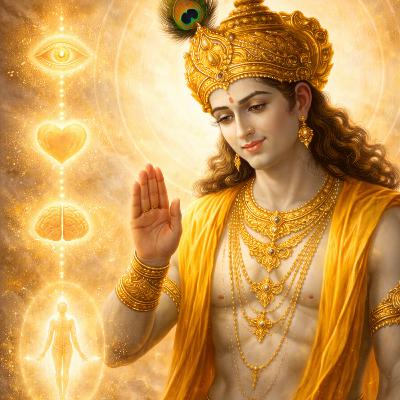
Namaskar.In this episode, Lord Krishna introduces the concept of Sthitaprajñata—the state of inner steadiness often compared to Stoicism. He describes the nature of a truly steady individual, one who remains balanced amid pleasure and pain.Krishna explains the hierarchy of the human inner world—the senses, the mind, the intellect, and ultimately the soul—and how mastery over this order leads to clarity and equanimity. This foundational idea is introduced here and will be explored in greater depth in the episodes to come. This episode also includes a reference to a related story of Parikshit (link included).
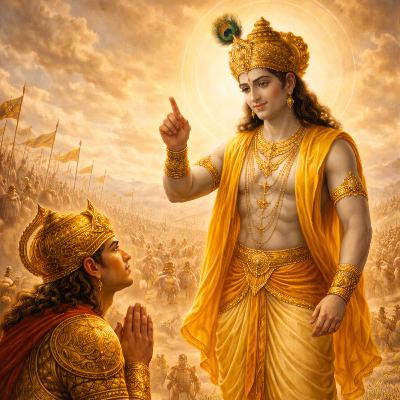
Namaskar.In this episode, Lord Krishna delves deeply into Karma Yoga, often regarded as the very crux of the Bhagavad Gita. We explore the crucial distinction between Karma Yoga and Karma Kanda, and understand why action rooted in duty is fundamentally different from action driven by reward.Krishna critiques the fruit-enticing, ritual-focused interpretations of the Vedas and redirects the seeker toward the true path of liberation—where the focus lies not on outcomes, but on right action performed with awareness and detachment.These ideas find an interesting parallel in the Japanese Kaizen philosophy, which also emphasizes process, discipline, and continuous right effort over obsession with results.
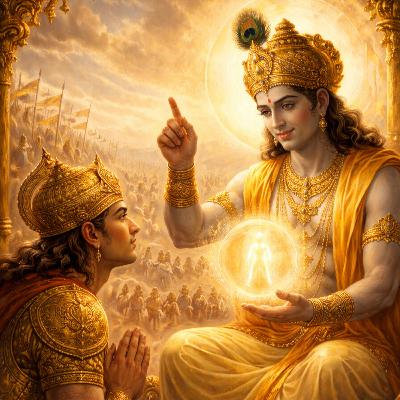
Namaskar.In this episode, Lord Krishna continues to address Arjun’s doubts, gently explaining why his reasoning is misplaced and his inner turmoil unwarranted. Krishna introduces the fundamental distinction between the body and the soul, and describes the true nature and characteristics of the soul.Through this explanation, he shows Arjun how his current way of thinking is counterproductive and the consequences it can lead to. This marks a turning point where philosophical clarity begins to replace emotional confusion.
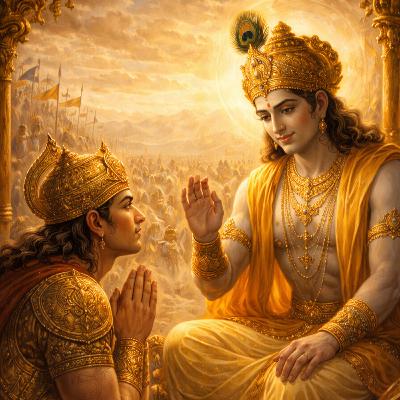
Namaskar.In this episode, Lord Krishna listens patiently to Arjun’s plea and begins to address his concerns. Arjun, as Sudheer describes it, adopts a “clean-slate approach”—setting aside pride, assumptions, and prior conclusions. It is a powerful lesson for anyone facing a difficult challenge and seeking guidance.From this point onward, Krishna begins to share his first pearls of wisdom, and the divine dialogue that forms the heart of the Bhagavad Gita truly begins. We continue this conversation as clarity slowly starts to replace confusion.
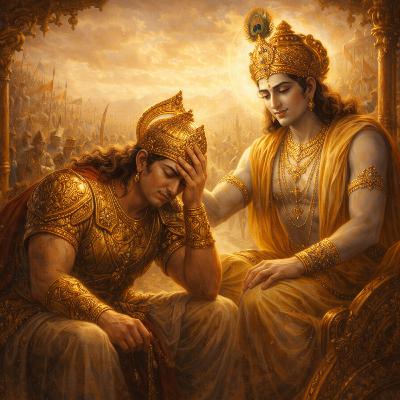
Namaskar.In this episode, Arjun, having witnessed the armies assembled on both sides, opens his heart to Lord Krishna. He expresses his inner conflict and emotional turmoil, explaining why he feels unable to fight against his own kin.He lays out his reasoning on why the battle appears futile and morally conflicting. Along the way, Sudheer also shares a couple of related side stories that connect deeply with Arjun’s observations, helping bring additional perspective and meaning to this moment.This episode marks the beginning of Arjun’s inner struggle and sets the stage for the wisdom that is to follow.
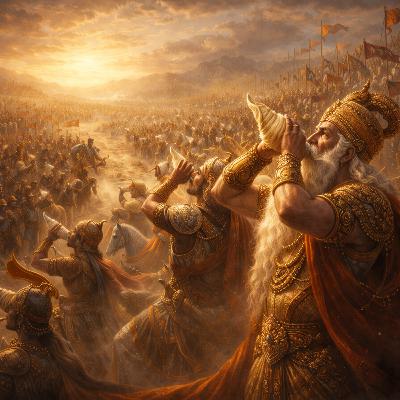
Namaskar.In Episode 2, we continue our journey through Adhyay 1 of the Shrimad Bhagavad Gita. We turn our attention to the battlefield of Kurukshetra—the warriors assembled on both sides, the vast scale of the impending war, and the consequences it is likely to bring.This panoramic view of the battlefield helps us understand the gravity of the moment and sets the emotional and psychological backdrop for what begins to unfold in Arjun’s mind.
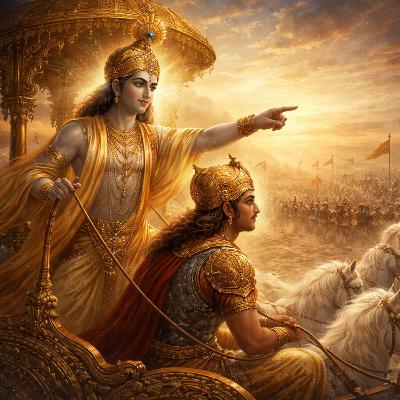
Namaskar, and welcome to Marathi Stories by Sudheer Mahajani.As we step into 2026, we begin a reflective journey into the Shrimad Bhagavad Gita, explored shloka by shloka in Marathi.Mr. Sudheer Mahajani, who has studied the Gita in depth over many years, shares his thoughtful narration through this podcast.In Episode 1, we set the backdrop of the Mahabharata and begin with the opening verses of the first Adhyay – Arjun Vishad Yog, where Arjuna’s inner conflict on the battlefield sets the stage for the timeless wisdom of the Gita.Let us begin this journey together.
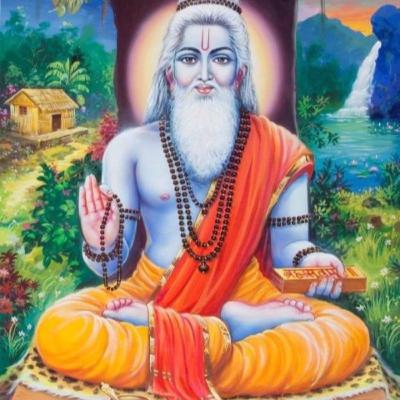
Hello and welcome back to Marathi stories by Sudheer Mahajani. We resume our show with a new season which will cover gists of some great personel in the Hindu mythology. We start this season with Rishi Agastya - the son of Lord Surya and cover his origin story and key life events and achievements.
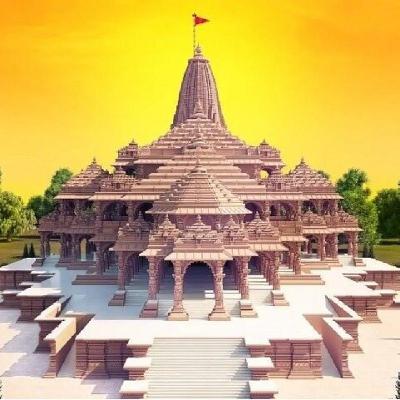
Namaskar. Welcome to Marathi stories by Sudheer Mahajani. This is a special episode where Mr. Sudheer Mahajani eloquently describes his friend, Mr. Kasawa's recent excursion to Ayodhya after the inauguration of the Ram Mandir.
Mr. Mahajani gives voice to his friend's unique and fulfilling experience of traveling from Gujarat to Ayodhya, visiting the Ram Mandir, the experiences there, and the exchange of views on the return journey of those traveling together.
Jai Shri Ram!
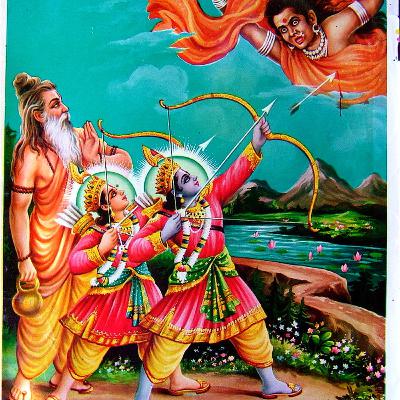
Namaskar. In this episode we make further progress in Ramayan. Ram, Lakshman, Bharat, Shatrughna are growing as children. We are introdued to Rishi Vishwamitra. Ram and Lakshman, even though just mere children, go with him to defend and protect Vishwamitra's yagnas and ashram from the demons.
We get to know of demons Tratika / Tadaka, Maarich, Subaahu and how they are defeated by Ram and Lakshman.
We also get to know the story of Gautam Rishi, Devi Ahilya, and how Lord Ram frees Dvi Ahilya from her curse.
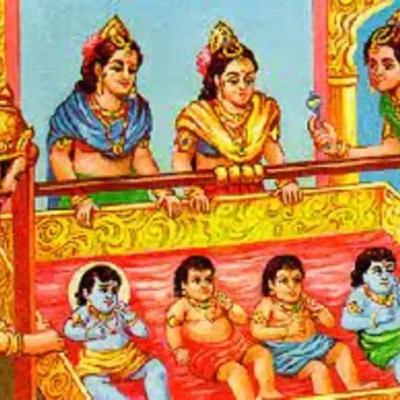
Namaskar. Welcome to Marathi stories by Mr. Sudheer Mahajani. In this episode of Ramayan, we get to know the events and reasoning that led to the birth of Shri Ram - the incarnation of Lord Vishnu to end the atrocities of Ravan, and his brothers Lakshman, Bharat, and Shatrughna.
Today, 03 March 2024, also happens to be Mr. Sudheer Mahajani's 70th birthday.
Jai Shri Ram

Namaskar. Welcome to Marathi stories by Sudheer Mahajani. In this episode we get to know the very beginning of the great epic of Tretayuga - Ramayan.
We get to know the life of King Dashrath - the father of Lord Ram. 2 significant events happen in his youth that shape the course of Ramayan..

Comments

Download from Google Play

Download from App Store
 United States