


 Claim Ownership
Black Mountain College Radio
Subscribed: 1Played: 17
Subscribe

© All rights reserved
Description
A project of the Black Mountain College Museum + Arts Center in Asheville, North Carolina.
23 Episodes
Reverse
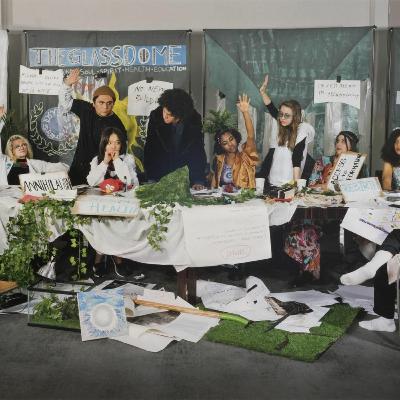
In this episode, we are joined by Adelita Husni-Bey, the 2023 recipient of the Black Mountain College International Artist Prize. Husni-Bey discusses connections between her work and the history of radical, interdisciplinary pedagogy at Black Mountain College, along with her ongoing practice using collectivist and non-competitive pedagogical models within the framework of contemporary art.
More info: https://www.blackmountaincollege.org/2023-bmc-prize-announcement/
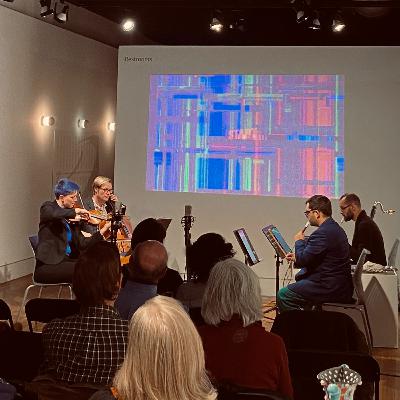
Hub New Music performs Dai Wei's "How The Stars Vanish"
November 16, 2022
Black Mountain College Museum + Art Center
Asheville, NC 28801
More info: https://hubnewmusic.org/
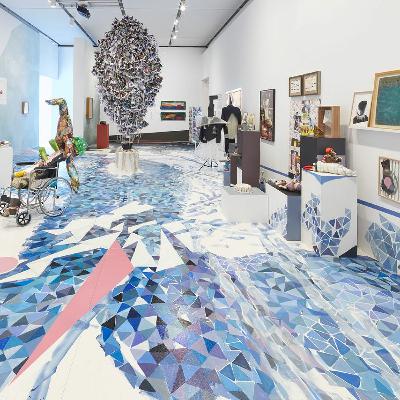
Inaugural BMC Prize recipients Ramin Haerizadeh, Rokni Haerizadeh, and Hesam Rahmanian join us to discuss their interdisciplinary work. The artists trace connections to Black Mountain College from their creative origins in post-revolutionary Iran, to the diffusely collaborative and experimental practice of generating "landscapes". More info: https://www.blackmountaincollege.org/inaugural-bmc-prize-announcement/
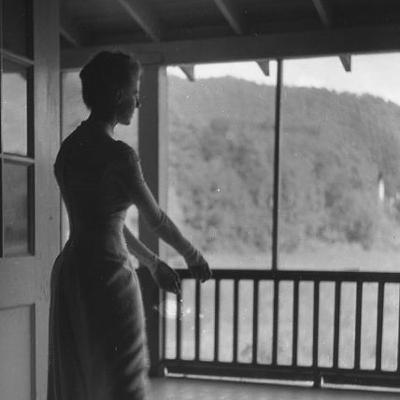
“The Glyph” – Commissioned in 2015 by ICA/Boston
Directed by Richard Colton
July 30th at 3PM + 7PM
BMCM+AC {120 College Street}
Dancer and choreographer Polly Motley and pianist Yukiko Takagi perform “The Glyph,” a playful work created by dancer Katherine Litz and composer Lou Harrison. The original performance at Black Mountain College was part of a Glyph Exchange with poet Charles Olson and painter Ben Shahn in the Summer of 1951. The program will also feature Lou Harrison’s “Six Sonatas For Cembalo or Pianoforte” performed by Yukiko Takagi.
Laura Steenberge - Devil Works for Idle Hands - Live At BMCM+AC June 9, 2022 by Black Mountain College Radio
Weston Olencki - a vine that grew over the city and no one noticed - Live At BMCM+AC June 9, 2022 by Black Mountain College Radio
Black Mountain College Museum + Arts Center and UNC Asheville present the Southeast premiere of Black Mountain Songs, an expansive choral and visual work performed by the Brooklyn Youth Chorus and curated by Bryce Dessner (The National) and Richard Reed Parry (Arcade Fire). Eight composers in total, including Dessner and Parry along with Pulitzer Prize-winner Caroline Shaw, Nico Muhly, Aleksandra Vrebalov, John King, Tim Hecker, and Jherek Bischoff, collaborated with filmmaker Matt Wolf to create the renowned piece celebrating the legacy of BMC.
This recording was included as a performance in Works of John Cage, which was presented as a part of Black Mountain College Museum + Art Center's ReVIEWING 12 in November, 2021.
Carl Patrick Bolleia’s performances and recordings have been acclaimed and featured by The New York Times, The New Yorker, Gramophone, New York Classical Review and more. He has performed as pianist, keyboardist, and conductor throughout North America, Europe, and China at venues including Carnegie Hall Stern Auditorium and Weill Hall,
Alice Tully Hall, Philharmonie de Paris, and many more. He is Assistant Professor of Music and Coordinator of Piano at William Paterson University.
This recording was included as a performance in Works of John Cage, which was presented as a part of Black Mountain College Museum + Art Center's ReVIEWING 12 in November, 2021.
Thomas Moore has received acclaim throughout the US and Europe for his performances, lectures, and recordings. His repertoire includes works by John Cage, Morton Feldman, Christian Wolff, Charles Ives, Olivier Messiaen, James Tenney, Philip Glass, Erik Satie, Karlheinz Stockhausen, and others. Cage wrote, “I am delighted that Thomas Moore plays my music, studies and thinks, writes and talks about it. He is an excellent musician, one in whom I have confidence and whose work I enjoy.”
Haikus (1950-51) on piano; 5 parts
1. Haiku: For My Dear Friend, Who
2. Haiku: What Stillness
3. Haiku: The Green Frog's Voice
4. Haiku: The River Phurabelle
5. Haiku: [No Title]
Recorded by Elizabeth Lang.
Gamelan Yowana Sari has been a performing Balinese Art Ensemble since 2011. The group is currently in residence at the Aaron Copland School of Music at Queens College.
This recording is from a collaboration with the Asheville Purcussion Festival.
Members of the Philip Glass Ensemble, Michael Riesman (music director, piano), Ryan Kelly (sound), Mick Rossi (piano), Andrew Sterman (flute, piccolo, saxophone), with Ann Cecil-Sterman on flute, performed a repertoire for amplified pianos and woodwinds. The program included selections from Music in Twelve Parts (Parts 9 and 10), Façades from Glassworks, Music in Similar Motion and Spaceship from Einstein on the Beach.
In 1968, Glass founded the PGE in New York City as a laboratory for his music. Its purpose was to develop a performance practice to meet the unprecedented technical and artistic demands of his compositions. In pioneering this approach, the PGE became a creative wellspring for Glass, and its members remain inimitable interpreters of his work.
The Philip Glass Ensemble is the exclusive performer of its repertoire. Please note that Philip Glass did not perform as part of this concert. By special arrangement with Philip Glass and Dunvagen Music Publishers, Inc.
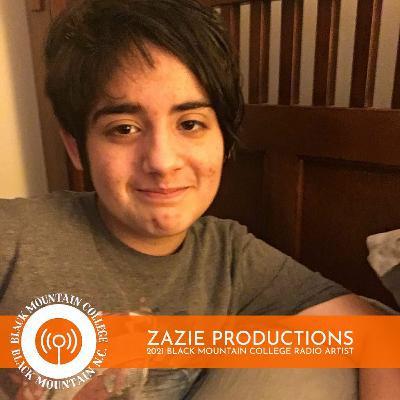
Starting with Erik Satie’s Gymnoèdie No. 1 and using Musique Concrète techniques, Zazie pays tribute to "Cheap Imitation," John Cage's homage to Satie.
Zazie Kanwar-Torge (they/them) is a composer and multi-instrumentalist living in Asheville, North Carolina, where they are a rising tenth grader at the School of Inquiry and Life Sciences. Zazie has been interested in sound art and avant-garde music production since age nine and it was actually Black Mountain College's experimental performance history that drew Zazie and their mom and sister to move to the area.
Drawing from Cage's concept of indeterminacy, Zazie layers found objects, transposed recording speeds and tempos, multiple arrangements and phrasings, homemade instruments, percussive patterns, micro-rhythms, and glitches into increasingly intricate sound collages to reveal unexpected and kinetic elements of the original composition placed out of context.
Rooted in Alvin Lucier’s 1969 work I am Sitting in a Room, Sitting in a Room With Friends is a semi-random sound collage of voices and sounds extracted from interviews, performances, and sound works. It evokes the anxiety of pandemic isolation and the uncertainty of post-pandemic life.
Voices include extracts from:
Alvin Lucier’s (I am Sitting In A Room, 1969)
John Cage (interview with reporter Marcus Jones)
Bruce Nauman (Get Out Of My Mind, Get Out Of This Room, 1968).
Sounds:
Full recording of John Cage performing Water Walk on the television show, I’ve Got A Secret in 1960
Extracts from Material Sound Mashup, a sound collage I created from live performances at Black Mountain College Museum, 2019. Artists include Peter Blamey, Pia Van Gelder, Nathan Thompson, and Jenn Grossman.
---
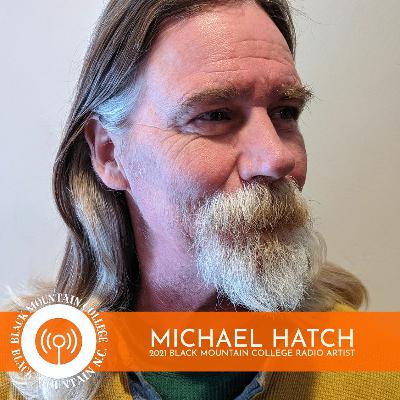
Michael Hatch has been producing audio works for over three decades, though he is primarily known for his glass art and craft based research. He assisted with the installation/de-installation of the exhibition Material Sound at BMC+AC. Hatch received an MA Craft Studies degree from Warren Wilson College.
Artist Statement:
My audio projects span many genres including ambient sound environments, political commentary, and the use of narrative voice to challenge the essentialism of groups of people. I am inspired by mashups, early rap sampling, and experimental music. Each time I start a project, I never know how it will end.
3:33
Public Service Announcement is a commentary on the authority and self-control possessed by the voice of the radio announcer. There is a nod towards the famous Orson Welles “War of the Worlds” radio drama in regards to the ultimate trust that is placed on the radio announcement as a voice of authority. However, during this announcement the voice is interrupted by the human compulsions of the anatomical construct of “voice”, cracking the veneer of superiority and revealing the vulnerability of the human condition.
---
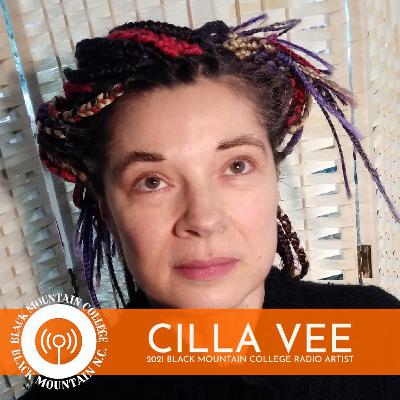
Cilla Vee is Claire Elizabeth Barratt, an international interdisciplinary artist and founding director of Cilla Vee Life Arts.
She holds an MFA from the Transart Institute of Creative Research, where she developed her performance pedagogy Living Art.
She is converting her Asheville home into The Center for Connection + Collaboration.
Artist Statment:
I am a Transformer – I transform.
I improvise, I compose, I plan, I build, I destroy, I re-build, I release.
I explore, I discover, I create
I am created.
I am Raw Material.
The Self: body and psyche. My Self: as medium for art.
Art as Life / Life as Art
Living Art.
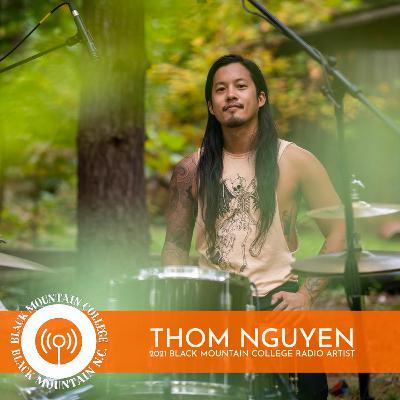
Welding Tones with Distant Drones
A collection of quickly recorded raw auxiliary percussion sounds on homemade cassette loops to be composed and improvised amidst an array of portable Walkmans to immerse the listener with sound artifacts of surprise and chance encounters within the arcane medium of tape. Similar to a DJ creating a mix with a tightly curated collection of records, but with cassettes and specifically chosen percussion elements.
---
Thom Nguyen is an Asheville, North Carolina-based improviser and drummer of MANAS and more. Producing energetic bursts and invoking a sensitivity to space that one often associates with Free-Jazz and New Music percussion, Nguyen’s approach elegantly bridges works of sonic sculpture with a punk aesthetic of immediacy, aggression, and playfulness.
Artist Statement:
This piece was inspired with the intent of taking the percussionist outside of the realm of percussion, composing a collection of pre-recorded cassette loops and improvising as I normally would behind a drum kit while playing each part at once without the confines of using four limbs.
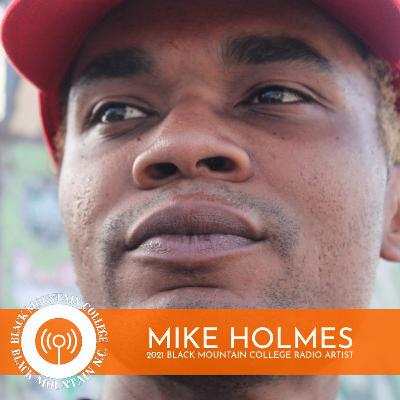
Nostalgianoid is Asheville native Mike Holmes (he/him), a man of many coats who has established himself as an unpredictable artist with his emphasis on keeping every live set fresh and new. He’s been involved with a myriad of music scenes in this town since finishing college in 2014, whether it be producing for other artists, photographing shows, or playing in various bands of different genres. Now, he focuses on pushing his own craft and sound while also being a member of the local skateboard community aiding in the upkeep of our local DIY skatepark.
Artist statement:
My music is an endless search of how different emotions can be articulated through sound collaging. I attempt this by doing heavy studies on repetition and how trance-like states can be achieved through looping any sound, whether it be musical, mechanical, or natural. Through heavy glitching, I make some of these loops fleeting, and manipulate them to give birth to new loops as a way to bring new emotion to the table spontaneously.
Preview an exciting new project, led by BMCM+AC’s first Active Archive resident podcaster Piers Gelly. Gelly, a collaborator on such programs as 99% Invisible and creator/host of Cellar Door, presents a sneak peek at a new Black Mountain College podcast, currently in development. Gelly is in conversation with Black Mountain scholars Julie Levin Caro, Thomas Frank, and archivist Heather South, breaking down preconceived notions of BMC’s history and setting the stage for the eight-part documentary podcast exploring Black Mountain College as a forerunner in interdisciplinary arts, experimental education, and community-building.
Funding provided, in part, by a grant from South Arts in partnership with the National Endowment for the Arts and the Virginia Commission for the Arts.
Additional funding generously provided by the North Carolina Humanities Council and Better Lemon Creative Audio.
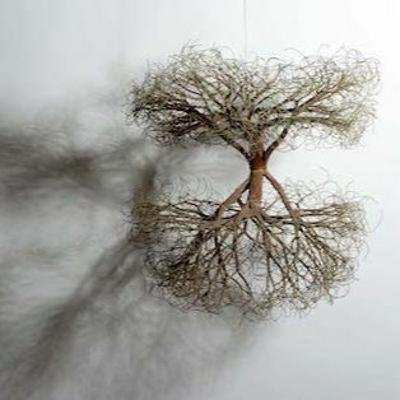
How are Ruth Asawa’s hanging wire sculptures a form of activism for racial justice?
Just a few years after leaving Rohwer internment camp, Asawa started making her signature hanging wire works at Black Mountain College at precisely the moment that she started to think about how cellular biology could demonstrate racial equality. In the sculptures, lobes of wire mesh interpenetrate, just like the dividing cells that she studied in classes. Do Asawa’s sculptures gesture to the fundamental building blocks, cells, that unite all human beings as one kind? Do Asawa’s sculptures visualize universal equality at the cellular level? If so, her sculptures, in fact, are poignant forms of activism today—at a time when the concept of race continues to rip apart the fabric of our world. Her art asks us to consider how we can further positive change through expression.
Visuals for this episode, presented as a virtual program on Sept 23, 2020 can be found at: https://www.blackmountaincollege.org/ruth-asawas-radical-universalism/
Music credit: Mouthbreathers, “The Untrained Eye" Demo
Writer: Andy Burns
Unpublished and no label
2021. Courtesy of Andy Burns.
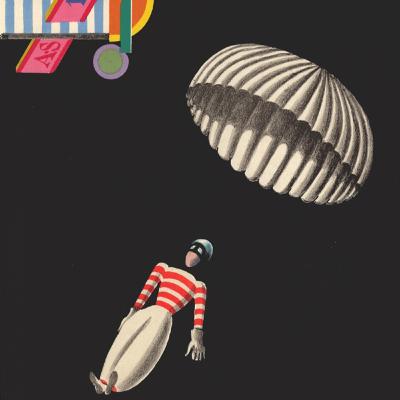
Our 5th episode is an interview with interdisciplinary artist Martha McDonald, who’s the curator of our current permanent collection exhibition titled “ACTIVE ARCHIVE: Martha McDonald.”
Martha will also be creating an installation and performance in response to Bauhaus and BMC artist Xanti Schawinsky’s experimental theater piece “Spectodrama."
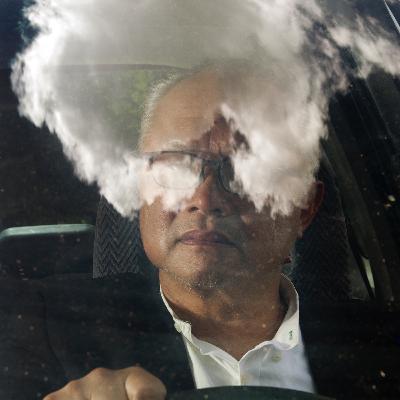
Our fourth episode is an interview with conceptual artist Mel Chin, who will be giving a keynote address at our upcoming ReViewing 9 conference. We discuss the social and political side of his works, the process of dismantling personal and societal delusions, and how art can facilitate the creation of a more just and invigorating society.

Comments

Download from Google Play

Download from App Store
 United States