


 Claim Ownership
Chatter Marks
Subscribed: 11Played: 297
Subscribe

© Copyright 2020 All rights reserved.
Description
Chatter Marks is a podcast of the Anchorage Museum, dedicated to exploring Alaska’s identity through the creative and critical thinking of ideas—past, present and future. Featuring interviews with artists, presenters, staff and others associated with the Anchorage Museum and its mission.
131 Episodes
Reverse
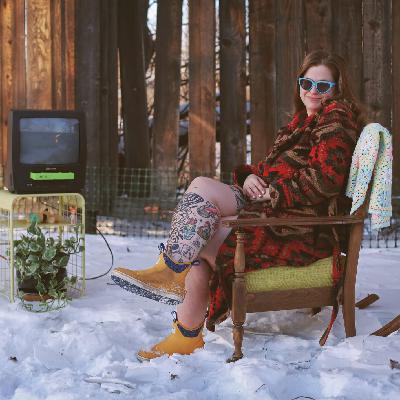
Sam Davenport writes the AK IRL newsletter. It dissects Alaska reality television as entertainment and as a cultural lens that shapes how Alaska is perceived from the Outside — an idea often signaled right from the start in show titles filled with buzzwords like wild, survival, and frontier. As if there’s a checklist for how Alaska gets branded and sold. She writes about the manufactured drama, the narrative structure, the way reality TV can feel like a funhouse mirror — recognizable, but distorted. And yet, within that distortion, there are moments of truth. Shows like Deadliest Catch have introduced millions of viewers to the commercial fishing industry, offering glimpses into lives they might otherwise never encounter. There’s a reason people keep watching these reality shows about Alaska: there’s a fascination with remoteness, solitude, escapism, and the idea of living outside the noise.
But Sam also looks at what gets left out of these shows. The recurring image of Alaska as an empty, unpeopled wilderness erases the Alaska Native communities who have lived on and stewarded this land for thousands of years. She points to how exaggeration, assumption, and spectacle can flatten the complexity of a place into something consumable, and how that flattening has consequences. Some shows approach that responsibility with more care than others, but the broader pattern of Alaska as novelty, extremity, and myth persists. From fishing boats to gold mines to even dating shows, the state has become a stage where outsiders project their fantasies. And what Sam’s newsletter does is turn that image back onto itself, reflecting both Alaska and the assumptions and expectations of the people watching it.

Julia O’Malley is a journalist, a cook, a baker, and lately she’s been researching and re-creating Cold War cakes. During the Cold War era—roughly the decades between the end of World War II and the early 1990s—cake mix transformed a food once associated with luxury into something democratic, something anyone could make at home. Julia says that those boxed mixes, and the recipes people built around them in the ‘70s and ‘80s, are more than just dessert. They’re cultural artifacts that reveal how women navigated creativity, expectation, and changing ideas about domestic life. They reflect a moment when women were entering the national conversation from within domestic space. Experimenting, adapting, and reshaping expectations. That shift raised a question inside the kitchen itself: What happens when packaged ingredients, appliances, and new food technologies promise women time—time to work, to control their finances, and to claim a larger role in public life?
In Alaska, where fresh ingredients were often scarce and communities had long relied on shelf-stable foods, brought in through supply chains and institutional systems, cake mixes made a lot of sense. For generations, Alaskans have adapted to what’s available—working with canned goods, powdered ingredients, and foods designed to travel long distances before reaching the table. A box of cake mix fit easily into that reality. Julia has been tracing these stories through old cookbooks and community recipes, even digging into ones from boomtown Fairbanks in 1909, to understand how something as ordinary as cake can tell us about women’s lives, shifting ideas of feminism, and the creativity that unfolded in Cold War kitchens. Because food, Julia says, is always a story. It’s one of history, origin, climate, and longing. And in the Cold War kitchen, when the threat of nuclear annihilation hovered in the background of daily life, even something as simple as baking a cake could feel like a small act of reassurance.
Jeremie McGowan is an artist, designer, and researcher. Amund Sjolie Sveen is an artist. And together, they created Real. Arctic., an exhibition that examines how the word “Arctic” is used in branding, institutions, geopolitics, and everyday consumer products — and how the use of that word shapes what we think we know about the arctic. Their work blurs the line between critique and commodity, asking who gets to define the Arctic, who profits from it, and what gets flattened in the process. Throughout the exhibition, the work shifts form — from displays of “Pure Arctic” deodorant to an expanding archive of Arctic-branded objects — asking viewers to reconsider what is real and what has been manufactured. It explores how art and design can both construct and unravel powerful narratives about place, and what responsibility comes with working inside those systems.
Jeremie and Amund collect and document products from around the world that call themselves “Arctic,” or borrow the image, the light, or the myth of the Arctic to sell something. Even when those products have no connection to the place itself. Deodorants that promise Arctic purity, chewing gum that offers polar freshness, outdoor brands that are marketed around rugged endurance and masculine extremes. Again and again, the Arctic appears as clean, untouched, and invigorating — a blank canvas for refreshment or conquest. As Jeremie points out, much of that marketing is driven by an outsider fantasy: the idea that you’re the first, the only one to witness the wilderness or the Northern Lights, even as that experience is packaged and sold en masse. Amund says that the Arctic’s power as a word may lie in its perceived remoteness. Because it feels unknown, it can be filled with whatever we want it to mean. And in that process, the realities of the place itself and the people who live there often fall away and what remains is a brand. And then, beneath all of that, is a deeper question about power: who gets to define a place, and whose version of that place becomes the story that guides our understanding of it.

Paul Koberstein is a journalist, whose recent book, “Canopy of Titans,” explores one of the most overlooked ecosystems on Earth: the Pacific Coastal Temperate Rainforest. Stretching roughly 2,500 miles from just north of San Francisco’s Golden Gate Bridge to the western Gulf of Alaska, it’s the largest temperate rainforest on the planet. Fueled by Pacific storms and cool ocean currents, it supports towering redwoods, Sitka spruce, western hemlock, and cedar — some of the largest and oldest trees in existence. Acre for acre, these forests store more carbon than tropical rainforests like the Amazon, with vast reserves locked in massive trunks, deep soils, roots, and centuries of accumulated woody debris. But even though it’s one of the most carbon-dense ecosystems we have, and a critical buffer against climate change, it remains largely overlooked in global climate conversations.
Paul pushes back on some of the most common narratives about forests and climate. He points to those industry ads that promise for every tree cut down, three more will be planted. It’s an argument that sounds reassuring until you realize a young sapling can take a century to store the amount of carbon held in the massive tree that was felled. Trees are about 50 percent carbon. Through photosynthesis they pull carbon dioxide out of the air, lock that carbon into their trunks and roots, and release the oxygen we breathe. Southeast Alaska’s Tongass National Forest alone holds more total carbon than any national forest in the country. That scale of storage is central to Paul’s point: the science doesn’t say we’re powerless. It suggests that we can still influence the climate back toward something more stable. If fossil fuels loaded the atmosphere with excess carbon, then forests, if protected and restored, can help draw it back down. Forests have stabilized the climate for thousands and thousands of years. Whether they continue to do so depends largely on us letting them do their job.

Emily Sullivan is a writer, a photographer, and a director whose work is grounded in questions of land, community, and responsibility. Throughout her work, she focuses on uplifting Indigenous perspectives — not by speaking for communities, but by listening to what people are already saying and doing. Her first film, Shaped by Land, is currently screening at festivals. It’s a documentary about Greenlandic skiers and their connection to place, set against the backdrop of the new Greenland Tourism Act — legislation designed to protect land, center local ownership, and resist extractive tourism. Emily’s interest in Greenland is shaped by her experience in Alaska, where many of the same tensions play out under different economic structures. In both places, people arrive seeking experience, adventure, and meaning, often without reckoning with what those desires take from the communities they move through.
Emily’s path to this work started when she was just a kid. She’s always been an observant person, someone who noticed small shifts in light and weather — that’s where her photographic eye comes from — and that sense of awe never really left. It grew out of curiosity, and later, into a belief that anything capable of stopping you in your tracks is probably worth paying attention to. And then, through her work and time spent in Alaska, climate change became personal and immediate — visible in rivers that don’t freeze when they should, unstable ice, unfamiliar weather patterns, and disrupted fish runs.
Much of her education in climate change came from Alaska Native peoples, specifically women who have been leading this work for generations. That learning shaped Emily’s commitment to bringing Indigenous knowledge, solutions, and sovereignty to the forefront of her storytelling — using careful observation and conversation to explore the forces shaping our collective future.
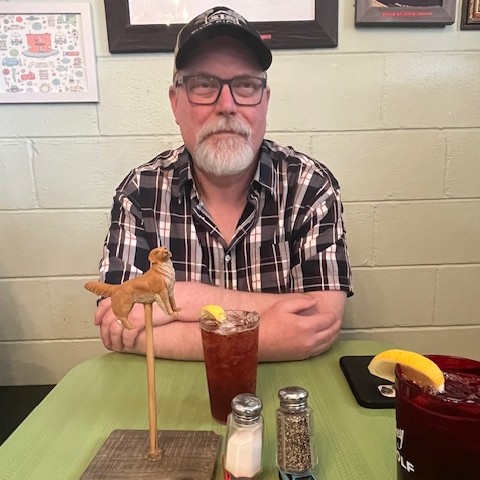
Kevin Lane is the executive chef and co-owner of The Cookery and The Lone Chicharron Taqueria in Seward, and he was recently named as a James Beard Award semifinalist. Reflecting on that recognition, he says it wouldn’t have been possible without his team at The Cookery, or the kitchens and crews from his past that shaped the way he cooks today. Those roots stretch back to California’s Sacramento area, where he was raised on crockpot meals, black-eyed peas, and lentil stew, before he found his way into kitchens in San Diego. Around nineteen, he was eating street tacos, shucking oysters, and learning the pace of restaurant life — first on the cold oyster bar, then on the hotline, where teamwork and discipline took root. Those early experiences still show up in his food today — the steady presence of Mexican influence, the belief that cooking is ultimately about making people happy, and he’s still shucking oysters.
He was still early in his career when he moved to Juneau to work as a sous-chef. There, and later in Sitka, he recognized the realities of Alaska’s food system, how kitchens relied heavily on frozen and canned goods because they were dependable. Orders had to be placed seven to ten days out, and even then, fresh vegetables and herbs might arrive frozen and mushy. It was a lot different from working in California, where you could order produce in the morning and expect it that afternoon. The learning curve was steep, but learning to adapt is what good cooks do. So, given Alaska’s abundance of fresh seafood, he adjusted his cooking and learned to let fish become the focus. And now that there’s more access to farm-fresh produce than ever before, the constraints that once defined cooking in Alaska have eased, expanding what’s possible on a menu.
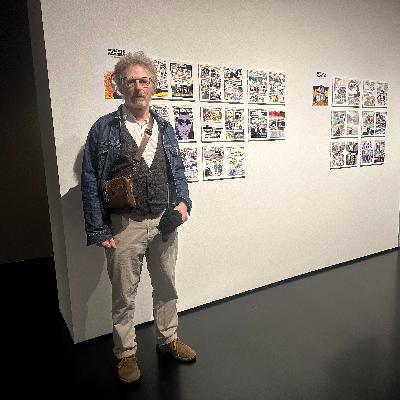
Peter Dunlap‑Shohl's career traces a remarkable arc, from daily newsroom deadlines to personal, long-form storytelling. For 27 years, he worked for the Anchorage Daily News, drawing editorial and political cartoons. He produced thousands of comics focused on, more often than not, the worst things he could find in Alaska politics and in the pages of the newspaper — the biggest screwup, the clearest malfeasance, the loudest troublemaker — and then he’d satirize it by cartooning it. This is how a newspaper cartoonist does their job. But he also worked on the comic strip Muskeg Heights. The strip was about a fictional Anchorage neighborhood, and it allowed him to step out of the editorial page — away from politics — to explore the emotional aspects of living in Alaska. He worked on that for about a decade, until Parkinson’s made it too difficult to keep up with the weekly pace of the work.
In more recent years, he’s authored two graphic memoirs: My Degeneration, about his Parkinson’s diagnosis in 2002, and Nuking Alaska, about the nuclear dangers Alaska faced during the Cold War. Both books were something Peter never thought he’d be capable of creating after being diagnosed. But he says that with the help of medication and brain surgery, he’s been able to curb the effects of the disease and accomplish some of the most rewarding and successful work of his life. But he’s careful not to frame the disease as a gift because it’s not. In My Degeneration, he writes that "it’ll take everything from you, everything it has taken you a lifetime to acquire and learn." What is a gift, though, is his reaction to it — the power of medicine, human ingenuity, and perseverance are incredible things. Overall, it’s taught him that he’s not in control, and that on his best days he’s sharing the wheel with Parkinson’s.
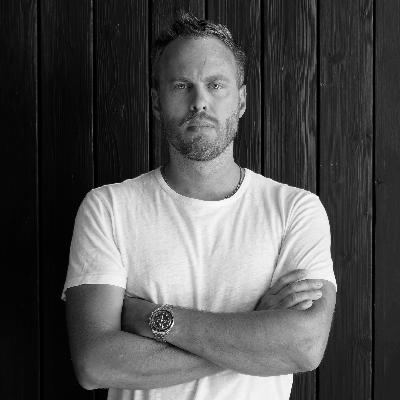
Charles Stankievech is an artist, a writer, and an academic. He teaches at the University of Toronto, and his art takes him into some of the most remote landscapes on earth. Places like CFS Alert, the northernmost permanently inhabited place in the world. He describes the Arctic as occupying two parallel spaces in our cultural imagination: one built on myth and fantasy, and another grounded in harsh, physical reality. He says that most people will never set foot there, which means our understanding of it comes from ideas rooted in medieval tales of magnetic mountains, science-fiction fortresses carved out of ice, or the general sense that it’s a blank, unreachable expanse. But beneath that fantasy is a real landscape shaped by nature and human activity.
One of Charles’ early Arctic projects was about the Distant Early Warning Line, a network of Cold War radar stations built across the Arctic to detect incoming Soviet bombers. He began thinking about how the remnants of that global conflict were already entangled with what he called an emerging “Warm War,” where rising temperatures and melting sea ice would turn buffer zones into contested shipping routes and resource frontiers.
Sound is one of his primary tools for understanding these places. He says that what you hear often tells a different story than what you see, and so his work uses sound to help people experience aspects of a place that visuals alone can’t capture. That instinct connects back to his own life — long days spent alone in the Rockies with his dog, camping, hiking, and snowboarding in the backcountry. Those solitary experiences were a refuge, a place where existential questions emerged naturally. It’s where he learned that when you confront the world on your own terms, you gain a clearer understanding of yourself and the people around you.

Kikkan Randall is a five-time Olympian and an icon of U.S. cross-country skiing. But before all the medals and podiums, she was a high schooler with dyed hair, face paint, and a nickname that captured her energy: “Kikkanimal.” Her teammates gave it to her as a nod to the edge, spirit, and unity she brought to the team. Cross-country skiers understand that it’s a sport that rewards time spent—refining muscle memory, living in a zone of discomfort, and building toward the kind of performance that only shows up after years of hard work. Raised in a family that loved the outdoors, Kikkan found herself drawn to this community of grounded, like-minded people. And as her competitive fire grew, so did her sense of camaraderie—training alongside rivals, and becoming genuine friends with competitors from places like Finland.
When Kikkan crossed the finish line to Olympic gold, it was a breakthrough for American skiing. What once seemed out of reach had become reality. But her team had done more than stand on a podium, they’d changed the culture. They trained together, got to know each other outside of training, and showed up to races in face paint, neon and novelty socks. And in that show of teamwork and connection, they built something so strong that other national teams started to emulate.
That same spirit followed Kikkan beyond sport. After retiring at the top of her game, she faced a breast cancer diagnosis, and her athlete mindset took control. She broke the treatment into pieces, taking it on one small battle at a time. It kept her focused on the day-to-day work rather than the big picture. It’s the same mindset that carried her through five Olympics—one that relies on optimism and patience. Today, she’s back where it all started, leading the Nordic Skiing Association of Anchorage and shaping the future of the sport she helped redefine.
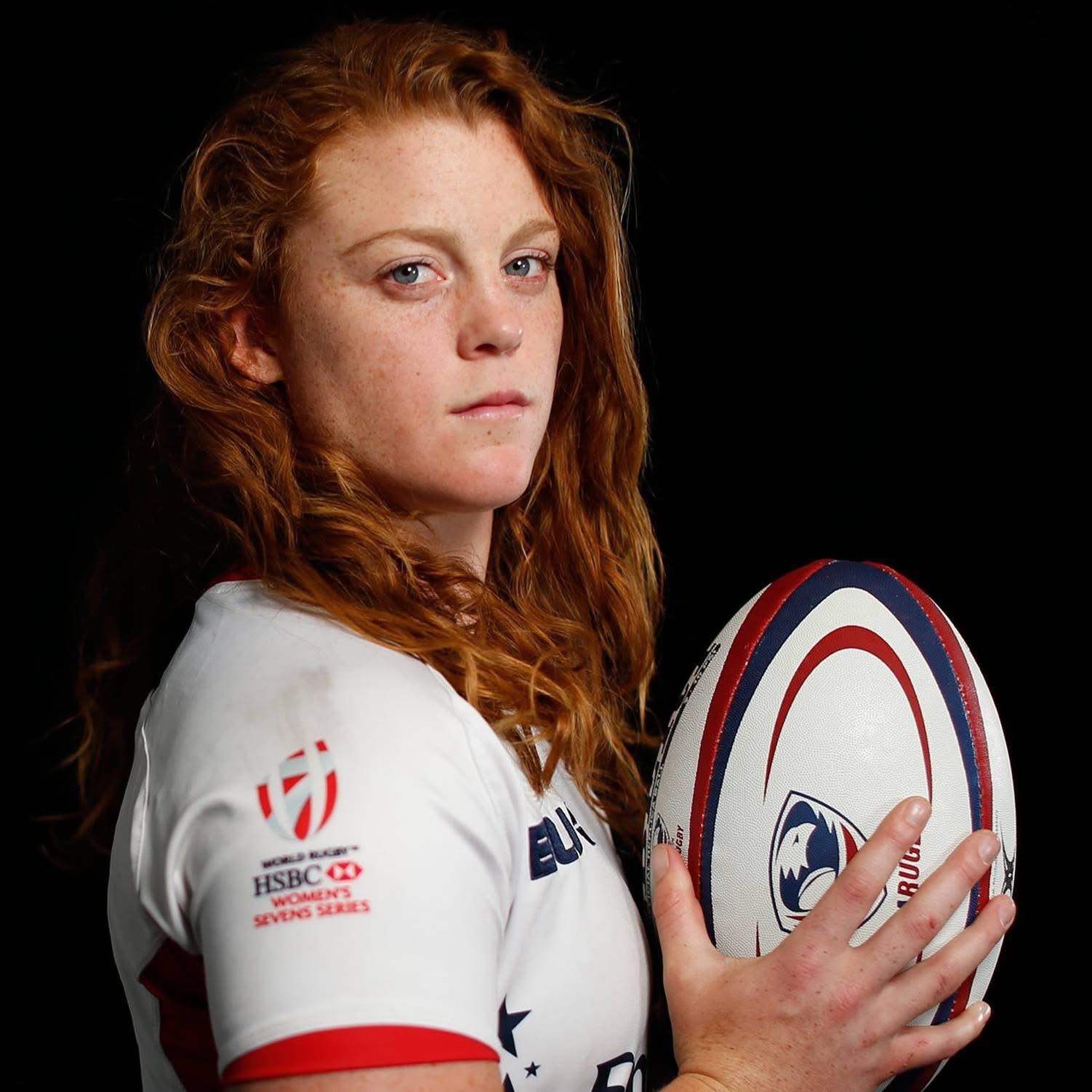
Alev Kelter is a rugby Olympian. She grew up in Eagle River, Alaska, playing varsity boys' hockey because there wasn’t a girls’ team. That drive to compete at the highest level has carried her through a career that spans multiple sports. She played soccer and hockey at the University of Wisconsin, and was part of U.S. national team programs in both sports—earning spots on the U.S. hockey national teams and joining the national player pool for soccer. After just missing a spot on the U.S. Olympic hockey team in 2014, she pivoted to rugby. She’d never played the game before, but because she was surrounded by a supportive coach and teammates who believed in her and helped her learn, rugby became the next chapter in her story. Now, nearly a decade later, she’s helped lead Team USA to its first-ever Olympic medal in women’s rugby at the 2024 Paris Games.
Alev’s story isn’t just about winning or switching sports, it’s about staying grounded and leading with intention. A lot of that mindset comes from her mom, who taught her the power of discipline and the value of seeing things through. Whether it was encouraging her to try out for boys’ varsity hockey or helping her reframe setbacks as stepping stones, her mom’s belief in her gave Alev the confidence to pursue whatever path she chose. That, combined with a natural gift for athleticism and a relentless work ethic, shaped how she moves through the world. These days, Alev carries a philosophy of being kind to herself, staying mentally tough while also giving herself grace in hard moments, and always pushing the edge of her own potential.

Ben Weissenbach is an environmental journalist and the author of “North to the Future.” It’s a book about Alaska, but also about uncertainty, responsibility, and the quiet, sometimes uncomfortable process of learning how to see. Ben spent time in the Brooks Range and Fairbanks with Roman Dial, a professor of biology and mathematics; Kenji Yoshikawa, a permafrost scientist; and Matt Nolan, a research professor and founder of Fairbanks Fodar, a remote sensing and mapping company. What Ben came away with was a better understanding of climate change, and a deeper reckoning with what it means to pay attention, to feel out of place, and to try to belong in a world that’s changing faster than we can map.
Ben grew up in Los Angeles, where he rarely questioned the role nature played in his life. It was just background, something peripheral to human activity. But years later, after spending time in the Brooks Range, that perspective shifted. He began to grasp the scale and the power of natural systems, and how his own lifestyle—comfortable, urban, and screen saturated—was directly connected to changes happening in some of the most remote places on Earth. He reflects on how many people today, especially younger generations, are growing up in a world mediated by screens, and how that can make it harder to engage with nature. He says that the tools we rely on are easy to use, and they’re culturally reinforced, which makes stepping away from them feel unfamiliar, even alienating. But it was that discomfort, of feeling out of place in the wild, that ultimately opened the door to seeing it more clearly.

Luc Mehl is an adventurer, educator, and the author of “The Packraft Handbook.” He’s traveled over 10,000 miles across Alaska using only human power — by foot, ski, paddle, bike, and even ice skate. He’s traversed all of the state’s major mountain ranges, competed in more than a dozen Wilderness Classics, and has become one of the most trusted voices in wilderness risk management. But what makes Luc’s story especially compelling isn’t just the miles he’s covered, it’s how those experiences shaped his philosophy around safety, decision-making, and the responsibility we all carry in wild places. He says that it took the loss of a friend for him to wake up to the dangers of packrafting. So, over the past 10 years, he’s made a point of developing a safety culture within the packrafting community, and within the Alaska recreation community at large.
Luc has shaped his entire life around the wilderness, in the miles he’s traveled and in how he approaches risk, safety, and growth. These days, it’s not about proving himself — it’s about what it means to be a good partner, to make it home safely, and to keep going year after year. He’s hesitant to call himself an explorer, knowing the deep Indigenous history of Alaska’s landscapes, and instead calls himself a visitor — someone who’s still learning. And what he’s learning now isn’t just coming from trips or new tech, but from sociology and self-help books — tools that help him slow down, stay aware, and better care for himself and the people he travels with. Because progress comes from the lessons that follow our mistakes, the moments that remind us of how awareness, humility and patience are what keep us moving forward.
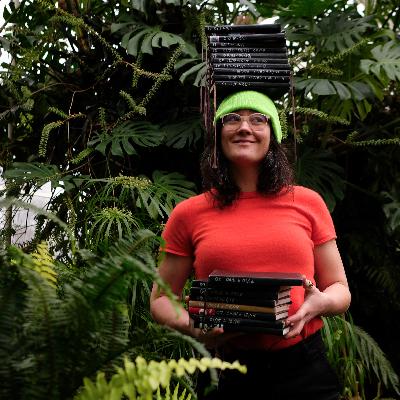
Tessa Hulls is an author and multi-disciplinary artist, and she recently won the Pulitzer Prize for her graphic memoir, “Feeding Ghosts.” It’s about three generations of women in her family — her grandma, her mom, and herself — and the ways their lives were shaped by political violence, migration, silence and survival. The book moves across continents and decades, weaving together personal history and national trauma. It examines what it means to be stuck in time, and carrying the reverberations of inherited trauma. It also confronts the fallibility of memory — what we remember versus what actually happened — and the tension between being Chinese and being American. Tessa’s grandma would have been the keeper of the family’s history, but she was a locked box — often medicated and unable to speak much English. So, at 30, after spending most of her life running from the weight of her family’s story, Tessa realized that if she didn’t confront it, she risked becoming the next generation of collateral damage.
Tessa’s been coming to Alaska for the past 14 years, and says that there’s nothing that makes her feel more at home than being alone in the backcountry. Drawn by the scale of Alaska’s wild places and the way they offer a kind of perspective she hasn’t found anywhere else. It provides her with moments that dissolve ego — when the vastness of the landscape reminds her of how small she is. The people are in tune with change, and the shifting seasons shape daily life and identity. It’s freeing and grounding at the same time.
The outdoors has shaped nearly every part of Tessa’s creative life, and it played a major role in the writing of “Feeding Ghosts.” It offered her the solitude and clarity she needed to confront her family’s story, and it was during a stint working as a chef in Antarctica that she first began teaching herself to draw comics. She says she didn’t have a choice when it came to writing it — it wasn’t a passion project, but a responsibility. She felt summoned by her family’s ghost to break the silence and carry their story forward. And while she has no plans to write another book, she’s now thinking about how to use the attention the memoir has brought her to uplift other artists in Alaska.
Photo courtesy of Gavin Doremus
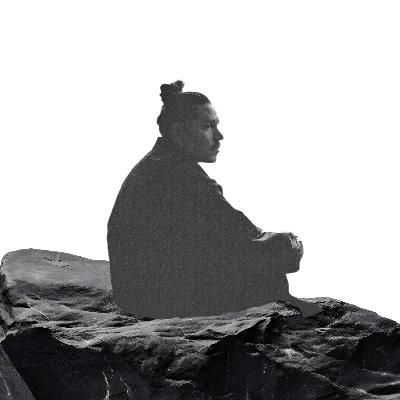
Nicholas Galanin is a Tlingit and Unangax̂ artist and activist whose work includes sculpture, installation, music and performance — and it’s always in conversation with history, land and power. He creates art that honors Indigenous traditions and confronts the structures that have sought to erase them; it challenges colonial narratives while inviting reflection on language, identity and the legacy of removal. He says that art can be a driver of change, a way to shift perspectives and push systems toward accountability and transformation. Whether he’s calling out institutional inaction, reclaiming ancestral knowledge or amplifying a suppressed language, his work insists that Indigenous culture is not a relic of the past, it’s a living, evolving force for justice and transformation.
Nicholas is also a musician, a collaborator in projects like Ya Tseen and Indian Agent. He talks about music as something fleeting but emotionally precise, capable of transmitting what words often can’t — that it’s a mindful practice rooted in listening, gratitude and presence. He describes the creative process as a kind of alchemy, where different skills and experiences come together in unexpected ways to produce something that transcends the moment. Be it through art or music, his work challenges artificial boundaries — between genres, between people and between past and future. He unravels divisions that are often rooted in systems of control rather than necessity, and makes room for something more fluid and expansive — something grounded in genuine connection, shaped by feeling and driven by the possibility of imagining a different way forward.

Elizabeth Merritt is the founding director of the Center for the Future of Museums at the American Alliance of Museums. It’s her job to track cultural, technological, environmental, political and public health trends — and figure out what they might mean for museums and the communities they serve. She thinks about things like: what role could blockchain play in the art world? Could it allow artists to permanently bake royalties into their work, so that they get a share on future resales? Could museums help lead that kind of change? For Elizabeth, this is personal work: growing up, museums were her favorite places to learn and explore. She did well in school, but she learned more wandering the halls of the Cleveland Museum of Natural History on her own. It was a space that nurtured her curiosity. And that curiosity, a belief that museums are places where we can choose to learn, shapes how she sees the future.
Elizabeth says that she approaches her work like a classic futurist: she reads widely — from academic research to news articles to social media — absorbing as much as she can across disciplines. She also draws inspiration from science fiction, especially dystopias, usually the ones that highlight problems and pathways forward. But her job isn’t just about anticipatory practices and strategic foresight, it’s about preparing museums for the future. So, she’s careful to distinguish trends from fads — trends have direction and persistence, while fads fade. For example, when it comes to climate change, she sees museums as cultural institutions as well as potential anchors of community resilience, helping people adapt to extreme heat, cold and severe weather. Still, she says the biggest challenge right now is twofold: how museums can remain economically sustainable and intellectually independent — and, more importantly, how they can hold on to public trust. Museums are among the most trusted institutions in American life, and she believes that trust is a powerful tool for reshaping a better world.
In this Chatter Marks series, Cody and co-host Dr. Sandro Debono talk to museum directors and knowledge holders about what museums around the world are doing to adapt and react to climate change. Dr. Debono is a museum thinker from the Mediterranean island of Malta. He works with museums to help them strategize around possible futures.
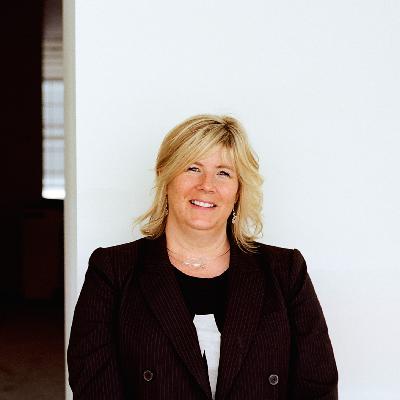
Julie Decker is the director and CEO of the Anchorage Museum. But before that she practiced as an artist and ran her own art gallery. Since then she’s fostered a belief in the power of museums to spark action — whether that means picking up a paintbrush, reading a new book, or seeing the world differently. Her connection to the Anchorage Museum runs back to childhood, when it was little more than a single room with a borrowed collection. Her dad was a visual artist and an art teacher; he was her earliest and most influential guide into that world. He taught her to be an observer — to notice the small things — and she watched as his own work appeared in solo shows and juried exhibitions at the museum. So, for Julie, the Anchorage Museum isn’t just a workplace; it’s been a constant presence in her life, shaping her sense of art, community and possibility.
In the work she does now, Julie envisions the Anchorage Museum as less a keeper of artifacts and more of a living platform for Alaska’s stories. It acts as a collaborator and a partner — a place that listens to communities, amplifies the voices of Alaskans and connects local narratives to global conversations. In her view, Alaska’s relatively small population allows individual creativity and innovation to ripple widely, making it vital to highlight imaginative thinkers, cultural disruptors and non-Western ways of knowing. That means rethinking what it means to collect — not simply holding objects, but being a responsible host and steward of the stories they carry.
In Alaska, where the natural world shapes identity and guides daily life, the museum’s role is to reflect how environmental change, Indigenous lifeways and community resilience intersect. Some projects take the form of exhibitions, others emerge as films, books, podcasts, newspaper series, or collaborations with musicians. Whether the work is local or part of an international conversation, Julie believes it must be rooted in place — fluid, adaptable and focused on a shared future that feels possible and inhabitable.
In this Chatter Marks series, Cody and co-host Dr. Sandro Debono talk to museum directors and knowledge holders about what museums around the world are doing to adapt and react to climate change. Dr. Debono is a museum thinker from the Mediterranean island of Malta. He works with museums to help them strategize around possible futures.

Annesofie Norn is the Head of Communications and Lead Curator at the Museum for the United Nations, or UN Live for short. With a background in placemaking and art practice, she specializes in designing experiences that resonate across borders and mediums. Her work often explores how art and storytelling can serve as powerful tools for social transformation on a global scale. Before joining UN Live, she worked on art exhibitions and contemporary theatre productions, which often explored hidden stories by posing unexpected questions and making surprising connections. She brings that same curiosity and creative instinct to her work today, helping reimagine how global stories are told and shared.
At UN Live, Annesofie is helping shape what she calls a “borderless museum” — one without a physical building — designed to meet people where they already are. UN Live operates through the power of popular culture, creating immersive experiences that extend beyond traditional museum walls. It aims to tap into the cultural spaces people already love — like music, film, sports and gaming — and use those genres to spark awe, empathy and meaningful action. Rather than asking people to enter a curated space, UN Live enters theirs, collaborating with local communities and cultural traditions to develop initiatives that feel relevant and transformative. Whether it’s amplifying unheard voices or suggesting new ways of being in the world, the work of UN Live is about using the material of society to imagine better futures.
In this Chatter Marks series, Cody and co-host Dr. Sandro Debono talk to museum directors and knowledge holders about what museums around the world are doing to adapt and react to climate change. Dr. Debono is a museum thinker from the Mediterranean island of Malta. He works with museums to help them strategize around possible futures.

Mike Radke is the co-founder and executive director of The Ubuntu Lab, a global education nonprofit that teaches people how to navigate cultural differences with curiosity, humility and empathy. Mike approaches the world with a learner’s mindset, believing he almost always has more to learn than to contribute. For him, that belief isn’t abstract, it’s personal, shaped by years of travel, work in public health and education, and a formative interaction nearly two decades ago with Archbishop Desmond Tutu in South Africa. The two met after a sermon in Cape Town, where Tutu spent hours speaking with Mike about his research on post-apartheid reconciliation. That conversation planted a seed: that forgiveness and collective healing aren’t just moral ideals, they’re practical tools for building communities that can hold disagreement, endure pain and still move forward together.
The Ubuntu Lab began as an academic project, Mike’s dissertation on nonviolence. It’s since grown into a living, breathing network of workshops, learning spaces and small-scale initiatives in over 40 countries. Its mission is to foster empathy and understanding — especially among young people — by encouraging honest, sometimes uncomfortable conversations about identity, belonging and conflict. At its core is the African philosophy of ubuntu: “I am because we are.” Mike and his collaborators co-create experiences that are less about delivering answers and more about sparking dialogue — sessions built around provocation, open-ended questions and the idea that everyone in the room has something to contribute. Rather than build a single institution, they embed within communities, remaining flexible, responsive and grounded in relationships.
In this Chatter Marks series, Cody and co-host Dr. Sandro Debono talk to museum directors and knowledge holders about what museums around the world are doing to adapt and react to climate change. Dr. Debono is a museum thinker from the Mediterranean island of Malta. He works with museums to help them strategize around possible futures.

Dr. Stefan Brandt is the Director of Futurium in Berlin, a hybrid museum experience and public platform dedicated to exploring the future. With a background in literature, philosophy, cultural studies — and a lifelong interest in music — Dr. Brandt has worked at the intersection of culture, science and civic life. Before leading Futurium, he held senior roles at major cultural institutions across Germany, where he championed interdisciplinary thinking and public engagement. He says it’s always been his intention to make a change, to improve the institutions he leads and, more broadly, to contribute to a better society. At Futurium, that mission continues: creating a space where people are invited to learn about the future and how they can help shape it.
Futurium isn’t a traditional museum, it doesn’t have a permanent collection or fixed exhibitions. Instead, it operates as a dynamic, evolving space designed to spark curiosity and conversation about the future. Dr. Brandt describes this absence of static artifacts as both a freedom and a challenge: it allows Futurium to be more agile and responsive, but it also requires continual reinvention. At its core is a question posed to every visitor: “How do I want to live?” To help people grapple with that question, Futurium presents ideas and scenarios grounded in science, media trends and public discourse. Each major theme — like the future of housing, health, nutrition, or democracy — is developed over time through in-depth research and collaboration with experts. Rather than offering definitive answers, Futurium encourages people to imagine and help shape a sustainable, participatory future.
In this Chatter Marks series, Cody and co-host Dr. Sandro Debono talk to museum directors and knowledge holders about what museums around the world are doing to adapt and react to climate change. Dr. Debono is a museum thinker from the Mediterranean island of Malta. He works with museums to help them strategize around possible futures.
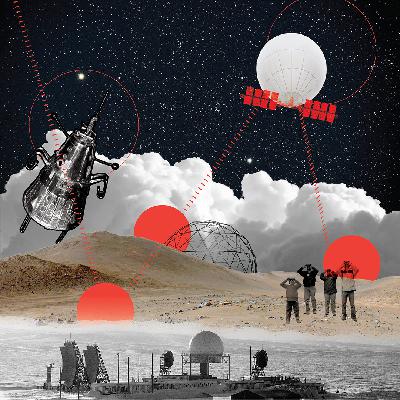
In this episode, we explore the lingering impact of the Cold War on Alaska, a state that stood on the frontlines of a global standoff. Through perspectives rooted in art, journalism, history, and geopolitics, we trace how Cold War-era decisions reshaped Alaska’s communities, economy, environment and sense of identity. And how it continues to influence Alaska’s security policies and relationship with the rest of the world.

Comments

Download from Google Play

Download from App Store
 United States