


 Claim Ownership
This Week in Business
Subscribed: 2,157Played: 76,336
Subscribe

© 844532d0-25f8-11f0-975b-2d032272e5a5
Description
Bringing together top leaders, innovators and renowned faculty from the Wharton School of the University of Pennsylvania discussing topics that matter to consumers and the business world.
Hosted on Acast. See acast.com/privacy for more information.
1417 Episodes
Reverse
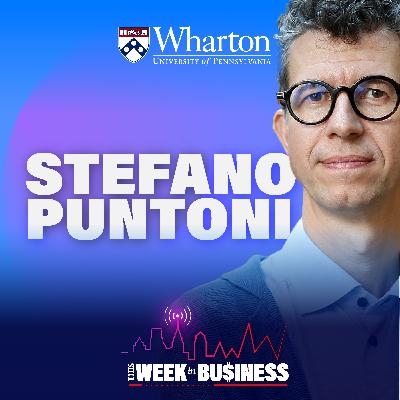
Stefano Puntoni, Marketing Professor at the Wharton School and Co-Director of the Wharton Human-AI Research Program, explains how artificial intelligence is pressuring SaaS margins, lowering barriers to entry, reshaping pricing models, and marking a potential inflection point for enterprise software markets. Hosted on Acast. See acast.com/privacy for more information.
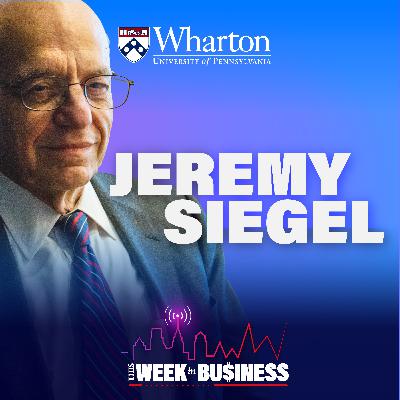
Jeremy Siegel, Professor Emeritus of Finance at the Wharton School and Senior Economist at Wisdom Tree, analyzes the Supreme Court’s ruling on tariffs, the market’s resilience amid policy uncertainty, the potential impact of Kevin Warsh as Fed chair, and how geopolitical tensions with Iran could influence interest rates and economic growth. Hosted on Acast. See acast.com/privacy for more information.

Dave Reibstein, Professor of Marketing at the Wharton School, explains how the school’s Cryptocurrency Confidence Index tracks U.S. consumer sentiment, explores links between confidence and price volatility, and examines the role of regulation and public perception in shaping the future of digital assets. Hosted on Acast. See acast.com/privacy for more information.
Serguei Netessine, Wharton Professor of Operations, Information and Decisions, discusses how U.S. sanctions on Lukoil are disrupting franchise agreements, banking relationships, and customer perceptions for locally operated gas stations in New York, New Jersey, and Pennsylvania. Hosted on Acast. See acast.com/privacy for more information.
Peter Cappelli, Professor of Management and Director of the Center for Human Resources at The Wharton School, examines the cooling in white-collar job openings, the impact of investor-driven cost cutting, the concept of “AI washing,” and why economic uncertainty is keeping companies cautious about expanding their workforce. Hosted on Acast. See acast.com/privacy for more information.

Kevin Werbach, Wharton Professor of Legal Studies and Business Ethics, discusses the Stablecoin Toolkit and how clearer definitions, regulatory frameworks, and emerging use cases could position stablecoins as a bridge between digital assets and the traditional financial system. Hosted on Acast. See acast.com/privacy for more information.

Dr. Americus Reed, II, Wharton Professor of Marketing, breaks down the strengths, themes, and competitive dynamics of this year’s Super Bowl ads, including the role of nostalgia, humor, artificial intelligence, and long-term brand storytelling. Hosted on Acast. See acast.com/privacy for more information.

Kent Smetters, Faculty Director of the Penn Wharton Budget Model and Professor of Business Economics and Public Policy at the Wharton School, analyzes the origins of billionaire and wealth taxes, explains why they consistently underperform revenue expectations, and explores their economic distortions at both the state and national level. Hosted on Acast. See acast.com/privacy for more information.
Stefano Puntoni, Wharton Professor of Marketing and Co-Director of the Wharton Human-AI Research Program, discusses OpenAI’s move toward advertising, its implications for monetization, consumer experience, and the future of digital advertising. Hosted on Acast. See acast.com/privacy for more information.
Jeremy Siegel, Wharton Emeritus Professor of Finance and Senior Economist at WisdomTree, analyzes the Federal Reserve’s decision to hold rates, the significance of dissenting votes, the outlook for future cuts, shifting market leadership, and how AI-driven productivity may shape the economy and labor markets heading into 2026. Hosted on Acast. See acast.com/privacy for more information.

Patrick T. Harker, former President of the Federal Reserve Bank of Philadelphia and current Wharton Professor of Operations, Information, and Decisions, draws on his experience to discuss why monetary policy has clear limits, the need for political follow-through on fiscal and workforce issues, and how investments in education, skilled trades, and digital innovation are essential for securing the nation’s long-term economic future. Hosted on Acast. See acast.com/privacy for more information.

Professor Emeritus of Healthcare Management at the Wharton School, Mark Vincent Pauly, analyzes the consequences of the Affordable Care Act’s enhanced subsidy expiration, its effects on insurance coverage and costs, and the potential implications of proposed reforms allowing individuals to choose plans using direct government funding. Hosted on Acast. See acast.com/privacy for more information.

Judd Kessler, Wharton Professor of Business Economics and Public Policy and author of Lucky by Design, tells how affordable housing lotteries function, why they generate hidden markets, and how better design could improve outcomes for renters. Hosted on Acast. See acast.com/privacy for more information.
Barbara Kahn, Wharton Professor of Marketing, discusses Saks Global’s bankruptcy, the strategic missteps behind it, and how luxury department stores can rebuild through experiential retail, omnichannel integration, and elite customer relationships. Hosted on Acast. See acast.com/privacy for more information.
Eric Bradlow, Vice Dean of AI and Analytics and Professor and Chair of the Marketing Department at the Wharton School, discusses new research with Accenture that empirically measures the skills gap and explores how AI is redefining education, hiring, and the future labor market. Hosted on Acast. See acast.com/privacy for more information.
Wharton Associate Professor of Financial Regulation, Peter Conti-Brown, analyzes the end of Jerome Powell’s term, the potential next chair, and why Federal Reserve independence is central to monetary policy, regulation, and the U.S. economy heading into 2026. Hosted on Acast. See acast.com/privacy for more information.
Stefano Puntoni, Wharton Marketing Professor and Co-Director of Wharton Human-AI Research, explores six major AI trends for 2026, including model specialization, agentic systems, everyday consumer AI, monetization, regulation, and the implications for business education and the future workforce. Hosted on Acast. See acast.com/privacy for more information.

Dan Taylor, Professor of Accounting at the Wharton School, discusses how his research helped shape new legislation requiring foreign company executives to disclose stock trades and protect U.S. investors from opportunistic insider selling. Hosted on Acast. See acast.com/privacy for more information.
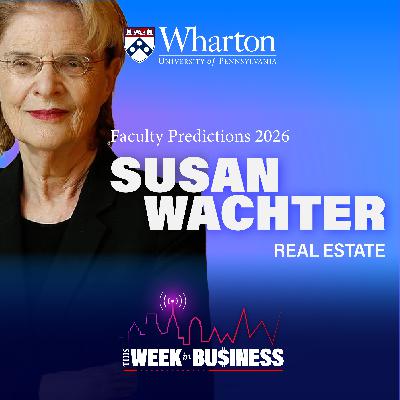
Susan M. Wachter, Albert Sussman Professor of Real Estate at the Wharton School, discusses the outlook for housing and commercial real estate, focusing on inflation trends, interest rates, inventory challenges, and what these forces mean for markets in the year ahead. Hosted on Acast. See acast.com/privacy for more information.
Jeremy Siegel, Wharton Emeritus Professor of Finance and Senior Economist at WisdomTree, shares his perspective on the state of the U.S. economy, analyzing recent rate cuts, inflation progress, employment data, tariff uncertainty, and what they could mean for markets and growth in 2026. Hosted on Acast. See acast.com/privacy for more information.


Download from Google Play

Download from App Store
 United States
Feels like an advert for Omaha Steaks. Poor from the podcast
Super biased guest. Hard to take any of his emotional viewpoints as having any substance behind them. I hope future guests are better vetted and come with facts and data to share.