


 Claim Ownership
Open Source Startup Podcast
Subscribed: 44Played: 973
Subscribe

© 410155
Description
The leading podcast on how to build a successful open source company.
Learn from the founders of HashiCorp, Chronosphere, Vercel, MongoDB, DBT, mobile.dev and more!
Learn from the founders of HashiCorp, Chronosphere, Vercel, MongoDB, DBT, mobile.dev and more!
193 Episodes
Reverse

In our latest Open Source Startup Podcast episode, co-hosts Robby and Tim talk with Pedram Amini, the creator of open source platform Maestro which allows users to run fleets of AI coding agents autonomously for long periods of time. Their project has 3K stars on GitHub. The episode explores how Maestro's multi-agent system overcame a key limitation in generative AI: context overload. After juggling many Claude sessions for different tasks, Pedram realized each problem needed its own isolated workflow. Maestro turns this into a system letting users run many agents and tabs in parallel, keeping tasks separate and avoiding context degradation during long or complex work.Maestro is designed for scale, enabling dozens or even hundreds of agents to handle complex projects simultaneously. It’s flexible, model-agnostic, and especially useful for breaking big problems into independent units. The project has quickly grown into a community-driven effort, reflecting a broader shift: instead of buying a bunch of tools, developers can build highly customized AI systems themselves, pointing toward a future of large-scale agent orchestration.

In our latest Open Source Startup Podcast episode, co-hosts Robby and Tim talk with Magnus Müller, the Co-Founder & CEO of Browser Use - the platform that makes web agents come to life. Their open source, browser-use, has almost 80K stars on GitHub and is widely adopted. This episode dives into the unexpected rise of an open-source browser automation project that took off during Y Combinator - while many similar projects before and after it never gained traction. The founder reflects on why: delivering a “magical moment” fast. Early demos showing AI controlling a browser, inspired by trends like OpenAI’s Operator, and immediately clicked with people. What began as a developer-only Python library evolved into a hosted product as non-technical users - from sales teams to startups - wanted access. Along the way, the team leaned into controversial but compelling use cases, like AI applying for jobs on your behalf, which sparked conversation and accelerated growth. The core challenge they focused on solving was reliability: unlike deterministic automation scripts, AI agents can behave unpredictably, making trust and repeatability central problems to overcome.The long-term vision goes beyond UI automation toward agents that can skip the browser entirely and interact directly with website servers through structured actions. But the conversation isn’t just about infrastructure. The founder admits that early growth came mostly from building and talking to users, while recent months have been dedicated to storytelling and marketing rather than coding. A personal through-line emerges as well: learning to replace defensiveness with curiosity - questioning assumptions, staying open to feedback, and continuously refining both the technology and the narrative around it.

In our latest Open Source Startup Podcast episode, co-hosts Robby and Tim talk with Catherine Jue, Co-Founder and CEO of browser infrastructure company Kernel. Their open source images acts as a browsers-as-a-service for automations and web agents.In this episode, we break down what Kernel is building today and why browser infrastructure has quietly become one of the most important layers for AI agents. We talk about Kernel’s focus on fast, low-latency cloud browsers, why performance matters more than people expect, and how developers can connect agents via APIs or MCP servers without spinning up heavy infrastructure themselves.We also explore the real-world use cases driving adoption - from a new wave of RPA for industries without APIs, to real-time web analysis, sales intelligence, and voice agents that need to respond instantly. Finally, we dig into Kernel’s open-source, developer-first DNA, the technical bets behind its control plane and unikernel-based browsers, and why the team believes agentic workflows are still early, but inevitable.

In our latest episode, co-hosts Robby and Tim talk with Robert Brennan, Co-Founder & CEO of OpenHands - the open platform for cloud coding agents. Their open source project, also called OpenHands, has 67K starts on GitHub and provides a software agent SDK, CLI, and local GUI. They also have OpenHands cloud - their paid, hosted version of the OpenHands GUI. This episode traces the rise of OpenDevin - now OpenHands - as an open-source alternative to closed AI coding agents like Devin. Open to anyone from day one, it attracted highly technical developers, academics, and eventually large enterprises that valued flexibility, privacy, and lack of model lock-in. Launched amid the 2024 surge of excitement around autonomous coding agents, OpenHands quickly built a massive community and differentiated itself by rejecting the idea of replacing engineers, instead focusing on empowering them through transparent, human-in-the-loop tooling.The discussion also covers the fragmented AI dev-tool landscape and why open source may define future standards. While many tools compete in the individual “inner loop” of coding, OpenHands emphasizes the collaborative “outer loop,” safety, and running agents at scale. Its organic growth, community-driven roadmap, and focus on real developer pain points highlight a future where AI accelerates software creation without removing human accountability.

In our latest episode, co-hosts Robby and Tim talk with Julien Mangeard, Co-Founder of open source backup platform Plakar. Plakar's open source, also called plakar, has 1.5K stars on GitHub and provides a backup solution powered by open source, immutable data store Kloset.The podcast discusses why data backup remains a critical but unsolved problem, especially as the number of data sources has exploded across SaaS applications, cloud databases, and on-prem systems. For CISOs and CTOs, this complexity makes it increasingly difficult to ensure everything is done “the right way.” The core argument is that the only truly safe approach is maintaining an independent, secure copy of your data - without vendor lock-in and with guaranteed long-term access, sometimes for decades. End-to-end encryption, immutable storage, and compatibility with different storage backends are emphasized as essential foundations rather than optional features.The conversation contrasts hype-driven cloud-only backup companies like Eon with Plakar’s back-to-basics approach: an open source, resilience-focused system designed to handle large and diverse datasets securely. Built around an immutable storage engine (Kloset), Plakar aims to let individuals or small teams manage their own backups while also supporting collaboration at scale. The founder’s motivation is rooted in personal experience- having previously lost critical data as a CTO - which reinforced the need for security, openness, and community involvement to continuously add and validate new data sources in a rapidly evolving data landscape.

In our latest episode, co-hosts Robby and Tim talk with Zarko Milosevic (CTO) & Arianne Flemming (COO) of Informal Systems. They've built a protocol design & cross-chain infrastructure platform to foster trust in software and money. This episode explores how open source infrastructure and security drive company-building in high-stakes financial software. Using Malachite - a consensus engine built for a customer and later acquired by Circle - as an example, the conversation highlights how verifiability and reliability are core to the team’s approach.Informal operates in a unique way. They have core products and ones that are spun out. Projects emerge organically from real user needs and are either kept in the core or spun out as independent companies, often as open source software with services. With a worker-owned structure and roots in crypto, the organization focuses on building trustworthy financial and software infrastructure while staying flexible through spin-outs and acquisitions.

In our latest episode, our co-hosts Robby and Tim talk with Jon Morehouse, founder and CEO of infrastructure company Nuon which enables Bring Your Own Cloud (BYOC) for everyone. This is an exclusive podcast episode with Jon digging into their decision to open source Nuon! The episode discusses the industry’s growing shift toward Bring Your Own Cloud (BYOC), where SaaS products run directly inside a customer’s cloud account rather than the vendor’s. This model is especially attractive to enterprises because it improves security, data sovereignty, and trust, while enabling earlier pilots and shorter sales cycles. Infrastructure products like Nuon focus on making this practical by packaging applications so they work in customer environments without requiring vendor access, positioning BYOC as an enterprise-first approach that is likely to become the default way software is delivered.A key theme is open source as a trust and distribution strategy. In the infrastructure space, open sourcing lowers perceived risk, deepens customer collaboration, and builds community, which in turn acts as sales enablement for large enterprise deals. The conversation also connects BYOC to AI, highlighting patterns like bring-your-own-model, keys, and GPUs, and frames BYOC as a spectrum rather than a binary choice. The broader vision is to define and lead a BYOC movement by uniting vendors around shared standards, trust, and community-driven adoption.
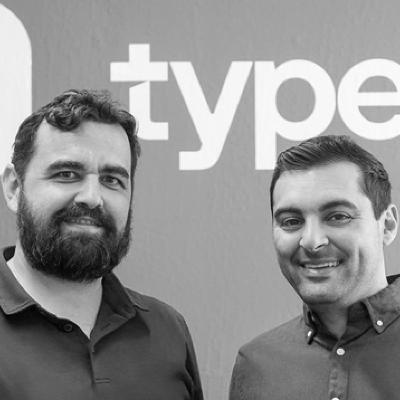
In our latest episode, our co-hosts Robby and Tim talk with Yoni Michael and Kostas Pardalis, Co-Founders of Typedef. Both have deep backgrounds in data infrastructure (Starburst, Tecton, etc.) and, after meeting through a "blind date" at Blue Bottle Coffee, decided to team up to address the growing brittleness of large-scale data pipelines - issues made worse by the rise of AI.They explain how traditional systems like Spark weren’t designed for today’s AI workloads, especially unstructured data and LLM inference. Fenic was their answer: an open-source engine and DataFrame library built specifically for LLM workflows, multi-step reasoning, and agentic systems - without the operational complexity.Their biggest lessons: start GTM early, talk to as many data leaders as possible, and keep validating - insights that led directly to open-sourcing Fenic and building its MCP-powered developer experience.

In our latest episode, Robby and Tim talk with Will McGugan, creator of the Rich and Textual open source projects and founder of Textualize and Toad (not yet released), about the challenges of turning beloved open-source projects into real businesses. Despite Rich and Textual's huge adoption in the Python community, he says he waited too long to monetize, focused too much on technical perfection, and tried to build infrastructure before a killer product. He also burned himself out and wishes he had simplified and hired earlier.McGugan believes the terminal is a neglected but essential interface, prized for speed and flow. Rich and Textual modernized terminal output, but monetizing open-core dev tools proved difficult. His new project, Toad, aims to be a universal AI front-end for the terminal - open-source, protocol-driven, and able to plug into different agent back ends like Claude and others. The goal: seamless workflows and modern UX in the environment developers already live in.Big takeaways: monetize early, ship a killer app sooner, don’t overcomplicate structure, and avoid grinding yourself into the ground.

In this episode, we sit down with Paul Klein IV, Founder & CEO of Browserbase, to explore how his team is redefining the foundation of AI-driven browser automation. Browserbase provides the web browser infrastructure for AI agents and apps, and its open-source SDK, Stagehand, lets developers write automations using natural language - adapting seamlessly as websites evolve.Paul shares his belief that browser automation is a critical but underinvested primitive that future AI applications will depend on for years. He traces the journey from the limitations of traditional headless browsers and brittle RPA tools to the emergence of a cleaner, more adaptable framework built for the AI era.We dive into:Stagehand’s design philosophy: minimal feature bloat and strong abstractions.Developer-first community: TypeScript and Python support driven by user demand and open-source contributions prioritized through community PRs.Director, Browserbase’s new layer for non-technical users: “if v0 was for building websites, Director is for building automations.”How open source investment fuels both innovation and integration, and why Browserbase believes the next billion-dollar company will be built on top of its framework.The evolving relationship between AI agents and the web, touching on Cloudflare, automation ethics, and where the line lies between automation and scraping.Paul also reflects on inspiration from figures like Jeff Lawson, the importance of great abstractions for new developers, and the “moment of magic” when AI begins to work on your behalf.

This episode dives into why code quality still matters in the age of AI, and why English - no matter how good models get - won’t replace programming.Our guest is Co-Founder of Boundary, Vaibhav Gupta, and he shares the journey behind BAML, a new programming language to write and manage AI logic. After 12 pivots and 3.5 years, the team realized something simple but powerful:AI tools were evolving fast, but the code was ugly.Most AI generated code was unnecessarily long and messy. For builders who viewed code as artistic expression, that was painful. Once they tried BAML, everything changed. It was clean, elegant - completely the opposite of AI slop.It wasn’t an overnight success. It took nine months to reach ten users — but the early ones stayed because of thoughtful design:Easy model swappingFull visibility into every prompt and test caseA workflow so simple that non-technical users (even lawyers!) could test codeBAML was built with a philosophy that code is the source of truth, not the docs.The conversation touches on how LLM observability and thoughtfully designed code make BAML unique. It’s inspired by the same thinking that made React sticky - beauty and composability.Pretty code, the founder believes, isn’t vanity - it’s a functional advantage:Fewer bugsEasier to reason aboutFriendlier for AI-generated systems

In the episode, we sat down with ClickHouse Co-Founder Yury Izrailevsky to unpack how one of the fastest open-source databases in the world became the analytics engine of choice for 2,000 customers including Harvey, Canva, HP, and Supabase. From its Yandex origins to powering AI observability, Yury shares how ClickHouse balances open-source roots, cloud innovation, and a remote-first culture moving at breakneck speed.ClickHouse's Series C valued the company at $6.35B earlier this year, and just yesterday they announced an extension to that round, just months after it was raised. In this episode, we dig into:Origins & Founding StoryClickHouse began as an internal project at Yandex to power a Google Analytics–style platform, focused on performance and scale.Open-sourced in 2016 - rapid global adoption laid the foundation for ClickHouse the company. Yury first discovered ClickHouse while at Google; impressed by its speed, he later co-founded the company in 2021 alongside Aaron Katz (ex-Elastic) and the original creator Alexey Milovidov.Why ClickHouse Stands OutColumn-oriented, open source OLAP database designed for massive-scale analytical processing.Excels in performance, efficiency, and cost - ideal for large data volumes and real-time analytics (and now AI workloads). Architectural choices:Columnar storage = better compression and faster execution.Separation of compute and storage enables elasticity, scalability, and resilience in the cloud.Open Source vs. CloudOpen-source version offers freedom and flexibility.Cloud product delivers much lower total cost of ownership and fully managed experience.Architectural parity between the two ensuring no vendor lock-in for customers. Customers can run the same queries on both; most stay with cloud due to simplicity and cost efficiency.Use Cases & Ecosystem4 main use cases:Real-time analyticsData WarehousingObservability AI / ML WorkloadsCompany Building & CultureFully remote from day one.Prioritized experienced, self-sufficient engineers over early-career hires.Built and launched GA version in less than a year - insane pace of innovation.Innovation & CommunityMonthly release cadence.Hundreds of integrations and connectors.Strong open-source and commercial communityAdvice for FoundersFocus on what matters most Hire mature, independent thinkers.Move fast but maintain quality; ClickHouse Cloud achieved production-grade quality in record time.
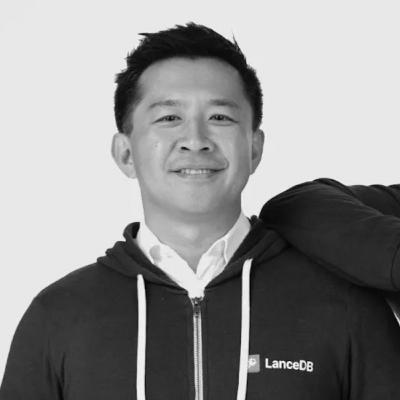
Chang She is Co-Founder & CEO of LanceDB, the multimodal lakehouse platform. Their open source data format lance has over 5K stars on GitHub and is a modern columnar data format for ML and LLMs implemented in Rust.LanceDB has raised $41M from investors including Theory Ventures, CRV, and Essence VC. In this episode, we dig into:Early focus: autonomous vehicles; solved real-time analysis limits with Lance format → 9,000% performance gain.Multi-modal AI taking off (vision, audio, text); Midjourney & Runway as pioneers; audio now a major category.How they built trust through open source.Integrated workflows (data prep + search + embedding) going beyond vector DBs; education needed to show full value.Cloud/serverless launch in 2023–24 enabled seamless local-to-production use.Future bets: audio infra, robotics, spatial reasoning; vector DBs risk irrelevance if they don’t evolve.

Ryan Djurovich is the Founder & CEO of Nadrama, the open source infrastructure automation platform that deploys containers instantly. In this episode, we dig into:Kubernetes challenges that still exist today – setup and operations are notoriously hard and complex.What great developer experience means to him – focused on making deployments super simple by streamlining infrastructure and common tasks.Core value of Nadrama – developers just want to deploy apps; Nadrama abstracts away infrastructure pain.His view on what being truly open source means (including using the Apache 2.0 license) Ryan's user discovery process - talking directly with as many users as possible, mining his network / folks he's worked with in the past, community events & meetups.Navigating the earliest days of Nadrama Security philosophy – believes in baseline security for all accounts (not just enterprise), informed by a Cloudflare background.

Morgante Pell is the Founder of Grit, the developer tool that puts software maintenance on autopilot and was acquired by Honeycomb in April 2025. In this episode, we dig into:The Grit product and how LLMs have made software maintenance much more efficient Launching GritQL - Grit's embedded query language for searching and transforming codeTheir early focus on the JavaScript community The motivation for Grit to open sourceHow AI generated code has put pressure on software maintenanceWhere new problems have been created by AI-generated code The acquisition by Honeycomb - motivation, integration, and how the deal happened

Emma Burrows is Co-Founder & CTO of Portia AI, the platform to build AI agents in regulated environments. Their open source Python SDK provides a developer framework for predictable and stateful agentic workflows. Portia AI has raised around $5M from investors including General Catalyst and First Minute Capital.In this episode, we dig into:Why they built an end-to-end platform from agent planning to deployment The focus on accuracy as their true north star metric Their paid contribution program How their found their initial ICP in regulated industries Why 2026 will be the year of agents Her best fundraising advice (hint: never really stop fundraising)

Alan Braithwaite is Co-Founder & CTO of RunReveal, the security data platform with real-time monitoring, built-in detections, and AI-powered investigations. Today, they manage and analyze security logs for teams at Harvey, ClickHouse, Cloudflare, and Temporal. RunReveal has multiple open source projects including event stream processing library kawa and query language pql. RunReveal has raised from investors including Costanoa, Modern Technical Fund, and Runtime Ventures. In this episode, we dig into:Why today's modern security teams are rethinking data management The benefits of building RunReveal on ClickHouse How they worked with early believers / customers like TemporalTheir open source strategy and building trust with the community through open sourcing components like their event processing libraryTheir MCP server and enabling security teams to use AI to automate investigations (including the launch of their new remote MCP server)

Vasek Mlejnsky is Co-Founder & CEO of E2B, the open-source runtime for executing AI-generated code in secure cloud sandboxes. Essentially, they give AI agents cloud computers. Their open source repos, particularly e2b which has 9K GitHub stars, have been widely adopted to help securely run AI-generated code. E2B has raised $12M from investors including Decibel and Sunflower. In this episode, we dig into:Why agents need a sandboxBuilding a new category of infra tooling, much like LaunchDarkly Some of their viral content moments - including Greg Brockman sharing their videosFiguring out the right commercial offering Why they don't agree with pricing per token Why moving from Prague to the Bay Area felt essential for them as founders

Roman Gershman is Co-Founder & CTO of Dragonfly, the drop-in Redis replacement for heavy data workloads that has significant performance, cost, and scale benefits. Their open source dragonflydb has 28K stars on GitHub. Dragonfly has raised $21M from investors including Quiet Capital and Redpoint. In this episode, we dig into:The challenges with Redis The users that have really benefitted from Dragonfly (high scale + real-time needs - gaming, B2C) The benefits of being multi-threaded How they got some of their bigger users / customers like Twilio, SoFi, and Spotify

Lukas Schulte is Co-Founder & CEO of SDF Labs, the developer platform that scales SQL understanding across organizations, which was recently acquired by data transformation unicorn dbt Labs. In this episode, he's joined by Anders Swanson, Senior Developer Experience Advocate at dbt, to discuss the acquisition and future of data engineering. In this episode, we dig into:How the acquisition happened, as well as the M&A process How dbt thinks about building capabilities internally vs. making acquisitions How the SDF platform will improve the lives of dbt users The most challenging parts about the integration What the future developer experience for data teams will be like A glimpse into the future of data engineering

Comments

Download from Google Play

Download from App Store
 United States