


 Claim Ownership
Foster & Motley : A Podcast About Wealth & Life
Subscribed: 4Played: 33
Subscribe

© Foster & Motley
Description
The advisors of Foster & Motley are on a mission to help individuals, couples, and families achieve the life they envision by providing a tailored and comprehensive wealth management experience. They provide customized tiers of service to help maximize your wealth, no matter where you are on your wealth journey. Join them as they explore actionable steps to improve your financial well-being.
116 Episodes
Reverse
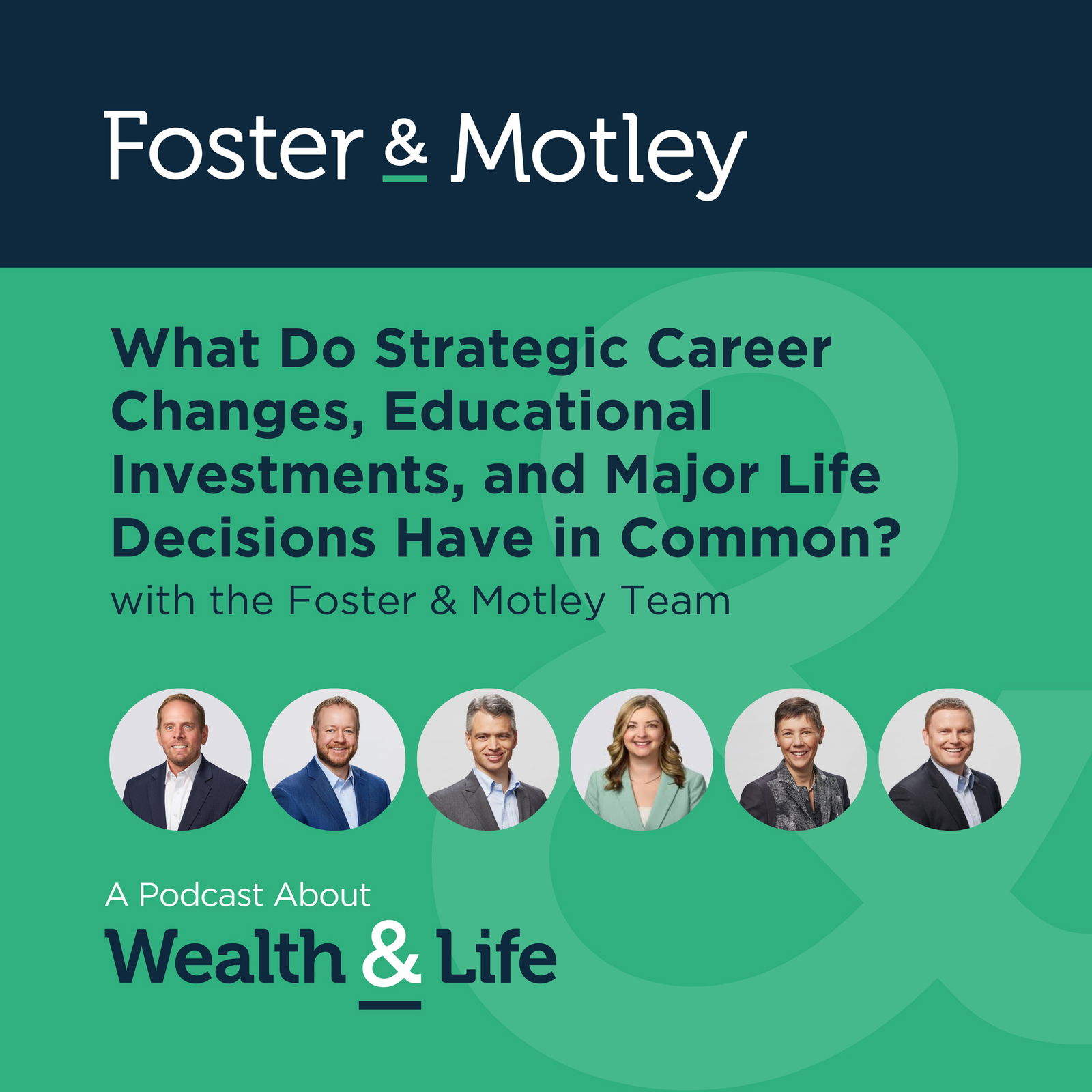
In this episode, Foster & Motley team members reflect on the best financial decisions they’ve ever made and how, in many cases, that led them to Foster & Motley. From early lessons in discipline and risk-taking to career pivots and personal milestones, each story highlights the deep connection between financial decisions and life outcomes.Our guests are Elizabeth M. Green, CFA, Investment Manager and Shareholder; David J. Nienaber, MBA, CPA, CFP®, Financial Planner and Shareholder; Thomas J. Guidi, CFA, Investment Manager, Co-Chief Investment Officer and Shareholder; Zachary T. Horn, MBA, CFP®, CMFC®, Managing Partner/President, Investment Manager and Shareholder; Rachel A. Rasmussen, MBA, CFA, CDFA®, Investment Manager and Shareholder; and Zach T. Binzer, CFP®, Financial Planner and Shareholder. Each shares personal insights that have shaped their journeys.Key Takeaways:(00:44) The impact of learning smart money habits early.(02:26) How career paths are often shaped by personal relationships.(03:40) The long-term benefits of taking calculated financial risks.(07:40) The value of aligning financial decisions with family priorities.(09:11) The financial advantages of building a life with a partner.(10:17) How investing in education can create career momentum.(14:31) The role of mentorship and support in professional growth.(17:31) The importance of seeking fulfillment alongside financial goals.(19:35) How past experience can support a successful career transition.Resources Mentioned:Foster & Motley, Inc. | Websitehttps://www.fosterandmotley.com/Chartered Financial Analyst (CFA) Programhttps://www.cfainstitute.org/programs/cfa-programXavier University MBA Programhttps://www.xavier.edu/master-of-business-administration/Certified Financial Planner (CFP) Designationhttps://www.cfp.net/get-certified/certification-processUniversity of Dayton MBA Programhttps://udayton.edu/business/Connect with Elizabeth Green, David Nienaber, Thomas Guidi, Zachary Horn, Rachel Rasmussen and Zach Binzer:info@fosterandmotley.com+1 513-561-6640Foster & Motleyhttps://www.fosterandmotley.com/LinkedIn: Elizabeth Greenhttps://www.linkedin.com/in/elizabeth-m-green-cfa/LinkedIn: David Nienaberhttps://www.linkedin.com/in/dnienaber/LinkedIn: Thomas Guidihttps://www.linkedin.com/in/thomas-guidi-cfa-21830952/LinkedIn: Zachary Hornhttps://www.linkedin.com/in/zachhorn/LinkedIn: Rachel Rasmussenhttps://www.linkedin.com/in/rachel-rasmussen-cfa-cdfa/LinkedIn: Zach Binzerhttps://www.linkedin.com/in/zach-t-binzer-cfp/LinkedIn: Foster & Motley, Inc.https://www.linkedin.com/company/fosterandmotley/#WealthManagement #FinancialPlanning #InvestmentAdvisory #WealthManagementPodcast

Thomas J. Guidi, CFA, Investment Manager, Co-Chief Investment Officer and Shareholder at Foster & Motley, Inc., explains the misunderstood role of cash in financial planning. He outlines how to approach liquidity needs, make the most of different cash vehicles and avoid common pitfalls when managing excess cash. Thomas also explores how advisors can help individuals match their cash strategy with both immediate and future needs, ensuring that every dollar has a purpose.Key Takeaways:(01:31) Maintaining a buffer for expected and unexpected expenses is important.(03:22) Excess cash holdings may limit potential long-term growth.(04:37) Understanding liquidity needs helps determine appropriate financial tools.(06:26) Some cash vehicles may offer higher returns than others.(06:55) Matching the timing of future expenses with investment maturity can be beneficial.(07:41) Risk levels and protections vary across different cash management options.(08:48) Financial professionals can provide guidance in choosing between available options.Resources Mentioned:Foster & Motley, Inc.| Websitehttps://www.fosterandmotley.com/Connect with Thomas Guidi:info@fosterandmotley.com+1 513-561-6640Foster & Motley, Inc.LinkedIn: Thomas J. Guidi, CFAhttps://www.linkedin.com/in/thomas-guidi-cfa-21830952/LinkedIn: Foster & Motley, Inc.https://www.linkedin.com/company/fosterandmotley/#WealthManagement #FinancialPlanning #InvestmentAdvisory #WealthManagementPodcast
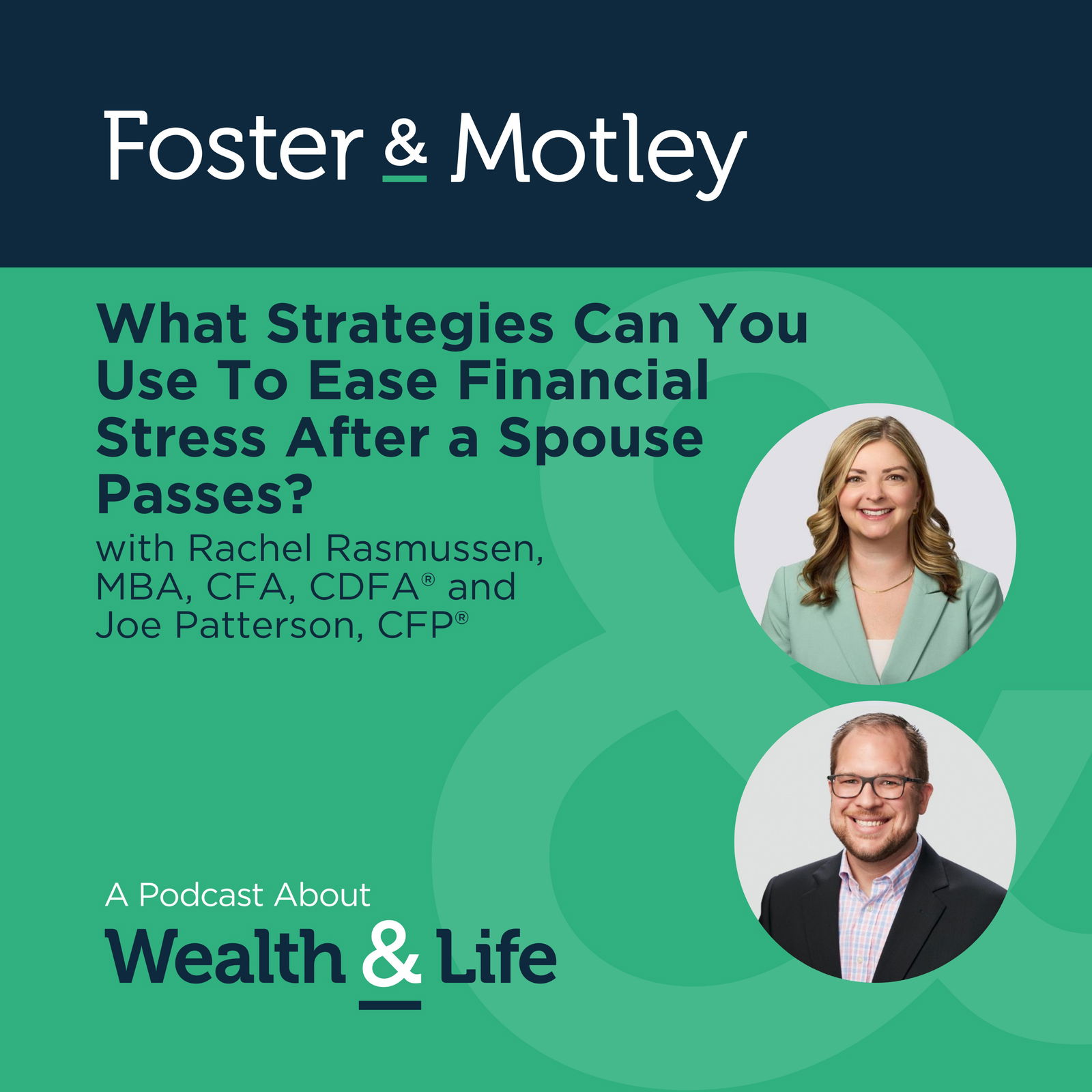
In this episode, we’re joined by Rachel Rasmussen, MBA, CFA, CDFA®, Investment Manager and Shareholder, and Joe Patterson, CFP®, Financial Planner and Shareholder, both at Foster & Motley, Inc. Together, they navigate the financial and emotional complexities that follow the death of a spouse, offering a compassionate and pragmatic look at planning for one of life’s most difficult transitions.Rachel and Joe outline the importance of preparing in advance. They walk through the steps survivors must take in the immediate aftermath of a loss. From accessing cash and organizing documents to managing ongoing bills and updating estate plans, they explain how thoughtful planning and the right support system can make a significant difference during a deeply emotional time.Key Takeaways:(01:08) Take time before making major financial decisions.(02:37) Rely on a support network of professionals and loved ones.(05:35) Prepare necessary documents to facilitate transitions.(08:28) Ensure continuity of income through proper coordination.(11:54) Keep an organized overview of financial assets.(15:06) Set up account access in advance to avoid complications.(19:49) Safeguard and share digital access information appropriately.(20:54) Communicate the location of key legal documents.(26:48) Reevaluate financial plans and goals as circumstances change.Resources Mentioned:Foster & Motley, Inc. | Websitehttps://www.fosterandmotley.com/Connect with Joe Patterson and Rachel Rasmussen:info@fosterandmotley.com+1 513-561-6640Foster & Motleyhttps://www.fosterandmotley.com/LinkedIn: Joe Pattersonhttps://www.linkedin.com/in/josephapatterson/LinkedIn: Rachel Rasmussenhttps://www.linkedin.com/in/rachel-rasmussen-cfa-cdfa/LinkedIn: Foster & Motley, Inc.https://www.linkedin.com/company/fosterandmotley/#WealthManagement #FinancialPlanning #InvestmentAdvisory #WealthManagementPodcast

In this episode, we hear from Foster & Motley, Inc.’s Luke Hail, MBA, CFP®, Financial Planner and Shareholder, and Zach Horn, MBA, CFP®, CMFC®, Managing Partner, Investment Manager and Shareholder. They discuss how money mindsets, shaped by upbringing, experience, and environment, affect financial decisions. Drawing on years of advising high-net-worth clients, they highlight how understanding these mindsets can help individuals and couples make aligned choices, avoid unnecessary friction, and gain peace of mind through thoughtful planning.Key Takeaways:(01:16) A money mindset forms early and drives financial behavior.(04:34) Differing mindsets can create tension in relationships.(09:07) Emotions can impact financial decisions.(10:47) Advisors help clients navigate financial pressure.(13:30) Clear planning builds confidence to spend or give.(16:58) Giving during life can be more meaningful than waiting.(21:01) Diversification supports long-term stability.(22:42) Reducing stress improves financial resilience.Resources Mentioned:Foster & Motley, Inc. | Websitehttps://www.fosterandmotley.com/Connect with Luke Hail and Zach Horn:info@fosterandmotley.com+1 513-561-6640Foster & MotleyLinkedIn: Luke Hailhttps://www.linkedin.com/in/luke-hail-cfp%C2%AE-b606679/LinkedIn: Zach Hornhttps://www.linkedin.com/in/zachhorn/LinkedIn: Foster & Motley, Inc.https://www.linkedin.com/company/fosterandmotley/#WealthManagement #FinancialPlanning #InvestmentAdvisory #WealthManagementPodcast

In this episode, we’re joined by David Nienaber, MBA, CPA, CFP® and Joe Patterson, CFP®, both Financial Planners and Shareholders at Foster & Motley, Inc.. Together, they discuss the importance of estate planning, especially when helping aging parents navigate their financial affairs.They share their experiences working with clients and families and shed light on the generational challenges and misinformation that can create unnecessary stress during already difficult times. David and Joe outline practical steps to simplify financial matters, foster open communication, and avoid costly mistakes during estate settlement.Key Takeaways:(02:20) Creating a clear picture of assets is essential.(03:42) Proper documentation helps reduce stress for loved ones.(06:04) Misinformation often delays important financial conversations.(07:04) Legal and financial rules vary significantly by location.(10:17) Many people are unaware of their roles in estate plans.(13:50) Generational experiences shape views on money and planning.(17:24) Maintenance tasks are vital after setting up an estate plan.(21:00) Having open discussions can help prevent future confusion.(25:59) Easy access to digital and financial information is crucial.Resources Mentioned:Foster & Motley, Inc. | Websitehttps://www.fosterandmotley.com/Foster & Motley Family Letter Templatehttps://www.fosterandmotley.com/insights/2019/10/25/a-practical-addition-to-your-estate-planConnect with Joe Patterson and David Nienaber:info@fosterandmotley.com+1 513-561-6640Foster & Motleyhttps://www.fosterandmotley.com/LinkedIn: Joe Pattersonhttps://www.linkedin.com/in/josephapatterson/LinkedIn: David Nienaberhttps://www.linkedin.com/in/dnienaber/LinkedIn: Foster & Motley, Inc.https://www.linkedin.com/company/fosterandmotley/#WealthManagement #FinancialPlanning #InvestmentAdvisory #WealthManagementPodcast

Rachel Rasmussen, MBA, CFA, CDFA®, Investment Manager and Shareholder, and Zach Binzer, CFP®, Financial Planner and Shareholder, both of Foster & Motley, Inc., discuss the importance of evaluating financial advice. They explore how to differentiate between well-intended recommendations and misleading information, the role of emotions in investing and the importance of staying disciplined with financial decisions.Key Takeaways:(00:52) People share wins, not losses.(01:58) Always question the intent behind advice.(03:52) FOMO can lead to bad investments.(04:25) Expertise in one field doesn’t mean expertise in investing.(06:29) Trends don’t always fit your situation.(07:35) Ask for details before acting.(09:32) A financial advisor gives perspective.(11:32) Discipline beats emotional decisions.Resources Mentioned:Foster & Motley, Inc. | Websitehttps://www.fosterandmotley.com/Connect with Rachel Rasmussen and Zach Binzer:info@fosterandmotley.com+1 513-561-6640Foster & Motleyhttps://www.fosterandmotley.com/LinkedIn: Rachel Rasmussenhttps://www.linkedin.com/in/rachel-rasmussen-cfa-cdfa/LinkedIn: Zach Binzerhttps://www.linkedin.com/in/zach-t-binzer-cfp/LinkedIn: Foster & Motley, Inc.https://www.linkedin.com/company/fosterandmotley/#WealthManagement #FinancialPlanning #InvestmentAdvisory #WealthManagementPodcast

Choosing where to live in retirement is about more than just finances — it’s about creating a home that aligns with evolving needs, goals and lifestyles.In this episode, Joe Patterson, CFP®, and David J. Nienaber, MBA, CPA, CFP®, both Financial Planners and Shareholders at Foster & Motley, Inc., discuss the financial and emotional considerations of downsizing, upsizing and rightsizing in retirement. They explore how housing decisions impact long-term financial security and lifestyle, highlighting real client experiences and key factors to consider when planning for the future.Key Takeaways:(00:52) Downsizing isn’t always the answer.(02:23) Social norms push downsizing, but it’s not for everyone.(06:56) Retirement communities offer long-term security.(08:28) Continuous care communities provide peace of mind.(11:05) Renting first helps retirees find the right fit.(13:15) Downsizing often costs more than expected.(16:09) Insurability is a growing issue in high-risk areas.(19:07) Family talks are crucial for vacation home plans.(21:31) Emotional ties make relocation tough.(25:02) Tracking routines before moving prevents surprises.Resources Mentioned:Foster & Motley, Inc. | Websitehttps://www.fosterandmotley.com/Connect with Joe Patterson and David Nienaber:info@fosterandmotley.com+1 513-561-6640LinkedIn: Joe Pattersonhttps://www.linkedin.com/in/josephapatterson/LinkedIn: David Nienaberhttps://www.linkedin.com/in/dnienaber/LinkedIn: Foster & Motley, Inc.https://www.linkedin.com/company/fosterandmotley/#WealthManagement #FinancialPlanning #InvestmentAdvisory #WealthManagementPodcast

Ryan English, MBA, CFA, CPA, CFP®, Investment Manager and Shareholder at Foster & Motley, Inc., shares insights on real estate investing beyond the traditional do-it-yourself house flipping seen on TV. He explains different investment options, including publicly traded real estate investment trusts (REITs) and private real estate, and how they fit into a diversified portfolio.Key Takeaways:(00:56) Real estate boosts returns and diversification.(02:01) House flipping isn’t Foster & Motley’s focus.(02:18) Real estate’s role depends on risk tolerance and assets.(02:56) REITs offer liquidity and easy market access.(04:49) Private real estate delivers higher returns for less liquidity.(05:17) Investments range from low-risk properties to high-risk developments.(07:26) Real estate hedges against inflation.(09:42) Local market knowledge is key.(10:19) Risk tolerance varies by investment type.Resources Mentioned:Foster & Motley, Inc. | Websitehttps://www.fosterandmotley.com/Connect with Ryan English:info@fosterandmotley.com+1 513-561-6640Foster & Motleyhttps://www.fosterandmotley.com/LinkedIn: Ryan Englishhttps://www.linkedin.com/in/j-ryan-english-mba-cfa-cpa-cfp/LinkedIn: Foster & Motley, Inc.https://www.linkedin.com/company/fosterandmotley/#WealthManagement #FinancialPlanning #InvestmentAdvisory #WealthManagementPodcast
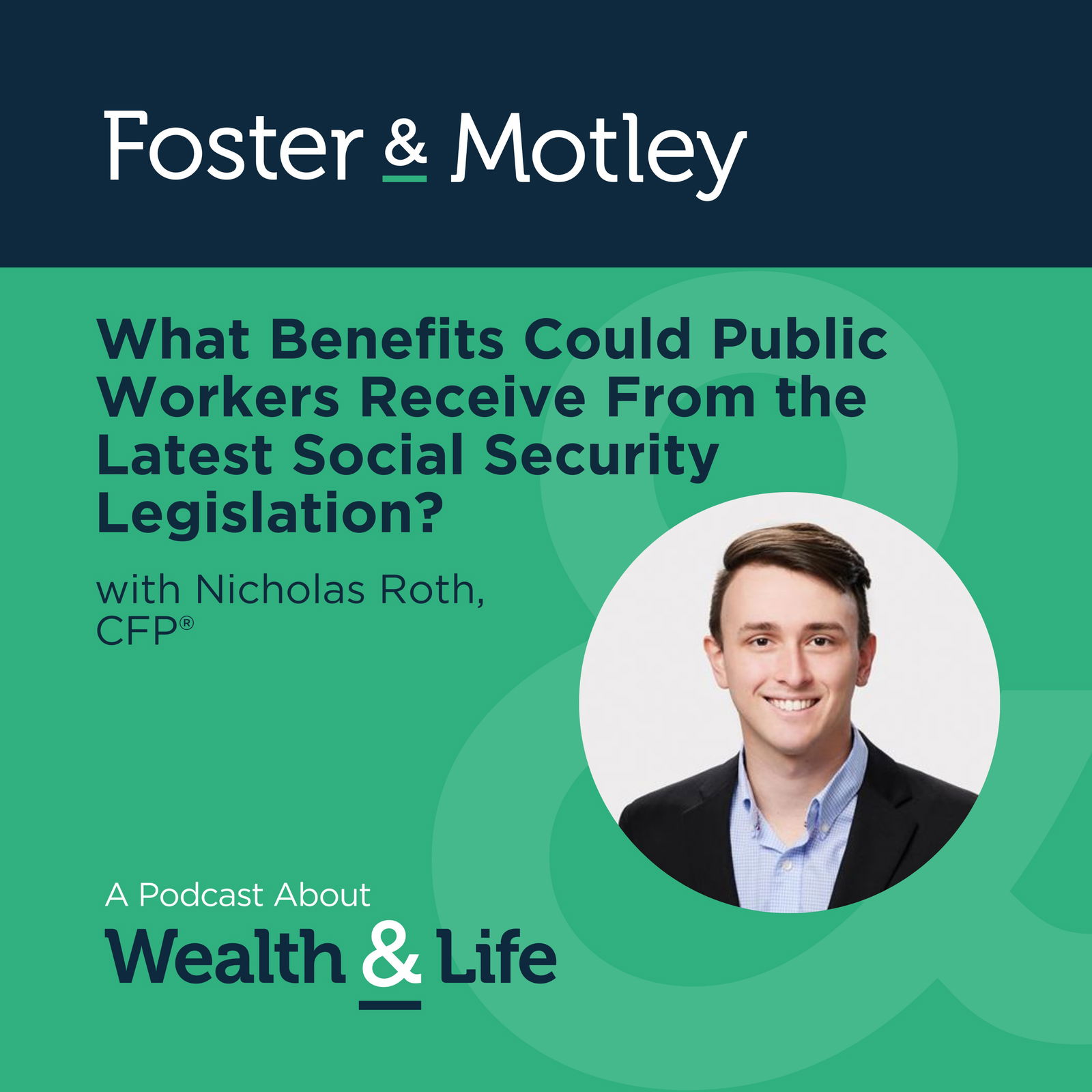
Nicholas Roth, CFP®, Financial Planner at Foster & Motley, Inc., joins us to discuss the recent changes to Social Security, specifically the removal of the Windfall Elimination Provision (WEP) and the Government Pension Offset (GPO), which could significantly boost retirement income for millions of public sector workers.Key Takeaways:(01:04) The Social Security Fairness Act removes WEP and GPO provisions.(02:39) Public sector workers were penalized by these offsets.(03:01) Spousal benefits were cut for spouses of public pension recipients.(05:37) The law is retroactive, requiring the SSA to correct past benefits.(06:03) Affected individuals get adjusted benefits and a lump sum.(07:21) Those over 70 should apply to avoid losing retroactive payments.(08:58) Benefits do not increase after age 70.(10:29) The SSA provides regular updates on its website.Resources Mentioned:Nicholas Roth, CFP®https://www.fosterandmotley.com/our-team/bios/nicholas-e-rothFoster & Motley, Inc.https://www.fosterandmotley.com/Social Security Administration (SSA)https://www.ssa.gov/Connect with Nicholas Roth:info@fosterandmotley.com+1 513-561-6640LinkedIn: Nicholas Rothhttps://www.linkedin.com/in/nickroth14/LinkedIn: Foster & Motley, Inc.https://www.linkedin.com/company/fosterandmotley/#WealthManagement #FinancialPlanning #InvestmentAdvisory #WealthManagementPodcast

In this episode, we’re joined by Rachel Rasmussen, MBA, CFA, CDFA®, Investment Manager and Shareholder, and Megan Lyons, CFP®, Financial Planner. They discuss the financial and emotional challenges of the sandwich generation — those balancing the care of aging parents while supporting their children. They explore how cultural expectations, financial planning, and clear communication shape caregiving responsibilities.Key Takeaways:(00:26) The sandwich generation faces financial and emotional pressures.(00:59) Cultural and generational factors shape caregiving expectations.(04:49) Transparency in financial discussions fosters better planning.(07:42) Setting clear parameters helps determine aging-in-place options.(12:55) Sibling coordination prevents future conflicts in caregiving.(16:57) Major life changes signal the need to review estate documents.(18:14) Aging parents should ensure their helpers span generations.(20:32) Downsizing possessions can ease transitions for loved ones.(23:56) Open conversations about care plans reduce family stress.Resources Mentioned:A Place for Mom | Website -https://www.aplaceformom.com/Marie Kondo’s "The Life-Changing Magic of Tidying Up" -https://www.amazon.com/Life-Changing-Magic-Tidying-Decluttering-Organizing/dp/1607747308Connect with Rachel Rasmussen & Megan Lyons:info@fosterandmotley.com+1 513-561-6640Foster & Motley -https://www.fosterandmotley.com/LinkedIn: Rachel Rasmussen, MBA, CFA, CDFA®https://www.linkedin.com/in/rachel-rasmussen-cfa-cdfa/LinkedIn: Megan Lyons, CFP®https://www.linkedin.com/in/meganlyonscfp/LinkedIn: Foster & Motley, Inc.https://www.linkedin.com/company/fosterandmotley/#WealthManagement #FinancialPlanning #InvestmentAdvisory #WealthManagementPodcast
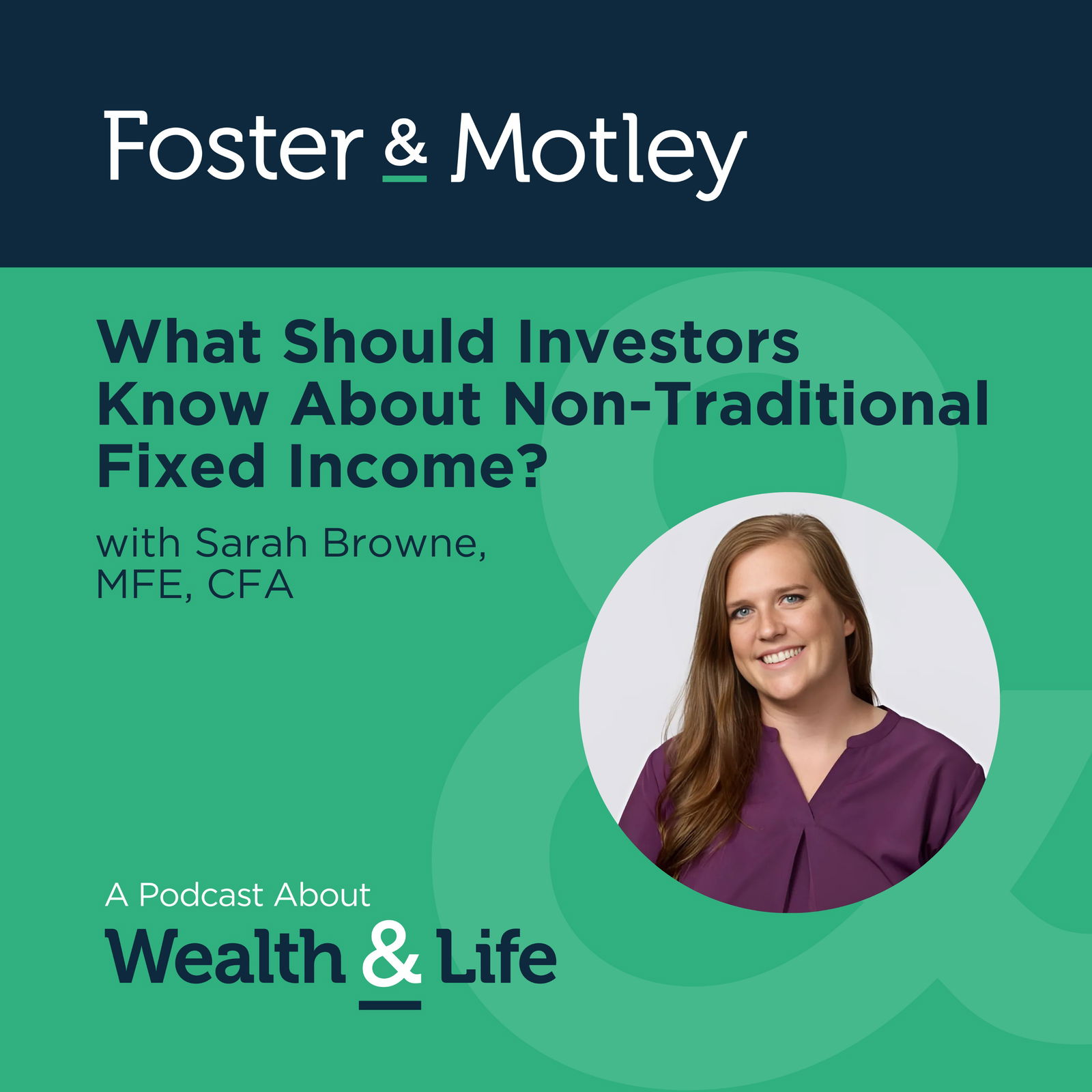
In this episode, we welcome Sarah Browne, MFE, CFA, Fixed Income Portfolio Manager of Foster & Motley, Inc., to discuss the evolving role of non-traditional fixed-income investments. Sarah explores how this asset class has grown since the 2008 financial crisis, how it differs from traditional fixed income, and what investors should consider when integrating these investments into their portfolios.Key Takeaways:(01:27) The 2008 crisis led to tighter banking rules and new lending gaps.(02:12) Non-traditional fixed income includes private credit and asset-backed securities.(03:55) Private credit can be high quality with strong underwriting.(05:23) High minimums make access tough for individual investors.(06:04) Non-traditional investments boost diversification and income.(07:42) Private credit yields range from 9% to 11% annually.(08:30) Yields aren’t guaranteed and depend on market conditions.(09:02) Selecting high-quality funds is key to managing risk.Resources Mentioned:Foster & Motley, Inc. LinkedIn -https://www.linkedin.com/company/fosterandmotley/Foster & Motley, Inc. Website -https://www.fosterandmotley.com/Connect with Sarah Browne -https://www.linkedin.com/in/sarah-k-browne/info@fosterandmotley.com+1 513-561-6640#WealthManagement #FinancialPlanning #InvestmentAdvisory #WealthManagementPodcast

Luke P. Hail, MBA, CFP®, Financial Planner & Shareholder, and James L. Combs, Director of IT, join this episode to dive into the critical topic of cybersecurity. Together they provide practical insights to help individuals and organizations protect their digital assets from cyber threats such as hacks, ransomware, phishing, and social engineering.Key Takeaways:(01:29) Focus your efforts to stay secure online.(01:57) Updates are essential for safety.(03:54) Prioritize system updates over apps.(06:17) Always log out of websites.(13:55) MFA adds biometric protection.(15:30) Passkeys outperform passwords.(23:01) Beware of phishing and social engineering.(28:19) Use encrypted password managers.Resources Mentioned:Luke P. Hail, MBA, CFP® -https://www.linkedin.com/in/luke-hail-cfp%C2%AE-b606679/James L. Combs -https://www.linkedin.com/in/jcombsjr/Foster & Motley, Inc. | Website -https://www.fosterandmotley.com/Passkeys overview from Microsoft -https://support.microsoft.com/en-us/windows/passkeys-overview-301c8944-5ea2-452b-9886-97e4d2ef4422Password manager options from Apple and Android -https://support.apple.com/en-us/109016#WealthManagement #FinancialPlanning #InvestmentAdvisory #WealthManagementPodcast

In this episode, we welcome Nicholas Roth, CFP®, Financial Planner to discuss the complexities of Inherited IRAs. Nicholas sheds light on updated rules, the emotional and financial challenges involved, and strategies to navigate these intricate situations effectively.Key Takeaways:(01:39) Introducing money into any situation adds emotional complexity.(02:30) The IRS finalizes updated rules for inherited IRAs post-2020.(03:51) IRS confirms no penalties for decisions made in good faith between 2020 and 2024.(04:52) The 10-year rule requires full distribution of inherited IRAs within 10 years.(07:14) Eligible beneficiaries include surviving spouses, minors and disabled or chronically ill individuals.(10:42) Most people inheriting IRAs are subject to both 10-year and stretch distribution rules.(12:51) Inherited IRAs can pass through multiple generations, adding complexity.(13:52) IRS reduces penalties for missed required minimum distributions to 10–25%.(14:47) Inherited IRA rules are complex; trusted financial professionals provide essential guidance.Resources Mentioned:Foster & Motley, Inc. | Website -https://www.fosterandmotley.com/Connect:info@fosterandmotley.com+1 513-561-6640LinkedIn: Nicholas Roth -https://www.linkedin.com/in/nickroth14/LinkedIn: Foster & Motley, Inc. -https://www.linkedin.com/company/fosterandmotley/#WealthManagement #FinancialPlanning #InvestmentAdvisory #WealthManagementPodcast

In this episode, we’re joined by Thomas J. Guidi, CFA, Investment Manager, Co-Chief Investment Officer, and Shareholder, and Dave J. Nienaber, MBA, CPA, CFP®, Financial Planner and Shareholder. Together, they examine the evolving role of artificial intelligence in wealth management, exploring its potential applications and limitations and the importance of balancing innovation with security to better serve clients.Key Takeaways:(03:47) AI disrupts industries through automation and innovation.(06:31) AI improves inventory, customer service, and scheduling.(09:31) Experimentation with AI for meeting notes and its current limitations.(13:00) Challenges in using AI for nuanced portfolio rebalancing decisions.(16:59) The evolving role of AI in tax analysis and multi-year strategies.(20:29) AI’s potential for creating flowcharts for estate planning.(23:22) Emotional coaching is a human advantage.(26:37) Security concerns, including deepfakes and ethical standards for AI.(30:56) Balancing innovation with opportunities and risks.Resources Mentioned:Thomas J. Guidi -https://www.linkedin.com/in/thomas-guidi-cfa-21830952/Dave J. Nienaber -https://www.linkedin.com/in/dnienaber/Foster & Motley, Inc. LinkedIn -https://www.linkedin.com/company/fosterandmotley/Foster & Motley, Inc.| Website -https://www.fosterandmotley.com/Connect:info@fosterandmotley.com+1 513-561-6640LinkedIn: Thomas GuidiLinkedIn: David NienaberLinkedIn: Foster & Motley, Inc.#WealthManagement #FinancialPlanning #InvestmentAdvisory #WealthManagementPodcast

Joe Patterson, CFP®, Financial Planner and Shareholder at Foster & Motley, Inc., shares practical strategies to reduce financial stress and gain confidence in personal finance management. This conversation highlights actionable steps to organize your finances, set priorities, and mitigate risks.Key Takeaways:(02:03) A financial inventory starts with listing income and fixed and variable expenses.(05:02) Budgeting apps simplify tracking and updates.(06:23) Regular updates to your financial inventory provide clarity over time.(08:13) Simplifying financial accounts can reduce stress and improve tracking.(12:19) Preparing for risks, such as job loss or economic downturns, is essential.(14:07) Insurance safeguards against unexpected life events.(15:11) Focus on paying down high-interest debt for long-term financial health.(18:21) Annual financial reviews create a habit and ensure progress toward goals.Resources Mentioned:Foster & Motley, Inc. | Website - https://www.fosterandmotley.comBudgeting Apps: Mint - https://mint.intuit.com/Personal Capital - https://www.personalcapital.com/Goodbudget - https://goodbudget.com/Connect With Joe Patterson:info@fosterandmotley.com+1 513-561-6640LinkedIn: Joe Patterson https://www.linkedin.com/in/josephapatterson/LinkedIn: Foster & Motley, Inc. https://www.linkedin.com/company/fosterandmotley/#WealthManagement #FinancialPlanning #InvestmentAdvisory #WealthManagementPodcast

In this episode, Financial Planner and Shareholder, Zach Binzer, CFP®, and Client Service Specialist, Heidi Lenhart provide a deep dive into the complexities of retirement plan rollovers, shedding light on when and why to consider this significant financial step. Whether you’re consolidating accounts, navigating tax implications, or planning for retirement, they share actionable insights to help you make informed decisions.Key Takeaways:(01:10) A rollover transfers retirement funds between accounts during life transitions.(02:15) Over half of Americans face retirement rollovers at some point.(03:12) Common triggers: career changes, retirement, or in-service distributions.(06:13) Administrative fees and investment costs vary by plan type.(07:59) Consolidating accounts simplifies management and boosts options.(10:34) Advisors must provide a "Best Interest Analysis" for guidance.(14:13) Direct rollovers and trustee transfers prevent tax issues.(18:38) Roth accounts grow tax-free; traditional accounts defer taxes.(22:03) Advisors ensure smooth, compliant rollover processes.Resources Mentioned:Foster & Motley, Inc. | Website -http://www.fosterandmotley.comConnect with Zach Binzer and Heidi Lenhart:info@fosterandmotley.com+1 513-561-6640LinkedIn: Zach Binzer, CFP® -https://www.linkedin.com/in/zach-t-binzer-cfp/LinkedIn: Heidi Lenhart -https://www.linkedin.com/in/heidi-lenhart/LinkedIn: Foster & Motley, Inc. -https://www.linkedin.com/company/fosterandmotley/#WealthManagement #FinancialPlanning #InvestmentAdvisory #WealthManagementPodcast

In this episode, Luke Hail, MBA, CFP®, Financial Planner and Shareholder, and Megan Lyons, CFP®, Financial Planner, both of Foster & Motley, Inc., discuss the potential changes to the federal tax code as the Tax Cuts and Jobs Act approaches its expiration. They provide insights into what this means for individual taxpayers and small business owners, discussing actionable strategies to navigate the uncertainties of potential tax increases.Key Takeaways:(01:01) The origins and temporary nature of the Tax Cuts and Jobs Act.(02:26) How the standard deduction changes may impact tax bills.(04:04) Sunset of 529 Plan benefits for private school tuition.(06:39) Qualified business income deductions may revert.(10:29) Estate tax exemption limit set to be halved.(14:11) Estate planning strategies for tax preservation.(16:28) The role of upcoming elections in tax policy.(23:03) Managing increasingly complex tax situations.Resources Mentioned:Luke Hail -https://www.linkedin.com/in/luke-hail-cfp%C2%AE-b606679/Megan Lyons, CFP® -https://www.linkedin.com/in/meganlyonscfp/Foster & Motley, Inc. | Website -http://www.fosterandmotley.comFoster & Motley 529 Plans: Creating a Winning Strategy for College Savings -https://www.fosterandmotley.com/insights/2018/08/21/529-plans-creating-a-winning-strategy-for-college-savingsConnect:info@fosterandmotley.com+1 513-561-6640LinkedIn: Luke HailLinkedIn: Megan LyonsLinkedIn: Foster & Motley, Inc.#WealthManagement #FinancialPlanning #InvestmentAdvisory #WealthManagementPodcast
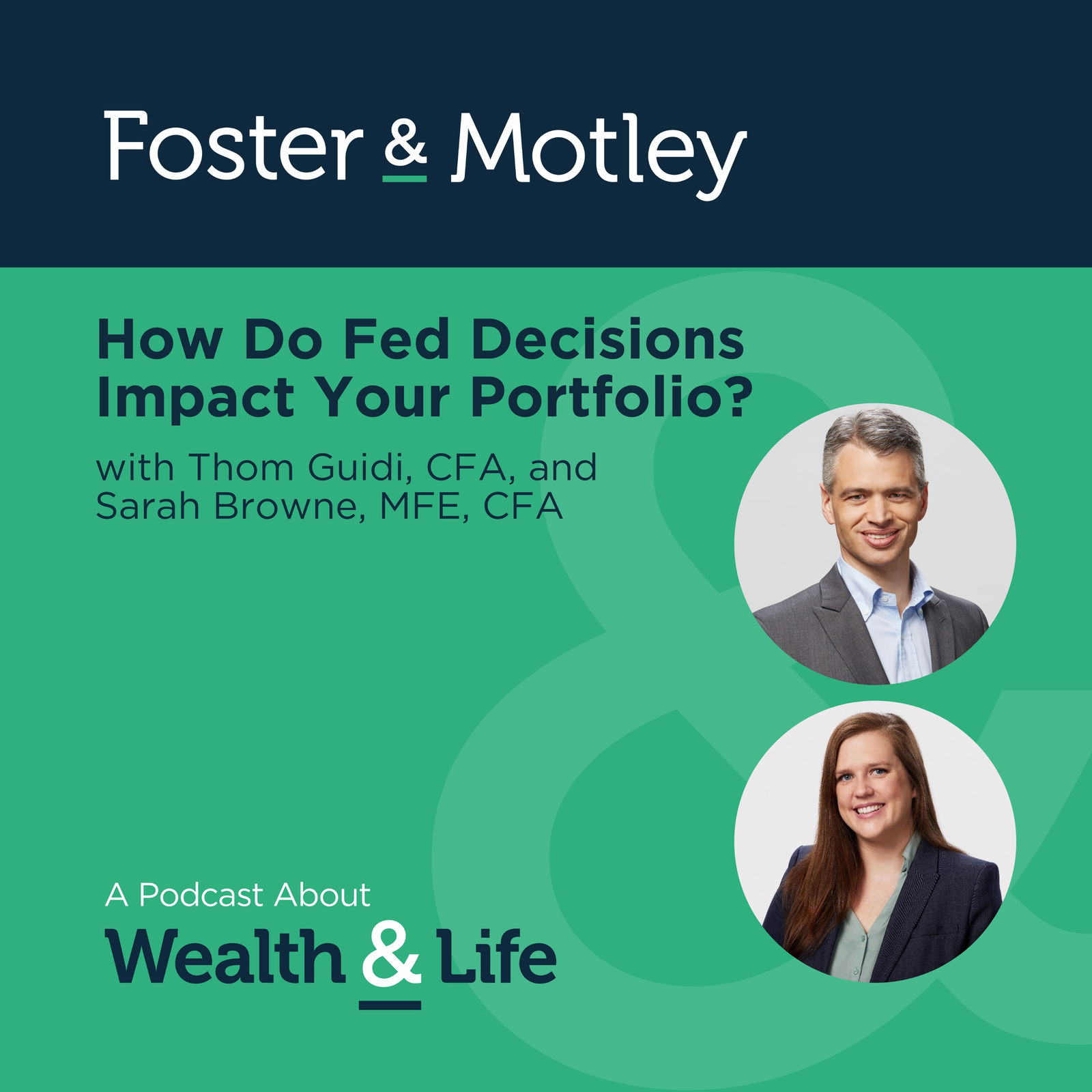
We’re joined by Thomas Guidi, CFA, Investment Manager, and Sarah Browne, MFE, CFA, Fixed Income Portfolio Manager, both of Foster & Motley, Inc. Together, they discuss the Federal Reserve’s role and its significant influence on interest rates, inflation and investment portfolios. They dive into the Fed’s monetary policy, its dual mandate and how its decisions affect both short-term and long-term financial planning.Key Takeaways:(00:53) The Federal Reserve’s dual mandate focuses on managing employment and inflation.(03:14) The Federal Open Market Committee (FOMC) meets every six weeks to adjust interest rates based on economic conditions.(04:46) The FOMC operates independently from political influence, serving under different administrations.(05:11) Interest rate adjustments can be swift and significant, especially in response to economic crises like Covid or the 2008 financial crisis.(06:45) The Fed funds rate is the primary tool used to control short-term lending and monetary policy.(09:06) Short-term interest rates are currently higher than long-term rates, signaling expectations of future rate reductions.(11:01) The Fed’s strategy of holding interest rates high for an extended period has controlled inflation without triggering an economic collapse.(12:19) Investors should assess their cash reserves in high-yield savings accounts, preparing for potential interest rate declines.Resources Mentioned:Thomas Guidi -https://www.linkedin.com/in/thomas-guidi-cfa-21830952/Sarah Browne -https://www.linkedin.com/in/sarah-k-browne/Foster & Motley, Inc. | Website -http://www.fosterandmotley.comFoster & Motley, Inc. | LinkedIn -https://www.linkedin.com/company/fosterandmotley/Connect:info@fosterandmotley.com+1 513-561-6640#WealthManagement #FinancialPlanning #InvestmentAdvisory #WealthManagementPodcast
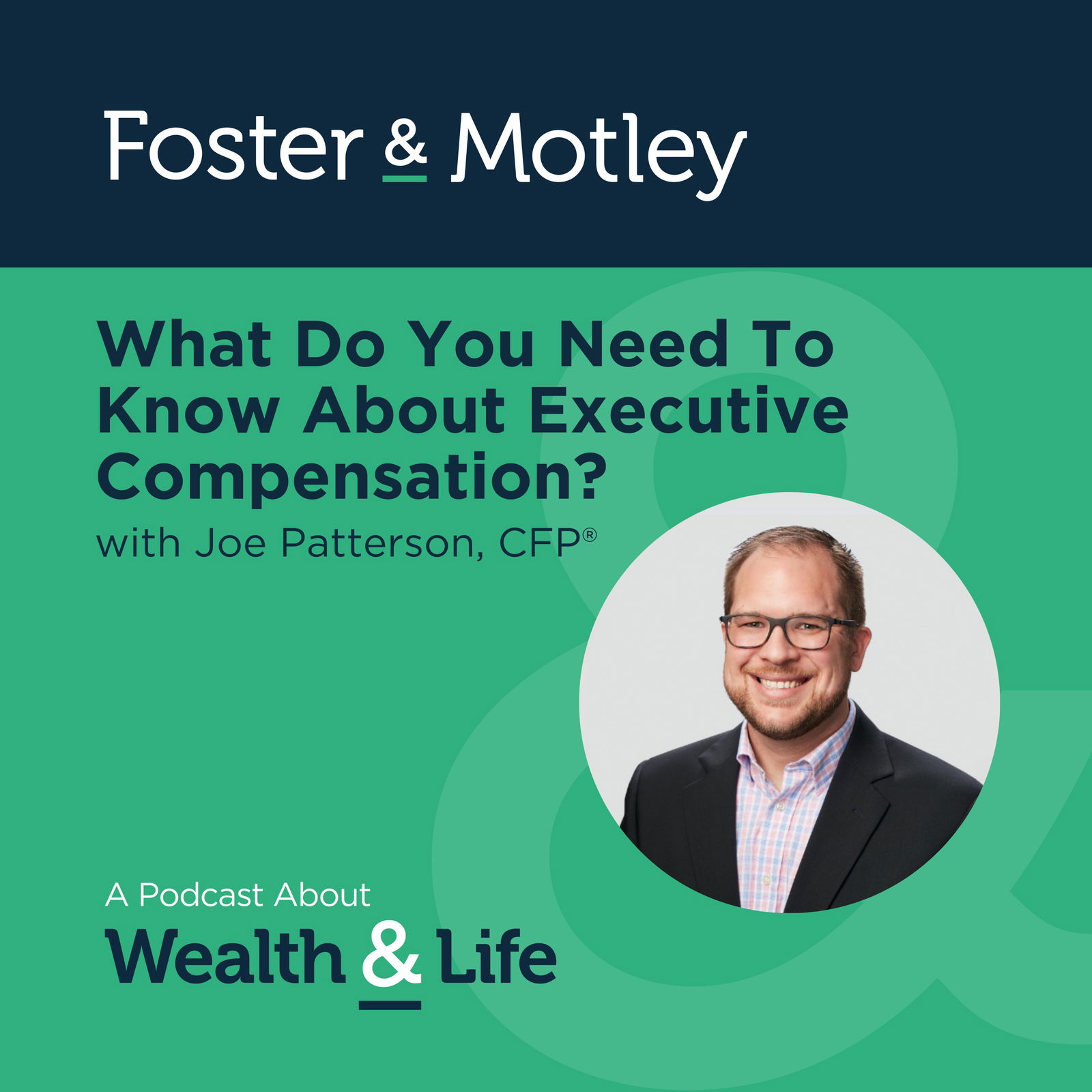
Joe Patterson, Financial Planner and Shareholder at Foster & Motley, Inc., dives into the complexities of executive compensation. Joe discusses how increased earnings bring unique challenges and opportunities, emphasizing the importance of proactive planning. From base salaries to stock options, Joe provides insights on maximizing compensation and mitigating tax impacts.Key Takeaways:(02:02) Base compensation is often fixed and reviewed periodically.(03:48) Bonuses can be significant, but it’s vital to understand tax implications.(05:22) Deferred compensation, or “golden handcuffs,” incentivizes retention.(08:23) Restricted shares vest over time, requiring tax planning for future income.(13:23) Stock options offer the right to purchase shares and create leverage and volatility.(18:36) Performance shares are linked to time and performance metrics.(20:40) Managing concentrated stock positions is crucial for long-term portfolio health.(23:53) Gifting appreciated stock to charity offers tax advantages and emotional satisfaction.Resources Mentioned:Joe Patterson -https://www.linkedin.com/in/josephapatterson/Foster & Motley, Inc. | LinkedIn - https://www.linkedin.com/company/fosterandmotley/Foster & Motley, Inc. | Website -https://www.fosterandmotley.com/Connect with Joe Patterson:info@fosterandmotley.com+1 513-561-6640LinkedIn: Joe PattersonLinkedIn: Foster & Motley, Inc.#WealthManagement #FinancialPlanning #InvestmentAdvisory #WealthManagementPodcast
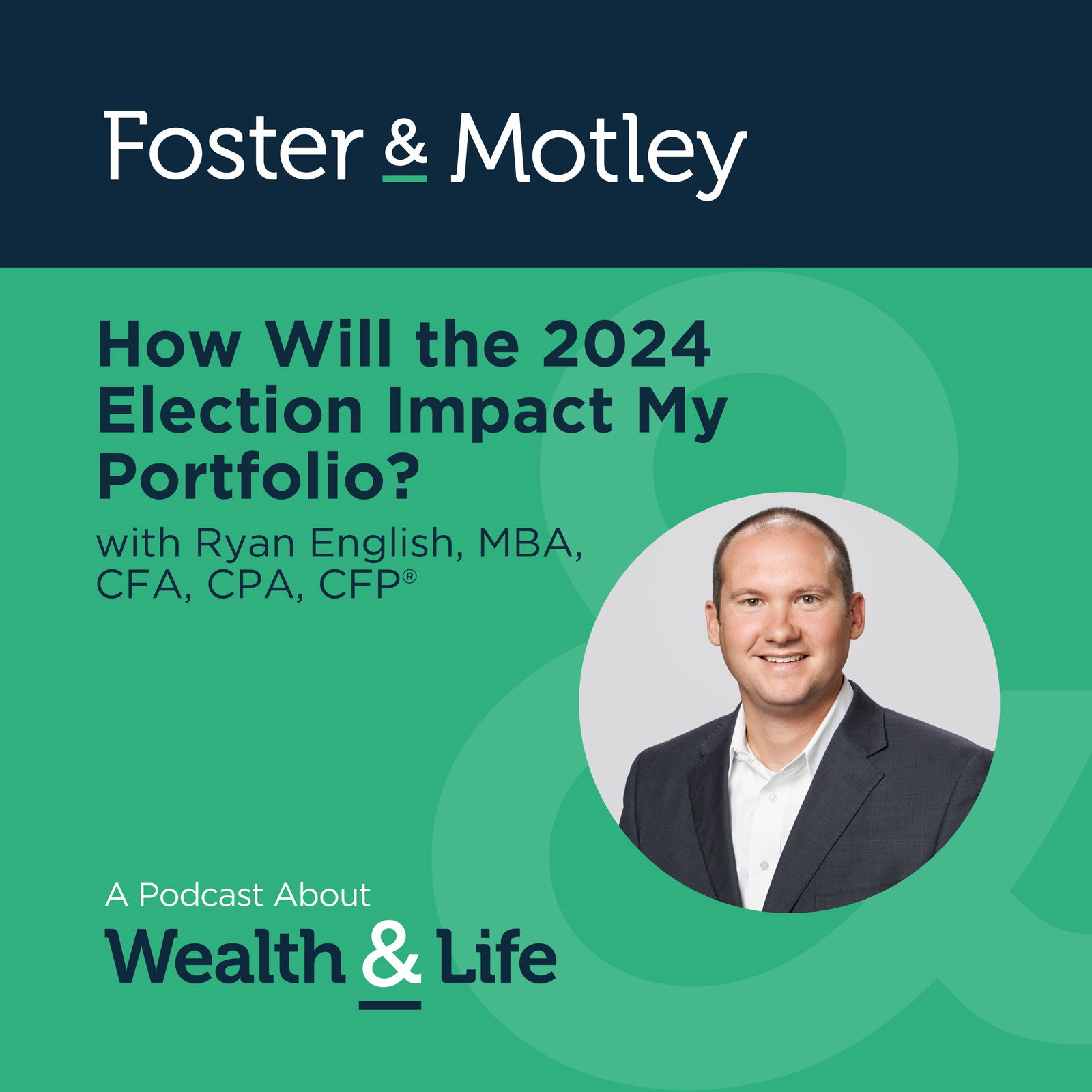
We’re joined by Ryan English, MBA, CFA, CPA, CFP®, Investment Manager and Shareholder at Foster & Motley, Inc., who shares insights on how upcoming elections may impact your portfolio. Ryan covers key factors that investors should consider as we approach Election Day 2024, and how to navigate potential market reactions to political outcomes.Key Takeaways:(01:03) Common client concerns about election impacts on investments. (01:34) Why selling stocks before the election is not advisable. (02:22) A strong labor market and inflation will shape the next president's term.(03:19) Presidents have minimal long-term influence on the stock market. (04:11) How energy sectors could fare under different administrations. (05:42) Defense spending tends to increase under Republican leadership. (06:38) Renewable energy would likely thrive under Democratic leadership. (07:50) Geopolitical risks and tariffs shape global investments.(09:29) Don’t make portfolio changes based solely on election outcomes.Connect With Ryan English:info@fosterandmotley.com+1 513-561-6640 LinkedIn: Ryan English -https://www.linkedin.com/in/j-ryan-english-mba-cfa-cpa-cfp/LinkedIn: Foster & Motley, Inc. -https://www.linkedin.com/company/fosterandmotley/Foster & Motley, Inc. | Website - http://www.fosterandmotley.com#WealthManagement #FinancialPlanning #InvestmentAdvisory #WealthManagementPodcast

Comments

Download from Google Play

Download from App Store
 United States