


 Claim Ownership
Climate One
Subscribed: 2,341Played: 73,528
Subscribe

Copyright © Climate One from the Commonwealth Club World Affairs of California. All rights reserved.
Description
We’re living through a climate emergency; addressing this crisis begins by talking about it. Co-Hosts Greg Dalton, Ariana Brocious and Kousha Navidar bring you empowering conversations that connect all aspects of the challenge — the scary and the exciting, the individual and the systemic. Join us.
Subscribe to Climate One on Patreon for access to ad-free episodes.
888 Episodes
Reverse
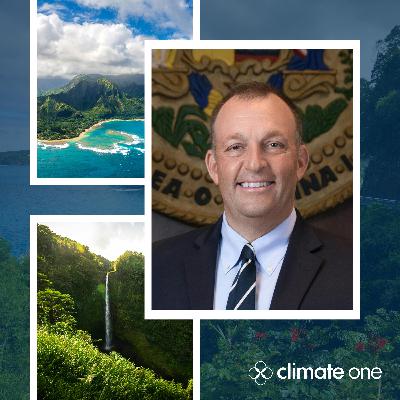
More than perhaps any other state, Hawaii has major incentives to decarbonize. Imported oil accounts for about 90% of Hawaii's total energy consumption, and electricity prices are more than three times the national average. So it may not be surprising that Hawaii was the first state in the nation to set a 100% renewable energy goal by 2045. But that’s a hard goal to achieve, especially given the realities of geographic isolation and the costs of importing fuel and materials.
Hawaii Governor Josh Green is bullish about the island state’s decarbonization and wants all options on the table. That includes making liquified natural gas part of the mix, along with solar, wind, and geothermal. His administration passed the first “green fee” which imposes a tax on Hawaii visitors and is expected to generate $100 million for climate resilience projects. What can we learn from Hawaii’s decarbonization process?
Guests:
Josh Green, Governor of Hawaii
Rylee Brooke Kamahele, Youth Plaintiff, Navahine v. Hawaiʻi Department of Transportation
Tessa M. Hill, Oceanographer and Professor, Earth and Planetary Sciences, UC DavisFor show notes and related links, visit ClimateOne.org.
Highlights:
00:00 Intro
03:08 Josh Green on achieving Hawaii’s climate goals
07:11 Josh Green on offshore wind
13:17 Josh Green on the effect of the wildfires and the recovery
18:09 Josh Green on decarbonizing
20:22 Josh Green on the health effects of the climate crisis
23:30 Rylee Brooke Kamahele on growing up
24:26 Rylee Brooke Kamahele on community action
29:06 Rylee Brooke Kamahele on the outcome of the lawsuit
34:27 Rylee Brooke Kamahele on the responsibility of older generations
37:55 Tessa M. Hill on rapidly changing oceans
41:43 Tessa M. Hill on the impact to common fish
44:44 Tessa M. Hill on the winners and losers of the changing oceans
**********
Support Climate One by going ad-free! By subscribing to Climate One on Patreon, you’ll receive exclusive access to all future episodes free of ads, opportunities to connect with fellow Climate One listeners, and access to the Climate One Discord. Sign up today at patreon.com/ClimateOne.
Ad sales by Multitude. Contact them for ad inquiries at multitude.productions/ads
Learn more about your ad choices. Visit megaphone.fm/adchoices
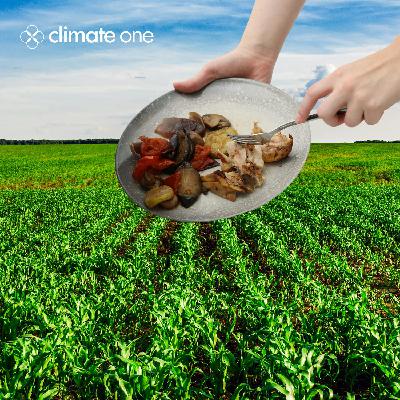
Food loss and waste account for up to 10% of global greenhouse gas emissions and cost $1 trillion annually, according to the United Nations. About a third of all food grown on the planet gets wasted, rather than eaten. In developing countries, waste usually occurs between the field and the store, due to poor infrastructure, lack of refrigeration, and broken supply chains. In rich countries, most waste happens after food reaches the store, where consumers don’t buy imperfect food – or buy too much and toss what they don’t get around to consuming. How much pollution, deforestation and starvation could be reduced if we got this problem under control? And how can new tech, including AI, be brought to bear on the problem?
Guests:
Matt Rogers, Co-Founder and CEO, Mill Industries; Co-Founder, Nest
Page Schult, CEO, Topanga
Kayla Abe, Co-Owner, Shuggie’s
David Murphy, Co-Owner and Chef, Shuggie’s
For show notes, related links, and episode transcript, visit climateone.org/podcasts.
Highlights:
00:00 – Intro
04:30 – Matt Rogers on surviving Hurricane Andrews and his climate journey
06:30 – On the climate impact of HVAC and the creation of Nest thermostat
08:30 – On creating Mill food recycler and addressing food waste
13:45 – Partnership with Whole Food to recycle food waste and feed it back to chickens
17:00 – On AI as a tool for climate solutions
19:30 – Clean tech in Silicon Valley
23:00 – Matt Rogers shares his views on advocacy, philanthropy and impact investing
30:00 – Shuggie’s restaurant sources ingredients that would otherwise be wasted
37:00 – David Murphy makes the case for sustainable food and upcycled ingredients
40:00 – Page Schult on global impact of food waste
44:00 – Topanga’s work providing reusable food containers for college campuses
52:30 – Thinking about it circularity as systems change
54:00 – Role of AI in reducing food waste in commercial kitchens
58:00 – Climate One More Thing
**********
Support Climate One by going ad-free! By subscribing to Climate One on Patreon, you’ll receive exclusive access to all future episodes free of ads, opportunities to connect with fellow Climate One listeners, and access to the Climate One Discord. Sign up today at patreon.com/ClimateOne.
Ad sales by Multitude. Contact them for ad inquiries at multitude.productions/ads
Learn more about your ad choices. Visit megaphone.fm/adchoices

While the federal government has all but abandoned trying to address the climate crisis, cities around the world are stepping up. C40 is an international network of 97 cities representing 920 million people and 23% of the world’s economy. Almost three out of four of these cities have already peaked their emissions. Here in the U.S., Climate Mayors is a bipartisan network of nearly 350 municipal leaders, representing 48 states and more than 70 million Americans. How are cities innovating on reducing emissions, adapting to increasing climate risks, and — perhaps most importantly — sharing their knowledge?
Episode Guests:
Eric Garcetti, C40 Ambassador for Global Climate Diplomacy; Former Mayor, Los Angeles
Kate Gallego, Mayor of Phoenix; Former Chair, Climate Mayors
For show notes, related links, and episode transcript, visit https://climateone.org/podcasts
Highlights:
00:00 Intro
2:46 Eric Garcetti on his time as mayor of LA
9:45 Eric Garcetti on where cities are moving the needle
17:47 Eric Garcetti on cities on the world stage
22:11 Eric Garcetti on the work of C40
26:20 Eric Garcetti on knowledge sharing
32:17 Eric Garcetti on co-leading
40:11 Kate Gallego on dealing with the heat in Phoenix
43:46 Kate Gallego on affordability
48:10 Kate Gallego on regulating data centers
52:35 Kate Gallego on working with other mayors
**********
Support Climate One by going ad-free! By subscribing to Climate One on Patreon, you’ll receive exclusive access to all future episodes free of ads, opportunities to connect with fellow Climate One listeners, and access to the Climate One Discord. Sign up today at patreon.com/ClimateOne.
Ad sales by Multitude. Contact them for ad inquiries at multitude.productions/ads
Learn more about your ad choices. Visit megaphone.fm/adchoices
Rising electricity rates across the country are adding pressure to families and businesses already dealing with inflation in other aspects of their lives. Most Americans get their power from a utility that needs to turn a profit for its investors. And people are fed up with the status quo.
“Across the country, the utilities have just gotten greedy and are asking for more than they need,” says Arizona Attorney General Kris Mayes.
Some communities are considering cutting out the profit motive for utilities, taking on the complicated and expensive prospect of moving to public power. But switching from an investor-owned utility to public power is an uphill battle. What are other strategies for reining in corporate greed and making electricity more affordable?
Episode Guests:
Kris Mayes, Arizona Attorney General
Naveena Sadasivam, Investigative Reporter and Editor, Grist
Carroll Fife, Councilmember, District 3, Oakland, California
Jackson Kaspari, Director of Member Services, Community Power Coalition of New Hampshire
For show notes, transcript, and related links, visit https://www.climateone.org/podcasts
Skill Up for Earth: https://skillup.earth
04:00 – Naveena Sadasivam breaks down electric bill drivers by region
14:00 – High bills affected outcome of Georgia Public Utility Commission
17:00 – Tucson town hall held by AZ AG Kris Mayes to discuss power bill
19:00 – Mayes explains why she’s intervening in rate cases
27:00 – Imbalance of power between utility companies and PUCs and consumer advocates
33:00 – Would Arizona legislators consider allowing community choice aggregation
36:00 – Carroll Fife on why she supported a state bill to explore other options to power suppliers
43:40 – Jackson Kaspari explains how community choice aggregation works in New Hampshire
48:00 – Utility pushback
54:00 – Kaspari explains how much work it took to set up CCA in New Hampshire
56:30 – Climate One More Thing
**********
Support Climate One by going ad-free! By subscribing to Climate One on Patreon, you’ll receive exclusive access to all future episodes free of ads, opportunities to connect with fellow Climate One listeners, and access to the Climate One Discord. Sign up today at patreon.com/ClimateOne.
Ad sales by Multitude. Contact them for ad inquiries at multitude.productions/ads
Learn more about your ad choices. Visit megaphone.fm/adchoices
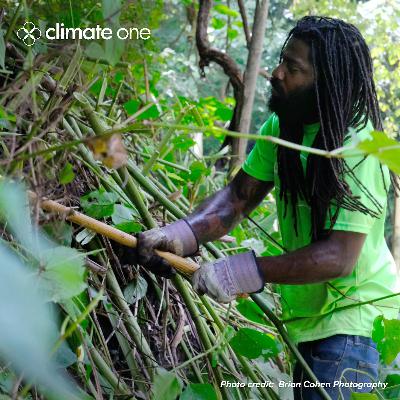
Congress approved billions for federal grants and programs through the EPA during the Biden administration. Those dollars were meant to help disadvantaged communities and fund community resilience projects, public health programs, and initiatives to reduce energy insecurity on tribal lands. But just as these projects were getting underway, the Trump administration froze many of the grants, put others under indefinite review, or canceled them outright.
Now, some of the groups that were awarded federal funds have banded together and are suing the federal government for the money they’re owed. Others are seeking alternative funding streams. In this episode, we speak with people whose projects are on hold, but who continue to serve their communities.
Episode Guests:
Ben Grillot, Senior Attorney, Southern Environmental Law Center
Wahleah Johns, Former Director, U.S. DOE Office of Indian Energy Policy and Programs
Ilyssa Manspeizer, CEO, Landforce
Bryan Cordell, Executive Director, Sustainability Institute
For show notes, related links, and episode transcript, visit climateone.org/podcasts.
Skill Up for Earth: https://skillup.earth
Highlights:
00:00 Intro
03:01 Ilyssa Manspeizer on what her organization, Landforce
06:29 Ilyssa Manspeizer on the impact of federal grant funds
08:58 Ilyssa Manspeizer on losing the grant funding
11:38 Ilyssa Manspeizer on Landforce joining the lawsuit against the EPA
14:08 Ben Grillot on the original EPA grantees
19:08 Ben Grillot on the politicization of the grants
24:54 Ben Grillot on the loss of trust with the federal government
26:42 Bryan Cordell on the work of the Sustainability Institute
30:38 Bryan Cordell on the status of their work after federal grants were pulled
33:51 Wahleah Johns on growing up on a Navajo reservation
45:59 Wahleah Johns on the community response to IRA rollbacks
48:20 Wahleah Johns on working toward the future
**********
Support Climate One by going ad-free! By subscribing to Climate One on Patreon, you’ll receive exclusive access to all future episodes free of ads, opportunities to connect with fellow Climate One listeners, and access to the Climate One Discord. Sign up today at patreon.com/ClimateOne.
Ad sales by Multitude. Contact them for ad inquiries at multitude.productions/ads
Learn more about your ad choices. Visit megaphone.fm/adchoices
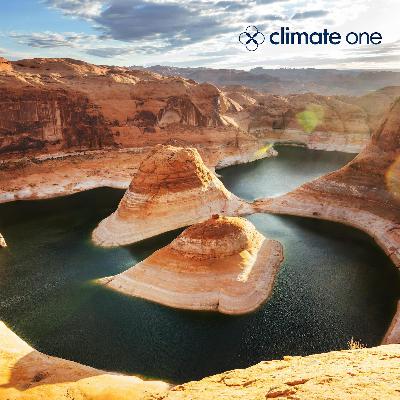
It’s been an unusually warm and dry winter across the west, and that’s bad news for the seven states and 40 million people that rely on water from the Colorado River. The water flowing into the river from snowmelt and rain is dwindling, partly because of climate change. The basin's two major reservoirs are at historic lows, and without a sudden influx of snowstorms, streamflow forecasts for the coming year aren’t looking good. That adds stress to an already drought-stricken region where negotiations on how to share the river’s water in the future are tense and stalled out.
“We’re at a point where we have to make some serious long-term adjustment of expectations. In other words, people need to agree to take a lot less water than they've been counting on. And that is always really hard when water is scarce,” says Sarah Porter, director of the Kyl Center for Water Policy at Arizona State University.
The federal government has given states a deadline of Feb. 14th to reach an agreement, after which the Bureau of Reclamation commissioner could divvy up the water between states as it deems fit. It’s already released its draft environmental impact statement with possible alternatives.
What’s led to this point of crisis? What is keeping states from reaching agreement? And what will the cities, farmers and industries that depend on the river do as climate change leads to a lower volume of water in an increasingly hotter and drier future?
Episode Guests:
Sarah Porter, Director, Kyl Center for Water Policy, Arizona State University
For show notes and related links, visit https://www.climateone.org/podcasts
Skill Up for Earth: https://skillup.earth
**********
Support Climate One by going ad-free! By subscribing to Climate One on Patreon, you’ll receive exclusive access to all future episodes free of ads, opportunities to connect with fellow Climate One listeners, and access to the Climate One Discord. Sign up today at patreon.com/ClimateOne.
Ad sales by Multitude. Contact them for ad inquiries at multitude.productions/ads
Learn more about your ad choices. Visit megaphone.fm/adchoices
On January 3, U.S. forces captured Venezuela’s president, Nicolás Maduro, and his wife, and flew them to New York to stand trial for drug trafficking and narco-terrorisim. At the same time, President Trump has not been shy about stating his other motivation for intervening in the country: Back in December, he said, “We had a lot of oil there. As you know they threw our companies out, and we want it back." So what are the geopolitical ramifications of these actions? And in a world increasingly powered by renewable energy, could fossil-fueled conflicts become a thing of the past?
Episode Guests:
Luisa Palacios, Senior Research Scholar, Center on Global Energy Policy, Columbia University
Amy Myers Jaffe, Director, Energy, Climate Justice and Sustainability Lab, NYU
Bill McKibben, Founder, Third Act and 350.org
For show notes, transcript, and related links, visit climateone.org/podcasts.
Highlights:
00:00 Intro
04:54 Luisa Palacios on growing up in Venezuela
08:59 Luisa Palacios on the risks in Venezuela's oil industry
15:15 Luisa Palacios on the climate impact of increasing Venezuela’s oil output
18:01 Amy Myers Jaffe on her reaction to the Maduro’s forced removal
21:08 Amy Myers Jaffe on what the military action is really about
28:32 Amy Myers Jaffe on the importance of the action in Venezuela
35:21 Amy Myers Jaffe on the national security aspects of clean tech
38:39 Bill McKibben on the military action in Venezuela
49:45 Bill McKibben on the “last gasp’ of the fossil fuel industry
52:26 Bill McKibben on the US reversal on climate policy and clean tech
**********
Support Climate One by going ad-free! By subscribing to Climate One on Patreon, you’ll receive exclusive access to all future episodes free of ads, opportunities to connect with fellow Climate One listeners, and access to the Climate One Discord. Sign up today at patreon.com/ClimateOne.
Ad sales by Multitude. Contact them for ad inquiries at multitude.productions/ads
Learn more about your ad choices. Visit megaphone.fm/adchoices
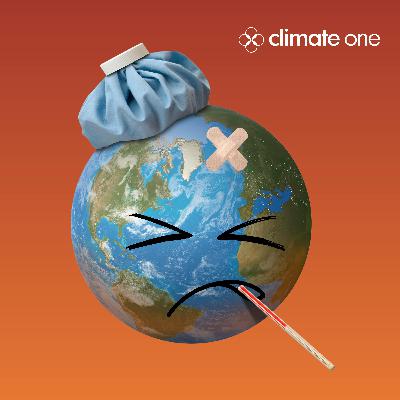
As the planet warms, the story of climate change is increasingly becoming a story about human health. Rising temperatures, wildfire smoke, flooding, and shifting disease patterns are no longer distant threats; they are everyday realities. The climate crisis is reshaping health care systems, exposing inequalities, and forcing doctors and policymakers to rethink some of their practices. Medical schools are beginning to adopt climate as part of their curricula, yet such education is widely variable across the country. So what policy and system changes might help address both the climate and health crises at the same time?
Episode Guests:
Jeni Miller, Executive Director, Global Climate and Health Alliance
Cecilia Sorensen, Director, Global Consortium on Climate and Health Education, Columbia University
Nabeeha Kazi Hutchins, President and CEO, PAI
For show notes, transcript, and related links, visit climateone.org/podcasts
Highlights:
00:00 – Intro
03:30 – Cecilia Sorensen on consulting for a Grey’s Anatomy episode on heat
07:00 – Climate impact she’s seen in the ER
10:00 – Medical education is variable across the country, including climate awareness
16:00 – Importance of public health and the role of preventive medicine
21:00 – Jeni Miller on interconnections between climate and human health
29:30 – Climate crisis puts pressure on global health systems
34:30 – Ways health care systems can better prepare for climate impacts
44:30 – Connection between climate change and reproductive/sexual health
51:30 – Climate change exacerbates existing inequalities for women and girls around the world
56:00 – Navigating efforts by the Trump administration to increase fertility and birth rate while cutting social services
58:30 – Climate One More Thing
*****
Support Climate One by going ad-free! By subscribing to Climate One on Patreon, you’ll receive exclusive access to all future episodes free of ads, opportunities to connect with fellow Climate One listeners, and access to the Climate One Discord. Sign up today at patreon.com/ClimateOne.
Ad sales by Multitude. Contact them for ad inquiries at multitude.productions/ads
Learn more about your ad choices. Visit megaphone.fm/adchoices
We’re only about a month into 2026, and already so much has happened — from the Trump administration’s forcible removal of Venezuela’s president to the US pulling out of the UN Framework Convention on Climate Change… It’s easy to get caught up in the headlines of the moment and lose sight of the big picture.
But important developments are happening in sectors like agriculture and renewable technology that don’t break through the noise to the extent they deserve. So, what should we be watching in 2026?
Guests:
Justine Johnson, Chief Mobility Officer, Michigan
Michael Grunwald, Journalist, Author, We Are Eating The Earth
Jessie Bluedorn, Founder & Executive Director, The Carmack Collective
For show notes, transcript, and related links, visit ClimateOne.org/podcasts
Highlights:
00:00 Intro
05:33 Justine Johnson on the importance of mobility
08:48 Justine Johnson on the future of EV charging
11:20 Justine Johnson on the practicality of new EV charging technology
19:05 Justine Johnson on innovation in financing
22:52 Michael Grunwald on making more food with less land
30:17 Michael Grunwald on the new tech used to constipate beetles to death
37:24 Michael Grunwald on what to watch in politics
43:00 Jessie Bluedorn on the fossil fuel industry’s control over cultural narratives
47:57 Jessie Bluedorn on the comedy in the climate crisis
56:36 Jessie Bluedorn on other areas to keep an eye on in the culture
*****
Support Climate One by going ad-free! By subscribing to Climate One on Patreon, you’ll receive exclusive access to all future episodes free of ads, opportunities to connect with fellow Climate One listeners, and access to the Climate One Discord. Sign up today at patreon.com/ClimateOne.
Ad sales by Multitude. Contact them for ad inquiries at multitude.productions/ads
Learn more about your ad choices. Visit megaphone.fm/adchoices
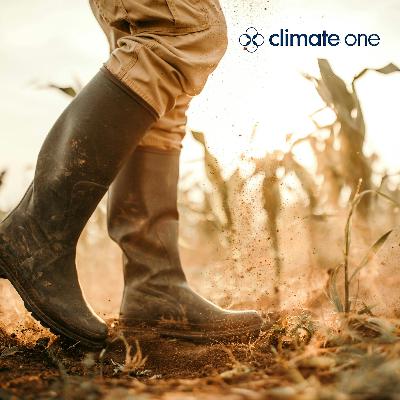
Agriculture is directly responsible for 10 percent of U.S. greenhouse gas emissions, and farmers and ranchers face growing climate impacts every day, from more severe storms to intense droughts, making it harder to grow food.
The non-partisan Congressional Budget Office estimates emissions from the agriculture sector will modestly increase over the next 30 years. Yet the Trump administration is slashing programs that help reduce emissions, feed people, protect farmworkers and animals and sensitive lands. In addition, the Trump administration’s tariffs and trade wars have affected the cost of machinery and sales of major crops. What will these changes mean for our national food system? How are farmers weathering these impacts? And where are people building resilience regardless of federal policy?
Episode Guests:
Lisa Held, Senior Staff Reporter and Contributing Editor, Civil Eats
Megan O'Rourke, Congressional Candidate NJ07; Former USDA Scientist John Bartman, Illinois farmer
Byron Kominek, Owner and Manager, Jack's Solar Garden
Highlights:
00:00 – Intro
05:30 – Lisa Held on major climate and agriculture stories in 2025
07:30 – Climate change is making it harder to be a farmer
09:15 – Changes at USDA
15:00 – How SNAP cuts affect consumers and farmers/growers
18:30 – Trump admin penalizing efforts/grants that support DEI efforts in agriculture
24:00 – John Bartman shares his journey to regenerative agriculture
30:00 – Partnership for Climate Smart Commodities Program and cutbacks under Trump
34:30 – Trade war between China and US is hurting soybean sales and Amazon rainforest
37:10 – Byron Kominek on how he got into agrivoltaics and the benefits it offers
42:00 – Agrivoltaics is climate adaptation
51:20 – Megan O’Rourke on research around kernza, a perennial grain
54:00 – Most pressing challenges for agriculture right now
59:00 – Importance of food security at home and abroad, and role of US farmers
1:03:30 – Climate One More Thing
For show notes , transcript, and related links, visit climateone.org/podcasts
******
Support Climate One by going ad-free! By subscribing to Climate One on Patreon, you’ll receive exclusive access to all future episodes free of ads, opportunities to connect with fellow Climate One listeners, and access to the Climate One Discord. Sign up today at patreon.com/ClimateOne.
Ad sales by Multitude. Contact them for ad inquiries at multitude.productions/ads
Learn more about your ad choices. Visit megaphone.fm/adchoices
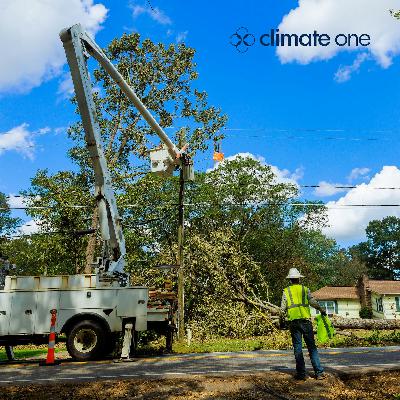
It’s been a year since catastrophic fires tore through Los Angeles. For those who lived through them, the impacts are still being felt. Rebuilding in the aftermath of more frequent and severe fossil-fueled disasters is becoming a big business. Enter the disaster economy, powered by a grab bag of dedicated people helping communities rebuild, and by contractors who may overpromise, underdeliver, and profit from tragedy. Caught in the middle are the survivors, often left to navigate red tape, scams, and soaring costs just to rebuild their lives.
In this episode, produced in collaboration with Grist, we explore the people and systems behind this booming, often exploitative multi-billion dollar industry, and share strategies to help listeners stay protected.
Episode Guests:
Haley Geller, Photo Stylist; Mother
Ayurella Horn Muller, Staff Writer, Grist
Cricket Logan, Wastewater Management Mechanic, City of St. Petersburg, Florida
Naveena Sadasivam, Writer and Editor, Grist
For show notes, related links, and episode transcript, visit ClimateOne.org
Highlights:
00:00 - Intro
05:06 - Haley Geller on her personal wildfire experience
07:22 - Haley Geller on how life has changed since the fire
11:04 - Haley Geller on navigating the recovery process
16:21 - Ayurella Horn Muller on covering recovery workers
18:39 - Cricket Logan on his disaster recovery work experience
24:16 - Ayurella Horn Muller on the mental health work of disaster recovery
28:25 - Ayurella Horn Muller on working conditions for recovery workers
38:03 - Naveena Sadasivam on talking to people who experienced disaster recovery
40:22 - Naveena Sadasivam on one person’s experience with rebuilding after a fire
49:51 - Naveena Sadasivam on what regulations exist to help prevent fraud
53:41 - Naveena Sadasivam on steps people can take to protect themselves
********
Support Climate One by going ad-free! By subscribing to Climate One on Patreon, you’ll receive exclusive access to all future episodes free of ads, opportunities to connect with fellow Climate One listeners, and access to the Climate One Discord. Sign up today at patreon.com/ClimateOne.
Ad sales by Multitude. Contact them for ad inquiries at multitude.productions/ads
Learn more about your ad choices. Visit megaphone.fm/adchoices
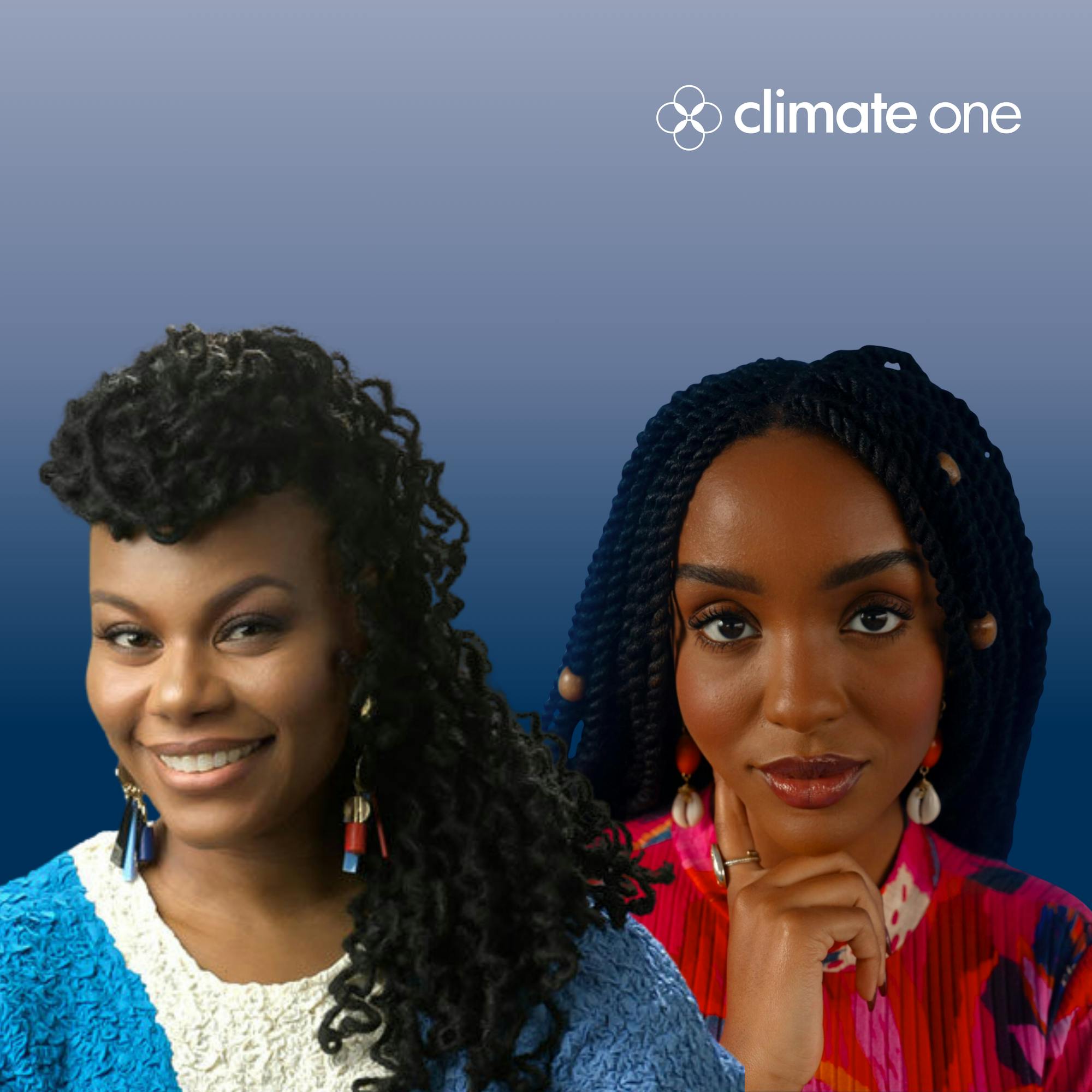
Those standing up to climate and environmental injustice face challenges they weren’t seeing a year ago. But Gloria Walton, head of The Solutions Project, sees a bigger picture:
“ The reality is that the same systems that created the climate crisis, whether that's colonialism, white supremacy, racism, and the patriarchy, those are the same ones that have harmed communities of color for generations,” she says. Her organization has channeled tens of millions of philanthropic dollars to grassroots efforts that build community resilience.
Black Girl Environmentalist founder Wawa Gatheru is helping more Black girls, women, and gender-expansive people enter and lead in the climate space. She says the climate fight has shifted from education to action, with over 70% of Americans now understanding that climate change is real. So what should this 'action phase' look like?
Guests:
Gloria Walton, President & CEO, The Solutions Project
Wawa Gatheru, Founder & Executive Director, Black Girl Environmentalist
For show notes and related links, visit ClimateOne.org
00:00 – Intro
05:30 – Gloria Walton on the impact of the Altadena wildfires
10:30 – Walton’s work as an organizer in South Central LA
13:00 – Living with idea of abundance
19:00 – Finding and keeping your individual power within our democracy
21:00 – Work of West Street Recovery Project in Houston
22:30 – Developing local resilience hubs
24:00 – Reframing frontline communities as victors, not victims
27:00 – Channeling philanthropy to climate resilience and frontline communities
36:00 – Story of Hoʻāhu Energy Cooperative Molokai
42:00 – Wawa Gatheru’s start in climate and environmental advocacy
44:00 – Not seeing herself in climate spaces
48:00 – Climate storytelling can offer nuance and move people
55:00 – Work and growth of Black Girl Environmentalist organization
59:00 – Climate One More Thing
****
Support Climate One by going ad-free! By subscribing to Climate One on Patreon, you’ll receive exclusive access to all future episodes free of ads, opportunities to connect with fellow Climate One listeners, and access to the Climate One Discord. Sign up today at patreon.com/ClimateOne.
Ad sales by Multitude. Contact them for ad inquiries at multitude.productions/ads
Learn more about your ad choices. Visit megaphone.fm/adchoices
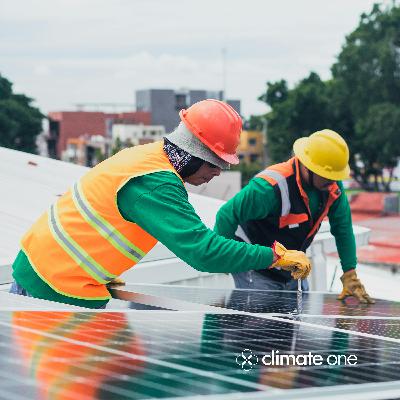
At this moment, the cheapest way to create electricity is by pointing a solar panel at the sun. That’s good news for the climate. It’s also good news for communities who want to take control of their own electricity generation.
In the heart of Brooklyn, UPROSE is helping to build a solar project that will be owned by the community, provide jobs, and help residents bring down their energy costs. In Puerto Rico, where hurricanes have devastated the power grid, community members are building solar microgrids to provide reliable electricity as the utility has proven they cannot. Meanwhile in conservative rural Virginia, Energy Right is helping farmers and rural communities adopt solar projects, touting a free market message about energy independence and security.
Guests:
Elizabeth Yeampierre, Attorney; Executive Director, UPROSE
Skyler Zunk, CEO and Founder, Energy Right
Arturo Massol-Deyá, Executive Director, Casa Pueblo de Adjuntas
For show notes and related links, visit ClimateOne.org.
Highlights:
00:00 - Intro
4:11 - Elizabeth Yeampierre on the history of UPROSE
10:40 - Elizabeth Yeampierre on Sunset Park Solar
14:31 - Elizabeth Yeampierre on the GRID plan
20:46 - Arturo Massol-Deyá on the Origins of Casa Pueblo
23:43 - Arturo Massol-Deyá on providing solar power to the community
33:04 - Arturo Massol-Deyá on what other communities can learn from Casa Pueblo
38:08 - Skyler Zunk on the importance of reliable energy
47:06 - Skyler Zunk on dealing with resistance to solar projects
50:49 - Skyler Zunk on the Inflation Reduction Act
****
Support Climate One by going ad-free! By subscribing to Climate One on Patreon, you’ll receive exclusive access to all future episodes free of ads, opportunities to connect with fellow Climate One listeners, and access to the Climate One Discord. Sign up today at patreon.com/ClimateOne.
Ad sales by Multitude. Contact them for ad inquiries at multitude.productions/ads
Learn more about your ad choices. Visit megaphone.fm/adchoices
2025 has been a doozy in so many ways. And climate news has been no exception. Climate One hosts Ariana Brocious and Kousha Navidar look back at what the year has meant for climate progress: the good, the bad, the ugly — and the joyful.
According to the World Meteorological Organization, 2025 will go down as one of the top three warmest years in the 176-year observational record. Climate-change-fueled extreme weather continues to wreak havoc on communities across the world. And yet, it’s not all bad news. As Bill McKibben points out, we now live on a planet where the cheapest form of energy basically comes from pointing a piece of glass at the sun. And globally, renewable energy surpassed coal for the first time ever.
Despite the federal government’s attacks on climate science and policy, local climate action is still happening across the country and globe, and each of us holds power to make change.
Guests:
Adrienne Heinz, Clinical Research Psychologist, Stanford University School of Medicine
Roxanne Brown, Vice President at Large, United Steelworkers
Pattie Gonia, Drag Queen and environmentalistFor show notes and related links, visit ClimateOne.org
Highlights:
00:00 - Intro
02:00 – 2025 has been the year of AI
04:30 – Trump admin attack on science, climate and environmental regs and rules
06:45 – Good news on renewables and the rise of China as an electrostate
08:30 – New York implements congestion pricing
10:00 – US has removed itself from global climate negotiations
12:45 – Remembering Jane Goodall
15:30 – Adrienne Heinz on how to support yourself and others after a weather disaster
25:30 – Roxanne Brown on how Trump’s pullback of IRA, BIL and CHIPS acts have hurt American workers and industry
34:00 – Growing threat of disinformation in climate conversations
36:30 – Pattie Gonia on how drag performance fits in with their climate and environmental activism
51:00 – How joy is strategic
53:30 – A look ahead at 2026
*****
Support Climate One by going ad-free! By subscribing to Climate One on Patreon, you’ll receive exclusive access to all future episodes free of ads, opportunities to connect with fellow Climate One listeners, and access to the Climate One Discord. Sign up today at patreon.com/ClimateOne.
Ad sales by Multitude. Contact them for ad inquiries at multitude.productions/ads
Learn more about your ad choices. Visit megaphone.fm/adchoices
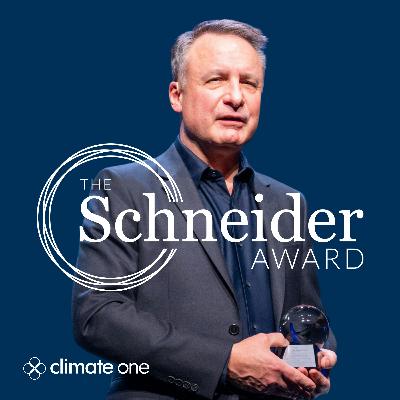
Project Drawdown is the world’s leading science-based guide to climate solutions. According to Jonathan Foley, Project Drawdown’s Executive Director, they aim to be the Consumer Reports for climate change. “We synthesize every paper ever written in science, engineering, technical, economic literature, all the data, and bring it together and say, ‘Hey, does this actually work? And if so, how much would it cost? And how long would we have to wait for it?’”
Foley is not just an expert on the intricacies of hundreds of potential climate solutions; he’s also the winner of the 2025 Stephen H. Schneider Award for Outstanding Science Communication, and an expert at explaining complex ideas in easily digestible terms. As he said on a past Climate One episode, “The great news about addressing climate change is we also build a better world in the process. Imagine going to the doctor and they're like, ‘Wow, you're really sick and I'm gonna give you this medicine, and its side effects are, you're gonna feel better.’ Climate solutions are like that.”
Episode Guests:
Jonathan Foley, Executive Director, Project Drawdown
Eliza Nemser, Executive Director, Climate Changemakers
Highlights:
00:00 Intro
02:11 Jonathan Foley on Stephen Schneider
06:33 Jonathan Foley on balancing science and communication
13:09 Jonathan Foley on Project Drawdown
20:08 Jonathan Foley on less effective climate solutions
23:27 Jonathan Foley on the food industries effect on climate
26:22 Jonathan Foley on being attacked for speaking out about beef
34:20 Jonathan Foley on the need to stop doing “stupid” stuff
40:31 Greg Dalton on meeting Stephen Schneider
41:25 Greg Dalton on creating the Stephen H. Schneider Award for Outstanding Science Communication
45:52 Greg Dalton on Stephen Schneider’s legacy
47:14 Eliza Nemser on her journey to climate activism
49:12 Eliza Nemser on effective volunteerism
53:23 Eliza Nemser on finding your place in climate action
Support Climate One by going ad-free! By subscribing to Climate One on Patreon, you’ll receive exclusive access to all future episodes free of ads, opportunities to connect with fellow Climate One listeners, and access to the Climate One Discord. Sign up today.
Ad sales by Multitude. Contact them for ad inquiries at multitude.productions/ads
Learn more about your ad choices. Visit megaphone.fm/adchoices
It’s been ten years since Pope Francis issued his landmark encyclical on climate and caring for our common home, Laudato Si’. With the election of the new Pope Leo XIV, many are hopeful he will follow in Francis' path.
Three-quarters of the global population follow a major religion. And the Catholic Church is far from alone among religious institutions in its directives to care for creation. A few years after Laudato Si, Muslim leaders issued Al-Mizan, which restates principles from the Quran on protecting nature in terms of meeting current challenges. Organizations like Interfaith Power and Light, the Jewish group Dayenu, the Hindu Bhumi Project, and the Buddhist Climate Action Network demonstrate the universality of creation care as central to religions worldwide.
Especially at a time when governments are failing to take meaningful action on climate progress, can faith traditions provide new paths forward?
Guests:
Celia Deane-Drummond, Director, Laudato Si' Research Institute; Senior Research Fellow in Theology at Campion Hall, University of Oxford
Rabbi Jennie Rosenn, Founder & CEO, Dayenu
Iyad Abumoghli, Founder, Former Director, Faith for Earth Coalition, United Nations Environment Programme (UNEP); Founder and Chair, Al-Mizan
For show notes and related links, visit ClimateOne.org.
Highlights:
00:00 – Intro
00:10 – Quick update on COP30 conclusions
03:40 – Celia Deane-Drummond explains importance of Laudato Si’
08:15 – Will Pope Leo continue Pope Leo’s environmental legacy?
11:00 – Role of religion and ethics in climate conversations
17:45 – Rabbi Jennie Rosenn explains Jewish concept of Dayenu
20:30 – What religious leaders can do that political leaders can’t
26:30 – Rosenn on deregulatory agenda of EPA Administrator Lee Zeldin
37:45 – Iyad Abumoghli on how religion shapes human actions
40:30 – Al-Mizan’s origins and approach
51:00 – Faith and political leaders meeting to discuss the role of faith and values in facing climate change and climate justice
54:40 – Climate One More Thing
********
Support Climate One by going ad-free! By subscribing to Climate One on Patreon, you’ll receive exclusive access to all future episodes free of ads, opportunities to connect with fellow Climate One listeners, and access to the Climate One Discord. Sign up today.
Ad sales by Multitude. Contact them for ad inquiries at multitude.productions/ads
Learn more about your ad choices. Visit megaphone.fm/adchoices
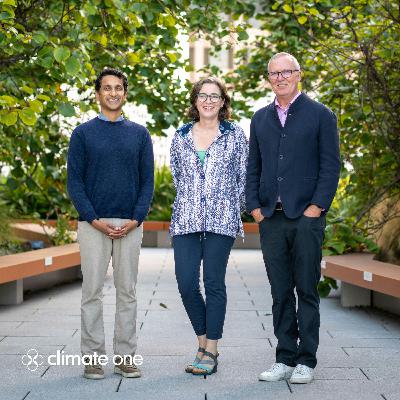
The climate doesn’t care where emissions cuts come from; what matters is that the world transitions to renewable energy quickly and cheaply. If it’s significantly cheaper to install solar panels in India than on a rooftop in California, then isn’t that where they should be built? Similarly, transferring money directly to local people with the greatest stake in preserving their land can have outsized impact in conservation. Where does a climate dollar go furthest?
Guests:
Kinari Webb, Founder, Health in Harmony
Premal Shah, Founder, kiva.org, renewables.org
Nathaniel Stinnett, Founder and Executive Director, Environmental Voter Project
For show notes and related links, visit ClimateOne.org
Highlights:
00:00 – Intro
04:30 – Origins of Kinari Webb’s nonprofit Health in Harmony
09:00 – Rainforests as lungs and heart of the planet
12:00 – Radical listening to communities about what they need
15:00 – Positive outcomes from responding to community needs directly
18:00 – Webb’s near-death experience from a jellyfish sting
22:00 – Rainforest conservation as a giant climate lever
29:00 – Premal Shah describes how he came to create Kiva.org
32:00 – How Kiva.org works
35:30 – Thought experiment from moral philosopher Peter Singer
38:40 – Kiva tries to reframe stories of poverty as stories of entrepreneurship
41:00 – Applying crowdfunded microfinance model to renewable energy
46:00 – Idea of “effective altruism”
49:30 – Nathaniel Stinnett: we’ve been taught to blame ourselves for the climate crisis
53:00 – How to shift public actions to make climate more political
Support Climate One by going ad-free! By subscribing to Climate One on Patreon, you’ll receive exclusive access to all future episodes free of ads, opportunities to connect with fellow Climate One listeners, and access to the Climate One Discord. Sign up today.
Ad sales by Multitude. Contact them for ad inquiries at multitude.productions/ads
Learn more about your ad choices. Visit megaphone.fm/adchoices
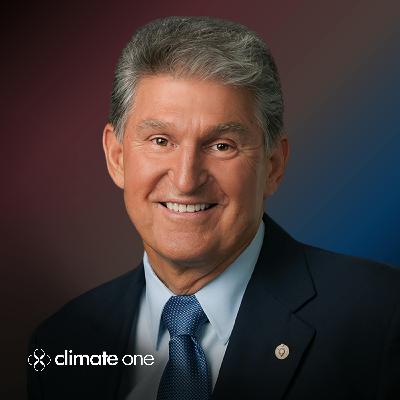
Joe Manchin grew up in the coal fields of West Virginia, the grandson of a miner and the son of a small-town grocer. His worldview was shaped by a place where energy isn’t an abstract policy debate; it’s the identity of the community and vital for economic survival. Manchin was portrayed as a bit of a villain in liberal circles for his role in blocking or slowing down Biden-era policy goals, including climate policy. Yet he was also the architect of the biggest climate legislation the country has ever enacted: the Inflation Reduction Act.
Now, in the midst of the Trump administration dismantling climate policy and basic political norms, Manchin is calling for a return to compromise and “common sense.”
Episode Guests:
Joe Manchin, Former US Senator, West Virginia
Thomas Ramey, Commercial and Nonprofit Solar Evaluator, Solar Holler
For show notes and related links, visit ClimateOne.org
Highlights:
00:00 - Intro
05:27 - Joe Manchin on his first senate run
10:42 - Joe Manchin on Build Back Better
19:26 - Joe Manchin on how the Inflation Reduction Act was written
22:51 - Joe Manchin on the dismantling of the IRA
27:21 - Joe Manchin on the effects of climate
31:02 - Joe Manchin on West Virginia’s transition to clean energy
37:10 - Joe Manchin on the state of the country
38:10 - Joe Manchin on how to make the country better
42:56 - Joe Manchin on working together
44:20 - Thomas Ramey on growing up in West Virginia
50:08 - Thomas Ramey on how he talks about solar energy
Support Climate One by going ad-free! By subscribing to Climate One on Patreon, you’ll receive exclusive access to all future episodes free of ads, opportunities to connect with fellow Climate One listeners, and access to the Climate One Discord. Sign up today.
Ad sales by Multitude. Contact them for ad inquiries at multitude.productions/ads
Learn more about your ad choices. Visit megaphone.fm/adchoices
The UN climate convention known as COP30 is now underway in Brazil. As the nations of the world gather to discuss their efforts to rein in climate disruption, the facts are clear: we’re not doing enough, fast enough, to meet the Paris Agreement goal of limiting warming to 1.5 degrees Celsius above preindustrial levels. Climate-fueled disasters are increasingly impacting nearly every part of the world.
And in Belém, Brazil, near the heart of the Amazon rainforest where the conference is being held, organizers have promised that Indigenous voices will play a bigger role than in the past. They’ve also billed this as an “implementation COP” where past promises will be turned into action. What practical steps can we hope countries achieve in this year’s negotiations?
Episode Guests:
Ilana Seid, Permanent Representative of Palau to the United Nations; Chair, Alliance of Small Island States (AOSIS)
Davi Neustein, Sustainability Consultant; Advisor to Marcelo Behar, COP30 Special Envoy
Deborah Sanchez, Director, CLARIFI (Community Land Rights and Conservation Finance Initiative), Rights and Resources InitiativeFor show notes and related links, visit ClimateOne.org.
Highlights:
00:00 - Intro
00:30 – Voters responding to energy and affordability in most recent election
02:00 – COP30 is happening in Brazil, opening remarks by UN leaders
07:00 – Major items on the COP30 agenda
10:30 – Davi Neustein on deliberate choice to hold COP30 in Belém
14:00 – Brazil can speak to Global South and Global North
19:00 – Neustein’s hopes for the COP30 action agenda
21:30 – Weeks before COP, Brazil approved new oil drilling in Amazon
27:00 – Ilana Seid shares climate impacts to her home nation of Palau
29:30 – What an “implementation” COP means
35:30 – Is there a need for a new narrative around climate change?
42:00 – Deborah Sanchez shares story of securing land rights for her community
47:00 – Example of a project funded through CLARIFI (Community Land Rights and Conservation Finance Initiative)
51:00 – How COP goal of elevating Indigenous voices is working out in reality
55:00 – What can we learn from the Amazon and how its managed
56:30 – Climate One More Thing
*****
Support Climate One by going ad-free! By subscribing to Climate One on Patreon, you’ll receive exclusive access to all future episodes free of ads, opportunities to connect with fellow Climate One listeners, and access to the Climate One Discord. Sign up today.
Ad sales by Multitude. Contact them for ad inquiries at multitude.productions/ads
Learn more about your ad choices. Visit megaphone.fm/adchoices
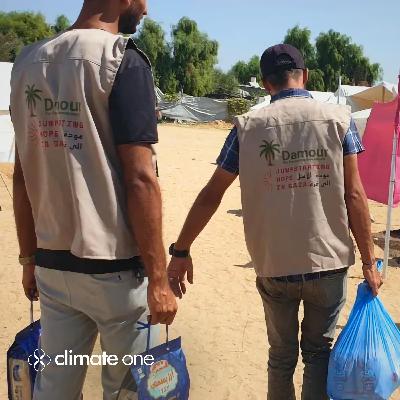
Fossil-fueled climate disruption is driving political instability around the world. The relationship between climate disasters and conflict are well-established — and also complicated. Even in war-torn regions like Israel and Palestine, people work across political and ethnic divides to address humanitarian and climate crises. The Arava Institute for Environmental Studies has helped bring together Israelis, Palestinians, Moroccans, and Jordanians to study and tackle shared environmental challenges. How does climate disruption reshape cross-border relations? And can climate cooperation become a force for peace?
Episode Guests:
Peter Schwartzstein, Environmental Journalist; Climate Security Researcher
Fareed Mahameed, Assistant Director, Center for Transboundary Water Management, Arava Institute for Environmental Studies
Liana Berlin-Fischler, Associate Director, Center for Applied Environmental Diplomacy, Arava Institute for Environmental Studies
For show notes and related links, visit ClimateOne.org.
Highlights:
12:42 Peter Schwartzstein on seeing the link between climate and violence
21:02 Peter Schwartzstein on the importance of governance
22:56 Peter Schwartzstein on better governance examples
27:17 Peter Schwartzstein on the danger of climate induced violence in the US
31:13 Peter Schwartzstein on new paths for cooperation
36:49 Liana Berlin-Fischler on moving to Israel
37:59 Fareed Mahameed on “fixing the world”
42:16 Fareed Mahameed on being compelled to help
47:05 Fareed Mahameed on figuring out what a community needs most
51:30 Liana Berlin-Fischler on the Jumpstarting Hope in Gaza project
Support Climate One by going ad-free! By subscribing to Climate One on Patreon, you’ll receive exclusive access to all future episodes free of ads, opportunities to connect with fellow Climate One listeners, and access to the Climate One Discord. Sign up today.
Ad sales by Multitude. Contact them for ad inquiries at multitude.productions/ads
Learn more about your ad choices. Visit megaphone.fm/adchoices


Download from Google Play

Download from App Store
 United States
Am I to infer based on Ms. Thomas' interpretation of CRT, that any system not 100% racial synchronized is oppressive or potentially oppressive?
Great podcast for policy discussions on climate change