


 Claim Ownership
Psych Talk for Primary Care Providers
Subscribed: 15Played: 36
Subscribe

© TNT Primary Care Fellowships
Description
Welcome to Psych Talk for Primary Care Providers, where our esteemed faculty members will provide you with invaluable insights to seamlessly integrate into your daily practice.
25 Episodes
Reverse
Post-traumatic stress disorder (PTSD) is a mental health condition that can be caused by exposure to a traumatic event. Symptoms of PTSD can include flashbacks, avoidance of reminders of the event, difficulty concentrating or sleeping, depression, panic disorder, and substance abuse. PTSD can be treated with a combination of therapy and medication, such as trauma-focused therapy and cognitive processing therapy, as well as medications. Treatment should be tailored to the individual and address both the traumatic event and the PTSD symptoms.
MI is a person-centered approach that originated in the world of substance use, but it has a much wider range of applications. Rather than the physician trying to change the patient, with motivation interviewing the patient is the one who decides whether or not to make a change. This approach can help reduce the burnout that can occur during a change process. Motivation interviewing is a great way to support patients in making a change and provides a safe and supportive environment.
Are you ready to unlock the hidden potential of ADHD? Discover how Coin Theory can help you tap into your unique strengths and reach your full potential!
Are you monitoring a patient taking 2nd generation antipsychotics? Learn from expert psychiatrist Colin Smith how to best monitor their progress.
As a fellow in our PC-TEAM (Primary Care Training and Education in Addiction Medicine) program, you'll learn about how to treat your patients with Alcohol Abuse Disorder best and much more.
There is a new type of process addiction, called screen addiction. It is becoming more and more relevant in children and adolescents.
Dr. Glen Xiong takes us through a popular case study involving Cognitive Behavioral Therapy.
A 63-year-old man has been dealing with depression and anxiety for a year following his retirement as a US Postal Branch supervisor. Despite taking SSRI medication, he is still struggling with treatment-resistant depression. Cognitive Behavioral Therapy (CBT) is a two-part therapy that focuses on changing his thoughts and beliefs, as well as his behaviors. Through CBT, he learns to challenge his negative beliefs and to develop a more positive self-esteem. He is also taught that people do care for him and that he is not alone in the world. Cognitive therapy and behavior therapy work together to help this man find a solution to his sleep troubles. By understanding why he has difficulty sleeping, he can modify his behaviors to improve his sleep. With CBT, this man is given the tools to overcome his depression and anxiety.
Today we will have Dr. Jeremy DeMartini talk to you about treating Bipolar Depression in a Primary Care Setting.
Bipolar depression is a complex condition that requires careful treatment and monitoring. Patients with bipolar depression experience episodes that are similar to major depressive episodes but may also have experienced hypomanic or manic episodes. Bipolar depression is a serious condition and requires careful medication management to ensure the best outcomes.
 1
1Are your patients experiencing unexplained physical symptoms? Take note as Dr. Michael Lang shares how to manage these patients best.
Are your patients struggling with depression? ECT may be the answer. Dr. Jody Rawles talks about the safe and effective treatment that can help you get back to feeling better.
For more info about the TNT program:
https://medschool.uci.edu/education/medical-education/cme/cme-tnt-fellowships
Today we have Dr. David Marcovitz talk about co-occurring disorders and how to treat them.
For more information about our fellowship: https://medschool.uci.edu/education/m...
Substance use disorder often co-occurs with psychiatric disorders, making treatment more complicated. However, proper diagnosis and treatment can lead to quicker recovery and improved mental health. It is important to screen patients for psychiatric disorders in order to provide the most effective treatment. With abstinence from substance use, it is possible to accurately diagnose any co-occurring psychiatric disorders and provide the best course of treatment. With the right care, individuals with substance use disorder can find hope for a better future.
Join Dr. Steve Delisi as he explains how reframing addiction language can lead to a decrease in stigma and help those on their journey to recovery.
If you are a primary care provider and would like to learn more about our program, please visit: https://medschool.uci.edu/education/m...
Addiction is a complex issue that is often stigmatized, and this can be seen in the language used when talking about those with substance use disorders. In this video, Dr. Steve Delisi discusses how reframing addiction language can lead to a decrease in stigma. He explains two central biases that can be seen when talking about addiction: the control bias and the cause bias. He suggests that, instead of blaming the individual by using words like “relapse” when talking about their substance use disorder, we should focus on the factors that led them to relapse. By changing the language used to describe someone's relapse, we can create a trusting relationship with that person, which can help them on their journey to recovery.
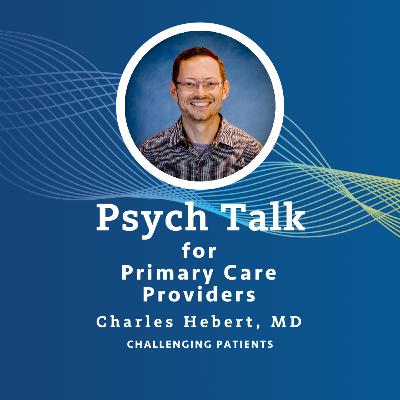
Do you have a difficult patient in your practice? It can be frustrating and time-consuming to manage them. However, understanding why a difficult encounter may occur can help you better manage the situation. This video explores two historical risk factors that can lead to a difficult encounter between a patient and provider: a history of psychiatric illness and an extensive problem list. It then dives into the “IRS” acronym, which stands for interruptions, repetition, and stereotyped responses. Lastly, the video shows how the “breathe out technique” can help prevent difficult encounters and improve patient interactions. With these tips and strategies, you can work towards a better doctor-patient relationship.
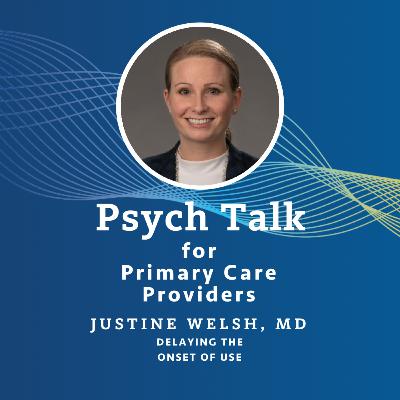
Do you want to learn more about substance use in adolescence? Discover the invaluable advice of Dr Justine Welsh, who talks about how the best approach is to delay the onset of use.

In today's episode, we dive into a vignette on stimulant use disorder with Dr. Jagdeep Kaur. Interested in learning more about primary care psychiatry? Join us at our upcoming Essentials of Primary Care Psychiatry Conference on 1/28/22-1/29/22! This will be a hybrid event and you can learn more about our conference at www.psychiatry.uci.edu/tnt. Suggestions for future topics? Tweet us at @TNTPCP!

With everything opening back up, we are joined by Dr. Leslie Tarver, a Child and Adolescent psychiatrist, to talk to us about Re-Entry Anxiety and provide ways to cope for both children and adults.
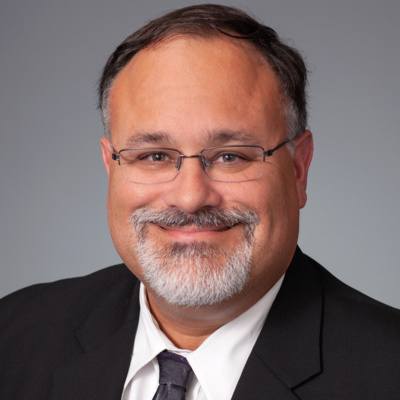
In this month's episode, Dr. Michael Lang discusses considerations for primary care providers when conducting medical evaluations for electroconvulsive therapy or ECT.

In today's episode, one of our TNT PCP mentors Dr. John Onate covers the intersection of the exercise, mental health and primary care.

In this month's episode, we hear a vignette from Dr. Jagdeep Kaur on the assessment and treatment of Substance Use Disorder- specifically stimulant use disorder.

In this episode, we hear from one of our TNT PCP Fellowship mentors and Child & Adolescent psychiatrist Dr. Anju Hurria who presents a child psychiatry case that many see in the primary care setting.

Comments

Download from Google Play

Download from App Store
 United States