


 Claim Ownership
Austrian Artificial Intelligence Podcast
Subscribed: 13Played: 373
Subscribe

© Manuel Pasieka
Description
Guest Interviews, discussing the possibilities and potential of AI in Austria.
Question or Suggestions, write to austrianaipodcast@pm.me
Question or Suggestions, write to austrianaipodcast@pm.me
73 Episodes
Reverse

KI-Agentenplattformen sind in aller Munde. Und obwohl der GenAI-Hype langsam abklingt und viele vor einer KI-Blase zittern, hoffen immer noch andere auf den großen Durchbruch durch sogenannte Agentenplattformen – Systeme, die versprechen, ganze Unternehmensbereiche zu automatisieren. Doch wie so oft sind viele dieser Versprechungen leer Luft, und bei der Vielzahl an Plattformen und Frameworks, die wie Pilze aus dem Boden schießen, ist es kein Wunder, dass Unternehmen Schwierigkeiten haben, die richtigen Entscheidungen zu treffen und KI sinnvoll einzusetzen. Ich glaube deshalb, dass die meisten Unternehmen noch eine ganze Weile ohne wirklich funktionierende KI-Agentenlösungen auskommen müssen.Umso spannender ist das heutige Gespräch mit meinem Gast **Marko Goels**, Geschäftsführer von **Digital Sunray**. Marko und sein Team haben bereits 2023 eine eigene KI-Agentenplattform entwickelt: **SunrAI**. Eine Plattform, die sich bewusst von klassischen RAG-Workflows absetzt und drei entscheidende Bausteine kombiniert:1. **Ein Multi-Agenten-System**, in dem spezialisierte Agenten flexibel zu variablen Workflows kombiniert werden.2. **Einen Smart Data Lake**, der Rohdaten analysiert, anreichert und verdichtet, um bei Anfragen nur die relevantesten Informationen in den LLM-Kontext zu laden – für präzisere Antworten und weniger Halluzinationen.3. **Einen Knowledge-Management-Layer**, der über sogenannte Routinen das implizite Wissen von Unternehmen abbildet und durch Experten-Feedback stetig erweitert. Wodurch Unternehmen ihre Agenten Schritt für Schritt in ihre Arbeitsweisen und spezifischen Anforderungen einschulen können.Wir sprechen im Interview sowohl über die **unternehmerische Perspektive** – wie sich eine KI-Plattform in bestehende Strukturen integrieren lässt, ohne Mitarbeiter zu verunsichern – als auch über **technische Aspekte**, etwa warum und vor allem wie saubere Datenaufbereitung umgesetzt werden muss, um komplexe Anwendungen überhaupt zu ermöglichen.Besonders interessant ist dieses Gespräch für alle, die verstehen wollen, **was eine echte Agentenplattform von simplen Prozessautomatisierungstools wie Zapier oder n8n unterscheidet** – und wie KI schon heute sinnvoll im Unternehmensalltag eingesetzt werden kann.Viel Spaß beim Zuhören!
 1
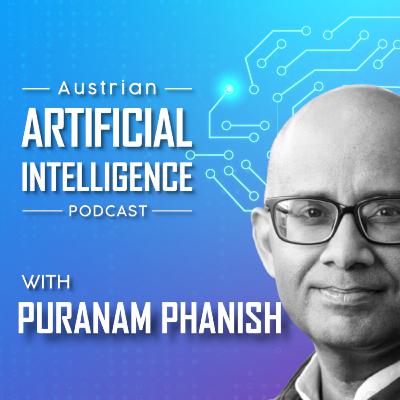
1In this episode, i am joined by Professor Phanish Puranam from INSEAD, one of the world’s leading thinkers on strategy and organizational design, and this year’s recipient of the prestigious Oscar Morgenstern Medal from the University of Vienna.Our conversation explores the deep and often hidden ways in which technology and Artificial Intelligence in particular, reshapes organizations—how we work, how we collaborate, and how power is distributed inside organizations. In the first part of the interview, we dive into one of the most fundamental questions in organizational science: centralization versus decentralization. How do technologies, especially communication technologies, shift the balance between empowering workers with autonomy or giving managers unprecedented tools for monitoring and control.In the second half of our discussion, we turn to generative AI and its impact on how employees skills and expertise are developed within organizations. While GenAI promises efficiency and new forms of collaboration, it also carries the risk of “cognitive offloading”—outsourcing thinking to machines in ways that could erode human competence over time. We consider the tension between treating AI as a tool that enhances human capability, like the abacus, versus one that risks hollowing out expertise, like the calculator. And we confront the very important question of what organizations risk if they replace too many workers with AI agents, resulting in a future where every competitor uses the same AI. In such a world, what’s left to distinguish one company from another?Phanish makes a compelling case that companies must continue to invest in human-centric organisations—not only because people bring autonomy, competence, and connection, but also because these qualities will be the true sources of competitive advantage in an AI-saturated marketplace.

Seit Anfang des Jahres gibt es in Europa einen starkes politisches Verlangen, sich von den USA unabhängig zu machen. Dies betrifft nicht nur die aktuelle militärische Abhängigkeit, sondern auch die Abhängigkeit von US tech Unternehmen. Besonders interessant für den AAIP ist natürlich die starke abhängigkeit Europas von Amerikanischen und Chinesischen KI Modellen und der Computer Infrastruktur um diese Modelle zu nützen.Heute auf dem Podcast spreche ich mit Markus Tretzmüller, der Mitbegründer von Cortecs. Einem Österreichischen Unternehmen das es sich zum Ziel gesetzt hat, mittels eines Sky Computing Ansatzes, eine Routing Lösung zu entwickeln die es Europäischen Unternehmen ermöglicht lokale Cloud Anbieter für KI Anwendungen zu nützen. Diese ermöglicht es KI Lösungen zu entwickeln, die im Europäischen Rechtsraum operieren ohne auf die Vorteile von Hyperscalern wie Kosteneffizienz und Ausfallsicherheit verzichten zu müssen.Im Interview erzählt Markus warum es nicht reicht auf Europäische Neiderlassungen von US Unternehmen zu setzen um Unabhängigkeit und Datensicherheit zu gewährleisten, und welche Vorteile eine routing Lösung wie Cortecs bringen kann.Viel spass und spannendes zuhören.## Referenzen- Cortecs: https://cortecs.ai/ - Building Your Sovereign AI Future- Sky computing: https://sigops.org/s/conferences/hotos/2021/papers/hotos21-s02-stoica.pdf- RouteLLM: https://arxiv.org/abs/2406.18665- FrugalGPT - https://arxiv.org/abs/2305.05176
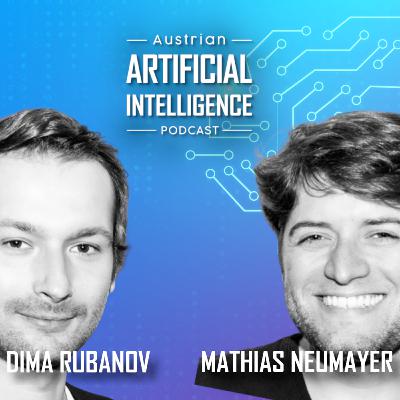
## SummaryLarge Language Models have many strengths and the frontier of what is possible and what they can be used for, is pushed back on the daily bases. One area in which current LLM's need to improve is how they communicate with children. Todays guests, Mathias Neumayer and Dima Rubanov are here to do exactly that, with their newest product LORA - a child friendly AI.Through they existing product Oscar stories, they identified issues with age appropriate language and gender bias in current LLMS's. With Lora, they are building their own AI friendly solution by fine tuning state of the art LLMs with expert curated data that ensures Lora is generating the appropriate language for children of a specific age.On the show they will describe how they are building Lora and what they plan to do with it.### References- https://oscarstories.com/- GenBit Score: [https://www.microsoft.com/en-us/research/wp-content/uploads/2021/10/MSJAR_Genbit_Final_Version-616fd3a073758.pdf](https://www.microsoft.com/en-us/research/wp-content/uploads/2021/10/MSJAR_Genbit_Final_Version-616fd3a073758.pdf)- Counterfactual Reasoning for Bias Evaluation: [https://arxiv.org/abs/2302.08204](https://arxiv.org/abs/2302.08204)
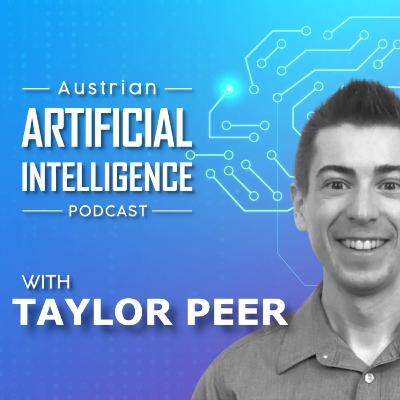
Today on the show I have the pleasure to talk to returning guest, Taylor Peer one of the co-founders of the startup, behind Beat Shaper.Taylor will explain how they are following an Bottom-up approach to create electronic music, giving producers, fine grained control to create individual music instruments and beat patterns. For this, Beat Shaper is combining Variational Auto-encoders and Transformers. The VAE is used to create high dimensional embeddings that represent the users preferences that are used to guide the autoregressive generation process of the Transformer. The token sequence generated with the transformer is a custom developed symbolic music notation that can be decoded into individual instruments. We discuss in detail the system architecture and training process. Taylor is explaining in depth how they build such a system, and how they have been creating their own synthetic training dataset that contains music in symbolic notation that enables the fine grained control over the generated music.I hope you like this episode, and find it useful.### Referencesbeatshaper.ai - Beatshaper an Copilot for Musics Producershttps://openai.com/index/musenet/ - OpenAI MuseNetPlease create a funny looking comic image, showing a panda with glasses that is very busy creating music on a computer.

Guest in this episode is the Computational Social Scientist Daniel Kondor, Postdoc at the Complexity Science Hub in Vienna.Daniel is talking about research methods that make it possible to study the impact of various factors like technological development on societies; and in particular their rise or fall, over long periods of time. He explain how modern tools from computational social science, like agent based modelling can be used to study past and future social groups. We talk about his most recent publication that takes a complex systems perspective on the risk AI poses for society and provided suggestions on how to manage such risks through public discourse and involvement of affected competency groups.## References- Waring TM, Wood ZT, Szathmáry E. 2023 Characteristic processes of human evolution caused the Anthropocene and may obstruct its global solutions. Phil. Trans. R. Soc. B 379: 20220259. https://doi.org/10.1098/rstb.2022.0259- Kondor D, Hafez V, Shankar S, Wazir R, Karimi F. 2024 Complex systems perspective in assessing risks in artificial intelligence. Phil. Trans. R. Soc. A 382: 20240109. https://doi.org/10.1098/rsta.2024.0109- https://seshat-db.com/
# Summary
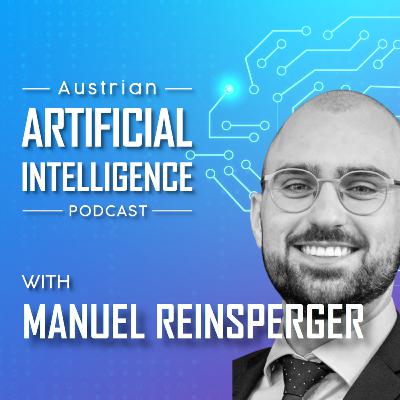
Today on the show I am talking to Manuel Reinsperger, Cybersecurity Expert and Penetration Tester. Manuel will provide us an introduction into the topic of Machine Learning Security with an emphasis on Chatbot and Large Language Model security.
We are going to discuss topics like AI Red Teaming that focuses on identifying and testing AI systems within an holistic approach for system security. Another major theme of the episode are different Attack Scenarios against Chatbots and Agent systems.
Manuel will explain to use, what Jailsbreak are and methods to exfiltrate information and cause harm through direct and indirect prompt injection.
Machine Learning security is a topic I am specially interested in and I hope you are going to enjoy this episode and find it useful.
## AAIP Community
Join our discord server and ask guest directly or discuss related topics with the community.
https://discord.gg/5Pj446VKNU
## TOC
00:00:00 Beginning
00:02:05 Guest Introduction
00:05:16 What is ML Security and how does it differ from Cybersecurity?
00:25:56 Attacking chatbot systems
00:41:12 Attacking RAGs with Indirect prompt injection
00:54:43 Outlook on LLM security
## Sponsors
- Quantics: Supply Chain Planning for the new normal - the never normal - https://quantics.io/
- Belichberg GmbH: Software that Saves the Planet: The Future of Energy Begins Here - https://belichberg.com/
## References
Manuel Reinsperger - https://manuel.reinsperger.org/
Test your prompt hacking skills: https://gandalf.lakera.ai/
Hacking Bing Chat: https://betterprogramming.pub/the-dark-side-of-llms-we-need-to-rethinInjectGPT: k-large-language-models-now-6212aca0581a
AI-Attack Surface: https://danielmiessler.com/blog/the-ai-attack-surface-map-v1-0/
https://blog.luitjes.it/posts/injectgpt-most-polite-exploit-ever/
https://github.com/jiep/offensive-ai-compilation
AI Security Reference List: https://github.com/DeepSpaceHarbor/Awesome-AI-Security
Prompt Injection into GPT: https://kai-greshake.de/posts/puzzle-22745/

## Summary
At the end of last year, the EU-AI Act was finalized and it spawned many discussions and a lot of doubts about the future of European AI companies.
Today on the show Peter Jeitschko, founder of JetHire an AI based recruiting platform that uses Large Language models to help recruiters find and work with candidates, talks about this perspective on the AI-Act.
We talk about the impact of the EU AI-Act on their platform, and how it falls into a high-risk use-case under the new regulation. Peter describes how the AI-Act forced them to create their company in the US and what he believes are the downsides of the EU regulation.
He describes his experience, that the EU regulations hinder innovation in Austria and Europe and how it increases legal costs and uncertainty, resulting in decision makers shying away in building and applying modern AI systems.
I think this episode is valuable for decision makers and founders of AI companies, that are affected by the upcoming AI Act and struggle to make sense of it.
## AAIP Community
Join our discord server and ask guest directly or discuss related topics with the community.
https://discord.gg/5Pj446VKNU
## TOC
00:00:00 Beginning
00:03:09 Guest Introduction
00:04:45 A founders perspective on the AI Act
00:13:45 JetHire - A recruiting platform affected the the AI Act
00:19:58 Achieving regulatory goals with good engineering
00:35:22 The mismatch between regulations and real world applications
00:48:12 European regulations vs. global AI services
## Sponsors
- Quantics: Supply Chain Planning for the new normal - the never normal - https://quantics.io/
- Belichberg GmbH: Software that Saves the Planet: The Future of Energy Begins Here - https://belichberg.com/
## References
Peter Jeitschko - https://www.linkedin.com/in/pjeitschko/
Peter Jeitschko - https://peterjeitschko.com/
JetHire - https://jethire.ai/
https://www.holisticai.com/blog/requirements-for-high-risk-ai-applications-overview-of-regulations
# Summary
For the last two years AI has been flooded with news about LLMs and their successes, but how many companies are actually making use of them in their products and services?
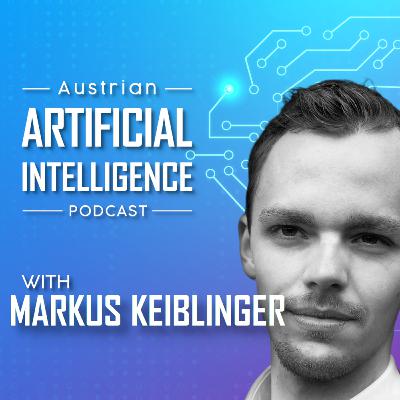
Today on the show I am talking to Markus Keiblinger, Managing partner of Texterous. A startup that focus on building custom LLM Solutions to help companies automate their business.
Markus will tell us about his experience when talking and working with companies building such LLM focused solutions.
Telling us about the expectations companies have on the capabilities of LLMs, as well on what companies need to have in order to be successfully implementing LLM projects.
We will discuss how Textorous has successfully focused on Retriever Augmented Generation (RAG) use cases.
RAGs is a mechanism that makes it possible to provide information to an LLM in a controlled menner, so the LLM can answer questions or follow instructions making use of that information. This enables companies to make use of their data to solve problems with LLMs, without having to train or even fine-tune models. On the show, Markus will tell us of one of these RAG projects and we will contrast building a RAG system based on Service Provider offerings like OpenAI or self hosted open source alternatives.
Last but not least, we talk about new use cases emerging with multi-modal Models, and the long term perspective that exists for custom LLM Solutions Providers like them in focusing on building integrated solutions.
## AAIP Community
Join our discord server and ask guest directly or discuss related topics with the community.
https://discord.gg/5Pj446VKNU
## TOC
00:00:00 Beginning
00:03:31 Guest Introduction
00:06:40 Challenges of applying AI in medical applications
00:17:56 Homogeneous Ensemble Methods
00:25:50 Combining base model predictions
00:40:14 Composing Ensembles
00:52:24 Explainability of Ensemble Methods
## Sponsors
- Quantics: Supply Chain Planning for the new normal - the never normal - https://quantics.io/
- Belichberg GmbH: Software that Saves the Planet: The Future of Energy Begins Here - https://belichberg.com/
### References
- Markus Keiblinger: https://www.linkedin.com/in/markus-keiblinger
- Texterous: https://texterous.com
- Book: Conversations Plato Never Captured - but an AI did: https://www.amazon.de/Conversations-Plato-Never-Captured-but/dp/B0BPVS9H9R/

## Summary
Hello and welcome back to the Austrian Artificial Intelligence Podcast in 2024.
With this episode we start into the third year of the podcast. I am very happy to see that the number of listeners has been growing steadily since the beginning and I want to thank you dear listeners for coming back to the podcast and sharing it with your friends.
Gabriel is a Bioinformatician at the Austrian Institute of Technology and is going to explain his work on ensemble methods and their application in the medical domain.
For those not familiar with the term, an Ensemble is a combination of individual base models that are combined with the goal to outperform each individual model.
So the basic idea is, that one combines multiple models that each have their strength and weaknesses into a single ensemble that in the best case has all the strengths without the weaknesses.
We have seen one type of ensemble methods in the past. These where homogeneous ensemble methods like federated learning, where one trains the same algorithm multiple times by multiple parties or different subsets of the data, for performance reasons or in order to combine model weights without sharing the training data.
Today, Gabriel will talk about heterogeneous ensembles that are a combination of different models types and their usage in medical applications. He will explain how one can use them to increase the robustness and the accuracy of predictions. We will discuss how to select and create compositions of models, as well how to combine the different predictions of the individual base models in smart ways that improve their accuracy over simply methods like averaging over majority voting.
## AAIP Community
Join our discord server and ask guest directly or discuss related topics with the community.
https://discord.gg/5Pj446VKNU
## TOC
00:00:00 Beginning
00:03:31 Guest Introduction
00:06:40 Challenges of applying AI in medical applications
00:17:56 Homogeneous Ensemble Methods
00:25:50 Combining base model predictions
00:40:14 Composing Ensembles
00:45:57 Explainability of Ensemble Methods
## Sponsors
- Quantics: Supply Chain Planning for the new normal - the never normal - https://quantics.io/
- Belichberg GmbH: Software that Saves the Planet: The Future of Energy Begins Here - https://belichberg.com/
## References
Gabriel Alexander Vignolle - https://www.linkedin.com/in/gabriel-alexander-vignolle-385b141b6/
Publications - https://publications.ait.ac.at/en/persons/gabriel.vignolle
Molecular Diagnostics - https://molecular-diagnostics.ait.ac.at/

# Summary
I must admit that I was thinking about starting my own startup for a long time, but never had the guts to really do so. One excuse that I always told myself was, that I am all alone, and I dont have a team with which to start that adventure.
Well if you are like me, than this episode is for you!
Today on the show I am talking to Adrian Spartarus. Founder of two AI Startups, and he did so as a single solo founder.
On this episode we will discuss some of the challenges that one faces as a solo founder and about building a AI product today.
We discuss the role of skill development, outsourcing, the importance of having the right training data and much more.
We end the episode by talking about the possibilities and dangers of the most recent AI advancements on society as a hole, but on modern tech Entrepreneurship in particular.
I hope you enjoy this episode and it will encourage you to take that step towards realizing your own dreams despite the difficulties ahead.
# References
Adrian Spartaru - https://www.linkedin.com/in/spataru/
Cleanvoice - https://cleanvoice.ai/
Ramen Club - https://www.ramenclub.so/
Indi Hackers - https://www.indiehackers.com/
Indi world wide - https://indieworldwide.com/
Company of One: Why Staying Small Is the Next Big Thing for Business by Paul Jarvis
The Mom Test: How to talk to customers & learn if your business is a good idea when everyone is lying to you by Rob Fitzpatrick
Zero to Sold: How to Start, Run, and Sell a Bootstrapped Business by Arvin Cult
# Summary
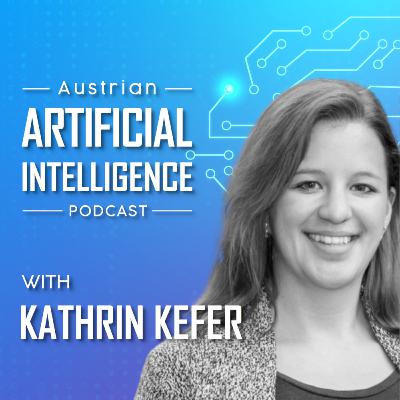
Today on the show I am talking to Kathrin Kefer PhD student at the JKU and her research at Fronius where she is optimizing single household power grids with their own photovoltaik installations to reduce costs and their dependency on the energy suppliers.
Kathrin will explain to us some of the challenges when controlling how power is used, stored and distributed in a system, as well how she has developed a control system that is applying symbolic regression in a genetic algorithm paradigm to find a balance between optimal control and realtime requirements.
# References
Kathrin Kefer - https://www.linkedin.com/in/kathrin-kefer-362443132/
Symbolic regression: https://en.wikipedia.org/wiki/Symbolic_regression
Genetic Programming: https://en.wikipedia.org/wiki/Genetic_programming

# Summary
Building AI solutions is hard. Using the AI hammer to be solving the actual source of a problem even harder.
Today on the show I am talking to Paul Puntschart on how to make sure to ask the right questions and try to use AI to answer the best questions that will solve the challenges that you are facing.
Paul will describe his approach of mixed intelligence. AI prototyping and playscience in order to through an playful iterative development process learn more about the problem you try to solve, learn how to ask the right questions and inspire creative solutions that hit the nail on the head.
# References
Paul Puntschart : https://www.linkedin.com/in/paul-puntschart-279506a2/
NetHack Challenge: https://www.linkedin.com/pulse/nethack-challenge-i-participated-paul-puntschart/
Mixed Intelligence and Rapid AI Prototyping: https://www.linkedin.com/pulse/mixed-intelligence-rapid-ai-prototyping-paul-puntschart%3FtrackingId=8KRSQ3BYQP%252BSYzOrih0yiQ%253D%253D/?trackingId=8KRSQ3BYQP%2BSYzOrih0yiQ%3D%3D
Play: How it Shapes the Brain, Opens the Imagination, and Invigorates the Soul by Stuart Brown

# Summary
Today on the show my guest is Mykola Belich found of Belichberg a software development company developing multiple products and services in the data and ML space. On the show Mykola will talk about their work in the area of video surveillance for photovoltaic plants in isolated rural areas.=
On the show he will share some of the biggest challenges that they had to overcome to apply computer vision on low power edge devices in deployment scenarios where maintenance is only possible under high costs or not at all.
# References
Mykola & Belichberg - https://www.linkedin.com/feed/update/urn:li:activity:6997863170191073280/
Intels OpenVino - https://www.intel.com/content/www/us/en/developer/tools/openvino-toolkit/overview.html

With the last episode in 2024, I dare to release an solo episode, summarizing my christmas research on the topics of
- Small Language models
- Agentic Systems
- Advanced Reasoning / Test time compute paradigm
I hope you find it interesting and useful!
All the best for 2025!
## AAIP Community
Join our discord server and ask guest directly or discuss related topics with the community.
https://discord.gg/5Pj446VKNU
## TOC
00:00:05 Intro
00:01:52 Part 1 - Small Language Models
00:20:16 Part 2 - Agentic Systems
00:36:16 Part 3 - Advanced Reasoning
00:58:08 Outro
## References
- Testing Qwen2.5 - https://huggingface.co/spaces/Qwen/Qwen2.5
- Qwen2.5 Technical report - https://arxiv.org/pdf/2412.15115
- Agents: https://www.superannotate.com/blog/llm-agents
- Scaling Test-time compute: https://arxiv.org/html/2408.03314v1
- Test time compute: https://huggingface.co/spaces/HuggingFaceH4/blogpost-scaling-test-time-compute
- O3 achieving 88% on ARC-AGI https://arcprize.org/blog/oai-o3-pub-breakthrough
- https://arxiv.org/html/2409.01374v1 - Human performance on ARC-AGI 76%

## Summary
Today we have as a guest Alexander Zehetmaier, co-founder of SunRise AI Solutions.
Alex will explain how SunRise AI is partnering with companies to navigate this challenging space, by providing their guidance, knowledge and network of experts to help companies apply AI successfully.
Alex will talk in detail about one of their Partners, Mein Dienstplan that is developing an Graph Neural Network based Solution that is generating complex work time tables. Scheduling a Timetable for a large number of employees and shifts is not an easy task, specially if one has to satisfy hard constraints like labor laws, and soft constraints like employee preferences.
Alex will explain in detail how they have developed a hybrid solution to use Graph Neural Network to create candidates that are validated and improved through heuristic based methods.
## AAIP Community
Join our discord server and ask guest directly or discuss related topics with the community.
https://discord.gg/5Pj446VKNU
## TOC
00:00:00 Beginning
00:02:23 Guest Introduction
00:04:19 SunRise AI Solutions
00:7:45 Mein Dienstplan
00:19:52 Building timetables with genAI
00:39:36 How SunRise AI can help startups
## References
Alexander Zehetmaier: https://www.linkedin.com/in/alexanderzehetmaier/
SunRise AI Solutions: https://www.sunriseai.solutions/
MeinDienstplan: https://www.meindienstplan.at/

As you surely know, OpenAI is not very open about how their systems works or how they build them. More importantly for most uses and business, OpenAI is agnostic about how users apply their services and how to make most out of the models multi-step "reasoning" capabilities .
As a stark contrast to OpenAI, today I am talking to Marius Dinu, the CEO and co-founder of the austrian startup extensity.ai. Extensity.ai as a company follows an open core model, building an open source framework which is the foundation for AI Agent systems that perform multi-step reasoning and problem solving, while generating revenue by providing enterprise support and custom implementation's.
Marius will explain how their Neuro-Symbolic AI Framework is combining the strengths of symbolic reasoning, like problem decomposition, explainability, correctness and efficiency with an LLM's understanding of natural language and their capability to operate on unstructured text following instructions.
We will discuss how their framework can be used to build complex multi-step reasoning workflows and how the framework works like an orchestrator and reasoning engine that applies LLM's as semantic parsers that at different decision points decide what tools or sub-systems to apply and use next. As well how in their research, they focus on ways to measure the quality and correctness of individual workflow steps in order to optimize workflow end-to-end and build a reliable, explainable and efficient problem solving system.
I hope you find this episode useful and interesting.
## AAIP Community
Join our discord server and ask guest directly or discuss related topics with the community.
https://discord.gg/5Pj446VKNU
## TOC
00:00:00 Beginning
00:03:31 Guest Introduction
00:08:32 Extensity.ai
00:17:38 Building a multi-step reasoning framework
00:26:05 Generic Problem Solver
00:48:41 How to ensure the quality of results?
01:04:47 Compare with OpenAI Strawberry
### References
Marius Dinu - https://www.linkedin.com/in/mariusconstantindinu/
https://www.extensity.ai/
Extensity.ai - https://www.extensity.ai/
Extensity.ai YT - https://www.youtube.com/@extensityAI
SymbolicAI Paper: https://arxiv.org/abs/2402.00854

Today on the podcast I have to pleasure to talk to Jules Salzinger, Computer Vision Researcher at the Vision & Automation Center of the AIT, the Austrian Institute of Technology.
Jules will share with us, his newest research on applying computer vision systems that analyze drone videos to perform remote plant phenotyping. This makes it possible to analyze plants growth, but as well how certain plant decease spreads within a field.
We will discuss how the diversity im biology and agriculture makes it challenging to build AI systems that generalize between plants, locations and time.
Jules will explain how in their latest research, they focus on performing experiments that provide insights on how to build effective AI systems for agriculture and how to apply them. All of this with the goal to build scalable AI system and to make their application not only possible but efficient and useful.
## TOC
00:00:00 Beginning
00:03:02 Guest Introduction
00:15:04 Supporting Agriculture with AI
00:22:56 Scalable Plant Phenotyping
00:37:33 Paper: TriNet
00:70:10 Major findings
### References
- Jules Salzinger: https://www.linkedin.com/in/jules-salzinger/
- VAC: https://www.ait.ac.at/en/about-the-ait/center/center-for-vision-automation-control
- https://www.ait.ac.at/en/about-the-ait/center/center-for-vision-automation-control
- AI in Agriculture: https://intellias.com/artificial-intelligence-in-agriculture/
- TriNet: Exploring More Affordable and Generalisable Remote Phenotyping with Explainable Deep Models: https://www.mdpi.com/2504-446X/8/8/407

## Summary
Today on the show I am talking to Proofreads CTO Alexandre Paris. Alex explains in great detail how they analyze digital books drafts to identify mistakes and instances within the document that dont follow guidelines and preferences of the user.
Alex is explaining how they fine-tune LLMs like, Mistrals 7B to achieve efficient resource usage and provide customizations and serve multiple uses cases with a single base model and multiple lora adapters.
We talk about the challenges and capabilities of fine-tuning, how to do it, when to apply it and when for example prompt engineering of an foundation model is the better choice.
I think this episode is very interesting for listeners that are using LLMs in a specific domain. It shows how fine-tuning a base model on selected high quality corpus can be used to build solutions outperform generic offerings by OpenAI or Google.
## AAIP Community
Join our discord server and ask guest directly or discuss related topics with the community.
https://discord.gg/5Pj446VKNU
## TOC
00:00:00 Beginning
00:02:46 Guest Introduction
00:06:12 Proofcheck Intro
00:11:43 Document Processing Pipeline
00:26:46 Customization Options
00:29:49 LLM fine-tuning
00:42:08 Prompt-engineering vs. fine-tuning
### References
https://www.proofcheck.io/
Alexandre Paris - https://www.linkedin.com/in/alexandre-paris-92446b22/
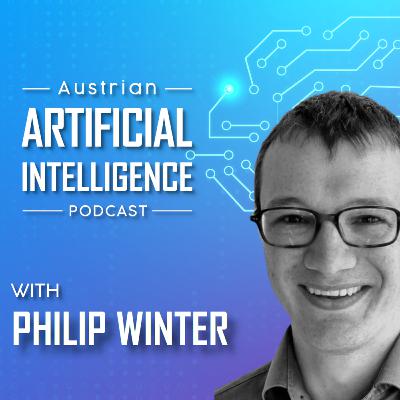
Today I am talking to Philip Winter, researcher at the Medical Imaging group of the VRVis, a research center for virtual realities and visualizations.
Philip will explain the benefits and challenges in continual learning and will present his recent paper "PARMESAN: Parameter-Free Memory Search and Transduction for Dense Prediction Tasks". Where he and his colleagues have developed a system that uses a frozen hierarchical feature extractor to build a memory database out of the labeled training data. During inference the system identified training examples similar to the test data and prediction is performed through a combination of parameter-free correspondence matching and message passing based on the closes training datapoints.
I hope you enjoy this episode and will find it useful.
## AAIP Community
Join our discord server and ask guest directly or discuss related topics with the community.
https://discord.gg/5Pj446VKNU
## TOC
00:00:00 Beginning
00:03:04 Guest Introduction
00:06:50 What is continual learning?
00:15:38 Catastrophic forgetting
00:27:36 Paper: Parmesan
00:40:14 Composing Ensembles
00:46:12 How to build memory over time
00:55:37 Limitations of Parmesan
### References
Philip Winter - https://www.linkedin.com/in/philip-m-winter-msc-b15679129/
VRVIS - https://www.vrvis.at/
PARMESAN: Parameter-Free Memory Search and Transduction for Dense Prediction Tasks - https://arxiv.org/abs/2403.11743
Continual Learning Survey: https://arxiv.org/pdf/1909.08383

Comments

Download from Google Play

Download from App Store
 United States