


 Claim Ownership
The Vital Center
Subscribed: 45Played: 1,310
Subscribe

© 2021 The Niskanen Center
Description
Both the Republican and Democratic parties are struggling to defend the political center against illiberal extremes. America must put forward policies that can reverse our political and governmental dysfunction, advance the social welfare of all citizens, combat climate change, and confront the other forces that threaten our common interests.
The podcast focuses on current politics seen in the context of our nation’s history and the personal biographies of the participants. It will highlight the policy initiatives of non-partisan think tanks and institutions, while drawing upon current academic scholarship and political literature from years past — including Arthur M. Schlesinger Jr.’s 1949 classic “The Vital Center.”
We welcome your thoughts on this episode and the podcast as a whole. Please send feedback or suggestions to vitalcenter@niskanencenter.org
The podcast focuses on current politics seen in the context of our nation’s history and the personal biographies of the participants. It will highlight the policy initiatives of non-partisan think tanks and institutions, while drawing upon current academic scholarship and political literature from years past — including Arthur M. Schlesinger Jr.’s 1949 classic “The Vital Center.”
We welcome your thoughts on this episode and the podcast as a whole. Please send feedback or suggestions to vitalcenter@niskanencenter.org
94 Episodes
Reverse
Philip K. Howard is a New York-based lawyer and civic reformer, who across his public career has tilted against the accumulating layers of procedural law and bureaucratic rule that have made it increasingly difficult for Americans to exercise individual initiative, judgment, and accountability. Since the 1995 publication of his bestselling first book, The Death of Common Sense, he has pointed out that the urge to make decision-makers accountable by subjecting them to highly specified rules has paradoxically produced a system that is both unaccountable and paralyzed. In his most recent book, Saving Can-Do: How to Revive the Spirit of America, Howard argues that legal micromanagement has sapped the sources of American dynamism and effective government, fueling populist resentments.
In this podcast discussion, Howard offers qualified approval of the Abundance movement that he in some ways anticipated by decades. But he insists that the pruning of excessive rules and procedures must also be accompanied by restoring a role for human judgement: “It’s not simply having less to comply with. It’s actually re-empowering everybody — the teacher in the classroom, the principal, the head of the school, whoever it happens to be — empowering them to do what’s right.”
By the same token, he criticizes Elon Musk’s DOGE initiative for focusing on cutting the things government does but squandering the opportunity to change how the government does things: “There was not even a pretense that they had an idea about how things would work better the day after DOGE. It was just, ‘Look at how much we've cut,’ and then they wildly exaggerated how much they’d cut. Of course, it was all counterproductive…”
Howard resists political categorization and his Common Good organization has worked with Democratic and Republican administrations alike, but his tradition of civic liberalism is increasingly homeless in contemporary politics. He acknowledges that some rules and regulations are essential, but he hopes for a government that can restore space for human judgement in a way that can restore both American dynamism and public trust in government efficacy.

Leah Libresco Sargeant is a Senior Policy Analyst in Family Economic Security at the Niskanen Center as well as a writer and journalist whose work focuses on religion and family policy. She is the author of three books, of which the most recent is The Dignity of Dependence: A Feminist Manifesto. In her book, Sargeant argues that liberal feminism — and American culture more generally — champions an ideal of freedom based in autonomy that is poorly suited to human beings as they are. Instead, she advocates for a culture that sees dignity in mutual dependence.
Sargeant agrees with feminist critiques from the left that many institutions and structures in society treat women as “defective men,” including the medical research that tests only male patients and the car safety devices that protect male bodies while accidentally injuring female bodies. But she also is critical of a kind of corporate capitalism that sees workers only as economic inputs, and a politics that denies the neediness, vulnerability, and interdependence of humanity.
In this podcast discussion, Sargeant lays out the thesis of The Dignity of Dependence. She describes her conversion to Catholicism and the ways in which her experiences as a wife and mother inform her cultural politics. She touches on the global fertility crisis and the paradoxical ways in which it may be driven by prosperity. She further addresses the struggles that many young people have nowadays in dating and forming families, and suggests that they may be helped by social policies (including the Child Tax Credit and baby bonuses) as well as by a greater understanding of the difference between “capstone” and “cornerstone” marriages. And she distinguishes her approach to feminism from other perspectives on both the left and right. She makes clear that as a pro-life feminist she has considerable differences with mainstream feminism, but nonetheless believes it to be “a good-faith tradition of trying to struggle with what it means to be just to women in a world that is often male-normed. It's a tradition that I think has made some serious mistakes and won some significant victories.”

Since our species first emerged on the planet some 300,000 years ago, the overriding problem for most humans has been the struggle for food and shelter. But in 1930, the British economist John Maynard Keynes foresaw that economic growth (despite the Great Depression) would mean that in a century, the vast majority of people in developed societies would enjoy mass plenty and only a small number of unfortunates would still struggle with material deprivation. This would mean that “for the first time since his creation man will be faced with his real, his permanent problem — how to use his freedom from pressing economic cares, how to occupy the leisure which science and compound interest will have won for him, to live wisely and agreeably and well.” But Keynes worried that transitioning to this new problem would present huge difficulties for humanity: “there is no country and no people, I think, who can look forward to the age of leisure and abundance without dread.”Brink Lindsey, senior vice president at the Niskanen Center, has written a visionary new book addressing Keynes’ conundrum. In The Permanent Problem: The Uncertain Transition from Mass Plenty to Mass Flourishing, Lindsey ponders the paradox that people in developed countries live in conditions of unparalleled wealth, health, and technological progress — and yet most people feel disappointment rather than gratitude at the results. We enjoy an abundance of material goods, yet most people are missing out on the sense of meaning, purpose, and belonging that define human flourishing.In this podcast discussion, Lindsey describes the “triple crisis of capitalism” that has brought material prosperity but also social disintegration, sputtering dynamism, and dysfunctional politics. But he also sees encouraging signs that point toward how mass flourishing might be accomplished in developments that include new technological breakthroughs and the growing Abundance movement. Ultimately he hopes for a future in which people will have closer relationships with each other as well as the natural world, and in which humanity’s drive to explore and understand will reach into the larger universe. “Our destiny is up to us,” he concludes, “and therefore we should make the most of that chance. We ought to aim high.”
When most people think about the 1970s, they’re likely to conjure up images of Watergate, oil shortages, disco, and outrageous hairstyles. When academic political historians have thought about the 1970s, they have tended to see the era largely as one in which the forces of conservatism gained strength, setting the stage for Ronald Reagan’s election as president in 1980 and the subsequent decades of “neoliberalism,” in which both parties tended to agree that market forces needed to be liberated from the heavy hand of government. But a new generation of historians argues that this reading shortchanges many of the Democratic politicians active in the 1970s and the years that followed, particularly the New Liberals. These were the people who wanted the Democratic Party to regain its political momentum by reforming liberalism as well as the party. The New Liberals included intellectuals like Robert Reich and Ira Magaziner, business figures like Felix Rohatyn and Robert Rubin, and politicians including Gary Hart, Paul Tsongas, Jerry Brown, and of course Bill Clinton, who arguably brought the New Liberal project to fruition by winning the presidency in 1992. Henry Tonks, a historian at Kenyon College, has written a dissertation reevaluating the New Liberals. He argues that while they did pave the way toward the modern Democratic Party, they didn’t capitulate to Reaganism or repudiate their New Deal heritage. Rather, they tried to reinvent liberalism by adapting it to an economy that was becoming more globalized as well as less industrial and more reliant upon financial services and advanced technology. They embraced industrial policy and worried about whether America was falling behind its commercial rivals, particularly Japan. Tonks argues that while New Liberals didn’t correctly diagnose the changes to the economy in all of its particulars, their policy vision retains considerable relevance to today’s politics — and particularly the discussion around the Abundance movement.
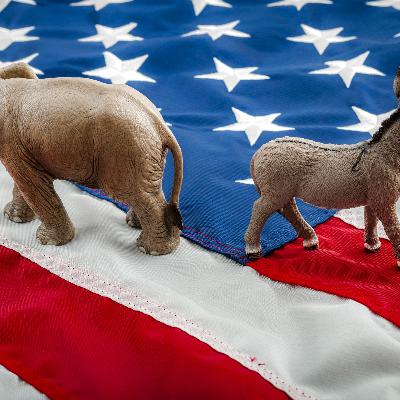
From the 1930s through the early 1960s, roughly half of Americans described themselves as liberals. But in the decades that followed, liberalism has suffered near-continuous reputational decline. The critics, rivals, and enemies of liberalism sought to redefine its public image downward, and nearly all succeeded. Among these opponents were the conservatives around William F. Buckley Jr., who attempted to portray liberalism as a combination of militant secularism and socialism or even communism; while a majority of Americans didn’t buy this definition, Buckley and his confreres succeeded in equating liberalism with leftism, to the point that more than half of Americans tell pollsters that the Democratic Party has become “too liberal.” But actual left-wing critics felt that, on the contrary, postwar liberals had betrayed the radical potential of the New Deal and smothered American society in corporate capitalism and conformist consensus. Black civil rights activists, for their part, came to feel that white liberals were treacherous allies, unwilling to push for true equality if it would threaten their own power and position. Kevin G. Schultz, a professor of History, Catholic Studies, and Religious Studies at the University of Illinois at Chicago, has researched the descent of liberalism’s reputation across the latter half of the twentieth century and up to the present. Why, he wonders, “have so many people come to hate white liberals, including, perhaps, even white liberals themselves?” He describes this history in his new book, Why Everyone Hates White Liberals (Including White Liberals). In this podcast discussion, he concedes that liberalism set itself up for criticism in many ways, but nonetheless concludes that liberalism did not fall of its own weight – it was “assassinated,” as he put it, by its political opponents, who “recognized they could defeat liberalism in America… not by attacking its politics or policies, which generally remained popular,” but instead by “giving it meanings no self-respecting liberal would accept but from which they couldn't successfully escape.” And by mocking the people who upheld that philosophy, the white liberals, the critics gave the word “liberal” so much baggage that the concept of liberalism could no longer be defended — to the point that Schultz now feels the very term should be abandoned.

On February 27, 2022, three days after the Russian invasion of Ukraine, Olaf Scholz, who was then the Chancellor of Germany, gave a speech to an emergency session of the German parliament at which he described the attack as a Zeitenwende – an historic turning point. This watershed moment, he declared, meant “that the world afterwards will no longer be the same as the world before. The issue at the heart of this [change] is whether power is allowed to prevail over the law: whether we permit Putin to turn back the clock to the nineteenth century and the age of great powers, or whether we have it in us to keep warmongers like Putin in check. That requires strength of our own.” He announced a major restructuring of the country’s cautious defense policy, including billions for modernization of the military and a promise that defense spending would exceed 2 percent of Germany’s GDP, a level of spending that Scholz’s party (the Social Democrats) traditionally had opposed. Three years later, Germany has a new chancellor, Friedrich Merz, who leads the Christian Democratic Union (CDU). He succeeded in amending Germany’s constitution to lift the so-called “debt brake,” which means that the country will spend significantly more on defense as well as hundreds of billions on related infrastructure over the next ten years. But will it be enough to allow Germany to deter Russian aggression against Europe — particularly if the United States under Trump withdraws from its post-1945 role as the guarantor of European security? Can Germany develop a defense industry that can deliver under wartime conditions? Can Germany take on the leadership role in Europe that it long has been reluctant to assume — and will other countries accept Germany in this role?Jan Techau is a director with the Eurasia Group’s Europe team, covering Germany and European security. He is also a senior fellow with the Transatlantic Defense and Security Program at the Center for European Policy Analysis. From 2020 to 2023, he served in the German government as head of speechwriting for three ministers in the German Ministry of Defense. In this podcast interview, he discusses the European reaction to Trump’s reelection, the likelihood of Germany’s being able to make the physical and psychological adjustments it would need in order to become the principal provider of conventional deterrence in Europe, the rise of anti-Americanism in Germany on both the left and right, and whether Europeans are capable of keeping peace on the continent without the help of the Americans. He also explains his 2016 diagnosis of what he called “sophisticated state failure,” which long before the Abundance movement was dreamed of predicted that highly developed countries would find it increasingly difficult to get anything done, and that this paralysis would provide an opening for populist uprisings all over the world. “The only lasting way out of sophisticated state failure,” he concluded, “is for responsible politicians to worry less about getting re-elected and start risking their political careers for things that need to be done.”

For many decades, practitioners and scholars of foreign policy used to refer to “the West,” but today, for the most part, they don’t. What happened to the idea of “the West”? Michael Kimmage, a professor of history at Catholic University, wrote The Abandonment of the West: The History of an Idea in American Foreign Policy to trace the rise and decline of this concept from the late nineteenth century through the present day. In this podcast discussion, Kimmage discusses the idea of the West — as a geopolitical and cultural concept rather than a geographic place. He analyzes how it developed intellectually, with the widespread adoption of neoclassical architecture and Western Civilization curricula in American universities, and geopolitically as the U.S. rose to global leadership after World War II and during the Cold War. Kimmage also addresses critiques of the West (and its legacy of racism and imperialism) as advanced by critics like W. E. B. Du Bois and Edward Said. He argues that concept of “the West,” despite its flaws, still matters, and explains why he’s concerned about the tendency to erase or discard the Western tradition entirely rather than engaging with it critically. Michael Kimmage further relates his experience of serving as director of the Kennan Institute, a program at the Woodrow Wilson International Center for Scholars, which was liquidated in January 2025 by Elon Musk’s Department of Government Efficiency (or DOGE), and the consequences of the government cutting itself off from international exchange and expertise in the development of U.S. foreign policy. He also expresses his belief that institutionalists — the people who believe in the value of institutions and operate in them — have to do a better job of explaining and justifying what they do: “If the population feels that these institutions are elitist and out of touch and misguided and unnecessary, then it doesn't matter how much somebody like me values them, it’s not going to work.”

This podcast was recorded in late August 2025. Much has occurred since then, both in Minnesota and nationally, and listeners are asked to consider the episode’s treatment of politics and current events in the context of the time in which it was recorded.Steve Grove is the publisher and CEO of the Minnesota Star Tribune. For many years, he had been a high-flying executive in Silicon Valley, working for firms like Google and YouTube. Then in 2018, he and his wife — who worked for a venture capital firm investing in startups outside of the coasts along with AOL founder Steve Case and now-Vice President JD Vance — decided to return to Minnesota, where Grove had grown up. His recent book, How I Found Myself in the Midwest: A Memoir of Reinvention, is about leaving the global hub of innovation for what’s often disparaged as “flyover country.” It’s also a story of recommitting to civic and political involvement, as Grove went to work for Minnesota governor (and future Democratic vice-presidential nominee) Tim Walz as head of the state’s departments of economic and workforce development. He was in this role when the pandemic struck the state, making him the principal liaison with a business community struggling to cope with restrictions meant to stem the spread of COVID.In this podcast conversation, Grove discusses his personal experience of moving from Silicon Valley back to Minnesota, the benefits and tradeoffs of relocating there, and what he learned from having moved between the worlds of high tech, government, and publishing. He describes his experiences with finding both resistance and innovation in state and local government, and the perspective that gave him on Elon Musk’s DOGE attempt to reinvent government along Silicon Valley lines. (Grove believes that “If you're going to reboot government in a more powerful way, starting local has a lot better shot than starting national.”) He discusses the challenges of heading the Safe Reopening Group during the pandemic, which he frankly characterizes as a “deeply uncomfortable exercise in social engineering.” And he also describes his work since 2023 in attempting to reimagine the venerable Star Tribune at a time of severe challenges for print journalism and the news media more generally.
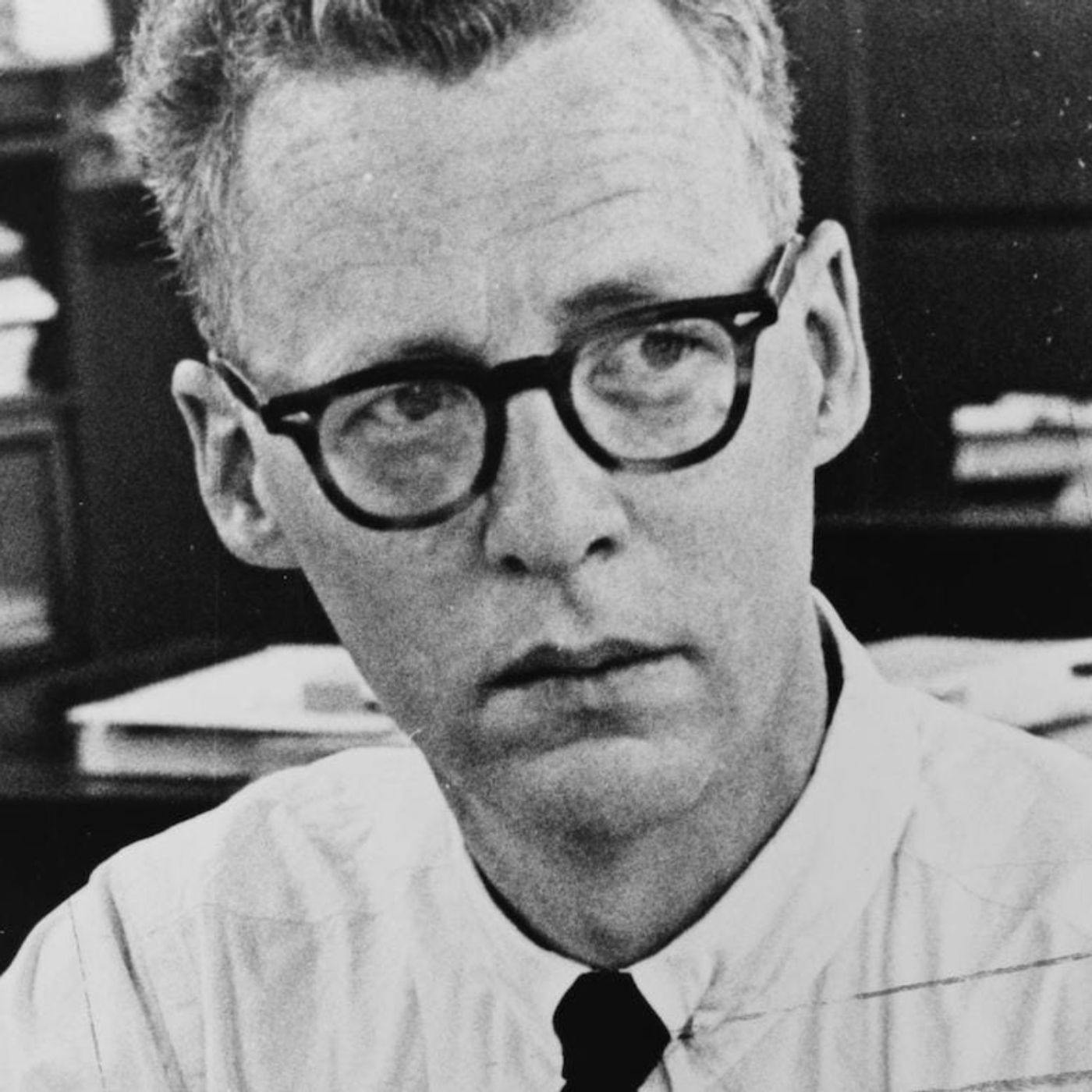
Murray Kempton (1917-97) was one of the greatest American journalists of the twentieth century. His career extended across seven decades, during which he produced somewhere around 11,000 columns, essays, and pamphlets, nearly all of them marked by his distinctive dry wit, insight, and stylistic elegance. He wrote about government and politics but also the civil rights movement (of which he was one of the earliest and most incisive white chroniclers) and a range of subjects that included jazz, sports, the arts, religion, history, and philosophy. He won the Pulitzer Prize for Distinguished Commentary in 1985 but was not widely known to readers outside of New York, where he wrote for newspapers including the New York Post, the World Telegram and Sun, and New York Newsday. But he was a hero and role model for many of the leading journalists of his era including Garry Wills, Joan Didion, David Remnick, Molly Ivins, Darryl Pinckney, and David Halberstam. And although he always identified with the political left, some of his greatest admirers included conservative journalists like William F. Buckley Jr. and George F. Will.Andrew Holter recently has brought to publication the first collection of Kempton’s writings to appear since the 1990s. The anthology, entitled Going Around, offers a selection of Kempton that extends from his student journalism during the New Deal to his criticisms during the ‘80s and ‘90s of figures like Bill Clinton and Donald Trump (of whom he wrote that “Trump dresses his hatred up as though it were a peacock’s feathers”). In this podcast discussion, Holter talks about how he became interested in Kempton’s work, how Kempton’s writings provide an overview of and window into American life in the twentieth century, and why he wanted to make Kempton’s work available to a new generation of readers. He explains how his research led him to rediscover long out-of-print writings along with previously unpublished work (including Kempton’s uncompleted memoirs). He also describes why Kempton’s model of “going around” – beat reporting and direct interactions with people in the streets and in the community – is a necessary corrective to much received opinion and analysis today.

Misha Chellam, a leader in the Abundance movement and co-founder of the Abundance Network, joins The Vital Center to discuss how YIMBYism, state capacity, and Progress Studies relate to abundance. Chellam analyzes the successful alliances of growth-focused Abundants and good-government moderates in San Francisco. He also envisions future Abundance policies that expand beyond California and adapt to meet local needs and priorities.
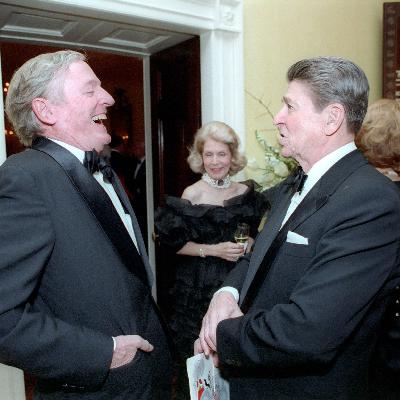
Sam Tanenhaus, an esteemed journalist and biographer, joins The Vital Center to discuss his biography of William F. Buckley Jr. Buckley, a towering figure in American conservatism, helped to pave the way for the political realignment that Ronald Reagan accomplished. Tanenhaus exposes Buckley’s darker origins, including his support for racial segregation in the South— a view which he later distanced himself from. Tanenhaus also speaks to Buckley’s personal life and the conversations that led Buckley to select him as his biographer.

The intellectual-political discussion of the so-called abundance movement typically is described as a debate taking place almost entirely on the left. But in fact many of its major themes were being discussed in right-leaning circles decades ago. Virginia Postrel, a libertarian thinker and journalist who was the former editor-in-chief of Reason magazine, anticipated much of the current discourse around abundance in her classic 1998 book The Future and Its Enemies: The Growing Conflict Over Creativity, Enterprise, and Progress. Even earlier, in 1990, Postrel was among the first to see that the most important ideological division that was emerging in American politics was not between left and right but between what she called “the proponents of economic dynamism and the advocates of stasis.” The power of Postrel’s prophecy is evident from even a cursory examination of current politics, in which debates over issues like trade, immigration, housing construction, energy production, and environmental conservation inevitably produce odd-bedfellows coalitions of left and right. Postrel generally approves of center-left advocates of abundance like Ezra Klein and Derek Thompson — since, as she puts it, they share “the convictions that more is better than less, and that a good society is not zero-sum.” But she recently criticized the Klein-Thompson bestseller Abundance for its essentially technocratic mindset, in which change proceeds from central planning without what Postrel regards as sufficient feedback from market mechanisms or public input. She envisions a more libertarian-inflected version of abundance characterized by what she calls “a more emergent, bottom-up approach, imagining an open-ended future that relies less on direction by smart guys with political authority and more on grassroots experimentation, competition, and criticism.”In this podcast conversation, Postrel analyzes different approaches to what she considers to be the linked causes of abundance and progress — although she notes that progress “tends to code a little right and tends to be more libertarian, more Silicon Valley people” — along with the basic political division between advocates of stasis and dynamism. She talks about her South Carolina origins and her study of the Renaissance, “when dynamism was invented.” She points out that her analysis of dynamism in some measure derived from her love of — and worries about — her adoptive state of California. She discusses some of the thinkers who influenced her analysis, including innovators like Stewart Brand, writers like Jonathan Rauch, Daniel Boorstin, and Henry Petroski, and economists including Friedrich Hayek, Michael Polyani, Mancur Olson, and Paul Romer. And she describes how her interests in dynamism and human invention relate to her interests in textiles, design, fashion, and aesthetics.

Donald Trump’s most resonant political slogan has always been the one he borrowed from Ronald Reagan: “Make America Great Again.” Trump rarely has been pushed to define when exactly he believes America experienced the greatness he promises to recapture. But many of his followers believe that America’s golden age — particularly for its working class — was the 1950s. A 2024 PRRI survey found that some 70 percent of Republicans think that America’s culture and way of life has changed for the worse since the 1950s. But what is it that Republicans miss about the 1950s? Alan Ehrenhalt, who has been a longtime writer and editor at Governing magazine, in 1995 explored this question in his classic study, The Lost City: Discovering the Forgotten Virtues of Community in the Chicago of the 1950s. Ehrenhalt investigated three communities in Chicago in that era: St. Nicholas of Tolentine, a working-class Catholic parish on the city’s Southwest Side; Bronzeville, the heart of Black Chicago in that era of segregation; and Elmhurst, a split-level suburban community eighteen miles west of downtown, which experienced explosive growth in the 1950s. Ehrenhalt found that Chicago’s citizens in the 1950s were subjected to what most Americans now would regard as excessively powerful and intrusive authority — including the authority of the political machine during the regime of Mayor Richard Daley, religion, employers, tradition, and the community itself — but that authority enforced an order that made possible a deep sense of community that has largely vanished from American urban life, for which many Americans remain deeply nostalgic.In this podcast discussion, Alan Ehrenhalt discusses that loss of community and the way it has played into American politics, particularly during the Trump era; the individualism of the baby boom and the way that many young people of that era chafed against the restraints of the 1950s; and the cultural matrix that produced the first American pope, Leo XIV, who (as Robert Prevost) grew up in a community similar to St. Nicholas of Tolentine during the 1950s. He analyzes what both the contemporary political left and right miss about that time, but acknowledges the difficulty of recovering communitarian values in the present era.
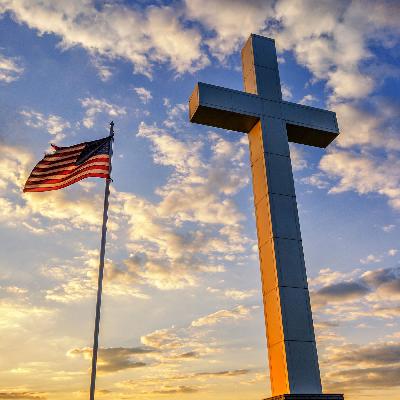
We all have an opinion about charismatic leaders — but do we really know what “charisma” means? Molly Worthen, in her new book Spellbound: How Charisma Shaped American History from the Puritans to Donald Trump, points out that charismatic leaders historically haven’t always been distinguished for their charm or compelling oratory. Rather, charismatic leaders are those who enter into a mutual exchange with their followers, in which the leader “draws back the veil on an alternative world in which followers find that they have secret knowledge, supernatural promise, and special status as heroes.” Worthen, who is a professor of history at the University of North Carolina at Chapel Hill and is also a renowned writer on religion for the New York Times and other media outlets, further observes that charismatic leaders and their followers blur the line between politics and religion: “Even in contexts that seem to have nothing to do with religion, charisma describes something like a liturgical act, a drama performed together, in which the parties join to consecrate a new reality that all, for their own reasons, prefer to the old one.”Worthen distinguishes between five types of charismatic leaders who have appeared across the centuries of American history: Prophets, Conquerors, Agitators, Experts, and Gurus. Some were builders, who created new institutions and left enduring legacies; others were destroyers, who dismantled structures that stood in the way of the path they promised their followers would lead to salvation. Donald Trump, in Worthen’s typology, is a Guru, one who channels the deeply rooted myth of the hero-entrepreneur, and who offers his followers the opportunity to take part in a story of America’s return to greatness. “Trump was not, personally, a paragon of conventional religious devotion,” Worthen notes. “Yet his political career depended on a hunger among his most dedicated supporters that can only be called spiritual.”In this podcast discussion, Worthen discusses not only her studies of charismatic leaders but also her previous work on religious belief, the Grand Strategy program at Yale, and her own conversion to evangelical Christianity.
When U.S. President Donald Trump announced the imposition of his “Liberation Day” tariffs against most of America’s global trading partners in April 2025, he seemed to harken back to a centuries-old form of economic nationalism known as mercantilism, which sought prosperity through restrictive trade practices. Opponents of mercantilism from the eighteenth century onward, such as Adam Smith and John-Baptiste Say, became known as classical liberals. In the fullness of time, classical liberalism gave rise to the political philosophy we now know as libertarianism.When most people think of libertarianism, they typically have in mind a small number of figures — including Milton Friedman, Friedrich Hayek, Ayn Rand, Murray Rothbard, and Ludwig von Mises — who were generally associated with the American political right in the mid-twentieth century. But in fact libertarianism was born in the nineteenth century (not the twentieth), and was first developed in Britain and France (not the United States). And as Matt Zwolinski emphasizes in his monumental intellectual history of libertarianism, The Individualists (co-authored with John Tomasi), libertarianism is better thought of as a cluster of related concepts than a unitary doctrine. It’s true that most libertarians historically have been concerned with the defense of individual autonomy, property rights, free markets, and personal liberty against state coercion. But the first individual to self-identify as a “libertarian” was the nineteenth-century French anarcho-communist Joseph Déjacque, and libertarianism as it developed often took radical and left-leaning forms, particularly through its association with the abolitionist movement in America in the years before the Civil War. In this podcast conversation, Matt Zwolinski (a philosophy professor at the University of San Diego) discusses his investigations into the intellectual history of libertarianism as well as his analysis of the longstanding tensions between radical and reactionary elements within the philosophy. He describes post-Cold War “third wave libertarianism” taking both right-wing expression (in the form of paleolibertarianism) as well as more radical forms (including left-libertarianism and “bleeding-heart libertarianism.”) And he suggests reasons why many libertarians see more potential in combating poverty through Universal Basic Income grants rather than through more traditional government-administered antipoverty programs.
The most important U.S. political trend of the 21st century, according to most observers, is the increasing tendency of college-educated voters to support the Democratic Party and for non-college-educated voters to support the Republican Party. In many ways, the two parties have swapped their historic bases. When John F. Kennedy won the presidency in 1960, Democrats still considered themselves to be a working-class party. Kennedy carried white voters without college degrees by a two-to-one margin but lost college-educated whites by an identical margin. Now those ratios are reversed, as Democratic presidential nominee Kamala Harris in 2024 won college-educated voters by a comfortable margin but lost bigly to Trump among non-college-educated voters — with notable declines among non-college-educated minority voters compared to 2020.Political scientists Matt Grossmann and Dave Hopkins are the co-authors of a recent book that examines not just the fact of this educational polarization but also its broader implications. Polarized by Degrees: How the Diploma Divide and the Culture War Transformed American Politics demonstrates how Democrats increasingly are absorbing the cultural liberalism and social values of the college-educated class, while Republicans more and more define themselves as a party tilting against establishments, elites, experts, and intellectuals.In this podcast discussion, Grossmann and Hopkins argue that educated liberals are winning the culture war, particularly with regard to the secularization of American public life and increasing social acceptance of single parenthood, gay marriage, racial and ethnic diversity, and other left-leaning values. But they also believe that these victories for liberalism don’t necessarily translate into electoral victories for the Democratic Party, or for other liberal parties around the world. On the contrary, the backlash against these changes has empowered populist revolts in many countries and led to a widespread collapse in public trust toward most social institutions. But the result has been that Republicans under Trump have what Hopkins and Grossman term “power without credibility”: the power to destroy institutions without the ability to reorient them in a more conservative direction or to halt the movement in public opinion toward cultural liberalism.
In the first few months of the second Trump administration, the White House in effect declared war on the nation’s colleges and universities, and particularly the most selective and prestigious among them. Vice President JD Vance had famously declared in 2021 that “the universities are the enemy,” but conservative antipathy against higher education for its alleged role as the breeding ground of progressive ideology goes back at least to the 1960s. In that turbulent decade, the universities became entangled in national debates over the Vietnam war, the civil rights movement, and the counterculture. The present-day controversies over political activism on college and university campuses echo the debates of the 1960s in important ways.Neil L. Rudenstine has been a key observer and participant in the shaping of American higher education since the 1960s. He served as President of Harvard University from 1991 to 2001, after decades of teaching and administrative experience that included service as Dean of Students, Dean of the College, and Provost at Princeton University. His career in academic administration began by chance in the fall of 1967, when as a junior professor of English at Harvard he came across a left-wing student group “imprisoning” a recruiter from the Dow Chemical Company in protest against the company’s complicity in the Vietnam war. His intervention was credited with helping to bring the protest to a peaceful resolution, and led to his involvement as an academic administrator in later campus debates over subjects including identity politics, climate change, and America’s global role. In his new memoir, Our Contentious Universities: A Personal History, Rudenstine draws upon his experiences to explain why universities have become increasingly fractious institutions and why they have come to be at the center of the country’s culture wars. In this podcast interview, the former Harvard president discusses the sources of student and faculty radicalization in the 1960s, the parallels between the ‘60s campus protests and those of today, and the financial and institutional difficulties that beset many of the country’s leading universities. He suggests ways that the universities can respond to the political attacks against them from the Republican Party, and also how they can attempt to restore public trust and better serve the needs of the nation and the world.
Jonathan Rauch would seem to be an unlikely defender of American Christianity. The eminent author, Brookings senior fellow, and Atlantic magazine contributing editor is a gay Jewish atheist — “I won the marginalized trifecta,” he observes — who grew up deeply suspicious of Christianity and its potential for (and past history of) oppression. As he describes in his recent book Cross Purposes: Christianity's Broken Bargain with Democracy, his attitude began to change at college, when his freshman year roommate was a Christian believer who exemplified the best aspects of the religion. But Rauch also came to appreciate that as the country has become increasingly secular — with the percentage of Americans identifying as “practicing Christians” down by half since 2000 — the religious impulse has found expression in other channels, including an increasingly toxic partisanship and polarization. And Rauch also came to appreciate that while the Founders rejected the establishment of a state religion or any other formal church-state alliance, they believed that republican government would be impossible without the underpinnings of religion and morality. In Rauch’s words, “Christianity turned out to be a load-bearing wall in our democracy, and right now it is caving in.”In this podcast discussion, Jonathan Rauch argues that Protestantism in America increasingly has taken on forms that ended up importing religious zeal into secular politics and exporting politics into religion. One of these forms is what he calls “Sharp Christianity,” in which white Evangelicalism (in particular) increasingly has taken the form of conservative culture warfare and partisan politics. Another is “Thin Christianity,” in which mainline Protestant churches have lost cultural and theological distinctiveness and become akin to a consumer choice. But Rauch is hopeful about the potential for what he calls “Thick Christianity,” in which sincere Christian believers support rather than oppose constitutional pluralism, for theological and spiritual reasons rather than merely strategic or expedient ones. In the unexpected form of the Church of Jesus Christ of Latter-Day Saints, Rauch finds a religion that seeks to base itself on a theology of “how Christ wants us to behave in our public and political relations. And how is that? It’s patience, negotiation, and mutual accommodation.” And he’s hopeful that Christians who follow this path will enter into good-faith negotiations with Americans who do not share their beliefs, “and look for solutions that will expand the space for us to get along together.”Jonathan Rauch would seem to be an unlikely defender of American Christianity. The eminent author, Brookings senior fellow, and Atlantic magazine contributing editor is a gay Jewish atheist — “I won the marginalized trifecta,” he observes — who grew up deeply suspicious of Christianity and its potential for (and past history of) oppression. As he describes in his recent book Cross Purposes: Christianity's Broken Bargain with Democracy, his attitude began to change at college, when his freshman year roommate was a Christian believer who exemplified the best aspects of the religion. But Rauch also came to appreciate that as the country has become increasingly secular — with the percentage of Americans identifying as “practicing Christians” down by half since 2000 — the religious impulse has found expression in other channels, including an increasingly toxic partisanship and polarization. And Rauch also came to appreciate that while the Founders rejected the establishment of a state religion or any other formal church-state alliance, they believed that republican government would be impossible without the underpinnings of religion and morality. In Rauch’s words, “Christianity turned out to be a load-bearing wall in our democracy, and right now it is caving in.”In this podcast discussion, Jonathan Rauch argues that Protestantism in America increasingly has taken on forms that ended up importing religious zeal into secular politics and exporting politics into religion. One of these forms is what he calls “Sharp Christianity,” in which white Evangelicalism (in particular) increasingly has taken the form of conservative culture warfare and partisan politics. Another is “Thin Christianity,” in which mainline Protestant churches have lost cultural and theological distinctiveness and become akin to a consumer choice. But Rauch is hopeful about the potential for what he calls “Thick Christianity,” in which sincere Christian believers support rather than oppose constitutional pluralism, for theological and spiritual reasons rather than merely strategic or expedient ones. In the unexpected form of the Church of Jesus Christ of Latter-Day Saints, Rauch finds a religion that seeks to base itself on a theology of “how Christ wants us to behave in our public and political relations. And how is that? It’s patience, negotiation, and mutual accommodation.” And he’s hopeful that Christians who follow this path will enter into good-faith negotiations with Americans who do not share their beliefs, “and look for solutions that will expand the space for us to get along together.”

Why can’t America do big things anymore? Marc Dunkelman, a fellow at Brown University’s Watson Institute for International and Public Affairs, addresses this question in his new book, Why Nothing Works: Who Killed Progress and How to Get It Back. The book’s inspiration came from his thinking about the now-vanished Pennsylvania Station, formerly New York City’s majestic gateway, which was one of the most beautiful buildings in the country and a monument to metropolitan greatness. Its closure and demolition in the early 1960s amounted to what a New York Times editorial called a “monumental act of vandalism,” made more painful by the ugliness and disfunctionality of the modern facility that replaced it. New York Senator Daniel Patrick Moynihan, starting in the early 1990s, made it his top legislative priority to build a new train hall in the nearby neoclassical post office building. Moynihan was chairman of the Senate Finance Committee and one of the most powerful Democratic politicians in the land, and he secured agreement and funding from all of the relevant stakeholders — but still he could not get the new station built. The Moynihan Train Hall would not open until 2021, after nearly three decades of delays and setbacks. Marc Dunkelman for many years commuted into the seemingly unfixable Penn Station and wondered why New York’s Democratic leaders were unable to make any progress in replacing it. The stagnation struck him as a vivid contrast to Robert Moses, the towering urban planner and public official, who had run roughshod over all opposition in mid-20th-century New York in the course of his massive redevelopment of the city, as described in Robert Caro’s 1974 bestseller The Power Broker. When he looked into the history, Dunkelman realized that progressives have long swung back and forth between two opposing impulses. One is what he calls Hamiltonianism: the desire to achieve progress by empowering government and institutions to tackle big problems at the direction of strong leaders (like Robert Moses) and informed experts. The other is what he calls Jeffersonianism: the desire to prevent unaccountable centralized authorities (also like Robert Moses) from abusing ordinary citizens by empowering them to fight back. In this podcast discussion, Dunkelman analyzes the historic roots of these opposing impulses and explains how progressives ever since the 1960s have swung too far toward the Jeffersonian extreme. He describes how progressives lost working-class support by rendering government unable to deliver public goods like abundant and cheap housing, energy, and infrastructure. And he warns that incompetent government inevitably plays into the hands of populists who vilify government and claim: “I alone can fix it.”

Many Democratic voters — and not a few pundits — have found the 2024 presidential election outcome to be profoundly puzzling and disorienting: How could so many minorities and working-class Americans have voted for Donald Trump? One observer who found Trump’s showing with these groups to be unsurprising is Steve Bumbaugh. Ever since the 1990s, he has worked on issues involving college access, upward mobility, race, and class. For some of that time, he worked with large organizations such as the College Board, which is the one of the key institutions that has shaped the modern meritocracy through college entrance tests such as the SAT and Advanced Placement courses and exams. At other points in his career, he worked directly with young people from disadvantaged communities. His work with students in a deeply impoverished inner-city neighborhood in Washington D.C. during the early 1990s, when the city was known as the nation’s “Murder Capital,” is described in the documentary Southeast 67. In this podcast conversation, Bumbaugh discusses the rise and fall of public school integration efforts in America — an arc whose impact he experienced personally as well as professionally. He describes current criticisms of meritocracy, particularly at the level of selective college admissions, and the ways in which the elite universities could do more to make the system more representative as well as more truly meritocratic. Bumbaugh reflects on the working-class anger and frustration that helped drive Trump’s reelection in 2024, much of which was invisible to the Democratic Party as it transformed into a predominantly college-educated, managerial- and professional-class party. And he concludes that the Democrats “don’t have the ability to communicate on the same level as Donald Trump. They had better do something.”

Comments

Download from Google Play

Download from App Store
 United States